
Inheritance
2023
-
600
Introduction
Audio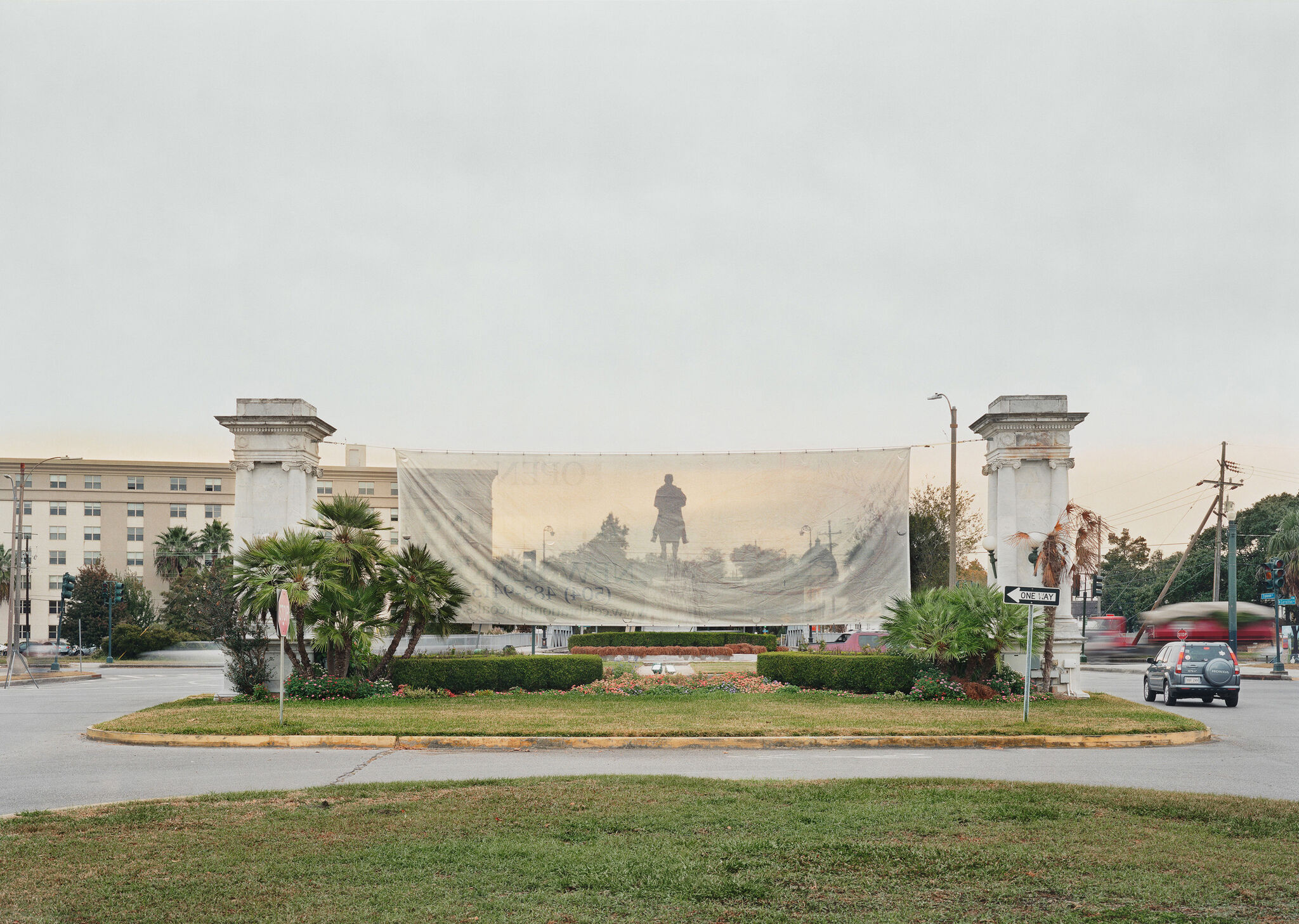
-
601
Thaddeus Mosley, Repetitive Reference, 2020
Audio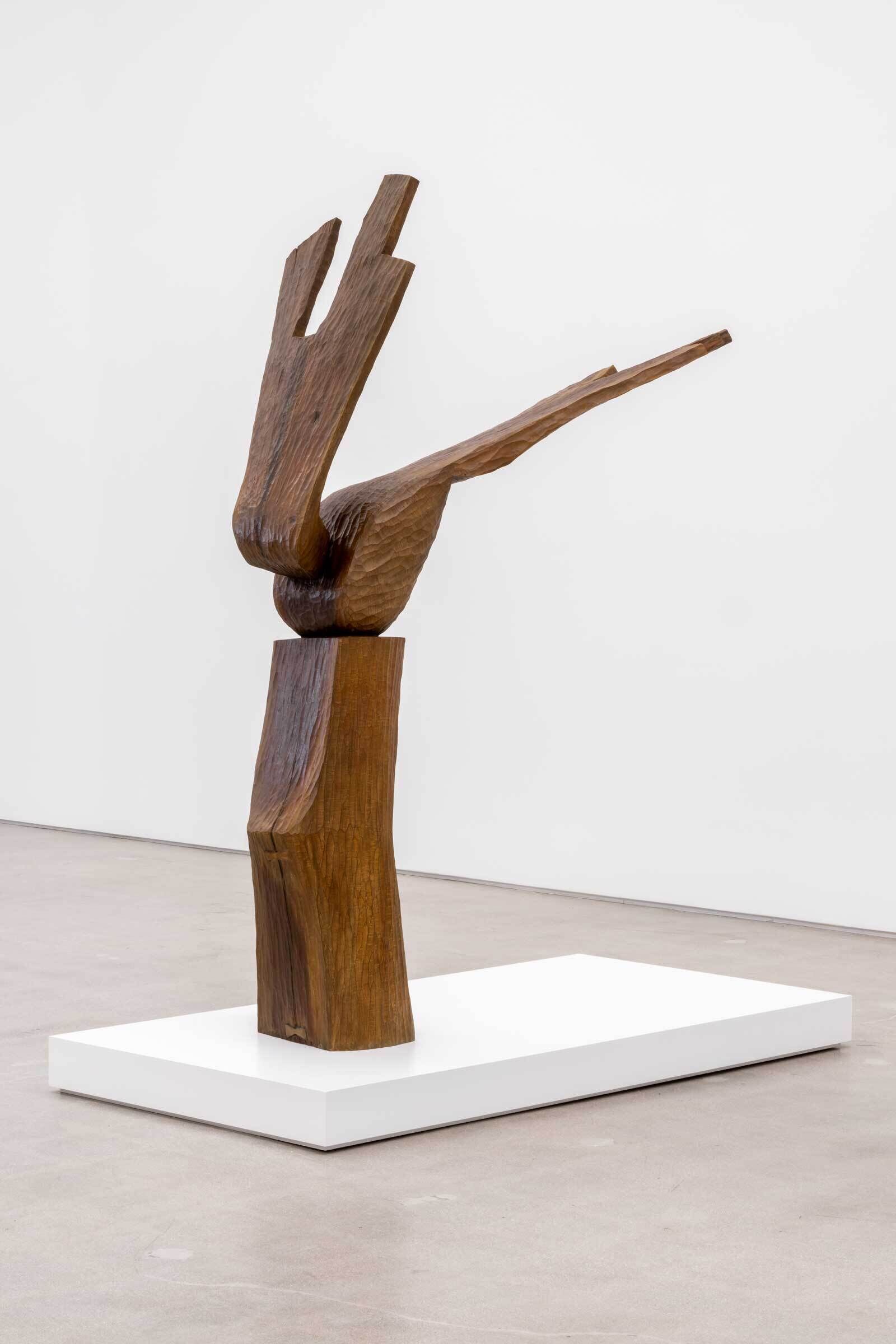
-
602
Diedrick Brackens, they spring from the embers of my mouth, 2019
Audio, Verbal description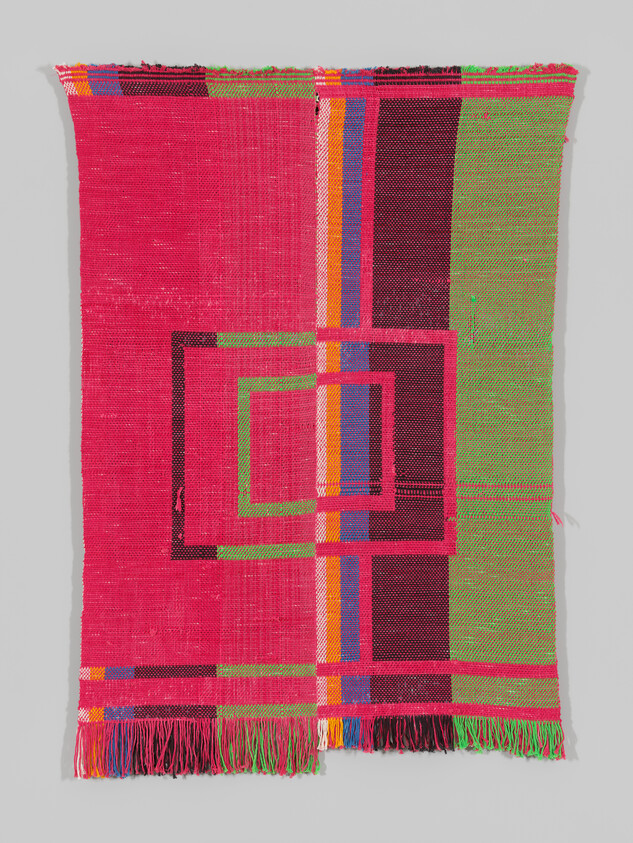
-
603
Widline Cadet, Sé Sou Ou Mwen Mété Espwa m#1 I Put All My Hopes On You #1I), 2021
Audio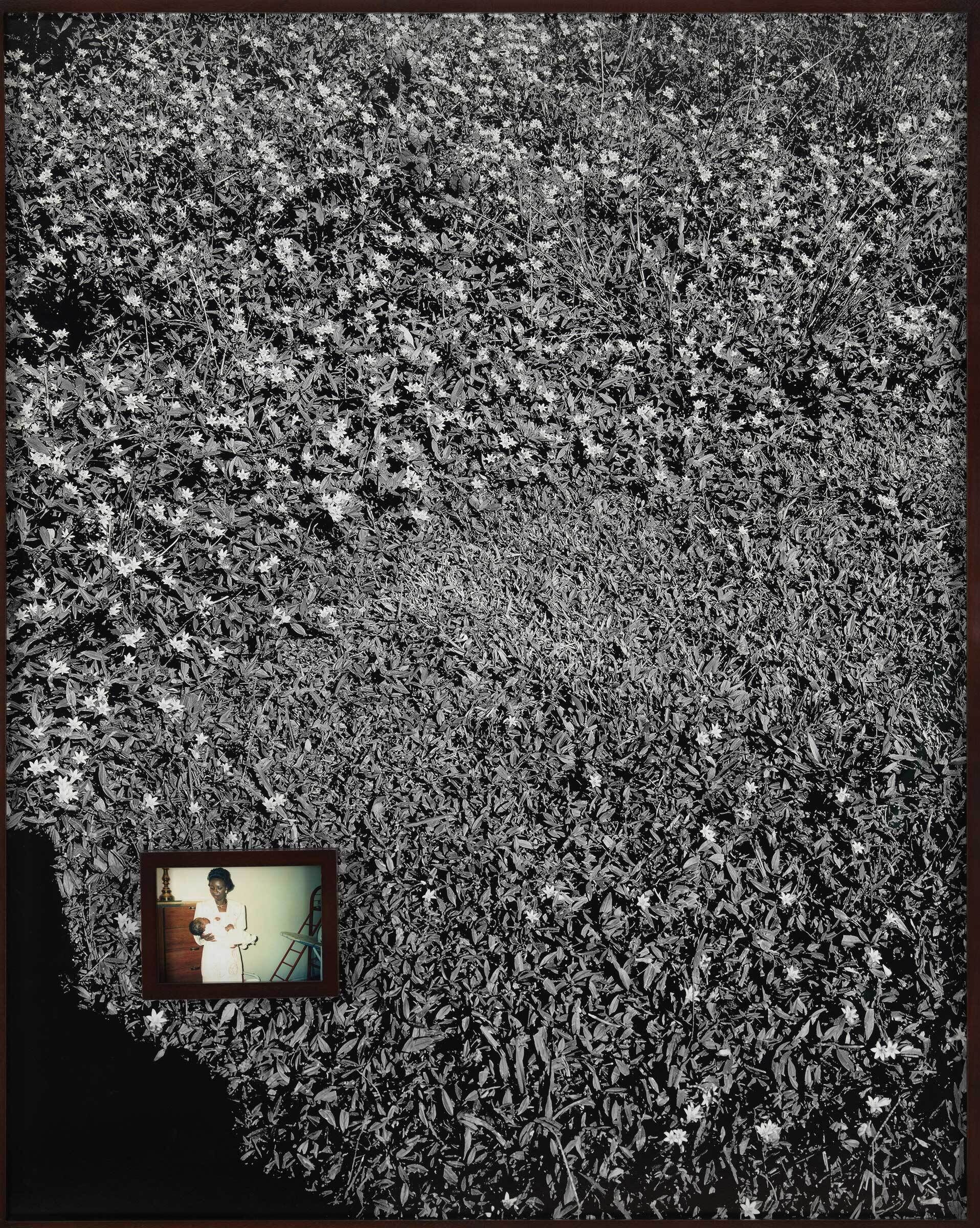
-
604
Deana Lawson, The Garden, Gemena, DR Congo, 2015
Audio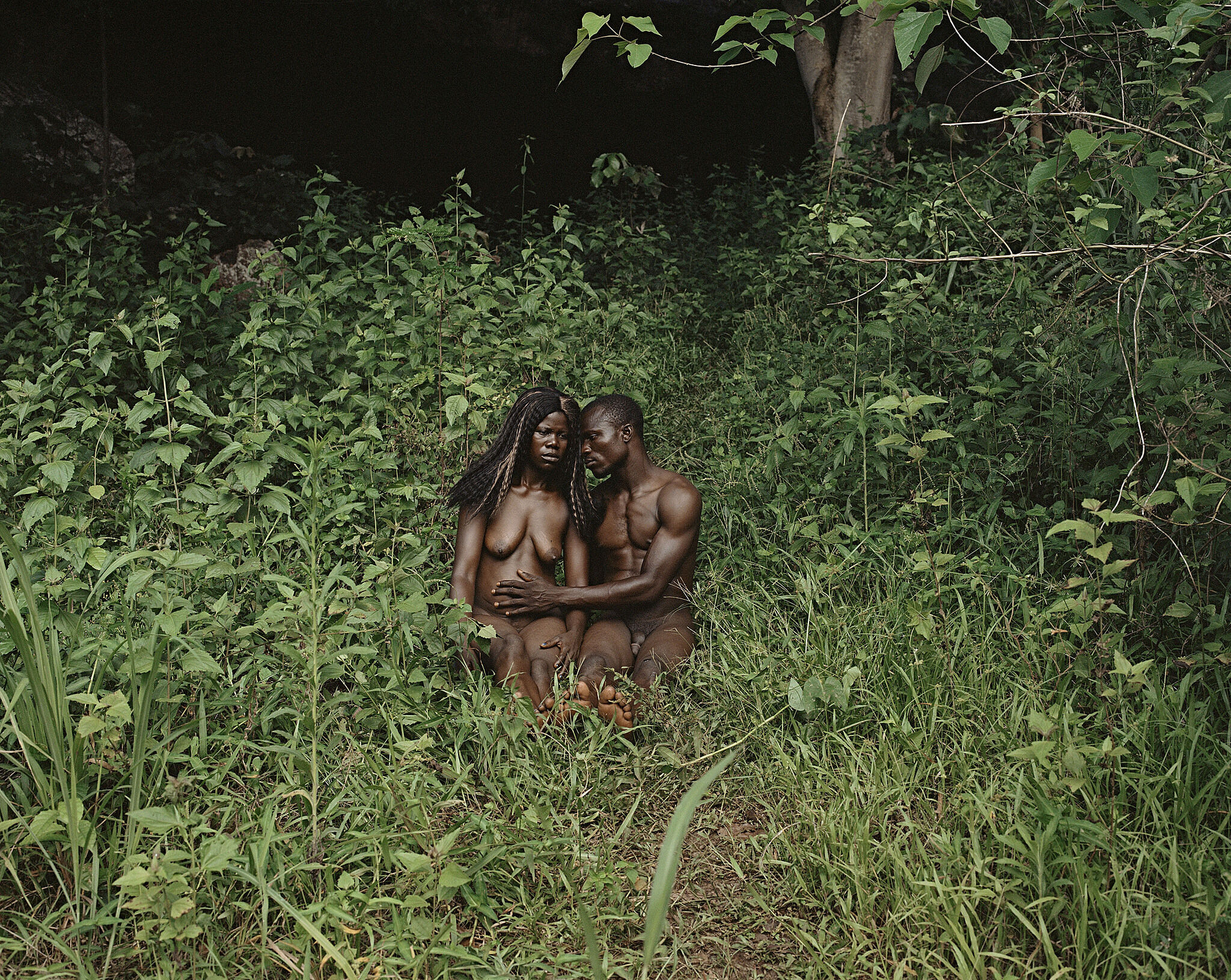
-
605
Sophie Rivera, I am U, 1995
Audio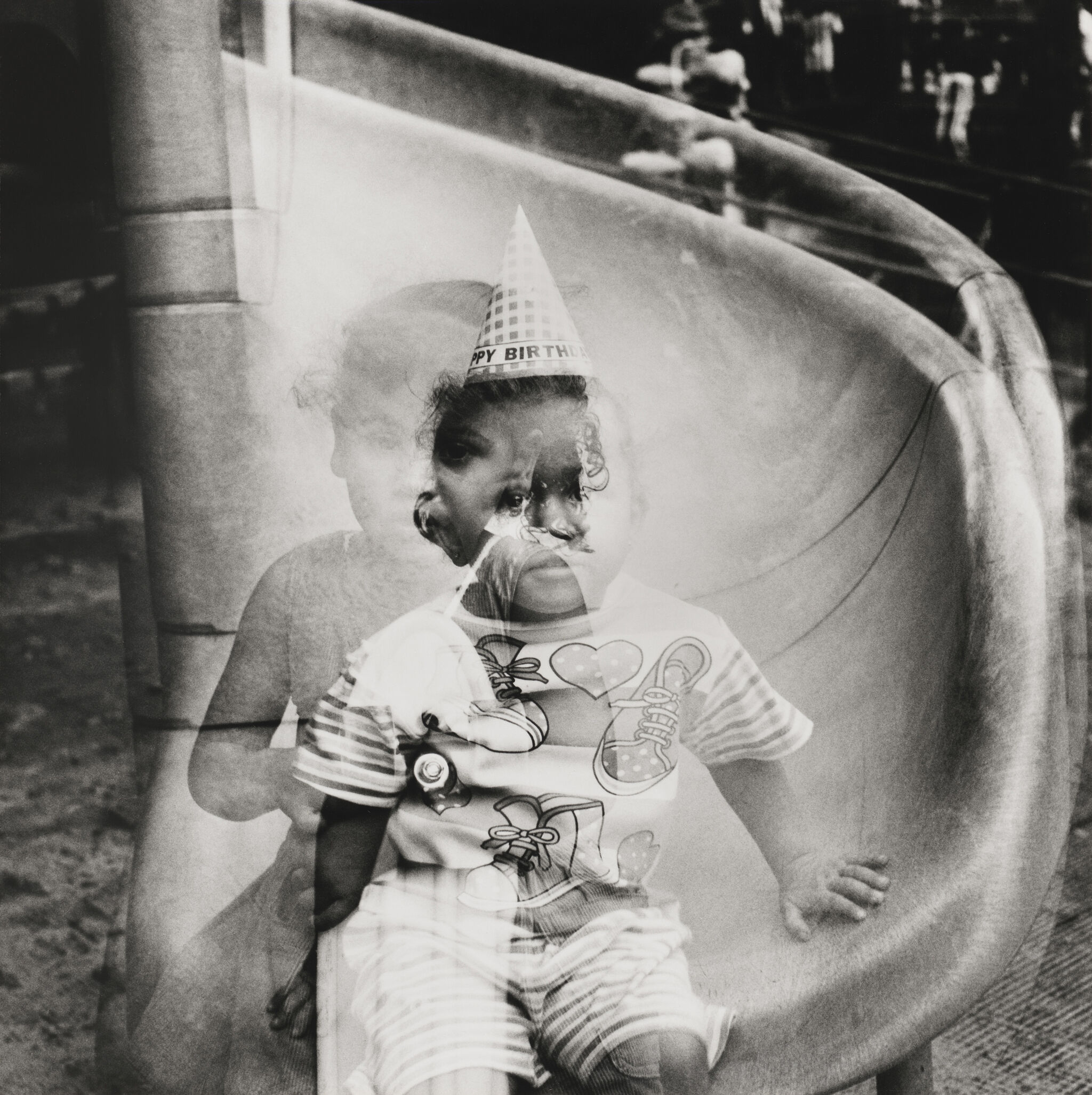
-
606
Lorraine O’Grady, Rivers, First Draft, 1982
Audio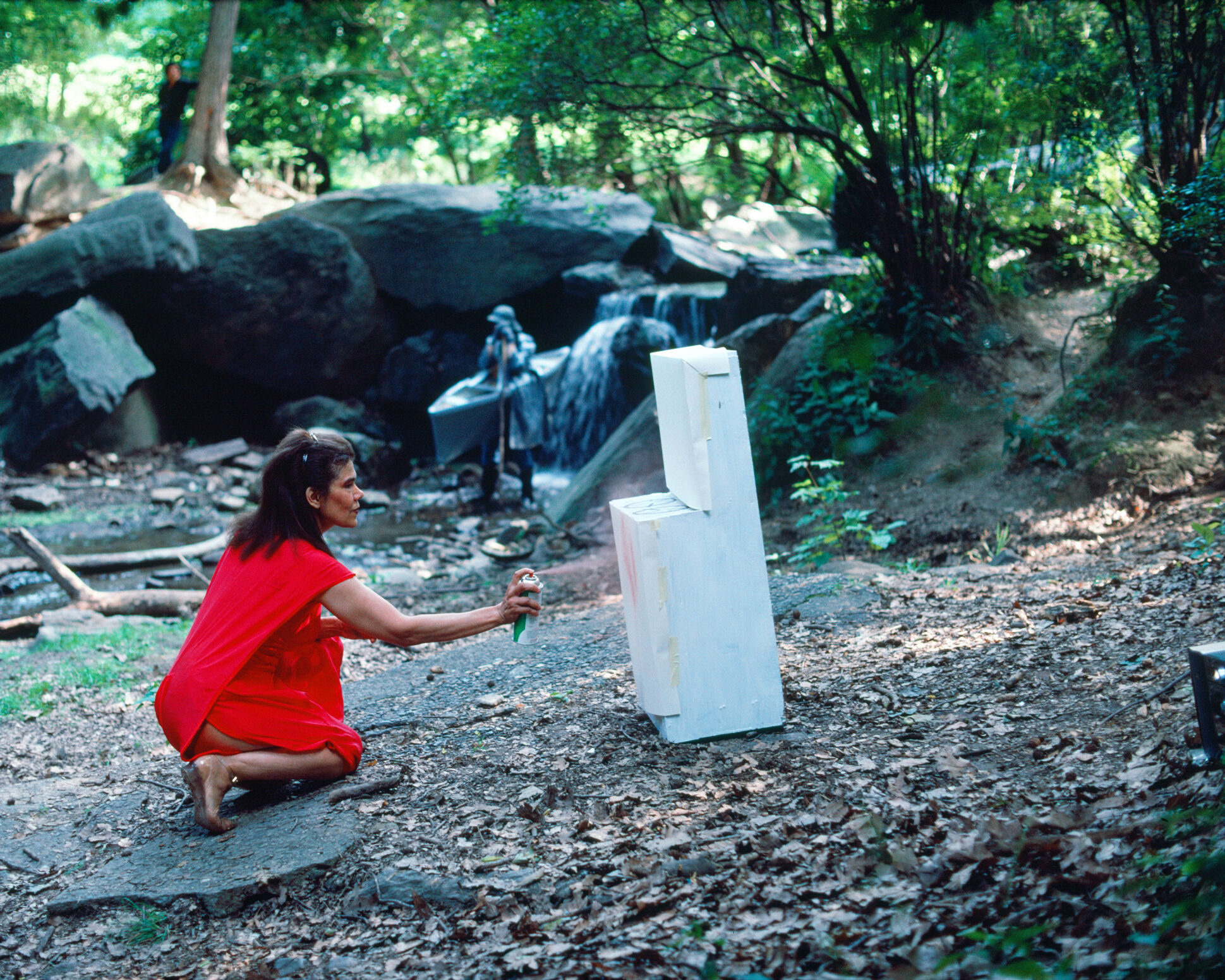
-
607
Hank Willis Thomas, Strike, 2018
Audio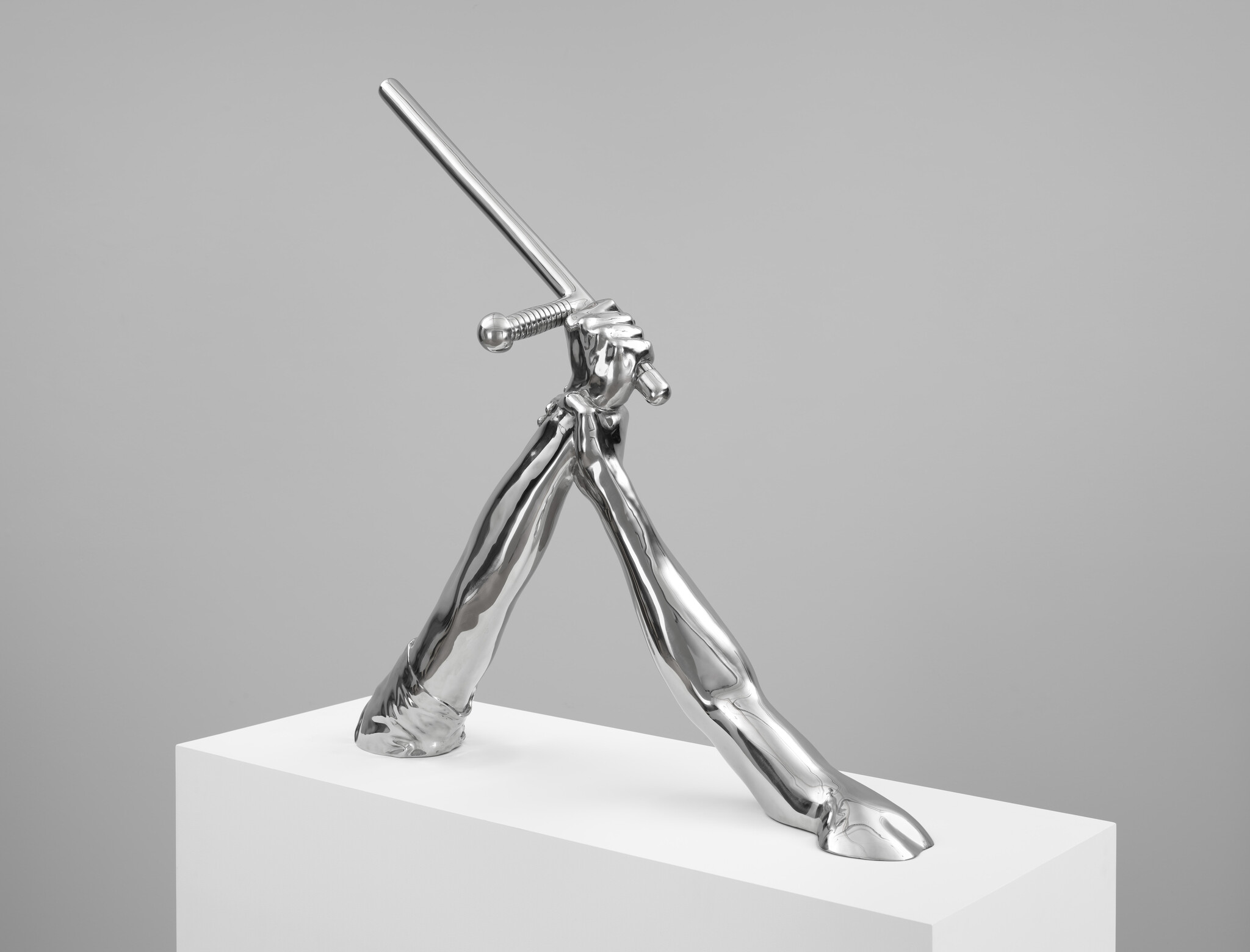
-
608
John Edmonds, Tête d'Homme, 2018
Audio, Verbal description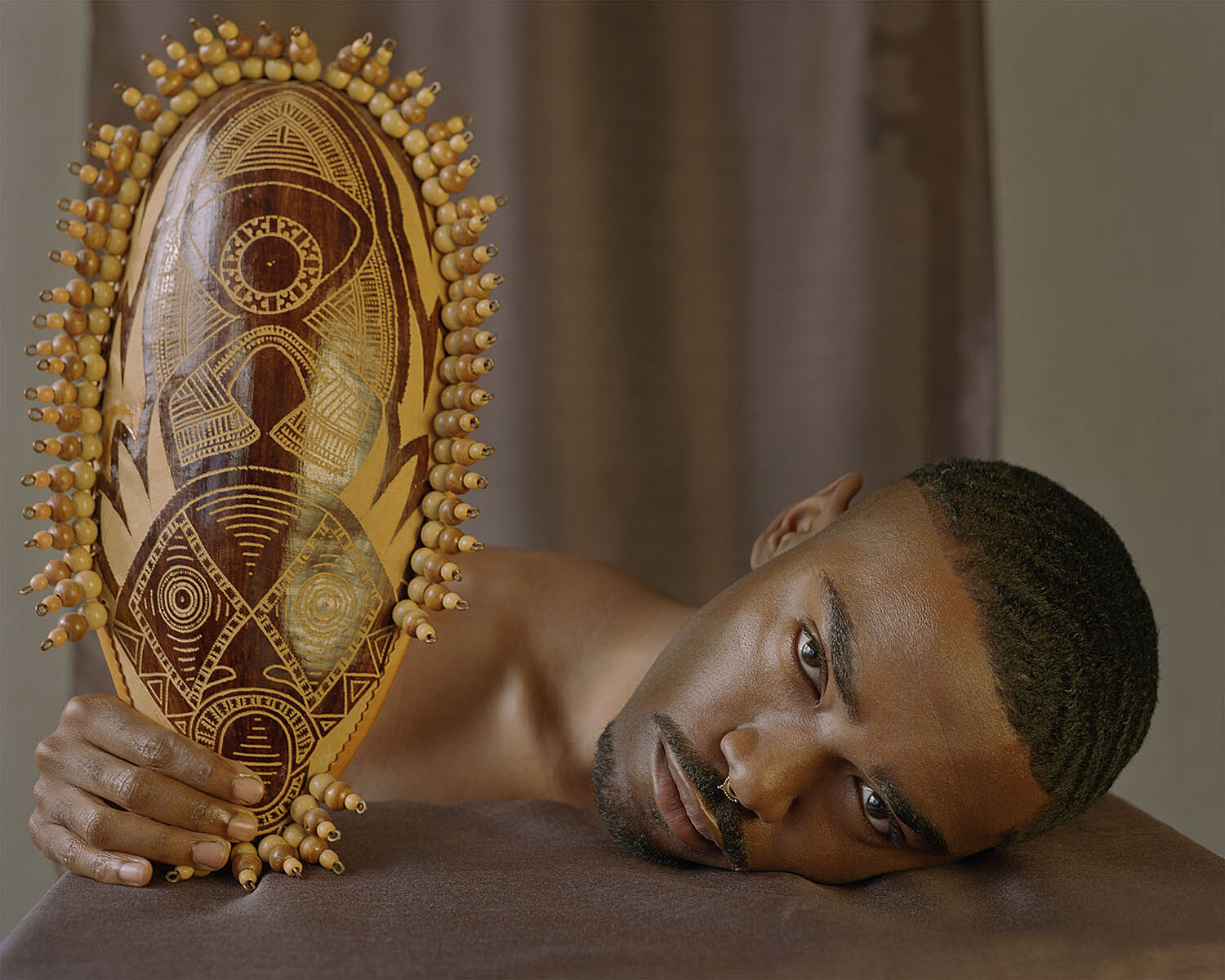
-
609
Chitra Ganesh, Sultana’s Dream, 2018
Audio, Transcription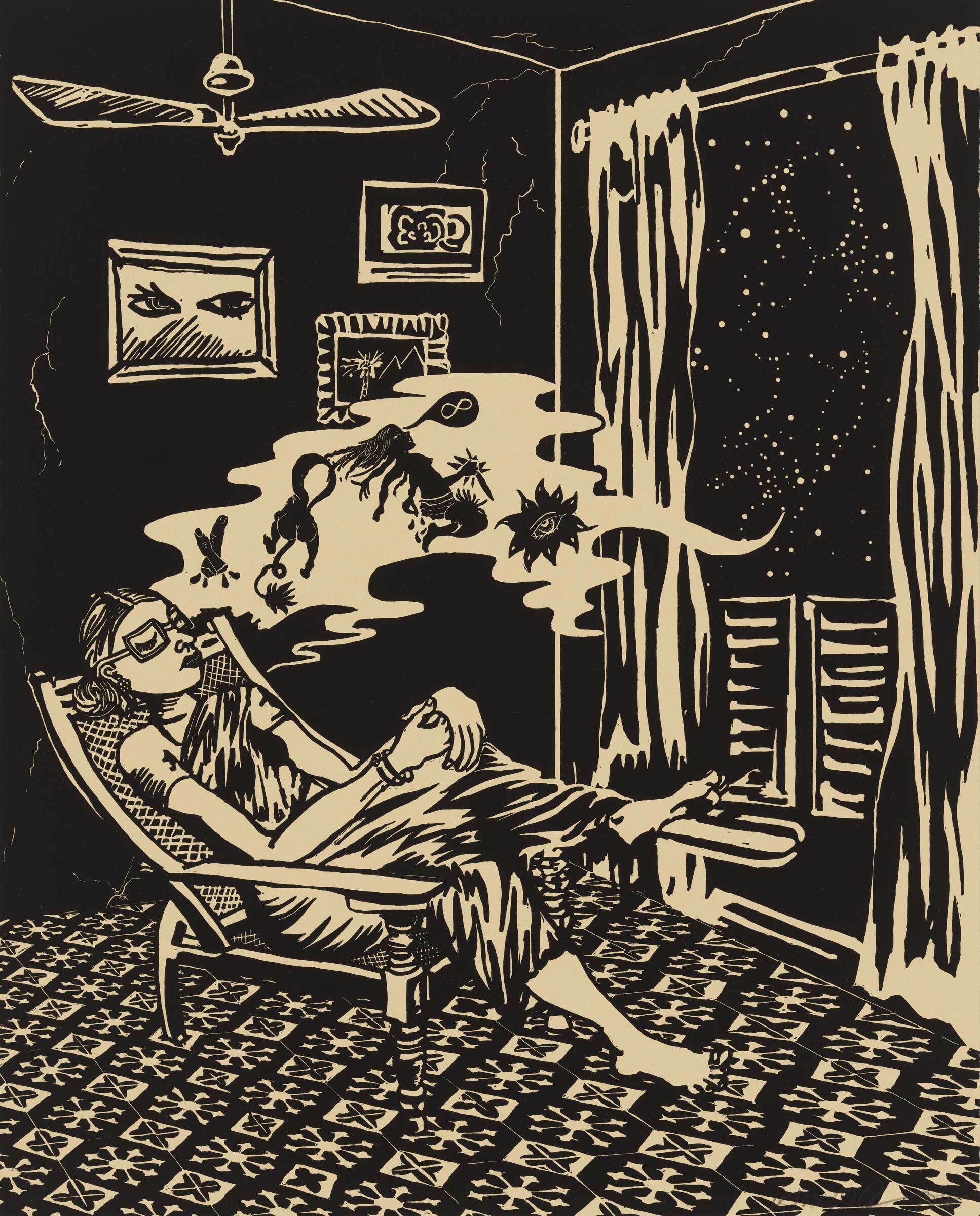
-
610
Kambui Olujimi, Your King Is on Fire, 2020
Audio, Verbal description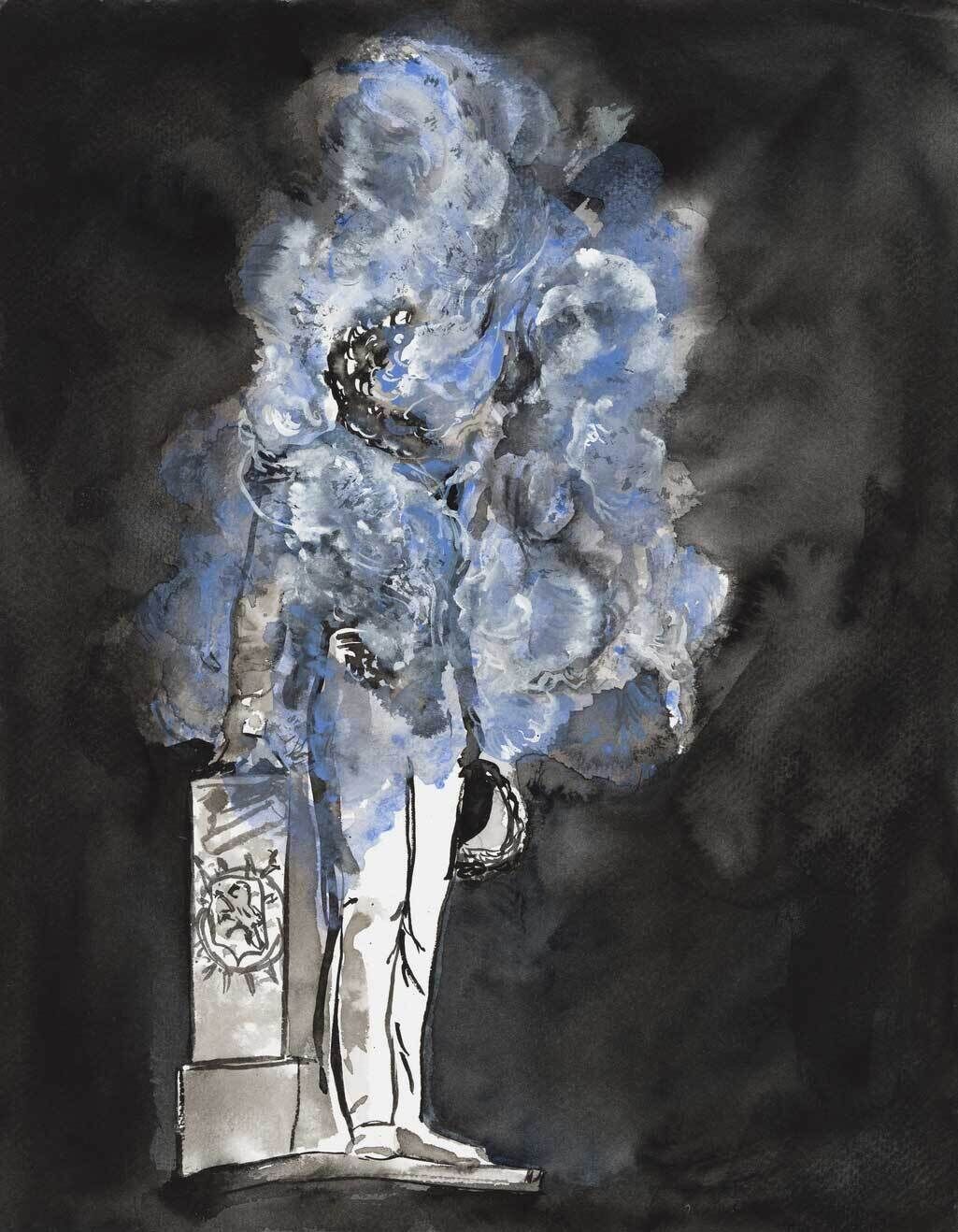
-
611
An-My Lê, Monument, General P.G.T. Beauregard, New Orleans, Louisiana, 2016
Audio
-
612
Beverly Buchanan, Tom’s House, 1995
Audio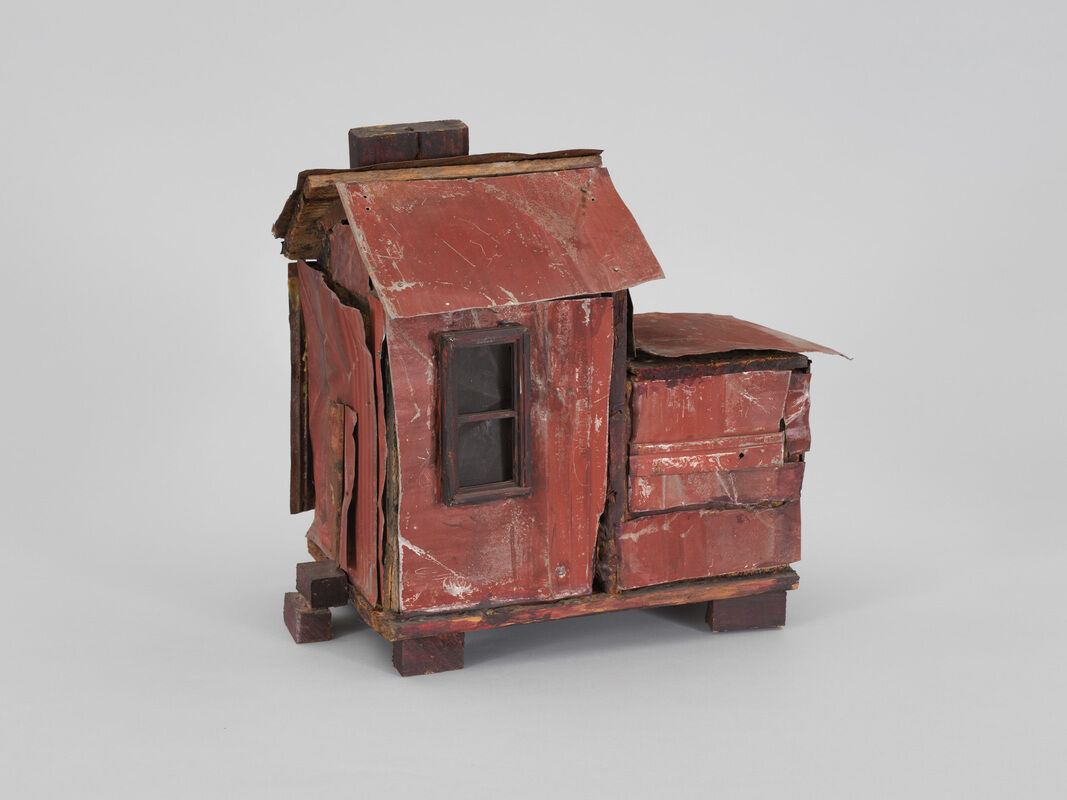
-
613
Pat Phillips, The Farm, 2018
Audio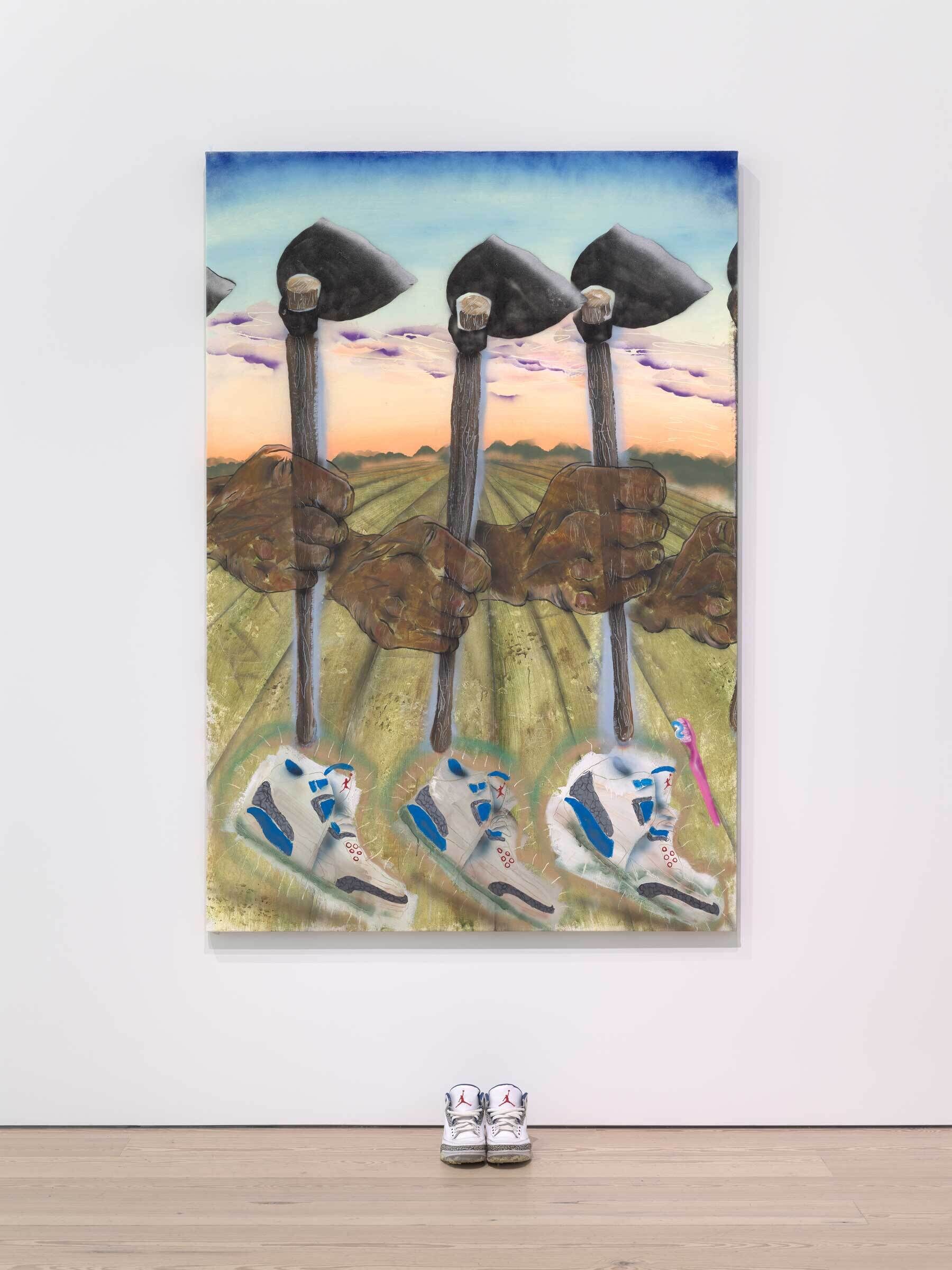
-
614
Cameron Rowland, Lynch Law in America, 2021
Audio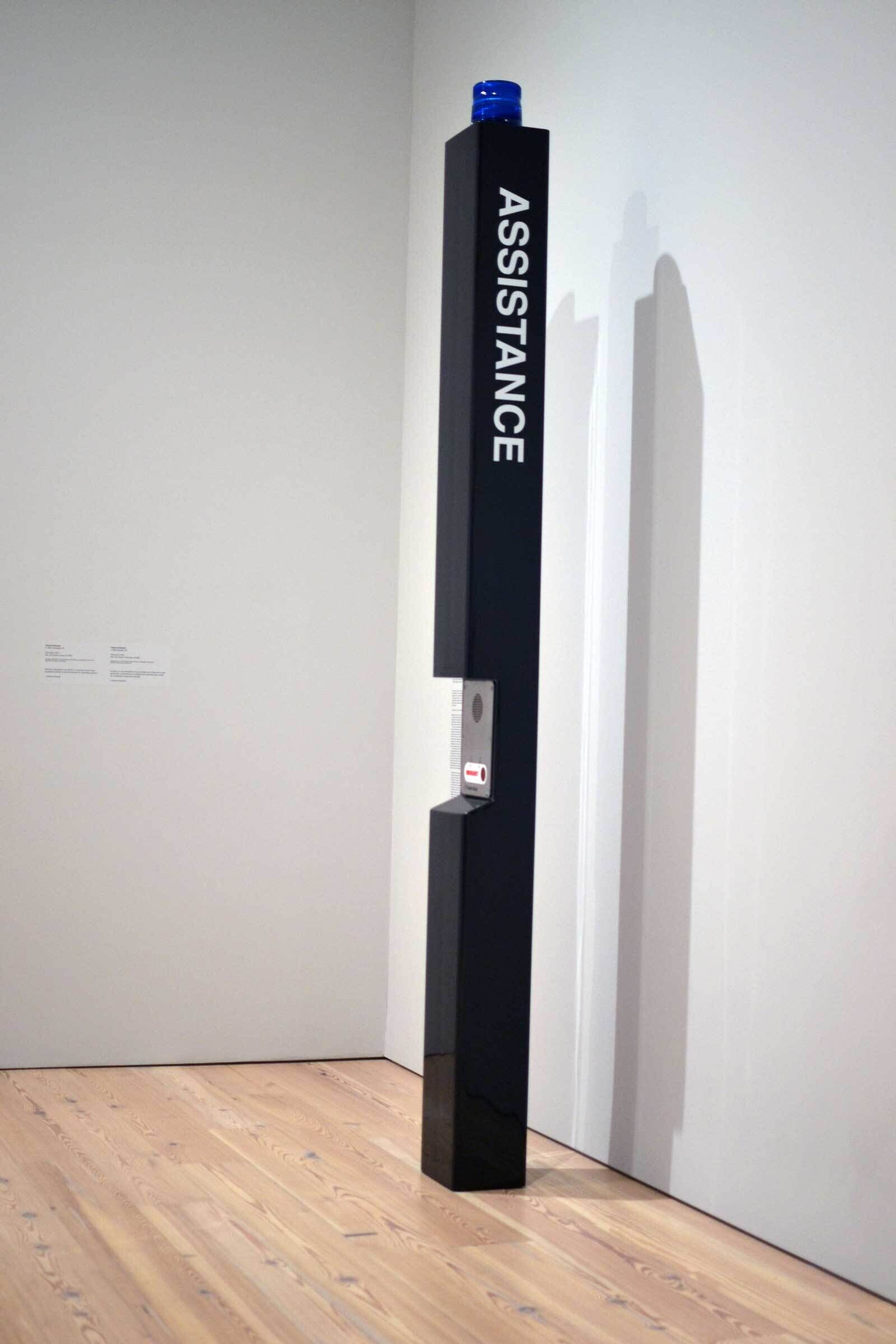
-
615
Kambui Olujimi, Hart Island Crew, 2020
Audio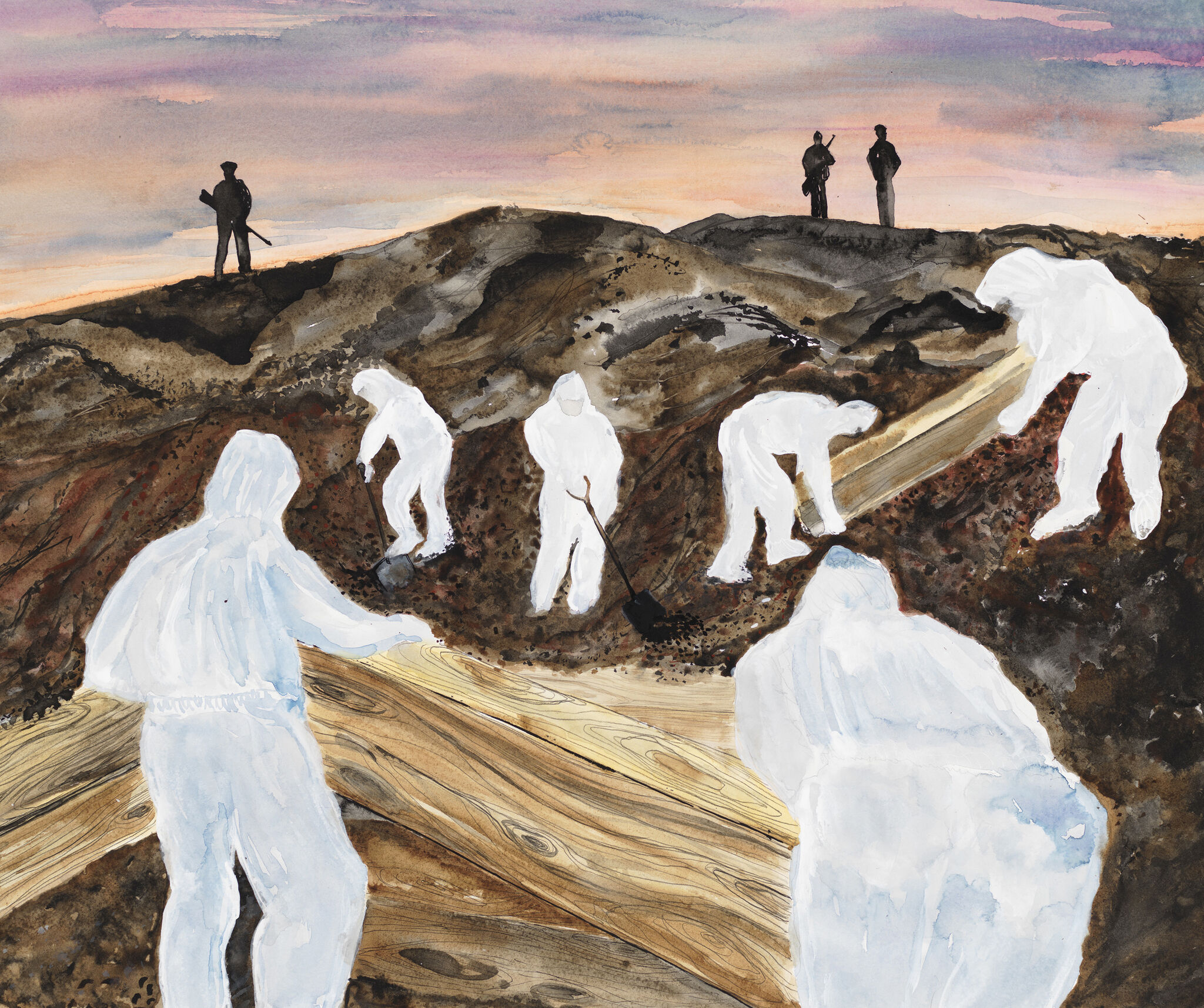
-
616
Clarissa Tossin, A cycle of time we don't understand (reversed, invented, and rearranged), 2017
Audio, Verbal description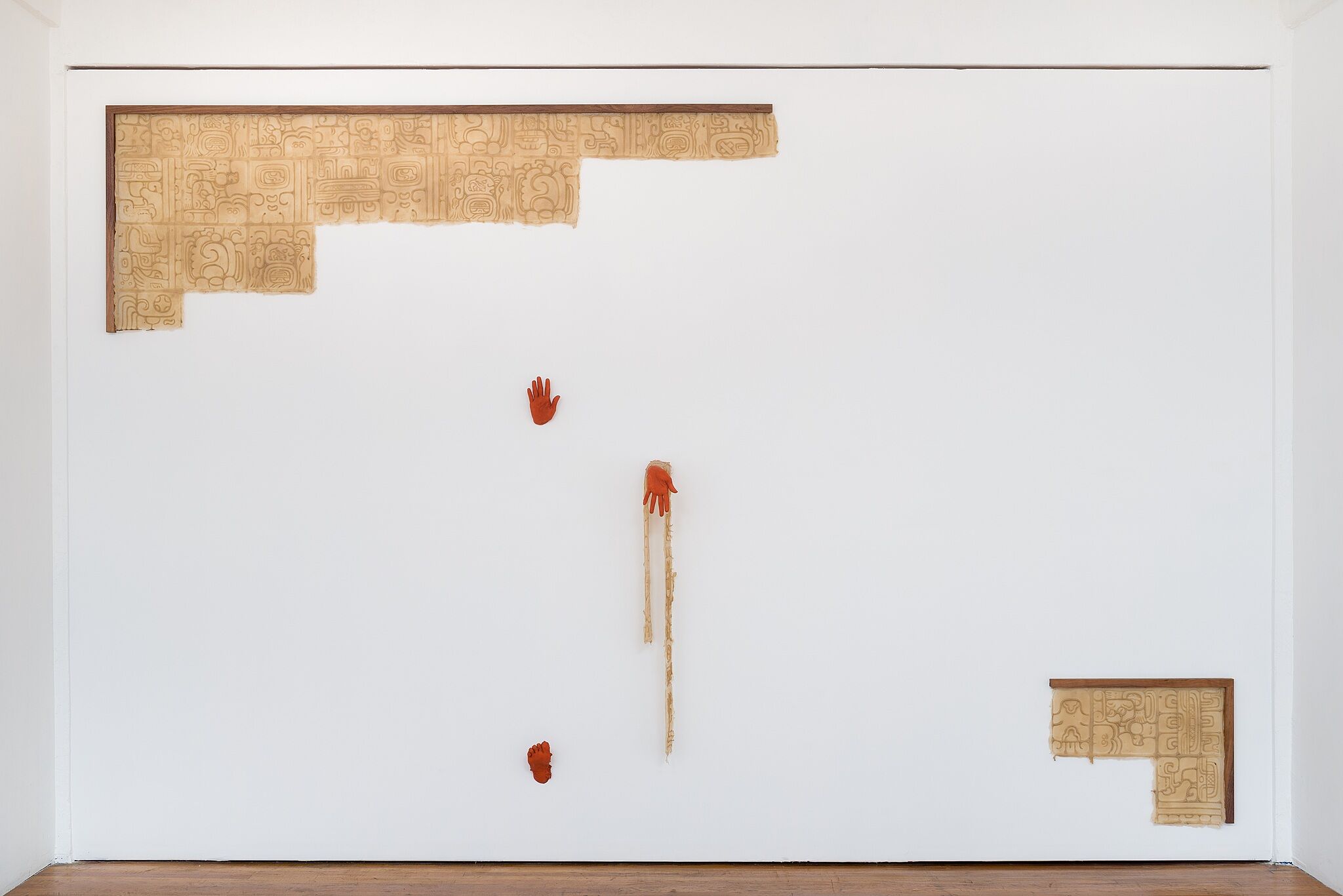
-
617
Andrea Carlson, Red Exit, 2020
Audio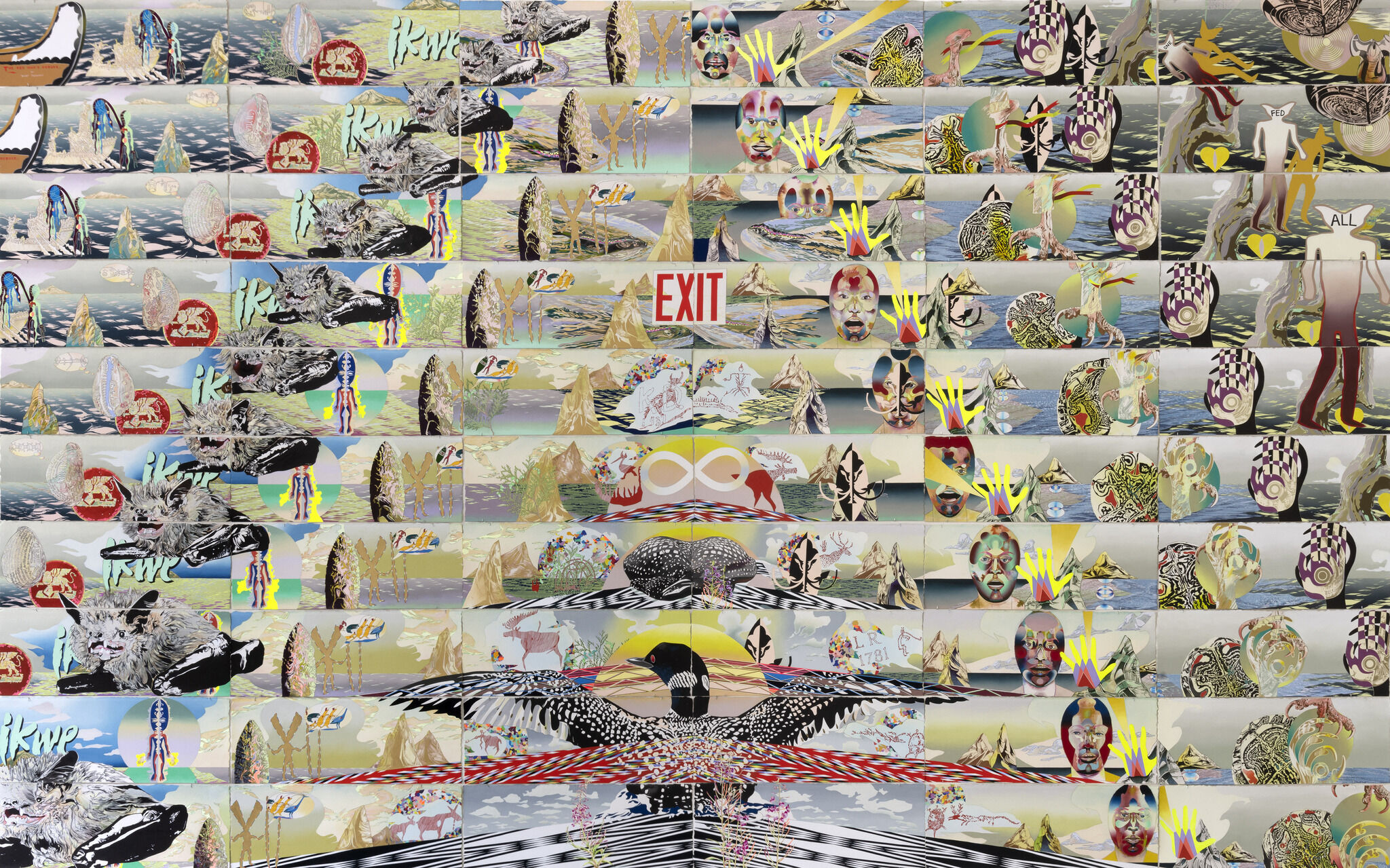
-
694
Verbal Description: Kevin Beasley, The Road, 2019
Verbal description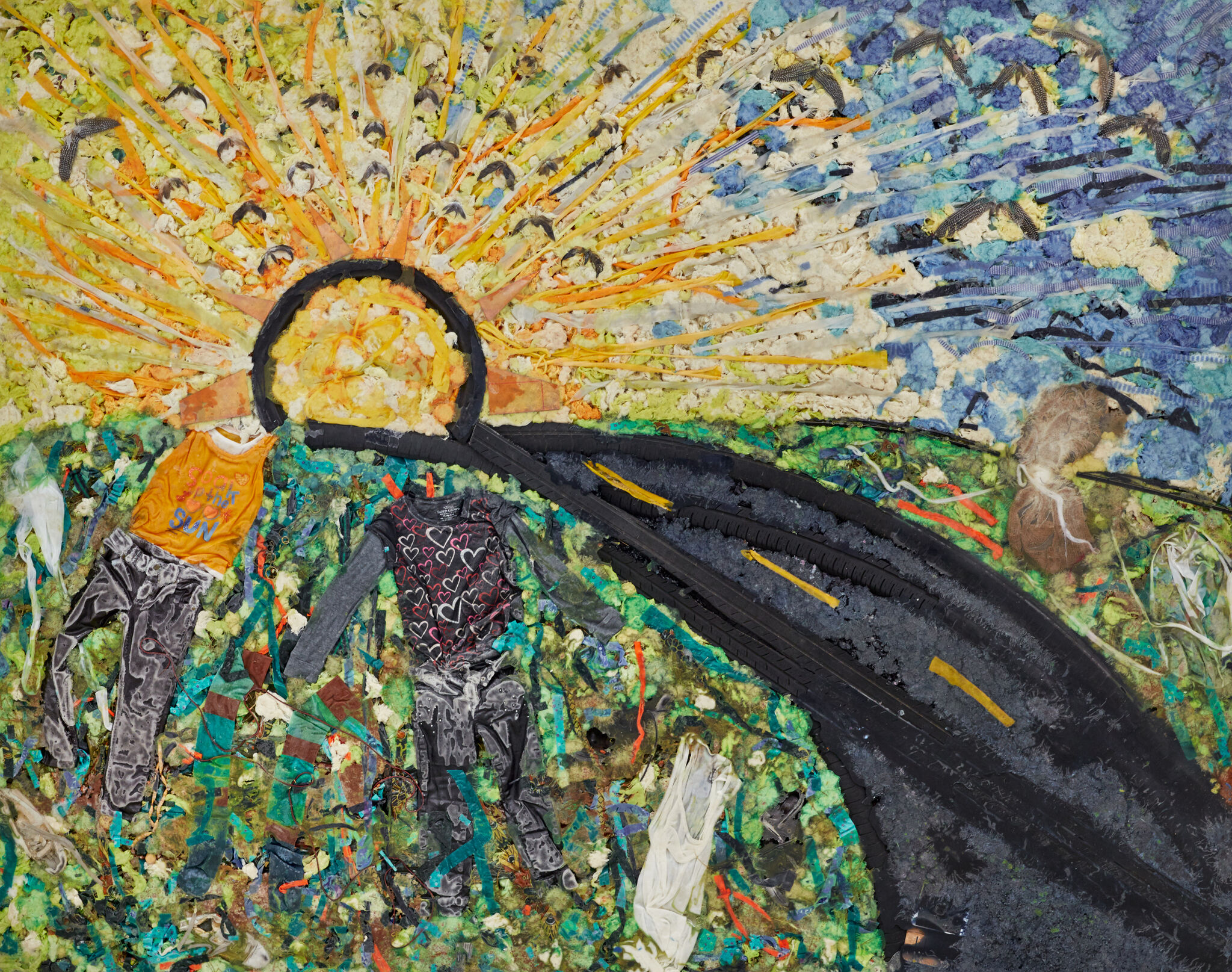
-
593
Transcription: WangShui, From Is Mouth Came a River of High End Residential Appliances, 2018
Transcription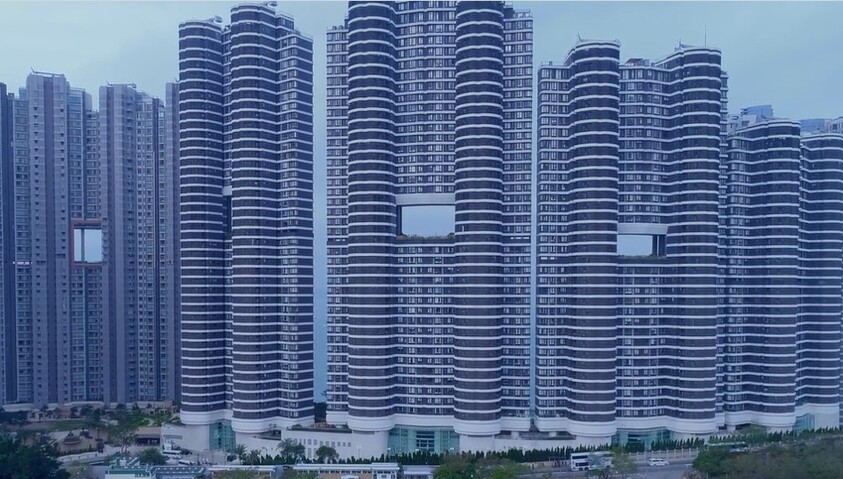
-
696
Transcription: Ephraim Asil, The Inheritance, 2020
Transcription
-
695
Transcription: Kara Walker, ...calling to me from the angry surface of some grey and threatening sea. I was transported., 2007
Transcription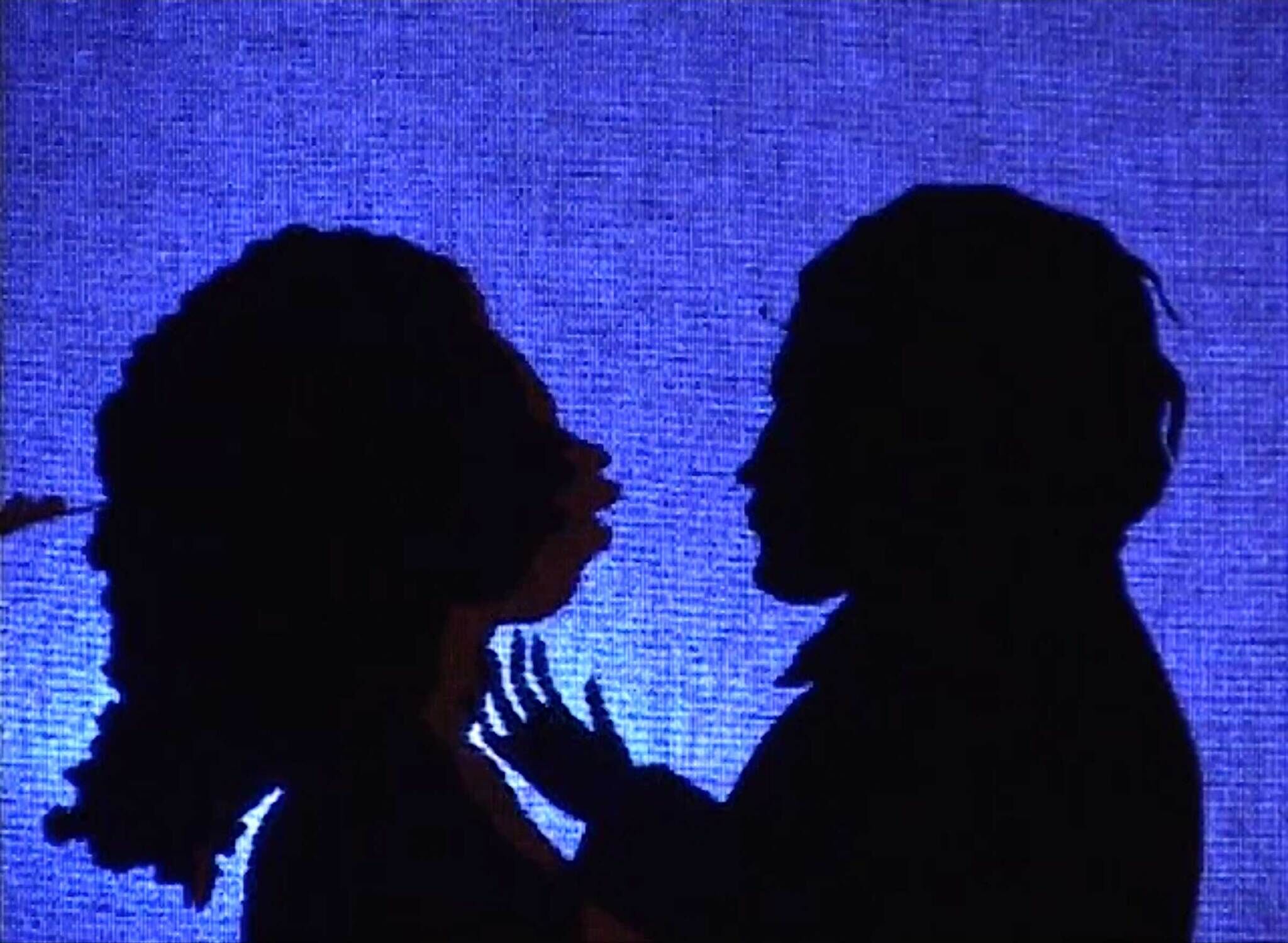
-
692
Transcription: Bruce and Norman Yonemoto, Environmental, 1993
Transcription
-
690
Transcription: Maggie Lee, Mommy, 2012
Transcription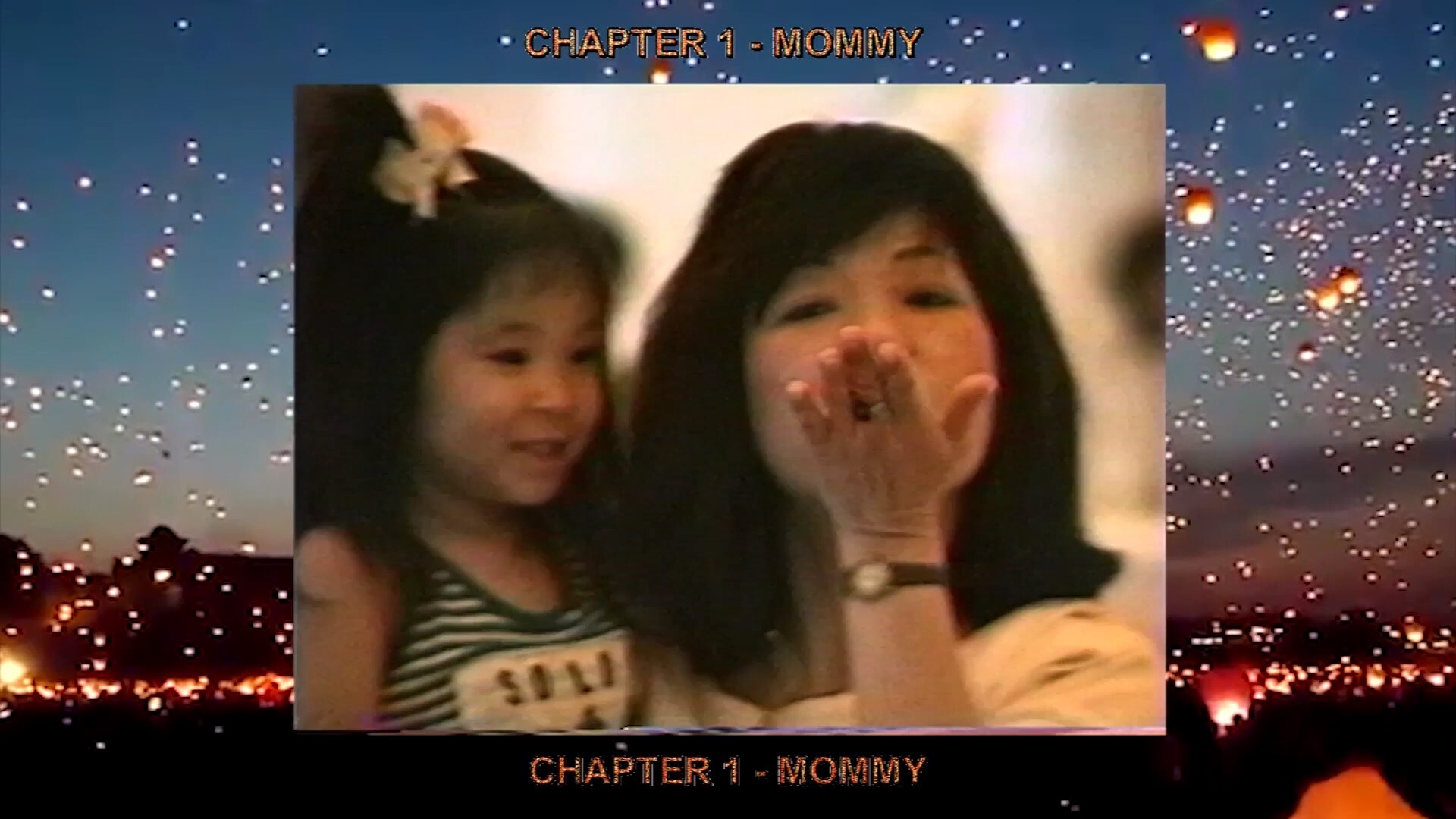
Narrator: Welcome to Inheritance. In this program, you’ll have the chance to hear from many of the artists in this exhibition. It also includes observations from the show’s curator, Rujeko Hockley. You can use this guide to explore the works on view in any order you choose. Thanks and enjoy the exhibition!
An-My Lê, Monument, General P.G.T. Beauregard, New Orleans, Louisiana, 2016, from the series The Silent General, 2015-2017. Inkjet print, 39 1/4 × 55 13/16 in. (99.7 × 141.8 cm). Whitney Museum of American Art, New York; purchase, with funds from the Photography Committee 2018.86. © An-My Lê, courtesy Marian Goodman Gallery
Thaddeus Mosley: I'm Thaddeus Mosley. I'm a sculptor from Pittsburgh, Pennsylvania. And I'm in my studio, which I am every day of the week. This was a work I did based on the Chi Wara sculptures from West Africa, from Mali. And it's like an antelope head mask that they wear on their heads for fertility, for rain, for the crops. There's many versions of this tribal sculpture called the antelope mask. And some of them have a baby antelope on top of the main antelope. And you'll see this is a contemporary, or at least my version of this idea. It should have a feeling of levitation, a floating quality.
Narrator: This version of Repetitive Reference is cast in bronze. But Mosley’s sculpture begins with wood.
Thaddeus Mosley: Most of the wood I get is walnut and cherry, because they're both hardwoods. And you can access the definition of the tools. Since you can direct your eye, you can make various patterns, and they give a very sharp detail by being hardwood. And also, the natural beauty of the wood. Walnut, to me, is a very beautiful wood and so is cherry.
Thaddeus Mosley, Repetitive Reference, 2020. Bronze, 86 x 50 x 26 in. (218.4 x 127 x 66 cm). Whitney Museum of American Art, New York; promised gift of Beth Rudin DeWoody. © Thaddeus Mosley. Image courtesy the artist and Karma, New York
Rujeko Hockley: We are looking at a woven work, made of cotton yarn. Diedrick Brackens is a textile artist who creates his own weavings on a loom in his studio. He creates his own algorithms for the weavings, based on the outcomes in terms of color, in terms of form that he is interested in achieving.
The piece is an abstraction that is also a self-portrait. It is based on personalized DNA reports of Brackens's genetic ancestry, which he turned into a pattern to make the textile from. So, it's simultaneously telling us everything about him, his genetic makeup, turning his DNA, his ancestry, the portions of his ancestry that are from X part of the world, X ethnicity, X percentage, and turning it into something that is no longer legible through that lens, but still is obviously about him very directly.
I think that is an intentional choice to both reiterate the abstraction that is both DNA, the information that we receive from these send away for your ancestry kits, and then also even just the idea of ancestry, of inheritance, of what comes to us from the past, how much we can ever know or not know about even our parents. But also of course our grandparents, our great-grandparents, our ancestors that we have never met and will never know even their names.
Narrator: Measuring 64 × 48 × ½ inch, Diedrick Brackens’s they spring from the embers of my mouth is a vertical, geometric double woven textile made of cotton yarn. Beginning at the top, two thin magenta bands span horizontally from edge to edge. Underneath those bands are sections of varying widths in light pink, orange, purple, dark reddish brown, and lime green. The majority of the left side of the textile is magenta until the bottom portion where the magenta is interrupted by the bands of colors seen at the top. To the right of the magenta section are relatively narrow strips of light pink, orange, and purple that run vertically from the top edge to the bottom edge. Two larger sections, one dark reddish brown, and one lime green, also run from top to bottom. In the center of the textile are two thin, outlined rectangles. The larger outer rectangle is dark reddish brown on the left, lime green towards the middle, and magenta on the right. The smaller inner rectangle is evenly divided into lime green on the left and magenta on the right. The rectangles and stripes at the top and bottom of the textile demonstrate Brackens' double-weave textile process, in which two cloths are woven in tandem and the separate warp and weft colors alternate throughout a textile. In the rectangle, the warp and the weft vary completely from the rest of the textile. This, paired with Brackens' vibrant color choice, creates a high contrast abstraction. Towards the bottom of the textile, the bands from the top are repeated in two parallel lines before ending at an uneven frayed edge. Loose threads dangle, suggesting an incompleteness. It should be noted that not all of the panels of the textile appear to be on the same plane. The colors alternate between weft and warp, giving the impression of subtle depth.
they spring from the embers of my mouth is both a commentary and articulation on the artist’s relationship with genetic ancestry. From the results of a personalized DNA report, Brackens created a set of algorithms reflecting different genetic traits. He then translated and rendered those traits into woven multicolored threads. Through this act of translation and rendering, this abstract textile doubles as something akin to a self-portrait.
Diedrick Brackens, they spring from the embers of my mouth, 2019. Cotton yarn, overall: 64 × 48 × 1/2 in. (162.6 × 121.9 × 1.3 cm). Whitney Museum of American Art, New York; gift of Nancy and David Frej 2020.178. © Diedrick Brackens
Widline Cadet: My name is Widline Cadet. I am an artist currently based in Los Angeles, but originally from Haiti, born and partly raised and then raised in New York as well. The work we're looking at are two different images made about twenty years apart or more. The larger image is this photograph of this landscape that I made at my sister's house in Florida.
The smaller image that's inserted within that landscape is a photograph of my mother holding my younger sibling. I think this was taken on the day of when she was baptized. So this is one of those rare photographs I have in my family album of my mother and my younger sister.
I was thinking about the idea of my family settling here in the U.S. and all of the things that we left behind and no longer had access to as a result of leaving Haiti. And so land and geography were some of the things that I was thinking about and thinking about the lack of access that we no longer have to that in Haiti. I was thinking about how I wanted to create a space where all of these things could come together, where I can physically embed my family in the geography of the U.S. and Haiti as well.
The title of the work is Sé Sou Ou Mwen M´té Espwa m #1. “I Put All My Hopes On You, Number One.” It's something my mom has said over and over again to me and my siblings when we were kids, and it was also just this unspoken thing that my parents, my mom specifically moved to the U.S. and moved us to the U.S. as a means of having hope for us, and I think about the idea of hope, how it can be such a beautiful thing, but also such a burden.
The frame around the images are just as important as the image as well. Going back to talking about the idea of weight and heaviness, I wanted the frames to feel like something that could contain all of those.
Widline Cadet, Sé Sou Ou Mwen Mété Espwa m #1 (I Put All My Hopes On You #1), 2021. Archival inkjet print and inkjet print, with artist's frames, overall: 50 13/16 × 40 3/4 × 2 1/2 in. (129.1 × 103.5 × 6.4 cm). Whitney Museum of American Art, New York; gift of Avo Samuelian and Hector Manuel Gonzalez 2022.223a-b
Deana Lawson: I’m Deana Lawson. I’m a photo-based artist. This image is taken in D.R. Congo; it’s in a small town called Gemena.
We often think of countries in Africa, especially D.R. Congo as a site of crisis or a problematic place. I was interested in switching that dynamic. Instead of seeing it in terms of a place of crisis I wanted to imagine it as a paradise or Eden. Robert Farris Thompson talks about Congo being the center of the mother continent, almost like the veins coming out of Congo. The center of humanity, in general. And my idea with The Garden was that the subjects would pose as the first human beings on earth.
Narrator: Lawson modeled their poses after the images of Adam and Eve in Hieronymous Bosch’s sixteenth-century painting, The Garden of Earthly Delights.
Deana Lawson: I found the female subject, who worked at a local restaurant in Gemena, and the male subject was my taxi driver. So they’re not a real couple, but it was completely staged to look as though they’re a couple.
The male subject has his hand on her belly. Often people ask if she’s pregnant; she’s not pregnant, but I don’t mind that being a possibility of the imagination.
I’m really looking at these two individuals and trying to imagine or put out an image in the world that represents a divine intimacy, which I think is needed right now, particularly when so many of popular culture images and media put forth a divisiveness, between Black men and Black women. So to me this is about asserting somewhat of a love story.
Deanna Lawson, The Garden, Gemena, DR Congo, 2015. Inkjet print, 55 3/16 × 69 9/16 in. (140.2 × 176.7 cm). Edition 1/1. Whitney Museum of American Art, New York; purchase with funds from the Jack E. Chachkes Endowed Purchase Fund 2016.83. © Deana Lawson and Rhona Hoffman Gallery, Chicago, IL
Dr. Yasmin Ramirez: Hi, I'm Dr. Yasmin Ramirez, a curator and art historian that specializes in Black and Latinx art in the United States.
Narrator: Dr. Ramirez discusses a photograph by Sophie Rivera, I am U.
Dr. Yasmin Ramirez: I am U is an example of Rivera's ongoing interest in using techniques like double exposure to convey the complexity of identity formation among Puerto Ricans in the United States who arrived to the city as a consequence of forced migration.
In the foreground, we see a boy in a birthday hat sitting on a slide, and behind him the image of a girl who looks to be about the same age with similar facial features, although not the same color. Is she related to the boy, or perhaps his female doppelganger? Their merged body parts allude to the multiracial bi-cultural composition of Puerto Rican families. A totality that can look marvelous or monstrous depending on the perspective of the spectator.
I am U is an invitation for us to empathize with these children and to reflect on the existence of the "inner child within us." According to some schools of psychotherapy, the inner child is a part of our subconscious that holds on to unresolved childhood memories and emotions, particularly those related to traumas like loss and displacement, which Rivera experienced firsthand. Sent to an orphanage in Staten Island after her parents separated, Rivera's portraits of Puerto Rican children which she made throughout her life became a form of healing and connection to others as well as a platform for Rivera to critically engage in the representation of Puerto Rican subjectivity as the sum of dualities, losses, and reconciliations.
Sophie Rivera, I am U, 1995. Gelatin silver print, 38 5/8 × 38 9/16 in. (98.1 × 97.9 cm). Whitney Museum of American Art, New York; gift of the artist 2019.390. © Estate of Dr. Martin Hurwitz
Rujeko Hockley: Rivers, First Draft is an installation of forty-eight prints by Lorraine O'Grady. It documents a one time only performance that happened in Central Park, in which O'Grady created almost a moving play. A roving play with a very specific cast of characters. The idea behind the piece is that it served as this path through her life. Her childhood and adolescence in New England, in Boston where she was born and raised as the child of Caribbean immigrants, through to her varied career path. O'Grady was a rock critic. She was a translator. She had many, many different lives before becoming an artist, which she did in her forties.
So, the piece has all these different figures and her at different points in her life. She's the lady in red, for example. That's her when she becomes an artist. But she's also shown earlier wearing magenta, and that's her as a teenager. She's also shown prior to that, even, in a pink sash, and that's her as a child. So, it's charting her way through her life and all these twists and turns and the different obstacles she encountered. But also the different opportunities and the times in which she really asserted her desire to have a certain life, to live a certain way. To be an artist, ultimately.
Lorraine O’Grady, Rivers, First Draft: The Woman in Red starts painting the stove her own color, 1982, printed 2015. Chromogenic print: sheet, 16 × 20 in. (40.6 × 50.8 cm); image, 15 3/4 × 19 3/4 in. (40 × 50.2 cm). Edition 3/8. Whitney Museum of American Art, New York; purchase with funds from the Photography Committee 2019.298.4j. © 2023 Lorraine O’Grady / Artists Rights Society (ARS), New York. Image courtesy Alexander Gray Associates, New York
Hank Willis Thomas: My name is Hank Willis Thomas.
The piece that I have in this exhibition is called Strike. It is depicting an arm with a police baton attempting to strike another arm, which is holding that arm by the wrist. It's mirror-polished stainless steel, so the viewer can see themself reflected in the work, and can also see different aspects of the background in almost a fun house mirror way.
While this work is inspired by a work from nearly a century ago, it could also just as easily be inspired by any number of photographs that have been taken over the past seventy or eighty years in various contexts, in various parts of the world. That's part of what I find to be powerful about it.
The cropping had been something I'd been doing for a while where I was inspired by Roland Barthes notion of the punctum, the thing that pierces you when you look at a photograph, the thing that sticks with you. I have been making sculptures for over a decade of the punctum of different photographs so that I as a viewer could get it almost like a phenomenological experience with what was previously a two-dimensional image.
To make the sculpture, we did a 3-D scan of two models and had them hold a position and then scan them in three-dimensional space, which is basically making a three-dimensional photograph and then had that cast and molded into a sculpture. That process of building it almost, I was definitely really interested in what would be the most iconic silhouette.
Hank Willis Thomas, Strike, 2018. Stainless steel, overall: 32 3/4 × 32 1/4 × 7 1/4 in. (83.2 × 81.9 × 18.4 cm). Whitney Museum of American Art, New York; purchase, with funds from the Painting and Sculpture Committee 2019.324. © Hank Willis Thomas
John Edmonds: I'm using photography as a tool to index and make portraits of friends, these sculptures that are from a home in Brooklyn, as well as sculptures that are from West Africa.
Narrator: Artist John Edmonds.
John Edmonds: I want to think about this interplay of portraiture and still life, while also introducing these photographs that reimagine these different Surrealist photographs that were made in the 1930s where artists such as Man Ray, Carl Van Vechten, using African art and incorporating and appropriating African sculptures into their work.
So I got them from a friend's house in Brooklyn. So most of the objects are objects that have either been gifted to me, they're objects that I've collected myself from street African art vendors, they're objects that I have been culling, pulling together in my own exploration of learning about African sculpture. In a way I'm trying to create this more total portrait of more global understanding of Black iconicity and this idea of icons, and how icons are created.
I think that they were completely taken out of their context and used simply for the purpose of decoration, fetishization. And in my pictures, what I'm interested in is the spiritual potential that these objects could have in the contemporary world.
Narrator: Tête d'Homme, 2018, is an inkjet printed photograph measuring about 23 x 29 inches. A brown-skinned Black man rests his cheek atop a grooved brown-clothed platform. The man has a cropped and rounded haircut, a mustache, a cropped beard, and wears a gold septum piercing. Most notable is the man’s gaze, which is piercing, powerful, and undeviating. The gaze is arresting and deep, inviting the viewer to consider who is really doing the looking. To his left, the man holds an African mask that was either purchased from a street vendor or was a decoration in someone’s home—its “authenticity” comes not from its origins, but from having been loved by Black New Yorkers. The mask is oblong, covered in tan and brown etchings, and has beads, in sets of three, lining the perimeter. Toward the bottom of the mask is the suggestion of a face—eyes etched into triangular forms above what appears to be an open mouth. The mask, too, appears to be staring directly at the viewer, once again drawing into question who and where the power of gazing lies.
The work is a direct quotation of Man Ray’s Noire et Blanche (1926), a black-and-white photograph that paired French model Kiki de Montparnasse with an African mask. While Man Ray’s image highlighted the visual contrast between her white skin and the black mask and the cultural distance between model and mask, Edmonds explains that he is responding to “how modernism has framed the Black body.” Further, Edmonds is working against fetishistic approaches used by many Surrealists, Cubists, and early Modernists, instead giving priority to individuality, intimacy, love, and familiarity.
John Edmonds, Tête d'Homme, 2018. Inkjet print, 23 5/8 × 29 9/16 in. (60 × 75.1 cm). Edition 3/3. Whitney Museum of American Art, New York; purchase with funds from the Henry Nias Foundation 2020.38. © John Edmonds
Narrator: In Sultana’s Dream, Chitra Ganesh reinterprets a 1903 short story by Rokeya Sakhawat. The story imagines an alternate future world called Ladyland, in which peace reigns and women rule. Although the story was written in the past and imagines the future, Ganesh uses it to reflect on the problems and inequities of the present. What follows is an excerpt of the original story. You can hear the story in its entirety in the Access portion of this guide.
Uma Sultana: One evening I was lounging in an easy chair in my bedroom and thinking lazily of the condition of Indian womanhood. I'm not sure whether I dozed off or not, but as far as I remember, I was wide awake. I saw the moonlit sky sparkling with thousands of diamond-like stars very distinctly. All of a sudden, a lady stood before me. How she came in I do not know. I took her for my friend, Sister Sarah. "Good morning," said Sister Sarah. I smiled inwardly as I knew it was not morning but starry night. However, I replied to her saying, "How do you do?" "I'm all right. Thank you. Will you please come out and have a look at our garden?" I looked again at the moon through the open window and thought there was no harm in going out at that time. The manservants outside were fast asleep just then and I could have a pleasant walk with Sister Sarah.
Uma Sultana: I used to have my walks with Sister Sarah when we were in Darjeeling. Many a time did we walk hand in hand and talk lightheartedly in the botanical gardens there. I fancied Sister Sarah had probably come to take me to some such garden and I readily accepted her offer and went out with her. When walking, I found to my surprise that it was a fine morning. The town was fully awake and the streets alive with bustling crowds. I was feeling very shy thinking I was not walking in the street in broad daylight, but there was not a single man visible. Some of the passersby made jokes at me. Though I could not understand their language, yet I felt sure they were joking. I asked my friend, "What do they say?"
Uma Sultana: "The women say that you look very mannish". "Mannish?" I said. "What do they mean by that?" "They mean that you are shy and timid like men." "Shy and timid like men?" It was really a joke. I became very nervous when I found that my companion was not Sister Sarah but a stranger. Oh, what a fool I had been to mistake this lady dear old friend, Sister Sarah. She felt my fingers tremble in her hand as we were walking hand in hand. "What is the matter dear?" she said affectionately. "I feel somewhat awkward," I said, in a rather apologizing tone. "As being a Pardanashin woman, I'm not accustomed to walking about unveiled." "You need not be afraid of coming across a man here. This is Ladyland, free from sin and harm. Virtue herself reigns here."
Transcription: Chitra Ganesh, Sultana’s Dream, 2018
Uma Sultana: One evening I was lounging in an easy chair in my bedroom and thinking lazily of the condition of Indian womanhood. I'm not sure whether I dozed off or not, but as far as I remember, I was wide awake. I saw the moonlit sky sparkling with thousands of diamond-like stars very distinctly. All in a sudden, a lady stood before me. How she came in I do not know. I took her for my friend, Sister Sarah. "Good morning," said Sister Sarah. I smiled inwardly as I knew it was not morning but starry night. However, I replied to her saying, "How do you do?" "I'm all right. Thank you. Will you please come out and have a look at our garden?" I looked again at the moon through the open window and thought there was no harm in going out at that time. The manservants outside were fast asleep just then and I could have a pleasant walk with Sister Sarah.
I used to have my walks with Sister Sarah when we were at Darjeeling. Many a time we did walk hand in hand and talked lightheartedly in the botanical gardens there. I fancied Sister Sarah had probably come to take me to some such garden and I readily accepted her offer and went out with her. When walking, I found to my surprise that it was a fine morning. The town was fully awake and the streets alive with bustling crowds. I was feeling very shy thinking I was not walking in the street in broad daylight, but there was not a single man visible. Some of the passersby made jokes at me. Though I could not understand their language, yet I felt sure they were joking. I asked my friend, "What do they say?"
"The women say that you look very mannish". "Mannish?" said I. "What do they mean by that?" "They mean that you are shy and timid like men." "Shy and timid like men?" It was really a joke. I became very nervous when I found that my companion was not Sister Sarah but a stranger. Oh, what a fool I had been to mistake this lady dear old friend, Sister Sarah. She felt my fingers tremble in her hand as we were walking hand in hand. "What is the matter dear?" she said affectionately. "I feel somewhat awkward," I said, in a rather apologizing tone. "As being a Pardanashin woman, I'm not accustomed to walking [inaudible] unveiled." "You need not be afraid of coming across a man here. This is Ladyland, free from sin and harm. Virtue itself reigns here."
By and by I was enjoying the scenery. Really, it was very grand. I mistook a patch of green grass for a velvet cushion, feeling as if I were walking on a soft carpet. I looked down and found the path covered with moss and flowers. "How nice it is," said I. "Do you like it?" asked Sister Sarah. I continued calling her Sister Sarah and she kept calling me by my name. "Yes, very much, but I do not like to tread on the tender and sweet flowers." "Never mind, dear Sultana. Your treading will not harm them. They are street flowers." "The whole place looks like a garden," said I, admiringly. You have arranged every plant so skillfully. Your Kolkata could become a nicer garden than this if only your countryman wanted to make it so. They would think it useless to give so much attention to horticulture while they have so many other things to do. They could not find a better excuse," she said with a smile.
I became very curious to know where the men were. I met more than a hundred women while walking there, but not a single man. "Where are the men?" I asked her. "In their proper places where they ought to be." "Pray, let me know what you mean by their proper places." "Oh, I see my mistake. You cannot know our customs as you were never here before. We shut our men indoors." "Just as we are kept in the zenana?" "Exactly so." "How funny." I burst into a laugh. Sister Sarah laughed too. "But dear Sultana, how unfair it is to shut in the harmless women and let loose the men."
"Why? It is not safe for us to come out of the zenana as we are naturally weak." "Yes, it is not safe so long as there are men about the streets, nor is it so when wild animals enter a marketplace. Of course not. Suppose some lunatics escape from the asylum and begin to do all sorts of mischief to men, horses, and other creatures. In that case, what will your countrymen do? They will try to capture them and put them back into their asylum and kill. And you do not think it is wise to keep sane people inside an asylum and let loose the insane?"
"Of course not," I said laughing. "As a matter of fact, in your country this very thing is done. Men who do or are at least capable of doing no end of mischief are let loose and the innocent women shut up in the zenana. How can you trust those untrained men out of doors? We have no hand or voice in the management of our social affairs. In India, man is Lord and master. He has taken to himself all powers and privileges and shut up the women in the zenana. Why do you allow yourselves to be shut up?" "Because it cannot be helped as they are stronger than women." "A lion is stronger than a man, but it does not enable him to dominate the human race. You have neglected the duty you owe to yourselves and you have lost your natural rights by shutting your eyes to your own interests."
"But my dear Sister Sarah, if we do everything by ourselves, what will the men do?" "They should not do anything, excuse me. They are fit for nothing. Only catch them and put them into the zenana." "But would it be very easy to catch and put them inside the four walls?" said I. "And even if this were done, would all their business, political and commercial, also go with them into the zenana?" Sister Sarah made no reply. She only smiled sweetly. Perhaps she thought it useless to argue with one who was no better than a frog in a well.
By this time we reached Sister Sarah's house. It was situated in a beautiful heart-shaped garden. It was a bungalow with a corrugated iron roof. It was cooler and nicer than any of our rich buildings. I cannot describe how neat and how nicely furnished and how tastefully decorated it was. We sat side by side. She brought out of the parlor a piece of embroidery work and began putting on a fresh design. "Do you know knitting and needle work?" "Yes. We have nothing else to do in our zenana. But we do not trust are zenana members with embroidery," she said laughing, "as a man has not patience enough to pass thread through a needle hole even."
"Have you done all this work yourself?" I asked her pointing to the various pieces of embroidery, [inaudible] cloths." "Yes." "How could you find time to do all these? You have to do the office work as well, have you not?" "Yes. I do not stick to the laboratory all day long. I finish my work in two hours." "In two hours? How do you manage?" "In our land, the officers, magistrates, for instance, work seven hours daily. I have seen some of them doing their work." "Do you think they work all the seven hours? Certainly they do." "No, dear Sultana, they do not. They dawdle away their time in smoking. Some smoke two or three cheroots during the office time. They talk much about their work, but do little. Suppose one cheroot takes a half an hour to burn off and a man smokes 12 cheroots daily. Then you see he wastes six hours every day and share smoking."
We talked on various subjects and I learned that they were not subject to any kind of epidemic disease, nor did they suffer from mosquito bites as we do. I was very much astonished to hear that in Ladyland no one died in youth except by rare accident. "Would you care to see our kitchen?" she asked me. "With pleasure, Sarah." And we went to see it. Of course the men had been asked to clear off when I was going there. The kitchen was situated in a beautiful vegetable garden. Every creeper, every tomato plant was itself in ornament. I found no smoke nor any chimney either in the kitchen. It was clean and bright. The windows were decorated with flower gardens. There was no sign of coal or fire. "How do you cook?" I asked. "With solar heat," she said, at the same time showing me the pipe through which passed the concentrated sunlight and heat. And she cooked something then and there to show me the process.
"How did you manage to gather and store up the sun heat?" I asked her in amazement. "Let me tell you a little of our past history then. 30 years ago when our present queen was 13 years old, she inherited the throne. She was queen in name only; the prime minister really ruling the country. Our good queen likes science very much. She circulated an order that all the women in her country should be educated. Accordingly, a number of girl schools were founded and supported by the government. Education was spread far and wide among women and early marriage was also stopped. No woman was allowed to be married before she was 21. I must tell you that before this change we had been kept in strict purdah."
"How the tables are turned," I interposed with a laugh. "But the seclusion is the same," she said. "In a few years we had separate universities where no men were admitted. In the capital where our queen lives, there are two universities. One of these invented a wonderful balloon to which they attached a number of pipes. By means of this captive balloon, which they managed to keep afloat above the cloud land, they could draw as much water from the atmosphere as they pleased. As the water was incessantly being drawn by the university people, no cloud gathered and the ingenious lady principal stopped rain and storms thereby." "Really? Now I understand why there's no mud here," said I. But I could not understand how it was possible to accumulate water in the pipes. She explained to me how it was done, but I was unable to understand her as my scientific knowledge was very limited.
However, she went on. "When the other university came to know of this, they became exceedingly jealous and tried to do something more extraordinarily still. They invented an instrument by which they could collect as much sun heat as they could. They kept the heat stored up to be distributed among others as required. While the women were engaged in scientific research, the men of this country were busy increasing their military power. When they came to know that the female universities were able to draw water from the atmosphere and collect heat from the sun, they only laughed at the members of the universities and called the whole thing a sentimental nightmare." "Your achievements are very wonderful indeed, but tell me how you managed to put the men of your country into the zenana. Did you entrap them first?" "No."
"It is not likely that they would surrender their free and open air life of their own accord and confine themselves within the four walls of the zenana. They must have been overpowered." "Yes, they have been." "By whom? By some lady warriors, I suppose?" "No, not by arms." "Yes, it cannot be so. Men's arms are stronger than women's. Then?" "By brain." "Even their brains are bigger and heavier than women's. Are they not?" "Yes. But what of that? An elephant also has got a bigger and heavier brain than a man has, yet man cannot enchain elephants and employ them according to their own wishes." "Well said, but tell me please how it all actually happened. I am dying to know it."
"Women's brains are somewhat quicker than men's. Ten years ago when the military officers called our scientific discoverers a sentimental nightmare, some of the young ladies wanted to say something in reply to those remarks. But both the lady principals restrained them and said they should not reply by word but by deed if they ever got the opportunity. And they had not long to wait for that opportunity." "How marvelous." I heartily clapped my hands.
"And now the proud gentleman are dreaming sentimental dreams themselves. Soon afterwards, certain persons came from a neighboring country and took shelter in ours. They were in trouble having committed some political offense. The king who cared more for power than for good government asked our kindhearted queen to hand them over to his officers. She refused as it was against her principle to turn out refugees. For this refusal, the king declared war on our country. Our military officers sprang to their feet at once and marched out to meet the enemy. The enemy, however, was too strong for them. Our soldiers fought bravely no doubt, but in spite of all their bravery, the foreign army advanced step by step to invade our country. Nearly all the men had gone out to fight. Even a boy of 16 was not left. Most of our warriors were killed. The rest driven back. And the enemy came within 25 miles of the capitol.
A meeting of a number of wise ladies was held at the queen's palace to advise as to what should be done to save the land. Some proposed to fight like soldiers. Others objected and said that women were not trained to fight with swords and guns, nor were they accustomed to fighting with any weapons. A third party regretfully remarked that they were hopelessly weak of body. 'If you cannot save your country for lack of physical strengths,' said the queen, 'try to do so by brain power.' There was a dead silence for a few minutes. Her royal highness said again, "I must commit suicide if the land and my honor are lost.' Then the lady principal of the second university who had collected the sun heat, who had been silently thinking during the consultation, remarked that they were all but lost. But there was little hope left for them.
There was however one plan which she would like to try and this would be her first and last effort. If she failed in this, there would be nothing left but to commit suicide. All present solemnly vowed that they would never allow themselves to be enslaved no matter what. The queen thanked them heartily and asked the lady principal to try her plan. The lady principal draws again and said, 'Before we go out, the men must enter the zenanas. I make this prayer for the sake of purdah.' 'Yes, of course,' replied her highness. On the following day, the queen called upon all men to retire into zenanas for the sake of honor and liberty. Wounded and tired as they were, they took that order rather for a boon. They bowed low and entered the zenanas without uttering a single word of protest. They were sure that there was no hope for this country at all.
Then the lady principal with her 2,000 students marched to the battlefield, and arriving there directed all the rays of the concentrated sunlight and heat towards the enemy. The heat and the light were too much for them to bear. They all ran away panic-stricken, not knowing in their bewilderment how to counteract that scorching heat. When they fled away leaving their guns and other ammunitions of war, they were burnt down by means of the same sun heat. Since then, no one has tried to invade our country anymore." "And since then, your countrymen never tried to come out of the zenana?" "Yes, they wanted to be free. Some of the police commissioners and district magistrates sent word to the queen to the effect that the military officers certainly deserve to be imprisonment for their failure, but they never neglected their duty and therefore they should not be punished, and they prayed to be restored to their respective offices. Her royal highness sent them a circular letter intermitting to them that if their services should ever be needed, they would be sent for and that in the meanwhile they should remain where they were.
Sorry. Now that they're accustomed to the purdah system and have ceased to grumble at their seclusion, we call the system murdana instead of zenana." "But how do you manage?" I said to Sister Sarah. "How do you manage to do without the police or magistrates in case of theft or murder?" "Since the murdana system has been established, there has been no crime or sin. Therefore, we do not require a policeman to find a culprit, nor do we want a magistrate to try a criminal case." "That is very good indeed. I suppose if there were any dishonest person, you could very easily chastise her. As you gained a decisive victory without shedding a single drop of blood, you could drive off crime and criminals too without too much difficulty."
"Now, dear Sultana, will you sit here or come to my parlor," she asked me. "Your kitchen is not inferior to queen's boudoir," I replied with a pleasant smile, "but we must leave it now for the gentleman may be cursing me for keeping them away from their duties in the kitchen so long." We both laughed heartily. "How my friends at home will be amused and amazed when I go back and tell them that in the far off Ladyland ladies rule over the country and control all social matters while gentlemen are kept in the murdanas to mind babies, to cook, and to do all sorts of domestic work, and that cooking is so easier thing that it is simply a pleasure to cook." "Yes, tell them about all that you see here."
"Please let me know how you carry on land cultivation and how you plow the land and do other hard manual work." "Our fields are tiled by means of electricity, which supplies motive power for other hard work as well. And we employ it for all aerial conveniences too. We have no railroad, no any paved streets. Therefore, neither street nor railway accidents occur here." "Do you not ever suffer from want of rainwater?" I asked. "Never since the water balloon has been set up. You see the big balloon and pipes attached there too? By their aid, we can draw as much rainwater as we require. Nor do we ever suffer from flood or thunderstorms. We are all very busy making nature yield as much as she can. We do not find time to quarrel with one another as we never sit idle. Our noble queen is exceedingly fond of botany. It is her ambition to convert the whole country into one grand garden."
"The idea is excellent. What is your chief food?" "Fruits." "How do you keep your country cool in hot weather?" "We regard this rainfall in the summer as a blessing from heaven. When the heat becomes unbearable, we sprinkle the ground with plentiful showers drowned from the artificial fountains. And in cold weather, we keep our room warm with sun heat. She showed me her bathroom, the roof of which was removable. She could enjoy a shower bath whenever she liked by simply removing the roof, which is like the lid of a box, and turning on the tap of the shower pipe." "You are a lucky people," I said. "You know no want. What is your religion, may I ask?"
"Our religion is based on love and truth. It is our religious duty to love one another and to be absolutely truthful. If any person lies, he or she is-" "Punished with death?" "No. No. Not with death. We do not take pleasure in killing the creature of God, especially a human being. The liar is asked to leave this land for good and never to come to it again." "Is an offender never forgiven?" "Yes. If that person's repent sincerely." "Are you not allowed to see any man except your relations?" "No one except sacred relations. Our circle of sacred relations is very limited. Even first cousins are not sacred. But ours is very large. A distant cousin is as sacred as a brother." "That is very good. I see purity itself reigns over your land. I should like to see the good queen who is so sagacious and farsighted and who has made all these rules." "All right," said Sister Sarah.
Then she screwed a couple of seats onto a square piece of plank. To this plank, she attached two smooth and well polished balls. When I asked her what the balls were for, she said they were hydrogen balls and they were used to overcome the force of gravity. The balls were of different capacities to be used according to the different rates desired to be overcome. She then fastened to the air car two wing-like blades, which she said were worked by electricity. After we were comfortably seated, she touched a knob and the blades began to whirl moving faster and faster every moment. At first, we were raised to the height of about six or seven feet, and then off we flew. And before I could realize that we had commenced moving, we reached the garden of the queen. My friend lowered the air car by reversing the action of the machine. And when the car touched the ground, the machine was stopped and we got out.
I'd seen from the air car, the queen walking on a garden path with her little daughter who was four years old and her maid, Zoana. "Hello there," cried the queen addressing Sister Sarah. I was introduced to her royal highness and was received by her cordially without any ceremony. I was very much delighted to make her acquaintance. In the course of the conversation I had with her, the queen told me that she had no objection to permitting her subjects to trade with other countries. "But," she continued, "no trade was possible with countries where the women were kept in the zenanas. And so, unable to come out and trade with us. Men, we find, are rather of lower morals, and so we do not like to tail with them. We do not covet other people's land. We do not fight for a piece of diamond, though it may be a thousand fold brighter than Koh-i-Noor, nor do we grudge a ruler his peacock throne. We dive deep into the ocean of knowledge and try to find the precious gems which nature has kept in store for us. We enjoy nature's gifts as much as we can."
After taking leave of the queen, I visited the famous universities and was shown some of their manufactories, laboratories, and observatories. After visiting the above places of interest, we got again into the air car. But as soon as it began moving, I somehow slipped down and the fall startled me out of my dream. And on opening my eyes, I found myself in my own bedroom still lounging in the easy chair.
Speaker 1: Shuana's Dream.
One evening I was lounging in an easy chair in my bedroom and thinking lazily of the condition of Indian womanhood. I'm not sure whether I dozed off or not, but as far as I remember, I was wide awake. I saw the moonlit sky sparkling with thousands of diamond like stars very distinctly. All of a sudden, a lady stood before me. How she came in, I do not know. I took her for my friend, Sister Sarah. "Good morning," said Sister Sarah. I smiled inwardly as I knew it was not morning but starry night.
However, I replied to her by saying, "How do you do?"
"I am all right, thank you. Will you please come out and have a look at our garden?"
I looked out at the moon through the open window and thought there was no harm going out at that time.
The men servants outside were fast asleep just then and I could have a pleasant walk with Sister Sarah. I used to have my walk with Sister Sarah when we were at Jargie Lane. Many a times did we walk hand in hand and talk lightheartedly in the botanical gardens there. I fancied Sister Sarah had probably come to take me to some such garden and I readily accepted her offer and went out with her.
When walking, I found her by surprise that it was a fine morning. The town was fully awake and the streets alive with bustling crowds. I was feeling very shy, thinking I was walking in the street in broad daylight, but there was not a single man visible. Some of the passersby made jokes at me, though I cannot understand their language, yet I felt sure they were joking. I asked my friend, "What did they say?"
"The woman say you look very manish."
"Manish?" said I. "What do they mean by that?"
"They mean you were shy and timid like men."
"Shy and timid like men?" It was really a joke. I became very nervous when I found that my companion was not Sister Sarah, but a stranger. Oh, what a fool had I been mistake this lady from my dear old friend, Sister Sarah. She felt my fingers tremble in her hand. And as we were walking hand in hand, "What is the matter dear?" she said affectionately.
"I feel somewhat awkward," I said in a rather apologizing tone. "As being a Pardanashin woman, I am not accustomed to walking around unveiled."
"You need not be afraid of coming across a man here. This is Ladyland, free from sin and harm. Virtue herself reigns here."
By and by I was enjoying the scenery. Really it was very grand. I mistook a patch of green grass for a velvet cushion. Feeling as if I were walking on a soft carpet, I looked down and found the path covered with moss and flowers. "How nice it is," said I.
"Do you like it?" Asked Sister Sarah. I continued calling her Sister Sarah and she kept calling me by my name.
"Yes, very much. But I do not like to tread on the tender and sweet flowers." "Nevermind, dear Sultana, your treading will not harm them. They are street flowers."
"The whole place looks like a garden," I said admiringly. "You have arranged every plant so skillfully. Your Calcutta could become a nicer garden than this if only your countrymen wanted to make it so. Though I think it's useless to give so much attention to horticulture while they have so many other things to do."
"They could not find a better excuse," she said with smile. I became very curious to know where the men were. I met more than a hundred women while walking there, but not a single man.
"Where are all the men?" I asked her.
"In their proper places where they ought to be."
"Pray let me know what you mean by their proper places?"
"Oh, I see my mistake. You cannot know our customs as you were never here before. We shut our men indoors."
"Just as we are kept in Zanana?"
"Exactly so."
"How funny." I burst out into a laugh, Sister Sarah laugh too. "But, dear Sultana, how unfair it is to shut in the harmless woman and let loose the men."
"Why?"
"It is not safe for us to come out of the Zanana as we are naturally weak."
"Yes, it is not safe as long as there are a man about the streets, nor is it so when a wild animal enters the marketplace."
"Of course not. Suppose some lunatics escape from the asylum and may come to do all sorts of mischief to men, horses, and other creatures. In that case, what will your countrymen do? They will try to capture them and put them back into their asylum."
"Thank you and you do not think it wise to keep sane people inside in asylum and that loose insane? Of course not." I said laughing lately.
"As a matter of fact, in your country, this very thing is done. Men who do or at least are capable of doing no end of mischief are let loose and the innocent women shut up in the Zanana."
"How can you trust those untrained men out of the doors? We have no hand or voice in the management of our social affairs. An Indian man is Lord and master. He has taken himself all powers and privileges and shut up the woman in the Zanana. Why do you allow yourselves to be shut up? Because it cannot be helped as they are stronger than a woman. A lion is stronger than a man, but it does not enable him to dominate the human race. You have neglected your duty. You owe your to yourselves and we have lost your natural rights by shutting your eyes to your own interests."
"But my dear sister Sarah, if we do everything by ourselves, what will the men do then? They should not do anything. Excuse me. They're fit for nothing. Only catch them and put them into the Zanana. But would it be very easy to catch them and put them inside the four walls? Said I.
"And even if this were done, would all their businesses political and commercial also go with them into the Zanana?" Sister Sarah made no reply. She only smiled sweetly. Perhaps she thought it useless to argue with one who was no better than a frog and a well. By this time, we reached Sister Sarah's house. It was situated in a beautiful heart-shaped garden. It was a bungalow with a corrugated iron roof. It was cooler and nicer than any of our rich buildings. I cannot describe how neat and how nicely furnished and how tastefully decorated it was.
We sat side by side. She brought out of the parlor a piece of embroidery work and began putting on a fresh design.
"Do you know knitting and needle work?"
"Yes, we have nothing else to do in our Zanana, but we do not trust our Zanana members with embroidery." She said laughing.
"As a man has not patience enough to pass thread through a needle hole even."
"Have you done all this work yourself?" I asked her appointing the various pieces of embroidered tea poor cloths.
"Yes."
“How can you find time to do all these? You have to go to office work as well, have you not?"
"Yes. I do not stick to the laboratory all day long. I finished my work in two hours."
"In two hours. How do you manage and hourly the officers magistrate, for instance work seven hours daily."
I have seen some of them doing their work. Do you think they work all seven hours?"
"Certainly they do."
"No dear, Sultana. They do not. They doddle away their time in smoking. Some smoke two or three charoot during the office time. They talk much about their work, but do little. Suppose one charoot takes half an hour to burn off and a man smokes 12 charoots daily. Then you see he wastes six hours every day in shear smoking."
We talked in very subject and I learned that they were not subject to any kind of epidemic disease, nor did they suffer from mosquito bites as we do. I was very much astonished to hear that in Ladyland, no one died in youth except by rare accident.
"Will you care to see our kitchen?" She asked me.
"With pleasure." Said I.
And we went to see it. Of course, the men had been asked to clear off when I was going there.
The kitchen was situated in a beautiful vegetable garden. Every creeper, every tomato plant itself was an ornament. I found no smoke nor any chimney either. In the kitchen it was clean and bright. The windows were decorated with beautiful flowers. There was no sign of coal or fire.
"How do you cook?" I asked.
"With solar heat." She said at the same time showing me the pipe through which she passed the concentrated sunlight in heat and she cooked something good in there to show me the process.
"How did you manage to gather in the store up the sun heat?" I asked her in the amazement.
"Let me tell you a little of our past history then. 30 years ago when our present queen was 13 years old, she inherited the throne. She was queen in name only. The Prime Minister really ran the country. A good queen liked science very much. She circulated an order that all the women in her country should be educated. Accordingly, a number of schools were founded and supported by the government. Education was spread far and wide among women and early marriage was also stopped. No woman must be allowed to marry before she was 21. I must tell you that before this change we had been kept in strict product."
"How the tables are turned." I interpose with a laugh.
"But the seclusion is the same." She said. "In a few years we had separate universities where no man were admitted and the capitol where our queen lives, there are two universities. One of these invented a wonderful balloon to which they attached a number of pipes by means of this captive balloon, which they managed to keep afloat above the cloud land. They could draw as much water from the atmosphere as I pleased. As the water was incessantly being drawn by the university people, no cloud gathered in the ingenious lady principles stopped rain and storms thereby."
"Really? Now I understand why there is no mud here", said I. "But I could not understand how it was possible to accumulate water in the pipes." She explained to me how it was done, but I was unable to understand her as my scientific knowledge was very limited.
"However, she went on when the other university came to know of this that became exceedingly jealous and tried to do something more extraordinary, still. They invented an instrument by which they could collect as much sun heat as they wanted and they kept the heat stored up to be distributed among others as required. While the women were engaged in scientific research, the men of this country were busy increasing their military power. When they came to know that the female universities were able to draw water from the atmosphere and collect heat from the sun, they only laughed at the members of the universities and called the whole thing a sentiental nightmare."
"Your achievements are wonderful indeed, but tell me how you managed to put the men of your country to the Zanana? Did you entrap them first?"
"No."
"It is not likely that they would surrender their free and open air life of their own accord and confront themselves within the four walls of the Zanana. They must have been overpowered?"
"Yes, they had been."
"By whom? Some lady warriors, I suppose?"
"No, not by arms."
"Yes, it cannot be so. Men's arms are stronger than women's. Then by brain. Even their brains are bigger and heavier than women's. Are they not?"
"Yes."
"But what of that? An elephant also has got a bigger and heavier brain than a man has. Yet men can en change elephants and implore them according to their own wishes."
"Well said, but tell me please how it all actually happens. I am dying to know it."
"Women's brains are somewhat quicker than men's. 10 years ago when the military officers called our scientific discoveries a sentimental nightmare, some of the young ladies wanted to say something and reply to those remarks, but both the lady principals restrained them and said they should reply not by word but by deed. If they ever got the opportunity and they had not to wait for that opportunity."
"How marvelous." I hardly clapped my hands.
"And now that proud gentlemen are dreaming sentimental dreams themselves."
Soon afterwards, certain persons came from a neighboring country and took shelter in hours they were in trouble having committed some political offense. The king who cared more for power than for good government as their kindhearted queen to hand them over. She refused as it was against her principle to turn out byfugees. For this refuse, their king declared war against our country. Our military officers sprang their feet at once and marched out to meet the enemy. The enemy, however, was too strong for them. Our soldiers fought bravely, no doubt, but in spite of all the bravery, the foreign army advanced step by step to invade our country, nearly all the men had gone out to fight. Even a boy of 16 was not left home. Most of our warriors were killed and the rest driven back and the enemy came within 25 miles of the capitol.
A meeting of a number of wise ladies was held at the queen's palace to advise as to what should be done to save the land. Some proposed to fight the soldiers. Others objected and said that women were not trained to fight with sores and guns, nor were they accustomed to fighting with any weapons. Our third party regretfully remarked that they were hopelessly weak of body. "If you cannot save your country for lack of physical strength", said the Queen, "Try to do so by brain power." There was a dead silence for a few minutes, Royal Highness said again, "I must commit suicide if the land and my honor are lost." Then lady principal of the second university who had collected the sun, he who had been silently thinking during the consultation remarked that they were all but lost and there was little hope for them.
There was however, one plan which she would like to try and there should be her first and last efforts if she failed that in this there'd be nothing left but to commit suicide, all present solemnly vow that they would never allow themselves to be enslaved, no matter what happened.
The queen thanked them hardily and asked the lady principal to try her plan. The lady principal rose again and said, "Before we go out, the men must enter the Zananas and make this prayer for the sake of Perta." "Yes, of course", replied to royal Highness.
On the following day, the queen called upon the men to retire into the Zananas for the sake of honor and liberty wounded and tired as they were, they took that order rather for a boon. They bowed low and entered to the Zananas without uttering a single word of protests. They were sure that there was no hope for this country at all. Then lady principal with her 2000 students marched to the battlefield and arriving there directed all the rays of concentrated sunlight and heat towards the enemy. The heat and light were too much for them to bear. They all ran away panic-stricken. Not knowing in their bewilderment how to come to act that scorching heat. When they fled away leaving their guns and other ammunition of war, they were burnt down by means of the same sun heat. Since then, no one has tried to invade our country anymore.
"And since then your countrymen have never tried to come out of the Zanana?"
"Yes, they wanted to be free. Some of the police commissioners and district magistrates sent word to the queen to the effect that the military officers certainly deserved to be in presence for their fail failure, but they never neglected their duty and therefore should not be punished and they prayed to be restored to their respective officers."
"[inaudible] sent them a circular letter intimating to them to see that if their services should ever be needed, they would be sent for and that in the meanwhile they should remain where they were. Now that they were accustomed to the Perda system and they have ceased to grimble their seclusion, we call the system Mardana instead of Zanana."
"But how do you manage", I asked Sister Sarah, "To do without police or magistrate the case of theft or murder?"
"Since the Mardana system has been established, there has been no more crime or sin. Therefore, we do not require a policeman to find out a culprit, nor do we want a magistrate to try a criminal case."
"That is very good indeed. I suppose if there was any dishonest person, you could very easily chastises her as you gained a decisive victory. Without treating a single drop of blood, you could drive off a crime in criminals without too much difficulty."
"Now dear Sultana, will you sit here or come to my parlor?" She asked me. "Your kitchen is not interior to a Queens boudoir."
I replied with permanent smile.
"But we must leave it now for the gentleman may be cursing me for keeping them away from their duties in the kitchen so long.
We both laughed hardily how my friends at home will be amused and amazed when I go back and tell them that in the far off Ladyland, ladies rule over the country and control all social matters while gentlemen are kept in the Mardanas to mind babies, to cook, and do all sorts of domestic work and that cooking is so easy a thing to do that is simply a pleasure to cook.
"Yes, tell them about all you see here. Please let me know how you carry on land cultivation and how you plow the land and do other hard manual work."
"Our fields are tiled by means of electricity, which supplies mode of power for other hard road work as well and we employ it for our aerial con conveyances too. We have no railroad nor any paved streets here. Therefore, neither street nor railway accidents occur here."
"Do not you ever suffer from one of rainwater? I asked.
"Never since the water balloon has been set up, you'll see the big balloon and pipes attached there too. By their aid, we can draw as much rain water as we require, nor do we suffer from flood or thunderstorms. We are all very busy making nature yield as much as she can. We do not find time to quarrel with one another as we never said idle. Our noble queen is exceedingly fond of botany, yet is her ambition to convert the whole world into one grand garden."
"The idea is excellent, but it's your chief food fruits. How do you keep your country cool in hot weather?"
"We regard the rainfall in summer as a blessing from heaven. When the heat becomes unbearable, we sprinkle the ground with plentiful showers run from the artificial fountains and in cold weather we keep our room warm with sun heat."
She showed me her bathroom, the room of which was removable. She could enjoy a shower whenever she liked by simply removing the roof, which is like the lid of a box and turning the tap of the shower pipe.
"You are lucky people, [foreign language]. You know no one. What is your religion? May I ask?"
"Our religion is based on love and truth. It is a religious duty to love one another and be absolutely truthful. If any person lies, she or he is punished with death. No, not with death. We do not take pleasure in killing a creature of God, especially human being. The liar is asked to leave this land for good and never come to it again."
"Is an offender never forgiven?"
"Yes. If that person repents, sincerely.
"Are you not allowed to see any man except your own relations?"
"No one accepts sacred relations. Our circle of sacred relations very limited. Even our first cousins are not sacred, but ours is very large. A distant cousin is as sacred as a brother."
"That is very good. I see purity itself reigns over your land. I should like to see that good queen who is so farsighted and who has made all these rules rules."
"All right", to sister Sarah.
Then she screwed a couple of seeds onto a square piece of plank. To this plank, she attached two smooth and well polished balls. When I asked her what the balls were for, she said they were hydrogen balls and they were used to overcome the force of gravity. Balls were of different capacities to be used according to the different weights desired to be overcome. Then she fastened into the car two wing like blades in which she said were worked by electricity. After we were comfortably seated, she touched a knob and the blades began to whirl moving faster and faster every moment. At first we were raised to the height of about six or seven feet and then off we flew, and before I could realize that we had commenced moving, we reached the garden of the queen. My friend lowered the air car by reversing the action of the machine and when the car touched the ground, the machine was stopped and we got out.
I had seen from the air car the queen walking on a garden path with her little daughter who was four years old and her maids of honor.
"Hello, you're here." Cried the queen, addressing Sister Sarah.
I was introduced to her royal highness and was received by her cordially without any ceremony. I was very much delighted to make her acquaintance. In the course of this conversation I had with her, the queen told me she had no objection to put permitting her subjects to trade with other countries, but she continued. No trade was possible with countries where the woman were kept in the Zenanas and so unable to come and trade with us.
"Men we find, a rather of lower morals and so we do not like dealing with them. We do not covet other people's land. We do not fight for a piece of diamond, though it may be a thousand fold brighter than the coat, nor do we grudge a ruler, his peacock throne. We dive deep into the ocean of knowledge and try to find out the precious gems which nature has kept in store for us. We enjoy nature's gifts as much as we can."
After taking leave of the Queen, I visited the famous universities and was shown some of their manufacturers, laboratories, and observatories. After visiting the above places of interest, we got again into the air car, but as soon as it began moving, I somehow slipped down and the fall straddled me out of my dream and opening my eyes. I found myself in my bedroom. Still lounging in the easy chair.
Speaker 1: Sultana's dream.
One evening, I was lounging in an easy chair in my bedroom and thinking lazily of the condition of Indian womanhood. I'm not sure whether I dozed off or not, but as far as I remember, I was wide awake. I saw the moonlit sky sparkling with thousands of diamond-like stars very distinctly. All of a sudden a lady stood before me. How she came in, I do not know. I took her for my friend, sister Sarah. "Good morning," said sister Sarah. I smiled inwardly as I knew it was not morning, but starry night. However, I replied to her saying, "How do you do?" "I'm all right. Thank you." "Will you please come out and have a look at our garden?" I looked again at the moon through the open window and thought there was no harm in going out at that time. The men servants outside were fast asleep just then and I could have a pleasant walk with sister Sarah.
I used to have my walks with sister Sarah when we were at Darjeeling. Many a time did we walk hand in hand and talk lightheartedly in the botanical gardens there. I fancied, sister Sarah had probably come to take me out to some such garden and I readily accepted her offer and went out with her. When walking, I found to my surprise that it was a fine morning. The town was fully awake and the streets alive with bustling crowds. I was feeling very shy thinking I was walking in the street in broad daylight, but there was not a single man visible. Some of the passers-by made jokes at me. Though I could not understand their language, yet I felt sure they were joking. I asked my friend, "What did they say?" "The women say that you look very mannish." "Mannish," said I. "What do they mean by that?"
"They mean that you are shy and timid like men." Shy and timid like men. It was really a joke. I became very nervous when I found out that my companion was not sister Sarah but a stranger. Oh, what a fool I had been to mistake this lady for my dear old friend sister Sarah. She felt my fingers tremble in her hand as we were walking hand in hand. "What is the matter dear?" she said affectionately. "I feel somewhat awkward," I said, in a rather apologizing tone. "As being a Pardanashin woman, I'm not accustomed to walking about unveiled." "You need not be afraid of coming across a man here. This is lady land, free from sin and harm, virtue herself reigns here." By and by, I was enjoying the scenery. Really, it was very grand. I mistook a patch of green grass for a velvet cushion, feeling as if I were walking on a soft carpet.
I looked down and found the path covered with moss and flowers. "How nice it is," said I. "Do you like it?" asked sister Sarah. I continued calling her sister Sarah and she kept calling me by my name. "Yes, very much, but I do not like to tread on the tender and sweet flowers." "Nevermind dear Sultana, your treading will not harm them. They are street flowers." "The whole place looks like a garden," said I admiringly. "You have arranged every plant so skillfully. Your Calcutta could become a nicer garden than this if only your countrymen wanted to make it so. They would think it useless to give so much attention to horticulture while they have so many other things to do. They could not find a better excuse," said she with a smile. I became very curious to know where the men were. I met more than a hundred women while walking there but not a single man. "Where are the men?" I asked her. "In their proper places where they ought to be."
Pray, "Let me know what you mean by their proper places." "Oh, I see. My mistake. You cannot know our customs as you were never here before. We shut our men indoors just as we are kept in the zenana, exactly so." "How funny?" I burst into a laugh. Sister Sarah laughed too. "But dear Sultana, how unfair it is to shut in the harmless women and let loose the men." "Why? It is not safe for us to come out of the zenana as we are naturally weak." "Yes, it is not safe so long as there are men about the streets, nor is it so when a wild animal enters a marketplace." "Of course not. Suppose some lunatics escape from the asylum and begin to do all sorts of mischief to men, horses, and other creatures. In that case, what will your countrymen do? They will try to capture them and put them back into their asylum."
"Thank you. And you do not think it wise to keep sane people inside an asylum and let loose the insane?" "Of course not," said I laughing lightly. "As a matter of fact, in your country, this very thing is done. Men who do or at least are capable of doing no end of mischief are let loose and the innocent women shut up in the zenana. How can you trust those untrained men out of doors? We have no hand or voice in the management of our social affairs. In India, man is lord and master. He's taken to himself all powers and privileges and shut up the women in the zenana. Why do you allow yourselves to be shut up?" "Because it cannot be helped as they're stronger than women." "A lion is stronger than a man, but it does not enable him to dominate the human race. You have neglected the duty that you owe to yourselves and you have lost your natural rights by shutting your eyes to your own interests."
"But my dear sister Sarah, if we do everything by ourselves, what will the men do then?" "They should not do anything. They are fit for nothing. Only catch them and put them into the zenana." "But would it be very easy to catch and put them inside the four walls?" said I. "And even if this were done, would all their business, political and commercial also go with them into the zenana?" Sister Sarah made no reply. She only smiled sweetly. Perhaps she thought it useless to argue with one who was no better than a frog in a well. By this time, we reached to sister Sarah's house. It was situated in a beautiful heart-shaped garden. It was a bungalow with a corrugated iron roof. It was cooler and nicer than any of our rich buildings. I cannot describe how neat and how nicely furnished and how tastefully decorated it was.
We sat side by side. She brought out of the parlor a piece of embroidery work and began putting on a fresh design. "Do you know knitting and needle work?" "Yes, we have nothing else to do in our zenana, but we do not trust our zenana members with embroidery," she said laughing, "As the man has not patience enough to pass thread through a needle hole even." "Have you done all this work yourself?" I asked her, pointing to the various pieces of embroidered teapoy cloths. "Yes." "How can you find time to do all these? You have to do all the office work as well, have you not?" "Yes. I do not stick to the laboratory all day long. I finish my work in two hours." "In two hours? How do you manage?" "In our land, the officers, magistrates for instance, work seven hours daily. I have seen some of them doing their work. Do you think they work all the seven hours?" "Certainly they do."
"No, dear Sultana, they do not. They doddle away their time in smoking. Some smoke two or three cheroots during the office time. They talk much about their work but do little. Suppose one cheroot takes half an hour to burn off and a man smokes 12 cheroots daily, then you see he waste six hours every day in sheer smoking." We talked on various subjects and I learned that they were not subject to any kind of epidemic disease, nor did they suffer from mosquito bites as we do. I was very much astonished to hear that in lady land. No one died in youth except by rare accident. "Will you care to see our kitchen?" she asked me. "With pleasure," said I and we went to see it. Of course, the men had been asked to clear off when I was going there. The kitchen was situated in a beautiful vegetable garden.
Every creeper, every tomato plant was itself an ornament. I found no smoke nor any chimney either in the kitchen. It was clean and bright. The windows were decorated with flower gardens. There was no sign of coal or fire. "How do you cook?" I asked. "With solar heat," she said. At the same time showing me the pipe through which past the concentrated sunlight and heat. She cooked something then and there to show me the process. "How did you manage to gather and store up the sun heat?" I asked her in amazement. "Let me tell you a little of our past history then. 30 years ago when our present queen was 13 years old, she inherited the throne. She was queen in name only. The prime minister really ruling the country. Our good queen liked science very much. She circulated an order that all the women in her country should be educated.
Accordingly, a number of girl schools were founded and supported by the government. Education was spread far and wide among women. Early marriage also was stopped. No woman was to be allowed to marry before she was 21. I must tell you that before this change, we had been kept in strict purdah. "How the tables are turned," I interposed with a laugh. "But the seclusion is the same," she said. "In a few years, we had separate universities where no men were admitted. In the capitol where our queen lives, there are two universities. One of these invented a wonderful balloon to which they attached a number of pipes. By means of this captive balloon, which they managed to keep afloat above the cloudland, they could draw as much water from the atmosphere as they please. As the water was incessantly being drawn by the university people, no cloud gathered and the ingenious lady principle stopped rain and storms thereby."
"Really? Now I understand why there is no mud here," said I, "But I could not understand how it was possible to accumulate water in the pipes." She explained to me how it was done, but I was unable to understand her as my scientific knowledge was very limited. However, she went on, "When the other university came to know of this, they became exceedingly jealous and tried to do something more extraordinary still. They invented an instrument by which they could collect as much sun heat as they wanted. They kept the heat stored up to be distributed among others as required. While the women were engaged in scientific research, the men of this country were busy increasing their military power. When they came to know that the female universities were able to draw water from the atmosphere and collect heat from the sun, they only laughed at the members of the universities and called the whole thing a sentimental nightmare."
"Your achievements are very wonderful indeed, but tell me how you managed to put the men of your country into the zenana? Did you trap them first?" "No. It is not likely that they would surrender their free and open air life of their own accord and confine themselves within the four walls of the zenana." "They must have been overpowered." "Yes, they have been." "By whom? By some lady warriors, I suppose?" "No, not by arms." "Yes, it cannot be. So men's arms are stronger than women's." "Men, by brain. Even their brains are bigger and heavier than women's. Are they not?" "Yes. But what of that? An elephant also has got a bigger and heavier brain than a man has, yet men can enchain elephants and employ them according to their own wishes." "Well said, but please tell me how it all actually happened. I'm dying to know it."
"Women's brains are somewhat quicker than men's. 10 years ago, when the military officers called our scientific discoveries a sentimental nightmare, some of the young ladies wanted to say something in reply to those remarks. But both the lady principles restrained them and said they should reply not by word but by deed if ever they got the opportunity. And they had not long to wait for that opportunity." "How marvelous," I hardily clap my hands. And now the proud gentlemen are dreaming sentimental dreams themselves. Soon afterwards, certain persons came from a neighboring country and took shelter in ours. They were in trouble having committed some political offense. The king who cared more for power than for good government asked our kindhearted queen to hand them over to his officers. She refused as it was against her principle to turn out refugees. For this refusal, the king declared war against our country.
Our military officers sprang to their feet at once and marched out to meet the enemy. The enemy, however, was too strong for them. Our soldiers fought bravely, no doubt, but in spite of all their bravery, the foreign army advanced step by step to invade our country. Nearly all the men had gone out to fight. Even a boy of 16 was not left home. Most of our warriors were killed. The rest driven back and the enemy came within 25 miles of the capitol. A meeting of a number of wise ladies was held at the queen's palace to advise us to what should be done to save the land. Some proposed to fight like soldiers. Others objected and said that women were not trained to fight with swords and guns, nor were they accustomed to fighting with any weapons. A third party regretfully remarked that they were hopelessly weak of body. "If you cannot save your country for lack of physical strength," said the queen, "Try to do so by brain power."
There was a dead silence for a few minutes. Her royal highness said again, "I must commit suicide if the land and my honor are lost." Then the lady principal of the second university who had collected sun heat, who had been silently thinking during the consultation, remarked that they were all but lost and there was little hope left for them. There was however one plan which she would like to try, and this would be her first and last effort. If she failed in this, there would be nothing left but to commit suicide. All present solemnly vowed that they would never allow themselves to be enslaved no matter what happened. The queen thanked them hardly and asked the lady principal to try her plan. The lady principal rose again and said, "Before we go out, the men must enter the zenanas. I make this prayer for the sake of Parda." "Yes, of course," replied her royal highness.
On the following day, the queen called upon all men to retire into zenana for the sake of honor and liberty. Wounded and tired as they were, they took that order rather for a boon. They bowed low and entered the zenanas without uttering a single word of protest. They were sure that there was no hope for this country at all. Then the lady principal with her 2,000 students marched to the battlefield and arriving there directed all the rays of the concentrated sunlight and heat towards the enemy. The heat and light were too much for them to bear. They all ran away panic-stricken, not knowing in their bewilderment how to counteract that scorching heat. When they fled away, leaving their guns and other ammunitions of war, they were burnt down by means of the same sun heat.
Since then, no one has tried to invade our country anymore. Since then, your countrymen never tried to come out of the zenana? Yes, they wanted to be free. Some of the police commissioners and district magistrates sent word to the queen to the effect that the military officers certainly deserved to be in prison for their failure, but they never neglected their duty and therefore they should not be punished and they prayed to be restored to their respective offices. Her royal highness sent them a circular letter intimating to them that if their services should ever be needed, they would be sent for. And that in the meanwhile, they should remain where they were. Now that they are accustomed to the purdah system and have ceased to grumble at their seclusion, we call the system mardana instead of zenana. "But how do you manage?"
I asked sister Sarah, "To do without the police or magistrates in cases of theft or murder?" "Since the mardana system has been established, there has been no more crime or sin. Therefore, we do not require a policeman to find out a culprit, nor do we want a magistrate to try a criminal case." "Well, that is very good indeed. I suppose if there was any dishonest person, you could very easily chastise her as you gained a decisive victory without shedding a single drop of blood, you could drive off crime and criminals too without much difficulty." "Now dear Sultana, will you sit here or come to my parlor?" she asked me. "Your kitchen is not inferior to a queen's boudoir," I replied with a pleasant smile. "But we must leave it now for the gentleman may be cursing me for keeping them away from their duties in the kitchen so long." We both laughed hardily.
"How my friends at home will be amused and amazed when I go back and tell them that in the far off lady land, ladies rule over the country and control all social matters while gentlemen are kept in the mardanas to mind babies, to cook, and to do all sorts of domestic work. And that cooking is so easy, a thing that is simply a pleasure to cook." "Yes, tell them about all that you see here." "Please let me know how you carry on land cultivation and how you plow the land and do other hard manual work." "Our fields are tilled by means of electricity, which supplies motive power for other hard work as well. We employ it for all our aerial conveyances too. We have no railroad nor any paved streets here. Therefore, neither street nor railway accidents occur here," said I. "Do you not ever suffer from want of rainwater?"
I asked. "Never. Since the water balloon has been set up. You see the big balloon and pipes attached there too. By their aid, we can draw as much rainwater as we require, nor do we ever suffer from flood or thunderstorms. We are all very busy making nature yield as much as she can. We do not find time to quarrel with one another as we never sit idle. Our noble queen is exceedingly fond of botany. It is her ambition to convert the whole country into one grand garden. The idea is excellent." "What is your chief food?" "Fruits." "How do you keep your country cool in hot weather?" "We regard the rainfall in summer as a blessing from heaven. When the heat becomes unbearable, we sprinkle the ground with plentiful showers drawn from the artificial fountains. And in cold weather, we keep our room warm with sun heat."
She showed me her bathroom, the roof of which was removable. She could enjoy a shower bath whenever she liked by simply removing the roof, which was like the lid of a box and turning on the tap of the shower pipe. "You are lucky people," ejaculated I. "You know no want." "What is your religion, may I ask?" "Our religion is based on love and truth. It is our religious duty to love one another and to be absolutely truthful." "If any person lies, she or he is punished with death?" "No, not with death." If any person lies, he or she is punished with death?" "No, not with death. We do not take pleasure in killing a creature of God, especially a human being. The liar is asked to leave this land for good and never to come to it again." "Is an offender never forgiven?" "Yes, if that person repent sincerely." "Are you not allowed to see any man except your own relations?"
"No one except sacred relations. Our circle of sacred relations is very limited. Even first cousins are not sacred, but ours is very large. A distant cousin is as sacred as a brother." "That is very good. I see purity itself reigns over your land. I should like to see the good queen who is so sagacious and farsighted and who has made all these rules." "All right," said sister Sarah. Then she screwed a couple of seats onto a square piece of plank. To this plank she attached two smooth and well polished balls. When I asked her what the balls were for, she said they were hydrogen balls and they were used to overcome the force of gravity. The balls were of different capacities to be used according to the different weights desired to be overcome. She then fastened to the air car two wing-like blades, which she said were worked by electricity.
After we were comfortably seated, she touched a knob and the blades began to whirl, moving faster and faster every moment. At first we were raised to the height of about six or seven feet and then off we flew. Before I could realize that we had commenced moving, we reached the garden of the queen. My friend lowered the air car by reversing the action of the machine and when the car touched the ground, the machine was stopped and we got out. I had seen from the air car the queen walking on a garden path with her little daughter who was four years old and her maids of honor. "Hello, you hear," cried the queen, addressing sister Sarah. I was introduced to her royal highness and was received by her cordially without any ceremony. I was very much delighted to make her acquaintance. In the course of the conversation I had with her, the queen told me that she had no objection to permitting her subjects to trade with other countries.
But she continued, "No trade was possible with countries where the women were kept in the zenanas and so unable to come and trade with us. Men we find are rather of lower morals and so we do not like dealing with them. We do not covet other people's land. We do not fight for a piece of diamond, though it may be a thousand fold brighter than the Koh-i-Noor. Nor do we grudge a ruler his peacock throne. We dive deep into the ocean of knowledge and try to find out the precious gems which nature has kept in store for us. We enjoy nature's gifts as much as we can." After taking leave of the queen, I visited the famous universities and was shown some of their manufacturies, laboratories and observatories. After visiting the above places of interest, we got again into the air car. But as soon as it began moving, I somehow slipped down and the fall startled me out of my dream. And unopening my eyes, I found myself in my own bedroom, still lounging in the easy chair.
Speaker 1: Sultana's Dream by Begum Rokeya Sakhawat Hossain was originally published in The Indian Ladies' Magazine in Madras, 1905, in English.
One evening, I was lounging in an easy chair in my bedroom and thinking lazily on the condition of Indian womanhood. I am not sure whether I dozed off or not. But, as far as I remember, I was wide awake. I saw the moonlit sky sparkling with a thousand diamond-like stars, very distinctly.
All on a sudden, a lady stood before me; how she came in, I do not know. I took her for my friend, Sister Sara.
"Good morning," said Sister Sara. I smiled inwardly as I knew it was not morning, but starry night. However, I replied to her, saying, "How do you do?"
"I am all right, thank you. Would you please come out and have a look at our garden?"
I looked again at the moon through the open window, and thought there was no harm in going out at that time. The men-servants outside were fast asleep just then, and I could have a pleasant walk with Sister Sara.
I used to have my walks with Sister Sara, when we were at Darjeeling. Many a time did we walk hand in hand and talk light-heartedly in the botanical gardens there. I fancied Sister Sara had probably come to take me to some such garden and I readily accepted her offer and went out with her.
When walking, I found to my surprise that it was a fine morning. The town was fully awake and the streets were alive with bustling crowds. I was feeling very shy, thinking I was walking in the street in broad daylight, but there was not a single man visible.
Some of the passers-by made jokes at me. Though I could not understand their language, yet I felt sure they were joking. I asked my friend, "What do they say?"
"The women say that you look very mannish."
"Mannish?" I said, "What do they mean by that?"
"They mean that you are shy and timid like men."
"Shy and timid like men." It was really a joke. I became very nervous when I found that my companion was not Sister Sara, but a stranger. Oh, what a fool I had been to mistake this lady for my dear friend, Sister Sara.
She felt my fingers tremble in her hand, as we were walking hand in hand.
"What is the matter, dear?" she said affectionately. "I feel somewhat awkward," I said in a rather apologizing tone, "as being a pardanashin woman, I am not accustomed to walking about unveiled."
"You need not be afraid of coming across a man here. This is Ladyland, free from sin and harm. Virtue herself reigns here."
By and by, I was enjoying the scenery. Really it was very grand. I mistook a patch of green grass for a velvet cushion. Feeling as if I was walking on a soft carpet, I looked down and found the path covered with moss and flowers.
"How nice it is," I said.
"Do you like it?" asked Sister Sara. I continued calling her Sister Sara, and she kept calling me by my name.
"Yes, very much; but I do not like to tread on the tender and sweet flowers."
"Never mind, dear Sultana; your treading will not harm them; they are street flowers."
"The whole place looks like a garden," said I admiringly. "You have arranged every plant so skillfully."
“Your Calcutta could become a nicer garden than this if only your countrymen wanted to make it so."
"They would think it useless to give so much attention to horticulture, while they have so many other things to do."
"They could not find a better excuse," said she with a smile.
I became very curious to know where the men were. I met more than a hundred women while walking there, but not a single man.
"Where are the men?" I asked her.
"In their proper places, where they ought to be."
"Pray let me know what you mean by 'in their proper places'."
"O, I see my mistake, you cannot know our customs, as you were never here before. We shut our men indoors."
"Just as we are kept in the zenana?"
"Exactly so."
"How funny," I burst into a laugh. Sister Sara laughed too.
"But dear Sultana, how unfair it is to shut in the harmless women and let loose the men."
"Why? It is not safe for us to come out of the zenana, as we are naturally weak."
"Yes, it is not safe so long as there are men about in the streets, nor is it so when a wild animal enters a marketplace."
"Of course not."
"Suppose some lunatics escape from the asylum and begin to do all sorts of mischief to men, horses and other creatures; in that case what will your countrymen do?"
"They will try to capture them and put them back into their asylum."
"Thank you! And you do not think it wise to keep sane people inside an asylum and let loose the insane?"
"Of course not!" said I laughing lightly.
"As a matter of fact, in your country, this very thing is done. Men, who do or at least are capable of doing no end of mischief, are let loose and the innocent women, shut up in the zenana. How can you trust those untrained men out of doors?"
"We have no hand or voice in the management of our social affairs. In India, man is lord and master, he has taken to himself all powers and privileges and shut up the women in the zenana."
"Why do you allow yourselves to be shut up?"
"Because it cannot be helped as they are stronger than women."
"A lion is stronger than a man, but it does not enable him to dominate the human race. You have neglected the duty you owe to yourselves and you have lost your natural rights by shutting your eyes to your own interests."
"But my dear Sister Sara, if we do everything by ourselves, what will the men do then?"
"They should not do anything, excuse me; they are fit for nothing. Only catch them and put them into the zenana."
"But would it be very easy to catch and put them aside the four walls?" said I. "And even if this were done, would all their business, political and commercial, also go with them into the zenana?"
Sister Sara made no reply. She only smiled sweetly. Perhaps she thought it useless to argue with one who was no better than a frog in a well.
By this time, we reached Sister Sara's house. It was situated in a beautiful heart-shaped garden. It was a bungalow with a corrugated iron roof. It was cooler and nicer than any of our rich buildings. I cannot describe how neat and how nicely furnished and how tastefully decorated it was.
We sat side by side. She brought out of the parlor a piece of embroidery work and began putting on a fresh design.
"Yes; we have nothing else to do in our zenana."
"But we do not trust our zenana members with embroidery," She said laughing, "as a man has not patience enough to pass thread through a needle hole even."
"Have you done all this work yourself?" I asked her pointing to the various pieces of embroidered teapoy cloths.
"Yes."
"How can you find time to do all these? You have to do the office work as well? Have you not?"
"Yes. I do not stick to the laboratory all day long. I finish my work in two hours."
"In two hours! How do you manage? In our land the officers, magistrates, for instance, they work seven hours daily."
"Certainly they do."
"No, dear Sultana, they do not. They dawdle away their time in smoking. Some smoke two or three cheroots during the office time. They talk much about their work, but do little. Suppose one cheroot takes half an hour to burn off, and a man smokes 12 cheroots daily; then you see, he wastes six hours every day in sheer smoking."
We talked on various subjects, and I learned that they were not subject to any kind of epidemic disease, nor did they suffer from mosquito bites as we do. I was very much astonished to hear that in Ladyland no one died in youth except by rare accident.
"Will you care to see our kitchen?" she asked me.
"With pleasure," said I, and we went to see it. Of course the men had been asked to clear off when I was going there. The kitchen was situated in a beautiful vegetable garden. Every creeper, every tomato plant was itself an ornament. I found no smoke, nor any chimney either in the kitchen. It was clean and bright; the windows were decorated with flower gardens. There was no sign of coal or fire.
"With solar heat," she said, at the same time showing me the pipe, through which passed the concentrated sunlight and heat. And she cooked something then and there to show me the process.
"How did you manage to gather and store up the sun-heat?" I asked her in amazement.
"Let me tell you a little of our past history then. 30 years ago, when our present Queen was 13 years old, she inherited the throne. She was Queen in name only, the Prime Minister really ruling the country. Our good Queen liked science very much. She circulated an order that all the women in her country should be educated. Accordingly, a number of girls' schools were found and supported by the government. Education was spread far and wide among women. And early marriage also was stopped. No woman was to be allowed to marry before she was 21. I must tell you that, before this change, we had been kept in strict purdah."
"How the tables have turned," I interposed with a laugh.
"But the seclusion is the same," she said. "In a few years we had separate universities, where no men were admitted."
"In the capital, where our Queen lives, there are two universities. One of these invented a wonderful balloon, to which they attached a number of pipes. By means of this captive balloon which they managed to keep afloat above the cloud-land, they could draw as much water from the atmosphere as they pleased. As the water was incessantly being drawn by the university people no cloud gathered and the ingenious Lady Principal stopped rain and storms nearby."
"Really! Now I understand why there is no mud here!" said I. But I could not understand how it was possible to accumulate water in the pipes. She explained to me how it was done, but I was unable to understand her, as my scientific knowledge was very limited. However, she went on, "When the other university came to know of this, they became exceedingly jealous and tried to do something more extraordinary still. They invented an instrument by which they could collect as much sun-heat as they wanted. And they kept the heat stored up to be distributed among others as required.
"While the women were engaged in scientific research, the men of this country were busy increasing their military power. When they came to know that the female universities were able to draw water from the atmosphere and collect heat from the sun, they only laughed at the members of the universities and called the whole thing a sentimental nightmare."
"Your achievements are very wonderful indeed! But tell me, how you managed to put the men of your country into the zenana. Did you entrap them first?"
"No."
"It is not likely that they would surrender their free and open air life of their own accord and confine themselves within the four walls of the zenana. They must have been overpowered."
"Yes, they have been."
"By whom? By some lady-warriors, I suppose?"
"No, not by arms."
"Yes, it cannot be so. Men's arms are stronger than women's. Then?"
"By brain."
"Even their brains are bigger and heavier than women's. Are they not?"
"Yes, but what of that? An elephant also has got a bigger and heavier brain than a man has. Yet man can enchain elephants and employ them, according to their own wishes."
"Well said, but tell me please, how it all actually happened. I am dying to know it."
"Women's brains are somewhat quicker than men's. 10 years ago, when the military officers called our scientific discoveries a sentimental nightmare, some of the young ladies wanted to say something in reply to those remarks. But both the Lady Principals restrained them and said, they should reply not by word, but by deed, if ever they got the opportunity. And they had not long to wait for that opportunity."
"How marvelous!" I heartily clapped my hands. "And now the proud gentlemen are dreaming sentimental dreams themselves."
"Soon after, certain persons came from a neighboring country and took shelter in ours. They were in trouble having committed some political offense. The king who cared more for power than for good government asked our kind-hearted Queen to hand them over to his officers. She refused, as it was against her principle to turn out refugees. For this refusal, the king declared war against our country. Our military officers sprang to their feet at once and marched out to meet the enemy. The enemy, however, was too strong for them. Our soldiers fought bravely, no doubt. But in spite of all their bravery, the foreign army advanced step by step to invade our country.
"Nearly all the men had gone out to fight; even a boy of 16 was not left home. Most of our warriors got killed, the rest driven back and the enemy came within 25 miles of the capital.
"A meeting of a number of wise ladies was held at the Queen's palace to advise as to what should be done to save the land. Some proposed to fight like soldiers; others objected and said that women were not trained to fight with swords and guns, nor were they accustomed to fighting with any weapons. A third party regretfully remarked that they were hopelessly weak of body. 'If you cannot save your country for lack of physical strength,' said the Queen, 'try to do so by brain power.' There was a dead silence for a few minutes. Her Royal Highness said again, 'I must commit suicide if the land and my honor are lost.'
"Then the Lady Principal of the second university, who had collected sun-heat, who had been silently thinking through the consultation remarked that they were all but lost, but there was little hope left for them. There was, however, one plan which she would like to try, and this would be her first and last efforts. If she failed in this, there would be nothing left but to commit suicide. All present solemnly vowed that they would never allow themselves to be enslaved, no matter what happened."
Again. "All present solemnly vowed that they would never allow themselves to be enslaved, no matter what happened."
"The Queen thanked them heartily, and asked the Lady Principal to try her plan. The Lady Principal rose again and said, 'Before we go out, the men must enter the zenanas. I make this prayer for the sake of purdah.' 'Yes, of course,' replied Her Royal Highness.
"On the following day, the Queen called upon all men to retire into zenanas for the sake of honor and liberty. Wounded and tired as they were, they took that order rather for a boon! They bowed low and entered the zenanas without uttering a single word of protest. They were sure that there was no hope for this country at all.
"Then the Lady Principal with her 2,000 students marched to the battlefield, and arriving there, directed all the rays of the concentrated sunlight and heat towards the enemy. The heat and light were too much for them to bear. They all ran away in panic, not knowing in their bewilderment how to counteract that scorching heat. When they fled away leaving their guns and other ammunitions of war, they were burnt down by means of the same sun-heat. Since then, no one has tried to invade our country any more."
"And since then, your countrymen never tried to come out of the zenana?"
"Yes, they wanted to be free. Some of the police commissioners and district magistrates sent word to the Queen to the effect that the military officers certainly deserved to be imprisoned for their failure; but they never neglected their duty and therefore they should not be punished and they prayed to be restored to their respective offices.
"Her Royal Highness sent them a circular letter intimating to them that if their services should ever be needed they would be sent for, and that in the meanwhile they should remain where they are. Now that they are accustomed to the purdah system and have ceased to grumble at their seclusion, we call the system mardana instead of zenana."
"But how do you manage," I asked Sister Sara, "to do without the police or magistrates in case of theft or murder?"
"Since the mardana system has been established, there has been no more crime or sin; therefore we do not require a policeman to find out a culprit, nor do we want a magistrate to try a criminal case."
"That is very good, indeed. I suppose if there was any dishonest person, you could very easily chastise her. As you gained a decisive victory without shedding a single drop of blood, you could drive off crime and criminals too without much difficulty."
"Now, dear Sultana, would you sit here or come to my parlor?" she asked me.
"Your kitchen is not inferior to a queen's boudoir." I replied with a pleasant smile, "But we must leave it now; for the gentlemen may be cursing me for keeping them away from their duties in the kitchen so long." We both laughed heartily.
"How my friends at home will be amused and amazed, when I go back and tell them that in the far-off Ladyland, ladies rule over the country and control all social matters, while gentlemen are kept in the mardanas to mind babies, to cook and to do all sorts of domestic work; and that cooking is so easy a thing that it is simply a pleasure to cook."
"Yes, tell them about all that you see here."
"Please let me know how you carry on land cultivation and how you plow the land and do other hard manual work."
"Our fields are tilled by means of electricity, which supplies motive power for other hard work as well, and we employ it for our aerial conveyances too. We have no railroads nor any paved streets here."
"Therefore neither street nor railway accidents occur here," I said. "Do not you ever suffer from want of rainwater?" I asked.
"Never since the water balloon has been set up. You see the big balloon and pipes attached thereto. By their aid, we can draw as much rainwater as we require. Nor do we ever suffer from flood or thunderstorms. We are all very busy making nature yield as much as she can. We do not find time to quarrel with one another as we never sit idle. Our noble Queen is exceedingly fond of botany; it is her ambition to convert the whole country into one grand garden."
"The idea is excellent. What is your chief food?"
"Fruits."
"How do you keep your country cool in hot weather? We regard the rainfall in summer as a blessing from heaven."
"When the heat becomes unbearable, we sprinkle the ground with plentiful showers drawn from the artificial fountains. And in cold weather, we keep our room warm with sun-heat."
She showed me her bathroom, the roof of which was removable. She could enjoy a shower bath whenever she liked, by simply removing the roof, which was like the lid of a box, and turning on the tap of the shower pipe.
"You are a lucky people," ejaculated I. "You know no want. What is your religion, may I ask?"
"Our religion is based on love and truth. It is our religious duty to love one another and to be absolutely truthful. If any person lies, she or he is..."
"Punished with death?"
"No, not with death. We do not take pleasure in killing a creature of God, especially a human being. The liar is asked to leave this land for good and never to come to it again."
"Is an offender never forgiven?"
"Yes, if that person repents sincerely."
"Are you not allowed to see any man, except your own relations?"
"No one except sacred relations."
"Our circle of sacred relations is very limited; even first cousins are not sacred."
"But ours is very large; a distant cousin is as sacred as a brother."
"That is very good. I see purity itself reigns over your land. I should like to see the good Queen, who is so sagacious and far-sighted, and who has made all these rules."
"All right," said Sister Sara.
Then she screwed a couple of seats onto a square piece of plank. To this plank, she attached two smooth and well-polished balls. When I asked her what the balls were for, she said they were hydrogen balls and they were used to overcome the force of gravity. The balls were of different capacities to be used according to the different weights desired to be overcome. She then fastened to the air-car, two wing-like blades which she said were worked by electricity. After we were comfortably seated, she touched a knob and the blades began to whirl, moving faster and faster every second. At first we were raised to the height of about six or seven feet and then off we flew. And before I could realize that we had commenced moving, we reached the garden of the Queen.
My friend lowered the air-car by reversing the action of the machine. And when the car touched the ground, the machine was stopped. We got out. I had seen from the air-car the Queen walking on a garden path with her little daughter, who was four years old, and her maids of honor.
"Hello, you here!" cried the Queen addressing Sister Sara. I was introduced to Her Royal Highness and was received by her cordially without any ceremony.
I was very much delighted to make her acquaintance. In the course of the conversation I had with her, the Queen told me that she had no objection to permitting her subjects to trade with other countries. "But," she continued, "no trade was possible with countries where the women were kept in the zenanas and so unable to come and trade with us. Men, we find, are rather of lower morals, so we do not like dealing with them. We do not covet other people's land, we do not fight for a piece of diamond though it may be a thousand-fold brighter than the Koh-i-Noor, nor do we grudge a ruler his Peacock Throne. We dive deep into the ocean of knowledge and try to find out the precious gems, which nature has kept in store for us. We enjoy nature's gifts as much as we can."
After taking leave of the Queen, I visited the famous universities, and was shown some of their manufactories, laboratories and observatories.
After visiting the above places of interest... Again. After visiting the above places of interest, we got again into the air-car, but as soon as it began moving, I somehow slipped down and the fall startled me out of my dream.
Speaker 2: I think you'll do that again [inaudible].
After visiting the above places of interest, we again got into the air-car, but as soon as it began moving, I somehow slipped down and the fall startled me out of my dream. And on opening my eyes, I found myself in my own bedroom still lounging on that easy chair.
Chitra Ganesh, Sultana’s Dream: The Condition of Womanhood, 2018. Twenty seven linocuts, 20 3/16 × 16 3/16 in. (51.3 × 41.1 cm) each. Whitney Museum of American Art, New York; purchase with funds from the Drawing and Print Committee 2021.92.1. © Chitra Ganesh
Kambui Olujimi: My name is Kambui Olujimi, I'm from Bed-Stuy Brooklyn. I'm an interdisciplinary artist and I like to make things.
King Leopold [II] was the king of Belgium. Belgium was a colonial power and colonized the Congo and did it most brutally.
In Belgium, there's been protests around the sculptures of Leopold [II] for some time. People have thrown paint on them, and during the BLM movement that was happening during the pandemic, a lot of colonial imperialists were…their statues were under scrutiny. He was one of them. And the statue and Antwerp was set on fire and eventually removed.
And so to see there was a reconciliation, or at least steps towards taking that myth of the monarch down or chipping away at it, and I mean this specific monarch, it was joyful. It was joyful, and so it was something that was in my head, but it came out in different ways. The first one, you can see the figure. The second one, the figure is swallowed. And I felt like there was a beauty to that lavender. I really like this smokey lavender blue. That's in the white in the first one and the second one.
Narrator: Your King Is on Fire, 2020 is a series of images on paper by Kambui Olujimi made of watercolor and graphite. These paintings show the fiery progression of the destruction of the statue of King Leopold II in Antwerp, Belgium. Against a cloudy black, gray, and blue background, stands the statue of King Leopold II in the center frame. The statue depicts a man with white pants and a dark military jacket leaning against a podium inscribed with a national seal. The figure holds a hat in his left hand. Flames consume the torso and head of the statue. The flames flare upward and appear to emit a gauzy blue smoke.
This series brings contemporary conversations about historical monuments into focus, especially following the presidential election of Donald Trump in 2016 and the global resistance movements against white supremacy, colonialism, and imperialism during the summer of 2020. In particular the work highlights resistance movements that responded to the nefarious history of Belgium’s participation in the practice of exploiting Africans and Africa. King Leopold II was known for enslaving and torturing Congolese families and conscripting orphans into his private army. It is estimated that his atrocities resulted in the deaths of 10 million people.
Kambui Olujimi, Your King Is on Fire, 2020. Watercolor on paper, (b,c)Watercolor and graphite on paper, (a), sheet (each): 14 × 11 in. (35.6 × 27.9 cm). Whitney Museum of American Art, New York; purchase, with funds from the Drawing and Print Committee 2021.73a-c. © Kambui Olujimi
Narrator: An-My Lê developed the series this work comes from, The Silent General, between 2015 and 2017.
An-My Lê: There's something about working with history in the present time that ended up being so attractive to me.
All of the monuments were being asked to be taken down and there was a huge controversy, so I started photographing those monuments because they are such an incredible reminder of the history but also perhaps there was something about history repeating itself, or something about progress not quite being progress. So this looping around of past, present, and future was interesting. And I think as the elections became more complicated and we all got anxious about trying to make sense of what people were telling us, I gained a kind of urgency. I went back down to New Orleans around election times and made a lot of photographs then.
An-My Lê, Monument, General P.G.T. Beauregard, New Orleans, Louisiana, 2016, from the series The Silent General, 2015-2017. Inkjet print, 39 1/4 × 55 13/16 in. (99.7 × 141.8 cm). Whitney Museum of American Art, New York; purchase, with funds from the Photography Committee 2018.86. © An-My Lê, courtesy Marian Goodman Gallery
Narrator: The artist Beverly Buchanan made the photographs and the sculpture on view nearby. Curator Rujeko Hockley.
Rujeko Hockley: The sculpture, Tom's House, is a work in the genre of what Buchanan called her "shacks." That was her word for these pieces. And she made them out of found wood, foam core, other scraps of things, tin. When you get up close to it, you can see that they are the real materials that the homes in the photographs are made out of. The photographs, she also is looking at this almost like a DIY aesthetic by virtue of not having other options.
The woman who's shown framed in her doorway, you can see that her home is made out of literally tree branches and twigs that have been put together, obviously, but there's very few straight lines that you're seeing. And this is, kind of, I would say, a way of life and a way of making that is born of necessity, but also there's an inherent creativity and resourcefulness to it. And I think Buchanan was really interested in that creativity and resourcefulness that was unique to the communities that she was a part of and that she observed in her travels. So, rather than only thinking about "fancy houses" or monuments to war heroes or all these people that we might read about in history, I think she was very interested in this person who's just sitting in their doorway.
Pat Phillips: My name is Pat Phillips. I'm a painter.
It’s a depiction of prison laborers working in the field. I think the idea of the shoes for myself, kinda going back to this sort of tongue-in-cheek, back-and-forth concept with humor, using these sort of mundane images.
I remember my older brother taught me to clean the shoes with a toothbrush and keeping your shoes very clean, because that's what people notice, and you do get a certain level of respect when people see you have nice, fresh shoes. And that's something that sort of translates within the prison system. You know, what kind of shoes you have, and having very clean sneakers. Which will essentially get muddy while working in the field.
Narrator: The title of this work references a 1998 film of the same name, about the infamous Louisiana State Penitentiary–known as Angola–located not far from where Phillips grew up, in Pineville, Louisiana. The prison has been described as a modern-day plantation due to the unpaid and brutal forced labor performed by inmates there.
Pat Phillips: Growing up, my dad was in the military for thirty years and then after retiring from the military he ended up becoming a lieutenant at the prison.
Narrator: Phillips's father worked there for ten years.
Pat Phillips: Where I grew up, it's pretty rural. Like, I'm from a town that's about 15,000 people, and so it's just kinda the landscape. You do see a lot of farmland. You know, it's kinda just pulled directly from that, and you're seeing how the agricultural system is done in Louisiana. Especially with the prisoners.
Installation view of the Whitney Biennial 2019 (Whitney Museum of American Art, New York, May 17-September 22, 2019). Pat Phillips, The Farm, 2018. Photograph by Ron Amstutz
Narrator: The following is an excerpt from the essay written by Cameron Rowland to accompany their exhibition Deputies at Essex Street gallery, that the five works on view here were first shown in:
Raw cotton produced by enslaved people was typically consolidated in southeastern ports and shipped by steam-powered packet ships to New York on a predetermined schedule. In New York, the cotton was inspected, resold, and repacked onto transatlantic ships. In the early 19th century New York became the primary shipping hub in the nation. The federal import and export duties collected in the New York Custom House in 1828 were “enough to pay the whole running expenses of the national government, except the interest on the debt.” When Southern ports shipped directly to Europe, this was often still brokered by Southern agents of New York firms. A committee appointed by the Alabama legislature in the early 1830s estimated that a third of the price of cotton was retained by New York merchants. In the 1850s, another group of Southerners estimated that this share had grown to 40%.
The early 19th century “merchant princes” of New York such as the Brown Brothers, the Lehman Brothers, Stephen Whitney, John Jacob Astor, Cornelius Vanderbilt, and Archibald Gracie were dependent on the Southern plantation system. Brown Brothers & Co, which now operates as the private investment firm Brown Brothers Harriman, was paradigmatic of New York firms that monopolized the trade and shipment of cotton, as well as plantation lending. Southern plantations depended on lines of credit provided by merchant firms. These lines of credit kept plantation owners in debt to their Northern merchants, giving these merchants control over the pricing and profits of plantation products. All profits of the cotton trade were extracted from the life of the enslaved. The North outsourced the management of the plantation system to the master, overseer, patroller, and the emergent system of interstate policing.
Abolition in the North did not pose a threat to the plantation economy nor the profits the North derived from it. New York, having had the largest slave population of any state outside of the South, gradually abolished slavery within its borders while it simultaneously became the center of a national system of finance and commercial exchange based on Southern slavery. In New York, the abolition of slavery drew on the principles of individualism, competition, and the purported superior efficiency of waged labor central to the state’s capitalist ideology.
[David] Hume and [Adam] Smith also emphasized slavery’s depressive effect on the economic development of nations, a sentiment which subsequent New Yorkers would echo. Individual and national industry only progressed if workers received compensation commensurate with their efforts. Slaves, as Smith elaborated, lacked reasons to work harder, more efficiently, or more inventively. Masters, moreover, paid for the care and discipline that free people would have to manage for themselves. Free persons, moreover, handled these expenses more efficiently.
In 1799 New York State declared that children born to enslaved parents after July 4th of that year would be free. Only in 1817 did the state set the date for final emancipation: July 4, 1827. Slave owners considered slave life to be most valuable between the ages of 20 and 40. The 28-year process of gradual emancipation allowed slave owners to retain the most valuable years of their slaves’ lives without having to support them in old age or having to support their children, who held no promise as future property.
Abolition in the North increased the number of representatives from Northern states in the House without destabilizing white political power. This was possible because free Black people were counted as a whole person rather than three-fifths of a person in the calculation of congressional representation, but free Black people were still severely restricted from voting. In New York, only free Black men with $250 dollars of taxable property could vote until 1870. In the early 19th century, Connecticut, Pennsylvania, and New Jersey all repealed their 18th century free Black voting provisions. At the same time, policing in the North was expanded to maintain the racial order that slavery was predicated on and to protect the property it produced. The Northern states that abolished slavery were the first to create professional police forces. The New York City Municipal Police Department was the first in the country.
Cameron Rowland, Lynch Law in America, 2021. Emergency call tower, 114 × 10 × 8 in. (289.6 × 25.4 × 20.3 cm). Whitney Museum of American Art, New York; purchase with funds from the Painting and Sculpture Committee 2022.57a-c. © Cameron Rowland
Kambui Olujimi: My name is Kambui Olujimi.
Hart Island is this little island right across from Rikers. A lot of people forget, New York is just a bunch of islands, it's a little archipelago. And so, one of them is Hart Island and for a little more than a century, we've been burying the unclaimed dead there.
And as I started to look at some research on Hart Island, a lot of the labor that was done there was performed by incarcerated folks at Rikers. Over the years, the incarcerated were paid pennies, and asked to absorb a lot of this grief in an emotional way. They're the only mourners for bodies that are buried there. So unclaimed dead from the AIDS epidemic, from just living in New York, from crack, from Covid, there're these waves of deaths that happen in any urban space. But in New York, and as a New Yorker in particular, this was my black hole, I feel some kinds of way about New York. These are my folks that are unclaimed.
Narrator: Olujimi made this painting in the summer of 2020, during lockdown.
Kambui Olujimi: There's something really ghostly about it for me in that they're wearing these hazmat suits. It's so clinical, so much of the epidemic was about a loss of touch.
I wanted to include the landscape so that as a viewer, I felt like I was there, that I'm engaged, that I can feel the sort of pits. There were so many graves being dug during the pandemic that there were bulldozers, and they're mass graves in general. So this heavy machinery, it's not just one person, but then people come in and they might shape it or cover it back. But it's real terraforming. So the landscape was important to me. Also, a sense of scale and openness.
Kambui Olujimi, Hart Island Crew, 2020. Watercolor, ink, and graphite pencil on paper, sheet: 23 1/2 × 28 1/8 in. (59.7 × 71.4 cm). Whitney Museum of American Art, New York; purchase, with funds from the Drawing and Print Committee 2021.72. © Kambui Olujimi
Narrator: Artist Clarissa Tossin based this sculpture on the interior design of the Mayan Theater, in downtown Los Angeles.
Clarissa Tossin: I rubbed layers of silicon on sections of the walls and doors, and some other interior design details of the Mayan Theatre and then peeled it out. I combined them with some hand gestures and feet positions that are based on ancient Mayan pottery and murals where dancers, or performers, or ceremonies are being depicted.
The Mayan Theatre is a building that is really rich, in the way it used specific archaeological sites and mythological figures into its interior design. Part of my work was to find the original sources. Because it's really the combination of three archaeological sites, but made into a theatre.
In this sculpture I wanted to make the building dance, or to make the building embody some physical bodily qualities. That's why the imprints of the building, they made out of silicon. It’s this really soft and drape-y material that speaks more to the body than the rigidity of walls and architectural structure.
It was an interest in architecture and the relationship with Mesoamerican, Mayan templar architecture and how it was recreated, reformulated, and how it became a historical movie theater in a city that today has a big part of the population who is Mayan. And I'm not sure how aware they are of these buildings in the city. And my question was, what does it mean to have these spaces as landmarks and historical buildings, and how they relate to the cultural fabric of that city today? So it was interesting to do this archaeology of the present.
Narrator: Clarissa Tossin’s work, titled a cycle of time we don’t understand (reversed, invented, and rearranged) from 2017, is a sculpture of variable dimensions displayed on a white wall. Composed of five distinct sculptural elements made of silicone, walnut, and faux terracotta, the work balances and plays with relationships between positive and negative space. Toward the upper left, a corner of what could be a wall or a screen extends longer horizontally than it does vertically. The border of the wall or screen is made of brown wood. The screen itself is fragmented and fractured. Etched into the material are Mayan symbols and hieroglyphs. Toward the center, two orange hands are affixed to the wall. While both hands have their palms facing the viewer, one hand is turned upward and the other is turned downward. The upside down hand has a tan cord dangling from behind it. Below the hands is a small orange foot with its toes pointing towards the ceiling. In the bottom right corner is a continuation of the upper left; a small right-angled piece of wood framing surrounding a fragmented piece of wall or screen is inscribed with symbols or hieroglyphs. The use of negative space is notable: the work is as much what is presented as what is not. The fractured pieces of wall or screen suggest an interrupted story, an incomplete telling or, perhaps, a purposeful redaction.
The installation explores appropriation, representation, and translation. The work is based on the Mayan Theatre in Los Angeles—a prototypical example of the late 1920s Mayan Revival style that co-opted the architecture and iconography of pre-Columbian Mesoamerican cultures. Originally a venue showcasing a range of theatrical productions, including musicals and comedies, this Mayan-inspired setting has also been used as a Hollywood film set, a porn theater, and now a nightclub since 1990.
Like the architecture of the Mayan Theatre itself, Tossin’s work fractures the idea of the copy. Not forgetting the power dynamics at play, Tossin looks to appropriation as a process of translation and recreation, acknowledging that some elements of comprehension or context are lost.
Clarissa Tossin, A cycle of time we don't understand (reversed, invented, and rearranged), 2017. Silicone, walnut, faux terracotta (dyed plaster), dimensions variable. Whitney Museum of American Art, New York; purchase with funds from the Painting and Sculpture Committee 2019.35a-e. © Clarissa Tossin
Andrea Carlson: My name is Andrea Carlson and I am an artist who is from Chicago, Illinois, and Grand Marais, Minnesota.
Narrator: Carlson describes her work, Red Exit.
Andrea Carlson: At the center is this hard-to-miss loon. And I was thinking of, in the Ojibwe, we have an end-of-the-world story, this flood story where these various animals, these earth divers go to retrieve a bit of earth in order to remake the world on. And all of these animals fail and the muskrat succeeds, but the loon is one of the earth divers that makes an attempt to bring back a piece of the earth. And I put that at the center, these attempts to survive. And then, on whose terms? So the general title of Red Exit is about survival, getting through something very difficult.
I typically work on 400 pound Arches paper, the really heavy watercolor paper. And I use that because I can put oil, I can put ink, I can put gouache, I put pen and all of these different materials on a single surface.
And I work in this very cellular way because I want it to feel like there's a filmic quality almost right out of a movie camera, analog film.
Sometimes when you look from image to image across the page, you can see that they're not quite the same, and I wanted it to feel almost animated, or that any instant of an object is going to look differently.
The title itself, Red Exit, comes from a poem by Gordon Henry, who's an Ojibwe poet. He had made this list of all of these terms that should not be used in American Indian lit. It's kind of a tongue-in-cheek poem, but some of it is very serious. And in this list, he had “red exit” and I decided that maybe if it's not okay for Native lit in a jokey type of way, I was thinking of the idea of there's red exit signs that we see over every door and this idea of refusal to participate or where our agency lies as a tactic for survival. That there's some spaces that we can reserve for ourselves, there are some places that aren't for everyone, and non-participation is an important tactic in some of these really problematic spaces.
Andrea Carlson, Red Exit, 2020. Oil, watercolor, opaque watercolor, ink, acrylic, colored pencil, ball-point pen, fiber-tipped pen, and graphite pencil on paper, sixty sheets, 115 × 183 in. (292.1 × 464.8 cm) overall. Collection of the artist; courtesy Bockley Gallery, Minneapolis. Photograph by Rik Sferra
Narrator: Kevin Beasley’s The Road is a 96 × 120 × 10 inch mixed media “slab” sculpture, which feels monumental in scale. The long list of materials he used is as follows: polyurethane resin, raw Virginia cotton, Virginia soil, Virginia twigs, Virginia pine needles, house dresses, kaftans, t-shirts, du-rags, altered housedresses, altered kaftans, altered t-shirts, altered garments, altered tires, scarf, guinea fowl feathers, down feathers, copper, jewelry, shoelaces, mobile phone, burlap satchel, windshield wipers, altered African fabrics, socks, Timberland boots, aluminum, and steel. These materials are layered like a collage to create a vibrant scene of bursting colors and electric potential. Starting on the bottom left, an abstract figure wearing dark pants and an orange top stands next to another figure in dark pants and a dark shirt covered in white hearts. The clothes of the two figures were sourced from the artist’s family members. The two figures walk through fields of green that lie next to a dark road heading directly into the sunny horizon. In the fields, much can be assumed or presumed—shadows of animals, hints of other bodies, an accumulation of belongings, an abstracted sense of belongingness. Above the figures rests a bright sun emitting radial beams of orange, yellow, and white light. In the light of the sun are the silhouettes of birds flapping their wings. To the right of the sun is a sky composed of multiple blue hues where more birds fly. On the reverse side of the work, dyed black raw cotton and cut car tires trace the form of a car.
Created as a narrative relief – that is, the implementation of multiple figures and scenes of events placed in continuous sequence like a comic strip – The Road depicts histories of the Great Migration, wherein millions of rural Black families fled the oppressive conditions of the Southern United States in search of new opportunities in Northern urban centers. The intense contrast between the utopic brightness of the face of the work and the darkness of the reverse side encourages the viewer to reflect on the harsh reality of the Great Migration: although it was a movement undertaken to flee from oppression in the South, discrimination, violence, racism, and disparity flourished in the North as well.
Kevin Beasley, The Road, 2019. Polyurethane resin, raw Virginia cotton, Virginia soil, Virginia twigs, Virginia pine needles, housedresses, kaftans, T-shirts, du-rags, altered housedresses, altered kaftans, altered T-shirts, altered garments, altered tires, scarf, guinea fowl feathers, down feathers, copper, jewelry, shoelaces, mobile phone, burlap satchel, windshield wipers, altered African fabrics, socks, Timberland boots, aluminum, steel, 96 × 120 × 10 in. (243.8 × 304.8 × 25.4 cm). Whitney Museum of American Art, New York; purchase with funds from the Painting and Sculpture Committee in memory of Ron Burrell 2021.59. © Kevin Beasley. Courtesy the artist and Casey Kaplan Gallery, New York. Photograph by Jason Wyche
Transcription: WangShui, From Is Mouth Came a River of High End Residential Appliances, 2018
Running Time: 00:13:03
Mobile captioning is available.
The day of our shoot, Hercules and the driver picked me up in a luxury van. He's wearing black cargo pants, ultra boost sneakers and a baseball cap. We drive to the south side of the island and get dropped off on a bridge about a kilometer away from Bel- Air. The high-end residential gated cliffside property I had only seen on Google Earth. That's the two of us standing together near the bottom of the frame. It was an overcast day, as I hoped, and the property, which consists of six 50 story buildings formed a towering wall between us and the South China Sea. We have a quick conversation about how we will approach the holes and in what order? Hercules launches the drone and we watch it fly towards the first hole. In a city where residential real estate can fetch up to $200,000 per square foot, it was impressive to me that millions of dollars of square footage could be displaced by Feng Shui. The Hong Kong skyline is perforated by these gaping holes designed as gates through which dragons can fly through to drink from the sea. This design approach, stemming from the ancient art of geomancy, prioritizes the proper flow of energy between the natural and built environment. The practice of Feng Shui was banned in 1949 after the founding of the People's Republic of China. During the cultural revolution, it was further suppressed as practitioners were beaten and their works burned by the Red Guards. During this period, many Feng Shui practitioners fled to Hong Kong and Taiwan, where the practice developed and thrived. I was immediately drawn to the holes, because to me, they represented an ideological resistance. Resistance towards the Chinese government, but also to Western rational thought. Anti-monuments that oppose authoritarianism and monumentalism by comfortably assuming the form of voids. When I first met Hercules, he told me that he doesn't usually take small jobs like this one, but that he found it very strange. He asked me why I wanted to fly drones through the holes of these buildings. I explained to him that it was the only way I could become who I wanted to be. He then told me the shots would be highly illegal and technically very difficult because once the drone passes through the hole, there's a high risk of interference and loss of reception. The next day, I interviewed a young Feng Shui practitioner named Thierry Chow, who uses her father's Feng Shui office and desk for her own consultations. He waited outside while she talked about bringing fashion and Feng Shui together. Her parting words were to wear blue for luck on the day of shooting. Weirdly enough, I had an urge to buy a pair of blue women's silk pants and a blue vintage Diane von Fürstenberg silk pajama shirt before I left New York. Hercules seems to get the height of the hole perfectly on his first shot without making any noticeable adjustments. He explains to me how most of the drone operators in Hong Kong are his students, but he is the only one who uses two fingers on each joystick. This whole time, I'm filming him with my iPhone. I zoom in on his fingers, which are very gently twisting the joysticks. Through my phone's screen, I watch the screen on his remote as we fly through the first hole together.
Ding of a high-pitched cymbal
In Chinese mythology, dragons are often connected to Emperors. These interspecies relationships between dragons and men were mythologized not only as a way to add value to power, but also to explore the process of becoming. In most cases, the Emperors remained in heavy pursuit of the dragon, depicting, eroticizing and associating with them. While in rare cases they immortalized into dragons and ascended to heaven. Each Emperor would customize their own mythical creature that would be their vehicle into the afterlife. Signature features pulled from other animals and stitched together. The antlers of a deer, the head of a crocodile, a demon's eyes, the scales of a snake, a tortoise's viscera, a hawk's claws, the palms of a tiger. The dragon I have in mind, doesn't have a singular body. It shifts between endless vantage points, aggregating an infinite live image of me. Its name is Wang Shui. If the camera is the body and the lens the skin, it becomes almost entirely undetectable as it mirrors its surroundings while recording. It leaves a thin black residue on the sensors, drastically affecting the image resolution, depth of fields, and dynamic range.
Ding of a high-pitched cymbal
When they opened his eyes, he said the word, "Media." Plural. He said that I should never stay still, that shifting was inherent to my way of being. Perhaps that is why I'm so interested in Feng Shui, a slippery global phenomenon that always points back to unseen natural forces. After meeting with as many Feng Shui practitioners as I could in Hong Kong, filming them and getting read by them, I still don't know what it is. I don't want to know what it is. I don't want to know what I am or where I am or whether or not this is cinema. Call me an Orientalist, a hyper-Orientalist Chinese-American raised in East Asia, but not China, who has made it their life's goal to lose all cultural traction but ended up making work about being Asian anyway. Because the personal seems more political than ever. Clock me as a gay Asian bottom, even though I haven't had anal sex in years, because I refuse to accept that my physical body must dictate how I have sex, who I have sex with or that I should trust my highly suspect sexual desires that still propagate a Eurocentric hierarchy of desire, even though I probably don't want to be male anymore anyways. I don't want to know. What I do want to know is how to, in Richard Feng's words, push beyond the cinema of legitimacy, of homonormativity, of homonationalism, beyond stable identities, beyond a Civil Rights agenda, beyond the military, beyond the neoliberal consensus, beyond pride, beyond rote formulas, beyond tokenism, beyond the people of color version of, beyond stereotypes, beyond positive images, for an intersectional cinema. In the classic Of Mountains and Seas, an anonymous Chinese text that is the largest compilation of imaginary Chinese geography and myth, dating back to the fourth century BC, foxes have nine tails, creatures are polymorphic human eaters, deities are transgendered corpses and have names like Cry Spiral, Fish Wife and Terrace, and they eat jade grease by Brocade River on a mountain named Feather. Mulberry trees everywhere. Why wouldn't I go there?
Ding of a high-pitched cymbal
WangShui, From Its Mouth Came a River of High-End Residential Appliances, 2018. Video, color, sound, 13 min., aspect Ratio: 16:9. Whitney Museum of American Art, New York; Promised gift of Robert Rosenkranz P.2019.1
Transcription: Ephraim Asil, The Inheritance, 2020
Running Time: 01:41:54
Mobile captioning is available.
♪ Intro to Sunset Village by Beverly Glenn-Copeland ♪
[Upbeat electronic beats]
[Sound of traffic and birds chirping]
Jules: [whispers] I’ll just take this up here.
[radio glitches on and off like it's tuning to a station]
[Staccato drums with an ethereal soundscape]
Gwen: So what, you've just been like cooped up in your grandmother's house for the last month going through this stuff?
Jules: Well, I guess it seems that way, but nah, I'm just trying to make the place feel like it's mine. I'm cleaning up, Old Head helped me with repainting. I even took down the old photos and everything.
Gwen: Really?
Jules: Yeah. The only thing I'm trying to keep are her books and old records.
Gwen: Of course, you kept the books and records. You’re too much.
Jules: You should move in here with me.
Gwen: What?
[Quick arhythmic drums with a static soundscape that fades]
Gwen: Listen, last time I saw you was like a month ago, and we watched that movie where the guy's house burns down at the end and then you cried a little bit and didn't say much for the rest of the night.
Jules: Okay. Wow. You're, you're crazy. That's The Sacrifice. Tarkovsky’s a genius.
Gwen: Okay. My point being, being…
Jules: What?
Gwen: We haven't been in communication lately and for all you know, I could be seeing someone. Okay. I'm not.
Jules: Okay.
Gwen: But the point is I could be.
Jules: Well, can you at least, uh, consider it? Think about it? Look at all this. There's a lot of room.
Gwen: Um, this was actually a conversation I had the other day was, uh, around like family structures. Uh, and the US families are far more nuclear. It's very much like mom, dad, kids, you know? Um, whereas at home you have a much bigger community and like your extended family is a lot more incorporated into what you would see as your nuclear family, you know? Almost, um. So I, I find that to be diff – to be quite different, you know, I've also like done a lot of different jobs, one being in childcare, so I see how families sort of operate here and that's kind of strange to me that you can like call in a complete stranger and be like, here's my six-month-year-old, okay, there's milk's in the fridge, toodles, you know, and like at home you're just never short of hands. There's not a shortage of someone that you know very well to like, help you with your children and your children's children and so on and so forth, so.
Rich: The fuck, hm?
Jules: You don't get it?
Rich: Nah, it's like bottom’s up.
Jules: Yeah.
Rich: What the fuck are you doing?
Jules: This is how native people eat it. I don't need a fork or knife or nothing.
Rich: Motherfucker, you from West Philly, you're not native. Cut that shit open, man.
Jules: Nah, this is fine.
Rich: Whatever man. I’m just tired of my moms tripping yo. She keep asking me if I'm selling crack ‘n shit yo.
Jules: Shit.
Rich: I'm like mom, like who keeps selling crack?
Jules: Right.
Rich: It's like 2019. I don't know man. Shit crazy. Like, I keep trying to tell her, like, look, it's painkillers that's the wave now.
Jules: Right.
Rich: You know what I'm saying? And you know the doctors are pushing that shit. And the only reason why I go to jail is cause I ain't got a license.
Jules: Mm-hmm.
Rich: Know what I'm saying? I'm just a local nigga trying to get on, fuck it. Anyway, y'all, I'm gonna get at you. I gotta deliver a package to my man, n’shit
Jules: Um, all right, Cool. Cool. Well, tell your moms I say hi.
Rich: All right. She always ask about you.
Gwen: Bye, Rich!
Rich: [offscreen] Gwen.
[traffic on city streets]
Gwen: Our first step, therefore, must be to reeducate ourselves to regain our former attitude of mind. In our traditional African society we were individuals within a community, but took care of our community and our community took care of us, we neither needed nor wished to exploit our fellow men.
Jules: [offscreen] And in rejecting the capitalist attitude of mind, which colonialism brought into Africa, we must reject also the capitalist methods which go with it. One of these is individual ownership of land. To us, in Africa, land was always recognized as belonging to the community. Modern African socialism can draw from its traditional heritage the recognition of society, which produced us as an extension of the basic family un— unit. But it can no longer confine the idea of the social family within the limits of the tribe, nor, indeed, of the nation. Modern African socialism can draw from its traditional heritage the recognition of society as an extension of the basic family unit, but it can no longer confine the idea of the social family within the limits of the tribe, nor indeed of the nation.
Gwen: The foundation and the objective of African socialism is the extended family. The true African socialist does not look on one class of men as his brethren and another as his natural enemy. Ujamaa, then, of familyhood describes our socialism. It is opposed to capitalism which seeks to build a happy society on the basis of exploitation of man by man. We in Africa have no more need of being converted to socialism than we have of being taught democracy. Both are rooted in our past and in the traditional society which produced us.
Speaker in black and white video: I know many of you are very enthusiastic about the candidacy of Congresswoman Chisholm, and just to give her an opportunity to address you for a short few minutes, she's only to speak for two minutes. No more.
Shirley Chisholm: I want to tell you that I have always been a catalyst for change and you're going to have the doomsday criers out here saying that the woman is crazy, she's nuts. But they said I was crazy from 20 years ago when I first emerged on the political scene. So let them continue to think I'm crazy. My brain power has been utilized by many persons within politics for 15 years, and a lot of you know what I'm talking about. Yet, when it was time for me to emerge politically, they didn't want to because they couldn't control me after they'd used my brains. You women better wake up if you wanna help to change America around. You do the work. You better wake up and don't be afraid. Have confidence in yourself. And the ability that you have is ability and talent given to you by God. And don't let anybody use you. Don't let people continue to use you and to manipulate you. The only thing that you have is your integrity and the principles and the convictions of what we are fighting for in America. I believe that it's very important to consider, first of all, that in a society, which, in which a certain segment has the resources at its command, that the oppressed group has to recognize that you can't take on that group in the society with rhetoric or, you know, uh, with a, uh, with rhetoric, with matches, with stones or with bombs or whatever. That what you've got to do, is to form coalitions of people in the society to move together, to make that particular group or that particular segment turn about, or perhaps infiltrate that group and turn it around. It has to be done through the creative use of brain power and through the consolidation and solidification of people. It cannot be done in any other way because you don't have the resources at your command.
Interviewer: I see.
Shirley: So if you want to indulge in rhetoric and you want to indulge in using your energy, which cannot give you effective results, that's another thing. In other words, I call that ego tripping.
Interviewer: [offscreen] Right. I understand.
Shirley: You see, you can't change the system by ego tripping.
Interviewer: All right, fine. Thank you very much.
Shirley: All right? You're welcome..
[traffic on city streets]
[Quick drumbeats with a static soundscape]
Gwen: [offscreen] We're still unpacking and sorting through some of this content, but feel free to help if you want. It's for a good cause, and trust me, you'll probably learn a whole lot more here than wasting your time and money at school.
Stephanie: You know, it's funny how you educated folks are always telling the rest of us not to go to school. It's like, when I'm at the cafe all day, those people who come in, get their $7 cup of coffee, stay there for three hours, like they're definitely educated people. I don't know, how do they have the time or the money? It's just like, I swear you educated peeps, you're definitely conspiring to keep the rest of us out of the club.
Gwen: [laughs] The club?
Stephanie: Yes.
Gwen: You mean Temple? More like a zoo. There’re way too many students and half of them are there to “advance their career choices”. It's pathetic actually. I'm sure most of the people working in the cafe are applying for jobs.
Stephanie: Yeah, but they still have money for their skinny vegan double mocha latte with a line of matcha dust, right? And on top of that, they pull off in their like mom's hand-me-down Subaru. So let's not even talk about the rent.
Gwen: [offscreen] Girl.
Stephanie: So one time this woman comes into the cafe, tries to hit on me. I'm wearing this shirt that says Bard. Which I think is tight because I think it's like a poet or some shit. So she comes in and she's like, did you go to Bard? I'm like, how could I have went to Bard? I am a Bard. She just laughs and she wants to know my story, but I thought it was a pretty good pickup line.
Gwen: Okay, I'm gonna go out on a whim and say this woman was white.
Stephanie: Yeah, but told her I'm getting my education out in these streets. You know? It's the best place to learn and... We also went out for a movie though.
Gwen: Oh, okay. What did you go see?
Stephanie: Negro Doppelganger, uh, new film by LeBron Rind. I don't know, my date said he is supposed to be like a genius or something. She loved it. I thought it was okay. It's just like so funny how hurt white people look when they love a Black movie and you say you don't like it. Oh man. We went for a few drinks, like went back to her place and she kept calling herself poor the whole night. Even though she ordered like three negronis, like I don't even know what the fuck a negroni is.
Gwen: Wow.
Stephanie: We went back to her place, which is kind of in the hood. I thought I was gonna lose it. She had this nice ass place off 50th and Baltimore and get this, of course she lives alone.
Gwen: You're kidding.
Stephanie: I wish. At first I'm like, let me just bust a nut then I'm out.
Gwen: [offscreen] Right.
Stephanie: And then I was just like, fuck this shit. Fuck it. Like why should she get to walk into my place of work, choose me, and then I have to go home with her and like…
Gwen: [offscreen] Word.
Stephanie: Maybe it's silly, but I just felt really empowered when I was like, I'm tired, like, I have to go. Well anyways, long story short, she was on that same, don't go to school shit. But when it came time to talk about the movie, every other word had five syllables and was followed by a hyphenated last name like… classic.
Gwen: I hear you.
[crashing cymbals]
[upbeat drums and smooth trumpet]
Drummer: Yeah!
Old Head: Uh, my first name is, uh, Old Head. I'm called Old Head, but my real name is Tyrone Preston. And, um, we are in the house of Ubuntu. And, uh, it's a house that is, uh, focused and geared towards the preservation and self care of Black people. And, um, I'm here to learn and I'm here to, um, enjoy and I'm here to look towards the future, you know?
[upbeat song continues]
Old Head: Woo! Go ahead.
Patricia: I love that music!
Old Head: Yeah.
Patricia: Where does this song come from?
Patricia: That would mean togetherness, togetherness, like being, being a part of this house, to me that's togetherness. That's being a part of something bigger than yourself, that's co—coexisting together and working to achieve a cause that we all are fighting for, equality, justice for all, love, and love one another.
[smooth trumpet solo]
[bus squeals to a stop]
Gwen: [offscreen] The bourgeoisie tries to stifle the explosive transformative nature of art, its magical properties, except as correlative to religion or illusion or as nifty advertising. Art is a human expression of endless birth and rebirth. The big bang of universal becoming, the being produced manifest of ecstatic fire. Space into speech. Vision as the science of motion.
Jules: [offscreen] The transformative power of art as opposed to ain't, life versus death, creativity versus destruction is the essence of the dialectic, which confronts us and informs our work. So that Mao asked first of the would-be revolutionary artist for whom? I.e., for whom do you write? Secondly, Mao asked, what do you celebrate and what do you attack? From this we can tell whose side you're on; the oppressed or the oppressors.
Jules: [offscreen] Revolutionary art is the eternity of the world. The endless breath, the endless heartbeat. To deny it is to lie, and truth is the final reality. We are taught to deny the power and force of art, except as elitist license.
Gwen: We do not believe our poetry can function as a force of nature to transform and cleanse and destroy and resurrect.
Jules: [bitter] We settle for being craft-persons fashioning cunning little artifacts devils use to drink blood. We are the good manners of vampires.
Gwen: [frustrated] We settle for being craft-persons fashioning cunning little artifacts devils use to drink blood. We are the good manners of vampires.
Jules: [exasperated] We settle for being craft-persons fashioning cunning little artifacts devils use to drink blood. We are the good manners of vampires.
Gwen: [rising in anger] We settle for being craft-persons fashioning cunning little artifacts devils use to drink blood. We are the good manners of vampires. [resolute anger] We settle for being craft-persons fashioning cunning little artifacts devils use to drink blood. We are the good manners of vampires.
Jules: [enraged] We settle for being craft-persons fashioning cunning little artifacts devils use to drink blood. We are the good manners of vampires! [laughing through anger] We settle for being craft-persons fashioning cunning little artifacts devils use to drink blood. We are the good manners of vampires.
Offscreen speaker: Freeze.
Rich: [offscreen] Sound like some shit my mans John be doing. They're both into some weirdo shit.
Jules: [offscreen] Nah, it ain't that weird.
Rich: [offscreen] Yeah, but Jules, yo, man, I've been meaning to ask you yo.
[knock at the door]
Jules: [offscreen] Uh yeah. Come in.
Jemele: Hey Jules.
Jules: Yeah. What's up?
Jemele: Our article on Trane and Ra was something else.
Jules: Oh, nice.
Jemele: Cats were crazy. That's you?
Jules: Yeah.
Rich: Yo how come every time I have a conversation with you, somebody interrupts on some knowledge of self-type shit, dude. And what the fuck is Ubuntu anyway, yo?
Jules: Uh, look, Gwen came up, I mean, we came up with this way of organizing ourselves. So we're running the house like it's a, a collective now.
Rich: A collective? So I don't talk to you for a month and now you runnin’ a cult outta your grandma's crib. Yo, pussy got you trippin’, Jules.
Jules: No, no.
Rich: Pussy got you straight trippin’, yo.
Jules: It's not like that. Come on. Calm down. Look, it's just.
Rich: Yo, yo, yo chill, chill, man. I'm just messing with you yo. You ain't gotta get all in your feelings. Look, no disrespect.
Jules: Yeah.
Rich: You know. But, uh, I wanted to ask you something before Miles Davis walked in. I hate to ask it, bro, but I, I need, I need a place to crash, man.
Jules: Oh, okay. So your mom put you out again?
Rich: Man, look man, I don't even know, this time I didn't, I didn't even do anything. Like she's just straight trippin’. Like she just wanna be alone or somethin’, yo.
Jules: Okay. Well because we're runnin’ as a collective, imma have to talk to the group. We're operating through the principle of consensus. So imma have to talk to them and see what we can do.
Rich: Consensus.
Jules: Yeah.
Rich: What do you mean consen– ? Yo, dude, like you stay with my mom for like years. Like dog, I ain't never really asked you for nothing. What are you talking about this – ?
Jules: I get it. I get it. But I have to put it on the agenda for our next meeting and then we have to discuss it. Like that's just the way it works.
Rich: Agenda, meeting, what are you, you know who you're talking to yo? You taking this Ubuntu shit too far, man. Like I don't never ask you for nothing. I need one time, one favor.
Jules: Okay, alright. Chill. Chill, chill, Rich. Look, I'll talk to Gwen. She's gonna be pissed at me.
Rich: See, that's what, see, I knew it. I knew it. She, she don't even like me.
Jules: No, it’s not like that.
Rich: She don't like me.
Jules: Yo, chill. Look, look, look.
Rich: You don’t even have to say it. She don’t like Richy Rich, she don’t like how I get down
Jules: She's gonna think I'm being a dictator. Like there are all these terms that she like throws at me and so, but it's cool. It's cool. I'll talk to Gwen. I'll get Gwen on board and then we should be able to get you in. It's just gonna take a little bit of time. Are you prepared to pay your portion of the cost share?
Rich: The what?
Jules: The, the cost share. We don't like the term, rent. It's too feudal or industrial or whatever.
Rich: Yeah, cost share, Costco, whatever, man. Yeah, I got the rent man. Can I stay?
Jules: Imma talk to Gwen. Get her on board.
Rich: Can I stay, bro?
Jules: All right dude. Yeah. Yeah.
Rich: Thank you.
Jules: I got you. I got you.
Rich: You acting funny man.
Jules: I'm just –
Rich: Pussy got your ass tripping yo.
Jules: Come on, Rich.
Rich: Nah bro.
Jules: You funny.
[melodic piano music dissolves into commuter traffic]
[trumpet plays over the group chatter]
Group: Hi, how are you? Good.
[group chatter and laughter as trumpet continues]
Patricia: Welcome guys.
Group: Hi. Hello.
Patricia: Thank you for joining me. Yes. We will be having a workshop. A language workshop. What do you think about that?
Gwen: It's gonna be great.
Patricia: You gonna learn a little bit about —
Rich: What language are you speaking now?
Patricia: Right now?
Rich: Yeah. Nah.. What, what we gonna learn?
Patricia: Nuer. Some words from Nuer.
Rich: Nuer.
Patricia: Yeah.
Rich: I got a cologne called Nuer.
Patricia: Yeah?
Rich: Mm-hmm.
Patricia: That's a South Sudanese language, one of, from one of many, many languages in South Sudan.
Gwen: Oh, amazing. So, awesome.
Patricia: Yeah. You guys ready?
Gwen: Ready to start, yes.
Group: Yeah.
Patricia: Actually have like, just to have an idea of what the language is compared to English, how it's written.
[group reads Nuer words aloud]
Patricia: Yes, Sudan, yes. Yes. You got it.
Group: [practicing individually] Lele. “Lele”, do it. Nene. “Gayee” Is that how you say it? "Gayee" What is that? Is it good? Is it all right? “Gwai”. “Gwai”. “Gwai”, yeah. What's "Coll-him-hur?" “Callay?" "Gwai" “Cha-lay” [laughs] Like Charlie, char, Charlie. LIke Charlie? Like how I say Char? "Cha-lay" Yeah. Your “C” is backwards. C the right way, C backwards, then L.Yeah. Similar to Cuban. “Pallay” “Pallay” "How do you say?"
Patricia: So since we learn a little bit of how the language is written.
Gwen: Yeah.
Patricia: And how you can say a few words. I'm gonna practice, we are gonna practice this, uh, quote on the board
[group translates words into Nuer language together]
Patricia: Yes.
Someone in group: We smarts.
Patricia: Yes, you are. Smart. The collective.
[group translates words into Nuer language]
Someone in group: Okay. That’s progress.
Patricia: Good job!
[group translates words into Nuer language]
Rich: [musing] That's deep. Hmm. That's a deep one. We got enough film for that?
[distant gongs emerge through the sound of a breeze]
Narrator: MOVE does not believe in technology. They use a wood burning stove for heat and they have no electricity, but they do have cars and they have a telephone. Why? All the answers are in the guidelines. Their Bible, left by John Africa.
MOVE member: This room that you, uh, are in now has a great significance to us because this room, and in fact at this very table is where many early MOVE members got their first understanding of life from John Africa. We see John Africa then, rather we saw John Africa, in the same way that people saw Jesus Christ because of his carpentry, cause of his simple way of living and so forth. Now we know that John Africa is a man who can explain Jesus Christ.
Interviewer: How old is John Africa?
MOVE member: John Africa is one. One level, one greater life. Everything you see, the sun, the air, the water that you drink of, all of that is John Africa, one force.
[Dogs barking in the distance]
Announcer: Roots is your cause. And now this second day of August, 1978, upon consi– consideration of the then petition and accompanying affidavits, and upon mention of Sheldon A. Albert, City Solicitor, attorney for the plaintiff, petitioner, a rule is hereby granted upon Janet Holloway, Consuella Dotson, Janine Afrika, Charles Sims, Edward Goodman.
Delbert Africa: Hey I don’t want to hear that. What are you talking about is legalized murder, every time you civilized maniacs murder. [continues indistinctly]
Announcer: Meryl Austin, Alberta Wicker, Sharon Penn, Gail and Debbie Sims, Dennis Sims, Frank James, Philip Smith, Delbert Orr, Carlos Perez, Rhonda Ward, Debbie Zelda Sims, Michael Davis, Raymond Foster, Robert Moses, Sue Leon,
Delbert Africa: We ain't gonna give it to you. Come on with it. You ain't gotta come up here.
Announcer: Occupying or residing in the premises, 307309 North 33rd Street, Philadelphia, Pennsylvania. [indistinct] for the contempt of court.
Janine Africa: He said, you see us right here.
Delbert Africa: You see the courts right here, man. Why should we go to court to give some kind of sanction to this so-called legal so-called legal murder?
Janine Africa: Is it gonna stop them from killing us? We've been going to court for six years and they all still talking about bringing his bullshit to our door, talking about bringing these gestapo troops in our home.
Delbert Africa: Talking about law and order. He been talking about murder at the same time, talking about he going concerned for kids while instead they're arming them with SWAT troops, fat, filthy cops up there with machine guns and all other kind of – cap-dealing merchandise. He talking about he concerned about somebody. This man is talking about killing somebody over a so-called civil contempt of court. Since when has death been the, uh, penalties for contempt to court.
Narrator: Debbie Africa wearing the dungarees is four months pregnant, but she can still participate in the regular activity that make up the bulk of the MOVE members' day. When the time comes for the baby to be born, it will come wherever she happens to be, without a doctor in attendance, certainly not in a hospital.
[back-and-forth chatter as they box]
[clapping]
Debbie Africa: And I thank you for welcoming us into the House of Ubuntu. My name is Debbie Africa. I'm from the MOVE Organization. Organization, first of all was founded by John Africa, a Black man, um, long time ago. I just came around in the seventies, in the early seventies. Our belief is about natural law. It's actually just a belief that is really, is really familiar to everybody because everybody has to breathe, everybody has to eat, everybody has to endure and enjoy and live by the natural standards of all of life, which is the air, the water, the soil. Nobody can do without it. Nobody can do it without it. It can't be disputed. John Africa just breaks down the causes of people's problems, like where people's problems are coming from. And that's the thing that actually really grabbed me because he talks about a section on children and why children grow up to be the way that they are sometimes, like dysfunctional or insecure or, and he really breaks it down to me to un– make me really understand it because it just explains how society just makes, just forces you kind of to, to love technology, to love things that are feeling-less, to love things that are meaningless, to love things that are, you know, that don't have feelings. You know, a car, a chair, a floor, a shiny car, a shiny floor, but meanwhile hurting child's feelings over that. John Africa also breaks down every other aspect in the system too, that has people drawn to the system to make 'em feel like they want it and they need it. And, you know, he just goes into all those details about, um, you know, um, I mean from the government, the government to food, to healthy eating, to healthy living, to what, you know, what people need to do as a group, as a family, as a world system, in order to fight the thing, fight the things that have put, been put on us, fight the diseases that have been put on us by mankind. And it sounds really complicated and deep, but it's really not deep at all. It's very, very simple. Very, very, very simple. Humans are no better than animal life. Animals are no better than plant life.
Interviewer: Where is John Africa?
MOVE member: That’s organization business right now.
Interviewer: What do you mean it's organization business? You're asking people to believe in the philosophy of this man. Why can't he come forth and speak it himself?
MOVE member: Teachings of John Africa are inherent in his disciples.His works are shown in the healthiness of our children, the sturdiness of our building, the way we live. All right? What we're saying is that for security reasons, John Africa's whereabouts are organization business, and we will keep it that way. We are not asking people to idolize a figure, a so-called leader as they have done in the past. What we are asking people to do is take a serious look at their lifestyle as John Africa has said. See it for what it is and do away with it. All right? That has nothing to do with idolizing John Africa. We, the members of MOVE, have a great reverence for the man, for the founder of this organization. That has nothing to do with, uh, any mysticalness, okay? Any, uh, uh, any foolishness. So this man isn't asking people to buy him any Cadillacs. He ain't asking people to worship him. All he's asking people to do is be right. And for that, his presence isn't required.
Michael Africa Senior: My name is Michael Africa Senior. I'm a member of the MOVE Organization. And, um, I'm gonna talk a little bit about how I met that amazing woman that was just up here. She belonged to an amazing family. Her uncle was John Africa. At the time I just knew him as Uncle Benny. A lot of things were going on in the neighborhoods, in the community, uh, you had the Black Panthers, you had the Black Liberation Army, we had, uh, other groups and, uh, other social ills that was happening in the community. I wasn't really that aware of much of it, nor did I really care to be. I was a Marine, um, so I was going the other way. Um, but being around the organization, I started seeing some of the things that were, that were happening in the community. Uh, and then after I met, um, some members of the MOVE organization, I did become aware of, uh, a lot of social ills and becoming aware makes you caring, makes you angry, um, and it compelled me to get involved and get involved that day.
Group member: Uh, when was there a true turning point from like the life you were living into you really subscribing to this sort of like natural law that John Africa…
Michael Africa Sr.: It seems like when you hear the story, it sounds like it would've taken a long time, but, uh, it really wasn't. Uh, I met Debbie when she was 14. I was 14 also.
Group: Oh, wow. Wow.
Michael Africa Sr.: Um, 16. I joined the Marines, um, by 18 we were fully involved in the MOVE organization.
Group: Oh, wow. Whoa.
Michael Africa Sr.: And, uh, by 22 we were doing a hundred years in prison.
Group: Wow.
Michael Africa Sr.: It was relatively a short time. We did 40 years. We, we just got out of prison.
Group: Wow.
Michael Africa Sr.: I've been outta prison for seven months. Debbie been out for 11.
Rich: And so what did, what did you go in for?
Michael Africa Sr.: A confrontation in 1978 with 600 cops that converged on our home.
Group: Yeah.
Michael Africa Sr.: And they attacked us and… Right. So out of that case, we were charged, all charged with, uh, 3rd-degree murder. We were all sentenced to 30 to 100 years. And, um, after, um, uh, we were eligible for parole first 10 years ago, and they kept on giving us hits, one, two-year hits. Well, I got one five year hit one time. And, um, anyway, um, throughout the, um, that whole journey, uh, a lot of people supported us. A lot of people fought for us. Uh, no, none more than my son here. And, uh, they brought us home.
Michael Africa Jr.: My name is Michael Africa Jr. I'm a member of the MOVE Organization. Uh, I've been a MOVE member for a long time. I was actually born in the organization. Um, my mother and my father are two members of the organization, as you just saw. My mother had me, um, shortly after the August 8th, 1978 confrontation when the police stormed our home, and, you know, they shot the water, water cannons and the, and the tear gas and the, all of the, you know, these, uh, tactics that they used to attack people. And, and they did all of those things to our house and they arrested them. And I was born a few, um, about a month later in a prison cell. Uh, when I was born, um, um, my grandmother came to get me from the, from the prison, or, from the hospital after and we went to, um, we went to Virginia where, uh, John Africa had what was called the Seed of Wisdom chapter. And that chapter was, um, set up so that MOVE children could get away from the confrontational atmosphere in the city of Philadelphia. And while we were there, we were trying to live peacefully. Um, while we were there, the same kind of situation happened where the police came and raided our, our, our, our house there. They arrested the adults that were there, they put the children in an orphanage. And, um, myself, along with uh, 14 other children were in that orphanage for 11 days where we were abused. We were, our hair was, uh, combed and ripped out of our scalp. Um, we were, uh, we were grieving because of the loss of our family. And we would not eat. When we would not eat, we were force fed and so forth and so on. And eventually, uh, the people, the adults that were arrested, came to the orphanage and they got us out of there and they took us back to Philadelphia. And, um, when I was a young child, my grandmother, who I was living with, she decided to leave the organization. When she left the organization, she took me with her. While I was gone, my cousins and I, and my sister, we made a pact that when we got old enough, we were going to come back to MOVE. At the time, I think I was about five or six years old, but I was determined because I always loved MOVE. I always loved the teaching of John Africa. I always loved my family, and the separation was more than I was willing to accept. So, we made that decision that we were going to come back to MOVE when we got old enough.
[loud whirring like the sound of a motor]
[explosion]
Interviewer: [offscreen] What was that sound, Harvey? Can you tell us?
Harvey: [offscreen] I, I can't tell you Steve, wha– It it's heavy. It, I don't even know it was a gunshot. It almost sounded like a, an explosion of something.
Interviewer: Could it have been the lobbing of a tear gas canister?
Harvey: Uh, I don't think so. Tear gas doesn't make that kind of sound. That shook the whole block.
[static cymbals and percussions]
Michael Africa Jr.: [offscreen] In 1985, they came out to our home, attacked our home, and they dropped a bomb on our house. That bomb ignited a fire. Within the fire was, um, 61 homes in the area, but within the house where the bomb was dropped on, where the fire was raging, was 13 MOVE members. Of the 13 MOVE members, 11 of them perished in the fire. The lone adult survivor, who is Ramona Africa, she was arrested for that and she was put in prison and she spent seven years in prison. Birdie Africa, who was the lone child survivor, um, he was taken away, taken away from the organization and I had never, I never saw him again in person. But Ramona who went to prison, she was actually an inmate at the same prison that my mom was at. When, when Ramona was set to be released from prison after that seven year prison term, my grandmother and my sisters, we talked about asking, uh, my mom to ask Ramona if she would come and pick us up. And at this point, we were looking for that opportunity that we talked about to come back to MOVE. And Ramona came outta prison. The very next day that she got out, she actually did come and get me. She took me to, um, uh, Moe Africa, who is, uh, another member of the organization. She took me to his house. And when I went to his house, I began to remember the things that I forgot about. I remembered the smell of the MOVE houses and the, and the children and the, the seeing them. And, you know, because I was gone away from that for nine years. And as a child, I couldn't remember all of those things. So she took me there and I, um, and I, I, I, I fell in love with that nostalgia. I couldn't believe that I loved it so much and I couldn't tear myself away from it. I wanted to be there again. I wanted to come back the next day and, and, from then on I was there and, and, and, and, um, I started working on a case for my parents and finding out what was going on with them. And I, I learned that they had a hundred years in prison and I started working on that case. And it was very natural. The transition was very natural, you know, and, um, and, and speaking about their case, you know, um, people have, somebody said to me, they said, you were born in prison and then you went back to the prison to get your parents outta prison, you know, and that's what I've been doing that that time from 1992 up to 2018. We talk about, um, natural law. We talked about diet, eating healthy, right? The essence of John Africa's teaching is self. Take care of yourself. When you take care of yourself, all of the things that we do as revolutionaries, is really all in that. If you think about self and you take care of yourself and don't, you don't have to think about trying to be an activist for the environment. You don't have to try to think about being an activist for political prisoners. You don't have to think about activism for animals. If you just think about yourself, that covers everything because you are connected to the environment. And if you know that you need the air to breathe, why would you allow the system to create things that pollute the air? Why would you allow a system that builds, uh, atomic plants on the river when the river is where your water comes from?
[mechanic whirring of the juicer]
[broken radio announcements emerge and become more recognizable]
Radio: You're tuned to WRTI 90.1, the station that plays, uh, great jazz and has no time limit. May, may not be eternal, but it lasts a long time. Yeah.
[mellow jazz beat with melodic strings and vocals]
♪ Lord come into our hearts with thy blessing ♪
♪ Lord come into our hearts with your love ♪
♪ Lord come into our hearts with thy blessing ♪
♪ Lord come into our hearts with your love ♪
[intermittent twangs and beats grow and fade]
Jules: Uh, um, hey Rich, no shoes in the house.
Rich: Come on, Jules, man, it's every day with this shit, man. You killing me yo.
Old Head: No shoes in the house.
Jules: Right, we agreed to this.
Rich: Yo, man, I thought this was supposed to be like some type of anarchy where we policing ourselves, man. What's the whole point of this shit then?
Jules: We, we are policing ourselves. Last week we all agreed. No shoes in the house. Look, I'm trying to keep up with my grandmother's house. Can you please help me out here?
Rich: All right, man. All right. Just relax, man.
Jules: Thank you.
Old Head: No shoes in the house.
Rich: Yo, I heard him. Man… And Janet, what you making all that noise last night? Yo you like this big, making a whole bunch of noise. What was you like wrestling deer up there or something like that?
Janet: What do you mean?
Rich: You messin’ up my meditation. I can't focus.
Janet: Since when do you meditate, Rich?
Rich: Uh, since when do you pay attention? I always meditate. I've been on my Om Shanti.
Group: Okay. All right. I think we should…
Stephanie: [offscreen] Hey everybody.
Group: Hey Stephanie. Hey, Steph.
Jules: Whoa, whoa, whoa. Um, could you take your shoes off? We said no shoes in the house.
Stephanie: Too late, Julian. I've had such a long day, like, I don't wanna do this with you.
Jules: Okay, you know what, seems like everybody's trippin’ about this no shoes in the house. I thought about this and maybe it needs to be a more affirming statement because we reached consensus last week, so maybe we should try, "we are a shoeless house." Can we say that together?
Group: We are a shoeless house.
Gwen: Great.
Jules: We all agreed to it, so like, let's do it.
Gwen: Okay. We got it. Shoes off. Right.
Jules: Okay. Yes. Thank you. Hang this up.
Gwen: Okay. We need, we're waiting for, oh there she is.
Patricia: [offscreen] Hey, everybody.
Gwen: Hi!
Group: Hey Patricia.
Gwen: Great.
Jules: All good?
Gwen: Okay, now everybody's here.
Jules: Shoes.
Gwen: Can we please get started?
Patricia: Take my shoes off, sorry.
Jules: Thank you so much.
Gwen: Okay, great. Shoes are off. Can we get started?
Group: Yeah. Yeah. Yes, we're all here.
Gwen: Great. So I call the meeting into order. Um, I just wanna go over last week's minutes. Item one. We collectively have decided and settled no shoes in the house, so that's done. Um, number two, we came to a consensus about shared chores. So I came up with a schedule. Everybody take one. This has got cooking, cleaning, shopping. It's seven days a week and I've assigned everybody.
Rich: No, no. Wait, I, I see you got me here on Sunday. Yo I, I can't work Sunday. Man, that's the Sabbath, you know that. I can't do that.
Gwen: Okay. Look, we are just gonna have to bypass that right now. You can find someone, um, to work out a trade with.
Jules: Look, I'll cover for Rich on Sundays.
Gwen: Okay. Fine. You can cover for him if you want. Okay. Um, so as you can see, we're doubled up. So I have like, you know, Rich and Julian or Patricia and Gwen, for example. So that means you're going every other week.
Group: Okay. All right.
Gwen: Yeah? So everybody's okay with that? We're on the same page?
Group: Yep. Yeah.
Gwen: Also, Stephanie helped with design.
Jules: Okay, well, thank you. I know you worked really hard on this and, and Stephanie, so thank you all so much. Thank you. Um, okay, so next, uh, I know a couple, a month ago or so we talked about having an RPRR library. At first it was gonna be in the back room, but Rich moved in there. All right? So, um, we need to put the library somewhere else. So where can we put it?
Old Head: Uh, sorry, sorry, sorry. What does RPRR mean again?
Stephanie: The Revolutionary People's Reading Room.
Gwen: Yep.
Old Head: Okay.
Stephanie: Okay?
Jules: All right. So, um, where do we think we could put it? Can't be in the back room where now?
Jemele: Why not put it in here? Just add a few more bookshelves and chairs. Make it real simple.
Others: Sounds good to me, yeah.
Jules: Um, I mean, I'm, I'm not trying to be a counter revolutionary or anything, but like, having random strangers in here, lounging around, reading, doing whatever, like that's, I don't know, we won't have much privacy.
Gwen: I, I'm okay with it.
Group: Yeah, it's good. It's fine.
Jules: Okay. Um, so it sounds like we've reached a consensus that we'll have the RPRR in the living room.
Group: Yes.
Jules: Okay. Um, so, um, moving on, um, we also talked about having a big event, a consciousness raising event here to kind of introduce us to the community. Uh, let's decide if we want a speaker, like, um, a poet, a musician, like somebody. And let's remember, I just wanna point out, we want to integrate and not alienate, so, who would we want to come? Yeah, go ahead. Go ahead, Old Head.
Old Head: Okay. I got a boy named Harold who runs the, uh, AAGC right down the street.
Stephanie: What is, what is that?
Old Head: The African American Gun Club.
Stephanie: Oh hell no.
[group objects]
Old Head: He's the president of the Philadelphia chapter. Hold on, hold on. Listen, listen, listen, listen, listen, listen, listen.
Jules: Hear him out. Come on.
Old Head: We have him come here. Speak to us. Teach us about gun safety and responsibility.
Gwen: Okay.
Old Head: Let's have him come here and speak to us.
Gwen: Look, I, I hear you. I just kind of feel like we might want our starting point to be a bit more peaceful for our first public gathering.
Rich: Nah, nah, nah I don’t know if you ain’t been paying attention to the news, but shit's ain't safe out there. This shit is for real yo.
Gwen: Look. I hear you. I got you. I'm just saying it's our first one. So if we're gonna bring people into what we're trying to do, we should just do it in a more peaceful way, just to begin with.
Old Head: We’re getting killed out there.
Rich: Yeah. No lie, Gwen, for real. Like more niggas is getting killed with they hands up than they arms out.
Old Head: Martin Luther King Jr. walked around with a gun, right? Now why don't we? Let's get Harold in here and, and let's have him just talk to… No, no, no, no, no, no, no. My sister died out on those streets. This ain't no joke. You saw what happened to MOVE, right? Y'all need to grow up.
[gong sound with a repeating sequence of chimes]
Rich: [offscreen] No, no, no. Look, look, I'm telling you, like, this is gonna work. This is what we should do. We should throw a community block party. We should get like all the kids involved, get a DJ, some strippers.
[several in the group object]
Gwen: We don't care for your ratchet riff raff like... party.
Rich: Yo who you calling ratchet riff raff?
Jules: She's not, she's just –
Rich: Nah, yo, every time she, I bring up something, she's always on me like it's about me. Like my friends are ratchet.
Gwen: Have you guys not seen the ratchet?
Rich: Check your girl. That's like the second time she doing this.
Gwen: Look, I'm not his girl.
[arguing]
[chatter is broken by a trumpet note]
Jemele: You know, that rap shit is just a bunch of noise anyway.
Rich: That's coming from the dude who plays the trumpet all day. I'm not hearing it.
Gwen: On that note though, I do think live music would be a good idea. Right? Would be great.
Others: Okay, live music.
Patricia: I think Jemele here and Old Head should play something.
Gwen: Yeah.
Jules: Okay. That's a step in the right direction.
Janet: I have an idea.
Jules: Oh, go ahead Janet. I know you've been trying to get in.
Janet: Thank you, Julian. So I was looking around at your grandmother's book and I noticed that she had a lot of poetry by Sonia Sanchez. What if we invite her to read some of her poems?
Stephanie: She is a phenomenal poet.
Janet: And she's based here in Philadelphia.
Jules/Gwen: Yeah. Yeah, that sounds great.
Jules: Um, you know what, I think that's a great idea.
[light drum beat with discordant clanging dissolves into reverberating gongs]
Sonia Sanchez: Uh, on April, uh, 2018, Poetry Magazine published, um, some Haiku and Tanka that I did for the Great Harriet Tubman, as some people called her General Tubman in those days. Picture a woman riding thunder on the legs of slavery. Picture her kissing our spine, saying no to the eyes of slavery. Picture her rotating the earth into a shape of lives becoming. Picture her leaning into the eyes of our birth clouds. Picture this woman saying no to the constant yes of slavery. Picture a woman jumping rivers, her legs, inhaling moons. Picture her ripe with seasons of legs running. Picture her tasting the secret corners of woods. Picture her saying, you have within you the strength, the patience, and the passion to reach for the stars, to change the world. Imagine her words. Every great dream begins with a dreamer. Imagine her saying, I freed a thousand slaves, could have freed a thousand more if they only knew they were slaves. Imagine her humming, how many days we got before we taste freedom? Imagine a woman asking, how many workers for this freedom quilt? Picture her saying, a live runaway could do great harm by going back, but a dead runaway could tell no secrets. Picture the daylight bringing her to woods full of birth moons. Picture John Brown shaking her hands three times, saying General Tubman. General Tubman. General Tubman. Picture her words, there's two things I got a right to: death or liberty. Picture her saying no to a play called Uncle Tom's Cabin. I am the real thing. Picture a Black woman, could not read or write. Trailing freedom refrains. Picture her face turning southward, walking down a southern road. Picture this [singsong] woman freedom bound, tasting a people's preserved breath. Picture this woman of royalty wearing a crown of morning air. Picture her walking, running, reviving a country's breath. Picture Black voices leaving behind lost tongues. Picture her painting rainbows on a summer-bent people. Picture a woman. I say, picture a woman walking on freedom legs a sea-spray of life. A sea-spray of life. A sea-spray of life. Life. Life. Life. Life life. Life. Life. Sister Harriet Tubman, a great freedom fighter.
[plucking sounds of a solo string instrument]
Gwen: [offscreen] African quarter of Leopoldville. Natives are gathered around the salesman who's making a speech. Beer is being dispensed from the stand. Two Belgian cops are looking on rather suspiciously.
Old Head: [theatrically] Friends, the white man have invented a lot of things, and brought them here to our country. Good things and bad things. Now I won't stop to talk about the bad things today, but take it from me. Friends, the good thing is beer. My advice to you is to drink, drink, and drink some more. Come to think of it, do they leave us free to do anything else? If we get together, we end in jail, hold a meeting: jail, write an article: jail. Try to leave the country: jail. And more of the same, but you don't have to take my word for it. Use your own eyes. Now, I've been talking to you now for about 15 minutes, and their cops don't even interfere. I've been doing the country from Stanleyville to Katanga, and their cops haven't even bothered me. Why? Because I'm selling beer. Yes, you could say that here in the Congo a mug of beer is the symbol of all rights and liberties. But not so fast. Same as there are different races in one of the same country, that's right, even the Belgians have their Flemings and their Walloons. And everybody knows there's nothing worse than the Flemish - Ha! There are different kinds of beer, different races and families of beer. And I've come here to tell you about the best beer: Polar beer. Polar, the freshness of the poles in the heat of the tropics.
Other speaker: Sure, but I hear that Polar makes a man impotent, takes away his ngolo. What do you say to that?
Old Head: [offscreen] That's a mean crack, citizen. If I wanted to give you a mean answer, I'll tell you to lend me your wife or a sister for a few minutes.
Gwen: [offscreen] Laughter in the crowd.
[group laughter]
Other speaker: Oh, he's got the, he's got what it takes.
Old Head: [offscreen] But why not ask those girls over there? Those lovely little girls. We'll put it up to them. What about it, girls? You with the beaming smiles, you with the smooth snake bellies? You tell us what's what.
Gwen: [offscreen, as if giving stage instructions] Girls singing. Women smooth as mirrors. Bodies without guile, honey fritters, hair as shimmering water. Two ripe and flawless papayas for breasts. [stage direction] Applause in the crowd.
[group claps]
Other speaker: Not a bad spiel. He's got, he's got a tongue in his head. I suppose so, but it's gotten me worried that beer mug of his is a grab bag. You never know what he's gonna pull out of it next. I've got a good mind to ask him a couple questions. Watch your step. We can't interfere with the sale of Polar beer. Don't you know who owns Polar?
Old Head: How should I? All I know is that nigger's dangerous. You're young. Just listen to me. This, the Minister’s behind Polar, that's right, the minister of the Congo knocks you for a loop, bae.
Gwen: From the top. A sign is loaded from the grid reading, “Brussels Conference Room, the antechamber of a room in the palace. Four or five men, caricatures of bankers, dinner jacket, top hat, big cigar are pacing about. Indignation and panic. They have just heard through indiscretion that at Lumumba's request the Belgian government has set the date for Congolese independence at June 30th, 1960.
Old Head: We're screwed! Our government of traitors has given away our empire.
Patricia: They haven’t set the date for the independence. They've knuckled under that baboon.
Other speaker: Chin up, gentlemen. Chin up, I say. You've got to, wed the spirit of the times. I don't say love her. It's enough to wed her. There's nothing so frightening about this indepen— [breaks character] Oh, so he's kind of more chill about it. He's not as worried.
Gwen: Yeah Yeah. You need to, yeah. I want you moving, but –
Other speaker: Okay, okay, so I'm just gonna kinda saunter little bit.
Gwen: Yeah saunter but be a bit more pensive.
Other speaker: Other: Okay, okay. Allright.
Gwen: You know, just… Uh, yeah, yeah, yeah.
Other: Do you want me to take that again?
Gwen: Just be more. Yeah, yeah, yeah, yeah.
Other: Chin up, gentlemen. Chin up, I say.
[twangs and chimes overlap one another rhythmically]
[loud knock]
Rich: Coming.
[loud knock]
[loud knock]
Rich: Yo coming, coming. Just gimme a second, please. Fuck, man.
[knocks]
Rich: Oh, gimme a second. Really. Oh fuck, man.
Interviewer: What have you learned while spending time in the house of Ubuntu?
Stephanie: Hm, um, I think that, like, I've learned a lot of a, about a lot of like historical events that I wouldn't have otherwise encountered. Um, for example, learning about like the MOVE organization. Um, and then I feel like it's kind of like leads you down this like hole cause like you learn about one thing, which then like pushes you in another direction and it leads to a lot of like, I guess personal kind of, um, questioning, but then also just like individual work as well.
[trumpet practice]
[knocks]
Rich: Yo man, hurry up man. Come on. Five-minute limit, dude. Unless you on the toilet. Y'all I gotta shit bad, man. For real. Come on. What are you doing?
[knocks]
Rich: Yo, what do you — you got a trumpet in there? You playing a trumpet in the bathroom? What are you doing, bro?
Jemele: I like the acoustics.
Rich: You like the – the bathroom's for ass-coustics, bro, ass-coustics only
Gwen: Your boy Rich is really outta hand.
[Jules sighs]
Gwen: And you conti— you consistently enable him. You just sit there and defend him. Like he, he doesn't know what he's saying.
Jules: Oh, well what am I supposed to do? Rich and I go way back. You know this, it's not like I can just, like, kick him out.
Gwen: I hear you. But you also can't excuse his behavior. He comes in, he's rude to people. He tells people to shut the fuck up. In our meeting earlier, called Sonia Sanchez a b***h which is completely unacceptable.
Jules: I agree. I agree.
Gwen: So you can't just sit there and be like, oh well.
Jules: I I'm not, I'm, look, people are coming from different life experiences, different lifestyles, and we can't force people to get where we need them to be. We need to embrace where they are and work with them.
Gwen: Yeah and correct them when they're wrong. You can't keep babying him.
Jules: I'm not babying him.
Gwen: You're the one that wanted him here. He bypassed the entire interview process and he's not even making that much of a contribution to the house. And I'm pretty sure he's been stealing from the non-communal section of the fridge. The other day, Janet had a whole jar of spirulina go missing.
Jules: Well, how do you know it was him? You can't just accuse people of—
Gwen: Because she asked him and he said no, but she noticed he had a green stain on his shirt. What was he doing with it anyway? You know what? It doesn't even matter. You need to hold him accountable and really assess your own behavior.
Jules: Okay, I already said I'm gonna hold myself more accountable. Okay?
Gwen: Just… take a minute.
Janet: [offscreen] I am actually really interested in music and learning more about music history, especially jazz, and I don't know if you have any advice on where to start?
Jemele: [offscreen] There's this real amazing album by Max Roach.
Janet: Mm-hmm.
Jemele: And Oscar Brown Jr. And, uh, Oscar Brown of course, does his thing, writing lyrics, but really the whole album's about freedom in the music, you know, and how Abbey Lincoln is singing his lyrics, but it's about, like, the feeling, how she moans and how the hysterical nature of all the things that happen, with the drums and the trumpet and, you know, the rhythms, just represents true freedom.
Janet: Hmm.
Jemele: It's just, when you feel it, something so overwhelming. At least for me. So I guess I would start there if I were you.
Janet: Well, thank you for your recommendation. All of that really re— resonates with me. Wow, that was, that was actually beautiful.
Jemele: Yeah, it's a great album. You can talk about it all the time, you know?
Janet: Yeah. I'm definitely going to listen to it so I can really hold a conversation with you about it.
Jemele: I mean, we could listen to it together.
Janet: Yeah? I would like that. I'm down.
[♪ All Africa by Abbey Lincoln ♪]
♪ The beat has a rich and magnificent history full of adventure ♪
♪ Excitement ♪
♪ And mystery ♪
♪ Some of it bitter ♪
♪ And some of it sweet ♪
[peppy jazz tune with drums and trumpet]
[audience cheers]
Jules: [offscreen] Thank you, Jemele. Thank you, Old Head. Yeah! Let's give them some more love.
[audience claps]
Jules: Welcome to House of Ubuntu. Uh, thank you so much for being here. This is the first of what we hope to be many community events. I'm not gonna be too long, I don't wanna say too much, um, but I just wanna say a few words before we get started. Uh, first and foremost, first and foremost, uh, I just wanna acknowledge my grandmother, my late grandmother, Elaine Johnson. [group claps] Um, oh, thank you. Um, this was her house and this would not be possible without her. And you know, she's an ancestor, so just wanna take a moment to say thank you. Um, second, there is a wonderful woman who is here with us, uh, my partner, Gwen. And, uh, yes, let’s yes. Let's, thank you. [group claps] Like with so many movements, with so many thriving communities, women are the backbone. And if it weren't for Gwen, none of us would be here. Her vision for this space, uh, it came from her. So thank you so much, Gwen. It's – you're my heart. Um… [group claps] And uh, and finally, lastly, I just wanna acknowledge, um, I know we expected Sonia Sanchez to be here, Mama Sonia. Um, but due to complications, she can't be here. But she sent us a wonderful gift. And so we are excited and thrilled about this gift. We have a poet who is world renowned, who, Philly, Philly, Philly loves. And, uh, we're so grateful to have the wise, the beautiful, the talented, just awesome Ursula Rucker. Let's welcome her, everyone. Warm welcome. Yes. Thank, thank you.
[group cheers]
Ursula Rucker: Thank you so much. [group cheers] It is such a pleasure and honor to be here in the beautiful house of Ubuntu. And I know you were expecting Mama Sonia, so I hope that you will allow me to share a poem with you in her stead. [singing] We be uhhuh, we be okay. We be, mmhmmm, hey. We be. Traveling on the highway of the enemy. We be.
Group: Mm.
Ursula: Joining the endless convoy of cultural hegemony. We be.
Group: Mm-hmm.
Ursula: Missing the forest for the trees. Cause we can't see, uh, evils that men do on TV, in the movies, overseas, and right here on our streets, we be opting for vainglory over humility. We need, we need to break the convoy line. Get the hell off the highway. Take the road less traveled. Cause that moral fiber you thought was so tightly woven, it's unraveling.
Group: Yeah.
Ursula: It's unraveled. I hate to tell you. It's unraveled. We be uhhuh, we be okay. We be, mmhmmm, hey. We be, say, I'm standing on my soapbox again. Say, I'm one of those conscious artists talking that change the world shit again. Say, I might be just a bit too dramatic slash overzealous about what I seek as — The human spirits die into uncertainty. Say what you like, say what you like, cause I'll be all those things you say, all night and all day. Before I allow myself and soul to wither away into indistinctness. Live a half-life of blissful ignorance and never take another chance. Uh, do the latest dance with the devil. And lose my dreams for all we could be. And lose my dreams for all we could be. We be uhhuh, we be okay. We be mmhmmm. Why can't we be? Why can't we be just a little bit nicer to one another? Why can't we be? Why can't we be just a little bit more peaceful?
Group: Yeah, yeah.
Ursula: With one another. Why can't we be? Why can't we be what we were meant to be? Love, love, love, love. We be uhhuh. We be okay. We be mmhmmm. Yeah.
[group claps]
Ursula: Thank you making a sister feel good. Making a sister feel good I appreciate that.
Jules: Hey. What? This yours? This yours?
[cymbals clanging]
Gwen: Guess what?
Jules: What?
Gwen: I'm pregnant.
[shrill whistling flute over light drums and car horns]
Ephraim Asili, The Inheritance, 2020. 16mm film, color, sound, 100 min., transferred to video. Whitney Museum of American Art, New York; purchase, with funds from the Film and Video Committee 2021.50. © Ephraim Asili
Transcription: Kara Walker, ...calling to me from the angry surface of some grey and threatening sea. I was transported., 2007
Running time: 00:12:33
Mobile captioning is available.
High pitched, held out beep.
Silence.
High pitched beep.
Discordant string instrument plays as if warming up. Instrument begins to play a jaunty, chordal tune. Swing and percussive elements give the feeling of a fiddle tune played by a cello. Music slows to a few sporadic notes. Music grows in confidence and volume, adding a bowed melody line accompanied by plucking. The instrument seems to be playing double stops or bowing two strings at the same time. Tune resolves in a confident, comfortable harmony, then shifts in cadence and temperament. We hear a groan sound, then three more as if moaning in disapproval “Mm, mm mm”. Slower baseline plucks along in this new folky tune that seems more serious than the previous one. Plucked notes are stronger than the bowed sections with an overall lower register. Low warbling and reverberating notes play intermittently as the song carries on. Notes have a cadence similar to an echoing groan or a shortened cow’s moo. Tune shifts to resemble the beginning of the song with a medium-toned bowed line and jauntier melody. The seriousness of the song is underscored by the lower, warbling moments. The lower, groany moments begin to grow in presence in the overall soundscape of the song. The groans increase in frequency and volume, adding a pained or uncomfortable feeling to the piece. Groaning instrumental moments take on a clumsy, insistent presence. Each note is a miniature swell in volume, rising and falling inside the melody with greater frequency. Groans give way to high-pitched, frenzied bow movements, maintaining the tune's insistent feeling. The warbling returns behind the primary melody. The higher pitched back and forth persists. Descending scale slides across four notes, repeating a few times and rising in octave to repeat again. Scale coexists with the back and forth bowed melody, plucking, double stops, and low warbling sounds. The overall feeling of the song is folky, complex, insistent, and solemn. Tune gets more discordant and less full sounding as instruments begin to drop out.
Silence.
Kara Walker, " ...calling to me from the angry surface of some grey and threatening sea. I was transported.", 2007. Five channel video installation, color, sound, 11 min. looped. Whitney Museum of American Art, New York; joint purchase with the Hammer Museum, with funds from the Film, Video, and New Media Committee 2010.17. © Kara Walker. Image courtesy Sikkema Jenkins & Co, N.Y.
Transcription: Bruce and Norman Yonemoto, Environmental, 1993
Running Time: 00:24:30
Mobile captioning is available.
♪ A cheery tune is whistled, accompanied by some upbeat, coordinating instrumental. The tone of the song is upbeat and jingley. The whistling is replaced by a chorus of mixed voices, which sings:
♪ Winston tastes good like a cigarette should ♪
♪ Winston tastes good like a (clap clap) cigarette should! ♪
♪ Winston gives you real flavor, full, rich tobacco flavor ♪
♪ Winston’s easy drawing too, the filter lets the flavor through ♪
♪ Winston tastes good like a (clap clap) cigarette should! ♪
[The song ends with the cheery whistling.]
An older man’s voice sings in a country style against a subdued guitar line. The tone of the song is folksy, confident, and persistent. A chorus of mixed voices with higher tone sing the word “Chesterfield”:
♪ Chesterfield ♪
♪ Drivin’ cattle, desert sun ablaze ♪
♪ Poundin’ leather, roundin’ up the strays ♪
♪ Herdin’ steers across the range you’ll find a man stops ♪
♪ And takes big pleasure when and where he can ♪
♪ Chesterfield ♪
Commercial announcer: (A male announcer’s voice, authoritative and booming): Join the men who know, nothing satisfies like the big, clean taste of top tobacco in Chesterfield King.
♪ Sun-drenched top tobacco’s gonna mean ♪
♪ That you’re smokin’ smoother and you’re smokin’ clean ♪
♪ Only top tobacco, full king size ♪
♪ Gives the big, clean taste that always satisfies! ♪
♪ Chesterfield! ♪
Announcer: The taste you’ve been missing and the length you’ve learned to like. Full king size, top tobacco all the way for top tobacco filter action tops in friendly satisfaction. Join the big swing to Chesterfield King, new choice of the men of America.
♪ Chesterfield! ♪
The commercial ends with a brief drum roll and upbeat guitar riff.
A chorus of mixed male voices sings ♪ Ajax! ♪ before a male announcer with a pleasant, persuasive tone speaks. The chorus of voices includes a bass singer who adds some percussive ad libbing to the jingle by vocalizing with “bum”, and a soloist with a higher pitched voice. The overall tone of the song is upbeat and quickpaced.
Announcer: Colgate’s new Ajax cleans all bathroom surfaces up to fifty percent faster.
♪ Use Ajax! (Bum bum) ♪
♪ The foaming cleanser (buhbuhbuhbuh buh buhbum) ♪
♪ Get things clean just like a whiz (buhbuhbuhbuhbuh buh bum) ♪
♪ You’ll stop paying the elbow tax ♪
♪ When you start cleaning with Ajax ♪
♪ So use Ajax! (bum bum) ♪
♪ The foaming cleanser (buhbuhbuhbuh buh buhbum) ♪
♪ Foams the dirt right down the drain (buhbuhbuhbuh buh buhbum) ♪
Character 1: (in a high, squeaky voice) Ajax leaves no greasy cleanser scum in tub or sink!
♪ So use Ajax! (bum bum) ♪
♪ The foaming cleanser (buhbuhbuhbuh buh buhbum) ♪
♪ Foams the dirt right down the drain (buhbuhbuhbuh buh buhbum) ♪
Character 2: (in a low toned, booming voice) Ajax, the new, scouring cleanser foams as it cleans.
Character 3: (in a medium toned, confident voice) Ajax cuts grease faster than any other leading cleanser!
Character 1: Ajax polishes with half the effort! (inhales and exhales) Mm, and it smells good too!
♪ So… use… Ajax! ♪
Animated Insect 1: (in a grating, fearful voice) Raid’s here!
Animated Insect 2: Raid?!
Animated Insect 3: Raid?!
Announcer: (confidently) Yes, Raid. New bug killer discovery from Johnson’s Wax! Raid contacts and kills all kinds of bugs indoors. Raid hunts them down like radar –
A zapping, electric sound then a slide whistle as the box drops. A high pitched buzzing with the triangle of insects.
Announcer: – sweeps bugs from the air –
A yowl and then a slide whistle as the insects fall. Many percussive sounds as the herd of insects moves across the screen.
Announcer: – attacks them –
A cymbal crash as the cloud sweeps over the herd.
Announcer: – and kills them dead. A little goes a long way. Kills bugs even where they hide.
A clap as the cloud hits the insect, then one crashing drumbeat.
Announcer: Yes, Raid kills flies, mosquitos, roaches, ants – all kinds of bugs indoors! Outdoors, Raid protects your garden, too. A little kills insects that attack flowering plants, evergreens, vegetables! Caution: ordinary household sprays kill plants. Raid saves plants! So don’t buy several bug killers – get Raid! First bug killer for house and garden. Raid House and Garden Bug Killer!
Speaker 1: (in a high-pitched, chastising tone) Oh, Timmy, what a mess! Mary Ann, what are you doing?
Mary Ann: (in a small, young voice) My napkin fell off! There it goes again!
Speaker 1: (annoyed) Oh, I’ll get it. Honestly I hate the way these paper napkins keep sliding off your lap!
Speaker 2: (in a low, friendly voice) Madam.
Speaker 1: (shocked) Gracious, now I’m seeing things!
Speaker 2: (jovially) Oh no, I’m Manners the Butler, and I wish you’d try Kleenex table napkins. They won’t slide off your lap!
Speaker 1: (astounded) Really? Why, it’s true! Why, they cling like cloth!
Manners: And Kleenex table napkins are strong enough to last through the whole meal without shredding.
Speaker 1: Mm, and they’re so soft! None of that stiff, papery feel. (Timmy babbles) And just the right size!
Manners: Yes, they’re perfect for every member of the family. And remember, Kleenex table napkins won’t slide off your lap. They cling like cloth. Thank you.
Announcer: Meet Mr. Clean! Procter and Gamble’s new, all purpose liquid cleaner.
The jingle is made up of bell-like, upbeat instrumental and two voices: a male singer with a pleasant, folksy voice, and a female singer with a clear, happy tone. They sing, alternating lines and starting with the male voice:
♪ Mr. Clean gets rid of dirt and grime and grease in just a minute ♪
♪ Mr. Clean will clean your whole house and everything that’s in it ♪
♪ Floors, doors, walls, halls, those sidewalk tires and old golf balls ♪
♪ Sink, stove, bathtub he’ll do, he’ll even help clean laundry too! ♪
♪ Mr. Clean gets rid of dirt and grime and grease in just a minute ♪
♪ Mr. Clean will clean your whole house and everything that’s in it ♪
Now beginning with the female voice and alternating:
♪ Can he clean a kitchen sink? ♪
♪ Quicker than a wink ♪
♪ Can he clean a window sash? ♪
♪ Faster than a flash ♪
♪ Can he clean a dirty mirror? ♪
♪ He’ll make it bright and clearer ♪
♪ Can he clean a diamond ring? ♪
♪ Mr. Clean cleans anything ♪
Together:
♪ Mr. Clean gets rid of dirt and grime and grease in just a minute ♪
♪ Mr. Clean will clean your whole house and everything that’s in it ♪
♪ Mr. Clean, Mr. Clean, Mr. Clean! ♪
A sweeping, grand orchestral entrance is accompanied by a chorus of pleasant voices. They sing reverently:
♪ The cleanest clean ♪
♪ Under the sun is Tide Clean ♪
♪ New Tide Clean ♪
A harp sweeps in, then a jovial flute and bells play an upbeat melody.
Announcer: (calmly) Clean and bright as the sun on the sand. The kind of clean you like best next to those you love.
Warm harp and strings. The chorus hums pleasantly along; a soloist sings a beautiful, clear note operatically.
Announcer: That’s because new Tide has extra cleaning power. With Tide, things always come out clean and fresh as a sea breeze. More than white, more than bright – really clean.
♪ Clean! ♪
Announcer: The cleanest clean under the sun.
More sweeping, grand orchestral music and harp. The chorus resumes:
♪ What a wonderful sight! ♪
♪ When your wash is done ♪
♪ The cleanest clean under the sun is ♪
♪ Tide clean ♪
♪ New Tide Clean! ♪
A low staccato drumbeat vibrates in time with the animation.
Announcer: (rhythmically to the music) Headache throbbing like a drum? Don’t let it last and last. Get quick relief with Bufferin, it’s fast, fast, fast.
Drumming stops.
Announcer: (with typical pacing) Yes, Bufferin relieves the pain of a headache, neuralgia, or ordinary muscular aches and pains twice as fast as aspirin. These two diagrams will show you why. As you see, both Bufferin and Aspirin take exactly the same time to get to the stomach. But for a pain reliever to do its best and quickest work, it must get out of the stomach, into the bloodstream. Now, Bufferin’s formula combines Aspirin with two special antacid ingredients, which get the pain reliever out of the stomach, into the bloodstream twice as fast as Aspirin. That’s why Bufferin acts twice as fast as Aspirin. What’s more, Bufferin doesn’t upset your stomach, as Aspirin often does. So get Bufferin today! Bufferin.
Speedy: (in a high pitched, young voice) All over America for a fast release it’s Speedy Alka-Seltzer. (singing cheerfully along with cheerful woodblock)
♪ It’s speedy Alka-Seltzer ♪
♪ On that all folks agree ♪
♪ The choice of every par-ty ♪
♪ In Washington, D.C. ♪
(spoken) Washington, D.C.! (rhythmically) When Congressmen debate a bill, headaches are a common ill. But they take Alka-Seltzer, too!
Congressman: (gruffly) What’s good for me is good for you!
Speedy: (singing)
♪ The South has fields of cot-ton ♪
♪ And choice tobacco leaves ♪
♪ And when they have a headache ♪
♪ Alka-Seltzer brings relief ♪
(spoken) New Orleans! (rhythmically) Mardi Gras, you dance and sing, and Bourbon Street where jazz is king. The morning after when you wake, Alka-Seltzer’s what to take!
♪ It’s speedy Alka-Seltzer ♪
♪ For fast relief you know ♪
♪ Speedy Alka-Seltzer ♪
♪ No matter where you go ♪
♪ If you have got a headache ♪
♪ Or your stomach is upset ♪
♪ Get speedy Alka-Seltzer ♪
♪ For fast re-lief you bet! ♪
Speaker 1: [in an authoritative, persuasive tone] Look! Here is the new Band-Aid Plastic Strip with new Super-Stick. It sticks better than any other bandage! The proof? Take a dry egg at room temperature. Touch the egg with any other bandage. Brand X… Brand Y… Brand Z. Not one sticks! But a Band-Aid Plastic Strip with new super-stick sticks tight instantly. Watch it again in slow motion. No pressure yet we can lift the egg, even boil it, and the Band-Aid Plastic Strip never comes loose.
Speaker 2: Maybe you don’t want to boil eggs this way, but you do want the extra protection of Band-Aid Plastic Strip. They take better care of little cuts and scratches. They stay put.
Speaker 1: Yes, even in hot, soapy dish water. Neat, flesh-colored, almost invisible. Band-Aid Plastic Strips with new Super-Stick stick better than any other bandage! Made only by Johnson and Johnson, the most trusted name in surgical dressings. Be sure you get Band-Aid Plastic Strips!
♪ Cheerful, upbeat music with lots of horns and a marching plucked upright bassline. A young child’s voice speaks over the music. ♪
Child: Hurt finger!
Chorus of children’s voices: [sad] Ooooh
Child: Band-Aid Plastic Bandage, in colors!
Chorus: [uplifting] Ahhh!
♪ Music ♪
Child: Hurt elbow!
Chorus of children’s voices: [sad] Ooooh
Child: Band-Aid Bandage, it’s blue!
Chorus: [uplifting] Ahhh!
♪ Music ♪
Child: Hurt ankle!
Chorus of children’s voices: [sad] Ooooh
Child: Band-Aid Bandage, it’s yellow!
Chorus: [uplifting] Ahhh!
♪ Music ♪
Child: Hurt knee!
Chorus of children’s voices: [sad] Ooooh
Child: Band-Aid Bandage, it’s red!
Chorus: [uplifting] Ahhh!
Child: Band-Aid Stars ‘n Strips!
Chorus: Ooooh!
Child: Band-Aid Strips and Spots Charmers!
Chorus: [excitedly] New!
Child: In colors! [the chorus of children laugh wildly] Get them!
♪ A man sings in a suave, confident tone, punctuated by classic rock and roll instrumentals. ♪
♪ Look sharp ♪
♪ Feel sharp ♪
♪ Be sharp and listen, Mister ♪
♪ How are ya fixed for blades ♪
♪ Do you have blades ♪
♪ How are ya fixed for blades ♪
♪ You better check♪
♪ Please make sure ya have enough ♪
♪ ‘Cause a worn out blade makes shavin’ mighty tough! ♪
♪ How are ya fixed for blades, better look ♪
♪ Gillette, Blue Blades, by me! ♪
Speaker: We’re going to use an ordinary garden variety peach! With its short, close fuzz and tender skin. And a regular Regimental hairbrush, with its rough, tough bristles. To prove to you that the man size Remington electric shaver will give you a close, comfortable shave – no matter how tender your skin! And no matter how tough your beard. Look at this amazing demonstration! The Remington is so gentle that it can shave the short, close fuzz off a peach without harming its tender skin. And the Remington is so powerful that it can shave the bristles off a brush – bristles tougher than any beard! Remember the amazing demonstration of the peach and brush. For the close, comfortable shave you’ve always wanted, reach for the Remington electric shaver!
Speaker 1: [emphatically in voice over] Pee-Wee Reese has a way with Dodger rookies or sandblood youngsters.
Speaker 2: Pee-Wee, you do a lot of work with boys.
Pee-Wee: Not work, Al. I like baseball and kids. I enjoy helping teenagers start right.
Al: That’s around shaving age – you give ‘em pointers on personal appearance, too?
Pee-Wee: Yes – a boy has more self-respect when he’s clean-shaved. I tell ‘em use a Gillette razor, Al.
Speaker 1: You said it. The Gillette super-speed razor. And today there are three: light for sensitive skin and most younger men, regular for average skin and beards, heavy for men who like the heft and feel of a heavier razor. Each is different, precisely engineered. One has the right blade-edge exposure, edge angle, and weight to shave you in a breeze. Comfortable, good-looking shaves you may never have had before! And convenient – you change blades and rinse clean. So, choose your Gillette super-speed razor! A dollar twenty-nine, with Gillette blue blade dispenser and handy travel case.
♪ Sultry, mysterious music plays, characterized by a riveting bassline ♪
Woman: I delivered the message. Now what?
Speaker 1: [grainy, over the phone] Now let’s check the second message.
Woman: Ready.
Speaker 1: Mum. The doctor’s deodorant discovery now contains M-3, got that? M-3 to stop odor twenty-four hours a day. Remember now!
Woman: I know! For security reasons, mum’s the word. New mum cream deodorant now with M-3. Got the message?
Cartoon boy 1: [wolf whistles]
Cartoon boy 2: [flirtatiously] Hey, hey! Susie Q, what’s cookin’ with you?
Cartoon boy 1: Your teeth look whiter than new new new!
Susie Q: My teeth aren’t new but my toothpaste is! New Pepsodent, get with it, kids! New package, new flavor, new formula too means brighter smiles for me and you!
Mixed chorus: [singing] ♪ You’ll wonder where the yellow went when you brush your teeth with Pepsodent! ♪
[speaking rhythmically] New formula with I.M.P. gets teeth much whiter, you can see! It cleans the stains and film away while irium fights tooth decay.
[singing] ♪ You’ll wonder where the yellow went when you brush your teeth with Pepsodent! ♪
[speaking rhythmically] The taste is new, so fresh and clean, that new taste really lasts – it’s keen! And while it makes your smile irane, it also makes your breath behave! So start goin’ steady, right away with Pepsodent – get some today!
[singing] ♪ You’ll wonder where the yellow went when you brush your teeth with Pepsodent! Pepsodent, Pepsodent, Pepsodent ♪
Speaker 1: [warmly, in voiceover] Every season, every age has its own special beauty. [Baby babbles] But the quality of freshness never loses its appeal. [Baby laughs and woman coos] Hair so soft and shiny, the color fresh, sparkling. Does she… or doesn’t she? Miss Clairol hair color looks so natural only her hairdresser knows for sure! Yet just after the baby was born she caught a glimpse of herself. Her hair seemed lifeless, so faded. Then she tried Miss Clairol. Now she looks as wonderful as she feels! Miss Clairol really covers gray, keeps hair color young, radiant, sparkling with life. [Baby babbles] So beautifully soft and silky. [Baby squeals with delight and woman laughs] Miss Clairol Hair Color Bath: the natural looking hair coloring. So quick and easy, you’ll love it! [Baby laughs]
Child: [excitedly] Oh, mom! Look, mom, no cavities!
Mom: [encouragingly] Oh, Debbie, really?! It says no new cavities. Golly, what a difference that Crest toothpaste made!
Speaker 1: [in voice over] Yes, Crest is the toothpaste that works. Because Crest is the toothpaste with fluoristan, a special fluoride formula. Fluoride, you know, is the decay-fighter dentists use – the decay-fighter that dentists put right on the teeth just as you see it here. Now, with Crest, you can put the same fluoride on your teeth at home, too, every time you brush. That’s how Crest stops cavities for all the family. Next time you buy toothpaste, think: simply by switching from ordinary toothpaste to Crest with fluoride, you can cut your family’s cavity rate almost in half! You too may hear:
Child: [excitedly] Oh, mom! Look, mom, no cavities!
Group of speakers: [crackling as if through a speaker, rhythmically and whispering] [inaudible] on the ritz
Speaker 2: [animatedly] No, no, stop, darling, don’t blow your top. I always keep another box handy!
Speaker 3: [yelling] Dandy!
Group: [hushed] Y’know Ritz crackers got richer, crisper and his mouth is full or he’d help us whisper. Only Nabisco makes Ritz!
[Medium toned beep]
Speaker 1: Ladies, do you ever wish for a magic sauce to pep up that tired gravy or stew you’re cooking? Wish granted! Because that magic sauce is Heinz [gibberish vocalizing]. [Clears throat] That’s Heinz [gibberish]. [Coughs, chuckles] You see, this dark, richly spiced sauce is made through an authentic English recipe. And what it does for fish dishes, chops, even your glass of tomato juice is nothing short of miraculous! So ladies, be sure to get Heinz Worcestershire sauce. Heinz Worcestershire sauce! Oh, beans, too, but you’ll love Heinz [gibberish]. No matter how you pronounce it, say Heinz first, and you know it’s good because it’s Heinz!
♪ A plucky, simple, pleasant tune composed of woodwinds and plucked string instruments. The general tone of the piece is meandering and triumphant. ♪
Speaker 1: [Voiceover] Fifty to sixty years ago, people were introduced to peanut butter for the first time. They looked it over carefully. The daring and courageous bought it. Well, children loved it. But Ma and Pa were more critical. They discovered it had several drawbacks. It became oily, and sticky, and didn’t stay fresh very long. It was rather hard to digest, didn’t taste like peanuts. Grown-ups never became peanut butter fans until 1933, when a new kind of peanut butter started to appear in grocery stores. It looked different, it smelled different, it tasted different – it had practically nothing in common with the old style product.
♪ Music resolves with two harmonious chords, then silence. ♪
Bruce and Norman Yonemoto, Environmental, 1993. Two-channel video installation, black-and-white, sound, 24:30 min., with CRT television set and screens. Whitney Museum of American Art, New York; purchase, with funds from the Wilfred P. and Rose J. Cohen Purchase Fund 2021.103. © Bruce Yonemoto
Transcription: Maggie Lee, Mommy, 2012
Running Time: 00:56:22
Mobile captioning is available.
[scanner scanning a page]
Narrator, Maggie Lee: My mom was always telling me she would write a book about her life. Before she retired she finally began working on her autobiography. She would meet in the town library once a week with a ghost writer to work on it. When she died, my sister found the book unfinished and gave it to me. This is my mother's story as well as my own.
[happy tune plays with melodic instrumentals and a solo vocalist singing in Chinese]
Yei-Ping, Maggie’s mother [recording]: I came to the United States in 1971 when I was 25 years old. I flew by an airplane. I paid for about $800 for my ticket. I brought two suitcases. I brought books, clothes, and some of Taiwanese origami. I wore a comfortable white suit with mini skirt. My friend met me at the airport. I felt very exciting. We drove to Chinatown. Before we drove into Chinatown, when we drove to highway, I was very surprised that rows so wide and traffic seemed so clear and organized. We kept on driving and we got to Skyway and into Holland tunnel. My friend told me that Holland tunnel was under water. After we arrived in Chinatown, New York City, my friend took me to a nice restaurant to have lunch. After lunch, we drove back to New Jersey. I saw many tree, and the plant, so beautiful, green. My friend explained that New Jersey is known as the Garden State. I met his family. They are welcoming and asked me to stay with them, and I accepted their kindness. I found my first job at Howard Johnson Restaurant. I studied English in my country, but the grammar is so different. My first husband and I have a baby girl and her name is Chin Chin. In 1978 I worked and saved enough money to open my own Chinese American family restaurant, Ping’s. I helped my two brothers, sister, and mother come to the states, USA. Everyone in the family learned how to cook and work together. We all worked together, ate together, lived in the same house, and had one car, a big blue van, where we drove together. Our three families lived in the same small house at one time. Ping’s became, was the popular American Chinese family restaurant in the eighties and the nineties.
Child's voice: Maggie.
Interviewer: Maggie, how old are you?
Child's voice: Nine.
Interviewer: What grade are you in in school?
Child's voice: Fourth.
Interviewer: Fourth grade. What's your favorite subject in school?
Child's voice: Reading.
Interviewer: Reading, okay. You wanna do me a favor?
Child's voice: Okay.
Interviewer: Turn your head that way and look that way. Okay, now look back at me.
[camera shutter]
[baby crying]
Ping, Maggie’s father: Magic, magic, magic Lee. Magic, magic, magic Lee.
Woman’s voice [reverberating]: Ming, we cannot call our baby, “Magic.”
Ping: Then we're gonna have to call her Maggie, the closest name to magic. Maggie. Maggie, Maggie Lee. Maggie, Maggie, Maggie Lee [laughs]
Woman’s voice [reverberating]: New Jersey President, Maggie Lee. Born August 12th, 1987, 4:20am. Sun sign, Leo, moon sign, Pisces. Capricorn rising.
[Buoyant electronic beats. Beat accelerates with heavy bass. Theatrical tune with brass instruments.]
Maggie [young adult voice]: My daddy's name is Ming and he's from Taiwan. He was a badass. You could tell. Bell bottom pants, special tape to define his eyelids, white boots, you can hear click when he walked. Daddy smelled like cigarette smoke. Daddy always had these little, tiny silver mints that looked like tiny ball bearings. And was obsessed with Michael Jackson. He was in the showbiz. Daddy was a magician. Mommy and daddy managed the Far East Magic Circus. Daddy would teach me all of his tricks and we would practice magic together. Daddy and I love each other very much.
[Mellow electronic beats.]
My father left our family when I was four years old. I would watch and study our home videos on repeat. He became a vague and distant figure, a question mark, and I always thought my father left our family to be the masked magician. I really only knew him for those few years and through the stories my family told. I had conditioned myself not to think about him too much. And over time, into my teenage years, I had become so bitter to see how hard my mother had to work without his presence. It was just mommy and I now, and we lived very closely together.
Maggie [child’s voice]: I am sitting outside of Kumon waiting for my sister to pick me up.
I'm sitting outside of Kumon looking at my plastic case full of problems that I have to solve later.
I am sitting outside of Kumon looking through the window, full of hate. I'm still outside of Kumon looking at my classmates’ bitter co—. I'm still outside of Kumon looking at my classmates’ bitter commentary and penmanship on the columns outside, written in pencil. No one has erased it yet. A daily reminder of what it's like to be in hell. I look at a map of the constellation and the stickers that I have achieved, rotating in a mathematical universe.
[two overlayed voices] Cool, constipated, overrated, overweighted, losers. Kumon is sometimes better than — No one is. Are you sure this is spelled right?
Classmates: Kumon stinks. [child crying softly in the background] People who like Kumon are motherfucking hobo, homosexual, bisexual bitches, bastards, and vaginas.
[two overlayed voices] S-O-B
Having sex with penises who are whores and sluts. Kumon is a mother fucking bitch, bastard, asshole, and a fat vagina of sex. Pikachu. Signed God.
Maggie [child’s voice]: P-U double P Y, surfer@hotmail.com.
Girl’s voice: I love you.
Man’s voice [recording]: Watch and learn.
[radio reverb transitions to a dial tone and then a rock and roll song]
Maggie [teenage voice]: It was summer 1993 and my sister, Chin Chin would bring me with her everywhere. She was my big sister, 12 years older than me, and I love her. She's an artist and I help her do photo shoots, stuff like that. Chin Chin, can you save this for me when I grow up? High top Green Doc Martins with the laces wrapped around the ankles from 99X.
Plaid thrift store T-shirt, bleached tomboy haircut, cinnamon gum. My sister takes me to John Hilton's beautiful house where we go see some hardcore shows. We go to the bathroom and get toilet paper and roll them into balls and then put them our ears. And then sometimes I'll sit by the merch table and draw with my colored pencils or I'll walk around and talk to everybody while my sister goes into the pit to dance. When Chin Chin's sister was in college, I would visit her in Philadelphia and stay with her over the weekend at U Arts. She would do her homework in bed and there would be crumbs of tin foil and Sculpey and Color-aid and rubber cement stuck in the blanket. We lay on her futon and watch her boyfriend's animation homework, cult horror films, cartoons from the seventies, and stare into the black light star projector rotating on the ceiling.
And when we would go to sleep, I would sleep on the couch and she would sleep in a bed and, between the walls, we would talk through Morse code.
[radio voices over static]
The top of the Howard Stern building. It is pointless to resist.
Maggie [child’s voice]: Well, okay, the teacher made fun of me. My first love is – 11-21-96. Oh, never mind. I, I've never been so embarrassed in my whole entire life.
Maggie [teenage voice]: My second grade to eighth grade crush and friend. He was my first kiss. It tasted like Swedish Fish. So hot. So hot. That was his best friend. Reminded me of Seth Green. He was my boyfriend for a day, and then I freaked out. We went to see the Matrix and made out for one hour straight. Broke into a tree house and shared a beer. My crush. Was never allowed to see him again, and I was so mad. And we always looked the cutest at school. He hid in my closet as my mom yelled at me. Hold hands at the mall. Gave me a black and purple Tamagotchi. My mom wanted me to date Carl. She loved him because he played the cello. 1-25-2000. I got this new journal, well, actually it's my sister's, but, for now, I'm gonna fill this out like my sister's journal source of. I forgot, but fuck.
[Animated/robotic child’s voice]: 2000 minus 1987, 13 years old. Woke up. Today I will love unconditionally and see beyond the foreign actions of others. We are loving ourselves and others when we do not allow ourselves to be abused by participating in another's insane behavior. Unconditional love does not mean supporting another person's insanity. When we live unconditionally, we give up our judgments of others. We ask, what is it that we need to think, say, and do about this relationship? The answer will then come from love instead of anger, resentment, judgment, and guilt.
Maggie [teenage voice]: This explains the song by Eve, Love is Blind. It'll take over your mind. Now, I get this song, it's about a girl that gets abused but still doesn't do anything.
Man’s voice: Is the emblem of, uh, of my hometown, León, they, they're drink wine, you know, so it's why they have a red, see, their nose is red. He's a, he is a puppet from León. When Ping’s closed, my dad moved away and my mom started working two jobs six days a week. She would work at different department stores and restaurants and would try to drop me off and pick me up after school on her lunch break. At home, there was always food in the pot for me to eat with a note. We rarely had dinner together so most of the time I would just eat in front of the computer and go on AOL. My mom wanted me to read more, but I hated Reader’s Digest, so I got a subscription to 17, Teen, and YM instead. Every girl looked so cool. I liked the hard candy trailer trash frosty look, the dark mocha R&B style, vitamin C freshness. Early pop punk airwalk, ska but not ska, suburban indie mod, army jacket with tule prom dress, hippie, minty, berry, vegan, hemp, namaste, health food store. Hair was always parted to the side though. Mom always worked in department stores that sold clothes I could wear so she could get them at a discount. At first it was Kids R’ Us, then Stearns, and then Lord and Taylor for my teenage years. Sometimes I would pick out my mom's outfits and put in baby breath in her hair, and then we would go shopping. I usually tried to find the most alternative clothes possible at the department store. She understood it was important for me to wear what was in style and wanted me to wear clothes that were new, clean, and made me feel good. They're waitressing at a few Szechuan and Japanese restaurants. My mom eventually got a job at a French restaurant called Chez Catherine. The owner was a family friend and had created a job for her. She would make art on pastry dishes, a job she really enjoyed, and bring home leftovers from family dinner for me to try. I started working at Chez Catherine with her when I was 16 until I graduated high school. She would always try to get me to come back home on the weekends to work at the restaurant. Mom worked at Chez Catherine until she finally retired in 2012. She would then go there to have wine and dinner. It was her second home.
[Typing on a keyboard transitions to a cool electronic beat.]
High speed computerized voice: 2005, NJ to New York City. Study Pratt Institute, Fine Arts, beach hair, blonde, live in dorm, find friends, drink Sparks, punk and noise shows, intern P&G, blog religiously. 2006, second year Pratt, printmaking major, move into closet with no windows one block from school, mom is stressing me out, mentally repressed, listen to Kate Bush, cry, intern of Bowery, work WPIR Pratt Radio, Vice Editor Jesse Pearson reads my blog, begin to make weekly blog post spice, start on – 2007, junior at Pratt, printmaking and independent publishing, fear of having to move home continues, intern of Bowery, work WPIR, show photos story spice, learn how to use camera. 2008, senior thesis Pratt, WPIR, DJ, show photos and make it around the world, write paper on Faust Tangerine Dream – tears to my eyes, I love friends more than ever, mom loses job during recession, so sad, cry, move back to NJ in summer. 2009, Pratt Institute BFA Fine Arts, second cover photo Vice, book – younger than Jesus, live archive. Start using the movie Making Video Center, school loans, major debt, work in coffee shop, sell t-shirt in Chinatown, work freelance photography, sup magazine. 2010, move two beds, two to three windows in bedroom, work at anything, sell t-shirt, around the block, work at bookstore, watch Dario Argento, fly to Milan, chat roulette, scared and confused about life right now. 2011, shoot third Vice cover photo, shoot fourth Vice cover photo with Sandy, Video Zero Show at Spectacle Theater, teach scene at Greenwood Summer Camp, streak in UNIY square with friends, chased by cops. Katlin – publishes my work at MoMa, Working Design Firm, gallery attendant – at Start Six magazine, begin to contribute.
[Fast forwarded recorded voice followed by a shrill note. Thumping electronic beat.]
Maggie [young adult]: Parties are fun, yeah, we're partying every week, this feels good, changed my life, one summer, that summer, sit next to the speakers, feel the sound, get lost in this moment, he's so hot, everyone is being cute, I want to dance, parties are fun, yeah, parties are important, Jamie's DJing [phone buzz], Daniel's DJing, [phone buzz], kiss me, squeeze me, blush pink love, I feels safe here, lush blush, yeah [phone buzz], one summer, that summer [phone buzz], the window bust open, [phone buzz], and Alex cut his hand, the floor caved in, the fire department came, the fire department's gone, parties are fun, yeah, parties are important to me, one summer, that summer – warehouse, deep basement, everyone works doing something cool, everyone works on their own little thing, we party together, friends, best scene, I love you, [phone buzz] [phone buzz] [phone buzz] [phone buzz]
Yei-Ping [as if over the phone]: You have to stop.
Maggie [young adult]: I know what this is. I know what I’m doing! I know the na-
Yei-Ping [as if over the phone]: So what are you doing? Supposed to- you have to do something really good too! It’s not because you like or something. If you like it, it's fun but you have to be smart selection good one. [Music stops abruptly.] You scare me, you know? [Music continues.] You know many times I try to let you live let you go, you know? I still care about you. I worry about you. I wanna make sure you come out succeed girl. I- i - i try to catch you in time to make sure, to remind you to be good. Do you understand?
Maggie [young adult]: yes
Yei-Ping [as if over the phone]: It’s scary you know? The way you don’t tell me everything it’s no good. I’m your mother. You - you have to be very close with me. [phone buzz] [phone buzz] [phone buzz] Maggie!
Maggie [young adult]: yes
Yei-Ping [as if over the phone]: You have to cut your mess. You have to do exactly what is right.
Maggie [young adult]: I know-
Yei-Ping [as if over the phone]: Don’t make a mistake. With job…like Chin Chin. She made a big mistake. She’s going to tattoo more. I don’t like it at all. Listen.
Maggie [young adult]: I’m listening.
Yei-Ping [as if over the phone]: When you go back to school?
Maggie [young adult]: I don’t know if I’m going to go back to school right away.
Yei-Ping [as if over the phone]: Then don’t move! Go home first! Until you find a permanent job. Then you, you move where you live. Come home and sit and talk to me! You don’t do anything now. You come home and sit and tell me what is schedule coming. See, see how beautiful chin chin is? See, see how beautiful you are? Chin chin is going to keep, keep do everything. Dump… put herself down. Everything. Buy a truck and tattoo, you know? That’s why I keep on call you. Ok? Because I want you to do the right thing. You understand?
Maggie [young adult]: Yeah
Yei-Ping [as if over the phone]: Just do something the best you can. Ok Sweetheart
[Birds chirping. Piano playing a somber tune.]
Yei-Ping [as if over the phone]: February 20th, 2012, my dearest daughter Maggie, thanks for showing me around museums and art on your day off. I like your class very much. I wish we could spend longer next time. I enjoyed art you show me in a computer class. Someday I would like to enjoy your art class. I observed that you are getting busier with your new job. Also, you incur a lot of monthly and daily expenses and time for traveling. I calculated that, if you consider coming home, you can save $400 a month rent plus save laundry, food, and traveling. You can still enjoy in New York City with your friends every day. Hope you will consider this. I'm sure you will realize you will be saving a lot of every month. Mommy care for you and I love you.
I want you to have easier life in the future. Love always, Mom. Yellow duck.
[Mellow drums and simple keyboard]
♪ RIP Mom ♪ [gospel-style tune]
Maggie [young adult]: In loving memory of Yei-Ping Mennor-Lee, April 11th, 1946. To May 2nd, 2012. In 1971, Yei-Ping Mennor-Lee came to the United States with just a couple of hundred dollars in her pocket. She married and worked as a waitress until 1978 when she founded Ping’s Restaurant in Clark, New Jersey. Her love for her two daughters, Chin Chin and Maggie motivated her strong work ethic. Ping's Restaurant became a local success story in the eighties and nineties. Through it, she sponsored the immigration of her two brothers, her sister, and their families, where they all worked together as a family restaurant. After selling Ping’s, she continued to work at Lord and Taylor for over a decade. She loved to paint, and as she neared retirement, her passion for art swelled. [music stops] A friendly and generous soul has departed us all too suddenly.
Phone voice: New message.
Girl’s voice [voicemail recording]: Hey Maggie. Um, it's Anna Lisa. Just calling to make sure you're okay and, uh, I tell you how much I love you, and how much I'm thinking about you. Um [singing] I love you in the morning and in the afternoon. I love you in the evening and underneath the moon. [switches back to talking] Okay. Call me back whenever, um, whenever you feel like it. Bye.
[Deep bass with a tense beat]
Maggie [young adult]: You don't have to hug the house. I wish I could just keep my house. My life's purpose is in the city. I don't need a house. We talked to a real estate agent. We decided to renovate the house for the market. First thing is first, we need to empty the house. My mom never threw away anything, even if it was used up. So resourceful, yet on the brink of hoarding. I wish I could keep this. We have to cut down that tree. It's undesirable for the market. I count its rings, it's older than me.
I look at a painting that my mother was working on, boys against girls in a game of tug of war. Mom paints me in the picture. I'm the smallest in the front, pulling the rope. That gives me hope. Take a picture, put it in a box, sift through the house with a fine comb, feeling rushed.
You don't have to hug the house.
[ethereal instrumentals]
♪ Nightmare. Nightmare. ♪
♪ Nightmare. Nightmare. ♪
♪ Nightmare. Nightmare. ♪
♪ Nightmare. Nightmare. ♪
[soft vocals with a mellow beat]
[music transitions to pounding electronic beats]
[soft vocals merge with electronic beats]
[techno beat rises]
[music is replaced by the sound of whistling]
[sounds of someone moving about]
Maggie [young adult]: One lamp, rusty pipe water, no net, one space heater, no curtains, poor furniture, a broken refrigerator that needs to be cleaned. I'm cold. You don't know anything about death until someone so close to you dies. You sink into a black hole, finding yourself screaming, walking from room to room, screaming, not knowing what to do or what's going to happen next.
I dream of moments with my mommy. Only the most blissful, glorious, glittering dreams. We are reclining on a rotating bed of gold, surrounded by the best of everything. Fishcake swirls that made us dizzy. Strings of pearls that run for miles. Rubies and gems so bright they were blinding. The best bite of every sandwich. We were laughing and joking, and overall having the best time together. The dreams are so real, and when I wake up, no one is there. Streaming tears instantaneously run down my face. My mom is not there and I am alone. I wanna be home. I want, just, so badly to be home.
[techno beat with a scream]
Vulnerability. Are you afraid of the dark? All my childhood fears of vampires. Adult fears of rapists. The neighborhood weirdo took a liking to me. He knew I was a little freak, and that we could be freaks together. He knows where I live. Found a semi-automatic gun hidden underneath my mom's bed. I sleep with it under my pillow just in case he busts through my window to suck my blood. And make me his slave, feeding me juice and bread in his basement with a rusty spoon. I'm scared to go outside. I'm scared to be inside. I'm scared to be here. I'm scared to be anywhere, anywhere, anywhere. I'm scared. Which is freakier… a city freak or a suburban freak? I'm so scared. Scared of being inside, not having a home. Being kicked out of a home. Home, being in a home that's collapsing or on fire. I'm scared of being broke. I'm scared of being poor when I'm old. I don't wanna suffer anymore [echoes].
I'm so scared.
Um, um, um, who did you call yesterday? Um.
Rehearse your scream, um, you’re not now, um, I know now, um, you’re not now, um, I know now, um, I miss you, um, but we’ve never met, um.
My umbrella is see-through, um, it's not meant to block you, um, I miss you, um, but we’ve never met, um, celebrate me, um.
A spotlight, um, where she used to be, um, the face, um, that I deserve, um, the face, um, that I deserve, um, is looking back at me, um, goodbye kitty, um, goodbye kitty, um.
Um, um, um, um, um, I missed your call yesterday, um, um, hi, I missed your call yesterday, um, um, um, I missed your call yesterday, um, um, I missed your call yesterday, um, um, um, I missed your call yesterday, um, I missed your call yesterday. Just give me a call whenever you get this.
Maggie [child’s voice]: Clothes, love, your backpack, love, toothbrush kit, cool, ChapSticks, cool, all of these are from my mom.
[light techno beats]
Maggie [teenage voice]: We always had a ghetto ass small garbage can, it was a clear, teal colored, half broken, embarrassing garbage can. My mom bought a real garbage can and I was like, wow, we really got a new garbage can. Finally! It's like really big, not broken, normal, and doesn't look like it's going to break for a long time. And I was a kid though, it didn't occur to me that the old, we never replaced the old garbage can with a new garbage can, but I found the new garbage can that's old now. I found it in the garage, and it's still like, it's still perfect. But um, all my toys were in it. They were just so clean and unharmed now. My toys!
Time for dessert.
Timmme for desserrrttt.
[repeating electronic beats]
[solo chimes fade into piano and vocals]
♪ Oh, yeah. Alright. ♪
On being a teenager in the suburbs. Growing up and being a loner teenager in the suburbs. A view of one’s personal space and time. Contemporary culture out of context. Contemporary pop culture and its influences on demographics and their relationships. Back to the basics of forward thinking, to the point of simplicity. What you see is what you get.
Accepting rejection, rejecting exception, anti-conformance reformation. Take a picture of it and throw it away. Take a picture of it and it'll last longer.
[Weezer electronic cover] ♪ Say it ain’t so. Your drug is a heart breaker. ♪
♪ Say it ain’t so. My love is a life taker. ♪
[soft keyboard instrumentals and alternative vocals]
Maggie [young adult voice]: My sister and I had an estate meeting today in New Jersey with the lawyers and the family that plan on taking over our home. This man is really renovating it and giving it a new life. It's really weird, strange, and sad. I don't know what to think. I couldn't tell if we were doing the right thing or not, but I knew we couldn't afford to keep the house any longer. In the waiting room, he was telling us about all the plants in the garden that he's been digging up. It was so awful to hear that because it was my mom's garden. I remember being a baby and crouching down, looking at the flowers. Before school, my mother would pick the fresh flowers and wear them in a pin she had that was a tiny vase. I loved it. It always looked really good with whichever dress she wore. One time my grandmother threw watermelon seeds out the window and our front yard was full of watermelons. We had enough watermelons to give all our neighbors on the block. Anyways, he was telling us about how he's been redesigning the garden and digging up all the plants, but there are these roots that just will not go away. My sister and I knew those were the Chinese lantern plants. And when he thought he had gotten them all, every little Chinese lantern root, they would just reappear. Chinese lantern plants were my mom's trademark plant. She loved giving them to people and they were always in our house. We told him, they're so pretty. Just wait until they bloom. And then we all walked into the conference room and it was filled with Chinese lantern plants. The whole room was decorated with Chinese lantern plants. It was a joke my mom had made, I knew it, and I can hear her laughing.
Today I was laying in bed and looking at my hand, focusing on my aura.
[ethereal, triumphant electronic instrumentals]
It was a bright white flashing light.
My mom always bugged me to get a big Apple desktop computer so I could just sit at a desk and get work done, but I got a laptop instead. It just made more sense. I felt bad spending my mom's money. I was going to college at the time. My laptop died shortly after I downloaded a White House compilation from Pirate Bay.
I was so broke on the slowest computer, uploading raw files, wishing I had Final Cut, resorting to iMovie. I've been saving up for a desktop for foreverrrr. On my 25th birthday, I bought an iMac desktop and made a list of precepts. Number one, to work for myself efficiently. Number two, to not take shit from anyone.
And number three, to do what I want. A video of my mother on her birthday automatically plays without the help of my navigation. My mom passed away a few days after her 66th birthday, but this video my mom's friend had sent me, I have many times tried to open, but would never open until now on my huge much-needed desktop computer.
This message I know was sent with love. Happy birthday, a gift from my mom's spirit. It's up to me now of hello, 666 minus 6, fuck the world, for the win, tears, smiley face.
[light electronic beats]
It's important to be happy, 100% pure love. Love, love, love. 5, 4, 3, 2, 1. Surround yourself with hearts, smiley face, and make beautiful things. That's what my mom was trying to teach me all these years. And you will be smiley face. And now I find myself on my own, walking out of the darkest cloud. There's nothing to be afraid of because I know there's always an angel watching over me, even in the strongest places. I love you, mommy. Thank you for everything.
[electronic beats slow and fade]
Freak out. Oh my God. I only have 10 days until the premiere of my movie, I’m sat down, I’m crying, I’m laughing, I’m moving, now I’m sitting at my computer for 12 hours straight, I’m a statue of a person on a computer, who is the former statue of a person on a computer, and then people will go home and go online. Outside world, I dunno, people are mad, ‘cause, I dunno, I can't think about anything and that's why people are mad, but I think I just want to do my thing. I started grinding my teeth in my sleep. Now I have to wear a ball gag to bed. I'm afraid that I am working in the wrong size format and nothing works, like, everything's like five pixels, like, what if, what if everything's like five pixels wide by one pixel? [laughs]. What if every [laughs], what if I'm working in the wrong size format and nothing works? Like everything is five pixels. Like everything [laughs] like what if, what if everything is… Okay, what if everything is five pixels wide by one pixel high? I need a haircut so bad. I've never worked so hard in my life. What if it takes three days to burn the DVD?
I only have half the movie done. It took me, the other half, took me a whole year to make half the movie, and now I only have 10 days to make the other half a movie, and the chapters are the most important ones. Ahhhh. Freak out.
Maggie Lee, Mommy, 2012–2015. Video, color, sound, 55 min., aspect Ratio: 16:9. Whitney Museum of American Art, New York; purchase, with funds from the Film, Video, and New Media Committee 2017.8. © Maggie Lee, courtesy Beta Pictures and Real Fine Arts
0:00
0:00