
Queer History Walk
2023
-
1
West Side Piers Near Gansevoort Street
Audio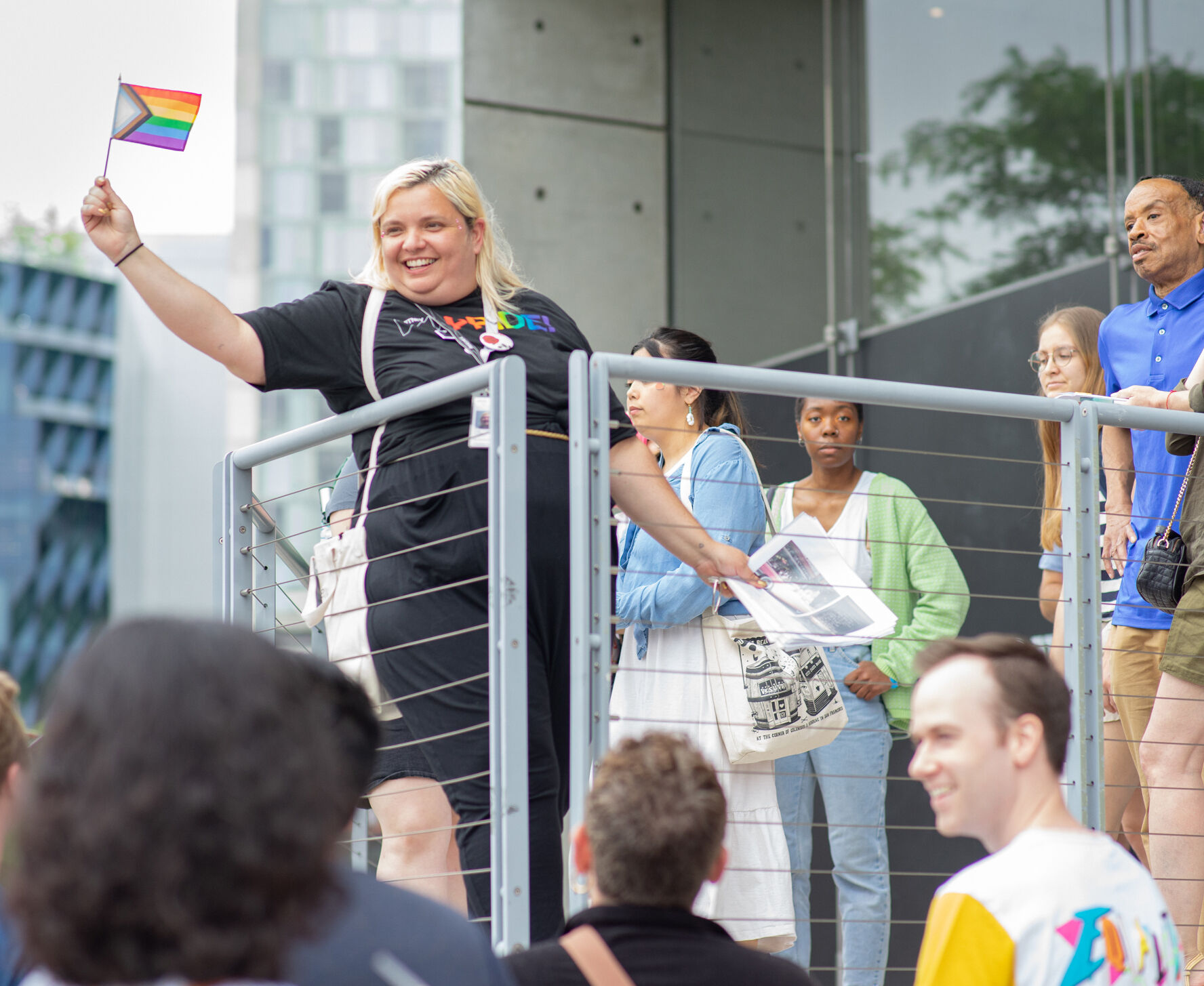
-
2
Meat Market/Trucks
Audio
Between Washington Street and West Side Highway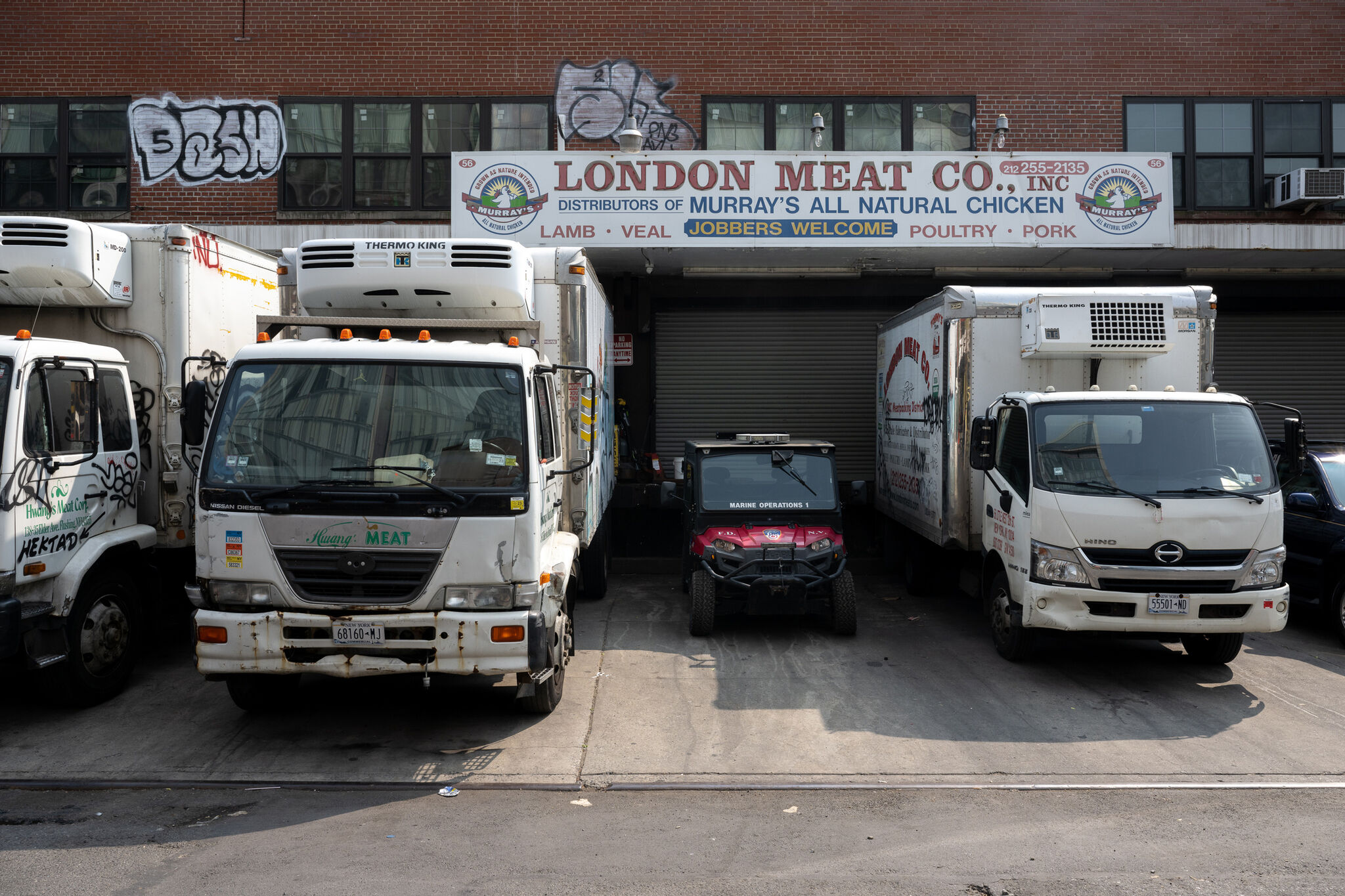
-
3
The Mineshaft
Audio
835 Washington Street at Little West 12th Street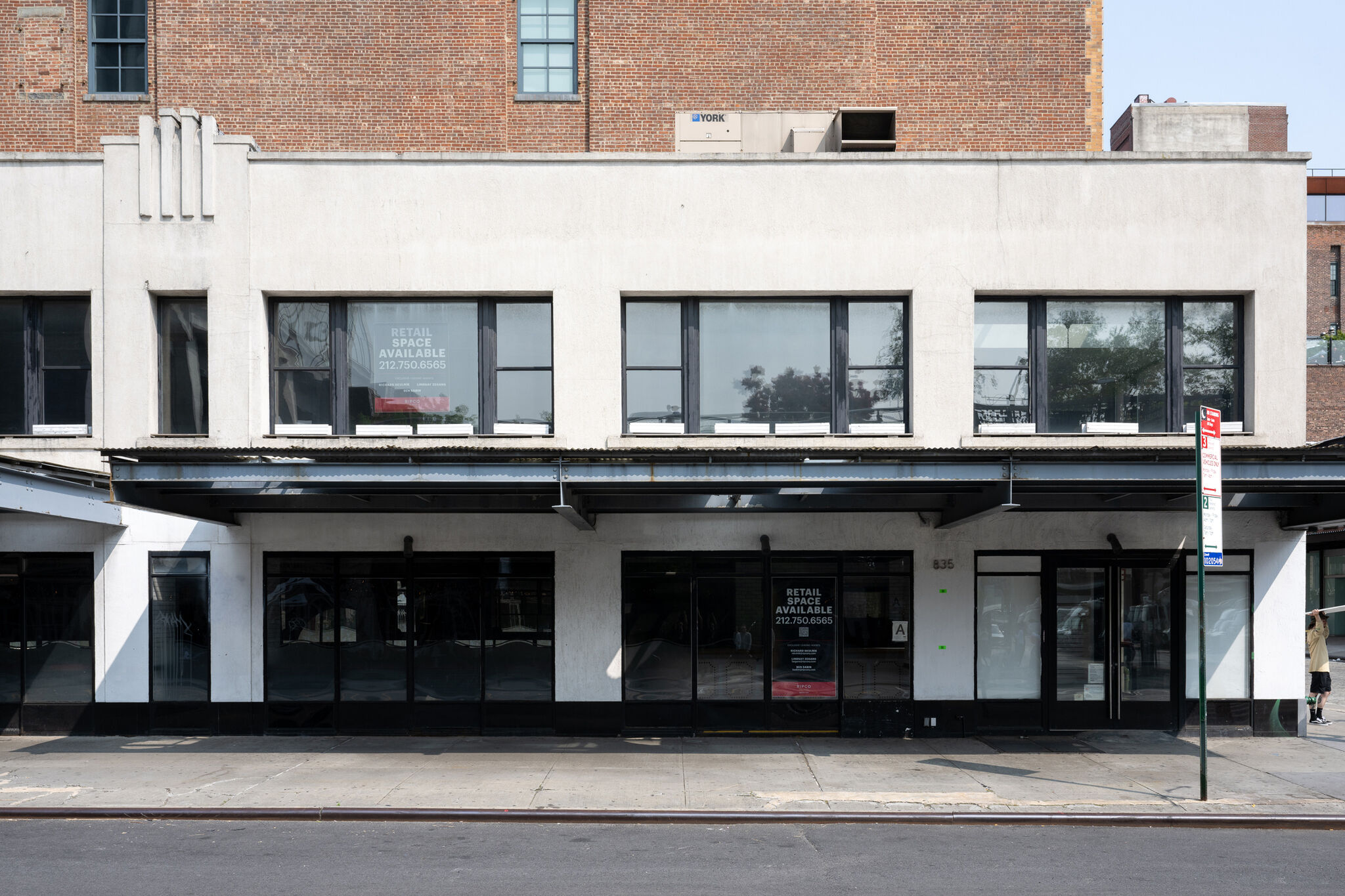
-
4
The Clit Club
Audio
432 West 14th Street at Washington Street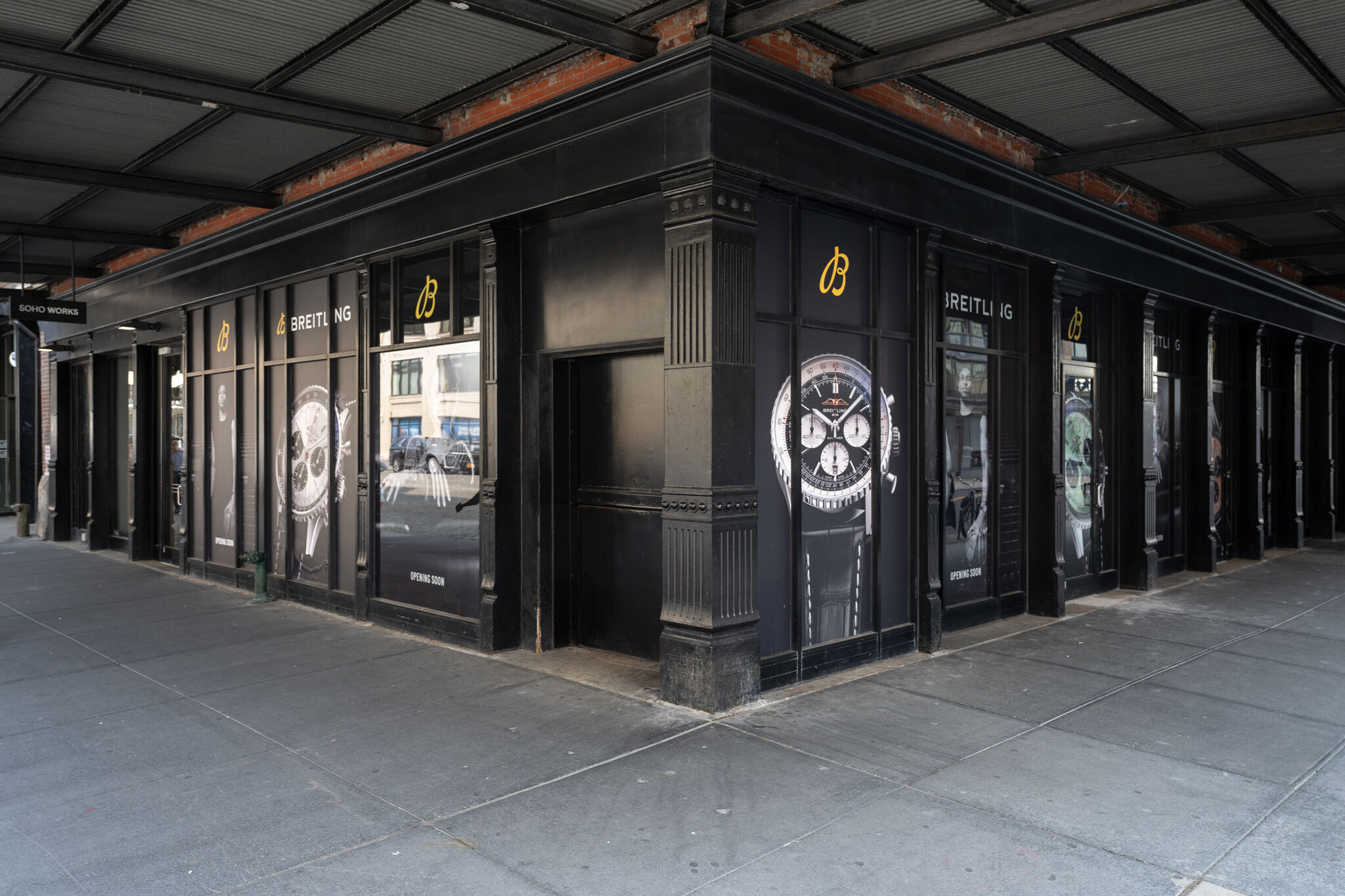
-
5
Lee’s Mardi Gras
Audio
400 West 14th Street at 9th Avenue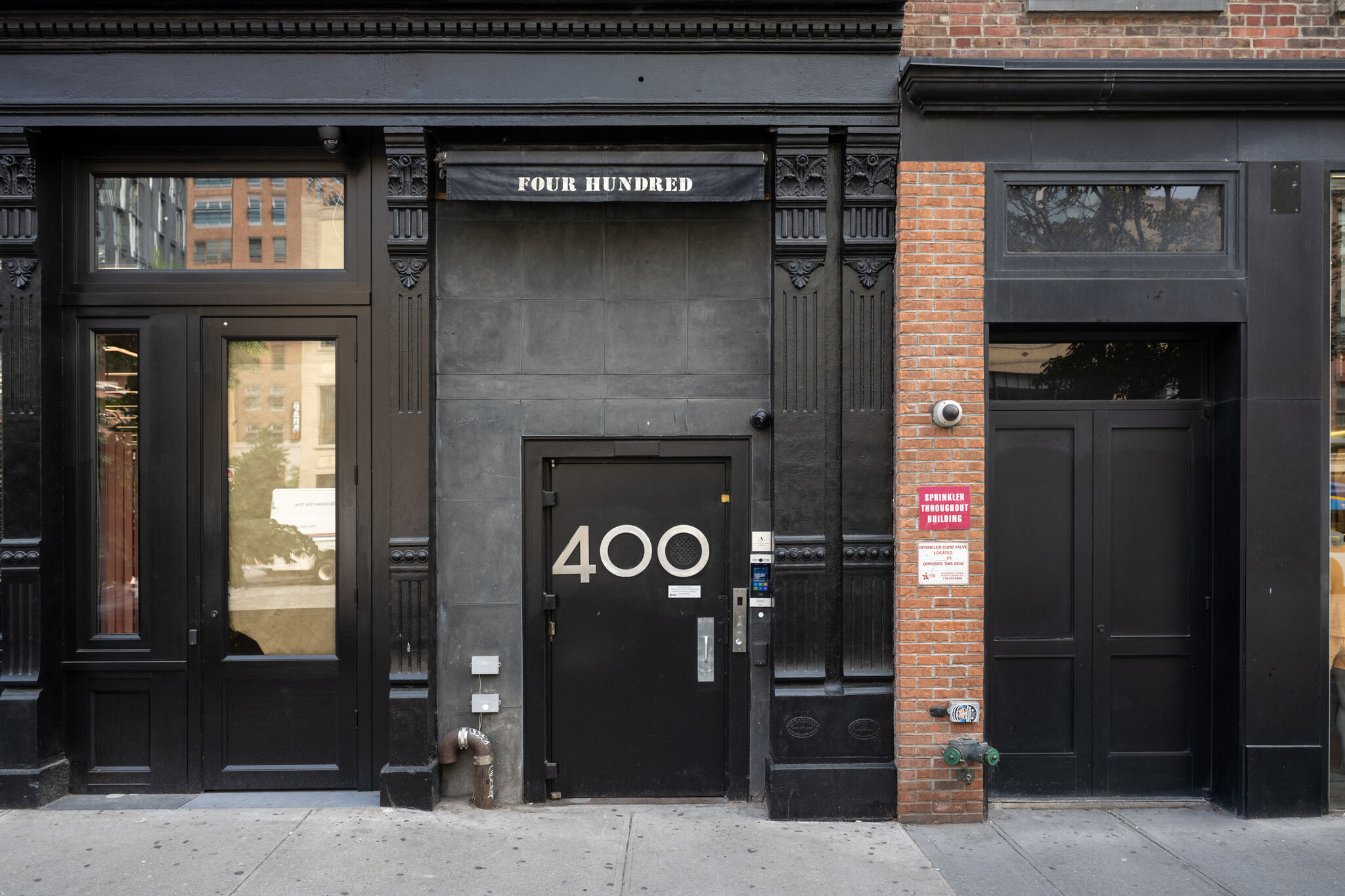
-
6
Nelson Sullivan’s Home
Audio
5 Ninth Avenue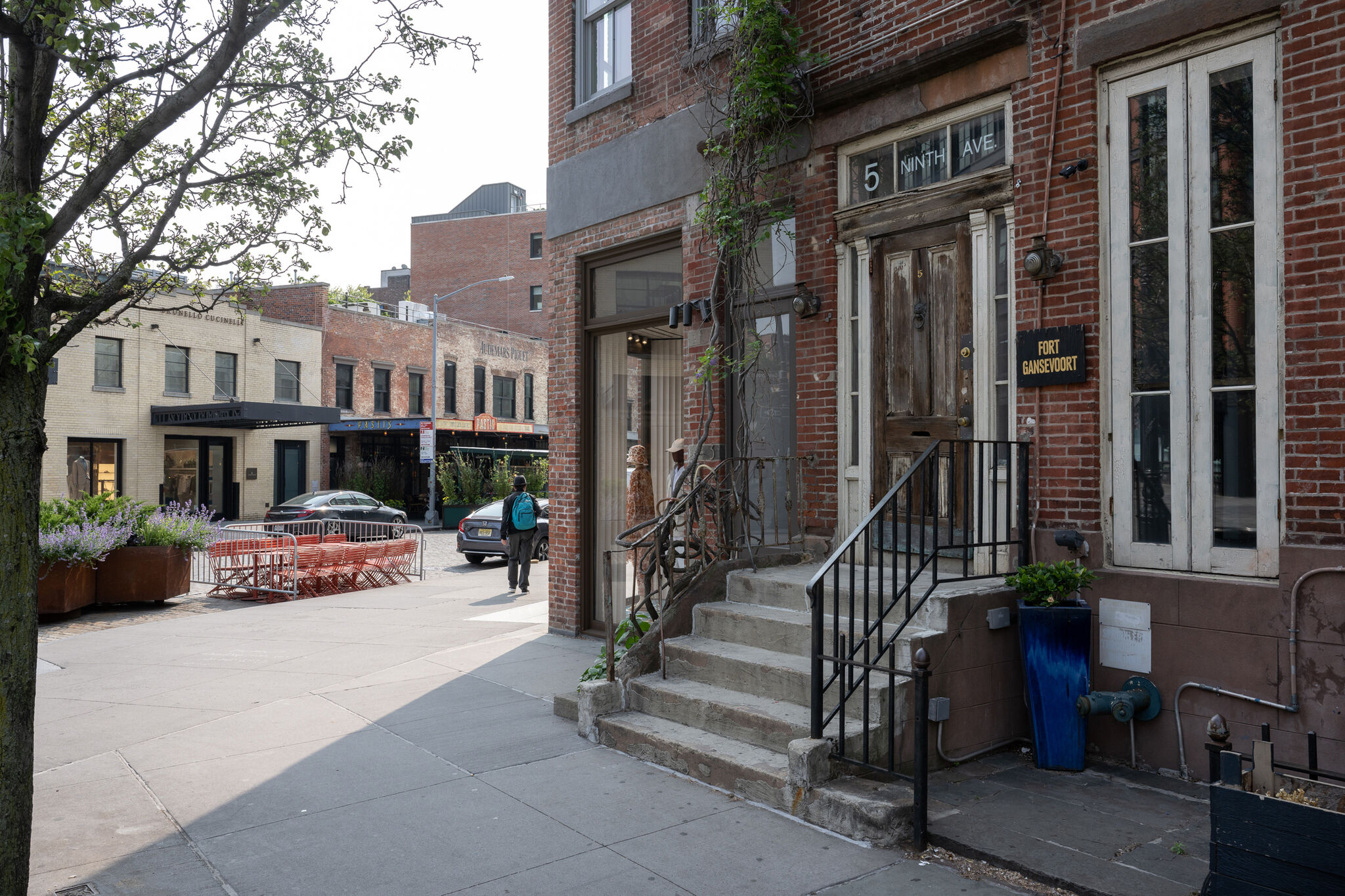
-
7
Florent
Audio
69 Gansevoort Street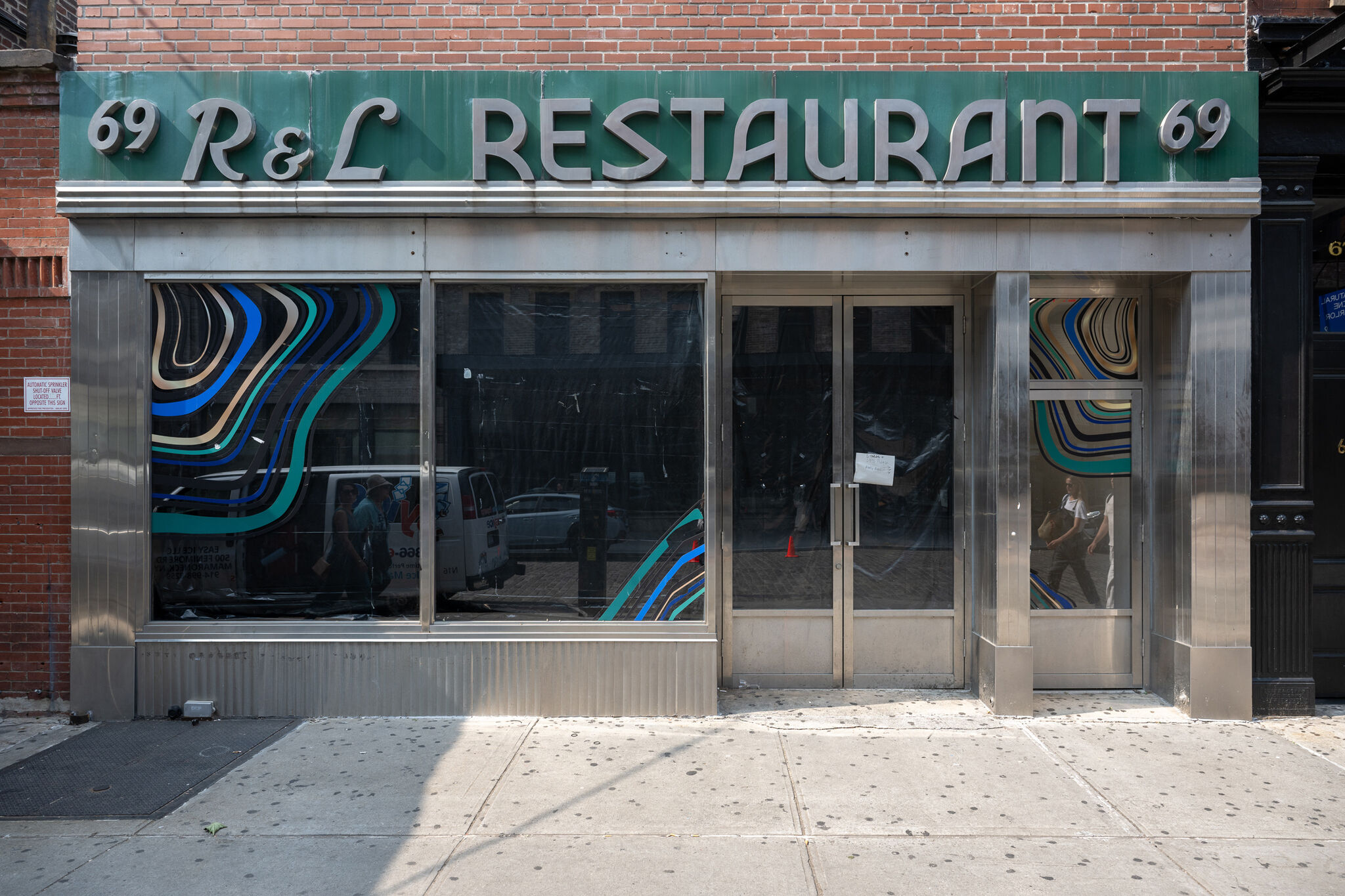
-
8
The Center
Audio
208 West 13th Street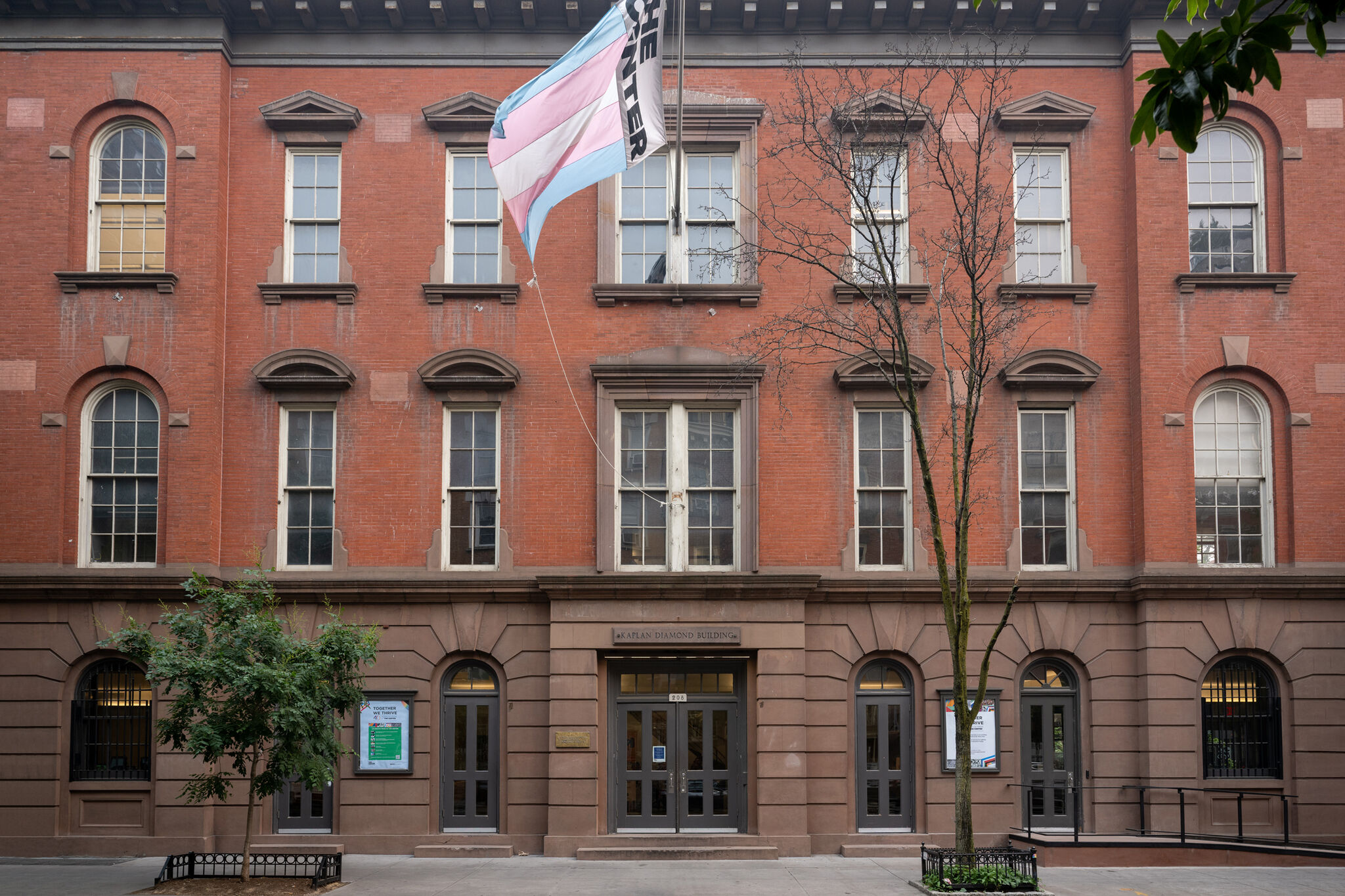
Josh Lubin-Levy: I'm Josh Lubin-Levy. I'm a former Joan Tish Teaching Fellow at the Whitney Museum of American Art, and I helped to develop the queer history walks in 2017.
Stina Puotinen: Hi, my name is Stina Puotinen, and I'm excited to lead you all on a queer history walking tour of the Meatpacking District.
Josh Lubin-Levy: Sitting here looking out at the West Side Highway and the Hudson River, we're going to be talking about the queer history of the Meatpacking District, which is the neighborhood in which the Whitney is currently located. To think about that history, we actually have to think about the queer history of New York City itself.
Stina Puotinen: So whereas northern and upper Manhattan was historically residential, the southern parts of Manhattan, closer to the factories of Soho and the industries on the east and west side, became havens for counter-cultural life. So it really starts with the idea of the industrial city taking people out of the conventional family unit and it makes sense then for queer communities to gather there.
Josh Lubin-Levy: You have this possibility for new forms of social and intimate life, that people hadn't really seen before.
You can also look at the Hudson River and imagine that these peers were part of that bustling life. You had travelers arriving and departing, dock workers loading and unloading cargo, and you had kids and sailors even swimming in the Hudson River itself.
But by the second half of the 20th century, the commercial activity along the piers began to decline. By the 1970s, the piers were all but abandoned, completely dilapidated, as the movement of bodies and goods had been largely replaced by air travel and interstate highways and cargo shipping no longer in use. There were certain plans that floated through the city in the fifties to turn this area into a park, but then by the 1970s, with the economic decline, those plans were abandoned, and the piers were pretty much left to rot.
The piers themselves, however, were not abandoned. These really precarious structures became a hub of both artistic and sexual experimentation.
Queer History Walking Tour at the Whitney Museum of American Art, 2022. Photograph by Filip Wolak.
Josh Lubin-Levy: Of course, queer life inhabits every part of the city's history, with queer spaces often emerging organically and surreptitiously in sites of cruising and public sex. One such site was known as the trucks, which emerged along the highway itself.
In 1929, the West Side Highway was elevated in order to alleviate the growing automobile traffic. Trucks increasingly ran throughout the city streets, transporting cargo to and from the piers, which remained a commercial hub.
Stina Puotinen: So at night, various industries who would transport goods would park there overnight underneath the overpass so the trucks would be empty, and this is a time before Amazon, so they weren't always in use. So the truck would arrive, it would unload, and then it would be parked under the highway empty, and so it became a hotspot for queer sex and activity.
Josh Lubin-Levy: During the conformity of the 1950s, the orgiastic trucks became more than a space of sexual freedom. Just the very knowledge of their existence countered a pretty pervasive cultural myth that if you were gay, you were confined to living a life of shame and isolation.
Indeed, the cultural knowledge of the trucks became so linked to an idea of sexual and social freedom that with the 1975 musical Lovers, which was subtitled, "The first musical hit that proves it's no longer sad to be gay," you had performers emerging on the stage out of a set that looked like an actual truck bed.
The trucks remained a really active cruising ground through the 1970s, and some ended up using this site of queer public sex to pathologize gay sexuality, but what these readings often miss is that as much as this was a space of desire, it was also a space of community.
Stina Puotinen: For example, in the 1970s, the Gay Liberation Front would hand out leaflets about protests, so it became a way, before the internet, before zines, for people to find each other and to share information and that sort of is a nice counterpoint. The existence of the trucks is a nice counterpoint to what ultimately became a hub for gay clubs in the neighborhood, the trucks kind of came inside into the bars.
Meat market/trucks between Washington Street and West Side Highway, 2023. Photograph by Filip Wolak
Stina Puotinen: Visiting the neighborhood now, it might not be visually obvious, but the neighborhood, since the 1930s, actually, was predominantly meat-packing industry butcher shops, in effect.
There are many stories about people who had been to the clubs at those times talking about the streets being red with blood. And that's partially the reason why this kind of activity was tolerated in this neighborhood, is that it was a place that no one else really wanted to be. People tell stories about coming out of the club and there's offal or blood or other bits from the meat packer. They're just in a pile, ready for trash day.
By the 1970s, the area had become known as a neighborhood that had a number of sex clubs, some of which were including Badlands, Sneakers, Ram Rod, Peter Rabbit, all of which catered to a clientele that had a particular look or interest in a particular look. For example, Sneakers was more of the preppy look. Camp queens might go to Badlands, Ramrod might have more of what we would now know as the Tom of Finland look, in that it has a little bit more of a masculine, biker edge, but the most famous club in the neighborhood was most definitely the Mineshaft.
Josh Lubin-Levy: …which was a men's only, sex only club, not a bar, that you actually had to get a membership card to. It was founded in 1976. One of its most famous members, was the artist Robert Mapplethorpe, and if you've seen Mapplethorpe's photography, which combines a real formal approach to black and white photography with BDSM aesthetics, you'll get the sense of how Mapplethorpe's work was inspired by what he saw at the Mineshaft.
What's really interesting about the Mineshaft is if you look back at its history, you can find evidence of the kind of rules for this social club, which included a dress code.
The Mineshaft dress code, as adopted by the club on October 1st, 1976, is to be followed during the year 1978 signed, the board of directors.
Approved dress includes the following: cycle leather and western gear…
Stina Puotinen: …Levi's, jocks…
Josh Lubin-Levy: …action-ready wear, uniforms, t-shirts…
Stina Puotinen: …plaid shirts, just plain shirts…
Josh Lubin-Levy: …club overlays, patches and sweat. No colognes or perfumes…
Stina Puotinen: …no suits, ties or dress pants…
Josh Lubin-Levy: …no rugby shirts, designer sweaters or tuxedos…
Stina Puotinen: …no disco drag or dresses…
Josh Lubin-Levy: Also, no heavy outerwear is to be worn in the playground. A pretty conservative idea of masculinity was being foregrounded, which, if by today's standards, we might problematize, it's interesting to think about the state of queer life in the 1970s, when this, what's known as clone culture, was being foregrounded.
It's a moment in which gay life is still being thought in these very convoluted terms of gender, so that with gay male couples, it was often thought that one was performing "the man" and one was performing "the woman". So this idea of having mine workers, policemen, firefighters, construction workers in these intimate male-male bonding relationships was pretty radical in the 1970s as a kind of send up against the idea that even in gay relationships, there's some tieback to heterosexuality.
It's an interesting space where no drinking was allowed. It was really modeled on the idea of a social club, and though it was something of a dungeon, it became a place that was so famous, people tried to get in just to spectate. There are many stories of celebrities like Mick Jagger trying to go to the Mineshaft and not being allowed in by the bouncer, precisely because he wasn't there to participate. He was there to gawk.
No photography was allowed at the Mineshaft. In fact, the only real record we have is when the film Cruising, starring Al Pacino, was shot in the Mineshaft as a location.
The Mineshaft was closed in 1985 during the AIDS crisis, when the city deemed this kind of sex club a space of high risk. What such high risk doesn't account for is that it's precisely in this site of open and shared sexual practice that key information might be shared about the emerging virus, how to practice safer sex, how to take care of one another, especially in that moment when the government was largely ignoring conversations about sexuality on a more public level.
Previous location of The Mineshaft at 835 Washington Street and Little West 12th Street, 2023. Photograph by Filip Wolak
Stina Puotinen: So, just up the street from the site of the Mineshaft, two blocks up on Washington Street, on the southeast corner of Washington and 14th, was the original site of the Clit Club, which is a party that ran from 1990 to 2002.
Josh Lubin-Levy: [it was] started by Julie Tolentino and Jaguar Mary, who at the time, was going by the name Jocelyn Taylor. It was the kind of space you could imagine as counter-posed to the Mineshaft's hyper-masculinity.
Stina Puotinen: Anyone could come, but queer women of color were pulled off the line first. The Clit Club itself, though, was not a club in the same way that the Mineshaft was a bar. The Clit Club was a party that happened in the space that was in this building, and it was actually on two levels.
If you think about it, 1990-2002 is the era of CDs. And apparently, at some points, the party would be so packed, but it was also very DIY, so they're still using folding tables and things like that.
They had this CD player on the folding table, and the party was so packed that, as people were jumping and dancing, the CD kept skipping. Just to give you a sense that it felt like everyone's living room.
Josh Lubin-Levy: And then, downstairs, there was a space where performance and videos could happen.
Katrina Delmar showed her films down there. Ron Athey performed in the basement of the Clit Club. So, in a way, that kind of merging of artistic and sexual experimentation continued. Many of the artists, whose work was premiered in the basement of the Clit Club, are now figures we would see in the museum, but that was certainly not the case in the 1990s.
Stina Puotinen: There was a real pop art sensibility to the Clit Club. So, in a lot of its flyers and marketing, they often would feature bellhop fashion or mechanic suits in some of the imagery. And the Clit Club logo itself was done in the style of the Coca-Cola logo font.
Josh Lubin-Levy: By the early 2000s, the Clit Club was so popular, you had people like Madonna coming to the Clit Club, which is really where Madonna gets her idea for the Sex Book that would go on to become so famous. But, alongside this fame, you also have the need for the Clit Club emerging around the ongoing AIDS crisis.
Many of the women who worked at the Clit Club also had some role in AIDS activism. The Clit Club, as it's been described to me and to others by Tolentino, was a space for caretaking as much as it was a space for celebrating. If you worked the bar at the Clit Club, you also had to know how to handle bodily fluid, safely. You had to know how to deal with people who were high, who maybe had injected something into their veins, had to deal with needles. And, this, at a time when calling the police was certainly not something that anyone felt was a safe way to take care of the community.
The previous location of The Clit Club at 432 West 14th Street and Washington Street, 2023. Photograph by Filip Wolak
Josh Lubin-Levy: We're now at the doorway to one of the former sites of Lee's Mardi Gras, which is something of a department store that existed on the second floor of this building.
Stina Puotinen: The space on 14th and Ninth was actually its second location, which is from 1985 to the 2000s. And the same building had two sex clubs. Club Fuck and Club Toilet. Sidebar: great club names!
Josh Lubin-Levy: Lee Brewster is well known for being, originally, an FBI agent in the 1960s. And, when it was discovered that there were photographs of him wearing gender nonconforming clothes, he was fired. It was part of an era in American history in which there were these ideas that being gay, being gender nonconforming, was something of a sight of shame that could be used to blackmail individuals. And so, you have many people who are purged in what were known as the homosexual purges of government offices.
Stina Puotinen: And he started Lee's Mardi Gras originally as a mail-order service in the back of magazines.
But at the brick and mortar shop, he started what ended up being really a department store, which also carried size 14 high heels. So, it was really organized to almost mimic the shopping experience of Bloomingdale's, perhaps, but this particular Bloomingdale's caters to drag queens.
And if you think about it, it's difficult, I think, now in a world where RuPaul is now on its fifteenth season and drag queens are very much part of our culture and our day-to-day conversation, even politically, say, "for better or for worse.”
But if you think about being a drag queen at that time, where would you go to find high heels that might fit your feet? Or where would you go to feel comfortable trying on women's clothes if most other people would perceive you as a man, especially in the 1950s and '60s and '70s? Lee Brewster started a department store where you could come to Lee's and go shopping and not be judged and actually have help in the dressing room.
Josh Lubin-Levy: It's at Lee's Mardi Gras that many of the trans activists and artists that we know of today would go shopping. Marsha P. Johnson shopped there, Sylvia Rivera, Candy Darling, Greer Lankton, but anyone could go shopping at Lee's Mardi Gras.
I know plenty of gay men who went shopping at Lee's Mardi Gras to get costumes for going out, outfits for the evening.Lee went on, during the gay liberation front, to found the Queen's Liberation Front, which was not located in Queens, New York, but was actually under the title of drag queens being liberated. And, in this way, Lee's politics really did align with the trans activism that we saw in organizations like STAR the Street Transvestite Action Revolutionaries, where figures like Sylvia Rivera would remind all of us that, "Glitter is not a basis for affinity, and that liberation and freedom and rights for some is no liberation at all."
Previous location of Lee’s Mardi Gras at 400 West 14th Street and 9th Avenue, 2023. Photograph by Filip Wolak
Stina Puotinen: Not too far from Lee's Mardi Gras is the original home of some of America's most famous drag queens, RuPaul Charles and Lady Bunny, who actually lived where Fort Gansevoort is now, and famously were friends and roommates with an artist, Nelson Sullivan, who was originally from Atlanta.
Josh Lubin-Levy: One of the amazing things about Sullivan is that he was a videographer before video was really cool. He brought his camera with him everywhere he went, which meant on walks to the West Side Highway or the East Village, to see the Drag March up and down the streets, to club kid scenes, as that party scene was emerging in the nineties. And, Sullivan shot with a fisheye lens, which meant that all the videos he produced have this extra rounded effect that looks like they're being shown on old school televisions. It was this idea of taking what was then the queer and the hip and the outsider culture, and making it look like the quaint television shows of the 1950s.
Stina Puotinen: And a lot of his collection is actually on YouTube, so you can watch it if you want, but Nelson's Last Walk is one of his most famous, and it's from July 4th. It's a really beautiful video of how quiet the neighborhood is. There's nothing, anyone around. And he just walks from Fort Gansevoort, down to the river, and doesn't encounter one person, which is kind of hard to imagine now. There's this sense of possibility in Sullivan's videos.
Josh Lubin-Levy: Sullivan, unfortunately, died of a heart attack at a very young age, but you can find many of his videos online, on YouTube, because his estate decided that it was in keeping with this idea that these videos really were a kind of popular culture that should circulate like television, that they should be available online.
Nelson Sullivan’s former home at 5 Ninth Avenue, 2023. Photograph by Filip Wolak
Stina Puotinen: The site where Florent was, was originally a restaurant called R&L Restaurant, which was also originally a 24-hour diner in the fifties and sixties.
Florent was a 24-hour diner that catered to the queer community in the neighborhood. It opened in 1975, and it actually only closed in 2008. So it's been here relatively recently. It was opened by Florent Morellet, who was himself a gay man who heard about the great cruising in the neighborhood and came down to check it out in the 1970s. And the story goes…
Josh Lubin-Levy: As he was walking down this very street, he saw two men approaching him, and he thought they were cruising him, and in fact, they mugged him. Looking for some place to clean up, to gather himself, he saw the R&L Restaurant, and he went inside and cleaned himself up in the bathroom and sat at the bar and had something to eat.
What's really interesting is that the story Florent tells about going into R and L Restaurant, was recognizing that, although the Meatpacking District was a haven of queer cruising and queer community, it remained a commercial site for meat packing. In that restaurant, there were people who were just getting ready to go on their shift, or just getting ready to come off of their shift at the meat packers. If you paid careful attention, you could see the blood still running in the streets outside. There were also many gay men who were heading towards their night, leaving their night. So, the restaurant became a space where these worlds that otherwise occupied day and night could find these moments of overlap.
Florent restaurant was amazing in so far as it kept up that spirit of making different communities possible inside of the space itself. Not only would people come from all around for the steak frites that were very good at Florent, but Florent employed a number of artists to work at his restaurant. Many of these artists were dancers or choreographers or performers who would have unpredictable schedules, and they worked at Florent because they could either work odd hours, or because Florent was so lenient with them taking time off.
Inside of Florent's restaurant, art would be made. Charles Atlas made the film Butcher's Vogue, which is a response to Madonna's Vogue, with the artist Connie Girl and Chicklet, Richard Move, Joseph Lennon and Rebecca Weinberg. And, you can see them performing inside of the restaurant itself. And, alongside this space of artistic celebration, Florent's Restaurant became a really interesting site for queer activism during the AIDS crisis.
There was a menu board at Florent where he would put up the daily specials, and in the corner of that board, there was the phrase "T" with a number next to it. And, what that referred to was the T-cell count of Florent Morellet himself. As an HIV positive business owner, florent, in the early days of the HIV AIDS crisis was tracking his T-cell count, which is a way of tracking the progression of the virus in your body. And, he was publicly displaying that account for all of his patrons. If you think about how fearful people were about the virus's transmission, this was an incredibly radical act. There were, at the time, in hospitals, stories about nurses being too afraid to go into HIV positive patients' rooms to give them their food. So, the fact that the owner of the restaurant himself came out as HIV positive, and that he would share that on the specials board was really an act of defiance.
Florent became sort of the de facto mayor of the Meatpacking District. He was celebrated in parades. There are these great photos of him dressed up in drag as Marie Antoinette, and in 2008, he did sell the restaurant, which was really a change of guard in the area, although it allowed Florent to retire and to enjoy some more of his life.
Stina Puotinen: Florent, in some ways in my mind, is almost the last bastion of what the neighborhood was. The neighborhood still is a thriving hub that has a community, but it's just very different to the one that inhabited these spaces not so long ago.
Former location of Florent at 69 Gansevoort Street, 2023. Photograph by Filip Wolak
Stina Puotinen: So, not far from here, in a continuation of this beautiful history of the neighborhood, the Lesbian, Gay, Bisexual & Transgender Community Center, also known as The Center, is over on 208 West 13th Street, just a few blocks from where the Whitney is now.
Josh Lubin-Levy: The Center continues to host a wide range of programs and speakers, bringing in queer artists and writers to address the community. Figures like Audre Lorde and Quentin Crisp. It was at The Center that Larry Kramer gave his famous speech about Act Up in 1987. And, of course, The Center itself is a work of art.
Stina Puotinen: There's some really beautiful murals by Keith Herring and other artists that are still there. It's open to the public. You can go and visit them if you want to go in and have a peak. But it really became the kind of community center that, if you think back to sharing flyers at the trucks, it kind of became the living history of the neighborhood now.
The Center at 208 West 13th Street. Photograph by Filip Wolak
0:00
0:00