
SHERRIE LEVINE: MAYHEM
2011
This audio guide highlights selected works from the exhibition SHERRIE LEVINE: MAYHEM and features commentary by Johanna Burton, guest curator, critic, and art historian; Thomas Crow, art historian; Richard Flood, chief curator at the New Museum; Howard Singerman, critic and art historian; Carrie Springer, senior curatorial assistant; and Elisabeth Sussman, curator and Sondra Gilman Curator of Photography.
-
300
Introduction to SHERRIE LEVINE: MAYHEM
Audio -
301
Sherrie Levine, After Walker Evans 1–22, 1981, printed 2010
Audio -
302
Sherrie Levine, Fountain (After Marcel Duchamp), 1991, and Fountain (Buddha), 1996
Audio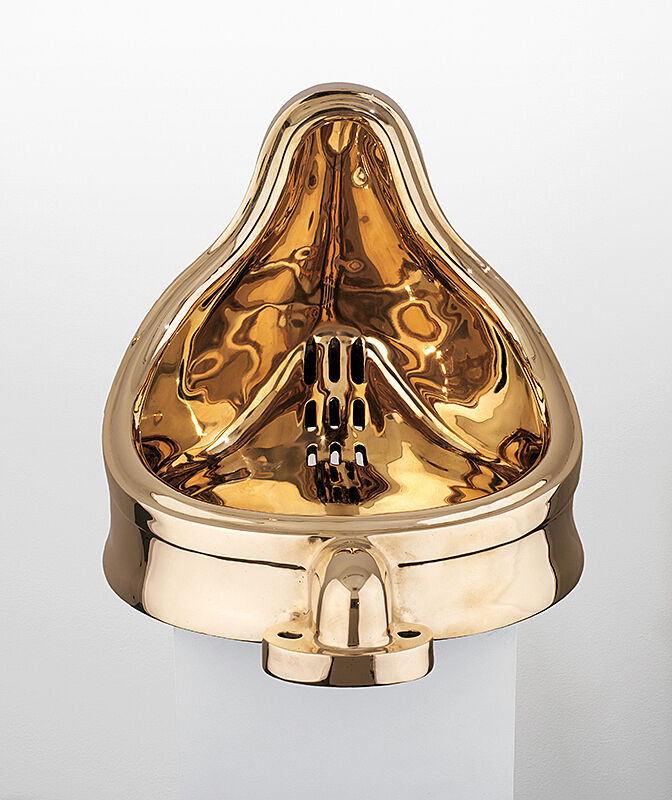
-
303
Sherrie Levine, Knot Paintings, 1987–2002
Audio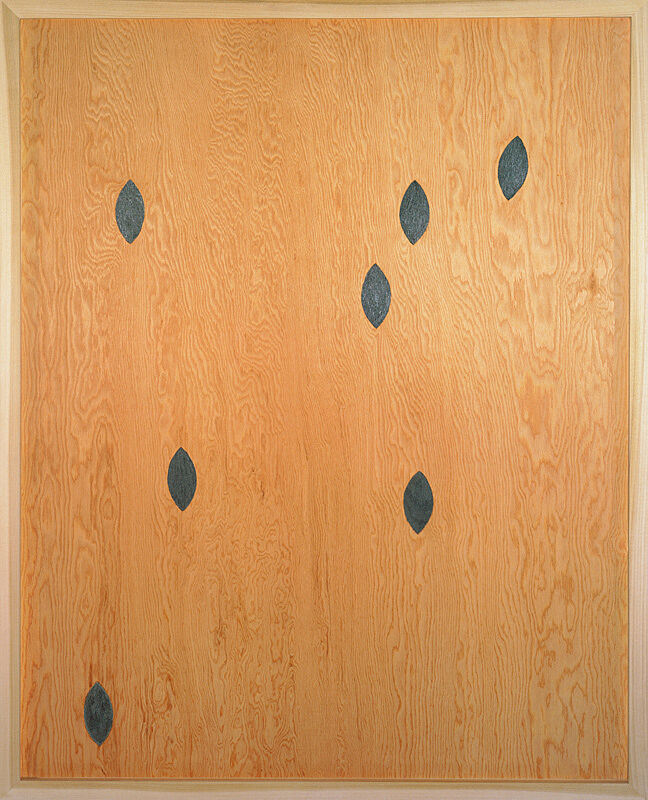
-
304
Sherrie Levine, Broad Stripe paintings, 1985
Audio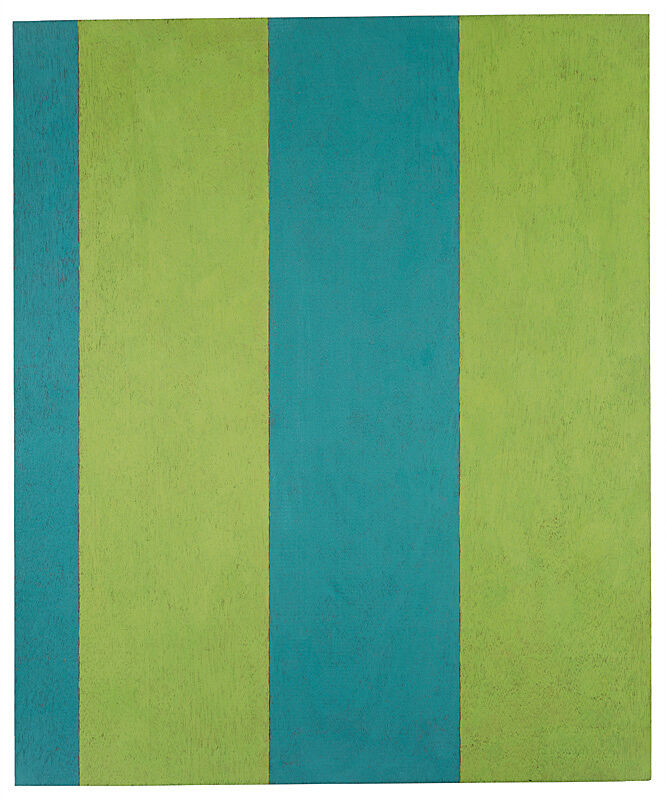
-
305
Sherrie Levine, Newborns (Crystal Newborn, 1993, and Black Newborn, 1994)
Audio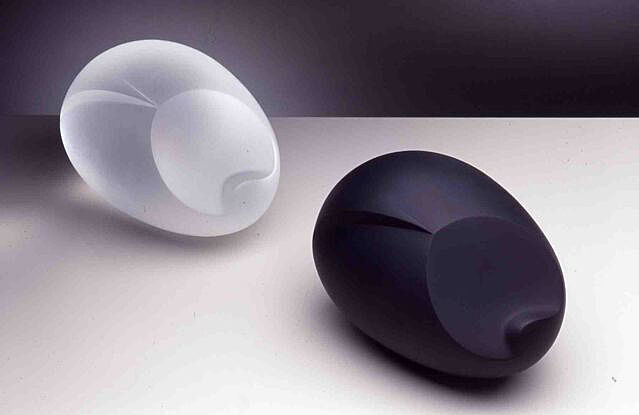
-
306
Sherrie Levine, Crystal Skull 1–12, 2010
Audio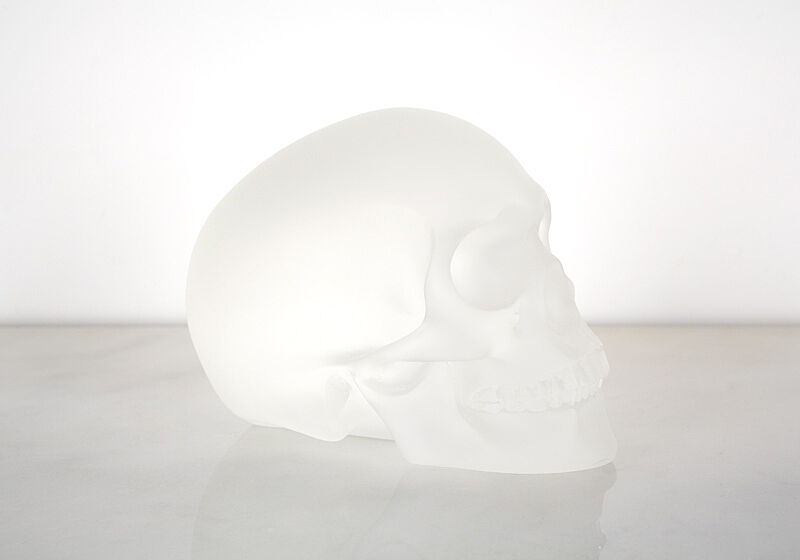
-
307
Sherrie Levine, After Blossfeldt 1–20, 1990
Audio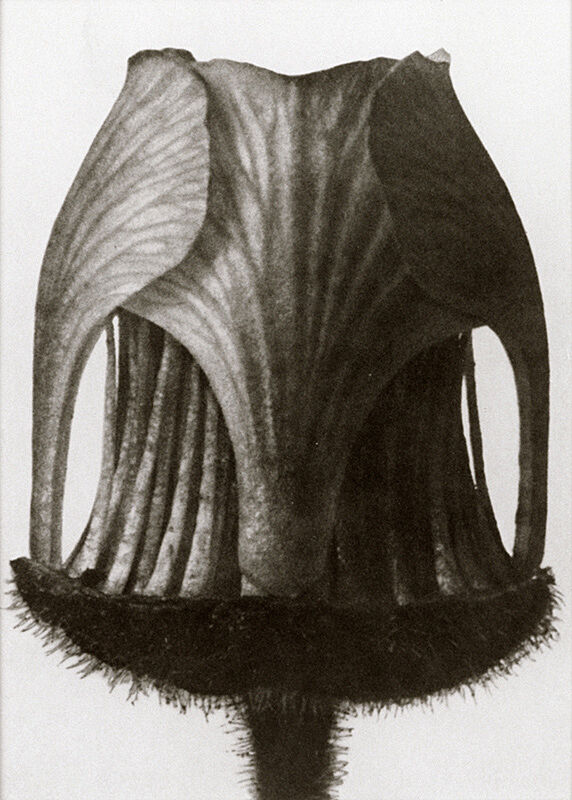
-
309
Sherrie Levine, Bachelors 1–6, 1989–90
Audio -
310
Sherrie Levine, L’Absinthe, 1995
Audio -
311
Sherrie Levine, Melt Down paintings, 1990
Audio -
312
Sherrie Levine, After Courbet 1–18, 2010
Audio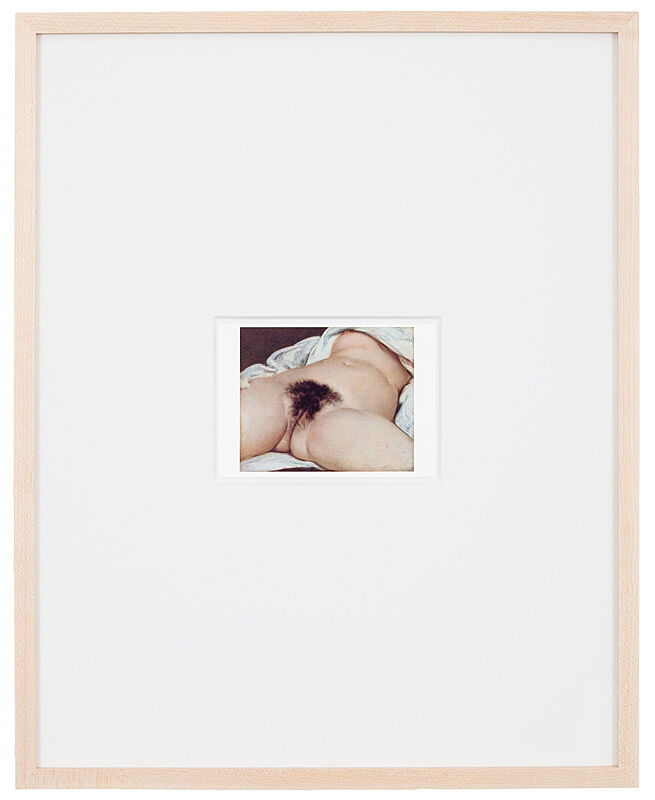
-
313
Sherrie Levine, Equivalents (After Stieglitz): 1–18, 2006
Audio -
314
Sherrie Levine, Red and Grey Check: 7–12, 2000
Audio
Narrator: Welcome to SHERRIE LEVINE: MAYHEM. In this exhibition you’ll see three decades of work, made between 1981 and 2010. Levine works in diverse media—photography, painting, and sculpture—but her most frequent material is art history itself. She reprises images and objects drawn from modern art. Perhaps the best-known example of this practice is After Walker Evans 1–22, on view nearby. It’s a suite of photographs taken by Walker Evans during the 1930s that Levine re-presented within the framework of her own art. In the exhibition you’ll also see her engagement with objects and images by Marcel Duchamp, Constantin Brancusi, Edgar Degas, and others.
Johanna Burton: She transforms these works.
Narrator: Johanna Burton is an art historian and critic.
Johanna Burton: She subtracts the images, taking them out of their existing contexts, so shaving away what we would think about as the framework, but then she also adds something to those works. It might not be visible, which has been a quite interesting problematic for viewers over the years. What is added? Is it desire? Is it a new framework? How is the material component changed?
Narrator: Museums are traditionally known for presenting art history as a coherent narrative. It is in this context that Levine’s work—sensuous and understated though it may be—creates Mayhem. An image might mean one thing in the nineteenth century, something different in the 1980s, and something else again today. By using existing imagery, Levine gives these transformations concrete form—raising questions about originality and authorship. And by recontextualizing that imagery, she often unearths ideologies and attitudes that may not have been apparent.
This exhibition is not organized as a retrospective. Levine’s selection of her work for this exhibition creates a conversation between the objects that unfolds as you move through the galleries.
Narrator: In 1981, Levine drew upon Depression-era photographs by Walker Evans. The result was, After Walker Evans 1–22. The individual photographs are known as Untitled (After Walker Evans).
Johanna Burton: Untitled (After Walker Evans) would indicate that she took the Walker Evans as a kind of model or a kind of foundation for her own work.
Narrator: Johanna Burton.
Johanna Burton: It's an old historical tradition that shows both a kind of transparency in terms of showing what it is that you're using as a source, but also shows, that you don't have a fidelity to it. So that there's a certain amount of porousness between those two objects. It's not an exact replica, even if it looks like it might be.
Narrator: Artists have often relied on art-historical precedents—but Levine is extreme in the directness of her reliance. The visual difference between the Evans and Levine photographs is slight but rea—and the conceptual difference is considerable. Historically, documentary photographs like those Evans made were understood to be somewhat transparent—to present an image of the world as it was. By contrast, when a female artist transforms those images fifty years later, what’s clear is that nothing is straightforward. The work foregrounds issues of gender and authority. It makes us question whether or not the photographs by Evans were ever so transparent—or if their subject was always the artist himself as well as the people and landscapes before his lens. And it calls into question what an “original” photograph might be in the first place.
Narrator: In 1917, the artist Marcel Duchamp purchased a urinal and submitted it to a juried exhibition held by the Society of Independent Artists. He called it Fountain. Sherrie Levine’s Fountains—bronze casts of a urinal similar to the one Duchamp chose—put Duchamp’s readymade sculpture in a new light.
Thomas Crow: It's usually seen simply as an anti‑art gesture. Anything can be art, the worst thing, the thing that you don't want to look at in public can be art.
Narrator: Duchamp was well aware that Fountain would be perceived this way. But he also saw a beauty in the porcelain object – a purity of form that recalled the sculpture of his contemporary Constantin Brancusi.
Thomas Crow: The "Fountain" is in its way a found Brancusi.
Narrator: Thomas Crow teaches art history at the Institute of Fine Arts, New York University.
Thomas Crow: Brancusi used polished cast bronze as one of his characteristic materials.By melding the material and the approach of Brancusi with the gesture of Duchamp, you actually restore the original gesture and make it something that you can actually see, rather than just assimilate as a notion or an idea. That is, I think, the strength of her work throughout, the way that she situates herself in a genealogy of artistic practice that is important to her, that is important to lots of other artists besides her.
She is able to make that connection explicit, available to the viewer, rather than something that you would just learn by going and reading a critic or taking an art history class.
Sherrie Levine, Fountain (Madonna), 1991. Cast bronze, 15 × 15 1/2 x 25 in. (38.1 × 39.4 × 63.5 cm). Private collection. © Sherrie Levine; image courtesy Simon Lee Gallery, London, and Paula Cooper Gallery, New York
Richard Flood: With the Knot Paintings, I always tend to think of them in a funny sort of way as the Levine lexicon, that they are such a perfect representation of something that is incredibly essential in the way that the artist makes her work. I think it's one of those things that is so easy for people to disregard. "Oh, it's a piece of plywood, and look, she's filling in the knots."
Narrator: Richard Flood is chief curator at the New Museum.
Richard Flood: They're totally what they are. They're completely pragmatic, and at the same time the pragmatism is what contains the poetry. Even when you start looking at the varieties of board that Sherrie's used over the years, they're all quite different, and every time she introduces another kind of ply, there's a different rhythm in the wood. There's a different way in terms of how she's picking out those knots to create the pattern, to create the bytes in the story. I mean so you could also think of these really almost as computer notations—it's up to you what they put together. Are they, you know, is it a kind of Morse code for, "Have a great day," or Morse code for, "It's always rougher than you think it's going to be." The possibilities for all of these interpretations are there, and yet they are simply a fact. You know, wood is a fact. A knothole in a piece of wood is a fact. And then Sherrie just does one tiny thing, and the fact becomes a poem.
Sherrie Levine, Lead Knot: 7, 1988. Metallic paint on plywood, 50 × 40 in. (127 × 101.6 cm). Paula Cooper Gallery, New York and Simon Lee Gallery, London. © Sherrie Levine; image courtesy Paula Cooper Gallery, New York
Narrator: This is an example of Levine’s Broad Stripe series from the 1980s. Elisabeth Sussman is Sandra Gilman Curator of Photography at the Whitney.
Elisabeth Sussman: Essentially she’s painting small, you could call them abstract paintings, and they’re intensely colored rectangles or maybe close to squares. They are unusually colored, and they’re striped. They usually have two to three vertical divisions, and the number of colors are like two or three different colors. They have a very smooth, lovely, almost shiny oily surface. So they’re the kind of paintings that you would stop and look at because the surface would interest you. And then you would look at them because the colors would interest you. So they’re quite snappy.
She was not going for anything theoretical about geometrical abstraction, or mystical this-or-that, or expressiveness of color, or any of the things, kind of arguments that might have been made around painting traditionally in the early sixties. That was not her interest.
Narrator: At that time, abstract expressionist painters and the critics who championed them made grand claims for abstraction.
Elisabeth Sussman: By making these like that a little bit, so that you refer to that tradition, but small, and eccentric, eccentrically colored, you’re not trying to make that big statement. I think instead—I think it’s trying to say that this stuff, this abstraction, has moved into just almost the pop realm. That it’s moved into consumer culture and just the general economy of signs and it’s flattened out. It’s generic. That kind of abstraction was absorbed into all kinds of product, manufactures and decorative styles, advertising styles. So it became generic in terms of oft-repeated within art and oft-repeated within culture in general.
Sherrie Levine, Broad Stripe: 6, 1985. Casein paint and wax on mahogany, 24 × 20 in. (61 × 50.8 cm). Collection of Nina and Frank Moore. © Sherrie Levine. Photograph by Sarah Wells; image courtesy Paula Cooper Gallery, New York
Narrator: Crystal Newborn and Black Newborn are made in sandblasted glass. They take their form from a sculpture called The Newborn by Constantin Brancusi. Levine has installed them on top of grand pianos, something she began doing after seeing a photograph of a Brancusi exhibited this way in the home of a British collector. This display foregrounds the ways art is shown differently in the domestic sphere and reveals much about the operations of class.
Levine made the sculptures with the cooperation of the Philadelphia Museum of Art, which owns a version of Brancusi’s Newborn.
Howard Singerman: The work itself, The Newborn, is a remarkable work.
Narrator: Howard Singerman is an art historian and critic.
Howard Singerman: It is compact, it is smooth, it is aerodynamic: it's a kind of wonderful abstraction or encapsulation, on Brancusi's part, of a kind of birth, an origin, that first cry in the world of the newborn. And indeed the idea of an origin was a crucial idea for Brancusi that he works over and over again in this egg‑like form. The fact that he works it over and over again is, in a sense, where he issues the invitation for Sherrie Levine to make the work after Newborn, to continue his series of newborns.
Narrator: The casting process that Levine used to make these sculptures bears a certain resemblance to photography. Once the mold is made a number of identical copies can be made from the mold, a number of identical versions for which in fact there is no original because the mold is a sort of negative out of which these multiples can come.
So there is a play here both within Brancusi's practice and within Levine's of taking that which is the emblem of the origin and to allow it to continue to spread, to stretch out across the century and into the twenty-first here in this exhibition.
Sherrie Levine, Crystal Newborn, 1993, Cast crystal, 5 × 8 × 5 1/2 in. (12.7 × 20.3 × 14 cm). Private Collection and Black Newborn, 1994. Cast glass, 5 × 8 × 5 1/2 in. (12.7 × 20.3 × 14 cm). The Kwon Family. © Sherrie Levine. Photograph by Douglas M. Parker Studio; image courtesy Paula Cooper Gallery, New York
Narrator: The Crystal Skulls respond to the European still life tradition. Howard Singerman.
Howard Singerman: The skull, which since the Renaissance, if not before, has long been an image of the vanitas, of the presence of death. Here it's presented, one after another, in vitrine, the crystal skulls, without perhaps the affect or the setting, the place that it would have within a still life. It's as though a kind of still life supply store, where one might come and get a skull or just simply set out as sculpture.
Narrator: There are twelve skulls, so repetition is an important part of the work.
Howard Singerman:A repetition that, since Warhol if not before, has been about a kind of cooling off of hot objects, a cooling off of emotional objects, at the same time, creating that coldness, too, as a different kind of emotional feeling.
Sherrie Levine, Crystal Skull, 2011. Cast glass, 5 1/2 × 7 × 4 1/2 in. (14 × 17.8 × 11.4 cm). Private collection; courtesy Jablonka Galerie, Cologne. © Sherrie Levine. Photograph by Davina Semo; image courtesy Paula Cooper Gallery, New York
Narrator: Levine’s After Blossfeldt is a series of twenty images drawn from the photographer’s body of work. Blossfeldt worked in the late nineteenth and early twentieth century, gathering plant materials, cleaning them up, isolating them against a solid background, and magnifying them in photographs.
Carrie Springer: The very act of re-presenting them opens them up to all sorts of references that might not have been a part of Blossfeldt's work.
Narrator: Carrie Springer is a senior curatorial assistant at the Whitney.
Carrie Springer:He was clearly looking at the relationship between the plant forms and forms in art. However, her re-presentation of them really makes that so much more apparent.
I think that she gives us the opportunity to look at them in a lot of different ways. That's not to say that Blossfeldt himself and his original vision is not important. She just brings that to us. She brings us the forms, which are incredible, which are incredibly sensuous, which are incredibly complex, which have elements that are both, kind of, cold and warm at the same time. And she brings them to us in these images that leave it in our hands or in our minds with our intuition, to make all the connections that we might make. They may be hers, they may not be hers. But they can be ours. And that's one of the most interesting aspects of it, to me.
Sherrie Levine, After Karl Blossfeldt: 3, 1990. Gelatin silver print, 10 × 8 in. (25.4 × 20.3 cm). Private collection. © Sherrie Levine. Image courtesy Paula Cooper Gallery, New York
Narrator: This work, called Bachelors 1–6, translates two-dimensional images into bronze sculpture. The images come from a work by Marcel Duchamp called The Bride Stripped Bare by her Bachelors, Even—also called The Large Glass. They depict abstract, mechanical forms that Duchamp identified as symbolizing male sexuality and gave the name “malic molds.” Taking Duchamp’s language literally, Levine made molds based on these figures and used them to cast bronze sculptures. Weirdly mechanical and beautifully lustrous in their materials, Levine’s sculptures have an almost fetishistic quality.
Howard Singerman: One of the reasons that Duchamp is such a good foil or partner for Levine in this work and, indeed, throughout the exhibition, is his invention of the "readymade.
Narrator: Duchamp’s readymades were objects—snow shovels, bottle racks—that the artist chose, titled, signed, and declared to be works of art. Howard Singerman.
Howard Singerman: One can think of Levine's practice throughout as a practice of the "readymade," but rather than looking towards the hardware store and the shop window, looking in the gallery—and even more than in the gallery, looking in the catalog and in the art book, where the work itself is already reproduced, so that her own reproduction in the forms that it takes follows on to something that has already begun to happen: a dispersal of the work from itself or from its origins.
Narrator: In L’Absinthe, Levine presents the 1876 Edgar Degas painting of the same name in twelve black-and-white photographs. In the image, a woman gazes out over her absinthe, a highly addictive alcoholic drink popular in the late nineteenth century. By eliminating color, Levine heightens the focus on the alienated woman at the center of the image. The repetition of the image undermines any sense of uniqueness we might find in her emotional state—perhaps what we see on her face is simply the look of the modern condition. By repeating the images, Levine reinterprets them.
Narrator: To make each Melt Down painting, Levine began with a single image by an earlier artist—here Piet Mondrian, Ernst Kirchner, and Claude Monet. She analyzed them digitally, determining the average hue of all the picture’s combined colors. Working in traditional, richly textured materials—oil paint and a mahogany panel—she then made a painting using each “melted down” color. The results obliterate the originals—we can’t even guess which Mondrian or Monet she’s used—but they also present them in a pure, sensuous form. Thomas Crow.
Thomas Crow: There is this inhibition, which has been enforced upon artists I think mostly by critics and by museum practice, that everything has to be a novelty, unless things are quoted with heavy‑handed irony. That's OK.
But Sherrie Levine doesn't quote with heavy‑handed irony. She quotes, in fact, with great sincerity, in my mind. And one of the things she's saying by these acts of quotation is that the innovations of earlier artists need not be just put on the shelf, sent to a kind of mausoleum in a museum because the original inventor has moved on, or has died and is no longer in a position to employ his or her own discoveries.
Those discoveries may not be exhausted. They probably are not exhausted. The better they are, the more likely it is that they should have a long life. And it is up to younger artists coming along to give them that life, to find out what more is there. What can we still find in those original moments of discovery and innovation?
I think it's very much a misconception that they have to be strictly autobiographical and in anybody else's hands, they lose their validity. It's like saying, you know, a wonderful chord progression in music can only be used by the composer who first thought it up.
But in the visual arts, we've somehow been instructed that you can't use these innovations. That blockage usually results in the innovations carrying on in other spheres, like graphic design, for example, which very eagerly continues to use these ideas and devices that come from avant‑garde art.
But artists have really just been needlessly inhibiting their range of reference and Sherrie Levine has broken through that.
Johanna Burton: After Courbet from 2010 is made up of 18 postcards.
Narrator: They present a painting by Gustave Courbet from 1866, which he called Origin of the World. Johanna Burton.
Johanna Burton: In the image, of course, you see the genitals, stomach, and breasts of an anonymous woman, a framing of the nude body that truncates and pretty much just shows these particular elements.
Narrator: In a move utilized by other nineteenth- and twentieth-century modernists, Courbet played with the idea that artist’s creativity was a life-giving power rivaling female sexual reproduction. In this image he both presented the female body as an erotic object and as an explicit metaphor.
Johanna Burton: Of course, the notion of the origin, both in terms of authorship, but also in terms of biological imperatives for reproduction, are interesting when one thinks about Levine's own place as a woman artist in relationship to this image. She both sort of renders this idea of reproduction and originality moot, but also seems to multiply its implications.
Sherrie Levine, After Courbet: 1–18, 2009 (detail). Postcard on mat board, 20 × 16 in. (50.8 × 40.6 cm). Paula Cooper Gallery, New York. © Sherrie Levine. Photograph by Seth Erickson; image courtesy Paula Cooper Gallery, New York
Narrator: Here, Levine’s material is a series of cloud photographs by Alfred Stieglitz. In the late nineteenth and early twentieth centuries Stieglitz was not only a photographer but a gallerist and a magazine publisher. He used his position to promote modern painting, and to make a case that photography was a legitimate art form. He photographed clouds partially out of a desire to create images whose depth and interest could rival that of abstract painting.
In her Equivalents, Levine has broken Stieglitz’s images into grids, taken a measurement of the tonal variation within each square, and calculated the average tone of each block. Thomas Crow.
Thomas Crow: So, she turned Stieglitz's Equivalents into a series of these sort‑of mosaic or tile‑like abstract images. So in effect, she enlisted him and, by this procedure, fulfilled his aspiration that his photography had become abstract, and become abstract within another line of development or genealogy that he would not have known about.
Narrator: The title that Stieglitz gave this series is also an important part of the work.
Thomas Crow: "Equivalents" was the name that Stieglitz chose for this series, and it's a multi‑faceted word. It implies that the images are somehow equivalent to one another. It plays with the duplicative nature of photography, that it registers something outside itself with some faithful imprint.
So it's an equivalent to what one sees in the world. And it deals with status of reproduction within the world of art because, of course, the photographic plate or negative can produce more than one print.
Narrator: Levine’s work also involves many layers of meaning.
Thomas Crow: The history of the relationship of photography to abstraction, the duplicative nature of photography. The idea of translation, that is taking one technique from its relatively early history into the realm of the digital.
The rendering of digital imagery through all the printing and imaging techniques that we have now is, I think, a powerful statement of the continuing persistence and viability of early 20th century avant‑garde art into our changed media technology perceptual universe.
Narrator: These paintings are Red and Grey Check: 7–12. Carrie Springer.
Carrie Springer: There are all sorts of puns that one can find embedded in her titles and in her works, and these check paintings I think have that in the relationship to the word "check" and also in their reference to game boards and a sense of play.
Narrator: “Check” is of course also a term from chess—a game favored by Marcel Duchamp. There is a kind of an inevitable structure that gets built up in the history of art in which certain works, certain people attain a certain status and that comes and goes as time changes and the years change. Some remain and some shift and others move into their place.
An artist’s position at any given moment has little or nothing to do with the actual value of the work—art history is in constant flux.
Carrie Springer: I think in her work there's this amazing sense of playfulness that comes from making connections between things that one might not normally think of. And she opens that up, and the work allows us to see things in different context. And that is part of the shifting. It kind of goes against a kind of solidity of an institutional perspective in which there is an already established hierarchy. She allows this to kind of shift around, for the king to be threatened.
0:00
0:00