
no existe un mundo poshuracán: Puerto Rican Art in the Wake of Hurricane Maria
2022
-
600
Introduction
Audio -
601
Sofía Córdova, dawn_chorus ii: el niágara en bicicleta (dawn_chorus ii: crossing the niagara on a bicycle), 2018
Audio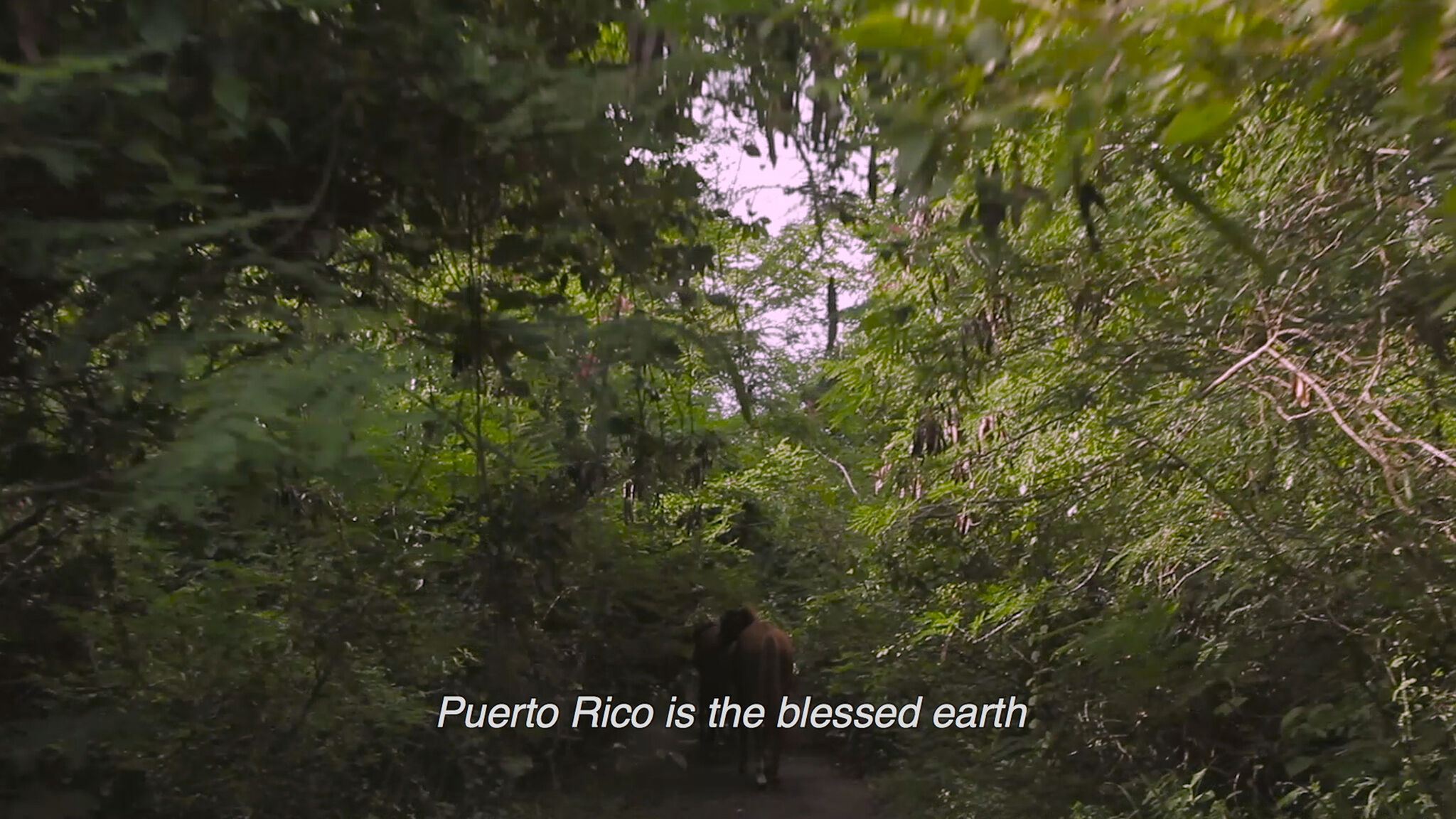
-
602
Edra Soto, GRAFT, 2022
Audio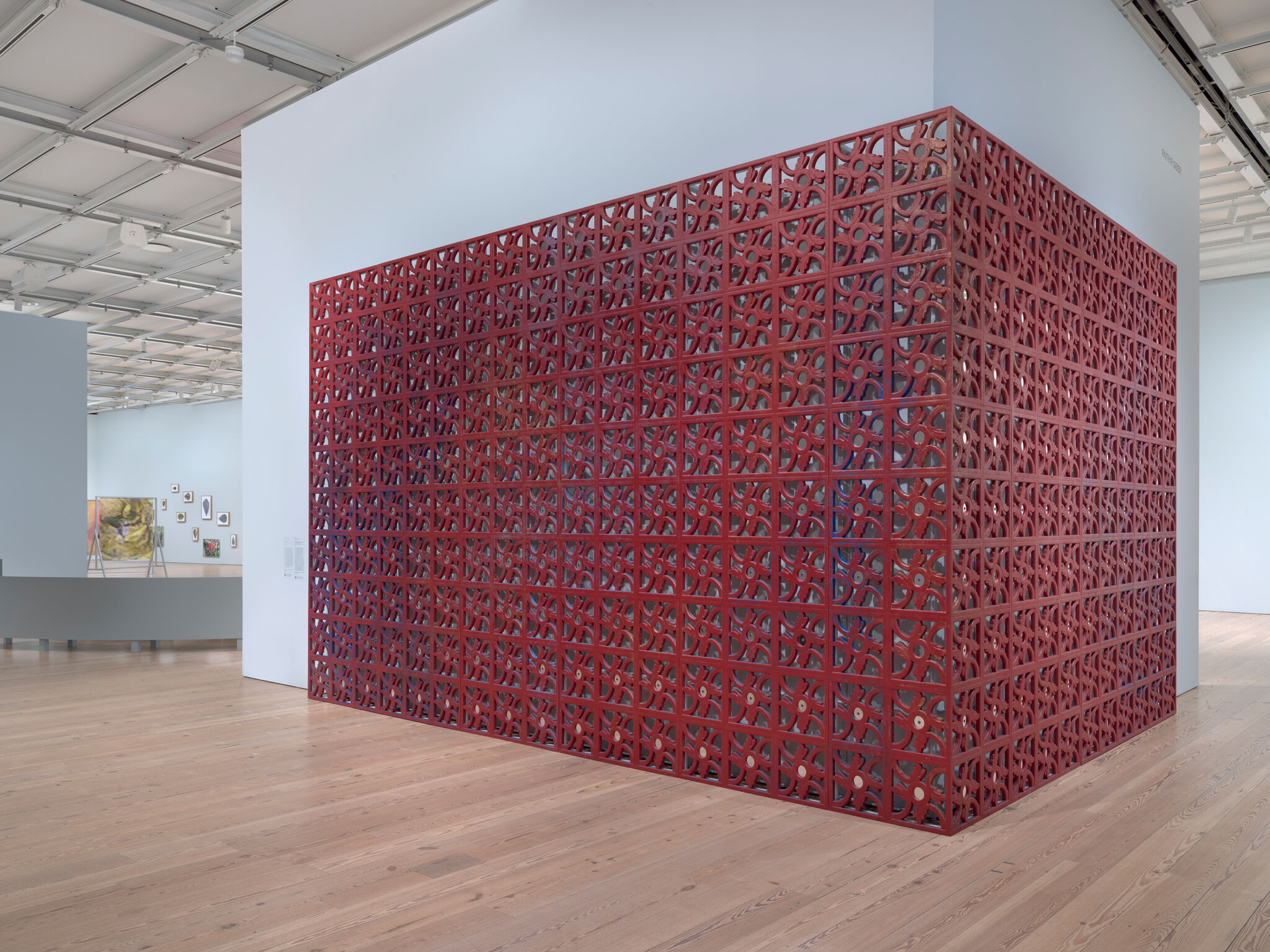
-
603
Sofía Gallisá Muriente, B-Roll, 2017
Audio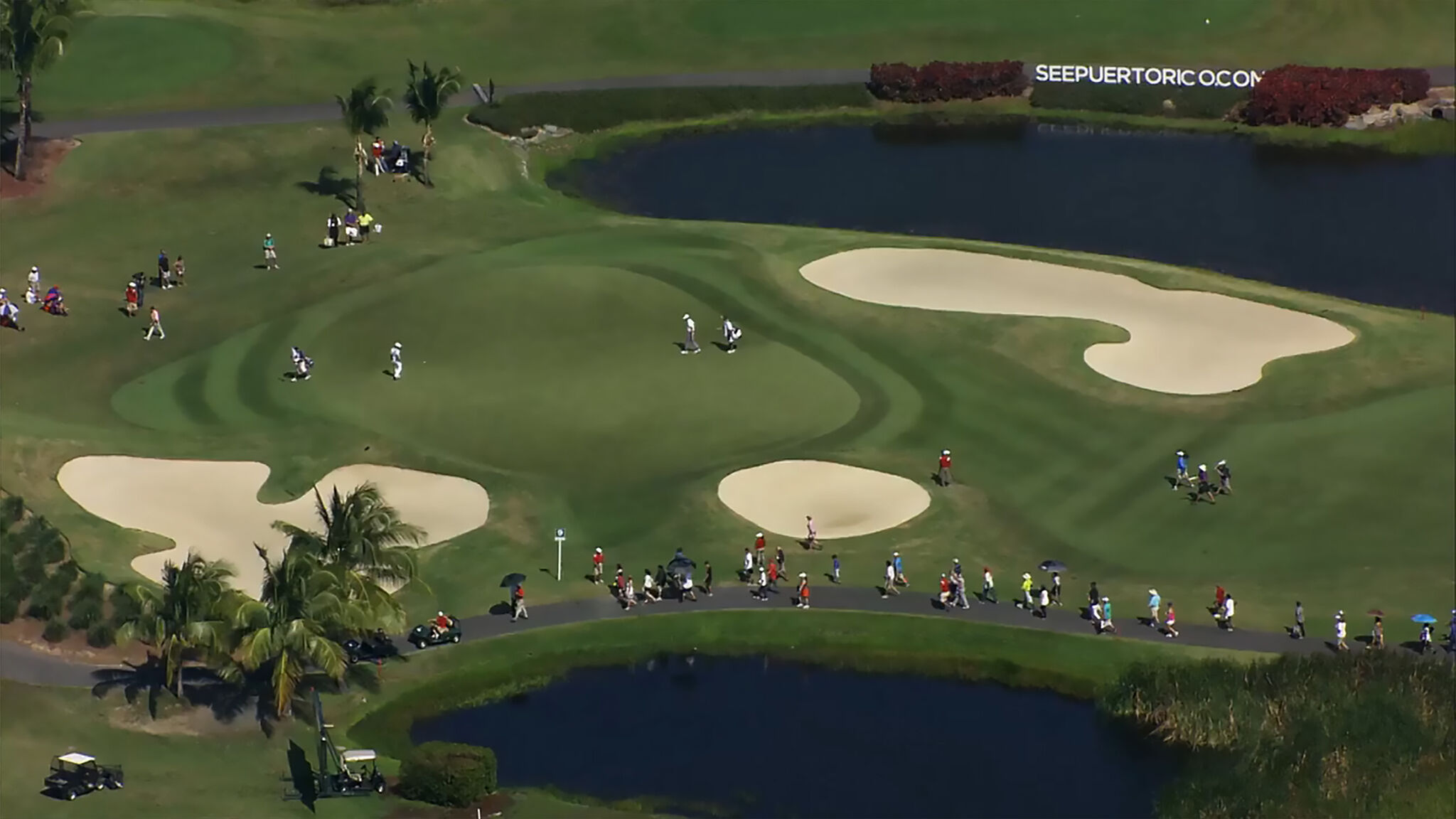
-
604
Yiyo Tirado Rivera, from the series Castillos de arena (Sandcastles), 2020–
Audio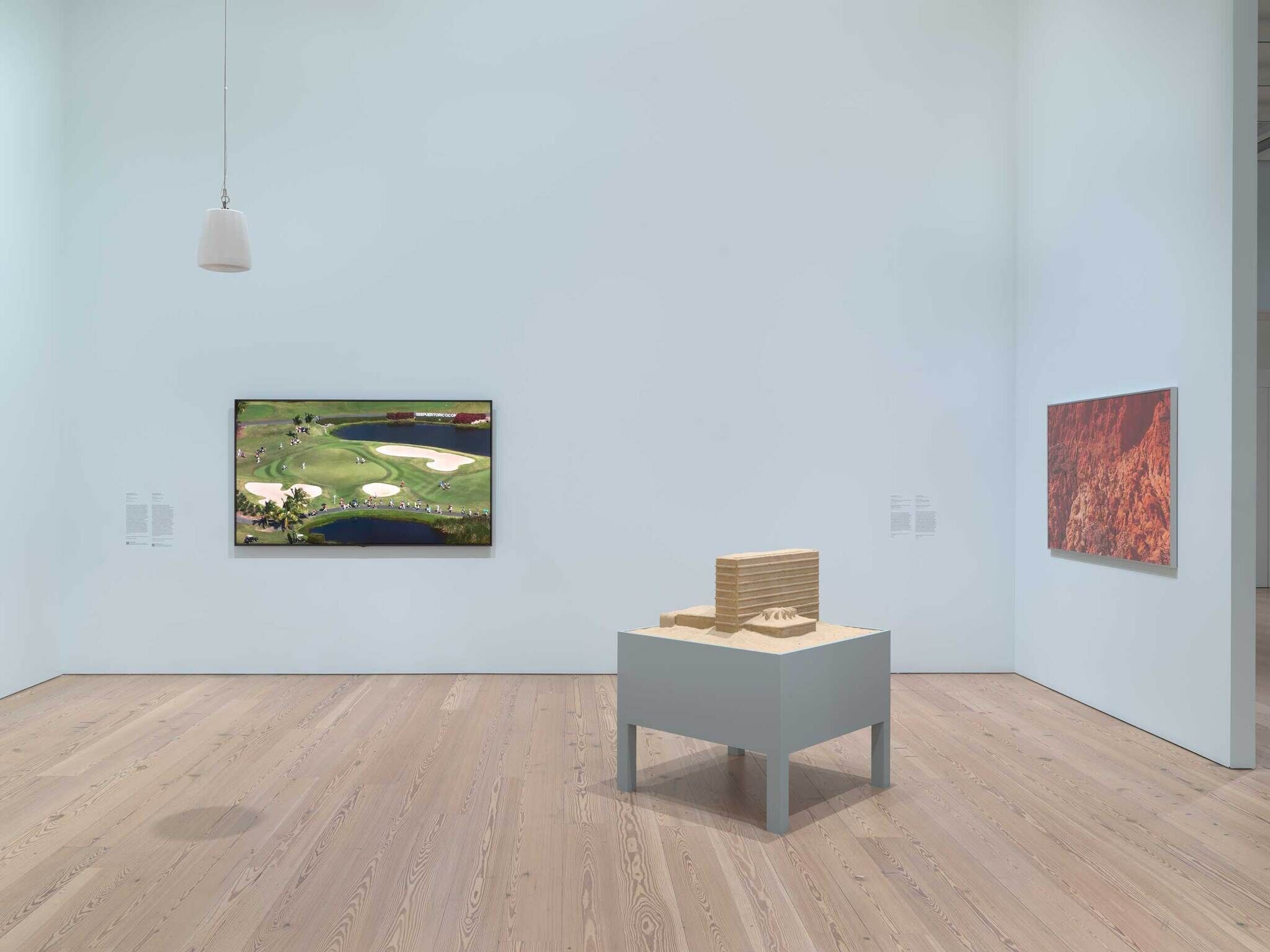
-
605
Gabriella Torres-Ferrer, Untitled (Valora tu mentira americana) (Value Your American Lie), 2018
Audio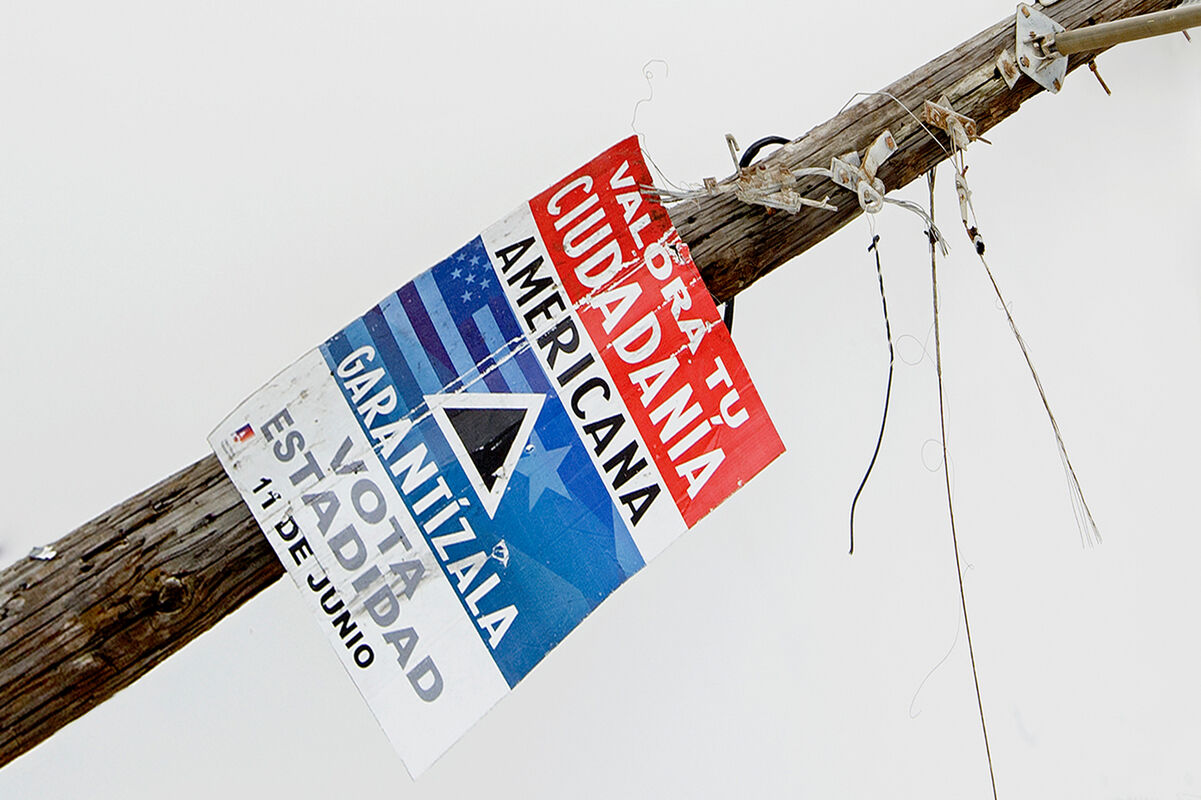
-
606
Rogelio Báez Vega, Paradox of the New Landscape IV, 2018
Audio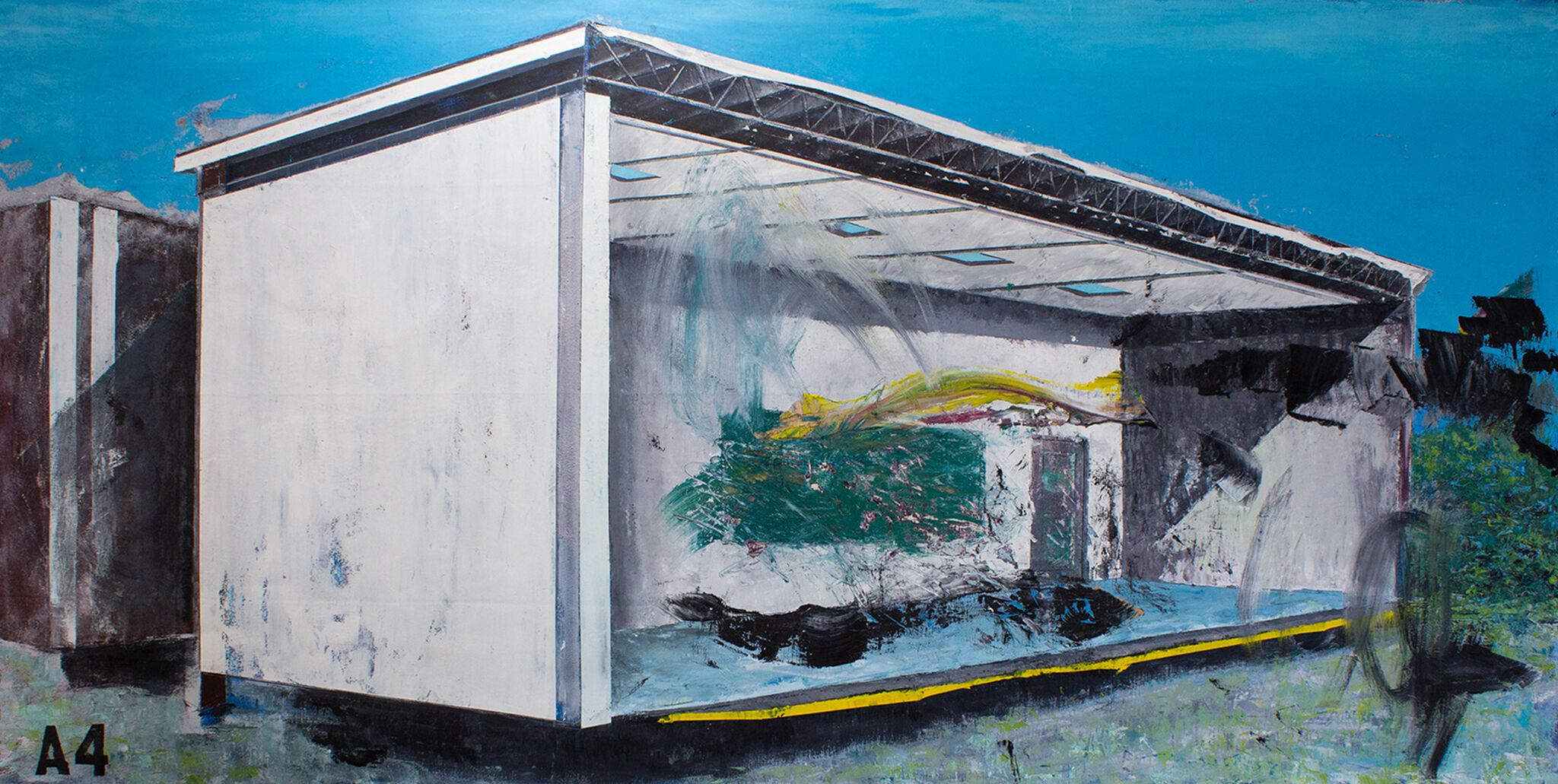
-
607
Gamaliel Rodriguez, Collapsed Soul, 2020–2021
Audio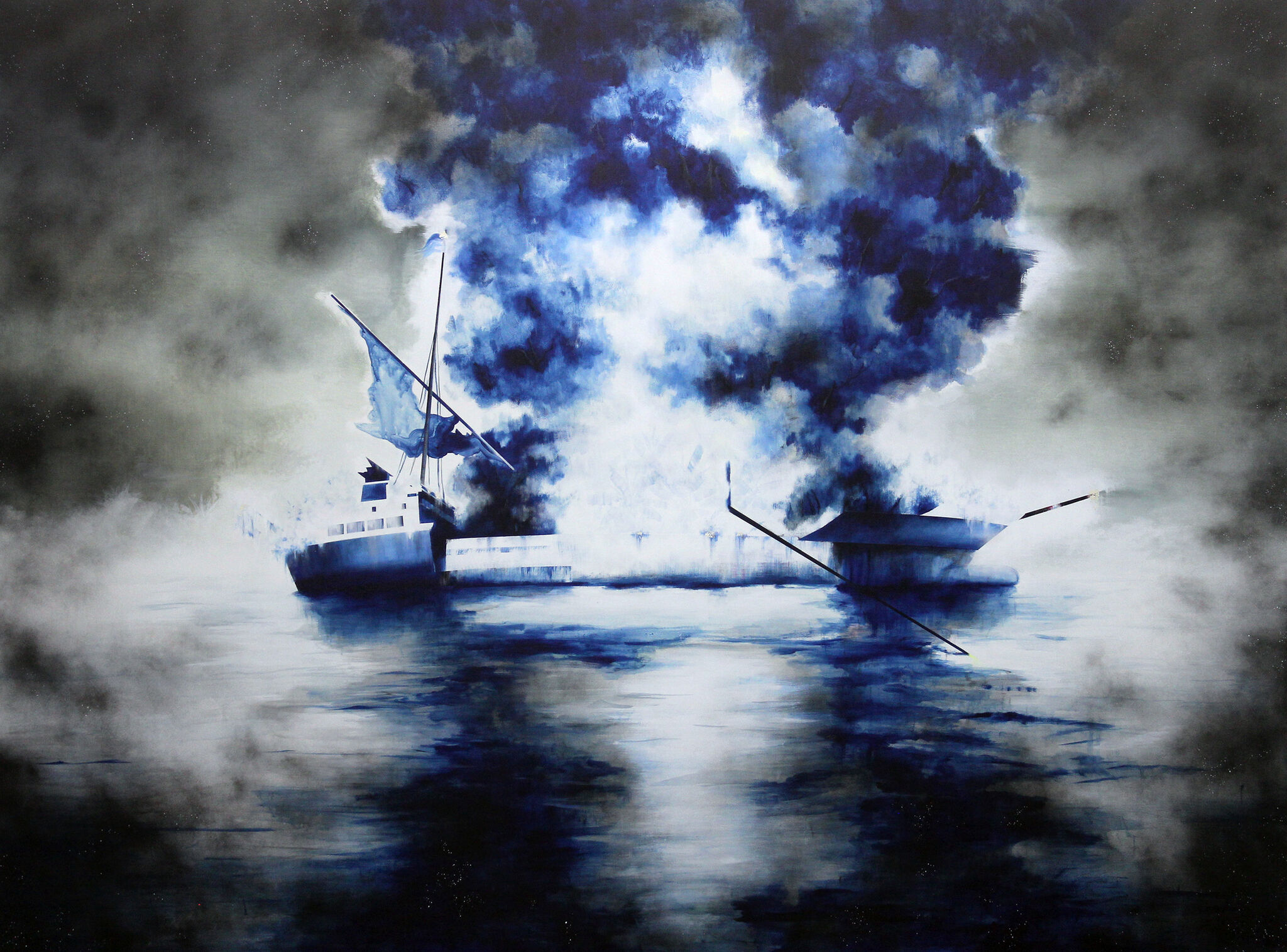
-
608
Armig Santos, Procesión en Vieques III (Procession in Vieques III), 2022 and Yellow Flowers, 2022
Audio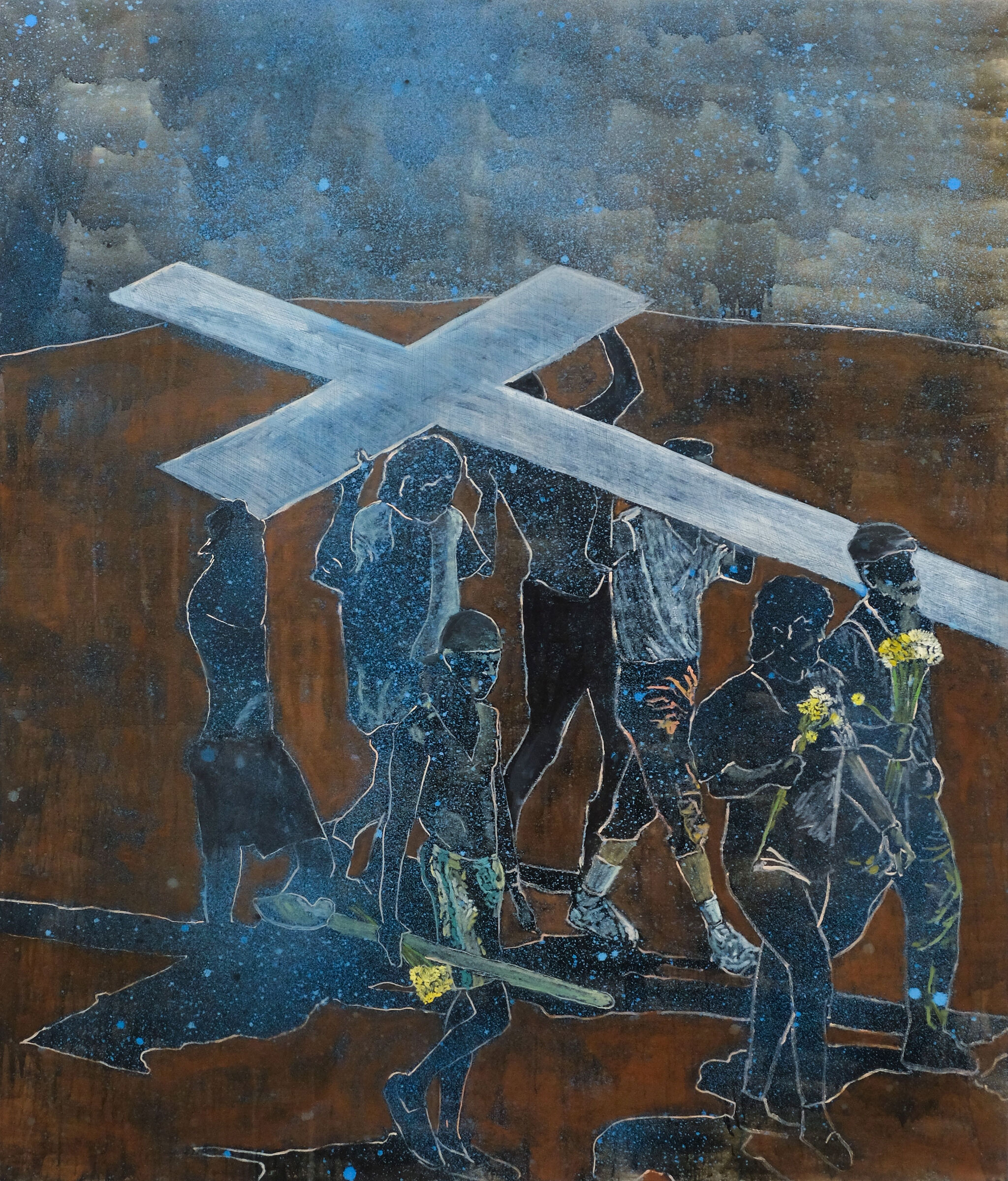
-
609
Gabriella N. Báez, Ojalá nos encontremos en el mar (Hopefully, We’ll Meet at Sea), 2018–
Audio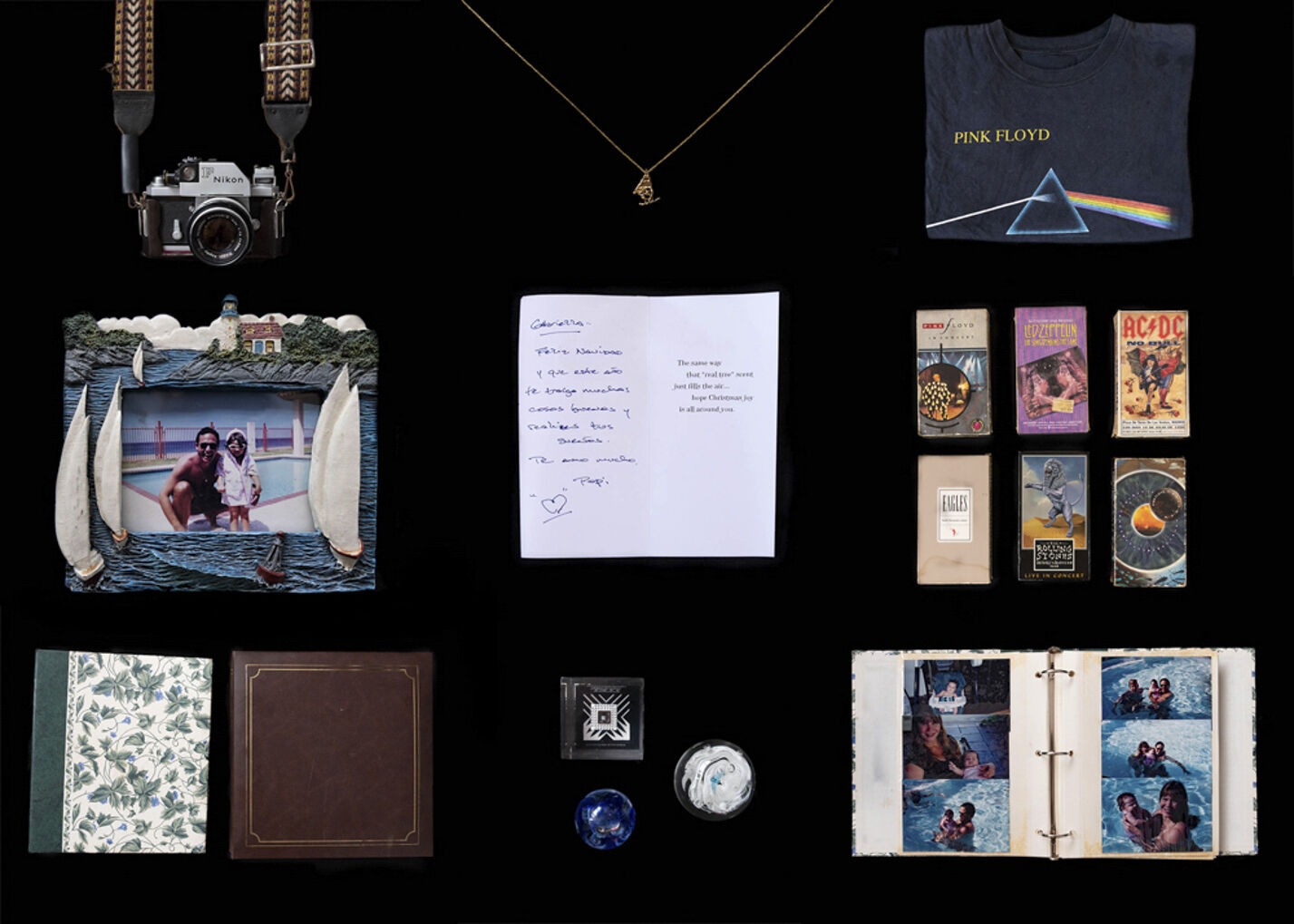
-
610
Cándida Alvarez, “Air Paintings” series, 2017–19
Audio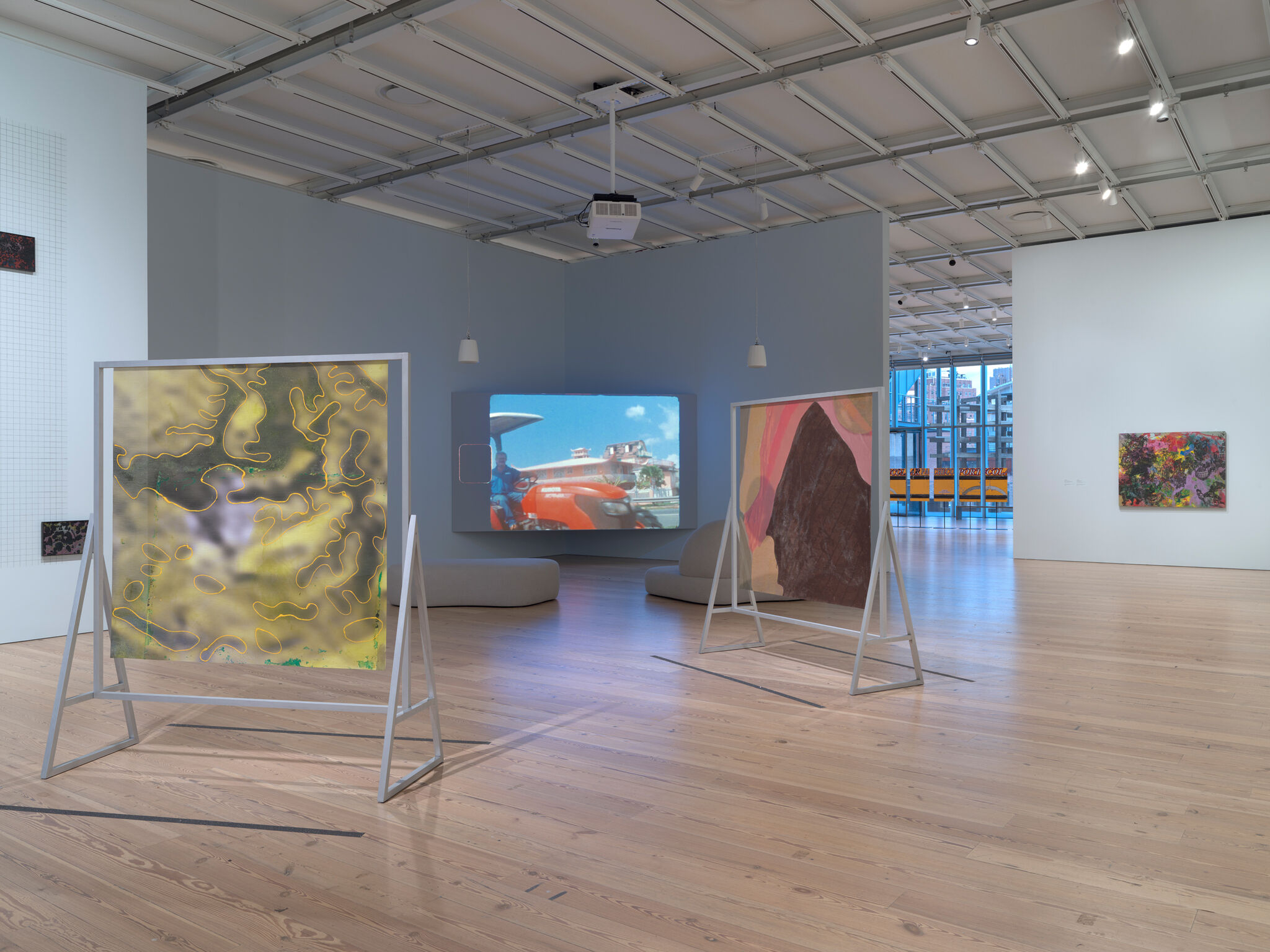
-
611
Frances Gallardo, works from Aerosoles (Aerosols), 2021–22
Audio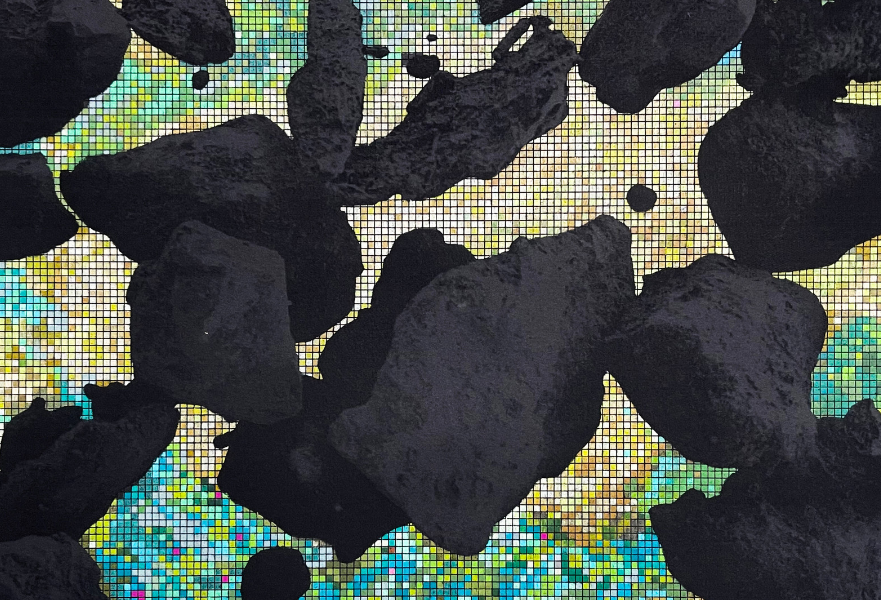
-
612
Lulu Varona, Mapa (Map), 2020
Audio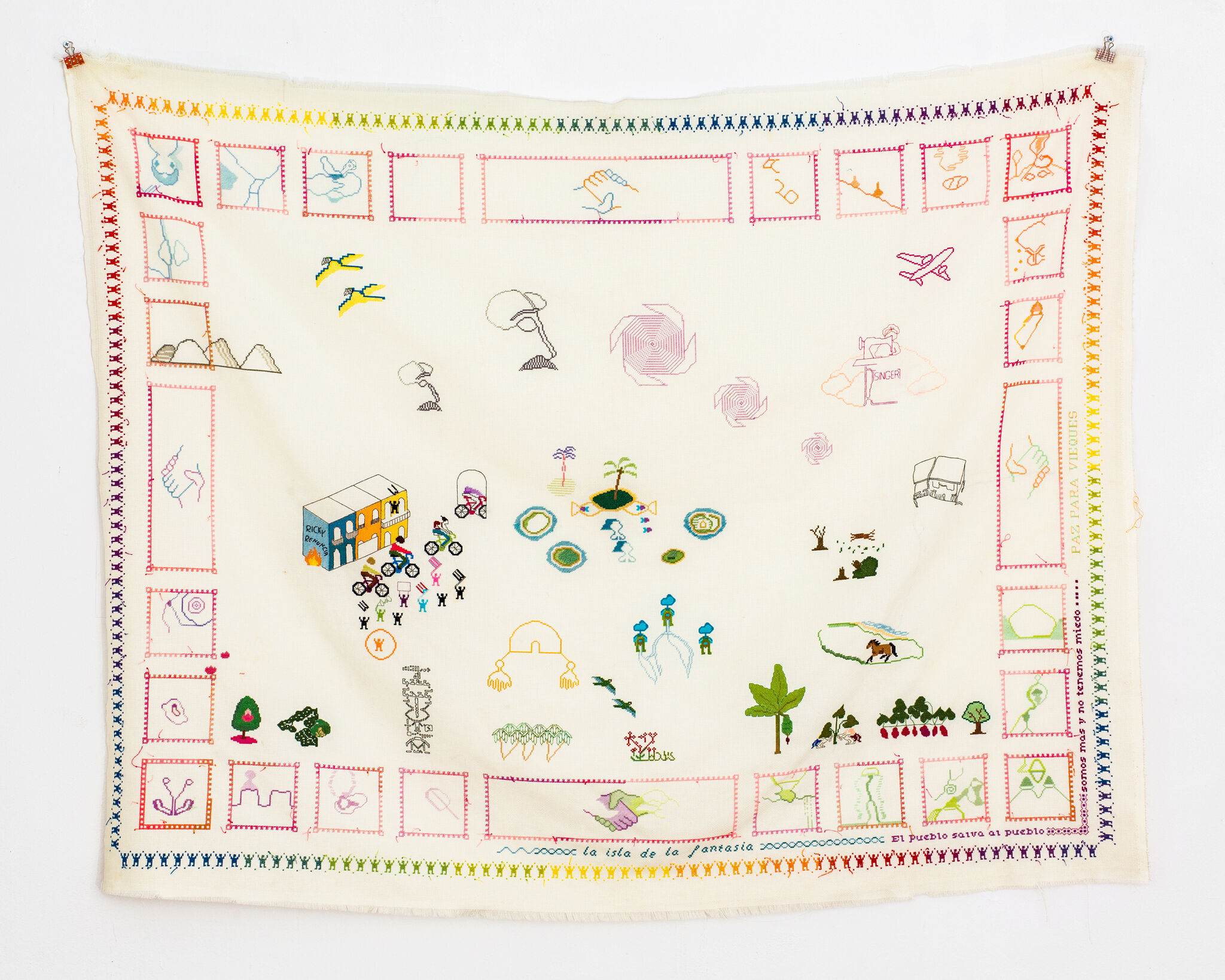
-
613
Javier Orfón, Elegía de Gongolí (Gongoli’s Elegy), 2021
Audio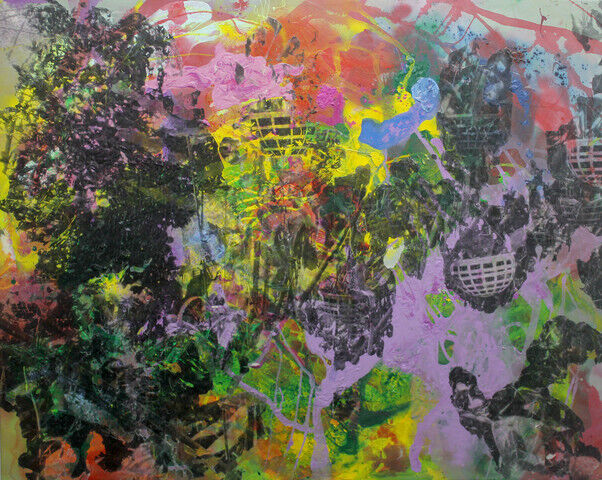
-
614
Garvin Sierra Vega, three monitors and thirty-seven printed works from a series of digital posters posted on Instagram, 2019–22
Audio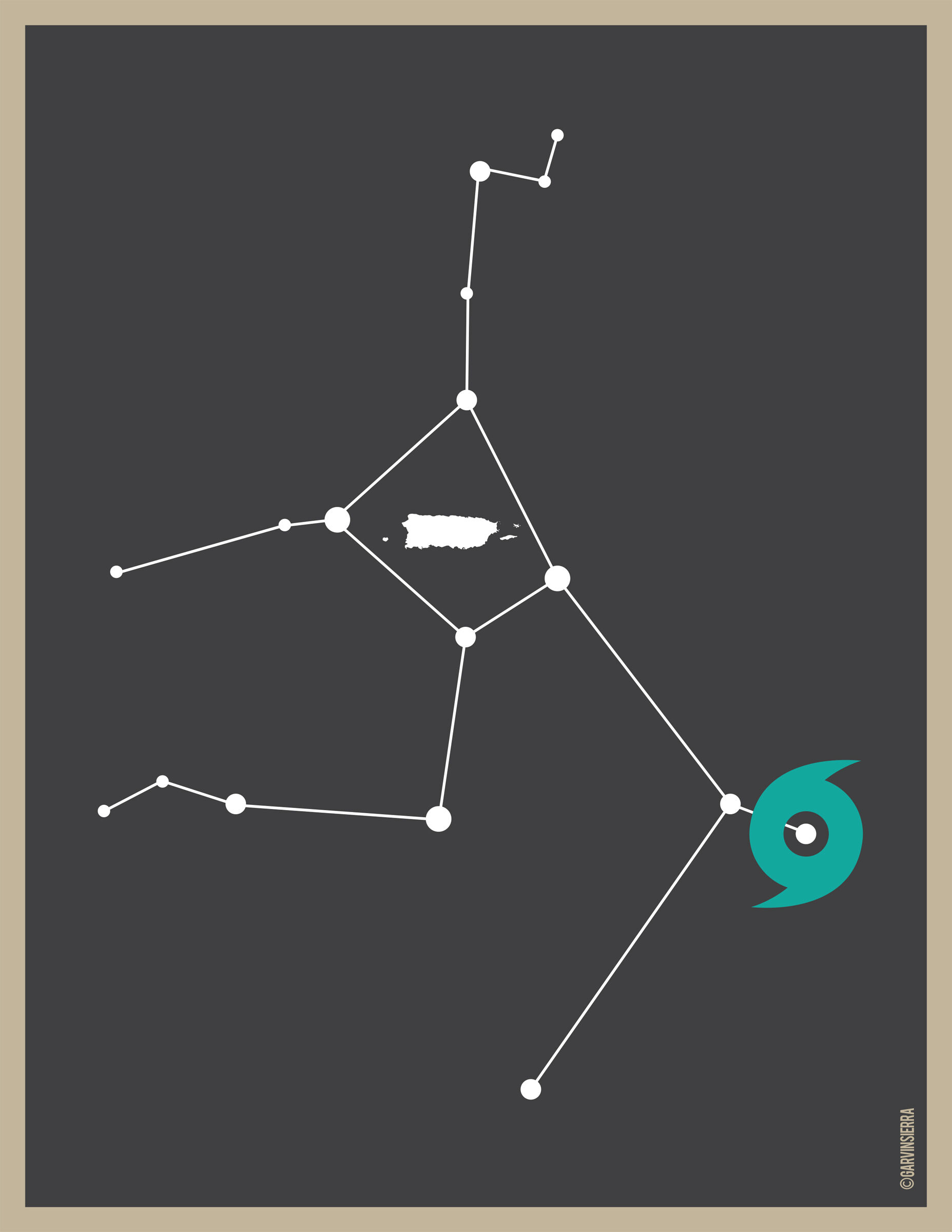
-
615
Danielle de Jesus, Google the Ponce Massacre, 2021
Audio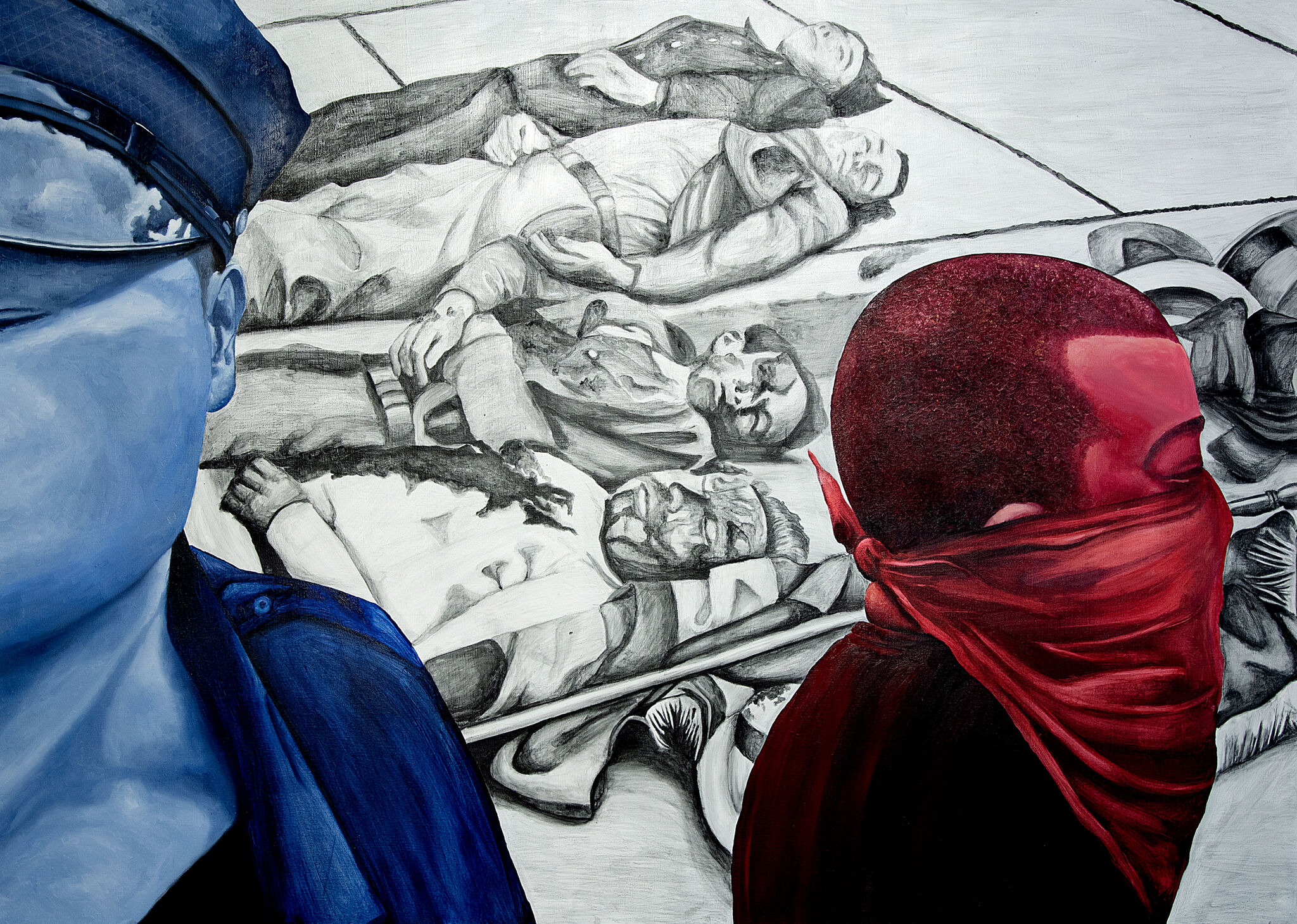
-
616
Miguel Luciano, Shields/Escudos, 2020
Audio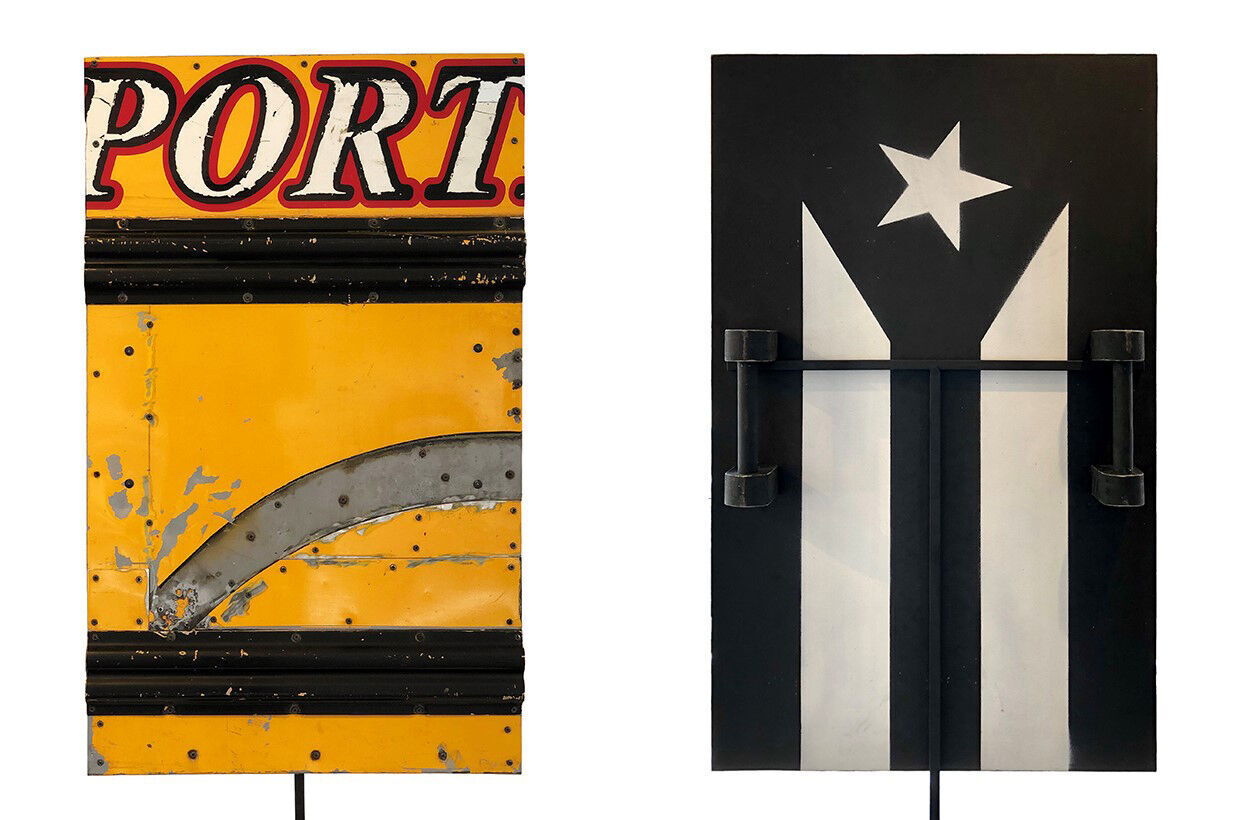
-
617
Gabriela Salazar, Reclamation (and Place, Puerto Rico), 2022
Audio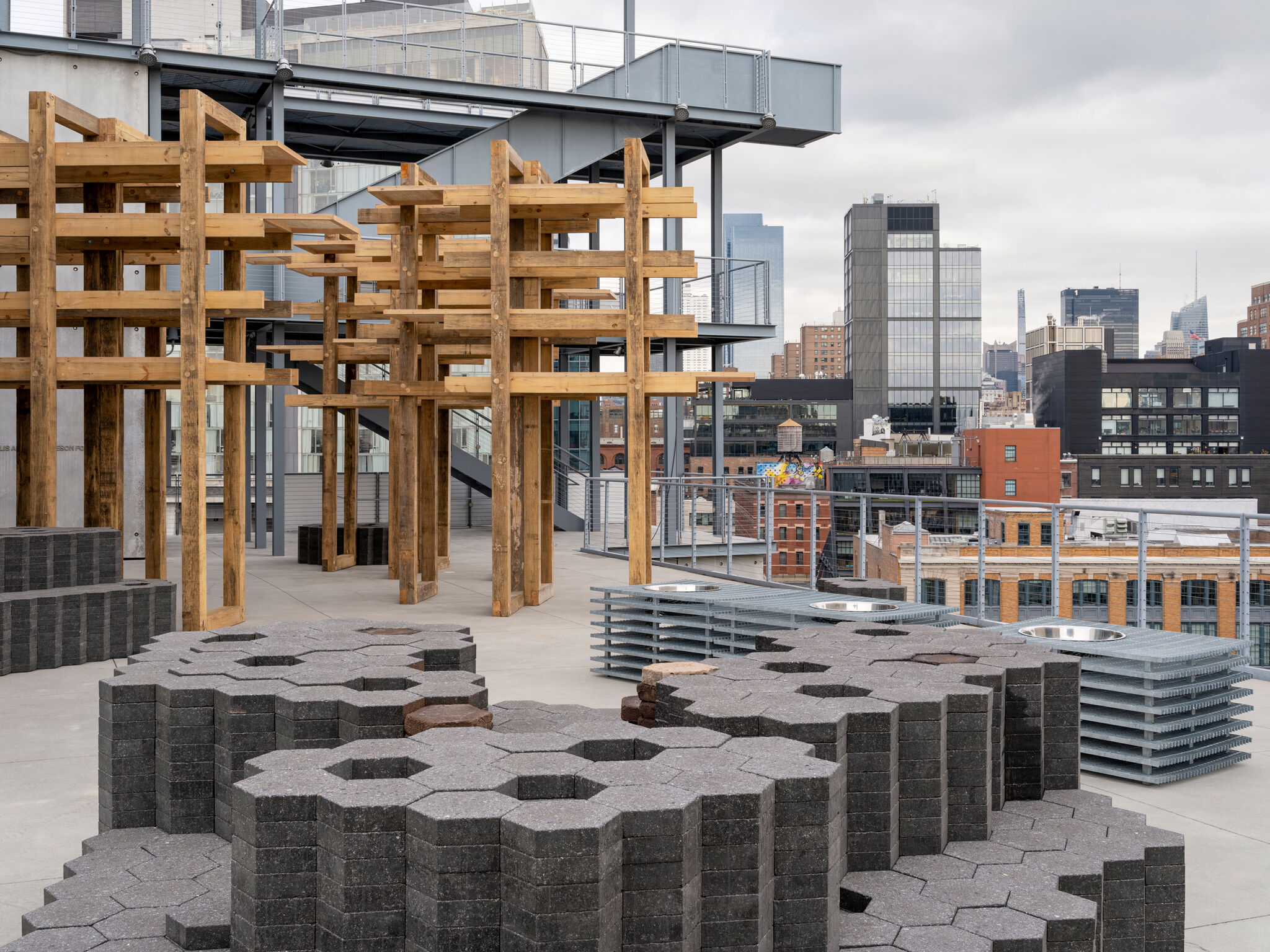
-
630
Verbal Description: Introduction
Verbal description -
620
Sofía Córdova, dawn_chorus ii: el niágara en bicicleta (dawn_chorus ii: crossing the niagara on a bicycle), 2018
Transcription -
621
Transcription: Sofía Gallisá Muriente, B-Roll, 2017
Transcription -
622
Verbal Description: Gabriella Torres-Ferrer, Untitled (Valora tu mentira americana), 2018
Verbal description
-
623
Verbal Description: Gamaliel Rodríguez, Collapsed Soul, 2020–21
Verbal description
-
624
Verbal Description: Armig Santos, Procesión en Vieques III (Procession in Vieques III), 2022 and Yellow Flowers, 2022
Verbal description
-
625
Transcription: Raquel Salas Rivera, While They Sleep (Under the Bed is Another Country), 2019
Verbal description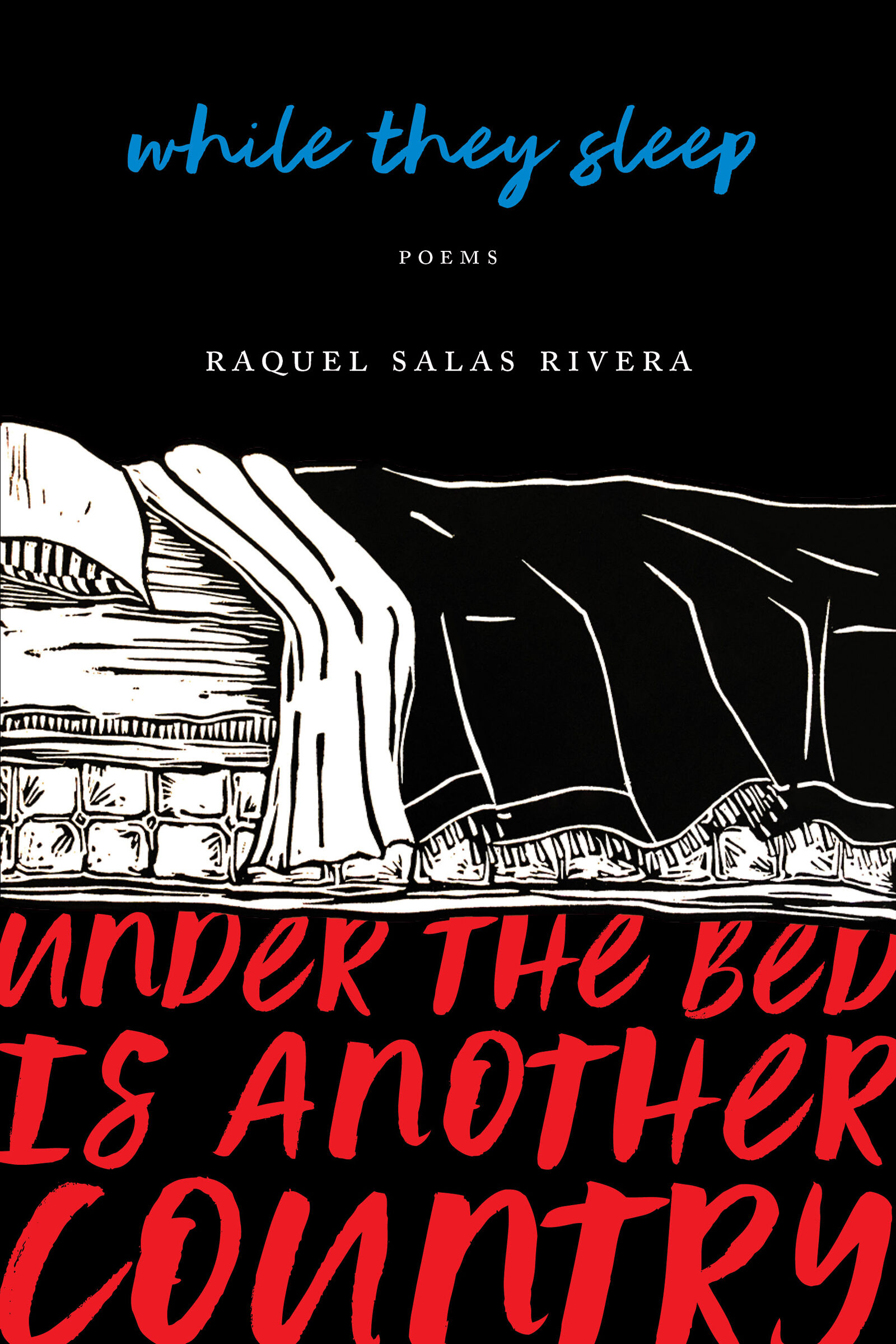
-
626
Transcription: Sofía Gallisá Muriente, Celaje (Cloudscape), 2020
Transcription -
627
Sound Description: Elle Pérez, Wednesday, Friday, 2022
Sound description -
628
Verbal Description: Danielle De Jesus, Google the Ponce Massacre, 2021
Verbal description
-
629
Verbal Description: Miguel Luciano, Shields/Escudos, 2020
Verbal description
Marcela Guererro: My name is Marcela Guerrero, I’m the Jennifer Rubio Associate Curator at the Whitney Museum of American Art.
no existe un mundo poshuracán is an exhibition that looks at the last five years of artistic production after Hurricane Maria. The exhibition takes stock of all the environmental events that have happened, but also political and social events and the compounded effects of all these events in the artistic production of Puerto Rico.
The exhibition looks at a wide range of artistic productions and ideas. I don’t want to represent the hurricane in figurative terms but more as the aftermath, as what Maria exacerbated as a consequence. We have artists who are thinking about the failed infrastructures in Puerto Rico. We have artists who are thinking about ecology and the landscape and how the hurricane transformed the landscape, or even memories that artists have of the landscape, how artists are processing grief and thinking about the loss that happened as a consequence of the hurricane.
Sofía Córdova: My name is Sofía Córdova and I am an artist from Carolina, Puerto Rico. This work is part of a larger series called dawn_chorus. dawn_chorus is first of all the name of a phenomenon having to do with birds.
Narrator: Córdova first witnessed the phenomenon in Finland, when migratory birds returned at the end of winter.
Sofía Córdova: So all of these birds were now in this process of staying in one place and instead of looking for shelter or amassing resources, such as food to survive, because they were quite starved from this long journey, they expended all of the energy they had staying in one place and singing really, really, really loudly in the morning. That felt like a tragically beautiful metaphor for where our species is and our relationships to resources and also our ability to still create beauty in the face of all of the horror that we've also created.
I'm thinking about how the climate crisis of all of the globe is essentially the fault of a very limited number of people who had access to wealth and power. And it is those in frontline communities like myself, like Puerto Ricans, like people in the south, all of the disenfranchised peoples of this earth, who are the ones suffering the effects of it first.
Narrator: Córdova had begun exploring these themes in a fantastical way in this video in 2017, before Hurricane María. After the hurricane, she also began using more realistic documentary tactics.
Sofía Córdova: The hurricane just showed us what was already there. It just showed it to us in its rawest form. So all of these questions having to do with colonization of old and neo-colonization that we're existing under military rule, tourism, the fiscal oversight, where all of these things were just rendered bare by the passing of the hurricane. Because the collapse was utter and total, and it happened so deeply at a state level that our colonial overlords lost the plot. And so did the governance that we presumably had. So it made it all so raw and so present that it became my task to witness it that way.
Sofía Córdova, still from dawn_chorus ii: el niagara en bicicleta, 2018. Two-channel video, color, sound, on unistrut mount; 105 min. Courtesy the artist and Kate Werble Gallery, New York
Edra Soto: My name is Edra Soto. I am an artist.
The types of forms I'm working with are decorative patterns, or decorative motifs, that are found in Puerto Rican homes, are representations of these patterns that are usually made of raw iron or made in concrete. And they are utilized to fence in the facade of a home, and they can be used for protection, as well as ventilation. And these are lower- and middle-class homes that are sometimes located at gated residential sectors, or houses that were built during the fifties and sixties. So they are from a particular time, and live in particular sectors of Puerto Rico. But they are quite prominent still.
One of the reasons that I replicate this pattern is to make a representation of what migration means to me. And I titled the project GRAFT because graft refers to a type of skin transplant.
And I'm trying to create a picture of my experience, of somebody that constantly migrates, and constantly traveled from Puerto Rico to the U.S. And the documentation, that can be experienced through viewfinders, that are embedded in the architecture that is represented will provide an intimate view, but also a more expansive view of what could be the life of somebody that lives in the island, and somebody that is from the island, but also somebody that is constantly traveling to the island.
Narrator: The pictures—some of which Soto took herself—document Hurricane Maria and its aftermath.
Edra Soto: And I documented this moment, because I know it was a very important moment. It was a moment of great trauma, and it was perhaps one of the lowest points that I have lived and experienced as a Puerto Rican.
It took me two years to share my pictures. But I think that having the representation of the fences provides an additional layer that allows for the audience to make a decision, a voluntary decision, to get close, and decide if they are going to invest themselves in this experience, if they want to witness. So, it almost becomes a type of political decision. Are you going to volunteer with yourself? How much do you want to see? Do you want to acknowledge what happened in this place?
Installation view of no existe un mundo poshuracán: Puerto Rican Art in the Wake of Hurricane Maria (Whitney Museum of American Art, New York, November 23, 2022–April 23, 2023). Edra Soto, GRAFT, 2022. Photograph by Ron Amstutz
Sofía Gallisá Muriente: My name is Sofía Gallisá Muriente.
B-Roll is a video I produced using ads and informational videos from Puerto Rico’s Department of Economic Development and the Department of Tourism promoting Puerto Rico as a destination for tourists and foreign investors. It also includes materials that I recorded myself when I more or less infiltrated a meeting of foreign investors who gathered in Puerto Rico.
The title, B-Roll, comes from a term used in film to describe supporting images: that is, images used to illustrate what is being said, for example, in an interview, or to disguise, hide, or make invisible the cuts between takes in an interview. For me, it seems that it is a term that, in this case, helps me to think about what the images in these videos are doing. And what they do is create a kind of imagery that accompanies the discourse promoting development and tourism.
I was already interested in tourism as a modern mechanism of colonialism before Hurricane Maria. So, even before the hurricane, I had been working on different pieces that talk about how tourism is a force that ends up defining how we narrate history in ways that auto-exoticize us, that simplify, fabricate, replicate—that are self-serving, and that we end up consuming ourselves in Puerto Rico, because they become the dominant forces in the way history is told.
Sofía Gallisá Muriente, still from B-Roll, 2017. Music by Daniel Montes Carro. Video; 6:44 min. Courtesy the artist
Yiyo Tirado Rivera: This is a series that has been going since 2020.
Narrator: Yiyo Tirado Rivera.
Yiyo Tirado Rivera: They are called Sand Castles. Basically I recover architectural plans from these emblematic hotels back in Puerto Rico. Most of them have been constructed between the fifties and the sixties and the seventies, at the start of the Commonwealth in Puerto Rico so the purpose of these hotels was to present Puerto Rico as a touristic venue for the Caribbean.
Narrator: In this case, Rivera has recreated La Concha Resort, which was built in 1958. It takes its name from its iconic ballroom, a building shaped like a conch shell. It’s very near the shoreline, on a sand beach that was artificially constructed.
Yiyo Tirado Rivera: When the winter comes, the sea rises its levels, the waves hit the ballroom.
So the purpose of the work is, from the beginning of the exhibition, to fall apart. And the piece also has this relation with the climate. The time it takes the sculpture to fall apart is variable with the climate around the piece. So that's kind of the metaphoric thing in the piece.
Installation view of no existe un mundo poshuracán: Puerto Rican Art in the Wake of Hurricane Maria (Whitney Museum of American Art, New York, November 23, 2022–April 23, 2023). From left to right: Sofía Gallisá Muriente, B-Roll, 2017; Yiyo Tirado Rivera, La Concha, 2022; Yiyo Tirado Rivera, Desplazamiento I (Puerta de Tierra) (Displacement I [Puerta de Tierra]), 2020. Photograph by Ron Amstutz
Gabriella Torres-Ferrer: My name is Gabriella Torres-Ferrer. Untitled (Valora tu mentira americana) is composed of an unembellished piece of the Puerto Rican power authorities' failed infrastructure. The destroyed power pole or light post features in the center a political sign that unveils the twist of the piece's title. The sign reads: “Valora tu ciudadanía americana. Garantizala vota estadidad.” In English, this means: "Value your American citizenship. Guarantee it, vote statehood.”
Narrator: The sign alludes to the referendum on the political status of Puerto Rico held on June 11, 2017, three months before hurricane Maria. The referendum consisted of three options: becoming a state of the United States, independence, or maintaining its current territorial status. In their own words, Torres-Ferrer aimed to highlight:
Gabriella Torres-Ferrer: The contradiction between the perceived protection of the U.S. citizenship and the post-hurricane destruction and ongoing infrastructural disaster in Puerto Rico, as well as the colonial reality of the island ever since the long sixteenth century colonization of the Americas under Western European powers.
Narrator: The title translates as “Value your American lie.”
Gabriella Torres-Ferrer: The ironic twist in the piece's title and the materials in the piece gesture towards a close reexamination of this broad and compounded colonial reality. What is the value? Who benefits from it? Also inviting viewers to question today's colonial innovations and who ultimately benefits from them.
Gabriella Torres-Ferrer, Untitled (Valora tu mentira americana) (detail), 2018. Hurricane ravaged wooden electric post with statehood propaganda, 116 × 118 × 122 in. (294.6 × 299.7 × 309.9 cm). Private collection; courtesy the artist and Embajada, San Juan
Rogelio Báez Vega: My name is Rogelio Báez Vega.
Narrator: The earliest of these paintings is called the Paradox of the New Landscape IV. It’s the one that centers on a white, run-down shipping container. Báez Vega painted the canvas while participating in an artist’s residency in Massachusetts.
Rogelio Báez Vega: This piece was born to some degree out of powerlessness, of not being on my island, at a moment when people are thinking about how to solve problems after Hurricane Maria. And I got the news, you know, that they are closing schools.
Narrator: The schools began closing even before the hurricane due to austerity policies, and this process accelerated after Maria. Today, hundreds of schools across the archipelago remain closed.
Rogelio Báez Vega: My work has this element of premonition. I am interested in how we see ourselves and the landscape we will construct in the future, and in this canvas, what I am doing is painting what is going to happen with that space, and what the future of that space is. What is the future of an already-failed project? So, it’s like a tautology, a cold, dystopian, apocalyptic vision of what is going to happen with that idea of putting the students in this small space.
Narrator: The most recent of the canvases pictures the school that the artist had attended as a child. When Báez Vega painted it, the building was—as the title suggests—new to the market. It has now been purchased by a private company, and is being used as storage.
Rogelio Báez Vega: The number of students is declining and they are using that as an excuse to try to close schools to save money, because they want to save on the costs of maintaining the schools and to try to move the kids, but I think there’s a worldwide agenda. In the United States, school buildings are the most iconic and special ones, with classic buildings, and even if they are modernist, from the modern era, they are worth something on the market, and there is an agenda that combined those two factors, and it makes it very attractive to build a hotel that looks like a Casablanca hotel.
It’s a little complicated, isn’t it, how it all works, and it has something to do with why there is no plan—corruption and following the market are more important than educating or any plan for education.
Rogelio Báez Vega, Paradox of the New Landscape IV, 2018. Oil on canvas, 48 × 96 (121.9 × 243.8 cm). Private collection
Gamaliel Rodríguez: Hi, my name is Gamaliel Rodríguez.
Narrator: Rodríguez titled this large painting Collapsed Soul.
Gamaliel Rodríguez: I have always been fascinated by ships. The voyage, the challenges they face. That in particular was a very interesting thing. In 2015, I did an artist residency called the Long Road Projects in Jacksonville (2015 was some time before the hurricane), and I was looking into Puerto Rico’s problems with the food situation. We are not producing enough food, whether it’s bananas, vegetables, all types of food. So, we have a big problem with nutrition, which we have to think about for our future. Puerto Rico used to produce approximately fifteen percent of its food before Hurricane Maria. Right now, since Hurricane Maria, we only produce seven percent. That is, ninety-three percent of our food comes from here in the United States, with the main port being Jacksonville. What happened? In 2015, there was a disaster when the ship El Faro sank on October 1, 2015, after being destroyed by Hurricane Joaquin. They sailed from Jacksonville on September 29 with foodstuffs, it was called a—what is known as a roll-on/roll-off or lift-on/lift-off cargo ship. They’re ships specifically for carrying anything from food, lumber, nails, everything. The ship is basically a traveling Costco or Walmart or Home Depot. And we live on an island, which is completely isolated. If you don’t have those products, you’re not going to be able to eat.
So, when I analyze it, the most impressive thing about the ship, built in 1975, is that it was originally called the Puerto Rico, and it’s really interesting how a ship in many ways has a very close—a very big connection to Puerto Rico. First, Puerto Rico is like a ship in the middle, between the Atlantic Ocean and the Caribbean. I see that it is adrift, that we sadly do not have a captain capable of, or that there haven’t been the captains we need to be able to have a vision or take a country from point A to point B. Just like a ship, they are in deplorable condition, like the corruption in Puerto Rico that has destroyed the country for the past forty or fifty years.
And that was before Hurricane Maria. After Hurricane Maria, things were three or four times worse than we had ever imagined would happen.
Gamaliel Rodríguez, Collapsed Soul, 2020–21. Ink and acrylic on canvas, 84 × 112 in. (213.3 × 284.5 cm). © 2021 Gamaliel Rodríguez. Courtesy the artist and Nathalie Karg Gallery NYC. Photograph by Gamaliel Rodríguez
Narrator: Armig Santos based these paintings on images of events that had taken place on the island of Vieques, when he was very young.
Armig Santos: They’re some the images that I found on the internet about a procession that took place in 1999 with the death of a security guard named David Sanes, who was from Vieques and died because of a bomb. Because, for fifty years, Vieques was more like a bombing range.
Narrator: When Sanes was on his shift, he was killed by two bombs misfired by the U.S. Navy.
Armig Santos: And people were sick and tired of what was going on. So that was what sparked massive protests. So, those images, when I found them, left me in a state of shock because it was like finding these beautiful images of a procession. Which is how the political becomes the poetic, and the poetic becomes political. And while the images had an incredible impact, those images are extremely important to Puerto Rico’s history, and to the rest of Latin America as well.
If you look at the paintings, they both have the effect of bioluminescence, since there is a bioluminescent bay in Vieques, which for me is the most important place spiritually in Puerto Rico. I use that effect to also include it in the image, which is like two very powerful symbols, spiritually, in Puerto Rico’s history, and also in Vieques’s history. Hence the procession painting: where there’s sort of the idea of developing, it’s a highly optimistic image, but it’s filled with great sadness; there’s optimism about reunification, but sadness about the events.
Armig Santos, Yellow Flowers, 2022. Oil on linen, 84 × 72 in. (213.4 × 182.9 cm). Collection of the artist; courtesy the artist
Narrator: This audio stop addresses suicide.
Gabriella N. Báez: My name is Gabriella Báez.
This project began in 2018, after my father died by suicide, just two months before the first anniversary of hurricane Maria. I started photographing his items as a way of recovering his memory, trying to connect with who he was, who he was in my life, and it's taken different variations and forms since then.
After my father's funeral I was given a box of all his items, which included his favorite windsurfer necklace, the frame with an image of us in front of a pool, his cassettes, his albums, and his Pink Floyd shirt, which was his favorite. And I didn't know what to do with these items besides photographing them. I felt like I had to document them in some way, as a way to document who he was or pieces of who he was. I'm also a student of anthropology, or I graduated from anthropology, and so the idea of having an archeology of someone is what I was getting at when I put all these images together. Like, can we see who he was when we join all these items? Can we have a sense of who he was as a person?
I started to feel like it wasn't enough to just have these images and scan them, but I wanted to play with the idea of memory and connection. In what ways could I connect with the memories I had of him, with our past, with the relationship we had in the past. And that's when I started intervening these images with the red thread. Red, it was just the color that called me at the moment. This part of the project and experience was very intuitive and cathartic.
Gabriella N. Báez, process image of Ojalá nos encontremos en el mar, 2017-. Single-lens reflex camera, necklace, t-shirt, photo frame, cardstock paper, cassette tapes, photo albums, paper weights, dimensions variable. Collection of the artist
Narrator: These “Air Paintings” by Candida Alvarez had their beginnings in another project—a public painting she made to hang beneath the Wacker Bridge in Chicago. She painted this work on a kind of mesh typically used for outdoor banners. After that project was completed, the proofs she’d created when first experimenting with the material were still in her studio.
Candida Alvarez: Anyway, my father dies. There's a hurricane in Puerto Rico. My mother is there with my sister. And so there's a lot of tension and a lot of unknowing. And so I had these proofs lying around in the studio never thinking I would ever use them, but hold onto them as documentation of a bigger piece. And I just started painting on them. And what I loved about them was that they were this material that was so flexible and still so plastic. They were like the paint that I use, acrylic for the most part. But they were lightweight, so that I could put them on the wall and I could put them on the floor.
And so I wasn't aiming for anything, but to just have this experience. And I didn't know what the outcome was going to be.
Narrator: Alvarez brought this exploratory, experimental thinking to the titles of the works as well. One of them is called Lomas.
Candida Alvarez: Lomas means mountain or translates into the Spanish word for mountain. I didn't name these for a long time afterwards, but it kind of reminded me of the landscape in Puerto Rico. This idea of the mountain. And I love the idea of a mountain. Or it also looks like a breast. It also looks like a Cemi, which is this very special carving, like stone carvings from the Taino Indians from the island, who were the early inhabitants of Puerto Rico, the island. Boriquén, as they called them.
Installation view of no existe un mundo poshuracán: Puerto Rican Art in the Wake of Hurricane Maria (Whitney Museum of American Art, New York, November 23, 2022–April 23, 2023). From left to right: Sofía Gallisá Muriente, Celaje (Cloudscape), 2020; Candida Alvarez, Jellow (Yellow), 2018; Candida Alvarez, Here to There, 2018; Lulu Varona, Mapa (Map), 2020; Lulu Varona, Ir y venir (Come and Go), 2021. Photograph by Ron Amstutz
Narrator: Frances Gallardo’s “Aerosol Series” came out of her fascination with the meteorology of Puerto Rico.
Frances Gallardo: I explored the phenomenon of the hurricane for many, many years in many ways. I inevitably came to know and to get interested in the Sahara dust because the dust is kind of in a dance with hurricanes, right? All of these aerosols, all of the salt, everything that is in the atmosphere is in a constant dance, is in constant relationship, right? Hurricanes drag the sand storms that travel in the Atlantic ocean toward the Caribbean.
All of the minerals that the Sahara dust storms carry actually multiply the light. So the sun looks twenty times the size. It changes the landscape. It's like a very saturated color: flowers, greens. So I was really interested in this juxtaposition of landscapes. And also the democratic feel of it, the same way hurricanes take heats and water and anything from different political boundaries—the same way the Sahara dust also does not care about political boundaries.
Narrator: Gallardo collected a sample of the Sahara dust in Santurce, a neighborhood in San Juan. She brought it to the Textiles Nanotechnology Lab at Cornell University in Ithaca. They processed the sample with a field emissions scanning electron microscope, and Gallardo created a heat etching of the resulting image.
Frances Gallardo: They processed the small sample with the field emissions scanning electron microscope.
The etching creates reliefs in the paper: the darker the shadow, the deeper the valley. I then manipulated the digital images with software by erasing the background and replacing it with grids of many styles and sizes, which I hand colored with gradations to convey depth movement and suspension. For me, not only do these images speak about the invisible in the landscape, but the invisible emotions of life in the changing climate.
Frances Gallardo, Aerosoles (Aerosols), 2021–22. Color pencil on laser-etched paper, 12 × 17 5/16 in. (30.5 × 43.9 cm). Courtesy the artist
Lulu Varona: I’m María Lucía Varona Borges. I’m also called Lulu. Or Lulú. I’m an embroidery artist who is fascinated with textiles in general.
I use embroidery in my artistic practice because I decided to revisit it—it’s an activity I used to do with my grandmother when I was little, and since I was so familiar with the medium and I was becoming fascinated with graphic novels, I wanted to, uh, start to make embroidered stories, and all of that has led me, little by little, to make maps. The map actually came out of a need to return to my land, since I was displaced from Puerto Rico to New York by Hurricane Maria.
Narrator: Varona described the contents of the two maps.
Lulu Varona: It’s like my dream, my desire to acknowledge details about the things that happen to me, that are all around me, and to mix reality with my dream and my fantasy reality a little bit too.
There are lots and lots and lots of farms. There are farms scattered all around. There’s Old San Juan with people on bicycles. That is a reference to the 2019 protests.
Vieques is also there. It’s the island with the galloping horse.
Narrator: In one of the maps, there’s a self-portrait in the lower right. Varona shows herself watching airplanes come and go.
Lulu Varona: The planes are there for the great migration that happened later. Just after the hurricane happened it was, it was very moving to be at the airport and see all of the people leaving and the kinds of people they were, or usually were—the neediest ones and the ones who needed specific kinds of assistance, like older people, people with functional diversity, and, and it was very overwhelming, that mess.
Lulu Varona, Mapa, 2020. Cotton thread embroidered on Aida cloth, 60 × 50 in. (152.4 × 127 cm). Collection of Yolanda Colón
Javier Orfón: I’m Javier Orfón. Elegía de Gongolí is a series of monotypes that I had been making since 2021.
Narrator: In this print, Orfón uses layered images to suggest memory and mourning, honoring both family and Puerto Rico’s fragile ecology.
Javier Orfón: So, it is connected to one of the spaces I have interacted with throughout my life, in particular, the garden.
My beloved grandmother had a collection of orchids, which are still there. It has been a big inspiration too, in the way of organizing, or working. I work a lot with installations. This piece, this garden, in particular, I have thought of it in terms of how to go about presenting or creating a work of art. So here, in particular, I was thinking about what a gongolí is. The gongolí is a kind of creature, a millipede, that is very common in high-humidity gardens. Since it is an orchid garden, in a humid region, there are many little creatures that love this kind of environment; they are drawn to it. Gongolí is also a word with African origins, and in Puerto Rico there are so many terms: gongolí and gongolón and gongulén. The scientific name is Anadenobolus monilicornis. After my family member died of cancer, I continued with this work in honor of both her work and also of my whole experience, the dialogue, contemplating the place, often by her side.
Narrator: Orfón’s photographs also appear nearby.
Javier Orfón: My main concept stems from the term topophilia, love of the land. It is based on the premise that encompasses all of those aesthetic perceptions, that a person can appreciate or understand over time in a specific place. I started out at first in the area where I live, in the eastern region, but I’ve also had the chance to interact with and get to know and be a part of other areas around Puerto Rico.
Javier Orfón, Elegía de gongolí, 2021. Acrylic and photographic transfer on canvas, 46 × 58 in. (116.8 × 147.3 cm). Private collection. Photograph by the artist
Garvin Sierra: I’m Garvin Sierra, a visual artist.
I work with posters in my everyday life, about certain situations that are experienced both in Puerto Rico and internationally, including the United States; such as processes or situations we Puerto Ricans are subjected to daily, in a situation that is, well, also colonial. The vast majority are on social media. They’re digital posters; they are meant to be a kind of communication or visual record of our situation; there’s a bit of everything here.
Narrator: Some of the posters protest the official response to Hurricane Maria; others respond more broadly to colonialism and the government of Puerto Rico.
Garvin Sierra: The government hid, suppressed, and did not talk about the realities. Maria happened, and the government said that sixty-four Puerto Ricans had died because of Hurricane Maria, and then there was a study, by I do not remember which university in the United States, a study about deaths, and it was 4,645 Puerto Ricans who died here because of the hurricane. Maybe it was not directly, but from a lack of water, lack of electricity, lack of food.
In that process, Puerto Ricans, residents, began to realize that enormous injustices were taking place in the country. On, I think, the first of July, a government social-media chat came to light, in which the governor, the secretary of state, different people from very important government agencies, mocked the dead, the LGBT community—it was an 800-page chat published by the Center for Investigative Journalism, and that chat revealed a reality about how the government was treating us, how the government hides so many things from us, and how they ridiculing the country. The list goes on and on, and because of this, it became known internationally, and there started to be movements demanding resignation of then-Governor Ricardo Rosselló.
Narrator: Massive protests that took place across Puerto Rico and the diaspora in the summer of 2019, leading to Ricardo Rosselló’s resignation on August 2nd.
Garvin Sierra Vega, Hercules, 2019. Digital image. Collection of the artist; courtesy Taller Gráfico PR. © 2019 Garvin Sierra Vega
Narrator: Danielle de Jesus discusses the title of this painting.
Danielle de Jesús: I gave it the name Google the Ponce Massacre because, yes, it's going to direct people to pick up their phone and Google it since I'm not there to really speak about it. You don't directly see what's going on. You see what's going on in the image, but you don't exactly know who the subjects are. It forces you to do the work.
Being someone in the diaspora, born and raised in New York City, I was never taught the history of Puerto Rico. I was never taught about the Ponce massacre. We don't hear about that in American schools, but neither do we hear about it in Puerto Rico because the students in Puerto Rico, they're exposed to American history. U.S. history and not the history of their own land.
Narrator: In the painting, de Jesus layers images from different moments in history.
Danielle de Jesús: It's a juxtaposition of people marching in Ponce in Puerto Rico, then people marching here in the diaspora in New York City during the protest against Ricky Rosselló, who was the governor of Puerto Rico. This was a moment that was very personal to me because I was there, and this cop that's in the image was demanding that I separate from the crowd.
He was pushing me around and trying to get me to cross the street and get away. I wanted to defend my friends who I was there with and it got heated quickly. I took this picture of him and used it in the painting. Then I used these colors, the red, white, and the blue, specifically the navy blue because navy blue is the color that was adopted in the Puerto Rican flag.
Danielle De Jesus, Google the Ponce Massacre, 2021. Oil and graphite on linen, 60 × 84in. (152.4 × 213.4 cm). Private collection
Miguel Luciano: I’m Miguel Luciano and the artworks here are protest shields that were made from decommissioned school buses in Puerto Rico. I started making them in 2019 during a time that there were widespread protests in Puerto Rico against the local government. They were made in response to the debt crisis, and really in response to the U.S. appointed fiscal board, whose austerity measures have included massive school closures throughout the island. Hundreds of public schools have been closed in Puerto Rico throughout the years, and today they’re trying to close even more. So you’ll find abandoned schools all over the island now. And a lot of abandoned school buses that become sad reminders of a broken educational system.
I was in Corozal, Puerto Rico, which is a rural town, and came across this school bus graveyard from a local bus company. And I asked them if we could use some of the material from the buses for a project, and they agreed. So we stripped down the sides of these abandoned school buses, removing the sheet metal that was like the armor of the bus that once protected children on their way to school. And that sheet metal now becomes the armor of these protest shields that were designed to protect the protestors that have been out there trying to defend the future of education for young people on the island.
On the back of every shield there’s a Puerto Rican flag that’s painted in black and white, which became a symbol of resistance during this time, and an overall symbol against protest in Puerto Rico today.
Miguel Luciano, Shields / Escudos, 2020. Ten protest shields made from decommissioned school buses in Puerto Rico, 35 × 210 × 3 1/2 in. (88.9 × 533.4 × 8.9 cm). Collection of the artist; courtesy the artist. Photograph by Argenis Apolinario
Gabriela Salazar: So specifically for Reclamation all of these steps are interweaved through elements of architecture and the built environment from Puerto Rico and from New York City.
Narrator: Gabriela Salazar finds resonance in the fact that Puerto Rico and Manhattan are both islands, and both vulnerable to rising water.
Gabriela Salazar: And I was looking specifically at architectures that were in some way related to resilience, as a tool kind of to survive something.
Reclamation (and Place, Puerto Rico) comes through the process that I developed using used coffee grounds and making these forms that are inherently sort of unstable out of these coffee grounds, flour, and salt. So it’s sort of like this air-dry clay.
So the drying rack forms, which are these large stilted wood pieces, have a relationship to mangrove trees and the kind of root structure that adds resilience on the coast and also the images of El Fanguito, a neighborhood that was in the outskirts of San Juan in an area that flooded a lot. And so “el fanguito” is sort of like mud flats. Fango is mud. It was a neighborhood that was very large but incredibly impoverished. People, to be able to live there, created these homes that were often 2, 3, 4 feet above the ground and had walkways that were constructed between to lift them up above the mud flat, that would flood often.
Narrator: Salazar has molded the coffee into a form that she associates with New York.
Gabriela Salazar: I decided to to use the form pavers, ground pavers, which for me growing up near Central Park and in the city it’s always kind of been this material that marks a kind of space that’s not the sidewalks is kind of this between the nature and the hard scape of the city. They’re made to be a little bit more flexible—the tree roots kind of shift them and push them, water can seep in and they’re actually kind of recyclable really easily, kind of removed and replaced. So them being this sort of also kind of metaphor for something coming together and being able to recombine.
Installation view of no existe un mundo poshuracán: Puerto Rican Art in the Wake of Hurricane Maria (Whitney Museum of American Art, New York, November 23, 2022–April 23, 2023). Gabriela Salazar, Reclamation (and Place, Puerto Rico), 2022. Photograph by Sebastian Bach.
Narrator: Entering on the sixth floor from the elevators, you will encounter the show, no existe un mundo post huracán, which translates to “a post-hurricane world doesn’t exist.” About thirty six feet ahead of you is a large scale video that is twenty feet wide. In front of you will be an amphitheater of circular seating with standard benches and backrests in the back row and lounge-like seating in the next row in front. In the middle of the amphitheater is a gap for wheelchair users and others to enter, sit and view the work. To the left is a title and intro text that faces east. The design of this exhibition is diffuse without any enclosed rooms, so you can choose your own route. There are multiple opportunities to encounter the video at the entrance of the show as you circulate the exhibition. The walls are painted a pale blue-gray. The light levels are low due to light sensitive works on display.
As you enter to the right is a section titled, “Fractured Infrastructures” starting with Edra Soto's architectural screen titled, “GRAFT” that wraps the wall around the corner. Embedded in this fence-like installation are key chain slide viewers with photographs taken by the artist and other photographers of Hurricane Maria. If you choose to move to the right towards Gabriella Torres-Ferrer’s found object sculpture titled, Valora tu mentira americana, which translates to “Value your American Lie,” you will encounter a fallen lamp post found after hurricane María hit Puerto Rico. The lamp post is in a state of decay and wedged into a triangular corner of the museum gallery. The lamp post is nestled in the gallery corner and projects out along that wall with dangling wires. From there, straight ahead continues with this section an alcove of three paintings along the three walls with potted plants on the floor beneath the paintings by Rogelio Báez Vega to create an installation atmosphere. To the left again is another section titled, “Critiques of Tourism”, with a large painting hung on the wall adjacent to three framed works on paper also hung on the wall by Gamaliel Rodríguez There is a sandcastle on a pedestal floating in space titled Castillos de arena, translating to “Sand Castles” by Yiyo Tirado Rivera to the left along with a large screen displaying the video, B-Roll by Sofía Gallisá Muriente. To the right of the big video there is another space titled, “Processing, Grieving, Reflecting”, with a pedestal displaying several photographs positioned vertically and connected together with thread from the series Ojalá nos encontremos en el mar by Gabriella N. Báez which translates to “Hopefully, We’ll Meet at Sea”. In this space are several other vitrines with objects that belonged to Báez’s father also part of the same series. There is another vitrine on the left wall, displaying a book titled while they sleep (under the bed is another country) by Raquel Salas Rivera. There is an adjacent bench to sit and read through the book. In the next space titled, “Ecological Histories / Landscapes”, there are three free-standing large paintings on armatures that hold them up like sculptural objects that are part of a series titled Air Paintings by Candida Alvarez. In the left corner beyond the paintings is a large video on a projection with Spanish content by Sofía Gallisá Muriente titled Celaje, which translates to “Cloudscape” with multi modal seating that suggests rock formations like those included in the video. The seat to the left is an accessible height and the seat to the right is much lower to the ground.
As you proceed into the final section titled “Resistance, Protest” you are confronted to the left by a wall of graphic posters by Garvin Sierra Vega, embedded within that same wall are monitors displaying video recordings of Taller Gráfico PR’s Instagram feed where the posters originally existed. A project by Miguel Luciano titled Shields / Escudos consisting of ten protest shields installed on posts is in the middle of the room in a V shaped island that you can circulate around. Past this and through a door onto the outdoor terrace, there is a final artwork by Gabriela Salazar titled, Rendering of Reclamation (and Place, Puerto Rico), made of various objects built up and scattered around but not meant to be touched or climbed. Once you return indoors from the terrace, move straight ahead and to the right are the elevators to exit the floor.
Sofía Córdova, dawn_chorus ii: el niágara en bicicleta (dawn_chorus ii: crossing the niagara on a bicycle), 2018
Running time: 01:45:00
This transcript is only available in Spanish.
Mobile subtitles are available in Spanish.
Maggie: Buenos días, son las cinco y cuarto de la madrugada. Estoy levantada desde la…una de la mañana. Ya me he tomado dos tazas de café. Tengo todo el comedor y la sala inundado. Ahora es que esto está decidiendo apretar. Y no ha llegado todavía lo más grande. Hasta la fecha estamos bien. Perdonen que lo que están viendo es oscuridad, pero esto es lo que hay. No sé si oyen los ruidos, pero esto es de escándalo. Da temor. Me he tomado mi café. Estamos pendientes al techo de la marquesina, que no vaya a salir volando. Las tormenteras que se pusieron en la sala por lo menos aminoraron, la…que me entrara agua por la, por la ventana de cristal de la sala.
(voz de un hombre hablando en el fondo)
Bloqueamos la puerta de la sala, pero como quiera, sigue entrando agua y tenemos un festín de toallas aquí. Así es que, llegó lo más gordo. Nos estaremos viendo. Ahí está Miguel. Esta es la alfombra de...de…Toallas. Por las ventanas del comedor salpica agua…y pues, si hay alguna novedad, pues le…miren…miren cómo baja el agua, como si fueran las cascadas de Aguadilla. No sé si lo pueden ver. Y aquí el agua me está mojando, y la ventana está cerrada. Pusimos un palito por aquello de disimular, pero el agua está cayendo por montones.
No se ve bien, no se aprecia bien.
Miguel: Sí, lo puedes ver. Cada vez que el viento pega, mira. ¡Eso es por dentro, coño!
Maggie:…y pues, como pueden ver. No sé si lo aprecian, el agua bajando. Me estoy mojando. Ya Princess hizo su “gracia” dentro de la casa. Por poco se…¡alúmbrame a Princess ahí! Hizo su “gracia” y se está haciendo la zángana. Allá están las otras dos, esas se han portado muy bien. Pero, seguiremos informando. Bye!
♪♪ (La pregonera por Carmita Jiménez) ♪
♪ Yo soy la pregonera ♪
♪ en alas de canción. ♪
♪ ¡Hago la propaganda! ♪
♪ presento las bondades, ♪
♪ de mi lindo rincón. ♪
♪ Mi país es la perla que surge ♪
♪ del mar del Caribe ♪
♪ donde en nubes de espuma, la luna coqueta se esconde. ♪
♪ Ven viajero conmigo, y contempla el paisaje divino. ♪
♪ Sus palmeras, sus flores, la brisa del mar en la playa. ♪
♪ Flamboyanes, flamantes riachuelos, sonriente te esperan. ♪
♪ ruiseñores tenores te cantan la bienvenida. ♪
♪ Puerto Rico es la tierra bendita. ♪
♪ La hija del mar y el cielo ♪
♪ Rica, rica bendecida por mi Dios. ♪
♪ (Música instrumental) ♪
♪ Ven viajero conmigo, y contempla el paisaje divino,♪
♪ Sus palmeras, sus flores, la brisa del mar en la playa. ♪
♪ Flamboyanes flamantes riachuelos, sonrientes te esperan ♪
♪ Ruiseñores tenores te cantan la bienvenida ♪
♪ Puerto Rico es la tierra bendita ♪
♪ La hija del mar y el cielo ♪
Rica, rica bendecida por mi Dios. ♪♪
Millie: Primero fue cuando anunciaron que venía ese…ese huracán. Como no estaba ni tu mamá ni tu papá, yo estaba solita. Este…yo tengo esta amiguita, que vive sola, y entonces yo me fui para la casa de ella en Venus Gardens. Entonces antes de irme, pues todo lo que tú ves ahí en el balcón, todo lo que está en la marquesina, todo eso lo tuve que meter pa’ dentro. Eso fueron…Tuve que coger agua, por si acaso se iba el agua por un montón de días. Las ventanas que no cierran, les tuve que poner unos palos así, para que no se abrieran. ¿Tú ves esos huecos ahí? Los tuve que rellenar, porque por ahí entró agua. Por ahí entró agua y viento. Entonces, yo me voy para casa de mi amiga, y allá pasamos ella y yo, con el perro. ¡El perro brincaba pa´ aquí, brincaba! Eso, eso…eso…es…ese huracán sonaba como si hablara.De momento, de bajo, en la marquesina, estaba el viento haciendo “Uhhh”, ¿verdad? Todo el tiempo. Y de momento hacía “Juuuuu”, como si quisieras prender el carro. Como cuando tú quieres prender un carro, que no prende, así hacía. Entonces tú escuchabas todo lo que volaba, todo lo que se caía en el patio, el techo, todo. Ella tiene una antena parabólica, eso se cayó, y dio…Y como ese huracán duró un día completo, prácticamente, desde por la mañana, hasta el otro día. Fue bien estresante, porque tú…allá yo pensaba que las ventanas se iban a despegar. Ella tenía una ventana al frente, que tú la tocabas, y la ventana hacía como que te empujaba a ti. Tú tocabas la ventana y la ventana quería como salirse pa’ donde ti. Eso estuvimos ahí. Nosotras nos fuimos para el pasillo, porque yo dije: “esa ventana vuela”. Pues se va a volar todo lo que haya en esta casa, con el perro y todo, vamos a salir volando. Fue bien, bien terrible. Más terrible fue cuando el gobernador dijo “Y ahora falta el rabo”, el rabo fue peor. Porque el rabo acabó con todo lo que faltaba de…de llevarse. Este…una vez termina ese monstruo, de…de…de pasar por este país que lo destruyó…pero...¡Upss! Lo destruyó, pero de norte a sur. Yo me monté rápido en el carro. Inmediatamente, por el expreso Trujillo Alto, estaban todos los árboles así, caídos los postes, las ramas, las…el tendido eléctrico. Y yo crucé por donde…donde pude, que pudo haberme pasado algo.
Hasta que llegué a esta casa, porque yo estaba desesperada por saber qué había aquí. Cuando, cuando llegué, la vi, y todos los vecinos estaban en la calle. El árbol de allá se cayó así “crack”, en el medio de la calle. Y esa noche fue, horrible. Cuando empezó a caer la noche, el calor, los mosquitos, la soledad, la angustia el no saber qué hacer. ¡ el no, Ah! Yo estaba acaba de retirarme, hacía veinte días, con un seguro social, sin más nada; sin dinero. O sea, fue bien duro. Sola, sin señal de teléfono, o sea, aislada completamente, en esta casa. Cuando llegó la noche, ahí fue que fue. Ya a las 7 de la noche ya tú te tenías que acostar a dormir, porque qué vas hacer. No hay nada. Todo está bien oscuro. Yo dejaba esta puerta abierta, y dormía aquí en el piso. O si no, dormía allá en el cuarto, pero sin ropa y sin nada. Al otro día, tú tenías que salir. Yo salía al supermercado.
♪♪ (La música empieza a sonar de fondo) ♪
Millie: Todo el tiempo que fui al supermercado, nunca pude entrar. Porque las filas eran kilométricas No tenía dinero cash, porque yo nunca pude entrar a un banco. Yo tenía una alcancía, en ese alcancía fui a Wal-Mart, y ¿tú sabes las máquinas que ellos tienen? ahí la eché y “ahí Pum”, tenía como cuarenta dólares.
♪ Noche del Porque en este temporal que meten miedo a cualquiera ♪
Millie: Pues con eso resolví, en lo que bajaba la fila.
♪ porque allá en en Ponce temblaron los guapos de la Cantera. ♪
Millie: La gasolina. Tuve que hacer una fila por la urbanización hasta acá atrás, para llegar allá al otro lado.
♪Yo conocí un general que va pa’la Cantera ♪
Millie: Casi todo el día.
♪ Sorprendió el temporal y barrió la carretera ♪
Millie: Entonces era muy angustioso, no se podía salir a ninguna parte, las filas eran…¡Yo no hice fila en ninguna parte!
♪ Noche de temporal que mete miedo a cualquiera ♪
Millie: ¿Tú sabes de qué yo viví?
♪ porque allá en Ponce temblaron los guapos de la Cantera ♪
Millie: De pan, Cheese Whiz, y agua con limón y jengibre.
♪ Los guapos estaban bailando en casa de Doña Fela ♪
Millie: Eso fue lo que yo comí. Nada más.
♪ Él dijo temporal y dijo "sálvase quien pueda"♪
Millie: Hasta que por fin pude, tú sabes, encontrar sitios abiertos.
♪ Noche de temporal que mete miedo a cualquiera ♪
Millie: Que podíamos ir a un restaurante, que las filas te llegaban
la corra corra pero lejísimo.
♪ porque allá en Ponce temblaron los guapos de la Cantera ♪
Millie: Pero era bien angustiante.
♪ (Música instrumental) ♪
Millie: A mí un día sí me dio un ataque de pánico.
♪ (Música instrumental) ♪
Millie: Porque yo estaba como no podía ni respirar,
no sabía qué hacer, no sabía pa’ dónde ir.
♪ (Música instrumental) ♪
Millie: Entonces, tú te levantaste un día y era lo mismo.
♪ (Música instrumental) ♪
Millie: O sea, era como un círculo, era lo mismo.
♪ Música instrumental ♪]
Millie: No tenía teléfono, no tenía chavo, no tenía luz.
♪ (Música instrumental) ♪
Millie: Menos mal que tenía agua.
♪ (Música instrumental) ♪
Millie: Yo te digo que eso…es..ese huracán fue una experiencia horripilante.
♪ (Música instrumental) ♪
Millie: El país destrozado, porque había que estar aquí para saber lo que eso era.
♪ (Música instrumental) ♪
Millie: Y verlo después. O sea, porque es antes, mientras y después.
♪ Noche de temporal, que mete miedo a cualquiera ♪
Millie: Porque la angustia no es, es antes, cuando te avisan.
♪ Que allá en Ponce temblaron los guapos de la Cantera ♪
Millie: Es mientras está soplando, y después de que pasa el…el episodio.
♪ Los guapos estaban bailando en casa de Doña Fela ♪
Millie: Hay mucha gente por aquí que tiene plantas y cosas.
♪ Alguien dijo temporal y dijo “sálvese quien pueda” ♪
Millie: pero yo no tengo planta, ni la voy a tener, porque a mí eso no me gusta.
♪ Noche de temporal que mete miedo a cualquiera ♪
♪ Que allá en Ponce temblaron los guapos de la Cantera ♪
Millie: Eso gasta gasolina, hay que comprarla, hay que cambiarle el aceite, hay que cambiarle todo y yo eso no lo voy hacer.
♪ Yo conocí un general que va pa’ la Cantera ♪
Millie: Entonces, el vecino de la otra casa me dio una extensión,
♪ Sorprendió el temporal y barrió la carretera ♪
♪ Noche de temporal, que mete miedo a cualquiera ♪
Millie: Para prender la nevera, y dormir con un abaniquito, y…y cargar el teléfono.
♪ Que allá en Ponce temblaron los guapos de la Cantera ♪
Millie: Yo lo que hacía era que me montaba en el carro porque yo estaba tan aburrida y entonces para cargar el teléfono. (sonido de avión) Yo me iba a Río Grande, daba la vuelta, volvía, iba a Condado, así, hasta que cargaba el teléfono. Cogía aire acondicionado, veía gente.
♪ (Música instrumental) ♪
Millie: Este…Entonces los trámites de la pensión fueron bien difíciles porque hacer cosas con el gobierno era realmente imposible, eso debe ser el ejército. Sí, escucha pa’ allá. Entonces después ir a bregar con la pensión que, si me faltaban papeles, que si no habías entregado las cosas, y yo las había entregado. Se trastocó todo lo que era la vida cotidiana. Completamente. Se trastocó la forma en la que tú haces compras. Se trastocó la, la forma en la que tú vas al banco, en que compras gasolina. Las cosas más sencillas de la vida, se convirtieron en una pesadilla. Bueno, una cosa horrible. ¡El correo! Se robaban las cosas. Mi prima Wanda me mandó un montón de paquetes de comida, y cosas. Me mandó una estufa de esas de gasecito, pero eso se tardaba, se tardó porque el correo no funcionó como era. Que eso era lo más confiable en este país, el correo. Ya no se confía tampoco ni en el correo. Tú no sabías qué esperar del día a día. O sea, el día a día era completamente diferente. Lavar la ropa. Yo tenía que comprar toallas. Pues yo iba y compraba toallas en Wal-Mart. Allí, que había que pelear. Wal-Mart trajo una policía de un estado, las contrató, y velaban Wal-Mart. El de Santurce estábamos sitiados por un…por un policía que ellos contrataron de un estado allí, no sé. Yo no sé si eran de Nueva York, yo no sé. Los trajeron y los pusieron allí. Porque el revolú que había era de madre. Entonces yo me compré esta palangana , echaba la ropa ahí. Y con los pies, “chucu chucu”, la lavaba. La ropa interior, las pajamitas, los trajecitos; yo andaba casi…Trajecitos sin mangas, sin nada, porque el calor. Después de ese huracán, el calor es duro. Y los mosquitos, era una cosa espantosa. Era un calor, ¡No como este de ahora, éste se tolera! En este sofá que estamos sentadas, aquí pasaba yo horas leyendo este era mi…Para que me entrara , toda la casa abierta, porque por aquí entraba aire. Yo aquí ponía mis almohadas. Y aquí yo leía, comía Wanda me mandó un radiecito, ahí yo oía música, oía las noticias. Qué era lo que estaba pasando con el país. Este…hablaba con la vecina. Allá una vecina puso un kiosko, y hacía alcapurrias y para allá nos íbamos a comer alcapurrias, como si fueran Piñones. Y ahí andábamos, tú sabes. Este…lavar era un martirio, lavar la ropa era un martirio ¿Tú sabes? Lavar las sábanas. Suerte que yo tengo tres, pero lavar las sábanas, era…entonces, cómo tú sudabas tanto. Porque no había aire, no había abanico, no había nada.
Pues había que cambiar las dos cosas a mí me da mucha pena la gente con familia grande. Porque uno solo es, mira como es…Imagínate personas con niños pequeños. Que no entienden, que hay que bajar el inodoro. Que no hay agua pa´ esto, que no hay agua pa´ lo otro Porque aquí había agua por suerte, pero aquí había gente que no tenía agua tampoco. Y pues, hasta que poco a poco, se fue normalizando entre comillas. Ya uno se acostumbró a esa rutina tan mala. De a las siete de la noche ya, acostarse. Yo lo que hacía era que me acostaba aquí porque…a mirar, la oscuridad. Porque es una oscuridad que es como una boca de lobo. Porque no hay ni una bombillita prendida. Hasta que vi la torre del aeropuerto, que por aquí se ve, prendida, un día. Y las luces de la Baldorioty. Y encontré en mi patio mucha basura de otros techos de otra gente. Y nada, fue bien malo. Todavía, nosotros no estamos recuperados. O sea, que hay gente que se está muriendo, porque no tiene luz ni tiene agua. Viejitos. Ahí en Yabucoa se murió una. Todos esos viejitos encamados. Que no tienen, ¿verdad? Uno, pues, es más o menos…¡Qué se yo! Tiene un poquito de, un poquito de suerte ¿verdad? Porque yo sola me puedo bandear bien, pero para mí fue bien estresante. Porque la soledad es bien triste, pasar eso solo es muy malo. Muy malo, muy malo, muy malo, muy malo, muy malo. Yo espero que nunca más vuelva a pasar algo así. Nunca más. Te juro que, si vuelven a anunciar uno, yo me voy, en un avión. A mí me parece que a nosotros nos están mintiendo, porque aquí dicen que no hay dinero y de momento aparecen millones de dólares, que si se lo asignan pá' aquí, que si se lo asigna pa´ allá. O sea, alguien nos miente en algún lado. Nada, aquí se van a apoderar de este país, es lo que va a pasar. Aquí se va a ir la gente, para que los ricos lo compren. De hecho, ya creo que hay un proyecto, donde creo que la gente con mucho dinero puede venir a comprar las cosas. No sé cuál proyecto es, o cuál ley fue que derogó Rosselló, con relación a las propiedades. Este, que le da a las personas que tienen mucho poder adquisitivo, que es lo que dicen, que tu país se lo están vendiendo a la gente con dinero. O sea, que están sacando a la gente, pero…a mí no me hace mucho sentido, porque en Estados Unidos anunciaron que no nos quieren tampoco, o sea…No entendí, qué es lo que quieren, si es matarnos. Un día nos echan gas, para que nos muramos to', no sé, la verdad, qué se yo. Pero hay mucho que hacer, hay mucho que hacer. El gobierno no está haciendo lo correcto, no lo hace con premura, no le da importancia. Mira, ahora mismo, ese pueblo de Yabucoa, que fue por donde entró ese ojo, ese pueblo está esbaratao. Pues por qué no cogen una brigada y la deja ahí. Hasta que ese pueblo no tenga luz, no la saca de ahí. Pues, pero como él [Rosselló] está pendiente de…de otra cosa. De robarse el poco dinero que nos queda, o dárselo a los amigos, y venderle el país al mejor postor. Sí, porque lo van a vender todo. Aquí se va a vender todo. Aquí no va haber nada que sea de, de nosotros.
(Gente hablando en el fondo)
♪♪ (Música y sonidos en la barra) ♪
♪♪ (Música en el carro) ♪
Narrador: De la muerte me levanto, círculos forjando círculos. En el tiempo del sin tiempo. En el espacio sin muros. Donde viajan los recuerdos, en la búsqueda incesante. Engendrada en el misterio. La semilla de mis actos, se rompe en el alumbramiento. En ella, un solo camino -mi yo, con el universo- La raíz cunde en la rama, el ala cunde en el vuelo. El terrón cunde en la roca, por las ocultos venedos… Y al nacer de cada nova, por amor recién abierto, Orbitamos en el hoy del cilindro del ayer disperso ¡Cuántos planetas se ocultan en los ojos de mi cuerpo! ¡Cómo fluye por mis labios el eco del pensamiento! No vale la palabra lo que vale es el acto. La palabra en el tiempo prostituye el espacio. Con un nuevo dialecto forjado en la dinámica del esfuerzo e intactos se rompen los quebrantos.
♪♪ (Música empieza sonar) ♪
(Silencio y sonido de pájaros)
♪ (Música instrumental) ♪
♪ Esperando que pare de llover, para tirarme a la calle ♪
♪ Porque cuando el agua cae, no se queda seco nadie ♪
♪ Y no me voy a mojar, porque se me daña el pelo ♪
♪ Así decía Marcelo, ♪
♪ pero hablando sin pensar: ♪
♪ que no se puede dañar, lo que nunca ha sido bueno. ♪
♪ Ponte un sombrero, busca una tapa, que del agua nadie se escapa. ♪
♪ Ey, que del agua nadie se escapa, avanza y ponte una tapa. ♪
♪ (coro) Ponte un sombrero, busca una tapa, que del agua nadie se escapa. ♪
♪ Que cuando la gente dispara el agua, no no, no se salva ni la gata ♪
♪ (coro) Ponte un sombrero, busca una tapa, que del agua nadie se escapa. ♪
♪ Pero suelta, suelta el gato bipirrita. Y mira, mira que se ha soltao' una rata. ♪
♪ (coro) Ponte un sombrero, busca una tapa, que del agua nadie se escapa. ♪
♪ Avanza busca un sombrero, ponte una tapa, ay mira, que se te moja la papa. ♪
♪ (coro) Ponte un sombrero, busca una tapa, que del agua nadie se escapa. ♪
♪ ¡Salsa! ♪
♪ Dóblate que voy pa’lante ♪
♪ (Música instrumental) ♪
♪ ¡Máquina! ¡Máquina! ¡Máquina! ♪
♪ (Música instrumental) ♪
♪ Échalo pa’lante ♪
♪ (coro) Ponte un sombrero, busca una tapa, que del agua nadie se escapa.) ♪
♪ Camínalo, Camínalo, Camina Pacheco ahora ♪
♪ Mira que se me vuela, se me vuela la tapa y ♪
♪ (coro) Ponte un sombrero, busca una tapa, que del agua nadie se escapa. ♪
♪ Johnny John, Johnny John, Johnny Jon ♪
♪ Le dije que no es caballo, yo te dije que es la vaca y ♪
♪ (coro) Ponte un sombrero, busca una tapa, que del agua nadie se escapa. ♪
♪ Ay que si se safa el agua no se seca nadie, ♪
♪ A todo el mundo se le moja la papa y ♪
♪ (coro) Ponte un sombrero, busca una tapa, que del agua nadie se escapa. ♪
♪ Pero que nadie, nadie se escapa, nadie se escapa ♪
♪ Ponte una tapa, en la papa ♪
♪ (coro) Ponte un sombrero, busca una tapa, que del agua nadie se escapa. ♪
♪ (Música instrumental) ♪♪
♪♪ (Música - final del disco) ♪♪
Verónica: Algo bien importante que pasó la noche antes del huracán María, fue…cuando salí del…de Wal-Mart, de comprar las últimas cosas que faltaban, mi amiga y yo. Y la nena, nos topamos con un grupo de personas, en la salida de Wal-Mart, unidas en oración. Todas las personas que estaban saliendo de Wal-Mart, que estaban allí, nos unimos en oración. Y oraron, y pedimos para que el Huracán María no hiciera mucho daño. No causara, no causara daño a la isla de Puerto Rico. Aprendimos a esperar, a hacer fila. A hablar en las filas a lavar a mano. Fue bien importante, bien chévere lavar a mano coger los mahones y pasarle un cepillo de escoba. Quedan nítidos, mejor que en la lavadora. Se hizo bien difícil conseguir alimento. Los supermercados vacíos. No había agua. No había ni Pepsi ni Coca Cola, imagínate. Góndolas vacías, no había carne, leche…Fueron unos…unas semanas, unos días bien fuertes. No tener. O mejor dicho, había que extender o sabes, racionar la comida que uno tenía en la casa, porque ni el hielo se conseguía.
(Gente hablando en el fondo)
♪♪ (Música instrumental) ♪♪
♪ Africana, no me martirices ♪
♪ Que yo soy, un pobre desdichado ♪
♪ Africana, no me martirices ♪
♪ Que yo soy, un pobre desdichado ♪
♪ Pero no permitas que yo muera ♪
♪ De tristeza y de dolor ♪
♪ Pero, no permitas que yo muera ♪
♪ De tristeza y de dolor ♪
♪ (Música instrumental) ♪
♪ Adiós, Georgina querida ♪
♪ Me marcho lejos de aquí ♪
♪ Adiós, Georgina querida ♪
♪ Me marcho lejos de aquí ♪
♪ para olvidarte, perdida ♪
♪ Y no pensar más en ti ♪
♪ Para olvidarte, perdida ♪
♪ Y no pensar más en ti. ♪
♪ Adiós, Georgina querida ♪
♪ Me marcho lejos de aquí ♪
♪ Adiós, Georgina querida ♪
♪ Me marcho lejos de aquí
♪ Para olvidarte, perdida ♪
♪ Y no pensar más en ti. ♪
♪ Para olvidarte, perdida ♪
♪ Y no pensar más en ti. ♪
♪ Adiós, Georgina querida ♪
♪ Me marcho lejos de aquí ♪
♪ Adiós, Georgina querida ♪
♪ Me marcho lejos de aquí ♪
♪ Para olvidarte, perdida ♪
♪ Y no pensar más en ti. ♪
♪ Para olvidarte, perdida ♪
♪ Y no pensar más en ti. ♪
♪ Adiós, Georgina querida ♪
(sonidos de viento y lluvia)
♪ (canción sigue tocando en el fondo) ♪
Maggie: Esta casa que está aquí abajo…
Ahí el nivel de agua ya bajó y ya empezamos a
Sofía: Me imagino esa quebrada ¿No se inundó?
Miguel: Sí, todo eso Negra,
que mierda con la planta de electricidad.
Sofía: Sí, me imagino. El sonido…¿Tú tienes una?
Miguel: Sí, hay dos aquí, uno de Yezennia. Ella nos lo prestó.
Maggie: Esta que está aquí en esta foto es la planta de electricidad, que Miguel tuvo que salir en medio del viento para encenderla. Toda esta agua…toda esta agua…
(sonidos de viento y lluvia siguen intensificando)
♪ (canción sigue tocando en el fondo) ♪
Sofía: No es esa, tú me mandaste ésta…Dios, ¿Abajo se inundó? No, abajo no. La casa estaba abierta y nadie se dio cuenta, pero la casa no se inundó. Esta soy yo a las 2 de la mañana, hablando conmigo misma aquí no puedo con la recepción.
Miguel:…Y eso es otra cosa, el servicio postal es una fucking mierda.
Sofía: ¿A qué hora fue que empezó?
Miguel: a las 3 de la mañana
Yezennia: No, no, empezó antes
Miguel: Yo sé que fue antes, pero…
Maggie: Fuerte fuerte, a las seis.
Miguel: Fue antes de las seis, porque desde las 5 de la mañana yo estaba agarrando agua como un demonio.
Maggie: Estábamos moviendo agua de la casa desde las 2 de la mañana, Miguel.
Yezennia: En casa empezó como a las 12. Y lo fuerte fuerte empezó como a las 3 o 5:30 de la mañana. A las 6 de la mañana ya mi casita del - del patio no estaba se la llevó. Y el golpe de agua del río fue a las 4 de la mañana ¿A ti se te inundó la casa?
Yezennia: A mi se me inundó, pero no fue por el río.
Miguel: Fue por la lluvia. La fuerza del viento primero nos cogió de acá, primero nos cogió de acá, y después nos cogió de acá. Cuando yo me di cuenta que el viento cambió, ahí fue que yo salí a prender la planta. Porque ya yo sabía que el zinc que está ahí que no tiene la protección del techo el viento estaba dando así, so no va salir volando.
Sofía: Sí, eso fue lo que pasó con Hugo. Pero lo que yo hacía era ¡Pra, Pra!
Miguel: Hermana, fue una cosa, que aquella pendejá empezaba a “jamaquear”, Sofía…¡Can, Can, Can! Imitación de sonido de techo de zinc
Maggie: Los postes, en vez de aguantar eso, lo movió.
Miguel: Ah, sí. Movió todas las bases. Todas las bases las movió todas. Y se vino a salvar, porque yo, yo se lo amarré. Ya yo le metí soga. Si no le llego a poner soga, nos hubiesen tenido que ir a buscar al carajo, a Piñones.
Maggie: Fue algo bien impactante, y a mí me llegó la luz.
Miguel: Yo como soy el macho Alfa, yo no me asusté ¡Pff! Acho, aquí se cagó todo el mundo, aquí se cagó el más lindo. Hasta Carlitos Colón que es el guapetón universal. Se cagó todo el mundo, negra, porque nadie se esperaba una pendejada así. es más, mira, es que la pendejada empezó con Irma…O sea, cuando tú ves que Irma viene, y lo que nos hizo fue rozarnos. A nosotros nos llegó la luz tres días antes de María.
Maggie: Y después nos llegó la luz el 24 de diciembre. Lo cual no me dio ninguna alegría, fíjate, porque yo sé que hay tanta gente todavía sin luz.
Miguel: Tú no has ido pa´ Yabucoa, ¿Verdad? Si tú quieres grabar un crical de un video, vete pa´ Yabucoa.
Maggie: Vete a Yabucoa, Humacao. Esta fue a Humacao, a llevar ayuda.
Miguel: Esa gente llevan nueve meses así tú no quieres saber cuánto está la incidencia de suicidios ahí.
Sofía: Yo sé, se ha triplicado.
Miguel: Orocovis
Yezennia: Aibonito.
Miguel: Hatilla, allá en Corozal. De donde es el abuelo Miguel, están sin luz todavía. El barrio de Maguey allá arriba, también está sin luz. Toda la colindancia, entre, entre…Lo que es Orocovis y Corozal, todo eso está sin luz.
Maggie: Utuado.
Miguel: Utuado, está ¡Pff! Explotado. Y pero lo que más…más lástima…Los cantos de donde vive esta, Canóvanas. El centro de Canóvanas, no tiene luz. Aquí tú estás viendo “El Cherry”. La casa del viejo tuyo, tuvo una clase de leche, ¿Tú sabes?
Sofía: Yo lo sé. Créeme, yo sé. Esa era una de mis preocupaciones.
Miguel: Pero una suerte. Cuando yo llegué ahí, y yo vi que las ventanas estaban todas. Yo dije, ¡Qué clase de suerte! Porque, yo te voy a decir algo, ellos no estaban aquí, pero este país se vació. Antes del huracán, esos vuelos, eso era…A no vender, pa’ fuera todo el mundo. Para los que tenían chavos, claro está. Porque los pasajes los cogieron rápidos y se metieron allá arriba. Habían pasajes para ir a Nueva York en mil dólares.
Sofía: ¿En mil dólares?
Miguel: Que son pasajes de 99 pesos cualquier día. Y después de eso…Yo quisiera que tú vieras a tu tío José, ¡Yo no me quito! ¡Yo no me quito! Con la maleta, yo ya dejándolo en el aeropuerto. Y aquello, cuando yo llego ahí, estaba, pero yo te digo, que aquello lo que daba era ganas de llorar. Yo tuve que dejarlos a ellos tú sabes que tú subes, y se divide la carretera, pa' que los que quieran seguir…Yo los tuve que dejar en el último carril, del otro lado de allá. Y todo eso estaba lleno de carros ahí, dejando gente. Y yo vengo con la ventana pa´ fuera, sin que me quedara nada por dentro que Titi Maggie hicieron como que…Y yo vengo y digo, “No te apures, vete tranquilo, que nosotros lo arreglamos”, “Cuando tú llegues, ya vamos a tener eso arreglado”. Y cuando yo le estoy gritando, a todo lo que eran jóvenes, tú los veías y ¡Pam! Y bajaron las cabezas. Porque tú y venir y rasparle al frente a todos, que se está yendo, que haga, que estás feliz porque se están yendo. “No te preocupes, que nosotros nos quedamos y arreglamos esta pendejá”. Eso es una cachetada en la cara. Y más para los que cantan independentistas. Al carajo esta pendejá porque tú ves, mira-, tú sabes todo este desastre que acaba de explotar con Thomas Rivera Schatz? Cuando tú llegaste aquí yo estaba escuchando esa pendejada. Un hijo de puta…Este médico, y el tipo viene y dice, “Mira, voy a facturarte los servicios profesionales míos”. Y le dicen “no, este…eso, no te toca facturarlo a ti, le toca facturarlo a X compañía”. Y ellos te van a pagar a ti. Y pues el médico dice ¿Qué carajo tú hablas? Tú sabes…¿Qué diablos tengo yo que ver con Fulano?, yo no sé quién es Fulano, “El contrato mío no es con Fulano, es con tal representante. No, no, no, no, pero es que tú tienes que, la facturación, tú no puedes facturar, tú tienes que ir para allá, que allá es que te van a pagar” El tipo va pa´ donde Fulano, y le dice “ven acá, ¿qué es eso que yo…? Ah no, sí, mira, aquí está el contrato para que lo firmes, Mira, yo no sé quién carajo tú eres, y tampoco te voy a firmar el contrato, y menos un contrato que tú estás facturando desde agosto”. O sea, eso es claro que se están robando chavos y Tomás Rivera Schatz…Es el que le está dando los contratos a este charlatán, que se le fue en el 2006 en contra de la huelga de los estudiantes de la UPR protegiendo al fucking Fortuño, y da la casualidad, dos meses después de esa pendejada le dan un contrato por $200,000, por dos meses de trabajo. Y después vienen e incorpora cinco compañías…Y las mete en la dirección en Humacao en un restaurante…En un friquitín de Crepes, de la esposa del tipo. Y cuando van a ver, la esposa del tipo aparece con un contrato en la oficina de Tomás Rivera Schatz. Y ven acá, ¿Y tú sabías que tú tenías un contrato ahí? ¿De qué carajos tú me estás hablando? ¡Ah! Empleado fantasma. La tienen cobrando en el Capitolio y ella no sabe ni que trabaja ahí. Y entonces, tú ves, ¿dónde carajos está Rosa Emilia? ¿Tú te crees que a mí me pica un chispito lo que dice Trump del FBI? ¿Chica, tú viste lo que pasó aquí con..con..con Pedro Albizu Campos? Y tu viste que aquí abrieron carpetas, y tú viste cómo cogieron antes de las elecciones de este año, y Rosa Emilia empezó a abrir casos a los Populares, y ahora, con un caso que puede caer hasta bajo el Rico Act. Rosa Emilia está, mira y la lengua pa´ el fundillo
Yezennia: Y bregando con la demanda que tiene.
Miguel: ¿Qué demanda? Muchacha, a esa le van a limpiar el pico desde el Congreso.
Yezennia: Ella estaba testificando, y se jodió.
Miguel: Ahí es que tú te das cuenta, mira, cuando vino Trump…No hacía más que pasar el jodido huracán, y estaba el problema de la NFL en Estados Unidos, de los deportistas arrodillándose. Forzan a Trump pa' venir aquí…Yo: ¿A qué carajo me importa Trump?, ¿Para qué carajo Trump tiene que venir aquí? Nosotros no votamos por ese tipo. Le digo a mami “Velate, que van a venir cargando con el maldito problema de la NFL pa’ca”. Y aquí está. ¿Tú sabes cómo funcionan los gringos? Y las cabronas líneas editoriales de CNN y Fox News y todas esas porquerías. El tipo llega, y empieza a tirar rollos de papel y allá cogieron con “¡ah, mira, tirando rollos de papel!” Nadie se puso a investigar quién carajo eran los que estaban cogiendo rollos de papel ahí…Nadie sabía que esos tipos son políticos de aquí. Y un chorro de soplapotes con contratos en el gobierno. ¡Búscate las fotos! Y tú vas a ver, todos los cabrones esos que están ahí cogiendo rollos de papel ¡con camisas blancas, acabadas de lavar! ¿Una semana después de un huracán que rompe toda esta mierda pal´ carajo? Y yo te aviso a ti, ¿quién tenía una lavadora prendida aquí, para lavar una camisa blanca? Mi hermana, aquí estaba todo el mundo de tierra hasta los ojos. Y tú me estás diciendo a mí, y tú me dices a mí-
Maggie: A mí me salió una alergia.
Miguel: A todo el mundo le salió barros en la cara. Infecciones en la piel. Aquí esto se jodió. Y tú me dices a mí…Que esa gente que estaban allí, que eran todos varones, to' políticos. To' con ropita bien lavada. Recortaítos. ¿Son gente pobre? Pero no, eso lo cogieron allá y lo explotaron como que…“¡Trump estaba tirándole rollos de papel a gente pobre!” Chica, por favor, vamos a ser más serios. Cogieron, el día después del huracán, el tiroteo en Las Vegas. Que todo el mundo se pregunta por qué se desvió la atención. Es porque, mi hermana, al otro día después del huracán, les limpiaron la cacharra a 40 cabrones en Las Vegas. Y a los gringos no les importa otra cosa que no sea lo que pasa dentro del perímetro de ellos. Mira ahora mismo, en Hawaii…La erupción del volcán Kilauea ¿Y tú sabes quienes son los que están llorando, verdad? Los gringuitos blancos, Porque los Hawaianos lo tienen bien claro,
Sofía: Hawaii es otra colonia. ¡Y los Hawaianos lo tienen claro! O sea, eso es parte de la, de la…esa gente llevan milenios, ¡Llevan más de mil años allí metíos! Ellos saben lo que explota y lo que no explota. Porque es lo que ellos hacen, ellos se mudan para el otro lado donde la jodida lava no baja. Pero los gringos, que quieren toda la jodida tierra en frente del agua. Pues mira, yo, yo Puerto Rico se los estuviese vendiendo todo. Te lo digo, todo los terrenos al frente del agua, se lo estuviese vendiendo a los cabrones gringos ahora mismo. ¿Tú lo quieres? Dame 50 millones por esa mierda, desarrollas lo que te salga de los cojones, porque en 10 años eso no va a existir. Y ya está pasando, ¡Vete a Rincón! En Rincón, se fueron edificios. -Te estoy hablando, Sofía- Edificios de, de cuatro y cinco pisos, que estaban completos, no les pasó nada a la estructura, el agua socavó por debajo de la arena. Y los tumbó de cuajo, se fueron completitos…¡Pffft! Para la orilla de la playa. ¿Dónde está la planificación aquí? Entonces tú ves, que les quitan regulaciones a los recursos naturales ahora, para dar más permisos de construcción. Y es que, es que…es una cabronería, lo que hay aquí ahora mismo. Aquí, por eso tú ves que el puertorriqueño evade impuestos. Y hace lo que sea para no pagarle a estos cabrones. Y tú ves que los congresistas, tanta mierda que hablan y tampoco hacen nada. Porque, ¿Tú sabes quién está hablando hace unos días, cogiendo, haciendo un fundraiser? Rob Bishop. Rob Bishop, el mismo cabrón que está diciendo. Que en Puerto Rico hay que…tiene que ajustarse a lo que diga el “Oversight Board”. Chico no sabe na’. Lo primero que viene y dice es: “Yo no apoyo la estadidad pa' Puerto Rico…porque Puerto Rico no es solvente”. Y como él sabía que ellos tenían un fundraiser el día antes, vino y cambió el statement, y dice, “No, porque yo apoyo la estadidad para Puerto Rico. Siempre y cuando Puerto Rico sea solvente. Entonces, no lo incluyan en la Reforma Contributiva…” Le van a meter los impuestos del 20% a las compañías americanas que se queden aquí…Mi hermana, “Amgen, Amgen acaba de abrir una planta que le metieron 2 billones de dólares ¡y la van a cerrar! La van a cerrar pa'l carajo. Lo que viene es una patada por el culo. Que nos sigan cogiendo la economía y explotándola. Como hicieron cuando entraron, que cogieron todo los que tenían chavos. Y le devaluaron el dinero al menos del 40%. Entonces después vinieron a decir, “No, porque eso está lleno de gente pobre”. Claro cabrón, porque tú los acabas de hacer pobres. Ya te digo, es una loquera. De la forma, de la forma que tú ves, que protegen, que protegen el fucking Wall Street, mano.
♪♪ (Música salsa del bote) ♪
♪♪ (Música con tambores y varias personas cantando) ♪
(Sonido de las cascadas y voces de la gente en el fondo)
(Alguien dando recorrido en inglés y español sobre los murciélagos en la caverna)
(Sonidos de los murciélagos)
(Sonido de un pájaro, tocadiscos comenzando a tocar una canción)
♪♪ (Música instrumental) ♪
♪ Verás que todo es mentira. ♪
♪ Verás que nada es amor. ♪
♪ Cuando la suerte, que es grela. ♪
♪ Fallando y fallando, te largue para'o; ♪
♪ Cuando estés bien en la vida, sin rumbo y desesperado; ♪
♪ Cuando no tengas ni fe, ni yerbas de ayer, secándose al sol; ♪
♪ Cuando rajés los tamangos, buscando ese mango, que te haga morfar… ♪
♪ La indiferencia del mundo, que es sordo y es mudo. Recién sentirás. ♪
♪ Verás que todo es mentira ♪
♪ Verás que nada es amor ♪
♪ Que al mundo nada le importa ♪
♪ gira, gira ♪
♪ Aunque te quiebres la vida, ♪
♪ Aunque te muerda un dolor, ♪
♪ No esperes nunca una ayuda, ni una mano, ni un favor. ♪
♪ (Música continúa) ♪
José: Este huracán, como los otros que habían pasado por Puerto Rico, yo tomé la prudencia que siempre tomo, guardaba alimento para cinco o…a diez días, agua suficiente, tormenteras, eh…tenía…baterías, tenía…velas, tengo estufita de…independiente. Jamás pensé, que esto iba a ser una cosa que yo jamás había visto en mi vida. Yo lo que pensé que esto iba otra tormenta como fue Hugo, como fue Andrew, como fue Georges. Como fue Santa Clara, cuando yo era muy niño not a big deal, ¿verdad? Esto pasa, estamos bien aquí encerrados. Al otro día, vamos a la calle, y veo los daños, y ya. Esto fue totalmente distinto. Esto me…tú sabes…El hecho nada más de la duración de la tormenta, o del huracán que pasó por aquí, que comenzó tarde como a las 10 de la noche u 11, los vientos a sentirse, y que todavía a las 2 de la mañana, aquello era…
Maggie: A las, a las 11 de la mañana.
José: Bueno, a los 11, bueno, a las 2 de la mañana porque estaba entrando a sentirse los vientos ya de 100 millas por hora,y que todavía a las 6 de la mañana…era como si fueran las 11 de la noche. El viento era fuertísimo…no cesaban los vientos; tú lo que oías era ruido, un ruido que tú…te da miedo, un ruido de un…como si fuese a caerse el mundo. Eh…y tú mirabas por la ventana, y tú veías aquellas hojas de aluminio volando como si fueran papeles. Eh…Wao. Y tú veías la destrucción. Tú veías, eh…la calle, como mueven los carros…
Maggie: Los carros, como el viento los movía.
Miguel: Sí. Aquí al frente, en el estacionamiento, yo vi como tres carros de lado. Sabes que…eh…Pasa eso. Se tranquiliza todo, eh…como eso, como quiera sería la 1 de la tarde.
Maggie: Escucha, esas tormenteras, José las selló. Porque no estaban…
José: No, como todo siempre lo he hecho. Yo le puse tornillos de los que llaman “Top Gun”, y las sellé como nunca antes. Porque yo sabía que venían vientos sobre 100 millas, y yo dije, pues posiblemente se arrancó las tormenteras, se las llevó ¡Pop! Yo pensaba que esas ventanas, que…el que las puso aquí, me engañó. Me dijo que aguantaban 150 millas, y las aguantó. Yo pensaba que las iba a volar.
Maggie: El agua se metía.
José: Sí, aquí se metió el agua como si fuera esto…un río. Aquí en el cuarto de Dali. Y nosotros.
Maggie: En el cuarto de Néstor y en el de nosotros. En el de Dalines no entró nada.
José: Pero, anyways, pues sale todo. Se calmó todo. Yo salgo a ayudar a la gente que empezaron a recoger los escombros. Sin darme cuenta del desastre que había aquí. No había comunicación. No había televisión, no había radio. Las estaciones de radio se me habían ido. Que eso nunca había pasado eso.
Maggie: Quedó WAPA.
José: Bueno, quedó WAPA. Cuando tú comienzas a ver el desastre, fue impactante. Fue impactante por la gente que tú veías caminando como si fueran zombis. Para mí, desde mi percepción. Yo veía gente caminando…La gente, como que…Estaban caminando porque tú estás hecho para caminar. Estás hecho para llegar allí, pero…Yo ví, esto no es Puerto Rico que yo dejé hace ocho horas atrás. Gente haciendo filas para echar gasolina, desesperados, como si el mundo se fuera a acabar en par de horas. Aquí y al frente, ¿no? Cuando yo empecé a caminar y vi la destrucción, yo digo “Wao” Eh…Luego, la radio comienza la estación de KQ se le fue el techo en pura transmisión. El DJ dice: “Mira, tengo que dejar esto porque el techo se le fue en KQ, de la estación de radio. Y te digo eso porque yo tenía… por que teníamos un radio eléctrico Y como aquí había planta, pues pudimos escuchar. Pero, posterior a ese huracán, que dio la magnitud de…de lo que había pasado…La gente caminando en la calle. Tú ves a la gente…tú sabes, que no es una cosa normal. Una cosa…La gente…Yo creo que tú pierdes la noción del tiempo, o te afecta la psique, que tú no ves igual, tú caminas distinto, tú te comportas distinto. Ahí había gente esperando toda la noche para llevarse cuatro o cinco galones de gasolina. Eh…La incertidumbre que yo fui…Por ejemplo, a…a Pueblo y cuando me tocó el turno, me dice - me sacaron, “No, no. Se fue la luz” y yo tenía comida aquí, pero te da comida para cinco días, bueno, se acaba la comida, así que tenemos un problema bien serio. Pues todo esto nunca lo había experimentado. Esto fue la premisa. O sea, esto fue nuevo. Ahí fue cuando yo me di cuenta, “Wao, que destrucción masiva”. Cuando tú comienzas ver la televisión, y el daño que ha causado esto, y te preguntas, “¿Ya yo viví esto? ¿Tan intenso?" Que yo oí el ruido. La gente gritando, en la calle, la gente gritando…La gente tirando piedras. Aquí tiraron piedras. Un guardia tuvo que bajar para ayudar porque, es que, o sea, sencillamente… Aquí se metieron - no salió en las noticias, pero se metieron en el…En Condado, un muchacho, que se metieron unos bandidos, vestidos como de policías, entraron y vandalizaron a personas que vivían en los condominios. Le quitaron las prendas y los chavos. Tú sabes, yo dije que es una cuestión de eh…Esa fue la diferencia entre huracán, a huracán que yo he pasado en mi vida. Donde fue una destrucción masiva. Una destrucción donde volteó el mundo de un lado para el otro. Tú no sabes si habrá agua mañana. Si vas a conseguir gasolina mañana. Que si venía la luz o venía la luz. Nosotros teníamos planta. En fin, fue aterrador, fue una experiencia que no quisiera volver a pasar. No fue fácil. No fue nada de fácil. Fue aterrador, aterrador, aterrador. Y mira, yo pasé en República Dominicana pasé par de temblores. El que sacudió Haití. Yo lo sentí en la cama mía. Yo vivía en el último piso y aquello pensé que todo eso se iba a caer. Me pasé a otro que fue por Puerto Plata. Pero yo vivía, no cerca de Puerto Plata, pero en la misma ruta. Y aquel ruido a las 10 de la noche, era un ruido de…como un tren pegando freno. - ¿Tú tienes tren en Oakland? - En Chicago hay, pero se llamaba “L”, e iba por arriba, cuando él va pegando los frenos hace “¡iiiiiiii!” Ese chillido de, de, de metal con metal, y el freno pegado, eh…Pero esto del huracán…te digo, estábamos a mitad del episodio, estábamos los dos solos, y nos metíamos - porque yo dije…
Maggie: Nos metimos en el baño.
José: En el, en el baño porque yo dije “Ay, to'se va a explotar porque el viento”-
Maggie: Cuando las tormenteras se fueron, él dice , vámonos pa'l baño…Nos tuvimos que ir a meter al baño porque las tormenteras se fueron.
José: Yo…Yo pensaba que esto no iba…que esto no va a acabar…Porque los otros huracanes, pues, te azotaban por un periodo de seis horas, siete horas, este duró, como 12 horas, por lo menos- desde que entró, hasta que salió. Lo inmenso de este huracán, era, no me acuerdo cuánta, el ojo tenía tres millas de diámetro, el ojo, eh…y el…el, el, el huracán en sí, el diámetro eran 300 millas, o sea, que cubría Puerto Rico completo. Desde que entró por Yabucoa, ya tú sentías los vientos ya en Puerto Rico, por…por la circunferencia del huracán en sí mismo. Y la traslación eran…no me acuerdo, eran catorce o quince millas por hora, quizá menos.
Maggie: Empezó con nueve y terminó con trece.
José: En trece, sí. Entonces, la traslación de él fue bien lenta. Quiere decir, que tu tuviste que sobrevivir esa agonía por quince o dieciséis horas con unos vientos horribles. De hecho, después que se va quedan unos vientos que diría fácilmente 40 o 50 millas. Yo caminé en la playa, me acuerdo, y tú lo que veías era cosas en la playa de los apartamentos, muebles.
Maggie: El cementerio.
José: En el cementerio se llevaron las tumbas cayeron por todos sitios. Peses muertos por toda la playa. Era una cosa horrible, o sea. Era como si fuera la ciudad de los Zombi. Yo miraba esto, las películas de los Zombis, cuando tú caminabas aquí porque teníamos aquí la…La…puesto de gasolina. Yo lo más que me impactaba fue ver gente esperando todo el día y parte de la noche, Para…poner un poco de gasolina. Es que esto no puede ser. Yo nunca había vivido eso. Esa es la parte que más me impactó y que me cerraran el supermercado. Que yo dije. “Gracias a Dios que no tengo nada que explicar”, ¿niños pequeños? Porque si yo tengo que pelear con alguien. Yo hubiese peleado con alguien. Porque, tú sabes qué, alguien…litro de leche, o lo que sea, el baby food. Esa fue la parte donde…, “Esto no puede ser”. O sea, aquí fue una cosa tan terrible. Si el huracán fue malo, -y fue malo- Peor fue los administradores que Puerto Rico tenía. Que fueron peores que María. Pero gracias a Dios que no tenemos nenes pequeños aquí este.. y que todos somos adultos ahora. Si esto pasara cuando tú eras pequeña, con Dali pequeña, hubiese sido un.. un lío bien grande.
Maggie: Hubo mucho desastre aquí. El mar…se llevó…la avenida estaba llena de agua de mar. ¿Por dónde entró? No sabemos, pero todo esto estaba lleno de agua de mar. Posiblemente porque el…el cementerio se trastocó todo. Se fueron las lápidas, se fueron los nichos, los muertos estaban en el piso, eso…eso fue un desastre lo que había ahí. Por el otro lado, toda esta zona de acá, por ejemplo, este condominio en este lado de acá, como seis apartamentos de aquí se fueron casi completos, en este lado de acá. Este…A nosotros se nos fue la tormentera, y cuando empezó a entrar agua ahí fue que dijimos, “Mmmm, esto se está poniendo feo, vámonos pa’l baño, porque es el único sitio que vamos a encontrar el seguro para acá” La desesperación de la gente de no tener gasolina. Desesperó a José. Esa desesperación lo…lo desesperó a tal punto que nosotros nos montamos en un avión y nos fuimos. Porque él se iba a morir de depresión, si no lo dejaban ir
José: No necesariamente. El…el sentimiento de impotencia, que tú no puedes hacer nada, y tú ves tanta gente con necesidad. Estoy seguro que toda esa gente haciendo filas de…es porque no tienen otra opción que conseguir la gasolina…Pa’ sea para plantita, sea para echar…yo no sé…coger algo…¿verdad? Uno que tiene la opción y se metió…eh…Lo que yo no me voy a comer en el supermercado, alguien se puede beneficiar de eso. Yo tengo la…la oportunidad de irme, pues me voy, eso fue lo que hice. El tú escuchar y tu ves…si tú tienes un gobierno, que tú sabes que está en control de la cosa, tú te tranquilizas. Pero aquí tú no sabías si había gasolina.
Maggie: No había gasolina, Todavía no hay. Que si no tiene gasolina, que si fulano tiene gasolina, que si una barcaza, que si viene una barcaza ¿Que si vienen postes? Que no vienen postes. ¿Cuándo vienen los postes de luz?
Maggie: Todavía no han llegado los postes.
José: Y tú ves que llegaron, se contrató una compañía con dos empleados-
Sofía: ¿Whitefish?
José: Sí, a Whitefish. Con una destrucción masiva. Tú sabes, en cualquier otro país, le cortan la cabeza a Ricardo Rosselló, al papá y a la mamá, y empiezan a matar gente por ahí porque ¿Tú sabes? Y tú ves, yo lo que me da mas coraje me dio una vez fue cuando llegó un idiota, no me acuerdo…aparte de Trump, que fue…llegó otro idiota…y en lo que se montaron en el helicóptero, mirando Puerto Rico, ya lo habían visto como cinco veces. ¿Porque, sabes, tú no tienes nada más que hacer, que no sea montarte en un bendito helicóptero a ver el desastre de Puerto Rico? Pero lo que tú estás haciendo es, en lugar, estás haciendo, móntate en un avión y vete a Washington, vete a la Florida y decir, “Yo necesito un plan aquí. ¿Cómo lo vamos a hacer para yo, este…ir moviendo esto? “¿Cómo lo podemos mover?” Yo necesito…El Norte, El Sur, El Este, El Oeste de Puerto Rico está destruido” “¿Dónde comenzamos? ¿Y cómo comenzamos? Aquí la gente, el puertorriqueño fue el que se fajó en las calles, y abrió el camino por…por… aparte del…de la gente que llegaron de otros países para ayudar a montar la…el aparato eléctrico. Pero muchos puertorriqueños fueron verdaderamente los que se fajaron abriendo camino, especialmente en la área de montañas. Eh…Pero esto fue un caos. Un caos que se pudo haber evitado- Con una planificación mucho más acertada… una planificación programada con días de anterioridad. Osea, que, si aquí hay un temblor, ¿qué nosotros vamos hacer? y un temblor puede pasar en cualquier momento, ha pasado anteriormente. Mira en Cuba. En Cuba pasan esos fenómenos atmosféricos, y mueren una o más que personas, pero no mueren 4,000. Pero la parte psíquica, que impacta a uno como ser humano, es horrible. Es horrible porque lo que tú ves alrededor tuyo en todo momento, porque tú estás mirando, te impacta. Te impacta lo que oyes en la radio, te impacta la ineficiencia de, de tu gobierno. Te impacta de que tú no ves que hay planes. Porque estás emputándote diciendo, mira, esto es lo que vamos hacer, por parte, ¿no? Que es como se debe hacer. Que si estamos haciendo esto aquí llegaron tropas militares, y nadie sabía a quién, a quién tenía que reportar. Era un desastre. Un desastre. Yo creo que fue un desastre más grande que la misma tormenta en sí. Eh…pero…Aquella se me impactó y yo tuve que sacarla de aquí de Puerto Rico.
Maggie: No, yo no. Yo no estaba tan impactada.
José: Oye Rafa, este puso que yo no sabía que…como que… se quería tirar del balcón.
Maggie: Yo no estaba impactada. Claro, yo estaba trabajando todos los días afuera porque yo estaba en la empresa. Él fue quien estaba aquí viendo todo el desastre que había aquí.
José: Bueno, el cocinero oficial…El cocinero oficial era yo. Porque preguntaba qué…“¿Qué quieres comer hoy? ¿Hay agua?”
Maggie: ¡Salchichas!…y corned beef. Y salchichas y corned beef. Nosotros comimos de todo, pero nosotros tenemos la suerte.
José: Éramos afortunados. Nosotros tenemos suerte. En este condominio hay planta de energía eléctrica para todos los apartamentos, así que aquí no faltaba la luz.
Maggie: Aquí la nevera funcionaba…Había comida
José: Dinero faltó porque yo fui el que… Yo era el que…la persona que salía diez días para buscar agua pa’ diez días…
Maggie: Había televisión. Porque él él busco una…una antenita que parece un pedazo de papel. Que se compró en Pepe Ganga, pusimos la antenita, y nosotros cogíamos los canales locales, NBC, este…CBS, se cogen todos los canales. Así que nosotros…
José: Mira, yo me fui para Estados Unidos, porque si no me voy, me ahogo. Ese diésel me tenía ahogado, este…porque el humo…Me imagino que creó un hueco en el muffler que tiene, y aquella vaina, entraba en el cuarto mío, y yo “Si el huracán no me va a matar, el humo me va a matar”.
Maggie: Nosotros teníamos luz dieciocho horas de veinticuatro ¿Tú sabes? Así que nosotros estábamos bien había dos cosas de estas de agua. Como tú ves ésta aquí, aquí había agua para nosotros. Y…y la racionamos. Una botellita cada cuatro horas, si acaso; media botellita cada uno cada cuatro horas, y teníamos agua. Teníamos este, la cocinita…eh de la
José: esa vino más tarde, un par de semanas. Esa vino de allá, frente a Pepe Ganga. Miguel me llevó ahí, y eran como 49 pesos con la estufa y todo.
Maggie: compramos eso, pero nosotros teníamos la eléctrica en de una ornillita y entonces llegamos teníamos una bombilla en la cocina teníamos nuestra lamparita: “desenchufla la lamparita que vamos a cocinar.” Nos sentamos ahí a oír radio.
José: el día a día no creo que nos haya impactado tanto. Como fue la fila de gente…, fue lo que más nos impactó. Yo no creo que vaya a cambiar nada. Y si tú miras lo que está entre la Junta Fiscal que tenemos y el gobierno que tenemos. No importa el gobierno que sería, va a ser la misma cosa. Lo único que podría cambiar esto, si esto fuera, quizás, independiente, quizás, y…el que llegara y dice “aquí todo el mundo a pasar hambre,” podría echar este país para adelante. Yo creo que es lo único. Aquí se destapó este huracán y nos destapó y nos hizo ver que nosotros somos un pueblo bien pobre. Pero bien pobre. Yo fui a Morovis, a Orocovis, Eh…tú vas a Yauco y tú ves el desastre en…en Yabucoa, no en Yauco, en Yabucoa. Te metes en Río Grande, te metes por Río Grande, por Carolina…Eh y si tú miras aquí la Junta Fiscal…Eh la Junta de Fiscal que tenemos…la Junta…Junta…Eh…esa gente…están mirando su…lo que a ellos les conviene. Ellos llegaron aquí con una idea, con un mandato hay que pagar a los bonistas a como dé lugar, y hay que buscar esos chavos a como dé lugar. El pueblo, pues, la va a pasar mal ¿Qué tiempo va a durar eso? No sé. Pero no va a pasar en cinco años, ni va a pasar en diez. Yo no tengo tanto tiempo para este…no me queda tanto tiempo en este mundo para yo ver el fruto, si es que se ven. Ese nene Ricky, amigo de Rafa; ese nene ni siquiera ha tenido un trabajo. Si tú miraras el resumé de él “¿qué tú has hecho?” “yo fui…yo soy doctor.” “¿Doctor de qué?” “Células” “¿Células de qué? Ese muchacho no tiene experiencia de trabajo ninguna. Entonces ese…la persona a la que le hemos dado mano el gobierno. No es que Agapito, Padilla, fuese mejor que él, porque eso tampoco es cierto. Pero si tú miras los gobernantes que este país ha tenido, Agapito…Eh…¿Cómo se llama el otro?
Maggie: Aníbal.
José: Fortuño, Aníbal, Eh…Barceló, Hernández Colón, Sila…son gente que ha venido de lugares cómodos. Le han hecho daño al país. Quizá no a propósito, pero le han hecho daño al país. De hecho, está el papá de este muchacho, que defraudó este país hasta más no poder. Y aquí nadie ha ido preso. Nadie, nadie, NADIE. Anaudi fue preso porque es un pescaíto pequeñito. ¿Pero tú crees que Pedro Rosselló, Aníbal, Fortuño, que ha sido el ladrón más grande que ha tenido este país que vive en Washington y que trabaja con una firma de abogados…Eh…¿Qué esperanza tenemos? No sé. No quiero amargarte tu vida, pero este…eso es lo que tenemos. ¿Verdad? Eso es lo que nosotros tenemos. ¿Qué va a cambiar mañana? No creo. Mientras haya la pobreza en Puerto Rico, mientras que haya la dependencia que nosotros tenemos con los cupones. Que…no sé si esto fue hecho con ese propósito. Hay quien jura que sí, que se hace de esta manera para tú controlar. “Atiéndeme la finca, yo te doy un poquito de migajas” y…Pues no sé. Pero si yo fuera joven, como tú, estuviera en los Estados Unidos también. Aunque no me guste, si tengo hijos allá en Estados Unidos que hablen inglés, que sean americanos. Es que no me queda de otra. ¿Que sean orgullosos de ser puertorriqueño? Sí. Súper. Nice. Pero tú tienes que vivir, tienes que tener familia. Para eso está uno ¿verdad? Para tener familia. Eh…Y decir sientes orgulloso de lo que eres. Eso lo dijo Muñoz Marín una vez que fue a Chicago con un grupo que le dijo al grupo “siéntanse orgullosos de estar aquí. Puerto Rico es donde nacieron, pero este es el sitio que les está dando comida.” “Está dando para que ustedes hagan un futuro con sus hijos.” les estaba diciendo, en otras palabras, “este es su país.” como hicieron los italianos,como hicieron los judíos, hicieron los griegos, hicieron los irlandeses, hicieron los polacos, hicieron…que vinieron de estos países, inmigrados, pobres, se aceptaron y sus hijos se convirtieron americanos. Que perdieron ese parte de sus raíces, llámese Francia, llámese Irlanda, o llámese Rusia, o llámese como se llama…Italia that’s the price to pay ¿cierto? Pero es bien triste. Nosotros llevamos peleando si somos o no somos como más de cien años. Desde la invasión norteamericana. O antes ¿verdad? Porque antes éramos colonia de España. Eramos… no eramos mejor de lo que estamos hoy. Eran grupitos de acaudalados fue los que reinaban. Como hoy en día. ¿Quién nos controla a nosotros? Fonalledas, Plaza Las Américas, los Ferrer, los Rangel, los Serrallés…¿Quién más nos queda aquí, familias ricas, Rafa?
Rafa: Los Córdovas.
José: Los Córdovas. Es como en la República Dominicana ¿Tu sabes? El mundo es difícil. Tú vas a la República Dominicana…y tú crees que aquí está mal, y estamos mal…pero tú vas allí…pues cuatro veces peor que esto. Me siento mal diciendo esto…pero si tengo la oportunidad de ir a los Estados Unidos, yo voy. porque…este…uno…te digo, es…esto es bonito. Es frágil.
José: ¿Tú te irías de Puerto Rico?
Maggie: Yo no.
José: Tú no ¿Verdad? Yo sí.
Maggie: Pero nosotros sí, nos vamos a ir.
(sonidos de viento y de agua)
Narrador: Pues nada, eh…como ya había pasado el huracán Irma Ya me había pues.. tenido un poquito de adrenalina…Le había pasado, en cuestion de recoger las cosas de mi casa que no fueran proyectiles. Y pues utilicé un cuarto de mi hogar y ahí guardé todas las cosas: La barbecue, el tanque de gas…tenía mi casa llena de mesas y sillas de balcón. Todo guardado dentro de mi casa. En esos días hubo mucha gente, después de pasó el huracán Irma, que se había quedado sin luz. Ehh…Y pues le di hospedaje en mi hogar a una amiga mía que había pasado…o estaba pasando este…las noches durmiendo en un motel para que su hija no pasara calor porque estaba sin luz desde el huracán Irma. En esos días, pues…no habíamos pasado…había pasado nada y ya teníamos al huracán María encima pero con una diferencia: que el huracán María ya venía eh…siendo una categoría más fuerte que Irma. Pues…Ahí la responsabilidad, pues…al ser dueña de mi casa, ¿no? de la casa, era más…más fuerte.
Tenía cargo también de mi abuela, pensando que cómo podía proteger las dos casas. El techo de zinc, las ventanas. Eh…Mi amiga que estaba aquí en mi hogar, pues…también preocupada porque su casita en Guaynabo era de un techo de zinc. Verla llorar, pensando que ya había… iba a perder todo lo de su casa. Este…Ver a una niña este…nerviosa porque su papá pertenece a la milicia y no sabía lo que iba a pasar con su papá ya que iba a estar pendiente de la emergencia de Puerto Rico ¿no? Y nada, esa noche…pasaron los días…Este…-disculpa por haber dicho noche- pasaron los días, y pues nada, chequeando qué nos faltaba…potería, eh…velas…no teníamos radio, no conseguíamos radio, baterías…Se nos hizo bien difícil conseguir esas cosas, porque ya había pasado el huracán Irma…y no había pasado nada cuando ya teníamos a María encima. Me relajaron porque yo estaba muy atenta eh…a la trayectoria de ese huracán pero pues gracias al aprendizaje que tuve de mi papá Pues…este…cuando pasamos los huracanes Hugo y George, pues pude ponerlo en práctica. La noche antes del huracán yo estaba en Home Depot buscando cajas negras para guardar agua porque no solamente era para mí; estaba pensando en mi abuela, pensando en la amiga mía, en la nena; otra amiga mía se iba a quedar aquí en mi casa…Eh…El corre-corre…
El día antes del huracán todavía yo estaba en mi trabajo, recogiendo las cosas de mi trabajo. Todo lo que hacía la gente era hablar del huracán María y que venía encima, que si las coordenadas eran más grandes, y como que…como que todo el mundo se…se puso ansioso. Hubo mucha ansiedad de lo que podía pasar después de ese huracán. Llegó el día en el que esperábamos el Huracán María, todavía ya se sentían los vientos, buscando todavía las últimas cosas; tenemos una amiga que nos pidió ayuda porque ella vivía sola –o vive sola, mejor dicho- y tenía que bajar las cortinas de su casa, y no tenía quien. Ella tenía que conseguir unas herramientas, unos straps, nada. Nos ponemos, mi amiga y yo, a hablar con los vecinos, y un vecino, o varios vecinos, ayudaron, para que ella pudiera bajar sus cortinas. Ella decide venirse también a mi casa y pasar la noche aquí. Ya teníamos todo preparado y esa noche yo le digo a mis amigas: “Yo creo que va a ser una noche larga. Vamos a acostarnos temprano, aprovechar del aire y a descansar, porque, sabes, lo que viene va a ser largo. Vamos a aprovechar esta última noche.”
Pues, así hicimos. Como a las dos de la mañana, este…me levanto porque en mi cuarto sentía gotas de agua pasando por la ventana. O sea, me estaba levantando porque me estaban cayendo gotas de agua. Levanto a mis compañeras, y efectivamente, ya estábamos recibiendo los azotes del Huracán María. Eh…Tuve que mover camas…mover camas, mover los matres, mover a toda la gente que estaba en los cuartos, moverlos para las salas…Eh…este…eh…porque todo empezó a meterse agua por todas las ventanas. Habíamos puesto plástico. Nada, eso fue…unas cataratas. Mucha agua. Mucha agua. Mucha agua por toda la casa, las ventanas –los ruidos. Empezamos a escuchar, a escuchar, este, cosas desprenderse. Este…Y así, sucesivamente, pasamos la noche –la madrugada- en la, en la sala de mi casa. Cuando nos levantamos, eso eran los vientos bien fuertes. Ver cómo zinc volaban. Ver cómo los zinc de la casa de mi vecino se iban desprendiendo. Ver cómo los árboles estaban cayendo, Ver cómo los zinc estaban raspandor la guagua de mi amiga porque la guagua de mi amiga tuvo pérdida ver mi cama mojada, matre todo, todo…mi cuarto. Yo secaba y secaba y seguía metiéndose el agua dentro de la casa. Pasaba el, el día y ya en la tarde nos tiramos a mover la guagua de mi amiga porque bajo todavía una ventolera fuerte. Este…La guagua de ella se, se…se dañó-tuvo daños en la hojalatería, en la pintura. Ya…ahí habíamos perdido contacto con…No había señal, no había nada. Ya habíamos perdido todo tipo de señal; no había comunicación. Pasó el día. Los vecinos fuimos saliendo poco a poco…Eh… mirando, hablando pero sin salir.
Ya al segundo o tercer día fue que pudimos salir, y me traté de comunicar con mi mamá. Mi hermano Eduardo no estaba con mami. Pasó la noche del huracán trabajando. Eso, pues, nos tenía un poco ansiosos. Este…Tratando de comunicarnos con las personas que queríamos y no teníamos ningún tipo de comunicación. Eh…Ver a mi, a la nena de mi amiga llorar porque no podía contactar a su papá. Ese mismo día en la mañana – al otro día, a las seis de la mañana, porque estuvimos durmiendo en la sala, con las puertas abiertas, apareció el papá de la nena. Ver esa escena, de la niña llorar, y tirarse en los brazos de su papá…y el papá decirnos que para, para, para él fue bien difícil tirarse de Vega Baja hasta Carolina. No había paso por ningún lado, que las cosas que él vio eran desastrosas…él decía que…que Puerto Rico estaba devastado. Y ver esa imagen de esa niña llorar encima de los brazos de su papá fue bien bonito. O sea, porque esa niña estaba desesperada porque no sabía de su papá.
Este…Decidimos salir. Cuando salimos, vimos que no había paso. La carretera estaba, no había por dónde pasar. No había por donde pasar. Y ver a la gente en la calle, cortando árboles para que hubiera paso, ver como poco a poco la gente se fue uniendo fue muy bonito. Mi calle se unió. Empezamos…mi casa se convirtió en el centro de, de cocina para mi vecindario. Cómo ver…Entre todos nos ayudamos. “¿Qué tú tienes? ¿Qué te hace falta?” “Yo tengo jamón. Yo tengo arroz. Yo tengo habichuelas. Ah, pues yo hago esto.” Fuimos, fuimos poco a poco uniéndonos y como vecindario nos unimos y nos ayudamos. Las filas para la gasolina fueron eternas. Llegaron un día a las 3 de la mañana a hacer una fila y ya eran las diez de la mañana y cuando ya estábamos llegando, se acaba la gasolina. Con niñas en los carros con pajamas, pasando hambre, pasando calor, porque si nos íbamos perdíamos el turno. Mi casa se convirtió también en el centro de teléfono…vamos a ponerlo así en el techo de atrás era la gente subía para poder comunicarse con sus familiares porque era donde podíamos obtener señal. Se convirtió en mi casa en centro de entretenimiento.
Los adultos jugando India, los adultos jugando UNO, jugando dominó, compartiendo, porque ahí la tecnología pasó a un tercer plano, ni un segundo: tercer y último plano. De momento, sale toda mi calle, TODA, llena de niños. Mi calle se convirtió en…No sabíamos de dónde habían salido tantos niños. Ver a los niños jugar al escondite por las noches. Eh…Fue bien divertido tirarnos a caminar – arriesgándonos -porque era arriesgado- tú tirarte a caminar a altas horas de la noche con tus vecinos, hasta la 65 para ver cómo estaba eso. Fue bien chévere. Traernos un carrito de compras, montar los nenes ahí, a altas horas de la noche, buscando la manera de divertirnos…bajo esa oscuridad…para entretener a los niños para que no se desesperaran pues sí, mi casa se convirtió en el centro de la urbanización. Calle Kelly 320. Lo pasamos de maravilla. Vi lo valioso que era tener unos veci…lo valioso que es tener buena comunicación con los vecinos. Nos convertimos en una familia.
El que podía conseguir hielo, traía para todos. El que podía conseguir gasolina, traía para todos. Mis vecinos del frente me pasaron cable, para, para yo tener por lo menos conectada la nevera, y un abanico para mi abuela. No puedo quejarme. Dormir más de una semana en una sala…Con las ventanas abiertas porque el calor era insoportable. María para mí fue aprendizaje. Fue…Recordar…que la tecnología pasó a un segundo plano, último plano. Aprender a volver a,a,a socializar, hablar con las personas en una fila…A…ser humano. A ser humano. Eso fue lo que me enseñó María a mí. A ser mejor persona. A valorar lo que tengo. Porque nos olvidamos muchas veces de las cosas que teníamos. Y como nos convertimos en máquinas. Y María, a pesar de que nos trajo llanto, tristeza, desespero, trajo una enseñanza. De verdad que sí.
♪ Intro de la canción Viva Puerto Rico Libre de The Ghetto Brothers ♪
The Ghetto Brothers: Buenas, amados hermanos, compañeros y compañeras ustedes saben y ustedes reconocen que son puertorriqueños, ¿verdad?
(Público en el fondo murmurando)
¿Verdad?
Narrador En El Fondo: Yes!
The Ghetto Brothers: Ahora, vamos a enseñarle a esta gente ahora que nosotros nunca nos olvidamos que seamos boricuas
(Música comienza) ♪ ♪ Ahora sí ♪
♪ Sigue, tan bonito ♪
♪ Me encanta la música ♪
♪ La música criolla ♪
♪ Siguen, amados hermanos, ♪
♪ Que vivan las islas de Puerto Rico ♪
♪ De mi corazón ♪
♪ Me siento bien orgulloso, amados hermanos, ♪
♪ Compañeros y compañeras, ♪
♪ Que Puerto Rico es nuestra isla ♪
♪ Y nunca se olviden de eso, ¿entiende? ♪
♪ Mira esa música tan bonita ♪
♪ Mira pa' allá ♪
♪ Música criolla, boricua ♪
♪ Ahora tengo ganas de un plato, un buen plato de arroz y habichuelas ♪
♪ Ay bonito, me encanta la música puertorriqueña ♪
♪ Me encanta ♪
♪ Ahora mismo estoy pensando en esa isla tan bonita ♪
♪ Las palmas de coco, el Yunque, ¡ay! ♪
♪ Y el mar, y las mujeres, ¡ay dios! ♪
♪ Tan bonitas que son esas criaturas ♪
♪ Que el señor bendiga eso ♪
♪ Yo tengo una isla en mi corazón ♪
♪ Y esta isla mía está sufriendo mucho ♪
♪ Viva Puerto Rico libre ♪
♪ Viva Puerto Rico libre ♪
♪ Viva Puerto Rico libre ♪
♪ Viva Puerto Rico libre ♪
♪ Te estoy pidiendo, Latina América, ♪
♪ Que me soportes para hacer la libertad ♪
♪ Viva Puerto Rico libre ♪
♪ Viva Puerto Rico libre ♪
♪ Viva Puerto Rico libre ♪
♪ Viva Puerto Rico libre ♪
♪ Despierta boricua ♪
♪ Despierte los suyos ♪
♪ Despierta boricua ♪
♪ Despierte los suyos ♪
♪ Despierta boricua ♪
♪ Despierte lo tuyo ♪
♪ Despierta boricua ♪
♪ Despierte lo tuyo ♪
♪ Despierta boricua ♪
♪ Despierte lo tuyo ♪
♪ Despierta boricua ♪
♪ Despierte lo tuyo ♪
♪ Despierta boricua ♪
♪ Despierte lo tuyo ♪
♪ Despierta boricua ♪
♪ Despierte lo tuyo ♪
♪ Yo tengo una isla en mi corazón ♪
♪ Y esta isla mía está sufriendo mucho ♪
♪ Viva Puerto Rico libre ♪
♪ Viva Puerto Rico libre ♪
♪ Viva Puerto Rico libre ♪
♪ Viva Puerto Rico libre ♪ ♪
(Sonido del televisor, reportando una noticia)
Reportera: Care facilities, communities were isolated entirely by damaged roads and residents were left for weeks, if not months, without access to water cellular service, medical care, and power initially, the territory reported only 16 people died from the storm in October of last year, President Trump visited the devastated island and celebrated the initial numbers, in comparison to those from Hurricane Katrina
Donald Trump: You can be very proud of all of your people, all of our people…Versus literally thousands of people
Reportera: Critics were skeptical of the official count even when it increased
Rocardo Rosselló: It could be the case and…
Reportera: When Puerto Rico's governor Ricardo Rosselló in the news hour last night…He acknowledged the death toll might climb, but did not suggest how dramatic it could be.
Rocardo Rosselló: You have to brace yourself for the reality that, that, that number could certainly increase.
Reportera: Under pressure, Rosselló enlisted researchers at George Washington University to review their death certification process this winter, to guarantee an accurate death toll. Today Puerto Rico's federal affairs and administration says those findings will be released soon. Let's learn more about why the death toll is widely much higher and how getting medical care and treatment remains a problem on the island. Sarah…is in Puerto Rico with our team for a joint series of stories about healthcare there, and she joins me now…
Transcription: Sofía Gallisá Muriente, B-Roll, 2017
Running time: 00:06:44
This transcription is bilingual.
Mobile captioning is available.
♪ Pulsing synth music by Daniel Montes Carro plays throughout the video in the background ♪
Speaker 1: I am optimistic about the long term growth prospects for Puerto Rico. (The speaker’s voice echos.) It has a perfect climate. It’s very, very beautiful.
Speaker 2: You can essentially minimize your taxes in a way that you can’t do anywhere else in the world. (A distorted echo of the speaker’s voice fades out.)
♪ Rhythmic synth music continues, picking up pace ♪
Speaker 3: I say it's like the Geneva of Latin America. You have the elites from all over Latin America who have moved here over the years and they’re really terrific people.
♪ Rhythmic synth music continues, fading into longer pulsing waves ♪
Speaker 4: An island measuring one hundred by thirty five miles with a population of almost 4 million and a gross domestic product of $5.7 billion… (The speaker’s voice fades out)
♪ Music fades into a quiet beat and starts back up into a techno-like syncopation ♪
Speaker 5: I thought everyone here would be tropical.
♪ Rhythmic synth music continues and the voice echoes ♪
Speaker 6: In a democracy…In a democracy…In a democracy you really need a crisis.
♪ Rhythmic synth music continues ♪
Speaker 7: I think that beachfront property located in a country with an American flag in the courtroom and a Walgreens on the corner is a fantastic bet. Couple that with a government that is bending over backwards to enact generational reform and you got yourself a recipe for a very significant comeback.
♪ Rhythmic synth music continues ♪
Speaker 8: The eighth busiest port in the U.S. by container volume. The most important airport in the Caribbean. More than 24,000 miles of paved roads and the highest level of education in the region.
The opportunity to invest in Puerto Rico is now. For more information visit PuertoRicoDoesItBetter.com
There are over $580 million dollars in tourism projects being developed and over $3.5 billion in projects in the planning stage. Including resort hotels, casinos, golf courses, and other tourism attractions throughout the entire island. In tourism, the opportunity to invest is NOW. Find out more at PuertoRicoDoesItBetter.com
♪ Rhythmic synth music intensifies ♪
Speaker 9: It’s good to invest here.
Speaker 10: The renaissance of Puerto Rico is huge.
Speaker 11: For a moment let us visualize Puerto Rico as a great factory and ask ourselves “What is it that this island produces?” (Voice track repeats) What is it? What is it? (voice track distorts) That this island produces? (Voice track repeats) What is it? What is it? (voice track distorts) That this island produces.
♪ Rhythmic synth music continues then slows ♪
Speaker 12: …professional, diverse, used to the phenomenon of having to do more than one thing at the same time. (A distorted echo of the speaker’s voice fades out.)
Speaker 13: Most people haven’t really appreciated what… what you have here. This place could be amazing.
♪ Rhythmic synth music continues at a slow tempo ♪
Speaker 14: Like the United States, the production and industrial capacity of Puerto Rico is outstanding.
Speaker 15: If you want to find an island full of opportunities you only need to discover Puerto Rico.
Puerto Rico’s goal now is to shift to a service economy.
Speaker 16: What would seem to be a limitation is the fact that we are an island and a small one has actually helped Puerto Ricans develop a force of will and a strength of spirit that other countries don’t have.
♪ Rhythmic synth music continues at a slow tempo ♪
Speaker 17: I have yet to come across a government that is more focused on trying to help business succeed.
Speaker 18: (Voice echos) Like the United States. Clean, accessible, and safe.
♪ Rhythmic synth music continues at a slow tempo and echoes ♪
Speaker 19: (Voice distorts) This place could be amazing. The government is bending over backwards.
Speaker 20: When you do the math, I couldn’t afford not to be a Puerto Rican. It just made too much sense. (A woman laughs in response.) The economics are right, we love the people, and we’re going to make it work.
♪ Voice echoes and rhythmic synth music fades out slowly. ♪♪
Narrator: Valora tu mentira americana is an installation of a wooden electric post ravaged by a hurricane. The post is around 10 feet long and is installed at an angle, suggesting it was knocked over by the force of Hurricane Maria. The bottom of the post rests where the wall meets the floor, and the top of the post leans high on the opposing wall. The ravaged post has pieces of wood spliterning away and broken electrical remains. At the top of the post are gray and rusty metal prongs that perhaps once held electrical wires. A couple feet down from the top of the post, a long rusty pole juts out. At the end of the pole is a broken lamp leaning against the wall revealing a tangle of electrical wires where the lightbulb once was. Underneath the street light on the post are three long cables dangling in the air. The top two cables are fraying and beginning to unravel. The middle cable is the longest and touches the ground. On the bottom half of the post underneath the dangling cables is a beat up sign with statehood propaganda with red, white, and blue colors that pop against the weathered post. The sign is oriented vertically and the top reads “Valora tu Ciudadanía” in white text against a red background. Underneath in black text against white reads “Americana.” Below is a black triangle with a white outline and the word “garantízala” in front of a blue tinted image of the United States and Puerto Rican flags side by side, merging together. The bottom of the sign is white with grey text that reads “vota estadidad,” and in black text “11 de Junio.” The full text together translates to “Value your american citizenship, guarantee it, vote for statehood on the 11th of June”, which has a stark contrast to the title of the artwork which translates to “Value your American Lie”.
Gabriella Torres-Ferrer, Untitled (Valora tu mentira americana) (detail), 2018. Hurricane ravaged wooden electric post with statehood propaganda, 116 × 118 × 122 in. (294.6 × 299.7 × 309.9 cm). Private collection; courtesy the artist and Embajada, San Juan
Narrator: Collapsed Soul is a horizontal ink and acrylic painting on a canvas that is 7 feet tall by 9.3 feet wide. The focal point is an exploding ship in the center of the painting. The use of color is striking. The bottom of the image shows dark black and blue water contrasted by bright white light reflections on the surface. The ship is a deep royal blue and faces towards the left with four windows, a tall mast and billowing sail. Two black straight lines extend from the middle into the water and from the back of the ship through the smoke, perhaps leading to an anchor.
Smoke arises from the middle of the ship depicted in white at the center of the cloud and surrounded by splotches of blue. The shifts from white to light blue to royal blue and navy allow us to linger on the scene and the materiality of the medium. A halo of white around the smoke cloud and ship makes it pop and seem to glow.
Black and gray gradations frame the scene and cover the sky and the entire border of the image with a soft smokey texture. This also gives the image a vignette photography effect which distorts the sense of time. Rodríguez explains, “I wanted to create one more image, as if it was between past and future, as if they were images of the 18th century.”
Gamaliel Rodríguez, Collapsed Soul, 2020–21. Ink and acrylic on canvas, 84 × 112 in. (213.3 × 284.5 cm). © 2021 Gamaliel Rodríguez. Courtesy the artist and Nathalie Karg Gallery NYC. Photograph by Gamaliel Rodríguez
Narrator: Yellow Flowers is a vertical oil painting on linen that is 7 feet tall by 6 feet wide depicting a funeral procession. Seven people walk together facing right. The two people leading the procession carry bouquets of small yellow and some white flowers with long green stems in their right hands by their chests. Behind them in the middle of the group a person holds both a bouquet and what appears to be a shovel in their hand by their side. Behind them four people are carrying a large white cross above their heads. The cross is much longer than the people, beginning from the far left and extends beyond the opposite edge of the painting.
The painting technique and use of color are particularly vibrant. We can infer that the artist began with a wash of dark blue which is present throughout the painting. The top third of the painting is a sky with visible paint strokes and subtle drips. The bottom two thirds of the painting depict a bare ground in brown. The same blue as the sky shows through the brown earth and large white cross. The group of seven are also painted in the same dark blue and with white outlines. Their shadows, along with the shadow of the cross are also painted in blue and outlined with white. One of the cross carriers wears white sneakers while the feet of the others merge into their shadows. Their expressions are not visible and their clothes are only partially rendered showing t-shirts, shorts, the outline of their hair and hats and a towel around the neck of one of the cross carriers.
What gives this work a particular glow are bright blue dots scattered all across the painting. This technique unites the procession with the land and the sky and gives a feeling of optimism amidst the sadness. The dots are very small and close together with some larger dots here and there. The effect is like the stars in the sky and also gives the effect of the bioluminescent bay in Vieques. The artist explains, “Vieques is a bioluminescent bay that is very important in the context of Puerto Rico. Then I take the color of the dinoflagellates, which are planktons that emit this light that is a very clear blue.”
Armig Santos, Yellow Flowers, 2022. Oil on linen, 84 × 72 in. (213.4 × 182.9 cm). Collection of the artist; courtesy the artist
While They Sleep (Under the Bed is Another Country), Raquel Salas Rivera. Read by the author.
This transcription is bilingual.
Raquel Salas Rivera: “I look for you, my friend, but do you look for me?” – Hurray for the riff raff, “pa’lante.” “Sigue tu camino que sin time va mejor” – bad bunny, “soy peor”
hey, gringo! if you love death so much, why don't you marry it?
one of many beloved says, why do they only want us when we are grieving? And I say, when are we not grieving? not to be all suffering in pain define me, but when am I not holding back tears or yelling until I drop and you just go on? Whatever being a word I stole from yours to stay numb enough to kill. Just kidding, Feds. Just kidding. The world is broken enough that if you murder me, I may or may not be remembered. It has come down to needing to remove the body and cry in peace on a full stomach, but really isn't this all just hell, also known as a line, also known as forever delaying our ability to touch. I will never forgive you. Stop trying. I will never love you, no matter how many times you threaten not to love back because the trick is your threat hides your offer to withhold what you never had. Bluff after bluff called imperial hustle. This is a sealed object, even when you think it's for you, even when you open the pages like readers trapped by the eternal you, dust, you gone, deadbeat america. You've been riding our horses into the ocean and driving us over cliffs since I had a history. You win and I lose. You live and I die. You vote and I don't.
Color this without color: This is what we do. The monsters you shoot in your sleep. May we survive another night in the shadows.
Six equals 4,645.
Porque a veces la matemática en cualquier idioma nos miente o nos dice la verdad
Terrorism is whiteness pointing towards the mirror's frame.
Esto está cabrón.
Citizenship as prerequisite for empathy.
Como con hambre vieja.
Treachery is a violation of the contract.
Se me está partiendo el corazón.
Love is numb or else nullified.
No paro de llorar.
That depends on how loud you laugh.
No puedo llorar.
Colonialism.
No tengo ni una foto suya.
He threw paper towels into the crowd as a humanitarian gesture.
No es una vida normal.
Our as in ally, yours as in mine.
Realmente necesita las hormonas.
The hospital has been shut down because of the stench of corpses.
Finalmente llegó hasta tu tío.
She needed electricity for the machine to breathe.
esto es como the walking dead
She died, her body in the house for weeks.
Duermo con un cuchillo debajo de la almohada.
He cut to the front of the line, was shot.
Las filas son interminables.
Here have been nine reported suicides since the hurricane.
Duermo aquí esta noche sin gasolina.
That time we existed because we were dying.
Abrió plaza las américas.
Help
Filas
Every word you read kills me, kills us.
Y filas y más filas
The air airlines won't fly out food. There is no profit.
No llegan las cosas a los pueblos.
The airlines offer tickets for $50 if you want to leave home forever.
No existe un mundo poshuracán.
If you don't accept my love, you are just like 45.
Pidieron que llenáramos el formulario por internet.
Unreachably trapped here, there.
Llegamos a san juan pero no estabas
A whole ocean.
La playa está totalmente destruída.
FEMA box contains one can of beans, one packet of cookies, one oatmeal bar, a small rice box.
No duermo.
An empty white box. A coffer or a coffin.
Hola, mi amor.
Trauma is in everyday.
Fuimos al río a buscar agua.
Trauma is in centuries.
Finalmente tengo senal.
Appendix (that optional organ).
We heard somewhere that a supplement defines the boundaries of the original like a no sets the boundaries of a sexual, non-sexual exchange. Like an aluminum panel on a window is meant to keep out a storm, but also like a storm produces a storm economy: dominoes, medallas, canned goods, diesel, clean water (Mary Magdalen kneels to wash our feet out of a bucket, brown and translucent from reuse.) An appendix is forgiven for latching onto its parasitic parent. An appendix is the dependent you list for tax purposes. Beauty is this appendix, since it uses up our pain to make objects that admit they feed off suffering. Very unironic. Sincerely cruel. So what use do I have for you, beauty, when you've made me depend on you by stripping me of everyone and everywhere I love? Are you my medicine or my abusive substance of choice? To be prolific is to pretend there is such a thing as language to – as some would say – perform it.
One week after the hurricane, we “have different views on colonialism.”
Como si te importa el nombre de mi pueblo
Very important re-death. Weekly meeting rescheduled for October 20th. Please confirm your assistance.
Sueno con un suicido no-colectivo.
I’m sorry
Por todo lo que sigues perdiendo.
Let us know how we can
Help
I can't even begin to imagine what you were going through.
Lo que no nos hace falta es el paternalismo.
I have no words.
No puedo irme todavía.
She left me a message this morning, "Cancel the flight."
Queremos asegurarnos que no termine en la calle de nuevo.
Crying.
Cuando le dije que era de puerto rico me dio esta mirada.
Salt along the rim.
Me preocupan los animales.
Steps was destroyed by water.
¿qué día es hoy?
Selling donations.
Pasen si quieren recoger libros.
What is a record, if not a scar as long as a coffin filled with mud.
Hasta las cinco.
Loan as in debt relief.
No duermo porque el vecino no apaga el generador.
Relief as debt.
Sin contaminación lumínica con contaminación rosita.
Grief that delayed flight.
Casi no pudo verte.
Puerto Rico trans. Death by port.
Si te visito temo beber tu agua.
A fissure opens in the Jones Act just long enough to add sealant
Una vecina trajo comida.
Solar powered coping.
La papa cruda sabe un poco a pepinillo.
“We cannot keep FEMA, the military and the first responders in Puerto Rico forever.”
Lo que tenemos hoy
(Note for a friend who wants to commit suicide after the hurricane.) No one teaches us to accept death because death, that canned death stays empty inside: the great hole of fuck it that wants to devour us. No one explains how we can become part of the impossible new world that is tomorrow, or how we are supposed to avoid falling into the perfect and permanent under eye circle we call facing the day. Mana, how not to understand? That is the question I avoid with the organizational fervor of a rescue team that never arrives, but I'll tell you this: desire isn't always followed by death. Sometimes I run into you in the street and you shine like an orb por a solar lamp, but you are still worth more than all the generators. (In case you haven't been told a thousand times) Y other times without the tilde i.i.i. Other times your words reach me like a fundraiser that explodes and temporize this truth like an espachurrao. (squashed, flatten, spread.) Aguacate on the sidewalk. Green-grey from so much loving. We first have to find better answers than these automatic things. I don't say this to add responsibilities, but rather so that you know, sister, that the attempted murder comes from within, like the last refuge of a cowardly colonialism. Come here and I’ll give you food and shelter while I have it. Que te añoño, will (cuddle? spoil? hold and rock and sing?) you and will duplicate the hugs. I can't heal the fathomless, but what kind of world would this be without you? What kind of world is this that harasses you? Without rescue, let's speak of the future. Not as realists, not as visionaries, let's speak of the future because we will find it in a moth-eaten rug, in the tea of the drunken tree, in the buenos días, there is coffee of a confused and sincere embrace. We have a bed and we remember.
Yours forever,
Raquel.
(Nota para una amiga que desea suicidarse después del huracán)
Nadie nos enseña a aceptar la muerte porque la muerte, esa muerte de latita, queda vacía en nosotros: el gran hueco del carajo que nos quiere devorar. Nadie nos dice como podemos integrarnos al nuevo mundo imposible del mañana, como se supone que evitemos caer en el círculo perfecto de una ojera permanente que llamamos darle cara al día. Mana, ¿cómo no entenderlo? Esa es la pregunta que evito con el fervor organizativo de un equipo de rescate que nunca llega, pero te voy a decir esto: después del deseo, no siempre viene la muerte. A veces te encuentro por la calle y brillas como astro o como lámpara solar, pero igual vales más que todos los generadores (por si no te lo han dicho mil veces). Y otras veces, sin tilde, i.i.i. Otras veces, me llegan tus palabras como una recaudación de fondos que explota y temporaliza la verdad, como un aguacate espachurrao en la acera, verdegris de tanto amar. Nos toca primero encontrar contestaciones mejores que estas mierdas automáticas. No lo digo por añadir responsabilidades, sino para que sepas que, hermana, el intento de maternos viene desde adentro como ultimo refugio de un colonialismo cobarde. Vente paca, que te doy comida y albergue mientras la tenga que te añoño y te duplico los abrazos. No podré sanar lo insondable, pero qué mundo sería este sin ti. Que mundo este que te acosa. Sin rescate, hablemos del futuro. Ni realistas, ni visionarios, hablemos del futuro porque lo encontraremos en la alfombra carcomida en el té sincero. Tenemos cama y memoria.
Tuya para siempre,
Raquel
For a moment in the rapid collapse, I felt I was dying.
Ayer volvió la luz.
But I was still alive.
Hoy se fue de nuevo.
In the river we fish whitefish.
Llama lo antes posible si este número no funciona.
In the river, I left my wallet. In the river, the keys. In the river, my door. In the river, a body uncounted in the mud. A river.
Si de tierra nacimos a la tierra retornamos. Si de la luz nacimos hacia la luz retomamos. Si del fuego aprendimos. Si del fuego…
Los americanos won't understand our histories. That one about the pig dressed as a rich lady (all dressed up) was so we would know that not everything that shines is gold and so we would not rebel. Juan bobo was supposed to explain carefully and slowly that we deserve to die poor, roofless, at the mercy of a colorless world. A rainbow Marianne or me salvé luxuries were pig pearls. When I stood for the first time on the land that belonged to this university where everything was clean, where folks used the right clothes and the pearls were real, I knew right away that every Boricua was Juan Bobo's pig and Juan Bobo, that here, they would always see us as facsimiles of their nation. Our clothes didn't fit right, our hair was noticeably different. Our voices. Our names. Our ways of living together. Our collective habits.
To translate is not to communicate nor to reach the post office mailbox without a key nor pack one's self for a domestic rate (with the exception of Puerto Rico). It isn't giving up, driving into the freezing lake, or believing in the current. To translate is to be the illegible witness of oneself. It is to explain things enough so that they think they understand, but to know that in the end they won't understand our histories. It is what Juan Bobo tells the pig and what the pig answers.
Los americanos no entenderán nuestras historias. Aquella de la puerca vestido de dama (emperifollá) era para que supieramos que todo lo que brilla no es oro y también para que no nos rebeldáramos. Juan bobo se supone que nos explicara cautelosa y detenidamente que merecíamos morir pobres, sin techo, a la merced de un mundo incoloro. Nuestros lujos de rainbow, marianne o me salve eran perlas de puerca. Cuando pise el terreno de esta universidad donde todo era limpio, la gente usaba la ropa que les corresponde y las perlas eran reales, supe inmediatamente que todo boricua era la puerca de juan bobo y juan bobo, que acá nos verán siempre como facsímiles de su nación. Nuestra ropa estaba mal ubicada. Nuestro pelo era notablemente diferente. Nuestras voces. Nuestros nombres. Nuestra forma de convivir. Nuestras manías colectivas.
Traducir no es comunicarse, ni llegar a un correo sin llave de buzón, ni empaquetarse para envíos domésticos (con la excepción de Puerto Rico). No es rendirse, ni es tirarse al lago congelado, ni creer en la corriente. Traducir es ser un testigo ilegible de uno mismo. Es explicar lo suficiente para que piensen que te entienden, pero saber que al fin y al cabo no entenderán nuestras historias. Es lo que juan bobo le dice a la puerca y lo que la puerca le contesta.
Oh, to be white America. Oh, to be white America owed to being white America owed to being white America or to be white in America, or to be white America or to be America. White America.
(Singing). Puerto rico, puerto riiiico. Es mi tierra natal. No la cambio por ninguna. Aunque me paguen un capital.
Courses begin in early November. Tuve un estudiante que me pidió veinticinco pesos pa comer.
Public schools are not ready to open. You must first make sure they are up to pre hurricane standards. La biblioteca permanece cerrada. 911. Nos queman.
We speculate under the stars naming each after someone you may not find. Ya empezaron a joder los fantasmas.
A theme park called paradise. Borinken florece.
Rage as a passive form of mourning. Mourning as an active form of rage. No sé si tiene comida para los gatos.
Hungers as the building blocks of all other pains. Un liquido negro se expande hacia la playa un contaminante desconocido.
Broken on time's wheel. Como pasa el tiempo.
How far we will we go to believe, we will save everyone with a box of rice and beans. Should I forgive myself for the cruelty I showed when I was most beaten down, clawing up the walls of my heart with an ice pick? I saw over an arm that reached down to me from the edges of my chest. Saw your face, a sudden burst of hot water in the winter air. The pick pierced your hand and the pick was my hand. A long nail reaching out of my flesh into yours until you were wounded. I did that because I had been living at the bottom of this heart, eating the ashes of my ancestors and the children I bore in silence. I promised them a whispered vengeance.
You'd been living in the outside world seeing films, laughing, being overworked, living, paying bills. How could I just move on? I'm sorry for the things I said when I was broke in that autumn, when so many of us were killed and cremated. I'm sorry I said you didn't care, spitting the cactus and broke a plate against my chest when you weren't looking. I'm sorry. I was afraid to burn a flag because I had nowhere to return. Instead, I cut across our sheets planting red seeds in the cupboards.
A person showed up wearing my face asking for an ID. De qué vale tener seguro médico si no tiene luz el hospital.
Tagged in more bad news. Decoramos el poste caído.
She arrived three years ago. She is now married to a white man. She lives in Allentown. He arrived five days ago. He's now living with a cousin. He's still looking for work. She arrived one year ago. She got a job at Target. She takes pictures on the train and wears long Johns. They
arrived a month ago. They broke up last week. They are depressed. They can't remember when they arrived. They keep threatening to move back. I can live without electricity. I've done it before.
Repartiendo pastillas como chicles.
They wear their army uniforms with pride and always swipe right.
La montamos donde sea que estemos.
Puerto Rico for four weeks looking for a good time.
Cualquier cosa pasa por casa.
A drain on our economy.
Julia Kellerher. When she saw the leafless trees, she thought winter was a hurricane. Me dio el PTSD.
Over the mall loud speakers, they kept calling out names. Me dijo que los puertorriqueños hablan español en inglés.
More than a thousand. ¿Por qué hay una parranda en el walmart?
There is a pit bull possessiveness in the language of empire. Our people can know belonging in being possessed and in possession by aviating consent. The American who said that we must take care of our people, spoke as an agent of the government she often claimed did not represent her. When she refused to say our president, it was because she understood that she had not consented to fascism, that he did not belong to her vision of a collective protected by a guardian state. He was not her president because he wasn't a usurper.
Of course, this was not the case with our people in Puerto Rico. For those who feel and are US citizens born and raised in the country that is not Puerto Rico, that is above Puerto Rico, have an astounding ability to not understand. It is as old as the first time they learned that objects were to be wielded by owners. That America was the best of all the evils and that their great nation had once been a colony, but was no longer. The weeks after the hurricane, the months, what I dreaded most was this newfound awareness that we existed. I knew that no matter how loud I screamed, the knowledge I had acquired through love and death meant nothing to these ex colonized colonizers. They would only hear echoes of their own good deeds. Like so many missionaries kneeling before a familial god.
Cesaron las ayudantías.
When the cameras stop rolling, they look away. Estamos bien.
They are used to having house insurance for the fire, flood insurance for the storm. A otros les va peor.
Life insurance for the kids. Lo peor es el frío.
Degrees upon degrees of assurance for a guaranteed future. Lo peor son los mosquitos.
Los militares versus the military. What happens is when you're close, you can see there are many. When they charge leveling, all with 200 mile per hour winds and they knock down your fence from the roots up. Even if they feel like a unit, on their faces you can see multiple impact points. The ways of fragmenting the body with pain, experiential dysphoria, the rupture between the body and the psyche of your history. What happens is when you spend too much time hating the same thing, you start seeing fissures, how the parts coordinate and come together. You start seeing how many family members they have that look like you and it hurts deeper than the bottom of an empty suitcase.
What they say isn't true. It's easier to know and live with the enemy than hate him. It's even easier to live and love the enemy hating him. Notice that I never say be the enemy because no matter how many parrots I confuse, no matter how much like brothers we are in battle, I still want to die with my ashes scattered over humatas like mi abuelo.
In these sentences, the word like isn't comparative. It's more of an interrogation we go through before deciding The logic of being now colonized. Not being in relation to colonialism, almost isn't worth it. I don't know if you follow me, but I keep going downhill towards the sea. When opening the gate, the living rooms flood. Each lock is a dam. We always cry with the rain and boy has it rained. If you open the window, the gases enter, the skin reacts to the air as if it were an invading army.
Los militares versus the military. lo que pasa es que cuando estás cerca puedes ver que son muchos. cuando embisten, arrasan con vientos de 200 millas por hora y tumban tu verja desde las raíces. Aunque se sientan como unidad, puedes ver sus caras los múltiples puntos de impacto, la formas de fragmentar un cuerpo con el dolor, la disforia experiencial, la ruptura entre el cuerpo y la psiquis de tu historia. Lo que pasa es que cuando pasas mucho tiempo odiando lo mismo, comienzas a vislumbrar las grietas, como las partes se juntan coordinadamente. comienzas a ver cuantos familiares tienen que se parecen a ti y te duele más hondo que el fondo de una maleta vacía. Lo que dicen no es cierto. es más fácil conocer y convivir con el enemigo que odiarlo. aún más fácil es convivir y amar al enemigo, odiándolo.
Noten que nunca digo ser el enemigo porque por más que confunda cotorras, por más que en batallas de campo y monte seamos como hermanos, todavía quiero morir con mis cenizas esparcidas por humatas (como mi abuelo). En estas oraciones, la palabra como no es comparativa, es más bien el interrogatorio por el cual pasamos antes de decidir que casi no importa el sinrazón de estar colonizados (sin serlo). no sé si me sigues, pero sigo por un camino cuesta abajo hacia el mar. al abrir el portón, se inundan las salas. cada seguro sirve como represa. siempre lloramos con la lluvia y ha llovido. si abres la ventana, entran los gases. la piel reacciona al aire como a un ejército invasor.
107 days.
Pa. L. Ma. As.
Mac. Donalds.
Ver-de. Amariiilla. Ro-jo. [Plosive noises]
Baby haired mountain. Super. Cake.
We don't accept Puerto Rican IDs. La labor pedagógica diaria. Flashlights scanning lots filled with debris. Searchless. Entre la metro y la isla. Under the covers. Debajo de la cama. Not a single blue tarp in heaven. Pero sobran cielos plásticos en el paraíso.
Dedicado a todos los que siguen luchando por un Puerto Rico libre del yugo colonial y para mi madre Yolanda Rivera Castillo.
Acknowledgements.
I'd like to thank hostile books, Pan America Poetry Series, The Offing, Slice Magazine and the Poetry Project Newsletter for publishing selections from this book. I'm grateful for the support of so many. Thank you Samson, Cardielle, Renee, mi madre, mis tios, mi primito Miguelon, mi primita Sofia, ambas abuelas, caleb, cindy, nicole, erica, ricardo, carina, farid, eloisa, denice, malcom, yesenia, angel, hannah, mari, ana, syra, carmen, tania, grimaldi, gabe, raquel a., mon, fabián, genji, vanessa, julio, marc anthony, itiola, noor, nikki, joe, yara, miriam, santa, vickie, pocholo, david, husnaa, wes, fred, chip, frank báez, mayra, christopher powers, gegman, ginger, colette, kirwyn, ashely y raena (wow, qué mucha gente linda y eso que me olvidé de muchos…) y, pues, gracias a todos los que se pasan jodiendo por ahí denunciando la ley PROMESA, el neoliberalismo, el fascismo, etc. ustedes son mi vida.
Raquel Salas Rivera, cover of while they sleep (under the bed is another country), 2019. Paperback published by Birds, LLC, 96 pages, 9 × 5 3/8 × 1/2 in. (22.9 × 13.7 × 1.3 cm). Courtesy the artist
Transcription: Sofía Gallisá Muriente, Celaje (Cloudscape), 2020
Running Time: 00:40:57
This transcription is bilingual.
Mobile captioning is available.
Kairiana: Las rocas constituyen gran parte de nuestra tierra. Los montes y las montañas son de roca y los llanos y los mares destacan sobre rocas; las rocas constituyen la mejor crónica sobre el pasado de la Tierra. Gran parte de lo que hoy sabemos de nuestro pasado lo hemos aprendido de las rocas. Aunque hay quien lo afirme, es erróneo creer que las rocas nunca cambian. Si es imperceptible la diferencia de día a día, las rocas cambian constantemente en forma y tamaño. Estos cambios son por lo general muy lentos, pero incesantes. Con frecuencia, observamos en algunas rocas hendiduras, a lo largo de las cuales suelen desprenderse fragmentos y van disminuyendo la roca. El viento y la agua, poco a poco, también la van desgastando. Inevitablemente llega el día -bien sea, después de décadas, siglos o milenios- cuando de la roca sólo quedan unos granos de arena o algunas partículas diminutas de barro. Lo que una vez fue roca, poco a poco fue tornándose en suelos y algunos de estos arrastrados por los ríos, rellenaron los valles interiores. Otro suelos -arenas, barros o cienos- son arrastrados al fondo del mar, donde forman capas al asentarse. El peso de las capas superiores sobre las inferiores consolida las partículas de suelo en las capas inferiores a tal extremo que, con el tiempo, se convierten en rocas. O sea, de las rocas desgastadas se forman suelos que se convierten en rocas, que a su vez son desgastadas que se convierten en suelos que luego se consolidan en rocas.
♪ Audio de cinta 1/4” de abuela ♪
Orador primero, hablando en cinta distorsionada: Algo no está trabajando con esta grabadora.
Algo… no está trabajando con esta grabadora.
Algo no está trabajando con esta grabadora.
Algo no está trabajando con esta grabadora.
Y es la jodida bombilla. Es la jodida bombilla esta. Esta jodida bombilla esta trabaja cuando le da la gana. Y cuando no quiere trabajar, no graba.
(indiscernible, estática de radio)
♪ (música de piano) ♪
(indiscernible, hombres hablando por radio)
Orador en el radio: Dos miembros del Partido del Estado Socialista Puertorriqueño reportaron que dos de los miembros le dispararon. en un ataque que sucedió cerca de las siete de la noche frente de las oficinas del periódico semanal Claridad...
Profesora en cinta distorsionada: Good afternoon children, would you like to sing a song?
Okay, let's sing the pretty song, bingo.
(niños cantan en inglés)
(indiscernible, estática del radio)
(Un niño dicta en inglés)
Unit eleven, fifth grade, part two.
Where is your factory?
On Kennedy Street.
What is next to City Hall?
A hotel.
What is across from the Church on Washington Road?
A hospital.
Laura eats breakfast.
Pablo eats lunch every noon at twelve o'clock.
Alicia has English class every day at ten o'clock.
It's four o'clock in the afternoon.
Raúl rides his bicycle.
It's nine o'clock in the morning. Ricardo has English class.
Carlos goes to bed every night at ten o'clock.
María gets up every morning at six o'clock.
It's five o'clock in the afternoon.
Delia takes a bath.
Orador primero, hablando en cinta distorsionada: Vamos a probar nuevamente. Prueba, prueba
Uno, dos, tres, cuatro, cinco, seis, siete, ocho, nueve, diez, once, doce, trece, catorce, quince
Probando, probando, probando
Treinta y uno, treinta y dos, treinta y tres, treinta y cuatro, treinta y cinco
Catorce, quince, diez y seis, diez y siete, diez y ocho
Probando.
♪ (música empieza en el fondo) ♪
Ahora algo fui (se ríe) suelta está la bombilla.
♪ (música) ♪
El problema consiste es que la bombilla se queda floja. Y cuando está floja no graba bien. Ese es el problema. Inmediatamente si yo toco la bombillita aquí, la bombilla se empieza a trabajar. La bombillita me está tututeando. La bombilla es la que me tututea. Si la bombilla me sigue tututeando, voy a tener que hacer algo
Orador segundo, hablando en cinta distorsionada: ¿Como qué, por ejemplo?
Orador primero, hablando en cinta distorsionada: Bueno algo pasa con esta bombillita que no quiere trabajar como yo quiero. Ella tiene que esperaaaaar. Algo pasa con esta bombillita. La bombillita está fallando.
Sofía: Quería hacer una película sobre mi abuela y la distancia entre su memoria y mi realidad. Pero, como la cinta que grabó una y otra vez sin botón de borrar, los sonidos se acumulan y solapan. Así también, se acumularon los desastres, las muertes y las ausencias y se convirtió en una película sobre la impermanencia. La película sin filmar que tenía guardado en el congelador empezó a pudrirse cuando el huracán se llevó la electricidad. Aquí nada dura para siempre. El trópico se devora las ruinas del progreso. Con el tiempo se borra el rastro de las cosas. Esta película está hecha de sobras, errores, fantasmas. Imaginamos una infraestructura simbólica a falta una infraestructura concreta. Aprovecho que todo ha quedado pospuesta indefinidamente para filmar lo que queda. Aprendimos a leer los tiempos de la naturaleza cuando se suspendió el tiempo humano. Algunos tiempos solo son visibles si están en tu memoria. Escuché a algunos decir que sin deuda no hay paraíso. ¿Por qué pretender que todo esto que ha pasado lo podemos entender mejor ahora? Apenas podemos parar el carro. Saco la cámara por la ventana y lo veo todo pasar. Lo más cerca no se vuelve un celaje borroso. La cámara solo logra enfocar en las cosas lejanas. La tierra no ha parado de temblar. Nos refugiamos en el rincón más antiguo de la isla. Aquí hay lugares donde la extracción es parte de la ecosistema; si se van las máquinas, se pierde la biodiversidad. Quería filmar el fuego pero tuve que soltar la cámara y ayudar apagarlo. En un sistema vivo, la información se sostiene, se replica y responde al entorno. Las condiciones que impone un ambiente sobre la supervivencia de la especia se transforme en química y adaptación. Soñé que el mar se tragaba el cemento. Soñé que flotaba en un mar de lava hasta llegar aquí. Visito mi papá en el balneario, que es mucho mejor que ir a un cementerio. Sueño que con sus cenizas se convierten en isla. ¿Cómo se ha formado la isla? Según Mr. Moreau de Jonnes, el núcleo de las grandes Antillas es granito, rodeados de terrenos de transición; calcáreos y pirógenos. Opina que primeramente la potencia volcánica elevó los asientos del Archipiélago y que luego el mar multiplicó las islas. Nos inclinamos a creer que estando constituido el esqueleto de las grandes Antillas por rocas de la mayor dureza no es verosímil que la corriente ecuatorial, que ejerce un acción tan débil y limitada sobre los materiales de sus riberas, haya tenido potencia bastante para romper por más de sesenta lugares la cadena de la que formaban parte. La línea montañosa de las Antillas debe ser considerada como la cresta, apenas elevada en sus puntos culminantes de una cadena de montañas, que inclinada y pendiente muy dulce hacia el litoral americano, se sumerge bruscamente hacia la depresión atlántica. La marcha de los pueblos, colonizando territorios, se relaciona con el curso de las aguas. Vienen a terminar la configuración de la isla los conglomerados de fósiles, de varias formas y dimensiones.
Orador primero, hablando en cinta distorsionada: Este micrófono parece que está dañado y la pobre Sofía se quedó sin su poema. El poema que su abuela le quería regalar. Por eso estoy probando, probando y probando. Puerto Rico, patria mía la de las verdes palmares la de los blancos almenares y de la inmensa bahía. Que hermoso estás, en las lumbares del mar que la playa sopla como una blanca gaviota escondida entre las espumas. Esto es para Sofía, esta poema se la doy, se la dedico a ella. Que tanto que le leer y decirme poemas por la... por el teléfono.
Sound Description: Elle Pérez, Wednesday, Friday, 2022
Running Time: 00:25:29
An air conditioning unit persists with shuffling in the background.
The air conditioning unit shifts slightly with each new angle of the video. Shuffling sounds continue and people are speaking but indiscernible in the background.
The sound of a car passing by synchronizes with the lights flashing through the space.
A small plane flies overhead in the distance.
The sound of a generator rotating, buzzing, vibrating. Another car passes by.
The sound of people talking enters in the background while the generator continues. A car starts.
♪ A reggaeton song begins to play, “Marianela” by Lirico En La Casa ♪
The sound of people in the streets shouting in celebration.
♪ Marianela ¿Qué Pasa? ♪
♪ Subeme la música DJ ¿Qué Pasa? ♪
♪ Bajamos una botella de Grey¿Qué Pasa? ♪
♪ Andamos con los tigueres de gualey ¿Qué Pasa? ♪
♪ Dando la para con la gente de cristo rey guay ♪
♪ Subeme la música DJ ¿Qué Pasa? ♪
♪ Bajamos una botella de Grey¿Qué Pasa? ♪
♪ Andamos con los tigueres de gualey ¿Qué Pasa? ♪
♪ Dando la para con la gente de cristo rey guay ♪
♪ Dando la para (para para para para para) ♪
♪ Dando la para (para para para para para) ♪
♪ Dando la para (para para para para para) ♪
♪ Dando la para (para para para para para) ♪
♪ Para, tú a mí no me para ♪
♪ Me quiere tirar pero se la pongo en la cara ♪
♪ Esas cotorra que tú tiene ‘tá falta de cuchara ♪
♪ Si tú tiene’ sonido por que busca’ de esta rama, buen palomo ♪
Sounds of an ambulance pass by with a helicopter in the distance.
♪ A mi no me hable de problema ♪
♪ Que esa perra que tú dice’ que tiene se tranca como chilena ♪♪
The sounds of the ambulance begins to overpower the music.
Enters the sound of cop cars and motorcycles.
The sirens subside.
♪♪ Another reggaeton song emerges, “Pa Jamaica” by El Alfa ♪
♪ Prende un nofi. Prende un nofi. Prende un nofi ♪
♪ Prende un nofi. Prende un nofi. Prende un nofi ♪
♪ Pa’ - pa’ - pa’ - pa’ - pa’ Jamaica Jamaica Jamaica Jamaica Jamaica Jamaica Jamaica ♪
♪ Pa’ - pa’ - pa’ - pa’ - pa’ Jamaica Jamaica Jamaica Jamaica Jamaica Jamaica Jamaica ♪
♪ Pa’ - pa’ - pa’ - pa’ - pa’ Lo prenden en jamaica, lo prenden en nueva york ♪
♪ Tabaco de vainilla, chocolate y de mentol ♪
♪ El dueño de la calle, manito, esto es por default ♪
♪ Desacata'o en la avenida hasta que salga el sol ♪
♪ ¿tú quieres ves cómo es que yo los mato? ♪
♪ Trabaja más y habla meno', boca de pato ♪
♪ De mi hookah no se pegan fufurúfa' ♪
♪ Tú tienes una olla con el tanque y la estufa ♪
An ambulance siren begins in the background.
♪ No lo apagues, prende, bob marley ♪
♪ De los ojos y la cabeza 'tamo on fire ♪
♪ Llama a las mujeres, que yo quiero daile' ♪
♪ Te vo'a deja' la pista para que baile' ♪♪
The ambulance amplifies and motorcycle sounds enter the space.
The ambulance and police sirens take over the new scene with a song playing in the distant background.
♪ ♪ A Bachata song plays, “Soy Divorciado” by Nito Méndez ♪
♪ Pasa mucho tiempo que soy divorciado ♪
♪ Pasa mucho tiempo que soy divorciado ♪
♪ Ya pasó la edad que me tiene amargado ♪
♪ Ya pasó la edad que me tiene amargado ♪
♪ Pasa mucho tiempo que soy divorciado ♪
♪ Pasa mucho tiempo que soy divorciado ♪
♪ Garente de amores en mi vida y el pasado ♪♪
An ambulance siren begins in the background.
♪ ♪ A reggaeton song "Asesina (Remix)" by Brytiago & Darell ft. Ozuna, Daddy Yankee & Anuel AA begins to play with the ambulance sounds in the background. ♪
♪ No vo’a negarte que bien dura te ve’ (eso es así) ♪
♪ Puede ser que borracho un día vuelva y te dé (pa’ que sepa’) ♪
♪ Ojalá y terminemo’ como la última ve’ (por ley) ♪
♪ Que sea quien te enamore y que no me vuelva’ a ver (it’s the real Rondon) (Ratatata) ♪
♪ (The Big Boss, fuego) ♪
♪ Asesina, yo sé que tú eres mala ♪
♪ Por eso, traje chaleco antibala' ♪♪
The sound of an ambulance siren begins to overpower the reggaeton music.
♪ ♪ A reggaeton song begins to play, “Paleta” by Winsin & Yandel & Daddy Yankee ♪
♪ Daddy Yankee ♪
♪ Para el mundo ♪
♪ W (Yandel) ♪
♪ Luny Tunes, Tainy ♪
♪ Pa'l Mundo ♪
♪ En mi barrio se venden ♪
♪ De bellón y de a peseta, grita ♪
♪ Paleta, dame paleta ♪
♪ A tu papi que te compre una ♪
♪ Que no sea maceta, dile ♪
♪ Paleta, dame paleta ♪
♪ Siéntate y cométela completa ♪
♪ Paleta, dame paleta ♪
♪ Llegó tu cheesecake ♪
♪ Mamá, rompa la dieta ♪
♪Da-ddy Yan-kee ♪
♪ Mami, te veo con el down ♪
♪ La paleta has ganao' ♪
♪ Si tienes bajón de azúcar ♪
♪ Un dulce es obligao' ♪
♪ Tú no come melao ♪
♪ Yo no estoy empalagao' ♪
♪ Hasta las diabéticas su paletica han probao' ♪♪
Sound of an ambulance in the background.
♪ ♪ The song fades and changes to a Bachata song “Caricias Prohibidas” by Rumba Caliente ♪
♪ Caricias prohibidas ♪
♪ Capaces de mover montes y colinas ♪
♪ Que encienden tu cuerpo y casi sin ganas ♪
♪ Transportan tu alma a un mundo de cuentos ♪
♪ Caricias que te hacen ♪
♪ Olvidar el tiempo ♪
♪ Y volar y volar cuál si fuera hoja al viento ♪
♪ Y estalla el volcán que yo llevo por dentro ♪
♪ Y sobre tu pecho descanso en silencio ♪
♪ Tiemblo ♪
♪ Cada vez que te miro a los ojos, tú sabes que tiemblo ♪♪
The music stops abruptly to the overpowering sound of ambulance and cop sirens and the sound of motorcycles.
♪ ♪ Another reggaeton song enters, “El gistro mix (interlude)” by Daddy Yankee. ♪
♪ ¡El gistro!, ¡el gistro!, ¡el gistro!, ¡el gistro! ♪
♪ ¡El gistro!, ¡el gistro! Yankee nos fuimo' hasta abajo (¿¡Qué!?) ♪
♪ ¡El gistro!, ¡el gistro!, ¡el gistro!, ¡el gistro! ♪
♪ ¡El gistro!, ¡el gistro!, ¡el gistro!, ¡el gistro! ♪
♪ ¡El gistro!, ¡el gistro! ♪
The music becomes overpowered by the sounds of sirens.
♪♪ An electronic song begins in the background of the sirens, “Infinity” by Igor Blaska. ♪
The sounds of music and sirens fade. The wind blows strongly into the microphone and the waves ebb and flow, in and out. The final scene returns to the sound of a generator once again.
Narrator: Google the Ponce Massacre is a horizontal oil and graphite painting on linen that is 5 feet tall by 7 feet wide. There is a stark contrast between the background and foreground. The background is painted with graphite mixed with medium, and depicts four bodies on the ground who were shot by the police during the Ponce Massacre in 1937. Upon Googling you might read that “The Ponce massacre was an event that took place on Palm Sunday, March 21, 1937, in Ponce, Puerto Rico, when a peaceful civilian march turned into a police shooting in which 19 civilians and two policemen were killed, and more than 200 civilians wounded.” The body closest to the viewer has been shot in the chest. Blood seeps out of his chest and covers his face. Right next to him in the bottom right of the painting we can see a flag pole, a bundled up flag and the rim of a hat. Just above in the center right edge of the painting is a pile of hats and other hard to identify belongings.
In the center of the painting, the second body in the row of four has his arms folded across his abdomen, and his face is turned towards us. Right next to him in the top third of the painting are the other two bodies on the sidewalk. All of their eyes are closed and they seem to be wearing suits with pants, a shirt, a belt and jacket.
This greyscale historical image of the Massacre is foregrounded by two figures painted in monochrome red and blue tones from their hair to their skin and clothes. In red is a person with shaved short hair wearing a bandana or piece of fabric tied behind their neck covering their nose and mouth. They can be seen from the shoulders up facing the right edge of the painting. A figure in blue covers the entire left edge and bottom left corner of the painting. They are cropped so that we see them from the shoulders up and only a small portion of their face cutting off at the corner of their eye. They wear a jacket and hat that reads as a police uniform in navy blue while their skin is light blue. This is significant because the artist explains, “Not only does it represent the American flag, but it also represents the change of the Puerto Rican flag from the light blue to the navy when it was colonized by the United States government. The original color of the Puerto Rican flag was a light blue and then this color was adopted. I decided to incorporate that into the painting as well.”
Danielle De Jesus, Google the Ponce Massacre, 2021. Oil and graphite on linen, 60 × 84in. (152.4 × 213.4 cm). Private collection
Narrator: Shields / Escudos consists of ten protest shields made from the sheet metal of decommissioned school buses in Puerto Rico. Each of the ten shields is mounted on a free-standing support with a square base and together they are arranged in a “V” formation. The shields are vertical rectangles, 35 inches high, 21 inches wide and 3.5 inches deep. The front of the shields show cropped sections of the original school bus. They are all a warm yellow color with a stripe of black horizontal ridges towards the top and bottom of the shield. Right above the top black ridges are letters from the text on the original school bus. Some shields have other markings or text such as a curved stripe of white and smaller red text outlined in white saying “cabida 20 pasajeros”, meaning “capacity 20 passengers”. The shields are in rough shape, showing the age of the original school bus. Scratches and nicks all over show the gray of color of the sheet metal peaking through the yellow paint. The letters outlined in red are filled in with chipping white paint revealing large sections of the black base color coming through.
There are screws all across the shields except in the center and attached to the back of the shields is the Puerto Rican “resistance” flag in black an white, a widely-recognized symbol of independence, protest, and grief. Its large white star is at the top of the shield and its three black and two white stripes run vertically. Centered on the back edges of the shield are two black vertical metal handles.
Miguel Luciano, Shields / Escudos, 2020. Ten protest shields made from decommissioned school buses in Puerto Rico, 35 × 210 × 3 1/2 in. (88.9 × 533.4 × 8.9 cm). Collection of the artist; courtesy the artist. Photograph by Argenis Apolinario
0:00
0:00