Edward Hopper’s New York
2022
-
500
Introduction
Audio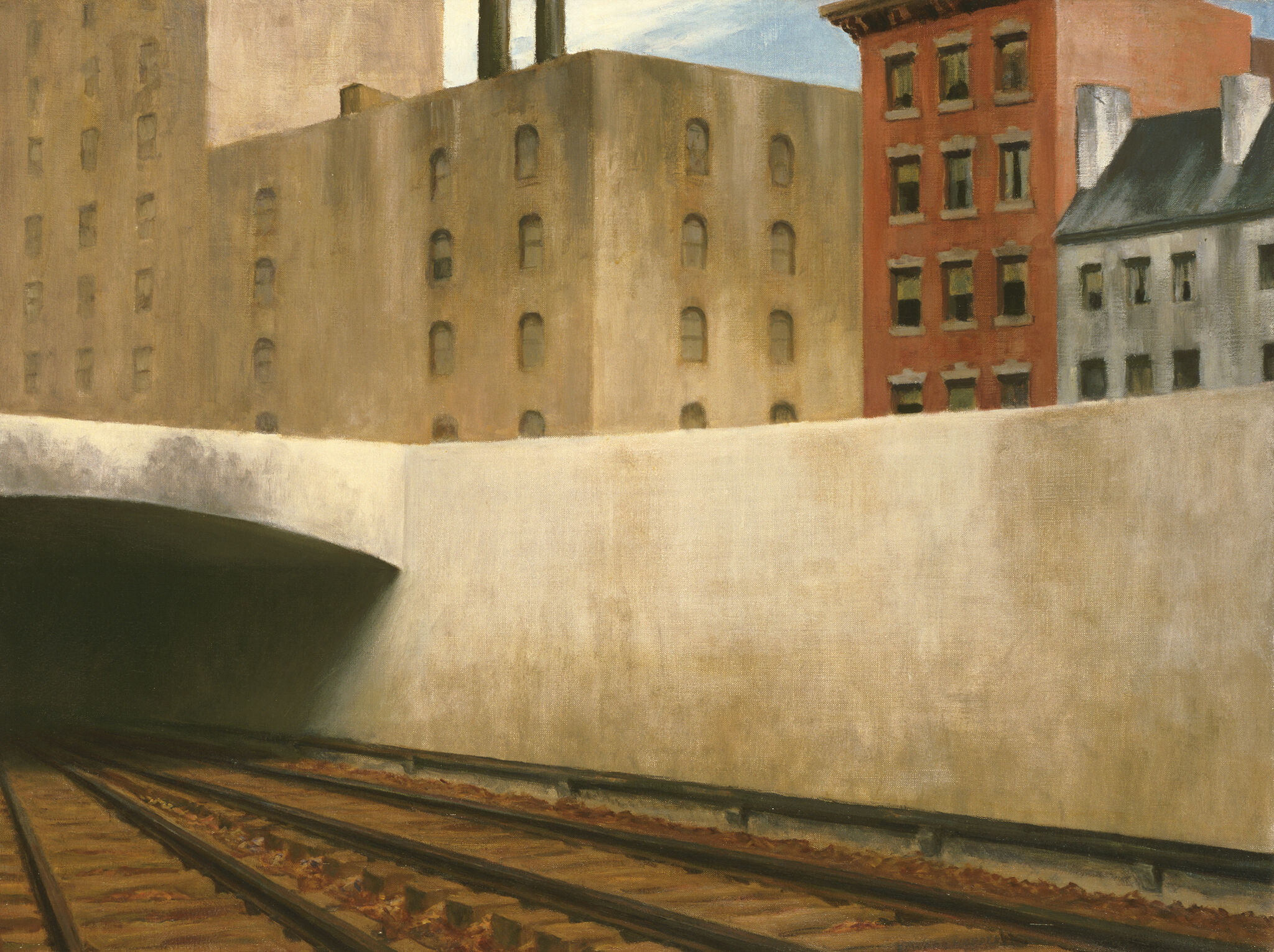
-
501
Early Commercial Work
Audio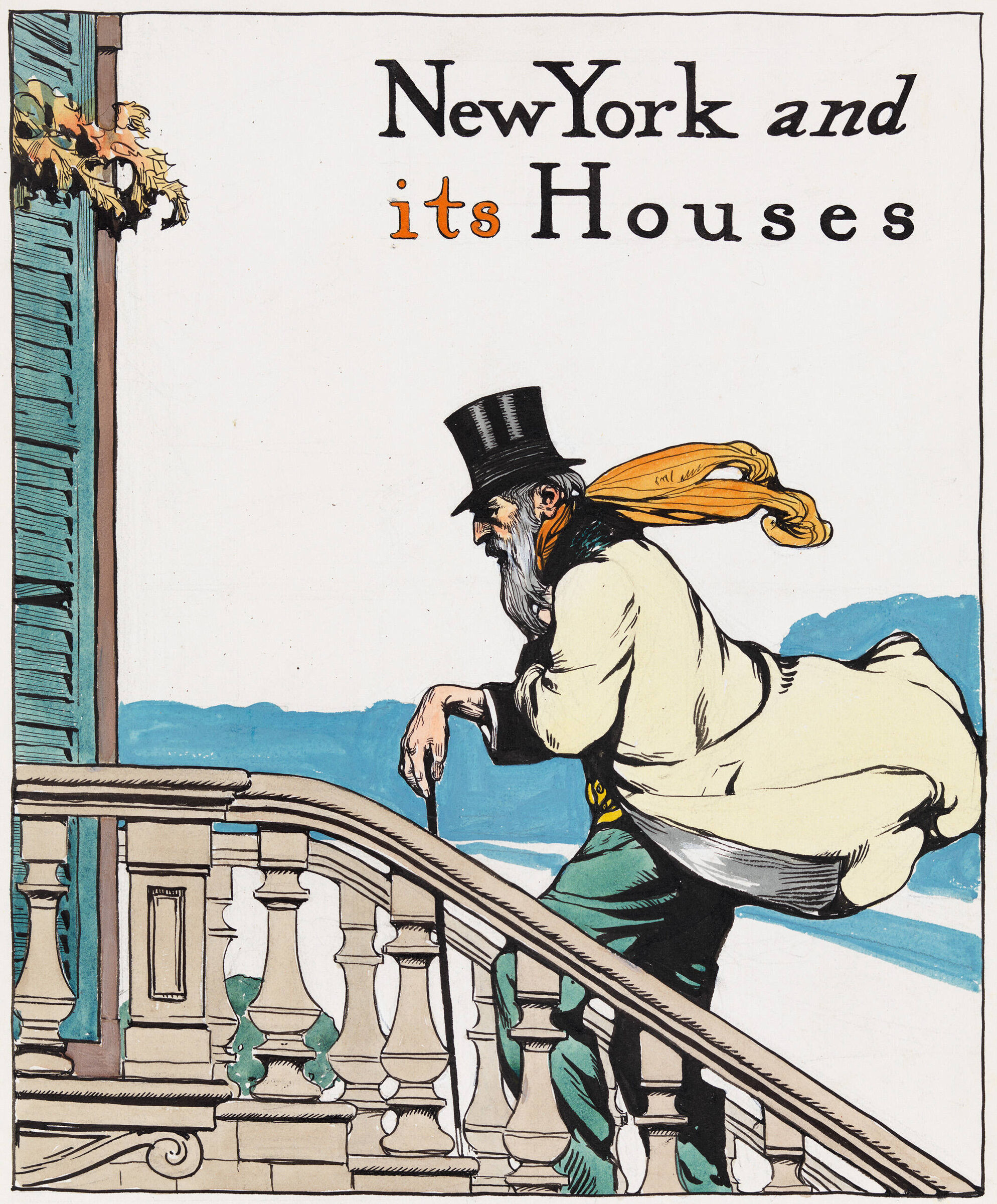
-
502
Advertisements
Audio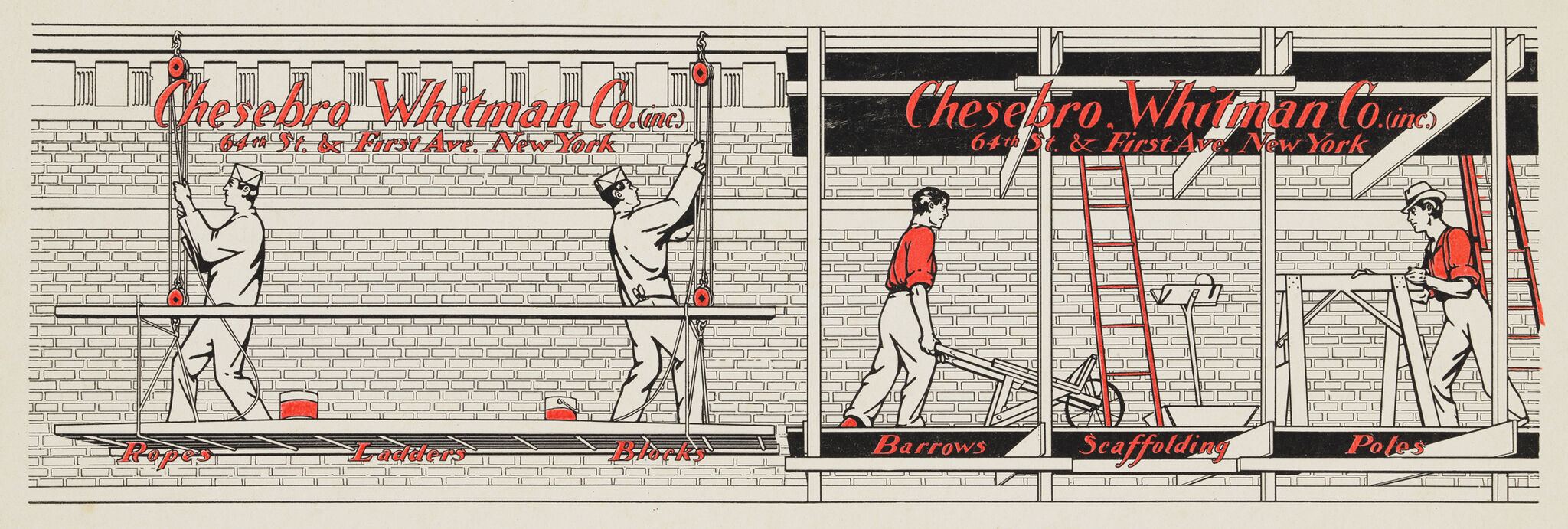
-
503
Le Pont des Arts, 1907
Audio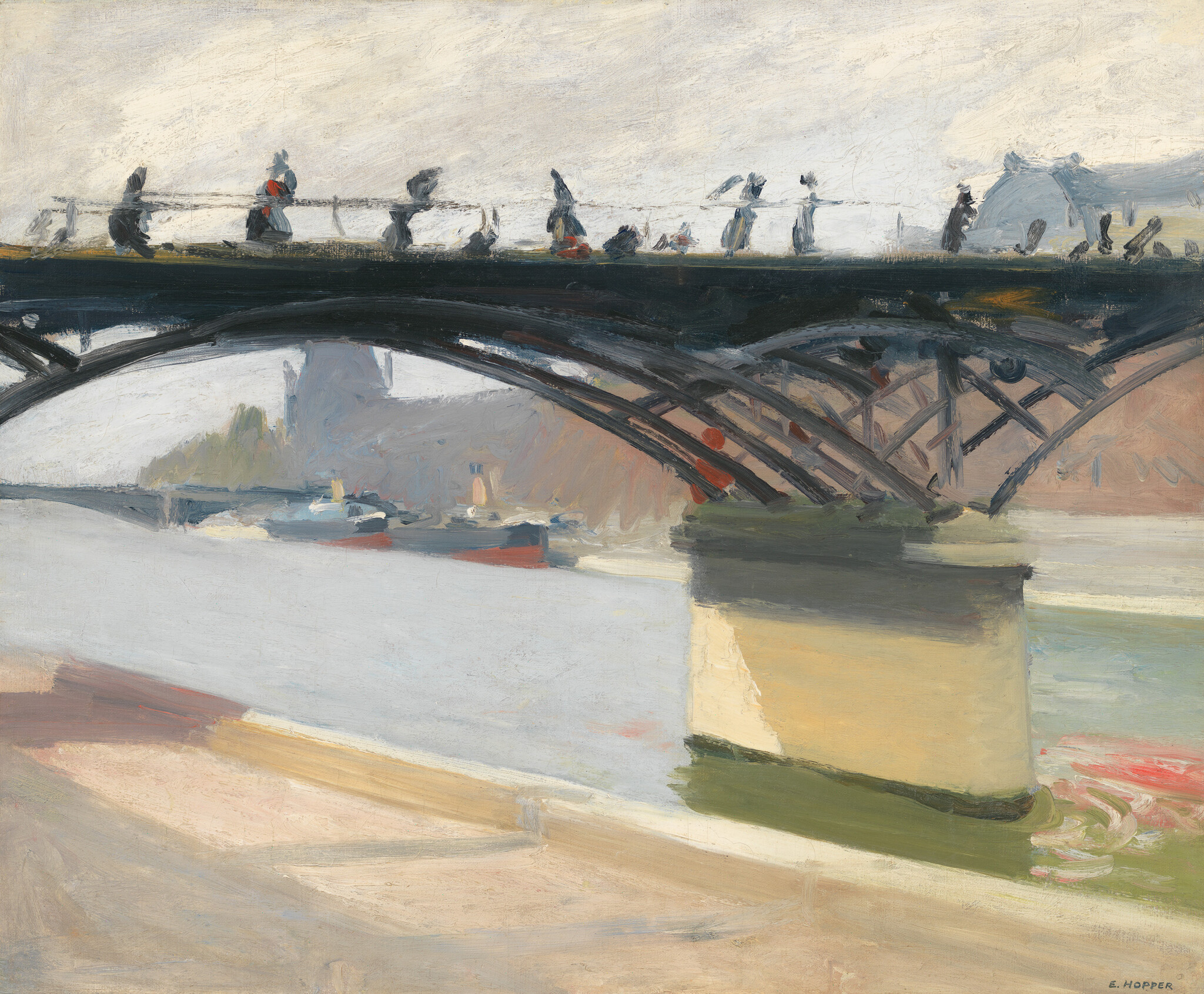
-
504
Queensborough Bridge, 1913
Audio
-
505
New York Interior, c. 1921
Audio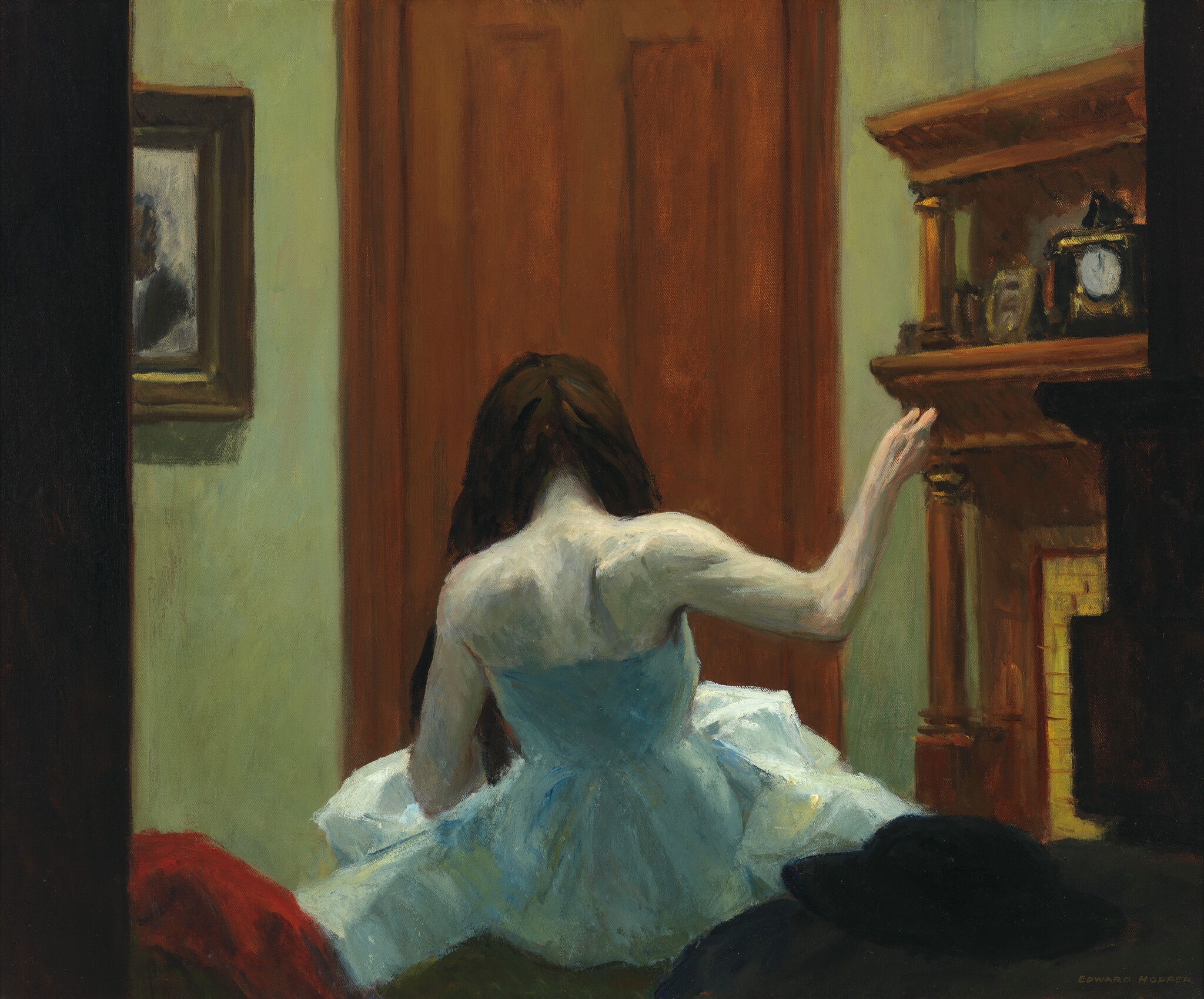
-
506
Automat, 1927
Audio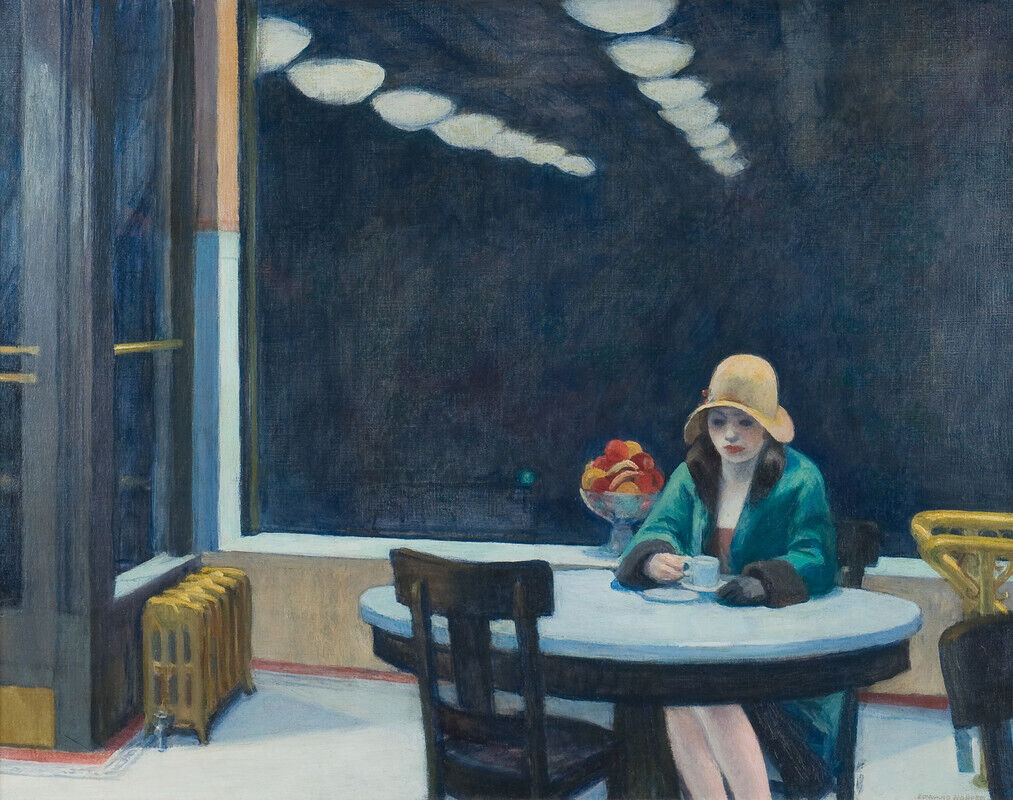
-
507
Apartment Houses, East River, c. 1930
Audio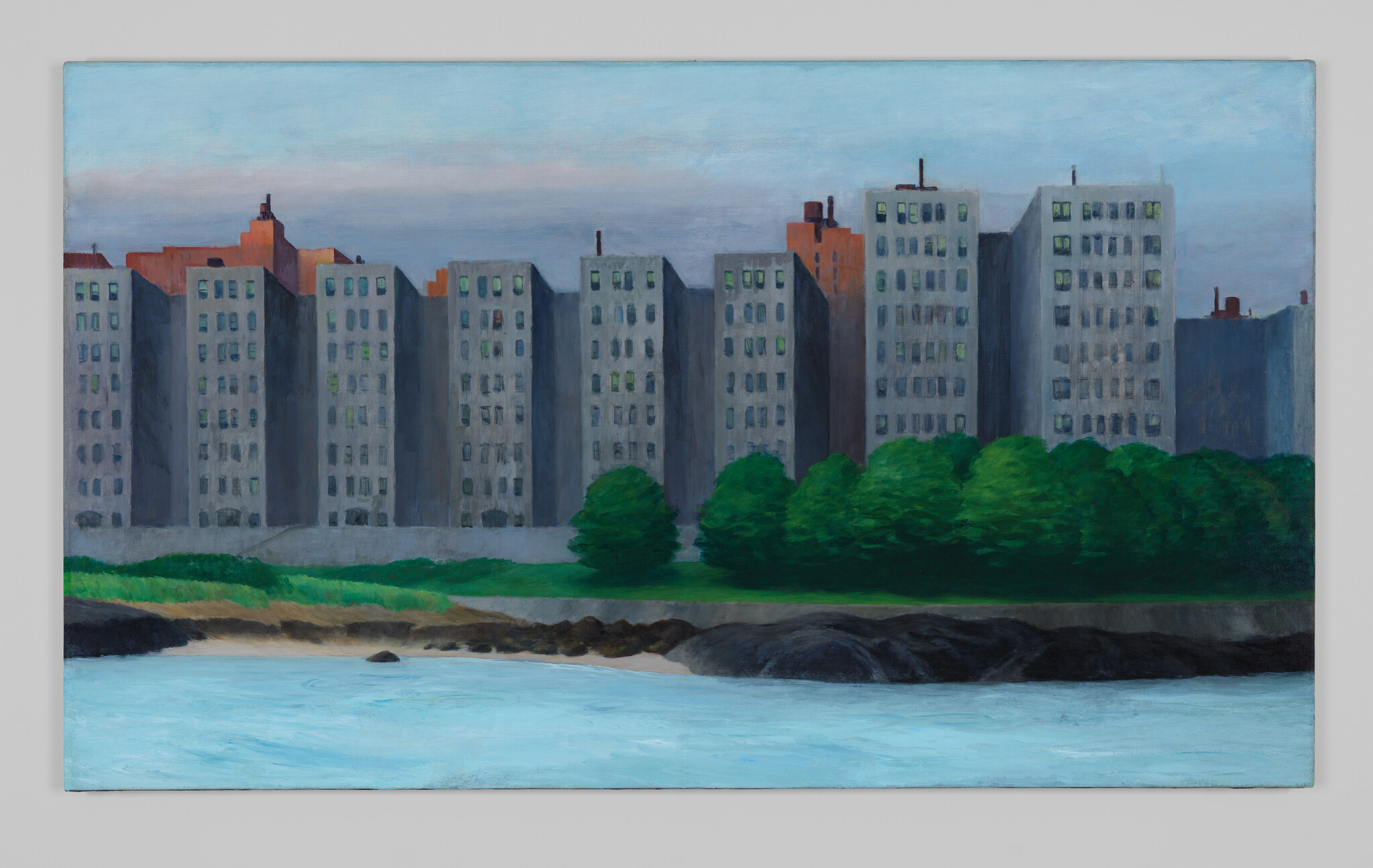
-
508
Early Sunday Morning, 1930
Audio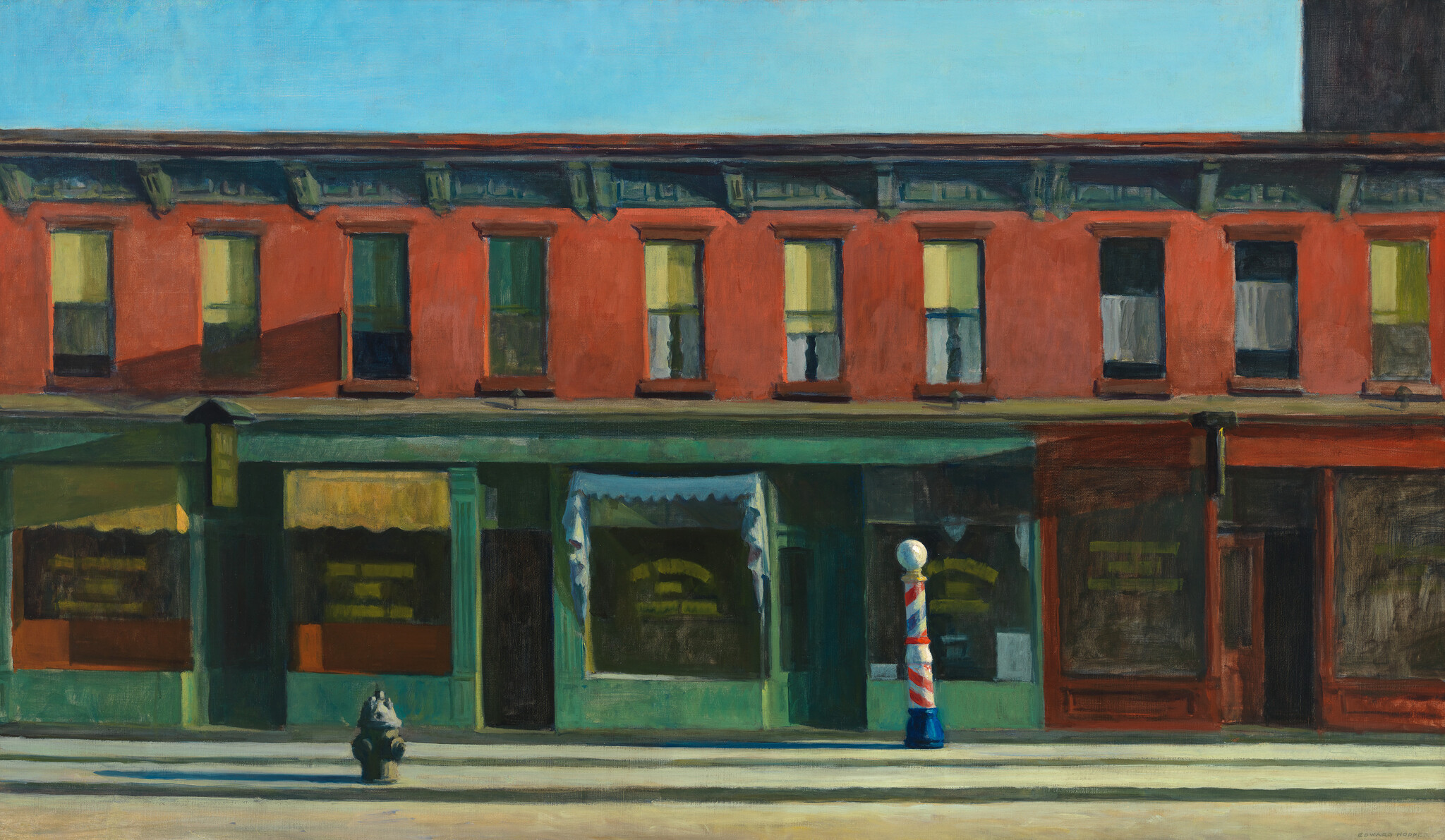
-
509
Room in New York, 1932
Audio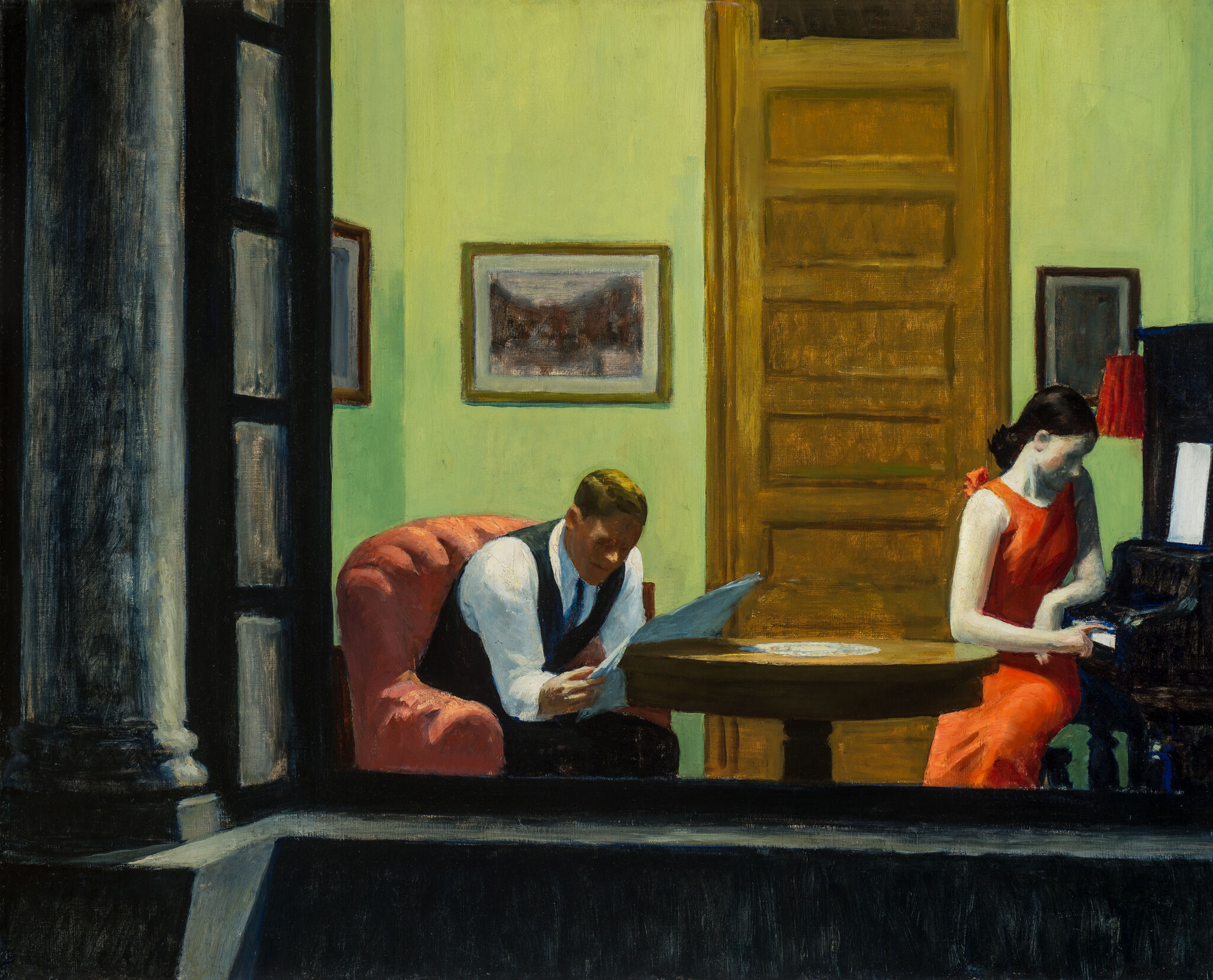
-
510
Two Comedians, 1966
Audio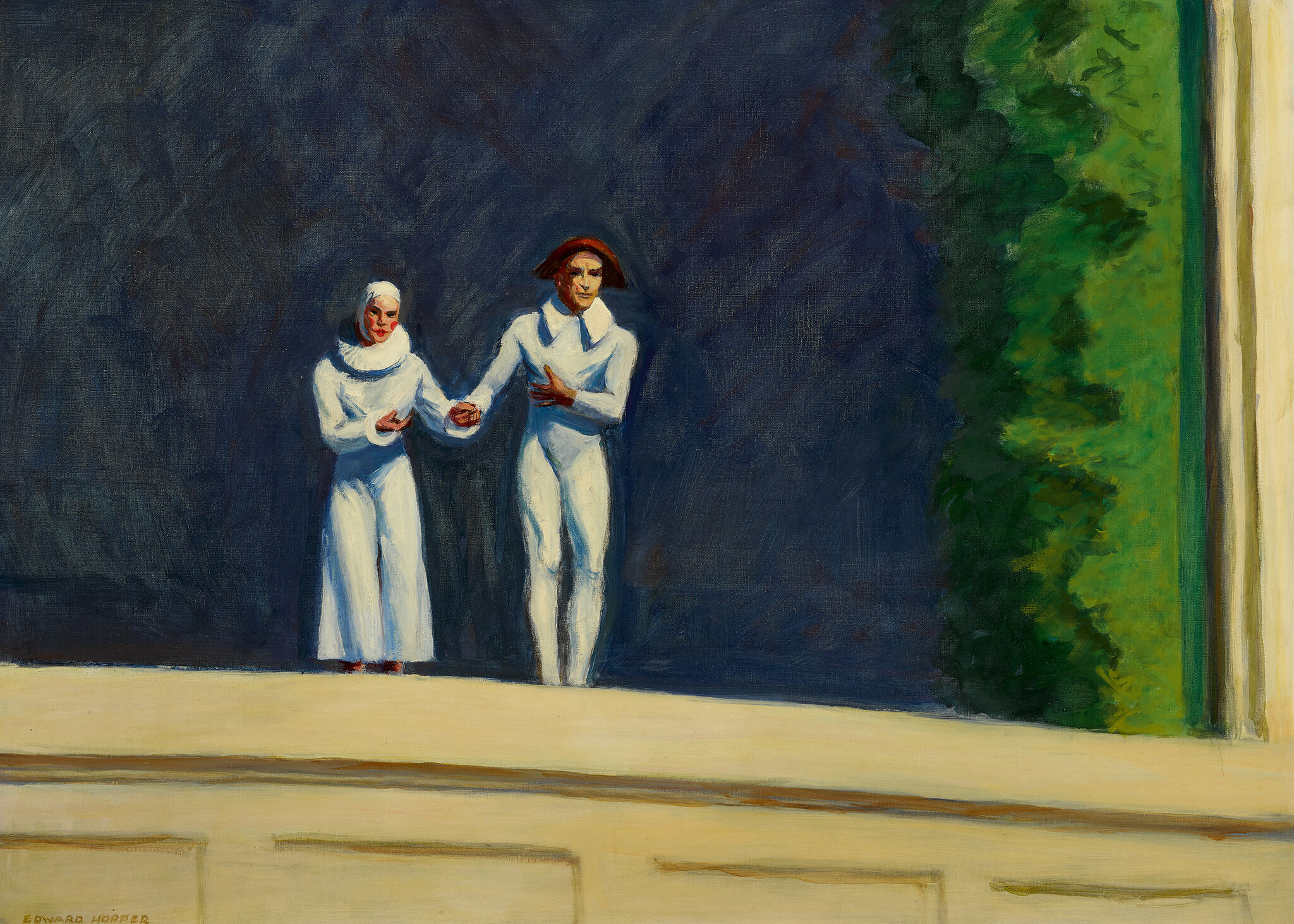
-
511
Performances
Audio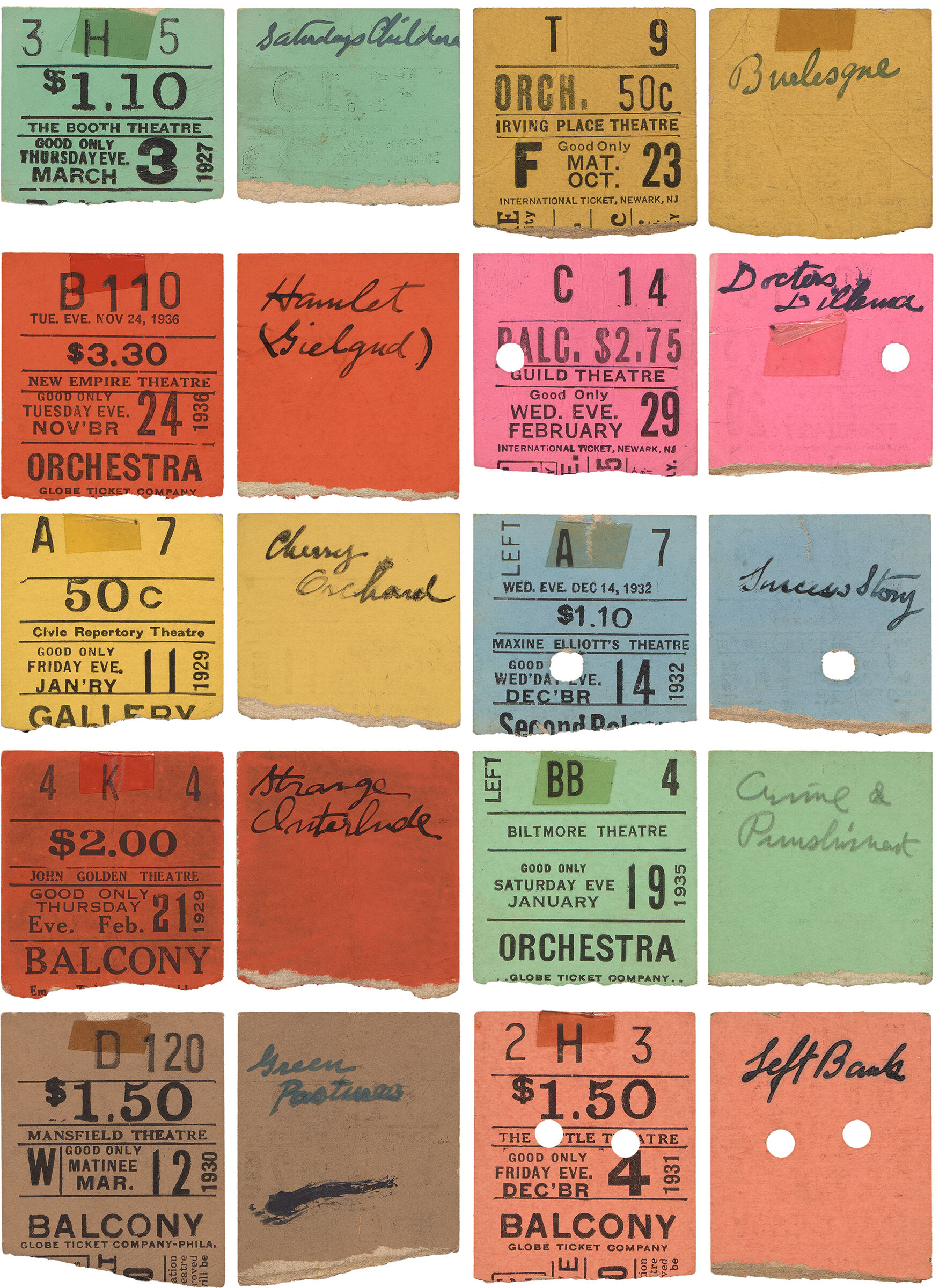
-
512
New York Movie, 1939
Audio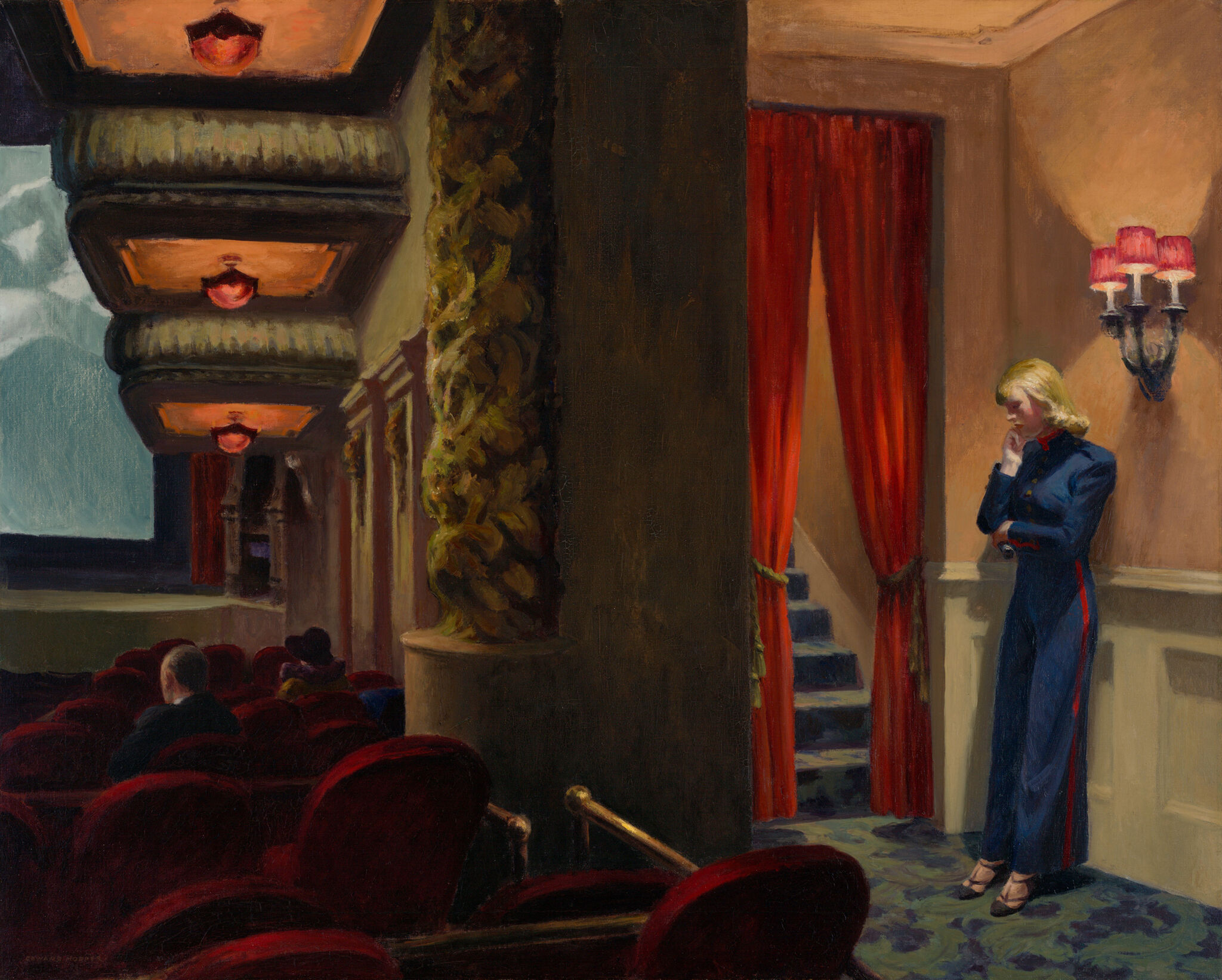
-
513
House at Dusk, 1935
Audio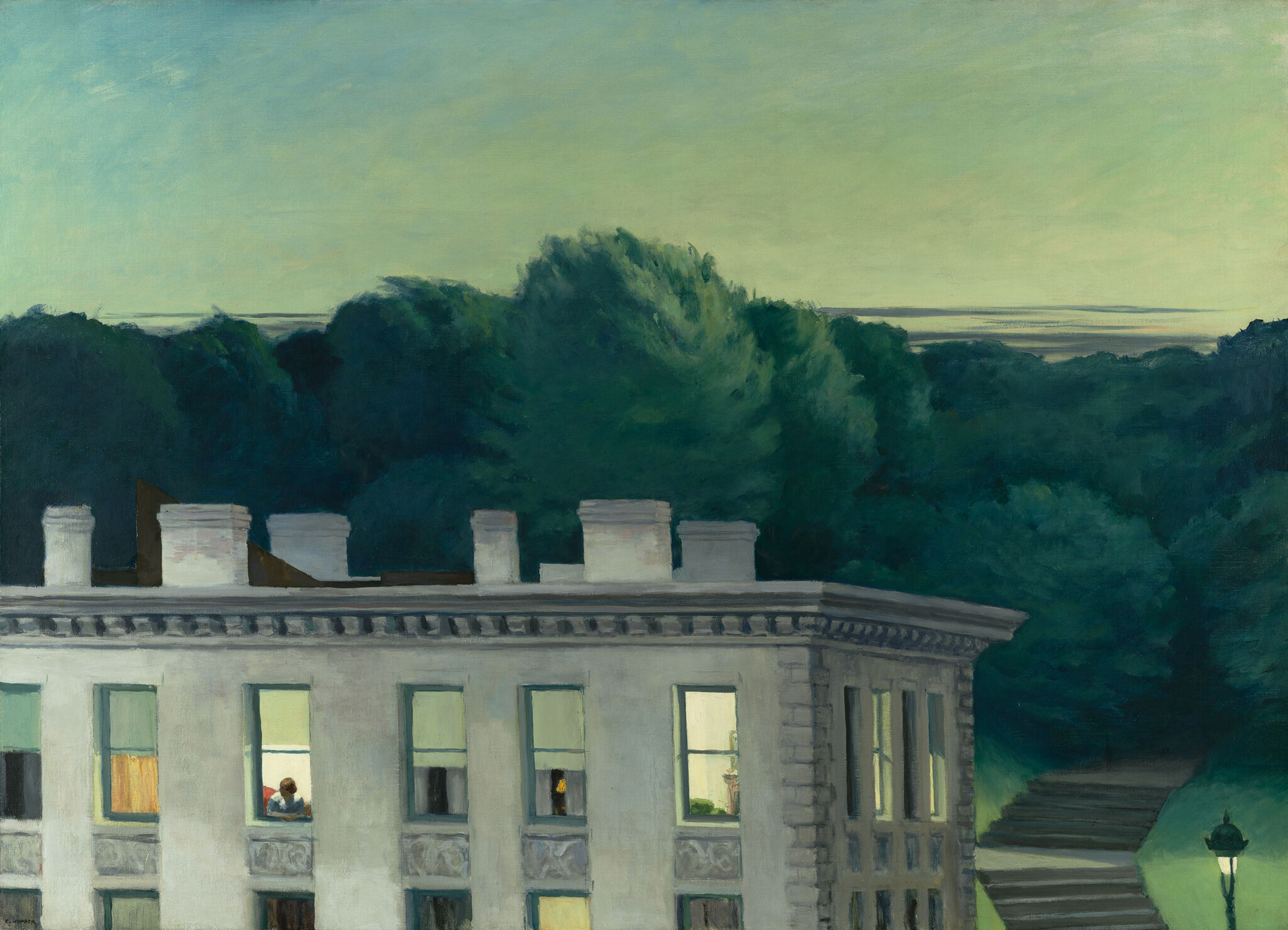
-
514
Rooftop watercolors
Audio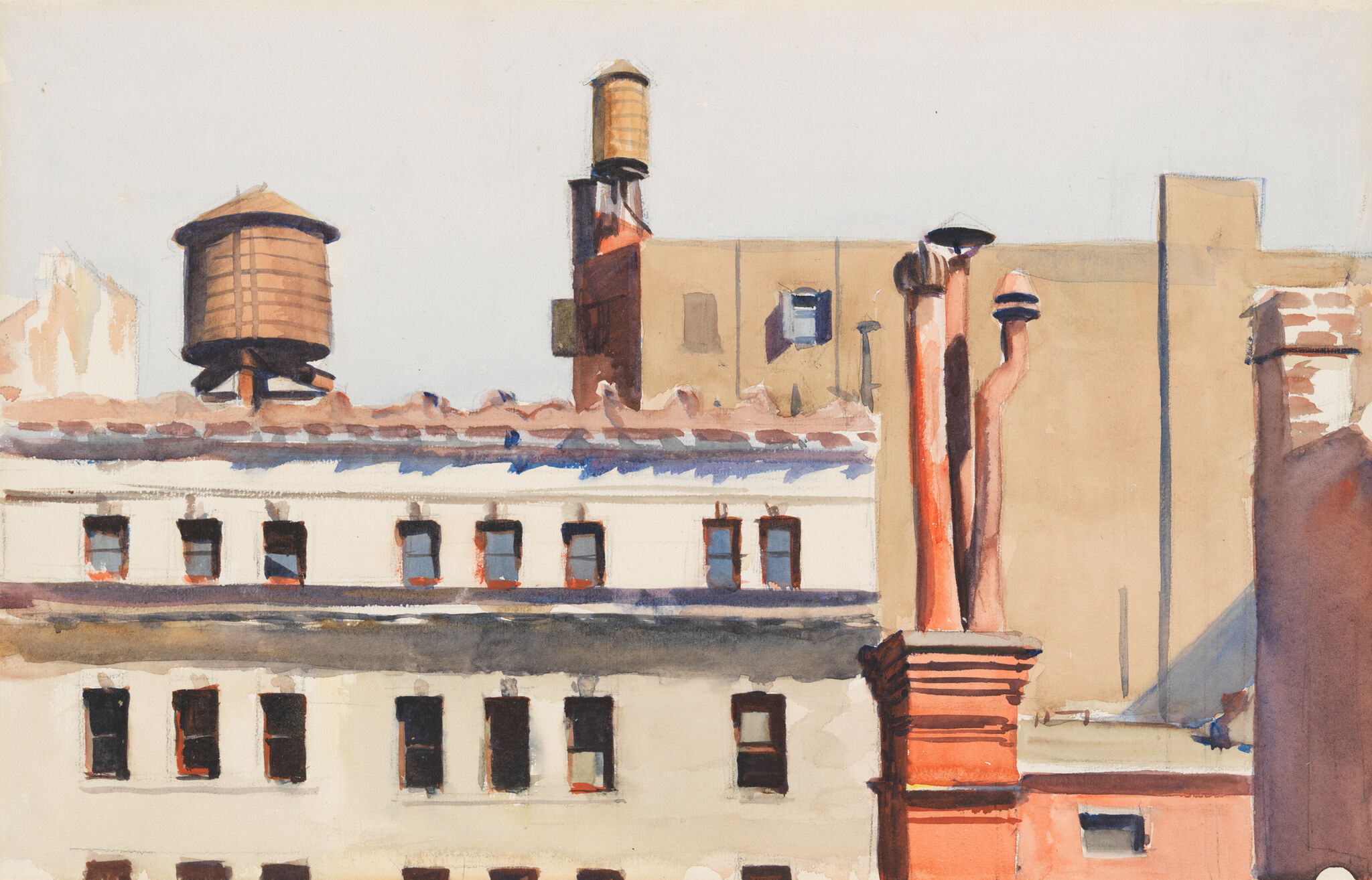
-
515
Josephine Nivison Hopper, 74 Stairs to Studio at Three Washington Square North, n.d.
Audio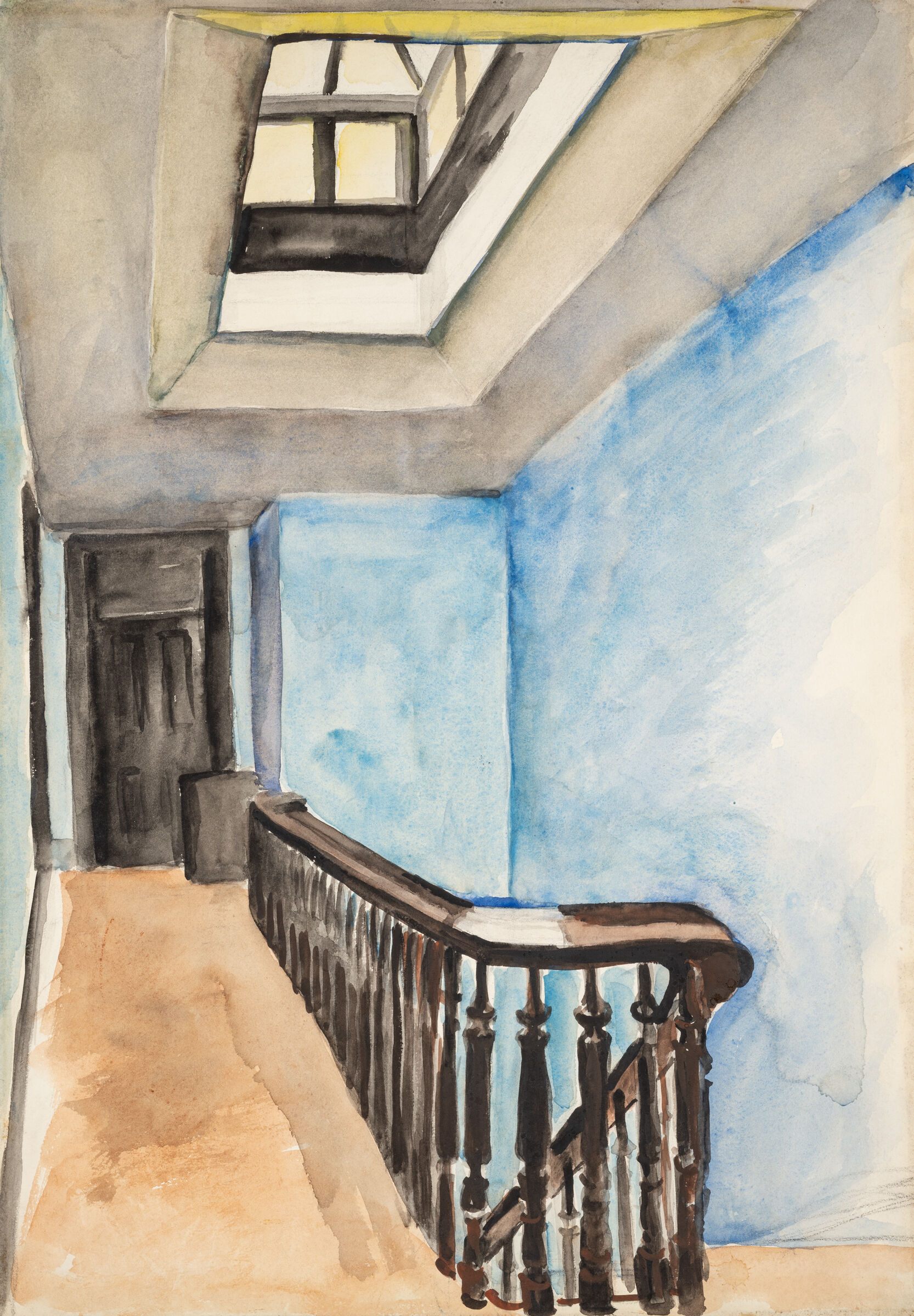
-
516
The Hoppers’ Advocacy
Audio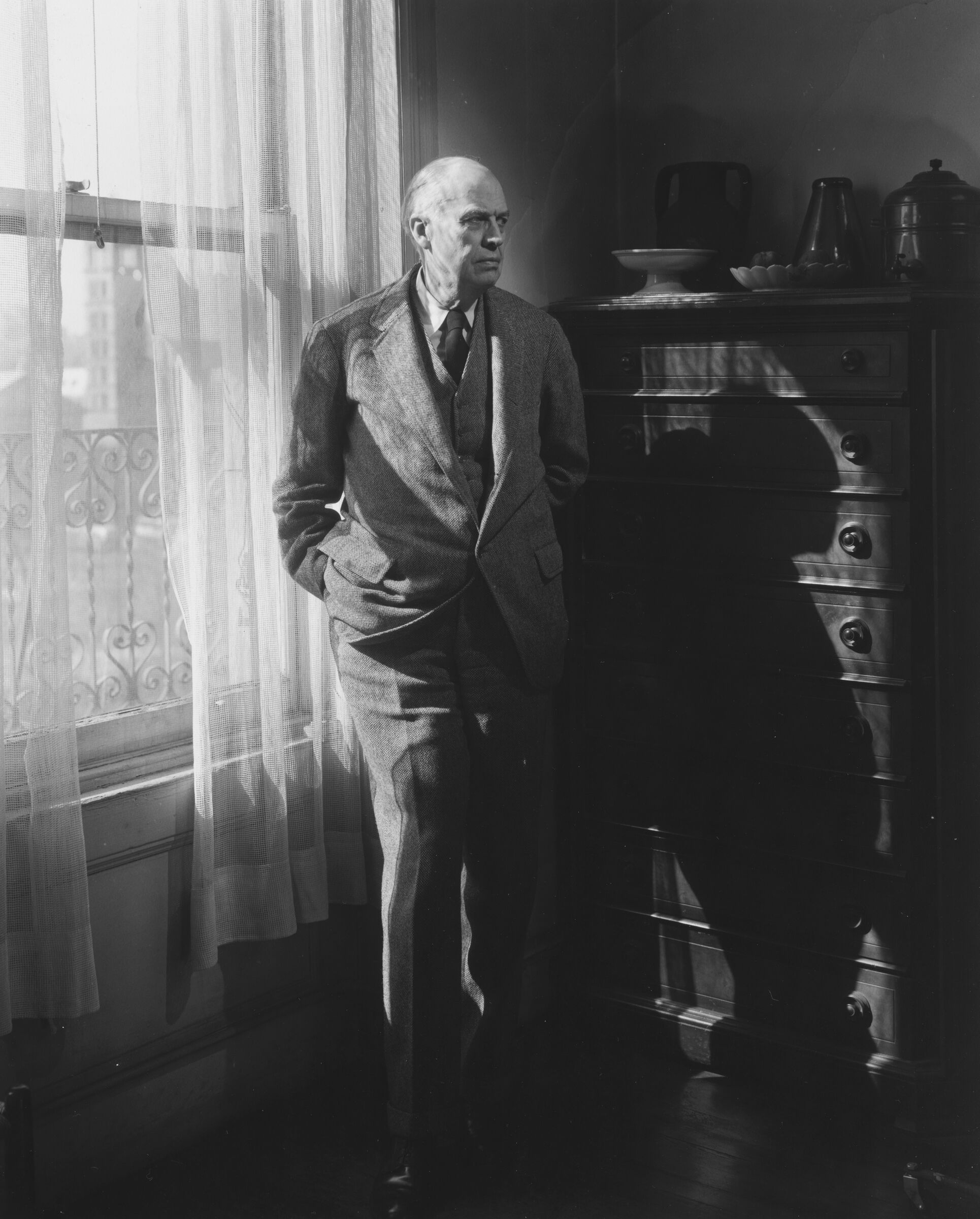
-
517
Office in a Small City, 1953
Audio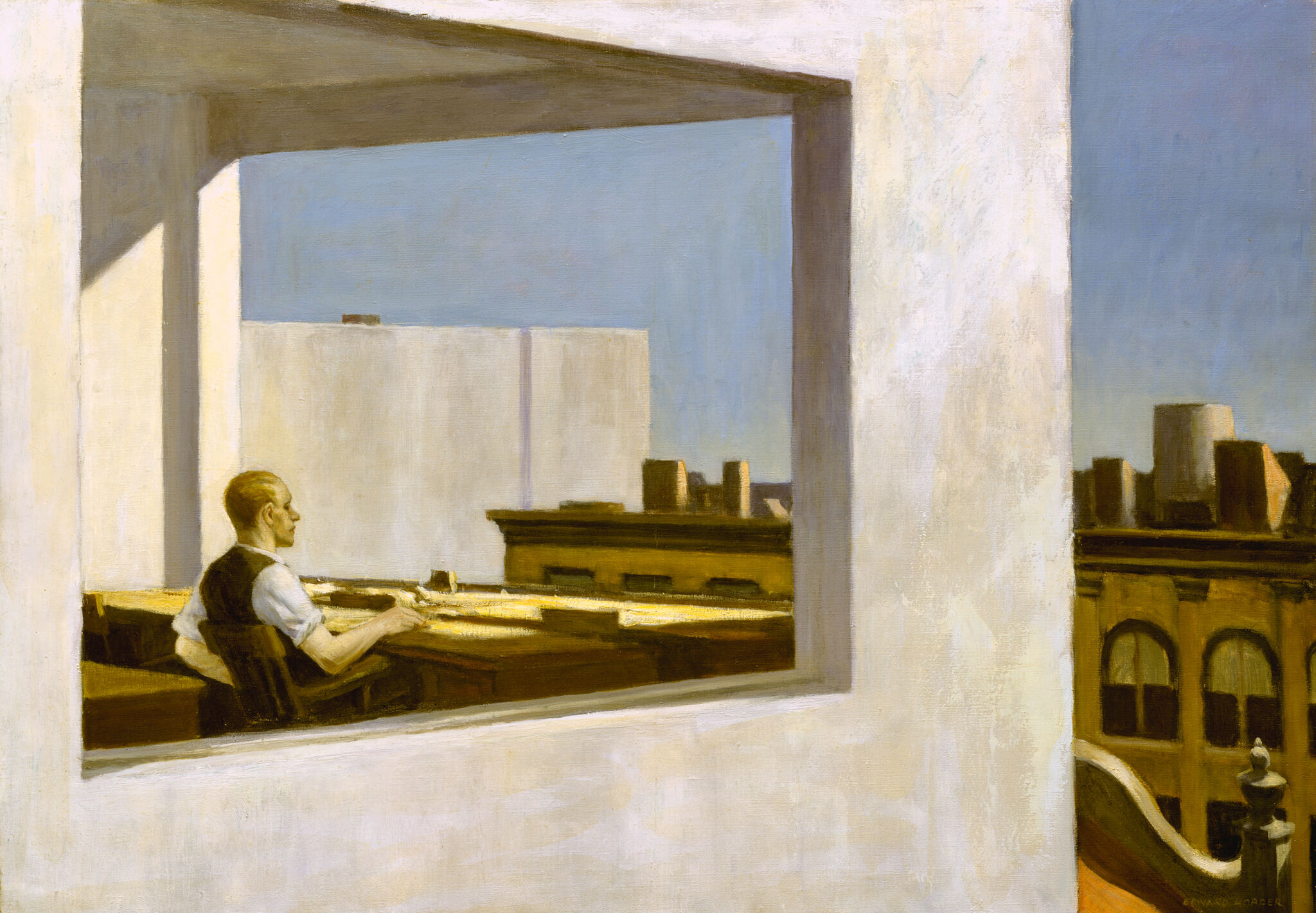
-
518
Morning Sun, 1952
Audio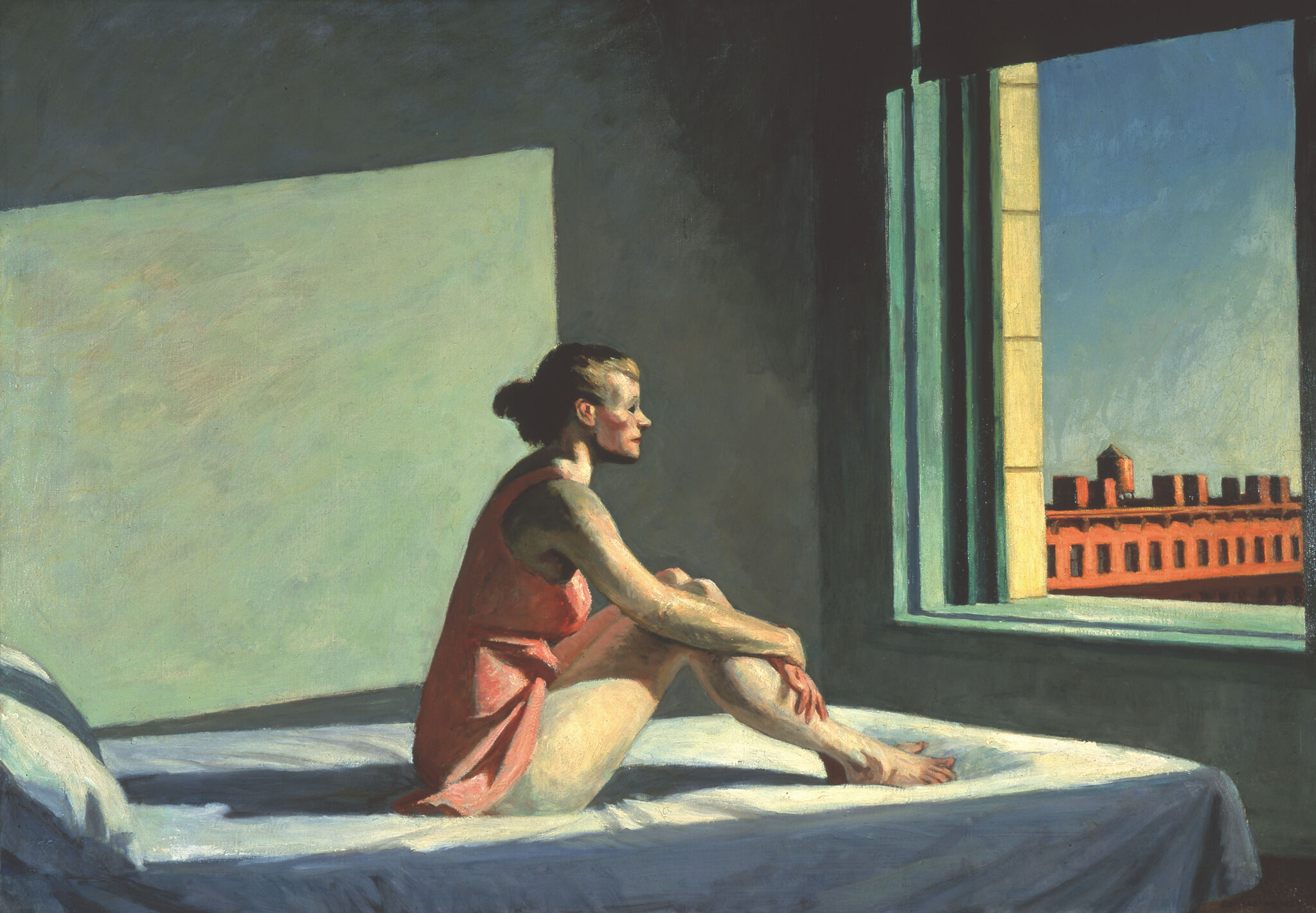
-
519
Hopper’s “Notes on Painting” Notebook, 1940s–60s
Audio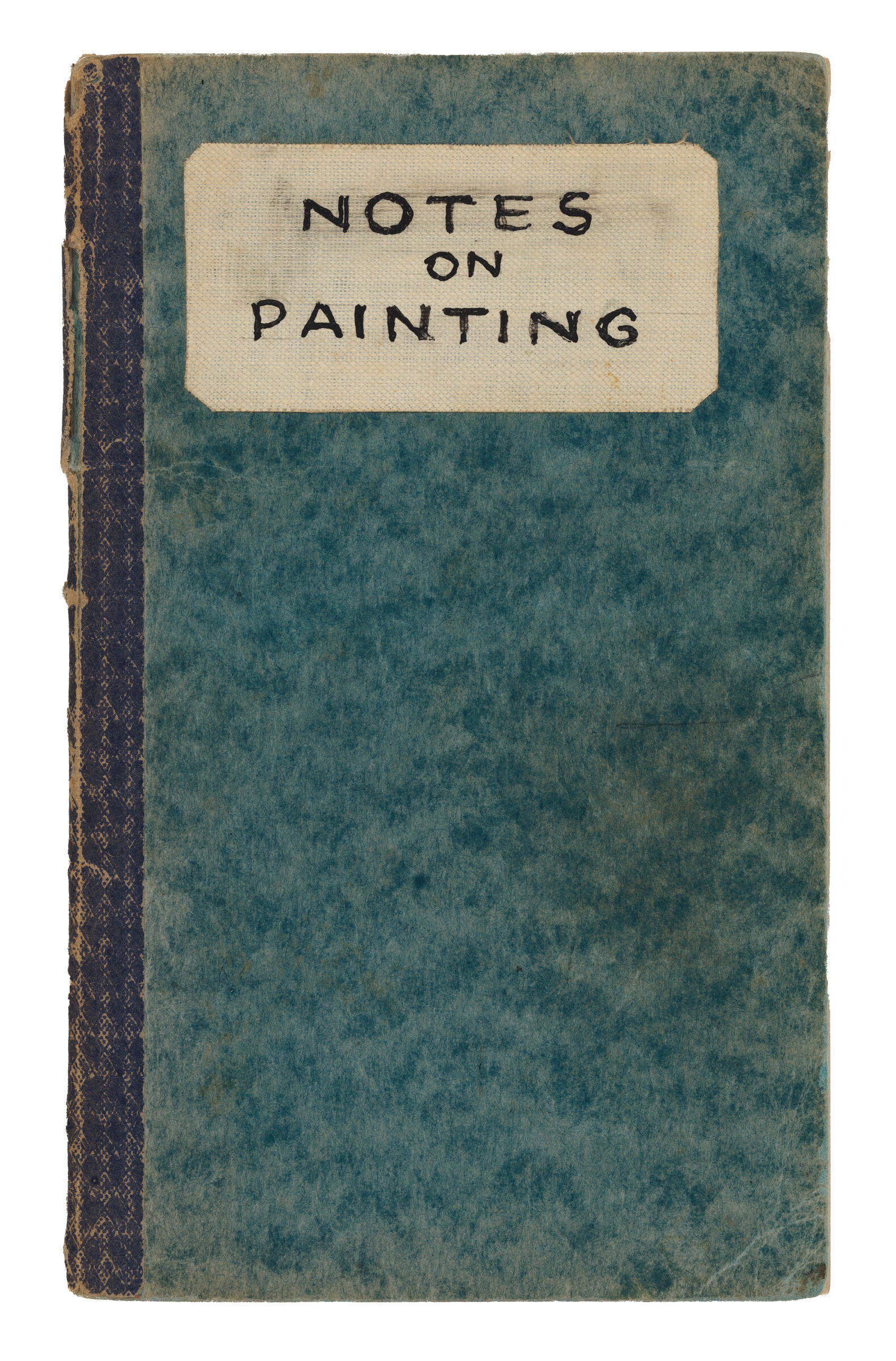
-
520
Bridle Path, 1939
Audio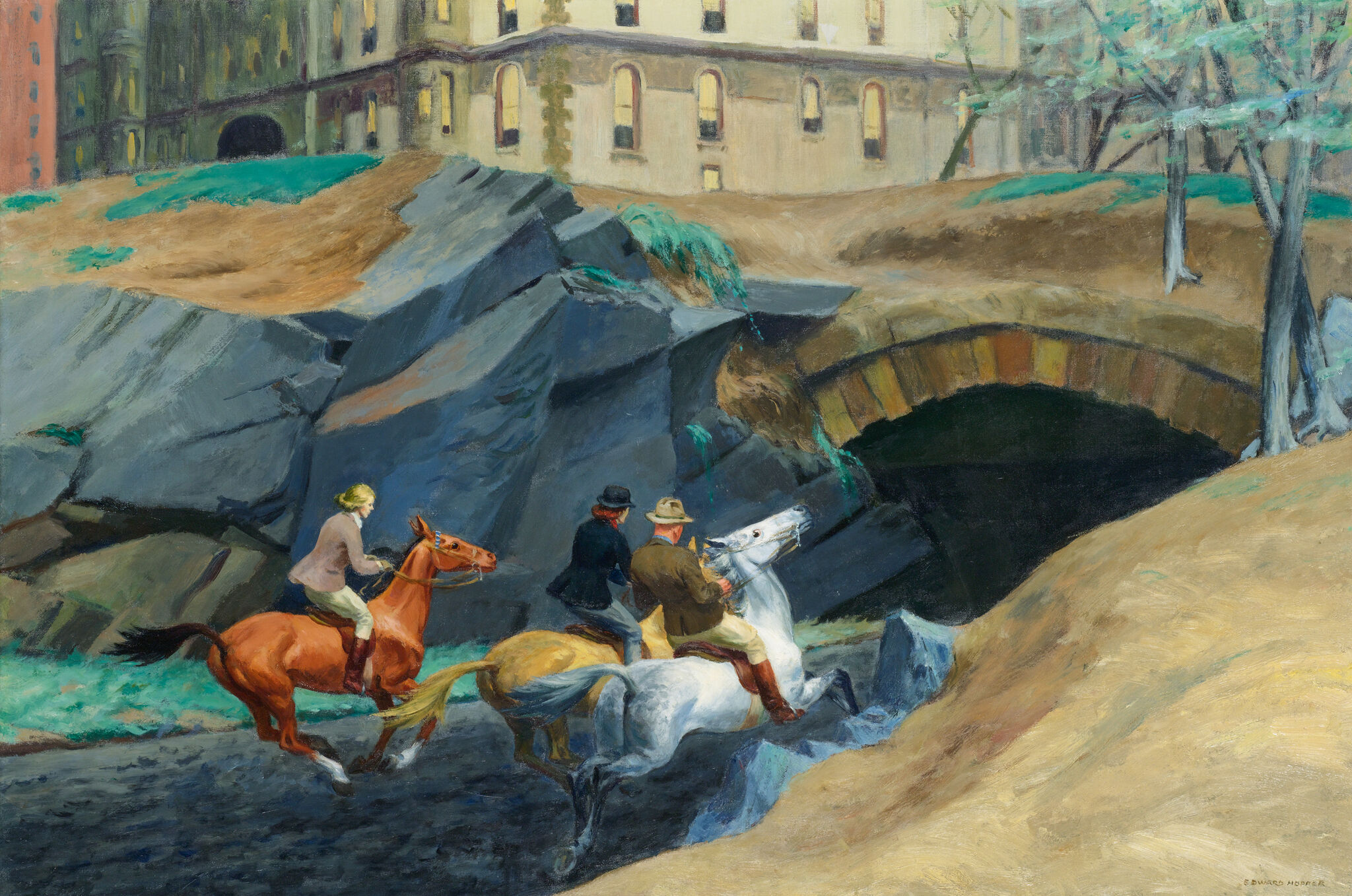
-
530
Verbal Description: Introduction
Verbal description -
531
Verbal Description: Blackwell's Island, 1928
Verbal description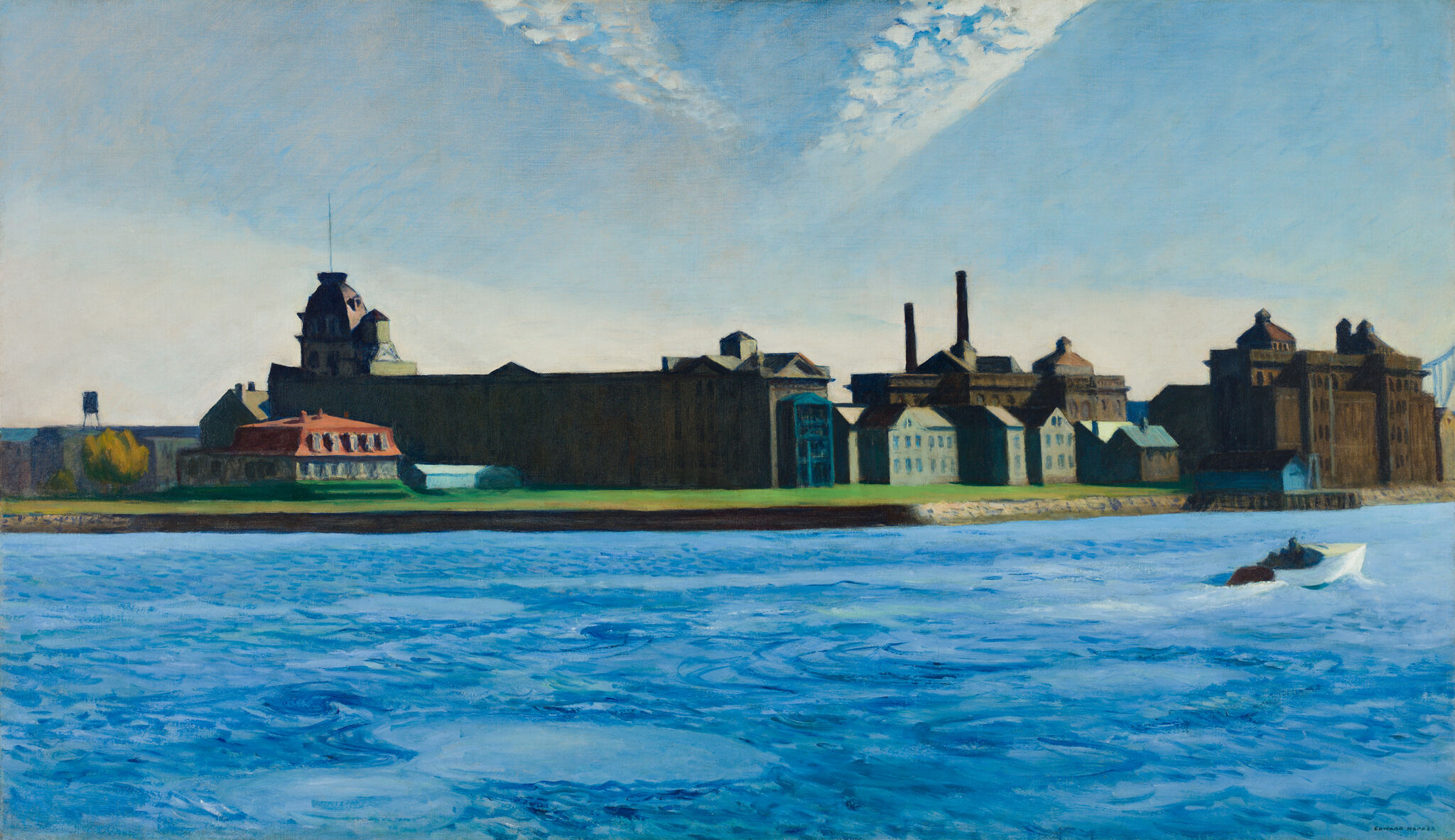
-
532
Verbal Description: Girl at a Sewing Machine, c. 1921
Verbal description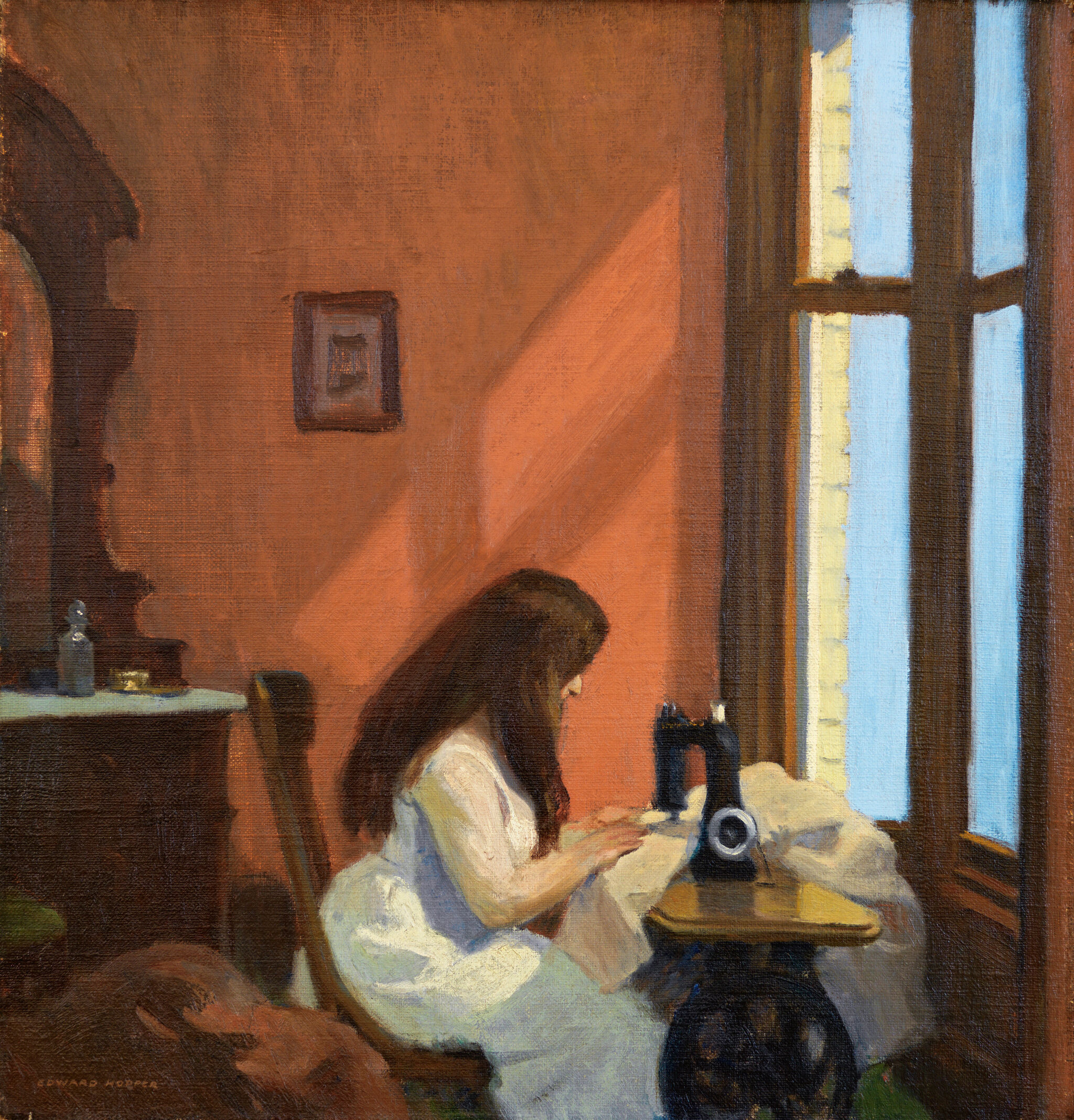
-
533
Verbal Description: Cover illustrated by Hopper for Hotel Management, November 1924
Verbal description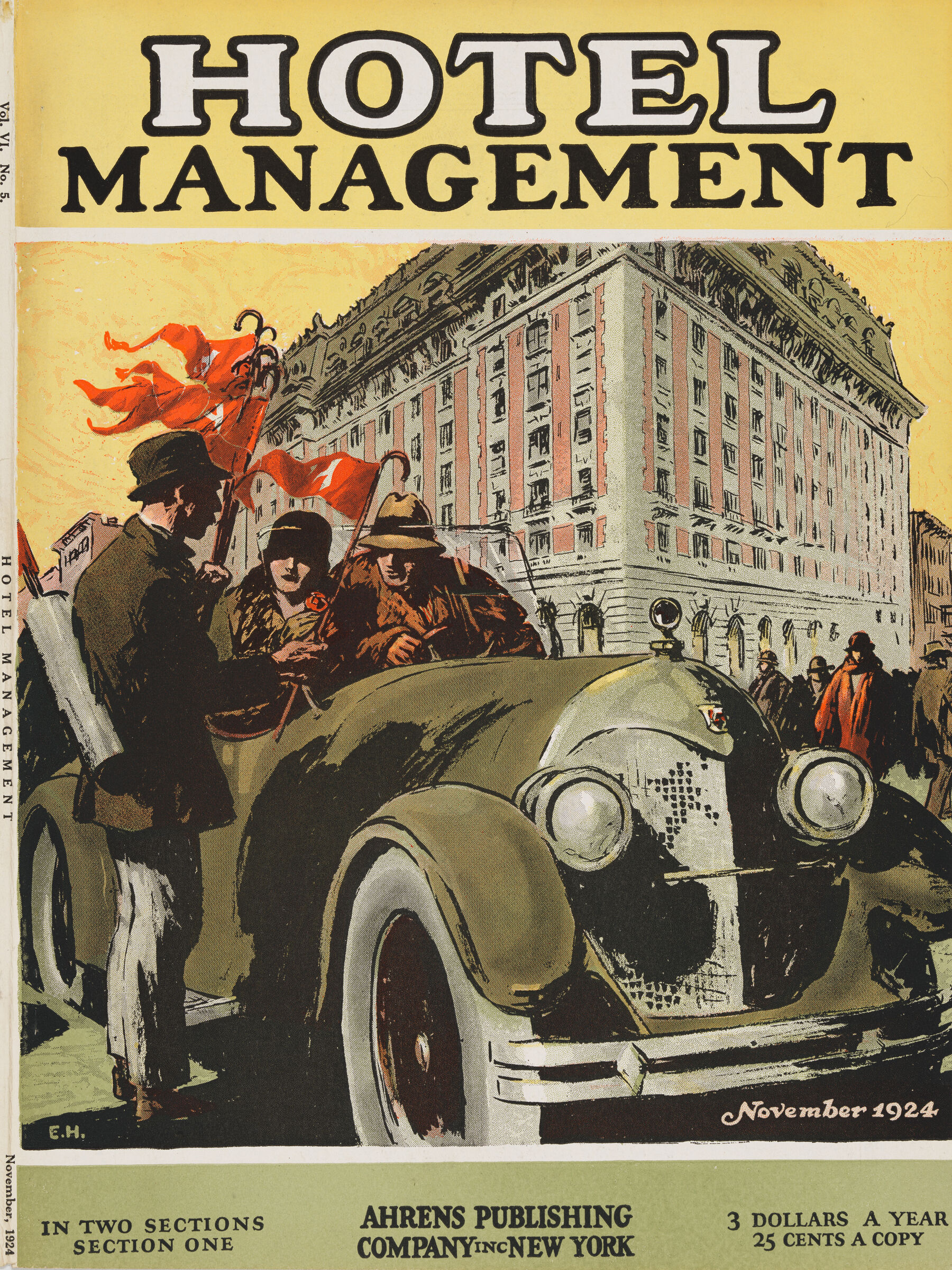
-
534
Verbal Description: House at Dusk, 1935
Verbal description
-
535
Transcription: Invitation to Art (a television talk show hosted by Brian O'Doherty), Episode 32: Conversation with Edward Hopper, 1964
Transcription -
536
Verbal Description: Morning Sun, 1952
Verbal description
Kim Conaty: Hi, my name is Kim Conaty. I'm the Steven and Ann Ames Curator of Drawings and Prints at the Whitney Museum. And I'm also the Curator of Edward Hopper's New York. We're thrilled to welcome you to this exhibition that looks at Hopper's relationship with the city of New York, which is one that really evolved throughout his lifetime beginning when he was a child growing up in Nyack, just about thirty miles north of the city.
Narrator: Hopper studied illustration in New York as a young man, and went on to live in the city for nearly six decades. This entry area features a perspective on the city that he came to love during that time—the view from the elevated train.
Kim Conaty: And these “el” trains, as they were called, allowed people to move through the city, not dissimilar to the way that we see that we have the experience of walking along the High Line today, slightly above street level. And of course with that, the ability to get a sort of privileged view into city life, not just the bustle of passersby on the street and the shop windows that are there to greet you, but also to be able to look into people's windows, to look into offices along the way.
Narrator: As you’ll see as you move through this exhibition, Hopper frequently adopts a perspective like the one he could find on the el: on the outside of a scene, often slightly elevated from it, as though it were a set where a bit of theater might unfold. The painting hanging near the projection screen is one great example of this point of view. It’s called New York Pavements.
Throughout this exhibition, you’ll also see letters, notebooks, and other bits of daily life that give us a new understanding of Hopper’s New York.
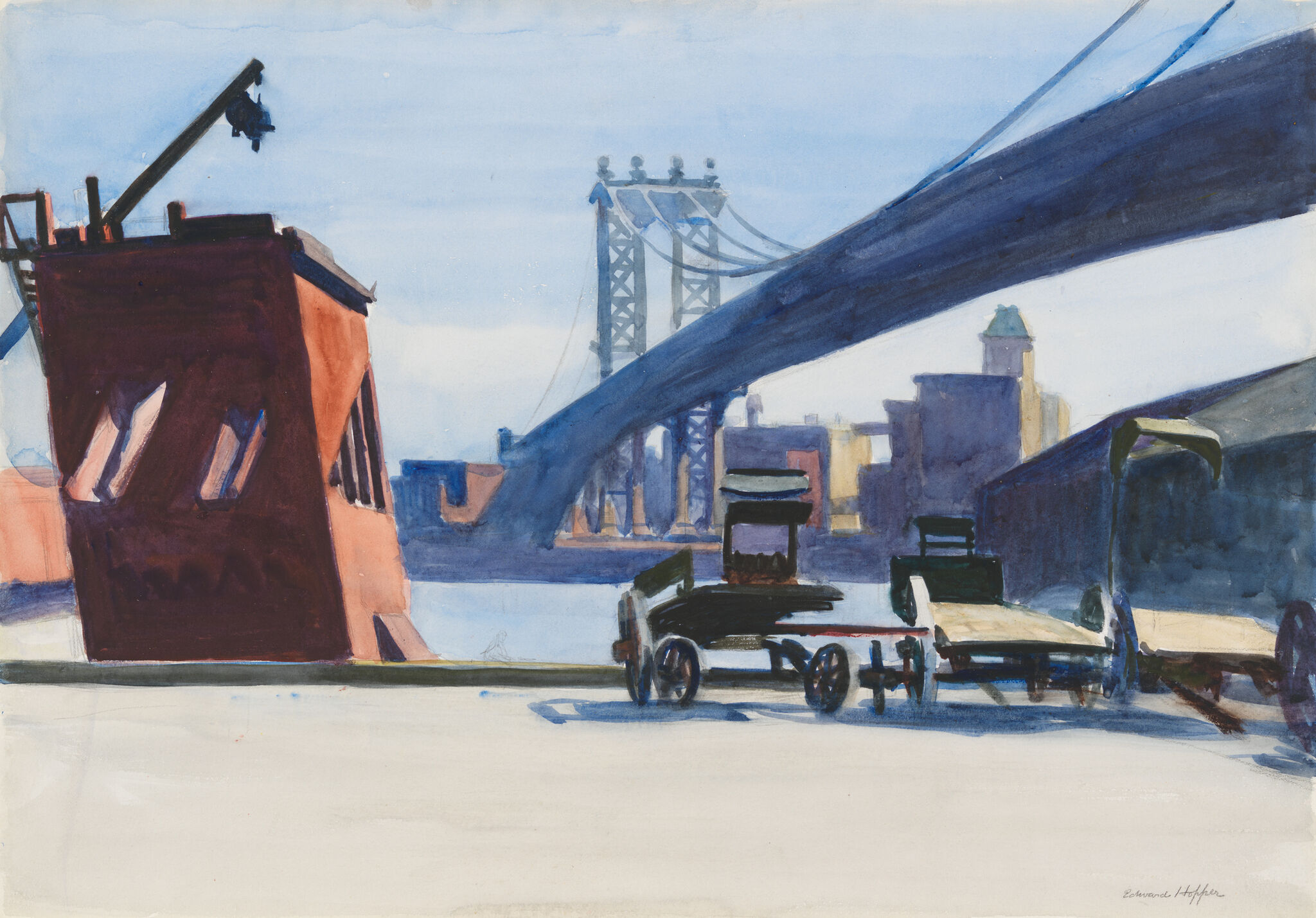
Kim Conaty: One of the most exciting and truly revelatory parts of the research for this exhibition was the opportunity that we had to dig into the Whitney's Sanborn Hopper archive, which comprises nearly 4,000 items of Hopper's, including correspondence, illustration and advertising work from early in his career. Through this material, we've been able to get a fuller picture of the Hoppers' lives in New York.
Edward Hopper, Approaching a City, 1946. Oil on canvas, 27 1/18 x 36 in. (68.9 x 91.4 cm). The Phillips Collection, Washington, D.C.; acquired 1947. ©️ 2022 Heirs of Josephine N. Hopper/Licensed by Artists Rights Society (ARS), New York
Melinda Lang: These drawings are all examples of Hopper's early studies in illustration or spec work that he would make for his portfolio.
Narrator: Melinda Lang is a Senior Curatorial Assistant at the Whitney, and helped organize this exhibition.
Melinda Lang: And he’d bring those works to publishing and magazine offices around the city, when seeking out commissions. Hopper came of age as an illustrator during the early twentieth century magazine boom. At this time, illustration was going through what we call a "golden age.” Hopper studied illustration at the New York School of Illustration and had planned to become an illustrator in earnest. But early on, while he became interested in painting, it really was more of a day job, a freelance job that could help him pay the bills and also funded his trips to Paris between 1906 and 1910.
Narrator: Even in this commercial work, there are suggestions of the artist Hopper would become.
Melinda Lang: Hopper was drawing on images around him, just as he did later on. So looking at the architecture that he passed on the street, the theater—he was often attending the theater as a student. His teachers would encourage him to depict those kinds of subjects that he would see in front of him. So in all of these drawings, the subjects he is choosing are themes that are around him in New York City.
Edward Hopper, New York and Its Houses, c. 1906–10. Watercolor, ink, and graphite pencil on paper, 21 13/16 × 14 13/16 in. (55.4 × 37.6 cm). Whitney Museum of American Art, New York; Josephine N. Hopper Bequest 70.1347. © 2022 Heirs of Josephine N. Hopper/Licensed by Artists Rights Society (ARS), New York
Narrator: In this case, you’ll find Hopper’s proofs from several of the published advertisements he designed. Kim Conaty, the exhibition’s curator, talks about Hopper’s approach to these ads.
Kim Conaty: It appears that he was able to develop types that were not specific in the way that a particular scene might speak to many different people rather than to be a very specific place. And that kind of openness, that use of typologies is something that's so critical in the advertising industry in order to have campaigns that could be marketed to vast numbers of people.
Of course Hopper's types are very related to the specific populations that the magazines he was illustrating for were targeting at the time, namely white male businessmen. You'll see here an ad for suspenders. So, many of his ads were for a particular kind of white collar business attire. And this is the sort of attire that then you find in even later paintings of office scenes.
Edward Hopper, Scaffolding by Chesebro Whitman Co. Inc, c. 1911–12. The Sanborn Hopper Archive at the Whitney Museum of American Art, Frances Mulhall Achilles Library and Archives, New York; gift of the Arthayer R. Sanborn Hopper Collection Trust EJHA.0137
Narrator: Hopper made this painting while living in Paris for several months in 1907.
Kim Conaty: The palette is very soft, light, very impressionist in style, in brushstroke. This painting depicts what is known as the Bridge of the Arts in Paris crossing the Seine between the Left Bank and the Musée du Louvre. Before he goes to Paris, the palette is a much kind of earthier palette, more browns, much darker, less luminosity. And one thing that he did clearly pick up in Paris was a new approach and interest in light.
Narrator: Hopper admired Impressionists like Edgar Degas. But he seems to have had no contact with modern artists like Pablo Picasso and Henri Matisse, who were just beginning to gain notoriety. And his letters home make clear that although he saw some important exhibitions featuring Post-Impressionists like Paul Cézanne, they didn’t pique his interest—even though they were at the height of their influence on younger Parisian artists.
Kim Conaty: What he found instead fascinating during his time in Paris was the city itself. It was the views just outside of his door. It was the way that the natural landscape and the built environment intersected in an urban space.
Edward Hopper, Le Pont des Arts, 1907. Oil on canvas, overall: 23 11/16 × 28 13/16 in. (60.2 × 73.2 cm) Frame: 25 5/16 × 33 3/8 × 1 7/8 in. (64.3 × 84.8 × 4.8 cm). Whitney Museum of American Art, New York; Josephine N. Hopper Bequest 70.1181. © Heirs of Josephine N. Hopper/Licensed by Artists Rights Society (ARS), New York
Narrator: Artist Kambui Olujimi responds to Hopper’s 1913 painting of the Queensborough Bridge.
Kambui Olujimi: What I'm most taken by is the way the bridge vanishes, the way the bridge itself is articulated and then breaks up in the distance. The detail or looseness with which he renders the bridge almost looks like it's running away. Most of the renderings that I see from Hopper, architectural and built environments have a sort of fidelity. And I feel like this one is one that is much more lyrical, much more kind of whimsy.
Narrator: Hopper made this painting a few years after his final trip to Paris in 1910, and his loose style here reflects his time there. Meanwhile, his approach to the subject matter might challenge some assumptions about New York.
Kambui Olujimi: With the Queensboro Bridge, there's a hierarchy. Like I'm from Brooklyn, there's a hierarchy of bridges, you know, all New Yorkers kind of know the truth. The Brooklyn Bridge is the king of bridges in this city. To pick the Queensboro Bridge, you know, it's not a major player in the hierarchy. It's almost like he's looking at the person in a corner in a party that's just sitting all by themselves and taking that time to engage.
Edward Hopper, Queensborough Bridge, 1913. Oil on canvas, overall: 25 7/8 × 38 1/8 in. (65.7 × 96.8 cm) Frame: 30 1/4 × 42 1/2 × 1 7/8 in. (76.8 × 108 × 4.8 cm). Whitney Museum of American Art, New York; Josephine N. Hopper Bequest 70.1184. © Heirs of Josephine N. Hopper/Licensed by Artists Rights Society (ARS), New York
Jane Dickson: New York Interior, 1921, is somewhat unusual for Hopper compositionally in that it's absolutely centered, and it's one-point perspective as opposed to diagonals.
Narrator: Artist Jane Dickson.
Jane Dickson: So right in the center of the composition, we see the somewhat muscle-y shoulders and back. She's wearing a strapless dress, and she's sewing. And to me, she looks like an aging ballerina.
Narrator: He seems to be looking through a window.
Jane Dickson: You see black on either side, which really sort of locks her in there. And then there's these hillocks of fabric that are between us, the viewer, and her. So there's many obstacles to her, and she's in her own fantasy world.
So it's like, she's imagining a life that maybe she's already passed. And if you notice, her hand that's up pulling the thread is pointing to a clock on the mantelpiece, which is a medieval symbol for time passing.
Edward Hopper, New York Interior, c. 1921. Oil on canvas, overall: 24 5/16 × 29 3/8 in. (61.8 × 74.6 cm) Frame (2019): 27 7/8 × 32 3/16 × 2 1/8 in. (70.8 × 81.8 × 5.4 cm). Whitney Museum of American Art, New York; Josephine N. Hopper Bequest 70.1200. © Heirs of Josephine N. Hopper/Licensed by Artists Rights Society (ARS), New York
Narrator: Here, Hopper shows us a woman in an automat—a fast food restaurant where the food is served by a vending machine. The lights reflected in the window seem to point straight at her—and so does the shadow of the radiator on the floor to the left. By focusing the composition on the woman in this way, Hopper seems to underscore the fact that she’s the only person present. But is the mood one of contemplative solitude? Or alienation? He leaves it up to the viewer.
Artist Kambui Olujimi has pointed out that Hopper seems as focused on the light as he is on the woman.
Kambui Olujimi: The light is operating as a character. And I would say it animates a space that wouldn't be nearly as seductive. And so the light, he makes a lot of room for the light to play, for the light to be a character and to have its own autonomy and bring you in and describe and conceal the space that we're looking at.
Edward Hopper, Automat, 1927. Oil on canvas, 28 1/8 × 35 in. (71.4 × 88.9 cm). Des Moines Art Center, Des Moines, Iowa; purchased with funds from the Edmundson Art Foundation, Inc. ©️ 2022 Heirs of Josephine N. Hopper/Licensed by Artists Rights Society (ARS), New York. Photograph by Rich Sanders, Des Moines, Iowa
Narrator: In Apartment Houses, East River, Hopper painted a housing complex based on some that he had sketched near the Macombs Dam Bridge in the Bronx. These complexes were part of a trend in urban development that was new at the time, a replacement for cramped tenement housing.
Andrew Berman: The idea being you build these big taller buildings. That opens up more space that everybody can sort of share or enjoy with more light, more air, et cetera. It's cheaper.
Narrator: Andrew Berman is Executive Director of the Greenwich Village Society for Historical Preservation.
Andrew Berman: It really was kind of the beginning of what you saw then throughout the twentieth century, which was the sort of paradigm of the tower in the park, which, you know, I could imagine that Hopper would have mixed feelings about. You know, on the one hand, sort of on paper, it's a better place. But especially when new, at this sort of larger scale, I would imagine that it would seem sort of somewhat intimidating and inhuman.
Edward Hopper, (Apartment Houses, East River), c. 1930. Oil on canvas, overall: 35 1/16 × 60 1/8 in. (89.1 × 152.7 cm) Frame (2022): 37 5/16 × 62 1/2 × 2 5/8 in. (94.8 × 158.8 × 6.7 cm). Whitney Museum of American Art, New York; Josephine N. Hopper Bequest 70.1211. © Heirs of Josephine N. Hopper/Licensed by Artists Rights Society (ARS), New York
Narrator: Hopper once said that Early Sunday Morning was “an almost literal translation of Seventh Avenue.” But the painting is more complex than that description might suggest.
Andrew Berman: On the one hand you have this incredibly intimate view of this diminutively scaled row of stores with what seemed to be residences above them.
Narrator: Andrew Berman is Executive Director of the Greenwich Village Society for Historical Preservation.
Andrew Berman: But you have hints of the sort of bigger city around it, that kind of peek in from the edges of the frame of the picture, most notably on the right hand side, the larger building that looms overhead, which, in a lot of ways seems to be indicative of the sort of encroaching vertical scale of the city.
The choice of it being in this kind of early morning light, I think adds a forlornness to the image, where you can't help but look at it and say, “What's going to happen to these?” Much as in many of Hopper's paintings, you look at it and you say, “What's gonna become of this person?” There's something about how you've captured them in a moment in time, but you feel a sense of the change that preceded the image and the impending change. And I feel that this really captures that in a very specific way, particularly relating to how New York was developing around 1930, the enormous boom of the 1920s was cresting, and so much of early New York was really changing or disappearing at this time.
Edward Hopper, Early Sunday Morning, 1930. Oil on canvas, overall: 35 3/16 × 60 1/4 in. (89.4 × 153 cm). Whitney Museum of American Art, New York; purchase, with funds from Gertrude Vanderbilt Whitney 31.426. © Heirs of Josephine N. Hopper/Licensed by Artists Rights Society (ARS), New York
Jane Dickson: We're outside looking in the window, which is a very common thing for all New Yorkers to be looking across the street and see in other people's windows.
Narrator: Artist Jane Dickson.
Jane Dickson: But it's something that Hopper really used, and I've used it also, myself, to make a sort of proscenium stage for the action that's happening in the window across the street.
Room in New York is a couple at night, sitting under harsh light. They're both reading. They're not facing each other. They're each in their own world. The light is very harsh overhead. He's sitting in a red chair. She's wearing a red dress, and they're against a green wall. So those are complementary colors, which always sort of set our teeth on edge. So there's nothing happening, and yet it's very tense in this room. And I feel like this is emblematic of a lot of Hopper's work.
Structurally, I just want to point out that in this piece, as well as all of Hopper's work, he's really using shadows and diagonal compositions to lead you through this image and to heighten the dramatic tension. So in this one, there's a table between this couple, but then there's also this door in the background that's like a big wooden slab. It's like it's in the background behind them, but it completely divides them from each other.
Edward Hopper, Room in New York, 1932. Oil on canvas, 29 × 36 in. (73.7 × 91.4 cm). Sheldon Museum of Art, University of Nebraska, Lincoln; Anna R. and Frank M. Hall Charitable Trust. © 2022 Heirs of Josephine N. Hopper/Licensed by Artists Rights Society (ARS), New York
Kambui Olujimi: In Hopper's work Two Comedians, you have these two figures that don't really seem hilarious at all, but they feel really futuristic.
Narrator: Artist Kambui Olujimi.
Kambui Olujimi: Like they come from a time where this is where comedy lives. It's one of the last paintings that he made. It's that kind of closing out of life.
The perspective is a little odd to me in that we are front and center, front row, and Hopper is, or the figure is planning to take a final bow, but there's a way in which the foreground dissolves and almost feels like sand to me, it almost feels like a landscape. And he still does the Hopper thing where he gives you just enough to not believe, almost like a magician. Like there's enough of the stage to say it's a stage, but it doesn't feel like a stage to me. And you know, enough of what I would think is a curtain to say, yeah, that's a curtain, but it feels more like a field, you know, where the green goes into a deeper green, into a navy into a midnight.
So there's a lot of trickery here.
Edward Hopper, Two Comedians, 1966. Oil on canvas, 29 × 40 in. (73.7 × 101.6 cm). Private collection; courtesy Davidson Gallery, New York. © 2022 Heirs of Josephine N. Hopper/Licensed by Artists Rights Society (ARS), New York. Photograph courtesy Sotheby’s, New York
Narrator: In this slideshow, we see scenes and stage sets from plays that Hopper attended with his wife, Josephine Nivison Hopper, and the theaters they frequented. We have been able to find out which plays they saw because the Sanborn Hopper Archive includes hundreds of ticket stubs that they saved, documenting the performances they’d seen.
David Crane: The theater was a living, breathing part of their routine, if not every day, close to every week.
Narrator: Josephine, who was known as Jo, had acted in productions with the Washington Square Players before she and Hopper were married. They continued going to these more avant-garde performances, and also attended popular plays on Broadway. David Crane was a Curatorial Fellow at the Whitney, and contributed to the exhibition catalogue.
David Crane: Hopper's view of the stage and his frequent interaction with seeing theater productions framed how he saw New York and how he framed and shaped his own compositions. Set design, to take one example, is seen not merely as a kind of backdrop or not merely as a setting on which the drama could unfold, but a structuring part of any of these productions that they were seeing. They would be connoisseurs and attentive to changes in design or changes in lighting or how those kinds of things that may coalesce into the production as a whole for the audience maybe in general—but for them could speak to specific craft, specific artistic decisions.
Narrator: In this room you’ll also find a selection of the ticket stubs from about sixty performances that give evidence of the Hopper’s theater habits. The theater and the price appear on the front; the Hoppers also wrote the names of the show on the back. The stubs also tell us about their seat preferences. In general, they chose to sit in the balcony, or to view the play from an even higher perspective in the second balcony.
David Crane: I believe that that really is reflected in many of Hopper's paintings of New York. Many of them, you get this kind of slightly elevated view. That creates this sense of spectatorship in living in the city that you are kind of seeing life around you as this kind of stage production comes to life.
Selection of ticket stubs from theater productions the Hoppers attended, 1925–36. The Sanborn Hopper Archive at the Whitney Museum of American Art, Frances Mulhall Achilles Library and Archives, New York
Kim Conaty: New York Movie is one of Hopper's most radical compositions. It's remarkable to have a painting where nearly down the middle is a wall that seems to almost slice the space in half. It's as if he's decided, rather than to create one scene in the painting, to give us multiple areas of view. Oftentimes in a painting there will be a central place for a viewer's eye to rest, and here it is nearly impossible.
Melinda Lang: The theater was a favorite subject of Hopper's and he depicted theaters and theater going throughout his career. It was also a form of escape.
He started going on this routine where he would pop into theaters in the mornings, sketch different elements from the architecture to the screen, to the staircase and the empty rows of seats. And then in the afternoons, he would paint in his studio.
During Hopper's routine of sketching in theaters, he would work on small sketchbook sheets, which he could take with him on the train or on his walks and then bring back with him to the theater. In the drawings nearby you’ll see that Hopper inscribed the names of the theaters on the sheets themselves: The Globe, The Strand, The Republic and The Palace.
Kim Conaty: With the theaters in particular, I do wonder if he set out to find the one perfect theater that would be the subject and the site of this painting. But it also feels in keeping with Hopper, that in order to create a theater that would represent a type of theater and that would speak in more universal terms, that to be able to bring in elements of many and thus not simply one—in fact actually opens this up to a composition that could be more about what does a New York theater feel like?
Edward Hopper, New York Movie, 1939. Oil on canvas, 32 1/4 × 40 1/8 in. (81.9 × 101.9 cm). The Museum of Modern Art; given anonymously. © 2022 Heirs of Josephine N. Hopper/Licensed by Artists Rights Society (ARS), New York. Image courtesy Art Resource, New York
Narrator: In descriptions of Hopper’s work, critics have tended to use the word “alienation” a lot. Artist Eddie Arroyo has explained that he sees this painting differently.
Eddie Arroyo: I like that some of the lights and the windows are on, some of them are off, so it's like this quiet moment. The palette is beautiful in terms of the muted aspect of it. And this meditative aspect of it, more about just taking a moment and really being comfortable with the space that the figure's in right now.
The focal point is the figure in solitude and that it sits below this very balanced, natural landscape. In this particular painting, in my opinion, it's more about focusing on the importance of nature over the colonization or the development of the land in general.
Narrator: One of the things that is so striking about this painting is the way Hopper gives us such a partial, fragmentary view of a building that suggests the presence of many inhabitants but shows us only one. The apartment house itself also feels like it’s an inhabitant, a human intrusion into nature, suggested by the trees that dominate the background and turn this into an urban landscape rather than a traditional cityscape.
Edward Hopper, House at Dusk, 1935. Oil on canvas, 36 1/4 × 50 in. (92.1 × 127 cm). Virginia Museum of Fine Arts, Richmond; John Barton Payne Fund. © 2022 Heirs of Josephine N. Hopper/Licensed by Artists Rights Society (ARS), New York. Photograph by Katherine Wetzel
Narrator: These watercolors depict rooftops around Washington Square Park. Hopper had moved his home and studio to 3 Washington Square North in 1913. In 1932, he and his wife Josephine Nivison Hopper moved to a different unit in the same building. The apartment was not large, but it had expansive views of the park and the surrounding buildings, which became a frequent subject for the artist.
Kirsty Bell: Edward Hopper was always attracted to roofs and particularly the roofs that he could see from the studio he was working in.
Narrator: Kirsty Bell is a writer and critic.
Kirsty Bell: It seems like these city roofs, these more kind of clandestine areas that aren't part of the known cityscape made something more intimate available to Hopper. They're more intimate portraits of these aspects of architecture that are not meant to be visible. The skylights and chimneys, and there's something kind of melancholy, but also maybe tender about the way he's approaching this material.
Edward Hopper, Rooftops, 1926. Watercolor and graphite pencil on paper, 12 7/8 × 19 7/8 in. (32.7 × 50.5 cm). Whitney Museum of American Art, New York; Josephine N. Hopper Bequest 70.1114. © 2022 Heirs of Josephine N. Hopper/Licensed by Artists Rights Society (ARS), New York
Narrator: Josephine Nivison Hopper made this watercolor of the stairs to the Hoppers’ studio at 3 Washington Square North. Jo and Edward had been married in 1924. They lived and worked in that studio for the rest of their lives.
Kirsty Bell: And in all of the descriptions of their studio, this incredible staircase is mentioned. It was seventy-four steps up to the top floor where they both lived. And so this watercolor is a picture of the stairwell. And you can also see that it's very light and airy. It doesn't have this kind of weighty, geometric slow, ponderousness of Hopper's work.
Narrator: Writer and critic Kirsty Bell.
Kirsty Bell: It's really quite light and quickly made, but captures a lot of the atmosphere of that interior space. In many ways, she was quite opposite to Edward Hopper in character. The nature of her work and the way she worked could not have been more different from Edward who struggled to find subject matter, who painted very, very slowly, was kind of very self-critical and fraught in the decision process of beginning a painting and Josephine Hopper, she just painted everything.
Josephine Nivison Hopper, 74 Stairs to Studio at Three Washington Square North, n.d. Watercolor on paper, 20 × 14 in. (50.8 cm × 35.6 cm). Edward Hopper House Museum & Study Center, Nyack, New York; The Sanborn Josephine Nivison Hopper Collection
Narrator: This case documents Jo and Edward Hopper’s neighborhood advocacy. In 1946, New York University became the owner of the building that housed their home and studio. A year later, the university began a process to try to evict the building’s tenants.
Jennie Goldstein: And the Hoppers go into full fight mode.
Narrator: Jennie Goldstein is an Assistant Curator at the Whitney.
Jennie Goldstein: They join up with other neighbors to try and raise awareness of what's happening to their and other properties on Washington Square North. So these are artists, individuals, writers, designers, all kinds of creatives who are concerned that they'll never be able to find affordable housing at this time of incredible population boom. So they use both their personal concern, their real legitimate fear that they're gonna lose their home/work space, but they also see it as part of a larger urban planning problem. In other words, they see NYU as having this kind of grand plan that a public park, Washington Square Park, will essentially become a kind of de facto private park.
And one of the things that the Hoppers decide to do is to reach out to Robert Moses, the Parks Commissioner. They felt that if they could alert Commissioner Moses to what they saw as this kind of nefarious scheme to take over a public park by a private university, that they may get more government support for their cause, but Robert Moses didn't see it that way at all. Moses thought this was not a public matter, that there was nothing a public official could do to weigh in on what was essentially a private matter. So their attempt, Jo and Edward Hopper's attempt to find high level support from a really famous political figure, did not work, but NYU's attempt to evict the tenants didn't work either.
Edward Hopper in his studio, New York, 1950. Photograph by George Platt Lynes. The Sanborn Hopper Archive at the Whitney Museum of American Art, Frances Mulhall Achilles Library and Archives, New York; gift of the Arthayer R. Sanborn Hopper Collection Trust, EJHA.0914
Narrator: Kambui Olujimi has explained that one of the things he finds most interesting in Hopper’s work is figures—like the office worker you see here—who turn away from the viewer.
Kambui Olujimi: I'm interested in figures that have their own interiority. And often you'll see that where they're occupied or engaged in the world, not in the world of the viewer, in their world. You know, whether it's looking out a window or engaging with another character subject in the painting, there's a way in which, and perhaps it's voyeuristic, but it seals and actually gives cohesion to that alternate space.
So in Office in a Small City, you have this businessman that is like looking almost into the rapture with this light that comes down, this long twilight, which is another classic Hopper, you know, these diagonal lights as the sun drifts away.
Something that I find very interesting with this twilight play or this long light that you see in many Hopper works is it describes the city, the geography and the bounds of New York City as a place that is perpetually in flux. That is, if you look at it, it's already changed. And the paintings are an attempt to both slow that, or capture that in an instant. But to also acknowledge that this won't be here in your next breath, it's going to be something else.
Edward Hopper, Office in a Small City, 1953. Oil on canvas, 28 × 40 in. (71.1 × 101.6 cm). The Metropolitan Museum of Art; George A. Hearn Fund. © 2022 Heirs of Josephine N. Hopper/Licensed by Artists Rights Society (ARS), New York. Image courtesy Art Resource, New York
Kirsty Bell: This painting is Morning Sun from 1952, and it's actually unusual in Hopper's interiors in that it's based on a real interior, on his own interior.
Usually in Hopper's paintings, the interiors are kind of imagined architectures, but we know this is based on his interior space.
Narrator: Kirsty Bell.
Kirsty Bell: So the other interesting point in relation to that is that he shared his studio with his wife, Jo, and that she was also the model for all of the female figures in all of his paintings since they married in 1924. So, this went on for decades and decades. In this piece, in fact, she was sixty-eight years old when she modeled for this painting.
Though Jo and Edward had a kind of notoriously fraught and difficult relationship—they were well known for their arguments and just had such different personalities. But I think that the one thing that did bind them together was the role that Jo played in his works. And she had in her youth studied theater. She was always very interested in drama, and I think that this role that she had of modeling for the figures in his paintings gave her an opportunity to revisit that.
Edward Hopper, Morning Sun, 1952. Oil on canvas, 28 1/8 × 40 1/8 in. (71.4 × 101.9 cm). Columbus Museum of Art, Ohio; museum purchase, Howald Fund. © 2022 Heirs of Josephine N. Hopper/Licensed by Artists Rights Society (ARS), New York
Farris Wabeh: The “Notes on Painting” is his personal notebook where he would write his thoughts on art and philosophy.
Narrator: Farris Wabeh is Benjamin and Irma Weiss Director of Research Resources at the Whitney.
Farris Wabeh: In the public imagination, Edward Hopper is known as a reticent artist, really not vocal in terms of what his thoughts were. He always said that the painting speaks for itself.
But I think what the archives suggest is something that was a lot different. He was very conscious of how he presented himself to the public, even if it was in a manner that was very shortened and very curt. That I think was a persona that he cultivated. And I think it was very calculating, very much like his paintings, I mean everything was done in a very self-conscious and structured way. In fact, in the Notes on Painting, there's a quote that says “self-conscious Americanism,” which I think is really an interesting thing to think about with Hopper, that self-conscious Americanism where you're thinking about how you are portrayed and who you are and how you can construct that.
The quote before that in the notebook starts as: “the dreamer and mystic must create a reality that you could walk around in, exist, and breathe in,” which I think is really interesting because he's such an American pragmatist. To think about mystics and seers, even within this notebook on painting, really shows him thinking in ways that he would never express in public.
Hopper’s “Notes on Painting” notebook, 1940s–60s. The Sanborn Hopper Archive at the Whitney Museum of American Art, Frances Mulhall Achilles Library and Archives, New York; gift of the Arthayer R. Sanborn Hopper Collection Trust EJHA.1379
Melinda Lang: Bridle Path is one of Hopper's most unusual paintings. In this work, he chooses to capture the pathway through Central Park that is used by equestrians for horseback riding.
Narrator: Senior Curatorial Assistant Melinda Lang.
Melinda Lang: When Hopper set out to make this painting, he made several trips to Central Park to this particular site. He would return day after day to collect more information. He was very set on capturing the rock formations that you see here, the pastoral landscape set within this urban metropolis. And while making sketches for this painting, he observed the people on horseback, but did not actually depict the riders in his studies.
Narrator: In a drawing nearby, you can see the street lamp that he had originally positioned where the horseback riders ended up.
Melinda Lang: While working on this painting in the studio, he actually flipped through photographs of horses in magazines and then used a book on horse anatomy as source material. I think the awkwardness of the movement here actually makes the painting more interesting in a way, because it shows you how amazing, how much of an expert he was at depicting the rock formations and the surrounding trees and the dirt and the architecture, which almost are more alive than the figures.
Edward Hopper, Bridle Path, 1939. Oil on canvas, 28 3/8 × 42 1/8 in. (72.1 × 107.7 cm). Private collection; courtesy Davidson Gallery, New York. © 2022 Heirs of Josephine N. Hopper/Licensed by Artists Rights Society (ARS), New York. Photograph courtesy Sotheby’s, New York
Narrator: On the fifth floor, as you exit the elevators you will be in an exhibition titled, Hopper’s New York. The exhibition has dim lighting and white walls throughout. 20 feet ahead of you is a wall that contains a salon hang of several works on paper and paintings. The wall to the left contains an introduction text and to its right is a 30 foot wide space between two of what the Museum is calling pavilions. These pavilions throughout this exhibition are smaller rooms situated inside of the exhibition space of about 30 feet by 30-40 feet with lower light and two doors to enter and exit. Floating overhead in this hallway is a large projection of the city during Hopper’s time from the elevated frame of a train platform. Straight ahead is a section titled The Window with a series of paintings and the view of the cityscape through a sliver of an open window in the Museum. Moving to your right there is a space dedicated to Edward Hopper’s time spent between New York and Paris. Now, to your right again is the first pavilion titled The City in Print with prints from his early career when he was trying to make a living. Exiting through that pavilion into the main space, you can continue onto the next section titled The Horizontal City with horizontally-oriented paintings of the city. From there, you encounter the second pavilion titled Washington Square.
Each of these pavilions contains vitrines in the center of the room displaying Hopper’s ephemera. As you exit the Washington Square pavilion, you then launch into a section titled Reality and Fantasy. Moving straight forward in about 30 feet there are three full height walls lined up in a plane with vertical gaps between them, each holding a different painting by Edward Hopper. Accessible from the right and left edges and moving around this wall, there is a respite space with sofa seating in front of a full wall window overlooking the cityscape of the Whitney Museum. Returning again through Reality and Fantasy, you will encounter the Theater pavilion, which is the last pavilion in the main space. The Theater focuses on Hopper’s paintings of cinema interiors with a slide show, a vitrine with ticket stubs and seating. Exiting the Theater to the right is a short hallway with works on paper that leads into the last pavilion in the Kauffman Gallery. The Kauffman gallery sits apart from the rest of the fifth floor galleries on your way out to the terrace, titled, Sketching New York with Hopper’s drawings of the city. This space contains sofa seating, dim light, a projection overhead and works on paper hanging around the space. To exit the Kauffman Gallery, we move back through the hallway. To the right, straight down is another exhibition titled In the Balance: Between Painting and Sculpture, 1965–1985 as well as elevators to the right along the way.
Narrator: Blackwell’s Island, 1928. This painting is among one of the largest of Hopper’s oil paintings, measuring 34 1/2 inches by 59 1/2 inches. On a horizontally oriented canvas, the oil painting Blackwell’s Island depicts a cityscape of Roosevelt Island in 1928, seen from a far away distance. From top to bottom, this painting's composition is neatly divided into thirds. The top of the painting is a band of chilly ice blue sky filled with wispy white clouds. The painterly sky is punctuated by buildings from the cityscape below. The urban and industrial buildings are lit in high contrast as if the sun were falling or rising to the right. Smoke stacks, houses, fortress-like walls, a water tower, all crowd one another on the green of the island. In the town, however, there is a conspicuous absence of people. The buildings sit static; no illuminated windows or foot traffic: just a still, early morning.
Just below the island cityscape, in the lower third of the painting, are bright cobalt blue waves. The movement of the waves grows in intensity from left to right, as a speedboat sails through the water to the right edge of the canvas. The levity of the movement sharply contrasts with the dark stillness of the foreboding buildings.
Edward Hopper, Blackwell’s Island, 1928. Oil on canvas, 34 1/2 × 59 1/2 in. (87.6 × 151.1 cm). Crystal Bridges Museum of Art, Bentonville, Arkansas. © 2022 Heirs of Josephine N. Hopper/Licensed by Artists Rights Society (ARS), New York. Image courtesy Art Resource, New York. Photograph by Edward C. Robison III
Narrator: Girl at a Sewing Machine, oil on canvas, 19 by 18 inches. The oil painting Girl at Sewing Machine, painted in 1921, is a quiet depiction of domestic labor. A young woman is bent over a sewing station positioned in the corner of an interior. The room is dim with high ceilings and a rust colored wall. The seated figure faces the floor length window on the right, the sunny blue sky the only source of light to work by. Warm rays of light cascade at a downward angle, indicating late morning or mid-afternoon. She sits beneath the window, nearly in the center of the composition. Her body and face are seen only in profile. Her figure is soft and plump. Her head is bowed, looking down at her hands, absorbed in her work. A mass of straight, chestnut colored hair covers her shoulders and face; only the tip of her nose is visible. Her warm, pale skin against her cool ivory colored sleeveless dress is almost illuminated. Her unruly hair and scant clothing give the impression that she has not begun to dress for the day. The garment she is attending to is a creamy heap of fabric placed atop the sewing station.
There are very few personal effects in the room. She sits on a dark wooden chair with a high back and simple frame. The bottom left corner of the composition appears to be a bundle of fabric, which could be either blankets on her bed or perhaps another garment to sew. Just behind the figure to the left is a vanity in a dark wood. A small picture hangs on the dingy orange wall with no discernable imagery.
Edward Hopper, Girl at a Sewing Machine, c. 1921. Oil on canvas, 19 × 18 in. (48.3 × 46 cm). Museo Nacional Thyssen-Bornemisza, Madrid. © 2022 Heirs of Josephine N. Hopper/Licensed by Artists Rights Society (ARS), New York. Image courtesy Scala / Art Resource, New York
Narrator: Cover illustrated by Hopper for Hotel Management, November 1924. This paper is about 11 inches tall and 9 inches wide. An illustration of a busy city street set in roaring twenties America. In the foreground is a man soliciting a couple who are sitting in a green Ford Roadster convertible. The car is parked at an angle, the hood to the right of the composition. The solicitor stands to the left, in profile to the viewer, near the passenger side door. Most of his features are obscured in a harsh shadow. He is holding up several canes in his left hand and a single cane in his right. Each cane has a triangle shaped flag tied horizontally just below the curved crook. The red flags blow in the wind towards the top left corner of the poster; adding a vibrant pop of color to the overall neutral palette. The couple look at the solicitor expressionless, the outlines of their faces heavily shadowed. They are dressed for cold weather, the driver in a fedora and oversized jacket while the passenger wears a cloche hat and wraps. Behind the car, to the right, pedestrians are bustling about in the distance wearing their winter coats.
In the background, center right, a pristine hotel building rises above the busy foot traffic. The building is positioned at an angle, showcasing the hotel’s grand facade. The light pink brick and white stone building sharply contrast with the heavy dark outlines of the people in the foreground, giving the building a sense of importance. Behind the building is a flat graphic beige sky. Above the illustration is a beige header with black and white text that reads “Hotel Management”. On the very bottom of the page there is a gray footer with black text. The center text reads “Ahrens Publishing Company, Inc. New York”.
Cover illustrated by Edward Hopper for Hotel Management, November 1924. Sanborn Hopper Archive, Whitney Museum of American Art, New York
Narrator: House at Dusk, 1935. Oil on canvas, 36 ½ inches by 50 inches. The painting House at Dusk depicts the top floor of an apartment building as dusk settles around the illuminated windows of the white stone building. In this unusual composition, Hopper has placed the complex at the bottom left corner of a horizontally-oriented rectangular canvas. Light scatters across the top row of windows as the tenants ready themselves for nighttime. Some windows remain darkened with curtains drawn. One tenant looks out a window with their arms resting on the sill.
Behind the building, to the right of the canvas, are gray stone steps leading up a grassy hill to lush trees, almost as if the apartment building were in front of a park. The stairway curves to the right before disappearing into the foliage. Only greenery surrounds the apartment building. The very top of the canvas is a band of sky; a painterly gradient of blue to green to yellow with dark wisps of gray clouds on the horizon.
Edward Hopper, House at Dusk, 1935. Oil on canvas, 36 1/4 × 50 in. (92.1 × 127 cm). Virginia Museum of Fine Arts, Richmond; John Barton Payne Fund. © 2022 Heirs of Josephine N. Hopper/Licensed by Artists Rights Society (ARS), New York. Photograph by Katherine Wetzel
Transcription: Invitation to Art (a television talk show hosted by Brian O'Doherty), Episode 32: Conversation with Edward Hopper, 1964
Running time: 00:21:19
Brian O’Doherty: Now there's no doubt but that today he is recognized as one of America's immortals in painting, and I'd like you very much to meet him. Well, Mr. Hopper, you came up here by train.
Edward Hopper: That's true. I did.
Brian O’Doherty: You don't really like flying, do you?
Edward Hopper: No, I don't. I'm afraid of it.
Brian O’Doherty: You're afraid of flying. I guess many …
Edward Hopper: Afraid to die that way.
Brian O’Doherty: That way, yeah. Well, uh, I think there’s one of the rules of television, you know, that you never sort of say thank you to a person formally. Thank you for being here, that sort of thing. But I think rules are made in many ways by breaking them, and you sir are 70.. 70.. 78, isn't it?
Edward Hopper: That's true.
Brian O’Doherty: And I want to tell you that you do us great honor by being here.
Edward Hopper: Thank you.
Brian O’Doherty: And Mrs. Hopper, who's with you and whom you'll meet later.
Edward Hopper: Mmhmm.
Brian O’Doherty: Well, you mentioned that your pictures come very slowly.
Edward Hopper: They do.
Brian O’Doherty: And perhaps you could tell me something about that.
Edward Hopper: Well, it's very hard to define how they come about, but it's a long process of gestation in the mind and a rising emotion, I suppose. But they finally come, perhaps not more than one or two a year, but maybe that's enough. Better than a great many not so good.
Brian O’Doherty: Yeah. Well, do you think about them a long time before you actually paint?
Edward Hopper: I do, and I make various small sketches. Sketches of the thing that I wish to do. Also sketches of details of what I need in the picture. And that's how it comes about eventually.
Brian O’Doherty: You said it's the result of many impressions.
Edward Hopper: That's true. Combined.
Brian O’Doherty: So, strictly speaking, many of the pictures are not scenes, actual scenes, actual places?
Edward Hopper: Very few anymore. There was a time when I worked directly from—I call it the fact.
Brian O’Doherty: Yeah.
Edward Hopper: Some call it nature.
Brian O’Doherty: Yeah.
Edward Hopper: But I do that very seldom now. They're almost all improvised. Do you do many drawings for them now? Yes. Many drawings. Quite often. Many drawings.
Brian O’Doherty: Well, about the content of your pictures, I think that some people have seen a lot of psychological elements in it: loneliness, isolation, modern man and his man-made environment. How do you feel about that? Do you think that's true?
Edward Hopper: Well, I think that's uh, those are the words of critics. And I can't always agree with what the critics say, you know? It may be true and it may not be true. It's how the—probably how the viewer looks on the pictures, what he sees in them, that they really are. Could that be?
Brian O’Doherty: I guess it could be. What do you think is the content of your pictures? What's your main interest in painting them? What do you think makes you choose this particular furniture in the picture that's become so very much "Hopper" furniture, as it were? You know, the empty street, the frontage of the house, the dark woods, very often, mysteriously, in right or left. What is it that attracts you in those? Because you have a particular landscape that you've made your own. What's drawn you to it? Have you any idea?
Edward Hopper: Well, I suppose it's just me, but I would like to say what Renoir said, that the important element in the picture cannot be defined, cannot be explained, perhaps is better. That's the way I feel about it.
Brian O’Doherty: You don't feel there's very much future in talking about painting...
Edward Hopper: What?
Brian O’Doherty: You don't feel there's very much future in talking about painting, you just go ahead and do it.
Edward Hopper: Well, no, I don't.
Brian O’Doherty: Yet, you did feel a certain interest in illustration at one time, didn't you, earlier on? The narrative element interested you. You illustrated a number of stories.
Edward Hopper: Well, really illustration really didn't interest me. I was forced into it by an effort to make some money. That's all.
Brian O’Doherty: Yeah.
Edward Hopper: I really had no interest in it. I tried to force myself to have an interest in it, but it wasn't very real.
Brian O’Doherty: I remember once you told me that you read a story by Ernest Hemingway, and you said, "I'd like to illustrate that."
Edward Hopper: Oh, perhaps I did say that. I thought I'd discovered Hemingway. So, I wrote to Scribner's telling them how much I admired Hemingway, and that I'd made a great discovery. Of course, they had discovered him long ago.
[Interviewer laughs]
What other writers have interested you? I think, looking at your work, somebody like Dreiser, Theodore Dreiser, perhaps Sherwood Anderson might have certain affinities or common sympathies.
Edward Hopper: Well, perhaps. I think maybe they're a little too midwestern for me.
Brian O’Doherty: Yeah.
Edward Hopper: I admire Emerson very much. Of course, he wrote no fiction, but it's all philosophy. Well, I admire him greatly, and read him quite a lot. Read him over and over again.
Brian O’Doherty: Well, let's get back a moment to the actual paintings. The content— many people find as loneliness, isolation, we've mentioned. I don't think that, as you say, is your feeling. What do you feel is the real content of your pictures? What interests you in them?
Edward Hopper: Well, I don't believe I can answer that question.
Brian O’Doherty: How about light?
Edward Hopper: Light? Yes. I'm interested in light, sunlight in particular.
Brian O’Doherty: And I think that magnificent last picture you did, which we're looking at now, which is Second Story Sunlight, the sunlight was the thing that interested you very much, wasn't it?
Edward Hopper: Yes. I attempted to paint a white sunlight rather than yellow, which many painters drop into the habit of painting sunlight as yellow. Sunlight isn't really yellow, except perhaps early in the day and late in the day. Otherwise, to me, it has a white quality.
Brian O’Doherty: Sunlight.
Edward Hopper: Yes.
Brian O’Doherty: Many of your paintings have been just at that moment of early dawn when things have a certain definitude and definition, and crispness of outline. Many of them, then again, have the same atmosphere that you get from the starkness of sunset and the diminishing of light. Have you ever painted very much or been interested very much in the full blaze of midday sunlight?
Edward Hopper: Yes, I have. I've made several pictures of that character. This one called High Noon, which is perhaps not a glaring success, is sunlight, but it represents that time of day at noon. That picture is owned somewhere in the middle west. I don't know just where, I've forgotten, by a private collector.
Brian O’Doherty: Well, now when you mentioned High Noon, it brings something to my mind. Well, it includes Gary Cooper in it. That was a movie that was made. And I mention movies because I know that you watch them a lot. You're very interested in them.
Edward Hopper: Yes, I am.
[Interview] And I think it's the observant eye that interests you very much in them, from what you've told me. For instance, I can tell that by dislikes in a way more than likes. I mentioned to you, the Swedish filmmaker, Bergman, Ingmar Bergman. How do you feel about him?
Edward Hopper: I don't care for his work. It's rather false and sentimental to me, and I don't really care for it. I like some of the French producers very much. There's a picture produced recently that I would like much to see called Breathless. I haven't yet seen it, but I heard it's very fine.
Brian O’Doherty: Well, moving from movies to paintings again, we always talk about influences I suppose. Who do you feel means a lot to you as painters and have influenced your art?
Edward Hopper: Well, I don't think I really have any direct influences. Of course, I admire some of the great ones who most painters admire, Rembrandt, Degas, Courbet. Courbet's landscapes, rather than figures. And most of the great French painters.
Brian O’Doherty: What about the Americans? I mean, you’re so directly in the American tradition, according to every critic who writes, “Mr. Edward Hopper continues a tradition that goes back through Homer to Copley.” Do you feel that?
Edward Hopper: I suppose that is true. I admire Eakins very much. I think he is a world painter, although he has not that reputation as yet. Perhaps he will be, perhaps someday.
Brian O’Doherty: Do you admire Copley very much?
Edward Hopper: His American period, yes.
Brian O’Doherty: And what about Winslow Homer? That many have drawn parallels?
Edward Hopper: Yes. I admire Winslow Homer.
Brian O’Doherty: Well, in all those three that we've mentioned, Eakins, Homer, and Copley, there's a certain lack of rhetoric and of the sort of baroque gesture. Is this something you object to, the artificiality in art? Do you object to that very much?
Edward Hopper: Yes, I do. I do. You don't recall seeing it in either Eakins or Homer or Ryder. There was another painter who is perhaps not hasn't the estimation that he should have, an American painter, and that's Homer Martin. He wasn't always good, but some of his things are excellent.
Brian O’Doherty: Well, now, talking about artificiality in painting, you went to Paris as a young man. Early on, you spent, I think you paid three visits to Paris.
Edward Hopper: Yes, I did.
Brian O’Doherty: Early on. This was certainly a very complex period, and one in which the artificiality of art insofar as its elements and its organic elements were being juxtaposed and played around with a great deal. Tell me something about the impression Paris had on you then, what it meant to you then?
Edward Hopper: Well, I went to Paris at the time when the “Pointiest” period was just about dying out, but it had been taught to me a great deal, and I was somewhat influenced by it, because perhaps I thought it was the thing that I should do. So the things that I did in Paris, the first things, had decidedly a rather modified “Pointiest” method. But later I got over that, and the later period, things in Paris were more of an order of a kind of the thing that I do now.
Brian O’Doherty: Who did you meet in Paris? Did you meet many of the painters there?
Edward Hopper: No. I met hardly any painters.
[Interviewers] No Picassos, no Braques? No..
Edward Hopper: No.
Brian O’Doherty: No. How about the Americans?
Edward Hopper: Well, I don't think I met any Americans that were of much importance.
Brian O’Doherty: Well, when you came back to America from Paris, it must have been very difficult for you to try and come to terms with a whole new continent that hadn't.
Edward Hopper: yet in many ways, been turned into art, at least not as you saw it.
Brian O’Doherty: Well, it was. Of course, it's an experience of most Americans who have been to Europe for the first time that America seems very crude, and raw, and unsympathetic to art. And it still is, to some extent.
Brian O’Doherty: Mmhmm. What do you think? I think you have a quotation that is very close to your heart from Goethe. And I was going to ask you what you think is most important to you in art, what art means to you, all those general questions that perhaps you might care to say something about?
Edward Hopper: Well, this quotation is on literature, but it could easily apply to painting. But, I know that many contemporary painters will protest and show the greatest contempt for this quotation, but even so, I'm going to read it. Goethe declared, “The beginning and the end of all literary activity is the reproduction of the world that surrounds me, by means of the world that is in me, all things being grasped, related, recreated, molded, and reconstructed in a personal form and an original manner.” To me, that applies to painting fundamentally. I know there have been so many different opinions on painting now that there will be many who protest, that this is outmoded and outdated, but I think it's fundamental.
Brian O’Doherty: That says it very eloquently. Now, I think that anyone who knows the Hoppers, because I am here in the position of having come between husband and wife, the Hoppers are really inseparable. And I think that we should ask Mrs. Hopper to remedy that and ask her to join us. Mrs. Hopper is also a painter. Here is a painting of the Hoppers, the interior of the Hopper's home, in Cape Cod, which she sees the accidents of her immediate environment again and again, with affection and strength. What you're looking at now is a picture that Mr. Hopper painted of Mrs. Hopper many years ago, which is lucid, and intense, and affectionate. Talking about that picture. Mr. Hopper, you know, you sort of... have been... you know... Mrs. Hopper, how do you feel about that picture? Because, what I'm going to say is this, Mr. Hopper is supposed to play down things in his pictures, play down the emotion. Do you feel that's an affectionate picture, that one he painted of you?
Josephine Nivison Hopper: Yes. When I recall things that he has done with people with double chins and grabs right onto things they wouldn't like at all. He didn't do that this time to me.
Brian O’Doherty: I think it's somehow tender in an austere way. Quite effective. You trained as a painter with Robert Henri, didn't you?
Josephine Nivison Hopper: Yes, indeed.
Brian O’Doherty: Do you think a lot of him?
Josephine Nivison Hopper: How could one not? He's a great prophet of our age, I think. He gave so generously to all of us, like the bird that plucks the feathers out of his breast for the young, he did seem to do that very thing.
Brian O’Doherty: You think he's a fine painter, Mrs. Hopper?
Josephine Nivison Hopper: Well, I think if you give it all away before you get to the easel, uh, there's a little deficiency of what's...
Brian O’Doherty: He was a generous hearted man. Yes. Generous hearted man, he was.
Josephine Nivison Hopper: Very, very, very tremendously concerned with all of us. Each one, he gave so much to them.
Brian O’Doherty: What do you think of Henri as a painter, Mr. Hopper?
Edward Hopper: I think he was moderately good. Oh.
Brian O’Doherty: You don't agree with that, Mrs. Hopper?
Josephine Nivison Hopper: Oh, it’s so ungenerous.
[Interviewer laughs]
Josephine Nivison Hopper: But you know, men are not grateful creatures.
Brian O’Doherty: You think not?
Josephine Nivison Hopper: No, I don't think so. It's women that are grateful.
Brian O’Doherty: Really?
Josephine Nivison Hopper: And who cares who wants it, who cares about it.
Brian O’Doherty: Oh, I think you're a little hard on us, aren't you?
Josephine Nivison Hopper: Well...it seems to me that women are the ones that show the gratitude for little things, and big, and who remember over the years. They remember.
Brian O’Doherty: Yes. Well, now you have, in many ways, been in the position of living with what is an American monument by now, although I don't know how Mr. Hopper would like to hear me describe him as that. And have you found this difficult for your own painting?
Josephine Nivison Hopper: Oh, we manage to get on. I have a studio of my own, so I'm out, all my things are out from underfoot, which is very fortunate.
Brian O’Doherty: You know, talking to Mr. and Mrs. Hopper brings a whole era to warm and affectionate remembrance, and names such as Guy Pène du Bois and the Bellows and Reginald Marsh, Reggie Marsh, as you call him, and many others come to mind. I think also there's another person from an era, perhaps one wouldn't associate with you, that comes to mind too. That is Yvette Guilbert.
Josephine Nivison Hopper: Ooh.
Brian O’Doherty: She was a friend of yours. Wasn't she?
Josephine Nivison Hopper: Well, I… I hesitate to say it, that takes such big terms, I saw something of her. She was very good to me. She seemed to take a lot of interest. It was a thing like Henri again, she was always, the attitude was that for giving.
Brian O’Doherty: She was functioning when you were in Paris wasn't she, Mr. Hopper? Yvette Guilbert, did you go see her?
Edward Hopper: No, I never saw her in Paris. No. I heard about her.
Brian O’Doherty: What did you hear about her?
Edward Hopper: Well, I'd rather not say what I heard about her.
[laughter]
Josephine Nivison Hopper: Well, he—he saw at a time, much too young, too long ago. He was too young, I suppose. But when I met her, she was doing... the last time she was in America, she was doing the... Légende Dorée, medieval things... The death of Christ and the birth of Christ.
Brian O’Doherty: Yes.
Josephine Nivison Hopper: And it was on that program that she asked me to be the little Madonna of the annunciation. Of course, her interpretation, what she did with that, I hadn't heard of anyone else doing it. In the Virgin Walks in the Garden
Brian O’Doherty: Yes.
Josephine Nivison Hopper: and Meets the Angel Gabriel. And Gabriel tells them not only of the birth of the child, but of the life and the final... Gabriel throws his arms out.
Brian O’Doherty: Yes.
Josephine Nivison Hopper: And the crucifixion, it’s prophesied.
Brian O’Doherty: I know, it was a very moving thing then. Yes, indeed.
Josephine Nivison Hopper: Of course, maybe just flops for that.
Brian O’Doherty: Wonderful. Well, time is hard on our heels, Mrs. Hopper. Time is hard on our heels.
Josephine Nivison Hopper: Yes.
Brian O’Doherty: And just before we finish, perhaps you could each tell me, in one sentence, do you think that—are you satisfied with the position of art as it stands at the moment? Yes or no? With art, modern art at the moment.
Josephine Nivison Hopper: Oh, it's as though we're going through a depression. [Interviewer laughs] What about you, Mr. Hopper?
Edward Hopper: I feel not at all satisfied, but it will reassert itself. The fundamentals will reassert themselves.
Brian O’Doherty: Thank you. Well, you have been listening to two of the foremost citizens in what we might describe as the world of art in America, Mr. and Mrs. Edward Hopper. Thank you very much.
Narrator: Morning Sun, 1952. Oil painting on canvas, 28 by 40 inches. The oil painting Morning Sun is a study of light and shadow. A woman sits in an unremarkable bedroom. She is centered in the middle of a tidy bed. Her lean body and gaunt face are in profile to the viewer as she stares directly ahead towards a large window to the right of the canvas. Her torso leans forwards towards her bent legs, arms gently holding her knees, and hands folded at her shins. Although she is folded into herself in a protective pose, there is no tension to her body. Her muscles are relaxed, her face is expressionless. The light pouring in from the window provides harsh lighting, her pale skin in stark contrast. Her light brown hair is pulled back into a messy low bun and she wears a light pink sleeveless dress. The dress is short, exposing her thighs, legs, and bare feet. Her still body casts a long shadow on the bed behind her.
The bed takes up most of the space in the room, the composition is crammed into the corner. The sparseness of the room gives an unnatural feel to the interior. The walls are a light mint green and are completely bare, except for the window on the right. The bed itself features only a white sheet and pillow. There is a staged quality, the room being cold, dark, and impersonal. Just the woman and the window connecting, as if in conversation with one another.
Outside the large window is a brilliant cerulean sky fading into a soft light blue. The tops of brick buildings line the bottom edge of the window.
Edward Hopper, Morning Sun, 1952. Oil on canvas, 28 1/8 × 40 1/8 in. (71.4 × 101.9 cm). Columbus Museum of Art, Ohio; museum purchase, Howald Fund. © 2022 Heirs of Josephine N. Hopper/Licensed by Artists Rights Society (ARS), New York
0:00
0:00