At the Dawn of a New Age: Early Twentieth-Century American Modernism
2022
-
800
Introduction
Audio -
801
Aaron Douglas, Emperor Jones
Audio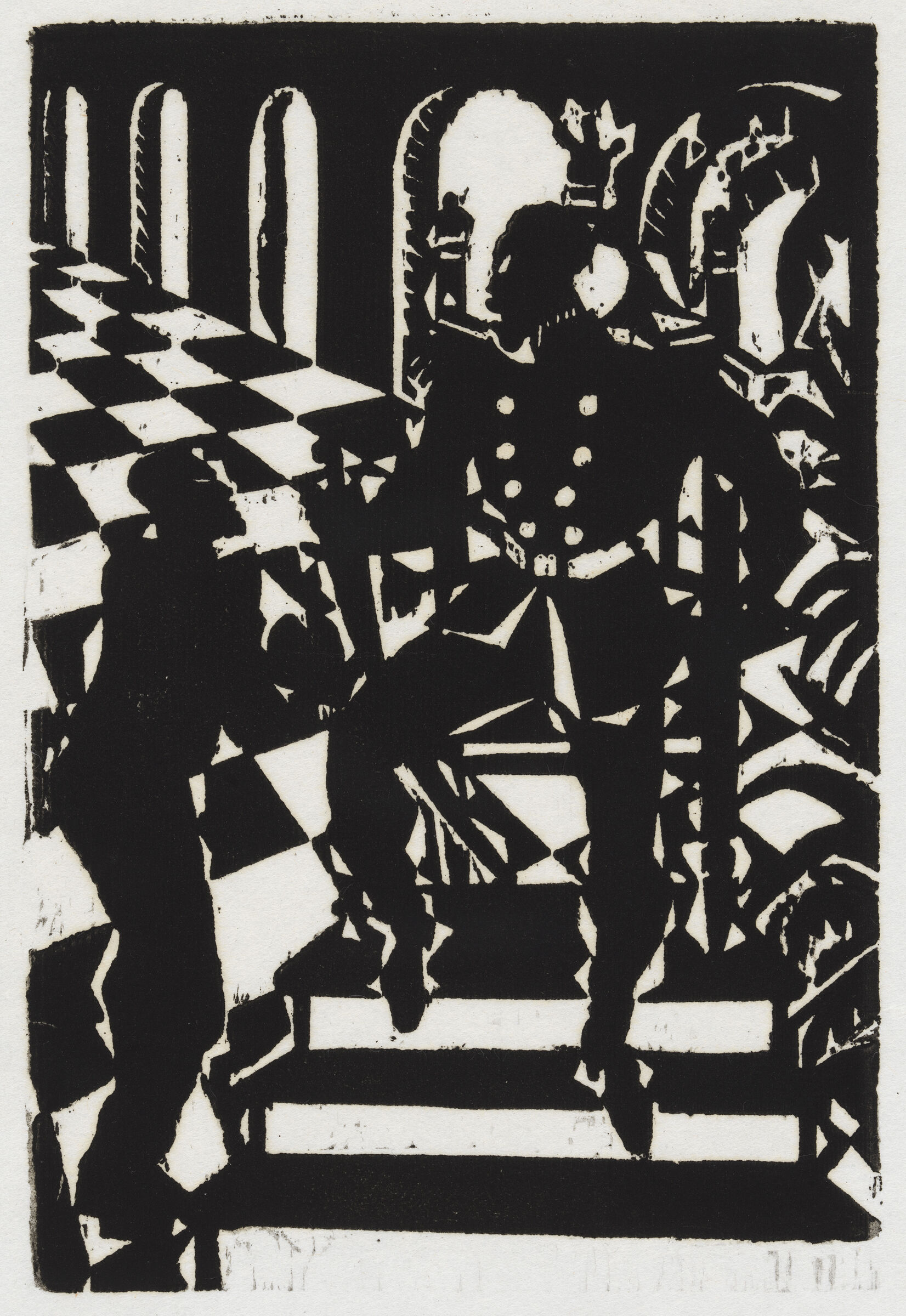
-
803
Agnes Pelton, Sea Change
Audio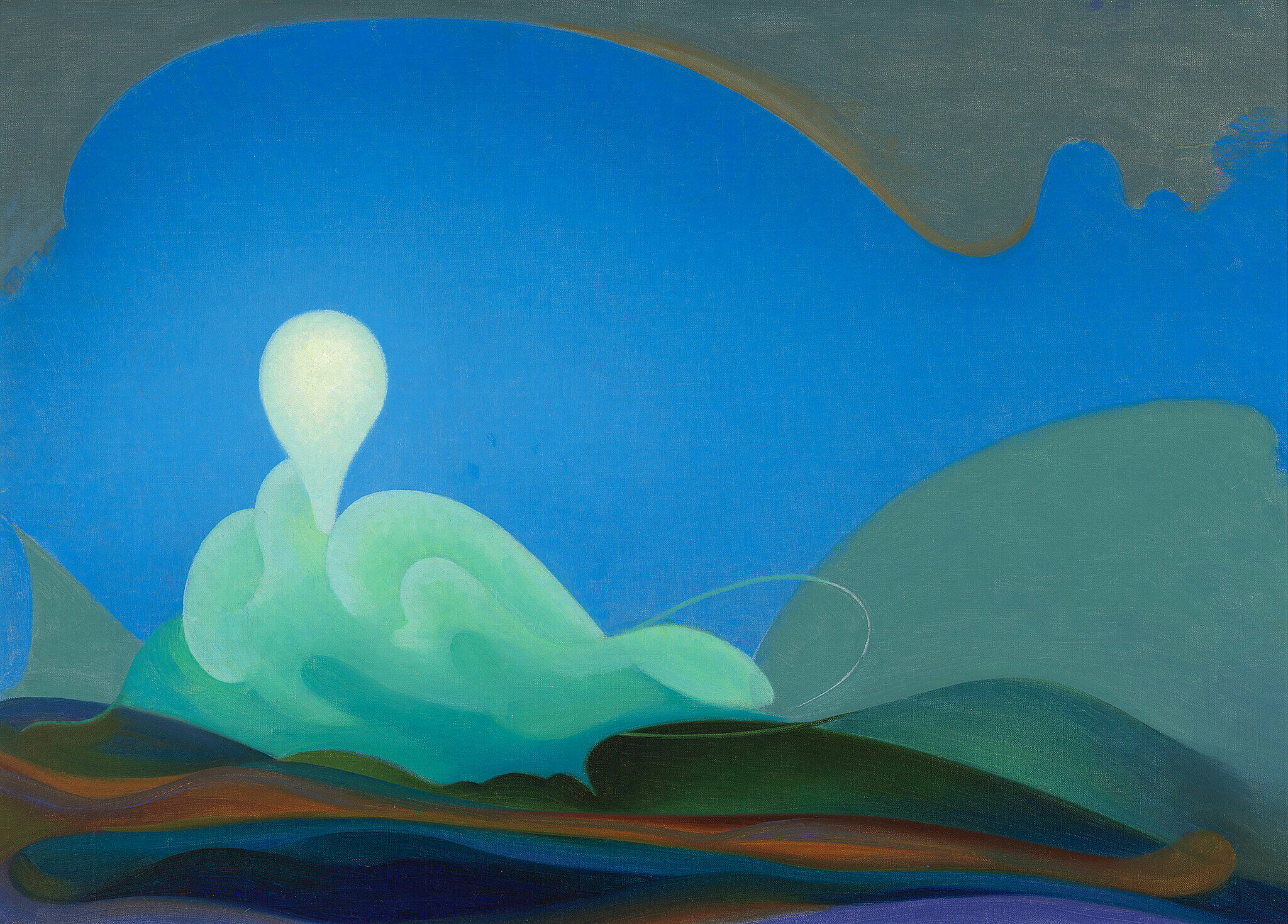
-
804
Elie Nadelman, Standing Female Figure
Audio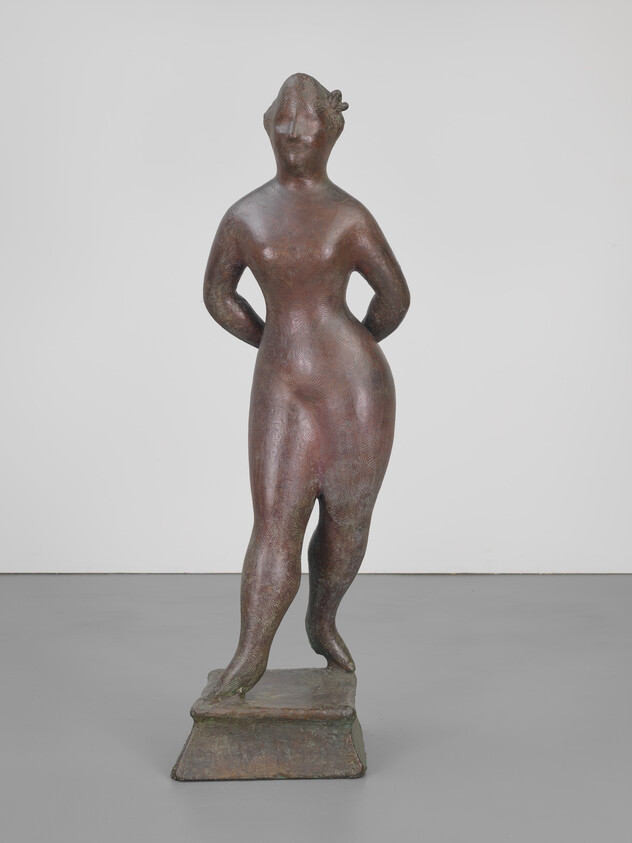
-
805
Arthur Dove, Plant Forms
Audio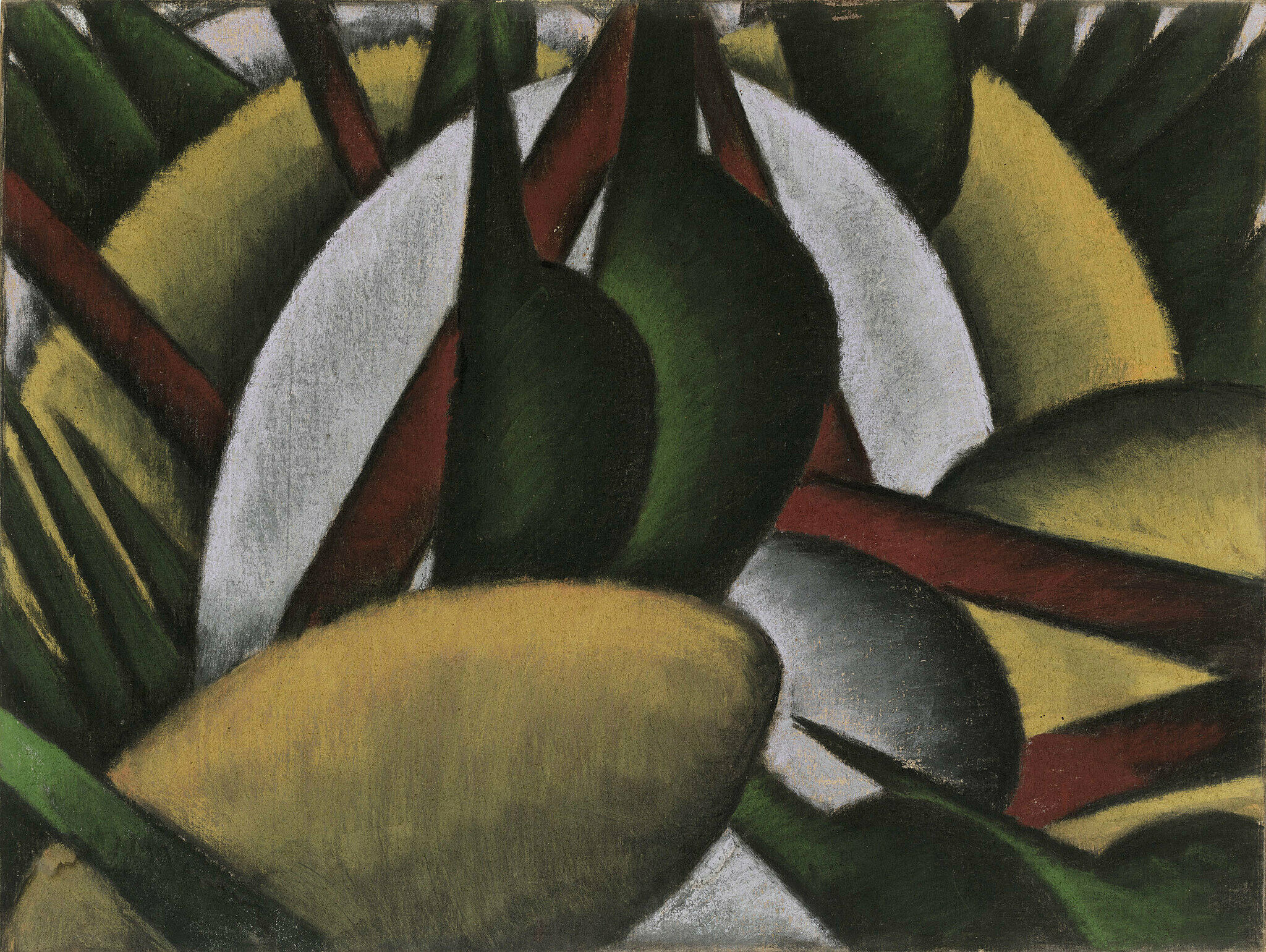
-
806
Pamela Colman Smith, Rider-Waite Tarot Deck and The Wave
Audio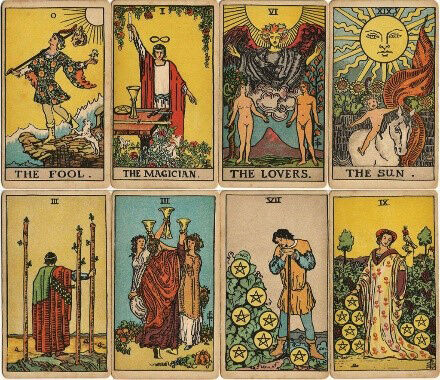
-
807
Chiura Obata, Silence, Last Twilight on an Unknown Lake
Audio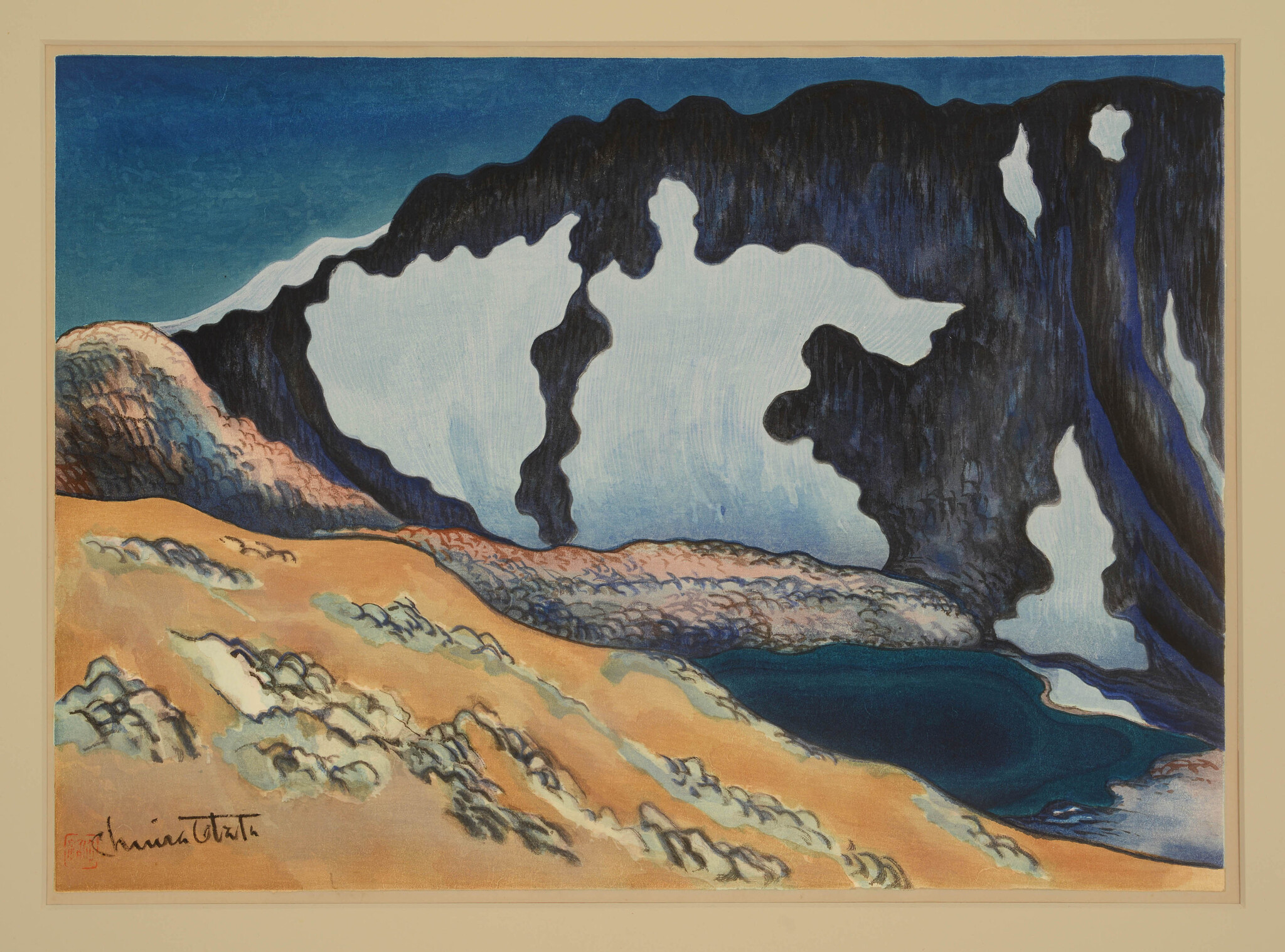
-
808
Richmond Barthé, African Dancer
Audio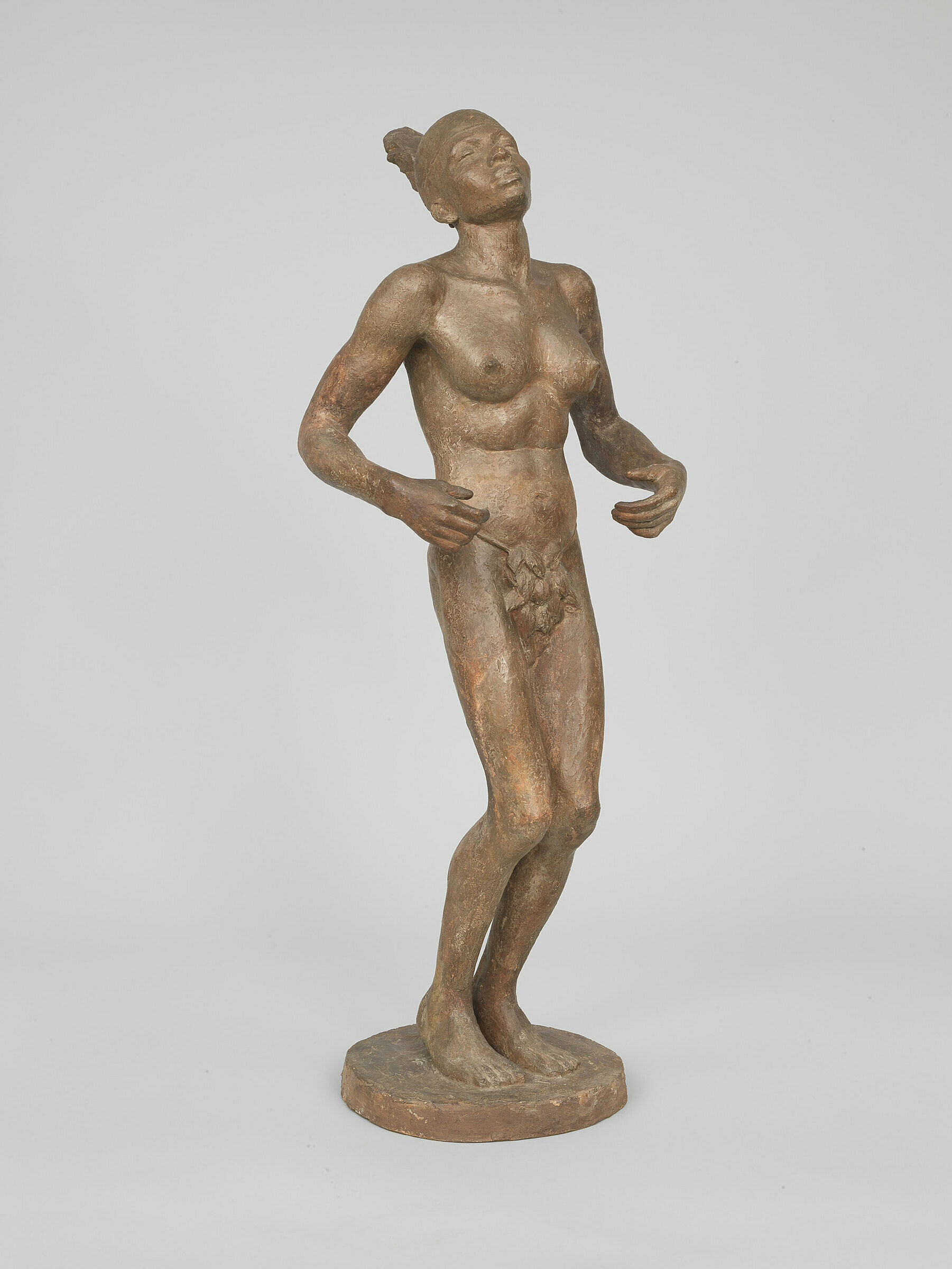
-
809
Florine Stettheimer, Sun
Audio
-
810
Georgia O’Keeffe, Music, Pink and Blue
Audio
-
811
Marsden Hartley, Painting, Number 5
Audio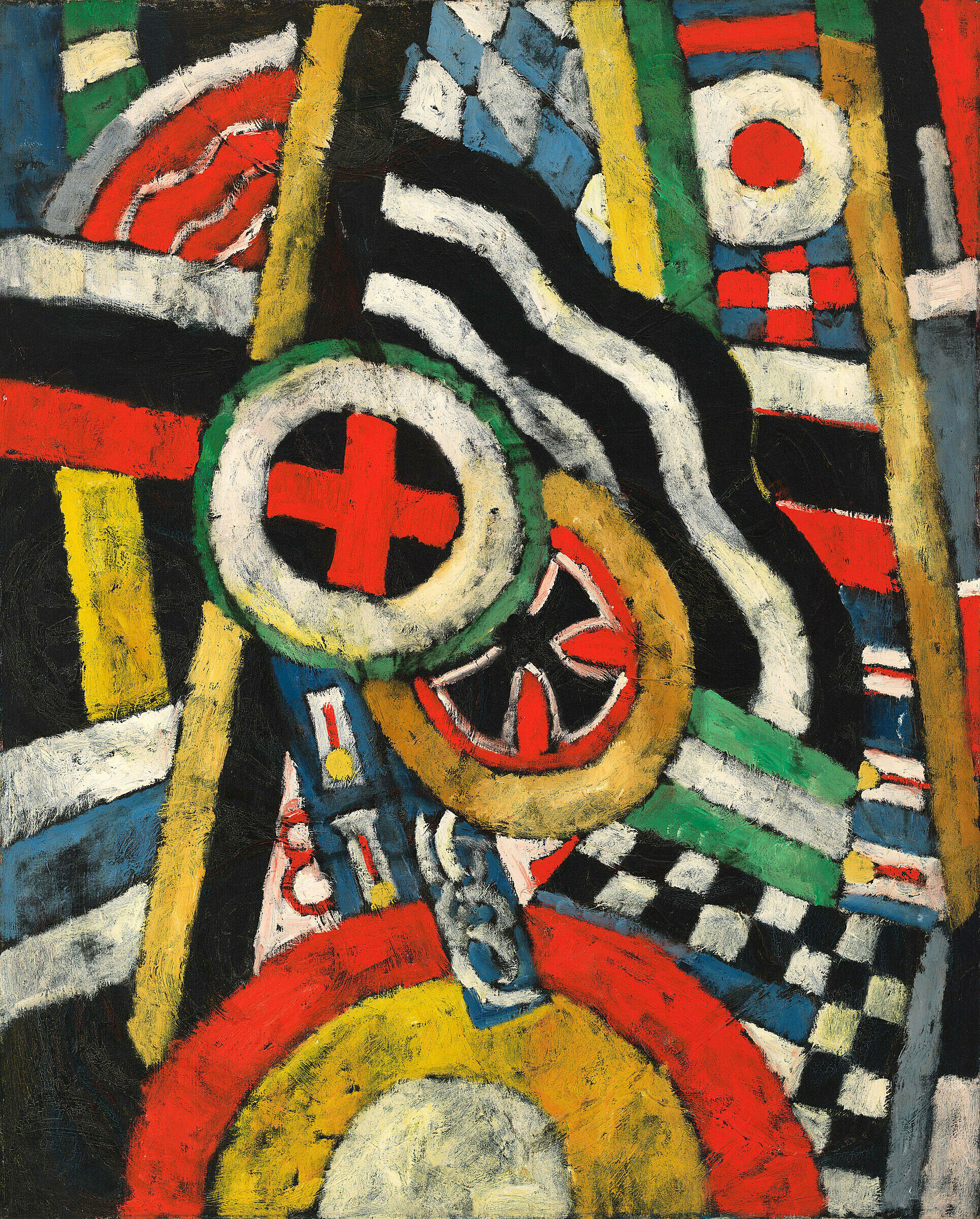
-
812
Stuart Davis, Egg Beater No. 1
Audio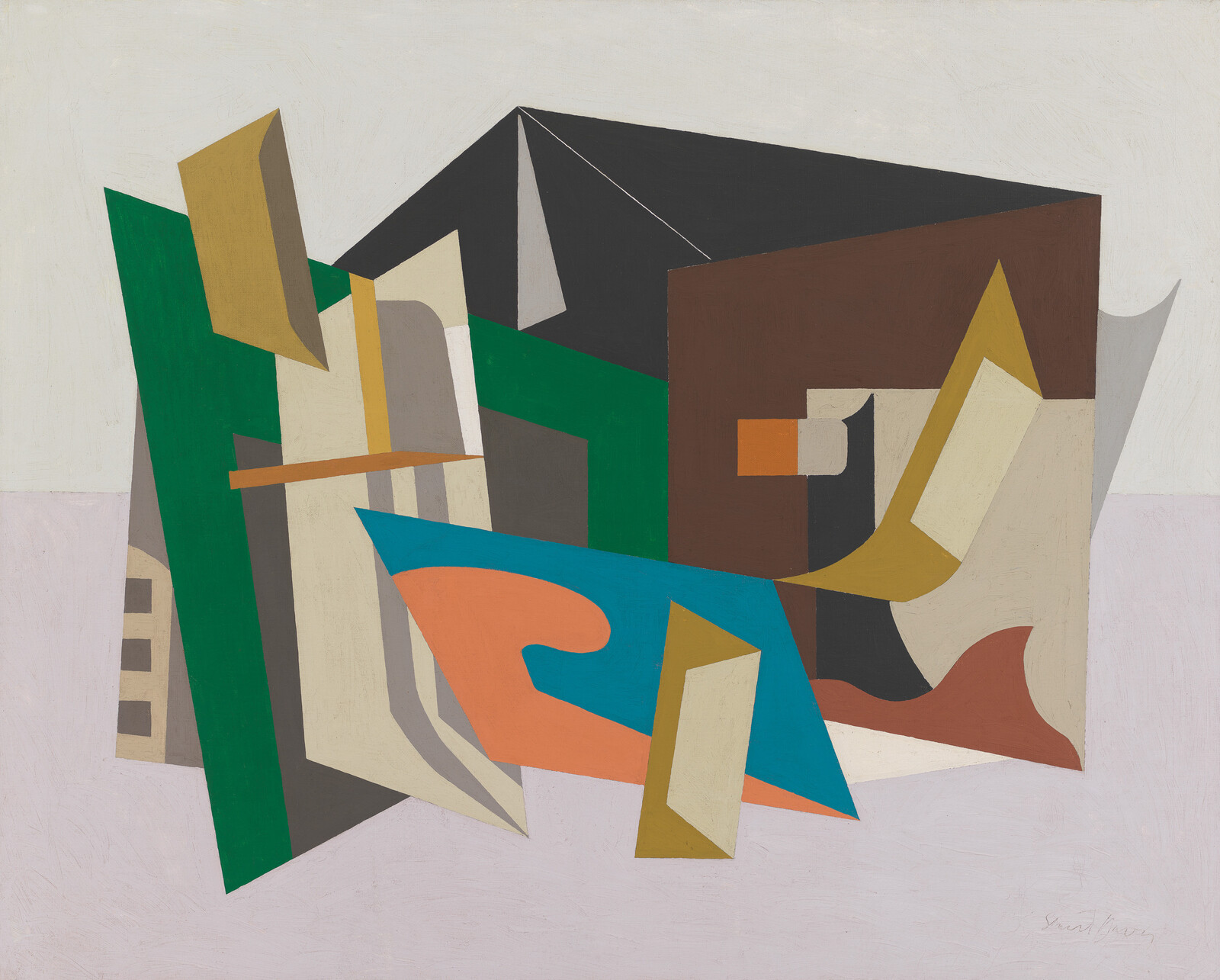
-
813
Agnes Pelton, Ahmi in Egypt
Audio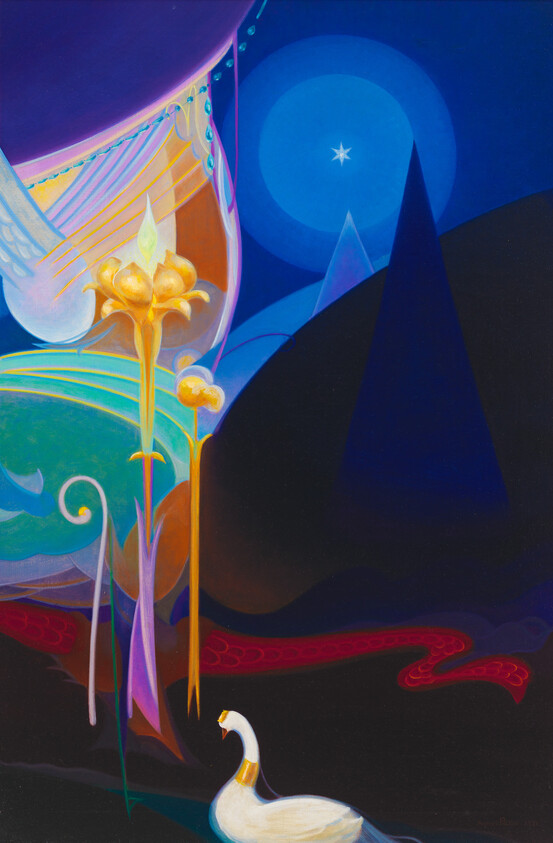
-
850
Verbal Description: Agnes Pelton, Ahmi in Egypt
Verbal description
-
851
Verbal Description: Aaron Douglas, Emperor Jones
Verbal description
-
852
Verbal Description: Georgia O'Keeffe, Music, Pink and Blue No. 2
Verbal description
-
853
Verbal Description: Yun Gee, Street Scene
Verbal description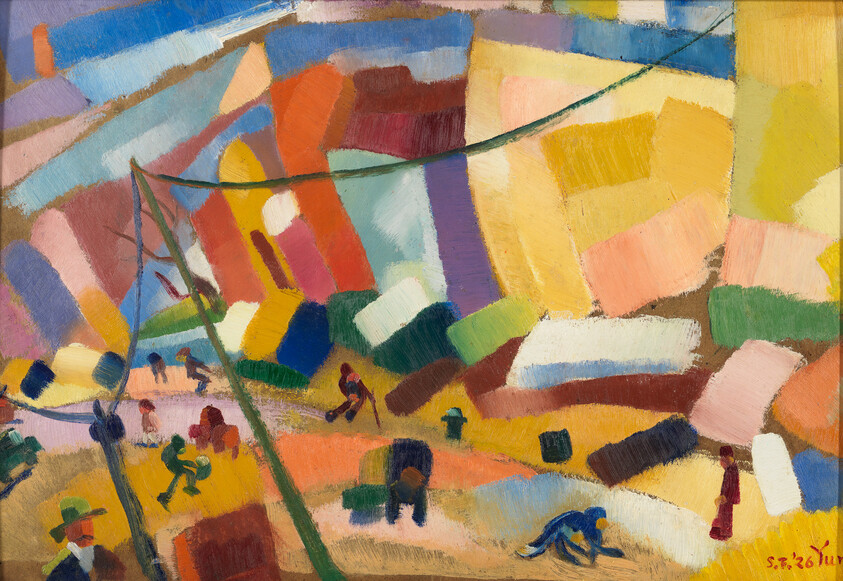
-
854
Verbal Description: Marsden Hartley, Painting, Number 5
Verbal description
Barbara Haskell: I'm Barbara Haskell. I'm a curator at the Whitney Museum and the curator of the exhibition At the Dawn of a New Age: Early Twentieth-Century American Modernism.
One of the ideas of the exhibition was to take a look at this explosion of energy that happened at the turn of the century, this idea that people were really at the dawn of something new, something that hadn't happened before. They’re rejecting the past, and there was a sense of unlimited opportunity, unlimited possibilities. And the work reflects that through these bright colors and sensual shapes and exploding forms.
The show is also one that allows the Whitney to reassess its collection and to reassess the period the show will include famous artists like Georgia O'Keeffe, Marsden Hartley, artists that are fairly known to the public. But it will also include artists who were equally groundbreaking at that moment, but have been largely forgotten, and in some cases have been in storage for decades. There's some work in the exhibition that has only been shown once the entire time we've had it at the Museum. And we've also been able to use the exhibition as an occasion to acquire new work, to fill in the gaps that still exist. When the Whitney started to collect modernism they embraced essentially male artists, so that a lot of female artists, artists of color were not part of that collection even our collection now. This exhibition has given us a chance to look at those gaps and to begin to re-address them.
Narrator: These woodblock prints were inspired by a commission Aaron Douglas received from Theater Arts Monthly to design a series of woodblock illustrations for the Eugene O'Neill play Emperor Jones in 1926. The play helped launch the career of actor, singer, and civil rights activist Paul Robeson, whose abstracted, powerful form appears in each of these images. The play tells the tale of Brutus Jones, an African American man and former Pullman porter. In the story, Jones is jailed for murder, but escapes to a small Caribbean island, where he becomes the emperor.
LeRonn Brooks: Here, Douglas captures the silhouette or the two-dimensional style of the ancient Egyptian hieroglyphic forms. And he also captures the physiognomy of Sub-Saharan African sculpture. He's capturing Robeson as the Emperor Jones in the Caribbean, but also Robeson as an African American.
Narrator: Writer and art historian LeRonn Brooks.
LeRonn Brooks: This aspect of ancient Egyptian hieroglyphics is something that here we see Douglas use as a storytelling element. That this character is not just a character bound to this moment, but this character has a history that brings the weight of this particular situation. And so this is a colonial moment in which the Emperor Jones is the Emperor of an island that frees itself of the colonial powers. It also connects to the sort of power of the ancestral world.
In many ways, Aaron Douglas was before his time in the telling of African Americans having a deeper history than one of enslavement in the United States.
Aaron Douglas, Bravado from the series Emperor Jones, 1926. Woodcut, 8 × 5 1/2 in. (20.5 × 14 cm). Whitney Museum of American Art, New York; Promised gift of Crystal McCrary and Raymond J. McGuire to the Whitney Museum of American Art, New York and The Studio Museum in Harlem. P.2022.3.1
Carrie Moyer: I have been interested in Agnes Pelton for a really long time. I guess we would consider her a kind of transcendentalist painter from the mid-twentieth century. So it's this woman who's self-inventing the kind of spirituality that she wants to practice, and that becomes part of these paintings.
Narrator: The painter Carrie Moyer spoke to us about Agnes Pelton’s Sea Change.
Carrie Moyer: Pelton's palette is really phenomenal in terms of it has a kind of like sweetness to it that feels so away or separated from things we think of as being from nature. Right? So everything is this very heightened, saturated color.
We don't know exactly where this is. We know that it's a sort of mental space, and the color tells us that because it doesn't seem to have a direct relationship to observation. It's this heightened sense of. It's almost like we're looking out from a cave or something into this really deep light, maybe dusk or something.
And then there's, one could call it a kind of art deco locomotive, but it's also like a cloud that has this crazy glowing head on it. So it feels like the term "sea change" is much more than talking about nature. Right? It's about a sort of change of morphing or something. I just think it's the most intriguing painting, because it's really hard to figure out where this form is in terms of the landscape. Is it like sitting on the horizon? Is it erupting? Is it gliding? It's doing all of those things.
Agnes Pelton (1881-1961), Sea Change, 1931. Oil on canvas, 20 1/8 x 28 3/8 in. (51.1 x 72.1 cm). Whitney Museum of American Art, New York; gift of Lois and Irvin Cohen 99.64
Narrator: These two sculptures by Elie Nadelman depict circus performers that appear in moments of introspection, not putting on a show. Earlier in his career, Nadelman had made sculpture out of wood. He began making sculptures like these out of a democratic desire to make his work affordable so it could reach a wider audience. Curator Barbara Haskell.
Barbara Haskell: He began to develop something called galvano-plastique, which is a technique where he made these hollow form plaster figures that were extensions of the wooden sculptures that he had made earlier in the in the decade and he coated them in a metal veneer, which gave them the look of metal, gave them the look of bronze, but were affordable.
Narrator: Nadelman’s efforts to reach a broader audience failed spectacularly.
Barbara Haskell: I think the American public was uncomfortable with images that looked like them at that point; they weren't sure whether these were satiric or celebratory. And in reality they fell somewhere in between. This was, you know, an immigrant looking at a new culture and embracing it for its contradictions. But the American public at that point was still relatively conservative and insecure. They wanted something that would glorify themselves, not cast any doubt on their pretensions for social upward mobility.
Elie Nadelman, Standing Female Figure, c. 1925–1926. Galvano-plastique, overall: 60 × 21 × 14 7/8 in. (152.4 × 53.3 × 37.8 cm). Whitney Museum of American Art, New York; purchase, with funds from The Lauder Foundation, Evelyn and Leonard Lauder Fund 99.90.2
Narrator: In 1912, Arthur Dove exhibited a series of pastel drawings—including this one—at Alfred Stieglitz’s 291 Gallery. In doing so, he became the first American artist to publicly embrace abstraction.
Barbara Haskell: Dove, like a lot of the artists within that circle, looked to nature forms as an antidote to the mechanized, kind of scientific basis that was in everyday life.
Narrator: Curator Barbara Haskell.
Barbara Haskell: There had been a lot of discoveries at the turn of the century—quantum physics, Einstein's theory of relativity, Freud's theory of the unconscious—all of those things that were challenging the idea that what we see is the true reality. Dove was one of those artists who looked at everyday life and didn't want to imitate it. He said, ”I would rather look at nature than imitate it,” and he began the search for the more elemental underlying forces, the kind of vital energies of nature. It was nature that was his subject—he saw it as an American idea, almost a transcendental idea, that through nature individuals can reach some sense of understanding wisdom, connection to the world. And those swelling forms that he introduced in Plant Forms, in the pastel in the Whitney’s collection, he would continue to redefine and rework throughout his entire career.
Arthur Dove (1880–1946), Plant Forms, c. 1912. Pastel on canvas, 17 1/4 × 23 7/8 × 1 1/4 in. (43.8 × 60.6 × 3.2 cm). Whitney Museum of American Art, New York; purchase, with funds from Mr. and Mrs. Roy R. Neuberger 51.20
Narrator: The artist Pamela Colman Smith illustrated these Tarot cards in 1909. Today, it is the most popular deck used, with an estimated one hundred million copies in circulation. Tarot cards contain archetypal symbols, and are divided between the major arcana and minor arcana—arcana meaning “secrets.” The major arcana includes characters like the Fool, the Magician, and the Devil, as well as forces such as the Wheel of Fortune. The minor arcana are numbered, and are divided into Wands, Pentangles, Cups, and Swords. They’re meant to be shuffled and read as a form of divination, depending on which cards are drawn. For many people, though, they simply offer an opportunity for psychological reflection.
Melissa Staiger: Hi, I'm Melissa Staiger. I co-curated an art exhibit about Pamela Colman Smith at the Pratt Library in 2019 with Colleen Lynch.
Each of these cards has so many details. I actually don't know how she did this deck in such a short time. It's like a genius quality to symbolically place all these small little details on the cards. I'm always learning something new off her deck.
Narrator: These details guide readers in interpreting the cards’ narrative. As an artist, Smith was well-suited to being in the role of a storyteller. She was heavily involved in theater, including costume and set design. She also staged her own performances of folktales from Jamaica, where she had grown up. Like many artists around the turn of the century, she became interested in mysticism, and developed a personal form of spirituality. Her otherworldly approach is also reflected in a watercolor called The Wave, on view nearby. Grieving figures rise up out of the ocean, their robes seeming to trail into the waves.
Melissa Staiger: In her works, we start to see figures becoming elements like mountains here. We see them as water. When I'm thinking of the symbols in the tarot, you know, they're elemental.
Pamela Colman Smith, Rider-Waite-Smith Tarot Deck, 1909 (printed c. 1920–30). Tarot cards, 78 cards, 4 11/16 × 2 11/16 in. (11.9 × 6.8 cm) each. Whitney Museum of American Art, New York; Frances Mulhall Achilles Library, Special Collections SC.2021.6.1-80
Narrator: In the summer of 1927, the artist Chiura Obata spent six weeks camping in Yosemite National Park, sketching and making watercolors. A year later, he wrote about the trip in a Californian Japanese-language newspaper. His words show that he was as inspired by the details of the landscape as he was by Yosemite’s grandeur. He wrote:
“Adorning the heights of the Sierra range are the wildflowers. Every three to seven days they bloom in white, red, yellow, and purple, bursting out in a kaleidoscope of beauty and giving us untold lessons and valuable experiences. The seeds and roots of the wildflowers find a bed of ground in between the rocks. For eight or nine months of the year they patiently lie buried under several feet of snow. In the warm light of July and August they burst out toward the wide sky.”
Obata had emigrated to the United States in 1903. By his first visit to Yosemite in 1927, he had become a prominent figure in the San Francisco art world. He made this woodblock print as part of a larger portfolio while on a return trip to Japan in 1930. In part, he drew on traditional Japanese woodblock printing practices. At the same time, he re-created the improvisatory freedom of his original watercolor sketches—taking an atmospheric approach that was more associated with western modernism. He developed innovative techniques for carving the appearance of brushwork into the wooden printing blocks. The process was quite complex, with each of the work’s subtle color gradations made up by different blocks of wood for each color.
The article by Obata that we’ve quoted here was translated in the book Obata’s Yosemite, published by the Yosemite Conservancy.
Chiura Obata, Silence, Last Twilight on an Unknown Lake, Johnson Peak, 1930. Woodblock print, sheet: 13 1/4 × 17 15/16 in. (33.7 × 45.6 cm) Image: 11 × 15 11/16 in. (27.9 × 39.8 cm). Whitney Museum of American Art, New York; gift of Gyo Obata 2015.17. © Gyo Obata
Narrator: This sculpture of an African dancer is by the artist Richmond Barthé.
Margaret Rose Vendryes: He is the only African American sculptor of his era who worked on the nude. The only one. It was quite daring.
Narrator: Margaret Rose Vendryes was a painter and author of Barthé: A Life in Sculpture.
Margaret Rose Vendryes: There was almost a restriction on using the nude because of all of the difficulties that have come out of this sort of hypersexualization of Black people during that time. And so Barthé, he took some risks, and he leaned in on his classical training to say that the nude is the standard, and that Black figures should be represented within the standard.
Narrator: Barthé made a number of these African Dancers during the 1930s. Like this one, they all stand on a circular form.
Margaret Rose Vendryes: And that is an indication that it is a spotlight, that it's a stage performance. But of course, at least in New York, which is where he was when he made this, you would not have seen a performance of a near nude African woman on stage publicly. That would not have happened.
Narrator: Barthé never went to Africa, and would have based this figure on photographic research.
Margaret Rose Vendryes: I did a lot of research on when would a woman appear dancing with that kind of long covering on her? There are some celebrations and rituals where they're actually pieces of metal. So when they dance, there is a pretty loud sound that comes with it. But the closer you look at it, to me they look like leaves that are covered there. And that is a sign of a woman in mourning. And that matches up with the sort of possession, the posture of her head, the gesture on her face, that it does look like we are witnessing someone in mourning.
Richmond Barthé (1901–1989). African Dancer, 1933. Plaster, 42 3/4 × 16 7/8 × 14 1/4 in. (108.6 × 42.9 × 36.2 cm). Whitney Museum of American Art, New York; purchase 33.53 © artist or artist’s estate
Barbara Haskell: Florine Stettheimer was part of a family of a matriarch and three sisters.
Narrator: Curator Barbara Haskell.
Barbara Haskell: They lived in New York, they established a salon—they entertained Marcel Duchamp, Joseph Stella, all the figures that were part of the avant garde at that moment. And she was very beloved by that group. She didn't have a lot of public exposure. She had one exhibition in 1917 of very early work that was not so well received. And she decided after that to never have a one person show. And she didn't need to because she came from a wealthy family and she had all the money that she needed.
In the work, she develops this very unusual style that captures the kind of tinsel glamour and the artifice of the 1920s. There's a sense of carefree abandonment that she has in her work. Those kind of confectionery colors that's in Sun.
Narrator: Stettheimer signed the work near the bottom, using only her first name—Florine. There’s a sense of intimacy in this move that makes sense for a painting made for a small audience of esteemed friends. But by linking the bouquet of flowers to her own name—with its floral roots—Stettheimer also suggests that the painting is a kind of self portrait.
Florine Stettheimer, Sun, 1931. Oil on canvas, with frame, overall (Canvas): 38 × 26 1/8 in. (96.5 × 66.4 cm) Overall: 43 5/8 × 31 3/4 × 2 1/8 in. (110.8 × 80.6 × 5.4 cm). Whitney Museum of American Art, New York; purchase 73.36a-b
Narrator: With its soft, petal-like folds, this painting by Georgia O’Keeffe seems floral—but it doesn’t depict any particular flower. It’s an abstraction that the artist has rooted in natural form.
Wanda Corn: One of the features of this painting is the beautiful sense of movement that you have where nothing is static in the picture.
Narrator: Wanda Corn is a historian of American art.
Wanda Corn: You feel as if every form is breathing and opening up to the form next to it. This was a very important concept of keeping forms in the stage of becoming. This was something that artists tried to do in their abstractions in the late teens, and O'Keeffe is responding to that notion of time not stopping, of there being a constant movement in the work itself.
When these paintings were seen for the first time, very often critics would see in them female forms. They would see in it allusions to the womb or to female reproductive organs. They would see womanly colors such as the pinks, the blues and the lavender. And it would be read as a painting that was one that could only have been made by a female intelligence.
This was a common way of talking about O'Keeffe's paintings in her early years. It was one that was prompted by her husband Alfred Stieglitz who liked to read in O'Keeffe's paintings an expression of the sort of eternal female.
O'Keeffe herself felt as if that was more a comment on the critic than what she intended. She often would say it's about natural forms, but it's not to be tied to exclusively the female body. And she would have you rather see in a work like this a kind of slipperiness of form where you can't tie it to any one thing, be it a flower or be it a female body or be it a landscape. But that it has poetic allusions to all of those.
Georgia O'Keeffe, Music, Pink and Blue No. 2, 1918. Oil on canvas, overall: 35 × 29 15/16 in. (88.9 × 76 cm). Whitney Museum of American Art, New York; gift of Emily Fisher Landau in honor of Tom Armstrong 91.90. © Georgia O'Keeffe Museum / Artists Rights Society (ARS), New York
Narrator: Adam Weinberg is Alice Pratt Brown Director of the Whitney Museum.
Adam Weinberg: Painting Number Five, by Marsden Hartley, is an exuberant cacophony of color and pattern. Near the center of the canvas, two circles overlap—one contains the German Iron Cross, a medal of valor awarded to German soldiers for their courage in battle. The other contains a red cross. Look carefully and you can find references to flags, military insignia, and even an army uniform. The effect is like a collage, combining impressions of things Hartley encountered in Berlin, where he lived before the start of the First World War.
What is the real subject of this painting? Think about how you recall things that have happened to you in the past. Often, it’s hard to conjure up a sense of something in its entirety. We remember a person or an event in the details—a gesture, a smell, a color. Hartley’s paintings function that way too; it’s actually a portrait, although the literal image of an actual person is altogether absent. The painting commemorates a young German officer, Karl von Freyburg, who died in the early months of World War I. Hartley was in love with von Freyburg, and he made this painting after learning of his death.
Inspired by European avant-garde artists of the time, Hartley began to move away from direct representations of his subject matter toward more abstract, evocative imagery. Hartley once said that the artist’s challenge was to reveal what he called “the magic that is beneath the surface of what the eye sees.” In this painting, he captures a sense of an individual personality, and the emotional content of his relationship to Berlin and to von Freyburg.
Marsden Hartley (1877–1943), Painting, Number 5, 1914–15. Oil on linen, 39 1/4 × 32 in. (99.7 × 81.3 cm). Whitney Museum of American Art, New York; gift of an anonymous donor 58.65
Narrator: In 1927, Stuart Davis began work on a series of five paintings based on a still life he had created by nailing an eggbeater, an electric fan, and a rubber glove to a table in his studio. In Egg Beater No. 1, Davis eliminated all recognizable traces of the still life objects—leaving only this complex composition of colors and overlapping geometric shapes. But as he later explained, he resisted the idea of abstraction.
Stuart Davis: I have never regarded myself as an abstract artist. Personally I felt that talking about “abstract” art had many dangerous and misleading implications. That it cut off the real fact that what is interesting in any painting is its specific references, which however they may differ with different people that look at the painting, are nevertheless specific. And to call those specific things abstract always worked the wrong way with me. And as to the content of it, I regard the fact that I give importance to simple things that give me pleasure, I think that is the content that has validity with me.
Stuart Davis, Egg Beater No. 1, 1927. Oil on linen, overall: 29 3/16 × 36 3/16 in. (74.1 × 91.9 cm). Whitney Museum of American Art, New York; gift of Gertrude Vanderbilt Whitney 31.169. © Estate of Stuart Davis / Licensed by VAGA at Artists Rights Society (ARS), New York
Carrie Moyer: Agnes Pelton's Ahmi in Egypt from 1931 gives the sense of a kind of film still. It has this kind of glowing light and really hard shadows.
Narrator: Artist Carrie Moyer.
Carrie Moyer: So we're looking at something that is silhouetted. We assume it's a kind of hillside or some abutment with this fantastic—I almost want to say extension or some kind of flower—that's glowing to the left, with the swan in the foreground. It's so grandiose in this interesting way.
This painting was made a few years after Tutankhamun's tomb was found this idea about ancient Egypt, and the fascination that designers and artists had with ancient Egypt, feeds into the ideas around art deco and the aesthetics of art deco. You can see this in the painting because everything in it incredibly rounded and stylized, there's something obviously magical about this. It feels a little bit more descriptive than some of her other paintings, which tend to be more abstract. So this feels like it's part of a fairytale, or some kind of encampment or something where the protagonists are off to the left, but the colors in it are completely saturated and vibrant, and for that reason really unusual for this time.
Agnes Pelton, Ahmi in Egypt, 1931. Oil on canvas, overall: 36 3/16 × 24 3/16 in. (91.9 × 61.4 cm). Whitney Museum of American Art, New York; purchase, with funds from the Modern Painting and Sculpture Committee 96.175
Agnes Pelton’s Ahmi in Egypt (1931) is an oil painting on canvas. It measures 36 and 3/16th inches in height and 24 3/16th inches in width. It measures 91.9 centimeters in height and 61.4 centimeters in width.
This painting is of an imaginary, mystical landscape. At the bottom center of this vertical painting is a small white swan—its head sits atop its arching neck and faces our left. The swan has a gold band around its neck and a gold mark on top of its head. Behind the swan to our left are three strange vertical plants. All three stand close together and are architectural in nature. The first one on the far left is pale violet and curls at the top with a yellow bud at its tip. The tallest plant is in the center and rises from a violet stalk to a head that resembles a royal golden scepter with a diamond shape bursting forth at its tip. Next is a golden stemmed plant with two round yellow fruits that hang from its head. Behind the plants but lower - is a red ripple that snakes across the dark surface of the water from the left to the right side of the painting. The water flows in front of a large dark mountain that curves up the right of the canvas. On the mountain is the triangle shape of a dark blue tree: its tip rises over the mountain into the evening sky.
To the lower left of the painting behind the three plants, there are odd decorative shapes that float into the sky. One is mint green with blue and yellow patterns. Behind that is a lilac shape—curved at its bottom and arched at its top—with patterns of blue, green, and orange. These shapes tumble up into a midnight blue sky. If we move our eyes to the top right of the painting, we can make out the light blue tip of another tree somewhere in the distance behind the dark mountain. But the real drama in this area is a small twinkling star that hovers in the center of two concentric circles of differing shades of blue—the center circle is larger and lighter blue in color. This glowing orb floats in a dark blue night sky.
Agnes Pelton, Ahmi in Egypt, 1931. Oil on canvas, overall: 36 3/16 × 24 3/16 in. (91.9 × 61.4 cm). Whitney Museum of American Art, New York; purchase, with funds from the Modern Painting and Sculpture Committee 96.175
Aaron Douglas’ Emperor Jones (1926) is a woodcut. There are four sheets, each measure 8 inches in height and 5 1/2 inches in width. Each measure 20.5 centimeters in height and 14 centimeters in width. Though there are 4 sheets that make this work, I am providing a visual description for only one sheet.
This printed woodcut image is black on white paper. In the center is a male figure. His body faces forward but his head is in profile facing our left. His head is black except for the white of his eye that is a vertical slash with a thin black line denoting the pupil. His mouth is slightly open. The shape of the top of his head reflects the curl of his hair. He wears a broad-shouldered military jacket with white details. The jacket’s collar on our right stands up—with a white collar seen behind the jacket’s stiff black collar. It covers the bottom of his left jawline. There are five white buttons visible on the front of his jacket. Four are double breasted with one lone button placed below the two buttons that form a column on our right. Below that single white button is a small white triangle that points to our left. There is a thick white belt cinching his jacket at the waist. It is held in place by thin black belt hooks. The flaps of his black jacket flare out from below the belt and fragments of his white shirt are visible below the flaps. The jacket is cut high on his thighs. His right arm is bent at the elbow and his long forearm extends to our left and in his right hand he holds a pointed gun. His left arm hangs close to his side. His long legs are spread apart and both legs are bent at the knees with each knee pointing to their respective side. He wears knee high boots that are wide at the top. The boots are pointy and have a high heel. The toe of his right boot points to our left – the toe of his left boot points to are right. His feet stand atop three wavy lines. Below the top wavy line are two fish swimming to our right. The figure is surrounded by leaves and plants. Leaves of different shapes and sizes frame the figure from the top and from the sides. The leaves start sprouting from the first wavy line on which this figure stands. In the wide space created by his open legs is a large leafy plant.
Aaron Douglas, Bravado from the series Emperor Jones, 1926. Woodcut, 8 × 5 1/2 in. (20.5 × 14 cm). Whitney Museum of American Art, New York; Promised gift of Crystal McCrary and Raymond J. McGuire to the Whitney Museum of American Art, New York and The Studio Museum in Harlem. P.2022.3.1
Georgia O’Keeffe’s Music, Pink and Blue No. 2 (1918) is an oil painting on canvas. It measures 35 inches in height and 29 15/16 inches in width. It measures 88.9 centimeters in height and 76 centimeters in width.
This is an abstract painting. The colors are pale and light with an emphasis on pinks and blues. Emerging from the bottom of the painting, near the right corner, vertically slanting to our left is a blue tongue shape. Softly curved, swaying to our left, the color of aqua tinted water—this shape can be seen as a hole or a void. It is surrounded by an outer ribbon of white space that is tinged with tones of mint green and pale pink. The way this outer shape folds over the blue area intensifies the sense that we are gazing into the opening of an interior space. The curved white outer area is rimmed with a thin edge of pink and red—the colors bear a relationship to blood and flesh. Beyond this area are petal forms of pale violet outlined in red. These petals rest upon each other and morph into soft hills on our left. Behind these lavender petals is a crack between folds of pink and peach that rise to the top of the painting—a little left of center. Surrounding these folds and the soft fluttering petals that surround the white ribbon that homes the blue void from which we started this description is a background of light blue that turns to a pink violet in some areas and into light ripples in the upper right corner. O’Keeffe uses thin translucent washes of oil paint to create her seductive abstraction.
Georgia O'Keeffe, Music, Pink and Blue No. 2, 1918. Oil on canvas, overall: 35 × 29 15/16 in. (88.9 × 76 cm). Whitney Museum of American Art, New York; gift of Emily Fisher Landau in honor of Tom Armstrong 91.90. © Georgia O'Keeffe Museum / Artists Rights Society (ARS), New York
Yun Gee’s Street Scene (1926) is an oil painting on board. It measures 11 1/8 inches in height and 16 1/16 inches in width. It measures 28.3 centimeters in height and 40.8 centimeters in width.
The artist places his viewer in the position of looking down on a street scene. We are placed high above the action. A thin green pole juts up from the bottom left of the canvas and tilts to our left. A loop of wire attached to the pole curves down to our left, attaches to a lower pole, and then disappears off the canvas near the bottom left corner. On the other side of the pole—the wire arches up to our right and disappears behind a yellow rectangular shape on the canvas’s upper right corner. Below the wires we see people and things on a street. They are small implying that we are viewing them from a distance. This is not a realistic painting; the artist employs shapes and painterly marks straddling abstraction and representation. A small figure in a brown suit is to our right in the lower area of the canvas. He is created using dabs of paint for his suit, his dark hat and the beige flesh of his face. Near him—to our left in the foreground—is a figure in blue. She appears to be bending down. She might be female as she wears a scarf over her head. Behind her to our left we gaze into an open cart and behind the cart in the distance is a fire hydrant.
Moving to our left we see scattered figures moving along in different directions. They are small, lacking detail and made with marks of paint of different colors that are darker than the yellows, and peach shades that dominate the colors of the street. On the bottom left of the painting—in the foreground—emerges a fragment of a man. He is facing us. He is slightly bigger than the other figures as he is closer to us. We can see the dark shoulders of his outerwear, his white collar, a green brimmed hat, his drooping brown moustache. There is orange color on the left side of his face—dark brown on the right. Maybe he is walking into the sun. Behind this figure in the distance to the left—is half of a green car—its other half is cropped by the left edge of the canvas. From the top of the painting down to the street and dominating most of the composition are the buildings that frame the far side of the street. The artist conveys these structures with broad swatches of colors that convey vertical buildings scrunched up next to each other. The buildings loom and tilt towards us. Gee uses yellows, purples, mint greens and pastel blues for the structures. He breaks his buildings into shapes but we understand them as architecture—buildings with front stoops pushed up close to each other forming one side of a busy street. In the upper left corner and moving over their angled roofs—at the top of the painting—are swatches of light blues interrupted by slashes of green representing the sky and maybe some hills in the distance.
Yun Gee, Street Scene, 1926. Oil on board, overall: 11 1/8 × 16 1/16 in. (28.3 × 40.8 cm). Whitney Museum of American Art, New York; Lawrence H. Bloedel Bequest 77.1.18
Marsden Hartley’s Painting, Number 5 (1914–15) is an oil painting on linen. The work measures 39 1/4th inches in height and 32 inches in width. It measures 99.7 centimeters in height and 81.3 centimeters in width.
This painting is filled with fragments of military pageantry that include banners, flags, medals, buttons, epaulets and symbols that are incorporated into an abstract composition. The fragments are subsumed into the shapes, patterns and colors of the overall work. We focus first on a round shape, which sits a little off-center within the painting’s overall composition. In its black circular center is a red cross, whose four arms are of equal length that get wider at the ends. It is surrounded by two outer circular bands: one is white and wide followed by a thin green outline. This circular shape overlaps another circular shape containing a black iron cross. It is placed within a red circle with a wide, golden band around its circumference.
Partially obstructed by these two circular shapes is a pole—yellow and black in color—that rises to the top of the painting and angles to our right. The lower part of the pole does not extend to the bottom of the painting. Black and white lines are attached to the pole and fan out to our right; they bear a resemblance to a flag fluttering in the wind though its stripes are partially hidden by the circular framed crosses.
As we work our way to the bottom half of the painting below the crosses, we can see rectangular shapes of military medals, red ribboned with yellow medals. A fragment of the number “8” slides into view while to our right there is the checkered pattern of a chess board that we gaze down upon. (The artist has placed us in this position.) Epaulet-like shapes and designs that resemble military buttons are scattered and inserted in a composition dominated by curved bands of color and angled stripes that extend to the edges of the canvas. Vertical shapes reference flag poles. Imagine being inside a parade—jostled by military paraphilia—uniforms, flags, banners and crowds. The artist achieves this through his use of recognizable fragments and differing shapes that fill the canvas. Hartley’s palette employs bright reds, dirty yellows, milky whites set off by dark areas—all applied in a chewy painterly style.
Marsden Hartley, Painting, Number 5, 1914–1915. Oil on linen, overall: 39 1/4 × 32 in. (99.7 × 81.3 cm). Whitney Museum of American Art, New York; gift of an anonymous donor 58.65
0:00
0:00