Vida Americana: Mexican Muralists Remake American Art, 1925–1945
2020
“[Rivera] was fascinated by the ways in which man and machinery meet, and the ways in which they change the world together.” —Mark Castro
Hear from artists, scholars, and the curators of Vida Americana: Mexican Muralists Remake American Art, 1925–1945 speaking about works on view.
-
500
Introduction
Audio -
501
Alfredo Ramos Martínez, La Malinche, 1940
Audio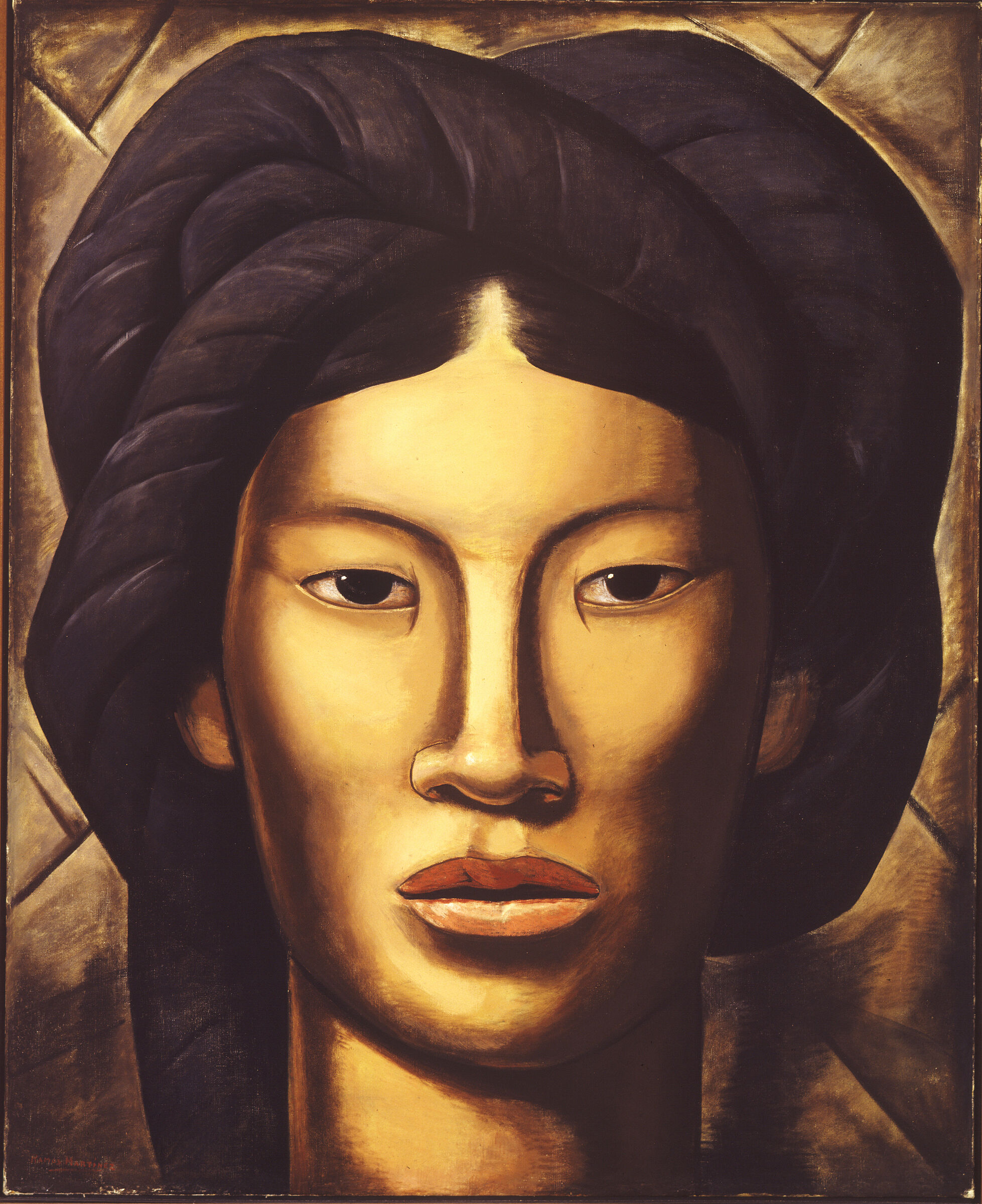
-
502
Frida Kahlo, Me and My Parrots (Yo y mis pericos), 1941
Audio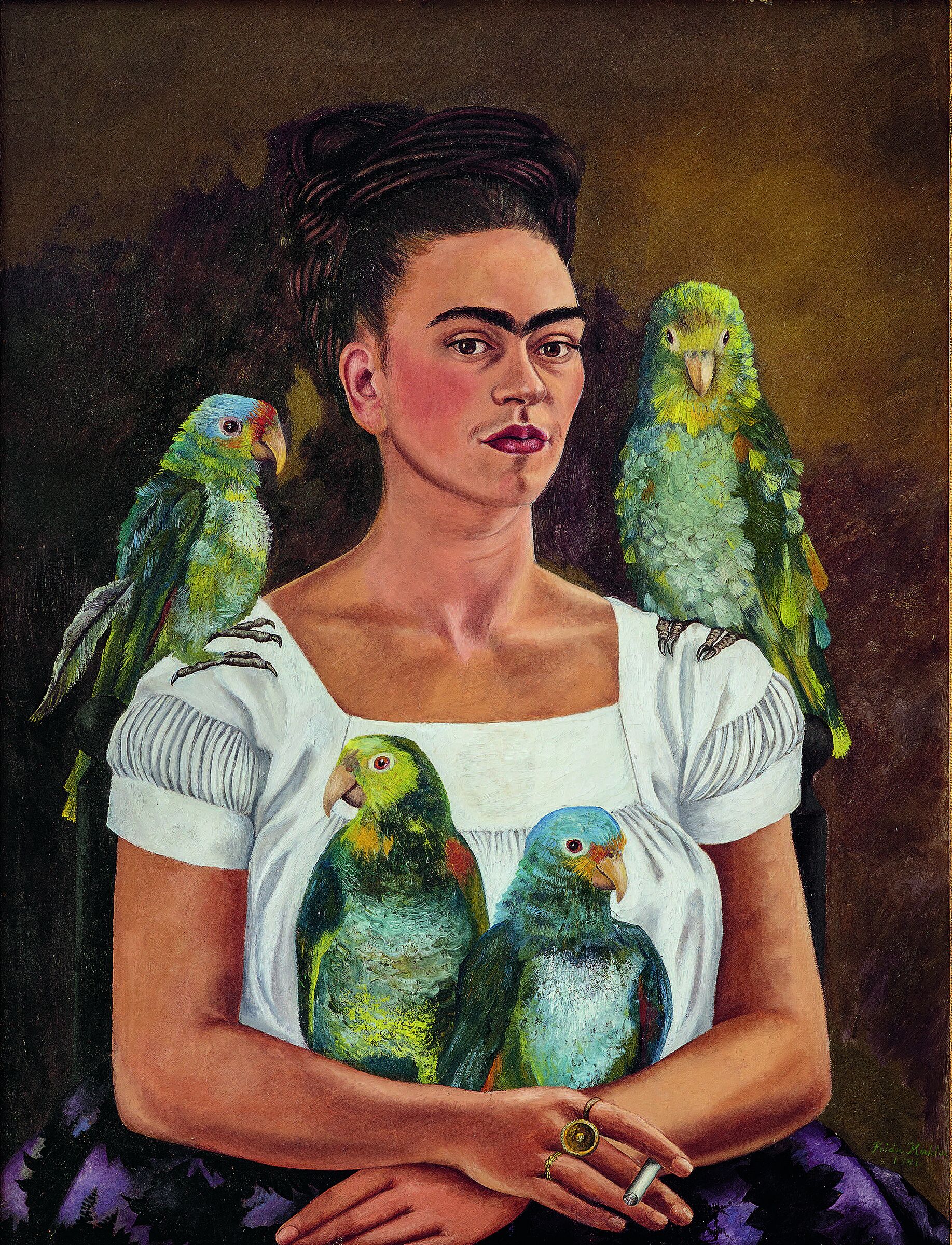
-
505
José Clemente Orozco, Zapatistas, 1931
Audio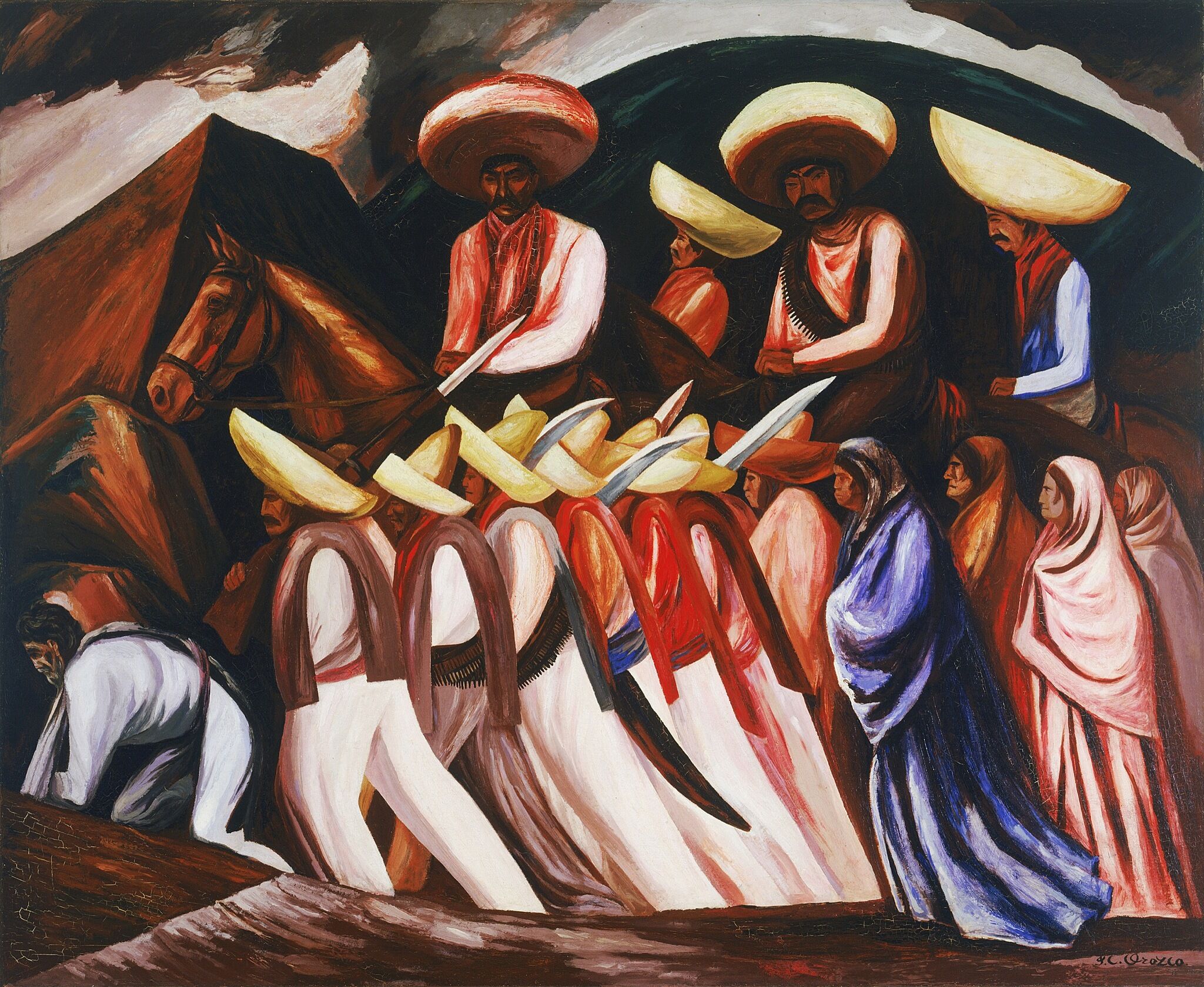
-
506
José Clemente Orozco, Reproduction of Prometheus, 1930
Audio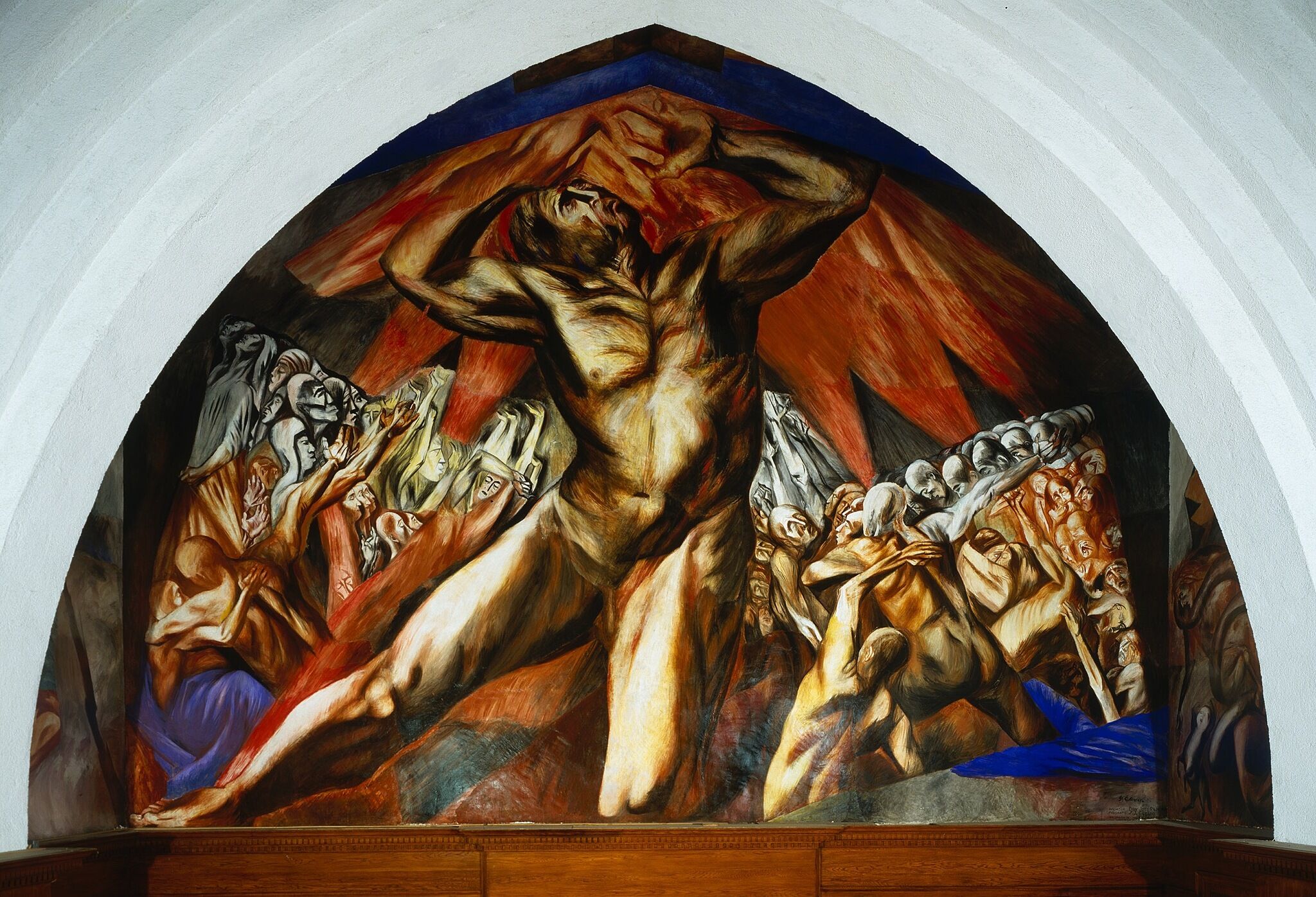
-
507
Jacob Lawrence, Migration Series
Audio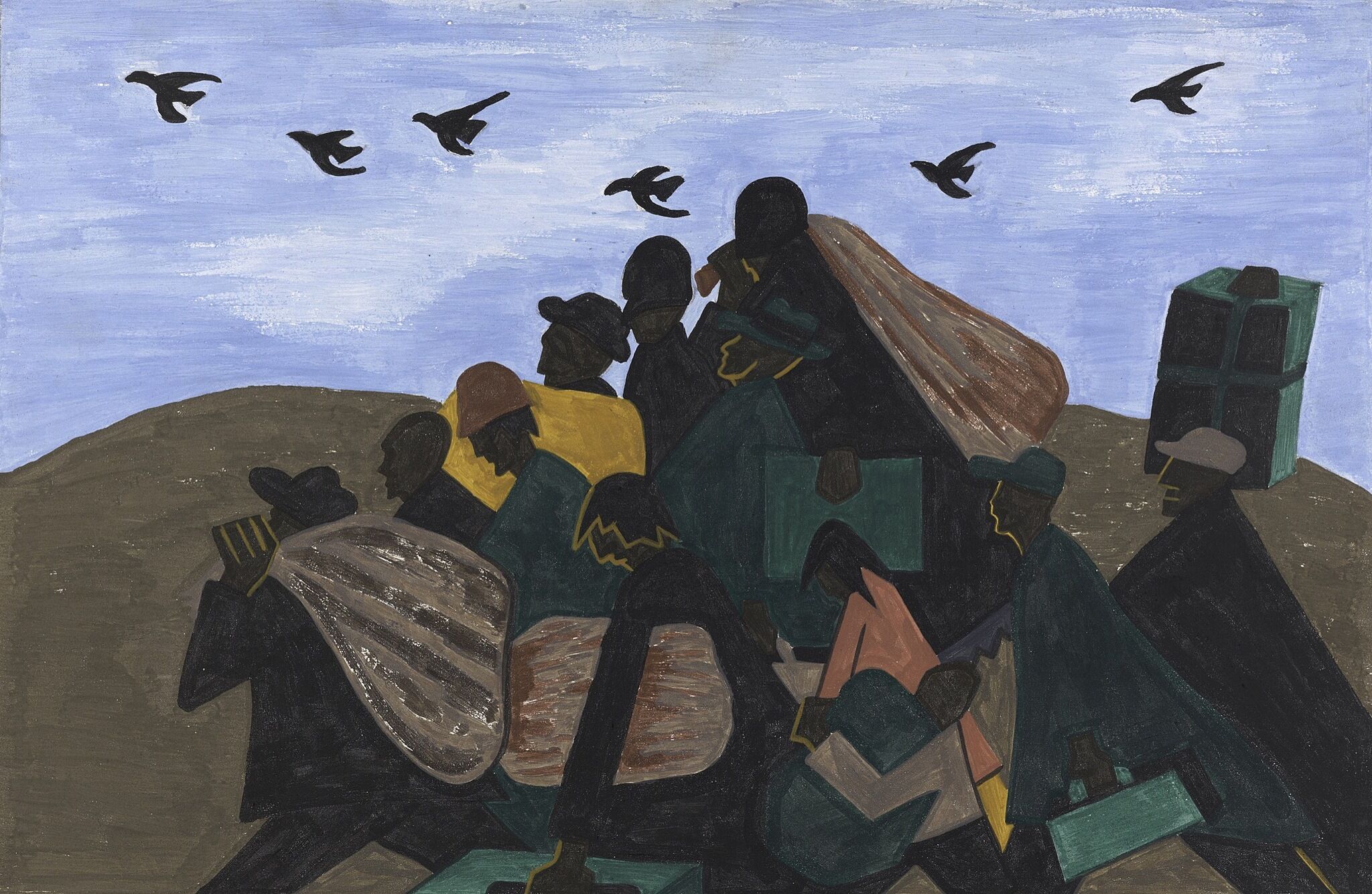
-
508
David Alfaro Siqueiros, Reproduction of Tropical America, 1932
Audio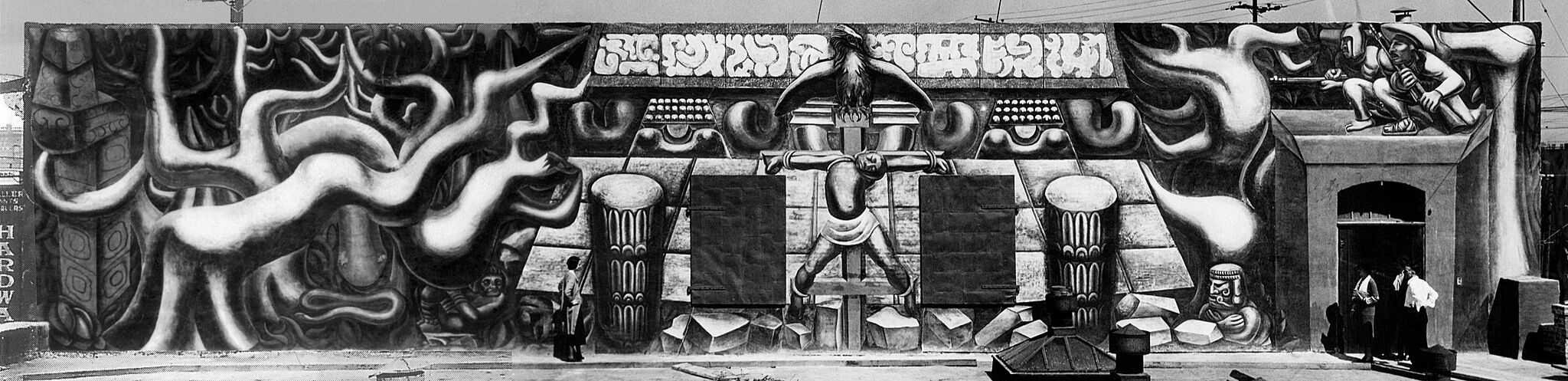
-
509
Philip Guston, Bombardment, 1937–38
Audio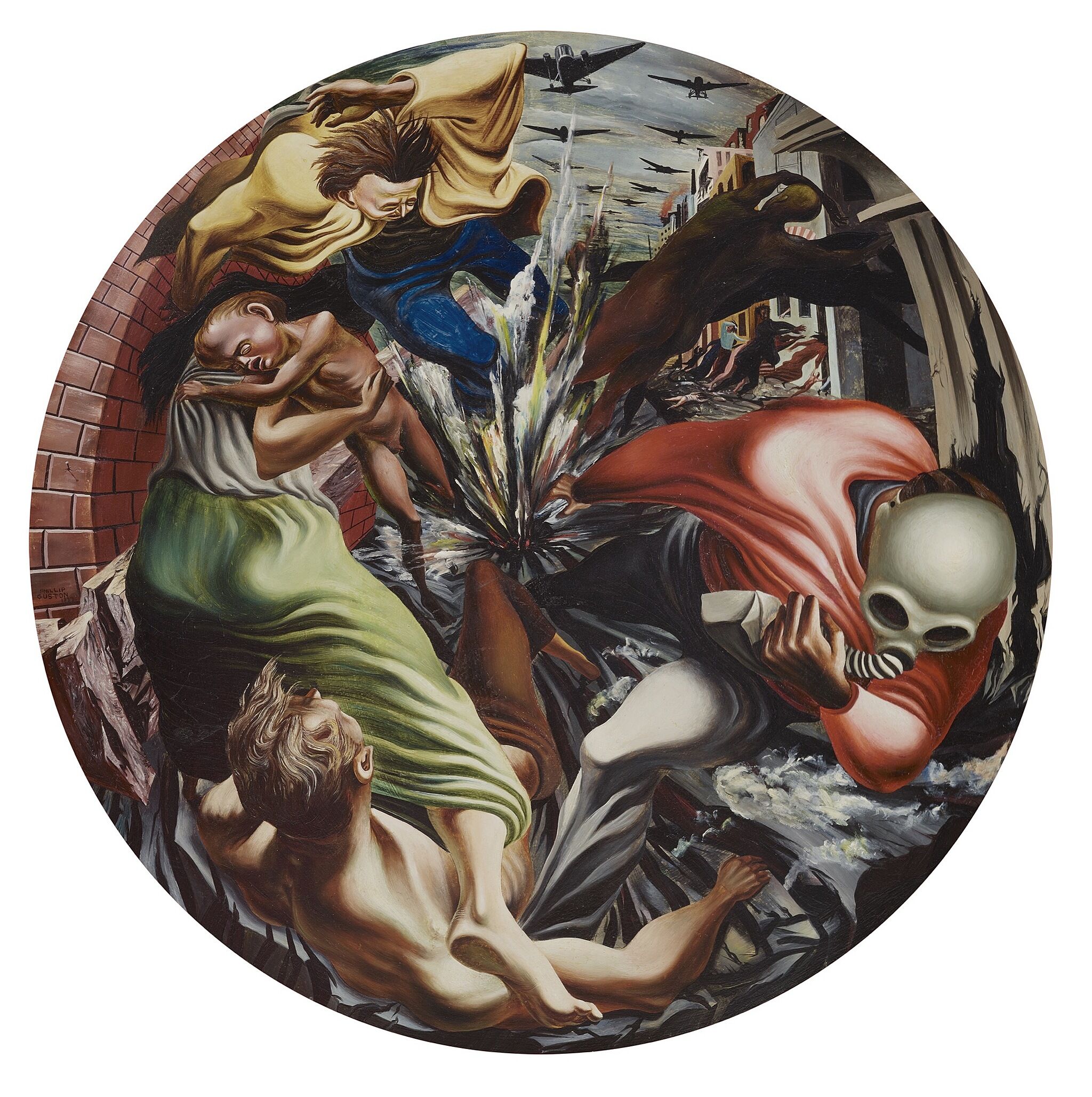
-
510
Eitarō Ishigaki, The Bonus March, 1932
Audio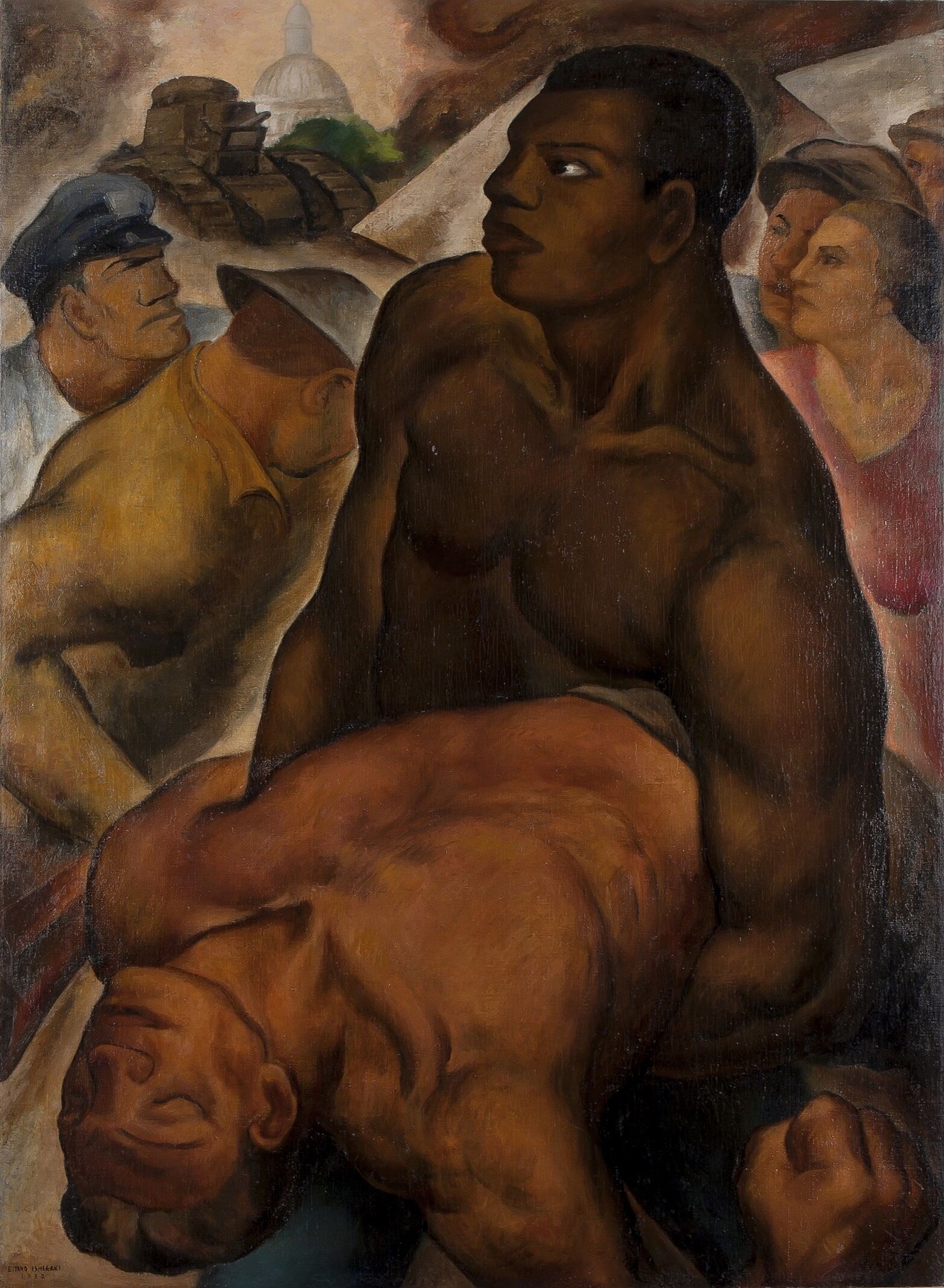
-
511
Aaron Douglas, Aspiration and Into Bondage, 1936
Audio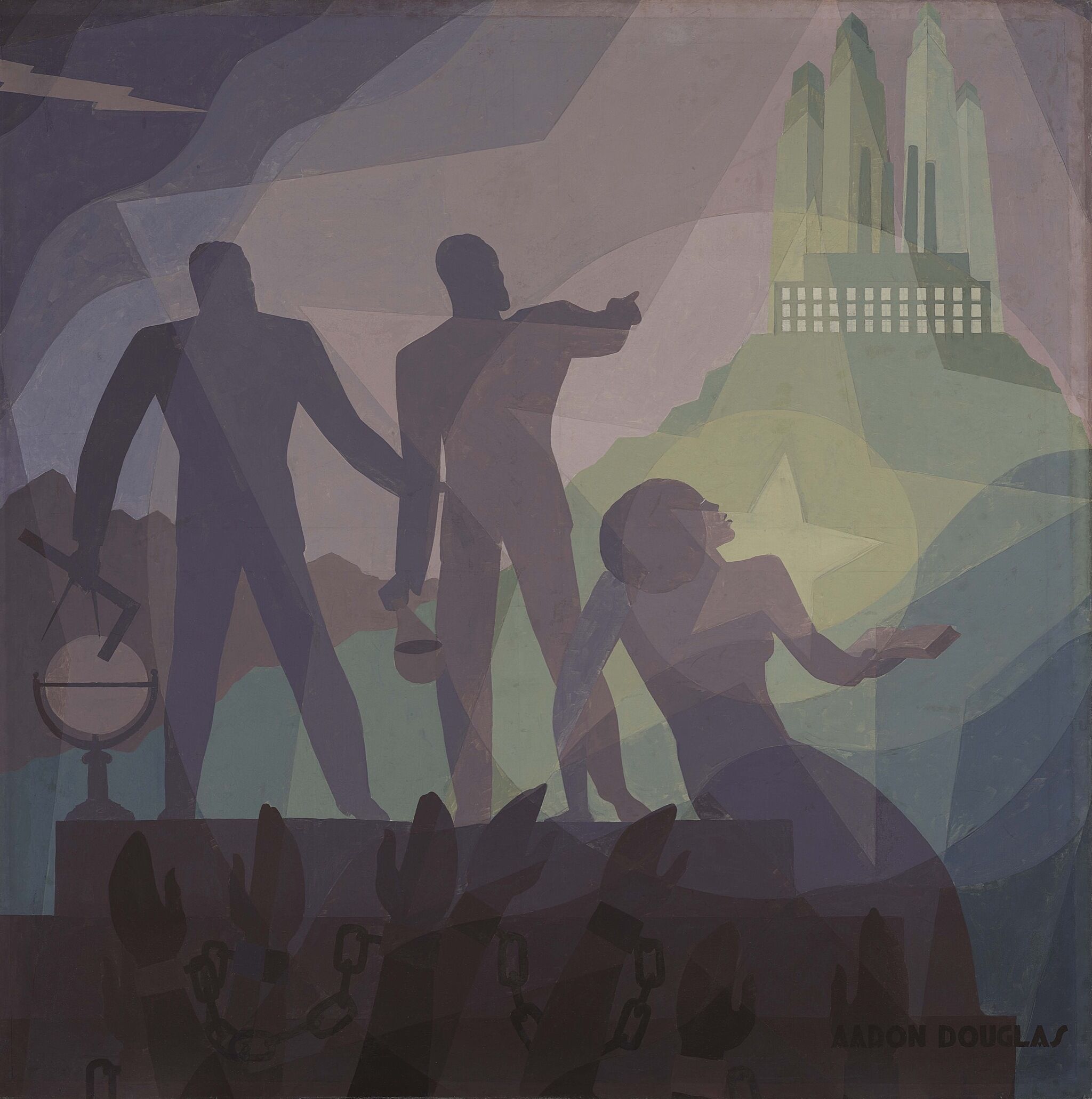
-
512
Thomas Hart Benton, American Historical Epic, 1927–28
Audio -
513
Charles White, Progress of the American Negro: Five Great American Negroes, 1939–40
Audio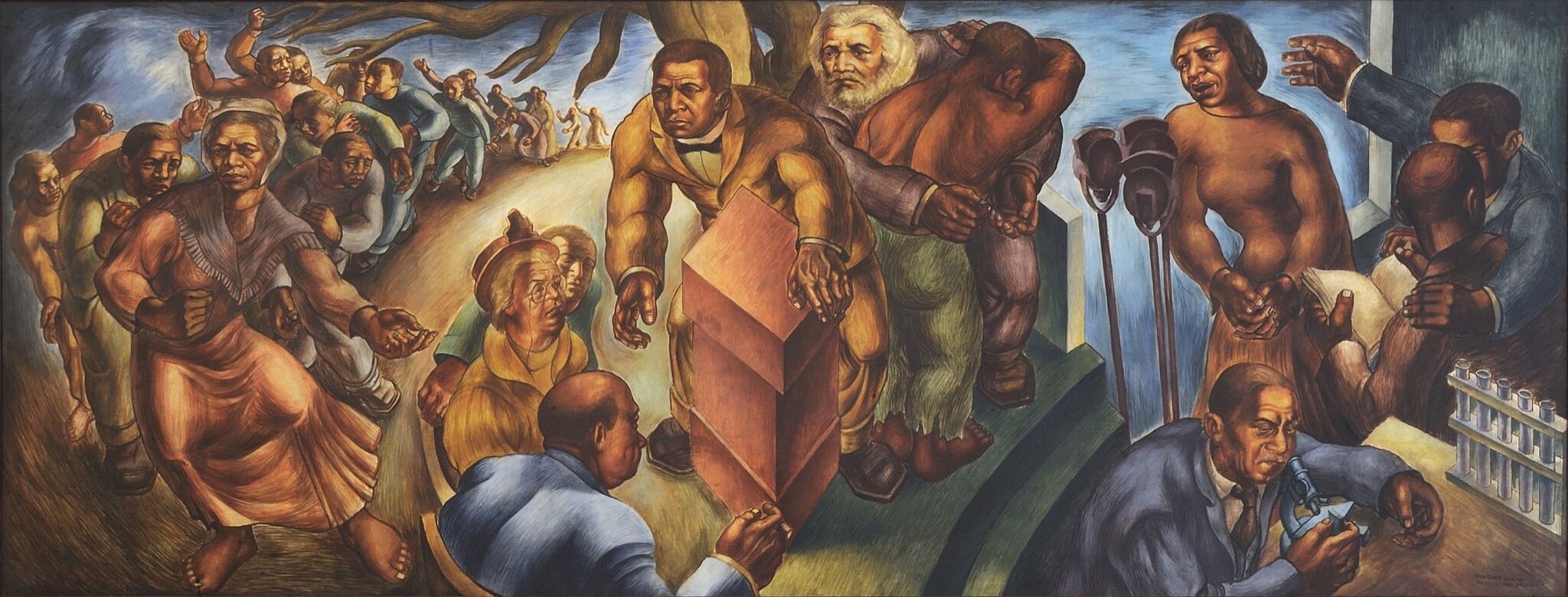
-
514
Diego Rivera, Pneumatic Drilling, 1931–32
Audio -
515
Thelma Johnson Streat, The Negro in Professional Life—Mural Study Featuring Women in the Workplace, 1944
Audio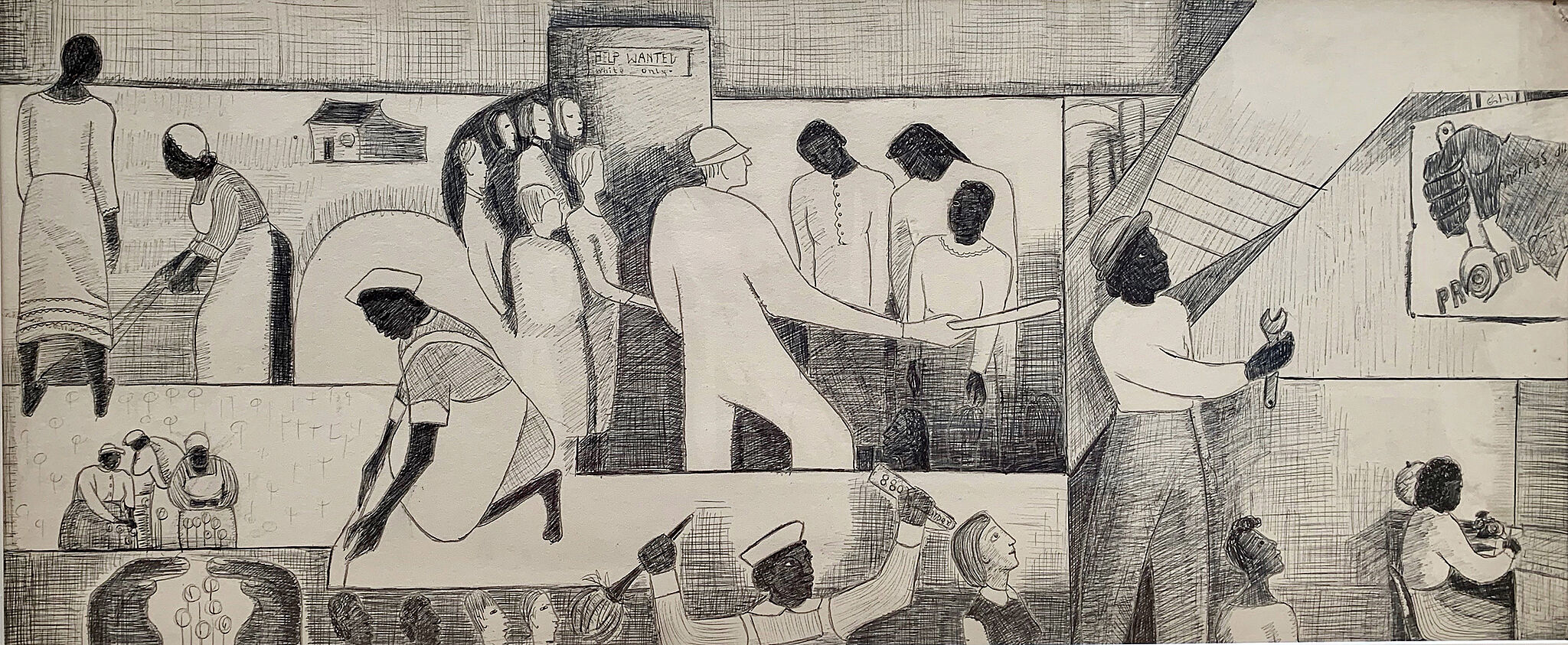
-
516
Joe Jones, We Demand, 1934
Audio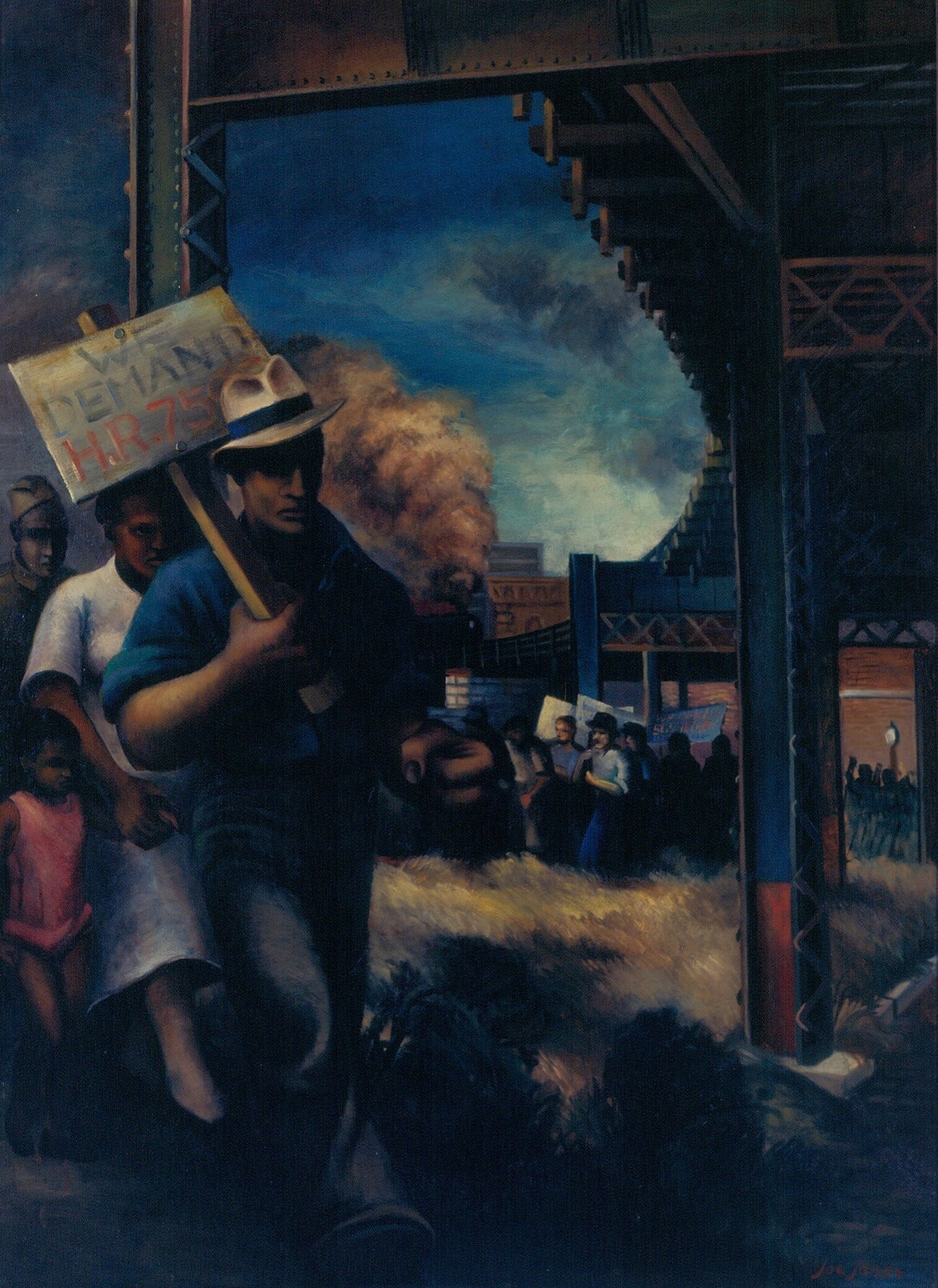
-
519
Diego Rivera, Reproduction of Man, Controller of the Universe, 1934
Audio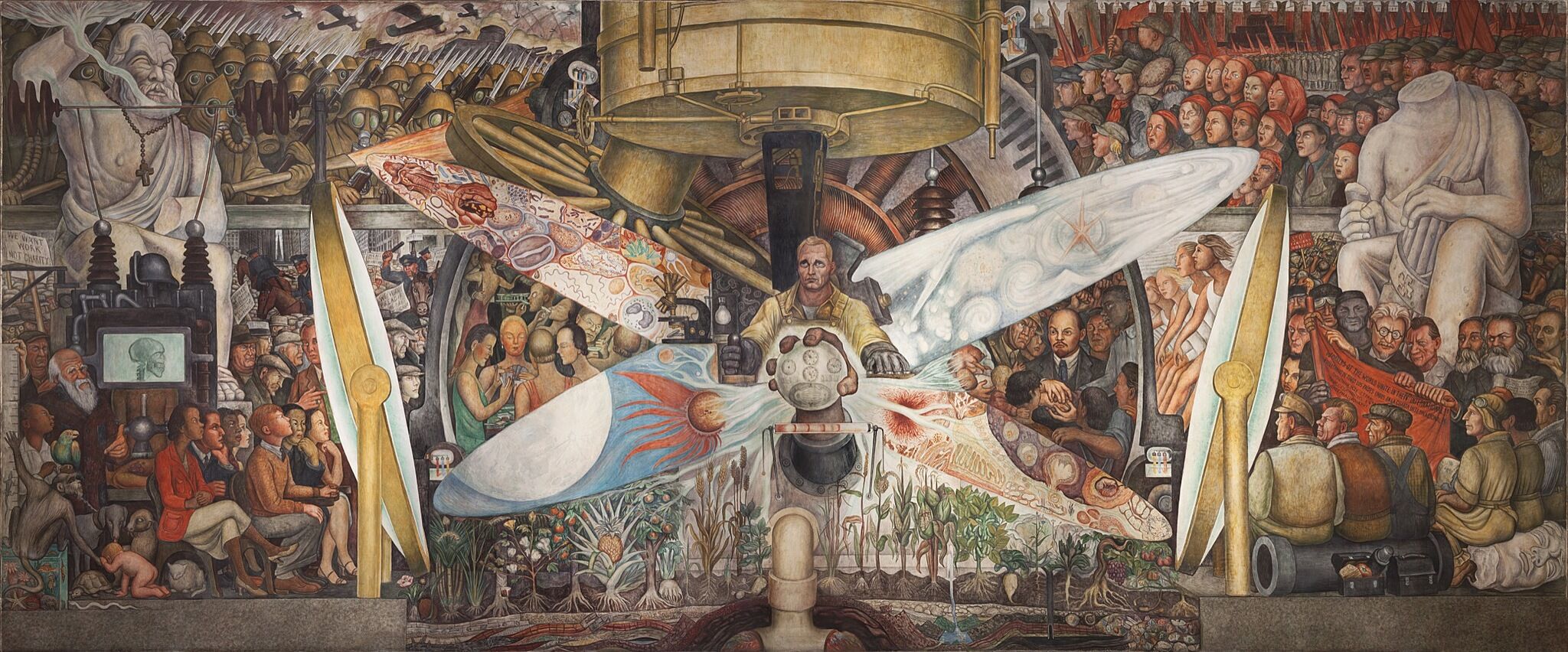
-
520
David Alfaro Siqueiros, Proletarian Victim, 1933
Audio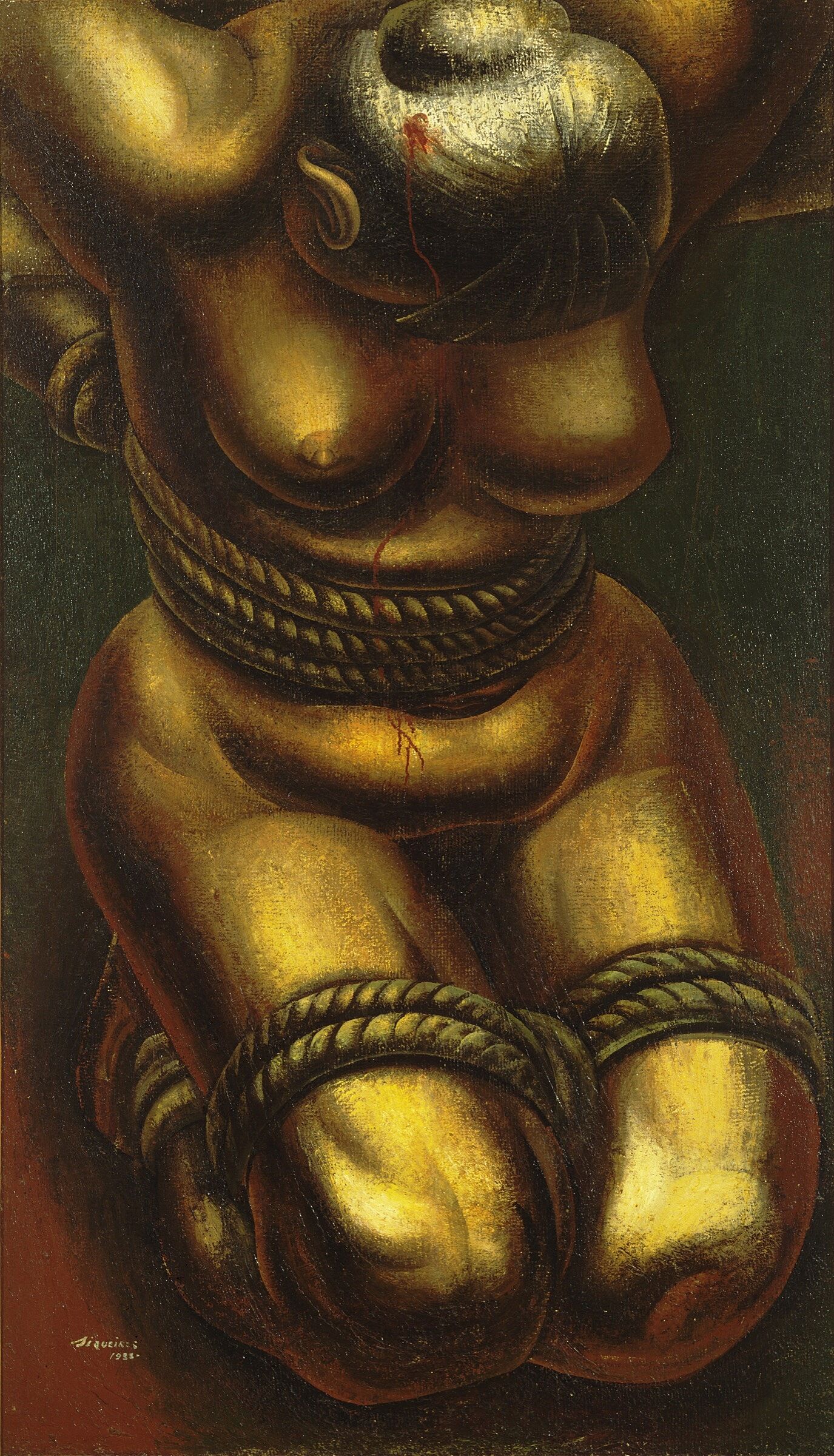
-
517
José Clemente Orozco, The Unemployed (Los desempleados), c. 1929
Audio -
521
David Alfaro Siqueiros, Echo of a Scream, 1937
Audio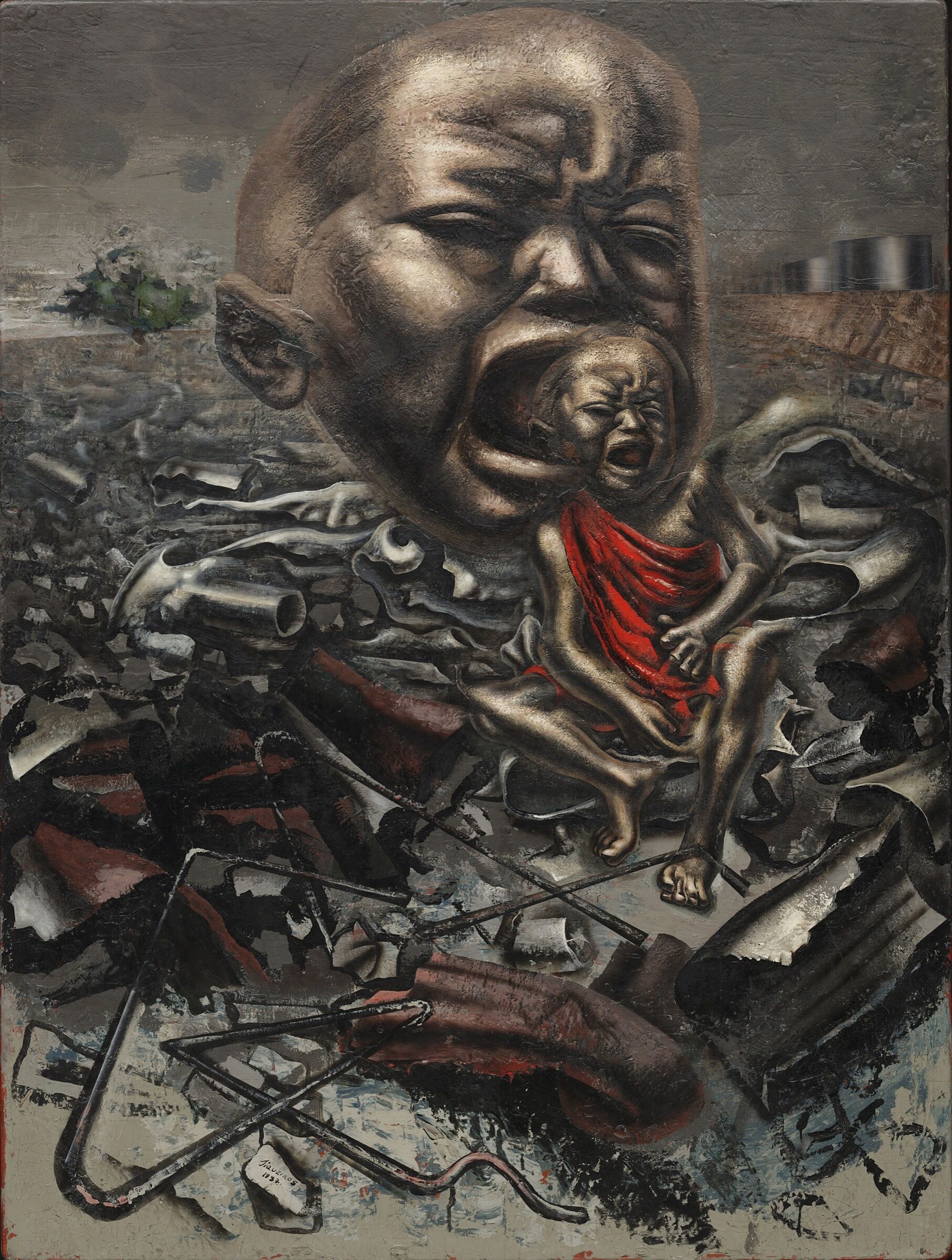
-
523
Elizabeth Catlett, ..and a special fear for my loved ones, 1949, printed 1989
Audio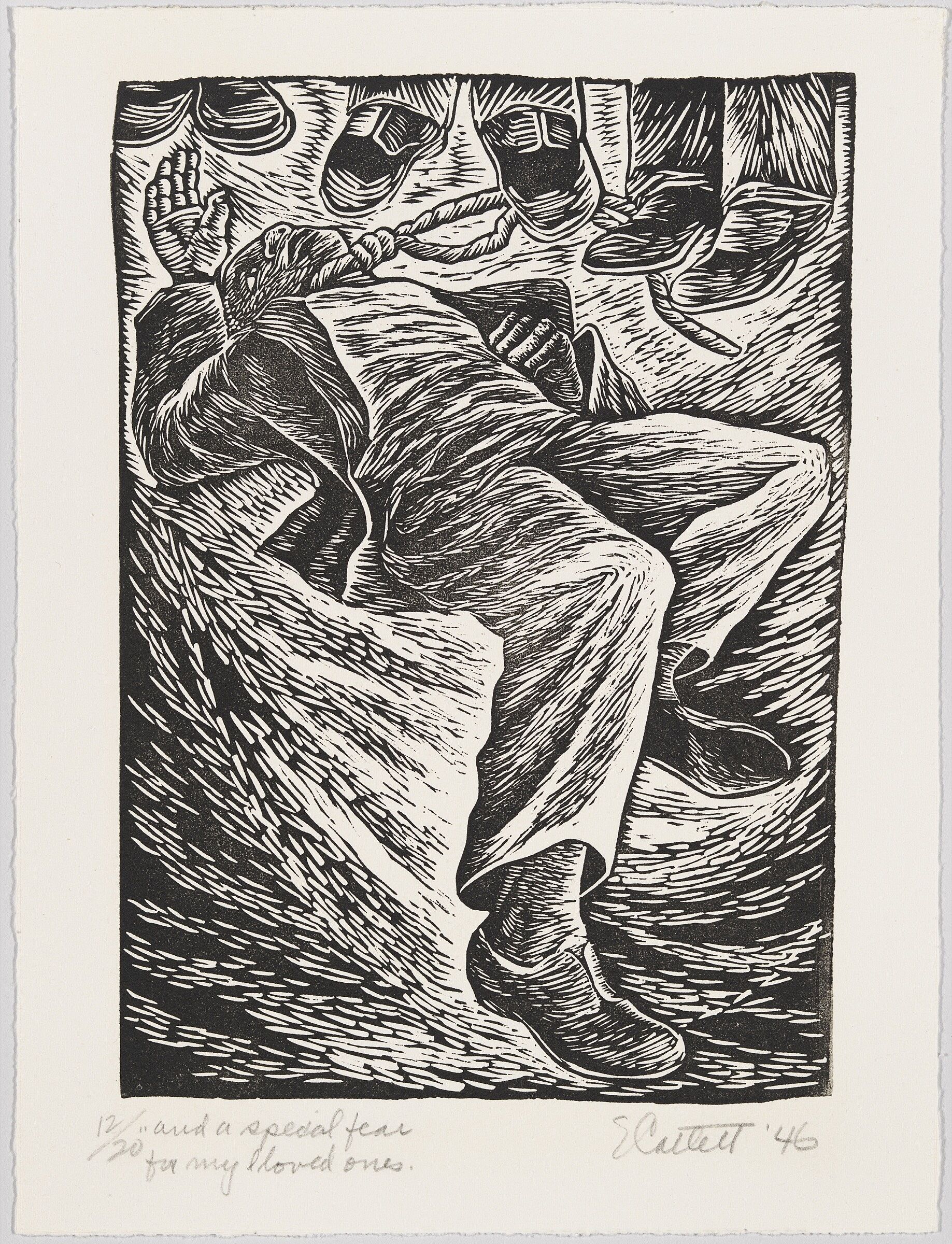
-
524
David Alfaro Siqueiros, The Electric Forest, 1939
Audio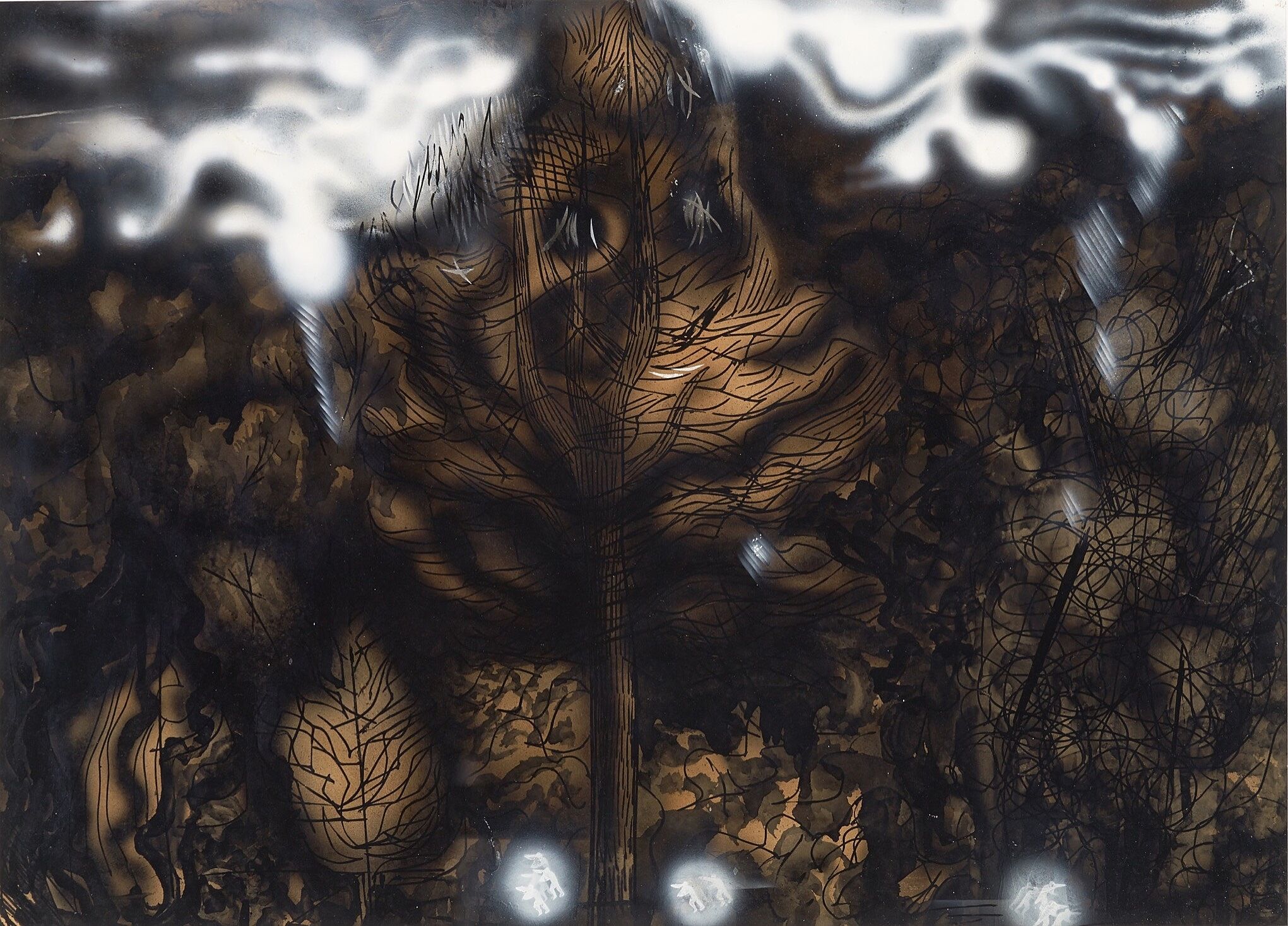
-
525
Jackson Pollock, Landscape with Steer, c. 1936–37
Audio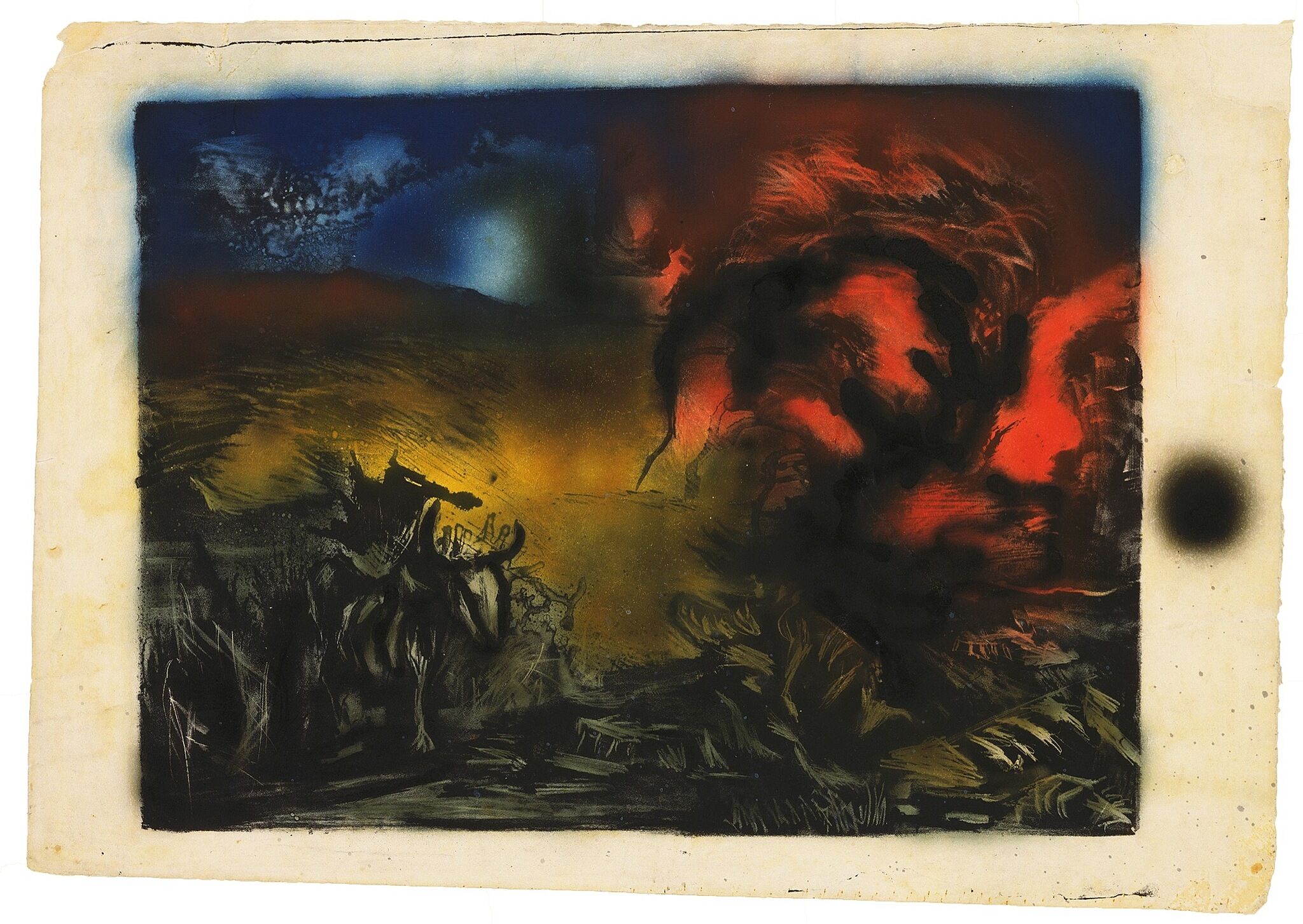
-
503
Sound Description and Transcription: Sergei Eisenstein, ¡Que Viva Mexico!, 1930–32/1979
Sound description -
504
Transcription: Tehuantepec, Mexico, 1940s
Transcription -
518
Transcription and Sound Description: Emilio Gómez Muriel and Fred Zinnerman, The Wave, 1936
Sound description -
522
Sound Description: Abelardo L. Rodriguez Market, 2020
Sound description
Narrator: Welcome to Vida Americana: Mexican Muralists Remake American Art, 1925–1945. This show features approximately 200 works by Mexican and American artists, including a number of reproductions of important mural projects in the U.S. and Mexico. Together, these works will demonstrate the tremendous impact Mexican artists had on the development of art in the United States. The Mexican painters’ clear, accessible approach gave U.S. artists a direct new visual language. It allowed them to address new technologies and productivity. Economic disparities and labor rights. Racialized violence and the rise of fascism in the ‘30s.
Starting to your right, take a moment to explore the first spaces of the exhibition. Here, you’ll see the kinds of themes and approaches that artists in the United States found so exciting. Much of the imagery in this first group of works—which echoed the murals Mexican artists had painted back home—is picturesque. You’ll find flowers, traditional dancers, and women and children in folkloric dress. Such subjects were very prominent after the Mexican Revolution, a bloody conflict that lasted from 1910 to 1920. One of the main goals of the revolution had been to achieve land reform—ending the oppression of an immense rural population by a few wealthy landowners.
After the war was over, the new Mexican government began commissioning public murals. The artists frequently portrayed the campesinos—farm workers and their families—as the heroes of the revolution. These public works of art glorified the nation’s deep Indigenous roots, showing a continuum between modern rural life and ancient cultures including the Aztec, Maya, Olmec, and Zapotec. From a contemporary perspective, a number of these depictions verge on stereotype. Some also present an image that seems excessively romantic, given the poverty that plagued the countryside even after the revolution. However, the artists intended for their works to declare solidarity with the campesinos. Those intentions were imperfectly realized, but they helped initiate a movement towards activist art meant to communicate directly with a broader public, to address difficult and even painful subjects, and to spark political and social change.
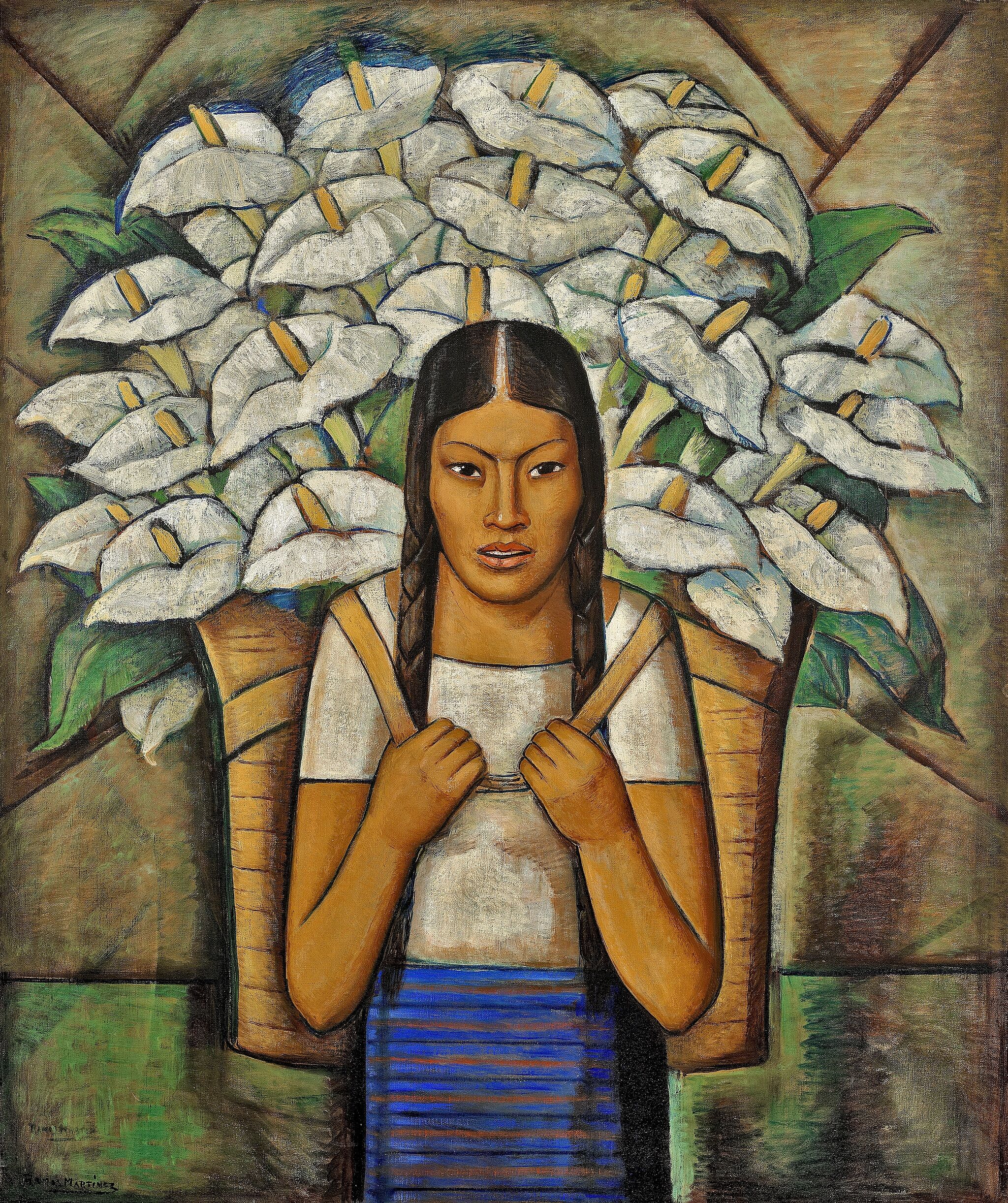
Marcela Guerrero: We’re seeing here a portrait of La Malinche. La Malinche was an Aztec woman who was the interpreter to Hernán Cortés, the colonizer who conquered Mexico.
Narrator: Assistant Curator Marcela Guerrero is one of the organizers of this exhibition.
Marcela Guerrero: Because of her ability to translate Náhuatl and other languages to Spanish, people see her as a traitor. I find this view unfair. She was a woman who was obviously in an unequal relationship of power to Hernán Cortés and she was just using what she could to survive.
Narrator: In the years that followed the revolution, many Mexican artists celebrated the fact that the nation was made up of many cultures, both European and Indigenous. In this context, some people—like Alfredo Ramos Martínez, the artist behind this painting—began to celebrate La Malinche. And more broadly, artists began picturing the nation’s Indigenous roots, foregrounding the visual traditions of the Aztecs, Maya, Zapotecs, and others. Today, we might question the way some of these artists focused primarily on the clothing and customs of these cultures. For Guerrero, Ramos Martínez was different.
Marcela Guerrero: In a way, this painting gives a more nuanced understanding of who a real person was who then became a mythical idea of what a Mexican woman is. It’s stripped down to the bare essentials of her face, her eyes, her nose, her mouth. Very frontal, facing the viewer, confronting the viewer, and in a way, with the simplicity, she’s asking people, “You have to see me as a real person.”
Alfredo Ramos Martinez, La Malinche, 1940. Oil on canvas, 50 x 40 3/8 in. (127 x 102.6 cm). Phoenix Art Museum; museum purchase with funds provided by the Friends of Mexican Art 1979.86. © The Alfredo Ramos Martínez Research Project, reproduced by permission
Narrator: In this painting, Frida Kahlo wears a white top, traditional for Zapotec women in the Oaxacan city of Tehuantepec. Tehuantepec was a favorite subject of Mexican artists during the years covered by this exhibition—you’ll see it featured in many works in this gallery, and even in a tourism commercial. Kahlo often drew on Tehuantepec’s traditions in her intense, expressive self-portraits that often reflected on mortality and other existential questions.
Judith Baca: The parrot! One of the parrots in this image is looking out. The eyes are really similar between her eyes and the parrot. She had this total identification with creatures.
Narrator: Since the 1970s, muralist Judith Baca has been a leader of the Chicano arts movement, which combines art and activism to celebrate Mexican-American identity.
Judith Baca: I think what she was doing is using what she had at her hand, and she was creating a kind of magical realism that is absolutely within the folk history, absolutely within the Mexican sensibility. Also a belief that there is a very thin veil between the moment we’re living in and the other side and the relationship to death, not to be feared, but to be understood as the natural condition of living, of what it means to be human.
Frida Kahlo, Me and My Parrots, 1941. Oil on canvas, 32 5/16 × 24 3/4 in. (82 × 62.8 cm). Private collection. © 2020 Banco de México Diego Rivera Frida Kahlo Museums Trust, Mexico, D.F. / Artists Rights Society (ARS), New York
Narrator: Here, José Clemente Orozco depicts the sort of scene he might have witnessed working as a cartoonist during the Mexican Revolution. A group of campesinos—impoverished farmers, male and female—march across the canvas. The men’s white sombreros identify them as Zapatistas, followers of Emiliano Zapata. Zapata was an agrarian leader and revolutionary hero who was assassinated near the end of the war. After the revolution, many artists idealized him and his fight for land reform.
Barbara Haskell: Orozco was very different.
Narrator: Curator Barbara Haskell is one of the organizers of this exhibition.
Barbara Haskell: Orozco had actually seen the war up front; he was a cartoonist during the revolution, so he witnessed the brutality. And he didn't have any sense of the heroism of the revolution, because he'd seen the oppression and the bestiality, and the egotism of the revolution.
He saw the reality of the revolution on people, on the women, on the families, and on the soldiers. He portrays them not in this heroic victory of battle but trudging along. And also the difference between the leaders that are on horseback who aren't so tired, and the contrast between that and these peasants that are fighting for land, but who are the instruments of some other person’s vision.
José Clemente Orozco, Zapatistas, 1931. Oil on canvas, 45 × 55 in. (114.3 × 139.7 cm). The Museum of Modern Art, New York; given anonymously, 1937. © 2019 Artists Rights Society (ARS), New York / SOMAAP, Mexico City. Image © The Museum of Modern Art/Licensed by SCALA / Art Resource, New York
Narrator: This installation reproduces Prometheus, the first mural painted by a Mexican artist in the United States. José Clemente Orozco painted the Greek mythic figure in the cafeteria of what is now Pomona College in California.
Steve Comba: Prometheus is the Titan that stole fire from the gods, which for many people symbolizes education.
Narrator: Steve Comba is Associate Director and Registrar for the Pomona College Museum of Art.
Steve Comba: On the left panel are Zeus and Hera and they are angry. In the story Prometheus was punished by having his liver pecked out by an eagle, only to have it regenerate and have that go on for eternity. The other panel is Orozco's poetic idea about the past being consumed by the future, and so you have a satyr and other mythological figures that are being kind of pulled down by this large snake figure. The full narrative cycle kind of completes itself as you journey up to the barrel and look around, and then above the Godhead is kind of an abstraction.
Narrator: Go ahead and move into the gallery to your left. You’ll see a number of works by artists who were deeply influenced by Orozco’s vigorous brushwork and his tendency towards expressive figuration. The young Jackson Pollock was especially moved by Prometheus. He made a pilgrimage to see it soon after Orozco completed it, and kept a photograph of the work in his studio throughout the 1930s.
José Clemente Orozco, Prometheus, 1930. Fresco, 20 ft. × 28 ft. 6 in. (6.1 × 8.7 m). Pomona College, Claremont, California. © 2019 Artists Rights Society (ARS), New York / SOMAAP, Mexico City
Henry Louis Gates Jr: One of the most important historical events in the history of the African American people was the massive shift in population from the country to the city, and from the South to the North, between 1900 and 1930.
Narrator: Henry Louis Gates Jr. is the Alphonse Fletcher University Professor and Director of the Hutchins Center for African and African American Research at Harvard University.
Henry Louis Gates Jr: Now what’s curious about it is that despite this massive social upheaval which it caused and which it reflected, almost no one wrote about it in the creative arts. Instead, it was an artist who told the story. And that artist was Jacob Lawrence.
He was the first African American painter to combine sophisticated, experimental visual technique with the narrative tradition, or storytelling. He’s our first narrative painter. Storytelling is one of the fundamental components of the African American tradition. And what Jacob Lawrence did was to translate that tradition of oral storytelling into another medium, a new medium, and that medium was painting.
Narrator: Lawrence took a deep interest in the Mexican muralists, whose art was also often narrative. He especially admired Orozco for his bold approach to color and form.
Jacob Lawrence, From every Southern town migrants left by the hundreds to travel north., panel 3 from the Migration Series, 1940–41. Casein tempera on hardboard, 12 × 18 in. (30.5 × 45.7 cm). The Phillips Collection, Washington, DC; acquired 1942. © 2019 The Jacob and Gwendolyn Knight Lawrence Foundation, Seattle / Artists Rights Society (ARS), New York
Narrator: On this wall you will find photo documentation of Tropical America, a mural by David Alfaro Siqueiros that was whitewashed soon after he painted it. The original has recently been restored by the Getty Museum, but it is still very faded.
Siqueiros was commissioned to make the mural for a faux-historic Mexican market that was being constructed on Olvera Street in Los Angeles. His patrons conceived the market as a celebration of Los Angeles’s Mexican roots. To their surprise, Siqueiros presented the relationship between California and Mexico as an imperial occupation—symbolized especially by the crucified Indigenous figure at the center.
Judith Baca: The crucified figure is the center of the 80-foot piece.
Narrator: Artist Judith Baca.
Judith Baca: To the left, there’s this beautiful Amazonian-type rainforest and references to pyramids. There’s an American eagle that looks somewhat like a vulture, which I think was intentional in the sense that the American dollar was really considered to be God in this image above the crucifixion.
He didn’t shy from the images that would make you confront the brutality.
I think that Mexican people do not have the same abhorrence of things that are difficult. You paint a skull on the side of a wall. You’re gonna get all these people saying, “That’s so terrible. That’s so negative.” Well, no, it’s not. We have this relationship to death. You’re talking about millions of people that were murdered during the occupation of the Spanish in the conquest. Millions. There’s a description of a site where the Spanish soldiers killed so many Indigenous people that they used the bodies in the river to become a bridge for their horses. So, this is part of the legacy of the conquest of Mexico.
David Alfaro Siqueiros, Tropical America, 1932. Fresco applied with Arium on cement, 18 × 82 ft. (5.5 × 25 m). Italian Hall, El Pueblo de Los Angeles Historic Monument. © Artists Rights Society (ARS), New York / SOMAAP, Mexico City. Photograph © Thomas Hartman, IQ Magic. Photo composite by James Jackson
Kate Nesin: [Philip] Guston was inspired to make this painting more or less by the news of the day.
Narrator: Kate Nesin is an art historian and curator.
Kate Nesin: In April 1937, the Nazis bombed Guernica in a practice bombing session, so it was essentially all civilian casualties and senseless destruction. It was a moment in the Spanish Civil War that brought that war to international attention, including to Guston’s.
Narrator: Guston had worked as an assistant to Siqueiros earlier in the decade. In this painting, he follows Siqueiros’s pattern of modernizing and politicizing the energetic rhythms of Italian Baroque painting. Guston even used a traditional round easel format, known as a “tondo."
Kate Nesin: It’s a shape that seems to barrel outward from the wall. The forms, the bodies primarily, which are torquing and twisting around the edges of the circle, seem like they’re literally and figuratively blasted forward off the wall toward us.
Philip Guston, Bombardment, 1937–38. Oil on composition board, diameter: 42 in. (106.7 cm). Philadelphia Museum of Art; gift of Musa and Tom Mayer, 2011-2-1. © The Estate of Philip Guston, courtesy McKee Gallery, New York
ShiPu Wang: In the summer of 1932 some 15,000 to 17,000 World War I veterans traveled from all over the country to the nation's capital.
Narrator: ShiPu Wang is the Coates Family Chair in the Arts and Professor of Art History and Visual Culture at the University of California, Merced.
ShiPu Wang: They wanted to ask Congress to allow them to redeem their bonus certificates that were rewarded to them for their service by Congress in 1924, but were designated to be redeemable only in 1945.
Eitaro Ishigaki's painting represents a conflict between the marchers and the DC police and army. Ishigaki pictorially sided with the marchers by putting two muscular marchers in the foreground. The African American figure dominates the composition and in effect, stares down the artillery tank and even the capitol building.
As a Japanese immigrant, Ishigaki lived in what is called an exclusion era during which exclusionary laws restricted or suppressed immigrants—and particularly Asian immigrants' rights to property, immigration, and naturalization. This painting seems to be his statement of not only highlighting the Black veterans' contributions to his country and their participation in the march, but also a kind of alliance with people of color.
Eitarō Ishigaki, The Bonus March, 1932, Oil on canvas, 56 7/8 × 41 11/16 in. (144.5 × 105.9 cm). Museum of Modern Art, Wakayama, Japan
Narrator: Like many artists in the United States, Aaron Douglas was inspired by the Mexican muralists to present history in epic form. These two paintings, titled Into Bondage and Aspiration, were moving murals—intended to be transported.
Gwendolyn DuBois Shaw: They show two different views of the African American past and present, and possibly the future.
Narrator: Gwendolyn DuBois Shaw is an Associate Professor of American art at the University of Pennsylvania.
Gwendolyn DuBois Shaw: One of the figures at the center of Into Bondage looks up at a star in the sky, the rays of the star kind of shooting through his face, and changing the color of his face, and one of the leaves behind him as it crosses the composition. It's almost as if, on the way to the slave ship, this figure is already recognizing that North Star, the North Star that was so important for African Americans who were taking possession of themselves, freeing themselves through fleeing bondage.
Aspiration by Aaron Douglas from 1936 shows us three main figures, one of them seated on a kind of a plinth, maybe the top of what looks like a step pyramid.
They seem to represent the promise of education, of scientific advancement, of professionalization for African Americans who had been denied so many opportunities through the legacies of enslavement, the legacies of Jim Crow.
The star at the center of Douglass's composition seems to radiate the promise of that city on a hill. And it also replicates that North Star that we see in Into Bondage, the North Star that promised the enslaved the potential of taking one's own freedom through escaping, now reappears in Aspiration, its location being at the city, at the feet of the city that holds the promise of jobs, and education, and a better life for one's family.
Aaron Douglas, Aspiration, 1936. Oil on canvas, 60 × 60 in. (152.4 × 152.4 cm). Fine Arts Museums of San Francisco; museum purchase, the estate of Thurlow E. Tibbs Jr., the Museum Society Auxiliary, American Art Trust Fund, Unrestricted Art Trust Fund, partial gift of Dr. Ernest A. Bates, Sharon Bell, Jo-Ann Beverly, Barbara Carleton, Dr. and Mrs. Arthur H. Coleman, Dr. and Mrs. Coyness Ennix, Jr., Nicole Y. Ennix, Mr. and Mrs. Gary Francois, Dennis L. Franklin, Mr. and Mrs. Maxwell C. Gillette, Mr. and Mrs. Richard Goodyear, Zuretti L. Goosby, Marion E. Greene, Mrs. Vivian S. W. Hambrick, Laurie Gibbs Harris, Arlene Hollis, Louis A. and Letha Jeanpierre, Daniel and Jackie Johnson, Jr., Stephen L. Johnson, Mr. and Mrs. Arthur Lathan, Lewis & Ribbs Mortuary Garden Chapel, Mr. and Mrs. Gary Love, Glenn R. Nance, Mr. and Mrs. Harry S. Parker III, Mr. and Mrs. Carr T. Preston, Fannie Preston, Pamela R. Ransom, Dr. and Mrs. Benjamin F. Reed, San Francisco Black Chamber of Commerce, San Francisco Chapter of Links, Inc., San Francisco Chapter of the N.A.A. C.P., Sigma Pi Phi Fraternity, Dr. Ella Mae Simmons, Mr. Calvin R. Swinson, Joseph B. Williams, Mr. and Mrs. Alfred S. Wilsey, and the people of the Bay Area. © 2020 Heirs of Aaron Douglas / Licensed by VAGA at Artists Rights Society (ARS), NY
Narrator: Thomas Hart Benton, one of the most influential artists of his time, was inspired by the Mexican muralists to paint American history on a grand scale.
Erika Doss: So in the American Historical Epic Benton is trying to provide a picture of American history from below rather than above, sort of a people’s history, a grassroots history of America—warts and all.
Narrator: Erika Doss is a professor of American Studies at the University of Notre Dame.
Erika Doss: We see everything from war and violence, and we also see a lot of conflict between European settlers and Native Americans. We see scenes of slavery, we see scenes of slavers. Benton doesn’t hold anything back in terms of the early aggression and violence he felt characterized the making of America.
All of Benton’s figures are wiry and stretched out, sort of like plastic figurines, like a Ken Doll or a Barbie Doll. None of them are realistic or naturalistic in that regard, and what he’s trying to do is show agency or energy and physical action in the making of America.
Narrator: In some cases, particularly with his depictions of African Americans and Native Americans, Benton’s efforts to create archetypes that could function on an epic scale resulted in exaggerated, stereotyped figures.
Narrator: This mural by Charles White focuses on major figures of African American history, including Sojourner Truth, Booker T. Washington, Frederick Douglass, Marian Anderson, and George Washington Carver. He painted it as a fundraiser for a community center in Chicago’s predominantly Black South Side. The work reflects White’s interest in the Mexican muralists’ radical politics and their commitment to creating art “for and about the people.” White later traveled to Mexico, and upon his return to the United States became tremendously influential as a teacher. One of his students was the Chicana muralist Judithe Hernández. While they were working together one day, he told her about his experience of living in Mexico.
Judithe Hernández: He said, “You know the reason I have such affection for Mexico and Mexican people is”—this was the 1940s—“that was the first experience I ever had with people who were not African American where I was treated with respect and even admiration, because I was an artist. It didn’t matter that I was a Black man. They saw my work. They called me maestro,” which is what I used to call him. Made him smile, because it’s a sign of respect. Someone who does art, someone who is a creative person, in Mexican culture, is someone who you esteem, and it’s something he had never felt in the United States.
Charles White, Progress of the American Negro: Five Great American Negroes, 1939–40. Oil on canvas, 60 × 155 in. (152.4 × 393.7 cm). Howard University Gallery of Art, Washington, DC
Mark Castro: When Rivera was planning a mural, he would go through various stages of drawing it out in different forms, often starting with small-scale drawings and sketches, and then soon moving on to full-scale cartoons like this one for Pneumatic Drilling.
Narrator: Mark Castro is the Jorge Baldor Curator of Latin American Art at the Dallas Museum of Art.
Mark Castro: Rivera came to New York to paint a series of mural panels for his first one-man show in the United States. And, as we know, from what he recounted of his experiences there, one of the first things he saw was a group of men at work, digging and excavating around what was becoming Rockefeller Center. He was fascinated by the ways in which man and machinery meet, and the ways in which they change the world together.
Rivera really believed that artists were in and of themselves workers, in the way that a construction worker or an agricultural worker is a laborer, is someone who is working with their hands to produce something. In his own work and his own persona, kind of crafted himself as an artist worker wearing overalls, often covered with plaster from his work on fresco.
I think you see that reflected in many of his figures, he tends to favor solid, broad figures that have a substantial feeling to them, that are, in his mind, the image of the worker, the solid person who is building our society.
Narrator: As you look around this gallery and the next, you’ll find many works that take their inspiration from Rivera’s muscular approach. During the Depression, Franklin Delano Roosevelt’s administration set up a number of public works projects intended to employ artists and lift the public’s spirits. Many of the artists who worked on those projects took Rivera as a model, in some cases, learning from him directly while working as his assistants.
Sarah Humphreville: Thelma Johnson Streat was an artist who was born in Washington State and primarily grew up in the Pacific Northwest.
Narrator: Senior Curatorial Assistant Sarah Humphreville is one of the organizers of this exhibition.
Sarah Humphreville: This is one of a group of twelve works that she intended to make on the theme of African Americans in professional life. When you look at it, you see that the figures that are laboring are all African American women. And there are white figures that either stand idly by or in supervisory roles. At the very center of the composition, she's placed a sign that says, "Help Wanted. White Only." And that sign stands in opposition to an executive order that was issued in 1941, which was, "Executive Order 8802" that explicitly prohibited discrimination in the defense industry. And Streat alludes to this specifically in the figure at the very bottom in the center of the composition, who's clutching a piece of paper in her hand, and when you look closely, you can see that it says "880"—the 2 is blocked—and then it picks up again on the other side of her fist and says "Order." So there's a real acknowledgement of the hypocrisy in the workplace, the defiance of legal norms in favor of discrimination.
Narrator: In 1940, Streat had worked with Diego Rivera on a fresco in San Francisco. She was one of the only assistants that Rivera trusted to apply paint to the mural itself. He later described her work as being “one of the most interesting manifestations in this country at present."
Thelma Johnson Streat, The Negro in Professional Life—Mural Study Featuring Women in the Workplace, 1944. Ink and graphite on paper, 12 1/2 × 30 in. (31.8 × 76.2 cm). Collection of Bernard Friedman
Barbara Haskell: The fist is a dominant image that you see over and over in the '30s that represents the solidity of worker power, workers’ strike, and in the Joe Jones, it is almost pushing forward into the viewer's space.
Narrator: Barbara Haskell.
Barbara Haskell: Roosevelt came into office and one of the first things he did was he passed a bill that allowed for workers to unionize and to protest working conditions. And it unleashed a series of strikes all across the country during the 1930s because labor conditions were so terrible. In the Joe Jones picture, he depicts one of these labor protests.
The man in the front of this picket line is carrying a sign that says, “we demand,” with some numbers, HR75, with some of the numbers blocked out by his hat, but it refers to a bill that had been proposed in Congress by a Minnesota congressman, that would allow for unemployment insurance.
Narrator: Jones knew Orozco. He also showed his paintings in exhibitions with works by Rivera and Siqueiros.
Barbara Haskell: He was one of the people who looked to the Mexican muralists and really spoke about them as the artists that showed him that working with social issues in a way that the public could understand was something that artists were obligated to do.
Joe Jones, We Demand, 1934. Oil on composition board, 48 × 36 in. (121.9 × 91.4 cm). Butler Institute of American Art, Youngstown, Ohio; gift of Sidney Freedman 1948
Narrator: Diego Rivera originally painted Man, Controller of the Universe, in Rockefeller Center.
Mark Castro: Rivera, especially during his time in the United States became increasingly fascinated by the ways in which humanity's own ambitions and ability intersected with technology and modern industry.
Narrator: Mark Castro.
Mark Castro: And that was something that I think was reflected in much of his work, and is reflected in the mural he began to paint at Rockefeller Center. The theme that he had been given by the architects who were designing the building was "man at the crossroads." And he initially began with an image that was a little bit different in his sketches, but over time, he changed it to add, I think, what is the most important figure in the mural, this central man, who's kind of guiding a machine, that is really made up of physical parts in some ways, but more so sort of ideas.
So he sits at the center point of these two long elliptical shapes that act as viewpoints, into things that man is able to see through the use of technology. So the cosmos, the microbiological world, cells, diseases—all of these things become visible within this kind of space, and at their center sits man who is guiding the machine and, in a sense the machine is humanity and guiding us forward.
I think that Rivera felt that technology and science would someday intersect with political change, and that these things together were what was going to remake humanity into something better.
Narrator: In a case nearby, you’ll find documents and newspaper articles demonstrating the ultimate fate of the mural. Rivera’s political commitments were communist. This made his industrialist patron Nelson Rockefeller an uneasy partner—and eventually, the commission fell apart. Rivera painted an image of Vladimir Lenin into the composition, which Rockefeller asked him to paint over with an anonymous figure. When Rivera refused, he was removed from the job. Within months the mural was painted over. Rivera re-created it for the Palace of Fine Arts in Mexico City, and the reproduction on view here comes from that work.
Diego Rivera, Man, Controller of the Universe, 1934. Fresco, 15 ft. 9 in. × 37 ft. 6 in. (4.8 × 11.4 m). Palacio de Bellas Artes, INBAL, Mexico City. © 2019 Banco de México Diego Rivera Frida Kahlo Museums Trust, Mexico, D.F. / Artists Rights Society (ARS), New York. Reproduction authorized by El Instituto Nacional de Bellas Artes y Literatura, 2019
Narrator: David Alfaro Siqueiros based this difficult image on a photograph taken during Japanese occupation of Manchuria. Siqueiros was one of the most politically radical of the muralists. As a committed communist, he saw capitalism as an international problem, whose victims were everywhere. Yet as artist Vincent Valdez argues, it’s hard not to see this painting in a specifically Mexican context.
Vincent Valdez: I can’t help but see that this female portrait reveals more of an Indigenous presence. It’s important to remember that artists like Siqueiros at that moment in time—even in countries like his homeland of Mexico in the 1930s, 1940s—the presences of the identities and the images of the Indigenous were almost entirely erased, just like they were in America.
Narrator: Siqueiros believed that artists could only change the world by using new techniques.
Vincent Valdez: I can’t help but acknowledge his use of these rich, beautiful, lush skin tones that almost radiate off of this golden body. To me, it’s one of the first times the art world, or the world in general, was witnessing this. He was changing, he was doing something with lighting on these bodies that I think was pretty revolutionary. He somehow figured out a way to create a palette that depicts almost a nuclear radiance, modern fluorescent light on his figures. And that to me is something that’s so powerful, because it’s his way of saying, this may be our past, but our past is present today as it ever was.
David Alfaro Siqueiros, Proletarian Victim, 1933. Enamel on burlap, 81 × 47 1/2 in. (205.8 × 120.6 cm) Museum of Modern Art, New York; gift of the Estate of George Gershwin © 2020 Artists Rights Society (ARS), New York / SOMAAP, Mexico City. Image © The Museum of Modern Art/Licensed by SCALA / Art Resource, NY
Marcela Guerrero: This painting is in reaction to the market crash of 1929, which Orozco witnessed when he was living in New York in the late 1920s.
Narrator: Marcela Guerrero.
Marcela Guerrero: Seeing so many unemployed people caused him such an impact that he recorded it in his autobiography.
“Panic. Suspended credit. A rise in the cost of living. Millions suddenly laid off, and the numerous employment agencies on Sixth and Seventh Avenues vainly stormed by the jobless. Those in power had promised endless prosperity and a chicken in every pot, but now there was not even a fire in millions of hearths. The municipality found itself obliged to open soup kitchens, and in the outlying districts there were frightening lines of powerful men queued up, hatless, in old clothes that offered little protection through hours of sub-zero weather as they stood on the frozen snow. Red-faced, hard, desperate, angry men with opaque eyes and clenched fists. By night, in the protection of the shadows, whole crowds begged in the streets for a nickel for coffee and there was no doubt, not the slightest, that that they needed it. This was a crash. Disaster.”
Juan Sanchez: I came across this painting when I was an undergraduate art student at Cooper Union.
Narrator: The influence of the Mexican muralists continues even today. Artist Juan Sanchez says that Echo of a Scream frequently resurfaces in his mind when he’s doing his own work—decades after his first encounter with it.
Juan Sanchez: It’s not just a head coming out of the mouth, it’s an echo. That echo speaks to a cry that people may hear or, for the most part, may not hear at all. The way the figure is placed in a space where what you see is mass destruction. The impact of war, where there’s always innocent people involved.
He put so much in layers in this particular painting, which is not all that big. It’s 48 by 36 inches, and yet, it has a monumentality. It’s a question of you looking at that painting, and instead of having to step back to look at it, you have to go further and further, closer to it. It’s like you want to inwardly enter into that space. In other cases, because of the horror and the terror of such a scene, people like to walk away, but they can’t help but go closer to it because the painting is that evocative.
David Alfaro Siqueiros, Echo of a Scream, 1937. Enamel on wood, 48 × 36 in. (121.9 × 91.4 cm). The Museum of Modern Art, New York; gift of Edward M. M. Warburg, 1939. © 2019 Artists Rights Society (ARS), New York / SOMAAP, Mexico City. Image © The Museum of Modern Art/Licensed by SCALA / Art Resource, NY
Gwendolyn DuBois Shaw: This piece titled ..and a special fear for my loved ones, reflects the concern that Elizabeth Catlett and so many African Americans had for, not only themselves, but their children, their relatives, anybody who was related to them, any African American family members could be very quickly swept up into racist violence in the 1930s, ‘40s, [and] ‘50s.
Narrator: Professor Gwendolyn DuBois Shaw.
Gwendolyn DuBois Shaw: The specter of lynching was a part of daily life. If we think about concerns today that African Americans have about being racially profiled, being stopped by the police, this was a very similar moment in the 1930s and ‘40s, for Black folks, but it carried an even greater sense of distress because of the frequency with which people were being lynched, were being murdered by extralegal violence in the United States.
Elizabeth Catlett, ..and a special fear for my loved ones, 1946, printed 1989, from the series The Negro Woman, 1946–47 (re-titled The Black Woman, 1989). Linoleum cut: sheet, 10 × 7 9/16 in. (25.4 × 19.2 cm); image, 8 3/8 × 6 1/16 in. (21.3 × 15.4 cm). Whitney Museum of American Art, New York; purchase with funds from the Print Committee 95.202. © 2020 Catlett Mora Family Trust / Artists Rights Society (ARS), New York
Narrator: To make Electric Forest, Siqueiros brought experimental methods to one of the most traditional genres in art history—the landscape.
Sarah Humphreville: The material that he's using is Duco, which is material mostly associated with automotive paint, it's a brand name of nitrocellulose and it's, by its very chemical nature, explosive.
Narrator: Senior Curatorial Assistant Sarah Humphreville.
Sarah Humphreville: Siqueiros considered the paintbrush “an implement of hair and wood in the age of steel.” So he really thought that it was outmoded. And you can see in this image that there is a forest of types of mark-making, a real diversity of how to apply material to the surface. He applied materials using a variety of techniques, including airbrush and spray gun, which you can see, especially in the white portions, but also in certain areas of the black that create halos around the trees. He also used stencils, which you can see in the very bottom, in these clusters of figures—each figure is a little stencil and he ends up kind of creating a spotlight on them. But they're not in repose. They're not resting in nature, the way we often see—these are figures that are terrified.
David Alfaro Siqueiros, The Electric Forest, 1939. Nitrocellulose on cardboard, 28 × 35 in. (71.1 × 89 cm). Indianapolis Museum of Art at Newfields; gift in memory of Ann Tyndall Durham. 46.74 © 2019 Artists Rights Society (ARS), New York / SOMAAP, Mexico City
Narrator: Jackson Pollock painted Landscape with Steer using an airbrush and automotive lacquer. He would have encountered these approaches while participating in the Experimental Workshop, an artistic collective that Siqueiros established in New York in 1936. Many of the workshop’s activities were overtly political. They made floats for parades, including one that satirized the control of Wall Street over the political process. Another showed an army of workers knocking Hitler out with a spring-loaded boxing glove. Members of the workshop saw a philosophical link between such revolutionary projects and radical formal experimentation.
Pollock participated in Siqueiros’s workshop about ten years before he began making the poured paintings that made him famous. But he continued echoing the Mexican artist’s ideas long after they worked together, declaring in 1950 that “each age finds its own technique.” In the 1940s and ‘50s, American artists overwhelmingly moved towards techniques that supported abstraction—but the impact of the Mexican muralists endured.
Jackson Pollock, Landscape with Steer, c. 1936–37. Lithograph with airbrushed lacquer additions, sheet: 15 7/8 × 22 7/8 in. (40.4 × 58.1 cm); image: 13 11/16 × 18 9/16 in. (34.7 × 47.1 cm). The Museum of Modern Art, New York; gift of Lee Krasner Pollock, 1970. © 2019 The Pollock-Krasner Foundation / Artists Rights Society (ARS), New York. Image © The Museum of Modern Art/Licensed by SCALA / Art Resource, NY
Sound Description and Transcription: Sergei Eisenstein, ¡Que Viva Mexico!, 1930–32/1979
Running Time: 4:38
Transcription:
Narrator: The whole population of Tehuantepec…takes part in the event.
Sound Description: [00:00:12-end]
Celebratory, upbeat soundtrack. Then, bells chime. A somber tune emerges, with voices ooh-ing together. A guitar rattles. Tune swells as fireworks explode.
Transcription: Tehuantepec, Mexico, 1940s
Running Time: 8:45
(Music)
Narrator: “Mexico city may have taught you that Mexico is covered with cactus. But if you still haven’t learned this fact, you’d better travel South to the isthmus of Tehuantepec. The state of Oaxaca is also Mexico, but what a different one. This is the tierra caliente, the tropics. More like a South Sea island than any you ever dreamed of seeing. A land of sugarcane and golden pineapples, wild orchids and parrots, lazy oxen and cool thatched and tiled houses.”
(Peaceful Music)
Narrator: “The sun is warm, so animals and people are inclined to take things easy. Only the vegetation is violent. Look at this flame tree.
Narrator: “Tehuantepec has nearly five times more women than men. So this shy boy is about to be captured. He doesn’t seem to mind it at all.”
(Peaceful Music)
Narrator: “These women are really amazing and lovely creatures. They’re taller than most Mexican women, and have all carried burdens on their heads so long that it has straightened their backs and given them a free regal carriage which should be envied by the women of the States, who think a two ounce hat is heavy.”
(Peaceful Music)
Narrator: “If you notice there’s scarcity of men here in the market, it is because women in the United States might also envy the Tehuanas the custom of sending their men into the field to do all the hard work, while they reserve for themselves the sole right to all commercial enterprise, and naturally, the fine amount of gossip which accompanies any buying and selling.
Narrator: “The Tehuanas are also amazing, because nearly all of them are beautiful. What a list of virtues: shrewd and capable businesswomen with a positive genius for adorning themselves. Graceful and beautiful, and numerous. Then add to all this the virtues of skill and industry. Well, it’s hard to believe, but it’s true.”
Narrator: “Everyday clothes in Tehuantepec can certainly not be called drab, but their fiesta costumes are especially brilliant. As a fashion note, these skirts are built like Malay and Burmese sarongs. A quick twist then tucked in at the top. And that waist of theirs is called a huipil. In case you’re thinking of running one up some afternoon, just ask any department store for the pattern.
Narrator: “The Tehuanas have another odd custom probably inherited via Spain from Moorish ancestors. They are greatly addicted to heavy gold jewelry, usually in the form of ornamented coins held in place by filigree work. They save every penny gaed in commercial enterprise, until a gold bauble or small gold coin can be purchased. Then a brisk trade commences and the coins are traded, bought and sold, until a fine large piece can be obtained. If the owner is finally satisfied with the size of the coin, she has it set like a jewel, and guards it from then on. This 1880 American gold piece is probably the envy of the whole neighborhood.
(Music)
Narrator: “There is a story…[Sound skips] probably true, about a century ago, a European ship foundered on the coast of Tehuantepec. And in the cargo was a shipment of very expensive baby clothes. Not imagining that such rich and frilly garments could be anything but headdresses, the Tehaunas put them on, and have worn them as such ever since.”
(Fiesta/Wedding Music)
Narrator: “Weddings are exciting to the people of Tehuantepec, for a number of reasons. First, because it’s a wedding. Second, because it means that some woman has been lucky enough to find an eligible man. And still more important, the man has probably come from some neighboring state to find his bride, and that is very flattering.”
(Fiesta/Wedding Music)
(Waltz Music)
Narrator: “And of course, after a wedding there is always a reception. The marimba is native to this lovely place also, and the attractive dance, La Sandunga, is usually inspired by it. But the weddings are serious, so today the dancing is more formal.”
(Cheerful music)
Narrator: “Once a year, on a date determined by the condition of the crops, the casting of the fruit takes place. For this fiesta, green things and flowers are fastened onto anything that will support them.
Narrator: “The most colorful garments are carefully taken out of the wardrobes. Each pleat and what-you-call-it is carefully arranged and pressed. Every piece of jewelry is put on. Then the lovely Tehuanas go out into the country to find the most perfect blossoms and the most beautiful fruit.”
(Cheerful Music)
Narrator: “The longest earrings and the heaviest jewelry on display, everyone starts for the central plaza.”
(Music)
Narrator: “The whole town in attracted, but who has ever failed to be attracted by parades and beautiful girls who will toss fruit to you from the balconies. This part of the fruit fiesta has always been a mystery to people who do not believe in Santa Claus, and who are inclined to sniff at ceremony and ritual. Why, asks the cynic, should the inhabitants of Tehuantepec scramble for fruit thrown from balconies, when the markets are full of it to be had for pennies? And the whole country is rich with––”
(Sound skips)
Narrator: “Promise yourself to come back to Tehuantepec, as soon as you. . .”
(Sound skips)
Transcription and Sound Description: Emilio Gómez Muriel and Fred Zinnerman, The Wave, 1936
Running Time: 2:23
Sound description:
(Men talk indistinguishably.)
Transcription:
Friends!
How long do we have to put up with this slavery and poverty?
Who of you in any given year earns more than 40 cents a day?
Who can feed their families with so little?
Who has money for medicine?
We all know it’s unfair, but we know it doesn’t have to be this way.
A few exploiters take everything, to satisfy their greed.
They did not make the sea or the rivers, the fish,
they didn’t make either the canoes, boats or nets,
nor did they make us
They didn’t give our arms the strength with which to work.
And another thing.
Why can’t we exchange our fish with those who breed cattle,
with those who harvests the corn,
or those who make fabric?
Who prevents this change?
Those with money have taken over the boats, nets, transport.
They control everything, and they pay us whatever they like.
We know what happens for 8 months of the year when there is no fishing,
and when we can fish, they take half for the boats and the nets.
Exploiters pays us 6 cents a kilo,
and they pay the chief his share plus 2 cents per kilo
They resell it for 3 cents with ice and for 12 in crates.
If it costs 26 cents, they sell it in Mexico City for 80.
Poor folk elsewhere can’t eat fish and we can’t eat vegetables.
Poverty is not the law of nature
nor God’s law
Bravo! Bravo!
Sound description:
(The men clap and cheer.)
Sound Description: Abelardo L. Rodriguez Market, 2020
Running time: 5:07
Sound Description:
Beep. Bright, resonant beats are accompanied by quiet, rhythmic rattling. At moments, melody gives way to the sounds of activities: the mechanical whirr of a blender, indistinguishable dialogue of people in a crowd. Ding.
0:00
0:00