Legacy: The Emily Fisher Landau Collection
2011
This audio guide, introduced by Alice Pratt Brown Director Adam D. Weinberg, highlights a diverse range of works from the exhibition Legacy: The Emily Fisher Landau Collection. Artists John Baldessari, Gregory Crewdson, Eric Fischl, Jasper Johns, Glenn Ligon, and Mark Tansey provide additional commentary.
-
400
Introduction to Legacy: The Emily Fisher Landau Collection
Audio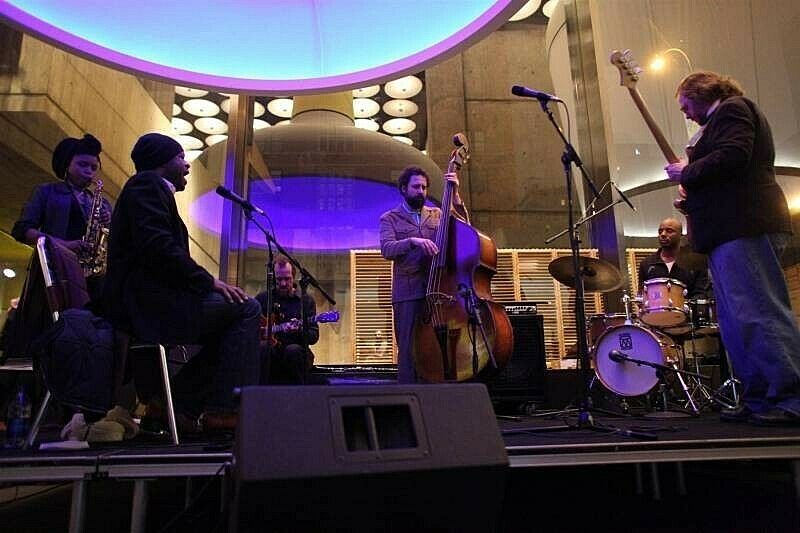
-
401
Ed Ruscha, The Act of Letting a Person into Your Home, 1983
Audio
-
402
Andy Warhol, Portrait of Emily Fisher Landau, 1984
Audio -
403
Willem de Kooning, (no title), 1987
Audio -
404
Cy Twombly, Untitled, 1964/84
Audio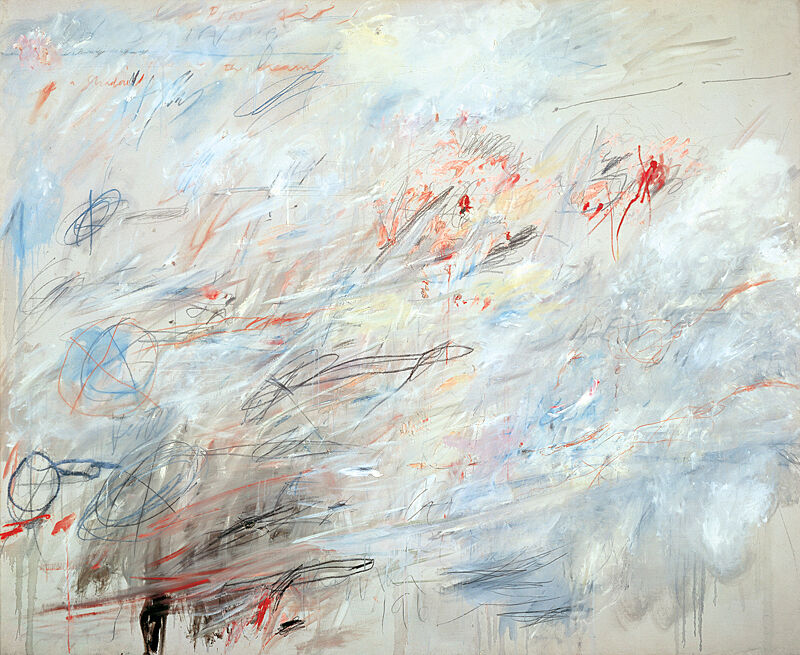
-
405
Richard Prince, Man Crazy Nurse #3, 2003
Audio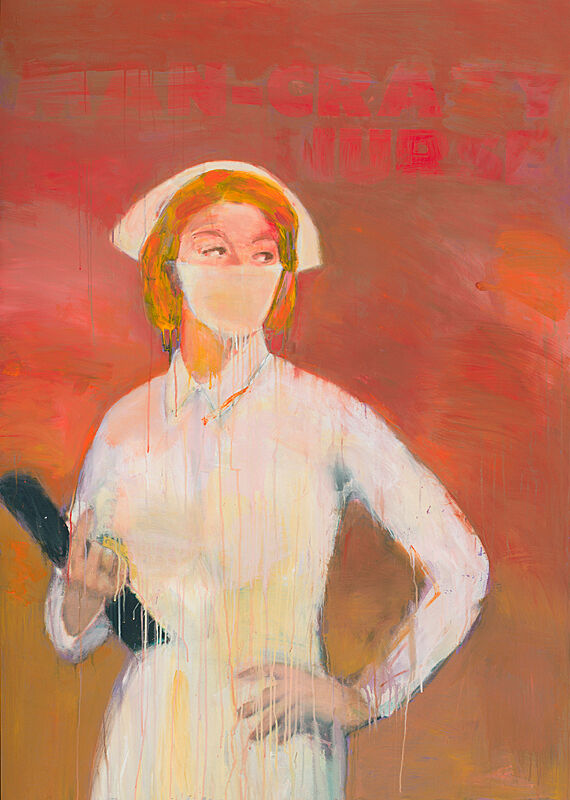
-
406
Mark Tansey, Valley of Doubt, 1990
Audio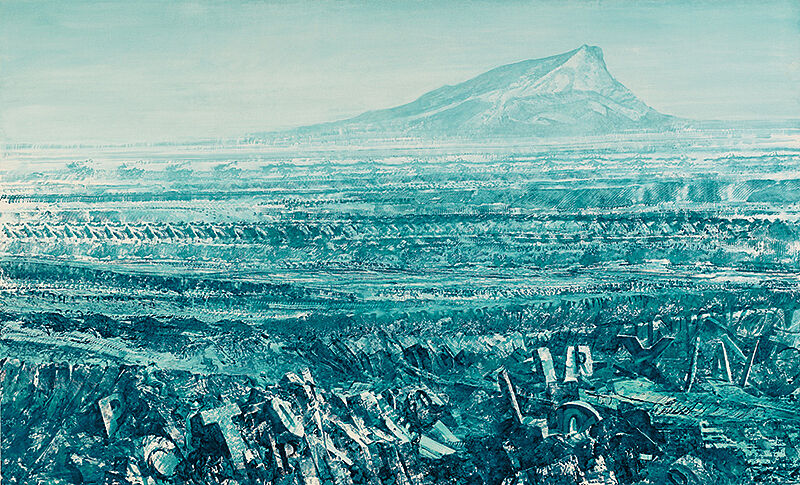
-
407
Andy Warhol, Myths, 1981
Audio -
408
Agnes Martin, This Rain, 1960
Audio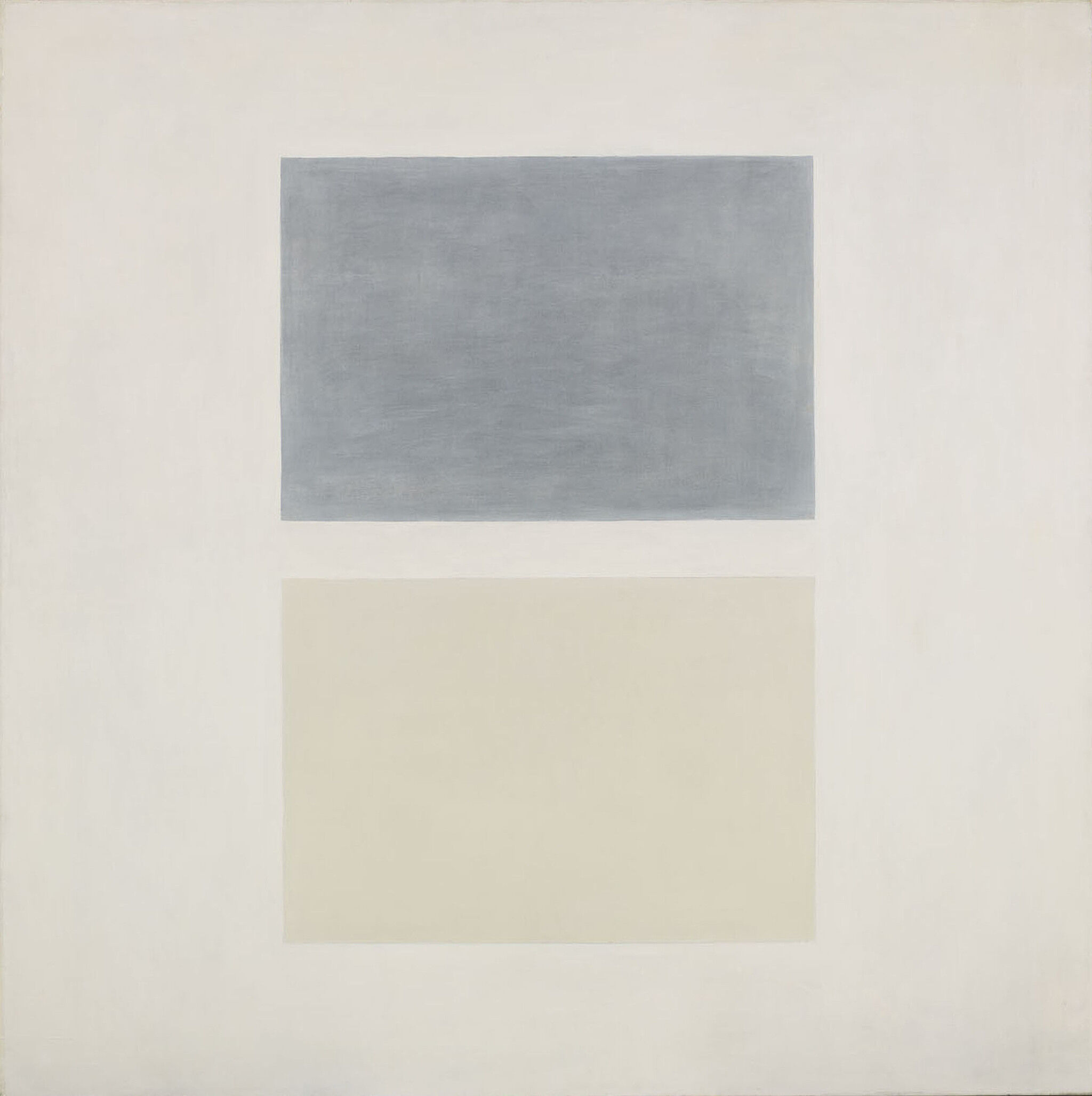
-
409
Carl Andre, GAZETTEER, 1960
Audio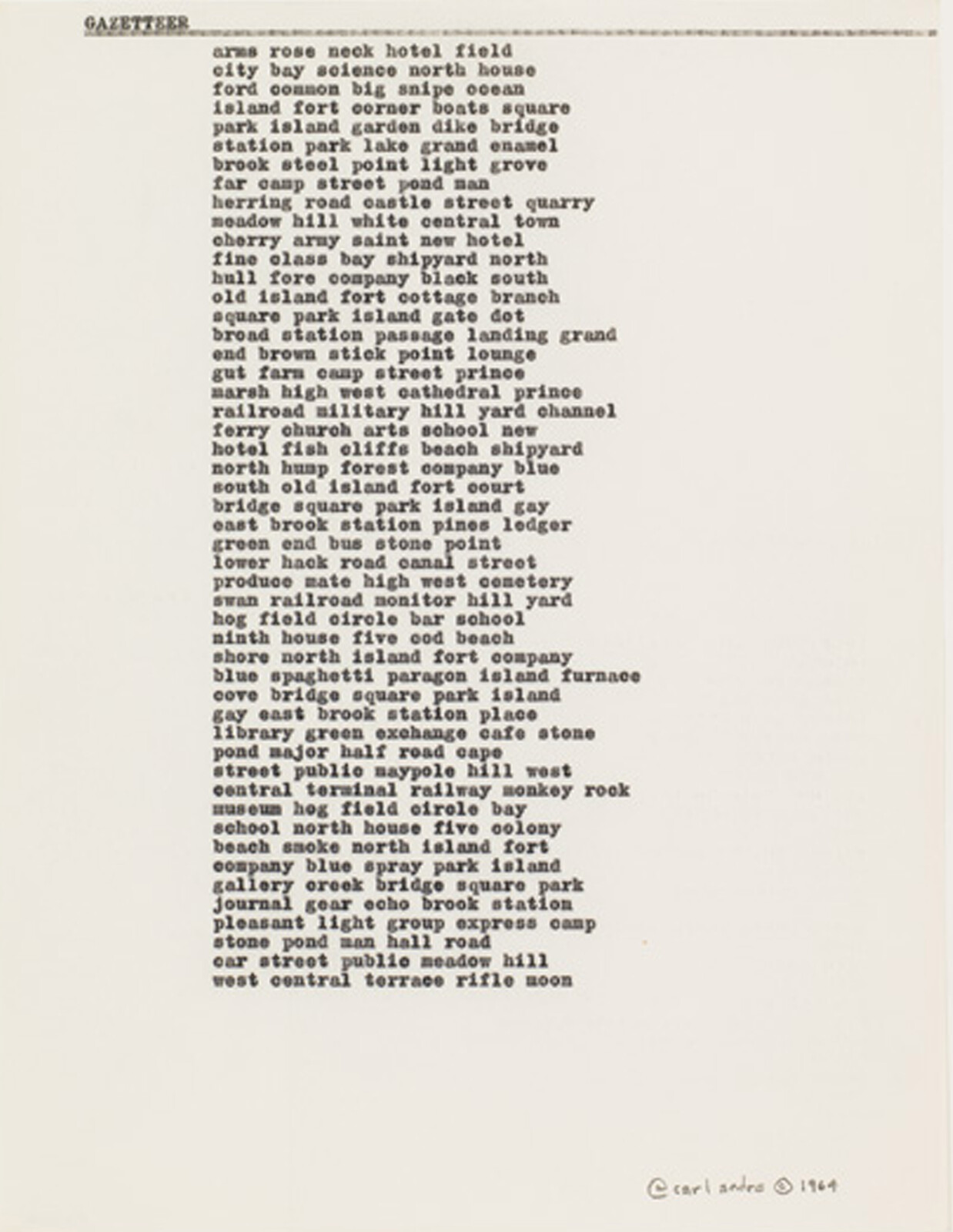
-
410
Rodney Graham, Oak, Banford, 1990
Audio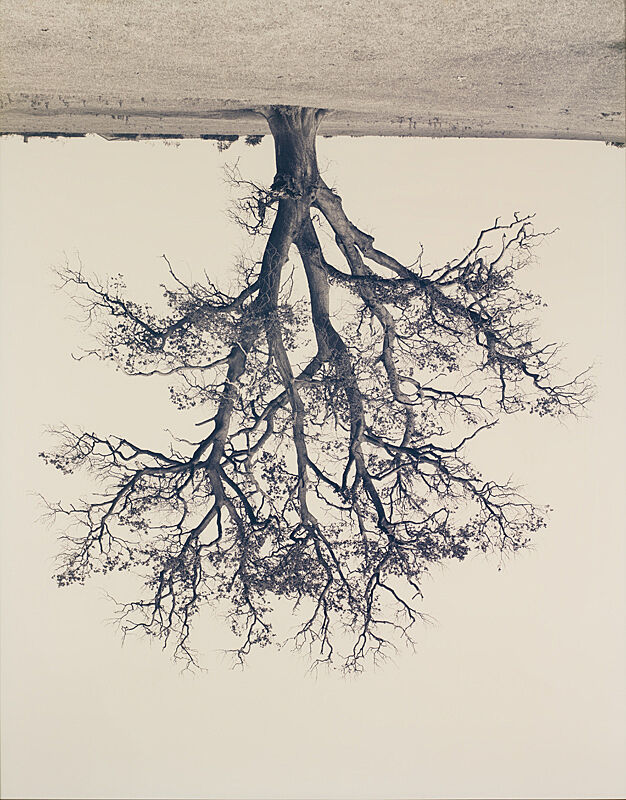
-
411
Allen Ruppersberg, The Gift and the Inheritance (Strive and Succeed), 1989
Audio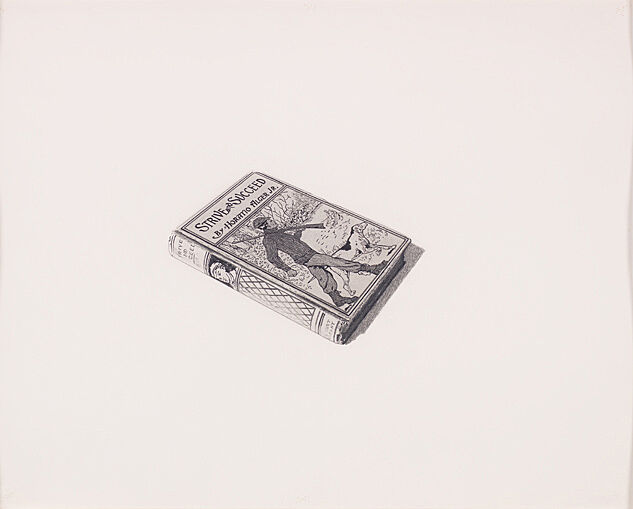
-
412
John Baldessari, What This Painting Aims To Do, 1967
Audio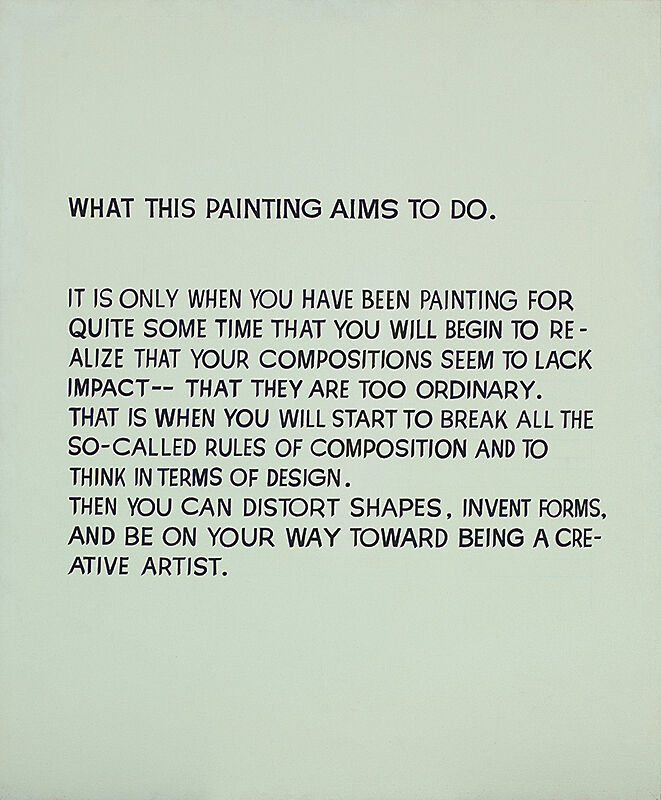
-
413
Joseph Kosuth, Titled (Art as Idea as Idea), [self], 1967
Audio -
414
Nan Goldin, Self-Portrait with Milagro, the Lodge, Belmont, MA 1988, 1988
Audio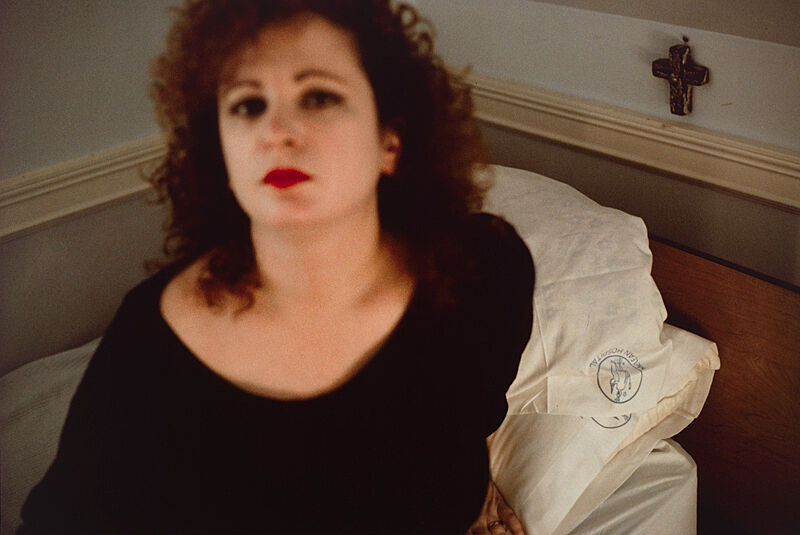
-
415
Peter Hujar, Divine, 1975
Audio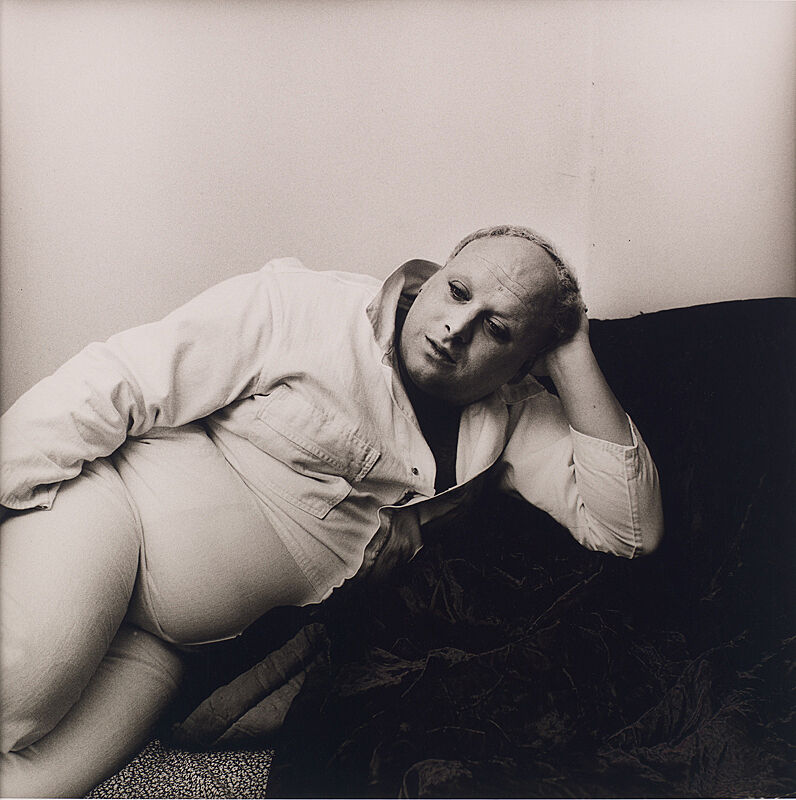
-
416
Robert Mapplethorpe, Self-Portrait, 1988
Audio -
417
Felix Gonzalez-Torres, Untitled (Love Letter from the War Front), 1988
Audio -
418
Glenn Ligon, Son of a Role Model, 1990/91
Audio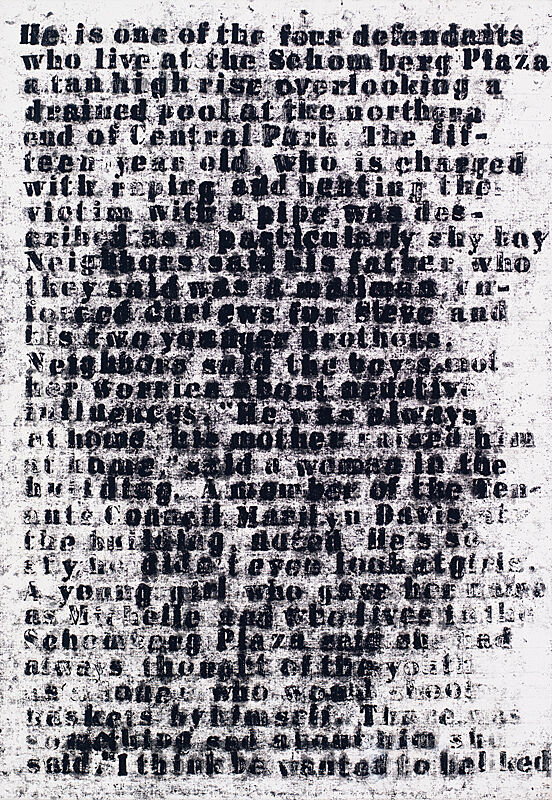
-
419
Gregory Crewdson, Untitled (beckoning bus driver), 2001–02
Audio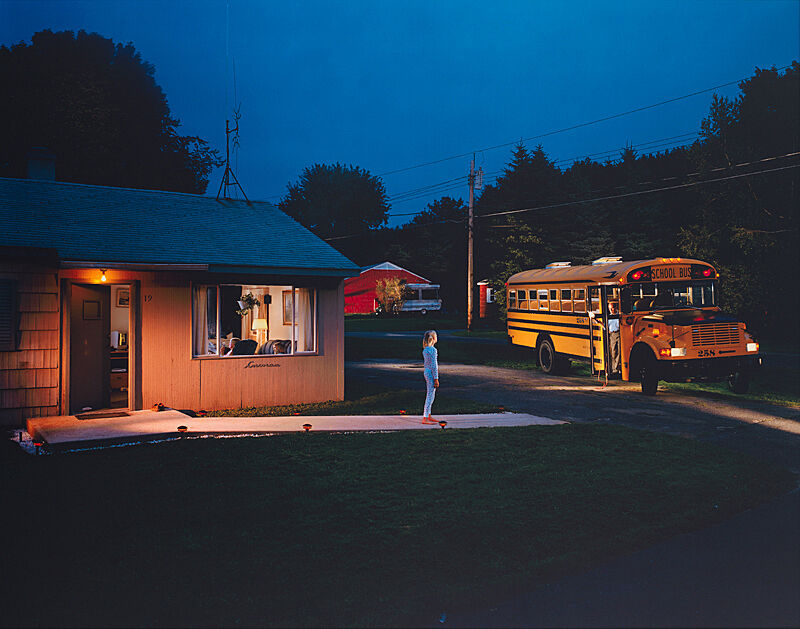
-
420
Neil Jenney, Threat and Sanctuary, 1969
Audio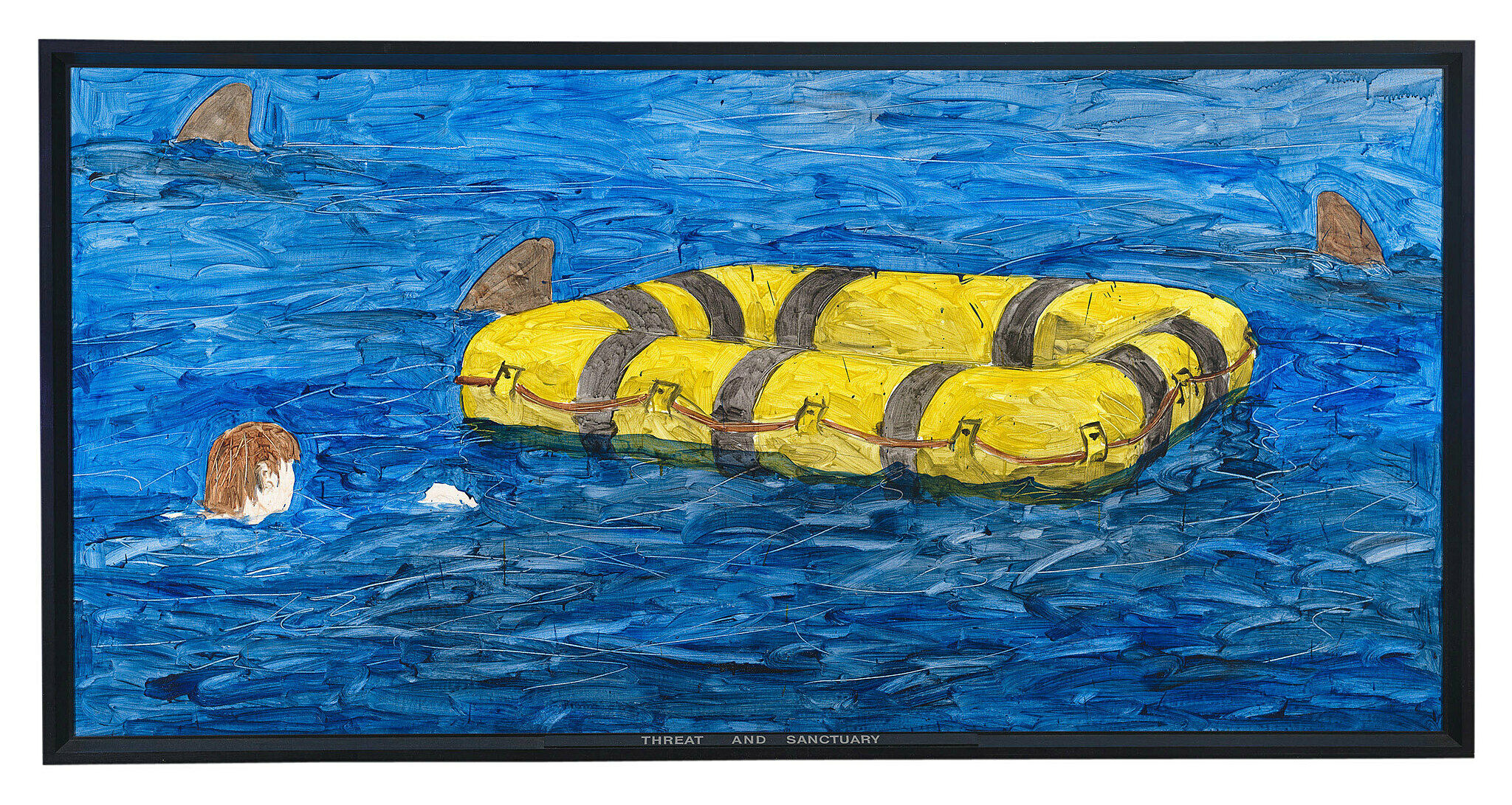
-
421
Eric Fischl, Emptying of the Estuary, 1993
Audio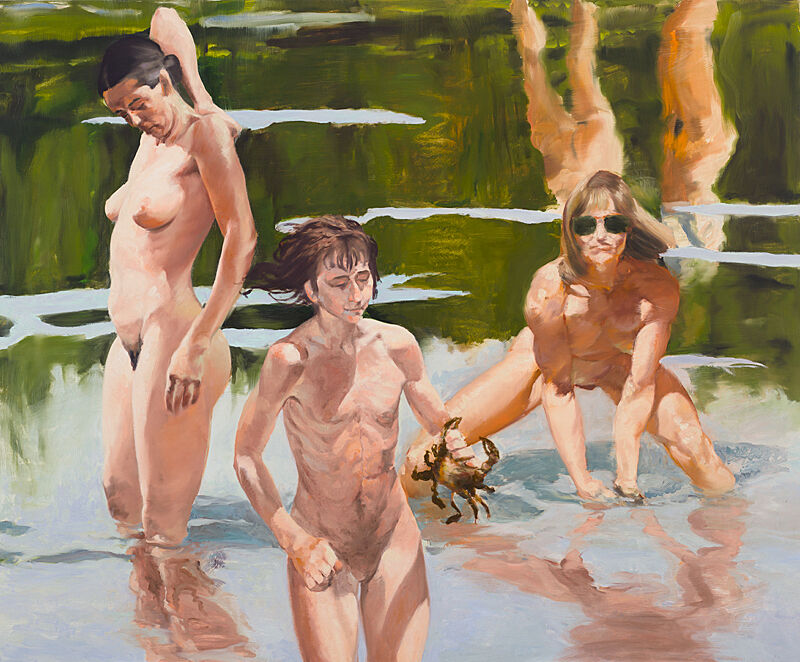
-
422
Jenny Holzer, Under a Rock: You Spit on Them, 1989
Audio -
423
Jasper Johns, Painting with Two Balls, 1971
Audio -
424
Jasper Johns, Untitled, 1988
Audio -
425
Keith Haring, Untitled, 1985
Audio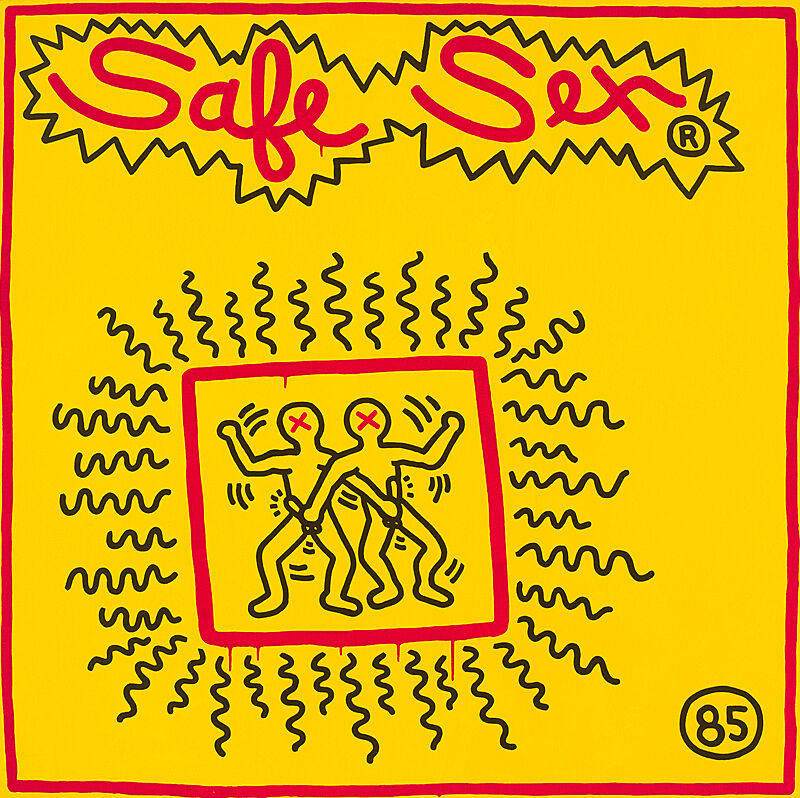
Adam Weinberg: I’m Adam Weinberg, Alice Pratt Brown Director of the Whitney Museum of American Art. It is my pleasure to welcome you to Legacy: The Emily Fisher Landau Collection.
This exhibition presents highlights from Emily Fisher Landau’s spectacular gift to the museum of over 400 works of art by more than eighty-five modern and contemporary artists. Mrs. Landau is one of the preeminent collectors of post-war American art in the United States. She has been a long-time friend and supporter of the Whitney and a Trustee since 1987.
As you will see today, Mrs. Landau has consistently supported risk-taking artists, who, in her words, “portray the world we are living in now.” This installation traces significant styles and ideas that have shaped art since the 1960s—abstraction, conceptualism, postmodernism, new approaches to photography, and explorations of personal identity and narrative.
Through my own relationship with Mrs. Landau, I have been continually inspired by her keen eye for talent and deep curiosity about all that is new. Emily Fisher Landau once advised, “Never stop learning. Never stop looking. Art is the greatest teacher.” It is in this spirit that we present works from her collection. The Whitney is proud to serve as stewards of her legacy.
The Black Monks of Mississippi, from left Matana Roberts, Theaster Gates, Leroy Bach, Josh Abrams, Chad Taylor, and Matthew Lux. Photograph by © Paula Court
Narrator: “The Act of Letting a Person into Your Home.” The cryptic phrase floats over an equally ambiguous backdrop—a fiery sunset, perhaps. The saturated hues call to mind Technicolor cinema, the shape of the canvas a movie screen. Or the shape and scale might suggest a billboard, broadcasting a haunting message to freeway drivers. But we don’t see anything relevant to the phrase itself—no house, no doorway, no person.
Ruscha is as interested in the expressive possibility of language as he is in that of visual imagery. The artist once explained, “A lot of my paintings are anonymous backdrops for the drama of words.” The phrase, “The Act of Letting a Person Into Your Home,” itself becomes an object here—as much as a house, doorway, or person would be. In a different context, the words might be neutral, but in Ruscha’s painting, they become dark and enigmatic. The phrase, juxtaposed with the fiery sunset, becomes a kind of screen onto which we project our own anxieties and associations.
Edward Ruscha, The Act of Letting a Person into Your Home, 1983. Oil on canvas, 84 x 137 5/8 in. (213.4 x 349.6 cm). Partial gift of Emily Fisher Landau 2002.280 © Ed Ruscha; photograph by Jerry L. Thompson
Narrator: In the early 1960s, Andy Warhol began a series of commissioned portraits of the rich and famous. By the 1970s and 80s, these commissions were a vital, and lucrative, part of his practice. Warhol made this portrait of Emily Fisher Landau in 1984. He used his trademark method of making a color screen print from a Polaroid photograph. With its high contrast and bright flashes of color, the resulting image highlights certain features—lips, eye shadow, earrings, and hair—while downplaying others, such as skin tone. It transforms the sitter into a media celebrity in the style of Marilyn Monroe or Elvis Presley—stars that Warhol had previously captured in portraits using the same process.
Narrator: One way to enter into this painting by Willem de Kooning is to follow his brush. Looping ribbons of red and blue paint cross the canvas, merging into voluptuous curves, creating a loose tangle of abstract shapes. Sunshine yellow saturates the center, and then opens up to airy expanses of white, pale yellow, and pink at the edges. Some of the shapes may recall the curving female body or a rolling landscape, two touchstones for de Kooning. But like much of his late work, the painting is entirely abstract.
Willem de Kooning was a leader of the Abstract Expressionist movement that emerged in New York in the 1940s. Early on, he enthusiastically explored the possibilities of oil paint. He became known for energetic, heavy, even violent brushwork. By the mid-1980s, though, that earlier roughness and density opened up into a calm lyricism. De Kooning was in his seventies when he made this painting. He had developed a profound understanding of his medium, which comes through in the confidence of his approach and the mastery of his brushwork.
Narrator: An area of dark, drippy smudges anchors the bottom left of this canvas. From there, graphite scrawls and swooping white lines carry your eye on a diagonal upward to the right. More concentrated scribbles and dabs of pink and red paint at the center give way to the quiet, nearly empty space at the top right corner. Cy Twombly masterfully builds a composition from gestural marks.
Twombly often buries words within the layers of paint—fragments from ancient mythology, romantic poetry, and classical literature. At the top left of this canvas you can make out the phrase “a shadow of the dream,” which appears in the writings of both Shakespeare and John Keats. Just as the words are barely legible, their meaning remains out of grasp.
Twombly began this painting in 1964, returning to complete it twenty years later. The canvas reveals how his style changed over that time. The violent marks of the lower left give way layers of ethereal white paint, characteristic of his softer later style.
Twombly, who lived in Rome for many years, once explained that his densely layered images “evolved out of. . .a deeply aesthetic sense of eroded or ancient surfaces of time.”
Cy Twombly, Untitled, 1964/84. Oil stick, wax crayon and graphite on canvas, 80 1/2 x 98 1/4 . in. (204.5 x 249.6 cm). Promised gift of Emily Fisher Landau P.2010.351. Photograph by Jerry L. Thompson
Narrator: Who is Richard Prince’s nurse? Dressed in a prim uniform, her face obscured by a surgical mask, she stands before a backdrop smeared with lurid color. Is she calmly efficient, benevolent, sinister, sexy—or all of the above?
Prince’s Nurse series is based on the covers of 1950s medical romance novels. He transferred the novel covers to canvas and then painted out the details, leaving only the book’s title and the figure of the nurse. It is unclear though whether Prince intends to deconstruct a stereotype—or revel in a pulp fiction fantasy.
Prince became well known in the 1980s for taking photographs from advertising and mass media and presenting them as his own. The technique, called appropriation, offered a way to investigate and critique the contradictory nature of American popular culture. He has explored both cherished American icons, like the cowboy, as well as lowbrow sub-cultures, from biker chicks, to pornography and pulp fiction. Throughout his work, he carefully veils his own attitude toward the ideas and images he presents.
Richard Prince, Man Crazy Nurse #3, 2003. Inkjet and synthetic polymer on canvas, 69 1/8 x 49 1/8 x 1 9/16 in. (175.6 x 124.8 x 4 cm). Promised gift of the Fisher Landau Center for Art P.2010.329. Photograph by Tim Nighswander/Imaging4Art
Narrator: Mark Tansey describes Valley of Doubt as a history painting about the history of art. The background features Mont Sainte-Victoire. The late 19th century French artist Paul Cézanne painted it dozens of times, searching for a way to capture the mountain’s essence in paint. Following Cézanne, the issue of how to represent the world, and whether that representation should even be a goal of art occupied artists for decades. Mark Tansey.
Mark Tansey: It’s a question, really, what happens in the shade of Mont Sainte Victoire? What happens after? It’s the end of something and perhaps the beginning of something else. It’s a lull.
Narrator: The soldiers in the foreground symbolize avant-garde artists, struggling to find their way. A vast valley separates them from Cézanne’s modernist ideal. Rocks morph into letters, suggesting the challenging critical debates surrounding art. Tansey titled the painting Valley of Doubt. Tansey has developed a distinctive painting technique. To create the valley, he spread oil paint over the canvas and then rolled rags across the surface, blotting up some of the paint. The viewer must strain to discern the image in the rich texture, making the search for meaning a component of his aesthetic.
Mark Tansey (b. 1949), Valley of Doubt, 1990. Oil on canvas, 87 3/4 × 144 3/8 in. (222.9 × 366.7 × 4.1 cm). Promised gift of Emily Fisher Landau P.2010.275. Photograph by Tim Nighswander/Imaging4Art.com
Narrator: Andy Warhol’s painting Myths features the gods and heroes of contemporary America in shiny, silver paint. From left to right, you see: Superman, Santa Claus, Howdy Doody, Greta Garbo, Mickey Mouse, Uncle Sam, Aunt Jemima, Dracula, the Wicked Witch, and Warhol himself.
By stacking identical images in vertical columns, Warhol recalls the frames of a film strip. By doing so he suggests that modern-day myths originate in Hollywood, not on Mount Olympus. There is a cutting irony to these Hollywood myths, though. Uncle Sam—the embodiment of the United States itself—appears in between a cartoon character and a racist stereotype, suggesting that the heroes of modern myth are less god-like than their Greek or Roman counterparts.
In some ways, it isn’t surprising that Warhol should include himself here. By the 1980s, when he made this work, Warhol had become of the most influential artists of his time. Exploring his own fascination with fame, he turned himself into a kind of modern-day myth.
Narrator: “Look between the rain,” Agnes Martin once advised. She spent a lifetime trying to capture that impossible space in paintings that are utterly quiet and refined. Martin confined herself to a universal vocabulary of geometric shapes. Here, two rectangles hover over a neutral ground. By brushing on layer upon layer of diluted paint, she achieved translucent, atmospheric color.
Martin hoped that viewers contemplating her paintings would be drawn into an almost transcendent state of consciousness—beyond time, dimension, or form. Still the painting is linked with earthly experiences—the brushy blue color evokes sea and sky.
Agnes Martin was born in Canada in 1912. In the 1960s, she lived in New York, where her work received high critical acclaim. Martin imbued the geometry of Minimalism, the major art movement of the period, with texture, gesture, and emotion. She spent the last thirty years of her life working in relative isolation in New Mexico, where she died in 2004.
Agnes Martin, This Rain, 1958. Oil on canvas, 70 1/8 × 70 1/8 × 1 1/4 in. (178.1 × 178.1 × 3.2 cm). Whitney Museum of American Art, New York; promised gift of the Fisher Landau Center for Art P.2010.325 © 2015 Estate of Agnes Martin/Artist Rights Society (ARS), New York
Narrator: Carl Andre is best known for minimalist sculptures composed of repeating elements. Their elemental nature was largely the point: he wanted viewers to experience materiality as directly as possible. He might create a grid of lead tiles, or a cube of stacked wooden beams. In both cases, the sculpture is exactly what it is and nothing more. These text-based pieces present words in a similar fashion. The viewer encounters them not as prose or poetry, but as the raw building blocks of language.
Andre worked on a manual typewriter using twelve-point Courier font to create systematic patterns of words and letters. GAZETTEER resembles a sheet of published type: justified at the left, ragged on the right, but the lines do not produce sentences. The words are detached from symbolism, narrative, grammar, or syntax.
Carl Andre, GAZETTEER, 1964. Ink on paper, sheet (Sight): 10 15/16 × 8 5/16 in. (27.8 × 21.1 cm). Whitney Museum of American Art, New York; gift from the Emily Fisher Landau Collection 2024.59. © Carl Andre/Licensed by VAGA, New York, NY
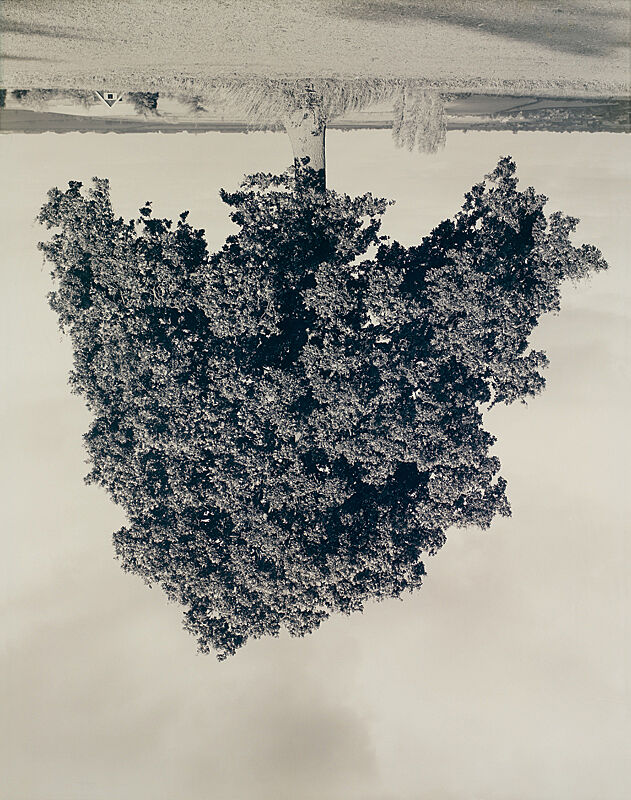
Narrator: In 1990, Canadian artist Rodney Graham ventured into the English countryside to photograph a series of lone, iconic oaks trees. The resulting pictures are traditionally composed: in each, an isolated tree stands against a low horizon line, filling the center of the picture. But Graham displayed the photographs with the tree inverted, creating an image that is both familiar and confusing. The upside-down tree becomes an abstraction: gnarled branches turn into complex networks of lines enclosing shapes of light and air. A band of earth weighs down the top of the composition, while the bottom is empty, defying our sense of gravity. Graham’s trees, grand, solitary, and silent, photographed in black and white, have a melancholy quality—as if they come from some strange, bygone place and time.
In fact, images pass through our eyes upside down, and then are corrected by the brain. By dismantling the mechanics of sight, Graham raises questions about how we learn to see and interpret the world. His images remind us that no artistic representation is, in fact, “natural.”
Rodney Graham, Oak, Banford, 1990 from Oxfordshire Oaks, Fall 1990, 1990. Chromogenic print, 90 3/8 x 71 3/8in. (229.6 x 181.3 cm). Promised gift of Emily Fisher Landau P.2010.93 © Rodney Graham; photograph by Tim Nighswander/Imaging4Art
Narrator: An image of Horatio Alger’s late 19th century novel Strive and Succeed floats on an empty white sheet of paper. The drawing is precisely rendered. The cast shadow and tattered dust jacket give the book a powerful physical presence.
The drawing is from a series, called The Gift and the Inheritance, featuring books from artist Allen Ruppersberg’s library. Each drawing is sold with the promise that the buyer will inherit the actual book at the artist’s death. So it is not just this drawing, but the promise of a transaction between artist and collector as well. By framing the work in this way, Ruppersberg shifts the focus away from the material properties of the drawing and towards its status as a commodity. The book featured here—a rags-to-riches novel by a famous dramatist of the capitalist ideal—underlines the idea that the drawing is the source of an economic transaction. Through the series as a whole, Ruppersberg suggests that the exchange of any artwork is part of its history, meaning, and cultural value.
Allen Ruppersberg, The Gift and the Inheritance [Strive to Succeed], 1989. Graphite on paper, 22 3/4 x 29 in. (57.8 x 73.7 cm). Promised gift of Emily Fisher Landau P.2010.255. Photograph courtesy of the artist and Christine Burgin Gallery, New York
Narrator: The text featured on John Baldessari’s canvas comes from a series of works featuring formulaic advice from “how-to” art manuals. The artist explained in a 2010 interview:
John Balessari: The subject matter is coming out of people's ideas of how art might be taught. And I think that's what I'm getting at. I mean, you can follow all kind of rules, and they're probably all right, but it doesn't mean you're going to come up with anything that we can call art.
Narrator: Baldessari’s paintings point out the absurdity of prevailing aesthetic attitudes. He follows the painting’s advice to “break all the so-called rules of composition,” which, ironically, actually means following the rules. And in another twist, by following the rules, Baldessari has also broken them—since these results certainly aren’t what the teaching manuals are calling for.
One of the founders of conceptual art, John Baldessari uses words, images, video, paint, and photography interchangeably in works of art that are witty and self-referential.
John Balessari: Probably in the mid-60s, I was really getting a little bit anxious, discontent, or disillusioned about art. I began to think that art might be more than just painting. You know, certainly painting is a vital part of doing art, but there might be other ways to do art.
Narrator: As a revered teacher at both the California Institute of the Arts and at UCLA, he and his work have profoundly influenced generations of younger artists.
John Baldessari, What This Painting Aims to Do, 1967. Synthetic polymer and oil on canvas, 67 7/8 × 56 9/16 × 1 in. (172.4 × 143.7 × 2.5 cm). Promised gift of Emily Fisher Landau P.2010.24. Photograph by Tim Nighswander/Imaging4Art.com
Narrator: What matters to Joseph Kosuth is the idea of art as much as its formal qualities or physical presence. This painting belongs to a series in which this very proposition—art as idea—became the idea for the art work. Hence, the title of the series: Art as Idea as Idea. The series presents dictionary definitions of a series of words that are ideas about art, including “black,” “white,” “red,” “original,” “meaning,” “material”—and this one—“self.” All of these words inform how we perceive and value art.
Kosuth presents the definitions in the form of a painting hanging on the wall, but the work was actually made using a photomechanical process. It shows no evidence of labor or skill and lacks any conventional aesthetic quality. This approach emphasizes Kosuth’s assertion that the material object itself is not inherently valuable. He acknowledged that works such as these could be easily copied—a position ironically contrasted with the definition of the word “self” as something that is “distinct” and “individual.”
Kosuth made this series at the impressively youthful age of twenty-one, and it remains influential for the development of conceptual art.
Narrator: In this self-portrait, the photographer Nan Goldin sits on her bed at a rehab clinic for drug and alcohol addiction. Her face is blurred, but her hand is sharply defined, clutching a pillow marked with an institutional logo. Goldin’s bright flash casts a harsh light on the scene, draining the image of color—except for her red lips. The cramped composition, barely able to contain her figure, creates a feeling of claustrophobia, and Goldin appears uncomfortable. The image may look like a snapshot, but in fact it was carefully constructed to communicate mood and emotion.
In the 1970s, Goldin began a project of documenting the most intimate moments of her life. The photographs record herself and her friends in a chronicle of drug use, squalor, and abusive relationships. From these images she produced a landmark work, The Ballad of Sexual Dependency, a slide show with music featuring several hundred images.
Unlike traditional documentary photographers, Goldin is not an outsider looking in, so her photographs never have the distant feel of a document. She is deeply enmeshed with her subjects, and confronts them with candor and empathy—an approach she applies to herself as well.
Nan Goldin, Self-Portrait with Milagro, The Lodge, Belmont, MA 1988, 1988. Silver dye bleach print, 27 3/8 x 40in. (69.5 x 101.6 cm). Edition no. 6/25. Promised gift of Emily Fisher Landau P.2010.87 © Nan Goldin/Courtesy of Matthew Marks Gallery, New York; photograph by Tim Nighswander/Imaging4Art
Narrator: In quiet, black and white portraits, Peter Hujar captures his subjects in moments of reverie. This one shows Divine, a famously foul-mouthed drag queen, usually seen wearing a blonde wig, sequined dress, and garish make-up. In Hujar’s portrait, the public persona is stripped away. Divine appears as a man, wrinkled and balding, resting on a velvety black blanket and gazing into the distance. His half-closed eyes suggest he is on the borderline between dream and sleep.
This photograph was included in Hujar’s 1976 book called Portraits in Life and Death. It features the artist’s friends from the New York’s Downtown art scene and gay bohemian sub-culture. The book also includes Hujar’s pictures of mummified bodies photographed in the catacombs of Sicily. Both living and dead bodies lie recumbent, like Divine, suggesting an unbroken continuum between life and death.
Hujar was an important American photographer who captured New York at a moment when the city was plagued by crime, social unrest, and near-bankruptcy—but artistically it was vibrant. His own experience of depression and alienation colored his photographs, in which his subjects often seem to be contemplating their own mortality.
Peter Hujar, Divine, 1975. Gelatin silver print, 14 7/8 x 14 7/8in. (37.8 x 37.8 cm) (sight). Promised gift of the Fisher Landau Center for Art P.2010.310 © The Peter Hujar Archive; photograph by Tim Nighswander/Imaging4Art
Narrator: Robert Mapplethorpe made numerous self-portraits, assuming different personalities—rocker, cross-dresser, and devil. In this stark and foreboding self-image, the artist confronts death. The picture was made in 1988, after Mapplethorpe was diagnosed with AIDS. His black shirt merges with the black background so that his head and hand seem to float, mysteriously unattached to a body. His face is subtly blurred, leaving the skull atop his cane in sharp focus. Tightly gripping the cane, gazing directly out of the picture, Mapplethorpe appears strong and resolute in the face of his imminent death.
This portrait showcases the qualities that made Mapplethorpe’s photographs so powerful. The image is precise, tightly focused, and displays a rich range of blacks, whites, and grays. He explained, “I am obsessed with beauty. I want everything to be perfect.” Mapplethorpe brought this rigorous, classical approach to all of his subjects: nudes, flowers, portraits, and sexually explicit, homoerotic images.
This last subject matter launched an emotional public debate over censorship and the role of federal funding for the Arts funding during the 1980s. This controversy played out on the floors of congress and ultimately led to the cancellation of a Mapplethorpe exhibition funded by the National Endowment for the Arts at the Corcoran Gallery of Art in Washington, DC. It also led to the 1990 obscenity trial of the director of Contemporary Arts Center in Cincinnati, which hosted this show’s tour. The Whitney Museum mounted a major Mapplethorpe retrospective in the summer of 1988, around the time that he made this photograph. The artist died in 1989.
Narrator: In this fragment of a typed letter, declarations of love and wishes for bunny dreams are countered by the mention of a virus and the mysterious, incomplete phrase “rip good-bye.” The work, titled Love Letter from the War Front, leaves us with many questions—what war? And who are these lovers?
The letter comes from a series of enigmatic images that artist Felix Gonzalez-Torres made into jigsaw puzzles—pictures of families, children, travel, as well as news photographs. Looking at them is like opening a stranger’s scrapbook. Collectively, they reveal the intersection of personal and shared memories—and hint that much lies beneath the surface.
Rather than mounting and framing the puzzles, Gonzalez-Torres displayed them pinned to the wall in the manufacturer’s thin plastic bag, emphasizing their fragility. The puzzles are under constant threat of falling apart, evoking the transience of love and memory.
Narrator: Glenn Ligon describes a series of young men: Antron, age 15, is the son of a mechanic. Kevin dresses fashionably. Raymond is the class clown. Ligon stencils these words onto canvas, in some places allowing them to dissolve into black smudges—beautiful to look at but difficult to read. Several paintings feature ghostly heads floating up through the text. Ligon explores issues of identity throughout his work:
Glenn Ligon: In some ways, what we think of the self is a composite of other people's ideas of who we are, and that there's no such thing as a sort of standard version of one's identity, that really, one's identity is mirrored and reflected in how other people see you.
Narrator: These texts, excerpted from The New York Times, profile a group of African American youths accused of raping a woman in New York’s Central Park in 1989. The crime, known as the Central Park Jogger case, provoked media frenzy, public fear, and heated discussions about racism in the criminal justice system. The young men claimed that the police coerced their confessions but were tried and convicted in 1990—the same year that Ligon made these paintings. In 2002, DNA evidence linked another man to the crime, and the men described here were released from prison.
Glenn Ligon, A Loner, Shy and Sad, 1990–91. Oil on canvas, 32 x 22 1/8 x 1 1/2in. (81.3 x 56.2 x 3.8 cm). Promised gift of Emily Fisher Landau P.2010.190b. Photograph by Tim Nighswander/Imaging4Art
Narrator: The photographer Gregory Crewdson is known for his surreal vignettes of small town American life. He elaborately stages his photographs on a Hollywood-scale, using a cast, crew, and cinematic lighting, the way a director would shoot a film. This approach allows the artist to control and exaggerate certain visual elements for maximum dramatic effect. Crewdson discusses this photograph, in which a bus driver beckons to a young girl.
Gregory Crewdson: The picture, at the core if it, is about light and attempt to tell the story through light.
I like the idea of using common and familiar iconography. These small houses, the school bus, everything in the picture feels, in one way or another, familiar. The people that appear in the houses actually live in the houses. And the man who is the school bus driver is the local school bus driver for that district. So it was very important for me, in a way to combine reality with fiction.
But through the transformation of light and color there’s an unsettling quality in the picture. I like that tension between the iconography of ordinary life and, perhaps, something more sinister.
The narrative possibility of a photograph is very limited in comparison to other narrative forms, like film or literature. A photograph, of course, is always frozen and mute in time. But I’m interested in that limitation and condensing a moment and suggesting a question.
Gregory Crewdson, Untitled (beckoning bus driver), 2001–2002. Digital chromogenic print, mounted on aluminum, 47 9/16 x 59 1/2in. (120.8 x 151.1 cm). 2/3 artist proof. Promised gift of the Fisher Landau Center for Art P.2010.300. Photograph by Tim Nighswander/Imaging4Art
Narrator: A lone man swims toward a yellow lifeboat, the water ominously brimming with shark fins. Neil Jenney’s paintings often present a cause and effect or an action and outcome to explore basic human themes: technology, progress, emotion, and survival. This work is called Threat and Sanctuary. In it, he comments on the way humans relate to the natural world, a theme that continues in his work to this day.
Jenney has applied the paint thinly, in broad, brushy marks and scratches, giving the appearance that he worked quickly. He presents only a few elements in simple relationships, expressing each in its most essential color and form—blue is the sea, a grey triangle is the shark’s fin. His style famously became known as “bad painting” in the 1970s, and then, “New Image Painting.”
Jenney painted during the height of conceptual art: making painting in 1969 was a kind of rebuttal. But notice the way that he crafted the painting’s deep black frame and added its title in block letters. This deadpan literalism and his interest in the relationship between word and image show that he did, in fact, share concerns with his more conceptual peers.
Neil Jenney, Threat and Sanctuary, 1969. Oil on canvas, with wood frame, 61 × 123 1/4 × 3 1/4 in. (154.9 × 313.1 × 8.3 cm). Whitney Museum of American Art, New York; gift from the Emily Fisher Landau Collection 2012.175a–b © Neil Jenney
Narrator: Eric Fischl explores the human figure in psychologically charged narratives, set in America’s suburban landscape. The composition of this canvas makes reference to the art historical trope of the “three graces”—nude representations of women representing beauty, youth, and femininity. But in Fischl’s update, the figures are oddly out of harmony with one another. Fischl discusses the three figures at its center:
Eric Fischl: With the adult women, I’m looking at two very different body types, and in the child, I’m looking at a young innocent who has picked up a crab, which she is both fascinated by and freaked out by. And so she seems to be at a moment of some kind of discovery, I guess.
And the other woman in the sunglasses is a new kind of woman. She’s clearly somebody that takes great pride in the strength and athleticism of her body. Whereas the other one, standing sort of very languid and sensual, is sort an older form of the female.
And it’s set in an estuary, which is a confluence at the end of a river before it joins the ocean or a larger mass of water. So its both a filtering system and it’s a transitional space, metaphorically.
I’ve found that I respond to body language. Even when I use models, I never tell a model what to do. Whether they’re centered, off balance, comfortable, uncomfortable, you know, all of those things are emanations from the body. And they’re provocative for me in terms of generating memories and situations and connecting to feelings.
Narrator: When Fischl came on the art scene in the late 1970s, critical response was mixed. Critics aligned with conceptual art, who thought painting was regressive, objected to his embrace of figurative painting. But painting was on the rise in the 1980s, and there were many artists and critics who welcomed Fischl’s dark, psychologically complex tableaux.
Eric Fischl, Emptying of the Estuary, 1993. Oil on linen, 58 1/16 x 70 1/4 x 1 5/16 in. (147.5 x 178.4 x 3.3 cm). Promised gift of Emily Fisher Landau P.2010.84. Photograph by Tim Nighswander/Imaging4Art
Narrator: “YOU SPIT ON THEM BECAUSE THE TASTE LEFT ON YOUR TEETH EXCITES. YOU SHOWED THEM HOPE ALL OVER YOUR FACE FOR YEARS AND THEN KILLED THEM IN THE INTEREST OF TIME.”
Jenny Holzer’s cold, gleaming black granite bench dares you to sit. Engraved like a monument, by a professional tombstone carver, it memorializes the human psyche’s most vicious instincts. By using a material that will last for thousands of years, Holzer insists on the unending brutality of human nature. As she once explained, “Well, if everyone dies, this writing will stay on the rock. Typically, the work has a lean, minimalist appearance. Holzer’s tone is cool and neutral, making her words all the more shocking.
Words are the basis of Holzer’s art. She transfers phrases from one medium, such as the granite bench you see here, to others—stickers, posters, t-shirts, and electronic signboards.
Her politically and emotionally-charged work explores power relationships, war, sex, death, and human anxiety. This bench was part of a series featuring especially dark texts, which Holzer likened to “things that crawl out from under a rock.”
Narrator: Jasper Johns is famously quoted for saying, "Take an object, do something to it, do something else to it." This process of repetition characterizes the work of his entire career. Printmaking, in particular, has offered the artist a way to create countless permutations of one theme.
This print re-examines a painting Johns made in 1960, called Painting with Two Balls. The original canvas was covered with colorful, expressionistic brushstrokes. Two ball bearings lodged in a crevice parodied the macho culture of Abstract Expressionism.
Here, Johns retains the powerful, gestural lines, but much of the image is taken up by various shades of gray—which Johns likes because, in his words, it avoids the “drama” of color. He discussed his use of gray in a 2007 interview.
Jasper Johns: I think I would have thought of it as a reality being stressed. That in a sense, the work would be drained of whatever excitement color afforded, and you would be left with what I think I must have thought of as reality, at that time.
Narrator: Across the center of this painting, a string hangs freely between two fixed points. It makes a curve called a catenary, commonly associated with the arc of suspension bridges—and a concept Jasper Johns explored in more than sixty works of art.
Here, it suggests a bridge between the two sides of Johns’s composition. On the left are graphic symbols from a Chinese dragon costume that Johns wore as a child. On the right there’s a very different style of artistic representation: loosely painted colorful diamonds. The diamonds pay homage to the costume of Harlequin, a recurring subject for artists throughout history, most importantly Pablo Picasso. Thus, the string connects Johns and his own history with the larger history of art.
Throughout the Catenary series, Johns examined his own search for ways to mediate between the flat picture plane of the canvas and the fully dimensional world, represented here by the strip of wood and string.
This painting embodies a remark Jasper Johns made in 1989, “Painting can be a conversation with oneself, and, at the same time, it can be a conversation with other paintings.”
Narrator: Keith Haring’s animated pop style is instantly familiar to people around the world. Dancing figures like these—outlined in black and encircled by vibrating lines —were a Haring signature. He made this painting in 1985, when the American government refused to acknowledge the AIDS epidemic devastating the gay population. The red X’s on these figures’ heads indicate that they are HIV-positive. As an openly gay man, Haring worked to promote AIDS awareness. Here he has created a kind of public service message that is bold, vibrant, and unmistakably clear: safe sex is sexy.
Haring’s work was inspired by the graffiti he saw everywhere when he first moved to New York City in 1978. He recalled, “The kids who were doing it . . . had this incredible mastery of drawing which totally blew me away. . . . the fluidity of line, and the scale, and always the hard-edged black line that tied the drawings together!” The artist developed his own graffiti style, creating a set of personal symbols—flying saucers, crawling babies, and barking dogs. By the time he made this painting, his work had become more political, and he worked with numerous activist organizations to fight the AIDS crisis.
Keith Haring, Untitled, 1985. Synthetic polymer on canvas, 60 x 60 1/16 x 1 1/4in. (152.4 x 152.6 x 3.2 cm). Promised gift of Emily Fisher Landau P.2010.98 © Keith Haring Foundation; photograph by Tim Nighswander/Imaging4Art
0:00
0:00