
Hopper Drawing
2013
An in-depth exploration of the connections between Edward Hopper’s drawings and paintings with commentary by Carter Foster, Steven and Ann Ames Curator of Drawing at the Whitney.
-
300
Introduction to Hopper Drawing
Audio -
301
Edward Hopper, Self-Portrait and Hand Studies, c. 1900
Audio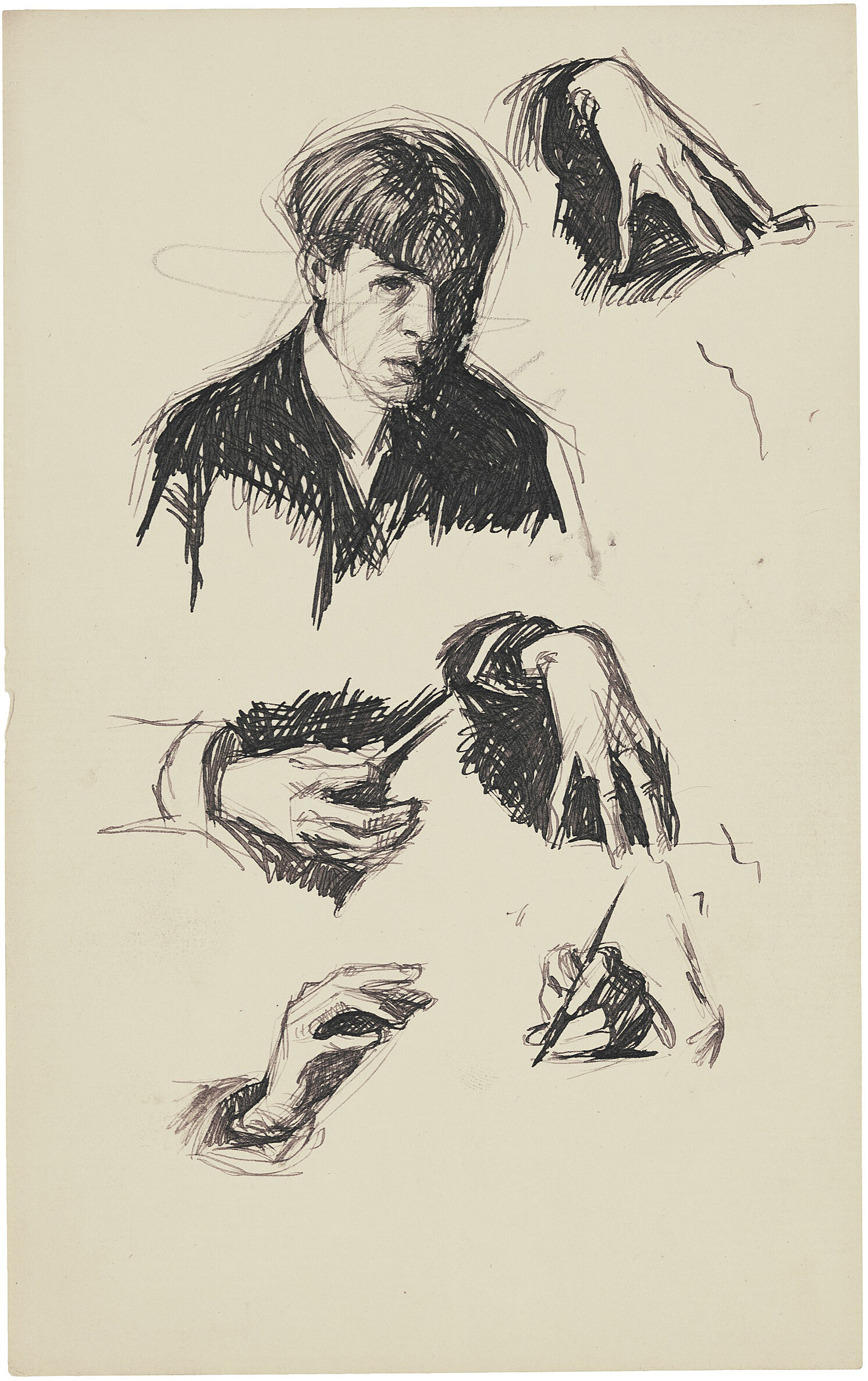
-
302
Edward Hopper, “What’s this? . . . Don’t, don’t—Hannah!”, 1925
Audio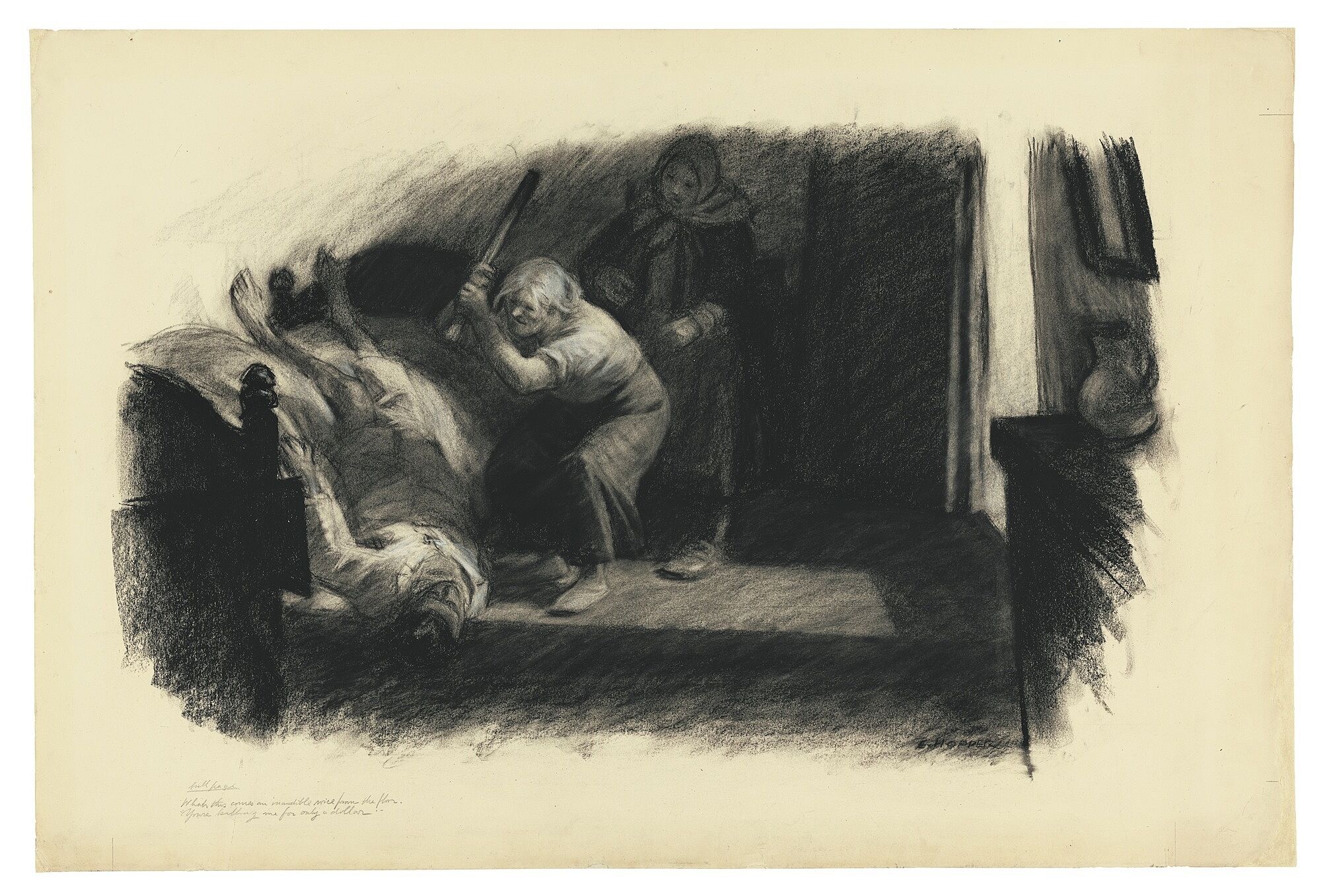
-
303
Edward Hopper, Study for East Side Interior, 1922
Audio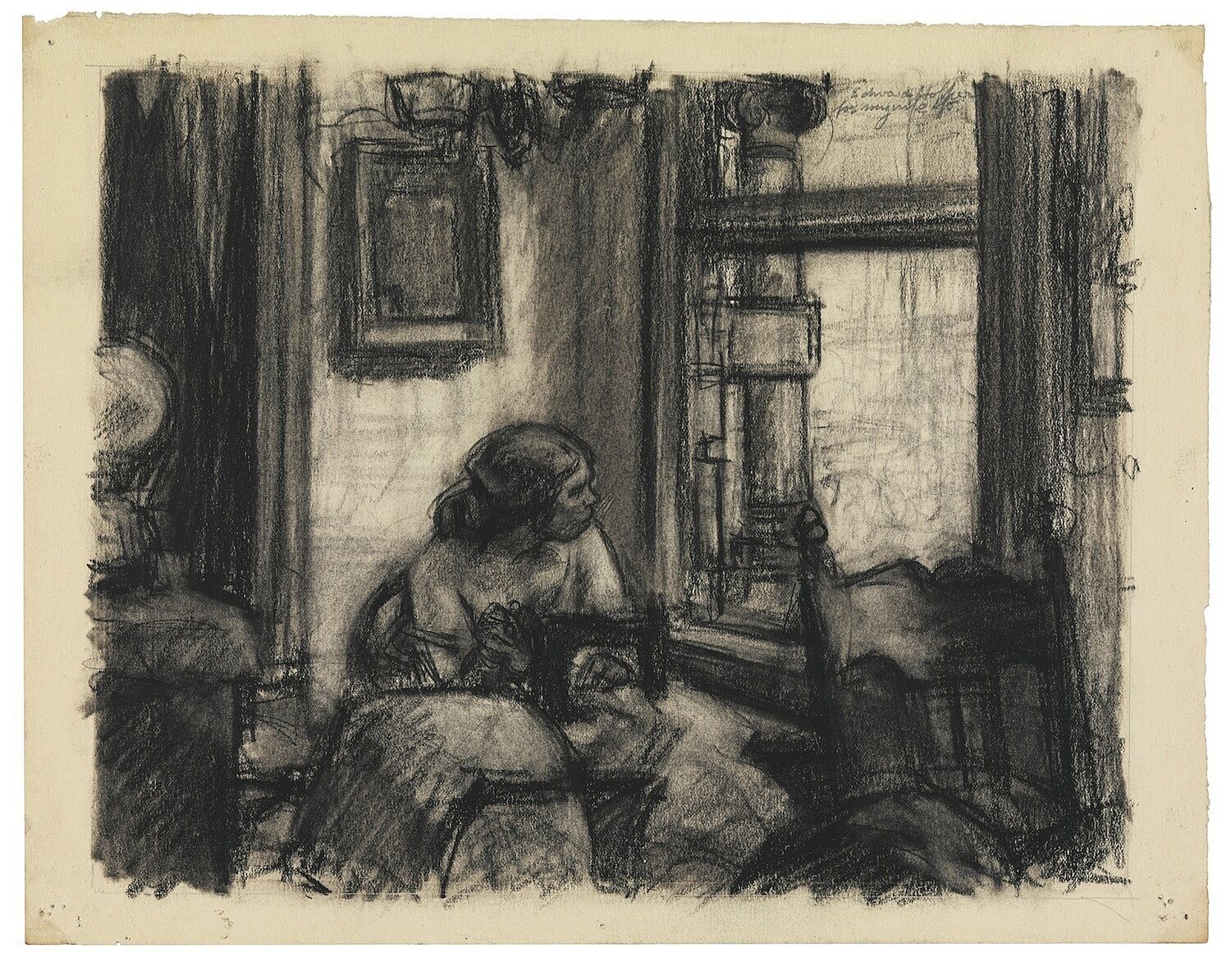
-
304
Edward Hopper, The Camel’s Hump, 1931
Audio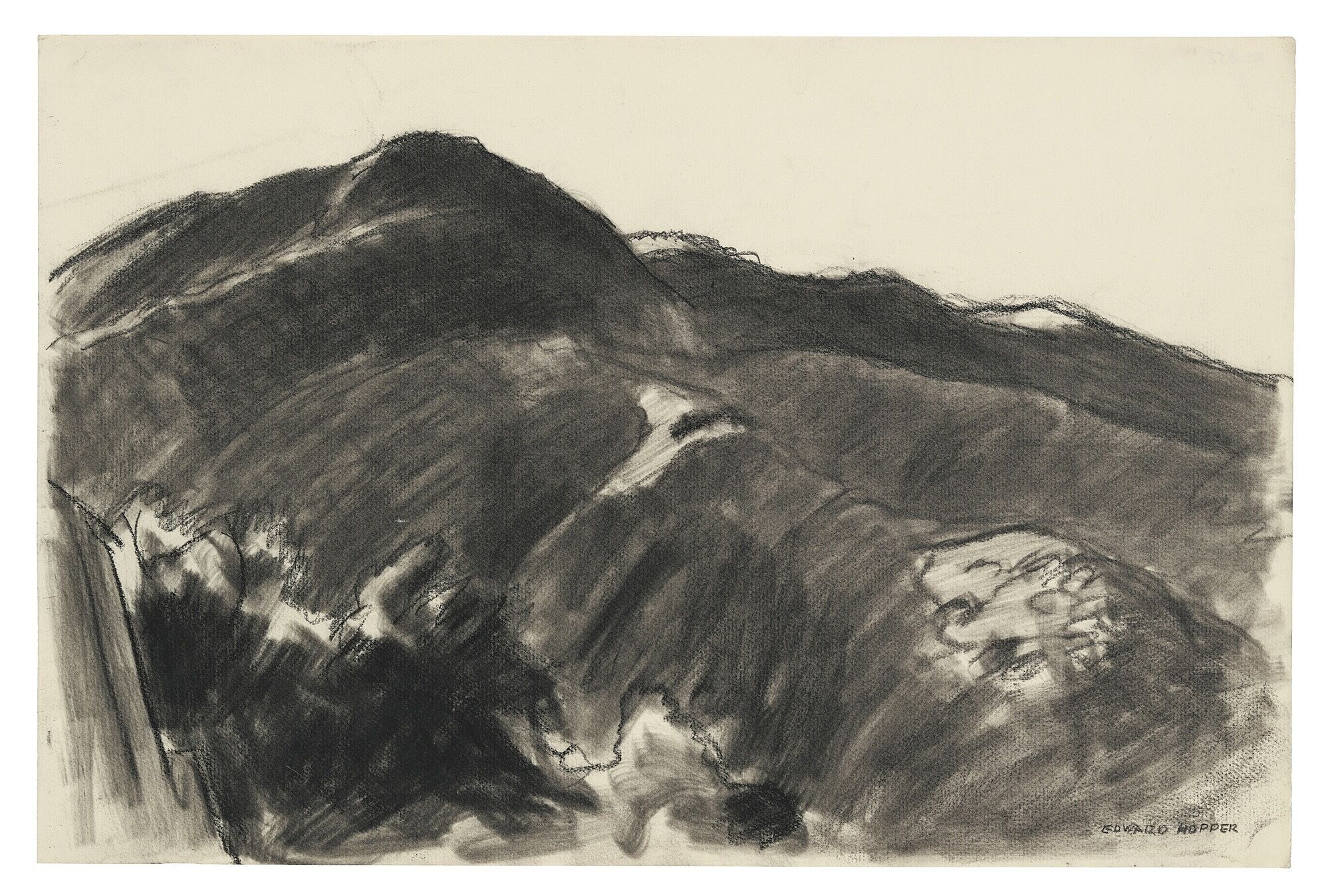
-
305
Edward Hopper, Study for Ground Swell, 1939
Audio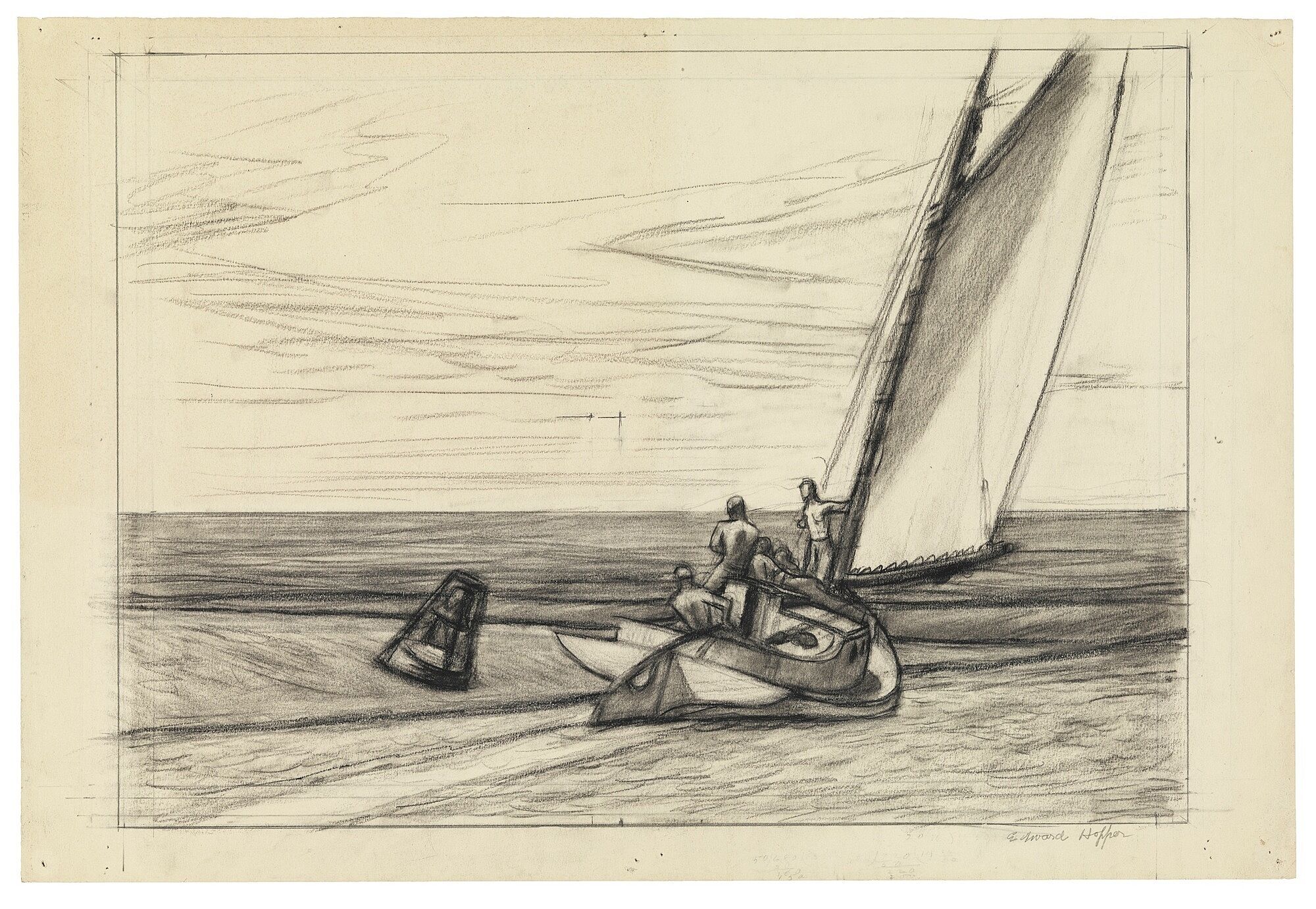
-
306
Edward Hopper, Drawing from a Paris sketchbook, 1906-1907
Audio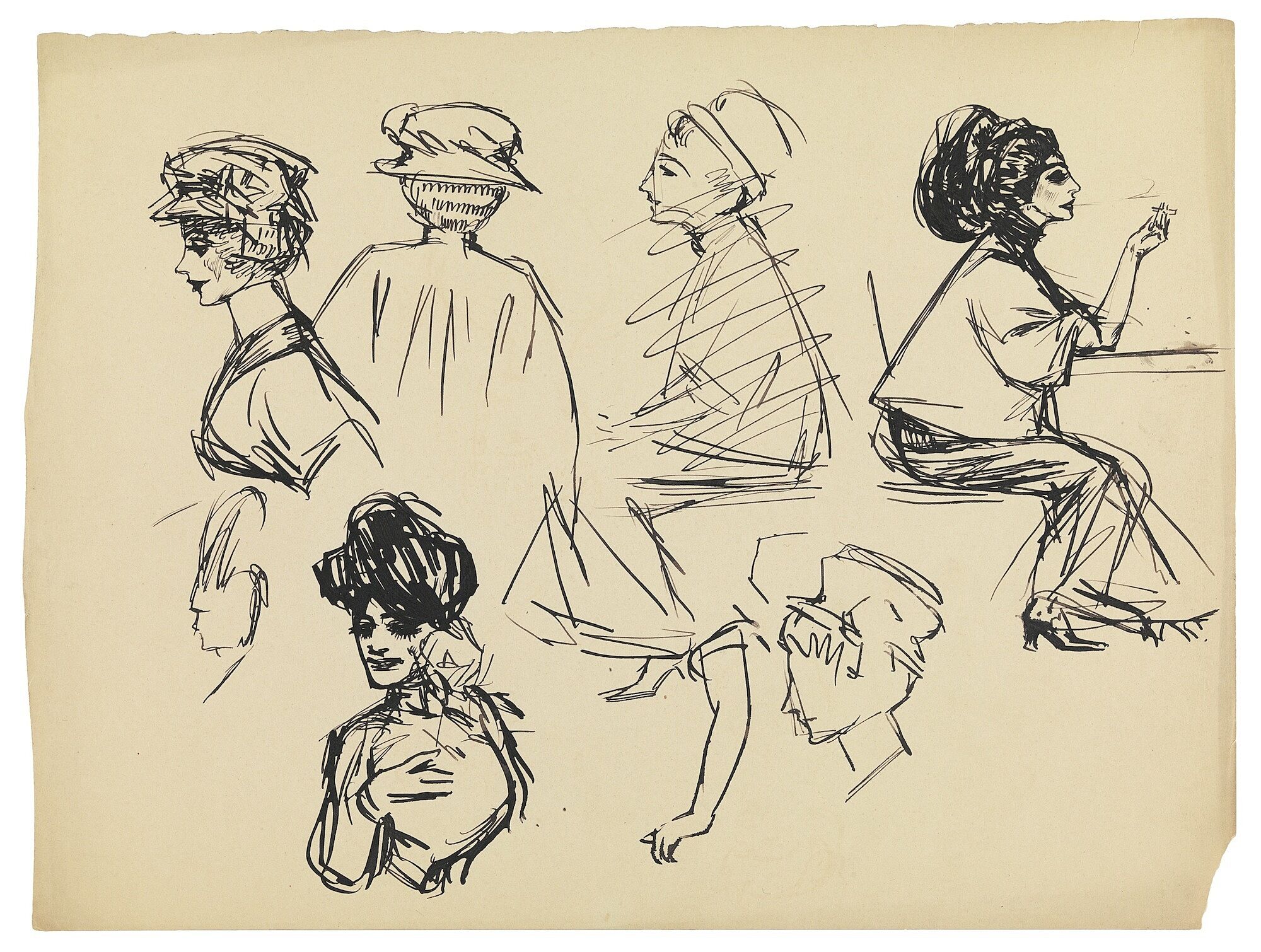
-
750
Edward Hopper, Soir Bleu, 1914
Audio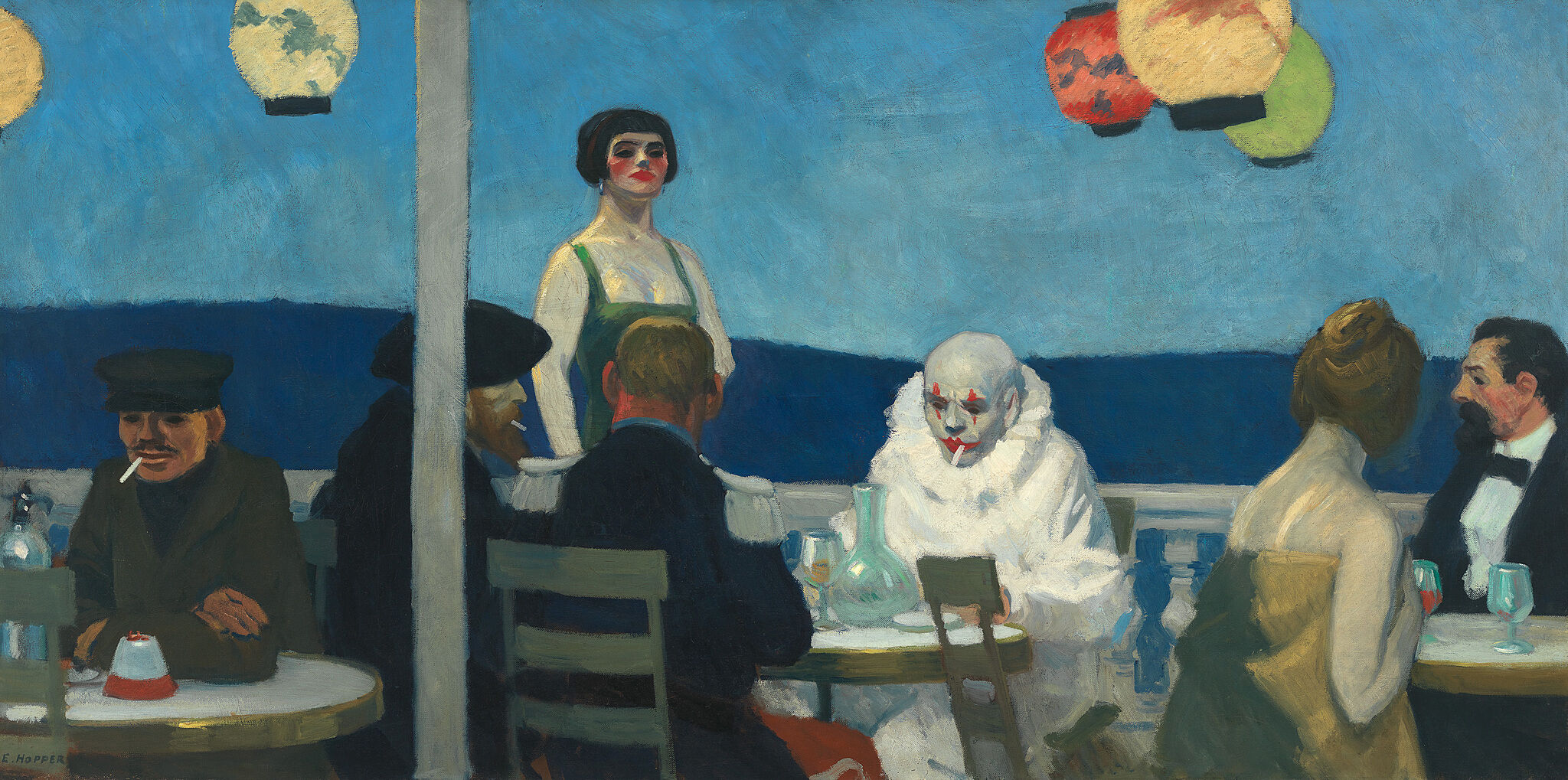
-
308
Edward Hopper, Manhattan Bridge Loop, 1928, and two studies for Manhattan Bridge Loop, both 1928
Audio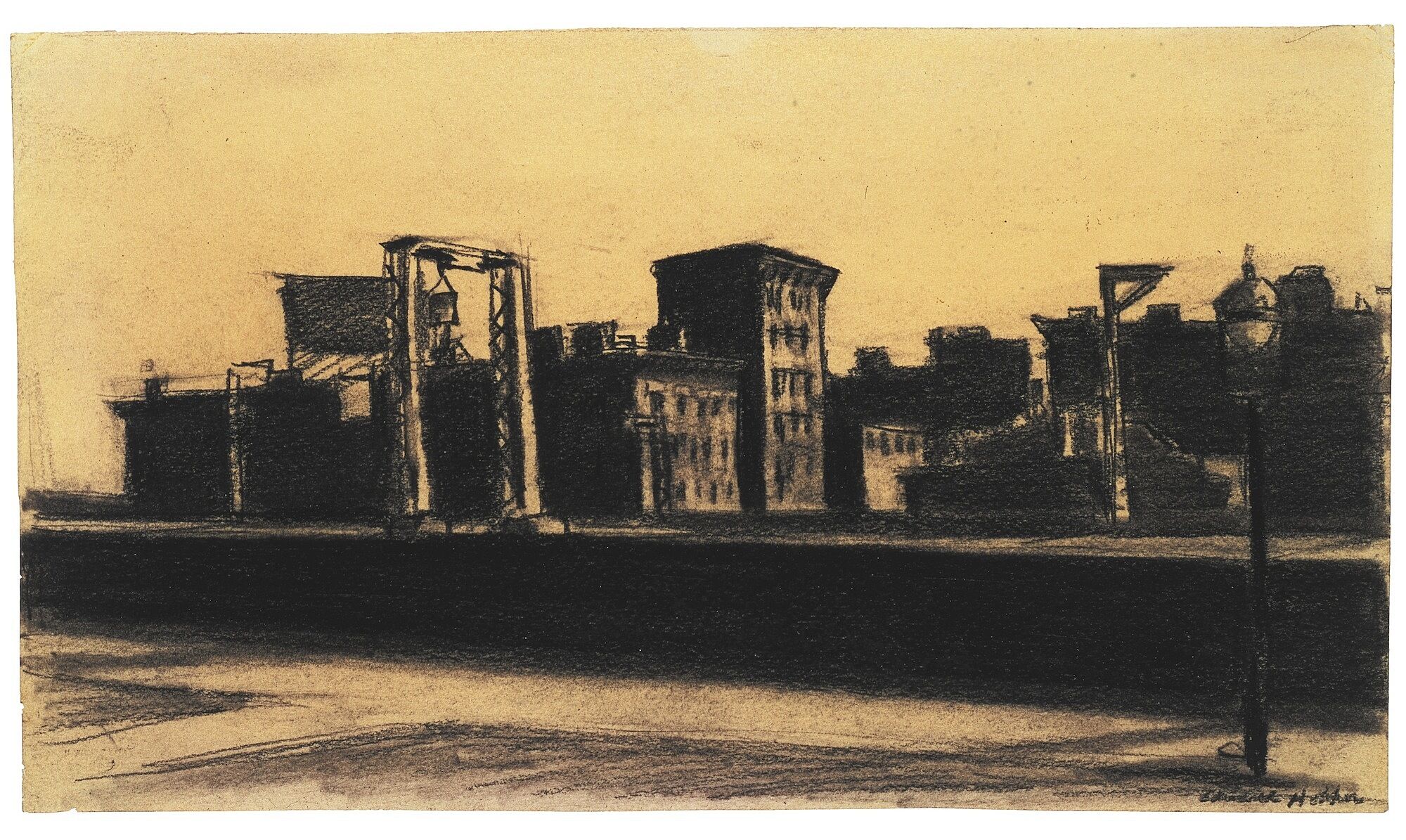
-
309
Edward Hopper, Early Sunday Morning, 1930
Audio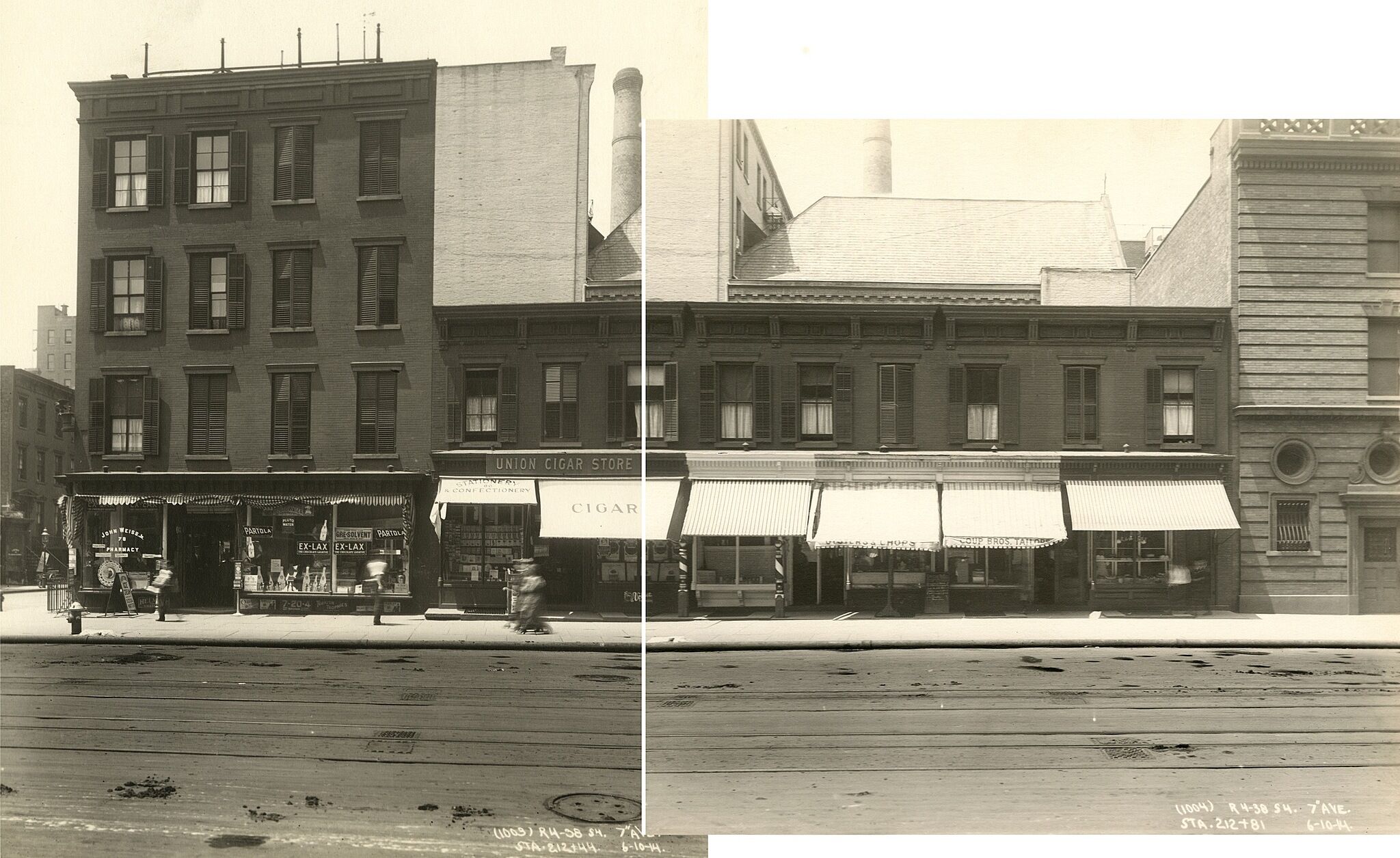
-
309 2
Edward Hopper, Early Sunday Morning, 1930
Audio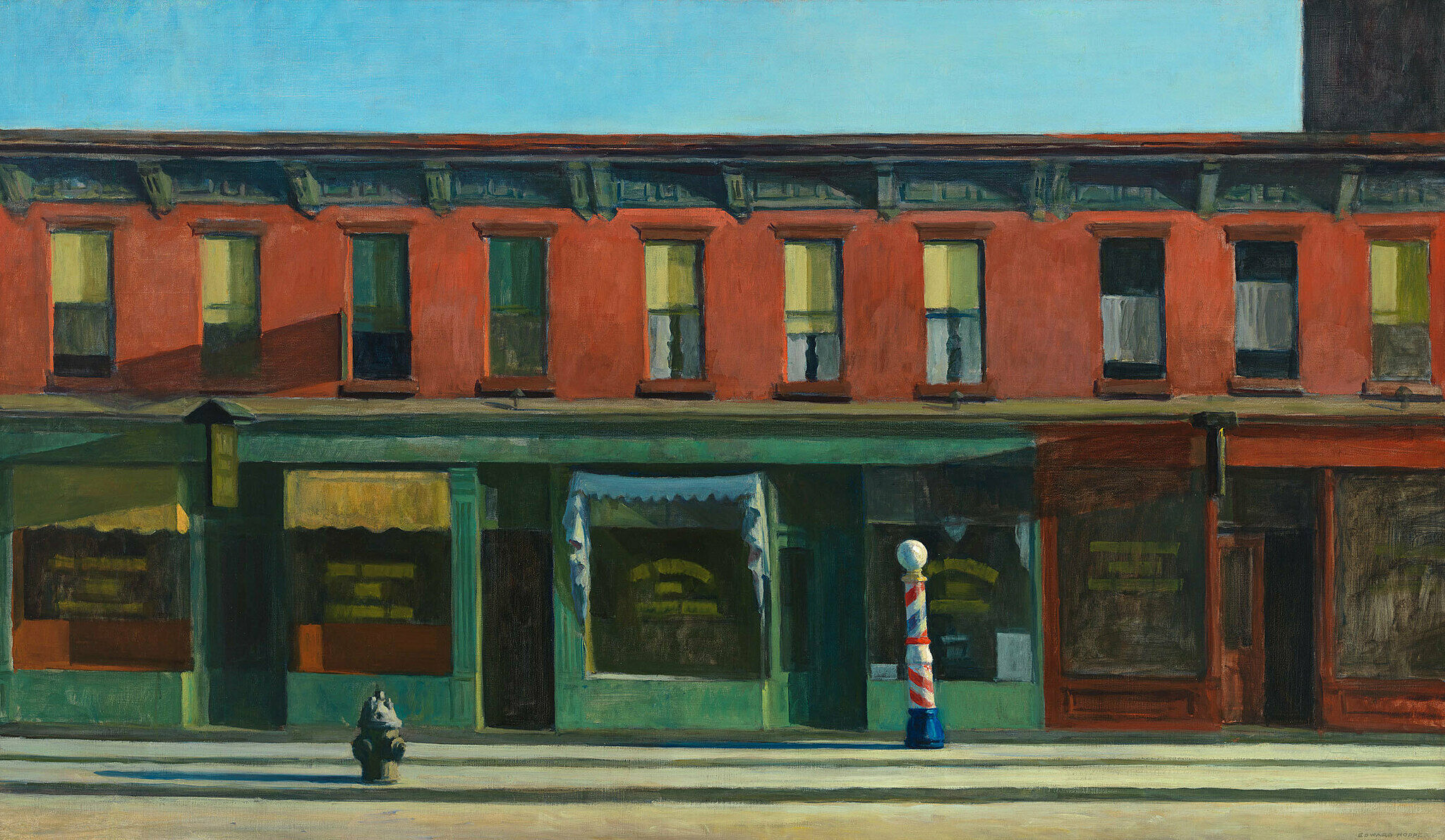
-
310
Edward Hopper, Nighthawks, 1942
Audio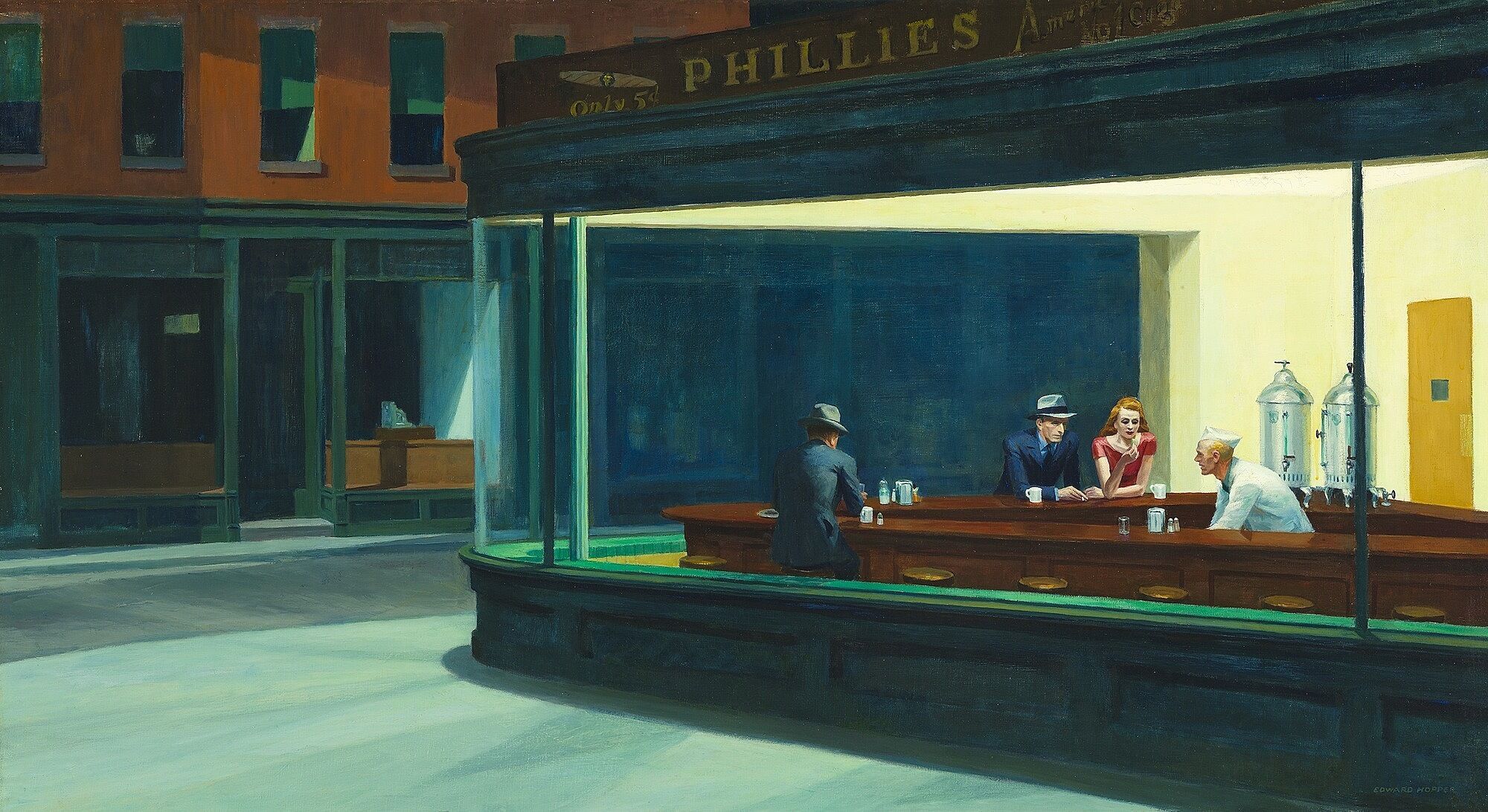
-
312
Edward Hopper, Study for Nighthawks, 1941 or 1942
Audio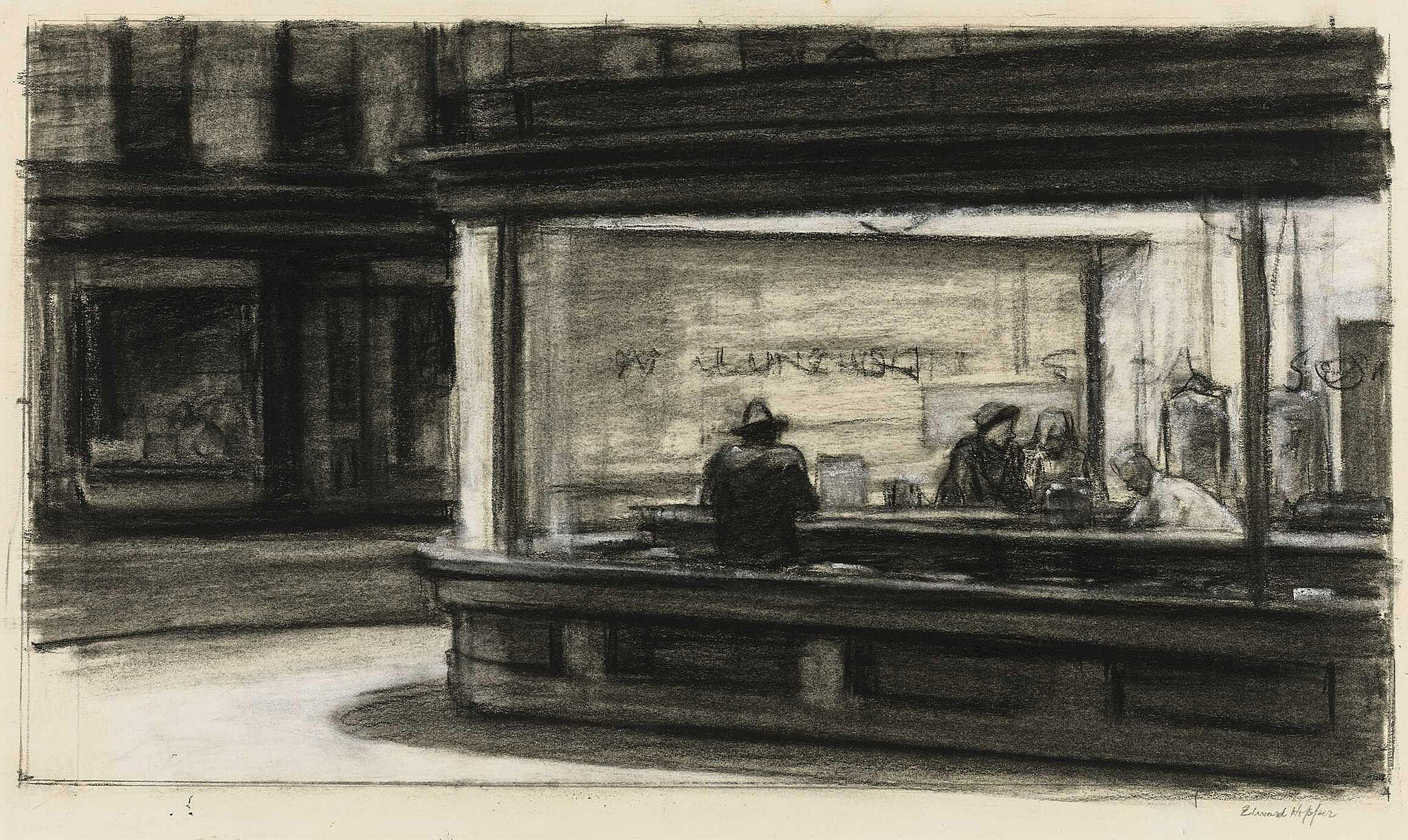
-
313
Edward Hopper, New York Movie, 1939
Audio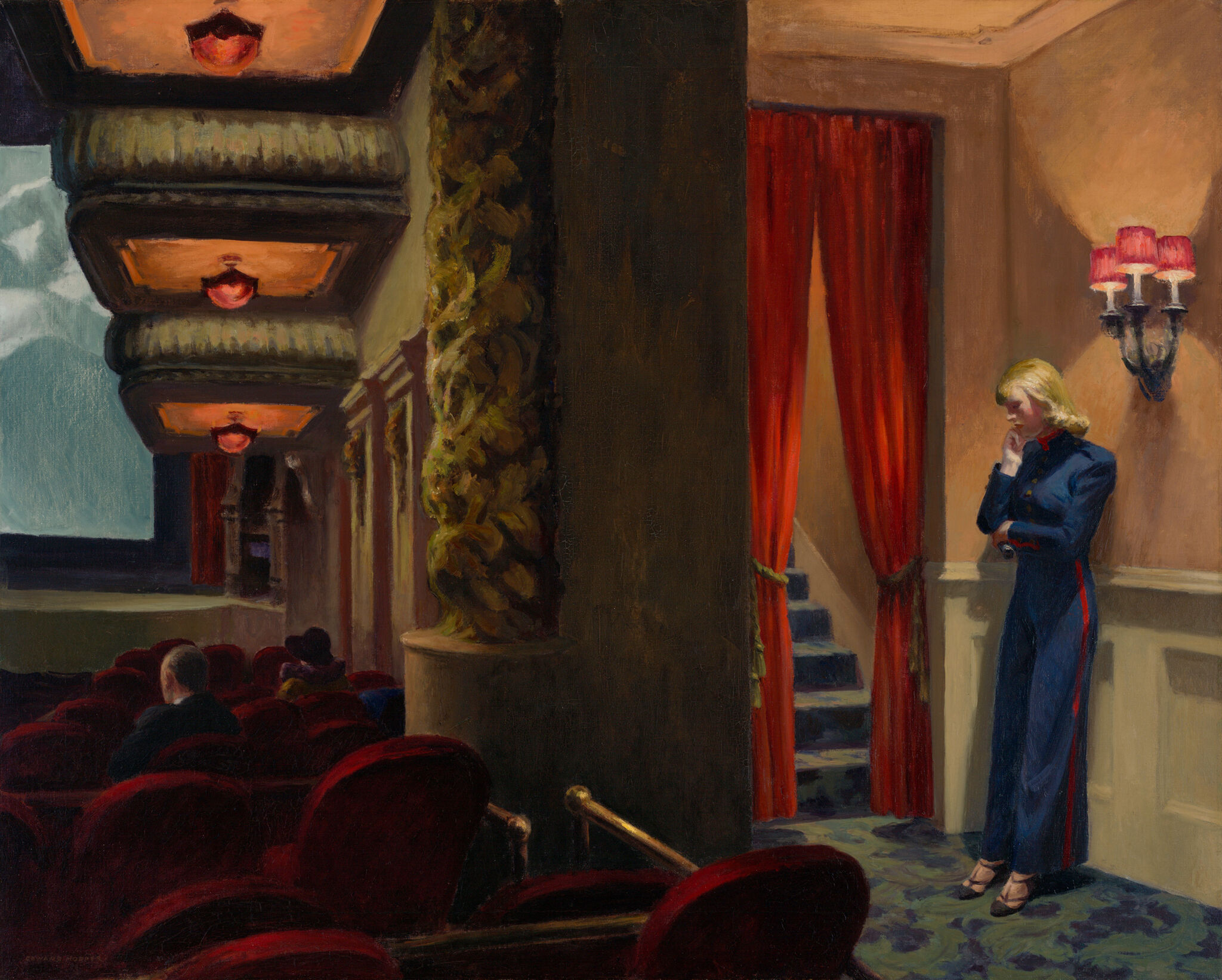
-
315
Edward Hopper, Study for New York Movie (Palace Theatre), 1938
Audio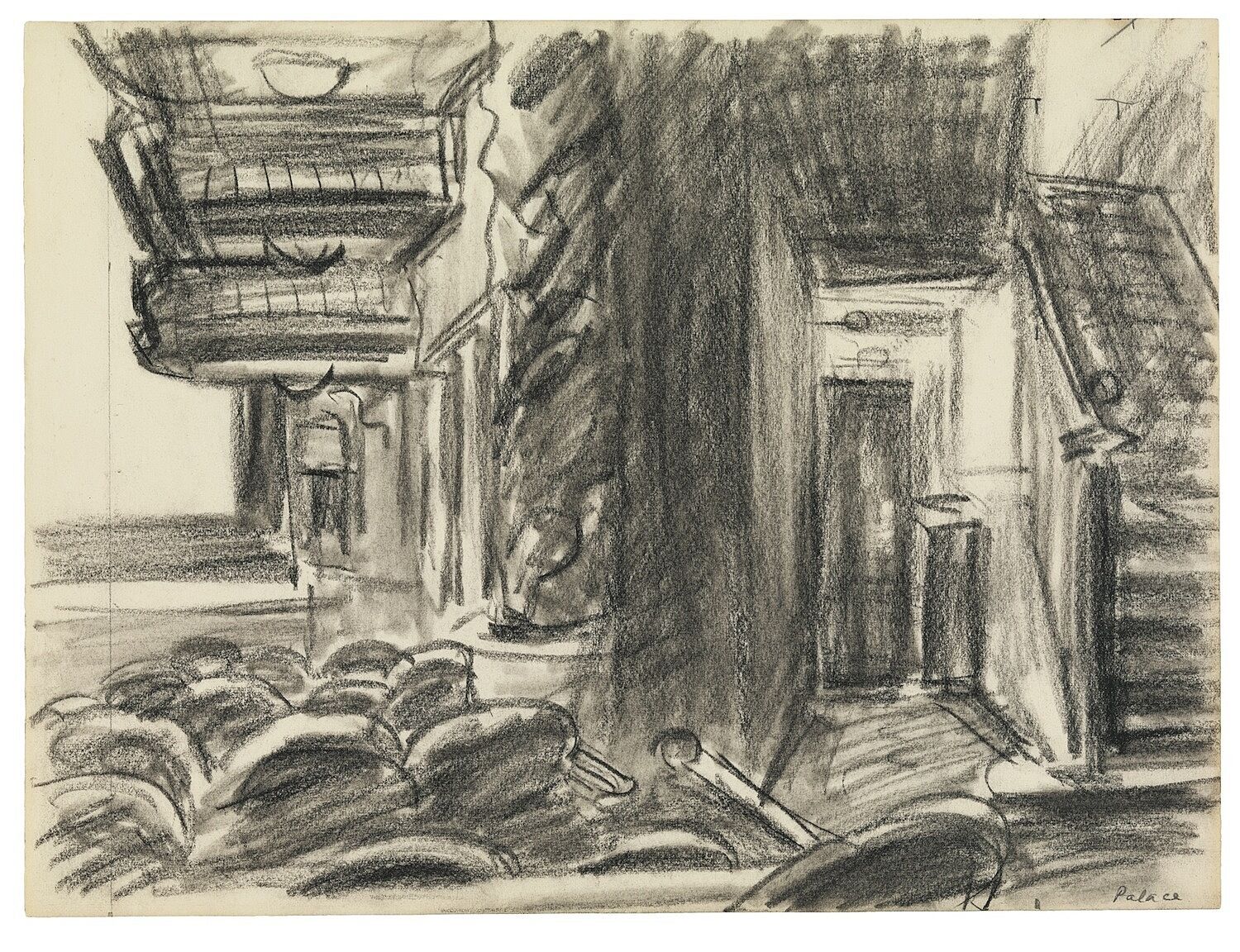
-
317
Edward Hopper, Office at Night, 1940
Audio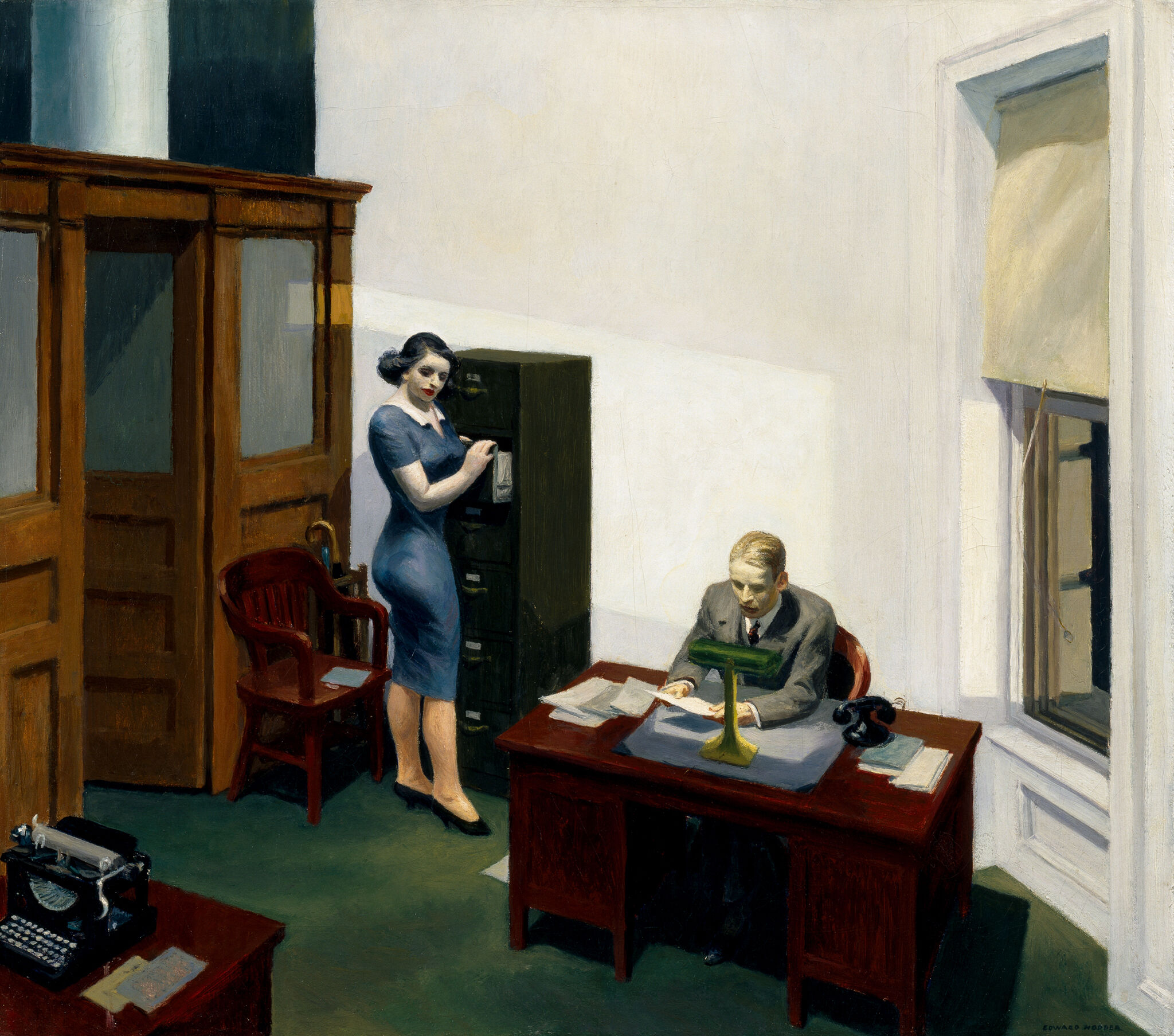
-
318
Edward Hopper, Study for Office at Night, 1940
Audio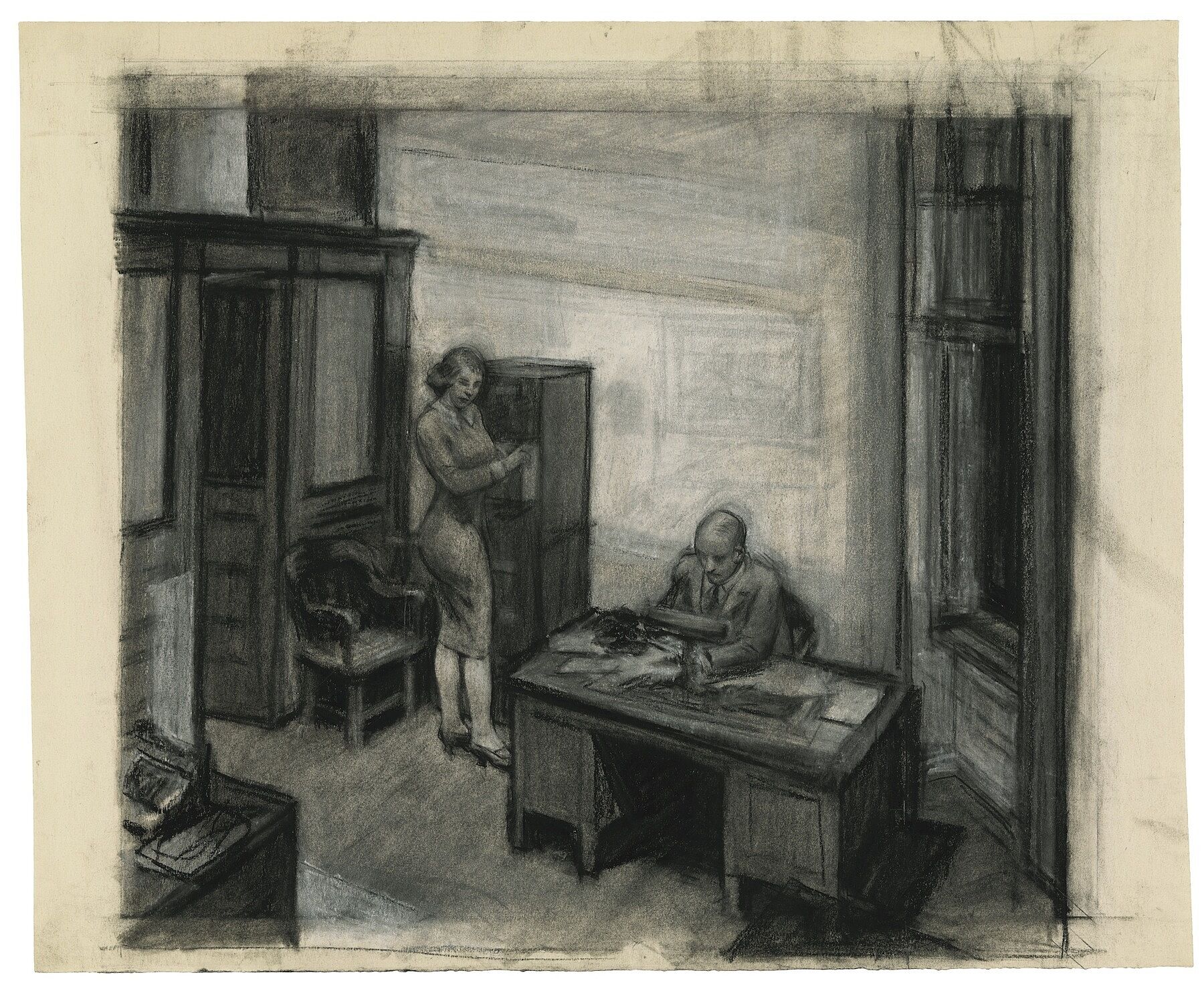
-
319
Edward Hopper, Rooms for Tourists, 1945
Audio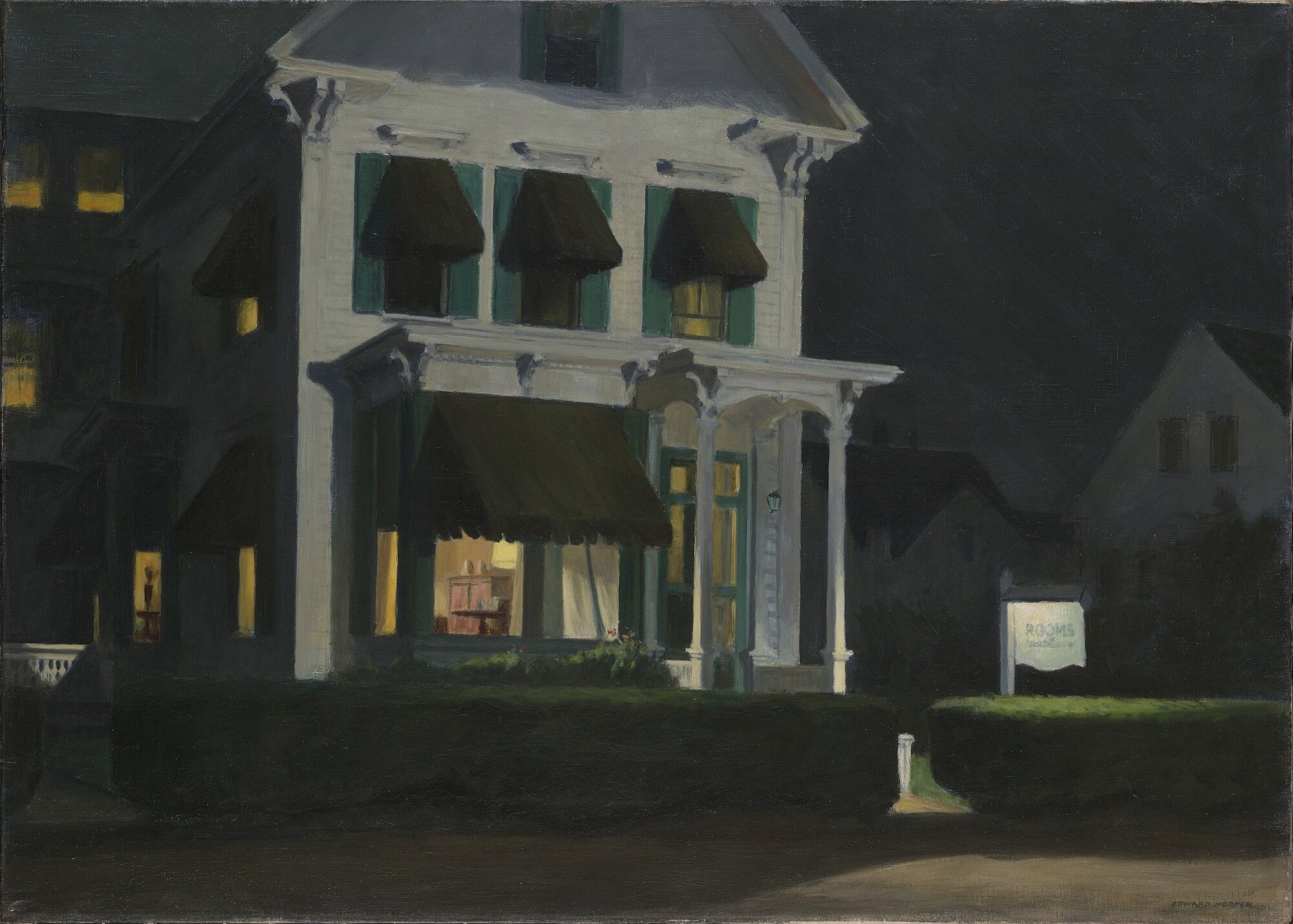
-
320
Edward Hopper, Study for Route 6, Eastham, 1941
Audio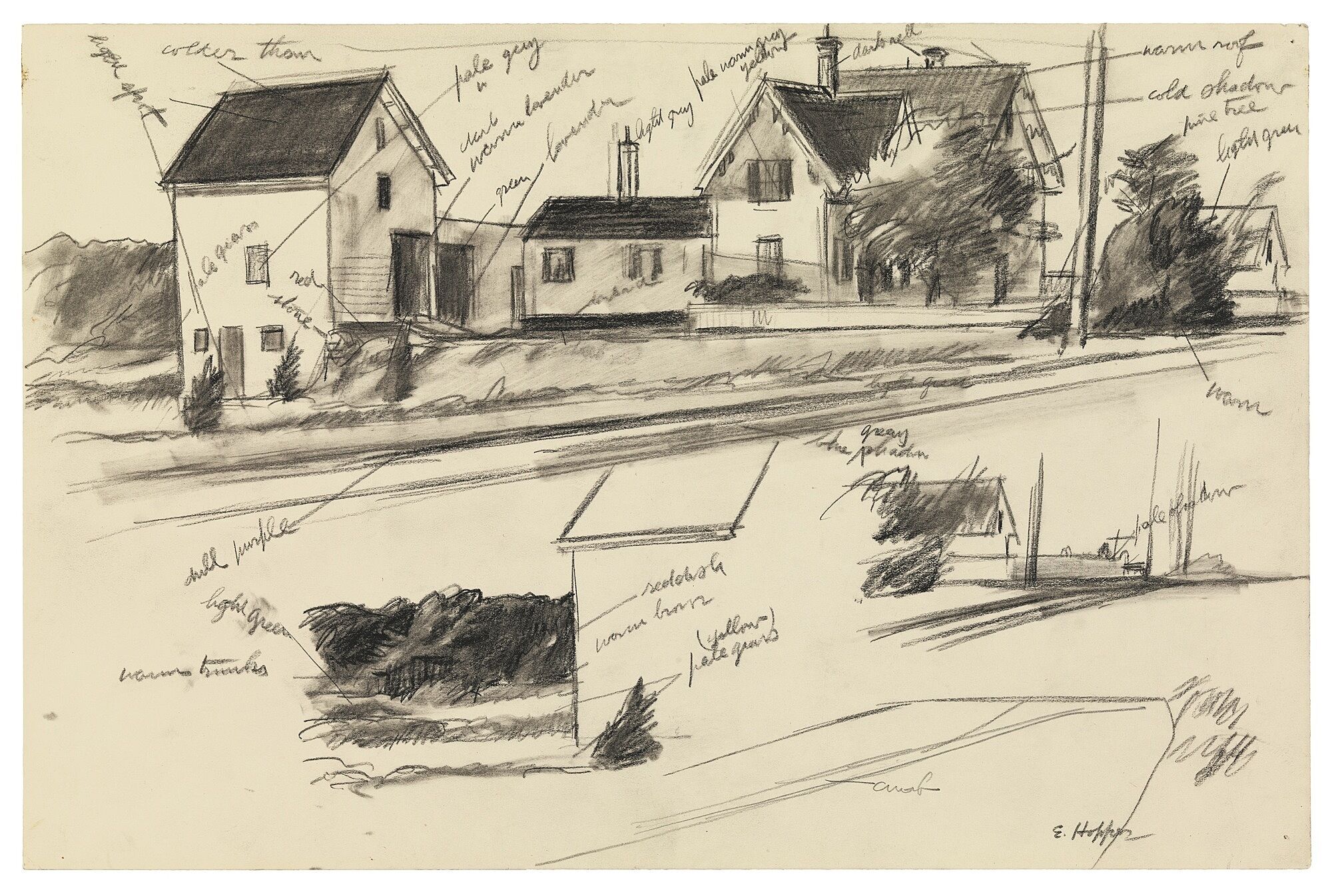
-
321
Edward Hopper, Road and Trees, 1962
Audio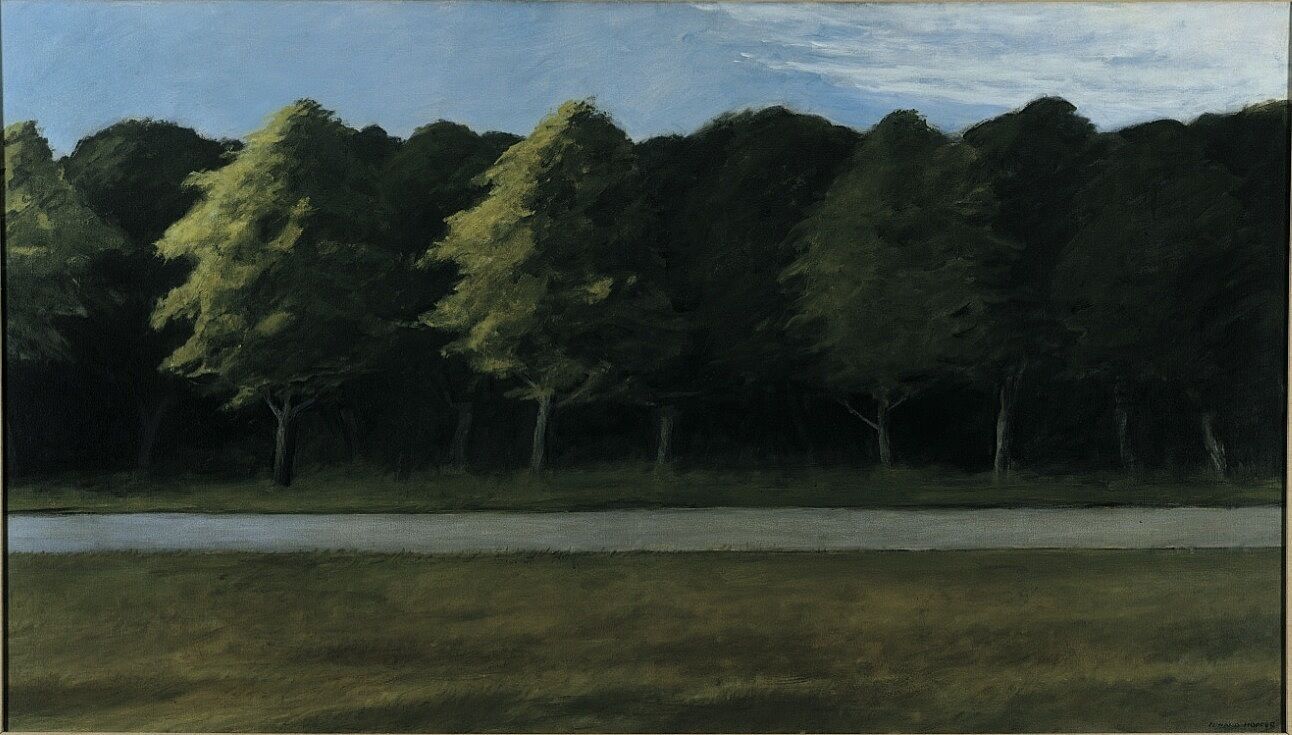
-
323
Edward Hopper, Morning in a City, 1944, and A Woman in the Sun, 1961
Audio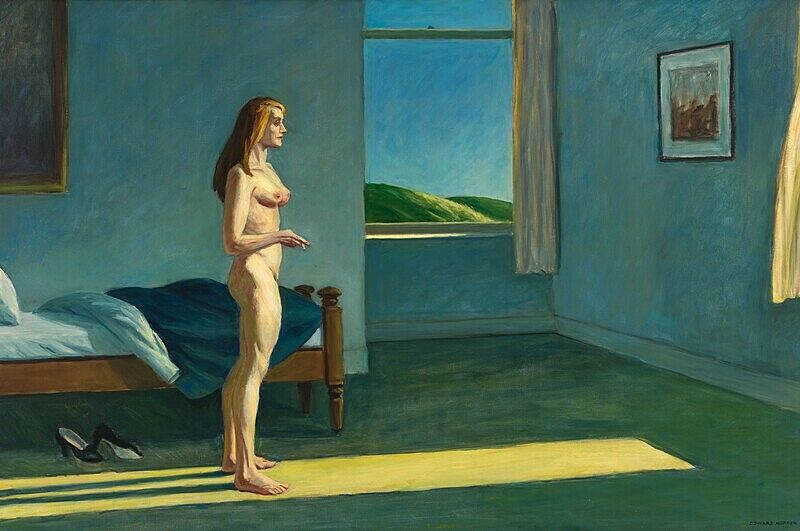
-
324
Edward Hopper, Studies for Morning Sun, 1952
Audio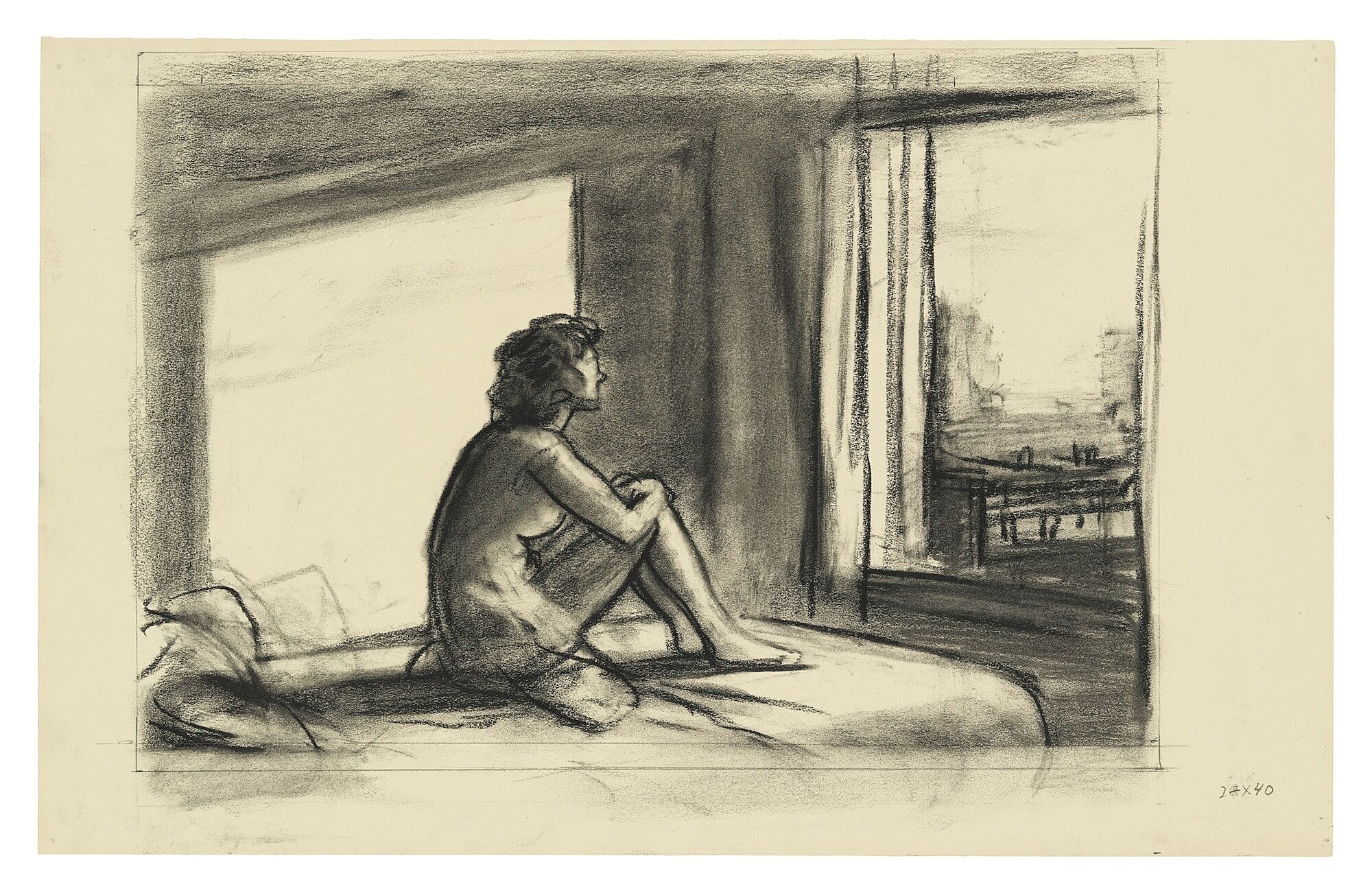
-
325
Edward Hopper, Sun in an Empty Room, 1963
Audio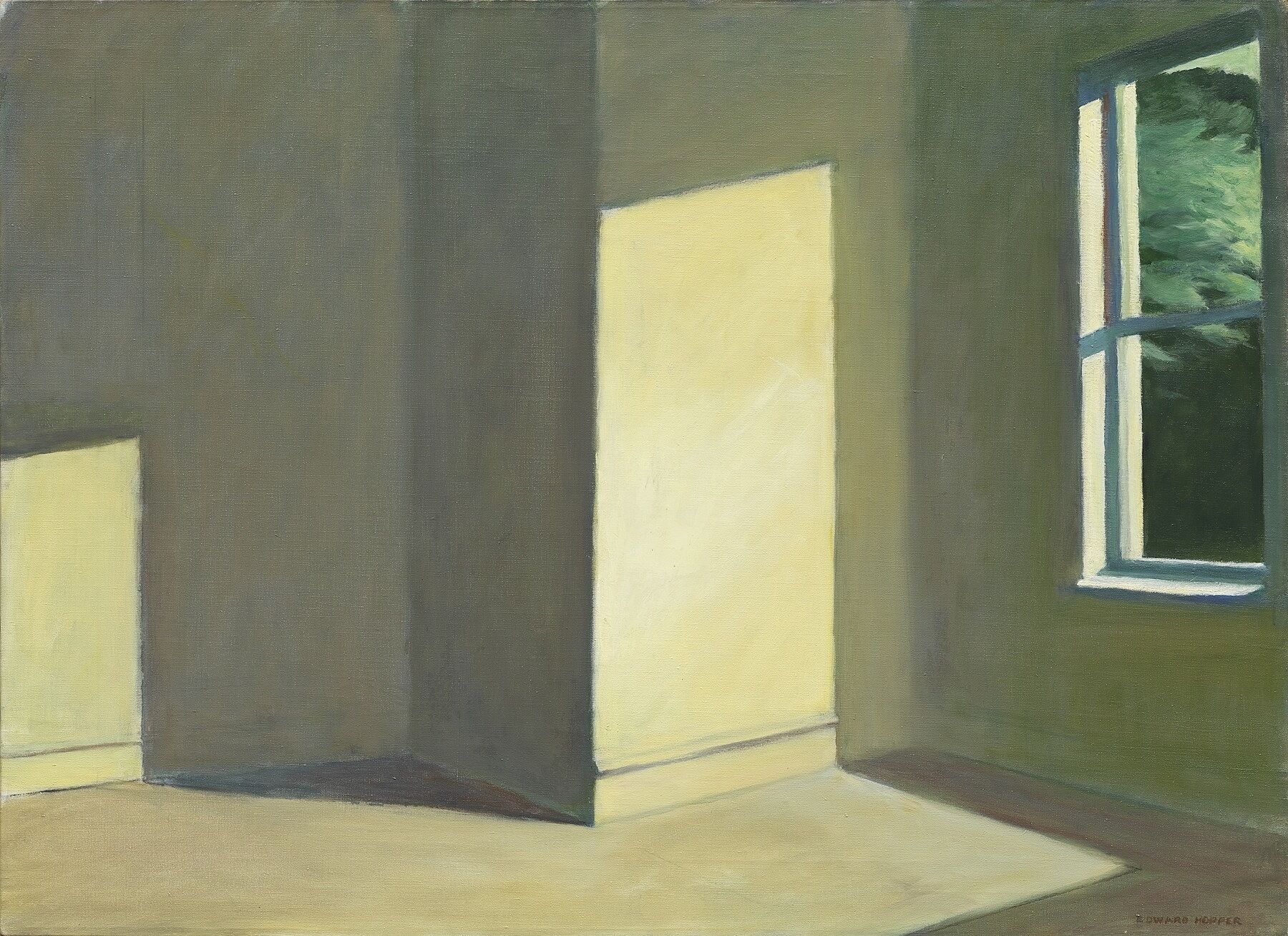
Narrator: Welcome to Hopper Drawing.
Carter Foster: I'm Carter Foster, Steven and Ann Ames Curator of Drawing at the Whitney Museum of American Art.
This show is actually the first ever to delve into Hopper's drawing practice.
What we can see in Hopper's drawing is the essence of his creative process. We can see him working on ideas for paintings. We can see him honing his artistic skills on paper. Drawing is a very naked medium. It's a medium that you can't hide behind in any way. And the directness of it is quite appealing. And we see Hopper's absolute virtuoso skill in this medium and how deeply it was important to him in terms of creating all of his other artwork.
Narrator: The exhibition is organized thematically around [Edward] Hopper’s most important paintings, which are shown alongside related drawings. This multimedia guide will point out connections between the drawings and paintings, allowing you to see Hopper’s working process up close.
The first gallery—directly in front of you as you come off the elevator—presents an overview of Hopper’s drawing practice.
Carter Foster: I love the two hand studies, which Hopper did during his student years, because they indicate an awareness of his profession as an artist.
He's representing the physical side of his job as an artist by showing his hands in this very expressive way. When you compare this sort of penetrating, youthful self-awareness of his bust-length portrait with his hands, you get this complete picture of an artist who is both imaginative and has an aspect of physical, manual labor to his work.
Apparently from a very young age, he wanted to become an artist.
Narrator: Hopper made this drawing—and others in this gallery—as a young student at the New York School of Art. There he received a classical training, studying the figure closely and following a traditional curriculum. He was a very successful student, studying primarily with the Ashcan School leader Robert Henri.
Edward Hopper, Self-Portrait and Hand Studies, c. 1900. Pen and ink and graphite pencil on paper, 7 7/8 × 4 15/16 in. (20 × 12.5 cm). Whitney Museum of American Art, New York; Josephine N. Hopper Bequest 70.1559.28 © Heirs of Josephine N. Hopper/Licensed by VAGA, New York, NY
Narrator: This drawing depicts an attempted murder in progress. Hopper creates a convincing sense of action, and he captures the nocturnal lighting beautifully. But the drawing’s melodramatic tone has little of the mystery and none of the subtlety that Hopper is so famous for. It’s a commercial illustration, done for hire.
Carter Foster: It's an illustration for Scribner’s Magazine done in 1925. It would have been reproduced in the magazine in a kind of half-tone photographic reproduction process.
Narrator: Today Hopper is often seen as the quintessential American artist, and it’s difficult to imagine him struggling. But he wasn’t able to support himself as a painter until he was in his forties. He was very successful as an illustrator, but he hated the work. He preferred to invent his subjects rather than to have someone hand them to him—and he was mostly commissioned to illustrate sentimental pulp fiction that he disdained. But he was a very good illustrator, and he made a steady living at it.
Edward Hopper, “What’s this? . . . Don’t, don’t—Hannah!”, 1925. Illustration for Emerson Low, “The Man Who Had Been Away,” Scribner’s Magazine 77 (May 1925). Fabricated chalk and charcoal on paper, 19 7/8 x 29 13/16 in. (50.5 x 75.7 cm). Whitney Museum of American Art, New York; Josephine N. Hopper Bequest 70.1450 © Heirs of Josephine N. Hopper/Licensed by VAGA, New York, NY
Narrator: This is a study for one of Hopper’s etchings, East Side Interior.
Carter Foster: It's finished but it's also wonderfully sketchy with many of the textures and manipulations of chalk and charcoal that Hopper loved to do. He was very gifted technically and you can see that really well in this piece.
This may represent one of the first times you see the solitary figure in the room, which is a long standing and important motif in Hopper's work. And ultimately, it's a way for him to explore the idea of the individual's place in the world.
But what's really important is light. Hopper was a master of light. That was one of his stated interests in terms of being an artist. He was interested in the quality of light. And that's very familiar from his paintings. And it may seem unusual to talk about in black and white drawings, but in fact he was a master of tonal effect.
Edward Hopper, Study for East Side Interior (recto), 1922. Fabricated chalk and charcoal on paper, 9 x 11 1/2 in. (22.9 x 29.2 cm). Whitney Museum of American Art, New York; Josephine N. Hopper Bequest 70.342a–b © Heirs of Josephine N. Hopper/Licensed by VAGA, New York, NY
Carter Foster: The Camel's Hump refers to a hill in Truro on Cape Cod, in Massachusetts. Hopper starts to go there regularly in the early 1930s. Eventually he would build a house and studio there that he would inhabit for the rest of his life, spending the summers there.
Something important to understand about the way Hopper viewed his art, he talked about it in two different ways. He talked about working from the fact, which we would call painting or drawing from life or from direct observation. And then he talked about improvisation, which we could just refer to as his imagination. And these were two modes that were, in some ways, in tension in Hopper's work. He loved to paint and draw from life, but when he was back in his studio, he was interested in figuring out how to paint a subject using his own imagination based on his direct observation. So this drawing is an example of him working outside, from the fact, directly in front of the motif that interested him. We'll see in other drawings that they're completely imagined and come straight from his head.
Edward Hopper, The Camel’s Hump, 1931. Fabricated chalk on paper, 11 7/8 x 17 15/16 in. (30.2 x 45.6 cm). Whitney Museum of American Art, New York; Josephine N. Hopper Bequest 70.858 © Heirs of Josephine N. Hopper/Licensed by VAGA, New York, NY
Narrator: A sailboat skims over a placid sea—but it seems oddly frozen. In this drawing, Hopper isn’t interested in capturing the speed and movement of a boat as it cuts through the water—something he’s certainly capable of doing. Instead he emphasizes the relationship between man and the sea. But he leaves the exact nature of that relationship somewhat mysterious.
Carter Foster: Hopper was very familiar with boats; he had been drawing and painting them since he was a youth, and very familiar with the subject of sailing, which is a subject that's important in American art. And [he was] also very familiar with a nautical landscape, or marine landscape, the sea.
Hopper began drawing sailboats like this one in his youth—even at this exact angle. It seems likely that he developed this composition from his memory and imagination—not from observation. He made a number of other drawings for the painting Ground Swell. Compositionally, they’re exactly like this one. Some are more or less cropped, and the levels of detail differ, but the structure is the same. When Hopper was working from direct observation—or “from the fact”—there were almost always small differences between the studies. The final work would often represent a synthesis of these views. This composition—which seems to have come into the world fully formed—seems more likely to have been a product of pure imagination.
Edward Hopper, Study for Ground Swell, 1939. Fabricated chalk, charcoal, and graphite pencil on paper, 15 x 22 1/8 in. (38.1 x 56.2 cm). Whitney Museum of American Art, New York; Josephine N. Hopper Bequest 70.339 © Heirs of Josephine N. Hopper/Licensed by VAGA, New York, NY
Narrator: In this case, you’ll see a number of pages taken from sketchbooks that Hopper used in Paris.
Carter Foster: Hopper goes to Paris three times. The first time was for an extended trip in 1906, 1907. And the French capital had a huge effect on him. He already was interested in French culture and it only made him more interested.
And letters that Hopper wrote back to his family when he was studying there correlate really well to these drawings. He describes being fascinated by café life and how different it was from street life in New York. He was fascinated by social class and by the different types of costumes that people were wearing. You can really see that in these sketches, which were done probably very quickly from life, from direct observation while he was sitting in cafés and in parks and on the street.
Edward Hopper, Two Seated Women in Profile and Women's Busts, 1906–07. Pen and ink on paper, 9 13/16 x 13 1/16 in. (24.9 x 33.2 cm). Whitney Museum of American Art, New York; Josephine N. Hopper Bequest 70.1555.12 © Heirs of Josephine N. Hopper/Licensed by VAGA, New York, NY
Narrator: Dr. Rick Brettell is a professor of Aesthetic Studies at the University of Texas, and has written extensively about Hopper in Paris. He considers Soir Bleu the single most ambitious painting of Edward Hopper’s career.
Rick Brettell: Soir Bleu is an odd painting for Hopper, because Hopper’s oil paintings of any sort of decent scale, up until Soir Bleu were generally landscapes or cityscapes that were space positive and had tiny or nonexistent human figures. Soir Bleu is a figure painting. And it’s a figure painting that shows that Hopper had wanted to actually take on the big canvases of Matisse and Picasso. Even the title of Soir Bleu, which was, it is today, and when it was shown for the first time in 1915 in French. So he wants to make you think French and think of France. He doesn’t call it Blue Evening. He calls it Soir Bleu.
Narrator: Hopper depicts an odd assortment of people gathered under a tent at the end of a party. Among them: on the far left, a working-class man smoking a cigarette; in the center, a sex worker and a clown, and on the far right, a bourgeois or upper middle class couple.
Rick Brettell: No one is like anybody else. Everybody is separated from everybody else. Hopper kind of translates it into an everyman setting, in which most of the people in it, are part of a kind of world of alienated urban entertainment, in which one is always searching for a meaning somewhere else, in a costume or in a prostitute or in a drink or in a cigarette or in a party, And those sorts of worlds is the world that Hopper of course represents so importantly when he comes back to New York in 1910 and remains there until the end of his life.
Edward Hopper, Soir Bleu, 1914. Oil on canvas, Overall: 36 × 72 in. (91.4 × 182.9 cm). Whitney Museum of American Art, New York; Josephine N. Hopper Bequest 70.1208. © Heirs of Josephine N. Hopper/Licensed by VAGA, New York, NY
Carter Foster: Hopper made one or two of these drawings, on site, on the Manhattan Bridge.
So the drawings are, of course, his memory records and memory traces that were used back in the studio to make the painting, which is actually significantly different than what you see. He elongates the space. He changes around some of the elements that were actually there to make a long, lateral composition.
Narrator: In this painting and others in this gallery, you’ll see Hopper developing the voyeuristic viewpoint—always on the outside looking in—that is one of the hallmarks of his work.
Carter Foster: From that bridge you can look into the upper stories of buildings, or you're on the same level as upper stories of buildings. And this was a vantage point that interested Hopper a great deal. It depends on the fact that we live in a dense, built urban environment. You can be at different levels and look into different areas and buildings and be in different physical spaces.
Edward Hopper, Study for Manhattan Bridge Loop, 1928. Crayon on paper, 8 1/2 x 11 1/16 in. (21.59 x 28.1 cm). Addison Gallery of American Art, Phillips Academy, Andover, Massachusetts; gift of the artist 1940.71
Carter Foster: Early Sunday Morning was significant for this exhibition because in doing early research, I was able to identify the building that Hopper was looking at that inspired the painting, through old photographs.
Narrator: You can see one of those photographs on your screen.
Carter Foster: What's interesting about the painting is how Hopper both stretched out the building and condensed it the same time. It sounds paradoxical and it sort of is. But what he did was he added an extra bay, an extra window, so that sort of elongates the top of the structure. But he also added another shop opening in the bottom part, so that you get this compression. You get smaller doors and windows than were actually there.
He sets off that sense of compression with this very prominent barber pole, which I have to read as a stand-in for a human being, and perhaps a stand-in for Hopper himself, who was actually tall and, in fact, by this time, bald.
So you get this face-off between this solid, familiar but mundane building and this very brightly lit barber pole in this kind of masterful composition, perhaps of which the main subject is light and the way light plays off the built urban environment.
Narrator: One of the most important details in Early Sunday Morning is something you might not notice right away—the dark square in the upper right corner. A larger building was going up when Hopper was working on the painting. Its looming silhouette suggests the rapid urbanization and modernization that was transforming the city.
To hear more about Early Sunday Morning and its relationship to Nighthawks—the other painting in this room—please tap your screen.
Seventh Avenue between Fifteenth and Sixteenth Streets, June 10, 1914. Subway Construction Photograph Collection, composite of photographs #1003 and #1004. The New York Historical Society 86450d, 86451d
Carter Foster: A building very much like Early Sunday Morning forms the background of Nighthawks. Early Sunday Morning represents daytime. Nighthawks represents nighttime.
Here, the overarching subject matter would be times of day and the passing of time, day to night. It's also about memory and the way that the urban environment changes. I think that we can look at the paintings together and they enrich each other and give us a larger context that Hopper was thinking about when he made both works.
Edward Hopper, Early Sunday Morning, 1930. Oil on canvas, 35 3/16 × 60 1/4 in. (89.4 × 153 cm). Whitney Museum of American Art, New York; purchase with funds from Gertrude Vanderbilt Whitney 31.426. © Heirs of Josephine N. Hopper/Licensed by VAGA, New York, NY
NARRATOR: In Nighthawks—probably Edward Hopper’s most famous painting—four figures come together in a late-night diner, yet seem utterly apart. One man sits by himself. The server lifts his head attentively, but doesn’t seem to interact with anyone in particular. A man and woman sit close together, but seem emotionally disconnected. Hopper puts us, as viewers, in a similar spot. The fluorescent lighting—intensely bright and completely modern when Hopper made this painting in the early forties—seems to spotlight these people for our benefit. But we’re entirely on the outside—voyeurs rather than participants. Darkness separates us from the diner, and no entrance or exit is visible. The painting isolates its viewer as completely as it does its subjects.
Hopper lived in New York’s Greenwich Village for most of his life, and frequently walked down Greenwich Avenue—a clear diagonal cut across Manhattan’s foursquare grid of streets and avenues. He once said that Nighthawks was “suggested by a restaurant on Greenwich Avenue where two streets meet.” The acute angles of such intersections lead to a very specific shape of building—one that Hopper obviously studied.
Take a good look at the drawings in this room. You’ll see Hopper trying to get certain details exactly right: the position of the coffee urn and the salt and pepper shakers, and the rumples in the back of one man’s coat. You’ll notice that while Nighthawks is a psychologically mysterious work, it’s clearly based on Hopper’s direct observation of the world.
At the end of this program, there’s a video where curator Carter Foster takes us on a walk through Edward Hopper’s New York. He focuses on Nighthawks and acute-angled corners like this one.
Edward Hopper (1882–1967), Nighthawks, 1942. Oil on canvas, 33 1/8 × 60 in. (84.1 × 152.4 cm). The Art Institute of Chicago; Friends of American Art Collection 1942.51. Photography © The Art Institute of Chicago
Narrator: This is the last drawing Hopper did for Nighthawks. He may even have made it after he’d started the painting.
Carter Foster: There are some differences that it has with the painting, but there are many, many similarities. And we can see him working out the very subtle shifts in points of view spatially that interested him a great deal.We can also see how he was working out the qualities of light that interested him by putting white chalk on the sheet to indicate sort of this harsh fluorescent light that was coming out of the diner and contrasting that to the space of the street with the rich darkness of the chalk, and getting all these subtle modulations in this particular sheet.
Edward Hopper, Study for Nighthawks, 1941 or 1942. Fabricated chalk and charcoal on paper; 11 1/8 × 15 in. (28.3 × 38.1 cm). Whitney Museum of American Art, New York; purchase and gift of Josephine N. Hopper by exchange 2011.65 © Heirs of Josephine N. Hopper/Licensed by VAGA, New York, NY
Narrator: New York Movie shows the inside of a theater, the audience illuminated by the light of a film. But the real focus is the usherette leaning against the wall in the aisle, her arms crossed and her chin resting dreamily on her hand. She appears to be lost in her own imagination—transported to another place, just as the audience has been drawn in to the world of the film. Hopper was a real believer in the escapist power of the cinema—in fact, movie binges were his preferred method for dealing with creative block. And 1939—when Hopper completed New York Movie—was a great year for Hollywood film. New releases included the Technicolor pioneers Gone with the Wind and The Wizard of Oz.
The film projected on this screen is black and white—notes left by Hopper’s widow indicate that we’re seeing a fragment of snow-covered mountains. Hopper’s done a remarkable job making the screen seem to glow. In fact, the lighting throughout the painting is fascinating. Ceiling lights project dramatically from overhead; a wall sconce lights the usherette; there’s an unseen light in an exit stairwell. Hopper once said that it was quite difficult to bring all of these different light sources together successfully.
New York Movie may look simply like an image of a movie theater, but in fact it’s a synthesis of several theaters. Take a good look at the drawings in this gallery. They allow us to begin with Hopper’s first tentative ideas for the painting, and to follow him all the way through to its execution. They’re a great case study for Hopper’s creative process.
Edward Hopper, New York Movie, 1939. Oil on canvas, 32 1/4 × 40 1/8 in. (81.9 × 101.9 cm). The Museum of Modern Art; given anonymously. © 2022 Heirs of Josephine N. Hopper/Licensed by Artists Rights Society (ARS), New York. Image courtesy Art Resource, New York
Carter Foster: This is an important sheet because it's close to the painting, but it's not. . . It's the space that he was interested in, drawn in a very complete way, but it's not the space of the painting.
Narrator: In the final painting Hopper adds a poetic, ghostly image on the movie screen—and uses it to illuminate a few spectators. He emphasizes the strangely projecting ceiling lights. The big difference in the painting is the presence of the usherette. But subtle changes to the space that she occupies also have an important expressive effect.
Carter Foster: What's different is the spatial compression, the side aisle becomes smaller. The staircase becomes collapsed into an arched opening with a heavy curtain in front of it, as opposed to being much more open in the drawing. And the overall sense of space is much tighter in the painting, which affects the way you perceive this usherette. It's not that she's trapped, but she's wearing this uniform that's sort of militaristic and she's got a specific role she's playing within this ornate palace of escapism. That compression of space is something that is an important part of the painting's overall effect. And it's not something you get in the drawing.
Edward Hopper, Study for New York Movie (Palace Theatre), 1938. Fabricated chalk on paper, 8 13/16 x 11 13/16 in. (22.4 x 30 cm). Whitney Museum of American Art, New York; Josephine N. Hopper Bequest 70.110 © Heirs of Josephine N. Hopper/Licensed by VAGA, New York, NY
Narrator: A man and a woman are alone in an office. It’s not clear how late at night it is, but it’s late enough that the room’s bright light is all artificial. The relationship between the two figures is impossible to decide. It’s possible that they’re both hard at work. But it may also be that her attentive gaze suggests something more, and that his apparent focus is meant to mask a conflict—whether internal or external.
Whatever is going on here, we’ll never know. We seem to be outside the room, and perhaps looking into it only very quickly. Look at the wall behind the assistant. It has a brightly illuminated shape that seems to come from the street—or even a passing train. Hopper once said that he was inspired to paint this scene after looking into office windows while on the elevated train. The strange vantage point leaves us physically close to these people but also utterly distanced from them—a uniquely urban condition. The painting Conference at Night, also on view in this gallery, explores a similar space and subject, though to very different ends.
Edward Hopper, Office at Night, 1940. Oil on canvas, 22 3/16 × 25 1/8 in. (56.4 × 63.8 cm). Walker Art Center, Minneapolis, MN; gift of the T.B. Walker Foundation, Gilbert M. Walker Fund, 1948. © 2022 Heirs of Josephine N. Hopper/Licensed by Artists Rights Society (ARS), New York
Narrator: In one part of this section, we have five studies for Office at Night, and the painting itself. The drawings include three earlier compositional sketches as well as two more finished studies.
Carter Foster: They're really among his greatest drawings. And they have a degree of finish that's unusual in his work. They show him developing this very strange, hovering point of view that's such a key part of the painting.
Narrator: In the earliest of the drawings, on the smaller pieces of paper, we see the figures more or less head on—as if we occupied the same space that they do. In the final two drawings, executed more subtly on larger paper, we seem to look at the figures as though through a camera that has pulled back and up. The scene seems to play out as if on a movie screen. By the final two drawings, Hopper is treating the space expressively rather than realistically.
Carter Foster: In the drawings for Office at Night you see Hopper going from a fairly rational perspective where you have the walls, and the floors, and the ceilings all fitting together in a normal way, to him pulling back and creating the irrational space that you end up getting in the painting with a turned up, tilted up floor, and a hovering perspective that isn't rational at all. And the walls, in fact, don't meet at right angles. They're splayed out and opened up. You can see that, step by step, in the drawings. And when you get to the two very finished drawings, which are among the most materially worked drawings in Hopper's entire career, where he's using these incredibly subtle combinations of white and black chalk to explore the light effects, but he's also looking at ways to make the space tilted up and unusual.
Hopper clearly was thinking about creating this sense of spatial anxiety that you get in the painting in between these two drawings.
Edward Hopper, Study for Office at Night, 1940. Fabricated chalk and charcoal on paper, 15 1/16 x 19 5/8in. (38.3 x 49.8 cm). Whitney Museum of American Art, New York; Josephine N. Hopper Bequest 70.340 © Heirs of Josephine N. Hopper/Licensed by VAGA, New York, NY
Carter Foster: These two studies for the painting Rooms for Tourists depict a house that was in fact an inn that's still there in Cape Cod, near Hopper's house in Truro.
So we have two very different drawings that are fairly complete and fairly close to the painting, but one was done clearly in the daytime and one was done at night. So you see Hopper working out the differences between how to show a building at night and how to do it in the daytime and this interest in the way light can create mood.He ended up making it a night scene, but what's unclear is when he made that decision. Did he decide only after looking at the way the inn looked at night and the way the room glowed out into the darkness that that would be a better painting than showing it in the daytime?
It's fascinating because you can really see him grappling with that in these two drawings. And in fact, the one that shows the building at night is, I think, one of his most successful drawings, because it conveys this sense of darkness and light in a really eerie and rather amazing way.
Edward Hopper, Rooms for Tourists, 1945. Oil on canvas, 30 1⁄4 x 42 1/8 in. (76.8 cm x 107 cm). Yale University Art Gallery, New Haven, Connecticut; Bequest of Stephen Carlton Clark, B.A. 1903
Carter Foster: So this drawing is a study for Hopper's painting, Route 6, Eastham, from 1941. What's amazing about it is this conceptual balance you have between the architectural details and the space of the road and this house on it and all these color notations that Hopper made.
It's full of color notations, very specific ones that describe, in interesting adjectives, different shades of gray and how carefully Hopper wanted to remember the colors that he was actually seeing, so that when he went to make the painting back in the studio, he clearly used this as a memory aid.So it shows this tension between the real and the imagined that was really at the heart of Hopper's art.
Edward Hopper, Study for Route 6, Eastham, 1941. Fabricated chalk, charcoal and graphite pencil on paper, 10 1/2 x 16 in. (26.7 x 40.6 cm). Whitney Museum of American Art, New York; Josephine N. Hopper Bequest 70.330 © Heirs of Josephine N. Hopper/Licensed by VAGA, New York, NY
Carter Foster: So Road and Trees, a painting from 1962, is a late painting in Hopper's career.
It's typical of Hopper's late work in that it shows a kind of emptied out space and is in fact a distillation of a theme, the road that interested him for decades. And it shows his experience of America by car. Hopper and his wife took many, many road trips throughout their lives, so they were familiar with the experience of driving and how it felt to be in a moving car and how it felt to look at a moving landscape from a car.
That's really what this painting represents, is a moving landscape. You get almost a sense of vibration when you look at this painting. As emptied out and still as it seems to be, there's also this strange sense of bodily movement that you get when you're looking at it.
Narrator: One of Hopper’s studies for this painting is nearby.
Carter Foster: The drawing for this painting is interesting because it has a car on the road. The space of the road is not as well defined as it is in the painting, but you get this sense of a moving automobile, which Hopper eliminated when he decided to paint it.
Edward Hopper, Road and Trees, 1962. Oil on canvas 34 x 60 in. (86.4 x 152.4 cm). Private collection
Carter Foster: These two paintings, A Woman in the Sun from 1961 and Morning in a City from 1944 were done decades apart, but they are similar in many ways. And when hung together, we see how they seem to function as pendants, or almost like a series, where one is answering the other.
Narrator: The young woman in Morning in a City gazes out of a window onto an urban landscape, in a pose that recalls classical sculpture. She seems innocent in comparison to the older figure we see in A Woman in the Sun, unflatteringly described by Hopper to his wife Jo as a “wise tramp.”
Carter Foster: It's very interesting because the curtain billowing in, in A Woman in the Sun, pushed in by the air, is almost a continuation of the curtain in the earlier painting, Morning in a City.
We hang them together here to show how carefully Hopper thought of his paintings in tandem and how drawings probably played a function as the connective tissue when he's working the same theme across decades because Hopper would not have had this painting to refer to, the earlier painting, Morning in the City, when he was painting, A Woman in the Sun. But he did have the drawings that he made for that painting.
Edward Hopper, A Woman in the Sun, 1961. Oil on linen, overall: 40 1/8 × 60 3/16 in. (101.9 × 152.9 cm). Whitney Museum of American Art, New York; 50th Anniversary Gift of Mr. and Mrs. Albert Hackett in honor of Edith and Lloyd Goodrich 84.31 © Heirs of Josephine N. Hopper/Licensed by VAGA, New York, NY
Carter Foster: These three drawings are for a painting called Morning Sun that Hopper painted in 1952. What's amazing about these is we can really see his wife Jo's features in the first drawing with all the color notations on it, and then we start to see her features become erased as Hopper makes her into a more generalized everywoman.
So the first drawing where Hopper was carefully recording the way that the colors interacted with light, we can recognize Jo's features. In the second drawing, we can recognize her features but they become more mask-like, more obliterated by the sunlight that's coming in and hitting her face.
And then, in the final or one of the more finished compositional studies he doesn't show her features at all but he almost squares them off and eliminates—we don't even see her eyes or her mouth. He make them almost abstract to de-emphasize her individuality and make her a more representation of an unknown character as he grapples with this issue of how to represent her in the room with the space outside.
Edward Hopper, Study for Morning Sun, 1952. Fabricated chalk on paper, 12 x 19 in. (30.5 x 48.3 cm). Whitney Museum of American Art, New York; Josephine N. Hopper Bequest 70.244 © Heirs of Josephine N. Hopper/Licensed by VAGA, New York, NY
Carter Foster: Sun in an Empty Room, while not a bedroom scene in this section about the bedroom, exemplifies Hopper's interest in emptying things out. Oftentimes when you study Hopper's preparatory studies for a painting with the painting itself, you see this process. You see him putting things in the drawings that he ends up taking out in the paintings. If you look at Sun in an Empty Room against all of his previous bedroom pictures, you see this process working itself out. He's emptying out the room. He takes everything out of the room, except for perhaps the viewer. The viewer is implicated and he ends up painting sunlight on the side of a house, which is something he stated he wanted to do.
He reduces things down to their essences in this work, and it puts more onus on the viewer to come up with what the meaning is, because you don't have a figure to bounce off of. But in doing so, I think he comes to this distilled point where he was doing a lot of what he wanted to do in his art.
Narrator: This is the last stop on our tour. The final item on the program is a video. Exhibition curator Carter Foster offers a tour of Edward Hopper’s New York, focusing especially on the paintings Early Sunday Morning and Nighthawks. Please watch it when you find a comfortable spot!
Edward Hopper, Sun in an Empty Room, 1963. Oil on canvas, 28 3/4 x 39 1/2 in. (73 x 100.3 cm). Private collection
0:00
0:00