Carmen Herrera: Lines of Sight
2016
Listen to commentary by artist Carmen Herrera and Dana Miller, the former Richard DeMartini Family Curator and Director of the Collection at the Whitney Museum of American Art and curator of the exhibition, Carmen Herrera: Lines of Sight.
-
800
Introduction to Carmen Herrera: Lines of Sight
Audio
-
801
Carmen Herrera, A City, 1948
Audio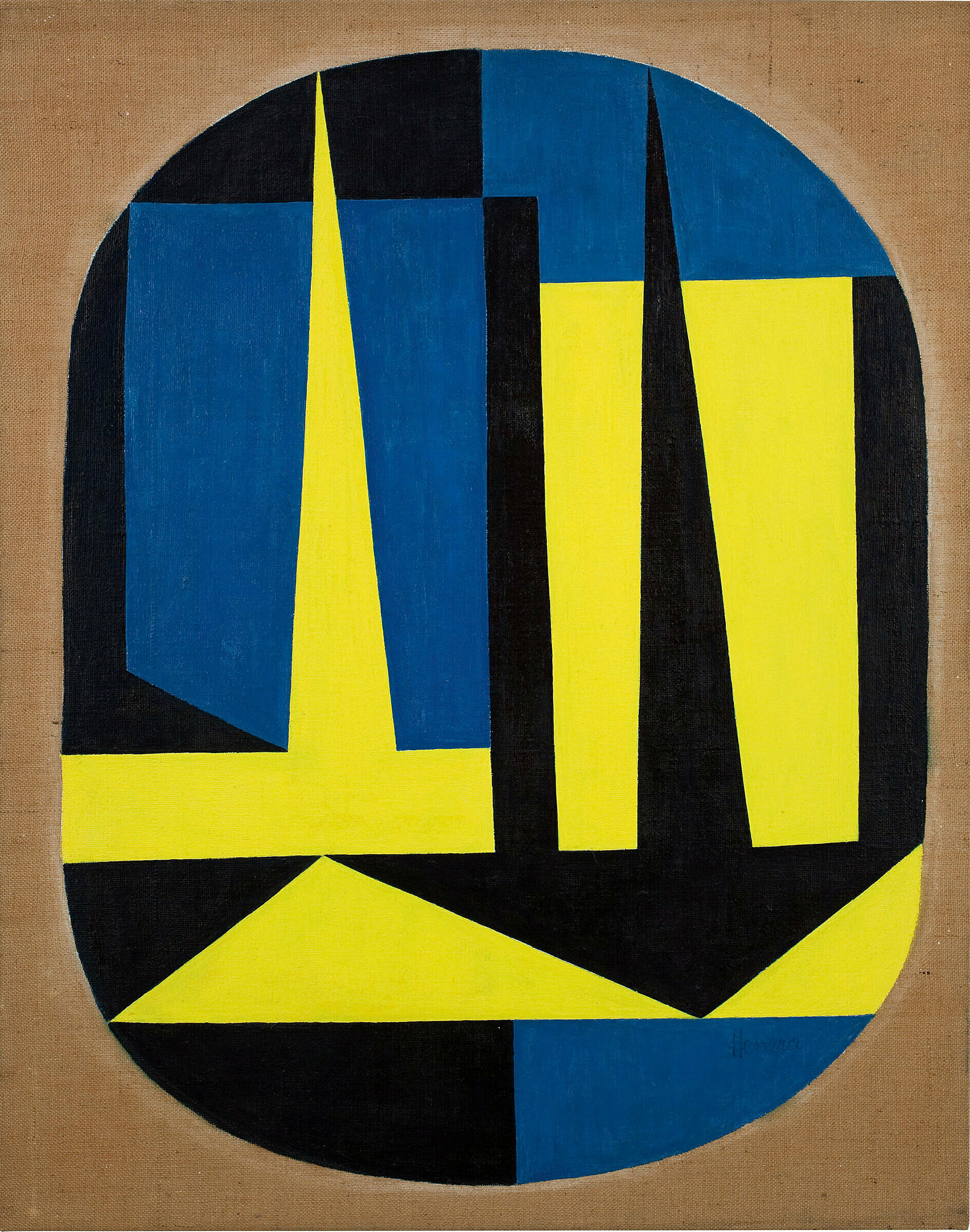
-
802
Carmen Herrera, Untitled, 1952
Audio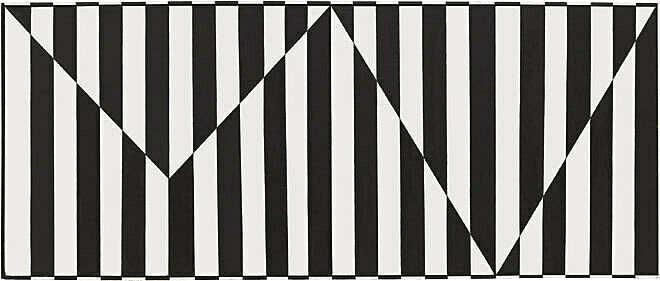
-
803
Carmen Herrera, Rondo, 1958
Audio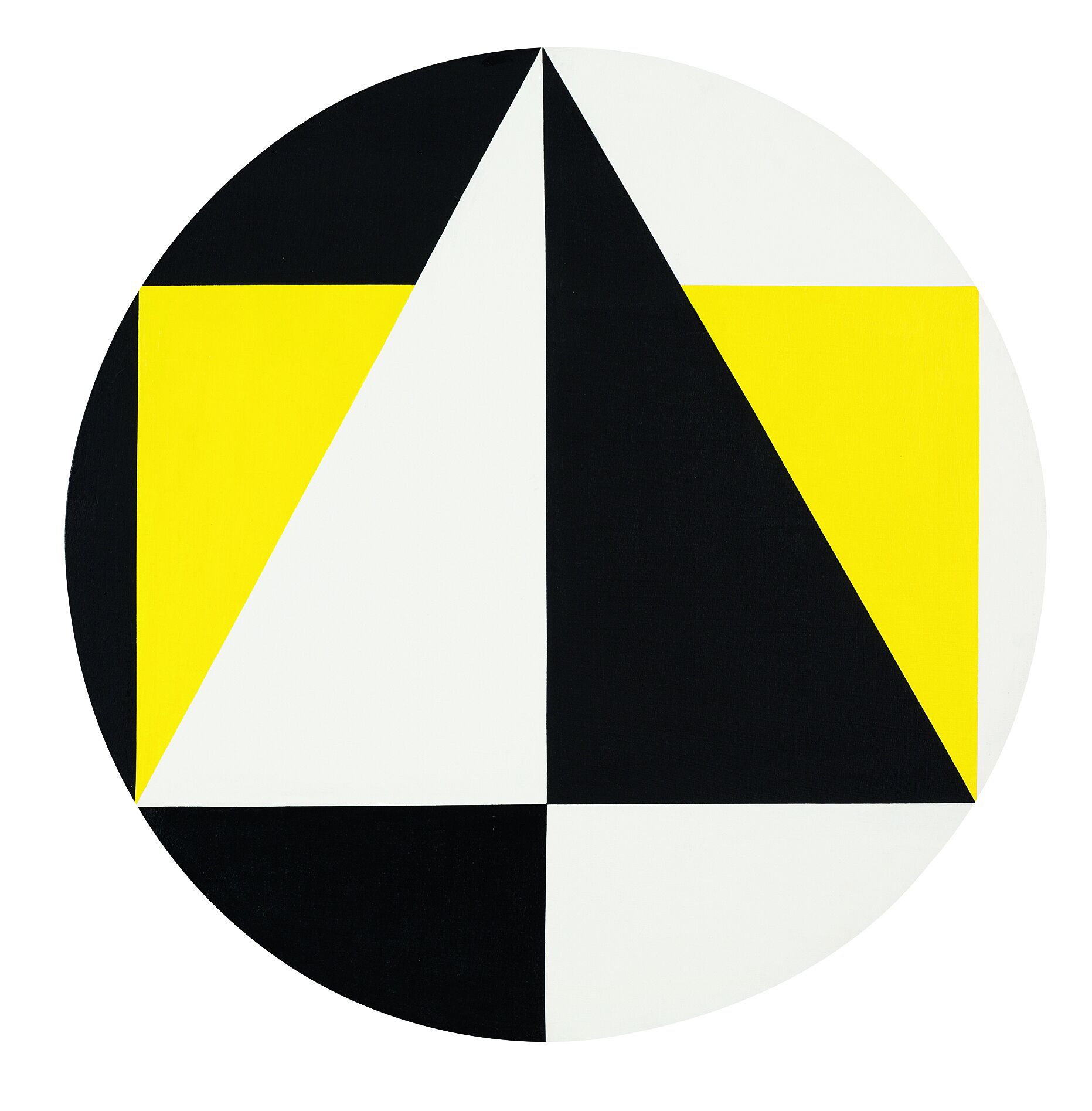
-
804
Carmen Herrera, Blanco Y Verde, 1966–67
Audio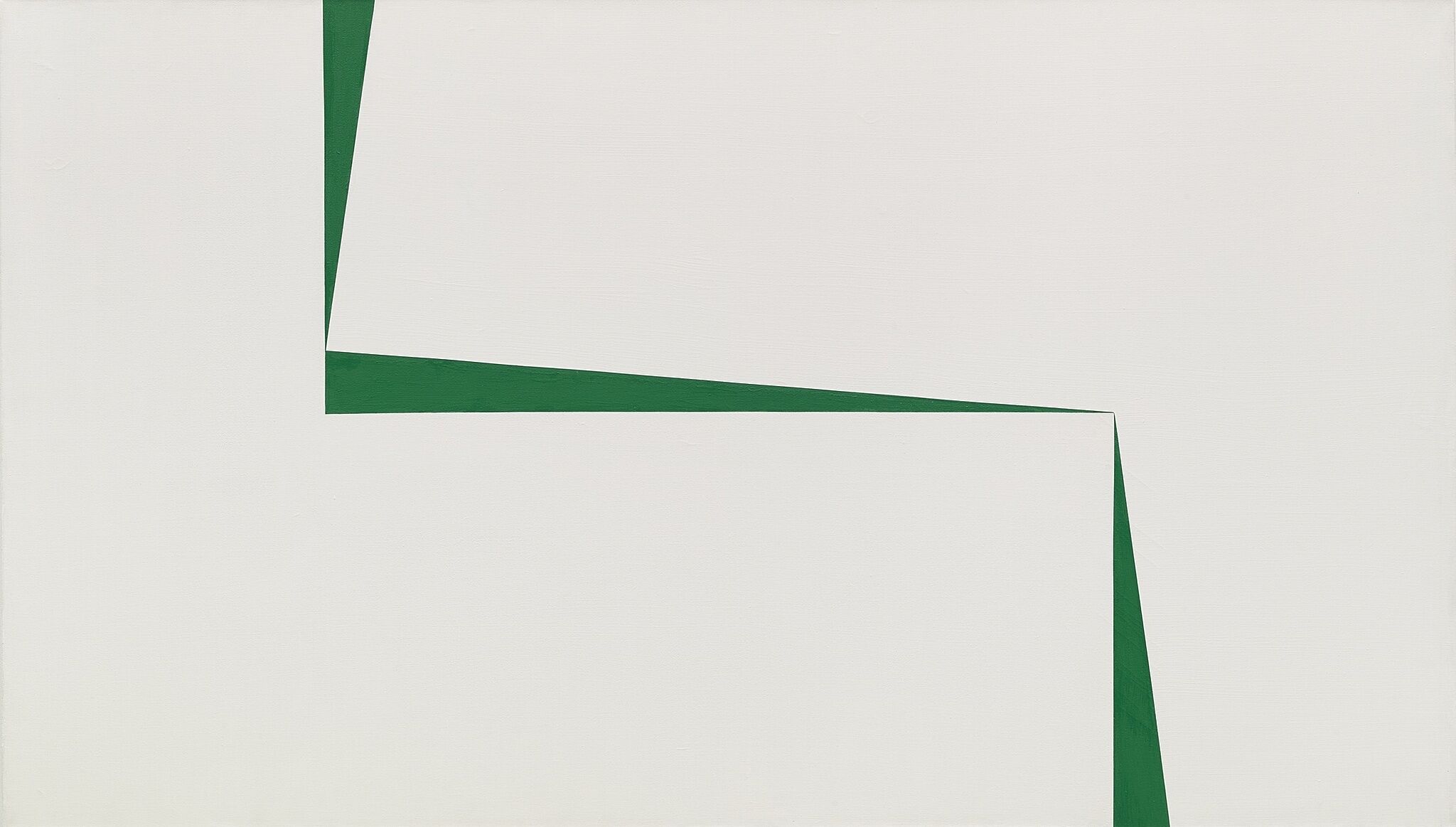
-
805
Carmen Herrera, Amarillo “Dos”, 1971
Audio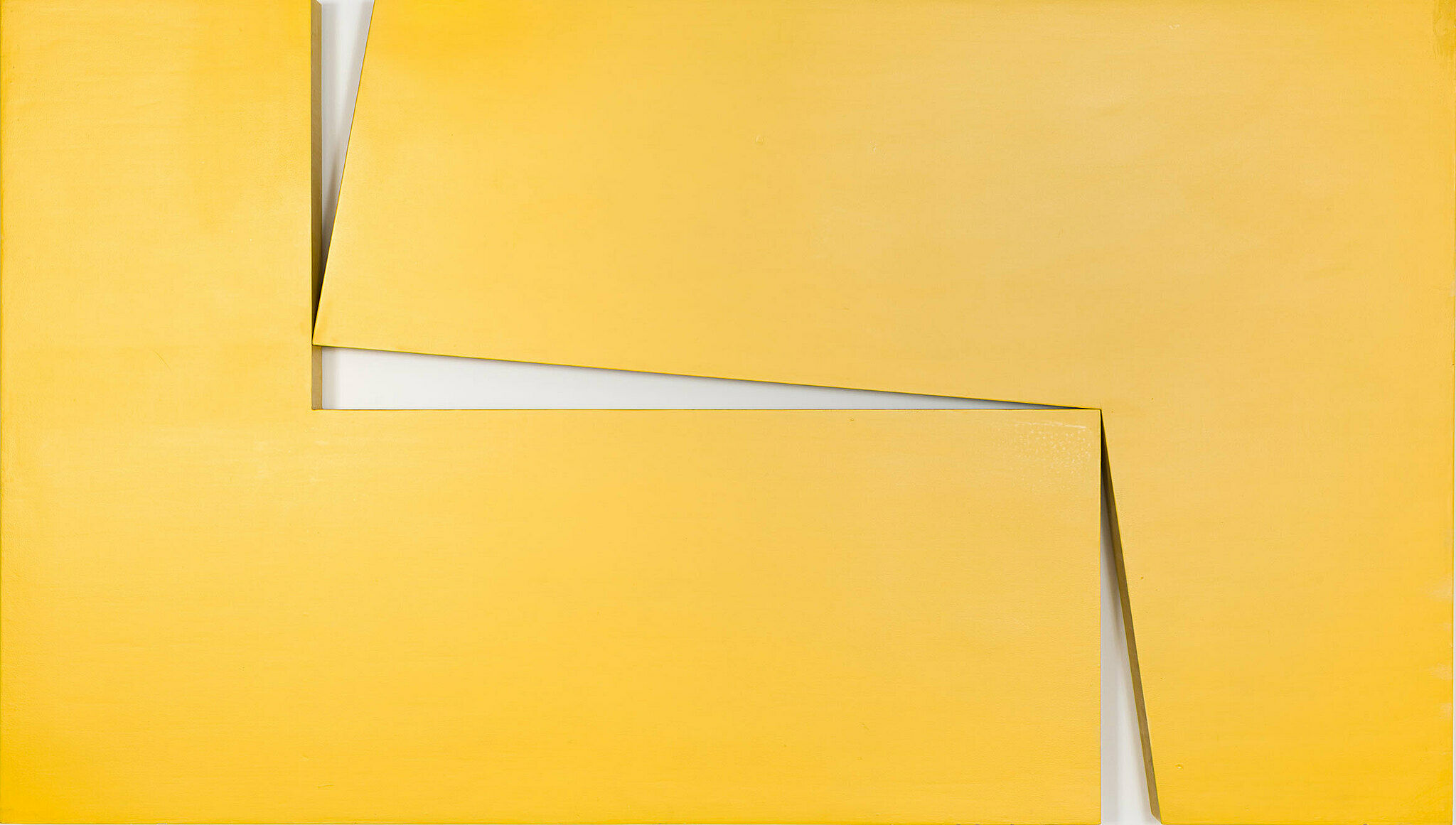
-
806
Carmen Herrera, Escorial, 1974
Audio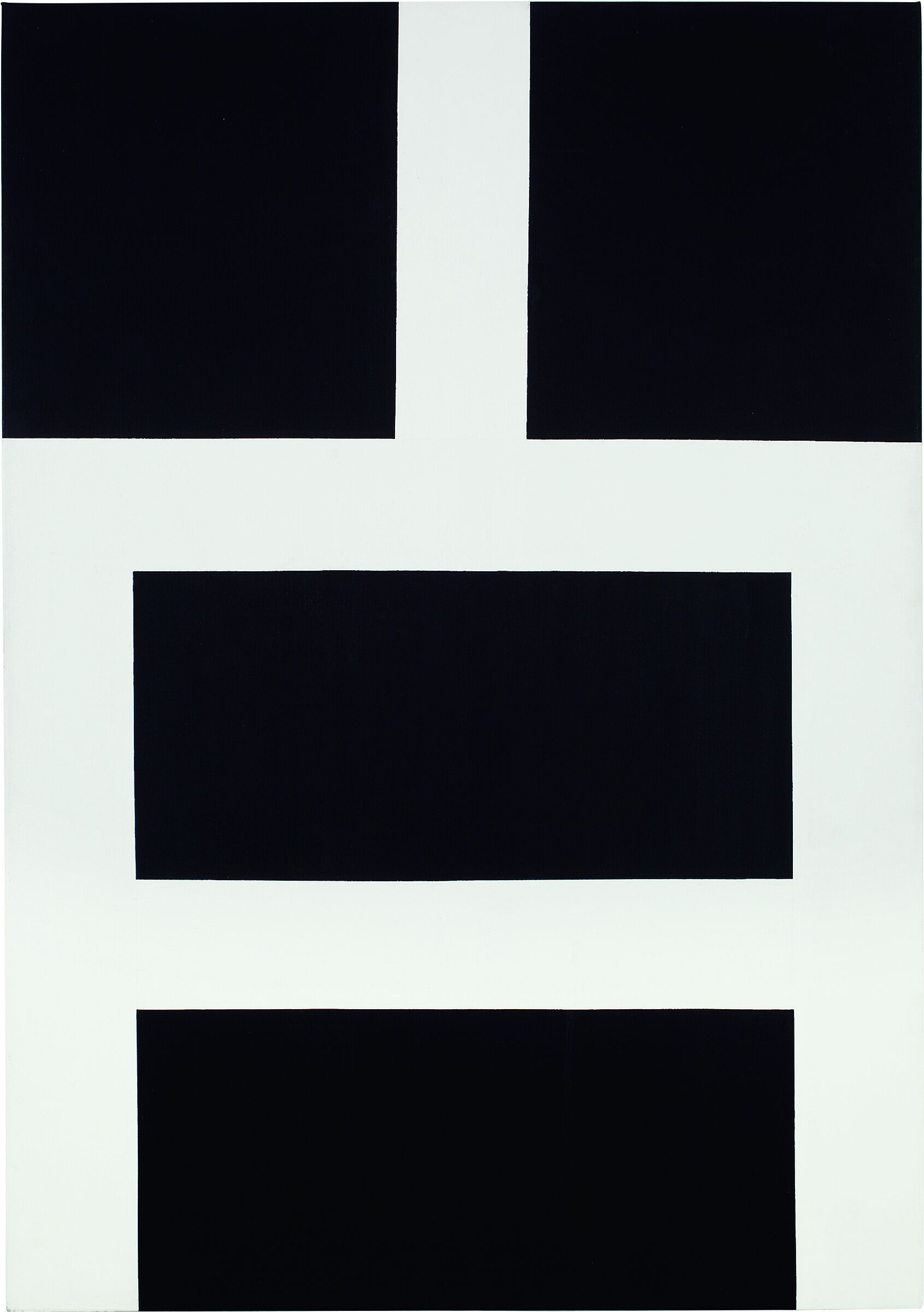
Dana Miller: Carmen Herrera is one of the most interesting artists of the twentieth century.
Narrator: Dana Miller, former Richard DeMartini Family Curator and Director of the Collection at the Whitney Museum, organized Carmen Herrera: Lines of Sight.
Dana Miller: She's still making work now in the twenty-first century at the age of 101, but this show focuses on her early work as a way to demonstrate the innovation she was making. Just how dynamic, creative, and important her early career was when she finally hit her stride.
Carmen Herrera: It took a long time until I hit on the hard-edged thing, which I love. Because I like straight lines. I like angles. I like order. In this chaos that we live in, I like to put some order. So that is why, I guess, I’m a hard-edged painter. And a geometric painter.
Dana Miller: By limiting herself, by narrowing it down to only what is most essential, she creates some of the most dynamic, eye-popping works of the 1950s, 60s, and 70s.
Narrator: The paintings in this entry gallery—each named after a day of the week—give evidence of Herrera’s rigorous process of distillation. They’re from the 1970s—the endpoint of this exhibition’s story. The beginning goes back to 1915, when Herrera was born in Havana, Cuba. As a young woman, she studied painting, sculpture, and architecture. She married an American and moved to New York in 1939. After the Second World War, the couple moved to Paris. There, she made the earliest paintings in this exhibition. You can find them in the first gallery.
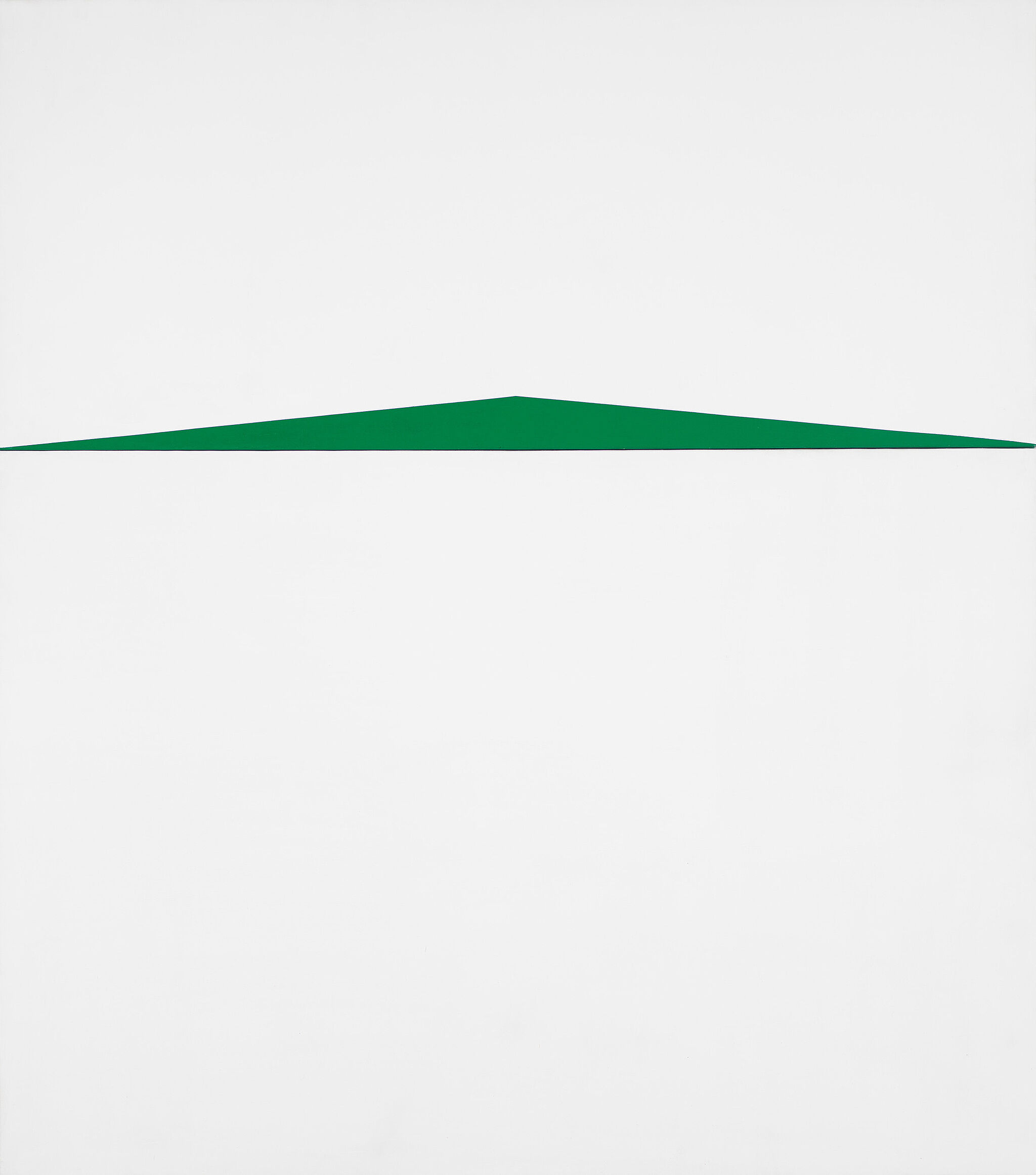
Carmen Herrera, Green and Orange, 1958. Acrylic on canvas, 60 x 72 in. (152.4 x 182.9 cm). Collection of Paul and Trudy Cejas © Carmen Herrera; photograph by Chi Lam
Dana Miller: In A City, we see a work that Herrera made early during her Paris stay. It's made on a very thick burlap fabric, and this is because, at the time, right after World War II, artists couldn't actually get all of the materials that they needed, so Herrera and a number of her peers would scavenge for materials. This particular burlap, they found at an agricultural store. It's a material that was normally used on horses or oxes, to protect them from the saddle or the yoke, and this is what they were using instead of regular duck canvas to make their paintings.
You see in this painting a very sharp triangular form that starts to appear more regularly at this time and eventually becomes one of the key icons or symbols in her alphabet of forms.
This painting is unusual in that it has a title. A City is the title. It's a reference to something exterior, which starts to fall away in her work from Paris. The abstraction becomes less referential. It's not pointing to something in her surroundings. But here, these triangular forms resemble spires or perhaps the tower of a gothic cathedral.
Carmen Herrera, A City, 1948. Acrylic on burlap, 48 x 38 in. (121.9 x 96.5 cm). TXMA Investments, LP © Carmen Herrera; courtesy Lisson Gallery
Dana Miller: In 1952, Herrera makes this leap, this breakthrough with a series of black and white paintings that she makes in Paris. You see here in Untitled that she's reduced her composition to just two colors, black and white.
There's this diagonal almost W, this zigzag that goes through the painting, but it's not actually made through a line. It's made through the reversal of colors, the stripes reverse. So what she's done was basically eliminate any sort of outline in her work and reduce the entire form to blocks of color, stripes of color.
She's also started to incorporate the frame into her composition. If you look carefully, the wooden frame that wraps around the painting is actually painted as well. She's creating this pattern using the frame.
The third thing that she's doing is using different panels. She's found a way to render line, not just with paint, but with the edge of the canvas. And the division, the separation between the two panels is another way of rendering a line without actually making a line.
This was really, really innovative at the time. For somebody to be thinking about the painting as more of an object and using the canvas not to depict something as if the painting were a window onto the world, but to draw attention to the actual physical aspects of the painting was pretty revolutionary.
Carmen Herrera, Untitled, 1952. Acrylic on canvas with painted frame, four panels: 25 x 60 in. (63.5 x 152.4 cm) overall. Museum of Modern Art, New York, NY; gift of Agnes Gund and Tony Bechara © Carmen Herrera
Carmen Herrera: I always remember something that people say is a cliché. “Less is more.” I do it all the time. I have something that I think is finished, and then take something out, and it’s better!
Narrator: When Herrera came back to New York in 1954, the feverish, emotive brushwork of Abstract Expressionism was still very much in favor. But in paintings like this one, Herrera—along with artists like Ellsworth Kelly and Frank Stella—began to introduce cool new sensibility, and a clear, formalist approach. Unlike her male peers, however, Herrera did not find recognition early on. Director Alison Klayman interviewed Carmen Herrera for her film on the artist, The 100 Years Show.
Carmen Herrera: Women had it very hard at the beginning. The fact that you were a woman was against you. There was a gallery here called Rose Fried. She’s dead now; that’s why I can tell this story. Somebody showed her my work; she liked it very much. So I said, well, maybe she’s going to give me a show! So I go to the gallery and she says this to me, “you know, you can paint circles around any man that I have in this gallery, but I am not going to give you a show, because you are woman.” A woman, to a woman! I walked out of that place as if someone has smacked me! I was so overwhelmed that a woman would have that mentality.
Carmen Herrera, Rondo, 1958. Acrylic on canvas, diameter: 39 in. (99.1 cm). Ella Fontanals-Cisneros Collection © Carmen Herrera
Dana Miller: In this work from 1966 to '67, Herrera is using the green triangles to create a very simple—seemingly simple composition. If you look carefully, you'll see that the green triangles wrap around the bottom edge and the top edge of the canvas. She's thinking about this work as it might be seen on a white wall. She's also thinking about this work as if it were almost a three-dimensional object, painting the top and the bottom of the canvases. It's as if she was taking a rectangular block and carving into it.
I think, in these works, you start to sense that Herrera was, early on in her career, making sculpture—which was the case when she started out in Havana; many of her classes and her training was in sculpture—and that she also studied to be an architect. She left Havana in 1939 after taking a year of architecture training at the university.
Narrator: The nine works hanging in this gallery are all from Nine Herrera’s Blanco y Verde series. Take a moment to compare them. Herrera has said that this series was the most significant of her career.
Dana Miller: For Herrera, this was a particular color combination and arrangement of shapes that appealed to her. It was something that fascinated her. She said the color combination of green and white was like saying yes and no. She went back to this again and again between the years 1959 and 1971, experimenting with different combinations of the triangles, different combinations of white rectangles. It's almost as if she's taking tiles like a quilter might have a pattern, and rotating them, turning them, and twisting them into various different geometric patterns until she finds the one that best suits her statement.
Carmen Herrera, Blanco y Verde, 1966-67. Acrylic on canvas, 40 x 70 in. (101.6 x 177.8 cm). Private Collection © Carmen Herrera; photograph by Ron Amstutz
Narrator: In this work, Amarillo “Dos”, Hererra translated one of her Blanco y Verde compositions—which hinted at volume—into three dimensions.
Dana Miller: What Carmen has done was taken the white from that painting and rendered it in wood. The green triangles that were in that painting are now empty negative space. So, this could technically be one of her monochrome paintings. It's one of the few instances where she used only one color, except of course that she knows that the negative space is going to provide the second color.
In the mid 1960s, Carmen had the idea to make wooden structures, to make three-dimensional forms. She said there were certain paintings of hers that were crying out to be sculptures. And because of a lack of means, a lack of space, she wasn't really able to complete them to her satisfaction until the early 70s.
Narrator: In this room, you’ll find several preparatory sketches for sculptural works that Herrera made during the 1960s. Their compositions relate closely to many of the Blanco y Verde paintings on view in the previous gallery, and to the wooden structures in this room.
Carmen Herrera (b. 1915), Amarillo “Dos”, 1971. Acrylic on wood, 40 × 70 × 3 1/4 in. (101.6 × 177.8 × 8.3 cm). Maria Graciela and Luis Alfonso Oberto Collection © Carmen Herrera; photograph by Chi Lam.
Dana Miller: Escorial is a clear reference to a building, San Lorenzo de El Escorial in Spain. This is a building that particularly appealed to Herrera. She said that she felt at home there. It's famous for its very clear geometry, for its lack of ornamentation, for its very stark lines. And given Herrera's predilection for clean lines and clear geometries, it's not a surprise that she would gravitate towards this building.
The building was made in honor of Saint Lawrence, San Lorenzo, who was famously martyred by being, I guess the crude way to say was grilled, barbecued on a gridiron. The building, Escorial, is designed so that the floor plan resembles a gridiron.
And that is what Herrera is referencing here with this arrangement of black and white forms. And when Herrera talks about this work, it's often with a little bit of a smile, a wry sense of humor that she's created a very simple geometric, clean, spare painting but that it's a barbecue, as she says.
Narrator: This is the last painting on our tour. Herrera has continued to develop her pictorial language for more than forty years.
Carmen Herrera: When I was younger, nobody knew I was a painter. Now they’re beginning to know I’m a painter. I waited a long time. There is a saying. If you wait for the bus, the bus will come. I say, yeah. I wait almost a century for the bus to come (laughs). And it came! (laughs harder)
Dana Miller: Herrera's still working almost every day in her studio. She gets up, and she goes to her drawing table near the window, and gets out her pencils, and her rulers, and stack of tracing paper, and starts working through various compositional iterations. For her, she says it's the beauty of the straight line that keeps her going.
Narrator: Thank you for joining us today. Special thanks to Alison Klayman, whose documentary The 100 Years Show provided the interviews with Carmen Herrera.
Carmen Herrera, Escorial, 1974. Acrylic on canvas, 60 x 42 in. (152.4 x 106.7 cm). Courtesy the artist and Lisson Gallery © Carmen Herrera
0:00
0:00