2019 Biennial
2019
“It's a snapshot of contemporary art making in the United States today.”—Jane Panetta, 2019 Biennial co-curator
Hear from the artists and curators about works in the exhibition.
-
500
Introduction
Audio -
100
Jeffrey Gibson, Keep on Moving
Audio -
101
Diane Simpson
Audio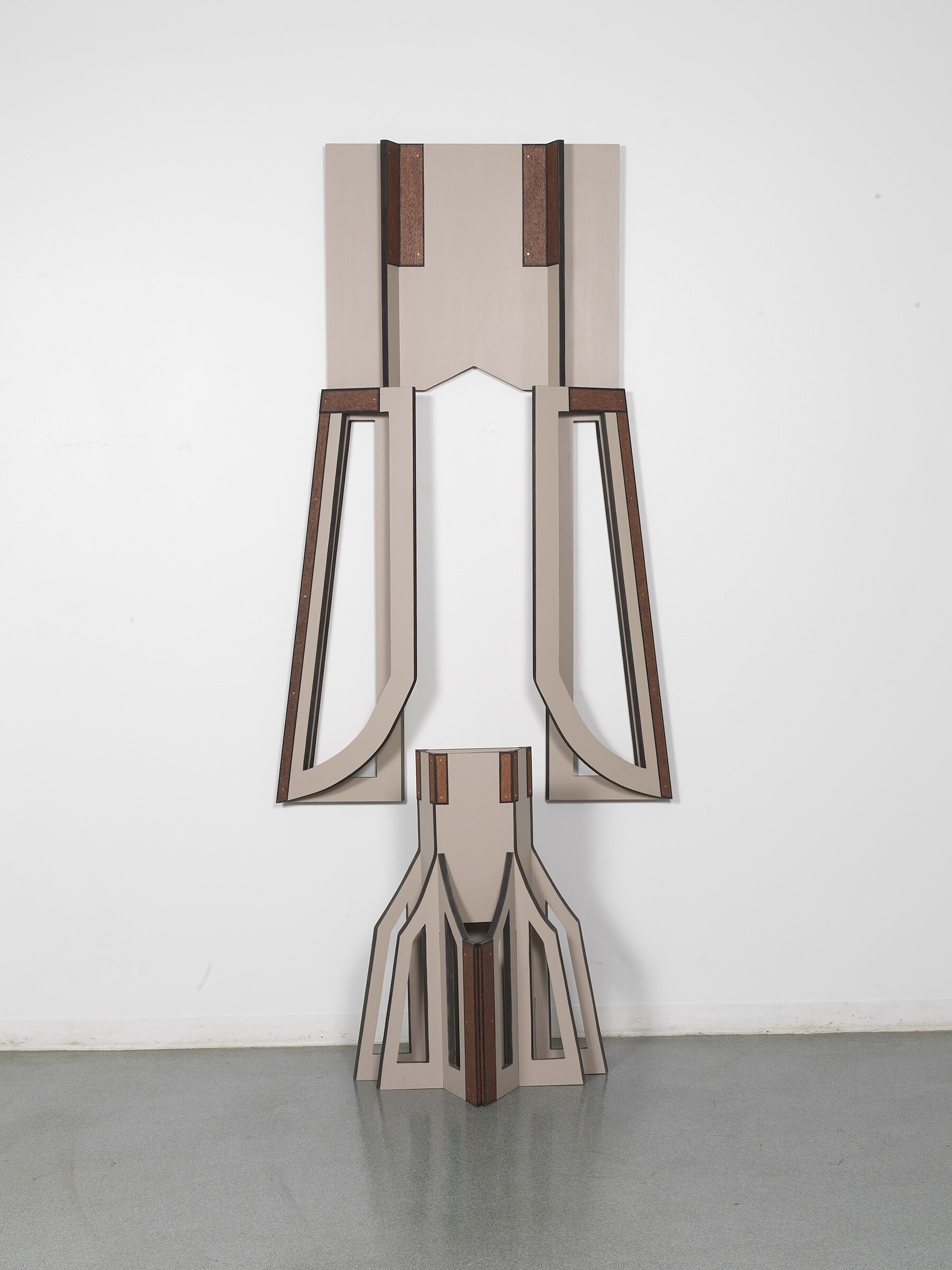
-
102
Nicholas Galanin, Let them enter dancing and showing their faces: Shaman
Audio -
501
Kota Ezawa
Audio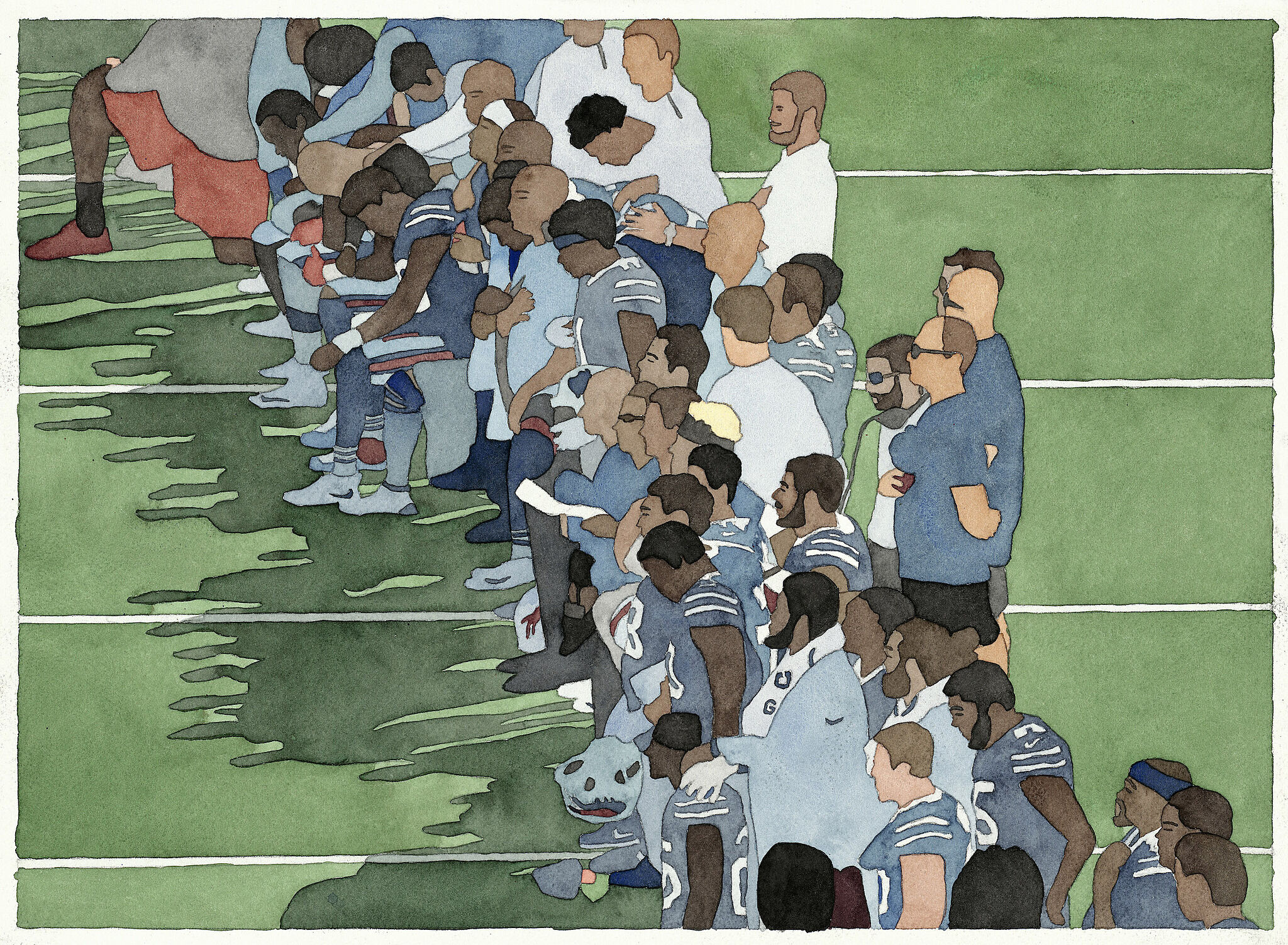
-
502
Iman Issa
Audio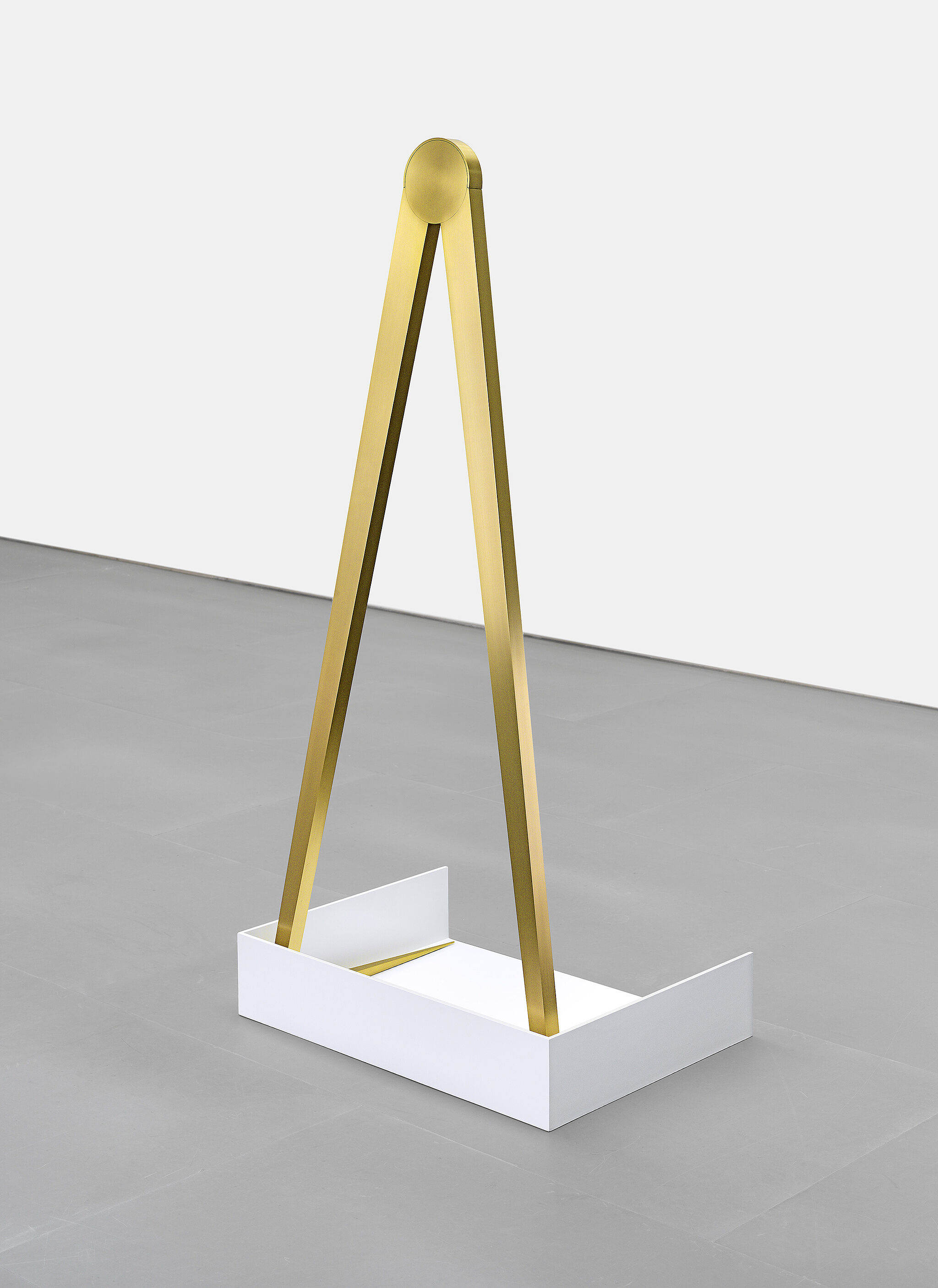
-
503
Milano Chow
Audio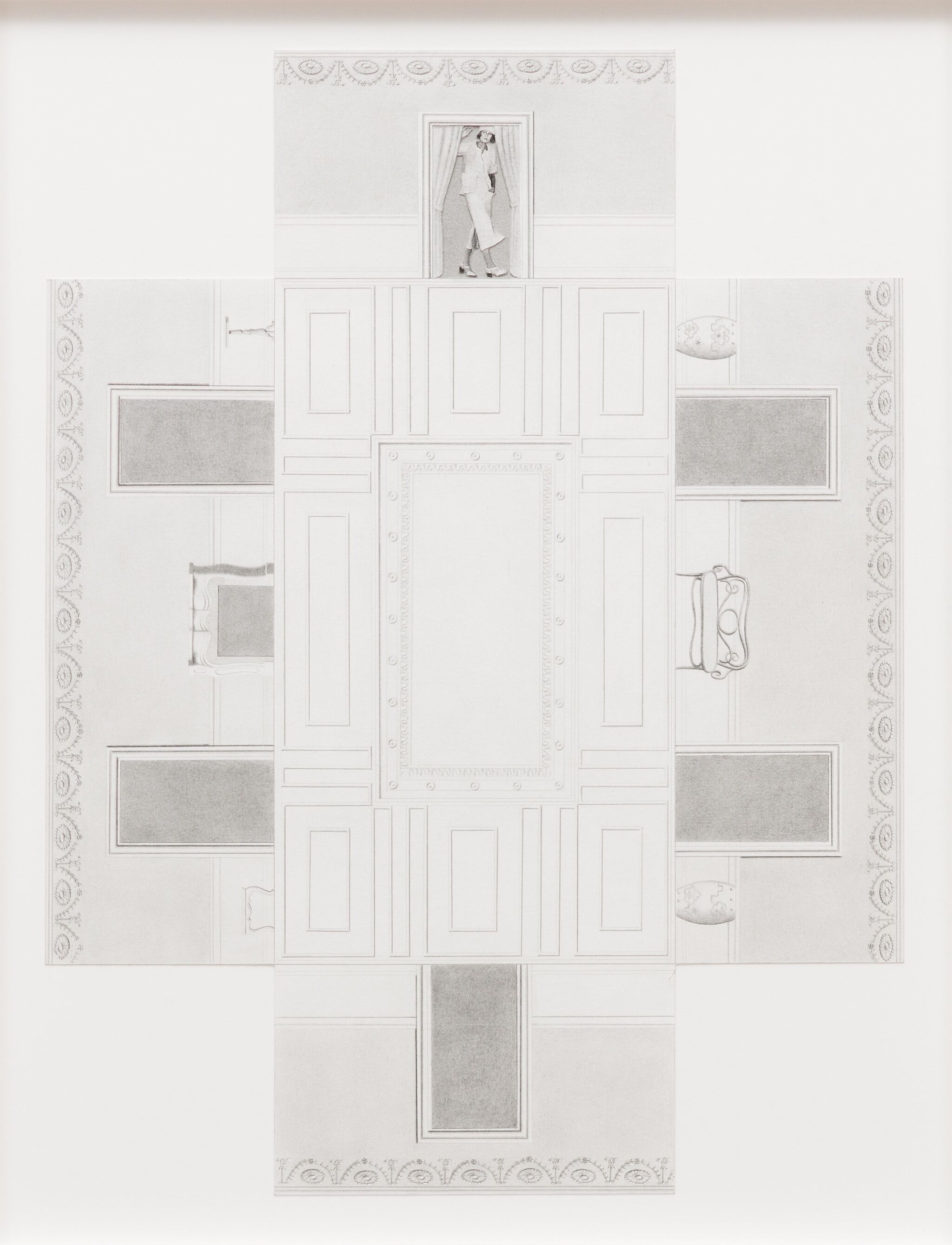
-
504
Pat Phillips
Audio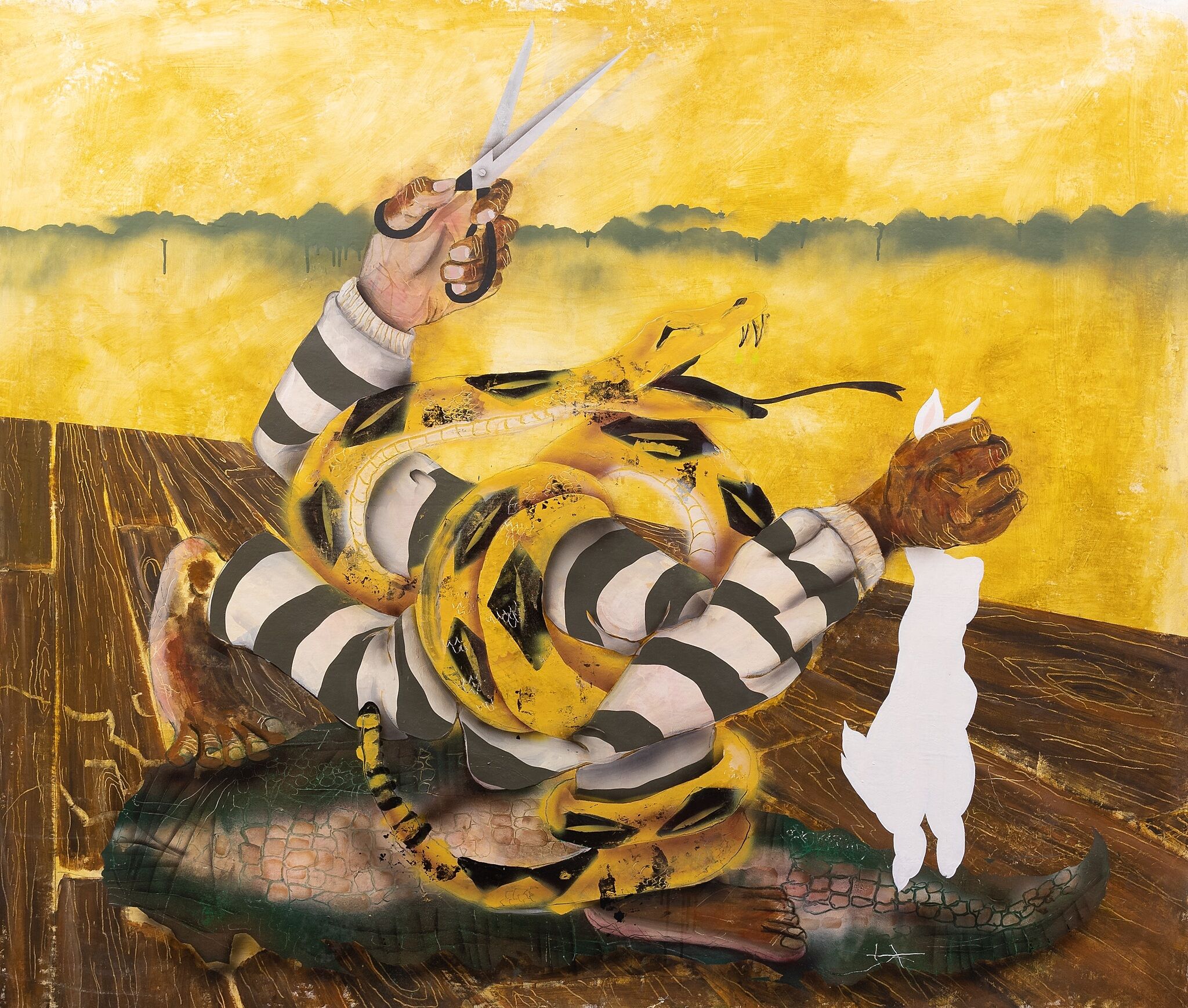
-
506
Jeanette Mundt
Audio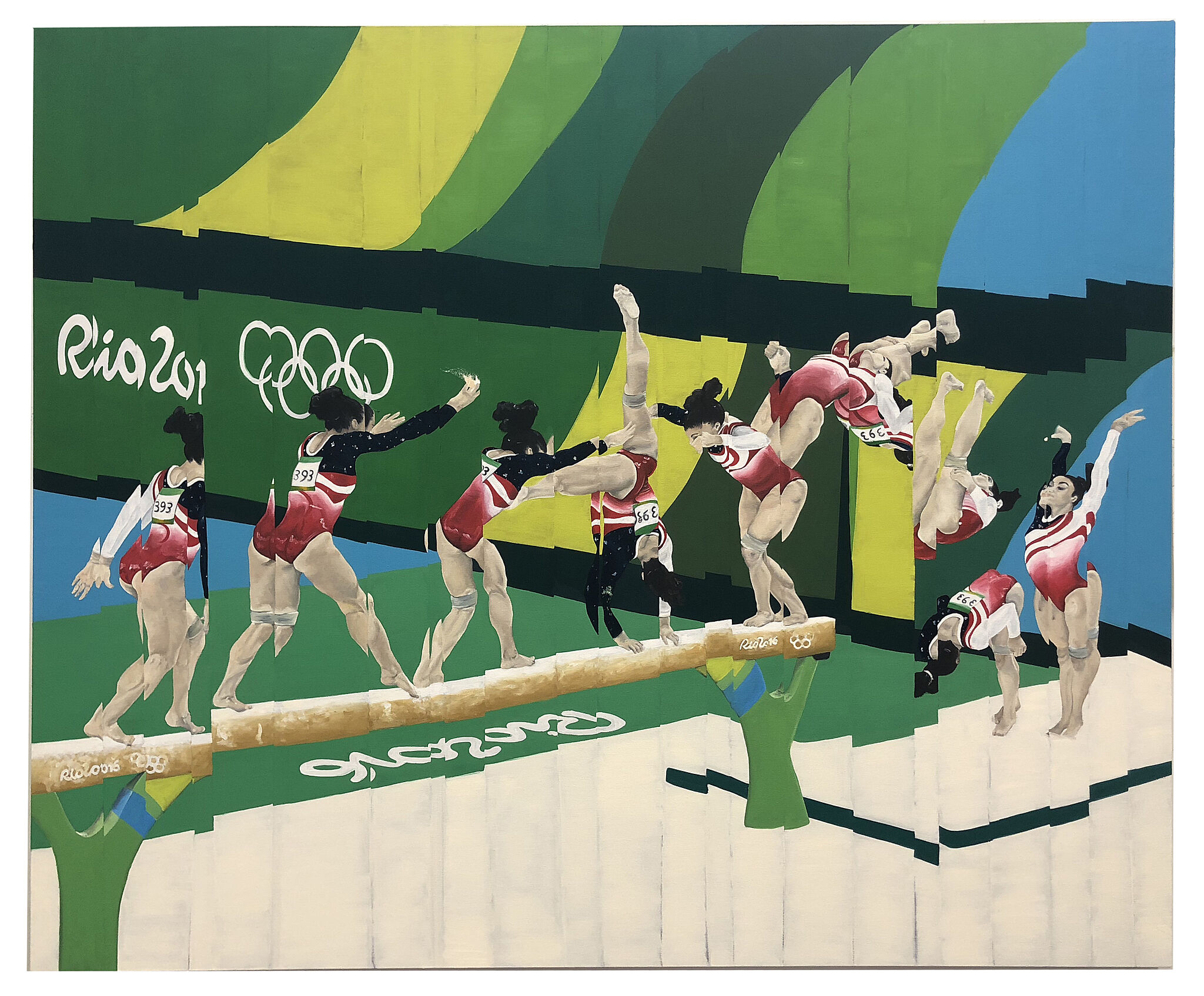
-
508
Jeffrey Gibson, PEOPLE LIKE US
Audio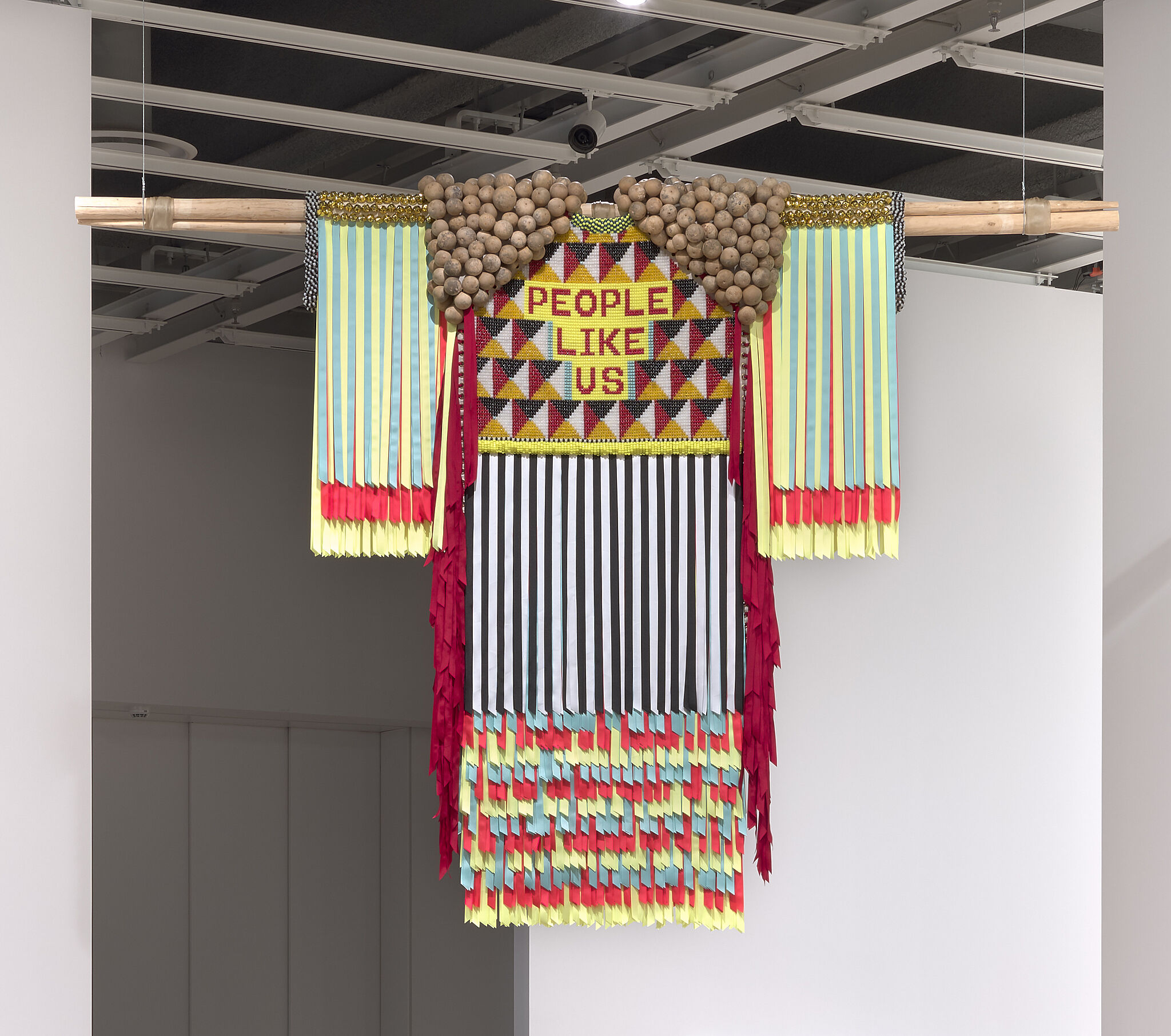
-
509
Christine Sun Kim
Audio
-
510
Alexandra Bell
Audio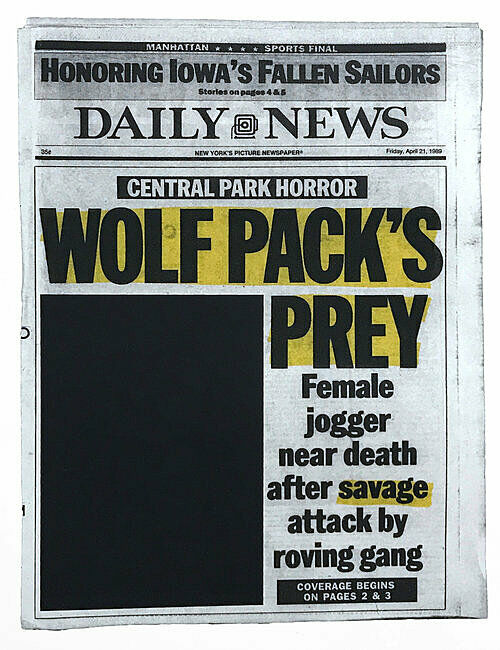
-
511
Kyle Thurman
Audio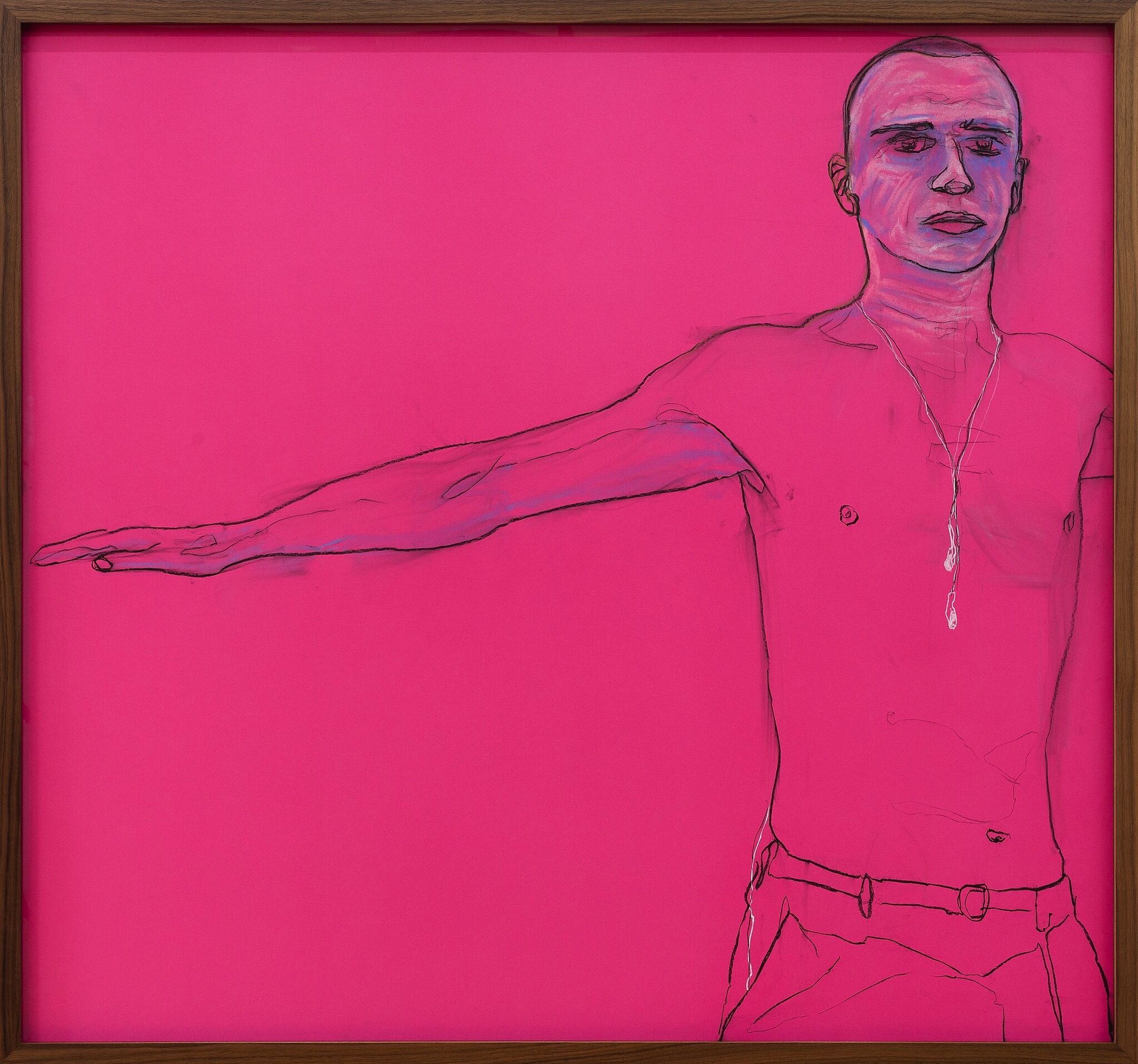
-
512
Marcus Fischer
Audio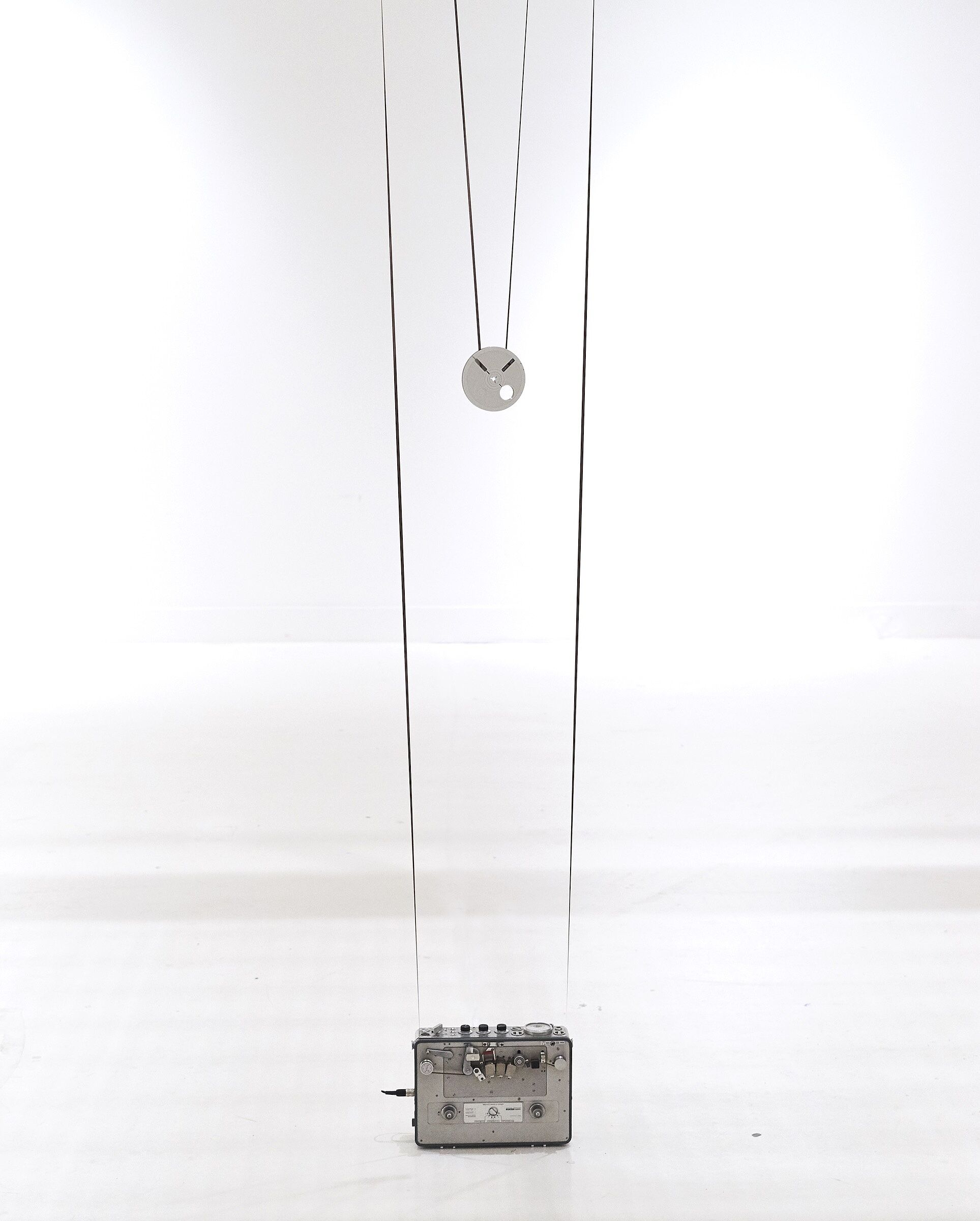
-
513
Agustina Woodgate
Audio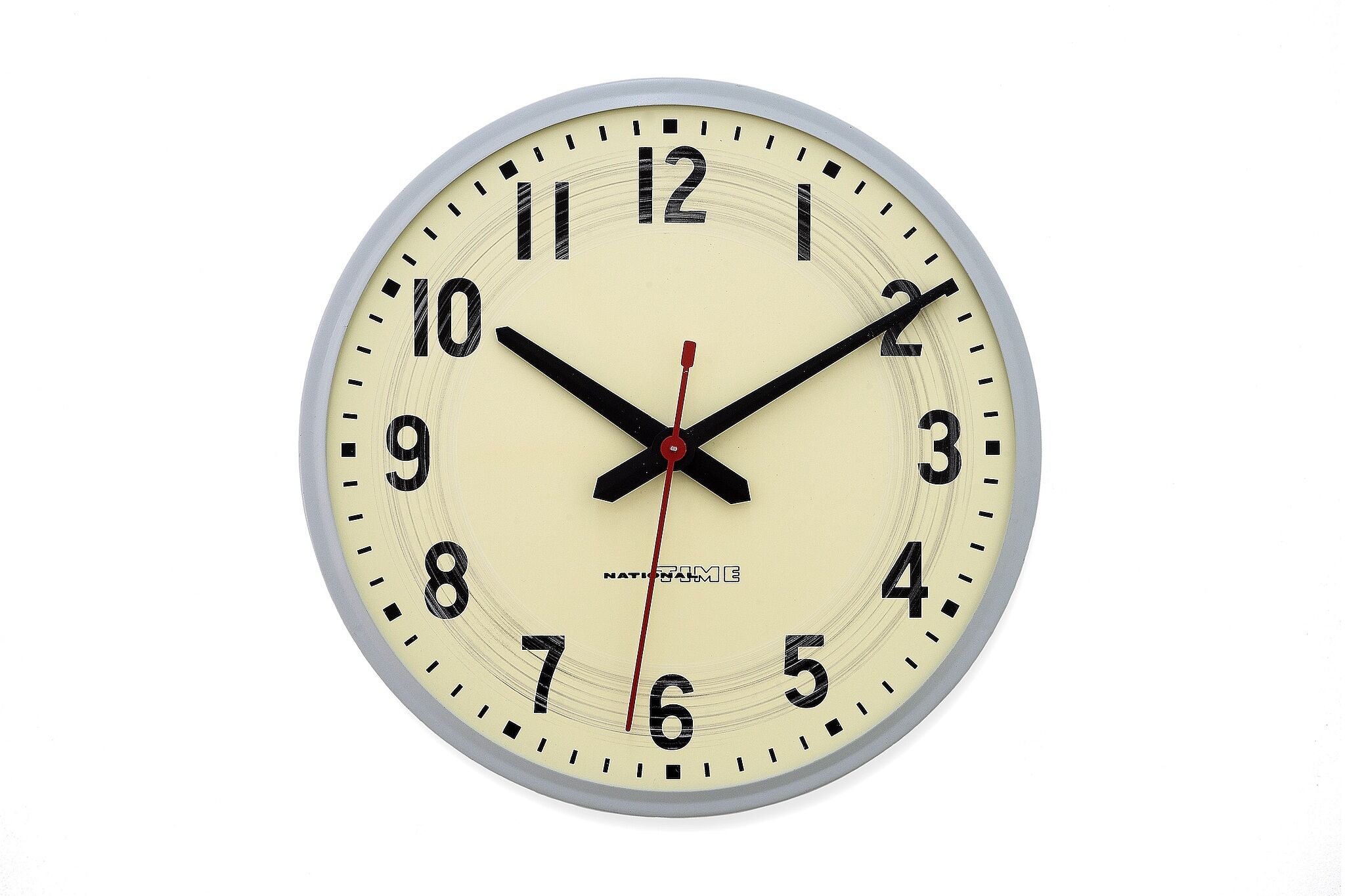
-
514
Paul Mpagi Sepuya
Audio -
515
Matthew Angelo Harrison
Audio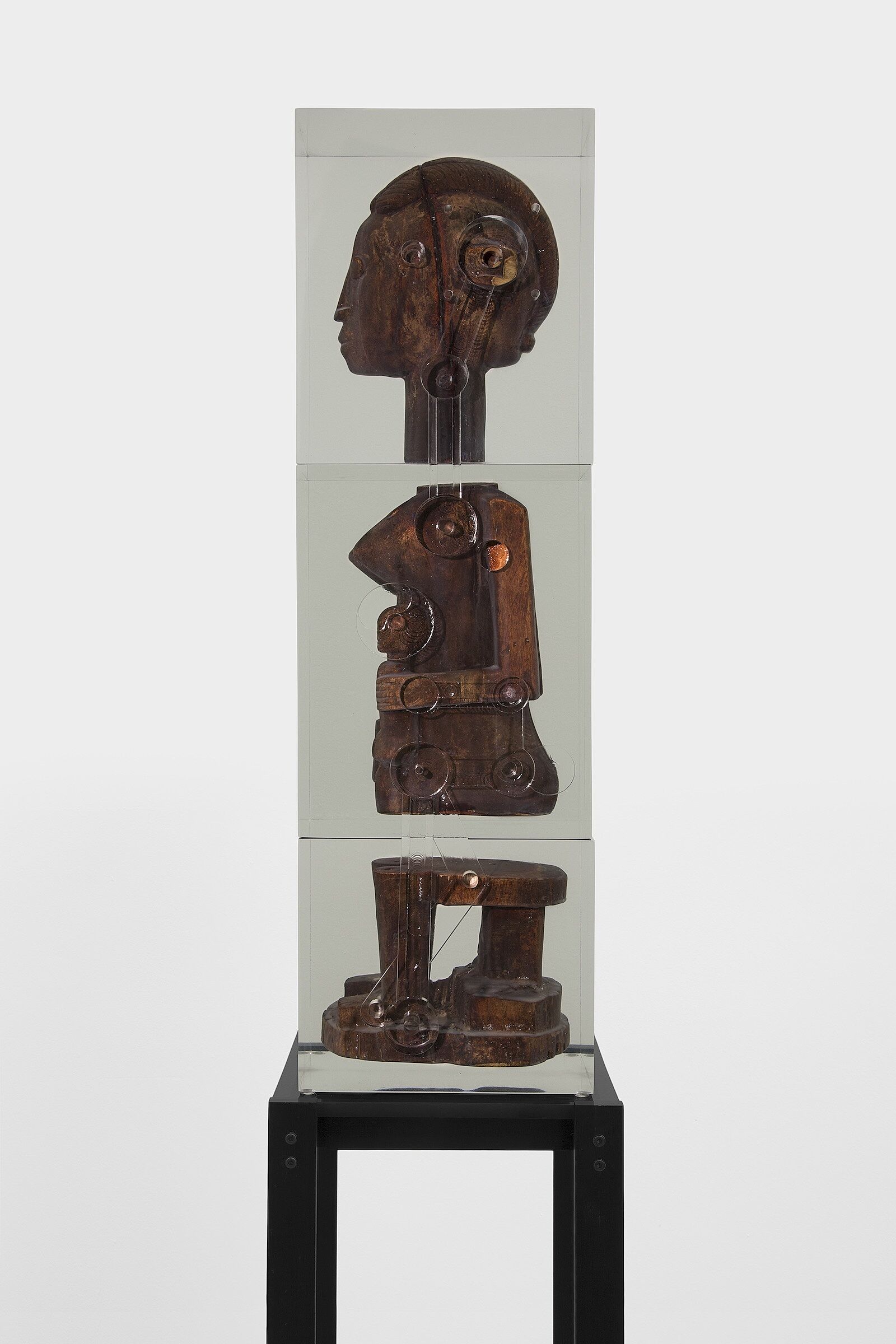
-
516
Eric N. Mack
Audio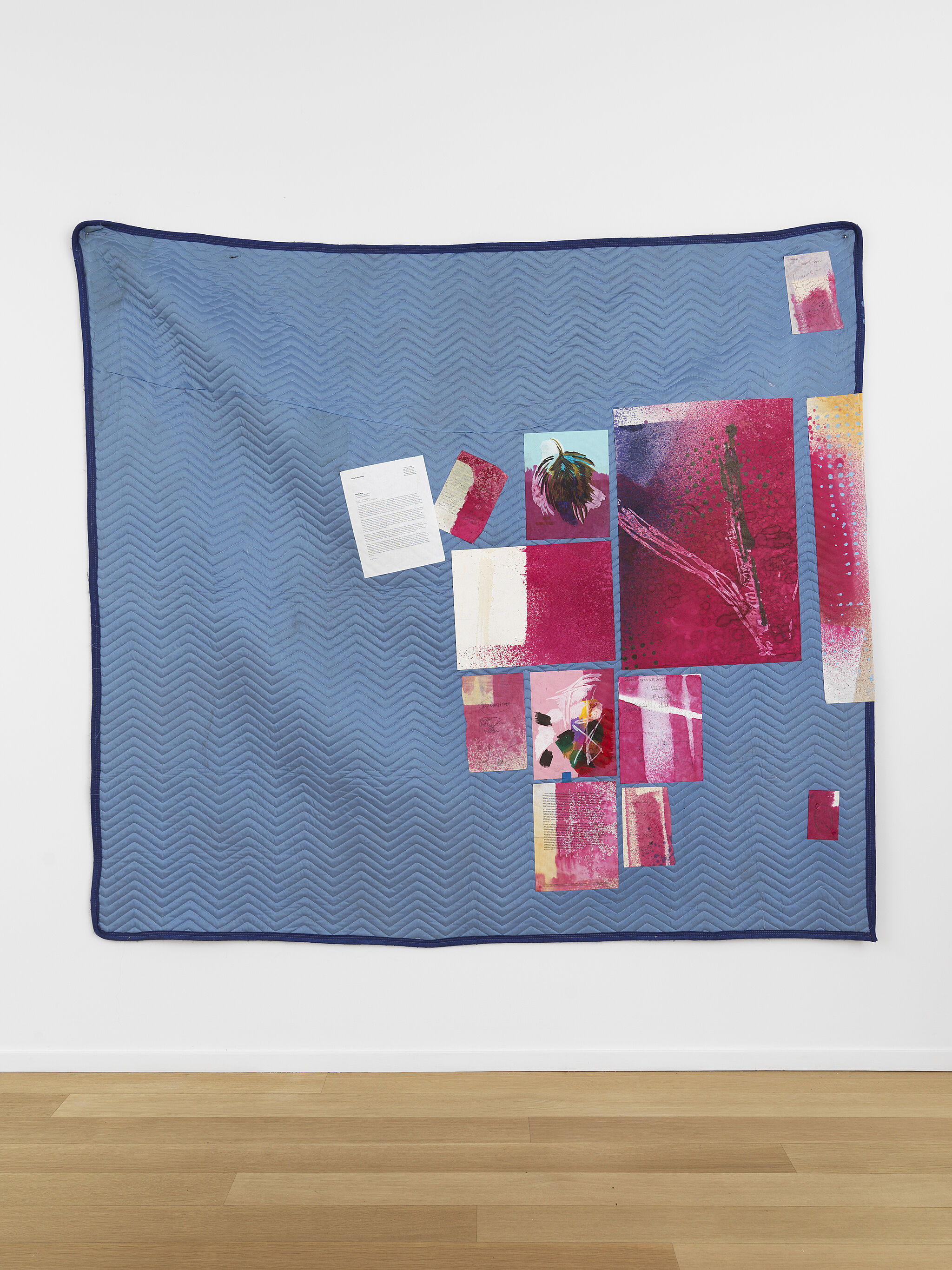
-
517
Jennifer Packer
Audio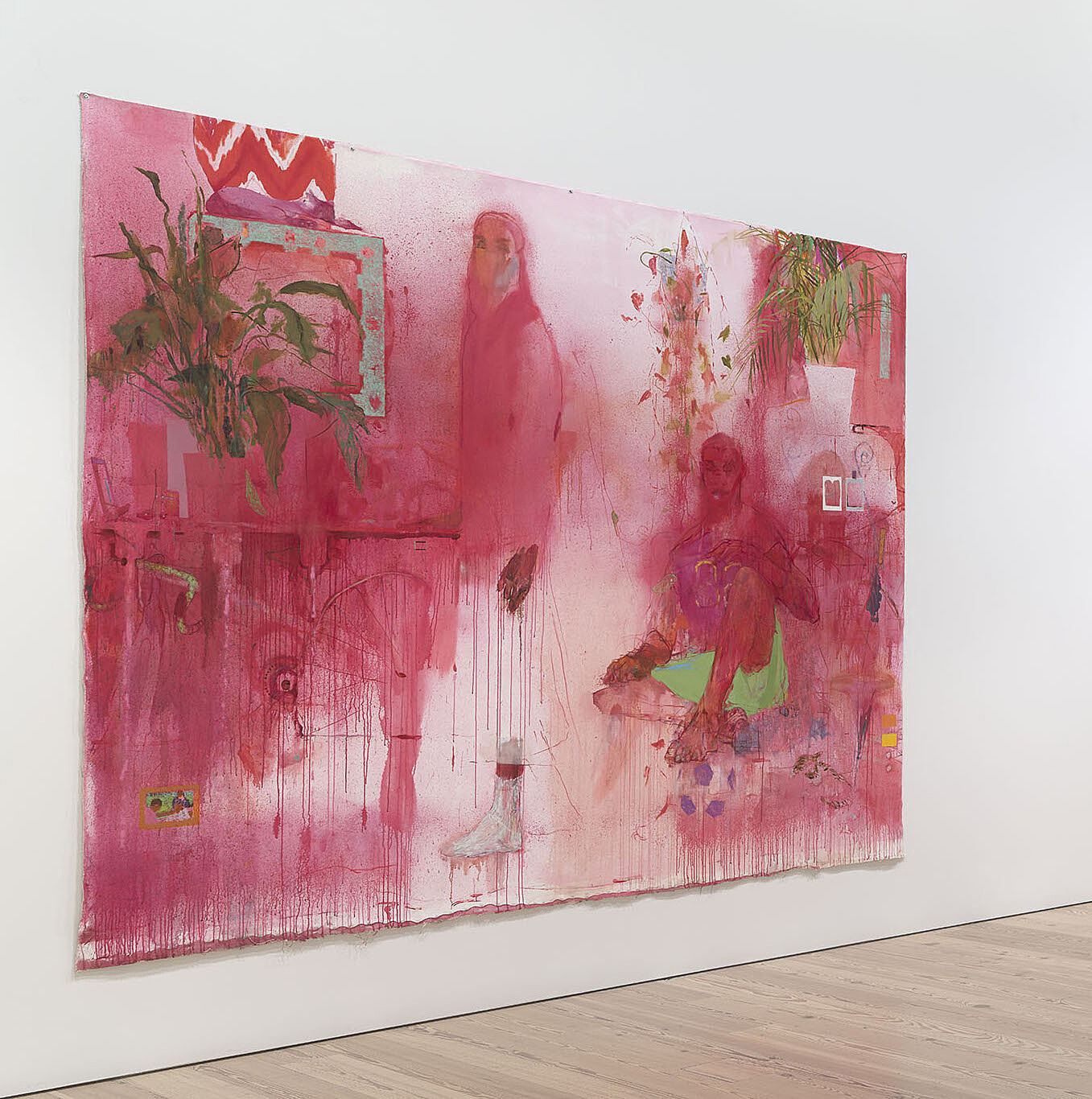
-
519
Janiva Ellis
Audio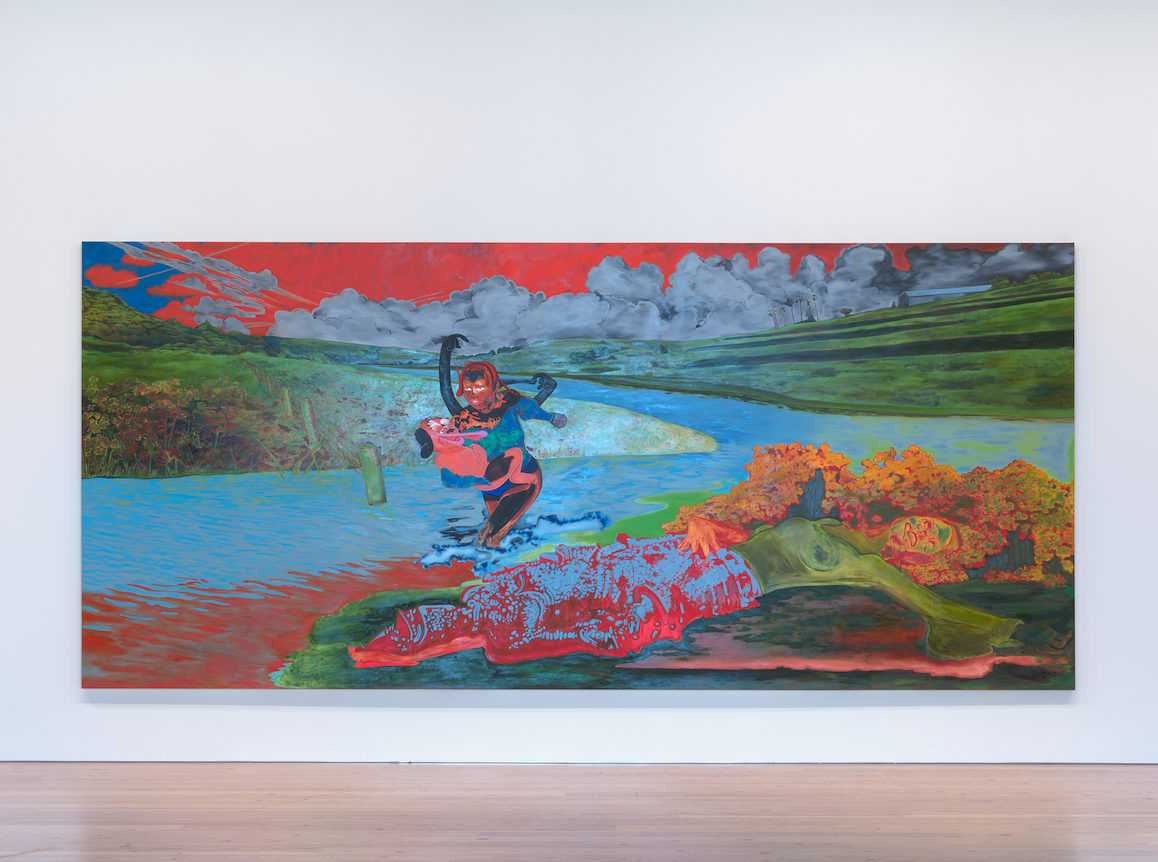
-
520
Keegan Monaghan
Audio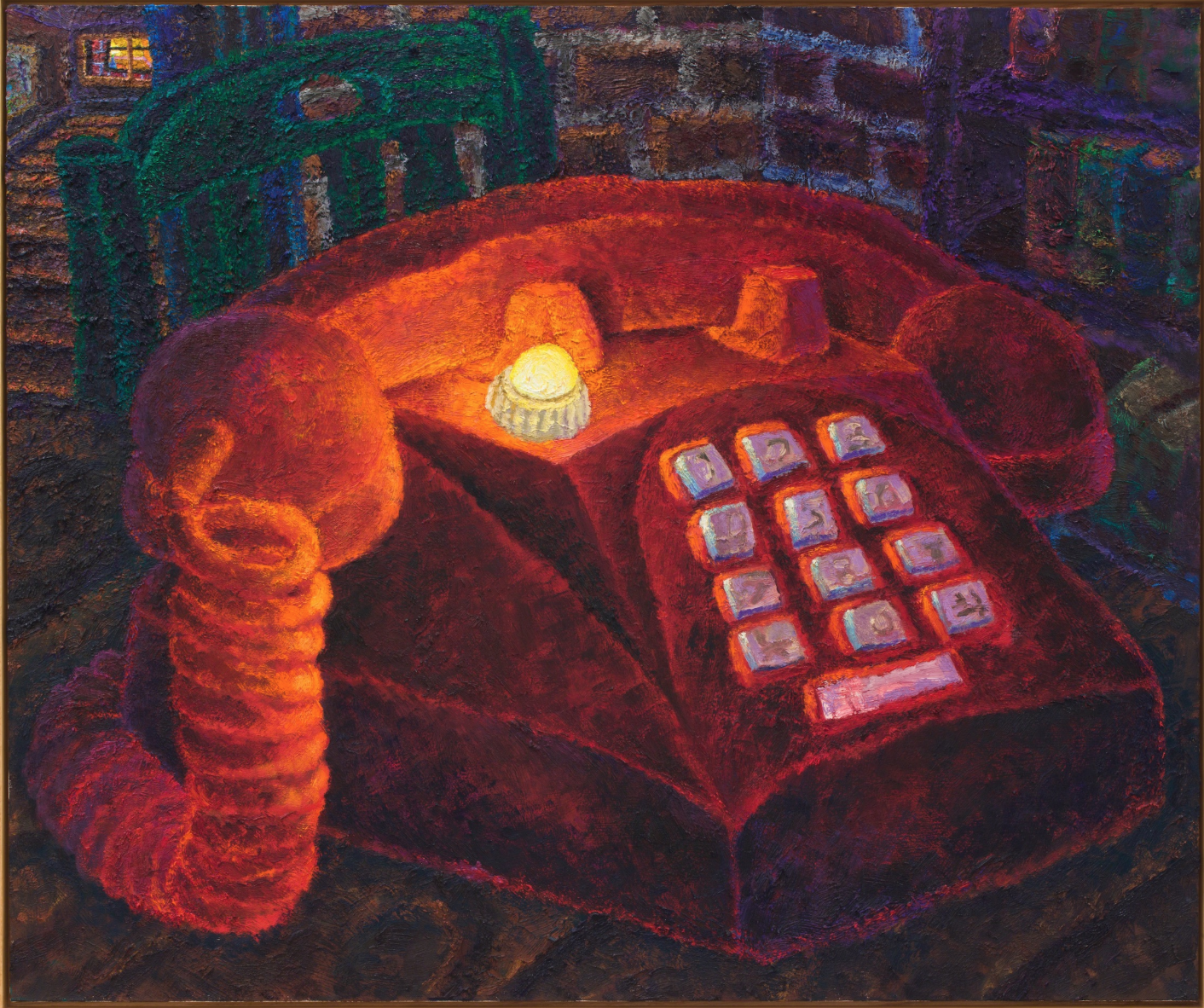
-
518
Heji Shin
Audio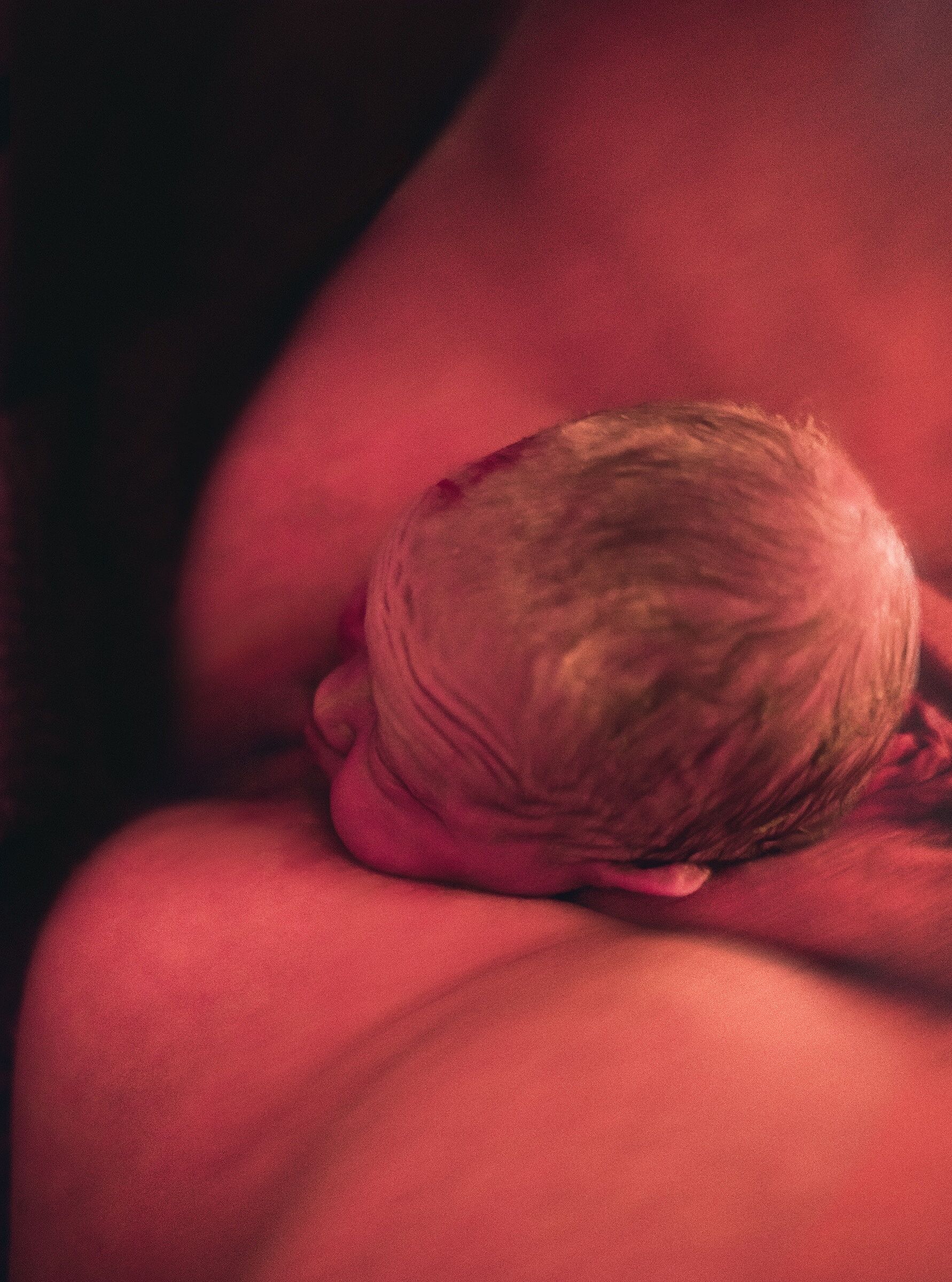
-
521
Simone Leigh
Audio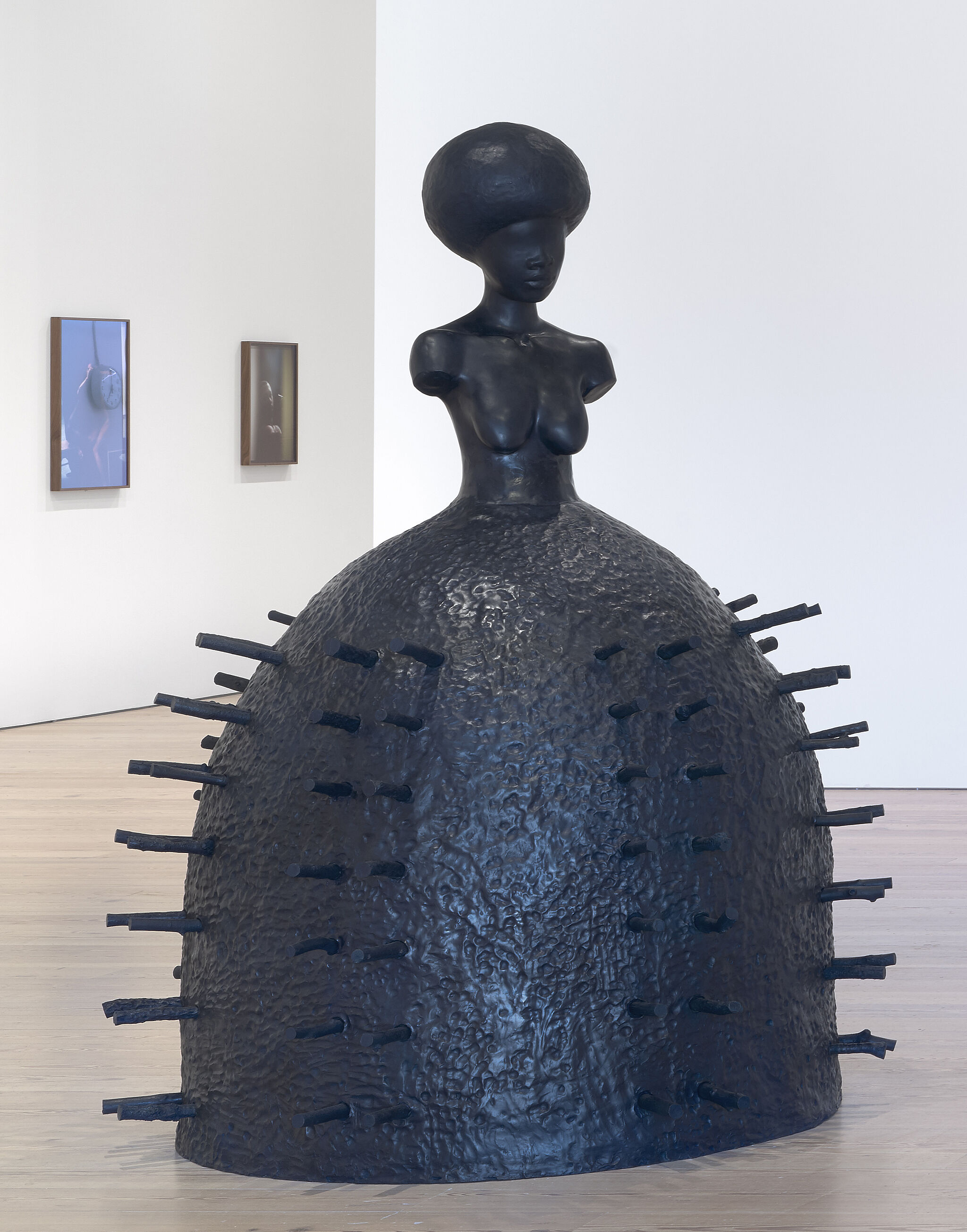
-
523
John Edmonds
Audio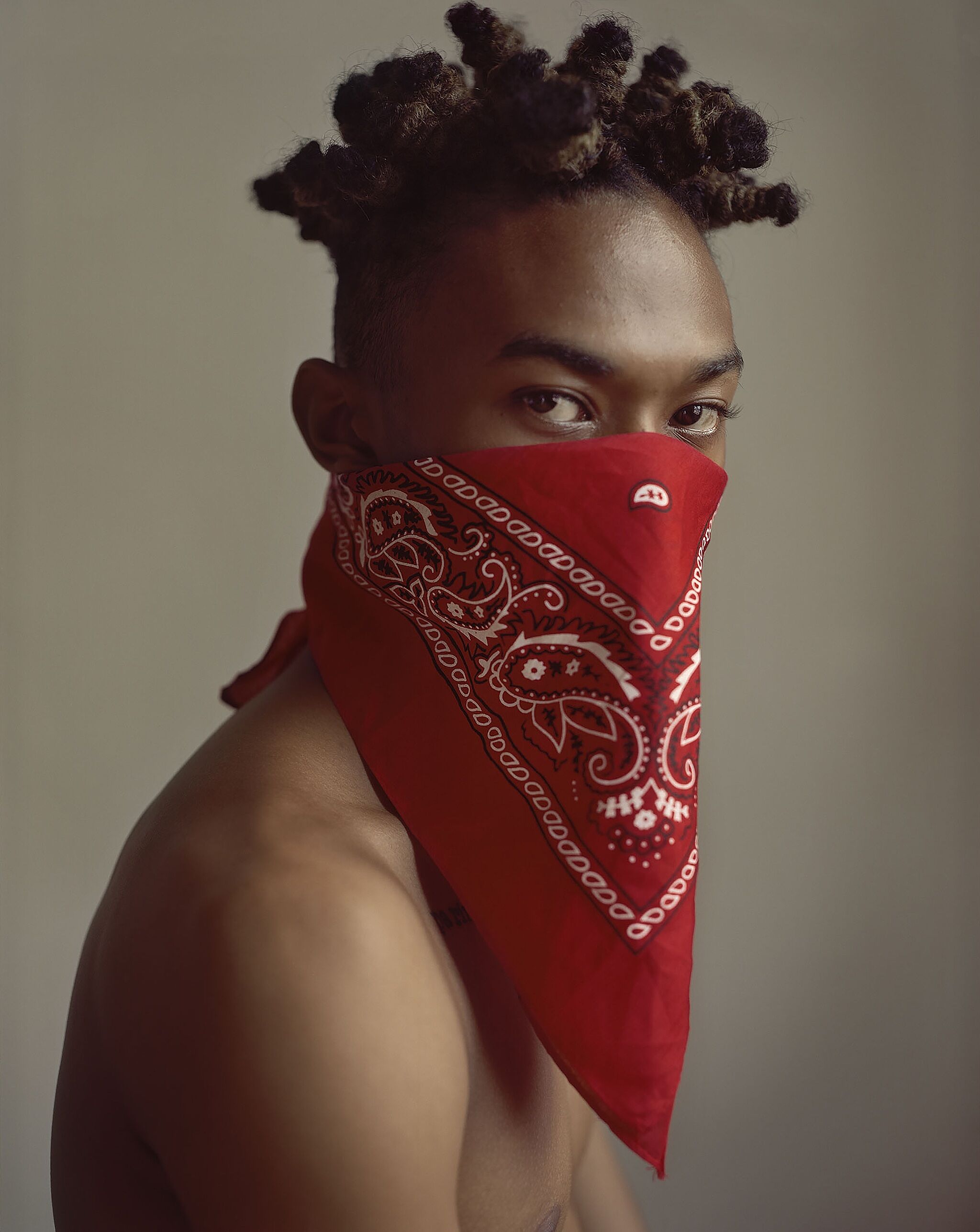
-
522
Brendan Fernandes
Audio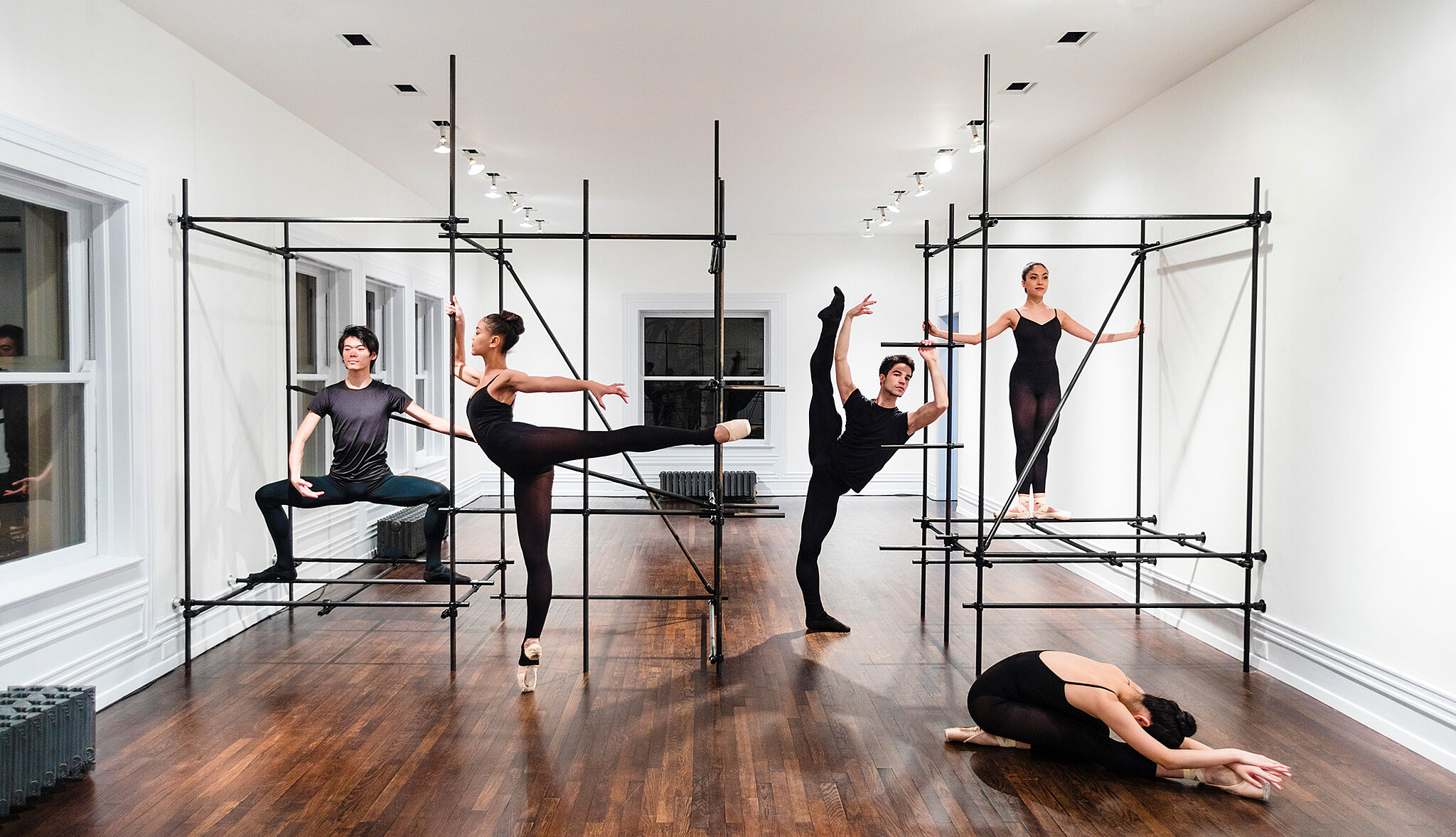
-
601
Calvin Marcus
Audio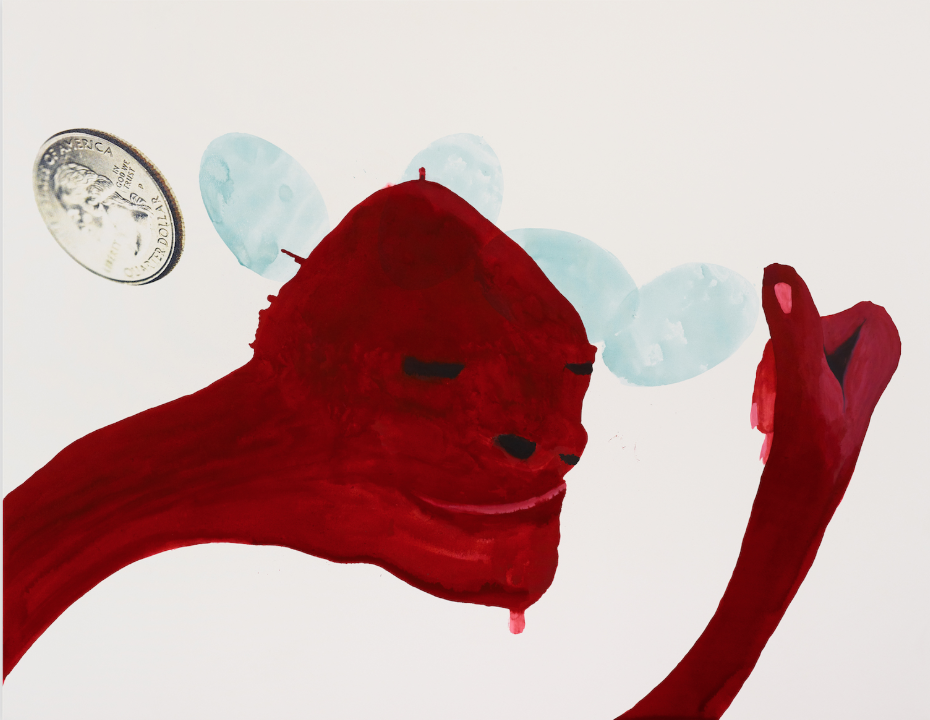
-
602
Daniel Lind-Ramos
Audio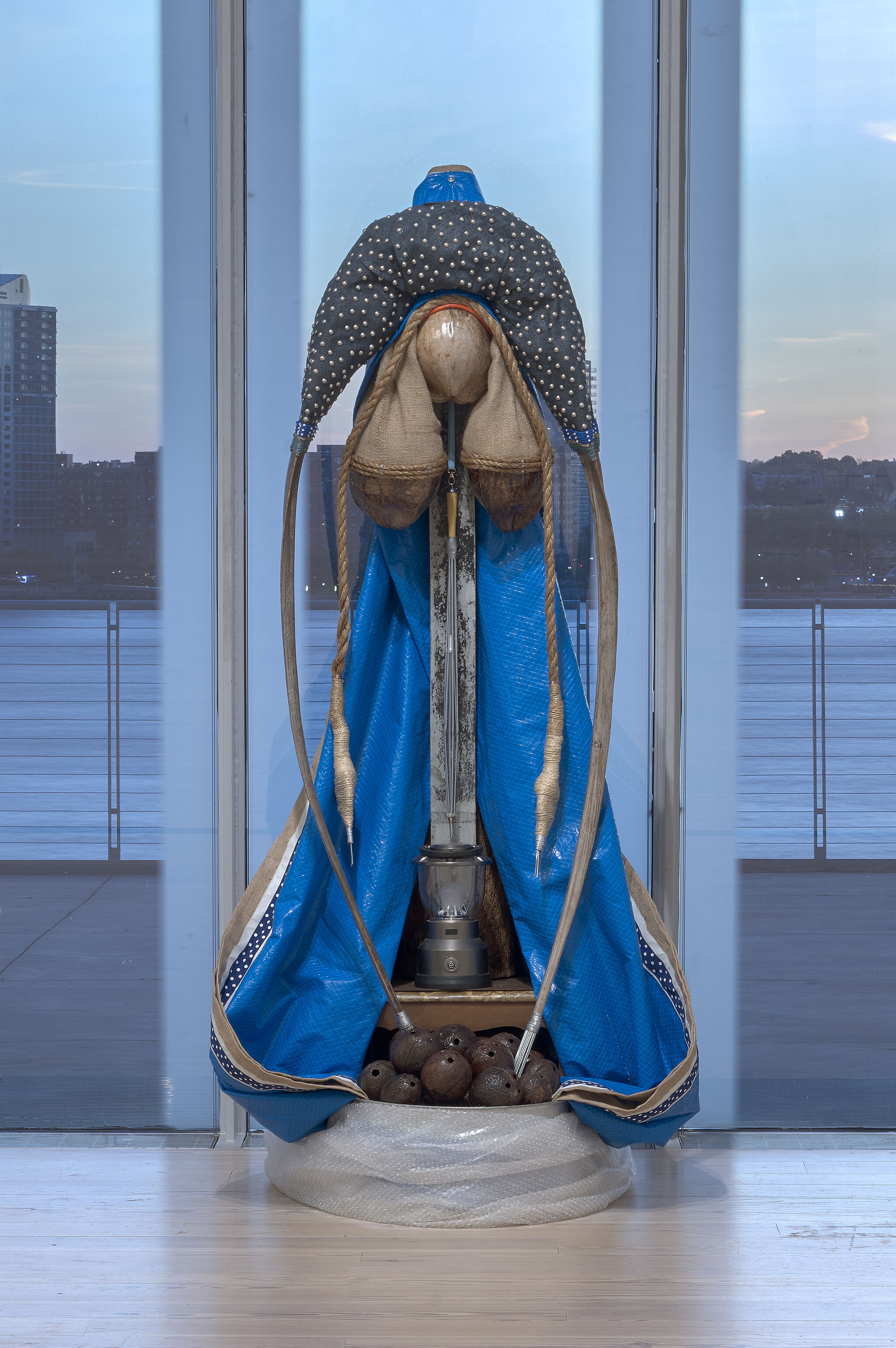
-
603
Transcription: Ellie Ga
Transcription -
604
Eddie Arroyo
Audio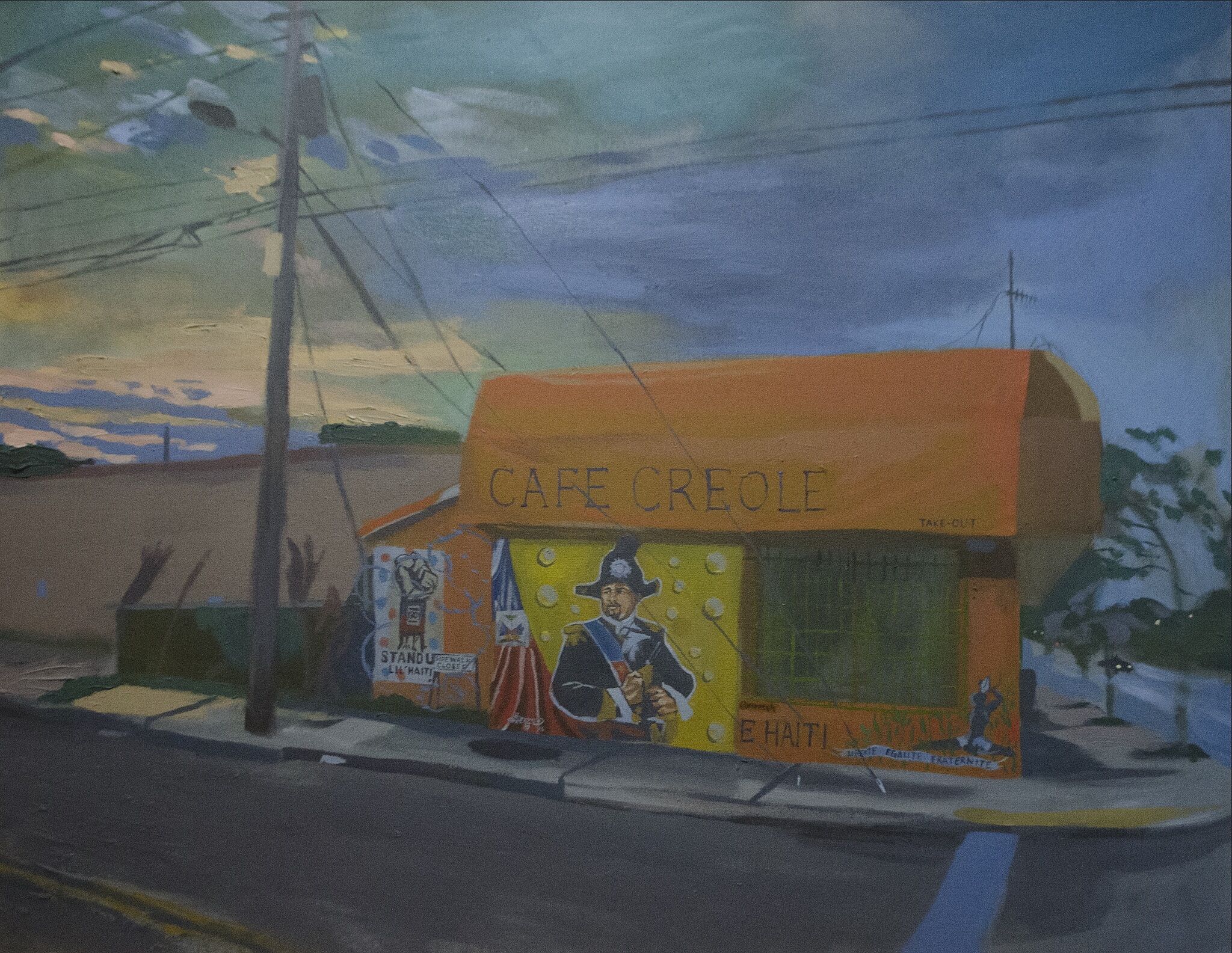
-
605
Gala Porras-Kim
Audio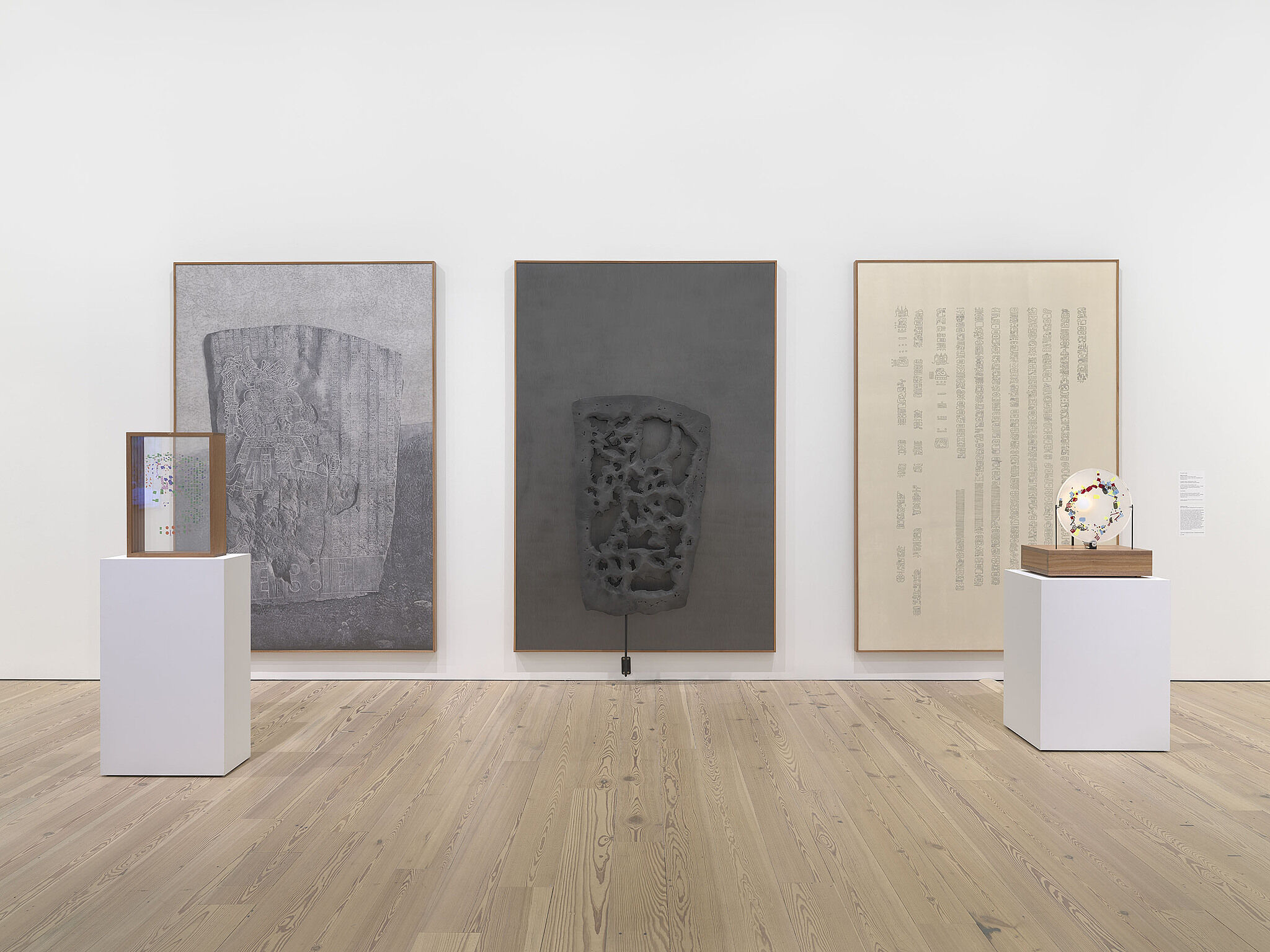
-
606
Sound Description: Laura Ortman
Sound description -
607
Todd Gray
Audio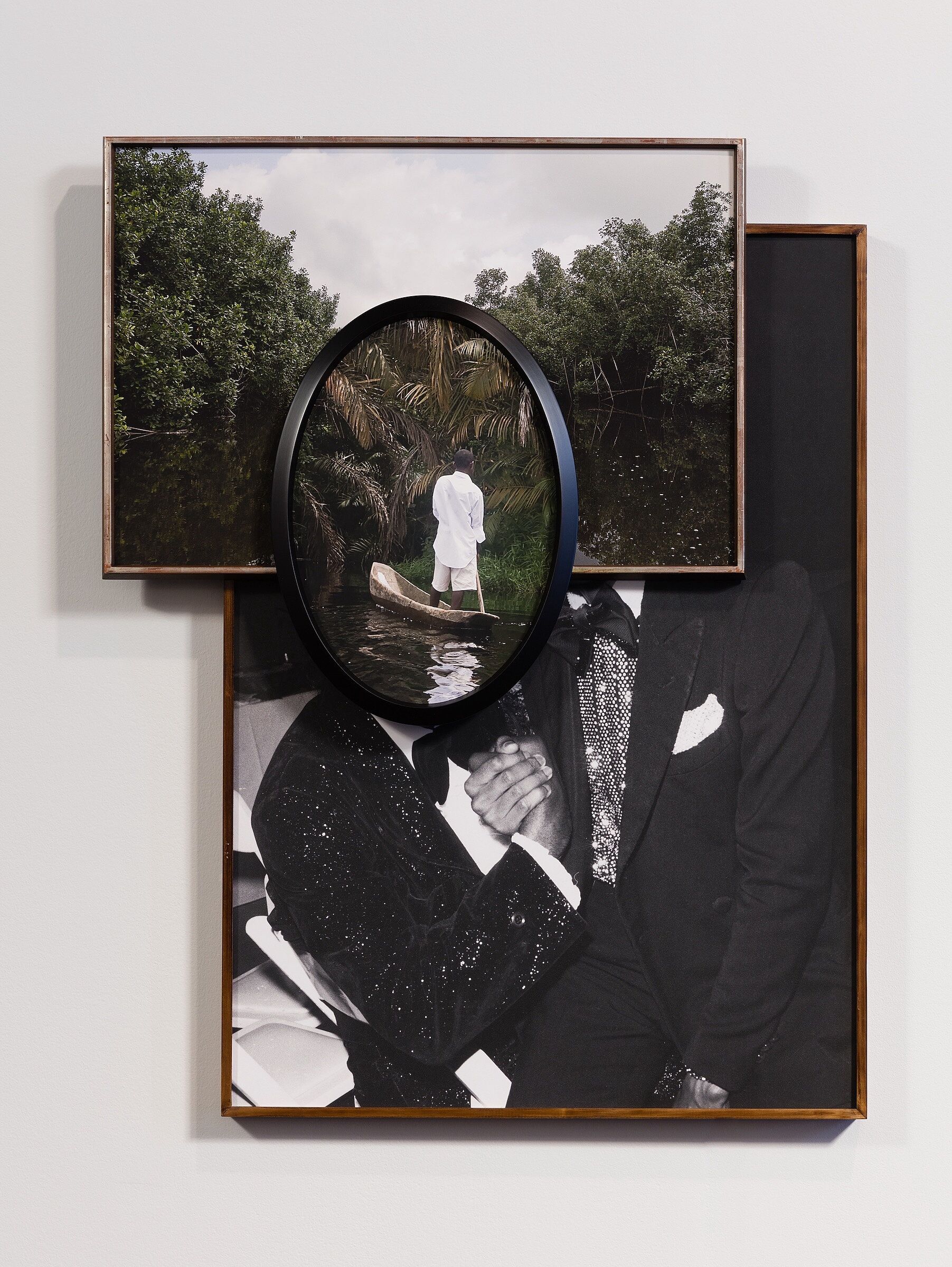
-
609
Troy Michie
Audio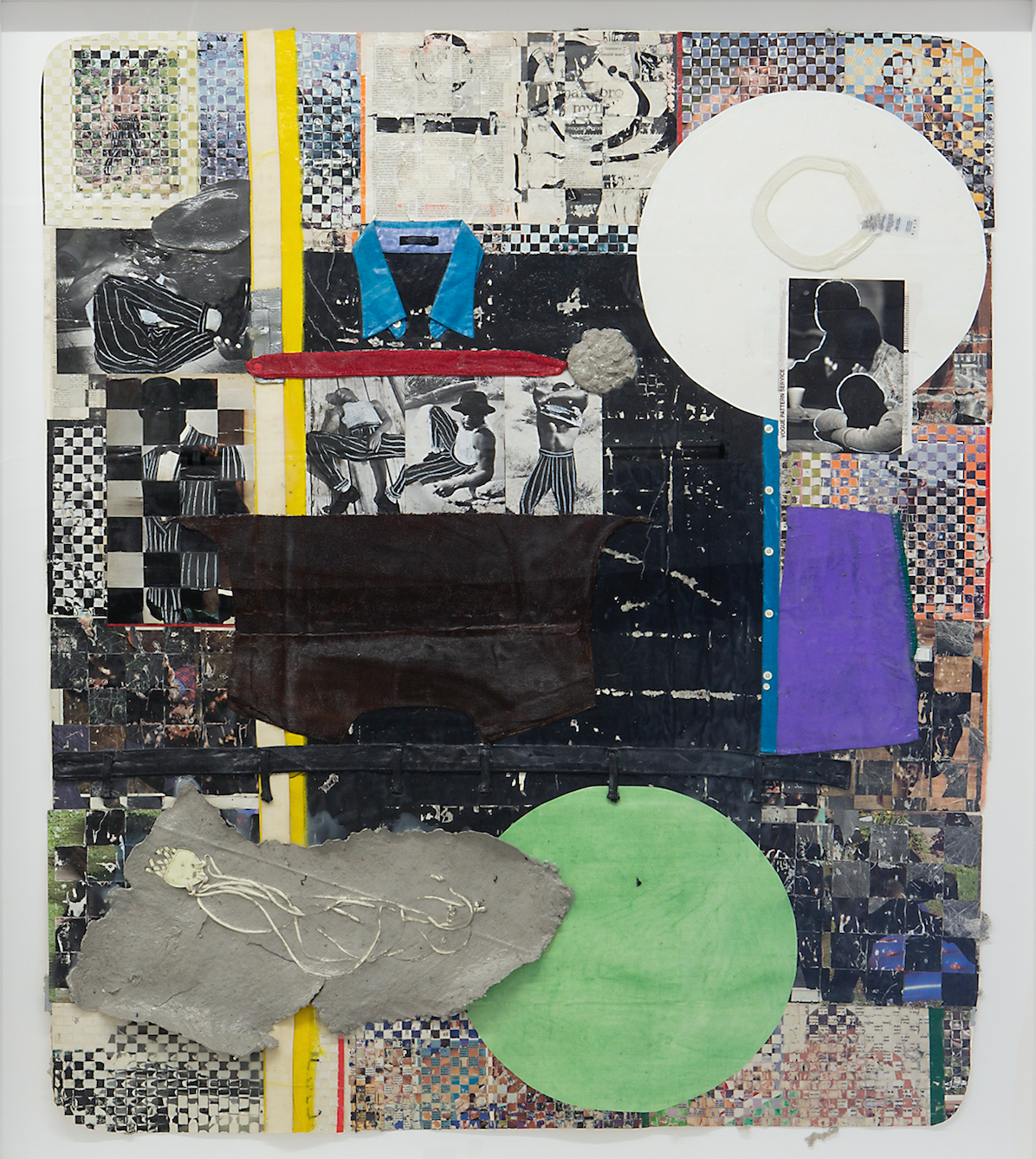
-
608
Joe Minter
Audio
-
610
Walter Price
Audio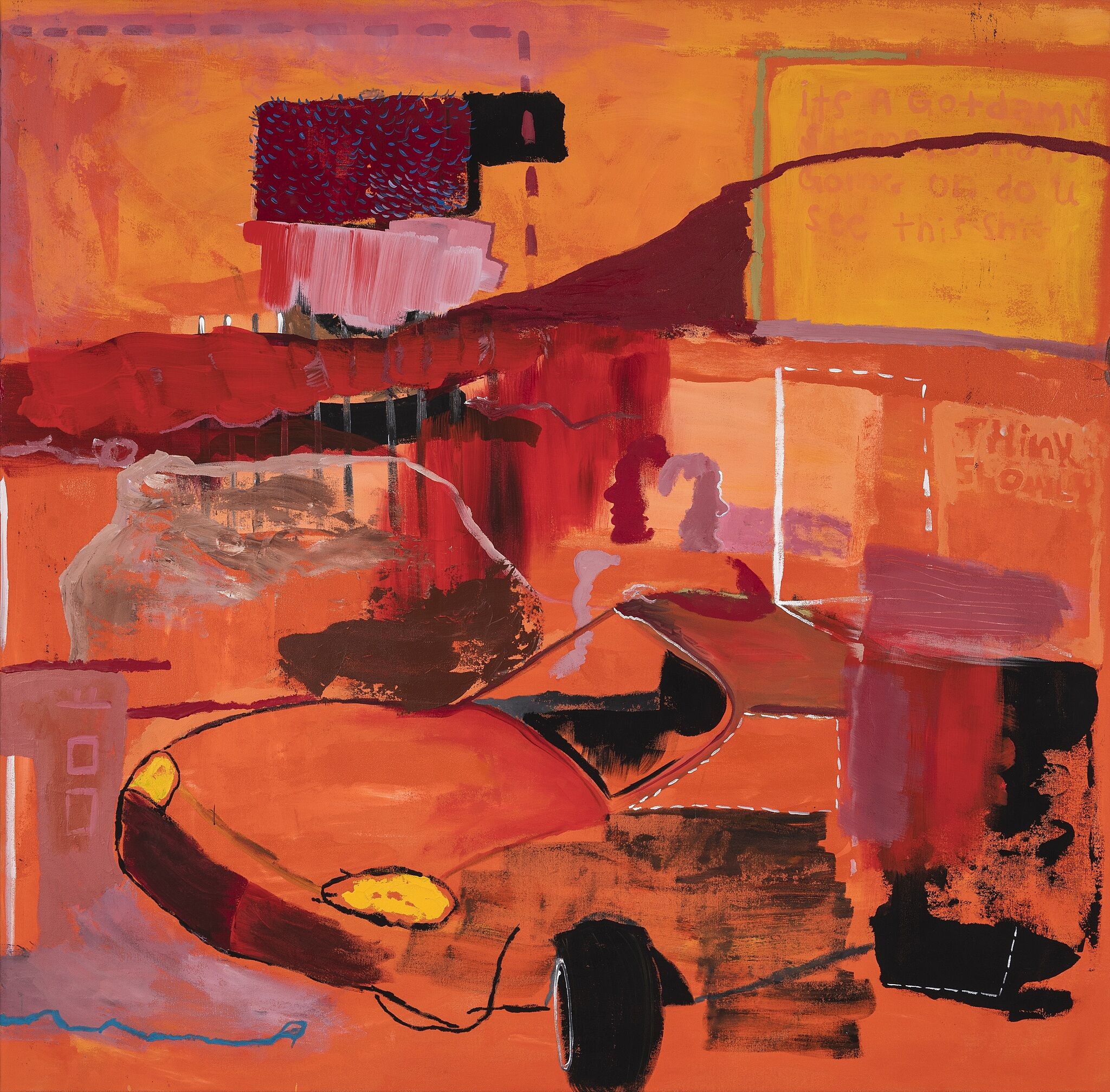
-
612
Transcription: Forensic Architecture
Transcription -
611
Brian Belott
Audio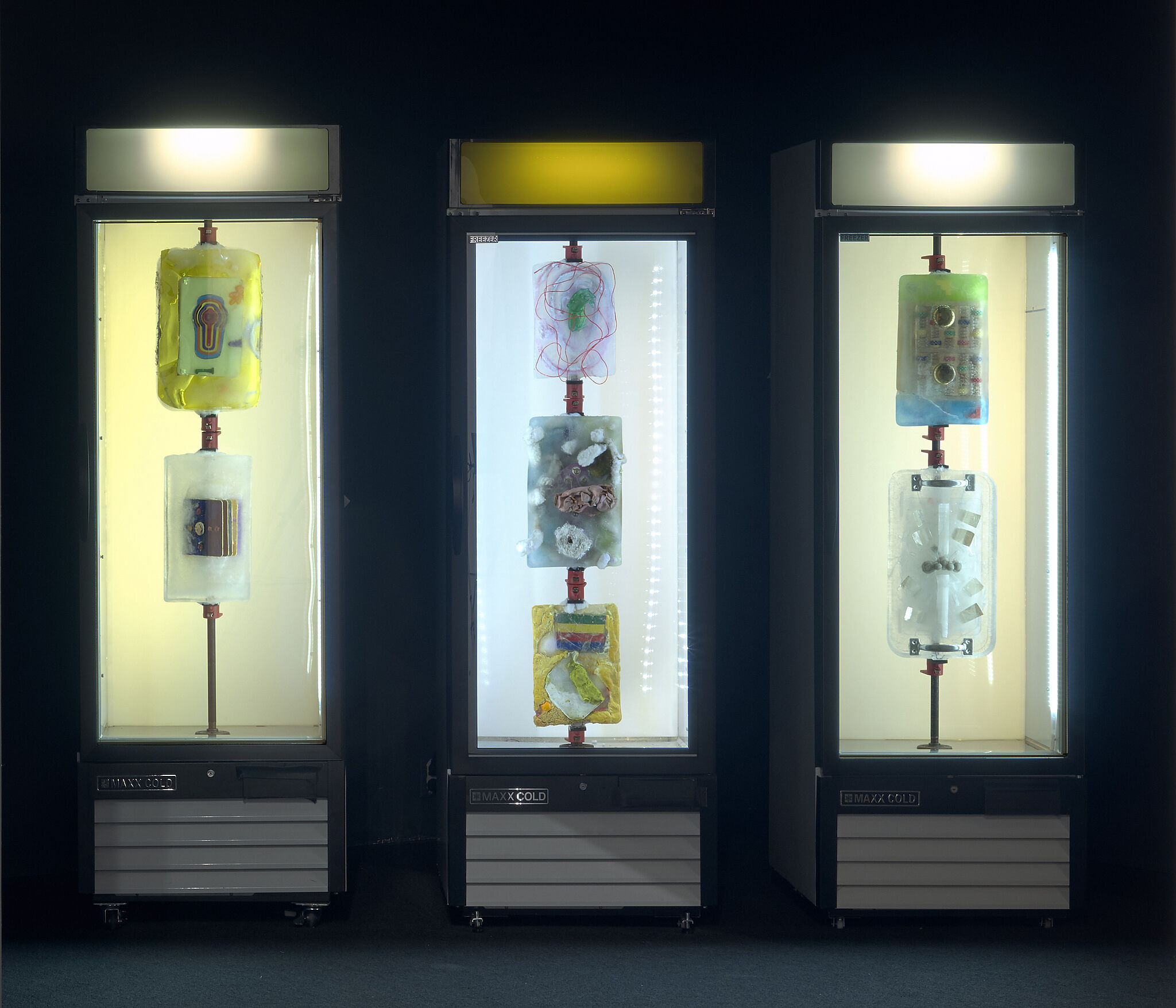
-
613
Tomashi Jackson
Audio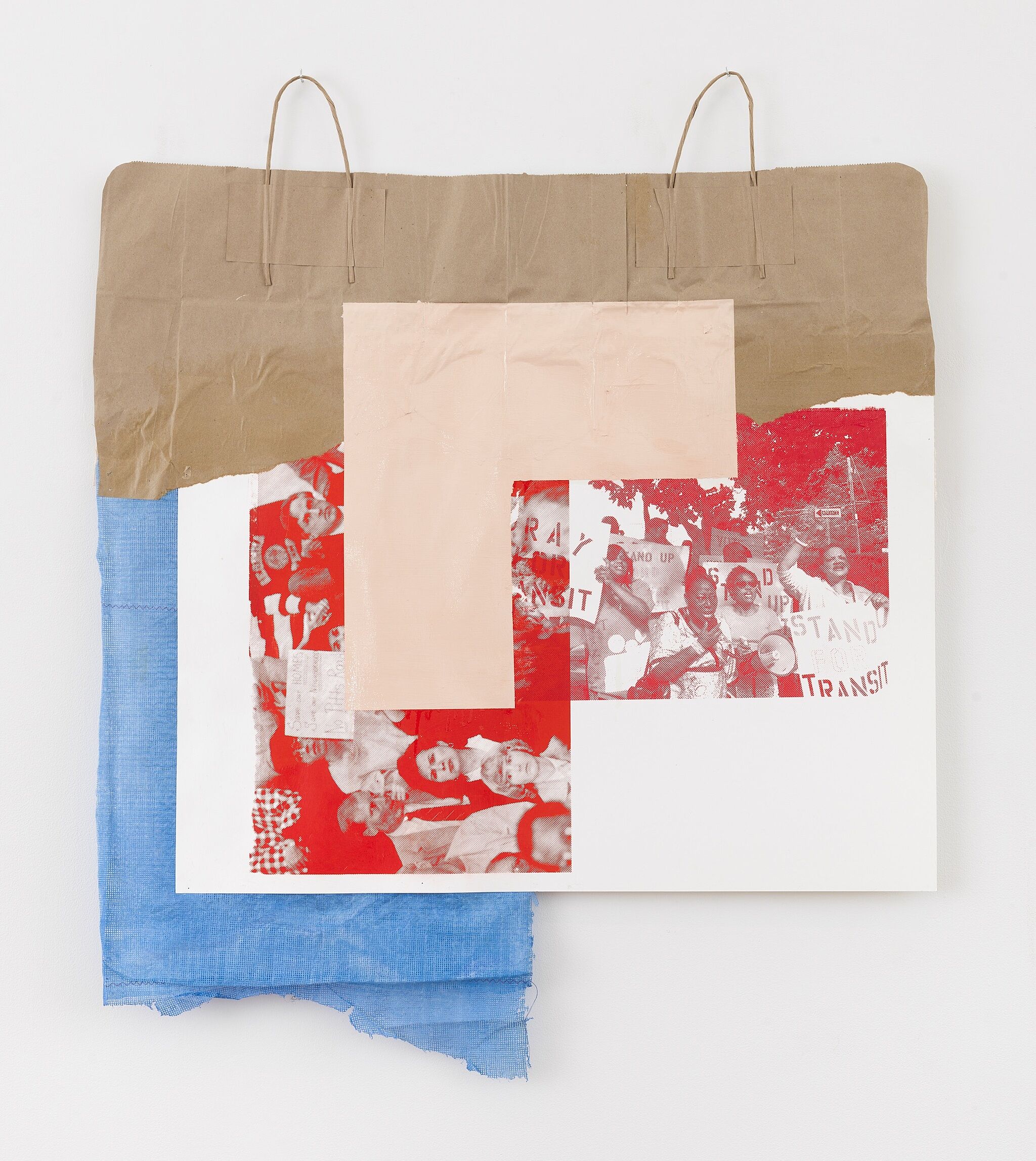
-
614
Transcription: Martine Syms
Transcription -
615
Nicholas Galanin, White Noise Prayer Rug
Audio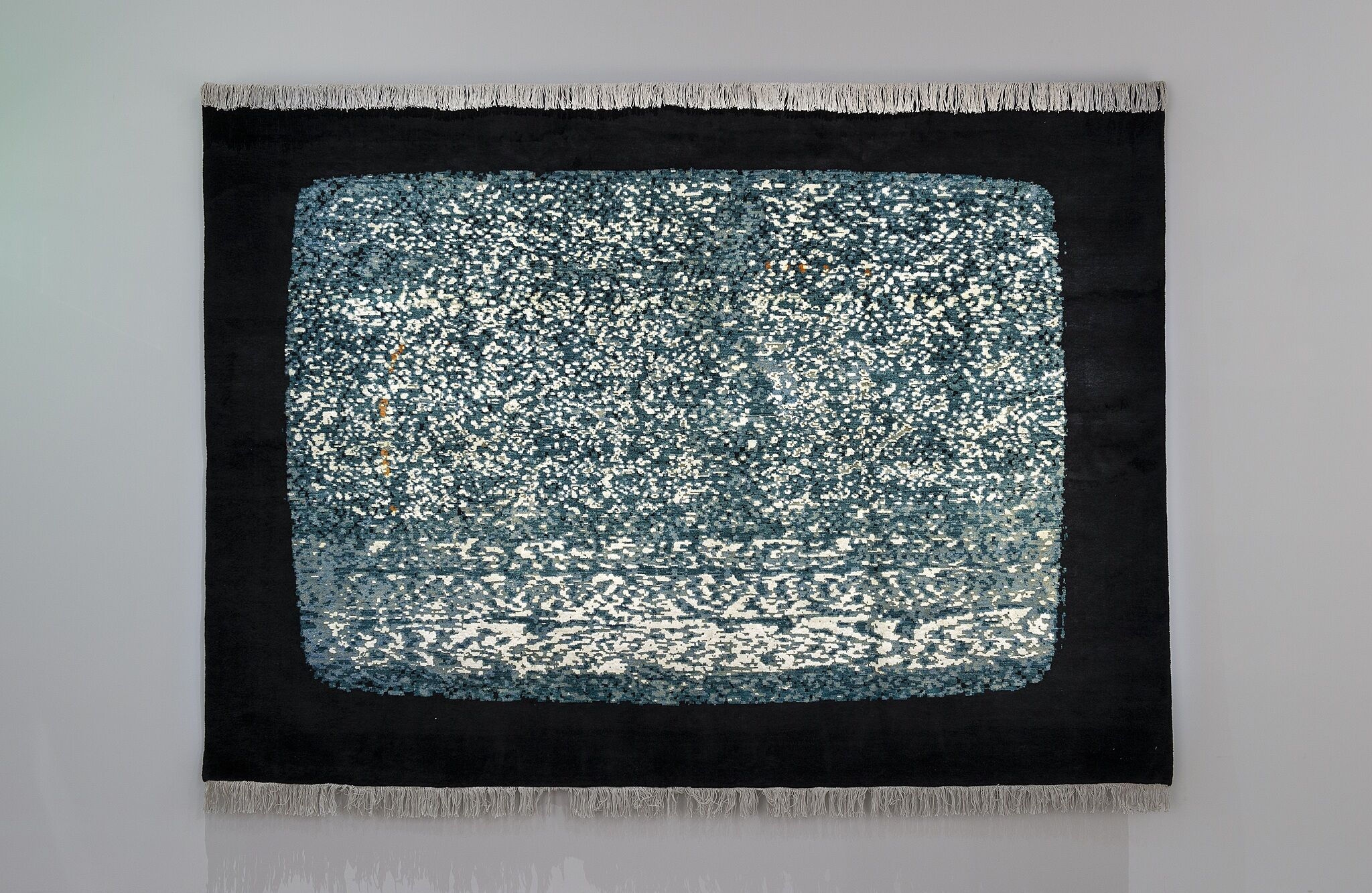
-
616
Lucas Blalock
Audio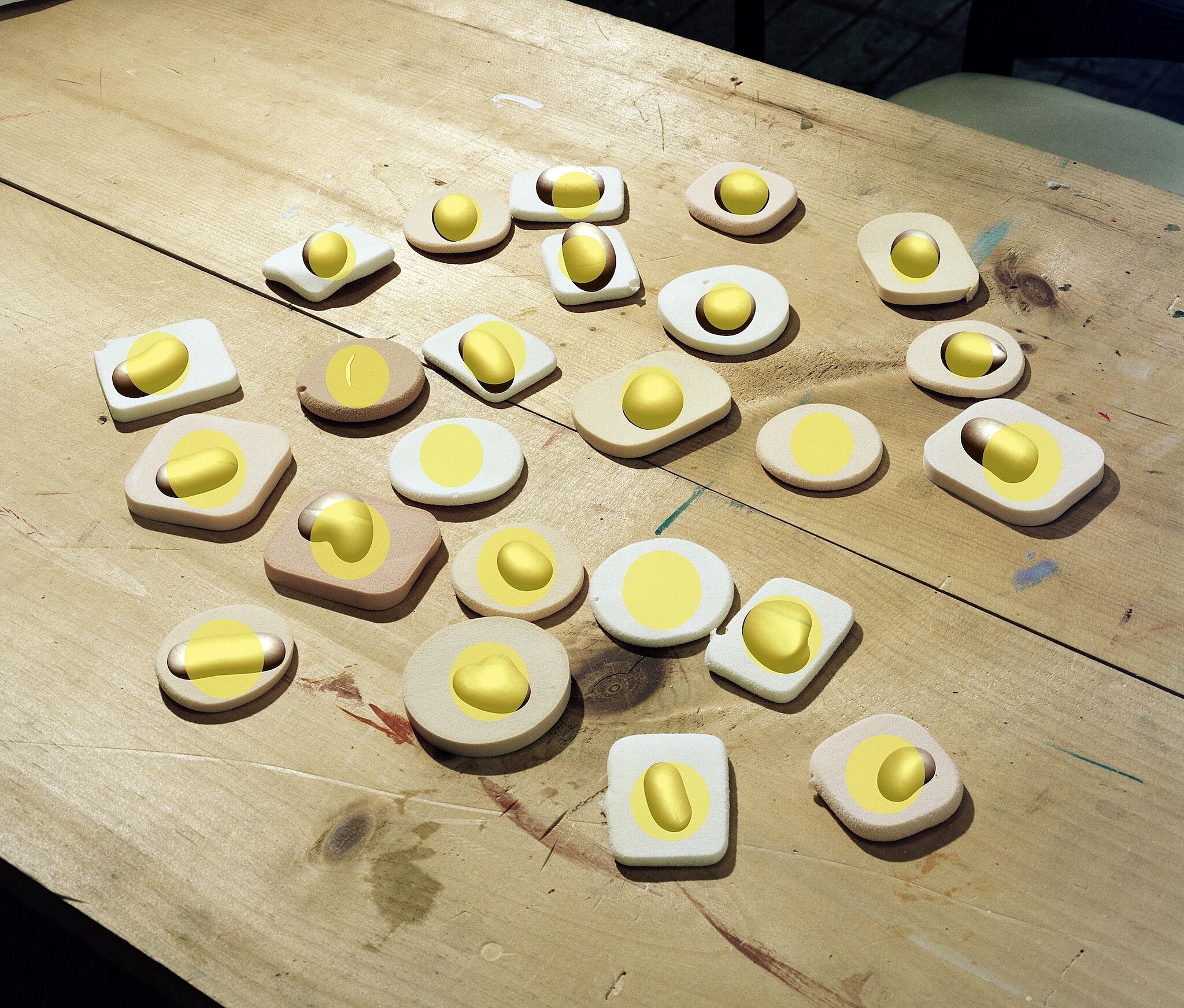
-
617
Carolyn Lazard
Audio, Transcription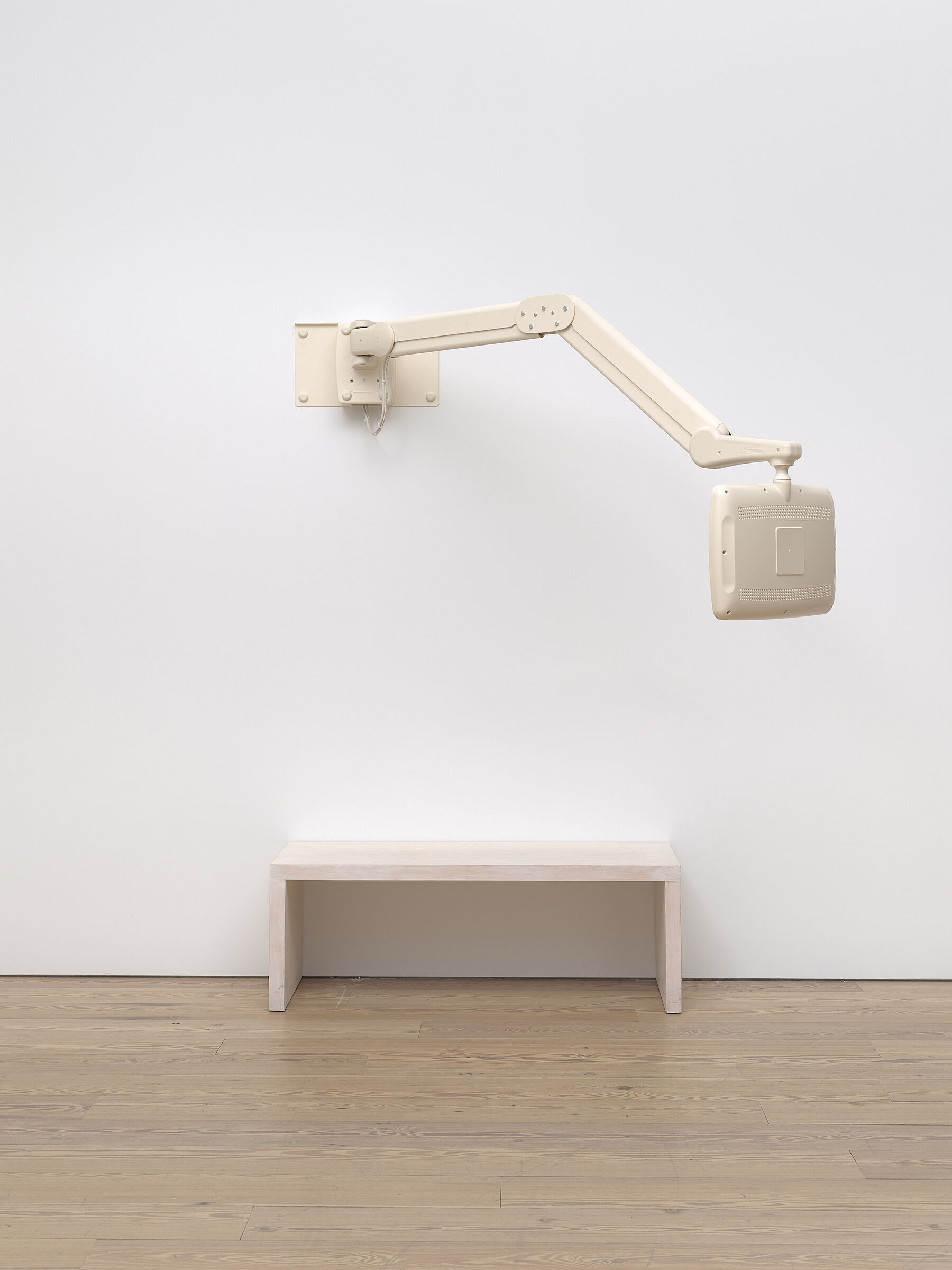
-
618
Ragen Moss
Audio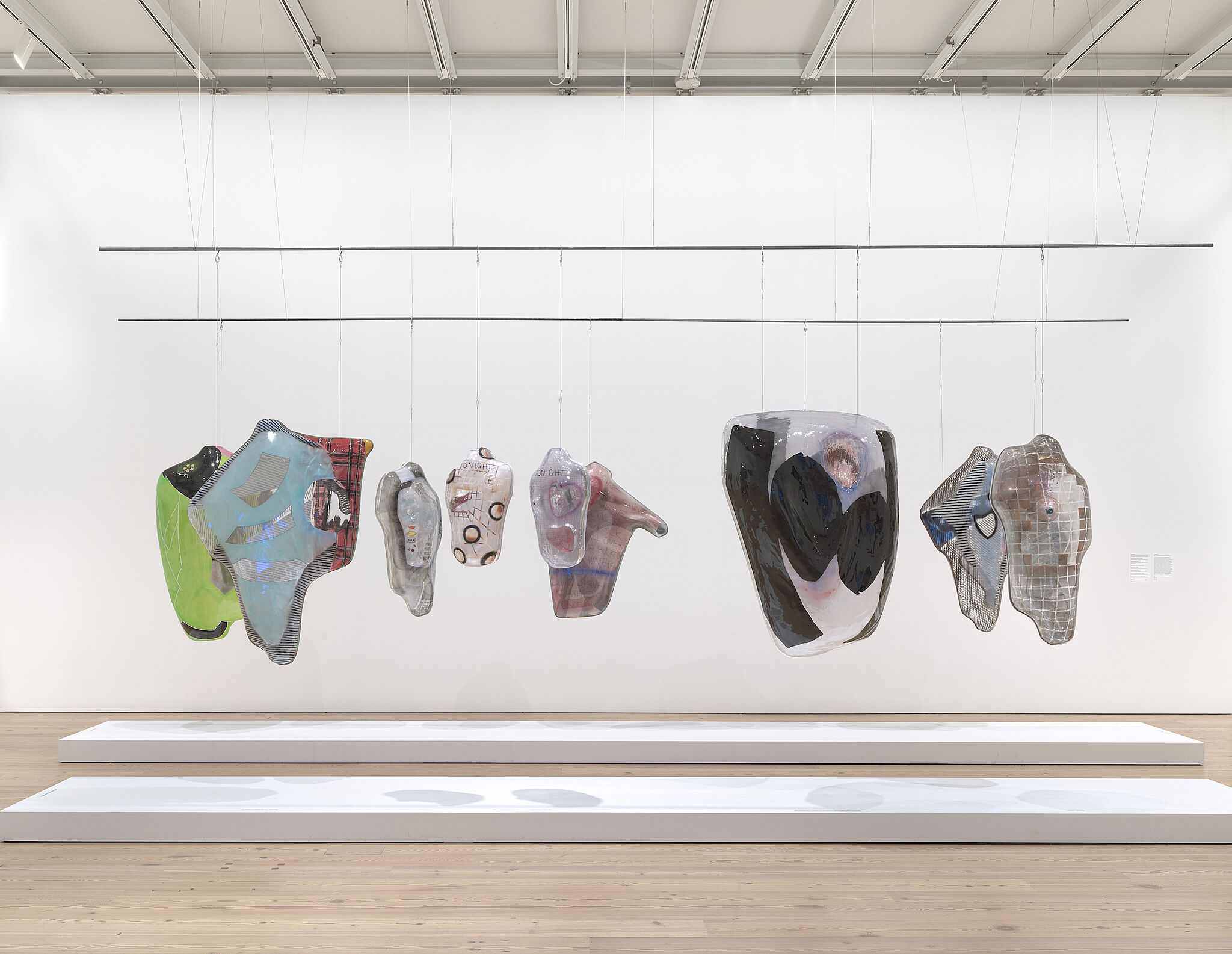
-
620
Sound Description: Ilana Harris-Babou, Red Sourcebook, 2018
Sound description -
619
Marlon Mullen
Audio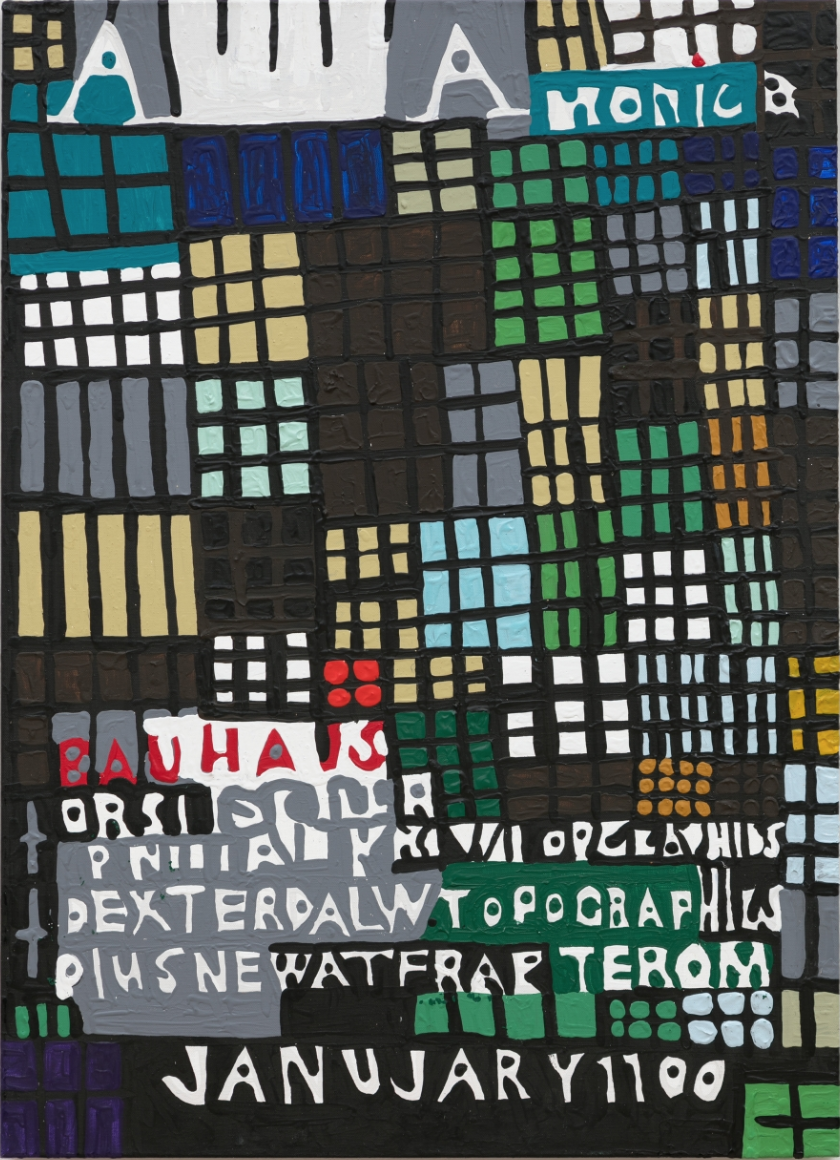
-
621
Wangechi Mutu, Sentinels
Audio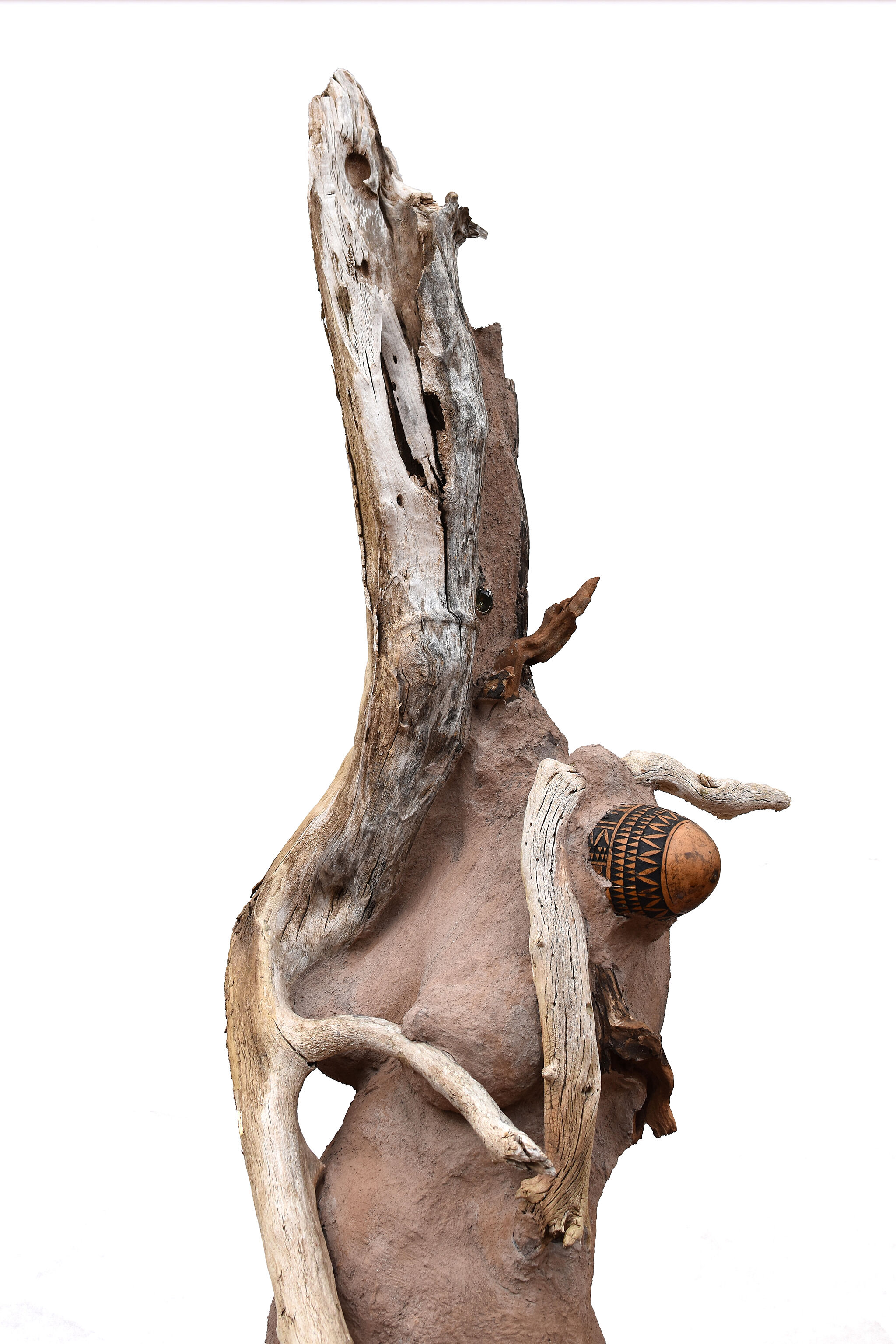
-
622
Wangechi Mutu, Poems by my Great-Grandmother
Audio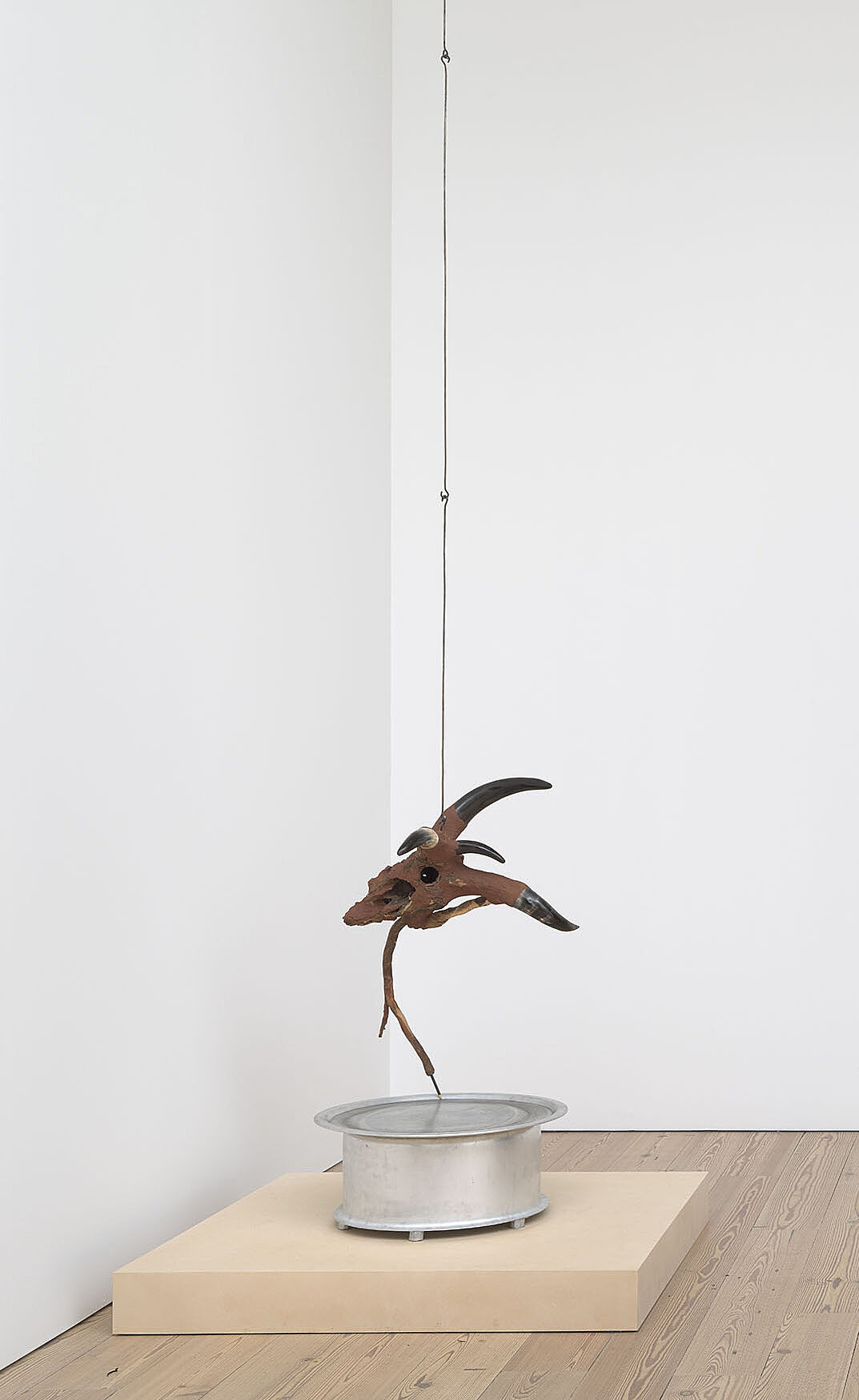
-
623
Robert Bittenbender
Audio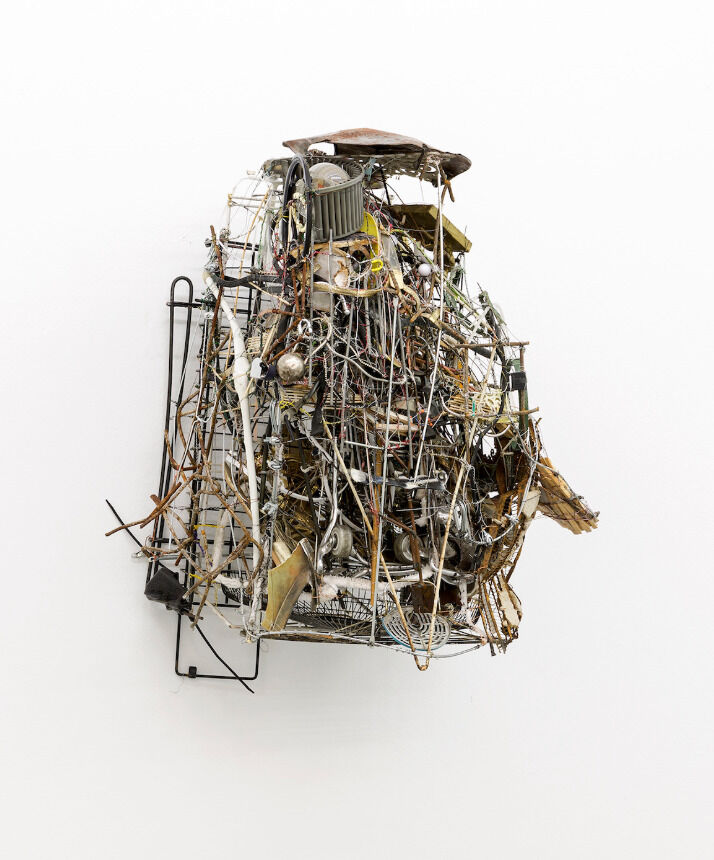
-
624
Maia Ruth Lee, Bondage/Baggage
Audio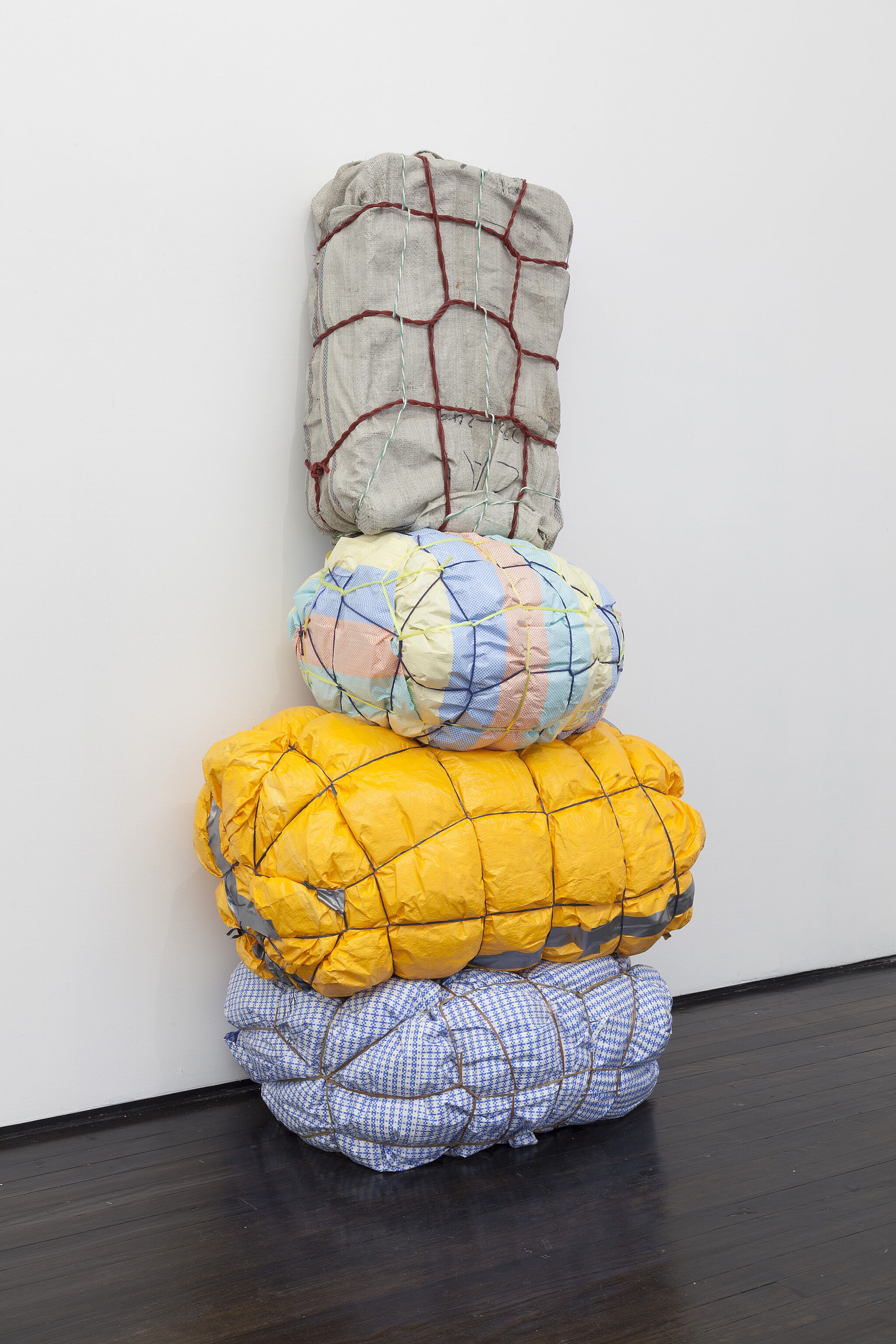
-
625
Maia Ruth Lee, LABYRINTH
Audio
-
626
Nicole Eisenman
Audio
Jane Panetta: My name is Jane Panetta. I'm an Associate Curator here at the Whitney. The 2019 Biennial includes seventy five artists.
Rujeko Hockley: My name is Rujeko Hockley and I’m an assistant curator at the Whitney Museum of American Art.
For this iteration of the Biennial we’ve included seventy five artists from all across the United States, including Puerto Rico.
Jane Panetta: While in large part it's a snapshot of contemporary art making in the United States today, it also is organized around certain themes that we saw bubbling up in the many studio visits we did during our research.
Rujeko Hockley: Some of the themes that have come up in this Biennial include an attention to kind of makerly-ness, the use of the hand in terms of making artwork versus a more slick or more hyperfinished approach. Questions of race, gender, and equity, particularly considering the tumultuous political moment we’re living through, as well as questions of community.
Jane Panetta: One of the biggest themes that we saw were artists mining, using different ways, historical documents, historical imagery, just history in general, and repurposing it in their work to reimagine the future or even reimagine the present. For many artists, it seemed like there are lessons to be learned from histories. We sort of navigate the difficulties of our present moment; that was something we saw through different mediums and time and time again.
Jeffrey Gibson: For the lobby, I am making a new textile-based piece.
Narrator: Artist Jeffrey Gibson.
Jeffrey Gibson: It references a flag, the American flag. There’s thirteen stripes, there’s a top, left-handed panel, and it's made from textiles that I've designed. Those designs originated for a performance for the National Portrait Gallery, with the idea of naming different kinds of events and actions made by individuals who have both frustrated me, angered me, [and] inspired me, on a national level.
The very first one that really inspired it was the testimony of Dr. Ford. And the name of her event for me was She Speaks Up To Take Them Down.
It's a flag that uses a number of different pronouns. It addresses Queer, Trans communities, feminist histories, the idea of chosen family, chosen identities, and remixes these words into a flag that is quite large.
I wasn't raised traditionally, and I wasn't raised within even a predominantly Native community. So my relationship to indigeneity is really a shared one in many ways. And then of course I have my family, and I have the tribes that I'm affiliated with, being Mississippi Choctaw and Cherokee in Oklahoma.
It's based on the identities that I don't see being celebrated at a national level. Having identified, or having been identified as a minority, as a peripheral culture, as not having been acknowledged in many parts of the United States, I also wanted to extend that to other people who I see in similar situations by acknowledging them in this flag.
Diane Simpson: The structure of clothing forms has continuously informed my work, but along with that, I've been very influenced by the design and architecture of various cultures and periods in history.
Narrator: Diane Simpson.
Diane Simpson: I'm interested in the subject of the body without the body.
When I look at architecture, I isolate a section of a building like a chimney or a window, a roof shape.
In the same way, I concentrate on a particular section or detail of clothing. A turn of a collar, a shape of the sleeve. I'm interested in the seamless shifting from body to architectural form in the melding of the wearable with this structurally unwearable.
I concentrate on a particular section of the body rather than the whole body.
Narrator: In some of the works on view here, Simpson was inspired by peplum, a cinch-waist, flared style that became popular in 1940s dresses.
Diane Simpson: With the peplum, I was just thinking about the area around the waist―I like the idea that it's so unnecessary and it's just this little added flounce.
Diane Simpson, Lambrequin and Peplum, 2017. Painted fiberboard crayon on polyester, and copper tacks, 109 × 50 × 31 in. (276.9 × 127 × 78.7 cm). Image courtesy the artist; Corbett vs. Dempsey, Chicago; JTT, New York; and Herald Street, London. Photograph by Tom Van Eynde
Nicholas Galanin: My name is Nicholas Galanin, Yéil Ya-Tseen. I'm Tlingit and Unangax, based in Sitka, Alaska.
Narrator: Galanin made the work in the East-facing window of Untitled restaurant—in the direction of the High Line, away from the river. It’s also visible from the Museum’s main lobby, and it’s called Let them enter dancing and showing their faces: Shaman.
Nicholas Galanin: I like the idea of this work being at the entrance and in Tlingit culture, we have entrance dances where you slowly reveal your face as you enter into the space.
Narrator: The image comes from a monoprint the artist made, depicting a woman in profile. She’s wearing a labret, a lower-lip ornament that is worn by high-ranking women in Tlingit and Unangax communities.
Nicholas Galanin: I think that reference to an acknowledgement of women is what a lot of our current society needs to move forward in a positive way.
And it's a reference to these actions that connect us. The actions I'm referencing are the processing of subsistence, smoking our salmon, cleaning the salmon, picking berries, our relationship to land, our relationship to the next generation and our children and that love that's in that process.
Narrator: Kota Ezawa based this two-minute watercolor animation on television footage of football players taking a knee during the national anthem.
Kota Ezawa: I grew up watching football more like in Europe and I heard national anthems being played before soccer matches, football matches.
Narrator: Kota Ezawa.
Kota Ezawa: And I honestly always thought those were really key moments of these events because normally everything is in motion and this is the moment of stillness before things spring to action. And there's a lot of tension that that I always was fascinated by.
I never felt a connection to this attitude of patriotism. But then there's these national anthem protests, somehow touched something in me where I all of a sudden felt very connected to the U. S. and to what these players were doing.
Narrator: The act of taking a knee was intended to protest police violence against people of color and racialized injustice in the United States.
Kota Ezawa: While I was working on the piece so many things happened in relation to these protests. The instigator of the protest, Colin Kaepernick, was held out of the sport by the league and then he filed a lawsuit that recently got settled. And all of these developments happened while the work on the piece was going on. So the the story that I was working with was changing constantly. And I have a feeling also that the story will change as the piece ages.
Kota Ezawa, National Anthem (Buffalo Bills), 2018. Watercolor on paper 11 × 16 in. (26.4 × 40.64 cm). Courtesy of the artist and Haines Gallery, San Francisco
Iman Issa: My name is Iman Issa, and I'm an artist.
Heritage Studies was not in reference to my heritage, because actually the objects have very little to do with my heritage. But heritage studies as a term is a certain way of looking at the past, with the idea of the practical end to the present.
Basically most of the objects which I ended up using for this project were from museums. With this idea of remaking them based on their relevance ended up looking completely different from the originals. So therefore came the idea with this object, with this project, that you can have two objects, which share neither the material, neither the shape, neither the color, neither the dimensions. But you can still speak of them as the same, based on the idea that they're doing the same thing.
Narrator: Issa provides labels for each object.
Iman Issa: So for some of them you would have the location where the object came from. You always have the museum, but I always use a descriptive language to denote the museum, as opposed to a name. I feel like the work is not really about the particular museum, it's not a critique of museums, it's just relying on this language to help these objects speak.
Iman Issa, detail of Heritage Studies #20, 2016. Bronze, painted box, and vinyl text, 49 1/4 × 9 1/8 × 15 in. (125 × 23 × 38 cm). Image courtesy the artist and Rodeo, London; Piraeus, Greece; and carlier gebauer, Berlin. Photograph by Gunter Lepkowski
Narrator: Figures cut from fashion magazines and catalogues appear throughout Milano Chow’s nocturnal drawings, often standing in doorways or windows. As viewers, we’re a bit like voyeurs on these scenes, trying to puzzle out a mysterious story.
Milano Chow: I really like movies, where the set plays a big role in carrying the story, or at least not so much contributing to the story line but maybe just setting up a mood, and that's what I aim for in the drawings—just a general mood or atmosphere.
Narrator: Milano Chow.
Milano Chow: I’m constantly collecting images.
There are books that are just reference books for architects that will just have floor plans and exterior drawings and photos of buildings. I also like looking at real estate listings, not as a direct image reference point, but just the idea of how architectural space is designed, or how that relates to style and taste.
My goal isn't to make an imaginative architectural plan that could, in theory, be built. It's meant to exist in the space of drawing specifically, and what drawing can do.
Milano Chow, Ceiling Plan with Walls I, 2018. Graphite, ink, flashe, and photo transfer on paper, 20 × 15 in. (50.8 × 38.1 cm). Image courtesy the artist and Chapter NY, New York
Pat Phillips: My name is Pat Phillips. I'm a painter. I live and work in Pineville, Louisiana.
Narrator: Phillips painted this mural over the course of a few days, shortly before the Biennial opened. In it, he worked with some of the same ideas that are in the two large canvases nearby.
Pat Phillips: The work's dealing with the prison system in Louisiana, playing on the idea of inclusion, and exclusive concept of where I grew up, and the suburban neighborhood that I lived in.
My dad was in the military for thirty years, and then after retiring from the military, eventually he ended up becoming a lieutenant at a prison.
Narrator: The prisoners appear as disembodied hands and arms. In one of the canvases, they wrestle with a snake inspired by the Gadsden flag. The symbol was designed during the Revolutionary War and bears the words "DON'T TREAD ON ME" underneath the image of a rattlesnake, and has since been reappropriated by the conservative political group, the Tea Party.
Pat Phillips: As a kid, we would get a lot of things made by the prisoners, so the prisoners were not just working within the community—whether it was doing road work or things to help save tax dollars—but in Louisiana, you'd also go places like the lumberyard and things like that, and see how companies would outsource the prisoners for labor. And for me personally, I would always get my snake belt made by the prisoners.
So the idea with this painting of this prisoner wrestling with this snake is wrestling with this idea of how they are essentially like the working force within the community.
Using humor or these objects and symbols that are a little bit more childlike, I think for me, because while I am still a Black male in America, and I still do have to worry about the sort of statistics and things like that, that I could fall into, I'm trying to acknowledge that I'm naïve to some of these subjects too, and I’m just trying to work through the process, conceptually and aesthetically, with the painting.
Pat Phillips, Mandingo / DON'T TREAD ON ME, 2018. Acrylic, oil pastel, airbrush, and aerosol paint on canvas, 52 × 60 in. (132.1 × 152.4 cm). Image courtesy of the artist
Narrator: Jeanette Mundt based these paintings on photo composites of the 2016 United States Women’s Olympics gymnastics team.
Jeanette Mundt: In the photo composites, the body sort of fades in and out so that you can see the moments that the illustrator really wanted to highlight. So you see this automation. The New York Times does this a lot―uses graphics and techno fetishistic modes of communicating―so that people end up in this hyper-digitized space.
Narrator: Across the canvases, Mundt has fractured and abstracted the scenes in a variety of ways.
Jeanette Mundt: I can break up these segments to be less defined units of time, break it all up and make time sort of completely under my control. In some of the images I just took segments out entirely, so you have these stutterings, and this sort of tripping over yourselves and going back and forth, and the gesture becomes this stutter. And this I thought was a really great way to think about time and movement formally in painting, which is also what I want to speak about. But then also visually immediately show that there's a failure here in this extreme attempt at success.
Narrator: Mundt began these paintings before the official doctor of the Olympic Gymnastics team, Larry Nasser, was accused and convicted of sexually abusing many of the athletes—including Simone Biles and Aly Raisman, pictured here. Mundt is very aware that these events impact viewers’ perceptions of the paintings.
Jeanette Mundt: I'm trying to navigate how you bring in iconic images and play with what the audience has in their mind already, and compliment that rather than direct it. I do appreciate that the story, the media, the spectacle, all of that, changed shape and moved into this terrible place. It was already there, but it became public in that the paintings also change, and that as a viewer, you can recognize both of those things together.
Jeanette Mundt, Born Athlete American: Laurie Hernandez I, 2018. Oil and glitter on canvas, 50 × 60 in. (127 × 152.4 cm). Image courtesy the artist and Société, Berlin. Based on a 2016 series of graphics by The New York Times
Jeffrey Gibson: The very beginning of the garments is really my working with materials from the powwow circuit and from vendors selling to dancers and makers within the powwow context. Powwow is someplace where as much as there is a kind of collective sense of community there is also the individual that shines. That inspired me to look for other representations of modernity within Indigenous cultures.
[In] the Ghost Dance movement, the members would wear these shirts, which were self-made. It was a pacifist movement. It was based in a kind of ceremonial cleansing, dancing, drumming, as a way to bring strength back to the community and also to resist colonialism.
It really impressed me that people would believe that this garment could protect them. And the subject isn't really about whether that's true or not. The subject for me is about—could I potentially have that belief? What is it about our contemporary society that doesn't allow me to believe that the making of an object can bring protection?
Installation view of the Whitney Biennial 2019 (Whitney Museum of American Art, New York, May 17-September 22, 2019). Jeffrey Gibson, PEOPLE LIKE US, 2019. Photograph by Ron Amstutz
Danielle Linzer: Hello I’m Danielle Linzer, Christine Sun Kim's friend, and she asked me to voice this discussion of her drawings to you.
Hi, my name is Christine. For this new series, I am doing drawings that come in groups. I have actually borrowed a lot of different formats that are already out there in the world. These are things people are very familiar with such as memes, music, musical notation, subtitles, captions, English, written English.
I have five that are about Deaf rage, and one in the series is my specific Deaf rage that I've experienced in the art world. For us in the Deaf community, we totally know what it means, but it hasn't been something that we're really good at communicating to others. I think people need to know that they do have rage, that there is rage out there.
There are different levels and different amounts of rage. And in making the drawings I realized that kind of works with different mathematical angles: acute angles, an obtuse angle, those different amounts. Different rages. And I thought oh, that's a nice parallel.
I use sign language to communicate, but I also don't want my deafness to define my work, and so I've been hesitant to incorporate it or acknowledge it. Deaf Rage was my attempt to really speak on it, and initially it felt really heavy. And then after that, I don't know, it feels healing. Now I’m able to put my rage in so many words and in so many angles, and I could see the information, it's there in front of me, it's visually clear.
Christine Sun Kim, Degrees of My Deaf Rage in the Art World, 2018. Charcoal and oil pastel on paper, 49.25 × 49.25 in. (125 × 125 cm). Y.D.C. © Christine Sun Kim
Alexandra Bell: I'm Alexandra Bell.
The work looks at ten days of reporting about the Central Park Five case, in which a white investment banker was attacked and raped in Central Park. The cops rounded up a number of young boys, and of those, five were convicted of her rape and attempted murder, in some cases. They all served between six and thirteen years in prison. About twelve years into their serving time, a young man came forward, Matias Reyes, to say that he committed the crime, so they were released.
Highlighting and redacting are two critical techniques to my practice. I'm really trying to figure out how to force the viewer’s eye into particular information. In this particular series, I use blackout to cover up images, to cover up text that really focuses on the victim [at the time]. I want to reorient the viewer around the idea of the victim and thinking about these young boys as also victims.
While there are twenty pages shown here, I think overall there were maybe up to forty pages worth of coverage within those ten days on this particular case. And this is before a trial, before anybody is found guilty. The repetitious nature is really important to the framework, especially if you consider that during that same period of time, the week that the Central Park jogger was attacked, there were over twenty-five other rapes, majority of those Black and Latino women, that weren't reported.
It's meant to tire the reader in a way. Also, there's so many elements that show up over and over again. The question that I'm hoping will stick with people is why so much attention to it? For me, it's a racial one, but I don't know if that's what the viewer would pick up.
Alexandra Bell, Friday, April 21, 1989 - Front Page, 2019, from the series No Humans Involved: After Sylvia Wynter, 2018-2019. Photolitho and screenprint on paper, 22.5 × 17 in. (57.2 × 43.2 cm). Collection of the artist
Kyle Thurman: My name is Kyle Thurman.
Narrator: Thurman bases these large-scale drawings on photographs he finds online, mostly in news sources.
Kyle Thurman: I'm interested in how drawing relates to photography, so there's the link between the digital image and how it translates into a drawing and what changes in that transformation, and what new things emerge through the act of drawing, based on photography.
I'm interested in creating a contrast to the speed at which we typically look at and digest digital images, to create a slower process of looking at these images. This doesn't necessarily mean that the drawings always take a super long time to make.
I look at these drawings as fragments of larger stories, and I'm interested in how, when these fragments are put together in a room, there's tensions created between the drawings that open up possible narratives.
I obviously remove the context of the kind of scene or the site at which these characters are existing, and this can open up the read of the drawing a lot.
Kyle Thurman, Suggested Occupation 3, 2016. Charcoal and pastel on paper in artist's frame, 40 5/8 × 43 5/8 in. (103.2 × 110.8 cm). Collection of the Whitney Museum of American Art, New York Gift of Alex Glauber
Marcus Fischer: My name is Marcus Fischer. I’m an artist and musician from Portland, Oregon.
Narrator: Marcus Fischer made Words of Concern while working as an artist in residence at the Robert Rauschenberg Foundation, in Captiva, Florida. He was there in the weeks leading up to the 2017 presidential inauguration.
Marcus Fischer: I sent a call out to the other artists that were there, just inviting them into my studio space. I made a little dark sound booth and put a microphone in there, and just invited people to come and I just wanted them to list everything that they were worried about going forward with the new administration. It was staggering. With the first couple of people who came in, a lot of the concerns that people had listed were the same.
So in the editing process, I stacked the voices when people would say the same thing. So it was a chorus of voices concerned about the environment, concerned about racism, and sexism, and corruption.
Narrator: On the day of the inauguration, Fischer installed the work in a large room that had been Robert Rauschenberg’s studio.
Marcus Fischer: People would come throughout the day and sit with it and listen, and there was pretty much a news embargo that day.
It was kind of somber and sobering. And looking forward, it's stunning how many things people listed really came true and then some.
Marcus Fischer, Untitled (Words of Concern), 2017. Tape recorder, tape loop, spindle, sound; 3 min., overall dimensions variable. Image courtesy the artist
Agustina Woodgate: My name is Agustina Woodgate. National Times is an installation composed of forty analog slave clocks, operated and synchronized by a digital master clock that has unidirectional control over the slave network.
I purchased these objects because of the way they are named. I was shocked to find out that this terminology is being used so freely in the technology industry.
This kind of clock system is the one that we typically see in prisons, in government offices, in schools, in factories. And in fact, our cell phones are digital slaves to the master clock in Washington, DC.
I had modified every single minute hand on each slave by adding a block of sandpaper right underneath. As National Times progresses, the minute hand of the slave clocks will scrape away the numerals on their faces.
The relationships these objects have with each other very much represent our contemporary power structures. This installation is a display of reality, nothing is made up. This is just how things work.
Agustina Woodgate, detail of National Times, 2016. Clocks, hardware, and sanding twigs, dimensions variable. Image courtesy the artist and Spinello Projects, Miami. Photograph by Jesus Petroccini
Paul Mpagi Sepuya: Hi, this is Paul Mpagi Sepuya, and this is a project with work by Dicko Chan, James Garcia, Ariel Goldberg, Clay Kerrigan, Clifford Prince King, Giancarlo Montes Santangelo, Emerson Ricard, A.L. Steiner, Peter Tomka, Derrick Woods-Morrow, and myself.
It's been a constant thing in all of the portraits that a certain level of intimacy was the starting point. And I liked the leveling of that. Like, photograph everyone as if they were a current or past or future lover. That's sort of been the starting point.
Narrator: The photographs on view here were taken in Sepuya’s studio, or in makeshift studio spaces he set up. He took some of the pictures, and appears in others, which were taken by friends who are also photographers. The projects and the idea of authorship become intertwined: in some of these pictures, the subject of the photograph was also actively making a photograph, which from our current perspective we can only imagine.
Paul Mpagi Sepuya: There isn't really a title to the project. I don't even know if collaboration is the right word for it. I think part of this is trying to figure out what that language is―all of us have a very different relationship to photography. Some of us are photographers who have gone to either undergraduate or graduate programs, some of us have exhibited, some of us have never, some are self-taught artists who are in the process of pursuing a more formalized photo education, some not.
Rujeko Hockley: Matthew Angelo Harrison is an artist interested in the intersection of cultural objects, specifically in his case African sculpture as well as personal artifacts from his family, especially his mother, and their intersection with technology and modes of production.
Narrator: Biennial co-curator Rujeko Hockley.
Rujeko Hockley: In the work that you’re seeing he’s taken sculptures from various African countries that he has purchased and embedded them within resin and other industrial materials. He makes machines including CNC routers and 3D printers with which to do the work. He worked at Ford Motor Company, so this is drawing on his own technological know-how.
He’s also very interested in the kind of slippage between African American culture and artifacts and interest in Africa, we think of this kind of mass that is Africa when of course it’s over fifty countries, hundreds of language, hundreds of ethnic groups, great diversity of all kinds. He’s also interested in rebuffing and interrogating colonialist collecting strategies, which are part of the reason why we even have objects like this in Western museums. But also are part of the reason we kind of see them as a generic mass, because they were collected often without attention to the maker, the name of the maker, the place of origin, any meaning that they may have had in their culture of origin. So this is embedded in the work.
Matthew Angelo Harrison, Dark Silhouette: Mother and Child in Intervals, 2018. Wooden sculpture from West Africa, polyurethane resin, anodized aluminum, acrylic. 75 3/4 × 11 × 9 1/2 in. (192.4 × 27.9 × 24.1 cm). Image courtesy the artist and Jessica Silverman Gallery, San Francisco. Photograph by Paul-David Rearick
Eric N. Mack: My name is Eric N. Mack.
Narrator: For the Biennial, Mack produced a large-scale, site specific work.
Eric N. Mack: The work is a fabric collage made out of an assortment of materials, mostly materials that would be considered textiles sewn together in a composition that would then extend into the space of the gallery. A large amount of the textiles will be transparent. It's going to be very much a way of looking through and experiencing the space. But also, offering a surface for consideration as well. A gauzy, organza, or a transparent charmeuse that's taut, would then become a lens in a way, a fragmented lens that would allow you to experience the rest of the room, in a sense.
I'm going to be in a room alongside my friend, Jennifer Packer. We've shared a studio for the past few years. She's in my head, in a way. There's that natural conversation that's been there for a while. Our practices are very different just in the ways that there's a division between certain rules of representation and certain rules about abstraction. I think we both break them in very different ways. But yeah, there's going to be some interesting, I think, overlap as well as affirmations.
Eric N. Mack, (Easter) The Spring / The Holy Ground, 2018. Acrylic, dye and paper on moving blanket, 72 1/8 × 80 in. (183.2 × 203.2 cm). Image courtesy the artist; Morán Morán, Los Angeles; and Simon Lee, London
Jane Panetta: I think one of the most important things about this painting is the very fact of its incompleteness in places.
Narrator: Biennial co-curator Jane Panetta discusses Jennifer Packer’s A Lesson in Longing, the large, predominantly red canvas on view here.
Jane Panetta: While it's a huge canvas, she hasn't covered it everywhere. She's intentionally left portions of it blank.
You can imagine the full scene of it even though she's only given you incomplete bits of information. And Packer does this often, uses a limited palette in her painting, and I think that's another strength of it. It's a unifying element that it's primarily painted in this pinkish red, with just a little bit of green and white. While that's sort of un-naturalistic, these figures aren't all actually red like this, the plants aren't red, you don't question that, you kind of accept this is the total composition and it becomes this really powerful unifying thing.
Packer often paints her friends and family and they have really consistently been the subject matter of her work and of her portraits. I think in relation to this incompleteness, Jennifer's often thought about by not painting them fully, by not giving them over fully to the viewer. That becomes this almost protective gesture. Even a way to keep some of the intimacy of her relationship to these sitters.
Installation view of the Whitney Biennial 2019 (Whitney Museum of American Art, New York, May 17-September 22, 2019). Jennifer Packer, A Lesson in Longing, 2019. Photograph by Ron Amstutz
Jane Panetta: This monumental painting by Janiva Ellis in many ways is really dominated by the landscape. It's not a rendering of any single landscape, it's really this kind of hybrid landscape and I think she uses that backdrop to kind of heighten the ambiguity that then plays out with the figures. The figures you see in the painting, you don't quite know what they're feeling, you don't know where they're going, you don't quite know what the narrative is. There's definitely tension playing out I think, and that's also something she augments through the landscape. There are these very foreboding clouds at the top of the landscape, and even the sort of strangeness of it I think lends an unsettled quality to the painting in general.
Narrator: In the figures, Ellis echoes her approach to landscape—their elements seem to have been pulled from a number of different places. One large figure lies across the ground.
Jane Panetta: You don't know quite what's going on. Is the figure sleeping? Is the figure thinking? Then, in the center of the composition, there's what looks like a female figure kind of striding forward that feels very dynamic and is really the centerpiece of the painting. But again there's a real ambiguity to, are they running, are they fearful, what's playing out there? And then they're holding what looks like a baby that's again painted quite differently and I think Ellis is always interested in the different ways you can paint a figure within a single composition. That it can have a cartoonish element, it can seem like a more figurative naturalistic body, and that they can also be painted at all these different scales within this single composition.
Installation view of the Whitney Biennial 2019 (Whitney Museum of American Art, New York, May 17-September 22, 2019). Janiva Ellis, Uh Oh, Look Who Got Wet, 2019. Photograph by Ron Amstutz
Keegan Monaghan: For me, the phone is something I wanted to paint because it's very familiar.
Narrator: Keegan Monaghan discusses Incoming, a painting of a large red telephone.
Keegan Monaghan: It was an image that can be innocuous and somehow light, while also being dark and imposing.
This painting didn't have the light bulb in it originally. It was just the red phone, and then I realized that when I put the light in, that became the light source. That became also the drama in the painting.
I see a lot of the paintings as being internal views of certain head spaces. Something about the way that I paint is [that] I paint over things for so long that the surfaces get really built up, and I think that becomes―there's a kind of physicality to the paint because of that, but then there's also a psychological quality to it, which is built into the materiality of it.
There's also a poignant metaphor that happens with being far away and seeing an image a certain way, and walking up to it and having it change, and also obliterate a little bit. That the image itself breaks down, and you see it just as―hopefully at all times you see it as an image, but then you also see it as material paint on canvas.
The way hopefully the paintings work is [that] they vibrate between different emotional tones. I really would like the paintings to be funny and sad, and to be light, and also scary and heavy at the same time.
Keegan Monaghan, Incoming, 2016-17. Oil on canvas, 60 3/8 × 72 in. (153.4 × 182.9 cm). Collection of Ninah and Michael Lynne. Image courtesy the artist and James Fuentes Gallery, New York. Photograph by Jason Mandella
Heji Shin: My name is Heji Shin.
Narrator: Shin’s photos capture newborn babies at the moment they are born.
Heji Shin: Of course, everybody can agree that babies are something that you love and that you adore and admire. When you look at certain social platforms like Pinterest, you see something with butterflies, mostly decorated with flowers and all that.
The first birth that I attended, I saw what was happening and I was like, oh, this moment was actually interesting. This was, of course, the complete pinnacle of the whole process, the head coming out. It was like an instant revelation because I'm really into portrait photography. These babies were actually, at that moment, not even babies. They look very alienating. They look very gruesome at some point. It was also like, intentional that they looked this way because the procedure of birth is something very similar to death. It is very excluded from public life, from social life, even in general, just out of the minds of people. It has, of course, a reason because it's violent, it includes a lot of aggression but there are, of course, the most essential parts of life.
Narrator: Collaboration and consent are very important parts of Shin’s work.
Heji Shin: I found midwives who were really committed to this project because they really believed in it, because they also really believe in what they're doing. They asked these women and these women said yes, and they were very willing to meet. Then I was talking to them and I think there was not one mother, who actually, after a meeting, refused to do it.
Heji Shin, Baby VI, 2016. Inkjet print, 30 × 23 in. (76.2 × 58.4 cm). Collection of Guy Bennett. Image courtesy the artist and Gallery Bernhard, Zürich
Rujeko Hockley: Leigh is interested in forms rooted in the African and African American experience, specifically thinking about experience and cultural traditions.
Narrator: Biennial co-curator Rujeko Hockley.
Rujeko Hockley: Particularly thinking through female subjectivity and Black feminism, questions of labor, beauty, utility, and agency. In the works that you’re seeing in the galleries, which are ceramic sculptures plus two large bronze sculptures, Leigh is drawing on references including West African sculpture and architecture, particularly adobe homes and structures built in that part of the world, world’s fairs of the early part of the twentieth century, specifically a cafe in Mississippi called Mammy’s Cupboard, in which a woman’s skirt encased the structure that people would enter through, with at the top of it a Black woman in a kind of mammy costume. So in an effort to overturn these stereotypical images as well as to overturn this idea of Black women being used in service of other people, Leigh uses this form here in her two sculptures, Corrugated Lady and Stick, creating these large skirts on top of which the figures, the busts of the women sit.
Installation view of the Whitney Biennial 2019 (Whitney Museum of American Art, New York, May 17-September 22, 2019). From left to right: Dicko Chan, Untitled, 2018; Emerson Ricard, Untitled, 2018; Simone Leigh, Stick, 2019. Photograph by Ron Amstutz
John Edmonds: I'm using photography as a tool to index and make portraits of friends, these sculptures that are from a home in Brooklyn, as well as sculptures that are from West Africa.
Narrator: Artist John Edmonds.
John Edmonds: I want to think about this interplay of portraiture and still life, while also introducing these photographs that reimagine these different kinds of Surrealist photographs that were made in the 1930s where artists such as Man Ray, Carl Van Vechten, were using African art and incorporating and appropriating African sculptures into their work.
I think that they were completely taken out of their context and used simply for the purpose of decoration, fetishization. And in my pictures, what I'm interested in is the spiritual potential that these objects could have in the contemporary world.
Narrator: Not all of the photographs incorporate African sculpture. Take a moment to find a photograph that focuses on the top of a woman’s head.
John Edmonds: I really love this picture because the way in which the waves are on the top of the head brings me both to this idea of landscape but also fingerprint too. In many of these pictures I'm using the human figure, not only to talk about representation or history, art history, but also to think about place, and think about the body as a kind of landscape.
John Edmonds, The Villain, 2018. Inkjet print, 30 × 24 in. (76.2 × 61 cm). Whitney Museum of American Art, New York; purchase, with funds from the Henry Nias Foundation 2020.40. © John Edmonds. Image courtesy the artist and Company, New York
Brendan Fernandes: Hi, my name is Brendan Fernandes. I'm a visual artist. I work between the intersections of dance, and sculpture, and performance.
Narrator: Fernandes’s contribution to the Biennial is a group of structures that can stand on their own as sculptures, but also serve as sites for performance.
Brendan Fernandes: Coming from a dance background—dance training through ballet—I have created devices that put dancers into specific positions, forms indicative of the technique of ballet.
There's five devices, five dancers, and they will each have a device assigned to them. They'll stay in the device for as long as they can. At certain moments, they are given a cue to leave the device, and in the center of the installation is a large, cage-like device. Something that seems daunting, something that seems austere, but for me, this dungeon kind of space becomes a space of freedom and sanctuary. A safe space for them to release their bodies.
As a former dancer, training in the ballet world, I've always been questioning my body, my sense of who I was in that world. Ballet is a very specific type of dance form, and specific types of bodies are require to perform the gestures, or to be quote-unquote technically successful in that space.
I think about race, class, gender, through ballet. Those things are very much set through western hegemony narratives. Part of what I'm doing in this work is to be critical and to break down those binaries, because we are in a space that we need to change that, and dance needs that so much in its narrative, to think about things differently.
Brendan Fernandes, The Master and Form, 2018. Performance view, Graham Foundation, Chicago, IL, 2018. Image courtesy the artist and Monique Meloche Gallery, Chicago. Photograph by Brendan Leo Merea
Narrator: In these paintings, Calvin Marcus intentionally creates five very distinct narratives, which we’re left to tease out for ourselves.
Calvin Marcus: It's really supposed to be this disjunctive thing where you actually have to interpret each painting as a complete world. And then as you move on to the next one. It's this jarring shift to a completely different place and sentiment, and theme.
It's like this unobtainable desire for every painting to be suggesting a new direction, and instead of actually following each path, it starts and stops with each painting. And then you're forced to deal with another narrative.
The one of the donkeys in the circle at night is called the Conspiracy of Asses. It's about these creatures having an awareness, and a desire to conspire in the middle of the night. The painting is supposed to be this outside observer peering in on this mysterious happening.
The car windshield is like an apocalyptic painting, because of the representation of the red is supposed to be like this world on fire space. But I intentionally painted it in this Ed Ruscha style―I guess Los Angeles-style painting.
The alien flipping the quarter is supposed to be essentially discarding the currency because he has no use for it, in the sense that he's from another planet.
Calvin Marcus, No Need Here, 2018–19. Watercolor and vinyl paint on linen, 79 × 101 5/8 in. (200 × 258 cm). Image courtesy the artist; Clearing, New York and Brussels; and David Kordansky Gallery, Los Angeles
Daniel Lind-Ramos: Maria-Maria deals with ambiguity of a narrative after María, after the hurricane.
Narrator: Daniel Lind-Ramos lives in the Puerto Rican town of Loíza, on the north coast. Like much of the island, Loíza was severely damaged by Hurricane María in September 2017.
Daniel Lind-Ramos: Before the hurricane María, the name was really with Christianity, right, good things, protection, love, right. And after María not necessarily. So I wanted to create an image that at first sight maybe it resembles a Virgin, the Virgin María because the blue, the white, etcetera. But then the second glance, you doubt it, as when I hear the name María and I think that many people had that double feeling, right. María María, María María, which María right?
Narrator: The Virgin Mary is typically shown wearing a blue robe. Here, she wears a blue tarp. These tarps were given out by FEMA—the Federal Emergency Management Agency—after the hurricane. They are intended to serve as temporary roofs for a limit of thirty days. Many are still there today.
Daniel Lind-Ramos: So I saw the tarp that is blue protecting you know the the roof of the houses right. And also I relate the tarp with the relationship of Puerto Rico with the States. And then I relate that material, the tarp, with another material related with another political situation or historical situation in Puerto Rico, the coconut. The palm trees were brought by the Spaniards during colonial times. And the coconut tree is also related with another catastrophe, slavery, right. When I choose materials—for me, they have to have something to do with history.
Installation view of the Whitney Biennial 2019 (Whitney Museum of American Art, New York, May 17-September 22, 2019). Daniel Lind-Ramos, Maria-Maria, 2019. Photograph by Ron Amstutz
Transcription: Ellie Ga
Gyres, 2019
Sound description: The shuffling of photographs on a table’s surface. A light switch flips, making the top video begin. A photograph slides into the center.
Ellie Ga: I was supposed to meet the oceanographer at the annual Beachcomber’s Convention in Ocean Shores, Washington State. The trip had been planned for a long time. Then it so happened that my mom died.
[The artist swipes the photograph from its spot]
Ellie Ga: “Then it so happened,” such a weird way to say it. I thought I wouldn’t be able to make it to the Beachcomber’s Convention, but the wake and the funeral were organized so quickly.
[Photograph of funeral parlor interior slides on table into view]
Ellie Ga: My dad had died a couple of months before. [rustling of photographs] There’s this thing at the funeral home about putting personal objects in the display case to make the room feel more homey. My brothers must have put my mother’s dolls in there.
[Photograph placed on the table]
Ellie Ga: I think they were porcelain. Besides the dolls, the other objects on display were put in the open coffin, next to my mother, like the ancient Egyptian tradition, entombed with valuables and useful things for the afterlife. When I walked up to the coffin, in the coffin, on display, was a pack of cigarettes, the novel Catcher in the Rye, which was banned from being taught at the high school where she worked.
[Sliding of photograph]
Ellie Ga: There was a pack of post-it notes. She was constantly writing notes to herself, they were all over the house, especially her spot at the kitchen table. People thought it was a quirk, but it was a marker of the deterioration of her mental health over the years. At the funeral, my brother gave me the book In Patagonia, a belated Christmas present. He always wanted to know what to give me for Christmas. He’d obsess over it. Maybe because he was―or I guess is―mentally ill. He kept emailing me. Finally I wrote him back: “okay, why don’t you get me Bruce Chatwin’s In Patagonia?” I would reread it around the time my brother fell―or threw himself―out a window.
[Photographs are swiped from their spot on the table, sliding noisily. A silence video plays]
Ellie Ga: After my mom’s funeral, I went straight to the Annual Beachcomber’s Convention, in Ocean Shores in Washington State. I pay my three dollar admission fee, and I enter the fair. Filled with tables, covered with stuff that people have found on the beaches, that craftspeople make from the things they find on the beaches, and the blue and red ribbons given out at the beachcombing contest. Entries were sorted into categories.
[Images swiped and rustled]
Ellie Ga: So there’s the oceanographer’s table―it’s pretty obvious, I think it was the first thing I noticed when I walked in―with a banner for his magazine: The Beachcomber’s Alert. The oceanographer has been mapping the rotations of ocean gyres. Gyres are turnings, a combination of wind patterns and currents. He’s been calculating how long it takes for flotsam to orbit on these gyres. He calls it gyre memory. Either the flotsam gets spit out and eventually washes ashore, or it’s broken down and gets sucked into what he’s named the Great Oceanic Garbage Patches. . . .essentially toxic plastic soups.
[The rustling of photographs, swiping sound]
Ellie Ga: The oceanographer has all this stuff on his table. The stuff he’s been studying: one of the twenty-nine-thousand bath toys that fell off a cargo ship in the Pacific Ocean; one of the 61,000 Nike sneakers lost at sea in 1990, on its way from South Korea to the U.S.; one of the 34,000 hockey gloves that went overboard in 1994. “It’s free data,” he says. To launch that many drifters, hi-tech GPS floating devices, at one place and at one time, would cost way too much money. He says that beachcombing is the poor person’s oceanography. In a way all these people here, these beachcombers, are his research assistants. Everybody wants to show him the stuff they’ve been finding on the beaches. I can’t really have a conversation with him with all the people coming by, so I go outside to the parking lot of the convention center.
[Rustling of photographs]
Ellie Ga: Behind the convention center is a thrift shop called Flea Market Finds. In the windows are dolls ―porcelain dolls, just like my mom’s dolls at the funeral. In this thrift shop, in this small thrift shop in Washington state. Before he was a writer, Bruce Chatwin, the author of In Patagonia, was poised to become the youngest director of Sotheby’s. He was very good at appraising objects and spotting fakes. His last novel is about a collector in Prague, named Utz. Chatwin met him one night many years before, during the Soviet era in Czechoslovakia. Utz had a very fine enormous collection of Meissen porcelain. They look like kitsch porcelain figures, but they are very sought after and expensive. Utz was afraid the state would seize his collection. He stayed in his apartment with his world of porcelain figurines.
[Ga’s narration pauses as a video plays silently]
Ellie Ga: At the end of Bruce Chatwin’s life, in the late 1980s, one of the AIDS-defining illnesses he had was a fungus that was eating away at his brain. His collecting became manic. . . .he went on shopping sprees, pushed in a wheelchair in the middle of a busy London street, near Piccadilly Circus. Hanging from the wheelchair are plastic bags filled with antiquities, including a prehistoric stone hand axe.
[The images are swiped quickly from the screen]
Ellie Ga: I read an essay written by a man whose father and best friend and son had died the same year. His son had been born still born. Someone well-meaning mailed him and his wife a styrofoam cooler with a giant filet of Alaska salmon, you know, to aid them while they were grieving. . . .so this guy is a vegetarian and thinks that salmon is the worst thing you can eat―the infringement on tribal fishing rights and the way that it’s farmed―but what makes him lose it, is the styrofoam cooler. The idea that it has a longer life than any of us.
[Images shuffle]
Ellie Ga: Utz says, “objects are tougher than people. Objects are the mirrors in which we watch ourselves disintegrate.” Bruce Chatwin could afford―well, with his wife’s money anyway―to buy antiquities to be left to museums or auctioned off to form foundations, but for the most of us, the best we can hope for is that our objects, our personal objects, end up in some shit thrift shop like this one in Washington state.
[Images are swiped and replaced]
Ellie Ga: Back at the convention center, I record a conversation with the oceanographer while we look at the display that took first place in the beachcombing contest. It’s covered with debris from the 2011 tsunami in Japan. The oceanographer says if we had infinite resources we could trace most of these things back to the 10,000 or so people who have died, and then it wouldn’t be here. We might as well be looking at tombstones.
[Ga swipes the image and places new ones]
Ellie Ga: I follow a beachcomber back to his museum filled with the forty years’ worth of the stuff he’s been finding on the beaches, from container spills to the debris of naval drills. I go back to London―the newspapers filled with images from the Mediterranean―people risking their lives on small rubber boats to claim asylum in Europe. I read an interview with a beachcomber in Lesvos. He’s organizing volunteer efforts on the beach next to his home. I started volunteering.
[Ga swipes the images and shuffles the ones off on the side]
Ellie Ga: I’d go to Greece for a couple of weeks here and there. I have a small child―back then he was a year old. When I wasn’t away I would meet an archeologist. The archeologist and I would go on walks for prehistoric stone tools. She’s an expert on stones. She used to be a nurse for AIDS patients in the 1980s. She told me how people treated the patients back then -- and how people treated her for treating the patients―one of her patients told her a joke, how do you feed a person with AIDS? She said, I hadn’t really thought about it but I suppose a high protein diet. The patient laughed and said, “No, a piece of toast shoved under the door.”
[Images shuffle]
Ellie Ga: I tell the archeologist about volunteering on Lesvos. She had just listened to a program on the BBC about an Egyptian man who has lived on the island of Lesvos for a long time. He’s Muslim so he is in charge of burying many of the asylum seekers who didn’t make it across. The body is washed and wrapped in cloth, then stones are placed on the body, to weigh the body down before burial. There were not enough big stones left on the beaches of Lesvos. He had used them all up burying people―now he was resorting to heavy pieces of wood.
[Ga slides new images onto main screen]
Ellie Ga: I ask the archeologist why people left stones and pebbles on tombstones, particularly on Jewish tombstones (that’s what I associate it, but maybe I’m wrong). She said that maybe it’s similar to the stones being put on the body―both religions came out of the desert. Perhaps at one point the stones were used to keep the body free, to keep away the birds of prey.
The small stones on the tombstone could have something to do with the crossroads. Leaving a stone at the crossroads goes back a long way for humans to mark where we’ve been. For example: cairns, hikers put stones upon a stone, marking all the people who passed by. Explorers used them to leave messages behind, letters for people to find and send on.
[The light switches off audibly. Photographs below are shuffled and rustled. A light switch is flipped. A map of the Greek island of Symi slides to the center of the table]
Ellie Ga: Legend has it that a painting of the Archangel Michael washed ashore [photograph placed loudly] on the island of Symi in the Aegean Sea. Someone found it and took it home. But every morning the painting was back on the beach again―next to the monastery.
[Photographs swiped away]
Ellie Ga: Since then people launch messages in bottles – throughout the Aegean – in the hopes of reaching the miraculous icon. My Greek interpreter and I are waiting on a bench in front of Symi’s monastery. I hand her a note given to me in Alexandria, in Egypt, by a Greek Orthodox priest. The priest had said, “It’s true―messages in bottles really do wash up on the island. If you go to Symi―give this note to my friend.” My Greek interpreter reads the note. She says, “this is for the person we’re about to meet."
[Images swiped away]
Ellie Ga: We follow the monastery guide through the inner courtyard. We walk past the beds laid out for pilgrims––arriving this weekend.
[Images swiped]
Ellie Ga: Into the monastery’s museum. . . .
[New image placed]
Ellie Ga: Where messages in bottles are on display. Most of the bottles are from people who are sick, asking the Archangel Michael for help. The monastery guide says we can’t understand―what it’s like to be so desperate––to make this irrational act of launching a message in a bottle into the unknown. Folded up in the letter is usually a little bit of money to help the bottle on its journey. He says, “the monastery always mails back a receipt––if a return address is included.” My Greek interpreter rolls her eyes. Of course the monastery mails back a receipt.
[Images swiped away, a new image slid onto the table]
Ellie Ga: I ask an ocean physicist who works at the University of Athens if she can tell me why so many messages in bottles wash up on the island of Symi―if there are specific currents that make this possible.
[Images swiped away]
Ellie Ga: She says the circulation in the Mediterranean is more complicated than in the open oceans.
[New image placed]
Ellie Ga: It’s practically a landlocked sea. The currents bifurcate, they go north and south, bouncing off the coastlines. She says look. . . .“There are islands here here, here, and here. The Mediterranean is filled with eddies. Eddies are like small gyres but they don’t stay in one place.” “Are eddies gyres that drift?” I ask. The ocean physicist hesitates for a moment. “I guess you can say that eddies are gyres that drift.”
[Images swiped]
Ellie Ga: So, with the bottles on Symi, you’d be better off asking the fishermen. They always know more about their particular part of the sea than any oceanographer. She says, “When I was child, I launched messages in bottles, while on vacation on the island of Evia. Evia,” she says, “do you know where that is?”
[Images swiped away]
Ellie Ga: The monastery guide leads us back into the courtyard. The crowds are lining up to see the miraculous icon. People walk up to the icon, pulling out photographs and children’s clothes, wiping them in the gesture of a cross on top of the glass that protects the icon from the public. Candles in the shape of babies are being left at the icon’s feet. My interpreter says these are tama, the Greek word for an offering, for fertility, health, prosperity, or whatever else.
[Images swiped away]
Ellie Ga: The poet Yannis Ritsos was said to have hid his poems in bottles buried them in the sand for safe keeping. He spent most of the 1950s and 60s in the “re-education” camps for political dissenters, and exile on various islands throughout the Aegean Sea during the dictatorship in Greece.
[Pause]
Ellie Ga: He drew faces and figures and faces on the stones and driftwood he collected from the beaches.
[Images swiped away]
Ellie Ga: The stones are on display in Athens at the Museum of Exile.
[Big pause]
Ellie Ga: The founder of the museum lights a cigarette and says, “The poet Yannis Ritsos never buried poems in bottles while in the reeducation camps. It’s a legend. But I did see a movie once about messages in bottles with Kevin Costner. It was very good. Did you see it?” I follow him down the corridor.
[Images swiped away]
Ellie Ga: “This is like a message in a bottle,” he says. “But not launched at sea. A final message from an exile, written on his shirt, torn and flung from the execution van.” “These are sketches my mother made in the women’s camps. She was taken away for seven years.” “Was she still alive when you started this museum?” “No,” he says, “for better or for worse. Here are the stones that Yannis Ritsos gave her. He said to my mother: to draw a human face on a stone while in the reeducation camps was a form of resistance.” He talked about the tama (the offerings) left behind at the churches. It was a reminder that despite the polarization of society people want the same things in life. The same basic things anyway.
[Images swiped away. A new image is placed. Ga pauses.]
Ellie Ga: The fishermen say it’s too complicated to explain as they pile fish on the dock in front of Symi’s monastery. It’s an offering for the Archangel Michael’s name day. “There are too many micro currents. We would have to sit in front of a nautical chart.” They say that messages in bottles don’t arrive so much anymore, not like they used to. The fishermen say it must be because of the crisis―people can’t afford to put money in the bottles these days.
[Photographs swiped away, images rustle]
Ellie Ga: I ask the owner of the wine shop if she has ever found a message in a bottle addressed to the Archangel Michael. She told me no, never, but my grandmother found her sister. fifty years ago, most of the population left Symi. There were no jobs. Her grandmother left Symi and made her life in Athens.
Her grandmother’s sister had gotten married (years before that) and moved to Alexandria.
[Swipe]
Ellie Ga: These two old ladies, having come back to Symi after fifty years for the Archangel Michael’s name day were sitting on a bench in front of the monastery. They started talking and realized they were sisters.
[Swipe]
Ellie Ga: Recently, the owner of the wine shop met a group of people walking. They had just climbed up the rocks from the beach below. (They hadn’t seen the path.) She said, “I stopped and asked what they needed. They were so happy to be on solid ground. We took photos together. I don’t care what my neighbors think. I will help any way that I can.”
[Images swiped]
Ellie Ga: She started a refuge for asylum seekers out of the old post office next to the harbor along with a cop from London. It turns out his precinct in London is across the street from where I live. Back home, we both get our coffee from Frank’s coffee stand (next to the tube station). The cop pulls out several life vests and props them up against the stone stairs. They were left behind by four teenagers over the summer. They told him, “by the time we had reached Symi we hated the sight of the life vests, but used them as pillows when we had to sleep on the street.”
[Images swiped]
Ellie Ga: I tell the cop about the landfill on Lesvos. The cop picks up one of the life vests. He says, “This was drawn by a twelve-year-old from Aleppo. He’s drawn a head in black felt-tip pen. A man with a mustache from a side profile. A bubble with hello. Underneath that bubble is the word ‘sorry.’ On the back of the neck––below the skull of the head there is a picture of a knife and a scar wound on the neck. Above the Yamaha logo he’s written, ‘I will be good.’ Later on, I said to a friend, the cop really missed his calling in life. He should have been an art historian. He described that life vest in such detail. As if he was describing a painting. But they just rolled their eyes and said, “It’s a classic police report. A thorough description of a scene.”
[Ga swipes the images away. A light switch is hit and the camera goes dark. The photographs on the table are shuffled loudly and reorganized. The light switch is hit again, the camera turns back on]
Ellie Ga: There are two miraculous icons in the Aegean Sea depicting the Archangel Michael. One is located on the island of Lesvos. It’s a portrait of the Archangel in clay and blood. Every year people bring the Archangel Michael pairs of shoes―metal shoes―so that when he goes out at night to avenge the people, his feet will be protected as he runs.
[Images swiped away and replaced]
Ellie Ga: At the beauty supply shop the shoes cost fifteen euros, but they can also be purchased at the monastery and left behind as a tama, the Greek word for an offering. Then the monastery can re-sell them every year. Most people drive to the monastery, a few go on horse, and some people still walk following the old tradition. If they started from the capital, the walk would take to the north of Lesvos―sixty kilometers or thirty-seven miles, around ten hours. This summer thousands of people walked this way, in the other direction to get from the northern beaches to the registration camps. It was supposedly illegal to give anyone a ride―’aiding illegal migration.’ Sometimes wet shoes were left behind on the beaches. After they dried, they were used by new arrivals in the following days.
[Images swiped away and replaced]
Ellie Ga: The night before the metal shoes festival on Lesvos, I got a text message from my brother with a link to a New York Daily News article about a lawsuit that had been filed against a priest for mental abuse. The priest is the principal of a Catholic high school in Staten Island. The lawsuit was filed by three former teachers who were colleagues of my mother before she died. The priest knew that she suffered from crippling arthritis but he arranged her teaching schedule so that after every class she’d have to change classrooms―walking to the opposite end of the school.
[Image of a bag placed down audibly]
Ellie Ga: -- her bags so heavy filled with stuff. She lugged her bags from one end of the school to the other. If any of the students carried her bags they were given detention. The article quoted from the affidavit. It mentioned that the priest called a sick elderly teacher, “a crusty, vodka-shitting bitch.” I texted my brother back: “you know that’s referring to mom.”
[images swiped away, video silently plays]
Ellie Ga: At her funeral, my brother (my other brother) gave me this copy of In Patagonia. I re-read it a couple of years later, around the time he fell. . . .or threw himself. . . .out a window.
[Long pause]
Ellie Ga: In Patagonia started out as a history of nomads but ended up being about the descendants of Europeans who had taken the land in Patagonia after the gold rush. The stack of index cards Chatwin carried with him to Patagonia is archived at Oxford’s Bodleian library. Along with letters of protest from people whose stories he exploited to write the book.
[long pause]
Ellie Ga: To access the archive, I needed a reader’s card.
[Images swiped away]
Ellie Ga: To get the reader’s card I said the oath––from the 1700s––about not burning the library down with candles. The librarian hands me the reader’s card. “Welcome to Bodleian Library,” she says.
[Images swiped]
Ellie Ga: Patagonia―the farthest point that people walked from their point of origin during a time when North America and Siberia were linked by a land bridge.
[Long pause]
Ellie Ga: As we’re pulling into the parking lot of the convention center for my second time attending the Beachcomber’s Fun Fair. I’m with my cousin this time. She’s a marine biologist in the area. She says there’s just no way ancient humans walked all the way to Patagonia. For sure, there was some movement over ice-land bridges. There were seventeen ice ages. . . .so people crossed over in different places. But there are other ways a species gets to a place.
(Note From the artist: “Ideally, video stops here.”)
Ellie Ga: People have always lived by the water and boats have always been carried away by drifts, sometimes for hundreds of miles. The news coverage on the radio is about the people walking from Guatemala, walking through Mexico. They will be at the U.S. border before the week is over. A call-in listener asks, “Why don’t they just stay in their own countries? Build up their own damn countries?”
[Images are swiped away]
Ellie Ga: Behind the convention center is the thrift shop. It’s gotten a paint job since the last time I was here. And the dolls are still there in the window. This time, the windows are covered in signs and slogans. Inside, there’s a broader range of stuff for sale than what I remember—though the second amendment sticker rack feels like a new addition. I ask my cousin if scientists in her field still use terms like ‘invasive’ to categorize species (it seems like such a loaded term). She says, “we sure do. We say invasive, nuisance, native, non-native.”
[Long pause]
Ellie Ga: Forget for a moment that classifying a species is a fallible human act that makes no difference to the species itself,
[Narration pauses, images are swiped]
Ellie Ga: “Except,” she says, “in how it’s treated at the Department of Natural Resources. A nuisance for one is beneficial for another. Take (for example) Japanese eel grass. It’s used to wrap shellfish crossing the Pacific.” She says, “It hasn’t exactly displaced the local eel grass. But this grass is everywhere here on the coast. It turns out to be great for ducks, but it drives the oyster industry crazy.” She says. “It’s called a nuisance so we can spray it. Because the eel grass makes it hard to get to the oysters, our famous Pacific Northwest oysters―by the way, also an invasive species from Japan.”
[Images swiped]
Ellie Ga: She picks up a readymade message in a bottle. I ask her what she did with her parents’ stuff after they died. She got in trouble (with her siblings) for throwing out too much. My cousin says, “You know my father, he was a real hoarder. I found a closet filled with thousands of bread ties, those square plastic ones. They were organized (by color) in paper baskets that blueberries are sold in.”
[Image swiped away. A silent video plays. John’s business card slips into the center of the table]
Ellie Ga: John’s Beachcombing Museum is now officially open. He started beachcombing forty years ago. After he retired, he cleaned out his workshop and donated his plumbing equipment to the Boy Scouts. “Since your last visit, my museum has become the top tourist destination in the area,” he says. More popular even than the set of the movie Twilight. “This is the biggest drifting thing out there,” he says. Gill net floats. Tens of thousands of these were used in just one of those two-mile radius drift net. They’re banned now. Cedar floats. “Made here in the Pacific Northwest, that the tribes once used to net the rivers,” he says. I ask him if this is this one of the oldest things you have in the collection.
[Images swiped away]
Ellie Ga: The beachcomber has many examples from the cargo spill that the oceanographers have studied: The bath toys, the hockey gloves, the Nike sneakers. “Here’s the small plastic display,” he says. This was another cargo spill: the Raggedy Ann doll heads. (There were hundreds of those on the beach.) Rat poison containers from transoceanic grain ships. Smoke bombs. Man overboard buoys. We follow the beachcomber to his tsunami display.
[Images swiped]
Ellie Ga: Everything you see here is from the 2011 earthquake and tsunami in Japan. My cousin tells us that around 200 species have drifted across the Pacific Ocean on tsunami debris like this.
[Images swiped]
Ellie Ga: The beachcomber points to the rafters––“and here’s a survival suit from a crabbing boat that washed up not so long ago. I heard that two crab-fishermen were hit by a rogue wave.” My cousin points to the survival suit and whispers to me, “I can’t believe it's just hanging up there next to the plastic ducks.” She knew the crab-fishermen. A father and son. Killed while fishing. Only their dog survived. Her friend took the dog in.
[Image swiped away, the light switch is hit. Image collection slowly swiped away]
Eddie Arroyo: I'm Eddie Arroyo. I'm an artist, I do a series of paintings of the Little Haiti area mostly.
Little Haiti is located in Miami. I live over there right now, I've been there for about five years and I've been witnessing this transformation.
Narrator: In these three paintings, Arroyo depicted the same building over the course of three years. In 2016, it was home to a restaurant called Café Creole, which broadcast its name with a colorful mural.
Eddie Arroyo: In 2017, it seems that the business had been evicted, or maybe it was just not working for a reason. However, I'm suspicious about a business such as Café Creole not being successful in Little Haiti.
The second one and the third one, the mural has been subsequently erased. And I came to find out that it's the owner that decided to do that. It wasn't an impulse from the people in the neighborhood.
Café Creole, the 2016 version of that particular structure, is a mural painted by Serge Toussaint. He's a sign painter. For a number of years he has made it a personal objective to capture Little Haiti and have it represented through the murals.
A lot of developers were not on board with it as opposed to the local businesses, so a number of his murals that initially were about “welcome to Little Haiti” were painted over white. Subsequently, gone under erasure and basically whitewashed, as far as I'm concerned. It reflects the tension of local developers seeing the potential of prosperity alongside Little Haiti and the identity of the neighborhood.
Of course, as an artist this is my interpretation of what's happening. But I think that particular triptych is a good indicator of how this is unfolding, as we move forward in this late stage of urban redevelopment.
For me, it's just a question of ownership and the decisions being made, and who has a stake and a voice, and what the future of a neighborhood or a place, an identity, is going to be.
Eddie Arroyo, 5825 NE 2nd Ave., Miami, FL 33137, 2016. Acrylic on canvas, 36 × 48 in. (91.4 × 121.9 cm). Image courtesy the artist and Spinello Projects, Miami. Photograph by Eddie Arroyo
Gala Porras-Kim: Hello, my name is Gala Porras-Kim.
I found this stone called La Mojarra Stela 1, that was found in the south of Mexico in 1986 I think. It has this Mesoamerican text that nobody actually knows what it means, and so I thought that since the writing form is so close to a drawing practice, it would be interesting to try and see how to find meaning based on the aesthetic qualities of the text.
The first one is based on the idea of using obsidian mirrors in Mesoamerica. So obsidian mirrors in Mesoamerica were used for divination before, so people would see the reflection and try to understand what they were about, or find something about themselves that they didn't know, or reflect something. So I thought that maybe this method could work and we could try it out.
The second one is an image of the stone to scale where all this text was carved into. So the object in front of it is a device that I made to separate the aesthetic elements of the text. For example, you can separate them by all the circles, or all the lines, or all these other ways of looking for aesthetic connections in the drawing instead of trying to look at the whole thing.
The image of the third one is the outline of all this text, and it has a projection of the different characters moving. So it would be like this randomized, by chance, coincidence way, in case somebody or a viewer can find the connection between the characters.
Installation view of the Whitney Biennial 2019 (Whitney Museum of American Art, New York, May 17-September 22, 2019). From left to right: Gala Porras-Kim, La Mojarra Stela and its shapes, 2019; Gala Porras-Kim, La Mojarra Stela negative space, 2019; Gala Porras-Kim, La Mojarra Stela illuminated text, 2019, and La Mojarra Stela incidental conjugations, 2019. Photograph by Ron Amstutz
Sound Description: Laura Ortman
My Soul Remainer, 2017
Sound description: Violin bowing layered over plucking, intense and fast. Gently transitions into more melodic bowing layered over electric guitar or electric violin swells. The sounds of people passing through, layered faintly over the music. The backing music fades out, the bowing grows more erratic and sharper as it echoes against nothingness, forming its own backing track. A second violin joins in, bowing just as swiftly as the first. Bowing fades into silence.
Todd Gray: It’s a photograph I took of Michael Jackson sitting on the lap of Chuck Berry.
Narrator: The photographer Todd Gray discusses his work Pax 3.
Todd Gray: This is a work I made when I was employed with Jackson as his personal photographer back in the eighties. And I use my archive to talk about African diaspora, to talk about post-colonialism. And I was thinking, who is the most recognized Black body on the planet? And of course, that would be Michael Jackson. So I don't use his likeness to talk about him. I use that likeness to talk about the African body, the Black body.
Then I have a landscape photograph of a mangrove in Ghana which is near where my studio is. And then a photograph of a person in a dugout canoe in their colonial whites.
Narrator: Gray has a studio in Ghana, and lives there much of the year.
Todd Gray: It really caught my eye because it talks about how one creates value on one’s body. How one mimics the colonizer in order to show that they are modern.
In the image you see this man in a dugout canoe going into the bush, into the darkness. And that is covering the faces of Chuck Berry and Michael Jackson. So theoretically or metaphorically, they're going into their heads, into their consciousness. So, we're going, as you're seeing it in the present moment, you're actually seeing something that's going into the past, perhaps. Or that was my idea about time shifting and retreating into the past, and going into memory. Memory of when we were in Africa. Memory that I'm hoping will be evoked with this piece by the viewer.
Todd Gray, Pax 3, 2017. Three archival pigment prints in artist’s frames and found frames, 48 3/4 × 38 1/2 × 3 1/2 in. (123.83 × 97.79 × 8.89 cm). Private Collection, Los Angeles. Image courtesy the artist and Meliksetian Briggs, Los Angeles
Troy Michie: My name is Troy Michie.
One of the influences with this body of work was the book by Ralph Ellison, The Invisible Man.
For me it wasn't so much about coming up with a camo pattern, but thinking about visibility versus legibility.
[All] of the four works presented are composed of multiple magazine pages that have been woven. So from like, half an inch, an inch, to two inch, and that just forms the substrate.
The magazines are sourced from niche pornographic magazines from the seventies and eighties only depicting men of color.
Part of that reasoning was that I was thinking a lot about just how bodies are portrayed in pornography often as fetish objects and I kind of wanted to, dematerialize the forms.
I grew up in El Paso, Texas which was my hometown. I went to undergrad there. So around the time of the election, it was important for me to try to make a body of work that really brought border communities to the forefront, with just all the misconceptions that were being said like hate speech.
In these compositions there's always a horizontal line, whether it's a belt or the top of a pair of pants. So I am thinking about line, whether it's horizontal or vertical, as an actual border or boundary.
Troy Michie, Los Atravesados/ The Skin Of The Earth Is Seamless, 2019. Found photograph, cut paper, tape, Cellu-clay, canvas, cut clothing, belt, ink, graphite, China marker, and acrylic on woven magazine pages, 61.5 × 51.5 in. (156.2 × 130.8 cm). Image courtesy the artist and COMPANY, New York
Rujeko Hockley: Joe Minter is an artist based in Birmingham, Alabama, where for the last thirty-plus years he’s been working on his life’s work, an installation on his own property called African Village. African Village is assembled of various found materials including, primarily metal, but also street signs, dolls, all sorts of bric-a-brac that he’s found around his neighborhood, all of which is kind of building, in his mind, a large history of the African American experience, particularly in the American South.
Narrator: Biennial co-curator Rujeko Hockley.
Rujeko Hockley: The pieces on view in the Biennial are not a part of African Village, they were made separately from that work. However, like African Village they carry his interest in materials, in metal specifically, in creating forms through found objects as well as alluding specifically to incidents in American history relating to African Americans. In the work 63 Foot Soldiers, he’s thinking specifically about the Civil Rights Movement. The other three works that you see are not quite as directly related to events but also carry some of those connotations.
Joe Minter, ’63 Foot Soldiers, 1999. License plates, shoes, found toys, chains, metal grate, paint, plastic, and clothes, 59 × 81 × 31 in. (149.9 × 205.7 × 78.7 cm). Collection of the Birmingham Museum of Art; Museum purchase with funds provided by Mr. and Mrs. James Outland. © 2019 Joe Minter / Artists Rights Society (ARS), New York
Walter Price: My name is Walter Price and I'm from Macon, Georgia. I'm twenty-nine years old.
Narrator: Price is showing a group of paintings here. Find the large, bright orange one that depicts a car.
Walter Price: I got an orange canvas and I want to work from that color. Usually when I'm starting, it's the base color, and I try to make everything dance around that, and I’ve got to have funky areas.
I'm more comfortable working with the color orange after hearing about color therapy and how it makes people happy to see orange. Then I think about how orange makes me feel, and what I think about. It's not quite happiness, but it's like—boldness.
I put the sign “think slowly” on the canvas for myself because . . .I speak fast. I'm a big daydreamer. I need that reminder to think slowly, just to breathe basically, to relax in a city that is not relaxing.
I like things to be welcoming, but then also kind of make you wonder about the seriousness of it. Some of the work may look cartoony to some or whatever it may be, but then I want this underlying seriousness to make you question: is that a car wreck, is that this.
Maybe it is a lot to do with where I've come from, and how happy I am to be here in a way. Maybe it's a painting about death, maybe it’s about getting second chances in life, but to be honest, I'm not quite sure.
Walter Price, The things that horse ourselves for uncertainty, 2018. Acrylic, clear gesso, and vinyl paint on canvas, 58 × 58 in. (147.3 × 147.3 cm). Image courtesy the artist; KARMA, New York; and Modern Institute, Glasgow
Transcription: Forensic Architecture
Triple Chaser, 2019
Narrator: On November 25, 2018, U.S. agents fired tear gas at migrants, on the Tijuana-San Diego border. The tear gas was manufactured by the Safariland group, owned by Warren B. Kanders, the Vice-Chair of the Board of Trustees of the Whitney Museum of American Art, which commissioned this work. In response, Forensic Architecture is training a machine learning classifier to search for images of tear gas grenades manufactured by the Safariland group. We took as our test case the Triple Chaser tear gas grenade, manufactured by Defense Technology, a subsidiary of Safariland. Computer vision using machine learning begins by training a classifier to recognize objects in images. Bounding boxes and masks tell the classifier where in the image the tear gas grenade exists.
[Pause]
Narrator: This process usually requires a training set of thousands of images. But we were only able to identify fewer than a hundred images of the Triple Chaser online. So, we set out to create a synthetic training set.
[Rustling of a knife against leaves]
Narrator: We reached out to activists to find and photograph Triple Chaser grenades. An insurance claims adjuster named Mikol sent us this video from Tijuana. [The sound of birds in the distance] And artist Emily Jacir sent us this from her Bethlehem art and research center, probably the most tear-gassed artist residency in the world.
[Pause]
Narrator: From these we created a digital model, according to the specifications in the product catalog. [Pause] We recreated all the permutations of Triple Chaser branding around the world. [Pause] And using this model, we generated thousands images.
[Long pause]
Narrator: We set the model against bold patterned backgrounds to ensure that the classifier learns to identify the grenades, rather than the common elements of the backgrounds in which they often appear. We used colored masks to tell the classifier where the grenades are in the image. We also placed the model in photo realistic environments.
[Pause]
Narrator: In 2016, Warren B. Kanders gave 2.5 million dollars to the Aspen Music Festival. In thanks, the festival renamed the Sunday concert series in his honor, the inaugural evening of which began with a performance of the Four Last Songs by Richard Strauss.
[The Four Last Songs by Richard Strauss plays, operatic singing layered under the narrator's speaking]
Narrator: Now that we have created a synthetic data set, we trained the machine learning algorithm to recognize Safariland Triple Chaser tear-gas grenades. [Operatic singing] These images are sampled from our synthetic training data set.
[Operatic singing, full orchestra]
Narrator: We also trained the classifier to recognize what is not a Triple Chaser grenade. And we trained it to recognize the Triple Chaser in simulated real-world environments.
[Operatic singing, full orchestra]
Narrator: Safariland safety guidance provides the following information to doctors: Severe allergic skin reaction, bronchial spasms, and anaphylactic shock are possible. Irritant to eyes. Irritant to skin and mucus membranes. Breathing difficulty. Disorientation. Danger. Danger of blast or crush-type injuries. Danger of pulmonary edema. Danger of disturbed cardiac rhythm. Danger of convulsion. Danger of impaired breathing. Danger of cerebral edema.
[Silence transitions into the sounds of tear gas and bullets being fired at a Turkish protest, intermittent yelling, coughing, and screaming]
Narrator: Several members of our team have experienced the effects of tear gas. One was amongst the Turkish citizens who protested in Gezi Park, in 2013. During the nation-wide protest that followed, Turkish police fired 130,000 tear gas grenades. [People yelling, a woman sobbing] While tear gas is banned from use in war, governments use it to suppress the right of civilians to collectively protest in public space. Safariland sells tear gas grenades around the world. We have found evidence of its use against civilians in the U.S., Turkey, Peru, Iraq, Israel-Palestine, Yemen, Bahrain, Tunisia, Guyana, Venezuela, Egypt, and Canada.
[Silence]
Narrator: After we train our classifier on synthetic images, we will deploy it to search for real ones, leveraging tags and key words. [Pause] The system returns a percentage for each image, indicating its confidence that the highlighted pixels signify a Triple Chaser tear gas grenade manufactured by the Safariland group.
[Pause]
Narrator: In 2017, the Claris Corporation, of which Kanders is Executive Chairman, purchased the U.S. manufacturer Sierra Bullets for 79 million dollars. As part of our investigation, we discovered that Sierra's Open Tip MatchKing bullets, seen here, are used by Israeli Military Industries, or IMI, the preferred supplier of ammunition to the Israeli army. [Pause] We worked with activists to gather cartridges on the Israeli side of the Gaza border. What they found shows that the Israeli army fired IMI ammunition into occupied Gaza. Between March and December 2018, Israeli snipers killed 154 civilian protesters on the Palestinian side of this border fence, including thirty-five children. More than 6,000 were wounded. A member of our team was at the protests in Gaza, and gathered this footage with local filmmakers.
[Sounds of faint yelling, gunshot as a man is shot in the leg, louder yelling as others gather around him to assist him and document the incident]
Narrator: The U.N. concluded that the actions of Israeli soldiers during that time may constitute war crimes, or crimes against humanity.
[Screaming of victimized man. Silence]
Narrator: We contacted Sierra to ask if their bullets are used by the Israeli army.
Sierra Representative: [Through phone speaker] Are you still there with me, sir?
Man: Yes, sure.
Sierra Representative: Okay. As far as how our product is being used by other companies, I'm told that it's confidential, and it's not information that I can give out.
Narrator: We shared our findings with the European Center for Constitutional and Human Rights, who served Sierra Bullets with legal notice, warning that the exports of their bullets to Israel may be aiding and abetting war crimes.
Narrator: Brian Belott describes his frozen paintings, which are on view in a small, darkened chamber.
Brian Belott: That project began one late night in 2012. It was the summer, it was extremely hot. I was looking for any excuse to stick my head into the frozen tundra of a freezer.
And this particular evening I was torturing a collage. What I mean by that is, I was just adding more and more to a collage and at a certain point, probably like five in the morning, a thought came to me. You know, you can just keep dumping stuff on this collage, but what if you put the collage in a pan of water, and then put the scraps—or the different images or whatever it be that you are placing on this collage—put them in the pan of water and throw them in the freezer, and see where they randomly happen to freeze.
Narrator: Belott began making these works using materials that can be a bit repulsive when taken out of context: mustard, ketchup, toothpaste, hair gel. In the works on view here, he’s also included an abacus, different types of rocks, and weights for a grandfather clock. Installed with light shining through them, they resemble stained glass.
Brian Belott: I like the union of opposites there, the fact that it's disgusting, but at the same time it's very beautiful. That it's impractical. I feel like it united a lot of these opposing forces, which made it an exhilarating proposition for me.
Installation view of the Whitney Biennial 2019 (Whitney Museum of American Art, New York, May 17-September 22, 2019). From left to right: Brian Belott, Untitled, 2018; Brian Belott, Untitled, 2018; Brian Belott, Untitled, 2018. Photograph by Ron Amstutz
Tomashi Jackson: Color is not static. The perception of color is actually a relative concept and a relative phenomenon.
Narrator: Tomashi Jackson.
Tomashi Jackson: A part of how I work using color to visualize narratives of public concern, attempting to collapse histories using archival photography and contemporary photography, breaking them down into half-tone lines, and creating visual circumstances in which they become collapsed. The histories literally collapse.
This current body of work seeks to visualize stories of dispossession and displacement in New York City, specifically the displacement of Black and Brown communities. While reading the investigative journalism of Stephen Witt and Kelly Mena in Kings County Politics, I learned about the current situation of the Third-Party Transfer Program that's being used to justify sudden foreclosures and seizures of properties, fully paid for properties, mortgage-free properties in Black and Brown communities all around New York City.
City representatives say that their motivation is to restore the neighborhoods and to improve them and create “affordable housing” by displacing people who already live there. These aren't necessarily homes that are burned out and sitting vacant. They're fully occupied with tenants and residents.
I immediately thought of the story of Seneca Village, the collection of Black-owned properties that was razed in 1858 for the creation of present-day Central Park.
Tomashi Jackson, Sideways / Side Eye (Peach Shape), 2018. Silkscreen, oil, and acrylic, on gauze, canvas, and paper, 39 × 32 in. (99.1 × 81.3 cm). Schwartz Art Collection, Harvard Business School, Cambridge, MA. Image courtesy the artist and Tilton Gallery, New York. Photograph by Adam Reich
Transcription: Martine Syms
Intro to Threat Modeling, 2019
Martine Syms: Hi, Wu. I hope you're well. During your syllabus screening, you mentioned a writer who theorized against the notion of safe spaces. You suggested that the potential for disagreement was a productive situation. I was looking through my notes and I couldn't find the name. Who was it? I appreciate your help. M.
Martine Syms: Wow. This is so smart. I've been in Switzerland, at the Zentrum Paul Klee Summer Academy, really OD-ing on school. [Inaudible] shared his research, which is a call for being over-determined in art, and he described the art world as a moral economy, in a sociological sense, and our group got into this discussion about why artists should, slash, should not, be concerned with coalition building. And I immediately thought of what you'd mentioned, and after reading this it opened up so many more thoughts than I have in regards to art. Namely, it not being my home. Thanks for sharing. Hope you're well.
Martine Syms: Reverent Model Artwork Artist Viewer Contact Code. Reverent Model Artwork Artist Viewer Contact Code. Reverent Model Artwork Artist Viewer Contact Code. Reverent Model Artwork Artist Viewer Contact Code. Reverent Model Artwork Artist Viewer Contact Code. Reverent Model Artwork Artist Viewer Contact Code. Reverent Model Artwork Artist Viewer Contact Code.
Martine Syms: [Whispered] Situation: something happens.
Martine Syms: [Whispered] Thought: the situation is interpreted.
Martine Syms: [Squealed] Emotion: a feeling occurs as a result of a thought.
Martine Syms: [Growled] Behavior: an action in response to the emotion.
Martine Syms: [Spoken faster every time] Who am I? Who am I? Who am I? Who am I? Who am I? Who am I? Who am I? Who am I? Who am I? Who am I?
Martine Syms: [Loudly] Requirements drive threats. Threats drive requirements. Threats need mitigation. Mitigations can be bypassed. No mitigation, simplify requirements. [Calmly] Threat models are a way of looking at risks in order to identify the most likely threats to your security. Threat modeling is like hand modeling. Except it's not. Threat modeling is more like fit modeling, I guess, because you've gotta be strong.
[Sounds of people cheering at a race]
Woman: You got it, girl. You got it. You got it. You got it. Go fast, go fast.
Martine Syms: It's scary, I—
Woman: Go, you got it. You got it. You got it. Go, go, go, go, go.
Martine Syms: [Slowly, clearly] Who am I? Who am I? Who am I? [Slowed down] Who am I?
[The gentle roar of a plane's air conditioning, Syms whistles into a small cup]
Martine Syms: [Softly] I may be traveling, but I still bring my vitamins. I cook. Got some limes on deck. Chia seed. Green tea. Spinach. Pears.
Martine Syms: [Loudly, with a faint echo] If this were a reality show, I would definitely be the person who was like, "I'm not here to make friends." Because there has to be that person, and I'm that person. Once you understand your threat model, what you wanna keep private, and who you want to protect it from, you can start to make decisions about how you live your life. You'll find yourself empowered, not depressed. What do I want to protect? My image.
Oh, and that reminds me—don't take any fucking photos right now, or any other recordings. You haven't gotten my permission. Who's trying to fuck with me? Who's trying to fuck with me? Are you trying to fuck with me? Who's trying to fuck me over right now? Why are they trying to fuck with me? It's what you really have to ask yourself. How? It's not important why, it's “how.” Gotta stay vigilant. What am I gonna do about it? What the fuck am I gonna do about it? I'm not just gonna sit here. I'm not just gonna take it. I'm not just gonna let anybody and anyone fucking fuck with me. No. I'm gonna do something about it. But what? What am I gonna do about it? No one's gonna profit from me except me.
Nicholas Galanin: My name is Nicholas Galanin, Yéil Ya-Tseen. I'm Tlingit and Unangax, based in Sitka, Alaska.
Narrator: Rather than resting on the floor, Galanin’s White Noise American Prayer Rug hangs on the wall, like a television. The image woven into its surface is static—the visual equivalent of white noise.
Nicholas Galanin: The white noise is a reference to, cultural amnesia, selective amnesia that is witnessed in our communities through history, through the telling or recounts of history, through the framework and the words, and the vocabulary used to acknowledge our reference, to Indigenous genocide on Indigenous land that's still continues today in that violence.
There's a real danger in disconnect in our communities.
When you’re disconnected from land it becomes really easy to inflict violence on that land, whether it's environmental violence or violence on communities.
Nicholas Galanin, White Noise, American Prayer Rug, 2018. Wool, cotton, 84 × 120 in. (213.4 × 304.8 cm). Image courtesy the artist. Photograph by Craig Smith
Lucas Blalock: I am Lucas Blalock. I'm an artist, I live in Brooklyn.
These works are really new for me because they are utilizing these 3D tools in Photoshop.
I've been working with this tool recently that allows me to actually inflate part of the image. You can imagine the image surface is flat, and then this tool allows you to take elements of that flat image and blow them up into three dimensions. And this is obviously a virtual three dimensions.
So this is what happened to the bananas. This is how the centers of the eggs became sort of volumetric. And in the third picture is how this strange alien figure is sitting in this ambiguous space on the surface of the image.
My work is really about attempting to relate through the camera, through this technology, to the world. And to draw relationships out of the world that weren't so apparent before, and also to invent in that space.
Lucas Blalock, Some Eggs, 2018. Archival inkjet print mounted on aluminum, 37 1/4 × 43 1/2 × 2 in. (94.6 × 110.5 × 5.1 cm). Image courtesy the artist; Galerie Eva Presenhuber, NY and Zurich; and Rodolphe Janssen, Brussels
Narrator: This sculpture by Carolyn Lazard prominently features a hospital television monitor.
Carolyn Lazard: It's an object that I had encountered many times in my own experiences receiving medications by infusion in infusion suites.
Narrator: Artist Carolyn Lazard.
Carolyn Lazard: It's the kind of monitor that is made to scale for one person. It comes out from the wall behind you while you're sitting in a lounging chair receiving an IV treatment.
I became interested in this object in some ways because of how it united two areas of interest of mine. One being experiences of medicalization, experiences inside the medical industrial complex. And then, also, my interest in video as a medium.
I was really interested in this experience of waiting as an alternative experience of time and time passing, and wanted to find a way to reproduce that in the work.
One of the main components of the work is cable television. Part of the process of getting cable television included as a material of this work was also having to work with the Whitney to get them to have it installed. Getting cable installed is a complicated process when you're a large institution, but cable television is a kind of ubiquitous thing.
The hope is that when you encounter this work in the gallery, which is more of a video sculpture that has a live element to it, whatever is playing on the monitor, whether it's QVC or a daytime soap or “Judge Judy,” that you're watching the exact same thing that somebody who's getting chemotherapy is watching at the exact same time.
Audio Description: Carolyn Lazard
Carolyn Lazard: The work is simple in lots of ways.
Narrator: Artist Carolyn Lazard.
Carolyn Lazard: It's made primarily of four different components. One being a hospital television monitor that's about 19 inches, a hospital TV mount, which is 72 inches, a cable subscription, and a programed remote that changes the channel at an interval.
The work is installed at a lower level, meaning it's sort of attached to the wall at an accessible height, and the monitor is pulled down and is resting on the floor facing outward.
Installation view of the Whitney Biennial 2019 (Whitney Museum of American Art, New York, May 17-September 22, 2019). Carolyn Lazard, Extended Stay, 2019. Photograph by Ron Amstutz
Ragen Moss: This is Ragen Moss, and I am an artist.
The primary thing that I think I'm doing is addressing what it means for sculpture and really for us as people to have an interiority.
When I'm actually making the works, I do this thing where I dedicate myself to completely resolving a sculpture, and then I basically donate that completed sculpture to another sculpture and embed it inside it. I usually signal the layers of the work in the title, so one work that will be in the exhibition is called Driver with Passenger with Heart and that basically is a signal to a viewer that there are three moments of interrelated spatiality in this one sculpture.
One of the gifts that I have by working in a transparent medium is that I get the through look and the inside look. You can literally see through a piece to another piece.
And then in addition on each of those layers there's text.
Here you're reading through this work and through space. And that is also really exciting to me because that's how I experience my world and my brain and the conversations that I have with other people. It's usually not a linear experience, it's through all of these layers of language and form and meaning making.
A lot of times sculpture is not thought of as a medium that lends itself to specific ideas, and I think text helps it do that.
Installation view of the Whitney Biennial 2019 (Whitney Museum of American Art, New York, May 17-September 22, 2019). From left to right: Ragen Moss, Driver (with Passenger), November 2018; Ragen Moss, Author (with Arm), 2018; Ragen Moss, Theoloogian [sic] (with Torso), 2018; Ragen Moss, Romanettes (with double Hearts), 2018; Ragen Moss, Miner (with Heart), 2019; Ragen Moss, Bullfighter (with one other Bullfighter), 2019; Ragen Moss, Figure (with Arm), 2018; Ragen Moss, Ogler, 2018. Photograph by Ron Amstutz
Sound Description: Ilana Harris-Babou, Red Sourcebook, 2018
Sound description: Sounds include a compilation from nature, mainly rushing water from a river, wind rustling tree branches, and faint bird calls, layered over one another. The sounds of Ilana Harris-Babou’s interaction with the magazine are layered over the nature sounds as they occur: hands and sharpie marker on smooth paper and the sound of pages turning.
Transcription: Ilana Harris-Babou, Human Design, 2019
[Cars, trucks, and busses on a very busy street. Abrupt transition into the interior of a restaurant, Latin jazz music punctuated by high-pitched percussive instruments echoes over the rustling of movement. Ilana Harris-Babou is heard speaking to someone]
Ilana Harris-Babou: [faintly] I’ve just come there for Erin.
Man: [faintly interrupting]
[The two talk quietly, barely audible over the Latin jazz music. The music is then replaced by the rumble of rushing air, sharp beeps punctuate as a door is opened. Electronic music swells, eliminating all other sound as Harris-Babou speaks clearly]
Ilana Harris-Babou: I knew S gallery is something truly amazing. You feel it from the moment you walk through the door.
[Electronic music swells further, punctuated by low synthesizer notes, and continues as she speaks]
Ilana Harris-Babou: The most pleasing environments are a reflection of human design. A study in balance, symmetry, and perfect proportions. Design is a discipline of addition by subtraction, where less becomes more and calm is created through continuity. Our team members travel the world, they find one of a kind objects and bring them back to our galleries. Design without the knowledge of its history, origin, and culture is like a tree without roots. I knew I had to find this source. I’ll take you along with me on my journey.
[Music stops, there is a great “woosh” of air that transitions immediately into birds lightly chirping to one another]
Ilana Harris-Babou: With precise geographic detail and clear-cut historical insights, we connect you to the places in the world where your story started.
[Electronic music referencing a bird call plays softly over the real bird calls, punctuated by synthesizer notes and deep woodwinds]
Ilana Harris-Babou: You know good design has to be seen and experienced to be understood. I went looking for something that could be understood by anyone, anytime, anywhere. My training was instinctual: yes or no, I like it or I don’t. Maybe it’s just part of my DNA.
[Deeper woodwind swells join the music]
Ilana Harris-Babou: And you never know what’s just around the corner.
[Music grows lighter, a woman sings over the calls of primates and steady hand-drum beats]
Ilana Harris-Babou: The masks were magical things. They were intercessors against everything. I kept looking. I understood. I too am against everything. I too think everything is unknown. We live as we dream―alone. I knew this now. I was ready.
[Music becomes more somber and softer]
Ilana Harris-Babou: I had to go even deeper, to an earlier time.
[Percussion swells with a light flute against marimba and hand-drums]
Ilana Harris-Babou: What is it about these shapes that they’re still so compelling today? Customers deserve to know where they come from, and so do I.
[String instruments join in the music]
Ilana Harris-Babou: It’s not just a job, it’s not work. I breathe design. Drawing on an artisan tradition, these one-of-a-kind objects provide a life-changing source of income.
[Trumpet swells along with strings and flutes]
Ilana Harris-Babou: Classical style, timeless form. It really comes down to how you frame things, and what you let people see. The goal is to strip away excess and get down to fundamental ideas. Where will we go next?
[Drums and marimbas play in conjunction with the electronic beat from earlier, slowly fading before another “woosh” of air brings the piece into silence]
Transcription: Ilana Harris-Babou, Reparation Hardware, 2018
[Melodic piano music plays as the title, Reparation Hardware, is shown in white against a black screen. The music continues playing throughout the piece, adding a tranquil and uplifting soundtrack to Ilana Harris-Babou’s narration]
Ilana Harris-Babou: There’s nothing like old wood. It bares the marks of the passage of time. The new line will be a combination of every surface that’s unresolved in the past and every surface that’s untapped in the present. Reparations will be our most ambitious project yet. We’re going back to the source, with rugged, splintery, slippery materials. I find inspiration everywhere, and I take this inspiration with me back to the studio. When designing the new line, I ask myself, how could these newly-free individuals make a space for themselves that was both free of discrimination, tasteful, and refined?
Ilana Harris-Babou (in person): Their liberation was handcrafted.
Ilana Harris-Babou (narration): I follow the process from beginning to end, searching the landscape of our nation for its most authentic histories. We’ll begin with the basics. When designing a space, we decided that each family would have no more than forty acres of tillable land.
Harris-Babou (in person): Engineered and made in the U.S.A., they were built to exhausting standards.
Harris-Babou (narration): Reparations. What is it? It’s a way to give back a little.
[Piano interlude as Harris-Babou constructs her work, making her hammers out of clay and using them to hammer nails into wood]
Harris-Babou (narration): With Reparations you can take the past into your home tastefully. Truly dealing with how we live, recognizing one another’s differences, is something that hasn’t happened yet. Until now.
[Melodic piano and string orchestra interlude as Harris-Babou’s works are displayed with titles]
Harris-Babou (narration): There’s still time to make it right, and to get the space you deserve. We’ve earned a right to the soil many times over and over, and now we’re determined to have it. There’s no force like success, and that’s why we’ve made every effort to surround ourselves with evidence of it, in the home and in the nation.
Timothy Buckwalter: I'm Timothy Buckwalter. I'm the Director of Exhibitions at NIAD Art Center in Richmond, California.
Narrator: NIAD stands for Nurturing Independence Through Artistic Development.
Timothy Buckwalter: We're a progressive art studio that works with Marlon Mullen.
Narrator: Mullen’s preferred subject matter is magazines, especially art magazines.
Timothy Buckwalter: We had a donor at NIAD who gave us an exhaustive library of Art in America, Artforum, and ArtNews from the nineties to the two thousands. So Marlon would look at the magazines, and either through paint visually transcribe, either the covers or certain ads from the magazines, or combine different ads to create a new image with text.
The paintings have a real physicality to them almost like a, I want to say gooeyness, but not the consistency of icing, but very similar to that. I mean he tends to pour and push the acrylics, so they tend to build up. We've had him mixed sand with things. If the titanium white that we get isn't white enough, he'll mix in our hand soap with it. It kind of foams up and become super, super white.
Marlon's on the spectrum for autism, [and] he has aphasia, which is a disability that we don't know a lot about, but it is the reason that Marlon doesn't talk. Really what gives him pleasure and what he focuses on is painting.
Marlon Mullen, Untitled, 2018. Acrylic on canvas, 36 × 26 in. (91.4 × 66 cm). Photograph courtesy NIAD Art Center, Richmond, CA; Adams and Ollman, Portland; and JTT, New York
Wangechi Mutu: I work with fiberglass mannequin parts. And the amazing thing about the fashion mannequins is that they don't stand on their own.
Narrator: Wangechi Mutu.
Wangechi Mutu: As I built them I realized how sturdy and strong they looked, and their legs were so muscular, but obviously in this completely abstract non-human way, because they've got all these branches and roots in them. And they just felt so sturdy. They had such integrity, and stillness. And I decided that they were like guards.
Narrator: Mutu, who was born in Kenya and spent much of her life in New York, now also has a studio in Nairobi. She made these sculptures there, and many of the materials are from Kenya.
Wangechi Mutu: Some of them are traditional objects, pots and implements made by traditional artisans and artists. And in some cases, they have bits and pieces of animals. And there's kind of an archeological feeling about not just what I think what they look like, but making them. Because I think that's really where it comes from for me is, as I'm building them, I'm also unearthing layers inside of myself, about my home, about the land.
And I think all of that is this . . . long exercise that I've been going through over the years, of really trying to return a sense of wholeness to something that was broken. Either my history, or my journey from home, or even just call it post-colonized cultural world that I have inherited and inhabit.
Wangechi Mutu, Sentinel I, 2018. Paper pulp, wood glue, concrete, wood, glass beads, stone, rose quartz, gourd, and jewelry, 87 3/4 × 17 3/4 × 22 in. (221 × 43.2 × 55.9 cm). Image courtesy the artist
Narrator: One of the three sculptures by Wangechi Mutu in the 2019 Biennial is abstract. Wangechi Mutu.
Wangechi Mutu: It's called Poems by my Great-Grandmother, and it's a kinetic piece.
Narrator: The work began with some roots that a neighbor gave to the artist. Mutu has attached a pencil to that root.
Wangechi Mutu: And this pencil draws a circle on a big, big, big aluminum pot, or aluminium pot as we say in British English. And that circle for me is this mysterious poem that I will never understand. But it's got the most beautiful sound, and it's quite a mesmerizing activity to watch. And so, I wanted to tie in the idea of art as kind of oral literature, and art from a traditional space as being completely different kind of form.
And also being something that is hard to capture . . . A lot of the culture actually has disappeared with older people who have died, or have been killed, or who have not survived modernity. So one of the things about being in a colonized space is coming to terms with the alienation you feel from not having a connection to the past. And that bridge that I'm always trying to create is sort of this ghost bridge to a place I don't actually know, because I never met my great-grandmother.
Installation view of the Whitney Biennial 2019 (Whitney Museum of American Art, New York, May 17-September 22, 2019). Wangechi Mutu, Poems by my great grandmother I. Photograph by Ron Amstutz
Narrator: Robert Bittenbender made these sculptures using trash he found in the industrial sections of Long Island City, Queens. He purchased a few components, but he found that the compositions needed a great deal of material. Robert Bittenbender.
Robert Bittenbender: It just made sense to find things. Because of the amount of things I needed to work with for the metabolism to fulfill itself.
Narrator: Bittenbender has explained that using objects he finds on the streets gives him a useful distance on the sculptures.
Robert Bittenbender: I'm in a pace that's kind of beyond my control. I guess it's a way to step out of my own subjectivity. It's not just like, "Oh, I'm making like a mark in this way." It absolves me of just narcissistically trying to express myself. It feels a little beyond me in a healthier way than maybe if I try to strong arm them into certain moods or vibes or gestures.
Robert Bittenbender, Sister Carrie, 2017. Mixed media, 32 × 24 × 18 in. (81.3 × 61 × 45.7 cm). Collection of Lomex, New York, Image courtesy the artist and Lomex, New York. Photograph by Renato Ghiazza
Narrator: These two sculptures were inspired by Maia Ruth Lee’s travels to and from Kathmandu, Nepal, where her parents live.
Maia Ruth Lee: I started noticing at the airport, on the conveyor belt, the luggage that was coming back from the Middle East, where the Nepali migrant workers mainly work. There was a very particular way they would wrap their luggage.
Narrator: Maia Ruth Lee.
Maia Ruth Lee: It would be bound, packaged, wrapped, multiple times. And it’s because the airport is also infamous for taking things out of people's luggage. I was just drawn to these objects as objects, just because they were so beautiful, and also they all had this very similar feel to them, this very handmade, very genuine sense of self-preservation.
And I really just sat with this idea for a long time. What do I do with this? I want to do something with this and the idea behind migration, diaspora, working abroad.
Eventually, I decided just to create my own that looked very much like these packages that I'd seen. The idea of labor is definitely in there. The idea of enslavement is definitely in there too, obviously, just from the aesthetical standpoint.
Maia Ruth Lee, Bondage Baggage Prototype 4, 2018. Tarp, rope, tape, luggage, used clothing, and bedding, 67 × 35 × 21 in. (170.2 × 88.9 × 53.3 cm). Image courtesy the artist and Jack Hanley Gallery, New York. Photograph by Brad Farwell
Maia Ruth Lee: My name is Maia Ruth Lee. I'm an artist based here in New York. My background is Korean, but I grew up in Nepal, and then I immigrated to the US in 2011.
Narrator: Lee calls these metal objects glyphs, suggesting a kind of pictorial language.
Maia Ruth Lee: I think altogether I've made probably over 100 pieces, and I've shown them in different iterations, some a more literal alphabet system, some more related to symbols, and signs, and astrology, perhaps.
I think language was always a part of my life. My parents are linguists, and their job was to translate the Bible into Sherpa, which is one of the very many languages in Nepal.
The idea of translating not just a language, but also a philosophy, and also culturally—what does that mean? It was always something that was brewing in my mind.
I wanted to come away from the idea that these were more linguistical forms to them being more objects of purpose, and objects that carried a lot more meaning than just a phonetic sound or a meaning. But something a little deeper than that. So I called them tools for self-protection. So there’s a bit of a spiritual layer to some of these pieces.
Installation view of the Whitney Biennial 2019 (Whitney Museum of American Art, New York, May 17-September 22, 2019). Maia Ruth Lee, LABYRINTH, 2019. Photograph by Ron Amstutz
Narrator: This sculptural installation by Nicole Eisenman was conceived for the Whitney’s sixth floor terrace.
Jane Panetta: So for this work, Eisenman was really interested in using the sixth floor terrace specifically. She looked at different spaces in the building and I think was really excited about the possibility of making a sculptural tableau that would have the city as the backdrop, that that would be a powerful place to present this strange procession of figures.
Narrator: Biennial co-curator Jane Panetta.
Jane Panetta: One thing I really like about this work is the complicated tone of it as an installation. Nicole has always been interested in humor, and how she can use humor to get at more significant messages or more significant images. And I think in this work in particular there’s a real conflation of the kind of difficulty, struggly moment that we’re in in many ways, but also inflecting that with playful elements. And I think for her that’s both how she sees life and sees the world, but is also a way to really bring viewers into the space of the work.
For Eisenman, I think it was also really important that the work contained figures both in bronze and plaster. Of course bronze sculpture is related to a long history of sculpture and classical sculpture specifically. And I think by including materials like plaster, more ephemeral materials in the tableau, she’s playing with and complicating this history of sculpture very deliberately.
Installation view of the Whitney Biennial 2019 (Whitney Museum of American Art, New York, May 17-September 22, 2019). Nicole Eisenman, Procession, 2019. Courtesy of the artist, Vielmetter Los Angeles, and Anton Kern Gallery, New York. Photograph by Object Studies
0:00
0:00