Paul Thek: Diver, A Retrospective
2010
Exhibition co-curators Elisabeth Sussman and Lynn Zelevansky discuss a selection of works by the legendary American artist, Paul Thek. The audio guide includes commentary by artist Neil Jenney and literary scholar Ed Burns, who also reads excerpts from the artist’s extensive writings.
-
300
Introduction to Paul Thek: Diver, A Retrospective
Audio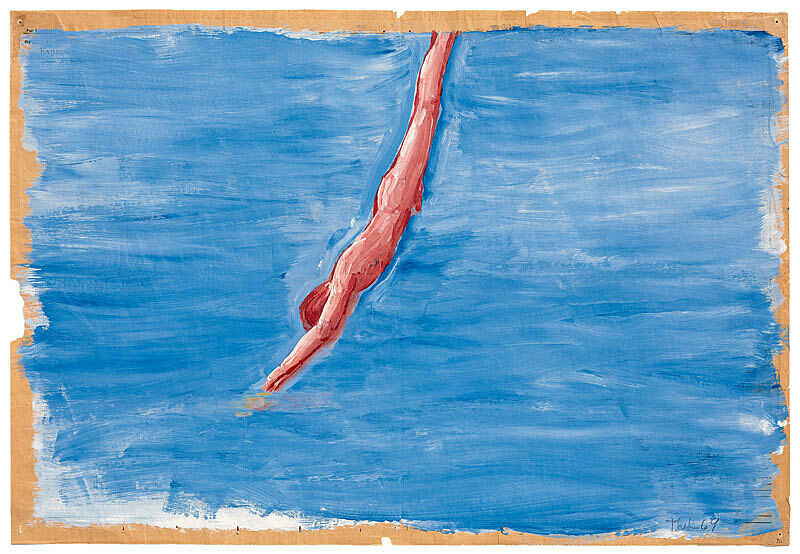
-
301
Andy Warhol, Screen Test: Paul Thek, 1964
Audio -
302
Introduction to Paul Thek’s Meat Pieces
Audio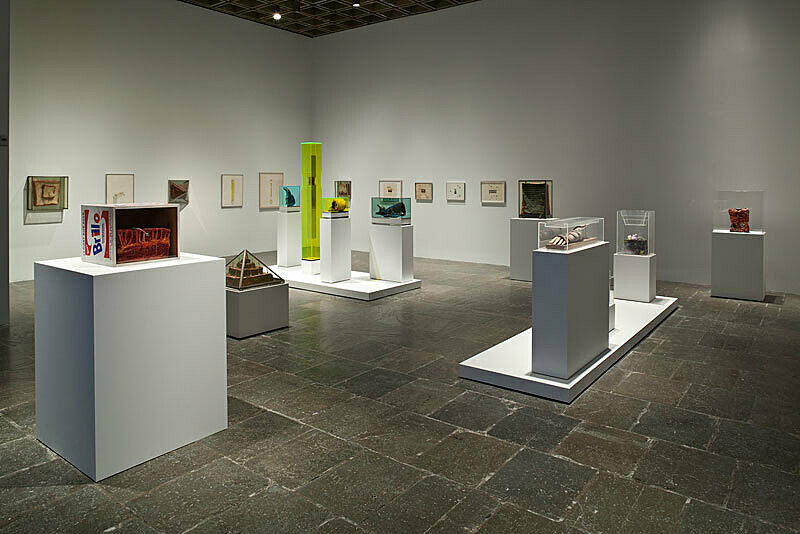
-
303
Paul Thek, Meat Piece with Warhol Brillo Box, 1965
Audio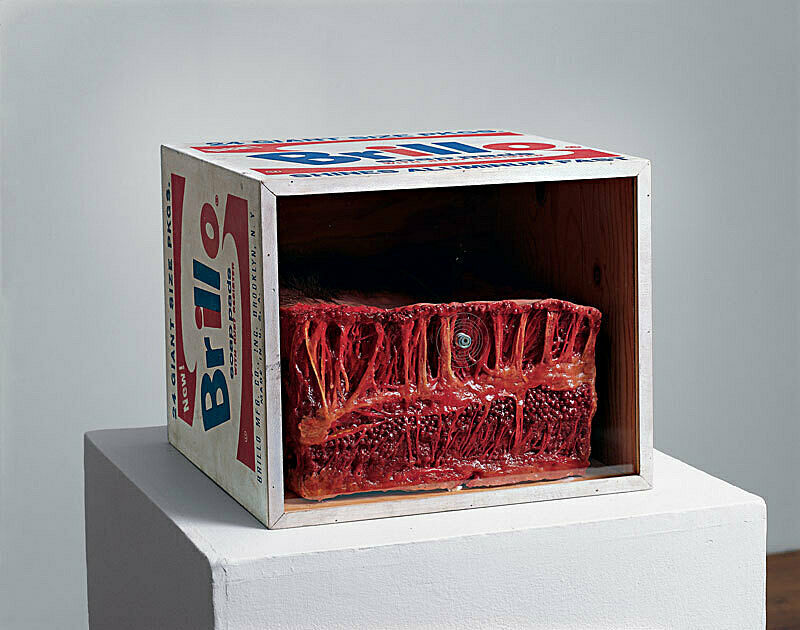
-
304
Paul Thek, Untitled, 1965
Audio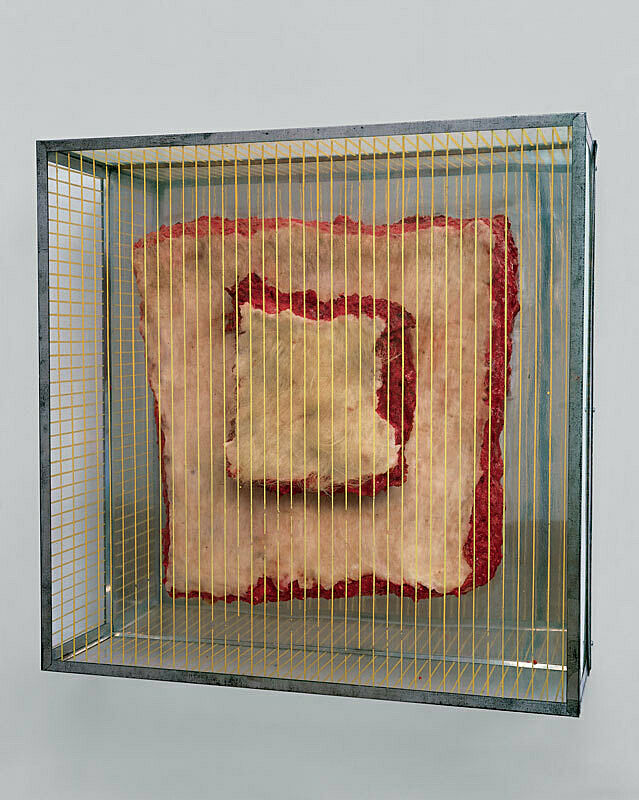
-
305
Paul Thek, Untitled (Meat Piece with Flies), 1965
Audio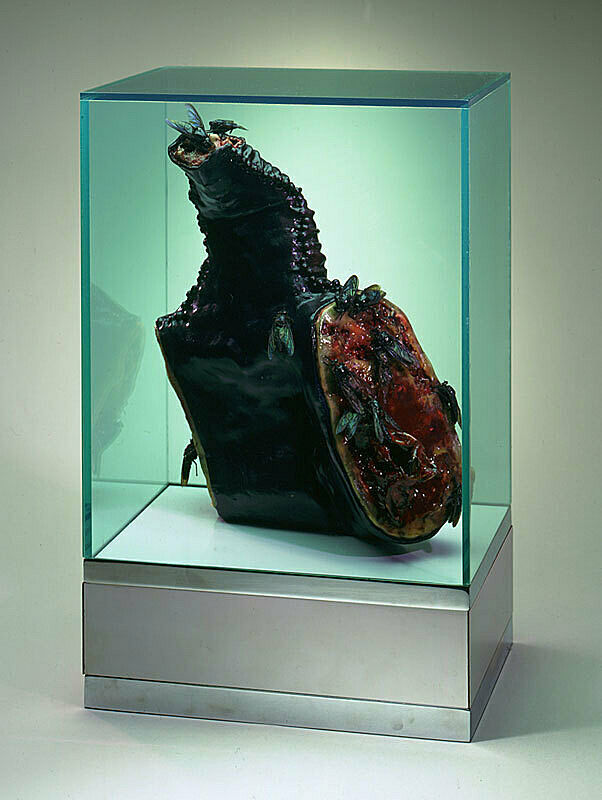
-
306
Paul Thek, Warrior’s Arm, 1967, and other cast body parts
Audio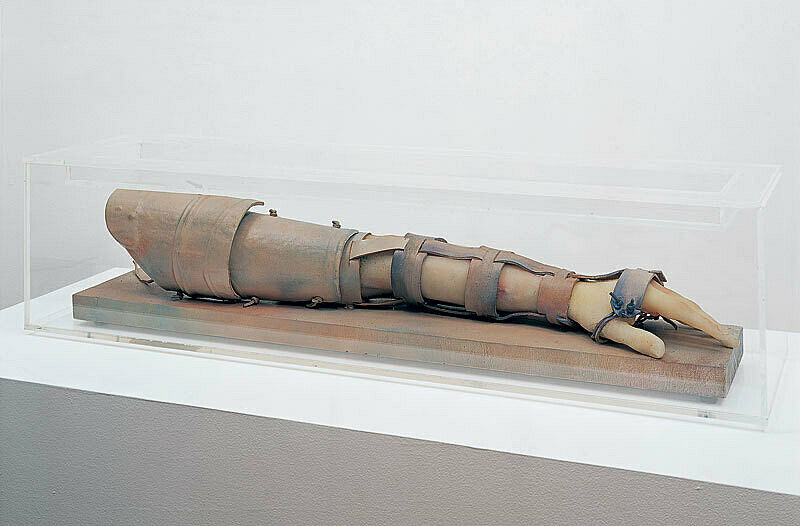
-
307
Paul Thek, The Tomb, 1967
Audio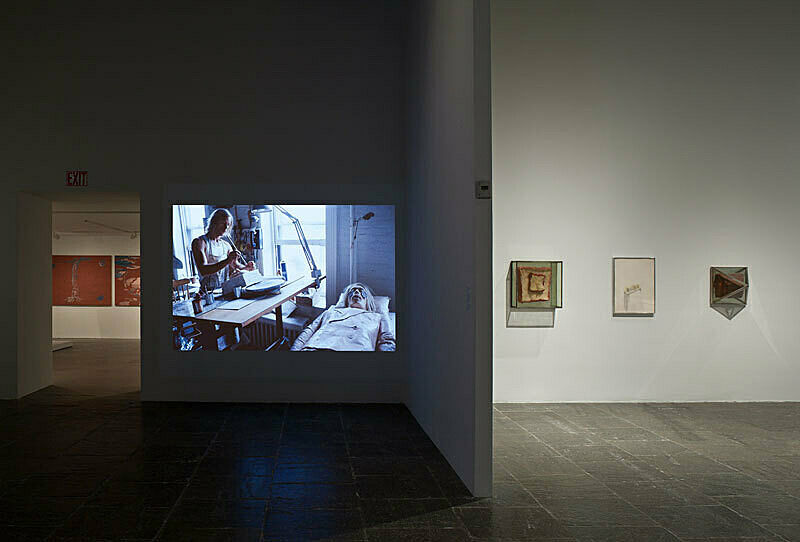
-
308
Introduction to Installations
Audio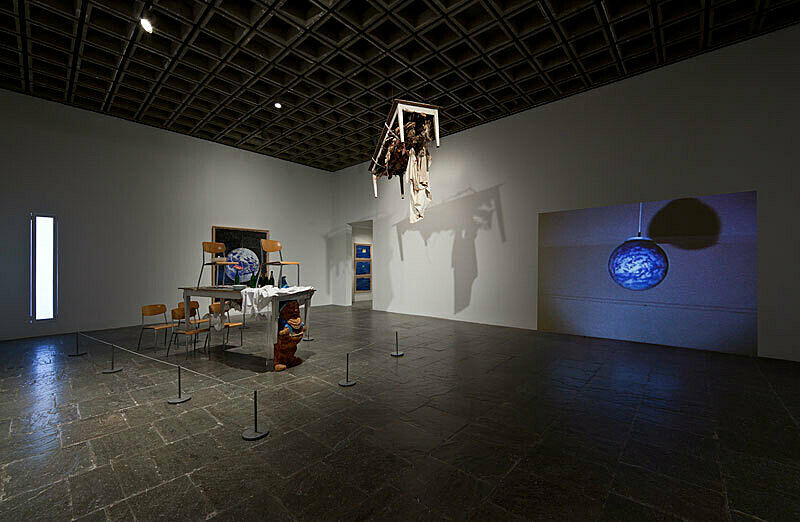
-
309
a document made by Paul Thek and Edwin Klein (3 volumes), c. 1971
Audio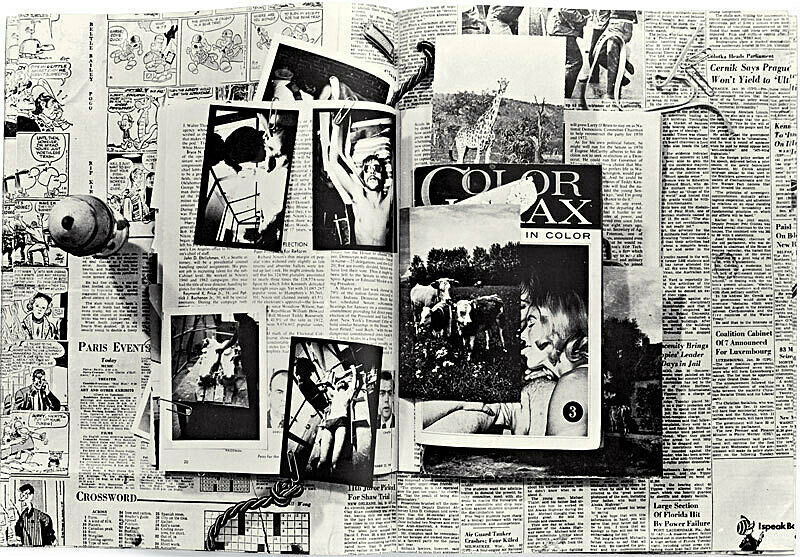
-
310
Paul Thek, Fishman in Excelsis Table, 1970–71
Audio
-
311
Paul Thek, Dwarf Parade Table, 1969
Audio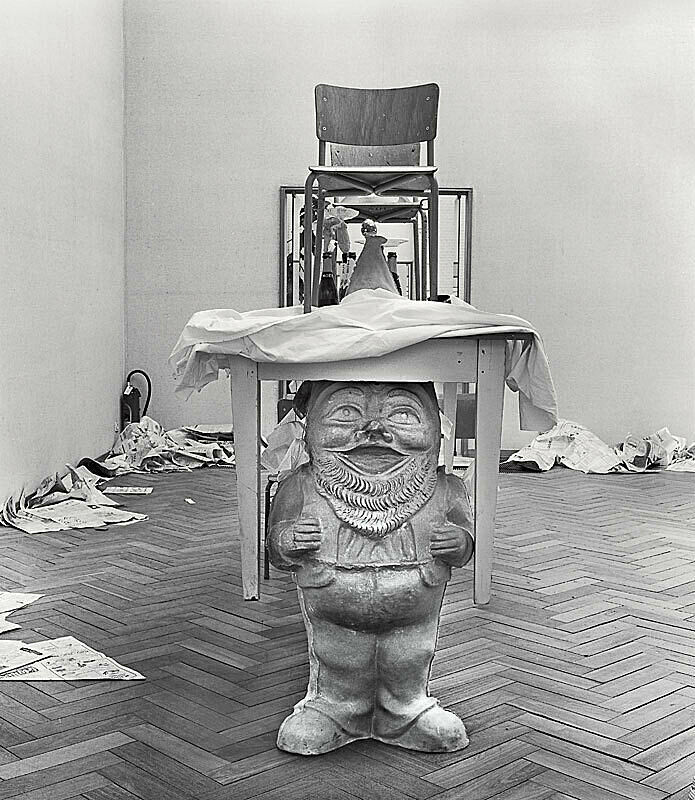
-
312
Paul Thek, A Procession in Honor of Aesthetic Progress: Objects to Theoretically Wear, Carry, Pull, or Wave, 1968
Audio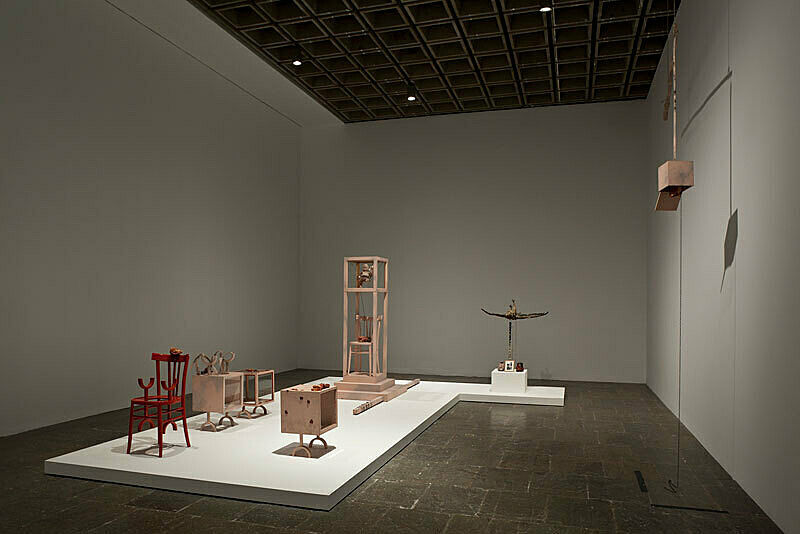
-
313
Paul Thek in Ponza
Audio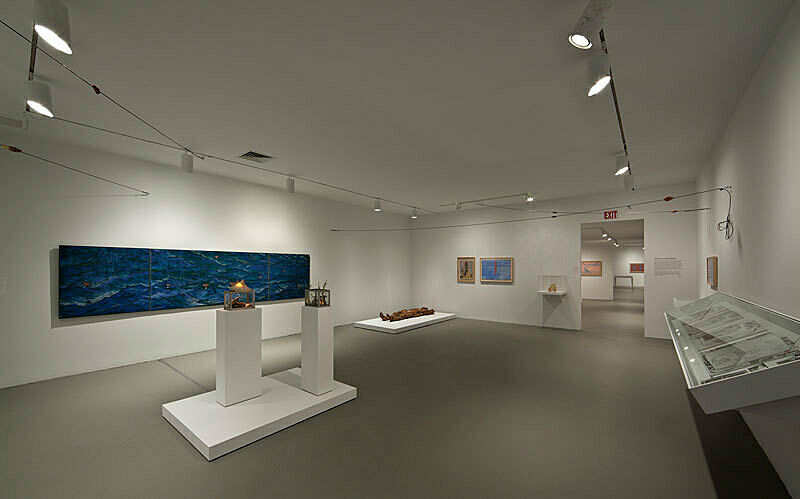
-
314
Paul Thek, Untitled (Diver), 1969
Audio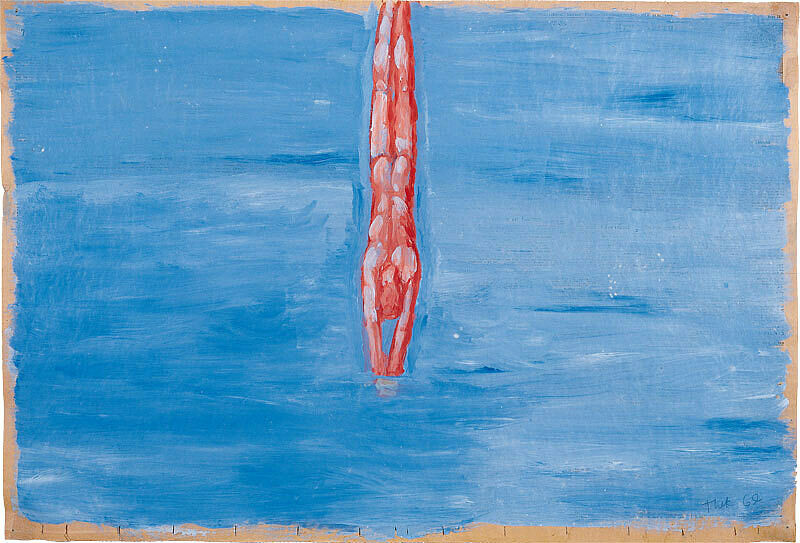
-
315
Paul Thek, Triptych, 1969
Audio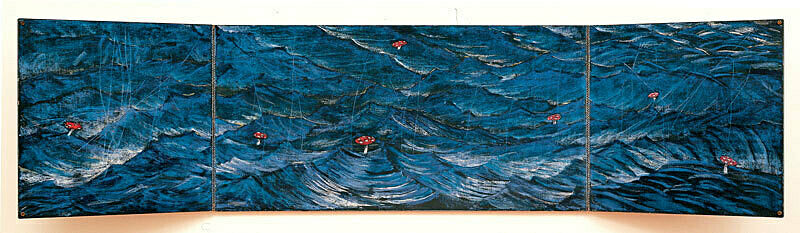
-
316
Paul Thek, Untitled (Dinosaurus), 1971
Audio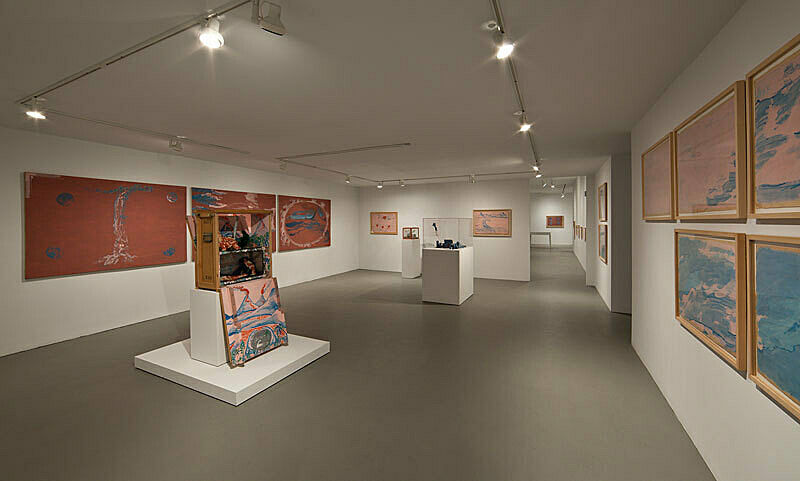
-
317
Introduction to Bojangles
Audio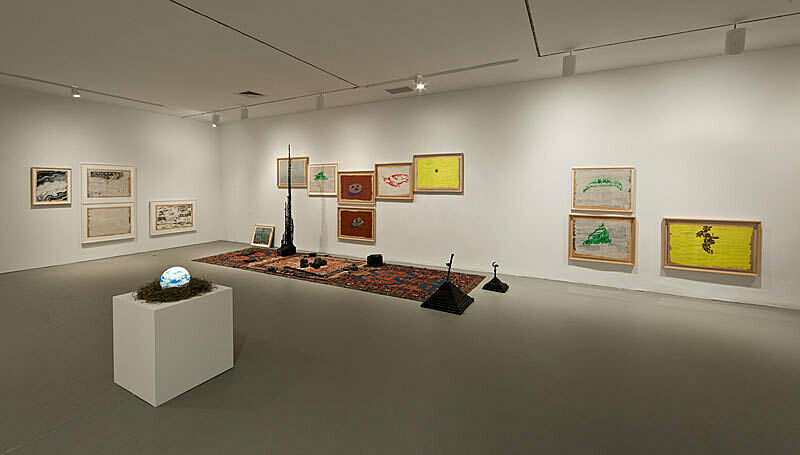
-
318
Paul Thek, The Personal Effects of the Pied Piper, 1975-76
Audio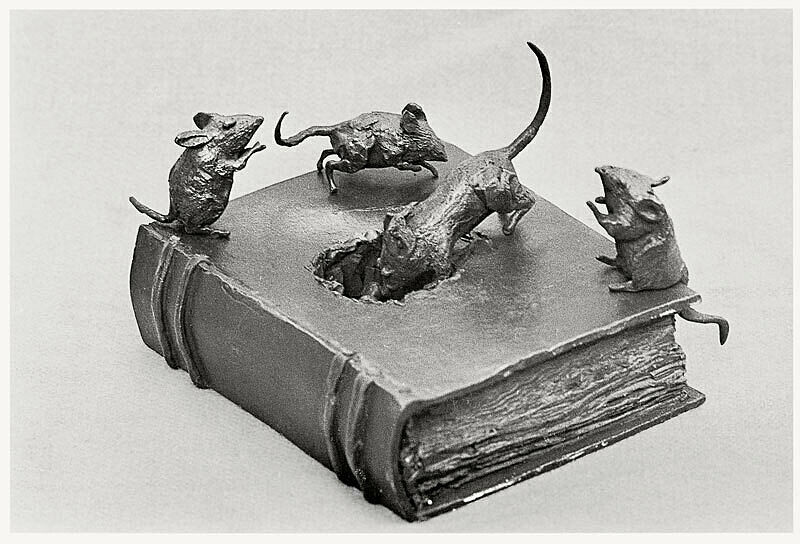
-
319
Paul Thek, Uncle Tom’s Cabin, 1975, and The Tower of Babel, 1976
Audio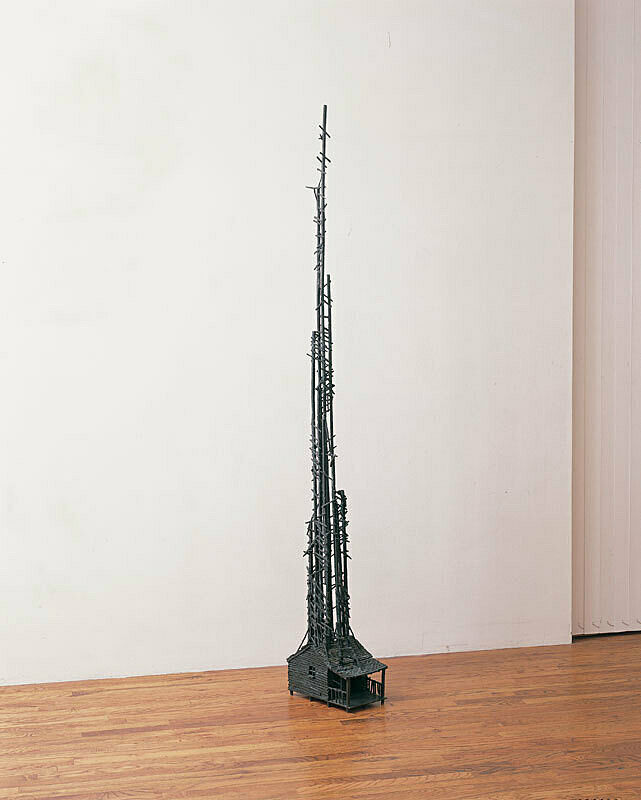
-
320
Paul Thek, Notebooks, 1972–87
Audio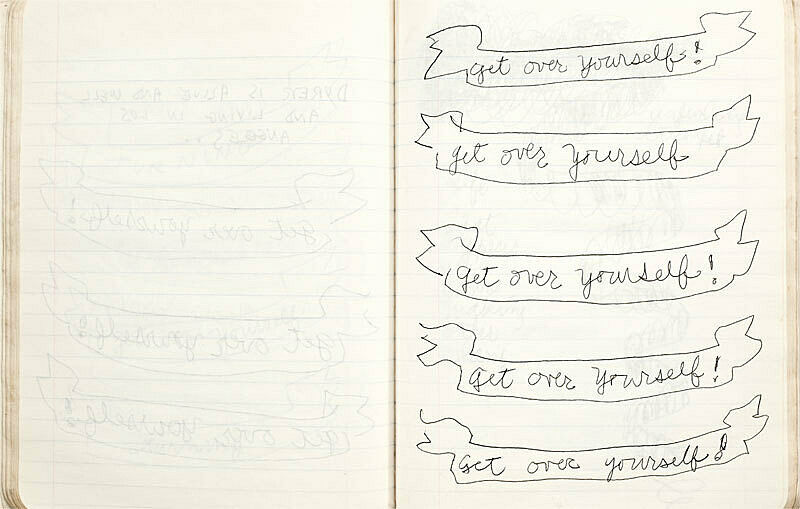
-
322
Introduction to Journals Post 1975, Paintings
Audio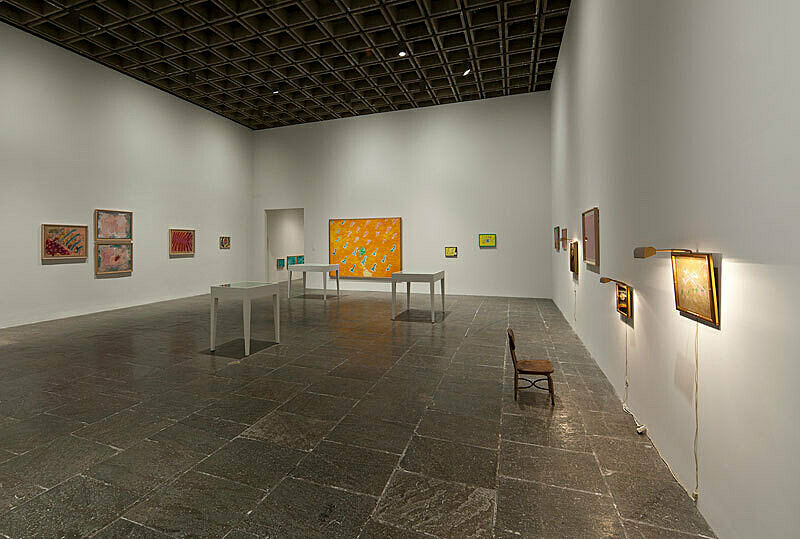
-
323
Paul Thek’s Paintings
Audio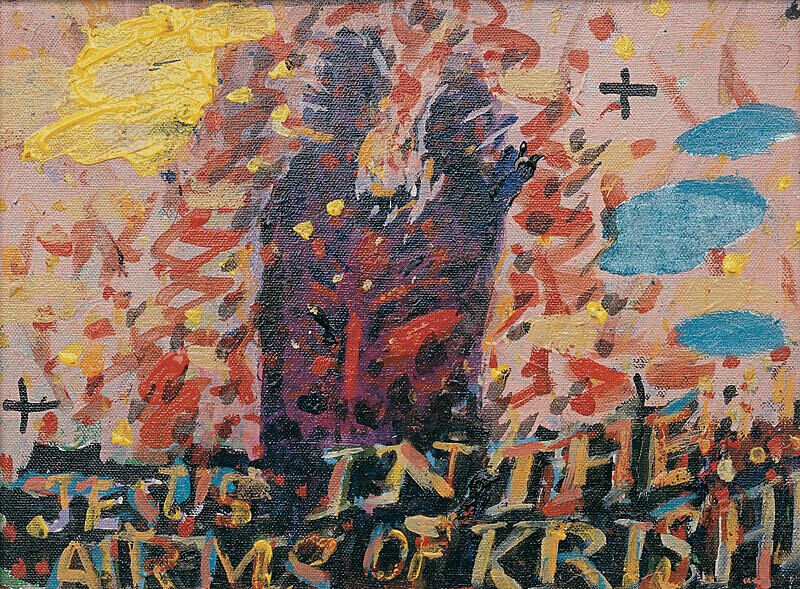
-
324
Paul Thek, Hurrah Vacuii!!, c. 1988
Audio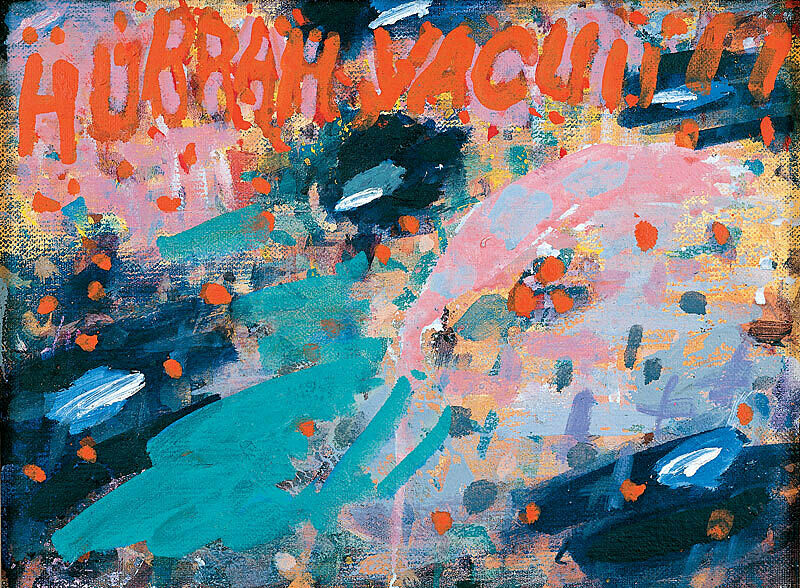
-
325
Paul Thek, Susan Lecturing on Neitzsche, 1987
Audio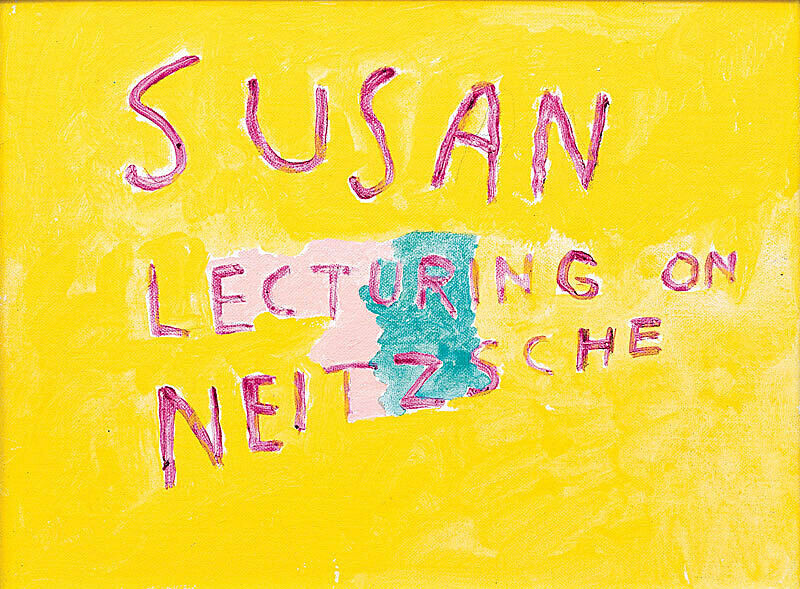
-
326
Introduction to Last Show
Audio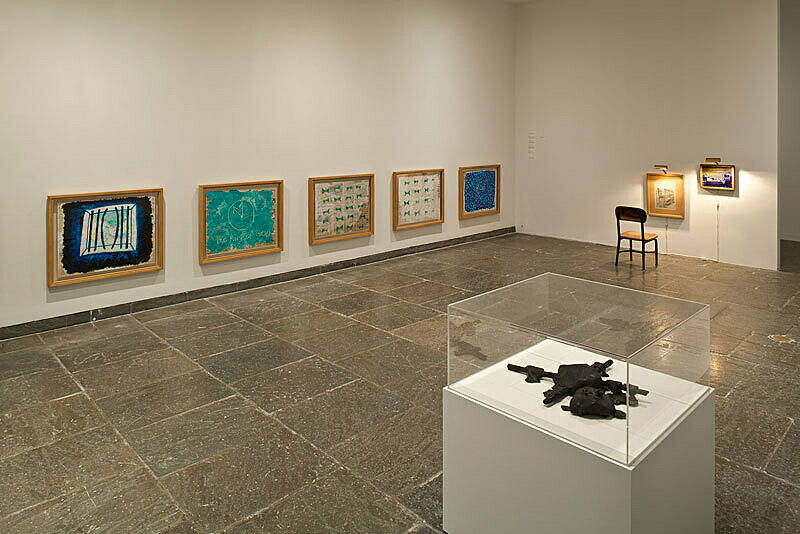
-
327
Paul Thek, Tilted Ark II, 1985
Audio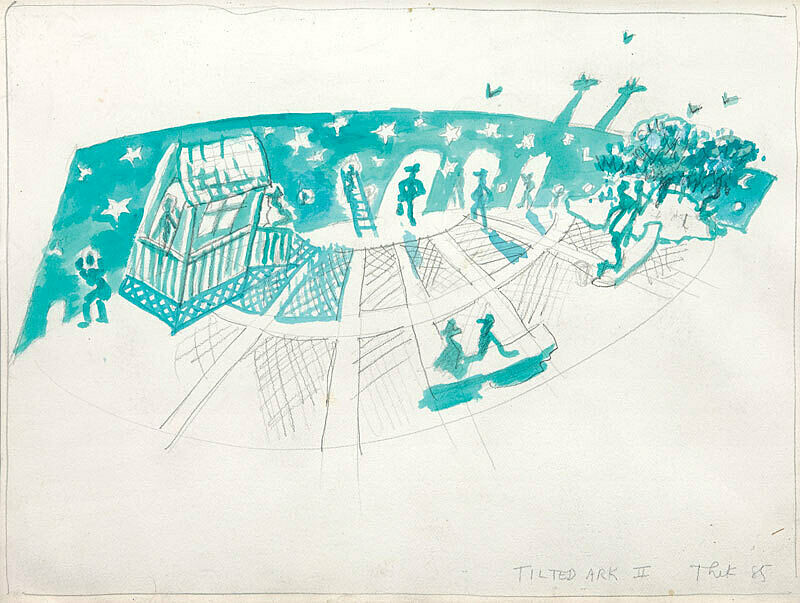
-
328
Paul Thek, Untitled (Butterflies), 1988
Audio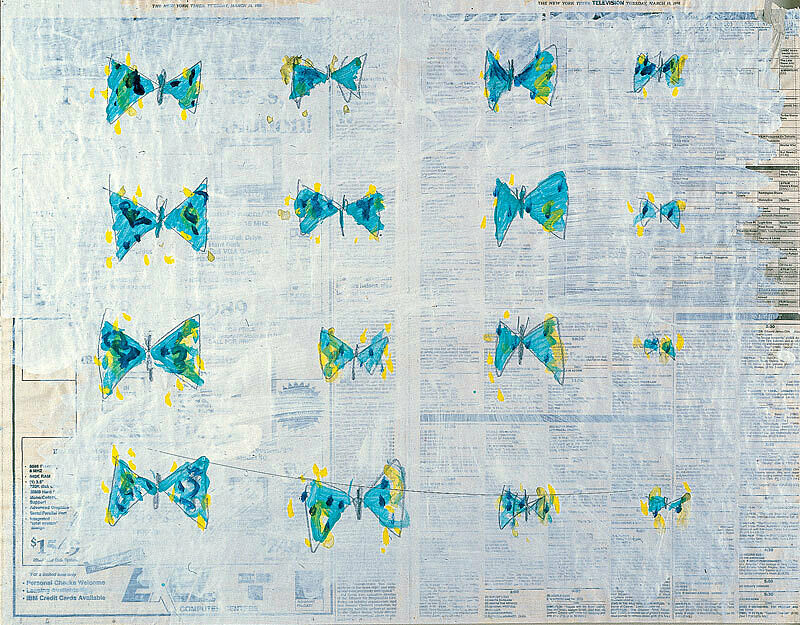
Narrator: Hello, and welcome to Paul Thek: Diver.
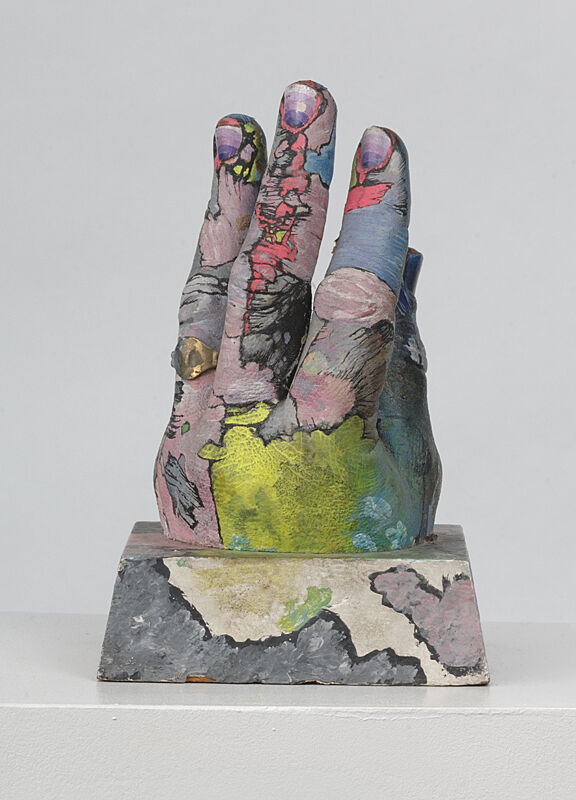
In his life and art, Paul Thek defied categories. He began his career crafting realistic sculptures of raw meat and ended it painting lyrical images of dust particles. He was a spiritual person, and his childhood experience of Catholicism permeated his work. But he also embraced the counter-culture of the 1960s. Thek constructed his most ambitious works—a series of large-scale installations—from ephemeral materials. Today they exist only in fragments, or as recorded in photographs and film.
Thek was a complicated person—brilliant and funny but also difficult. By the time he died of complications from AIDS in 1988, the art world had all but forgotten him. In the next decade, a new generation rediscovered his idiosyncratic, provocative work. They especially admired the way Thek infused his art with meaning—social, political, and spiritual—at a time when many of his contemporaries focused exclusively on form.
This exhibition seeks to introduce Thek to the American public and to re-establish his place in the history of American art. Throughout the tour, you will hear excerpts from interviews with exhibition curators, Elisabeth Sussman and Lynn Zelevansky, and Thek’s friends, artist Neil Jenney and literary scholar Ed Burns. Burns will also read quotes from the artist’s extensive writings.
Paul Thek, Untitled (Diver), 1969−70. Synthetic polymer and gesso on newspaper, 22 1/4 × 33 3/16 in. (56.5 × 84.3 cm). Collection of Gail and Tony Ganz © The Estate of George Paul Thek; courtesy Alexander and Bonin, New York. Photograph by Douglas M. Parker Studio
Elisabeth Sussman: He is a person, we know, who was really physically very attractive, very sort of classic and almost preppy at this point in his life, and athletic; he liked to swim and surf.
Narrator: Curator Elisabeth Sussman describes Paul Thek as Andy Warhol has captured him on film in 1964. Thek’s friend Ed Burns recalled:
Ed Burns: There was a magnetism, not just a sexual magnetism. He was interesting. He always had interesting conversation. He asked interesting questions, with great precision.
Narrator: Thek was born in Brooklyn in 1933 and raised in a devout Catholic family. He studied art at Pratt and Cooper Union. By the time of this film, he had forged a deep friendship with the writer Susan Sontag. They developed their ideas about art and culture together.
Elisabeth Sussman: He would read philosophy that she suggested and obscure historical accounts of the Middle Ages. And it wasn’t that he was just a sponge, at all, soaking up what she told him to read. He was always very reflective of what he was reading and he would send back to her remarks that were very personal and quirky. He was always very original; he was very, very intelligent without being academic.
Narrator: Sontag dedicated her first book to Thek, a landmark of critical theory called Against Interpretation.
Narrator: Thek’s meat pieces—which fill this gallery—were the artist’s first commercially successful works. Their impact is visceral: oozing with blood, encrusted with globs of fat—they are difficult to look at. The works were inspired by Thek’s trip to the catacombs in Sicily. Ed Burns reads Thek’s description from a 1966 interview.
Paul Thek [Ed Burns]: There are 8,000 corpses—not skeletons, corpses—decorating the walls, and the corridors are filled with windowed coffins. I opened one and picked up what I thought was a piece of paper; it was a piece of dried thigh. I felt strangely relieved and free. It delighted me that bodies could be used to decorate a room, like flowers. We accept our thing-ness intellectually, but the emotional acceptance of it can be a joy.
Narrator:The relationship between body and spirit haunted Thek. He was gay, and grew up in a church that associated the physical body—and homosexuality in particular—with sin. These works are very much about Thek’s desire to accept his own physicality—or “thing-ness”—as he put it. His friend Ann Wilson wrote that, quote:
The Catholic education . . . of our generation . . . held sway over every instant of our lives. . . . Paul experienced sexuality as an arena of . . . struggle. . . . Themes of sexuality, flesh, mutilation, and death recur in his work again and again
Installation view of Paul Thek: Diver, A Retrospective (Whitney Museum of American Art, New York, October 21–January 1, 2011). Photograph by Sheldan C. Collins
Narrator: In 1964, Andy Warhol exhibited his Brillo Boxes at the Stable Gallery in New York. The sculptures epitomized the style of Pop Art then in vogue, and offered a deadpan commentary on consumer culture. A few months later, Thek used one of Warhol’s boxes to make this sculpture, which was the then exhibited back at the Stable gallery. Inside Warhol’s deliberately banal box, Thek’s meat, with its tangled layers of tissue, bone, fat, and cherry-red blood, demands a visceral response. Artist Neil Jenney remembers the era’s artistic debates.
Neil Jenney: One of the critical terms that was used was the word “cool.” And Minimal was described as cool. And some Pop was described as cool. And it was pretty evident that Thek was trying to be as hot as possible with his imagery. He was doing the antithesis of cool.
Narrator: As you look around the gallery, you will notice that all of Thek’s meat pieces exploit this contrast between the inexpressive container and its highly emotional, “hot” content.
Paul Thek, Meat Piece with Warhol Brillo Box, 1965, from the series Technological Reliquaries. Wax, painted wood, and Plexiglas, 14 x 17 x 17 in. (35.6 x 43.2 x 43.2 cm). Philadelphia Museum of Art; purchased with funds contributed by the Daniel W. Dietrich Foundation, 1990 © The Estate of George Paul Thek; courtesy of Alexander and Bonin, New York
Narrator: This simple glass and metal case, precisely scored with yellow lines, recalls minimalist sculpture. Minimalism was a style that emerged in the 1960s, and its practitioners tried to distill form, shape, color, and line to their purest expression. As exhibition co-curator Lynn Zelevansky explains, Thek rejected the idea that art could be solely about form.
Lynn Zelevansky: He was interested in art that went beyond art, that wasn't just art but that made references to life in various different ways and to experience in different ways. I think that's a really interesting thing that Thek would have seen Minimalism, in a certain sense, and the insistence on a kind of formalism, as a denial of death. You know, as a sort of bloodless denial of death. And so this was his answer to it.
Narrator: Thek himself explained in an interview:
Paul Thek [Ed Burns]: I was amused at the idea of meat under Plexiglas because I thought it made fun of the scene. . . . Nobody ever mentioned anything that seemed real. The world was falling apart, anyone could see it.
Narrator: Indeed for many critics, Thek was one of the few artists to acknowledge and express the violence of his time the 1960s an era marked by political assassinations, the Vietnam War, and the struggle for Civil Rights.
Paul Thek, Untitled, 1964, from the series Technological Reliquaries. Wax, metal, wood, paint, hair, cord, resin, and glass, 24 x 24 x 7 1/2 in. (61 x 61 x 19.1 cm). Watermill Center Collection © The Estate of George Paul Thek; courtesy of Alexander and Bonin, New York
Elisabeth Sussman: I find that they have a real jewel-like presence in a curious way. They’re very intense and bright and shiny and they’re meant to sort of attract and repulse you.
Narrator: Thek crafted his meat pieces with exceptional skill to achieve the brilliance Elisabeth Sussman describes. Conservators at the Whitney have determined his basic technique: he began by covering a wire mesh core with beeswax, colored with oil paint. He sculpted the wax, adding materials such as nylon thread for hair and tiny glass beads to achieve a globular texture. Thin layers of day-glo paint and glossy resin make the meat look juicy. For this piece, he added large flies, special-ordered from Africa. Curator Lynn Zelevansky.
Lynn Zelevanksy: It's a hard thing to describe what for me is beautiful about this piece. But the beauty is in the contrast of materials, and Thek talked about this too, the coldness of the acrylic against the warmth of the wax and the paint that make up the flesh. You know, I don't know if I though it was beautiful per se, but what I thought was that it was a great example of what he was trying to say. . . . I mean, when you can say something in the clearest way that it can be said, that's beauty to me. . . . So what you see inside is you see a piece of meat and it's just covered with flies so it's like, ‘We are flesh and the worms are eating us’ and that's what's there.
Paul Thek, Untitled (Meat Piece with Flies), 1965, from the series Technological Reliquaries. Wood, melamine laminate, metal, wax, paint, hair, and Plexiglas, 19 × 12 × 8 1/2 in. (48.3 × 30.5 × 21.6 cm). Los Angeles County Museum of Art; The Judith Rothschild Foundation © The Estate of George Paul Thek; courtesy Alexander and Bonin, New York © 2009 Museum Associates/LACMA/Art Resource, NY
Narrator: In 1966, Thek began casting parts of his own body, which he enshrined in boxes, like the meat pieces. He later called both these works and the meat pieces “Technological Reliquaries.” In the Catholic Church, a reliquary is a precious container designed to hold the sacred remnant of a saint’s body. Relics are worshipped. Here, Thek presents arms, hands, and even his head and teeth in cases made from Plexiglas and other cutting edge materials of the time.
Like the meat pieces, these works interweave personal meanings with wider cultural and political concerns. According to Thek’s friend, Ann Wilson, Thek said that the severed arm, with straps evoking the armor of an ancient Roman gladiator, was a metaphor for his own struggle with intense sensual passion. But the works also convey a more general concern that technology would deaden the human spirit. Finally, although Thek never intended to create social protest art, the severed limbs would have brought to mind the many thousands of people maimed and killed in the Vietnam War.
Thek’s eventual goal was to create a full body cast, but he first had to refine his technique. As you examine the other objects in this area, listen to painter Neil Jenney, Thek’s studio assistant in 1967, describe their disastrous first efforts at casting.
Neil Jenney: God the poor guy tortured himself. He didn’t know what he was doing at all. And he went through a lot of pain and suffering to get it done. The first casting we did was of his leg. So basically he had a container, let’s say maybe a five-gallon bucket. So we poured plaster in on each side. He forgot to shave his leg. He also had a friend who told him if you put salt in it, it will set up faster. Salt forces it to cure faster but it forces it to cure at a higher temperature. So we’re waiting for the stuff to cure up enough to solidify so we can take him out of it. But it was heating up so much it was burning him. So he was like, “Oh, It’s burning, it’s burning, take it out.” So I take it out and then we realize the hair was holding it on. And his lower leg from the knee down was like a lobster. It was burnt. And he said well, you can go home now and I’ll call you when I need you.
Paul Thek, Warrior’s Arm, 1967, from the series Technological Reliquaries. Wax, paint, leather, metal, wood, resin, and Plexiglas, 9 1/2 x 39 × 9 1/2 in. (24.1 × 99.1 × 24.1 cm). Carnegie Museum of Art, Pittsburgh; The Henry L. Hillman Fund, Mr. and Mrs. James H. Rich Fund, Carnegie Mellon Art Gallery Fund, A.W. Mellon Acquisition Endowment Fund, and Tillie and Alexander C. Speyer Fund for Contemporary Art, 2010.3 © The Estate of George Paul Thek; courtesy of Alexander and Bonin, New York. Photograph by Jason Mandella
Narrator: In 1967, Thek culminated his early career by creating a life-sized effigy of himself, dressed in a pink suit and laid to rest in a pink ziggurat tomb. This slide show presents photographs of Thek with the piece in his studio. Many of the photographs were taken by his friend and lover Peter Hujar. Curator Elisabeth Sussman.
Elisabeth Sussman: There's no doubt that by casting his own body, he had some sense of what it was to make a funerary monument of himself. And therefore the Peter Hujar photographs that you see have an uncanny quality to them because you see the very much alive Thek in his t-shirt next to this dead effigy that's exactly him. So to come so close as to be able to touch your own dead body, even if you're doing it through your own imagination, is very, very risky territory and that's where he wanted to be with his art.
Narrator: The sculpture, dubbed by critics the “Dead Hippie,” seemed to capture the zeitgeist of the era. The discs on Thek’s cheeks were painted with psychedelic colors, and Thek originally surrounded the figure with paraphernalia that alluded to drug use. When it was shown at the Whitney in 1968, Vietnam War protestors left flowers by the tomb, as if the wax figure were a martyred comrade.
Critics celebrated Thek’s Hippie as a masterwork of American sculpture, and it was exhibited at museums throughout the United States and Europe. Eventually, it became the first great work of Thek’s to be lost.
Over time, the notoriety of the Hippie exasperated Thek. When a museum in Germany asked to exhibit it in 1981, more than a dozen years after its inception, he wrote to a friend:
Paul Thek [Ed Burns]: I really don’t want to have to do THAT piece again! Oh God no! Not THAT one. Imagine having to bury yourself over and over.
Narrator: Thek did agree to show the work, but when it was returned from Germany, he never picked it up from the shipper, and the Hippie was destroyed, or disappeared. Why Thek allowed this to happen is unclear. By one account, he simply forgot to retrieve the work from the shipper. But it’s also possible that he abandoned the Hippie out of frustration that it had never been purchased. Whatever the reason, its destruction ensured that he would never have to show the work again. And it’s quite possible—based on the quote you just heard—that Thek was fine with that.
Installation view of Paul Thek: Diver, A Retrospective (Whitney Museum of American Art, New York, October 21–January 1, 2011). Photograph by Sheldan C. Collins
Narrator: Thek deplored New York’s gallery system and any attempt to commodify art. And at the height of his success with the meat pieces and the Tomb, Thek worried that his art was becoming too commercial. While many of his colleagues developed a signature style, he refused to become known as the “meat man.”
One glance around this gallery, and you’ll quickly see changes afoot in Thek’s work. In 1969, he received a Fulbright Scholarship, and left New York for Europe. While there, over the next decade, he produced a series of immersive installations with a group of artists known as “the artist’s co-op.” Key elements recurred in all the installations, including two exhibited in this gallery: the figure strapped to a table hanging from the ceiling and the table supported by a cartoonish dwarf.
The installations were constructed from hundreds of objects, including perishable materials, like trees and live chickens. Eventually, most of the material was thrown away.
Like many artists of his generation, Thek deliberately chose to make ephemeral work. He sought to emphasize the process of making and experiencing art—rather than creating a finished object that could be sold. But Thek’s stance was especially radical in that he never even documented his work fully.
As you begin to walk around the gallery, listen to Elisabeth Sussman and Lynn Zelevansky reflect on the issues they wrestled with as they considered how to present this work that no longer exists.
Lynn Zelevansky: It's important to just say, something Elisabeth and I have often said to each other, is that Thek built death and decay into his work and so we have to accept that, and we have to understand what we can of his work from what we have left.
Elisabeth Sussman: I think what he recognized, is that it's like being part of a great dance performance. That what might exist afterwards is a record or a document of it, but what will never exist again is the magic of someone moving in time and space in front of you as you are there. And he wanted these great art events to be like that moment that will almost inevitably have to exist in your mind. And so he did it. I mean, it's like a ballerina doing repeat performances and so he did do it four times. And he achieved a slightly different magic with each one but then the magic was over and what remains are the records. And so our challenge is to accept that.
Installation view of Paul Thek: Diver, A Retrospective (Whitney Museum of American Art, New York, October 21–January 1, 2011). Photograph by Sheldan C. Collins
Narrator: Thek made this book with Edwin Klein, a friend, photographer, and member of the artist’s co-op—the group that helped Thek to create his installations. Here, Thek and Klein attempted to capture the activity of the studio as they prepared for an exhibition. Snapshots are layered with seemingly random objects and images: ”everything that surrounded us in our daily life,” Klein explained. He photographed the assemblages against an open newspaper spread. Elisabeth Sussman describes the work’s significance.
Elisabeth Sussman: The newspaper speaks to the reality of the outerworld at the moment and the collages that appear on the newspaper speak to the inner reality of Thek's studio. And there is just generally a sense of confusion, chaos, eroticism, and surfeit of imagery, all of which go into the mood of Thek's studio and which he tries to transfer into these installations themselves. And so it captures that process in a way that nothing else we have left from Paul Thek does.
Narrator: Elsewhere in this gallery, you can see a film of the co-op creating an installation made in Lucerne, called Ark, Pyramid-Easter.
Paul Thek and Edwin Klein, A document made by Paul Thek and Edwin Klein. Amsterdam: Stedelijk Museum; and Stockholm: Moderna Museet, 1969. Alexander and Bonin, New York. Photograph by Sheldan C. Collins
Paul Thek [Ed Burns]: Monday I start again a figure this time not dead (Reborn! Reborn!) and the entire studio and my life is becoming art.
Narrator: After his death as a hippie, Thek is reborn as the Fishman, the figure you see here strapped to a table. To make the Fishman, he had his body cast in latex and attached cast fish that appear to support the swimming man. In Christianity, the fish is an emblem for Christ, and therefore, Thek’s flying Fishman has been interpreted as a symbol of resurrection.
The Fishman appeared in numerous installations, often hung from the ceiling. Imagine its setting, as it often was: much more crowded and complex than what you see here. In one installation, visitors approached the Fishman through a 70-foot-long tunnel. Picture yourself there as you listen to Thek’s own written description.
Paul Thek [Ed Burns]: One had to come through a twisting almost-pink newspaper tunnel, and walk up some steps onto a wharf which is in a truncated pyramid. On the inside are blue newspaper walls held up by trees from which I had not stripped the branches or leaves so it feels like a forest. So you are in a forest in a pyramid at the end of a tunnel and it is painted blue like the sea and lit by candles. And then the wharf is set as a dining room. And then you leave the pyramid. . . .
Narrator: At this moment, visitors encountered the strange and powerful Fishman, suspended from the ceiling. Below it sat the Dwarf Parade Table and beyond was a chicken coop, fishing boat, bathtubs, a sink, a piano, a confessional made from shipping crates, showers of tissues, hanging cherries, and countless other assemblages. It seems appropriate that Thek conceived of the visitors’ initial trek through the tunnel as a “voyage of initiation,” for the world beyond it was strange and marvelous.
Paul Thek, Fishman in Excelsis Table, 1970−71. Mixed media: wood, latex, wax, metal, paint, fabric, string, and Styrofoam, 29 1/2 x 35 7/16 x 94 1/8 in. (75 x 90 x 239 cm). Kolumba, Cologne © The Estate of George Paul Thek; courtesy of Alexander and Bonin, New York. © Kolumba, Koln/Lothar Schnept
Narrator: Thek worked with a craftsman who designed decorative statuettes of animals and dwarves. From him, Thek picked up the dwarf imagery you see here and in paintings nearby.
Thek called this piece the Dwarf Parade Table. Like the Fishman, it was re-imagined for each installation, taking on different meanings and associations. Draped with bed linens, it evoked a funeral bier. Wine bottles on top sprouting clay mushrooms and fish suggested a ritual banquet. Tissues hanging beneath the table referred to tears.
Members of the artist’s co-op, the group that collaborated with Thek to realize his installations, each added imagery and ideas. The group itself changed and grew with every project. Ann Wilson, Edwin Klein, and Franz Deckwitz were among its core members. Elsewhere in this gallery, you can see a video of them working. Klein recalled the communal nature of their experience, writing:
"The idea of the installations emerged from the beauty in the studio: the place where you lived, and where your friends came to visit, the place where everything happened. . . . We did everything together—not just working. We ate together, lived together, traveled together, made music. . . The installations demanded full involvement and mirrored our way of life."
Installation view of Paul Thek’s The Procession/The Artist’s Co-op (Stedelijk Museum, Amsterdam, 1969).
Narrator: Thek loved the rituals and processions of the Catholic Church. He wrote to a friend:
Paul Thek [Ed Burns]: I want to do a crazy show, a procession, and do all the things that people carry and wear in a procession, like jewelry and masks and shrines etc. and it could be a joy to do.
Narrator: The result was the group of objects displayed in this gallery, called A Procession in Honor of Aesthetic Progress: Objects to Theoretically Wear; Carry; Pull or Wave.
Thek designed two types of simple sculptures, which you see here: chairs to be worn on the shoulders; and glass boxes to cover the head. The procession’s culminating object was the Sedan Chair, also on display, which was to be carried like a litter. Colors were chosen based on their associative meaning: red represented hell; pink, the here and now; and white referred to heaven.
The pieces evolved from Thek’s earlier work: instead of boxes displaying body casts, he designed boxes to cover the live body. In reality, the chairs and headboxes were too fragile to be worn, but Thek began to incorporate the idea of performance into his art in different ways. You can see a series of photos in this area in which Thek enacts a kind of private performance in the installation, flying a bird through the gallery.
Thek rarely handled logistics, so his dealer was both surprised and concerned when he personally arranged to ship these works from his studio in Rome to the gallery in Essen, Germany. Unfortunately, the results were disastrous. Several objects were detained in customs and only released when Thek’s dealer convinced officials that the meat would spoil if it remained in storage. Other pieces arrived in Thek’s luggage, a mess of broken glass and wood. Faced with the ruin of his work just days before the opening, Thek retreated to his room and slept.
Eventually, he devised a plan. Thek transformed half of the gallery into a messy, paint-spattered studio. Here he cordoned off the broken sculptures and recreated them over the next several weeks. He placed each finished object on a pedestal on the other side of the gallery, in an installation like the one you see here. Each day visitors to the gallery saw an installation that was a little different than it had been the day before. He subtitled the exhibition A Work in Progress and told critics that this had been his concept from the beginning. This new emphasis on process became integral to Thek’s work, and he completed most of his subsequent installations in the same way.
Installation view of Paul Thek: Diver, A Retrospective (Whitney Museum of American Art, New York, October 21–January 1, 2011). Photograph by Sheldan C. Collins
Narrator: On October 1, 1969, Thek wrote a letter to Ann Wilson:
Paul Thek [Ed Burns]: Dear Annie, Have decided to stay here one more day or two, because my heart breaks to pieces to leave . . . the days hot and the sea still stays so calm. Yesterday I rowed almost to Zannone, naked in the boat, and stopped at one of the barren rocks on the way and climbed on. Like touching the moon. . .
Narrator: The place Thek could not bear to leave was Ponza, a small island off the coast of Southern Italy, where he spent his summers. Thek had an almost split personality: he was worldly, sensual, and extroverted. But he was also a contemplative person who liked silence and isolation. He even considered retiring to a monastery. As Elisabeth Sussman explains, he pursued this more ascetic life in Ponza:
Elisabeth Sussman: He lived very, very simply and he painted very, very simply. And Thek was a person who had always loved the sea and body surfing and loved being on the beach. And so this kind of combination of ecstasy and freedom and simplicity and isolation was what would go into the work that he would do at Ponza during this period in the late 60s.
Narrator: Thek presented the works you see in this gallery in an informal exhibition mounted in a run-down apartment in Cologne, Germany. The exhibit beautifully reflected his love of the sea.
Installation view of Paul Thek: Diver, A Retrospective (Whitney Museum of American Art, New York, October 21–January 1, 2011). Photograph by Sheldan C. Collins.
Narrator: In 1968, archaeologists in Italy discovered an ancient fresco depicting a lone athlete diving into the water, presumably toward the afterlife. Thek undoubtedly heard about the find. The next year he painted his own diver images. The figure seems to serve as a surrogate for the artist himself, alone, engaged in a solitary search for sensation and meaning. Curator Elisabeth Sussman.
Elisabeth Sussman: For us these paintings of the diver seemed to signify Thek’s great abilities as an artist and to somehow convey this state of mind of intensity and contemplation and purity in a very honest and direct and beautiful and extremely simple way. It’s an image that really does speak to what Thek is, in many ways, about.
Paul Thek, Untitled (Diver), 1969. Synthetic polymer on newspaper, 26 1/8 x 36 1/4 in. (66.4 x 92.1 cm). Kolodny Family Collection © The Estate of George Paul Thek; courtesy of Alexander and Bonin, New York.
Narrator: This image of spotted red mushrooms floating in a vast grey sea replicates the mood of Thek’s installations and exhibitions, which were both quiet and humorous. Elisabeth Sussman explains how the curators have sought to evoke the same mood here at the Whitney.
Elisabeth Sussman: What we've tried to do is create the feeling of contemplation and of mystery that we feel was a component of these installations and to somehow have a kind of informality about the gallery and a kind of an ad hoc arrangement of objects, which is something that Thek preferred as a way of showing his work. So we've tried to capture some of the qualities without reproducing the actual event, which we think would have been impossible.
Paul Thek, Triptych, 1969. Chalk, watercolor, and fixative on blackboard, 39 ¼ x 157 ¾ in. (99.7 x 400.7 cm). Collection of Daniel W. Dietrich II © The Estate of George Paul Thek; courtesy of Alexander and Bonin, New York. Photograph by D. James Dee
Narrator: Dinosaurs roam in a pale pink landscape filled with volcanoes spewing rivers of orange lava. Such idiosyncratic imagery filled Thek’s notebooks and drawings. So when he encountered the dream-like visions of avant-garde theater director Robert Wilson, he felt an instant kinship. Thek wrote to a friend: “Our work goes together. He has fish hanging in trees. I couldn’t believe it. Pink pyramids.”
After Thek saw Wilson’s theater piece Deafman’s Glance in Paris, the two artists became friends. Thek later performed in the work, playing the part of a messenger who runs back and forth across the stage throughout the entire seven-hour production.
Thek helped Wilson design the sets for Overture for Ka Mountain and GUARDenia Terrace in 1972. The sets consisted of two enormous pink backdrops depicting an erupting volcano and the skeleton of a dinosaur. You can see a photograph of one in a case nearby.
After seeing Wilson’s revolutionary work, Thek began to think of his own installations as “life theater.” The two men remained friends for life, and Wilson became executor of Thek’s estate.
Installation view of Paul Thek: Diver, A Retrospective (Whitney Museum of American Art, New York, October 21–January 1, 2011). Photograph by Sheldan C. Collins.
Narrator: Three years after his last major installation in a European museum, Thek received a letter stating that the museum could no longer afford to store his work. He responded angrily.
Paul Thek [Ed Burns]: Can’t you educate your museum friends . . . of the IMPORTANCE of these shows? . . . Can’t you educate them so that they will become willing to spend some few thousands of [dollars] for a show that does NOT remain, that is NOT purchaseable, that CANNOT be resold? This is the POINT.
Narrator: Once a champion of ephemeral art, it was now painful for Thek to see his work—and his legacy—disappear. In fact, managing the army of people required to make the installations had become stressful, and Thek was already moving in a new direction. He made small paintings and sculptures. For the first time he worked in bronze, a material that can survive thousands of years.
Installation view of Paul Thek: Diver, A Retrospective (Whitney Museum of American Art, New York, October 21–January 1, 2011). Photograph by Sheldan C. Collins.
Narrator: These small objects formed part of a whimsical project called, The Personal Effects of the Pied Piper. Thek wanted to create his vision of the Pied Piper’s secret campsite in the woods, with a fire and tiny mice frolicking among the piper’s personal belongings.
His interest in the Pied Piper may have evolved out of his fascination with processions. Lynn Zelevansky.
Lynn Zelevansky: I think Thek saw himself as a kind of charismatic figure and he wanted to have that kind of charismatic ability that the pied piper had.
Narrator: In the original fairy tale, the piper first leads the rats out of Hamelin to stop the spread of bubonic plague. When the townspeople refuse to pay him, he leads a second procession—stealing their children away.
Elisabeth Sussman discusses Thek’s interest in folk characters like the Pied Piper.
Elisabeth Sussman: When you see him looking for these surrogate myths it’s because he wants to sort of attach, to attach to the world. He wants to attach himself to stories that people know. So that they will look at his art and somehow feel like they already know it, they’re familiar with it.
Narrator: You may recall that these desires⎯to suffuse his work with humanity and connect with his audience⎯were present in Thek’s earlier work, the meat pieces and the installations.
Paul Thek, The Personal Effects of the Pied Piper, 1975–76. Bronze, dimensions variable. Collection of Daniel W. Dietrich II. © The Estate of George Paul Thek; courtesy of Alexander and Bonin, New York.
Narrator: A rickety tower rises from a small, wooden shelter—Thek creates an eccentric form from these two very different structures. The tower represents the Tower of Babel, a symbol of human hubris, while the cabin, which Thek called Uncle Tom’s Cabin, suggests humility. Throughout this gallery, you will see Thek exploring similar motifs. He found African American culture to be intensely spiritual, and figures such as Bojangles, Tar Baby, and Uncle Tom crop up repeatedly in both sculpture and paintings. Elisabeth Sussman.
Elisabeth Sussman: I think that at this point he gets very, very interested in the simple. And in about 1975, I just have the sense that he really wants to be childlike in opposition to being the leader of this group, the artist's co-op. He really wants to reduce things to their most communicative and their most simple version.
Narrator: This remarkable sculpture was part of Thek’s Pied Piper project. It was never completed for reasons that remain mysterious. In one version of the story, Thek’s dealer neglected to pay the foundry casting the sculpture, so the foundry destroyed many of Thek’s works. But Thek also seemed to unravel emotionally while working on the Pied Piper, and he may have played a role in the project’s demise. This marked the beginning of a difficult period in which Thek’s internal conflicts led him to distance himself from friends and colleagues. You will hear more about this in the next section of the exhibition.
Paul Thek, Tower and Uncle Tom’s Cabin, 1976. Bronze, 94 1/2 x 14 1/2 x 9 1/2 in. (240 x 36.8 x 24.1 cm). Philadelphia Museum of Art; purchased with funds contributed by the Daniel W. Dietrich Foundation, Mrs. Adolf Schaap, Marion Stroud Swingle, and with the Twentieth Century Art Revolving Fund, 1990. © The Estate of George Paul Thek; courtesy of Alexander and Bonin, New York.
Narrator: Thek began keeping a daily journal in 1969, and when he died in 1988, close to one hundred of these notebooks were found among his possessions. They reveal an intelligent, exuberant mind—often plagued by frustration and self-doubt.
Visually, the journals are a jumble of texts, sketches, doodles, and highly finished drawings and watercolors. They also include long passages, copied word for word, from spiritual texts—a meditative exercise that speaks to Thek’s ongoing search for spiritual truth.
The notebooks also highlight Thek’s sense of humor. He loved wordplay, and he twists puns and clichés in every direction, to alter their meaning. Thek repeatedly reminds himself to maintain his sense of humor—in art and in life.
Spread from Thek’s notebook #81, n.d. Watermill Center Collection; courtesy Alexander and Bonin, New York © The Estate of George Paul Thek; courtesy of Alexander and Bonin, New York
Narrator: By the mid-1970s, the dollar’s decline made living in Europe expensive. Thek returned home to New York, where he struggled, emotionally, artistically, and professionally. Curator Elisabeth Sussman discusses how drug use may have affected the artist.
Elisabeth Sussman: I think there were times—he’s very honest in his journals about this—that he just went too far. I think it was hard to come back from those states and I think they did affect him permanently and that he wasn't in the best shape because of the kind of life he had led.
Narrator: Thek was also sick with Hepatitis and broke. He had to bag groceries and work as a janitor in a hospital to get by. He often seemed angry and paranoid and alienated many old friends. Ed Burns who has been reading from Thek’s writings throughout the tour was Thek’s friend during this time. Mr. Burns reflected recently in an interview on the artist’s frustration:
Ed Burns: He had had success in Europe, and when he came back to New York, it was as if he was an unknown artist. He was very difficult with dealers. And he was difficult with the art world establishment. I think it's that he had had extraordinary experiences in Europe, where he was free to create the kinds of environmental spaces that he wanted to. And when he came to New York, he found himself someone that nobody knew and he found himself in a world where art and the artist had become commodified.
Narrator: The next two galleries contain work from this time.
Installation view of Paul Thek: Diver, A Retrospective (Whitney Museum of American Art, New York, October 21–January 1, 2011). Photograph by Sheldan C. Collins
Narrator: For a few years, Thek produced little work. Then in 1979, he wrote to a friend:
Paul Thek [Ed Burns]: I am beginning to paint again, little canvases, very little, 9 x 12 inches all different styles, all different subjects.
Narrator: You see the kinds of paintings he’s describing along this wall. Curator Elisabeth Sussman.
Elisabeth Sussman: He was a masterful draftsman. I mean, he could draw anything, he could paint anything. And he had a certain hidden desire to be a great painter. And when he comes back to New York the whole idea of what a great painting is is up for grabs.
Narrator: Thek quickly picked up on an emerging 1980s style, which, ironically, became known as “bad painting.” The brushwork is expressionistic, almost like finger painting. The colors are garish and jarring. The subject matter is often inscrutable. Thek described the work as “kitschy . . . not well painted . . . rough, and not harmonic.” In keeping with the style, he presented these pictures in cheap gold-leaf frames, with brass picture lights. But compared with the enormous size and high seriousness of other 80s painting, Thek’s work was intimate, playful, and approachable. You see these kinds of paintings in this gallery.
Paul Thek, Jesus in the Arms of Krishna, 1979–80. Synthetic polymer on canvas with artist’s frame and picture light , 10 1/2 × 13 1/2 in. (26.7 × 34.3 cm). Watermill Center Collection; courtesy Alexander and Bonin, New York © The Estate of George Paul Thek; courtesy of Alexander and Bonin, New York. Photograph by Bill Orcutt
Narrator: The wordplay so common in Thek’s notebooks spills out into his later canvases. Here he reverses the phrase Horror Vacuii—fear of empty space—to become “Hurrah Vacuii,” transforming the dark phrase into a kind of cheer for emptiness. But the painting’s vibrant surface celebrates fullness. Every inch of the canvas is daubed and smeared with colorful paint. Lynn Zelevansky reflects on Thek’s attraction to these extremes—empty and full, austerity and excess.
Lynn Zelevansky: There's a late painting that he did that has the inscription "while there's still time, let's go out and feel everything." And to me that's just quintessential Thek because he doesn't just want to feel the good things, he wants to feel everything. That that's what life is and he wants to totally embrace it.
Narrator: Many of Thek’s late paintings are bursting with intensity. They are arbitrary and unruly. He described them as “crowded little moments of painting.” When asked about meaning, Thek said, “They’re agnostic. They lead no where except perhaps to a kind of freedom.” As a whole, Thek’s late paintings do not conform to a specific style and his writings do not establish a coherent philosophy.
Paul Thek, Hurrah Vacuii!!, c. 1988. Synthetic polymeron canvas board, 9 x 12 in. (23 x 30.5 cm). Private Collection; courtesy Alexander and Bonin, New York, and Mai 36 Galerie, Zurich © The Estate of George Paul Thek; courtesy of Alexander and Bonin, New York.
Narrator: Susan Lecturing on Neitzsche. A child’s block letters scrawl across a pulsating yellow ground, the name Nietzsche is misspelled. Susan Sontag was one of the many friends Thek alienated after his return to New York. Ed Burns recalls how they renewed their friendship when the artist was on his deathbed.
Ed Burns: He said to me, I need to see Susan. I want to speak to Susan. And late that evening, Susan arrived at the hospital. And it always seemed to me that those two pictures, Susan Lecturing on Nietzsche and The Erotics of Art, were his cry—in French we'd say “cri de coeur”—a cry from the heart. I need to see you, Susan. I need to reconcile. It was one of the most profoundly important relationships of his life. And Susan came and spent every day and through most of the night with Paul, and I remember going with her to a bookstore on Madison Avenue, Books and Company. She bought the Rilke Elegies and we bought Selected Poems of William Carlos Williams. And then Susan organized that people would sit with Paul, when he was asleep or awake, reading to him. And it was like a Buddhist chanting to accompany someone to their death. And this went on around the clock in the last ten days of his life. And I think he felt some deep comfort knowing that she came and that that part of his life was in order.
Paul Thek, Susan Lecturing on Neitzsche, 1987. Synthetic polymer on canvas board, 13 x 16 15/16 in. (33 x 43 cm). Watermill Center Collection © The Estate of George Paul Thek; courtesy of Alexander and Bonin, New York.
Narrator: In 1987, Thek was diagnosed with AIDS, and he died the following year. The paintings in this gallery were all made during the last year of his life. Lynn Zelevansky.
Lynn Zelevansky: They have themes in them that pertain to death. But you can see him seeing death really as a kind of freedom and a kind of escape. And so when you look at the prison bars and they're pulled apart . . . the prison is earth and the way out is death. The work is so gorgeous. I mean, it's so touching and so moving and so beautiful and so unafraid of the dark side and so appreciative of the light side. I think it's amazing.
Narrator: The contemplative installation here recreates Thek’s last gallery exhibition, which he designed himself, hanging the pictures low to the floor. Being surrounded by the aqua-blue-green images, he said, "felt like being on a swimming pool." Thek’s friend Ed Burns remembers the exhibition.
Ed Burns: And what I think he did when he hung the show and placed the works was to try and give the sense of intimacy, as if you were coming into his studio and looking at the works. He wanted to draw you in personally into his world.
Installation view of Paul Thek: Diver, A Retrospective (Whitney Museum of American Art, New York, October 21–January 1, 2011). Photograph by Sheldan C. Collins
Narrator: This fanciful drawing, called Tilted Ark, refers to a controversial public sculpture by the artist Richard Serra—a 120-foot long, 12-foot high solid arc of steel. When the work was installed across Federal Plaza in Downtown Manhattan in 1981, workers complained that it ruined the open space they had enjoyed. Thek offers an alternative to Serra’s work, transforming his arc with a “c” into a kind of Noah’s ark. Ed Burns recalls their discussions about the piece.
Ed Burns: What he felt was that Richard Serra dehumanized the space. And what he tried to achieve in the drawings, by putting a hole in it, so that people could walk through, he said to me at the time, when we had walked down to Federal Plaza, he said there's nowhere here for anyone to sit down. There was no human space there. And he felt the same way about the black cube at Astor Place, that it dehumanized a public space. He envisioned an Arc De Triumph with flowers and spaces where children could play. I mean, there was a spirit of play about him.
Paul Thek, Titled Arc II, 1985. Graphite and watercolor on paper, 19 x 25 in. (48.3 x 63.5 cm). Watermill Center Collection; courtesy Alexander and Bonin, New York © The Estate of George Paul Thek; courtesy of Alexander and Bonin, New York
Narrator: Among Thek’s last paintings were these delicate images of butterflies. Like so much of his work, time and decay are built into the painting itself. The fragile newspaper ground has already yellowed with age. Thek’s close friends surrounded him in the hospital at his death, but very few in the art world came to see his last exhibition. Court documents related to Thek’s estate described him as a “relatively unknown artist.”
And yet, we can see the legacy of Thek’s work in the art of the next three decades. In part, this is because he explored the ways materials can have meaning. And in part, it’s because his art was not just in the galleries. It was also the way he lived his life and the person he washis choices, his affect, and the effect he had on the people and world around him. These practicesand the blurred boundaries between his art and his liferesonate deeply in contemporary art.
It is our hope that this exhibition will further restore Paul Thek’s place in the story of American art.
Thank you for joining us on this tour of Paul Thek: Diver. We wish to thank Ed Burns, Neil Jenney, and Ann Wilson.
This has been an Antenna Audio production.
Paul Thek, Untitled (Butterflies), 1988. Synthetic polymer and gesso on newspaper, 21 x 27 in. (53.3 x 68.6 cm). Philadelphia Museum of Art; purchased with funds contributed by the Daniel W. Dietrich Foundation, 1992 © The Estate of George Paul Thek; courtesy of Alexander and Bonin, New York
0:00
0:00