
David Wojnarowicz: History Keeps Me Awake at Night
2018
-
550
David Wojnarowicz with Tom Warren, Self-Portrait of David Wojnarowicz, 1983–84
Audio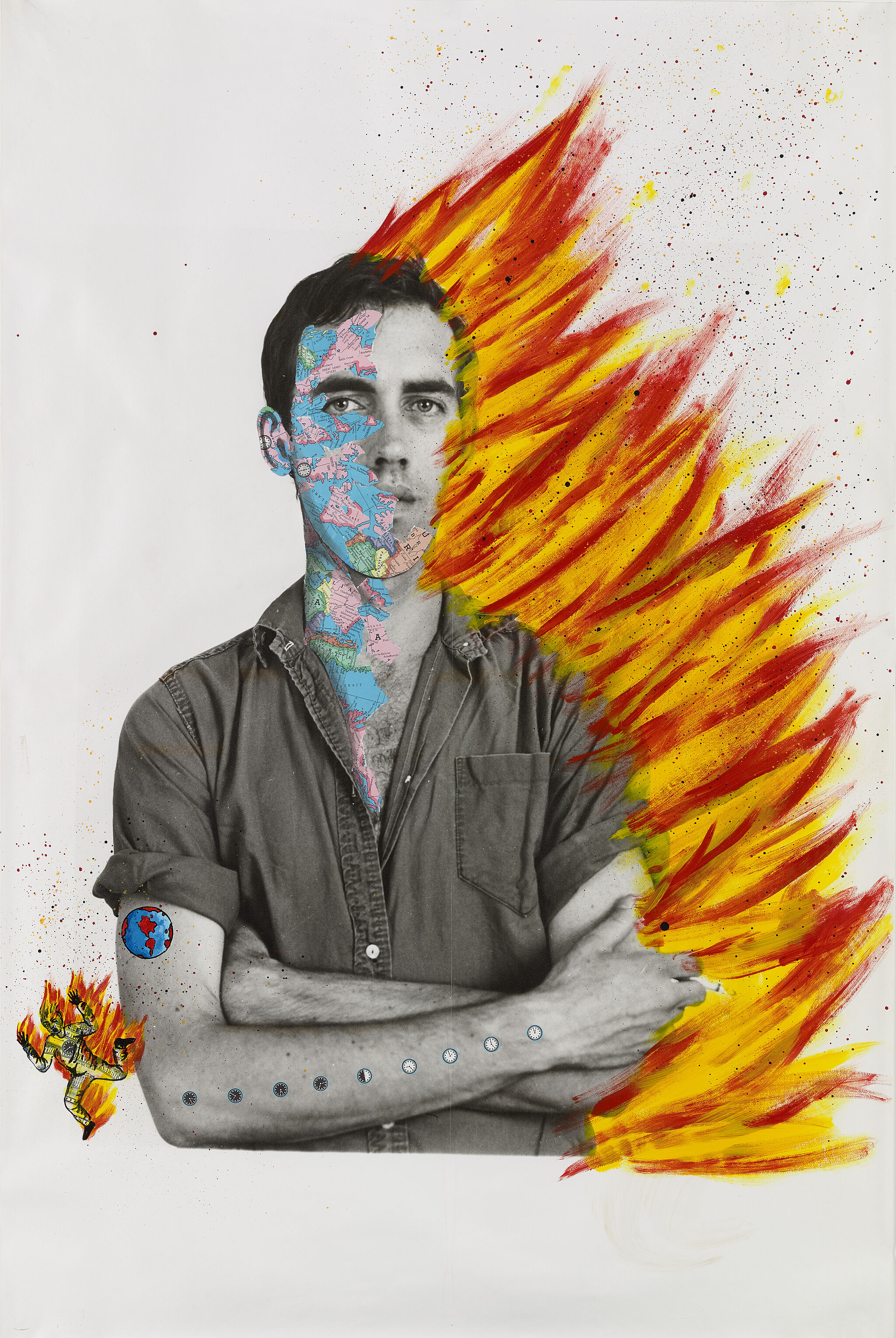
-
551
David Wojnarowicz, Arthur Rimbaud in New York, 1978–79 [group]
Audio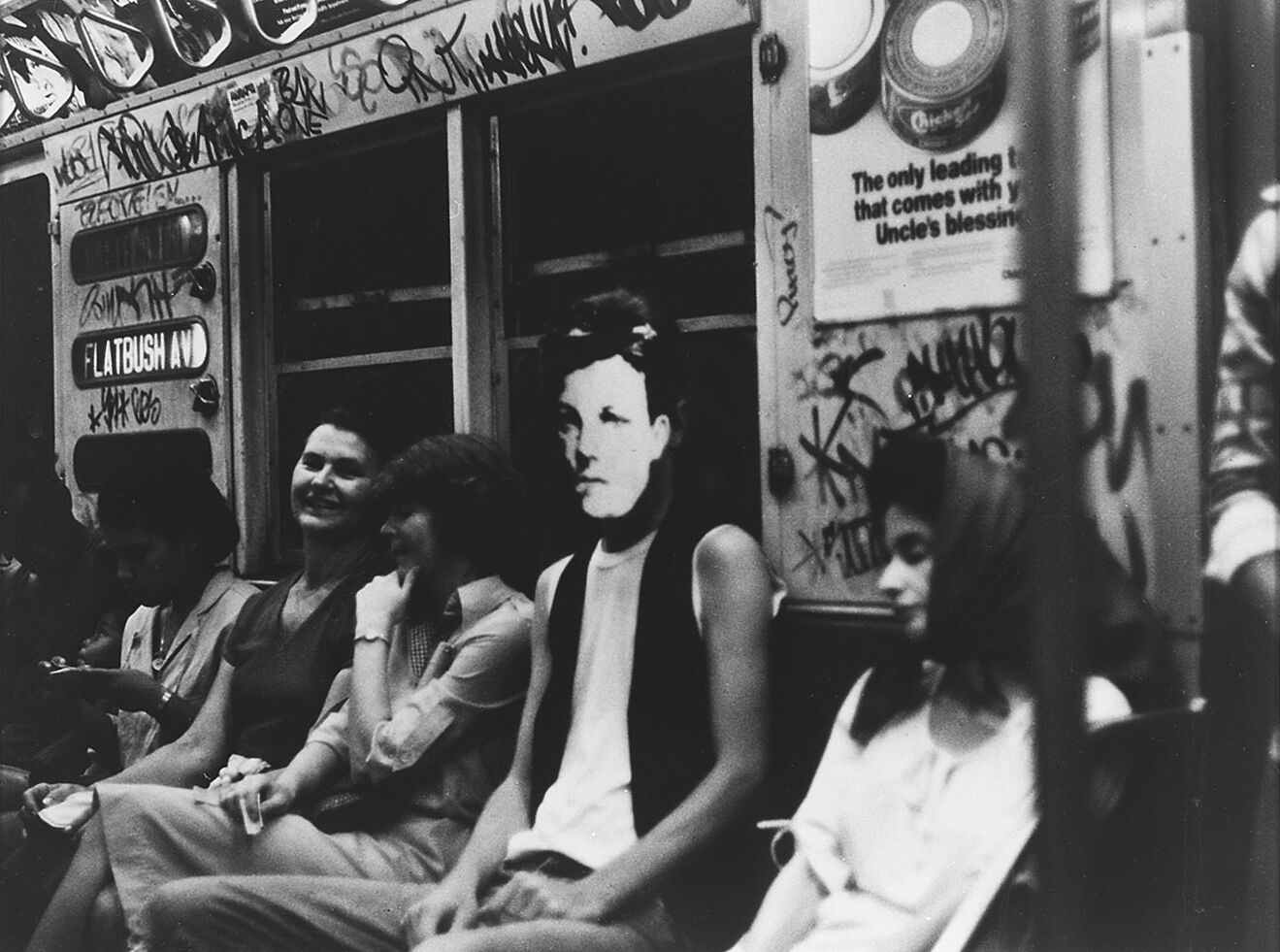
-
551-2
David Wojnarowicz, Arthur Rimbaud in New York, 1978–79 [group]
Audio
-
552
David Wojnarowicz, Untitled (Two Heads), 1984
Audio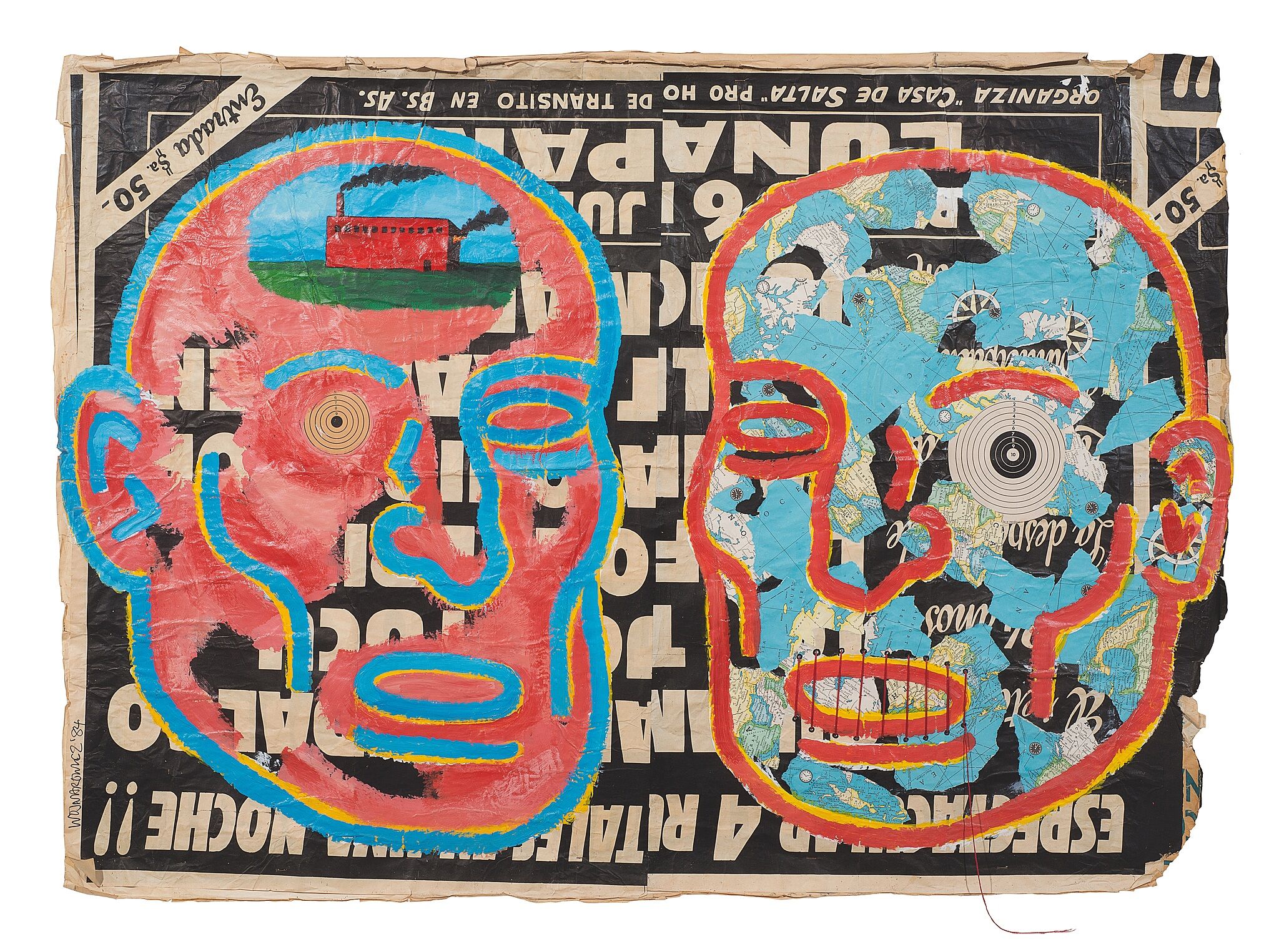
-
553
David Wojnarwicz, Untitled, from the Metamorphosis series, 1984
Audio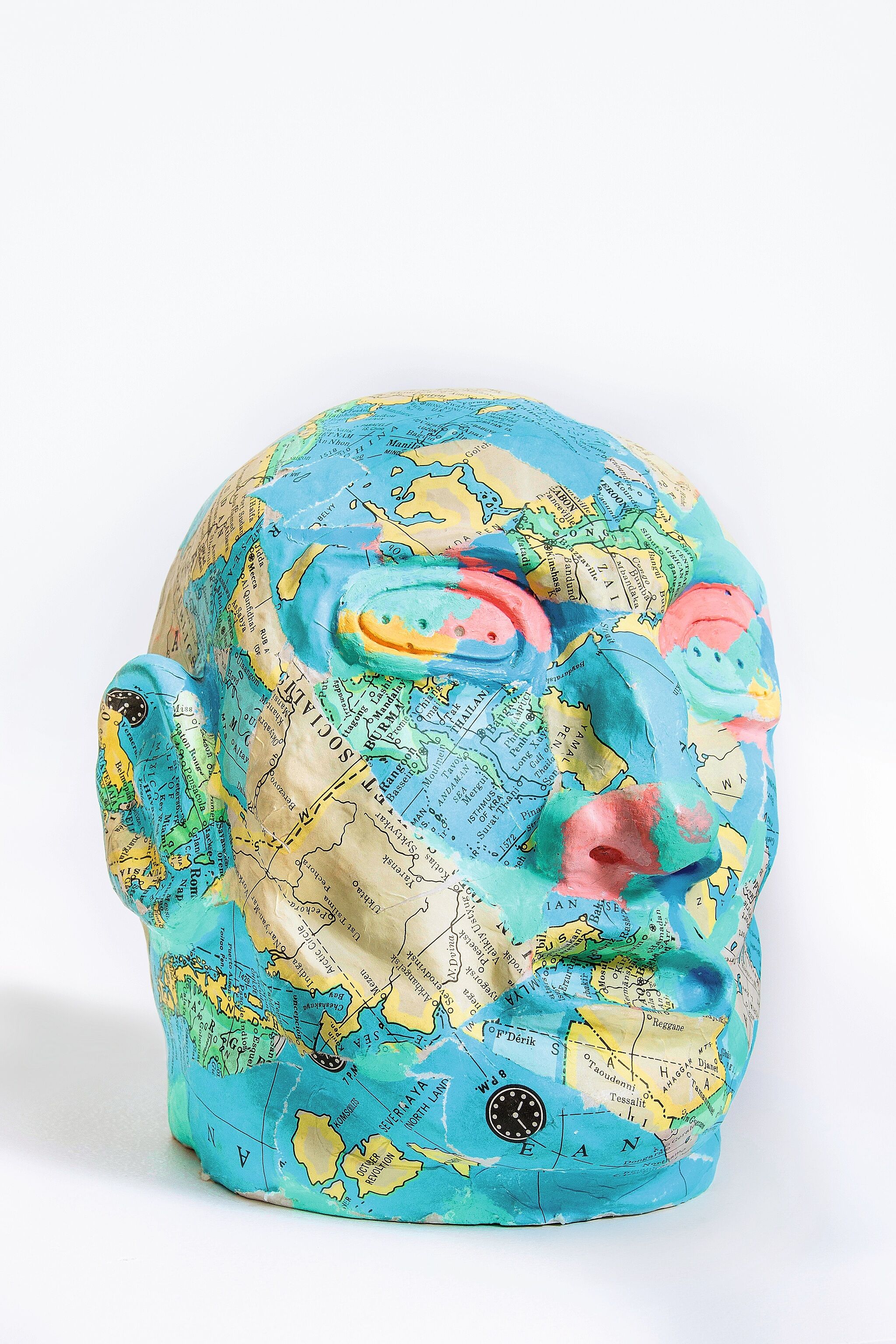
-
554
David Wojnarowicz, Hujar Dreaming, 1982
Audio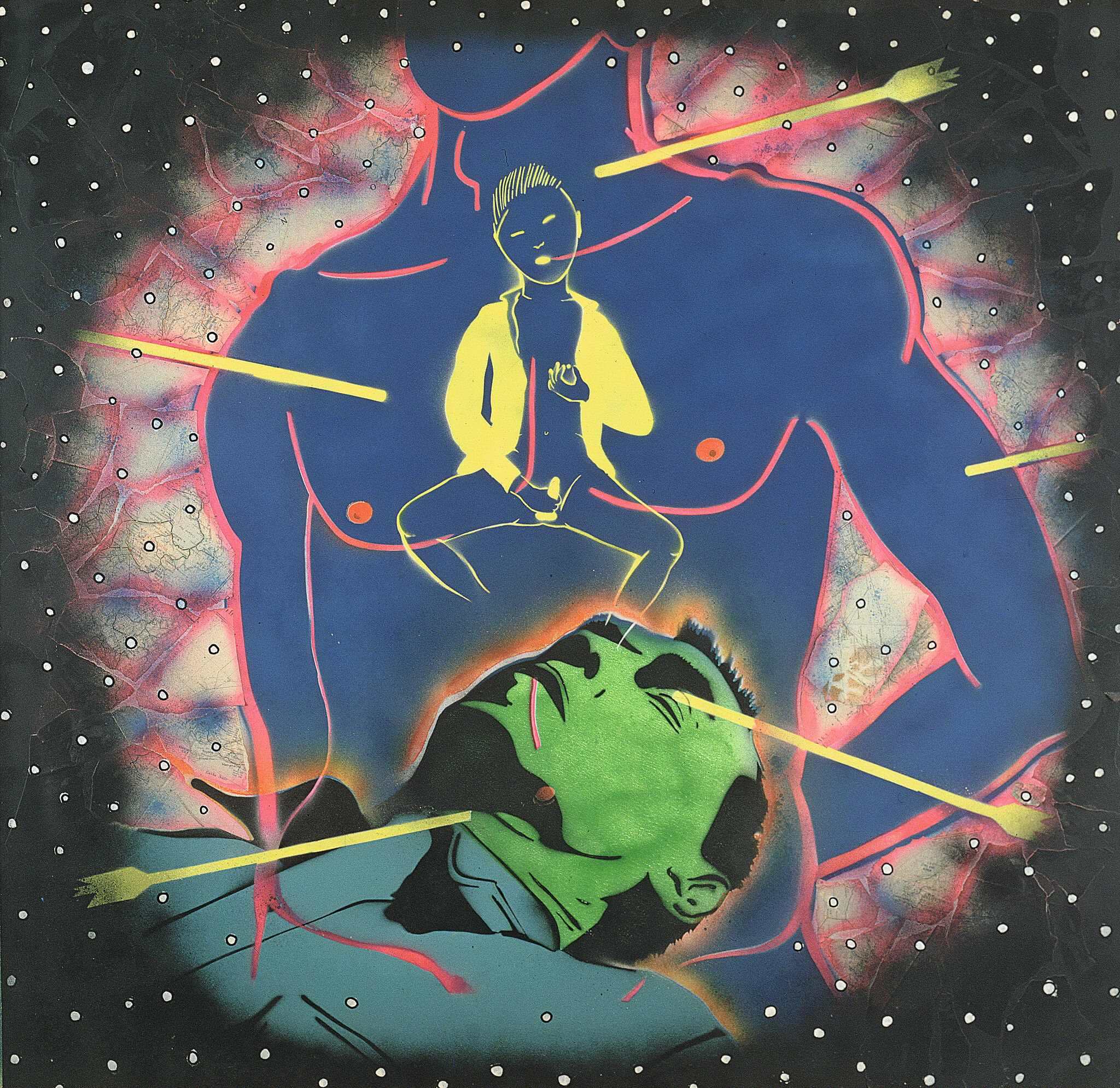
-
554-2
David Wojnarowicz, Hujar Dreaming, 1982
Audio
-
555
Peter Hujar, David Wojnarowicz (Village Voice “Heartsick: Fear and Loving in the Gay Community”), 1983
Audio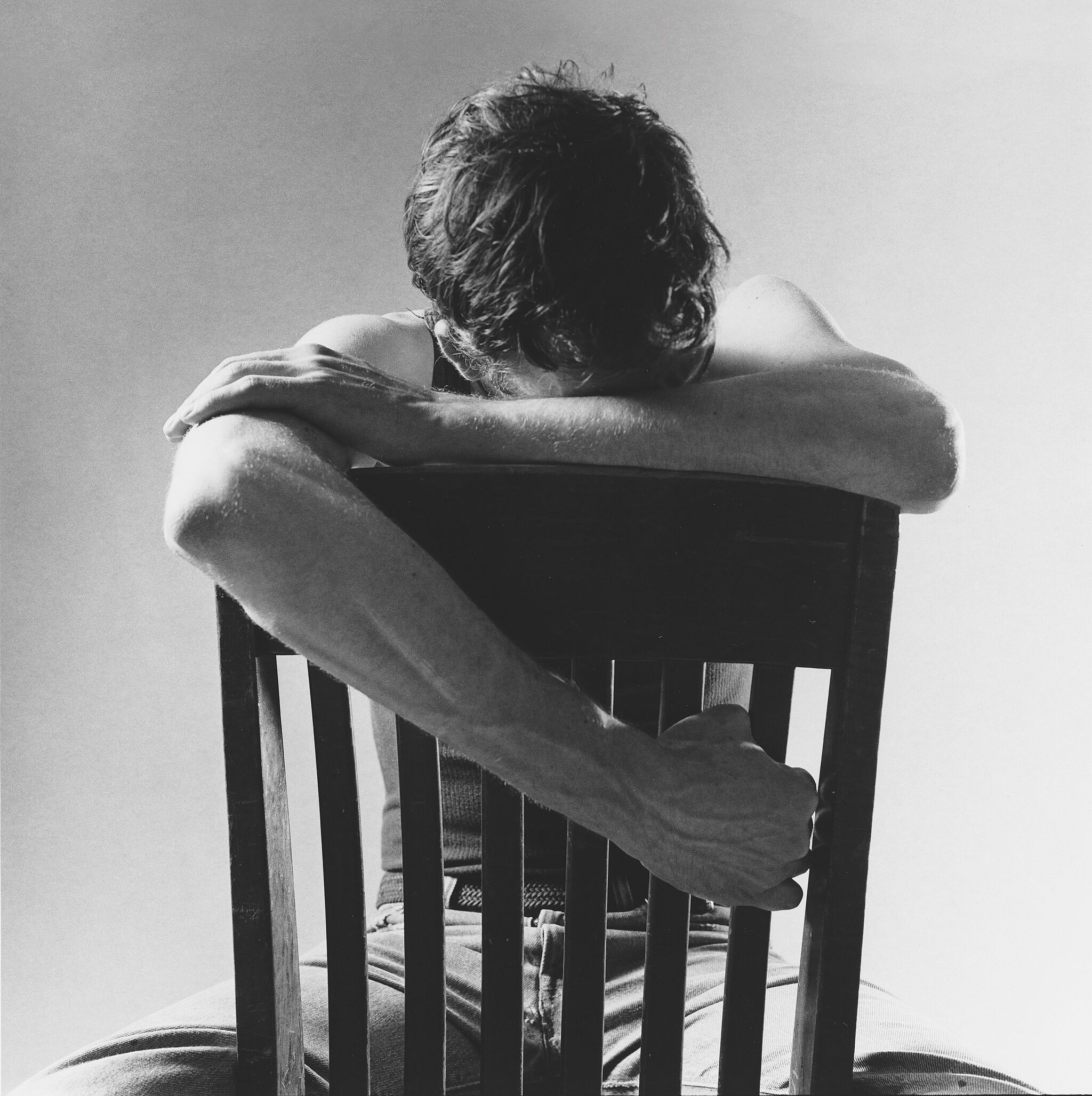
-
556
David Wojnarowicz, Das Reingold: New York Schism, 1987
Audio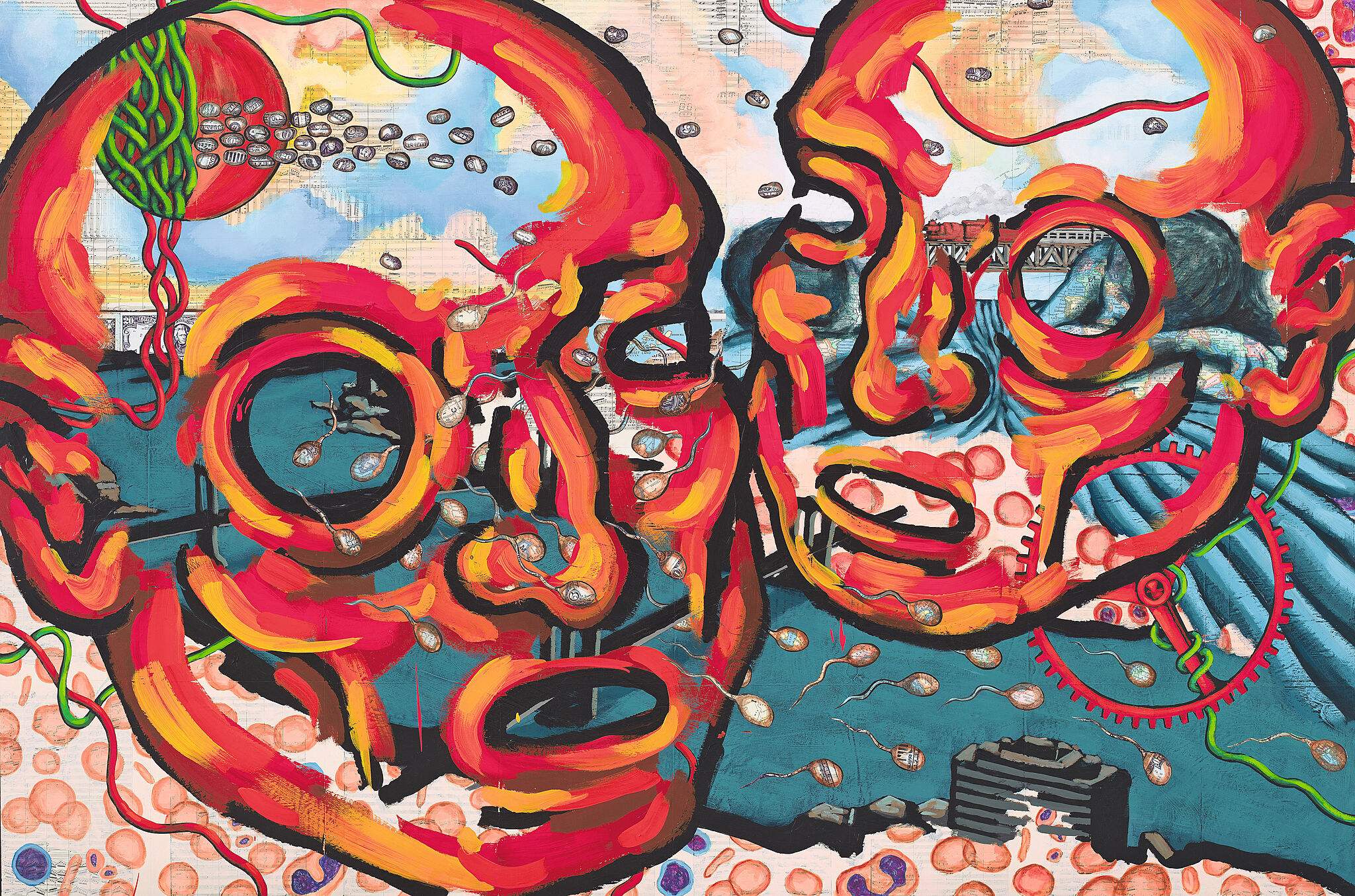
-
557
David Wojnarowicz, Evolution, 1987
Audio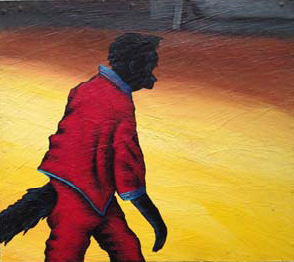
-
558
David Wojnarowicz, A Fire in My Belly, 1986-87
Audio -
559
David Wojnarowicz, Earth, 1987
Audio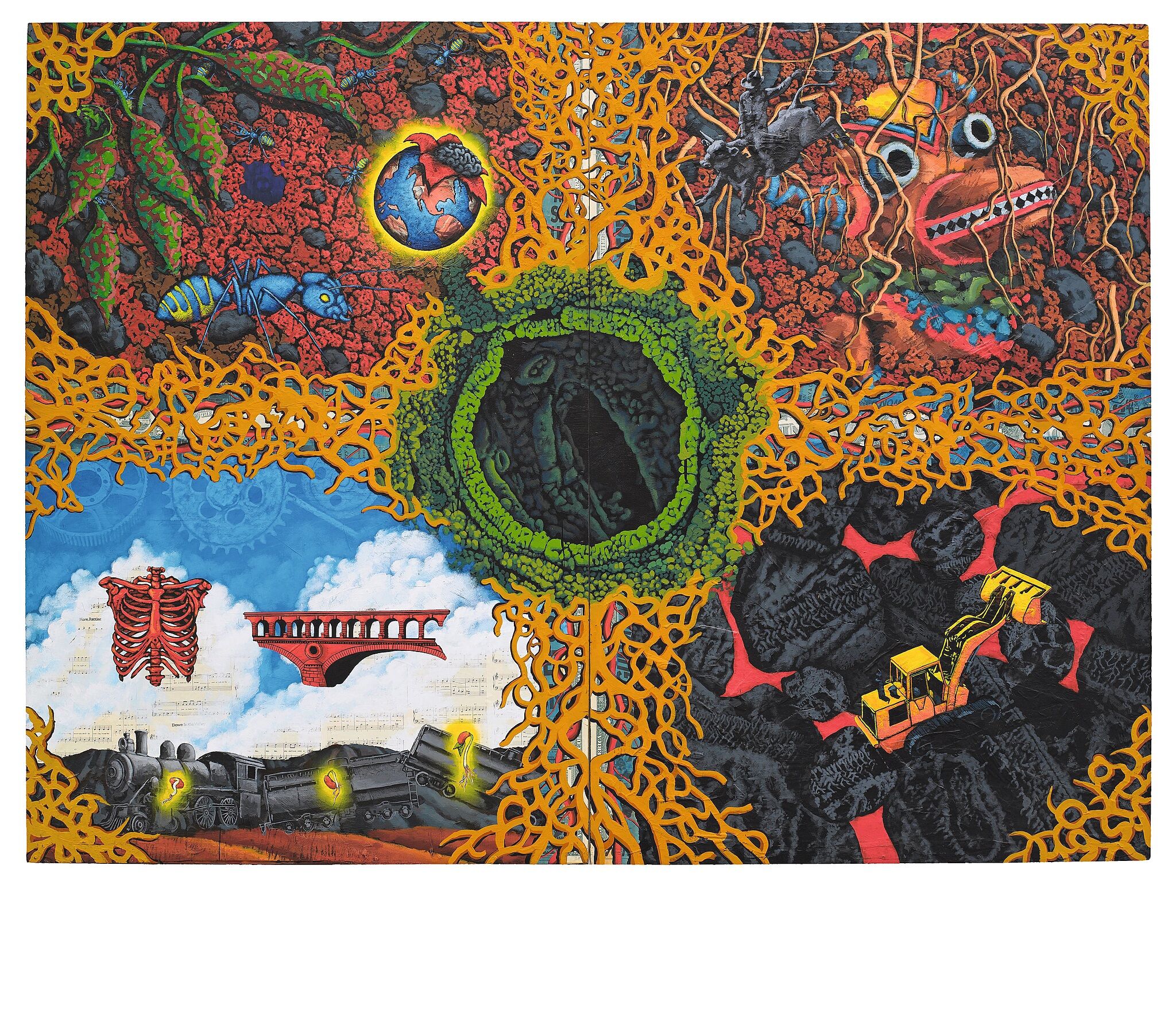
-
560
David Wojnarowicz, Wind (For Peter Hujar), 1987
Audio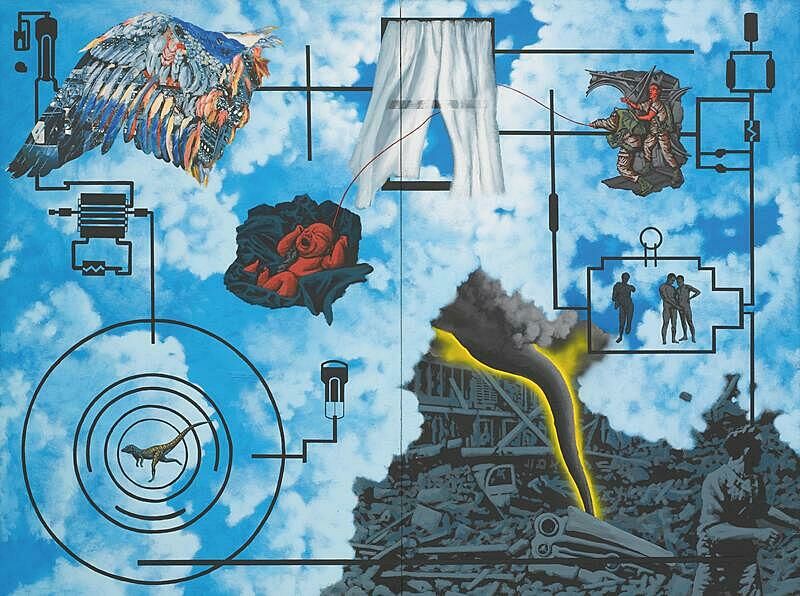
-
561
David Wojnarowicz, Images taken after Hujar’s death, 1988
Audio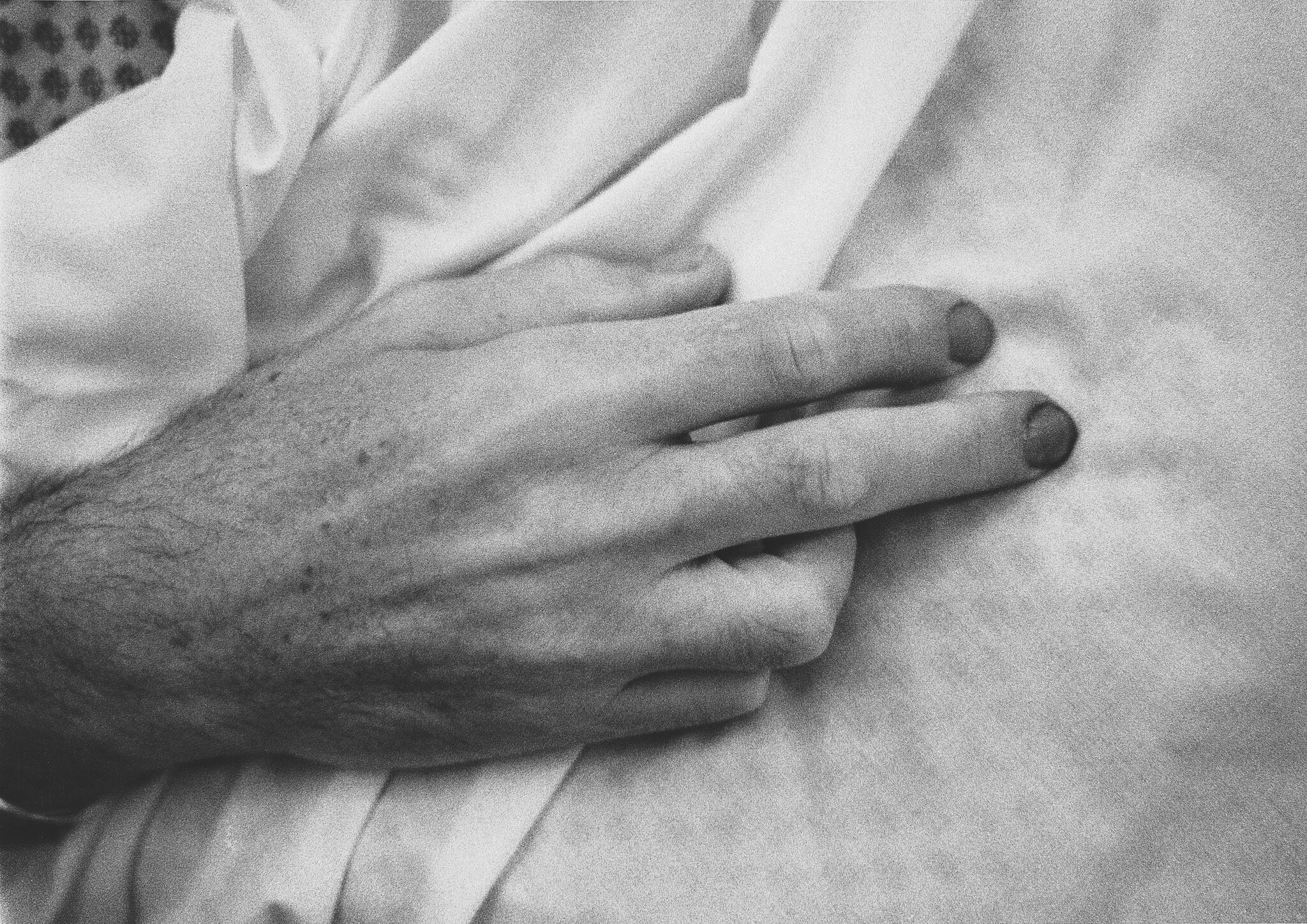
-
562
David Wojnarowicz, Untitled (Hujar Dead), 1988-89
Audio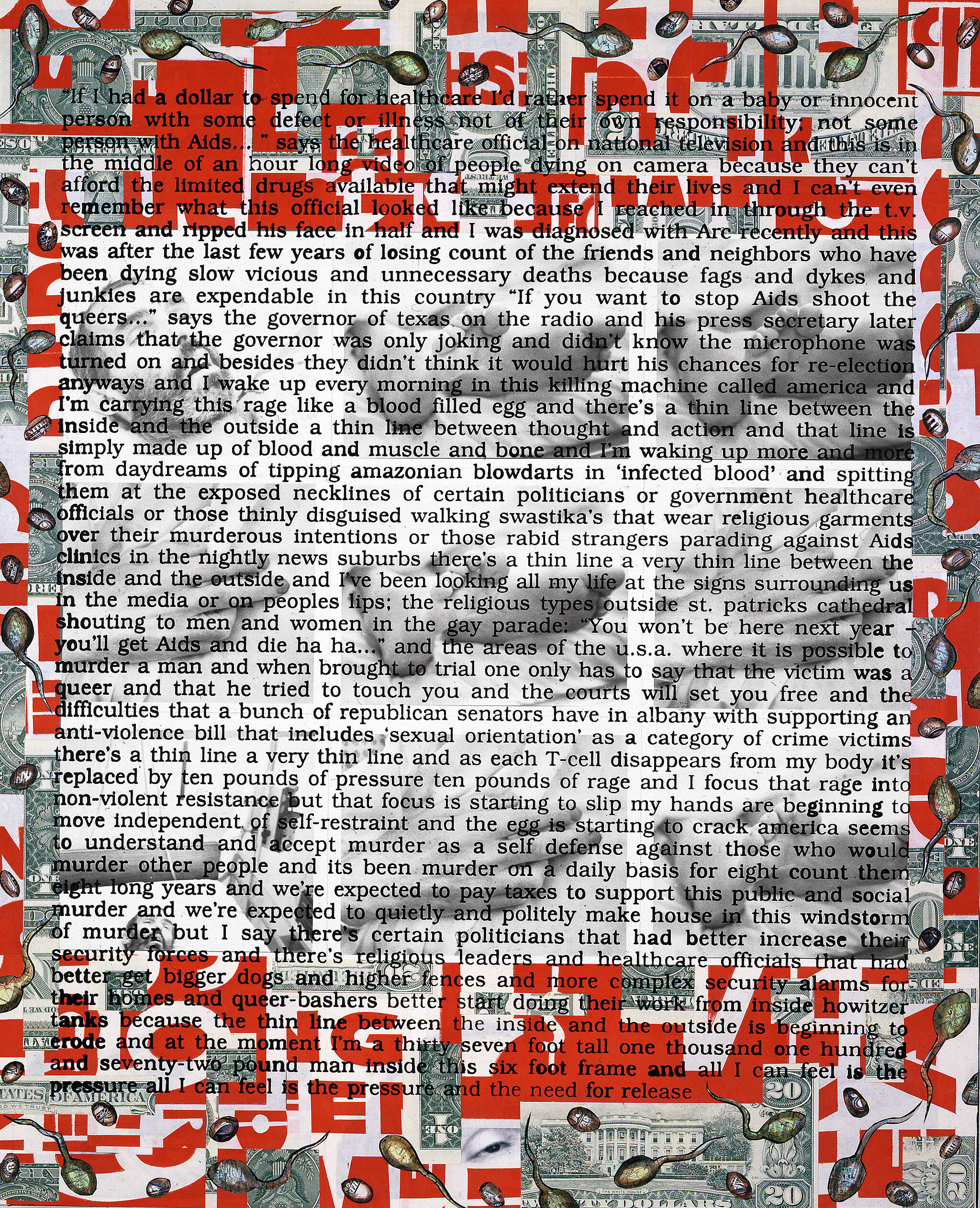
-
562-2
David Wojnarowicz, Untitled (Hujar Dead), 1988-89
Audio
-
563
David Wojnarowicz, Sex Series, 1988-89
Audio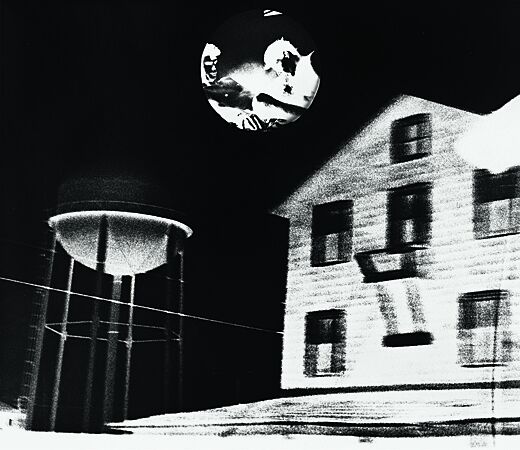
-
563-2
David Wojnarowicz, Sex Series, 1988-89
Audio
-
564
David Wojnarowicz, Bad Moon Rising, 1989
Audio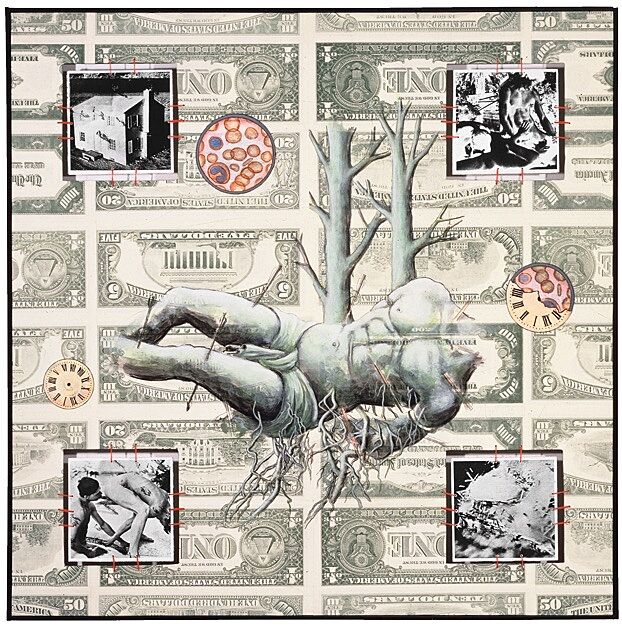
-
565
David Wojnarowicz, AFA Wildmon materials
Audio -
565-2
David Wojnarowicz, AFA Wildmon materials
Audio -
566
David Wojnarowicz, Americans Can’t Deal with Death, 1990
Audio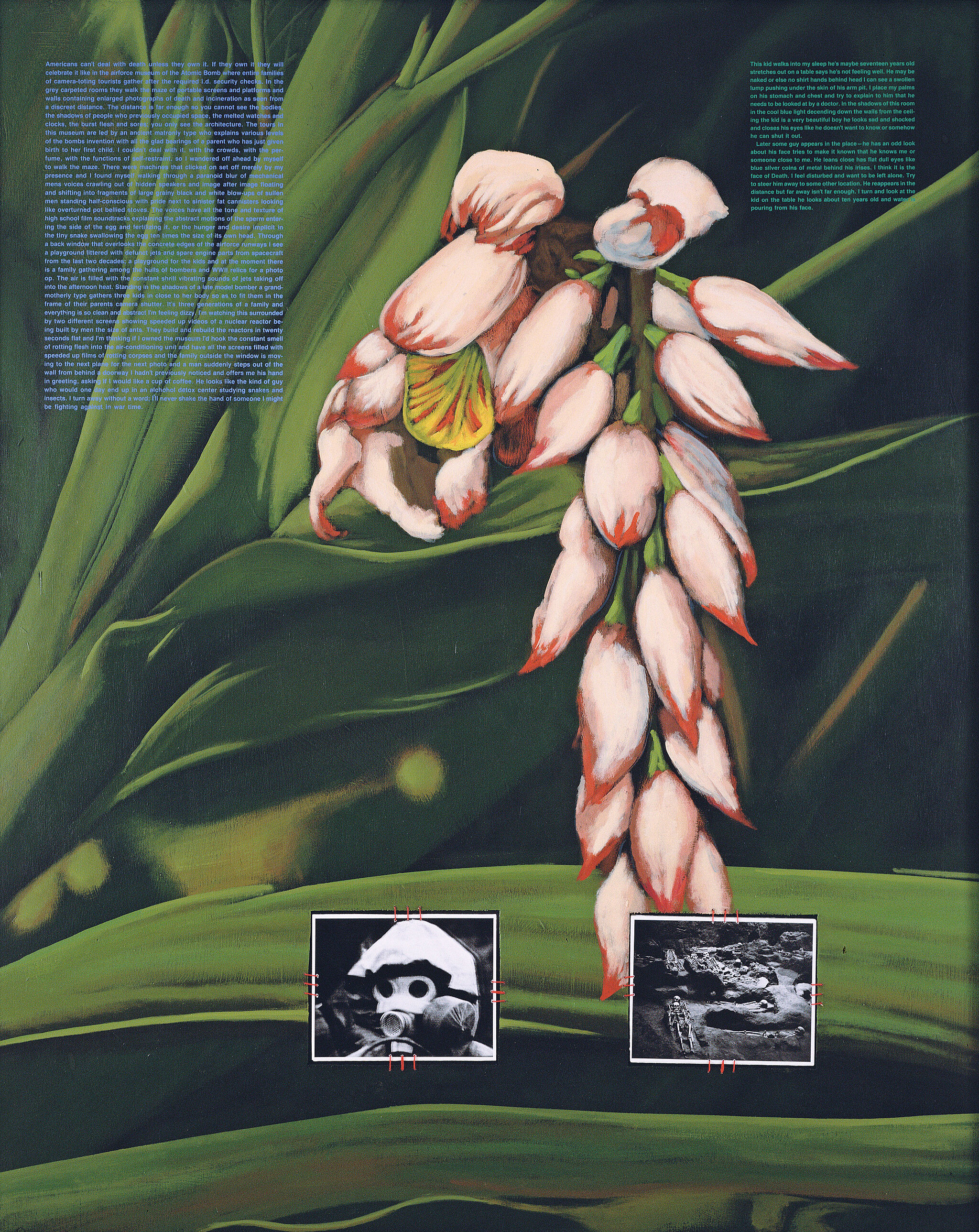
-
567
David Wojnarowicz, What’s This Little Guy’s Job in the World, 1990
Audio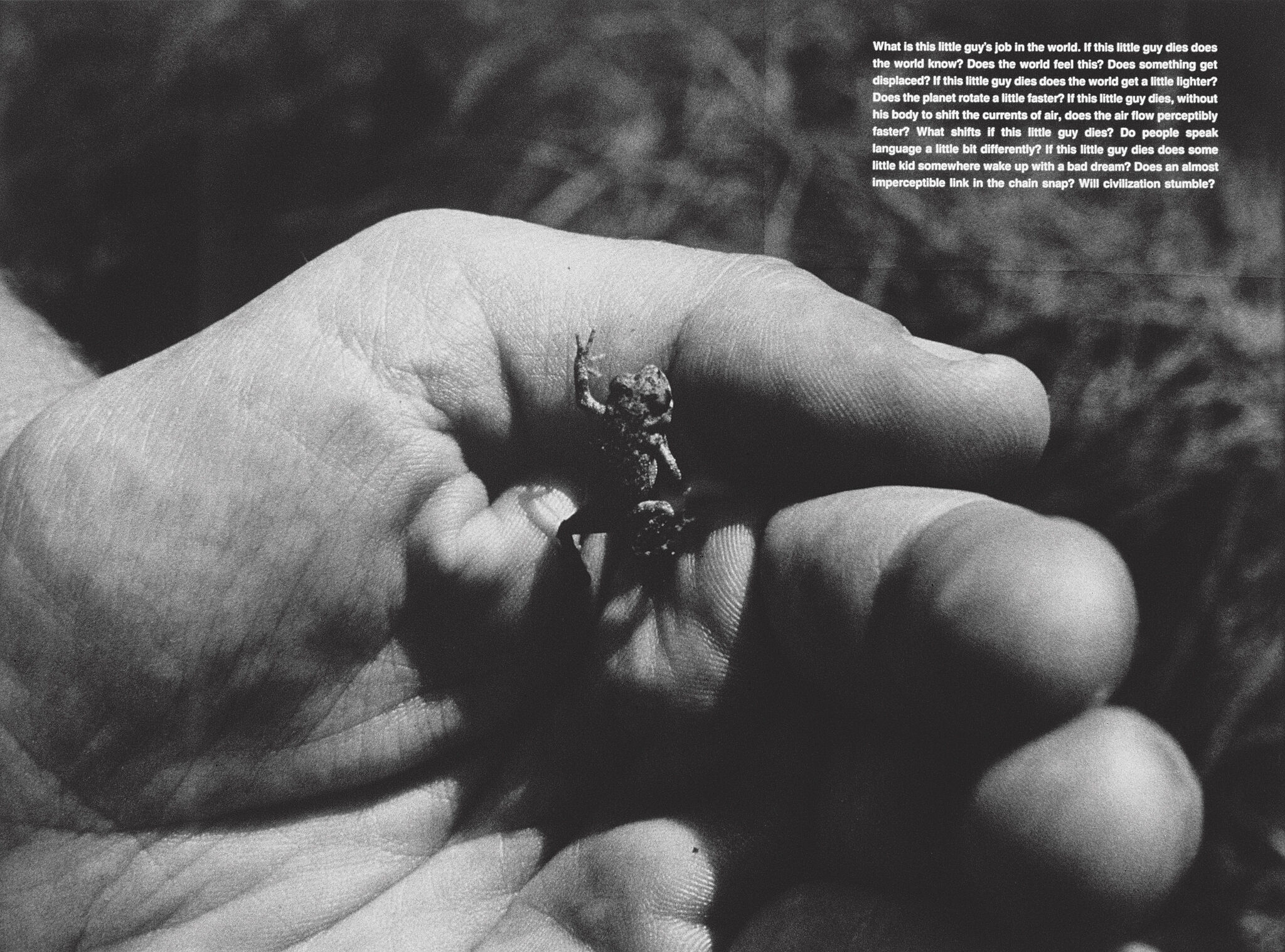
-
568
David Wojnarowicz, Untitled (One Day This Kid…), 1990-91
Audio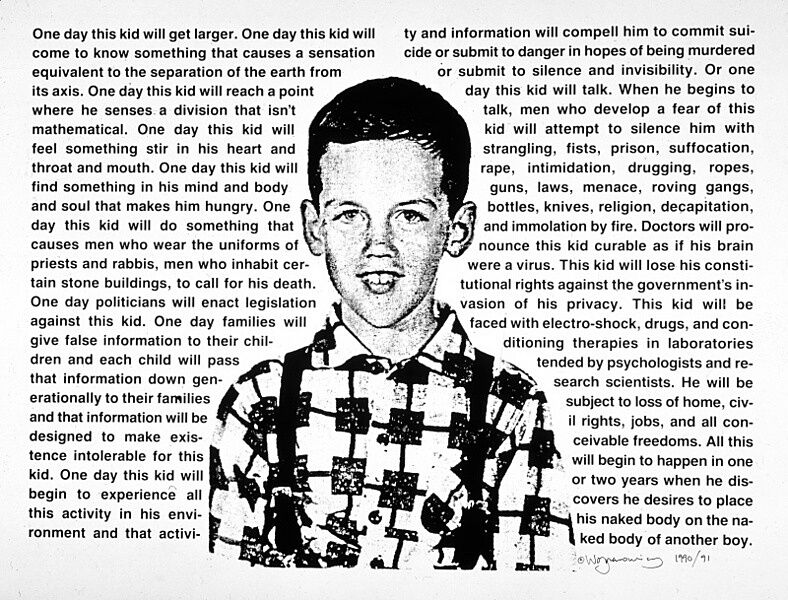
-
569
David Wojnarowicz reading from his work in 1992 at the Drawing Center as a benefit for Needle Exchange. AIDS Community Television
Transcription -
570
David Wojnarowicz, WOJO NEA #1, c. 1990. Courtesy the Fales Library and Special Collections, New York University
Transcription
Narrator: Welcome to David Wojnarowicz: History Keeps Me Awake at Night. The exhibition begins with a self-portrait by the artist.
David Breslin: Half his face is made up of maps, there is this tattoo of a globe on his arm, clocks streaming up his forearm, this running man that he used in some of his early stencils.
Narrator: David Breslin is the DeMartini Family Curator and Director of the Collection, and one of the curators of this exhibition.
David Breslin: We thought this would be a great way to begin the show because this is both an exhibition that explores how he made art, but also how he performed himself through the art.
Narrator: When you’re ready, take a look around the first gallery of the exhibition.
David Wojnarowicz: I never really see myself as a photographer, I don't see myself as a filmmaker, I don't see myself as an artist, yet I know I'm an artist.
Narrator: The artist, speaking in 1988.
David Wojnarowicz: I know that I'm compelled to make things. It's a compulsion to make things and make sense of my life. It makes me feel relieved about the experience of living, of the experience of the world, of the experience of all this pre-invented shit.
Narrator: Wojnarowicz was born in 1954. His early home life was unstable. He escaped to New York, living on the streets and supporting himself briefly as a sex worker. A short stint in an arts high school made a big impact on him. But his art flowed from many sources. He was influenced by books and travel, and by intense friendships with East Village artists. He had a radical queer outlook on the world, and a powerful sense of right and wrong. By the end of the 1980s, like many others in New York’s gay community, Wojnarowicz was living with HIV. He became a vocal AIDS activist, channeling his furious mix of ethics and aesthetics into one of the most difficult crises of our time.
David Wojnarowicz (1954–1992) with Tom Warren, Self-Portrait of David Wojnarowicz, 1983–84. Acrylic and collaged paper on gelatin silver print, 60 × 40 in. (152.4 × 101.6 cm). Collection of Brooke Garber Neidich and Daniel Neidich, Photograph by Ron Amstutz
Narrator: For each of these photographs, Wojnarowicz took a picture of one of his friends wearing a photocopied mask of the French poet Arthur Rimbaud. The face on the mask is flat, and printed with very high contrast. In the photographs, it looks almost like a stencil—a tool Wojnarowicz would later use in graffiti, and then in his paintings. Cool and crude at the same time, the face seems both to stand out from the gritty New York City locations where the men pose, and to fit into them. This sense of simultaneous belonging and not belonging is appropriate for Wojnarowicz’s subject. The most famous line of Rimbaud’s poetry translates as “I is another.” Using deliberately ambiguous grammar, it is a statement of ownership over one’s feeling of displacement, a form of resistance to the ordinary. The nineteenth-century poet’s attitude of absolute rebellion appealed to Wojnarowicz enormously, as did his open homosexuality.
In the years leading up to these photographs, Wojnarowicz focused largely on poetry. In some sense, Rimbaud’s image gave him a point of entry into the visual arts. Wojnarowicz—who has been extremely important to a younger generation—played a similar role for artist Emily Roysdon.
Emily Roysdon: In no uncertain terms, David Wojnarowicz was the first artist that made me think that I could also be an artist.
Narrator: Roysdon made David Wojnarowicz in New York in an act of homage. Just like Wojnarowicz had photographed friends wearing a mask of Rimbaud, she took pictures of friends wearing a mask of Wojnarowicz.
Please tap to continue.
David Wojnarowicz, Arthur Rimbaud in New York, 1978–79 (printed 1990). Gelatin silver print, 8 × 10 in. (20.3 × 25.4 cm). Collection of the Estate of David Wojnarowicz; Courtesy P.P.O.W, New York
Emily Roysdon: I was thinking a lot about how there has not been, for many years, an established queer cannon.
I was very interested in this question of identification and this kind of being able to cite and reference, and call to your idols, mentor, hero—any word that you wanna call that.
So I made David’s face and I kind of occupied that spot for a while. And similarly asked my friends.
There were other people in my community who were willing to think about genderqueer politics. To think about what was our contemporary feminism. How we were aligning with AIDS activist artists and the intersectional movements around that. Those were my interests with the project. I was really thinking about what it means that an infamously diseased gay man is actually one of my primary identifications.
I've never imagined that, that David is my friend or would even wanna be my friend (laughs), in that way. I've never meant to speak for him, just to show respect and to align myself with him and to pull forward his legacy—to enliven his legacy.
David Wojnarowicz, Arthur Rimbaud in New York, 1978–79 (printed 1990). Gelatin silver print, 8 × 10 in. (20.3 × 25.4 cm). Collection of the Estate of David Wojnarowicz; Courtesy P.P.O.W, New York
Narrator: In this room, you can hear music by Wojnarowicz’s band, 3 Teens Kill 4. In a 1991 talk at the Whitney, he described the connection between his music and his visual art.
David Wojnarowicz: In the early 80s I started making a series of stencils, with spray paint. I was working with a rock and roll band called 3 Teens Kill 4. And we were playing in small clubs around the Lower East Side and I would do posters for the band. I cut stencils [and] spray painted through the stencils dates for the band, and where we were playing, and [I would] stick them on walls around the Lower East Side. And rival bands would rip them down. [There was] a lot of fighting in the music scene. So, I started spraying them directly on walls of abandoned buildings.
David Wojnarowicz, Untitled (Two Heads), 1984. Acrylic on commercial screenprint poster, 41 × 47 1/2 in. (104.1 × 120.7 cm). Collection of the Ford Foundation. Image courtesy the Fales Library and Special Collections, New York University.
Narrator: Wojnarowicz made these heads in 1984.
David Kiehl: Are they robotic? Possibly. Are they Frankenstein—someone suggested Frankenstein? If you look at their eyes, they have those little plug-in eyes. Like, they are not real humans.
Narrator: David Kiehl is Curator Emeritus at the Whitney, and one of the curators of this exhibition.
David Kiehl: You'll notice all the torn up maps. The bits of litter, or things that he used, and tearing up maps was important for him because─he's starting to think of a world without boundaries, how boundaries limit ourselves as human beings.
They're painted weirdly. Some of them are gagged. They are colorful and, at the same point, they're scary. And I think how we have displayed them in the gallery, it's sort of like they're coming at you.
As you go through the galleries, you'll see this head appearing over and over again.
They are all about the way civilization has impersonalized the natural world, the natural person─It's why we have city-states and national states and war and all of that. It's these heads. They're part of it.
Is that the whole meaning behind them? That's just one of the many meanings.
David Wojnarowicz, Untitled, from the Metamorphosis series, 1984. Collaged paper and acrylic on plaster, 9 1/2 × 9 1/2 × 9 1/2 in. (24.1 × 24.1 × 24.1 cm). Collection of Beth Rudin DeWoody. Image courtesy Beth Rudin DeWoody, photograph by Monica McGivern
Narrator: The reclining figure in this painting is the photographer Peter Hujar. Wojnarowicz took a picture of him lying on the floor, and turned it into a stencil that he used over and over again in his paintings.
Marvin Taylor: David met Peter I believe in 1981 at a gay bar on Second Avenue. And he was influenced by the work.
Narrator: Marvin Taylor is Head of Special Collections and Fales Library at New York University, which houses the David Wojnarowicz papers.
Marvin Taylor: Their relationship, their sexual relationship didn't last very long actually, but Peter became David's mentor, and encouraged David to really work on visual work as opposed to writing. And gave him the courage to do that.
Narrator: Wojnarowicz’s image is a kind of tribute to Hujar, who often took pictures of people in repose. One of those photographs, picturing Wojnarowicz himself, hangs in this room. Frequently, Wojnarowicz would make audio recordings as a form of journal. One of them includes a conversation with Hujar. Even in a brief excerpt, you can hear how much he respected the older artist’s work. To hear them talk about photography, please tap to continue.
David Wojnarowicz, Peter Hujar Dreaming/Yukio Mishima: Saint Sebastian, 1982. Acrylic and spray paint on Masonite, 48 × 48 in. (121.9 × 121.9 cm). Collection of Matthijs Erdman. Image courtesy the Estate of David Wojnarowicz and P.P.O.W, New York
Peter Hujar: It's like, photography is still a baby.
Narrator: Peter Hujar.
Peter Hujar: It's a new thing, and it's something that anyone can do and anyone can do fairly well; especially, with all the automatic cameras. Anyone can take a picture and any picture is interesting. Say, I've never seen an uninteresting photograph.
David Wojnarowicz: But yet, there's ... for me, there's a sense of ... For me, your work is photography to me, it's not─it doesn't have to hide under a claim of being art or being all these other things. It's not like Postmodern stuff where it looks like commercials without the texts in front of it─in terms of what product it’s advertising. Your images don't seem to try to persuade people or lead them into an area outside of whatever it is that you're photographing. It's like, it just deals with things ... generally, you deal with things in your life, and these are what you photograph. And it's not like trying to distort something through a photographic medium. It's more like trying to arrive at some kind of personal truth in that thing. And that's how I see your photographs, and I don't see that many people doing that.
David Wojnarowicz, Peter Hujar Dreaming/Yukio Mishima: Saint Sebastian, 1982. Acrylic and spray paint on Masonite, 48 × 48 in. (121.9 × 121.9 cm). Collection of Matthijs Erdman. Image courtesy the Estate of David Wojnarowicz and P.P.O.W, New York
Narrator: In this photograph by Peter Hujar, Wojnarowicz leans his head on the back of a chair, his face obscured. The image was used to illustrate an article in the Village Voice, describing the psychological impact the growing AIDS epidemic was having on the gay community. In 1985, the disease was mysterious: for example, scientists did not yet know that it was transmitted by HIV. The author of the article, Richard Goldstein, expressed the fear and frustration of not knowing what precautions could keep gay men safe. He also argued against what some thought to be the most surefire precaution—avoiding sex. He wrote:
“For gay men, sex, that most powerful instrument of attachment and arousal, is also an agent of communion, replacing an often hostile family and even shaping politics. It represents an ecstatic break with years of glances and guises, the furtive past we left behind.”
These words would likely have resonated with Wojnarowicz. Over the next decade—as he responded ever more explicitly to AIDS in his work—he also continued to insist on the beauty and liberatory force of queer desire.
Peter Hujar, David Wojnarowicz (Village Voice “Heartsick: Fear and Loving in the Gay Community”), 1983. Gelatin silver print, 10 7⁄8 × 13 5⁄8 in. (27.6 × 34.6 cm). Collection of Philip E. and Shelley Fox Aarons. © 1987 The Peter Hujar Archive LLC, courtesy Pace/MacGill Gallery, New York, and Fraenkel Gallery, San Francisco
Narrator: Two giant heads—similar to the sculptures on view earlier in this exhibition—loom over a cityscape. Looking through them to the background, you’ll see the Brooklyn and Manhattan bridges over the East River.
David Breslin: And then you start looking closer at the work, you see on the upper right hand corner, a train moving through.
Narrator: David Breslin.
David Breslin: Trains were something that figured a lot in Wojnarowicz's work, this idea of travel. How ideas and civilizations and disease are kind of spread and brought into different places.
And then you see in the back right corner these sleeping figures composed of maps and this almost peaceful sleep that one could see as a moment of quiet repose, but, it's almost like Goya's sleeping monsters. That all these things that one thinks and hopes about, optimistically, also could be the things that come back as a nightmare to haunt you.
This painting was done when the AIDS crisis was really hitting New York City, and one idea that we think is motivating this work is this idea of the two worlds, the schism, between what happens in everyday life. You get up, you take that train or car over one of those bridges, you go to work. But then what are all the things underneath the surface that are happening in our bodies? Between each of us, in our relationships?
David Wojnarowicz, Das Reingold: New York Schism, 1987. Acrylic and collaged paper on board, 48 1/4 × 72 × 1 3/4 in. (122.6 × 182.9 × 4.4 cm). Whitney Museum of American Art, New York; promised gift of Emily Fisher Landau P.2010.284. Image © The Estate of David Wojnarowicz and P.P.O.W Gallery, photograph by Tim Nighswander/Imaging4Art
Narrator: A monkey in a threadbare red suit strides across the canvas. Based on a similar monkey that Wojnarowicz filmed collecting coins at a circus in Mexico, he seems entirely too human in his purposeful but downtrodden stance. If this monkey has evolved from a natural to a civilized state, it has not been to his benefit.
David Breslin: He was really trying to think hard about what are the relationships between the natural world and the made world.
Narrator: David Breslin.
David Breslin: And this was very interesting to him because he didn't necessarily want to forget about the mark that humankind had made on the planet, but he wanted us not to forget that a lot of those marks were marks that were damaging.
David Wojnarowicz, Evolution, 1987. Oil on board, 12 × 13 in. (30.5 × 33 cm). Collection of Brooke Garber Neidich and Daniel Neidich
David Breslin: In this exhibition, we decided to show Wojnarowicz's work in film as a series of his unfinished films that he made from 1986 through 1987. Wojnarowicz used film as a sketchbook.
Narrator: David Breslin.
David Breslin: A Fire in My Belly is an unfinished work, called a work in progress, that he made between 1986 and 1987. This is footage that he shot while in Mexico City. He went there to document activities around Day of the Dead, and it was also right after a major earthquake that had happened in Mexico.
Narrator: In one scene, Wojnarowicz films fire ants walking over a sculpted image of Christ. In 2010, this scene became controversial when it appeared in an exhibition called Hide/Seek: Difference in American Portraiture at the National Portrait Gallery. The Catholic League, along with Representatives John Boehner and Eric Cantor, protested the imagery.
Marvin Taylor: David was actually deeply religious, but people think that he hated the church—which is true. But he was raised Catholic and I see a lot of Catholicism in his work.
Marvin Taylor: Ants are pretty cruel, pretty awful to one another. And they have a very rigid hierarchical structure. And I think that what he's motioning toward, is almost a military approach to the world. And the ants crawling over the Christ are not taking care of the body. It's the juxtaposition of suffering and humanity with a militarized culture. I think that's what that particular use of the ants is about.
Narrator: Fire in My Belly was never finished, and the remaining footage is silent. At the National Portrait Gallery, it was given a soundtrack drawn from a later recording of Wojnarowicz at an ACT UP rally, protesting the government’s reaction to AIDS. The video on view in Hide/Seek was thus quite different from what Wojnarowicz might have intended. In the face of protests, the museum removed this video from the exhibition a few weeks after its opening.
Narrator: In the paintings you see in this room, Wojnarowicz responded to a classical art-historical theme, the Four Elements: earth, wind, fire, and water. He began them after Peter Hujar tested positive for HIV in early 1987. He described the series in a talk he gave at the Whitney in 1991.
David Wojnarowicz: I wanted to do a series about the Four Elements. I was also dealing with the loss of a very close friend who was dying of AIDS at the time, and I was feeling a lot of pressure because I felt very sure I was going to receive a diagnosis at some near future point. So I basically wanted to put all the pressure in my head, everything I knew about the world into a series of four paintings, basically do them, in effect, before I died, or at least that’s what I was afraid of having happen to me.
Anyway, this is Earth─there’s references to the kachinas, the early Hopi spiritualities. There’s the little grey image towards the top of a cowboy riding a bull. It’s very difficult to see. I was thinking of things that move the earth around, so there’s an ant in the upper left-hand area and then there’s a bulldozer in the lower right-hand area. I was thinking of things like architecture and ideas of architecture, intuitive ideas of architecture, so there a rib cage and then there’s a bridge, I’m thinking of the similarities between the two.
Narrator: In late 1988, Wojnarowicz was—as he had anticipated—diagnosed as having HIV.
David Wojnarowicz, Earth, 1987. Acrylic and collaged paper on wood, two panels 72 × 96 in. (182.9 × 243.8 cm). The Museum of Modern Art, New York; gift of Agnes Gund
Narrator: Like Earth, which is also on view in this gallery, Wind (For Peter Hujar) is one of the Four Elements paintings that Wojnarowicz painted in 1987.
David Wojnarowicz: This is Wind, this is painted for my friend Peter Hujar who died later that year. Again, I was thinking of all the associations of wind. At the time that I did these four paintings, I just would exhaustively list hundreds of associations with each element, and then pair those associations down into a small set of them and then create the painting from that. This is more about an evolution; the bird wing is painted on a large photograph of an airline, an airplane control panel. If you were to get close to it you’d see the dials and the gauges underneath that wing. It’s also, it’s copy of a Dürer etching or watercolor of a bird wing and it was [the] wing that my friend who was dying had always wanted tattooed on his shoulder, but never got around to doing it. I was also thinking about birth and death, and that window came from a dream I had had about an old friend I hadn’t spoken to in a year in the late 70s. It involved a nightmare that was very beautiful but it actually became nightmarish towards the end of the dream. I wrote him a letter and I asked him how he was, and it turned out his baby had been stillborn the same day that I had a dream. So, the baby has an umbilical cord that goes through the window, seeing the window is a symbol of death. Then it goes to these two army men jumping out of an airplane. I was thinking of what birth is: moving through portals interior to exterior. There are associations of birth and death.
David Wojnarowicz, Wind (For Peter Hujar), 1987. Acrylic and collaged paper on composition board, two panels, 72 × 96 in. (182.9 × 243.8 cm). Collection of the Second Ward Foundation. Image courtesy the Estate of David Wojnarowicz and P.P.O.W, New York
David Kiehl: In November of 1987, David Wojnarowicz was at the hospital with Peter. He was there a lot.
Narrator: David Kiehl.
David Kiehl: Seeing that it was almost the end, they were in the room, and when Peter died, David had a camera with him. He asked everyone to leave the room so he could spend time with this person who was like the most important person to him, because of being a teacher, a mentor, a model.
Narrator: Wojnarowicz focused on Hujar’s face, hands, and feet.
David Kiehl: So these are the three parts of the body that are the most, really about─the head, where the eyes are, the memory is, the brain. The hands, which are the things that touch you and feel you. And the feet, that anchor you to the world. These are very important things in remembering the dead who have meant a lot to you. How do you keep that memory alive?
David Wojnarowicz, Untitled, 1988. Gelatin silver print, 30 ½ × 24 ¾ in. (77.5 × 62.9 cm). Whitney Museum of American Art, New York; purchase, with funds from the Robert Mapplethorpe Foundation and the Photography Committee 2007.122b. Image © Whitney Museum of American Art, New York
Narrator: To make this painting, Wojnarowicz took his photographs of Peter Hujar on his deathbed, and overlaid them with screen-printed text. The text calls out systemic homophobia, as well as government complicity in the AIDS epidemic.
Emily Roysdon: This was, for me, from my life experience, a crucial image to see.
Narrator: Artist Emily Roysdon describes the impact of this painting.
Emily Roysdon: It was this profound intimacy mixed with rage. It was an emotional bond and a political moment.
The thing with David's work to me was always that—I think people like to talk about the rage that is in his work and, and that he expressed himself in those very terms, but for me there, there was always this kind of hope that was also coupled with that. Just because of the depth of his articulation. Because he was so analytic, so forceful about another vision that he had for what life could be, what America could be, and what he kind of would demand of a loving, tolerant, reasonable, radical society. Because he could be so explicit about that, there was this kind of hopefulness also that was important to me.
Narrator: In 1991, Wojnarowicz made a recording of the text screened over this painting. To hear him read it, please tap to continue.
David Wojnarowicz, Untitled (Hujar Dead), 1988–89. Black-and-white photograph, acrylic, screenprint, and collaged paper on Masonite, 39 × 32 in. (99.1 × 81.3 cm). Collection of Steven Johnson and Walter Sudol, courtesy Second Ward Foundation. Image courtesy the Estate of David Wojnarowicz and P.P.O.W, New York
David Wojnarowicz: “If I had a dollar to spend for healthcare, I’d rather spend it on a baby or innocent person with some defect or illness not of their own responsibility; not some person with AIDS,” says the healthcare official on national television and this is in the middle of an hour long video of people dying on camera because they can’t even afford the limited drugs available that might extend their lives and I can’t even remember what this official looked like because I reached in through the TV screen and ripped his face in half and I was diagnosed with AIDS recently and this was after the last few years of losing count of the friends and neighbors who have been dying slow and vicious and unnecessary deaths because fags and dykes and junkies are expendable in this country. “If you want to stop AIDS shoot the queers” says the governor of Texas on the radio and his press secretary later claims that the governor was only joking and didn’t know the microphone was turned on and besides they didn’t think it would hurt his chances for re-elections anyways. And I wake up every morning, and I wake up every morning in this killing machine called America. And I’m carrying this rage like a blood filled egg and there’s a thin line between the inside and the outside, a thin line between thought and action and that line is simply made up of blood and muscle and bone and I’m waking up more and more from daydreams of tipping Amazonian blow darks in “infected blood” and spitting them at the exposed necklines of certain politicians or government healthcare officials or those thinly disguised walking swastikas that wear religious garments over their murderous intentions or those rabid strangers parading against AIDS clinics in the nightly news suburbs. There’s a thin line, a very thin line between the inside and outside and I’ve been looking all my life at the signs surrounding us in the media or on people’s lips; the religious types outside St. Patrick’s Cathedral shouting to men and women in the gay parade “You won’t be here next year─you’ll get AIDS and die. Ha ha.” And the areas of the USA where it is possible to murder a man and when brought to trial one only has to say that the victim was a queer and that he tried to touch you and the courts will set you free. And the difficulties that a bunch of Republican Senators have in Albany with supporting an anti-violence bill that includes ‘sexual orientation’ as a category of crime victims. There’s a thin line, a very thin line and as each T-cell disappears from my body it’s replaced by ten pounds of pressure, ten pounds of rage, and I focus that rage into non-violent resistance, but the focus is starting to slip, the focus is starting to slip. My hands are beginning to move independent of self-restraint and the egg is starting to crack. America. America. America seems to understand and accept murder as a self-defense against those who would murder other people and its been murder on a daily basis for eight, nine, ten count them eight long years and we’re only expected to quietly and politely make house in this windstorm of murder, but I say there’s certain politicians that had better increase their security forces and there’s religious leaders and healthcare officials that had better get bigger dogs and higher fences and more complex security alarms for their homes and queer-bashers better start doing their work from inside howitzer tanks because the thin line between the inside and the outside is beginning to erode and at the moment, at the moment I’m a thirty-seven foot tall, one thousand and one hundred and seventy-two pound man inside this six foot body and all I can feel is the pressure, all I can feel is the pressure and the need for release.
David Wojnarowicz, Untitled (Hujar Dead), 1988–89. Black-and-white photograph, acrylic, screenprint, and collaged paper on Masonite, 39 × 32 in. (99.1 × 81.3 cm). Collection of Steven Johnson and Walter Sudol, courtesy Second Ward Foundation. Image courtesy the Estate of David Wojnarowicz and P.P.O.W, New York
Narrator: Printed in negative, images such as a tornado, cityscape, and train, are punctuated with circular insets containing cropped details, including pornographic imagery. This material was taken from Hujar’s porn collection, which he had discarded after his diagnosis, and Wojnarowicz saved. Reframed in this network of symbols, it becomes an affirmation of eroticism and intimacy as a vital form of human connection.
David Breslin: Wojnarowicz showed a selection of these works in Witnesses: Against Our Vanishing, an exhibition that the artist Nan Goldin curated at Artists Space in Lower Manhattan.
Nan Goldin: I had just gotten out of the hospital. I was living near the hospital outside Boston.
I thought that I had been kind of isolated from my community and I thought I was going back to my community. And then I realized most of the people were dead or dying. So, when they asked me to curate a show, they didn't tell me what it should be about or any kind of frame for it. But, there were a lot of shows about AIDS. And that maybe mine would not be so important because there had already been a lot. And there hadn't been any! It still shocks me to think that.
So I asked all my friends to contribute something because I wanted it to be a community.
David Breslin: Goldin asked Wojnarowicz to write one of the catalog essays, which became the center of a controversy about NEA funding. If you’d like to hear about it, please tap to continue.
David Wojnarowicz, Untitled, from the Sex Series (For Marion Scemama), 1989. Gelatin silver print 16 x 19 13/16 in. (40.6 x 50.3 cm). Whitney Museum of American Art, New York; purchase, with funds from The Sondra and Charles Gilman Jr. Foundation the Rober Mapplethorpe Foundation, Inc., and the Richard and Dorothy Rodgers Fund 92.75.8
Nan Goldin: David also speaks about this destruction of communities by the Far Right, by the Government, with AIDS also pertained to IV drug users and homeless people and lesbian community. He doesn't just talk about gay white men which is really important. And he was on that then. It wasn't like something he had to learn over the years.
David Breslin: Wojnarowicz reserved his angriest criticism for conservative politicians who stigmatized people living with HIV and blocked measures—medical and educational—to prevent its spread. When the NEA learned of the essay, they withdrew support for the exhibition. After much debate the funding was partially restored, as long as none of it was used for the catalog. Wojnarowicz agreed to remove some expletives describing Senator Jesse Helms and Cardinal John O’Connor. But he was furious at the censorship—and at Artists Space for accepting NEA money at all. He refused to go to the opening, saying “I don’t feel that civil or constitutional rights are a worthy trade for money.”
David Wojnarowicz, Untitled, from the Sex Series (For Marion Scemama), 1989. Gelatin silver print 16 x 19 13/16 in. (40.6 x 50.3 cm). Whitney Museum of American Art, New York; purchase, with funds from The Sondra and Charles Gilman Jr. Foundation the Rober Mapplethorpe Foundation, Inc., and the Richard and Dorothy Rodgers Fund 92.75.8
David Wojnarowicz: This is called Bad Moon Rising and it was in response to being diagnosed. There’s a little house in the upper left-hand corner that blows up in the lower right-hand corner, it’s a house on an atomic testing range. There’s also two images of sexuality: one that’s being put into negative like there’s things like radioactivity, disease, stuff like that. There’s a clock that slowly rises, becoming a blood cell.
David Breslin: In the background are fake dollar bills that he made, like the maps that he includes in a lot of his paintings.
Narrator: David Breslin.
David Breslin: Currency was something Wojnarowicz used because it was something that everyone knows, but it was also something that really is a symbol and a shorthand for many complex, both economic and human, relations. On top of these dollar bills, he's painted a nude figure with no feet, no head, with hands bound behind him.
And this is the way that Saint Sebastian has been traditionally configured. Sebastian who was a Christian martyr, very early Christian martyr, is typically rendered as one who's been pierced by arrows and left to die. This was a very important image for Wojnarowicz.
This was a symbol not only of desire, but also the idea of this figure who would care so much about his ideal and mission that he would die for it.
David Wojnarowicz, Bad Moon Rising, 1989. Four black-and-white photographs, acrylic, string, and collage on Masonite, 37 × 36 1/2 in. (94 × 92.7 cm). Collection of Steve Johnson and Walter Sudol, courtesy Second Ward Foundation. Image courtesy the Estate of David Wojnarowicz and P.P.O.W, New York.
Terry Gross: David Wojnarowicz is an artist at the center of the controversy over government funding of the arts.
Narrator: Terry Gross interviewed Wojnarowicz in this interview on June 26, 1990. They discussed his fight against religious conservatives who targeted his work.
Terry Gross: He was represented in last year's group show, Witnesses Against Our Vanishing, Art About AIDS. The exhibition was at Artists Space in New York. The National Endowment for the Arts withdrew its funding from the show, then reinstated it, but with the stipulation that no endowment money be used to fund the catalogue. The reason was the catalogue essay, written by Wojnarowicz, which attacked prominent political and religious figures. Earlier this year, Wojnarowicz had a retrospective exhibition at the Illinois State University galleries in Normal, funded in part by the NEA.
Reverend Donald Wildmon in spearheading the attack against the reauthorization of the NEA. One of his recent mass mailings was headlined: Your tax dollars helped pay for these, quote, works of art. Below are sexually explicit images taken from Wojnarowicz's multimedia works. This week, Wojnarowicz took Wildmon to court for violating his copyright and distorting his work by taking it out of context. The judge issued a temporary injunction against the pamphlet. A full decision is expected in a month. Wojnarowicz described how Wildmon used his art.
David Wojnarowicz: What he did was, he excised from the images, small fragments that dealt with sexual activity or depicted sexual activity that were in a political and artistic context, stripped the context from around the image and then presented that image as the full work, put my name on it. And he did this to fourteen images, three of which were not sexual in nature, and sent them around the country.
What he did was essentially reduce my work by stripping out all the artistic and political context that I place images in, and he basically left the very strong impression that my work consists of solely nothing more than a banal pornography.
Narrator: If you’d like to hear more of the conversation between Gross and Wojnarowicz, please tap to continue.
Terry Gross: Now you're saying that he took one component of a larger mixed media collage work.
David Wojnarowicz: Right.
Terry Gross: And blew that up and presented that as being representative of your work. You've been working with mixed media images for a long time. Tell us a little bit about why you work in that form.
David Wojnarowicz: I guess emotionally and intellectually, it's the only way that I can represent what my experience in the world is. I do a lot of things. I write. I make videos, films, performances, paintings, photographs, et cetera. But the mixed media is, in terms of the paintings and some of the photographs, is just about the only way that I can approximate what it feels like to live in America at this point and time, given that when we walk out in the street, we're so heavily bombarded with visual information, whether it's store signs, newspaper covers, magazine covers, advertising, et cetera, that I like to use a variety of media that somehow approximates what it's like to walk down a street or to move through a space in contemporary America.
Terry Gross: Artist David Wojnarowicz. We contacted the office of Reverend Donald Wildmon of the American Family Association. He declined to comment or be interviewed. This is Fresh Air.
Narrator: A federal judge ruled in Wojnarowicz’s favor and ordered Wildmon’s organization to send a corrective mailing to everyone who received the original, explaining the misrepresentation.
The interview you’ve been listening to was broadcast on Fresh Air with Terry Gross, which is produced at WHYY, Philadelphia, and distributed by National Public Radio.
David Wojnarowicz: All my life I had a hard time doing something simple like painting flowers. It always bugged me.
Narrator: David Wojnarowicz in 1991.
David Wojnarowicz: I always thought that was luxury to sit and paint flowers when there is so much around us going on. But I realized flowers aren’t fifty petals and a stalk but to paint landscape isn’t to just paint an object in a landscape but that object or flower is connected to so many things, so I started using text. I wanted to create something that when you first walk in it would be like a gorgeous flower, but as you got closer, the small photo insets would reveal certain insights, or displace the flower and go much more serious and not luxurious and the text, as you got very close, would speak of all the issues on the world or things I have experienced in my life, what the real world [is] for me, text about war, death, disease, dreams, fragments from notebooks.
David Wojnarowicz, Americans Can’t Deal with Death, 1990. Two black-and-white photographs, acrylic, string, and screenprint on Masonite, 60 × 48 in. (152.4 × 121.9 cm). Collection of Eric Ceputis and David W. Williams. Image courtesy the Estate of David Wojnarowicz and P.P.O.W, New York.
Narrator: Here, Wojnarowicz has photographed his own hand, holding a tiny frog. David Kiehl speaks about the image.
David Kiehl: And he's looking at this little frog and he's going, "What's this little guy's job in the world?" I think that's David, talking to us, and talking about himself, saying, "What is our real job in this world? What are we doing? What are you doing as a human being? What are you giving back to the whole, all of humanity? To the world? To the natural world? To your social world? What is your job in this world?"
And I think that is, to me, the parting shot of David. He's asking us to sit there, to think about what are we really doing here? What have we done for the guy sitting next to you on the subway, the old man or old woman crossing the street? What have you done? What have you done about the fox in the woods? What have you done?
And I think this is David─to me, it's the most profound statement of David. It sums him up for me.
David Wojnarowicz, What Is This Little Guy’s Job in the World, 1990. Gelatin silver print, 13 3/4 × 19 1/8 in. (34.9 × 48.6 cm). Collection of Penelope Pilkington. Image courtesy the Estate of David Wojnarowicz and P.P.O.W, New York
David Breslin: Toward the end of Wojnarowicz's life, he made a number of works that combined image and text.
Narrator: David Breslin.
David Breslin: And this work, One Day This Kid..., from 1990 to 1991, is a work that combines a text that really talks about this kid, and this kid, in particular here, being David Wojnarowicz as a child.
And the text that's surrounding him is really about the phases he or any other queer kid might face growing up. The really tough things that he's going to go through. The reason why we feel like this is such an important work, and also such a key work to end the exhibition with, is, I find it to be really a work about both survival, and also a kind of triumph.
Narrator: David Wojnarowicz died of an AIDS-related illness on July 22, 1992. He was thirty-seven years old.
David Breslin: One of the most kind of important things when putting this exhibition together was a friend who was reading an initial text and was talking─I wrote something about David Wojnarowicz's quote-unquote untimely death, and this friend said, "Why do you have to say untimely? He did so much during his life that, yes, we wish that things had happened differently, that drugs had been made and been distributed at a quicker pace, but in some ways, a lot of those what-ifs and wishes can really take away from everything that certain people, including Wojnarowicz, were able to do in the time that they were alive and were making work."
And to end this exhibition with this note of the power of making artwork, the power of having a voice, the power to make a change, was something that was really crucial to us.
Narrator: Thank you for joining us today.
More work by David Wojnarowicz will be on view at New York University’s Fales Archive in an exhibition organized in conjunction with this one called The Unflinching Eye: The Symbols of David Wojnarowicz.
David Wojnarowicz, Untitled (One day this kid . . .), 1990. Photostat, 30 × 40 1/8 in. (76.2 × 101.9 cm). Edition of 10. Whitney Museum of American Art, New York; purchase with funds from the Print Committee 2002.183. Courtesy The Estate of David Wojnarowicz and P.P.O.W Gallery, New York, NY
David Wojnarowicz reading from his work in 1992 at the Drawing Center as a benefit for Needle Exchange. AIDS Community Television
Running time: 00:31:05
David Wojnarowicz: To the members of the needle exchange. I'm just going to read a couple of things from the book and then a couple of other texts.
Americans can't deal with death unless they own it. And if they own it, they'll celebrate it like in the Airforce Space Museum of the Atomic Bomb, where whole families and camera-toting tourists gather after the required ID security checks. And in the gray carpeted rooms they walk the mazes of portable screens and platforms, and in large photographs of death and incineration is seen from a discrete distance.
And the distance is far enough so you can't see the bodies, only the architecture. And the tour in this museum is led by an ancient matronly type who explains various levels of the bomb's invention, with all the glad bearings of a parent who has just given birth to her first child.
I couldn't deal with the clouds of perfume, the decaying personalities of the crowd, so I wandered off by myself to walk the maze. There were machines that clicked on, set off merely by my presence. And I walk into a paranoid blurb, mechanical men's voices crawling out of hidden speakers, and image after image floating and shifting in fragments of large, grainy black and white blowups of sullen men standing half-conscious with pride, next to sinister fat canisters looking like overturn potbellied stoves. And the voices have all the tone and texture of high school film soundtracks that explain the abstract motions of the sperm entering the side of that egg and fertilizing it, or else the hunger and desire implicit in the tiny snake swallowing the egg 10 times the size of its own head.
And outside the shed-like buildings are the constant, shrill, vibrating sounds of jets taking off into the afternoon heat. Through a back window that overlooks the concrete edges of the runways, I see a playground with defunct miniature jets and spare broken engines from the spacecraft of the past decades. It's a playground for the kids, and at the moment there's a family gathering among the holes of bomber planes and World War II relics for a photo op. And standing in the shadow of a late model bomber cabled to the asphalt surface of the ground, a grandmotherly type gathers three kids in close to her body, fitting them in the frame of their parents' camera shutter.
It's three generations of a family and everything is so fucking clean and abstract that I'm feeling dizzy. I'm watching all this surrounded by two screens showing speeded up videos of a nuclear reactor being built by men the size of ants. And they build and rebuild the reactors in 20 seconds flat. And I'm thinking if I owned the place, I'd hook the constant smell of rotten flesh into the air conditioning unit and have all the screens filled with speeded up films of rotting corpses. And the family outside the window is moving to the next plan for the next photo.
A man steps out from behind a doorway I hadn't even noticed before and offers me his hand in greeting, asking if I'd like a cup of coffee. He looks like the kind of guy who'd one day end up in alcohol detox center studying snakes and insects. I turn away without a word. I'll never shake the hand of someone who I might be fighting against in wartime.
All I can remember was the beautiful view and that overwhelming urge to puke. I was visiting my friend in the hospital and realizing he was lucky. I mean, even though he was possibly going blind, he did get the only bed in the room that had a window with a view. 16 floors up, overlooking the southern skies as all the world spins into late evening. There was a beautiful distance to the drift but I still wanted to throw up. There among the red and yellow clouds, drifting behind the silhouettes of the skyline, was the overwhelming smell of human shit.
It was the guy in the next bed. All afternoon he'd been making honking sounds like a suffocating goose. He was about 90 years old, and I only got a glimpse of him, and I see they had strapped an oxygen mask over his leathered face. And when he screamed it sounded like a voice you'd hear over a contraption made of two tin cans and a piece of wire. Calling long distance, calling long distance, trying to get the operator, someone in charge, someone in authority, someone who could make it all stop with a pill, a knife, a needle, a word, a kiss, a smack, an embrace. Someone to step in and erase the sliding world of fact.
This kid walks into my sleep. He's maybe 17 years old. Stretches out on a table, says he's not feeling well. He may be naked or else wearing no shirt. His hands behind his head. I could see a swollen lump pushing under the skin of his armpit, and I placed my hands on his stomach and chest and tried to explain to him that he needs to be looked at by a doctor. And in the shadows of this room in the cool blue light the kid, a very beautiful boy, looks sad and shocked. He closes his eyes like he doesn't want to know or like somehow he can shut it all out.
Later some guy appears in the place. He has this odd look about his face. He tries to make it known that he knows me or somebody close to me. He leans in close and has flat, dull eyes like blue silvery coins behind his irises, and I think it's the face of death. And I get agitated and disturbed, wanting to be left alone with the kid, and I try to steer this guy away to some other location and he disappears for a moment and then reappears in the distance, but far away isn't far enough. I turn and I look at the kid on the table. He looks about 10 years old and there's water just pouring from his face.
It's a dark and wet concrete bunker, the basement that runs under the building from front to back. There's one other concrete staircase that is sealed off at the top by a street grate. And you can hear the feet of pedestrians and spare parts of conversation floating down into the gloom. And at a midpoint in the room you can do a 360 degree slow turn and see everything. The shaky alcoves built of cheap plywood, a long, waist-high cement ledge where 23 guys could sit shoulder to shoulder if forced to, and the darkened ledge in the back half-hidden by pipes and architectural supports, and then the giant television set.
It's one of the latest inventions from Japan, the largest video monitor available. And it's hooked into the wall and then further encased in a large sheet of plexiglass in order to prevent the hands of some bored queen from fucking with the dials and switching the sex scenes into "Let's Make a Deal."
The plexi is covered with scratches and hand prints and smudges and discolored streaks of body fluids and at the moment the images fed from a VHS machine upstairs are a bit on the blank. When the original film was transferred, it was jumping the sprockets of the projector and now I'm watching images that fluctuates strobically up and down, but only by a single centimeter. So every body or object or vista or closeup of eye, tongue, stiff dick, and asshole is doubled and vibrating. Kind of pretty and psychedelic, and no one's watching it anyway.
There's a clump of three guys entwined on a long ledge. One of them is lying down, leaning on one elbow with his head cradled in another guy's hand. The second guy is feeding him the first guy's dick, while a third guy crouching down behind him, pulling open the cheeks of his ass, looking at his finger and poking at the bullseye. The shadows cast by their bodies cancel out the details necessary for making the vision interesting or even decipherable beyond the basics.
One of the guys, the one who looks like he's praying at an altar, turns and opens his mouth wide and gestures towards it. He nods at me, but I turn away. He wouldn't understand. Too bad he can't see this virus in me. Maybe it would rearrange something in him. It certainly did in me. When I found out, I felt this abstract sensation, something like pulling off your skin, turning it inside out, and then rearranging it so that when you pull it back on, it feels like what it felt like before only it isn't and only you know it. It's something almost imperceptible. I mean, the first minute after being diagnosed, you're forever separated from what you had come to view as your life or living or the world outside the eyes. The calendar tracings of biographical continuity get kind of screwed up. It's like watching a movie suddenly and abruptly going in reverse a thousand miles a minute, like the entire landscape and horizon is pulling away from you and reversed in order to spell out a psychic separation.
Like I said, he wouldn't understand. Besides his hunger is giant. I once came into this place, fresh from visiting a friend in the hospital who was within a day or two of death. You wouldn't even know there was an epidemic. At least 40 people exploring every possible invention in sexual gesture and not a condom in sight. And I had an idea that maybe I'd make a three minute Super 8 film of my friend's face, with all its lesions and sightlessness, and then take Super 8 projector and hook it up with copper cables to a car battery slung in a bag over my shoulder and walk back in here and project the film onto the dark walls above their heads. I didn't want to ruin their evening. I just wanted to maybe keep their temporary worlds from narrowing down too far.
We are born into a pre-invented existence within a tribal nation of zombies and in that illusion of a one-tribe nation, there are real tribes. Some of the tribes are in the business of sucker punching people's psyches in the form of maintaining the day-to-day job of government. They sell the masses a pile of green-tainted meat, i.e., a corrupted and false history as well as a corrupted and false future. And all of that meat stinks of rotten pus and blood. This particular tribe extols these foul emissions as if they were virtues made of glorious sensitivities. Raise all glory while we do it to them again.
And then there are other tribes which work hand in hand with the government, offering slices of meat in the form of double talk or hope. Hope is a chain of submission.
And then there are tribes that suckle at the breast of telecommunications every evening after work, and are fatally lulled into society's deep sleep. Day after day they experience waking nightmares, but they've either bought the kind of language from the tribe that offers hope are they're too fucking exhausted or fearful to break through the illusion and examine the structures of their world.
There are other tribes that experience the x ray civilization every time they leave the house or turn on the TV or turn on the radio or pick up a newspaper or when they suddenly realize their legs have automatically come to a halt before a changing traffic light.
A civil war and a national trial for the leaders of this country, as well as certain individuals in organized religions, is a soundtrack that plays and replays in the heads of members of that tribe. And some members of the tribe understand the meaning of language. They also understand what freedom truly is. And if other tribes wanna hand them illusion of hope in the form of the leash, in the form of language, like all stray dogs with intelligence from experience, they know how to turn the leash into a rope to exit the jail windows or how to turn the leash into a noose to hang the jailers.
But when the volume of that war reaches epic dimensions and when the person hearing it fails to connect with another member of the same tribe who could acknowledge that sound, that person can one day find themselves at the top of a water tower in suburbia, armed with a high-powered rifle, firing indiscriminately at the ants crawling around below.
That person can one day find themselves running amok in the streets with a handgun. That person can one day find himself lobbing a grenade at the 40-car motorcade of the president. Or that person can end up on a street corner, homeless, hungry, wild-eyed, punching himself in the face or sticking wires to the flesh of his arms or chest.
Out the side window of the car, I see the thick, whirling vortex of a red dust devil on the plains. I abruptly pull the car over and grab my Super 8 camera to film it and it disappears. I stare at the place where I saw it, waiting for it to reappear, but it doesn't, so I drive on. My balls are sliding in lonesomeness.
The windows are down because of the heat and the motion of the vehicle brings a false breeze onto my face and bare chest and through my scalp. And for one brief moment in time, no one in the world knows where I am. Not family, friends, nor members of government. And that causes me to drift. Gives me room to experience charges of frustrated sexuality.
Turn the radio knob. I come across a seductive country song. And I close my eyes for periods of time as I drive up into the mountain side, listening to the sound of the singer's voice. In fact, I turn up the volume so I can better hear the reverberation of sound in the man's throat, and that way I can better imagine him whispering sweet things in my ears. He fucks me, holding firm my hips with his calloused hands.
I was lost in the heat of his torso, lost in the heat of his torso and the taste of his tongue. [inaudible 00:16:31] behind my closed eyelids, when I felt a bump and a pop as I knocked over a cactus on the roadside.
I twisted that steering wheel in a hypnotic daze, clammed in, and thumped back onto the asphalt roadway, leaving a scattering of surprised buzzards shifting into the air like umbrellas. And the sun was slipping towards the edge of the world when I pulled over at a highway rest stop on the crest of a mountain. And no one else was around so I kicked around in the red dust for a while, among the various species of cactus and tumbleweeds, and I took a piss behind the adobe outhouse, pointing my dick in different directions as the urine formed the dark outline of a face in the dry earth, and I felt sad and exhilarated simultaneously. And I walked around watching the light fade over the curve of the earth, creating crazy cat silhouettes of the cactus and scrub, and occasionally the twin beacons of light from a car or truck coming from the distance I was heading towards would float across the folds of the earth and the silence would be broken by the hum of a motor.
And one flippy bat came out early, a baby one wobbling through the gathering breezes under a roadside lamp, getting knocked around by the currents as it tried to catch insects attracted by the light. And over by the drinking fountains a bunch of honeybees trying to drink water from the steel rim. The flood basins fell in and were drowning and I spent a while picking them out, one by one with a soda straw, laying on the concrete walkway where they stumbled around in stupid circles.
And at the sound of each approaching car my dick grew more hard, but each car continued without stop and I want to run out into the dusk and throw myself headfirst onto the earth and roll sideways for miles and miles until the sun came back. And I remembered a friend of mine dying from AIDS while he was visiting his family on the coast for the last time. He was seated in the grass during a picnic to which dozens and dozens of family members had been invited, and he looked up from his fried chicken and said, "I just want to die with a big dick in my mouth."
So sitting on the warm hood of my car as the temperature falls, a 16-wheel rig pulls in the distance and enters the parking strip. And with the compressed hiss of the brakes, the cab door swung open and a young guy swung out. He was shirtless and covered in marks of sweat and dirt, and as he rounded the side of the truck, he nodded at me, "What's up?" And proceeded to walk around the entire truck, kicking each tire a couple of times while I held my breath. And then he climbed back into the cab, shifted gears and drove out of the lot. Darkness had completely descended onto the landscape and I stood up and stretched my arms above my head and wondered what it would be like if it were a perfect world. Only God knows and he's dead.
I had an odd sleep last night. I felt like I was lying in a motel room for hours, half a week, or maybe I was just a dreaming I was half awake. I'm sorry ...
Fevers. I wake up these mornings feeling wet like something from my soul or my memory is seeping out the back of my head into the cloth of the pillows. I woke up earlier with intense nausea and a headache, and I turned on the television and tried to get some focus outside of my illness. And every station was filled with half-hour commercials disguised as talk shows in which low grade TV actors and actresses talk about how to whiten your teeth, or raise your investment earnings, or shake the extra pounds from your bones.
I'm convinced I'm from another planet. One station had a full close up of a woman's face, middle aged, saying, "People talk about a sensation they've experienced when they're close to death, in which their entire lives pass before their eyes. Well, you experience a similar moment when you're about to kill someone. You look at that person and you see something in the moment before you kill him. You see his home, his family, his childhood, his hopes and beliefs, the sorrows and joys, and all this passes before you in a flash." I really couldn't figure out what she was making all these references for.
And the nausea comes back and I try new position on the bed with some pillows and slip back into sleep. And I'm walking through the city. Not really sure where or why. But I gotta piss really bad and I go down the staircase of a subway or a hotel, architecture just growing around my moving body like stone vegetation, and I find this old bathroom, mostly metal stalls and shadows, like the subway station toilets of my childhood. And I could sense sex as soon as I walked in, the moist scent of it in the yellow light and the wet towels and concrete.
And I go into the stall and I pull out my dick and I start pissing into the toilet and a big section of the stall's divider is peeled away and I see this guy in his late teens/early twenties jerking off, watching me. And when I finish, I reach through the partition and feel his chest through his shirt and he zips up and comes around into my stall and closes the door and leans against it with his hands on his thighs.
And I unzip his trousers and I peel them down to his knees and I roll up his shirt so I can play with his belly, and when his pants are down around his knees, I notice a fairly large wound on one of his thighs, lots of scrapes and scratches on his body.
The wound does something to me. I feel vaguely nauseous, but he's sexy enough to dispel it. He pulls down his underwear and leans back again like he wants me to blow him. And I crouch and I start slowly licking under the base of his prick. And the wound is close to my eye and I notice this series of red and green and yellow wire. It's like miniature cables looping out of it. Then there's these two chrome cables with sectioned ribs pushing under the sides of the flesh, and then this blue glow coloring the air above the wound.
I stop licking and I look closer and I see it's a tiny miniature monitor, a tiny black and white television screen with an even tinier figure gesticulating from a podium in a vast room. There is the current president, smiling like a corpse in a vigilante movie, addressing the nation on a live controlled broadcast. And the occasion is an enormous banquet in Washington, a cannibal banquet attended by heads of state and the usual cronies: Kirkpatrick and her biological warfare husband, the Pope seated next to Buckley and his sidekick, Buchanan. And Oliver North's [inaudible 00:23:14] the entertainment, and he squats naked in a spotlight in the center of the ballroom floor, and a small egg pops out of his ass and breaks in two on the floor, and a tiny American flag tumbles out of that egg waving mechanically. The crowd breaks into a wild applause as Whitney Houston steps forward to lead a rousing rendition of "the Star Spangled Banner."
And I wake up in a fever, so delirious, I'm in a patriotic panic. Where the fuck at 5:00 in the morning can I run and buy a big American flag? My head hurts so bad. I got to get out of bed and stand up right here in order to ease the pressure. And I go to the bathroom and finally after a fucking week I throw up, and I come back into the room, and I yank open the window, and I lean out above the dark, empty streets and scream, "There's something in my blood and it's trying to fucking kill me!"
I still fight the urge to puke. I've been fighting it all week. Whenever I witness the signs of physical distress I have to fight the urge of bend over at the waist and empty out. It can be anything, a bum on the corner with festering sores on his face. It could be the moving skeleton I pass in the hallway on the way in. Some guy, a wasting syndrome and ZMV blindness, is leaning precariously out of his wheelchair in an unattended hallway, searching in sightlessness for something he's lost. He's making these brain sounds. But what he's looking for is beneath the wheels of his chair, a tiny teddy bear with a collegiate outfit sewn to its body and a little flag glued to its paw. And I pick it up and I notice that it has saliva and food matter stuck in its fur. And I wonder if this is what civilization boils down to.
I place it in the guy's hands and he squeals at me, his eyes a dull gray like the bellies of small fish. I have to resist that urge to puke. It's upsetting. I realize I'm only nauseated by my own mortality.
My friend on the bed is waking, and the hospital gown has pulled up along his torso in the motions of sleep, revealing a blobby looking penis and schools of cancer lesions twisting around his legs and abdomen. He opens his eyes to eye it a couple of times. I hand him a bunch of flowers.
"I see double," he says. "Twice as many flowers," I said.
When I put my hands on your body, on your flesh, I feel the history of that body. Not just the beginning of its forming in a distant lake, but all the way beyond its ending. I feel the warmth and texture, and simultaneously I see the flesh unwrap from the layers of fat and disappear. I see the fat disappear from the muscle. I see the muscle disappearing from around the organs and detaching itself from the bones. I see the organs gradually fade into transparency, leaving a gleaming skeleton, gleaming like ivory that slowly resolves until it becomes dust.
I am consumed in the sense of your weight, the way your flesh occupies momentary space, the fullness of it beneath my palms. I am amazed at how perfectly your body fits to the curves of my hands. If I could attach our blood vessels so we could become each other, I would. If I could attach our blood vessels in order to anchor you to the earth to this present time, to me, I would. If I could open your body and slip up inside your skin and look out your eyes and forever have my lips fused with yours, I would.
It makes me weep to feel the history of you, of your flesh beneath my hands, in a time of so much loss. It makes me weep to feel the movement of your flesh beneath my palms as you twist and turn over to one side to create a series of gestures, to reach up around my neck to draw me nearer. All these moments will be lost in time like tears in the rain.
"If I had a dollar ..." [inaudible 00:27:52] ... Give it to me! [inaudible 00:28:00]. "If I had a dollar ..." [inaudible 00:28:00] ... Give it to me! [inaudible 00:28:00]. "If I had a dollar to spend for healthcare, I'd rather spend it on a baby or an innocent person with some defect or illness not of their own responsibility, not some person with AIDS," says the healthcare official on national television, and this is in the middle of an hour-long video of people dying on camera because they can't even afford the limited drugs available that might extend their lives. And I can't even remember what this official looked like because I reached in through the TV screen and ripped his fucking face in half.
And I was diagnosed with AIDS recently, and this was after the last few years of losing count of the friends and neighbors who've been dying slow, vicious, and unnecessary deaths because fags and dykes and junkies are expendable in this country. "If you want to stop the AIDS, shoot the queers" says the governor of Texas on the radio, and his press secretary later claims that the governor was only joking, didn't know the microphone was turned on. Besides, they didn't think it'd hurt his chance for re-elections anyways.
And I wake up every morning, and I wake up every morning, and I wake up every morning in this killing machine called America, and I'm carrying this rage like a blood-filled egg. And there's a thin line between the inside and the outside, a thin line between thought and action, and that line is simply made up of blood and muscle and bone. And I'm waking up more and more from daydreams of tipping Amazonian blow darts in infected blood and spitting them at the exposed necklines of certain politicians or government healthcare officials, or those thinly-disguised walking swastikas that wear religious garments over their murderous intentions, or those rabid strangers parading against AIDS clinics in the nightly news suburbs.
There's a thin line, a very thin line, between the inside and the outside, and I've been looking all my life at the signs surrounding us in the media or on people's lips, the religious types outside Saint Patrick's Cathedral shouting to men and women in the gay parade: "You won't be here next year! You'll get AIDS and die, ha ha," and the areas of the U.S.A where it's possible to murder a man and when brought to trial one only has to say that the victim was a queer and that he tried to touch you and the courts will set you free, and an anti-violence bill that the difficulties that a bunch of Republican Senators have in Albany with supporting an anti-violence bill that includes sexual orientation as a category of crime victims.
There's a thin line, a very thin line, and as each T-cell disappears from my body, it's replaced by 10 pounds of pressure, 10 pounds of rage, 10 pounds of pressure, 10 pounds of rage, and I focus that rage into non-violent resistance, but the focus is starting to slip, the focus is starting to slip. My hands are beginning to move independent of self-restraint, and the egg is starting to crack. America, America, America seems to understand and accept murder as a self defense against those who would murder other people. And it's been murder on a daily basis for eight, nine, 10, 11 — count them — 10 long years, and we're expected to quietly and politely pay taxes to support this public and social murder, and we're expected to quietly and politely make house in this windstorm of murder.
But I say there's certain politicians that had better increase their security forces, and there's religious leaders and healthcare officials that had better get bigger fucking dogs and higher fucking fences and more complex security alarms for their homes. And queer-bashers better start doing their work from inside howitzer tanks, because the thin line between the inside and the outside is beginning to erode. And at the moment, at the moment I'm a thirty-seven-foot-tall one-thousand-one-hundred-and-seventy-two-pound man inside this six-foot body, and all I can feel is the pressure, all I can feel is the pressure and the need for release.
Sometimes I've come to hate people. Sometimes I've come to hate people because they can't see where I am. I've gone empty, completely empty and all they see is the visual form: my arms and legs, my face, my height and posture, the sounds that come from my throat. But I'm fucking empty. The person I was just one year ago no longer exists, drifts spinning slowly into the ether somewhere way back there. I'm a Xerox of my former self. I can't abstract my own dying anymore. I'm a stranger to others and to myself, and I refuse to pretend that I'm familiar or that I have history attached to my heels. I am glass, clear, empty glass, and when I even bother to look in a mirror all I could see is the world spinning behind and through me. I'd see casualness and the mundane effects of gesture made my constant populations.
I look familiar, but I'm a complete stranger being mistaken former self. I'm a stranger, and I am moving. I am a stranger, and I am moving. I am moving on two legs, soon to be on all fours. I'm no longer animal, vegetable, or mineral. I'm no longer made of circuits or disks. I'm no longer coded and deciphered. I am all emptiness and futility. I am an empty stranger, a carbon copy of my own form. I can no longer find what I'm looking for outside of myself. It doesn't exist out there. Maybe it's only in here, inside my head.
David Wojnarowicz, WOJO NEA #1, c. 1990. Courtesy the Fales Library and Special Collections, New York University
Running time: 00:07:25
David Wojnarowicz: In a startlingly clear mood and sat down, and I had this journalist friend of mine, a journalist and now artist friend of mine, Phil Zwickler, who came over and was pacing and pacing and pacing and wondering what the fuck he was going to do because of the state of his T-cells.
And coincidentally, I was asked to write a catalog essay pertaining to a show dealing with AIDS in a community of people of friends of the curator. And so I started talking about what I was experiencing right there in my life and dealing with image, and representation.
And since my place is such a mess, you can see my table, I described my table and, lo and behold, upon my front . . . right on my front table was a newspaper that featured Cardinal O'Connor on the cover saying that he just wishes ... he was chomping at the bit to join Operation Rescue. But alas, his lawyers were advising him against it.
And so I talked about the issue, the cardinal's and the church's stance on safer sex information in terms of the American public and their suppression of that information over the last eight years or seven years.
Phil Zwickler: What kind of show is it that the museum was putting on?
David Wojnarowicz: Well, I don't know if it's a museum, but at this point, they call it a gallery. But I think it's an institution or an institute or something like that. Well, the show is a show curated by Nan Goldin, who's a wonderful artist-photographer, and it's a show that she curated dealing with the issue of AIDS and sexuality in a community of her friends. And since I've known her loosely over time, she called me and asked me if I would contribute to the show and possibly write something.
Phil Zwickler: So what exactly did you write for the show?
David Wojnarowicz: I wrote an essay dealing with image, identity, invisibility, representation, media and health and everything seen through the framework of having a taboo disease in this society.
Phil Zwickler: So you talked about your personal experiences having HIV?
David Wojnarowicz: Yeah. I talked about my anger at living in an environment that's extremely hostile and makes and that shapes AIDS as something with a particular sexual orientation, with a particular moral, etc., etc., and what that feels like to not be able to make a gesture that reverberates the same way that media does.
And, as the man from The Times said, "But now, you have a chance. Now, you have a chance," and my argument with him was that he basically wanted a sound bite and that I could not give him a sound bite from my catalog essay that it would have to be, at the minimum, 500 words that they would have to print in order for me to feel that I have a fair representation on what I wrote and the issues involved.
Phil Zwickler: But it's going to come out publicly next week anyway
David Wojnarowicz: Supposedly, and I guess it'll be . . . maybe I'll catch an early plane to Europe or get a car, fill it full of gas and point it towards Mexico.
Phil Zwickler: Well, what is it also about the NEA and the conflict between Artists Space that has you particularly upset?
David Wojnarowicz: Well, I think that Frohnmayer, who is chairman of the NEA is making a cheap, cheap censorship tactic by pretending, one, that the NEA is still funding the catalogue, which it clearly was arranged by Susan Wyatt.
Phil Zwickler: So the catalogue, the catalogue, explain. The catalogue . . .
David Wojnarowicz: The catalogue in the show was funded by the NEA like eight months ago or something, something to that effect.
Phil Zwickler: What-
David Wojnarowicz: Susan Wyatt looked at the nature of the essay and decided that it might be best if the Robert Mapplethorpe Foundation funds it rather than the NEA, so she arranged for the Mapplethorpe Foundation to fund it, sent a letter to the NEA way back like three weeks ago, four weeks ago, saying that they will not be using NEA money to fund the catalogue.
But they will continue using NEA funding for the show. And she was generous to them by showing them the materials involved of the other artists and the writings in order to show them what they can expect to be dealing with if it becomes an issue.
Phil Zwickler: What did you contribute to the show? An essay?
David Wojnarowicz: Well, I contributed an essay to the catalogue, and I contributed, I think, four pieces of the Sex Series that I did back in February, copies of them and also the AIDS [inaudible 00:04:51] painting I did might be in the show, and also three photographs of Peter Hujar after he died that I took moments after he died in the hospital.
Phil Zwickler: What do you think really frightens them the most?
David Wojnarowicz: The bottom line, what frightens them is information, and that's the total bottom line, the information and representation of people who are affected by legislated morality, visibility, etc.. I mean, people who are made invisible in this country, people who are silenced in this country. Basically the bottom line, that's the information pertaining to those people or from those people, there's an attempt to silence it in any forum.
And if the news deals with it, although journalists promise that it's very important that I, in particular, if they manage to get through to my phone line, that they try to assure me that it's very important that I speak. And yet, what they're really angling for is a sound bite from my essay that they can throw onto the fire and fan the flames even further.
Phil Zwickler: Do you feel you've been treated fairly by the media through this?
David Wojnarowicz: No, I don't. To think that anybody could be treated by the media fairly is a joke. Ann Northrop said it very clearly. Someone who has had experience in media for years said that the media and journalists do not go after the light, they go after the heat or after the flame, and I think that says it clearly. Another statement that I haven't yet made, but I would make to a media, either a news media or a newspaper, is simply this. It's very short:
This country has been in this climate before, and during the heyday of Joe McCarthy, the press and more visible members of the American public, as well as politicians, sat back and were silent witnesses to the hypocrisy and borderline fascist activities of that period. It did finally come to a halt when Mr. McCarthy was confronted by people of conscience. When will the press and politicians confront Jesse Helms? And that's as clearly as I can say it.
0:00
0:00