An Incomplete History of Protest
2017
“I make revolutionary art to propel history forward. I’m a visual artist.”
—Dread Scott
Hear directly from artists including Dread Scott, and Senga Nengudi as they discuss their work in An Incomplete History of Protest: Selections from the Whitney’s Collection, 1940–2017. Listen to additional commentary from curators on selected highlights from the exhibition.
-
601
Dread Scott, A Man Was Lynched by Police Yesterday, 2015
Audio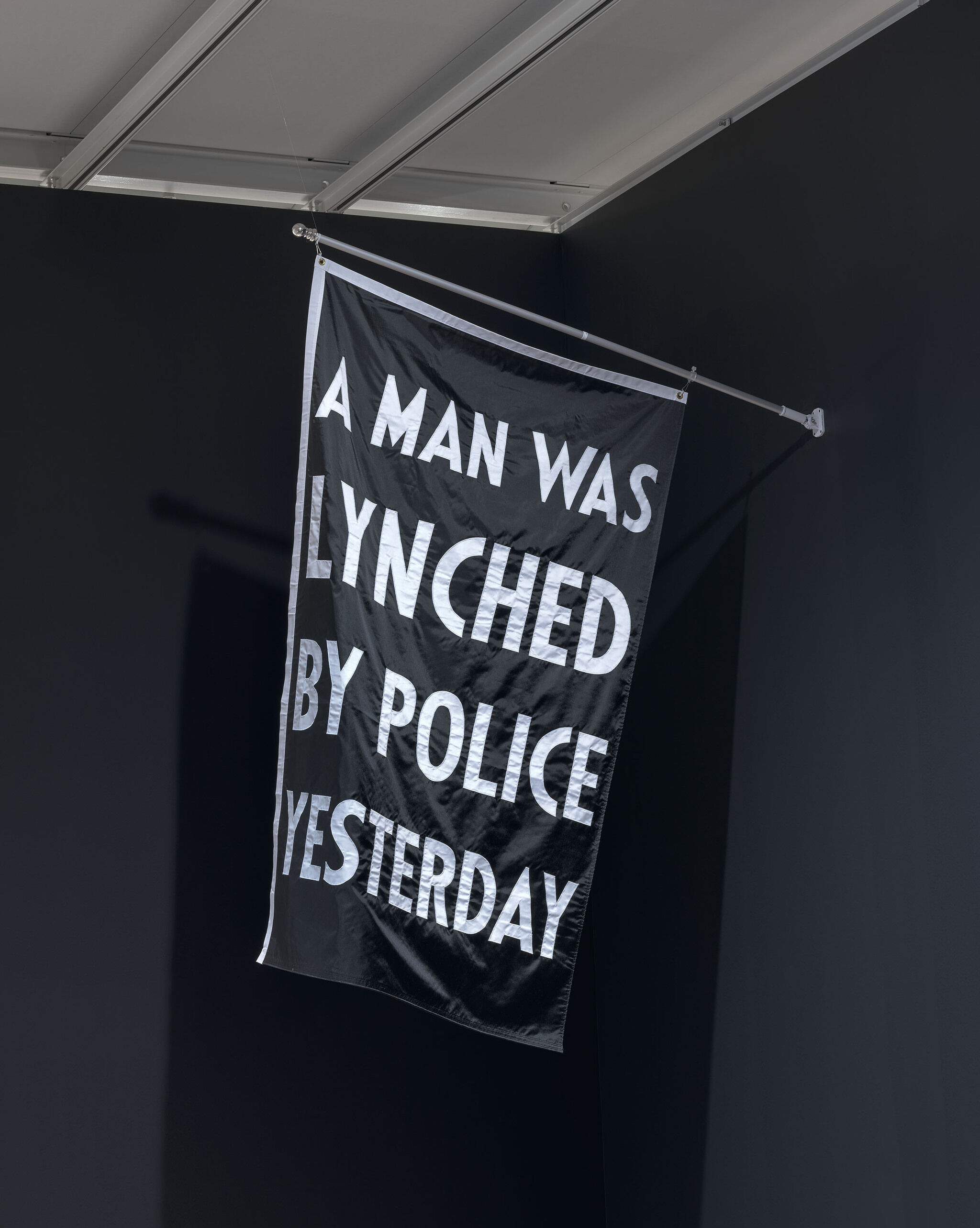
-
602
Theaster Gates, Minority Majority, 2002
Audio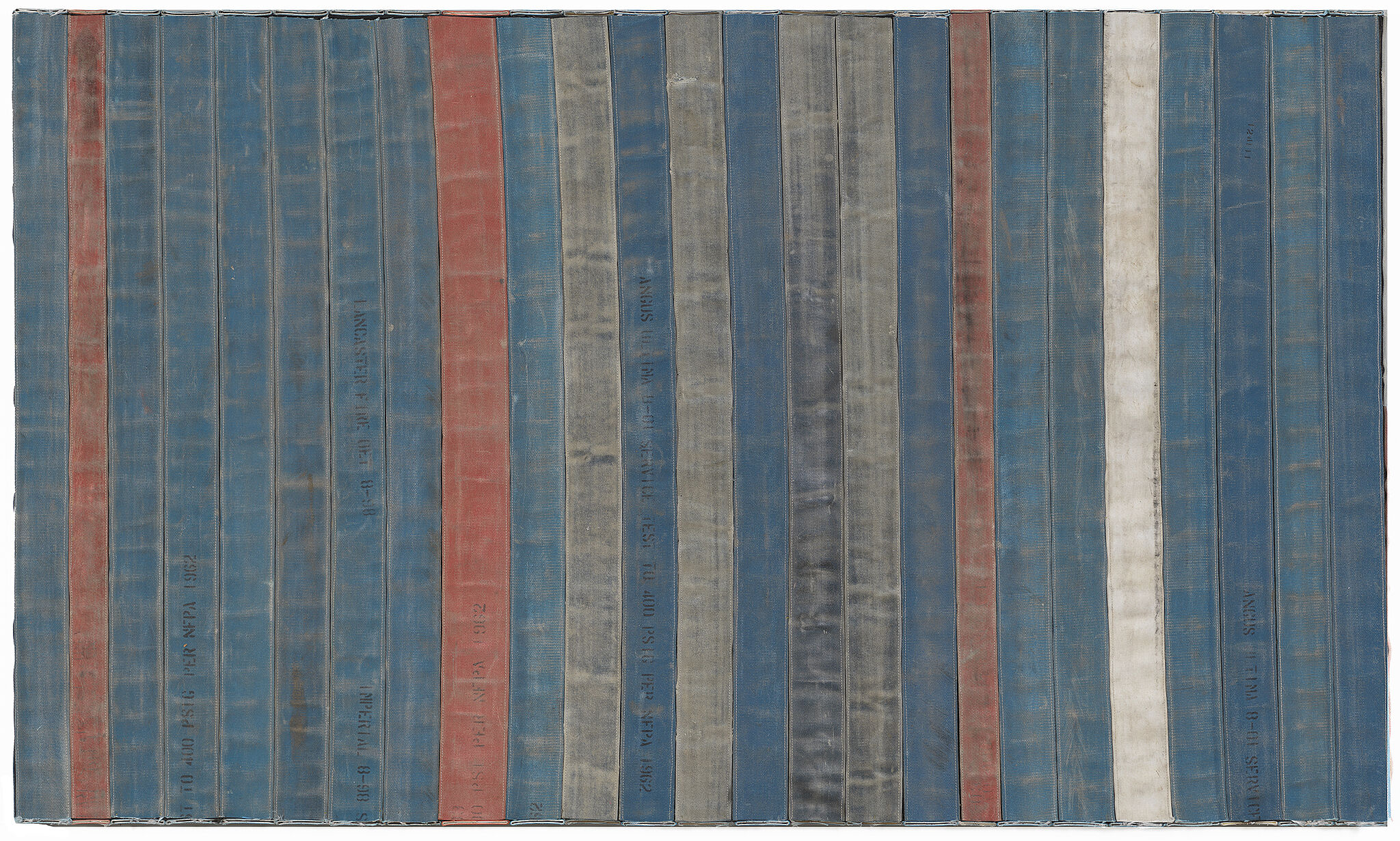
-
610
Toyo Miyatake, Untitled (Opening Image from Valediction), 1944
Audio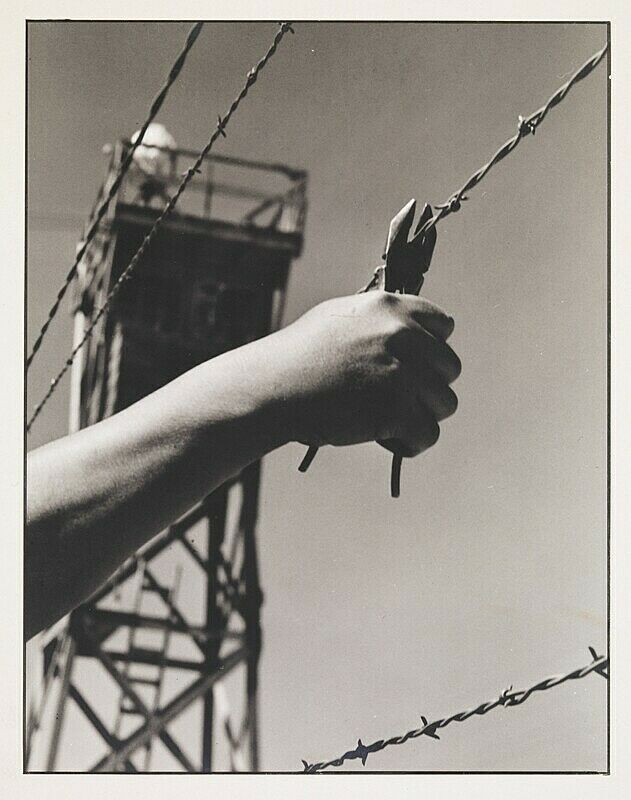
-
611
Ad Reinhardt, Abstract Painting, 1960-1966
Audio
-
620
[The Black Emergency Cultural Coalition and Black Artist’s Correspondence, 1969-1971], 1969-1971
Audio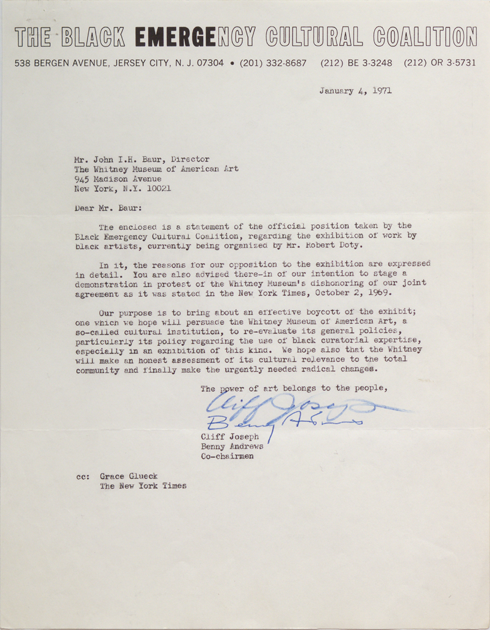
-
621
Senga Nengudi, Internal I, 1977
Audio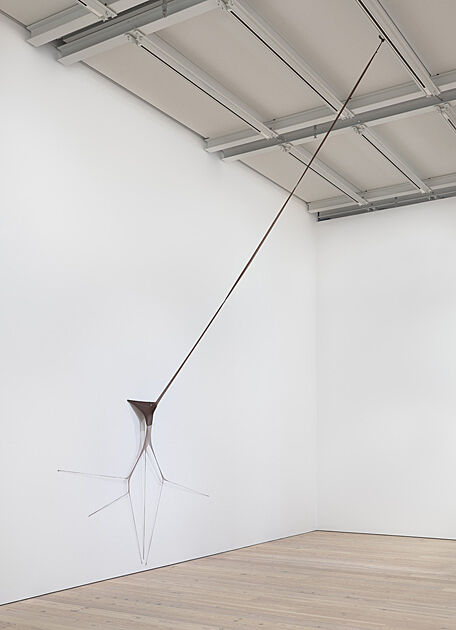
-
630
War Posters
Audio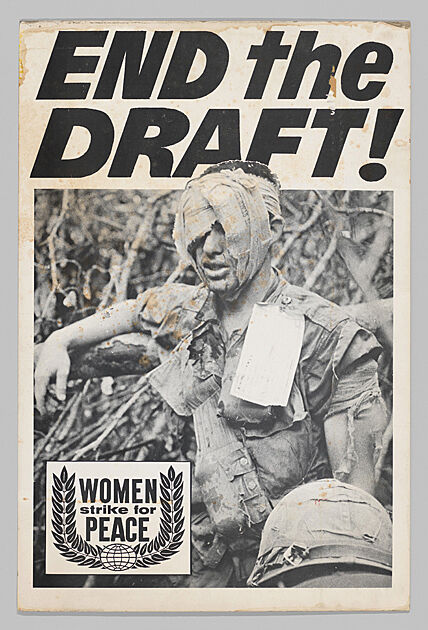
-
631
Edward Kienholz, The Non War Memorial, 1970
Audio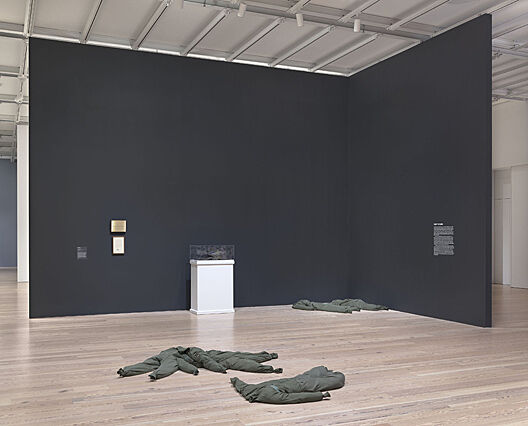
-
650
AA Bronson, Felix Partz, June 5, 1994, 1994/1999
Audio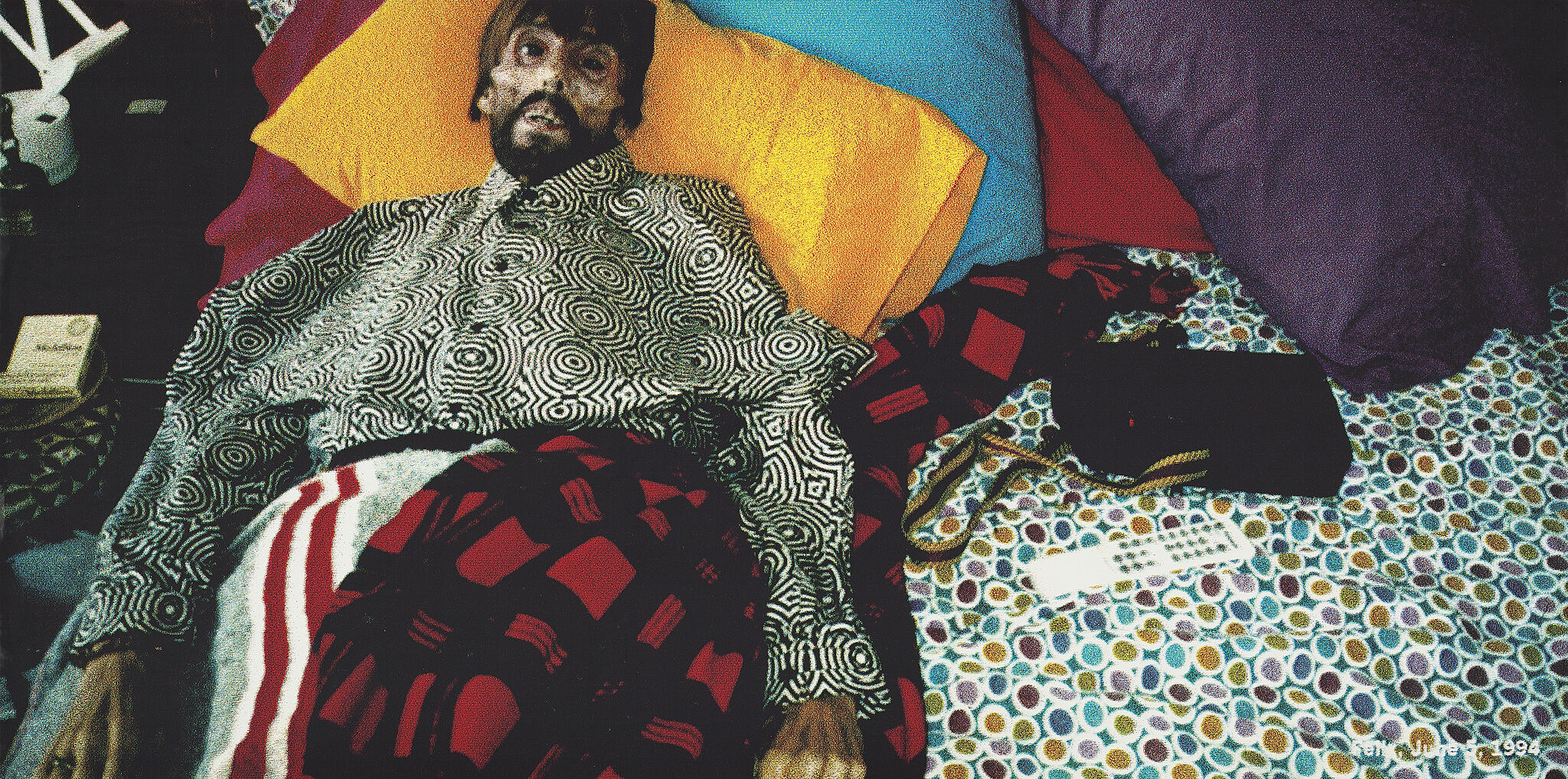
-
660
Carl Pope, Some of the Greatest Hits of the New York City Police Department: A Celebration of Meritorious Achievement in Community Service, 1994
Audio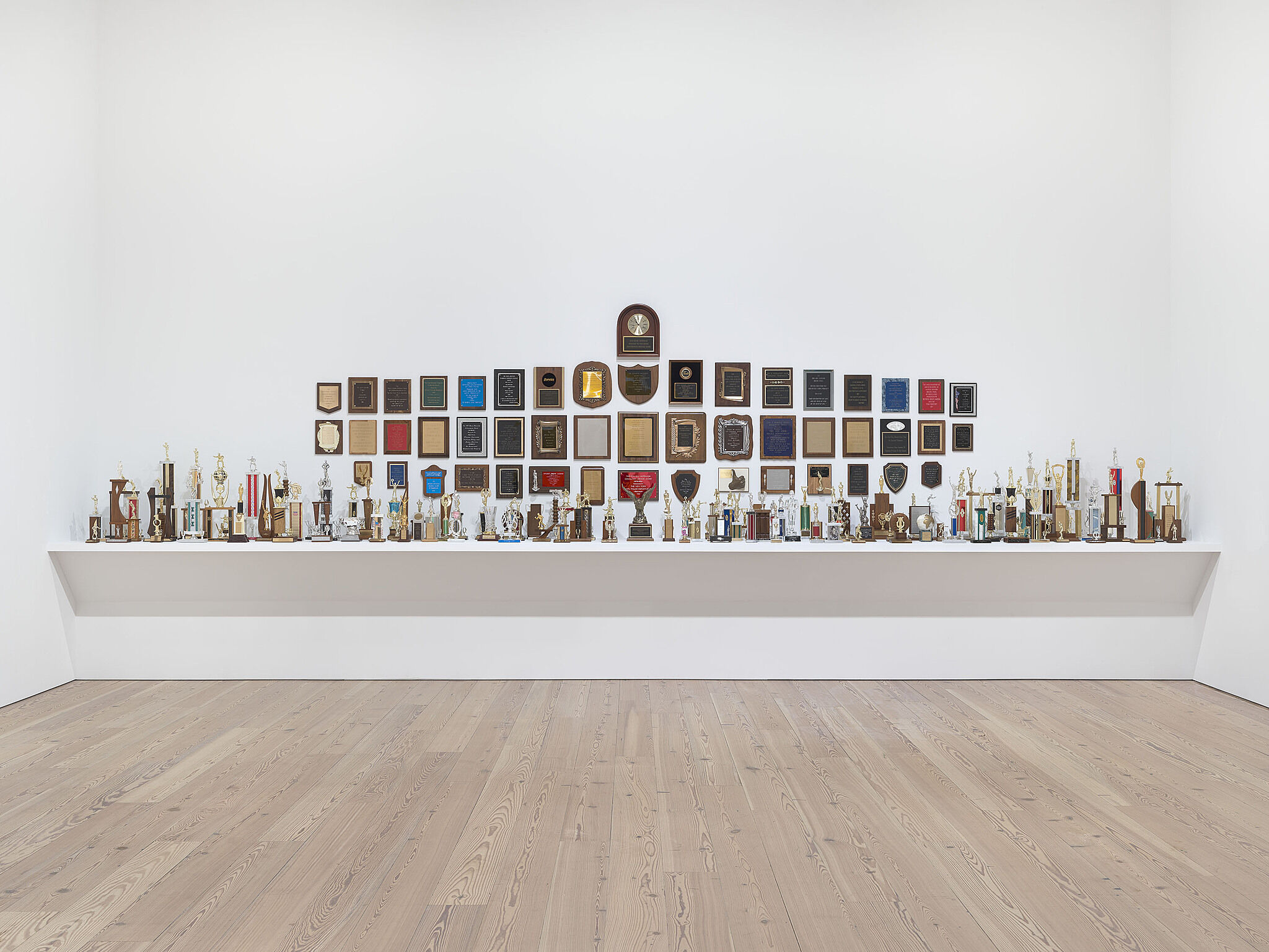
-
670
Daniel Joseph Martinez, Divine Violence, 2007
Audio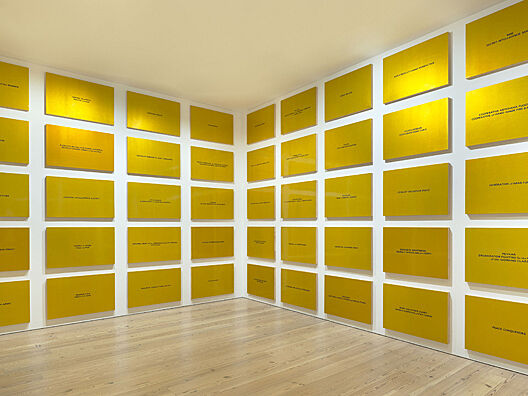
-
682
Jaune Quick-to-See-Smith, Celebrate 40,000 Years of American Art, 1995
Audio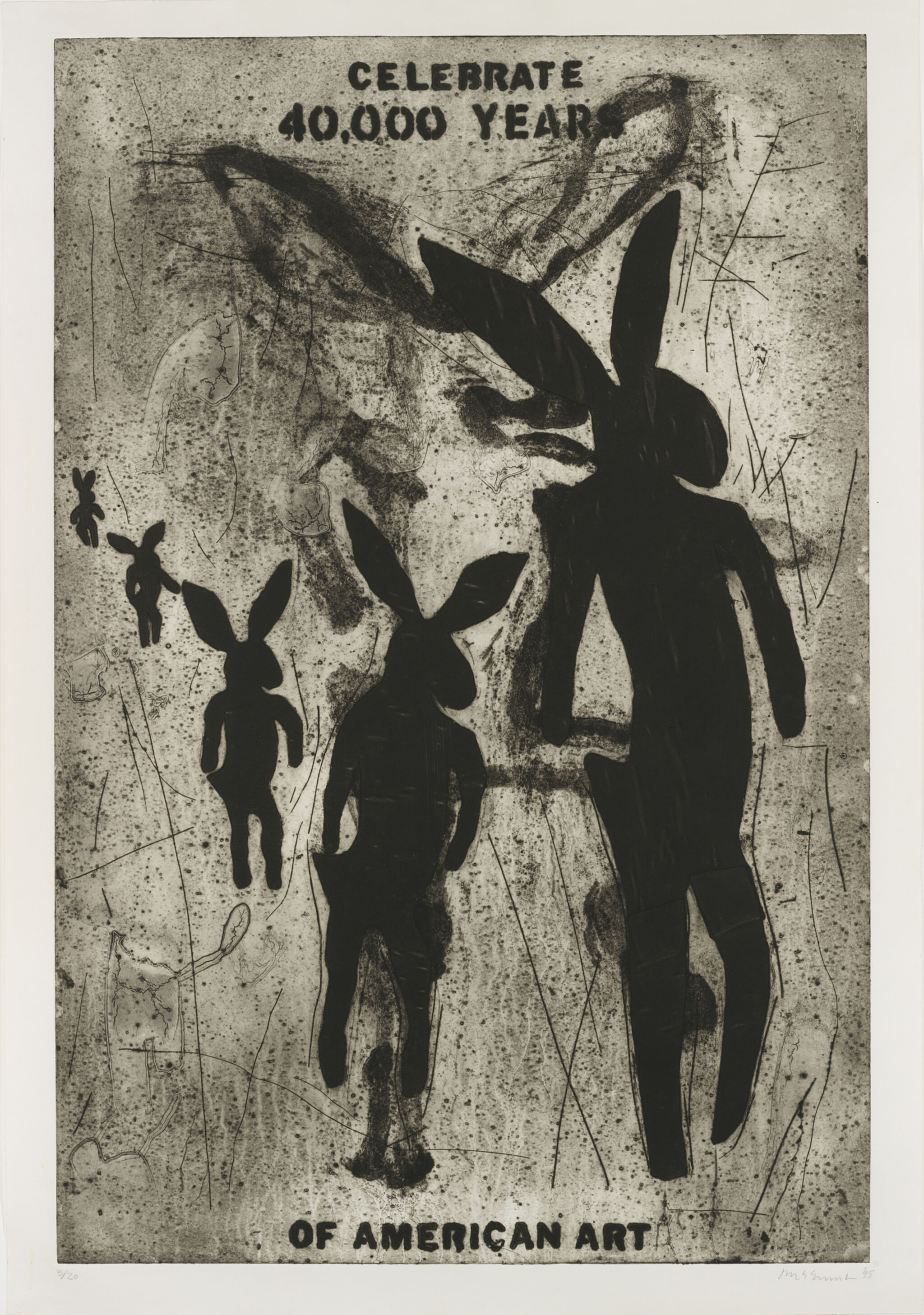
-
682-2
Jaune Quick-to-See-Smith, Celebrate 40,000 Years of American Art, 1995
Audio
Dread Scott: I'm Dread Scott, I make revolutionary art to propel history forward. I'm a visual artist.
A Man Was Lynched by Police Yesterday is an artwork that refers to and really visually references a flag that the NAACP used to fly from their national headquarters. They flew the flag starting in 1920 and kept it up until 1938, every day, the day after somebody was lynched and it was part of their anti-lynching campaign.
When Walter Scott was killed in South Carolina, I said I had to respond really quickly. So I very, very quickly did the design for this, which said “a man was lynched by police yesterday.” Just adding two simple words.
A lot of my work looks at how the past not only sets the stage for the present, but how it resides in the present in new form. Black parents talk with their children about how to survive an encounter with the police. Yes, lynching is gone we don't have crowds of white onlookers smiling before a Black body on fire as a Kodak moment, but you have video of cops shooting down John Crawford in a store holding a gun that was sold in the store. What does it mean for kids to be growing up and have their parents tell them make sure your hands are in sight—or don't make sure your hand are in sight. Run—or don't run, and effectively saying, “I can't protect you. There's nothing I can do to stop this, and this is the country you live in.”
Dread Scott (b. 1965), A Man Was Lynched by Police Yesterday, 2015 (installation view, Whitney Museum of American Art). Nylon, 84 1/2 x 52 1/2 x 1/8 in. (214.6 x 133.4 x 0.3 cm). Whitney Museum of American Art, New York; purchase with funds from the Director’s Discretionary Fund T.2017.262. Photograph by Ron Amstutz
Theaster Gates: My name is Theaster Gates. I am an artist working in Chicago.
I remember I had been reading a lot about the Civil Rights Movement, just as a kind of background research for other projects, and around the same time I found out that these discontinued fire hoses were available, and I was really just thinking about the fire hoses not yet as something that was connected to history, but just a raw material that was around, and maybe one day I would imagine using the canvas to make something.
Narrator: Gates is interested in the way materials can embody history, even in an abstract work of art. Here, he uses old fire hoses to reference police violence against peaceful protesters. He called the work Minority Majority.
Theaster Gates: The title for this piece, I feel like I'm always thinking about the changes that are happening culturally, and we're in a moment when the classification of minority status, for black and brown people, is shifting, where black and brown people will become the majority of the American population. And so I wanted to acknowledge that truth so that as we're reflecting on this idea of the flag, or democracy, or Americanness, that there would be these small acknowledgements that this country is becoming more and more diverse, but also different in new ways.
Theaster Gates, Minority Majority, 2012. Decommissioned fire hoses and vinyl on plywood, 66 x 111 1/2 x 3 3/4 in. (167.6 x 283.2 x 9.5 cm). Whitney Museum of American Art, New York; gift of Barbara and Michael Gamson 2016.262. © Theaster Gates. Photograph © White Cube (Ben Westoby)
Narrator: Toyo Miyatake took these photographs in Manzanar, a camp where Japanese-Americans were interned after the bombing of Pearl Harbor. Over 120,000 people—men, women, and children—were imprisoned there. More than two-thirds were Americans citizens.
Alan Miyatake: My name is Alan Miyatake. I own and operate Toyo Miyatake Studio, which was founded by my grandfather, Toyo Miyatake.
Narrator: Initially, Toyo Miyatake snuck his photography equipment into the camp.
Alan Miyatake: It must have been early on in camp that he took my father aside and said, "I got to show you something." He took him inside and he pulled out the lens and a back of a camera and said, "I'm gonna make a camera." My dad said, "Why are you doing this? You're gonna get arrested." And he said, "No, this is my duty as a photographer to document this so something like this never happens again."
Narrator: Eventually, Miyatake was able to take pictures openly, and became Manzanar’s official photographer. Even his official images could be very critical of the camp. One pictures a hand holding wire cutters up to barbed wire.
Alan Miyatake: It was taken for the Manzanar high school yearbook. I'm sure it was supposed to have very symbolic feelings and a message about what Manzanar was all about. Now that I think about it, it seems courageous for somebody to put this as a main piece in a yearbook, in a school that was conducted in an internment camp. You kind of wonder how much the camp staff and government, how much censoring they had because it's obviously pretty symbolic.
Toyo Miyatake, Untitled (Opening Image from Valediction), 1944. Gelatin silver print mounted on board, 9 7/16 x 7 5/16 in. (24 x 18.6 cm). Whitney Museum of American Art, New York; purchase with funds from the Photography Committee 2014.243 © Toyo Miyatake Studio
David Breslin: My name is David Breslin. I'm the DeMartini Family Curator and Director of the Collection here at the Whitney.
Ad Reinhardt is an artist known mostly for doing abstract paintings. Beginning in the early 1950s he began to make works that, upon first impression, only look like a field of black, but Ad Reinhardt was an artist who was deeply engaged in political issues. In the thirties and forties, he did the satirical cartoons for leftist newspapers and journals. Part of the thinking of including one of Reinhardt's black paintings was to think about artists who are known for making studio-based works, or a painting, that doesn't look political. How might we think of those having some political undertones, at different moments?
So for these paintings that he began in 1953 and worked on until his death in 1967, Reinhardt tried to strip away almost everything extraneous from them. And he has this great series of statements where he discusses them by what they aren't, or what they don't have. He called them neutral and shapeless, not large, formless. And when you read these series of “nos” or “withouts” or “absences” you also see him rehearsing a whole idea of negation or resistance. Resistance to the status quo. Resistance to the history of painting. Resistance to the standards of the day. In a gallery where we are thinking about what resistance looked like to different artist of that moment it seemed interesting, if not crucial, to include abstraction in that argument and to think about Reinhardt in that context.
Ad Reinhardt, Abstract Painting, 1960-66 (Installation view, Whitney Museum of American Art). Oil on linen, 60 x 60 1/8 in. (152.4 x 152.7 cm). Whitney Museum of American Art, New York; purchase with funds from The Lauder Foundation, Leonard and Evelyn Lauder Fund 98.16.3. Photograph by Ron Amstutz
Rujeko Hockley: I'm Rujeko Hockley, Assistant Curator at the Whitney Museum.
These documents are from the Whitney Museum’s collection, archives, and they relate to a series of protests that an organization called the Black Emergency Cultural Coalition staged at and around the Whitney in the years 1969 to 1971.
There was an exhibition in 1971 staged at the Whitney called Contemporary Black Artists in America, which included, I believe, seventy-eight invited artists and was the culmination of a long series of negotiations with the BECC and the Whitney around representation of African American artists and culture in the context of an American art museum, and the lack of representation prior.
The BECC wanted an exhibition, but they wanted that exhibition to be either co-curated or guest curated by somebody who had expertise in African American art and artists, and specifically by a Black person, a Black curator. And the Whitney, not having that such person on staff, but also, for whatever series of reasons, this was a real point of contention for the Whitney, in a real place where they were not able to find resolution, which in the end resulted in maybe twenty-something out of the seventy-eight artists boycotting the show and withdrawing their work and kind of publicly denouncing both the exhibition and the institution.
Other demands that were made, which were met, were that there be kind of a program of solo exhibitions by Black artists at the Whitney and that actually did happen.
The Black Emergency Cultural Coalition and Black Artist’s Correspondence, 1969-1971. Eight sheets. Whitney Museum of American Art, New York; Frances Mulhall Achilles Library and Archives
Narrator: Senga Nengudi began making sculptures from stretched nylons in 1977. She’s said that this one is especially extreme in its form.
Senga Nengudi: It was sort of like nerve endings. I took it to that level of extremeness, stretching it as far as it tolerated. And with the pantyhose I was really interested in the elasticity of it, because we as human beings have a lot of elasticity, not only with our bodies—you know, dieting and gaining weight again and then doing this and doing that and you know the psyche—that also stretching and being able to come back into some form of normality.
In the beginning, I used my pantyhose as well as pantyhose of friends and so on, and I would go to thrift stores to get them because I wanted to have the idea that—and I washed them, washed them all the time—but I wanted this kind of sense of being used, of energy, still in the pantyhose.
Narrator: The sculptures can seem humorous at first, but they have an edge.
Senga Nengudi: So it's like that, it's a laugh, and then it's like, "oh…". For my mind, it's the best kind of comedy, because usually when comedians—they'll say something and then you go, "oh...". After that punchline, you have to rethink what they said, and it gives you a couple of layers to work with.
Senga Nengudi, Internal I, 1977 (refabricated 2014), from the series RSVP, 1975–77 (installation view, Whitney Museum of American Art). Nylon hosiery, dimensions variable. Whitney Museum of American Art, New York; purchase with funds from the Painting and Sculpture Committee 2015.109. © Senga Nengudi. Photograph by Ron Amstutz
David Breslin: This selection of posters, it's a really multifaceted way of looking at how images and text could be used to fight against the war in Vietnam. You'll see things that look almost like cartoons, you’ll see other posters that are using photographs of historical figures like presidents, like John Kerry who famously was a soldier in Vietnam and later came home and protested the war, like many soldiers who were involved did.
Narrator: David Breslin.
David Breslin: Probably the most famous poster on the wall is the one that the Art Workers Coalition made in 1969 based around the My Lai Massacre, which was a massacre in Vietnam where US soldiers were involved in the killing of civilians and it's a photograph of these bodies, overlaid on top of it is Q, standing for “question,” “and babies,” and then A for “answer” “and babies” as the response. This is a famous interview that Mike Wallace did in 1968 with one of the soldiers who was involved in this incident. Really wanting to spell out who was involved and obviously the tragedy of having children and babies being part of that story is something that is—if there's ever a demonstrable and affecting way to bring the war home, this was it.
Women Strike for Peace, End the Draft!, c. 1960-1970. Offset lithograph, 30 × 19 7/8 in. (76.2 × 50.5 cm). Whitney Museum of American Art, New York; purchase, with funds from The American Contemporary Art Foundation, Inc., Leonard A. Lauder, President 2017.10.212
Narrator: Edward Kienholz, the artist behind the Non War Memorial, vehemently opposed American military action in Vietnam.
Jennie Goldstein: Like many of Kienholz’s installations, it’s really like a tableau.
Narrator: Assistant Curator Jennie Goldstein.
Jennie Goldstein: You walk into the space and you find yourself face-to-face with these strewn, body-like forms. It’s actually sand stuffed inside of surplus army fatigue uniforms. The tableau is almost like a sketch or a model for something he was never able to realize.
His idea was that he would go to this seventy-five-acre meadow and there he would take 50,000 of these surplus uniforms, and instead of being filled with sand, they would be filled with slurred clay. And what he’d envisioned was that the clay and the uniforms would essentially go to seed. The clay would kind of dissipate and start to decompose, so too the uniforms would kind of decompose over time. So you would go from having an actual memorial, something you could visit, to essentially nothing.
And that’s what’s so interesting about the title of the work. In a way, it really is this kind of non-war memorial. There would be nothing left, nothing to visit, nothing to memorialize. I think that’s a kind of apt way of thinking about the uselessness of all of this death from his perspective.
Edward Kienholz, The Non War Memorial, 1970 (installation view, Whitney Museum of American Art). Military uniforms, acrylic vitrine, seeds, sand, wood, metal, and book, dimensions variable. Whitney Museum of American Art, New York; gift of Nancy Reddin Kienholz 2003.14a-h. © Nancy Reddin Kienholz. Photograph by Ron Amstutz
AA Bronson: Starting in the late 60s, in ’69 actually, I started working with two people, Jorge Zontal and Felix Partz in a group, and we called ourselves General Idea.
Narrator: The artist AA Bronson.
AA Bronson: We worked together for twenty-five years, until 1994. That’s the year that both of them died. And this image is taken of Felix, at that moment of his death. In the last few weeks of his life he started surrounding himself with more and more color and pattern. Colored sheets, colored pillows, the clothing he wore. Everything became sort of more and more vivid, in a way more and more full of life. And so I wanted to document that, and I took this picture as he was lying there waiting for the first visitor to arrive.
Now Felix died of wasting. He died of AIDS and the only illness he had was basically wasting away. He had no opportunistic infections. He was very very lucky. But what that meant was that there wasn’t enough flesh left on the body to be able to close his eyes. So that’s why the eyes are open. And you can see around him—really, we, we left him as he was when he died, with his cigarettes at hand, with his channel changer for the television, with his tape recorder, because he wanted to record—the thoughts that went through his head.
In a way I think of the body as a house. It’s a house that we inhabit as if it’s the real world. At night we fall into dreams. And while we’re asleep we think those dreams are the real world too. And really we have no way of judging which is real and which is not. In this world, this world that—we’re unable to judge the reality of this world, I think we have to remember that along with the living, the dead are still with us.
AA Bronson, Felix Partz, June 5, 1994, 1994/1999. Inkjet print on vinyl, 84 x 168 in. (213.4 x 426.7 cm). Whitney Museum of American Art, New York; gift of Mark J. Krayenhoff van de Leur 2003.268. © 1999 AA Bronson
Narrator: Carl Pope called this work Some of the Greatest Hits of the New York City Police Department: A Celebration of Meritorious Achievement in the Community. It was his second work using trophies. He made the first about his hometown, Indianapolis, Indiana, where Police Officer Scott Haslar received an award for killing an unarmed Black man, Leonard Barnett. For this work, Pope researched killings that took place in New York between 1949 and 1994.
Carl Pope: Hi, my name is Carl Pope.
This trophy collection maps the history of police brutality and trophy design, but it also traces a third history—the history of rewards that officers receive for killing Black crime suspects. We see that sort of history of rewards for police action killings, police action beatings, through promotions. Like the officer who choked Eric Garner, he received a pay raise. Sometimes they win medals of valor. I think what makes the trophy collection so compelling is that it brings those rewards to public notice, in the minds of people who normally would not make that connection between the rewards that officers receive and why they receive those rewards.
When I first did the collection, people were a little shocked by it. Michael Kimmelman, at The New York Times called the trophy collection “overblown.”
Twenty-four years later, the reality of the trophy collection and what it mapped, what it implies, is no longer just some visual metaphor. The trophies are not a visual device anymore. The trophies actually are a little more literal than they were when I made them. That's a reality that the families of those people who were killed by the police knew. And I think that reality is becoming more of a reality for the rest of us.
Carl Pope (b. 1961), Some of the Greatest Hits of the New York City Police Department: A Celebration of Meritorious Achievement in Community Service, 1994. Engraved trophies, dimensions variable. Whitney Museum of American Art, New York; gift of Carl and Karen Pope, Christopher and Ann Stack, and A. W. Stuart 95.82. Photograph by Ron Amstutz
Narrator: Daniel Joseph Martinez.
Daniel Joseph Martinez: Being observations or memorials, of the most remarkable occurrences, which happened in the last great visitation.
This is a world of corpses strewn in the streets and fields, yet in the death cart itself, the drunken piper wakes up to cry, but I am not dead, am I?
I have slipped into a relief of digression, of someone escaping, someone sidestepping this enforced claustrophobia, conquering the fear through sheer desperation, or malice, or cowardice, or a sort of epic heroism.
Excuse me, in the last twenty years we have seen America transformed until it is completely unrecognizable. In any case, no guerrilla movement can overthrow a government; what they can do is create a sort of chaos that is favorably disposed to radical change.
All I can say, is that in history, the most powerful arms have always been new forms of consciousness, and that fundamental revolution has come as the result of an evolution.
We seem to be waiting for some catastrophe to project ourselves into. Watch out, madness is a reality, not a perversion. I am only an obsession, don’t talk to me, otherwise don’t know me. Do you think I exist?
Perhaps you will see in your little mouth, the withered blood of coral, in your eyeshadow, palm trees drunken by the sun. Another man sticks his leg through the window, bewildered face, like a lunatic, palms vertically flat, beat in the air, froth comes from his mouth. Bastards! They’ve stolen me!
So that now, all our extenuations have abated, and it was no more to be concealed, how quickly it appeared that the infection has spread beyond all hopes.
Someone, somewhere has tied up the darkness, we know why we are all here. It is our affinity for disobedience.
Daniel Joseph Martinez, Divine Violence, 2007 (Installation view, Whitney Museum of American Art). Automotive paint on wooden panels, 153 x 275 x 187 in. (388.6 x 698.5 x 475 cm). Whitney Museum of American Art, New York; purchase with funds from the Painting and Sculpture Committee, with additional funds from Neil Bluhm, Melva Bucksbaum, Philip Geier, Jr., Nicki Harris, Allison Kanders and Pamela Sanders 2008.289a-d. Photograph by Ron Amstutz
Jaune Quick-to-See-Smith: I'm Jaune Quick-to-See Smith, and I'm from the Confederate of Salish and Kootenai Nation in Montana.
Narrator: Jaune Quick-to-See-Smith made this work after the fifth centennial of Columbus’s arrival in the Americas.
Jaune Quick-to-See-Smith: We had been celebrating 500 years of American art, so I decided to do a little spoof on that and go back 40,000 years. And of course I know that it wasn't called America at that time, but my purpose was to do a little teaching moment with that. I was looking for an icon. I wanted something that they would have a relationship to. Jeff Koons, Barry Flanagan, Watership Down, Easter Bunny, Harvey, Playboy Rabbit, March Hare, White Rabbit, Peter Rabbit, Thumper, Bugs Bunny, Velveteen Rabbit, Roger Rabbit, Miffy, Peter Cottontail. And so then I decided that's a good icon.
I had to figure out where I was going to find the rabbit. In the Peterborough petroglyphs site, there are standing rabbits. But then I began doing some research on standing rabbits and they occur all over the world. To bring more children, or to bring in a better crop. Or tricksterism in Native American culture, part of the creation story. I usually go forward, and then I look back. And I think that's what I did here.
Narrator: Prints aren’t often this large. To hear Quick-to-See-Smith talk about how she made it, please tap to continue.
Jaune Quick-to-See Smith, Celebrate 40,000 Years of American Art, 1995. Collagraph, 76 1/2 x 53 in. (194.3 x 134.6 cm). Whitney Museum of American Art, New York; purchase with funds from The Horace W. Goldsmith Foundation 2000.191. Courtesy the artist and Garth Greenan Gallery, New York
Jaune Quick-to-See-Smith: It's an etching, but it's a collagraph etching, which is kind of the Luddite way of doing etching. When I went to Washington University the professor there had made a larger press, and so when I went there to do a print he said, "I want you to make something big." So I said, "Like how big?" And he said, "Hmm, like six feet." So I was like "Ohh, I haven't worked on that size before." I decided, okay I'll make six foot rabbits, that's what I'll do. I had to do it on some kind of a beaver board and then using acrylic spray, cheesecloth, aggregate to polish stones and things like that. So mixing that all together, that's how we got the texture. It's got water droplets that stay there.
Jaune Quick-to-See Smith, Celebrate 40,000 Years of American Art, 1995. Collagraph, 76 1/2 x 53 in. (194.3 x 134.6 cm). Whitney Museum of American Art, New York; purchase with funds from The Horace W. Goldsmith Foundation 2000.191. Courtesy the artist and Garth Greenan Gallery, New York
0:00
0:00