Hélio Oiticica: To Organize Delirium
2017
-
500
Hélio Oiticica, Introduction
Audio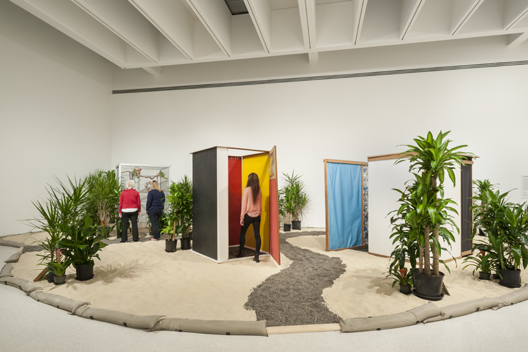
-
501
Hélio Oiticica, Metaesquema
Audio
-
502
Hélio Oiticica, P58 Spatial Relief, Red (P58 Relevo espacial, vermêlho), 1960
Audio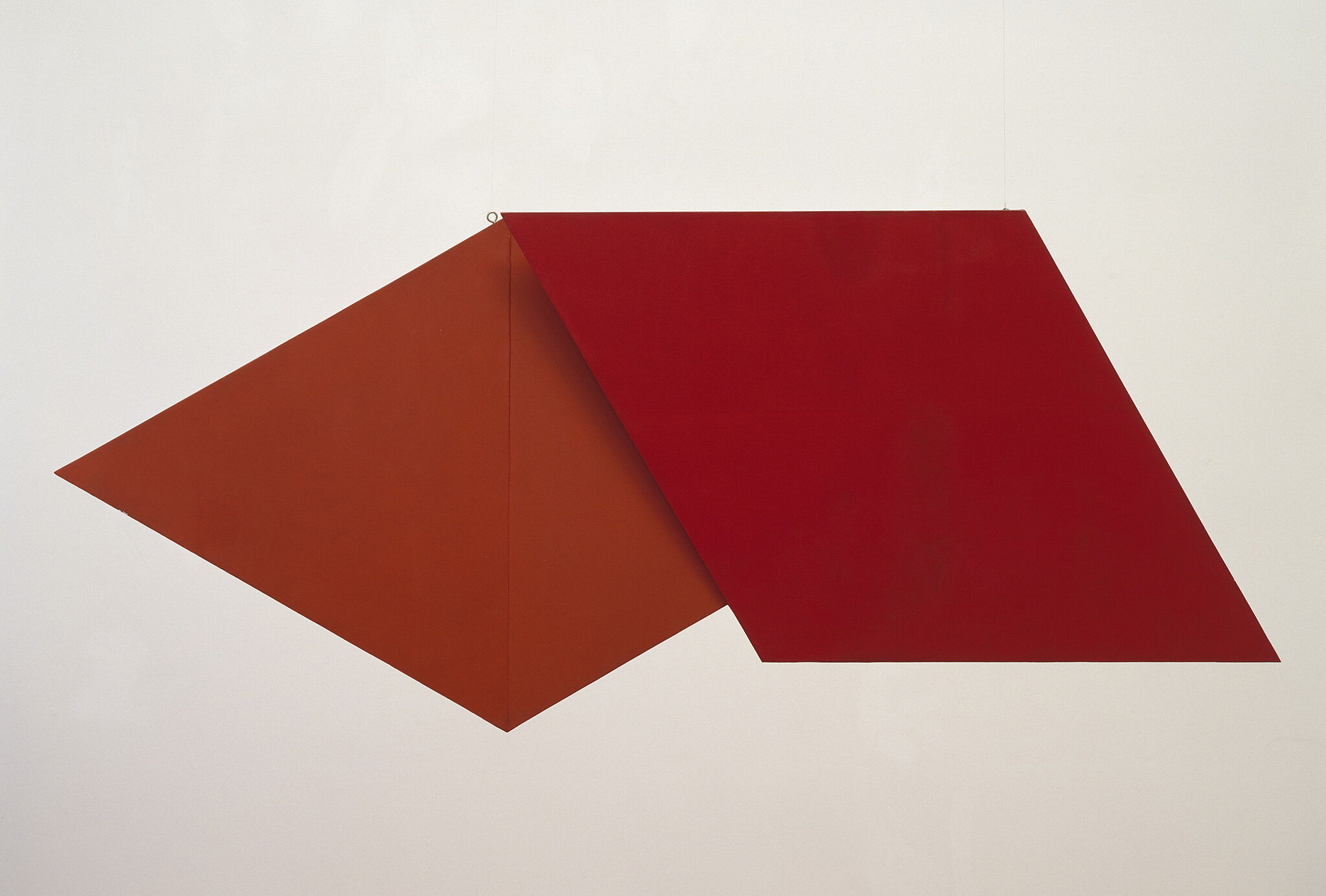
-
503
Hélio Oiticica, NC6 Medium Nucleus 3 (NC6 Núcleo médio 3), 1961–63
Audio -
504
Hélio Oiticica, B16 Box Bólide 12, Archaeological (B16 Bólide caixa 12, Arqueológico), 1964-65
Audio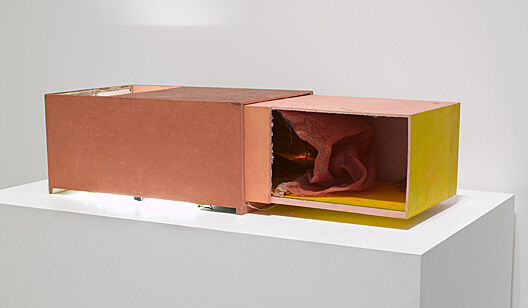
-
505
Hélio Oiticica, B33 Box Bólide 18, Homage to Cara de Cavalo (B33 Bólide caixa 18, Homenagem à Cara de Cavalo), 1965-66
Audio -
505-2
Hélio Oiticica, B33 Box Bólide 18, Homage to Cara de Cavalo (B33 Bólide caixa 18, Homenagem à Cara de Cavalo), 1965-66
Audio -
506
Hélio Oiticica, Seja marginal, seja herói (Be an outlaw, be a hero), 1968
Audio -
507
Hélio Oiticica, Tropicália, 1966-67
Audio
-
508
Hélio Oiticica, Eden, 1969
Audio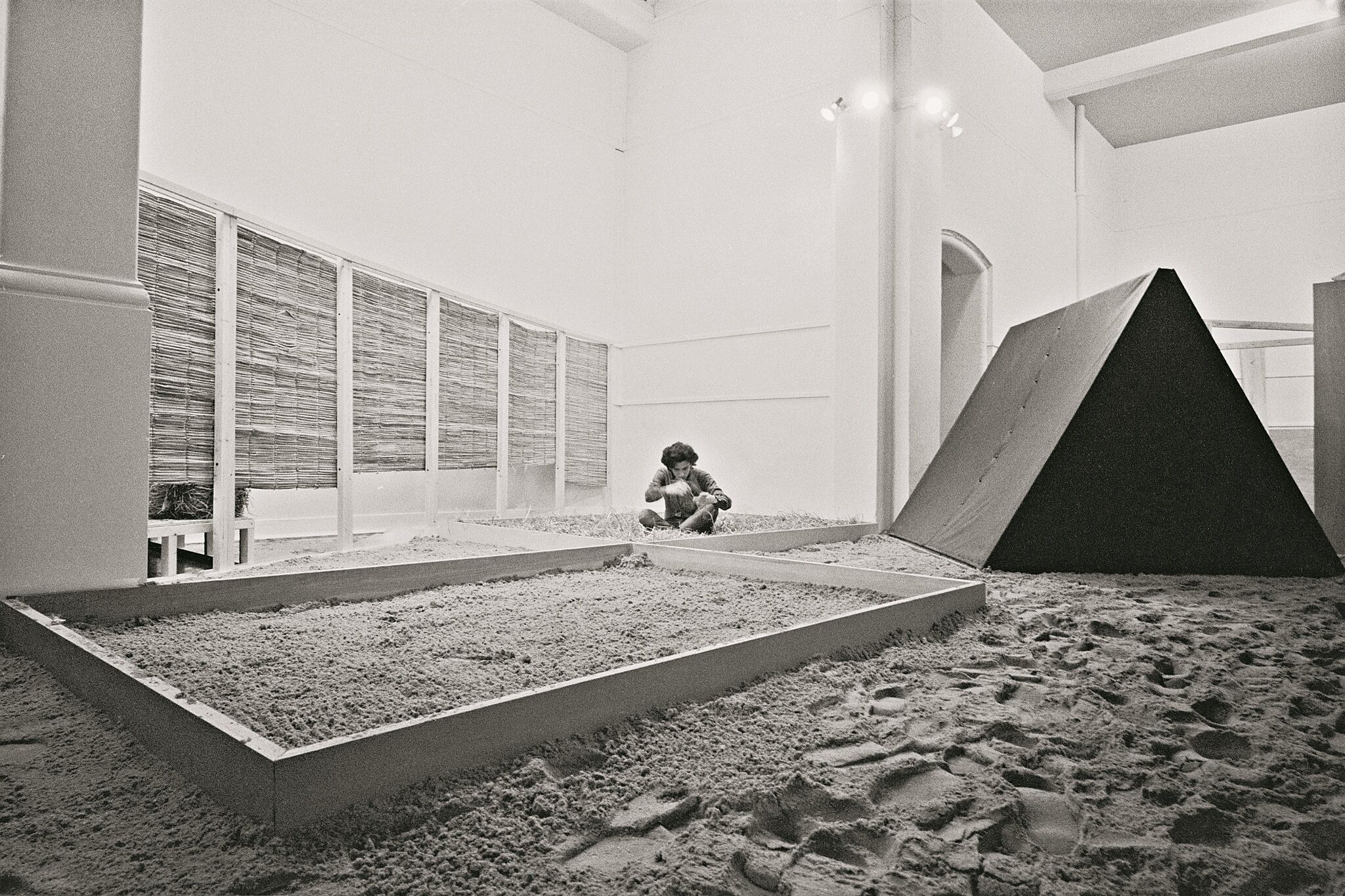
-
509
Hélio Oiticica, Rio Parangolés
Audio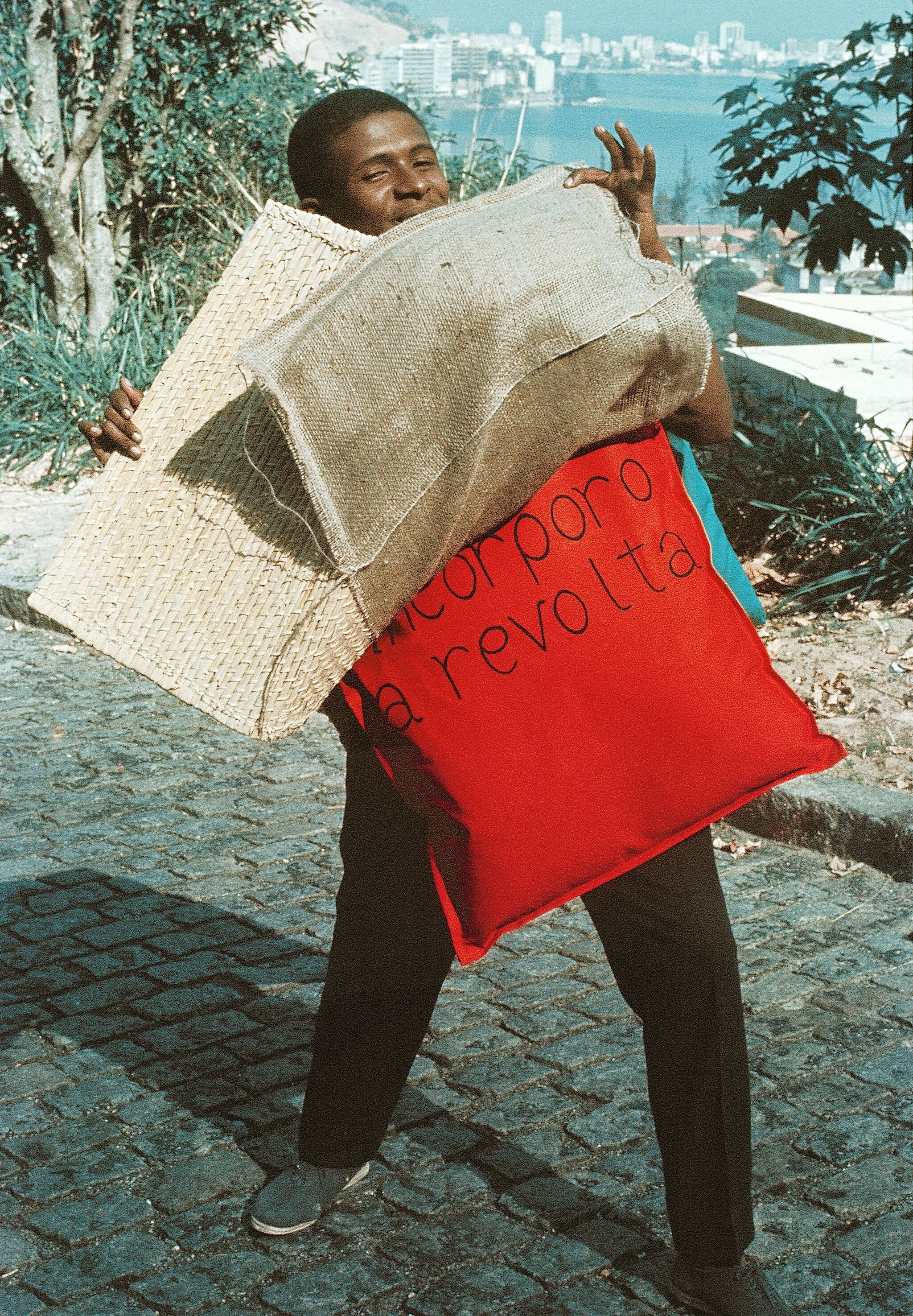
-
509-2
Hélio Oiticica, Rio Parangolés
Audio
-
510
Hélio Oiticica, Babylonests, 1971
Audio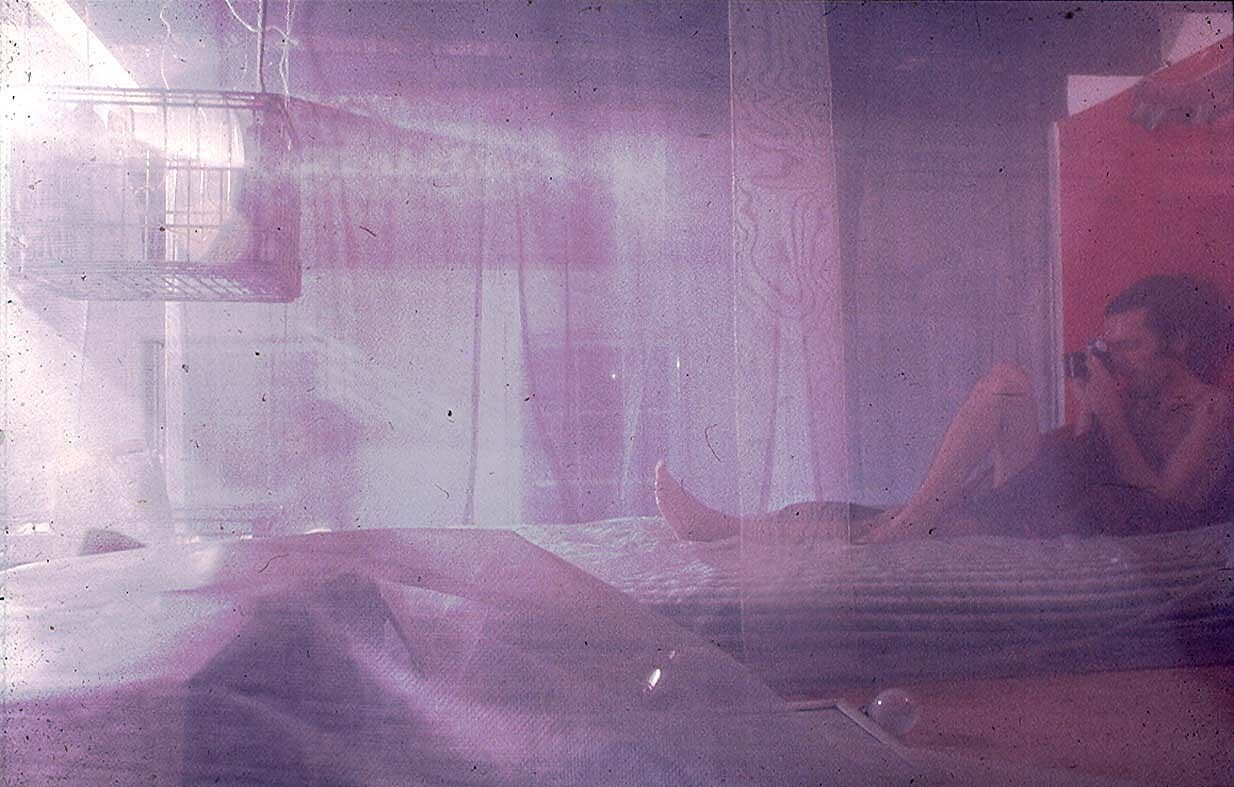
-
511
Hélio Oiticica, Topázion-Flor for Haroldo de Campos, 1975
Audio -
512
Hélio Oiticica, Cosmococa
Audio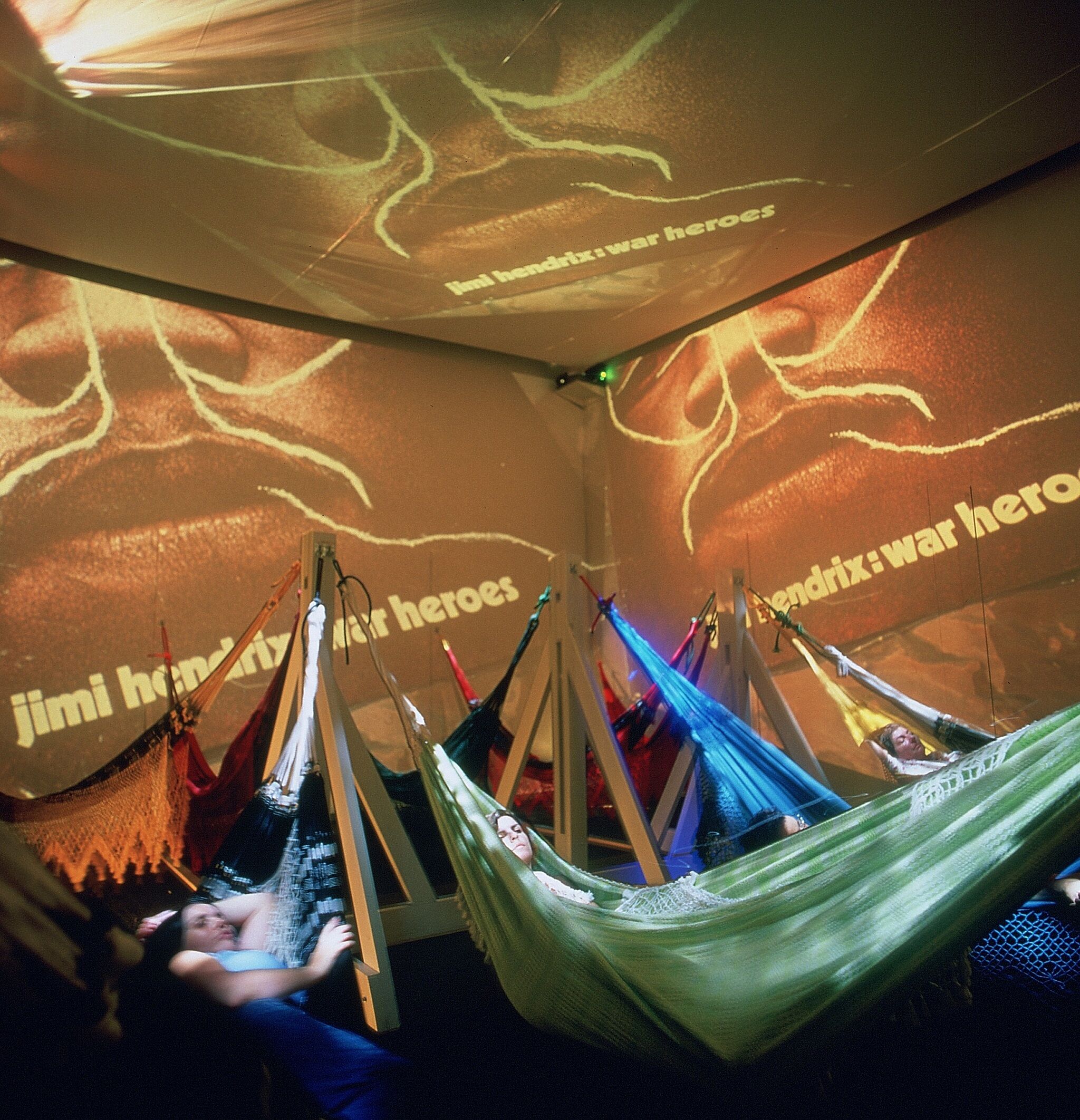
-
513
Hélio Oiticica, PN27 Penetrable, Rijanviera, 1979
Audio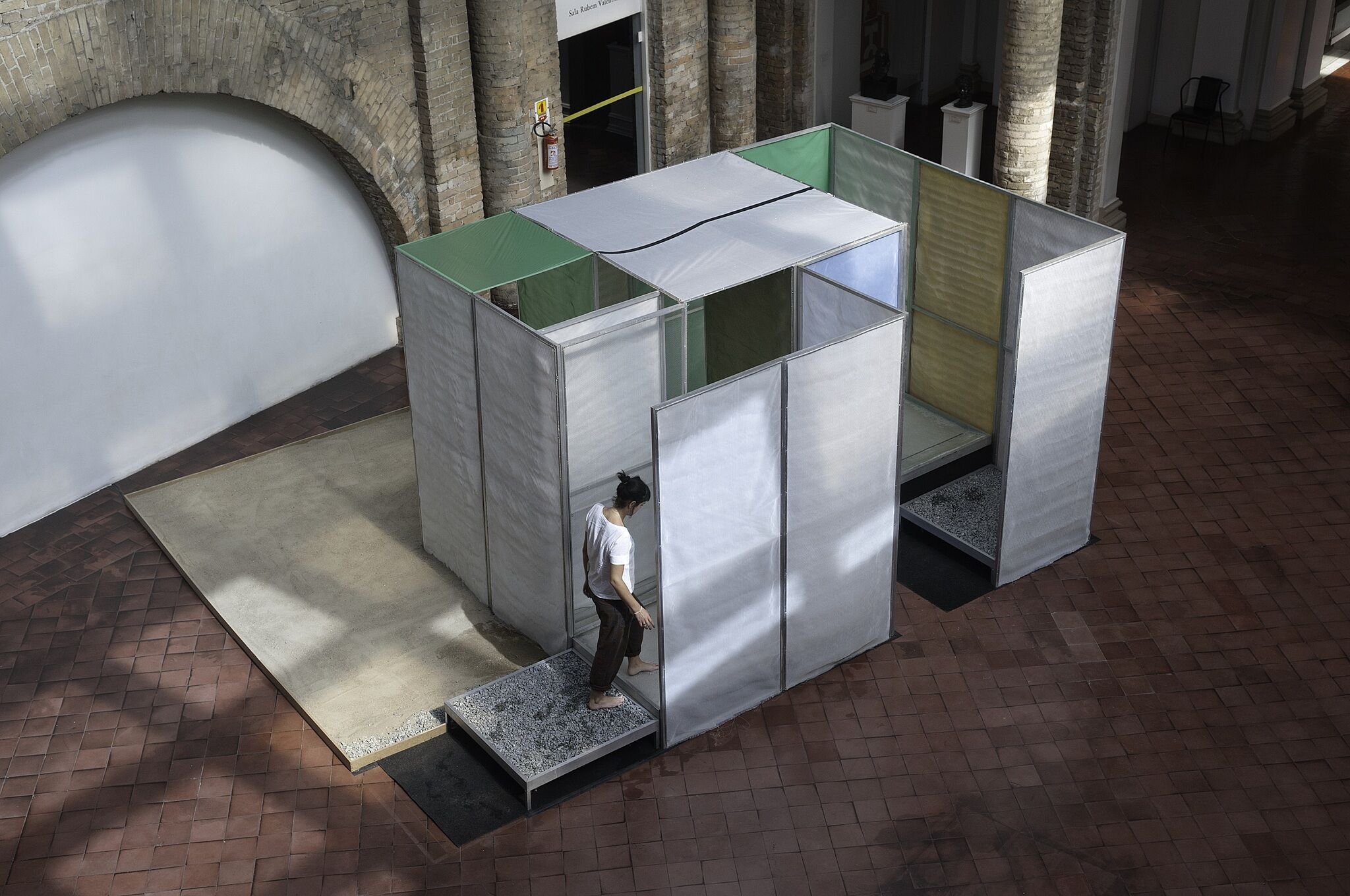
-
514
Hélio Oiticica, Manhattan Brutalista (Brutalist Manhattan), 1978
Audio
Narrator: Hello! In this exhibition, we’ll be looking at the work of Hélio Oiticica— well, a lot of the time we’ll do more than just look at it. We’ll be invited to enter it, play it, and even wear it. That’s what the dancers in the film projected near the entrance are doing. They’re dressed in Oiticica’s Parangolés—capes he made as a kind of wearable sculpture, completed by human action. As you move into the first gallery, you’ll see that Oiticica began as a painter and sculptor. But very quickly, he shifted his focus away from art made primarily for the eye. He wanted us to participate in his art.
Oiticica was born in Rio de Janeiro, Brazil, in 1937. He lived and worked there until 1969, when—after some time in London—he moved to New York. He and his friends had been critical of the oppressive Brazilian military dictatorship, and for a time went into exile. Oiticica lived in New York for most of the 1970s. During this time he made some of his most radical work. This exhibition is the first to provide an in-depth look Oiticica’s years in New York.
We’ll begin our story earlier, though—in the 1950s and early 60s, before the military coup. We’ll start with the framed works on the back wall of the gallery.
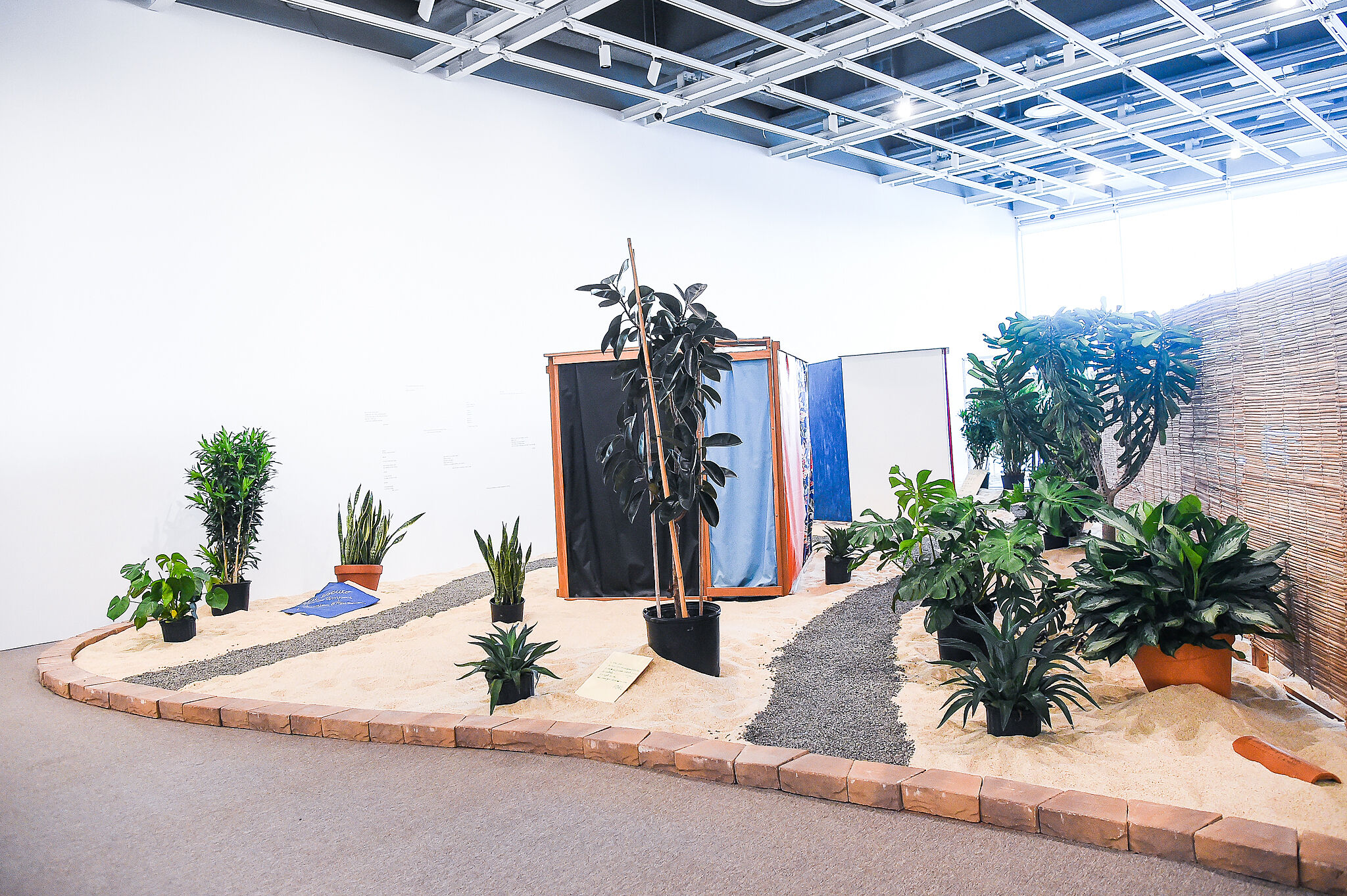
Hélio Oiticica (1937–1980), installation view of Tropicália (1966–67) at the Carnegie Museum of Art, Pittsburgh, 2016. Plants, sand, birds, and poems by Roberta Camila Salgado, dimensions variable. Collection of César and Claudio Oiticica. © César and Claudio Oiticica. Image courtesy Carnegie Museum of Art, Pittsburgh. Photograph by Bryan Conley
Donna De Salvo: Metaesquemas are a group of works that Hélio Oiticica was experimenting with in which he would arrange various different colors and geometric shapes.
Narrator: Donna De Salvo is Deputy Director for International Initiatives and Senior Curator and one of the curators of this exhibition.
Donna De Salvo: The colors are incredibly vibrant. Some of the Metaesquemas have an incised line—a line that he drew into the support almost as if he were attempting to get to the other side of it. And it's part of Oiticica's formal investigation of space and form, and the limits of the two-dimensional surface. However, if one sees them through his later work, they almost function as a kind of blueprint or floor plan for some of the more participatory works, where there's a journey through.
Hélio Oiticica, Metaesquema 362, 1958. Gouache on paper, 19 1/2 x 26 1/4 in. (49.53 x 66.67 cm). Carnegie Museum of Art, Pittsburgh; Edward N. Haskell Family Acquisition Fund and A. W. Mellon Acquisition Endowment Fund
Narrator: Find a bright red, hanging sculpture. This is one of Oiticica’s Spatial Reliefs. Usually, the word “relief” describes a sculpture that hangs on the wall, like a picture. Increasingly, Oiticica wanted to move his sculpture into real space—and to heighten the experience of color. He was part of a group of artists who favored geometric abstract forms, which reflected a utopian modernist moment in Brazil.
Christopher Dunn: It was a period of optimism, of national optimism associated with Bossa Nova, the musical style.
Narrator: Christopher Dunn is a professor at Tulane University and author of two books on this period—most recently, Contracultura: Alternative Arts and Social Transformation in Authoritarian Brazil.
Christopher Dunn: Brazil won its first World Cup in 1958. The president, Juscelino Kubitschek, democratically elected in 1956, led the charge to build this new futuristic capital, Brasília, which was inaugurated in 1960. At the same time, there were social forces and political forces that were beginning to mobilize to address some of the long-standing and deep structural inequalities in Brazilian society. There was a movement for land reform, for workers' rights. There was an attempt by students to begin to mobilize and make contact with workers, particularly in the early 1960s.
Hélio Oiticica, P58 Spatial Relief, Red (P58 Relevo espacial, vermêlho), 1960. Polyvinyl acetate resin on plywood, 24 5/8 x 58 1/4 x 6 in. (62.50 x 148 x 15.30 cm). Tate, London; purchase with assistance from the American Fund for the Tate Gallery, Tate Members, Tate International Council and the Art Fund, 2008. © Tate, London
Narrator: The large golden-orange sculpture hanging in the middle of the room is from a series that Oiticica called the Nuclei. Donna De Salvo.
Donna De Salvo: The idea of “nucleus” becomes very interesting of thinking of this as a kind of center and positioning yourself in relationship to it as you are part of the center. You are on the periphery. You almost have to think a little bit more about what is your relationship to the work.
Narrator: The sculpture is suspended above a mirror.
Donna De Salvo: Now, in today's world, we think of mirrors in terms of selfie. But it's interesting, in this case, he's really reflecting the work. But I think he's also suggesting a kind of infinity, because the mirror—and mirroring the image back up—really can suggest a kind of larger space. And I think this is where this idea of world is very interesting to consider you know—the nucleus as the center, maybe art as the center, maybe us as the center of things. But the mirror is already suggesting a larger world.
Narrator: The Nuclei include the viewer metaphorically. But at the same as Oiticica was developing that series, he began working on sculptures that the viewer could enter literally—the Penetrables. The first of these, a tall orange-and-yellow structure, stands nearby. Unfortunately, this one can’t be entered anymore—it’s more than half a century old, and fragile. But as you explore this exhibition, you’ll encounter a number of Penetrables that you can go into as Oiticica intended.
Donna De Salvo: It's really interesting in today's world to think about these kinds of participatory works. We're so much more used to finding these, particularly in any modern and contemporary art museums. In Oiticica's moment, this was a serious, also political act, of bringing the viewer into an active engagement with a work of art. You completed the piece. And it's interesting to keep that in one's mind—to almost go back to that moment in time when this was a very radical gesture.
Narrator: Oiticica called sculptures like this one Bólides—fireballs. Some of these table-top sculptures have parts that viewers could originally move. Others contained tactile materials such as sand or pigments.
Elisabeth Sussman: The boxes are intimate.
Narrator: Elisabeth Sussman is Sondra Gilman Curator of Photography, and one of the curators of this exhibition.
Elisabeth Sussman: They're very relational. He had this ideal sense of what a work of art could or should be and that involved touching and investigation.
Narrator: This one invites us to enter it imaginatively, as well.
Elisabeth Sussman: You look into it and it looks like, from the outside, like a little pavilion, like a little house, model of a house. You look inside and there's a mirror and then the end of it is open and has gauze, and it looks like a sleeping porch end of it. You can project onto it whatever you want, but it does seem to be about some kind of ideal dwelling.
B16 Box Bólide 12, Archaeological (B16 Bólide caixa 12, Arqueológico), 1964–65. Synthetic polymer paint with earth on wood structure, nylon net, corrugated cardboard, mirror, glass, rocks, earth, and fluorescent lamp, 14 1/2 x 51 5/8 x 20 1/2 in. (37 x 131.2 x 52.1 cm). The Museum of Modern Art, New York; gift of Patricia Phelps de Cisneros in honor of Paulo Herkenhoff. © The Museum of Modern Art/Licensed by SCALA / Art Resource, NY
Narrator: This is another of Oiticica’s interactive Bólides: a box with one hinged side, which viewers originally could have raised and lowered. But this one contains a photograph of a man lying dead on the ground. Oiticica made this work soon after the military coup of 1964, which led to a brutal dictatorship. One of its casualties was the man pictured here.
Christopher Dunn: Cara de Cavalo was one of these figures who was a petty thief, a drug dealer.
Narrator: Christopher Dunn.
Christopher Dunn: He was a famous outlaw who had had several run-ins with the police, and was eventually hunted down and killed in a hail of bullets. And Oiticica was friends with him.
Narrator: Like many artists and intellectuals in the early 1960s, Oiticica had begun to spend a good deal of time in the favelas—working-class, hillside communities surrounding Rio. He was especially drawn to Mangueira, home of a famous samba school. But unlike many of his peers, he did not go to the favelas looking for the “true” Samba, or the “real” Brazil. If you’d like to hear more about his relationship to these communities, please tap to continue.
Christopher Dunn: His interest was less in these figures of what's known as the velha guarda, the old guard of samba that were again seen as the bearers of cultural authenticity. But instead these figures that lived in the favela that were more marginalized. These were people that were transgressive in some ways. Perhaps sexually. People that were gay for example. Or transgender. Or used drugs. Or engaged in petty thievery, who lived on the margins of society. Those were the people that Hélio Oiticica sought out and hung out with.
Christopher Dunn: This is a work that was created in 1968 during a period of incredible cultural effervescence but also of political protest in Brazil.
Narrator: Christopher Dunn.
Christopher Dunn: We have this red banner with the sort of slogan, "be an outlaw, be a hero, (seja marginal, seja herói)." And on this banner we have the silhouette figure of an outlaw, a victim of police violence who is sort of prostrated on the ground after being murdered by off duty policemen, by these so-called death squads that were very active in the 1960s.
And so, it was seen very much as a political statement. But I think there's something else that's going on there, because the banner doesn't say "Be a proletariat, be a worker." Or "Be a Marxist, be a hero." Something like that, you know what I mean? It says "Be an outlaw."
I think Hélio was part of a whole general trend, if you will, in Brazilian culture that looked at these figures that were not so much heroic revolutionaries, but figures living on the margins of society and seeking more individual solutions, individual paths for surviving.
Narrator: Oiticica’s friends, the musicians Caetano Veloso and Gilberto Gil, hung this banner onstage during one of their concerts—an act that led to their arrest end eventual exile.
Narrator: Oiticica made this installation for a 1967 exhibition in Rio.
Christopher Dunn: And he creates this installation, known as Tropicália, that features these two structures that he called Penetraveis, or Penetrables, in which people could literally enter and penetrate, as it were, set within a larger space covered in rocks and dirt—the kind of ground cover that you might find walking in a poor neighborhood in urban Brazil. And tropical plants, and even a tropical animal, a parrot that's in a cage.
One of the Penetrables simply has written on it, "pureza el mito", or "purity is a myth," which questions some of the assumptions about any national culture and the quest for originality. And the other one was more of a mazelike structure. It was bigger, in which the person, the participant, the viewer, would enter, go around several times until the person was completely enveloped in darkness, and at the end there was a television set that was turned on. And what he was trying to do there, I think, was to point to ways in which the favela, oftentimes seen as these places that are pre-modern, by that time were already places where people had television sets. And so there was this sort of juxtaposition there, of on one hand, what I called the aesthetics of precarity, right, these kind of precarious structures that evoke the precarious dwellings of the favelas. And yet at the same time you have this symbol of, what at that time was ultra-modernity, which was a television set.
Hélio Oiticica (1937–1980), installation view of Tropicália (1966–67) at the Carnegie Museum of Art, Pittsburgh, 2016. Plants, sand, birds, and poems by Roberta Camila Salgado, dimensions variable. Collection of César and Claudio Oiticica. © César and Claudio Oiticica. Image courtesy Carnegie Museum of Art, Pittsburgh. Photograph by Bryan Conley
Narrator: Oiticica created his second major installation in London in 1969. He called it Eden.
Donna De Salvo: Here you are able to lie inside of Nests, what he called Nests.
Narrator: Donna De Salvo.
Donna De Salvo: Literally, beds. He put together magazines, and here you'll find magazines that we have actually sourced from the area. Here's where he really, I think, created even more of an environment in which you encounter yourself within the work—very contemplative experience, a sense of play. You can lie in the nest. You can read the books, you can listen.
So the totality of this experience is really what you bring to it and what you will bring as you walk through, as you lie in the nest, as you think, as you imagine. In a sense, he gives you kind of prompts. The environment is what really is pushing you or stimulating your senses. And this is the sensorial—that is so much a part of Oiticica's work.
Elisabeth Sussman: The ones that are most vivid to me from the time that I was in it is the tent that you go in and you listen to music.
Narrator: Elisabeth Sussman.
Elisabeth Sussman: The music that you hear is by Caetano Veloso. You put headphones on and you go into this tent, the reality of the museum where your experience is, is just blocked out. And I think that the experiences that he chooses are kind of these lovely things. You know that's why it's called Eden, because it imagines that if you have time, this is how you would use your time.
Hélio Oiticica, Eden, 1969 (installation view, Whitechapel Gallery, London, 1969). Sand, crushed bricks, dry leaves, water, cushions, foam flakes, books, magazines, “pulp fiction”, straw, matting, and incense, 68.9 x 49.21 x 11.48 in. (21 x 15 x 3.5 cm). César and Claudio Oiticica, Rio de Janeiro. © César and Claudio Oiticica
Narrator: These slides show Oiticica’s Parangolés, capes that he thought of as being a kind of wearable sculpture. Elisabeth Sussman.
Elisabeth Sussman: They become what the wearer wants them to be. They have something do with dancing. The whole idea of movement and movement with a costume became a very Dionysian thing for him. And so the Parangolés ideally had this ability to transform just an ordinary person wearing ordinary clothing into a participant and something of their own imagination.
Narrator: Oiticica started making the Parangolés after spending time at the famous samba school in the Mangueira favela. Some of the images you’ll see here come from August of 1965, when he led a parade of dancers from Mangueira to Rio’s Museum of Modern Art. They were turned away, and paraded through the gardens instead. The confrontation shifted Oiticica’s attitude towards formal art institutions. In the years that followed, he began to look for different ways to get his art into the world. If you’d like to hear more about this event—and what it says about Oiticica’s approach—please tap to continue.
Hélio Oiticica, P15 Parangolé Cape 11, I Embody Revolt (P15 Parangolé Capa 12, Eu Incorporo a Revolta) worn by Nildo of Mangueira, 1967. © César and Claudio Oiticica. Courtesy César and Claudio Oiticica, Rio de Janeiro. Photograph by Claudio Oiticica
Christopher Dunn: So one of the things that I think it really interesting about Hélio Oiticica if we go back to the early 1960s, is this idea of participation. Participation, or what at the time was called culturo gi participacao. The culture of participation was on the lips of left wing artists and intellectuals at the time.
And it very much spoke to this middle-class desire to seek communion with the culture of the people. So this idea of the culture of participation, or participatory culture, was kind of a top-down idea.
I talked previously about how these intellectuals and artists—they loved samba music. They loved the samba schools and the old-guard of the samba musicians and all of that. But there was a place for that, and that was either in the favelas or in the samba schools, or in certain clubs. But there were spaces that were not for those people as well. And that would have been these elite spaces like the Museum of Modern Art.
Oiticica came from a completely different angle, and created an alternative idea of participation. One that was not about leading the people or showing them the way, it was about engaging everybody in the creation of meaning through the work itself.
Hélio Oiticica, P15 Parangolé Cape 11, I Embody Revolt (P15 Parangolé Capa 12, Eu Incorporo a Revolta) worn by Nildo of Mangueira, 1967. © César and Claudio Oiticica. Courtesy César and Claudio Oiticica, Rio de Janeiro. Photograph by Claudio Oiticica
Narrator: These slides show the Babylonests, works that Oiticica made for Information, a 1970 exhibition at the Museum of Modern Art. He rebuilt them in his own apartment after he relocated to New York City—first Second Avenue in the East Village, then on Christopher Street, just a few blocks south of the Whitney.
Arto Lindsay: Hi, I'm Arto Lindsay. I actually knew Hélio Oiticica in New York.
I think one thing to remember about the Nests was that they were a proposition. They were a program. They were a suggestion of possible behavior as much as they were places for people to actually inhabit and do things in. When I knew them, they were almost like a kind of intellectual scaffolding or something. You know? Kind of geometricizing his living room.
There are many stories about what took place in those Babylonests and the different places where they were installed. You know, like people getting high or a homeless person coming in and sleeping there or people fucking, kids, especially, loved them because they were so tactile, but they were also kind of hide-and-seeky.
Narrator: Oiticica also described the Nests as environments in which to pursue something the he called “creleisure.” Elisabeth Sussman.
Elisabeth Sussman: The idea was that leisure shouldn't be something that's left over at the end of the day when you finally have time to stop doing your other sort of important activities. It should be the natural state of things and it should be felt as a sort of state of creativity and of experimentality and of invention.
Miguel Rio Branco, Babylonests, 1971. Digital projection, dimensions variable. Courtesy of César and Claudio Oiticica, Rio de Janeiro
Elisabeth Sussman: Topázion-Flor are a series of slides that embody the atmosphere, the sort of poetry of the moment that he wanted to show was part of his experience the times he used cocaine.
Narrator: Elisabeth Sussman.
Elisabeth Sussman: So he openly embraced cocaine. He wrote about cocaine, the different kinds of cocaine that he had, the different kinds of experiences that he had, because experience of this sort was very important to him.
Narrator: Oiticica wrote prolifically when he was in New York. A selection of those texts are in the middle of the room. You can also hear the musician Arto Lindsay reading some of them, on the headphones arranged around the table. One thing that becomes clear from the texts was that Oiticica had an intense feeling for rock music, and the musicians themselves—especially Mick Jagger and Jimi Hendrix.
Elisabeth Sussman: He had these ideas that the rock and roll concert was some sort of apotheosis of freedom, that the kind of music and dancing that rock and roll inspired, the activities of the late 60s, early 70s like Woodstock, were what he had imagined as wonderful things back when he was going to the favela and he was interested in samba. This was just, this was like a worldwide revolution of music and living and so this was to him so revolutionary and wonderful. He totally was into it as a fan and as an intellectual thinker.
Narrator: On this wall, you’ll see a series of proposals for cinematic installations that Oiticica called Cosmococas—two of which have been realized nearby. Curator Donna De Salvo.
Donna De Salvo: In the Cosmococas, he creates an immersive environment that brings together sound, touch, all of the senses. And these are total environments. And it's emblematic of much of the work that Oiticica does in New York where he begins to experiment with film, with sound, with imagery— in a way that was very different than what he had done in Brazil.
Now, the proposals for the Cosmococas are quite interesting to look at because in reading these typewritten scripts, you actually see what comprises the Cosmococas. And there's a certain level of interpretation that one deals with inevitably when you reconstruct. Each of these pieces, of course, no longer exists so they are constructed anew every time they are shown. The materials are contemporary materials. However, the imagery, as in the case of CC5-Hendrix War, are the original materials.
Hélio Oiticica and Neville D’Almeida, CC5 Hendrix-War, 1973 (installation view, Walker Arts Center, Minneapolis, 2010–2011). Slide series, hammocks, and soundtrack. César and Claudio Oiticica, Rio de Janeiro and Neville D’Almeida. © César and Claudio Oiticica, and Neville D’Almeida
Elisabeth Sussman: in '78, he went back to Rio. I think the political situation was getting slightly better. He still had family there and so he went back. He seemed to be from all accounts very glad to be back there.
Donna De Salvo: Rijanviera, which is a work that Oiticica makes when he returns to Rio after his time in New York, is a very sublime work. It's more about nature and it seems in a kind of opposition to what you see in Tropicália, which reflects the city and urban environment. But, it is perhaps symbolic of his return to Rio and a calm. When he returned to Rio, he regained his health, which had become increasingly more fragile during the time in New York—perhaps, in that sense, reflects a calm in the artist himself about being back in Rio and creating a new body of work.
Well, you enter Rijanviera, you remove your shoes and you enter. And it has stones that you walk over so there's the sensation of feeling the stones and then entering into the piece, which is equally covered with a fabric. And you walk into water, so you have the experience of walking into the water, penetrating deeper into the piece itself and then of course, emerging back the way that you entered. And I think there's a very meditative quality to this piece, which is very different. It does not have the same kinds of stimuli that one sees in Tropicália. There are no birds, there are no plants. It's very pure.
Hélio Oiticica, PN27 Penetrable, Rijanviera, 1979 (installation view Pinacoteca do Estado de São Paulo, 2010). Aluminum, plastic, wire, water, sand and gravel; overall plan: 118 1/8 x 196 7/8 in. (3 x 5 m), panels: 102 3/8 x 39 3/8 in. (2.6 x 1 m). César and Claudio Oiticica, Rio de Janeiro. Photograph by Edouard Fraipoint
Narrator: Once back in Rio, Oiticia grew increasingly interested in working with found objects. Elisabeth Sussman.
Elisabeth Sussman: He began to see what we now call urban redevelopment, how old neighborhoods were being torn up and new places were being gentrified and so on. He was taking long walks through Rio and sort of picking up the debris that he found of these old stones and things that were left lying around the street. He began to make a collection of them.
Some of these stones are collected and shown here and he gathered them together and kept them in his house and was fooling around and playing with them all the time. One of the stones that he found was a stone that was the shape of the island of Manhattan and it just resembled it. He gave it the name Manhattan Brutalista.
Narrator: These were among the last works Oiticica made. On March 22, 1980, he died from a stroke. But in the years since he has become enormously influential. Donna De Salvo.
Donna De Salvo: Oiticica is of great interest to many contemporary artists who have been seeking a way to connect their art with the world, to seek out new meanings between the work of art and the viewer, to break down the boundaries between the two.
To experience his work today is to also understand how an artist used his work during a time of great political oppression to make a statement and to push past it. To show how the artist could also be an activist and create new forms of art. And these things went hand in hand in Oiticica's work.
0:00
0:00