Whitney Biennial 2017
2017
-
100
Introduction to Whitney Biennial 2017
Audio, Kids -
300
Harold Mendez
Audio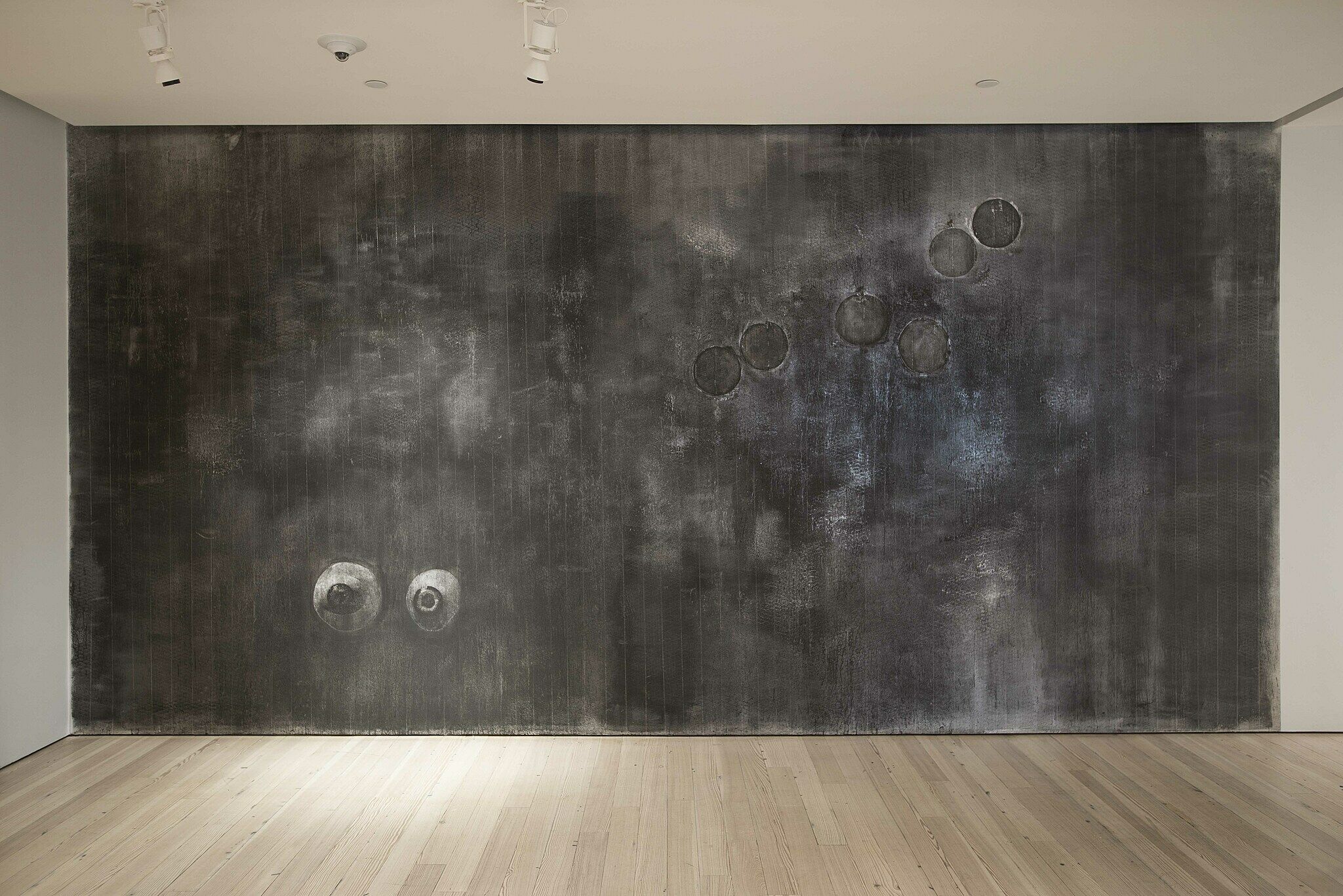
-
501
Dana Schutz
Audio, Kids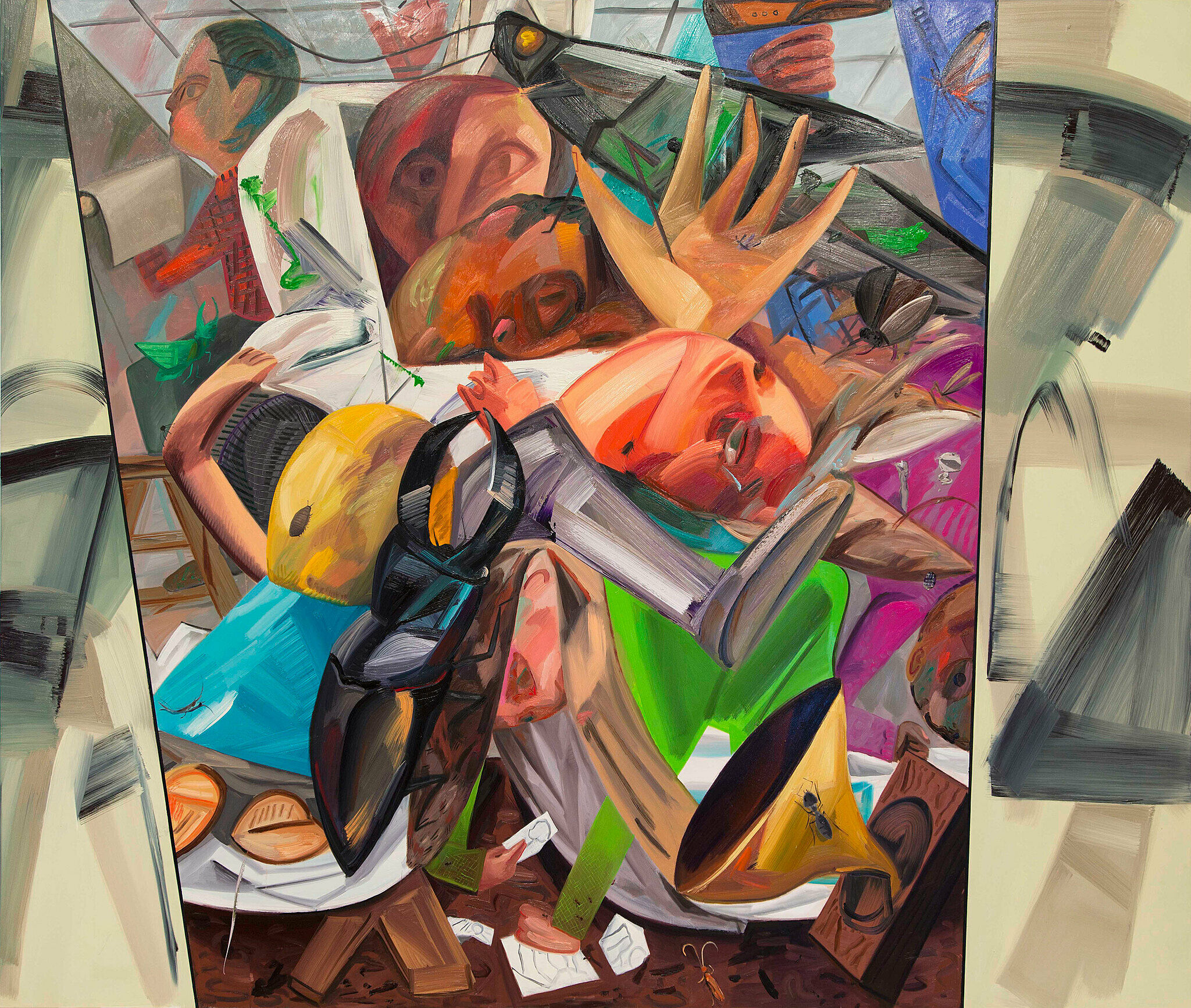
-
502
Cauleen Smith, Overview
Audio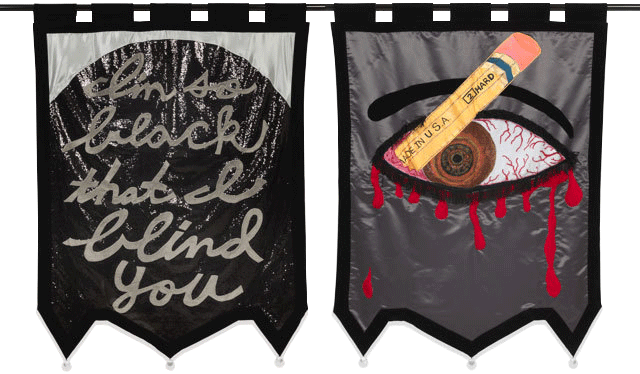
-
502-2
Cauleen Smith, Overview
Audio
-
503
Jon Kessler
Kids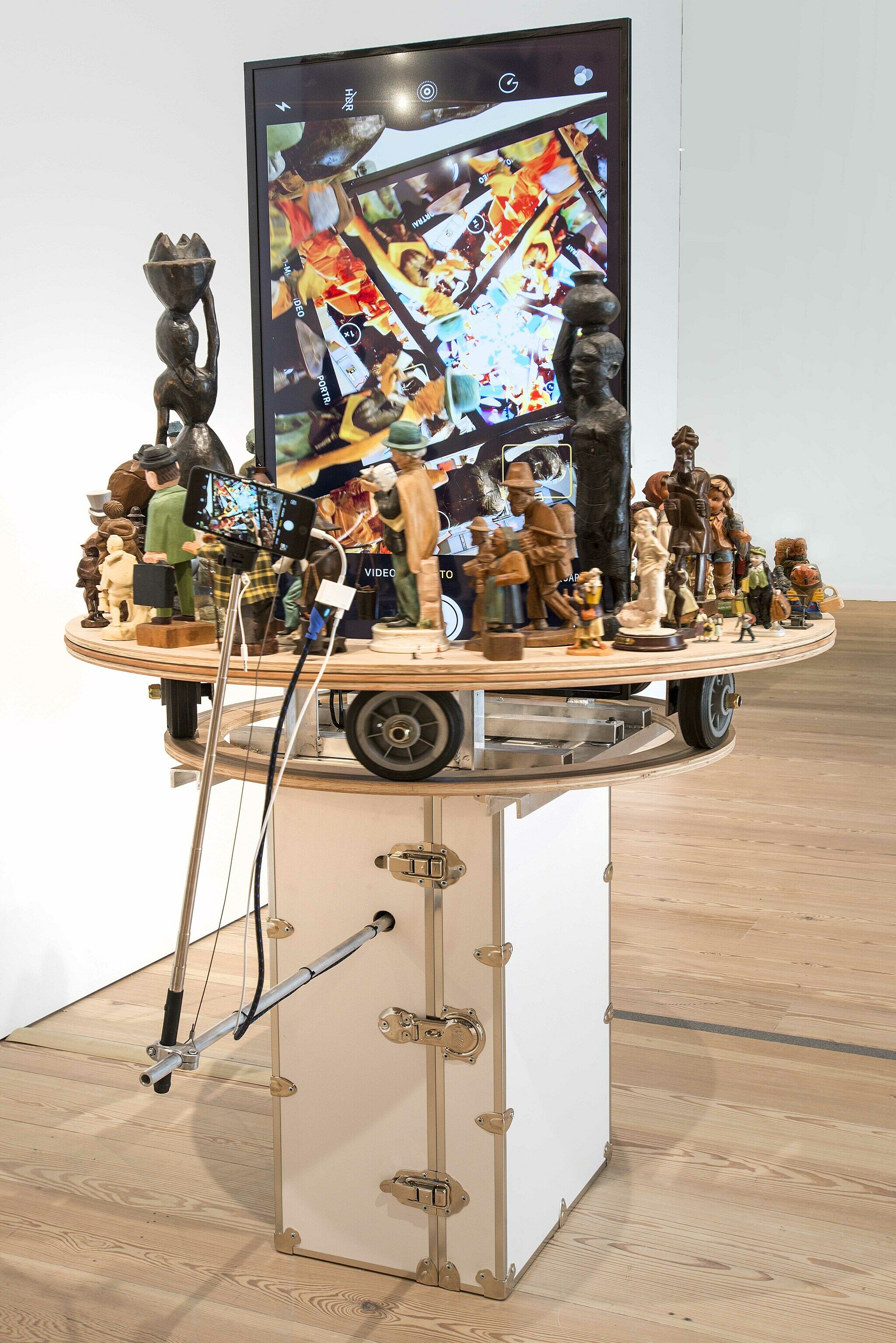
-
503-2
Jon Kessler
Audio
-
504a
Occupy Museums, Introduction
Audio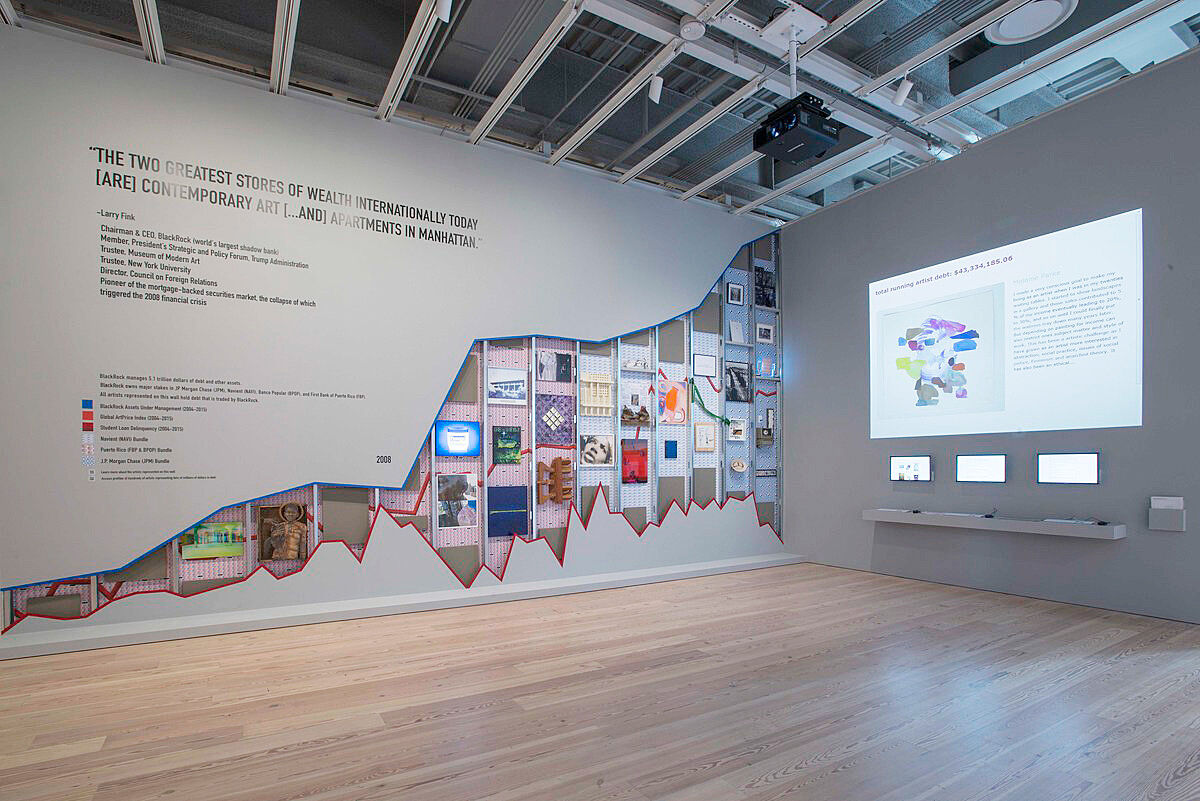
-
504b
Occupy Museums, Installation Overview
Audio
-
504c
Occupy Museums, Artwork within Debtfair
Audio
-
504d
Occupy Museums, Student Debt
Audio
-
504e
Occupy Museums, Debt Resistance Now!
Audio
-
505
Pope.L aka William Pope.L
Audio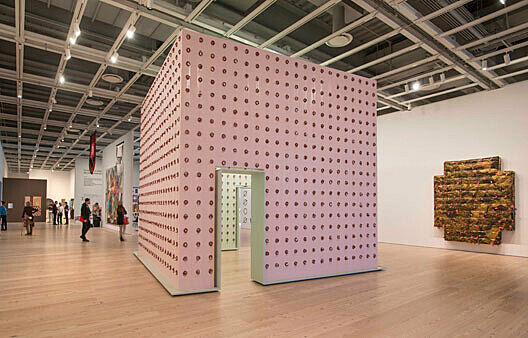
-
505-2
Pope.L aka William Pope.L
Audio
-
506
Torey Thornton
Audio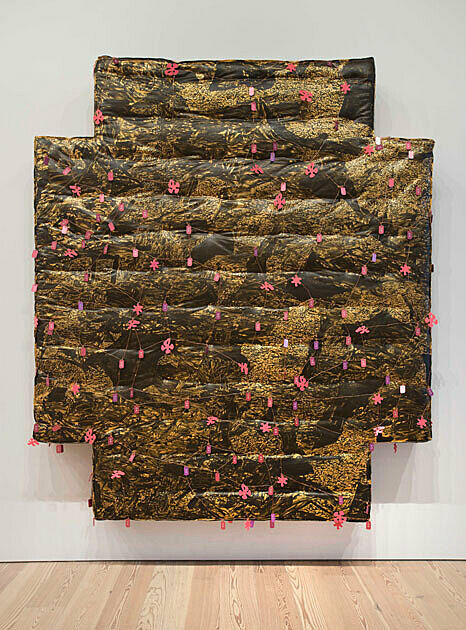
-
507
Matt Browning, Overview
Audio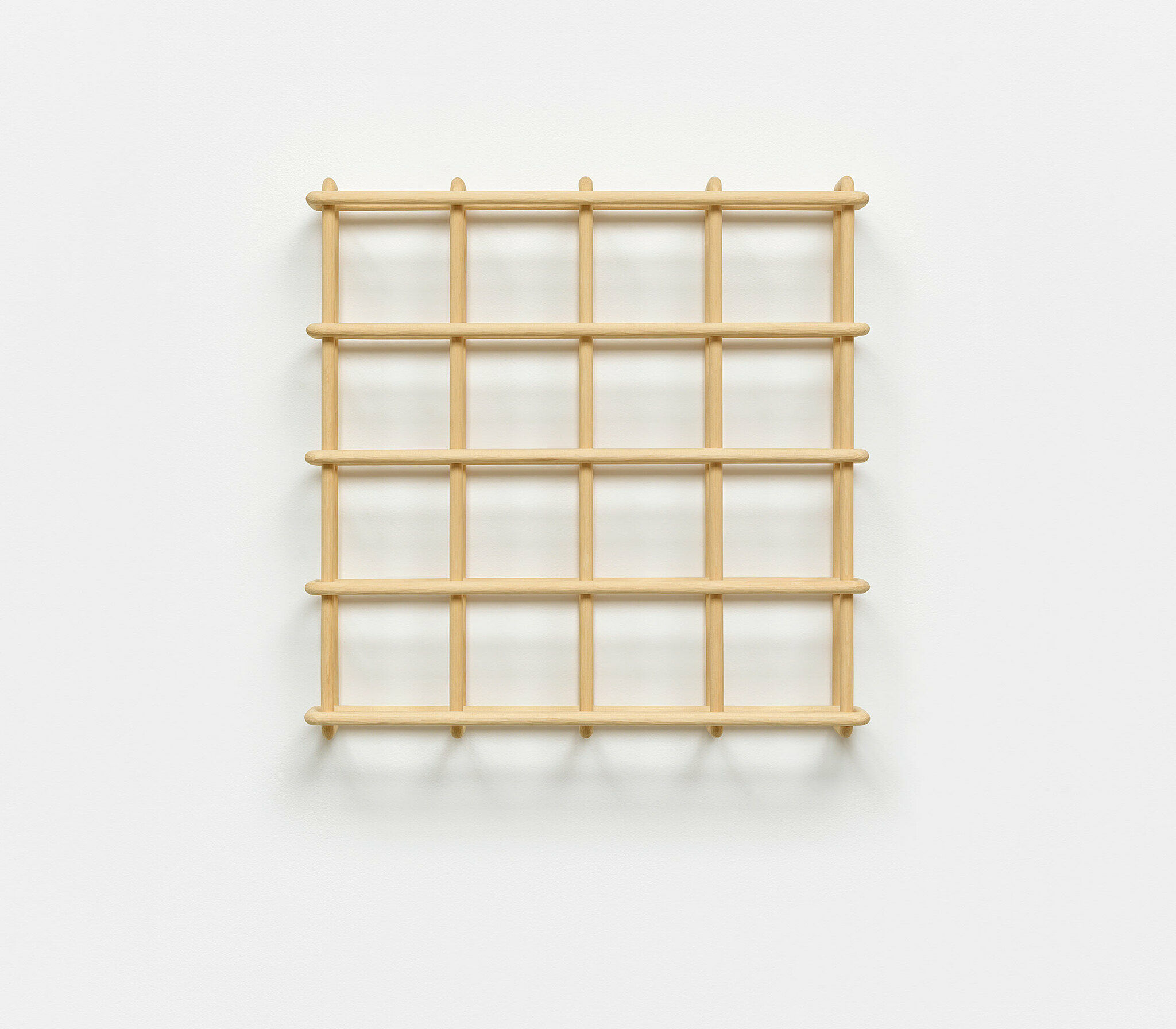
-
508
Cameron Rowland
Audio -
511
Shara Hughes
Audio, Kids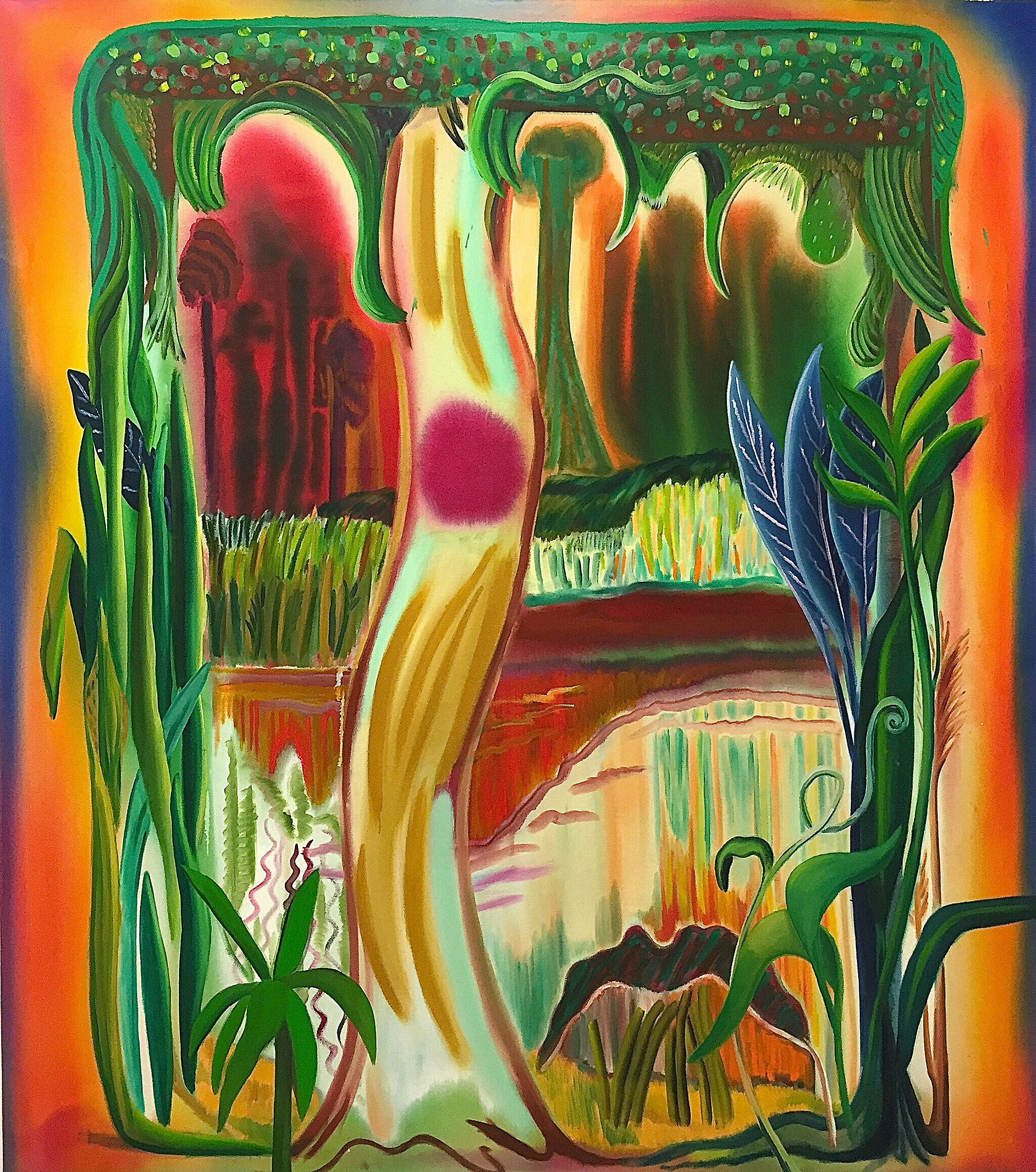
-
526
Jessi Reaves
Audio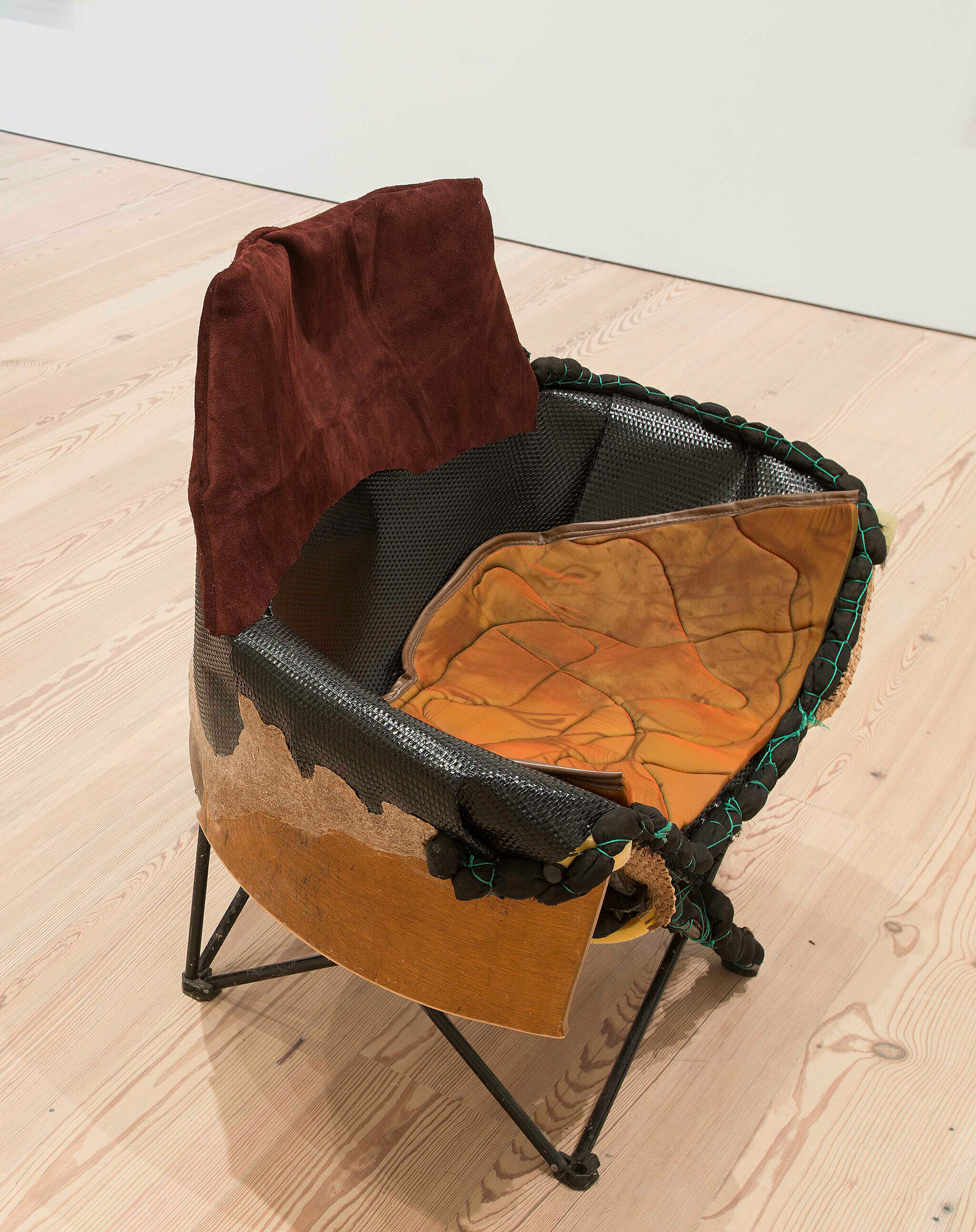
-
514
Harold Mendez
Audio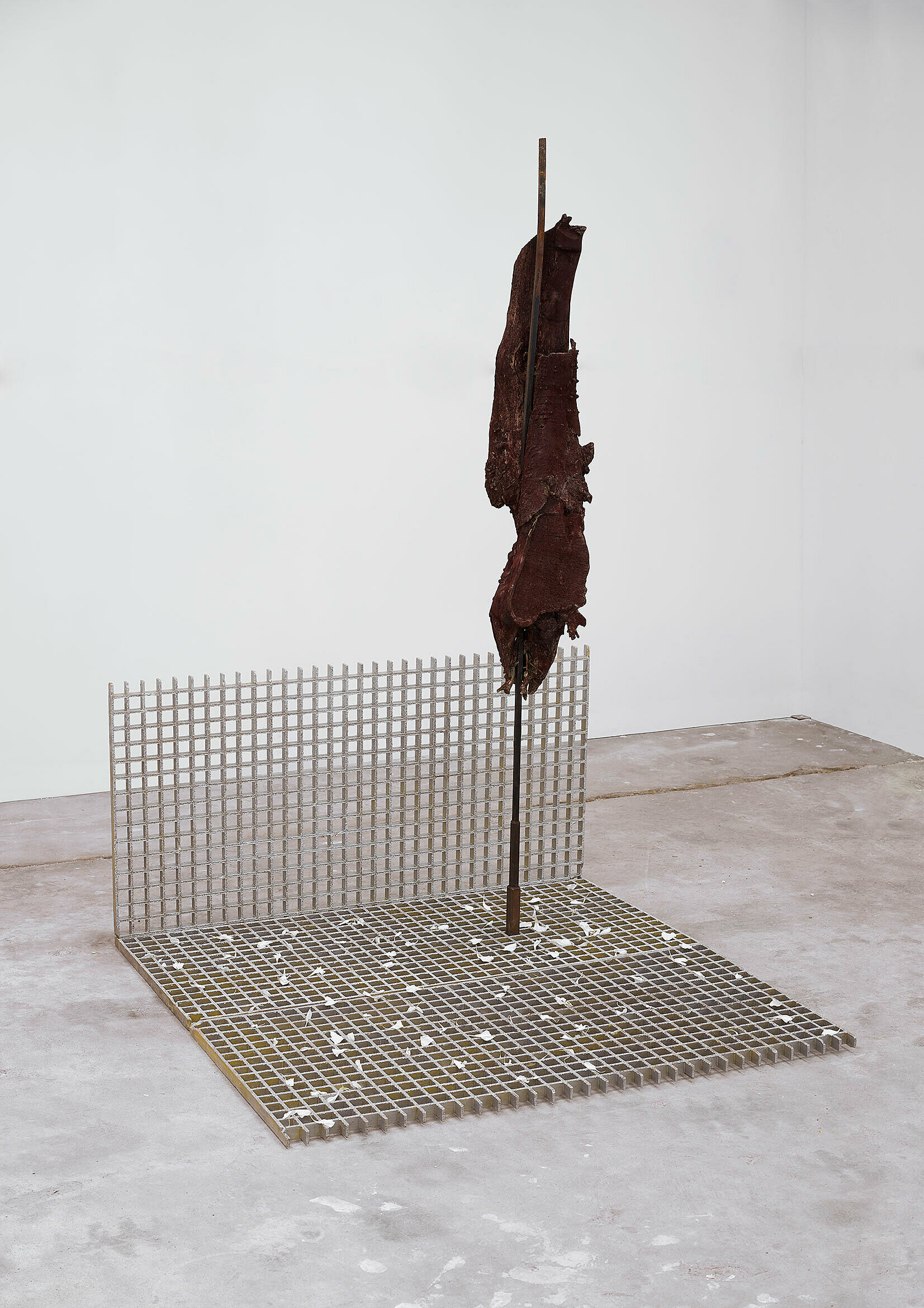
-
515
Casey Gollan and Victoria Sobel
Audio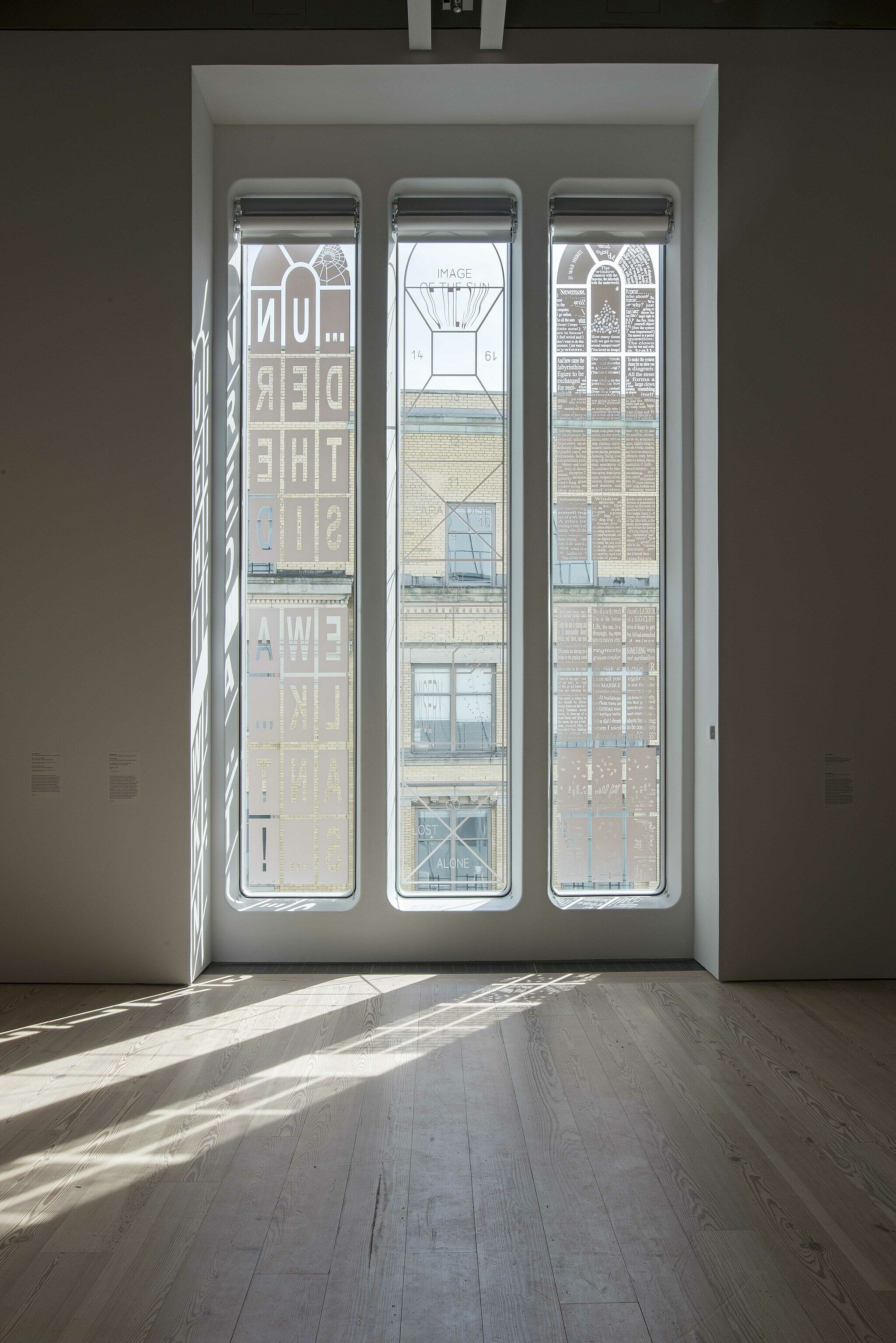
-
516
Julien Nguyen
Audio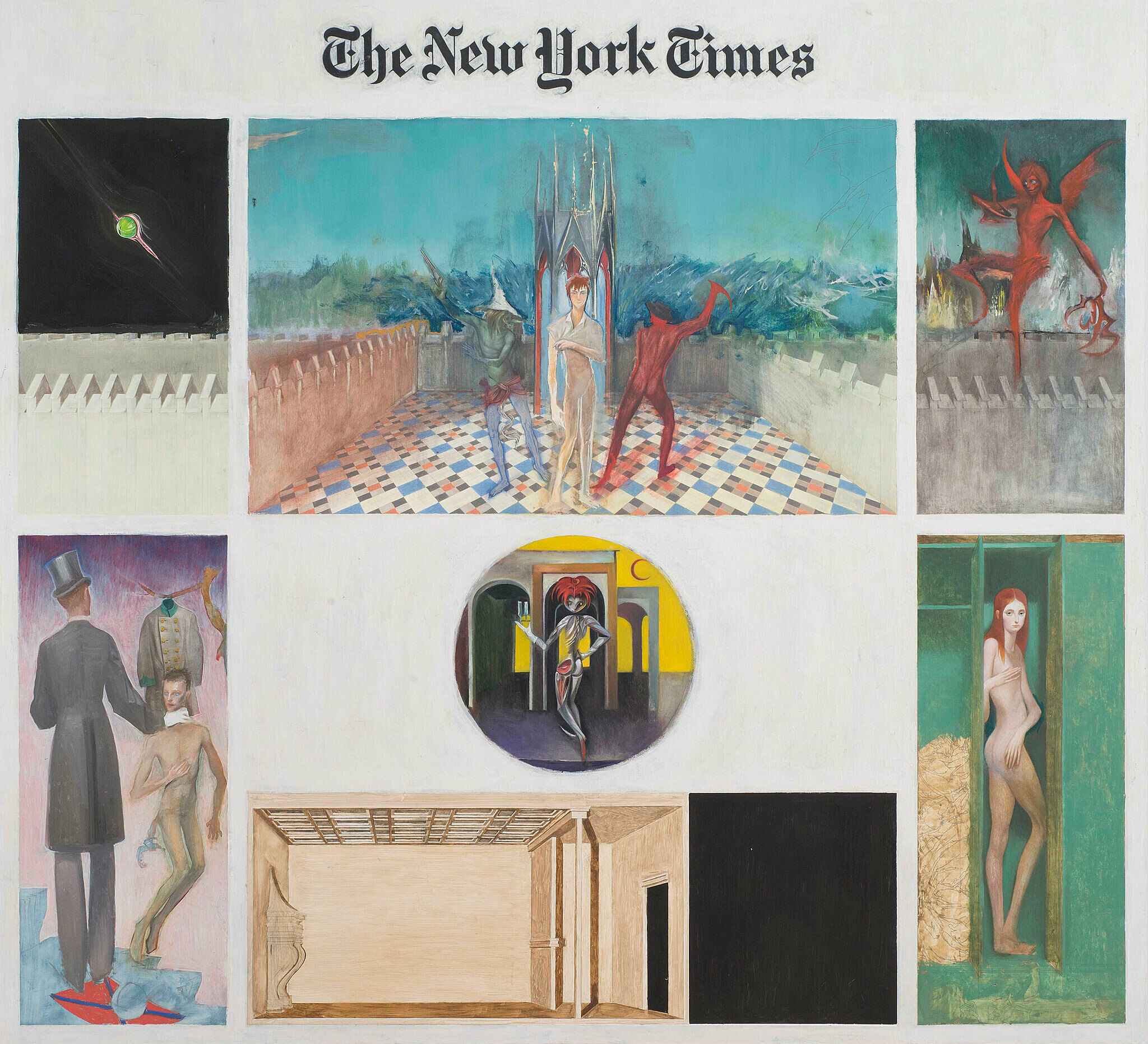
-
518
Dana Schutz
Audio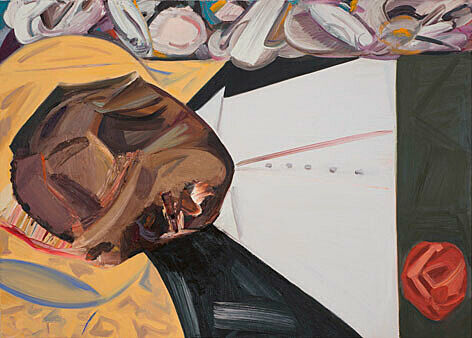
-
520
Frances Stark
Audio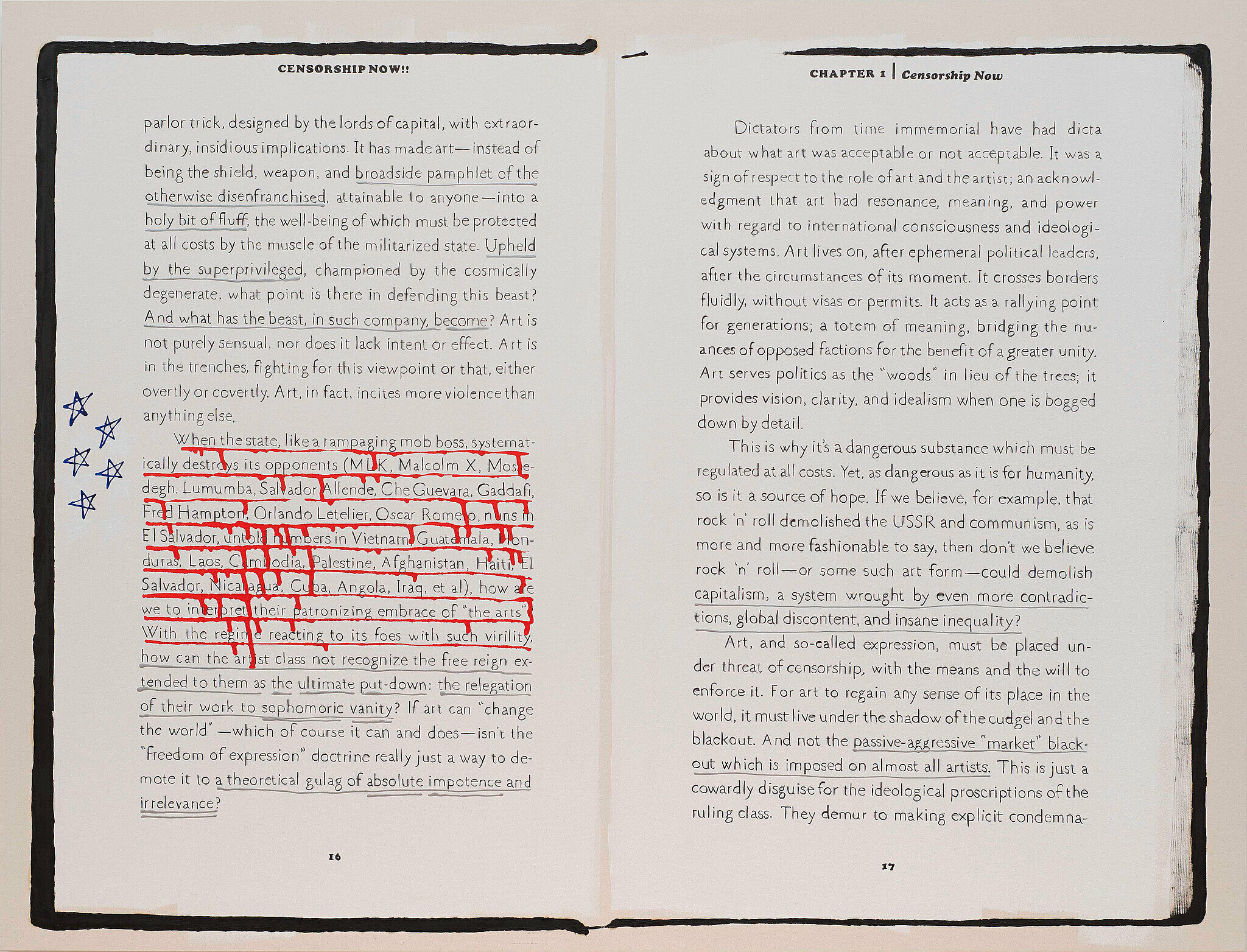
-
521
Lyle Ashton Harris
Audio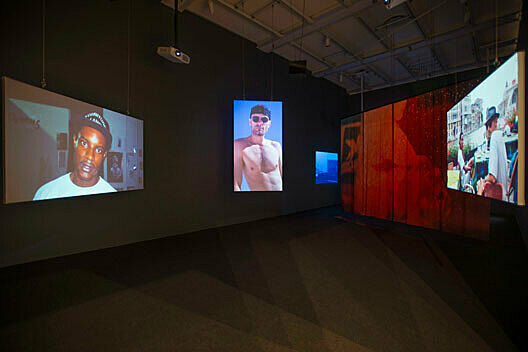
-
522
Aliza Nisenbaum
Audio, Kids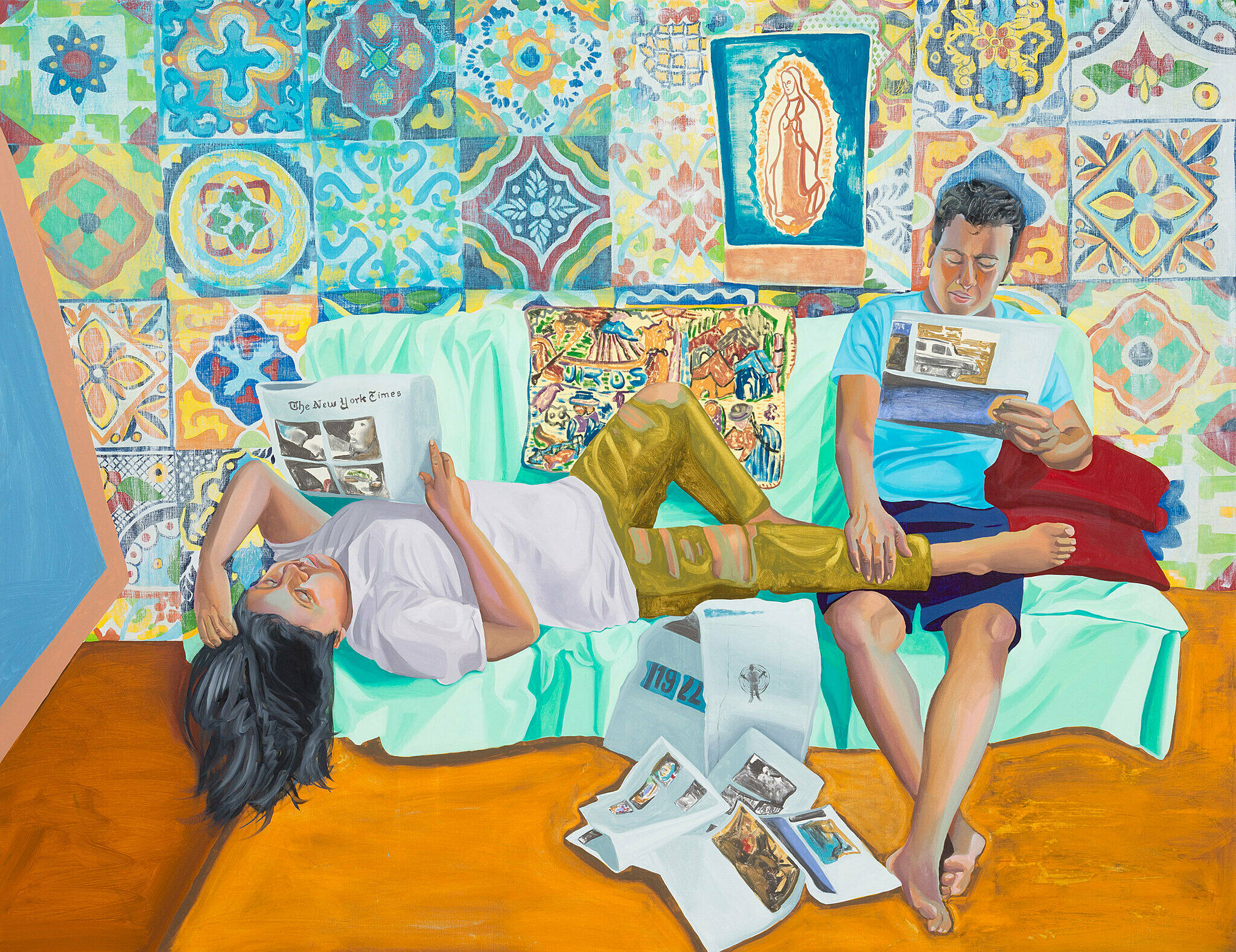
-
523
Carrie Moyer
Audio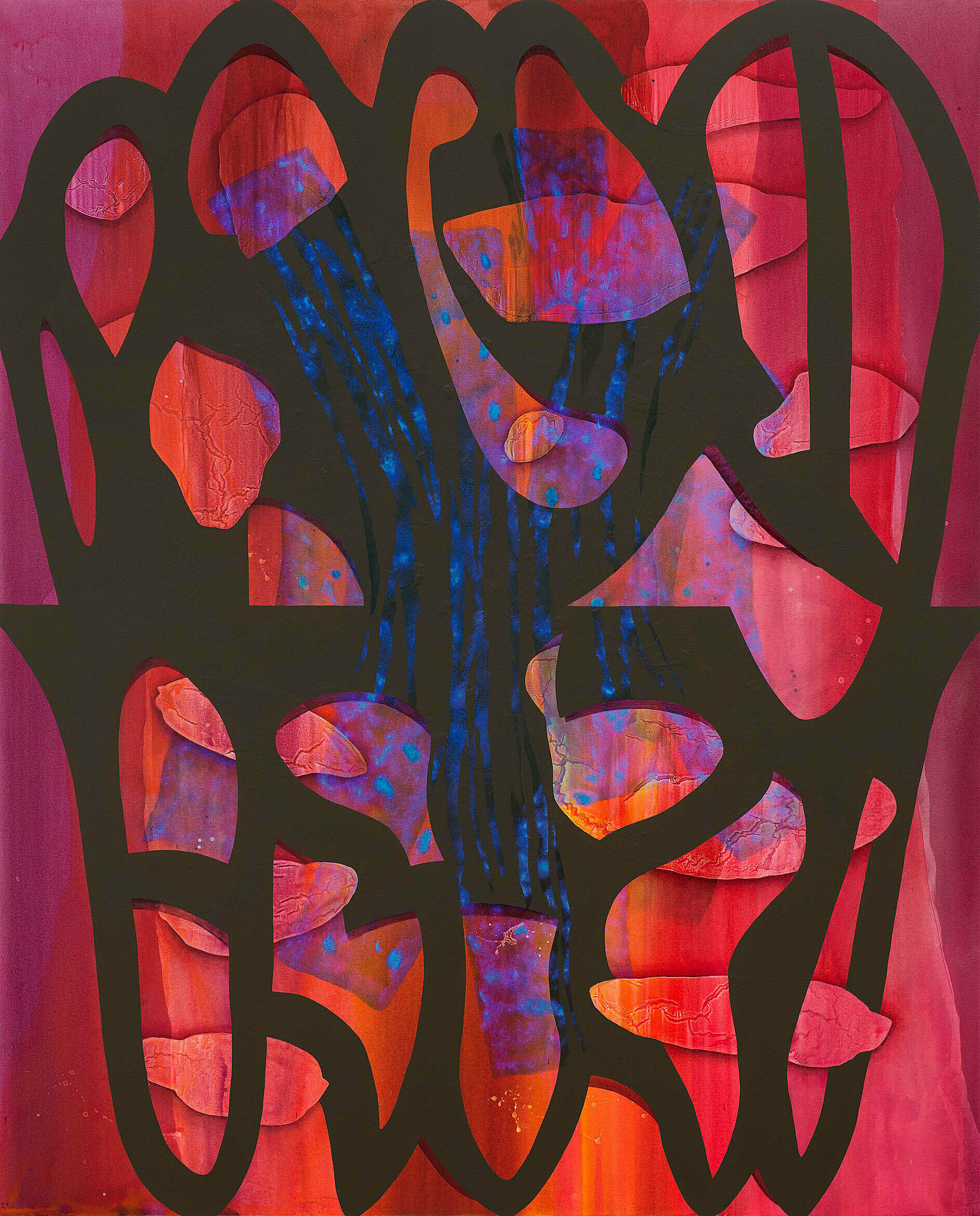
-
527
Raúl de Nieves
Audio, Kids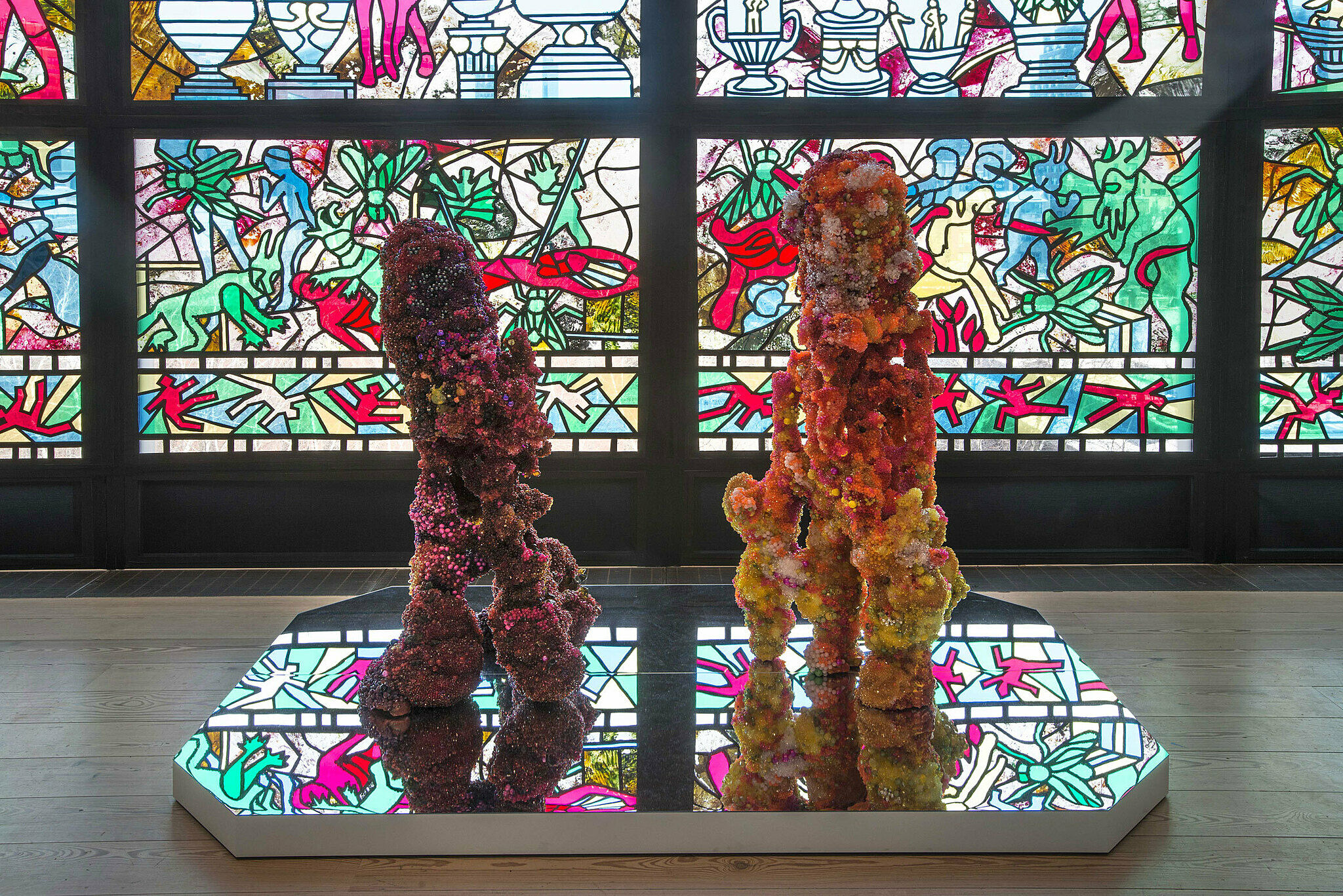
-
527-2
Raúl de Nieves
Audio
-
528
John Divola
Audio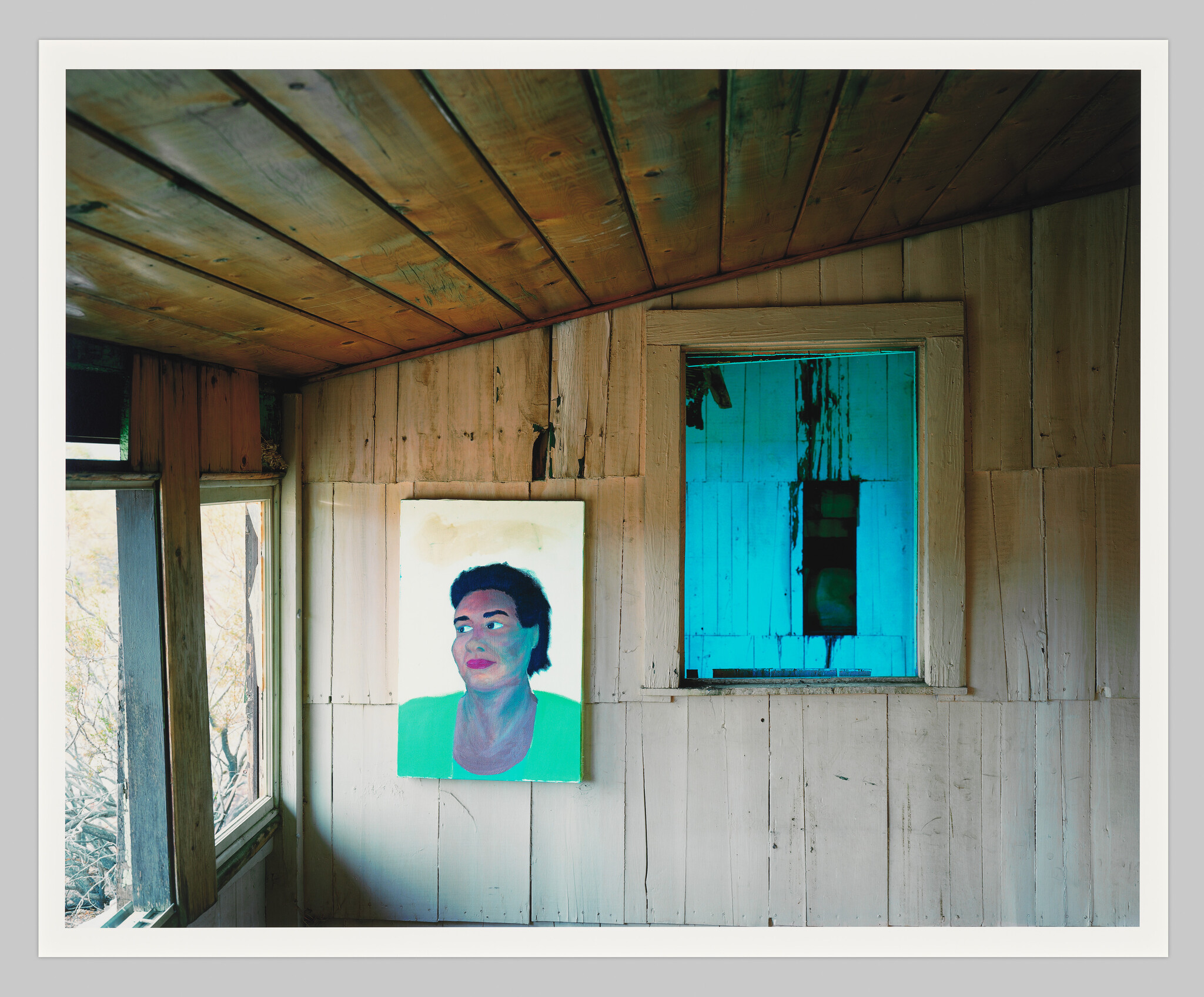
-
529
Irena Haiduk
Audio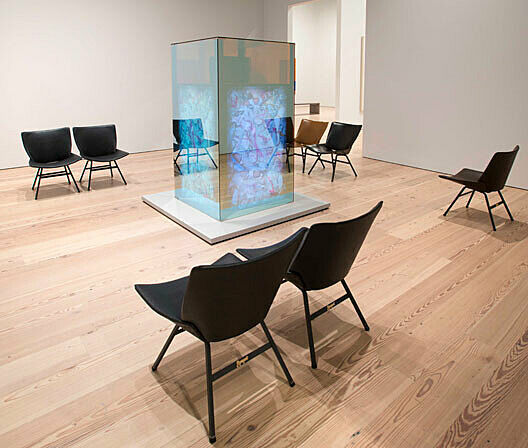
-
530
John Riepenhoff
Audio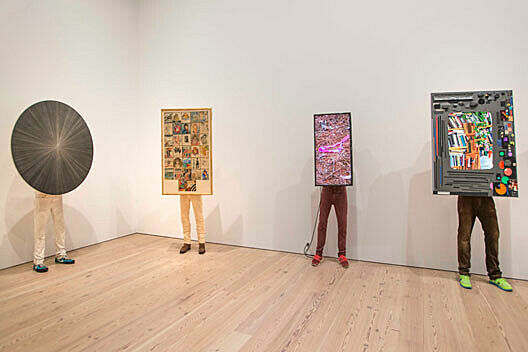
-
530-2
John Riepenhoff
Audio
-
531
Ulrike Müller
Audio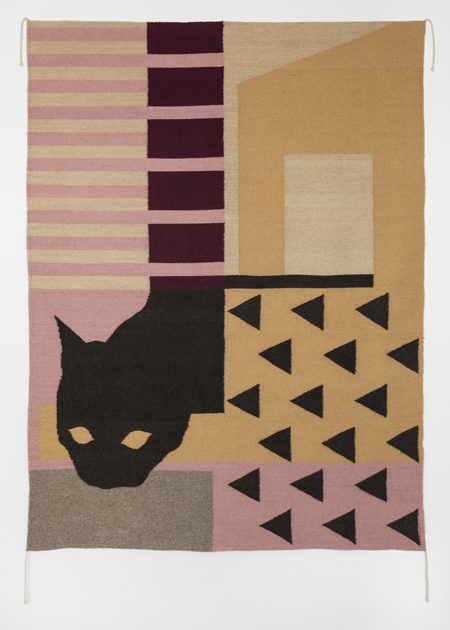
-
532
Chemi Rosado-Seijo
Audio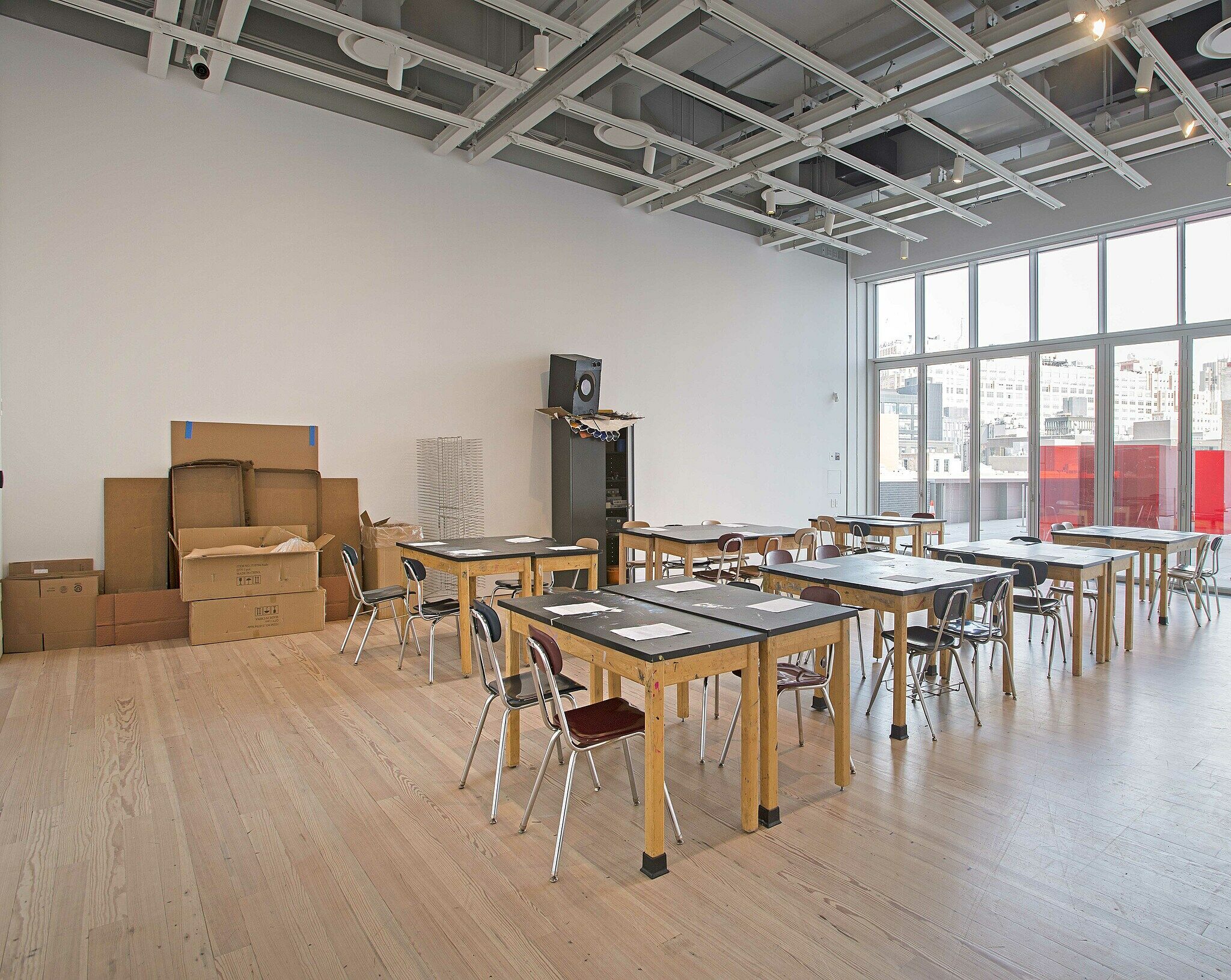
-
605
KAYA
Audio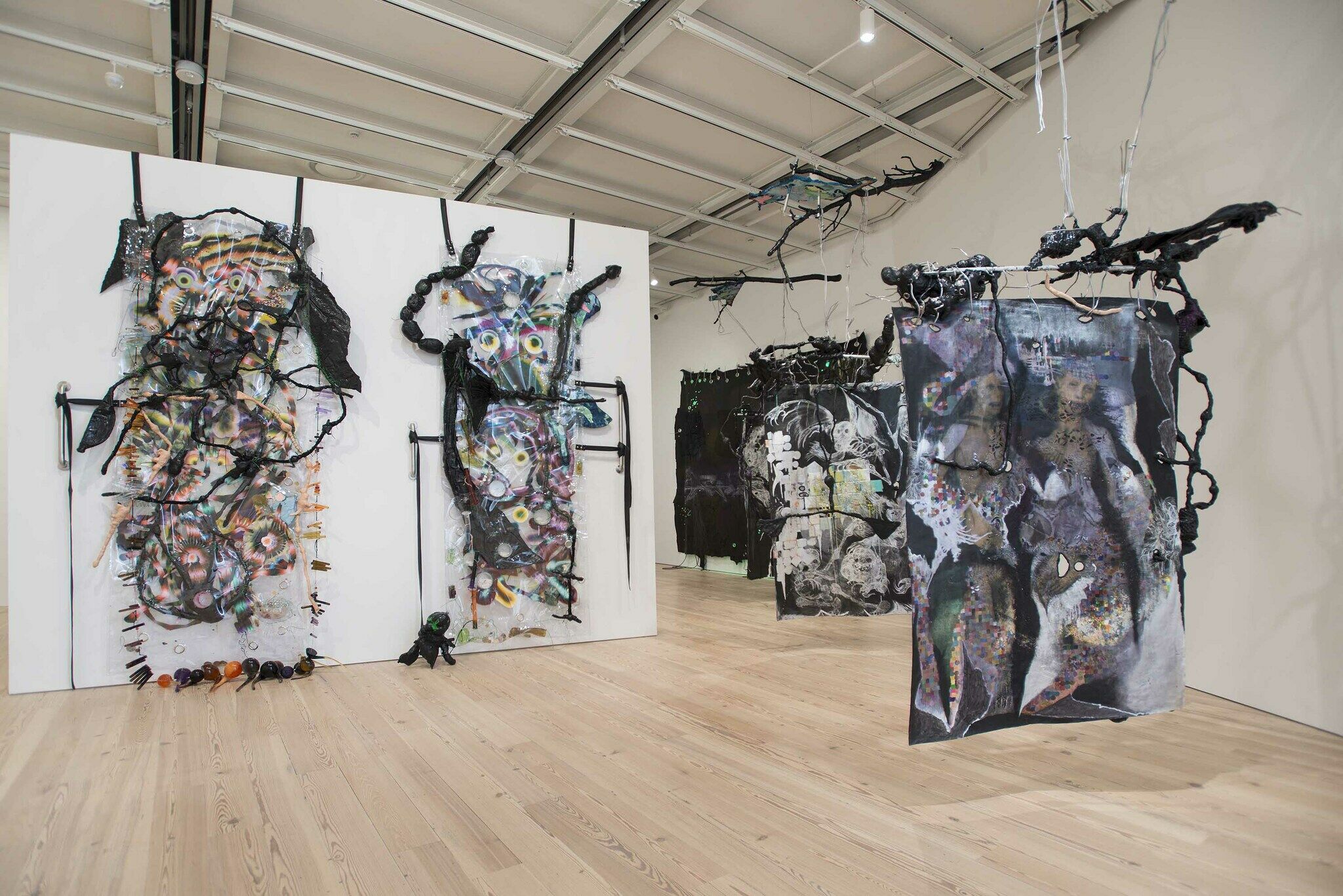
-
606
Celeste Dupuy-Spencer
Audio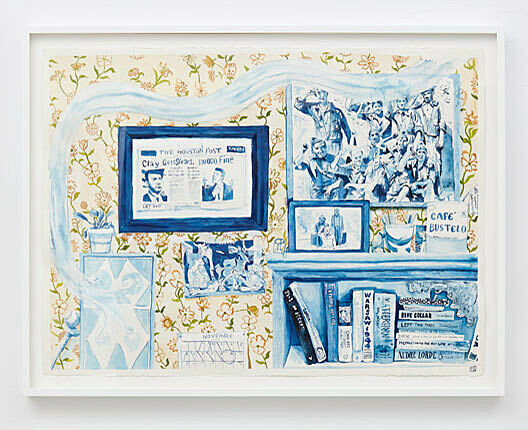
-
606-2
Celeste Dupuy-Spencer
Audio
-
608
An-My Lê
Audio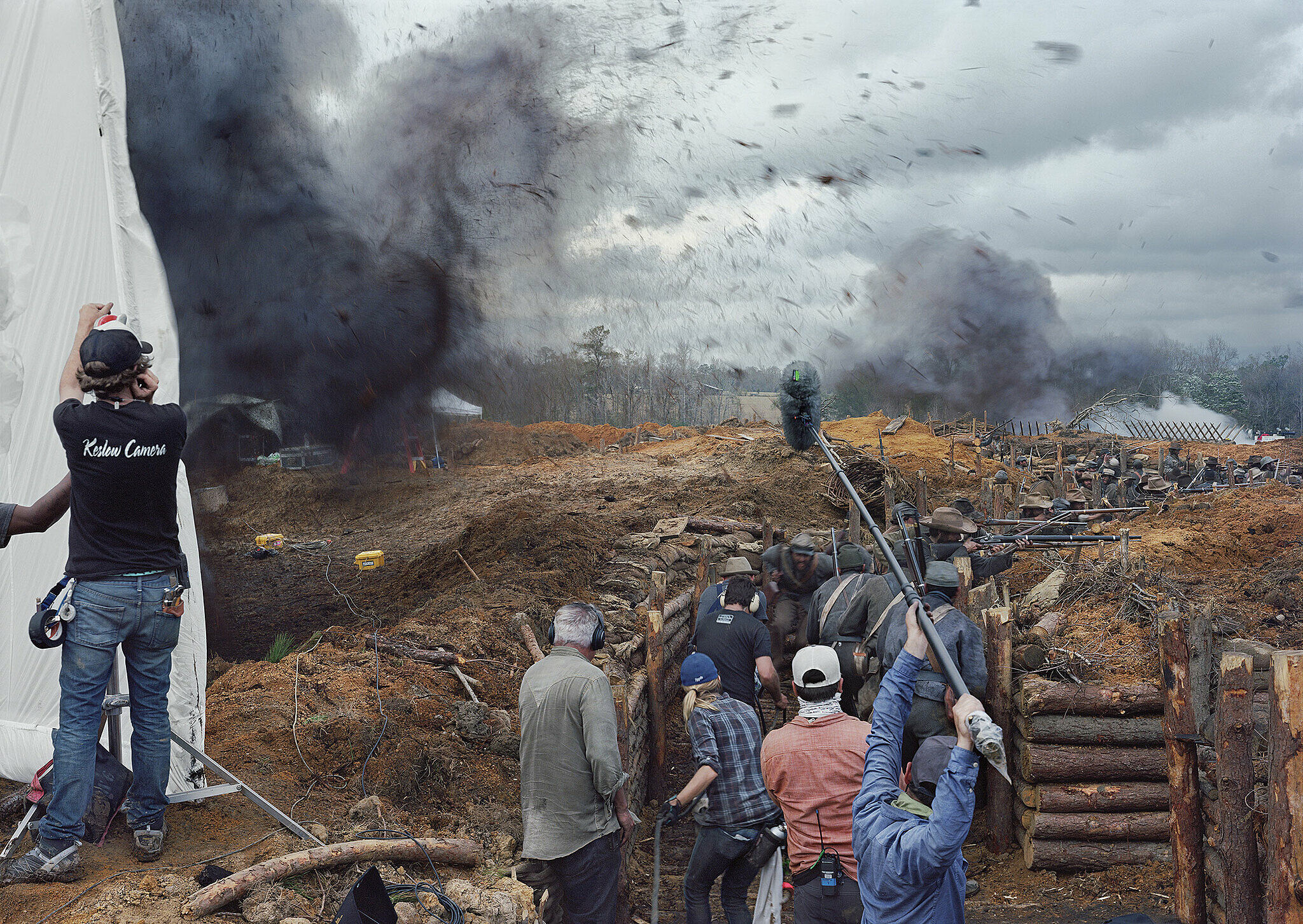
-
609
Porpentine Charity Heartscape
Audio
-
610
Jo Baer
Audio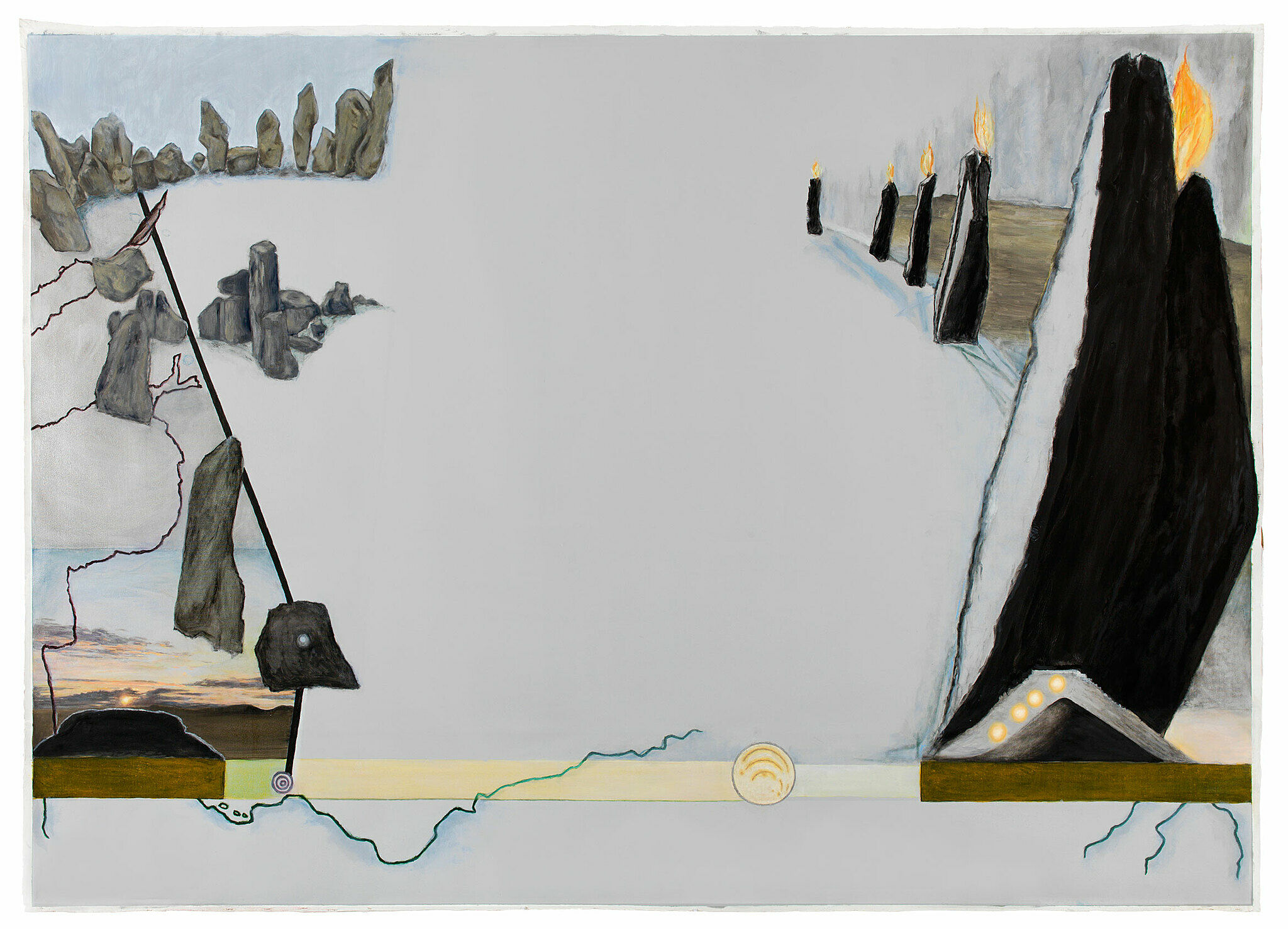
-
611
Deana Lawson
Audio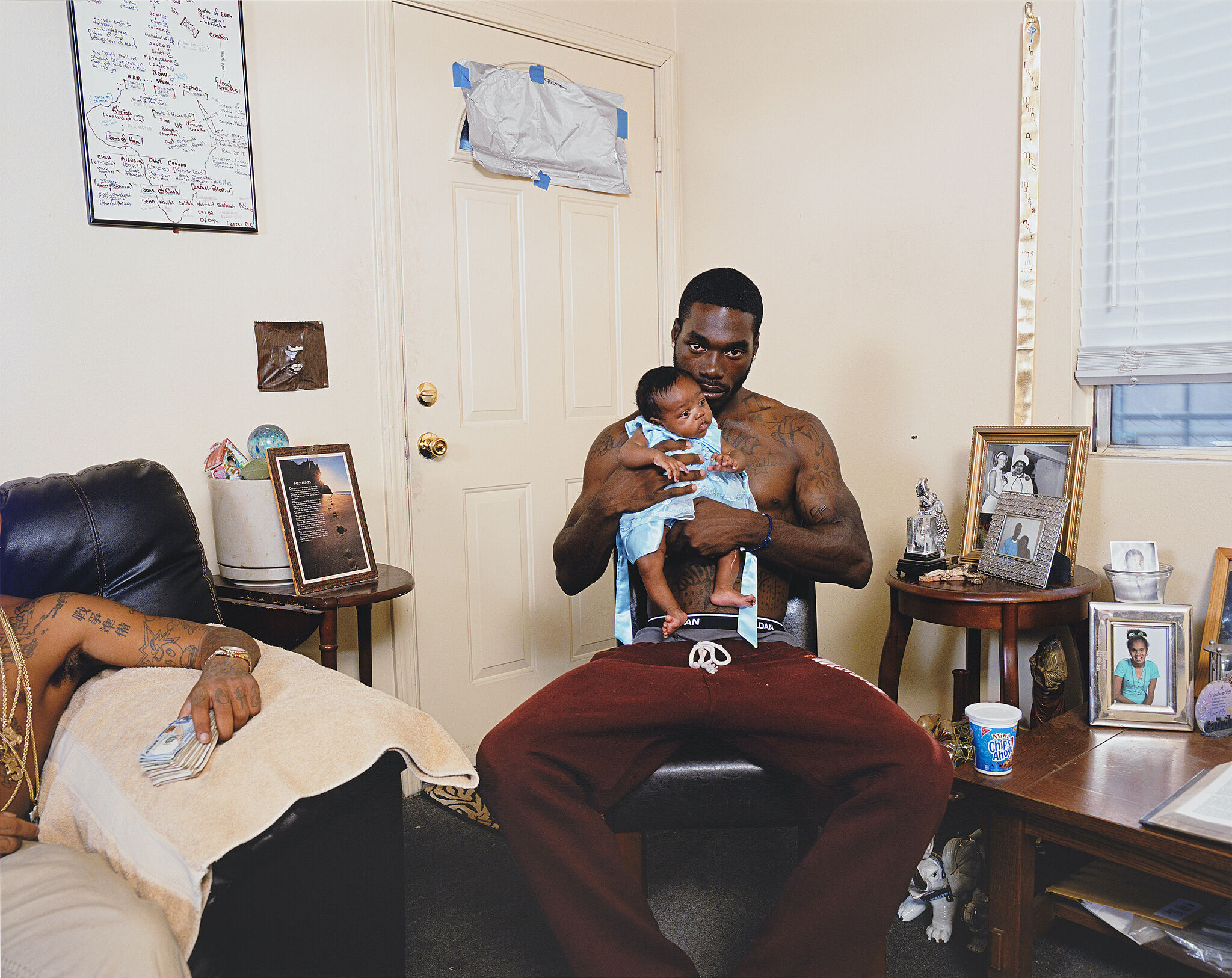
-
612
Jordan Wolfson
Audio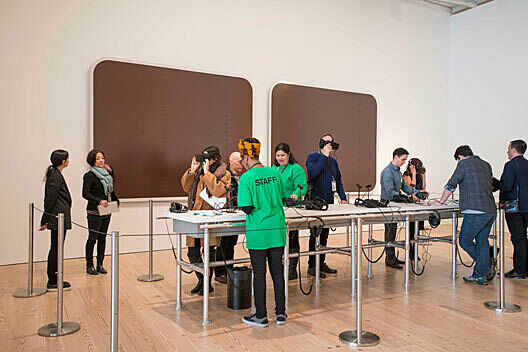
-
614
Park McArthur, Overview
Audio -
614-2
Verbal Description: Park McArthur, Overview
Audio -
616
Asad Raza
Audio, Kids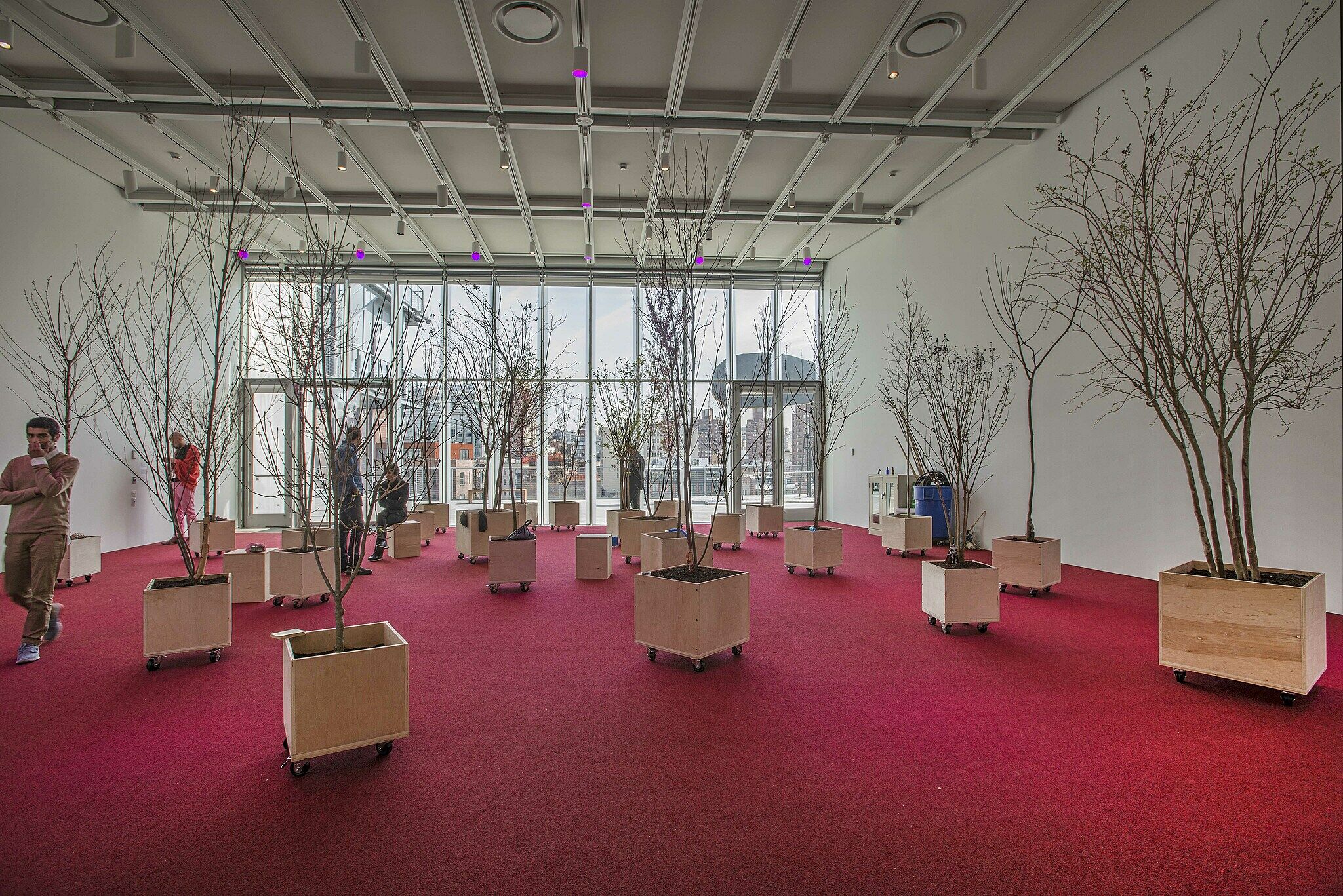
-
617
GCC
Audio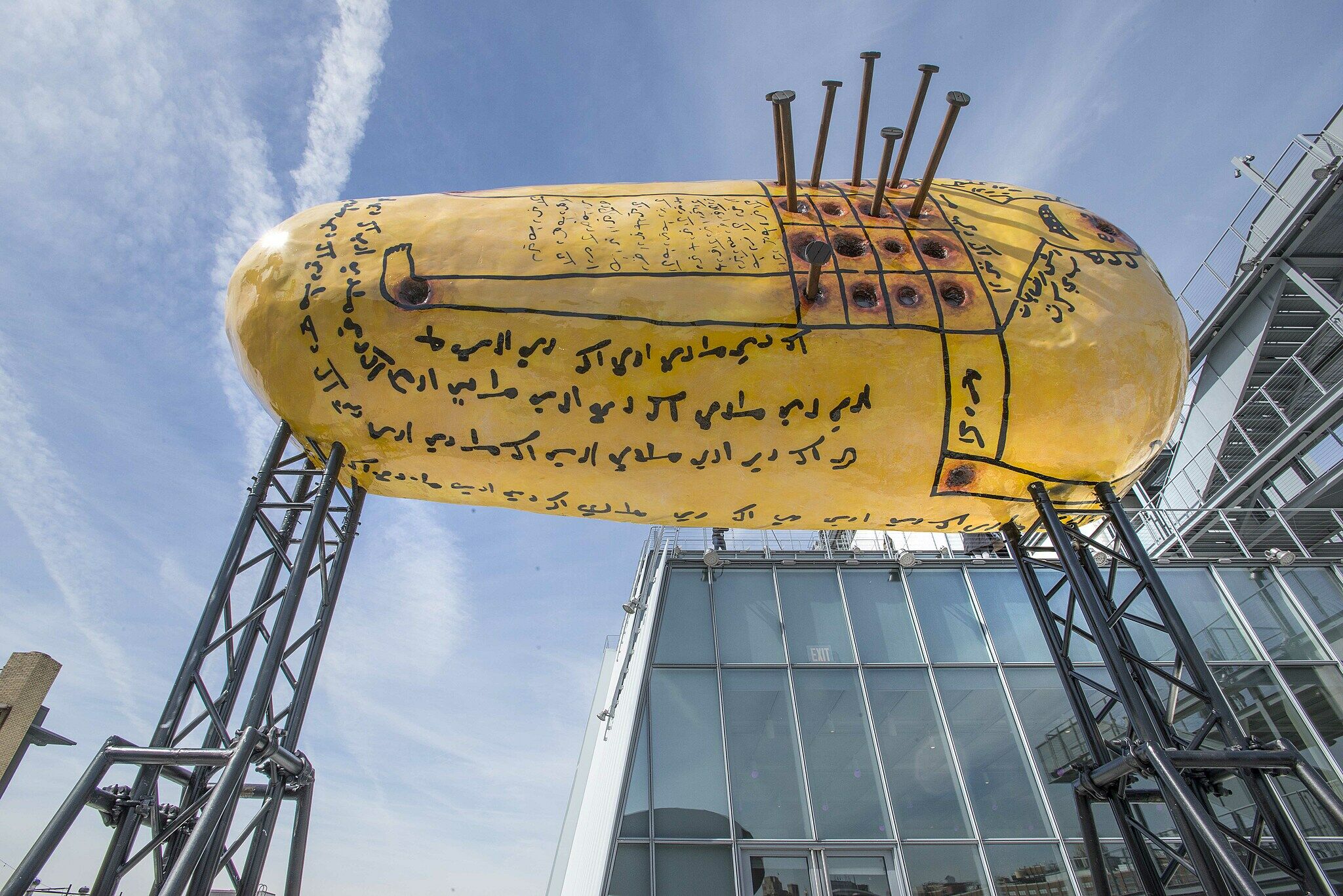
-
619
Puppies, Puppies
Audio, Kids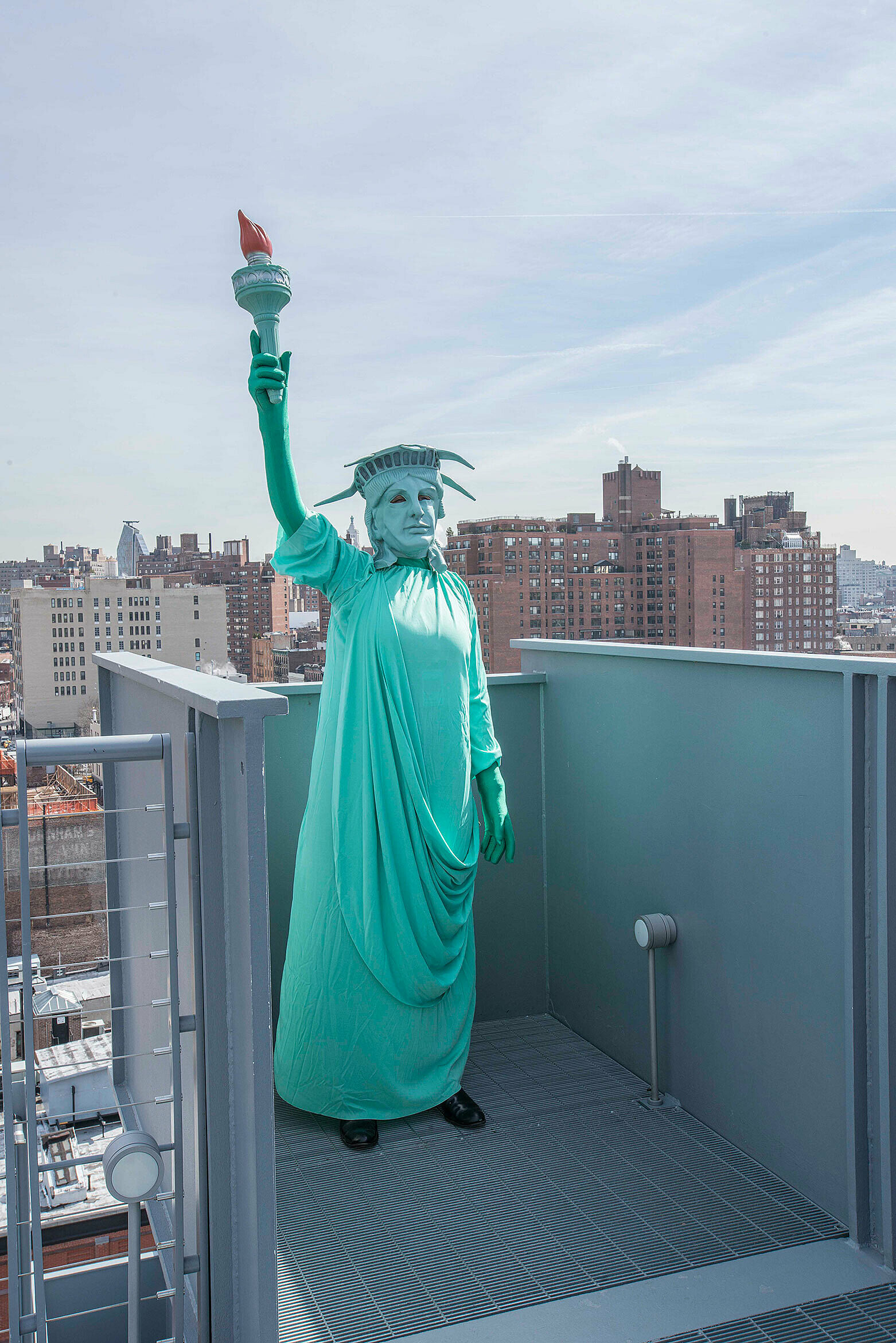
-
619-2
Puppies Puppies
Audio
-
500
Ajay Kurian
Audio -
101
Cauleen Smith
Kids
Christopher Lew: I’m Christopher Lew, and I’m the Nancy and Fred Poses Associate Curator, and also the co-curator of the 2017 Whitney Biennial.
Mia Locks: I’m Mia Locks. I’m an independent curator, and co-curator of the 2017 Whitney Biennial.
Christopher Lew: It’s been really exciting to be able to present the first Biennial at the Whitney in the new building.
There are a number of ideas that weave together in the exhibition, and among them is this idea of the formation of a self. What does it mean to be an individual? How do we identify oneself? But also, how do we each relate to others, and how do we come together, or what are the forces that bring us apart?
Mia Locks: This year’s Biennial comes at the heels of a particularly polarizing presidential election. It’s a time when I think the rhetoric and the issues and some of the feelings in the air right now feel particularly elevated and intense. The exhibition emerges out of, or at least alongside this societal context, and many of the works address concerns about racial injustice, or violence, economic inequities, or structural asymmetries. And sometimes these ideas are addressed very directly, and other times much more obliquely.
Narrator: The Biennial is on view on several floors of the Museum, inside and out. When you’re ready to leave please remember to return your guide where you picked it up in the Lobby.
Narrator: Welcome to the 2017 Whitney Biennial! A Biennial is an art exhibition that takes place every two years—usually! It’s actually been three years since our last Biennial, because we had to take some time off to move into this new building. But the purpose of the show is still the same. We want to share some of the most exciting new art being made today.
Take your time in the exhibition! There’s a lot here that you might think is cool or beautiful from the moment you see it. But many works are more about ideas. You’ll probably like those better the more you think about them. As you go through the show, you’ll also notice that the art expresses a really wide range of feeling—and that many artists are responding to what’s going on in the world around them.
This audio program contains a selection of audio messages chosen for families to listen to together. It focuses on works of art that will be especially interesting for kids between the ages of eight to twelve. The recorded messages are exactly the same as the one in the main program, we’ve just chosen the ones we think you’ll like best.
Oh! And if you hear octopus sounds, make sure you ask the person working in that area of the exhibition about them!
Thanks, and enjoy the exhibition!
Narrator: Harold Mendez layers different mediums, creating an atmosphere the artist says evokes “a thicket or a charred chain link fence.” As you look at the work, pairs of eyes emerge.
Harold Mendez: I think of the eyes as being we can think of it as sort of this consciousness. A set of eyes are sort of your memory following you, thinking about past mistakes or history or the way that you carry things through. But I mean I think the work is more about the political climate right now too. I think there's a lot of veiling, shrouding in terms of political sentiments.
If I think of veiling and shrouding of people being empowered by Trump being in office—xenophobia or bigotry or racism, that kind of thing, it's thinly veiled, but it's surfacing in a sense.
Harold Mendez (b.1977), These deeds must not be thought after these ways; so, it will make us mad, 2017. Tri-directional foil, fiberglass, synthetic rubber, toner and pigment. Collection of the artist. Photograph by Bill Orcutt
Dana Schutz: My name is Dana Schutz. I’m an artist who lives and works in Brooklyn, New York.
I’ve made a few paintings of people fighting in an elevator. It came from the Jay-Z and Solange fight—the famous fight in an elevator! It just struck me as something that was really a great subject for painting, because it’s a sort of suspended action and in a way kind of a history painting that can play out in a very ephemeral, finite space, a very short amount of time. And it also feels very public and private at the same time. I’m interested in that for a painting. I think when I’m making a painting I’m always trying to figure out how things fit within the box, or within the format of the painting.
With this painting, the figures are struggling with each other. They’re trying to fend off these giant bugs, and also small bugs. But they’re kind of climbing each other. I was thinking the people themselves start to feel like bugs. The large bugs—it’s something very nightmarish, or the outside is coming in.
Dana Schutz: My name is Dana Schutz. I’m an artist who lives and works in Brooklyn, New York.
I’ve made a few paintings of people fighting in an elevator. It came from the Jay-Z and Solange fight—the famous fight in an elevator! It just struck me as something that was really a great subject for painting, because it’s a sort of suspended action and in a way kind of a history painting that can play out in a very ephemeral, finite space, a very short amount of time. And it also feels very public and private at the same time. I’m interested in that for a painting. I think when I’m making a painting I’m always trying to figure out how things fit within the box, or within the format of the painting.
With this painting, the figures are struggling with each other. They’re trying to fend off these giant bugs, and also small bugs. But they’re kind of climbing each other. I was thinking the people themselves start to feel like bugs. The large bugs—it’s something very nightmarish, or the outside is coming in.
Dana Schutz, Elevator, 2017. Oil on canvas, 144 x 180 in. (365.8 x 457.2 cm). Collection of the artist; courtesy Petzel Gallery, New York and Contemporary Fine Arts, Berlin. Photograph by Bill Orcutt
Cauleen Smith: My name is Cauleen Smith. I'm a filmmaker and visual artist.
Narrator: Smith sketched the texts on the front of these banners in 2015.
Cauleen Smith: I think this country was on its fifth or sixth videotaped police shooting and I was just sort of incredibly disgusted and angry and fatigued by the whole culture of this country.
The phrases are either things like "no wonder I go under" or "you don't hear me though." There's always either an accusation or a pointing at self or other, and, to me, the "I" or the "you" or the "me" can shift and does shift depending on who you are when you're reading it.
On the back of each banner there's a system of symbols and a lot of them repeat. People ask me in particular about why pencils and the pencil, the microphone and the camera aperture are all to me these instruments of expression. They're apertures for a voice, for initiative, for articulation, and so the pencil becomes this very flexible tool that can even be a weapon, can be kindling for a fire. It can do a lot of different things, not all of them affirmative, or affirming.
Narrator: Smith plans to use these banners in a film. A gospel choir will carry them down Martin Luther King Boulevard in Chicago, singing an original composition that uses text from the banners. If you’d like to hear Smith talk about processions, collective action, and the role of art, please tap to continue.
Cauleen Smith, In the Wake, 2017. Satin, poly-satin, quilted pleather, upholstery, wool felt, wool velvet, indigo-dyed silk-rayon velvet, indigo-dyed silk satin, embroidery floss, metallic thread, acrylic fabric paint, acrylic hair beads, acrylic barrettes, satin cord, polyester fringe, poly-ilk- tassels, plastic-coated paper, and sequins. Sixteen components, 60 × 48 in. (152.4 × 121.9 cm) each. Collection of the artist; courtesy Corbett vs. Dempsey, Chicago, and Kate Werble Gallery, New York. Sewed by: Keeley Haftner, Elgee King, Jinn Bronwen Lee, Kate S. Lee, Elizabeth Van Loan, April Martin, Nicole Mauser, Magritte Emanuel Nankin, Carolina Poveda, Darling Shear, Danielle Wordelman
Cauleen Smith: There is something really, really personal about processions. When you walk down the street and are making a public declaration, it draws individuals to you who want to know or are concerned or are engaged or curious about what you're expressing or what you're demonstrating. That's kind of different than really large political protests or agitations where there's sort of like a very forceful push outwards.
I actually think that art might be the only thing at this point. Not protesting, and not politics, but art may be the only thing that could actually create conversation and dialogue or reconciliation or mediation. Because politics has just completely failed us. What I hope my work is capable of is for individuals, it's for just any one person. If there's just enough of an opening in them that they think about themselves or the world or just think, and not even think differently, but just think for a moment. Just contemplate. Just open up a little bit, then I've done my job. Whereas politics is really about the martialing and controlling and deployment of power, and in order to have that power you have to have a lot of people in agreement functioning as a force. To me, that's the opposite of what art does.
Cauleen Smith, In the Wake, 2017. Satin, poly-satin, quilted pleather, upholstery, wool felt, wool velvet, indigo-dyed silk-rayon velvet, indigo-dyed silk satin, embroidery floss, metallic thread, acrylic fabric paint, acrylic hair beads, acrylic barrettes, satin cord, polyester fringe, poly-ilk- tassels, plastic-coated paper, and sequins. Sixteen components, 60 × 48 in. (152.4 × 121.9 cm) each. Collection of the artist; courtesy Corbett vs. Dempsey, Chicago, and Kate Werble Gallery, New York. Sewed by: Keeley Haftner, Elgee King, Jinn Bronwen Lee, Kate S. Lee, Elizabeth Van Loan, April Martin, Nicole Mauser, Magritte Emanuel Nankin, Carolina Poveda, Darling Shear, Danielle Wordelman
Jon Kessler: My name is Jon Kessler. These are two large, mechanical sculptures that have video components, live video components. They're based on research I've been doing the last couple years about climate change.
One of them is called Exodus, and I started making that actually during the Syrian refugee crisis. And I was already thinking about the enormous amount of refugees that are going to be exiting from low-lying countries—the Solomon Islands, the Seychelles, Bangladesh. I mean, it's going to make any of the refugee crises we've seen in the last three years look like nothing.
In this piece what you've got is a live camera trained on figurines that I've gotten all on Ebay. But they're all figures with bags, and backpacks, and carrying their belongings. And so it's this endless march. And then what happens with the video component, because it's live video and because the camera is facing the monitor, it's a video feedback system so that it's actually complicating the image and it duplicates it. So it has, in a sense, three or four rows of figures making it look like even more of a mass exodus.
Jon Kessler, Exodus, 2016. Trunk, wood, aluminum, rubber wheel, found figurines, iPhone with selfie stick, LCD screen and motor, 81 x 47 x 66 in. (205.7 x 119.4 x 167.6 cm). Collection of the artist; courtesy Salon 94, New York. Photograph by Bill Orcutt
Jon Kessler: In Evolution these are well-to-do people who can mitigate the problem by building sea walls. Here there's a kind of a situation where they're surrounded by water. Water's up to their waist. The water is actually being created by a Bridget Riley painting that's being filmed live on video. And there's a certain amount of natural selection which has happened, and they've adapted to their environment. But they're also kind of oblivious to their environment. They're wearing VR goggles and they're not even really communicating with themselves or even aware.
Narrator: The woman in the sculpture is holding a model of a building designed by the late architect Zaha Hadid. It’s a luxury high rise that’s being built on the waterfront in Miami.
Jon Kessler: There's a weird situation where the countries that are the most responsible for the climate change are the ones who are building right on the coastlines and the ones who are sort of had nothing to blame, they have created no carbon emissions at all, they're the ones who are actually running from—so there's an incredible inequity which is present in the world right now. That piece is in some ways portraying that or highlighting that inequity.
Jon Kessler, Exodus, 2016. Trunk, wood, aluminum, rubber wheel, found figurines, iPhone with selfie stick, LCD screen and motor, 81 x 47 x 66 in. (205.7 x 119.4 x 167.6 cm). Collection of the artist; courtesy Salon 94, New York. Photograph by Bill Orcutt
Imani Jacqueline Brown: Occupy Museums is a collective of artists and activists that emerged directly from the Occupy Wall Street movement; most of our members met in Zuccotti Park in 2011. The common goal of Occupy Museums is to bring the critique of wealth and inequality directly to the cultural sphere where finance and aesthetics currently collude.
In one previous example of our work, we supported the struggle of Teamsters Union Local 814 who were fighting against a lockout by their employer, Sotheby’s. The auction house wanted to cut their pay and union rights while selling paintings for tens of millions of dollars to the tune of record profits.
This reflects the anti-worker mentality seen in corporate America generally and it shouldn’t be accepted in the arts or any industry. Much of our work has taken the form of direct actions on the streets and actions in museums like MoMA designed to pause business as usual to call out specific injustices perpetuated by said museums. But in this project we have worked closely with the Whitney Museum. Our goal is to create a new way of looking at art objects. We want people to see not only the colors, forms, and meanings intended by the artists, but also the often withering economic realities that frame the practice of art in America today.
Debtfair is based around a single question we asked of artists and the cultural communities at large: "how does your economic reality affect your art?" What we have found is that personal debt—from student loans to credit cards to mortgages—plays a major role in the lives artists can lead and, ultimately, in what their work looks like. In bringing this question to a luxury art museum like the Whitney, Debtfair connects the boom of the art market with the boom of debt as linked realities.
By asking artists to speak openly about their economic realities we hope to open a conversation that is currently taboo, demystify the ways in which our debts are connected, and produce a new lens through which we can see how art is connected to the economic conditions in which it is produced.
And, of course, economic conditions cannot be separated from social and political realities just as personal debts cannot be separated from the collective debts that we as a society hold—national debt, colonial debt, debt to the original inhabitants of this land, and debt to the enslaved Africans who built this country.
Occupy Museums (founded 2011), Debtfair, 2017. Thirty artworks and interactive website, dimensions variable. Courtesy of the artists. Photograph by Bill Orcutt
Arthur Polendo: The installation you are now looking at represents a community of artists who are in debt. The members of our group are also part of this community. We developed a visual language that is intended to help us see art differently and for you, the viewer, to see yourself and your life in this work. We invite you to participate in building out our conceptual map of the relationship between debt and art in America.
Looking to the right, you will notice the Large Projection that displays the work of all of the artists who have joined Debtfair. So far there are over 500 individuals, plus a few collectives, and this number will grow during the exhibition and beyond. If you are an artist and wish to join the network, your work will be displayed here as well. Each image shows a single artwork by an artist and its title along with a short narrative about their economic reality. Under the large projection there are 3 monitors, one of which is wheelchair accessible. Here, you can interact with the project by creating a profile in the Debtfair.org system and browsing through more artist profiles.
Looking to the left, you will see a large wall, 30 feet in length, stretching floor to ceiling. The top text on the wall is a quotation by Larry Fink, the CEO of Blackrock, the world’s largest asset management corporation, also known as the world’s largest shadow bank. Blackrock is the single largest financial institution in the world, with shares in roughly 40% of all publicly traded companies in the U.S., the largest single shareholder in one out of every five U.S. corporations, including all major banks, and one of the largest shareholders in companies around the world.
With around $5 trillion in assets under management and around $15 trillion in assets under advisement, BlackRock is a global economic force roughly equal to entire U.S. economy. In addition, BlackRock is largely unregulated and is incredibly powerful; it is understandable why Donald Trump would want Fink on his Economic Advisory team. Here, we have made visible the two degrees of separation between individual artists and this formidable company which profits from their debt.
Farther down on the left side, there is a key to the large diagrammatic lines that stretch all the way across the wall. These jagged, hard-edged, yet colorful lines reference actual stock market graphs tracking debt profits and art market activity. Look to the key for specific relationships on how the graph lines function. You can think of these as two of the fault lines causing the earthquakes and general instability and precarity that artists and most Americans face as the elite financial sphere grows in influence.
Occupy Museums (founded 2011), Debtfair, 2017. Thirty artworks and interactive website, dimensions variable. Courtesy of the artists. Photograph by Bill Orcutt
Tal Beery: One of the early decisions in designing Debtfair was that we would show the work not on the walls but inside the walls. For us, this represents a hidden yet pervasive reality that we seek to uncover. Within the cutout shape there are artworks of thirty artists who joined Debtfair. The works are framed between the exposed wall studs. Above and below the artworks are gray boards which serve as placeholders for artworks and symbolize a continuation of so many more unnamed artists who are affected by debt, but whose actual artworks are not present.
In creating this project, our group had to select thirty artists from more than 500 who joined the project, so we acted more or less like curators. However, while curators usually select artworks based on content or quality, we selected these artists based on information relating to the kinds of debts they hold. You will notice that behind the artworks are custom wallpapers of different colors and patterns. These patterns demarcate the different “bundles” that we are exhibiting. The word bundle is not used by accident—it is meant to echo the bundles of debt that are traded by banks and investment firms.
If you look to the left of the wall, the pattern behind the artworks contains small images of the Puerto Rican flag, Banco Popular, and First Bank of Puerto Rico. The artists in this section each have a direct relationship to these financial institutions and to the Puerto Rican debt crisis. In 2015, the U.S. government and large hedge funds signed a deal called Promesa with Puerto Rico that bound the territory with heavy austerity measures. Puerto Rico is effectively a modern-day colony of the United States; its residents do not have full citizenship, its resources have been plundered, and its economy is designed to fill the coffers of U.S. corporations. The ten artists on the left side of the wall have been affected by this situation.
Occupy Museums (founded 2011), Debtfair, 2017. Thirty artworks and interactive website, dimensions variable. Courtesy of the artists. Photograph by Bill Orcutt
Kenneth Pietrobono: The central pattern depicts Navient, a U.S. corporation whose business deals in the servicing and collection of student loans. In 2014, student debt surpassed credit card debt. American students hold more than $1 trillion in student debt. Of the ten most expensive schools in the United States, seven of them are art schools, and graduates typically earn less than any other profession.
Many people believe—particularly based on the high prices garnered by works of modern and contemporary art by trending artists—that artists are people of privilege. We have found in Debtfair, however, that artists are a broad and diverse community that represent all kinds of financial realities. High costs of education, high levels of debt, high rent and cost of living, and high interest rates, simply make these realities much more difficult, especially for people who do not come from prosperous backgrounds.
The artworks on the far right side are set over the patterned design of JP Morgan Chase Bank. These artists have credit card debt owed to Chase and in some cases they are in default. Many artists get into credit card debt as a way to purchase art supplies, fill gaps between paychecks or art sales, and to cover emergencies. Recent studies have reported that most Americans have less than $1,000 to their names, which leads to an increased reliance on credit cards. Sometimes artists go into debt in moments of success, taking a risk to invest in expensive materials when they have a show. We believe that museums and art centers must pay artists and support project budgets to avoid these credit card debt traps.
Occupy Museums (founded 2011), Debtfair, 2017. Thirty artworks and interactive website, dimensions variable. Courtesy of the artists. Photograph by Bill Orcutt
Noah Fischer: The first show at the Whitney Museum’s new building was called America is Hard to See. With Debtfair, we are positing that the enormity of the debt crisis in America is difficult to see all at once. It is hard to imagine how we as individuals relate to large, global forces that shape world economic growth and collapse.
With Debtfair, we are proposing a new way to see and understand American art and the many arts communities. However, the end point of this project is not what you see on the wall. We are committed to organizing artists around debt education and resistance. Many groups across the nation are working on this issue; in the last few years there have been cases of some odious debts being forgiven such as those to Corinthian college, a predatory for-profit college that closed leaving indebted students without accredited degrees.
Now, with a president who personally created a fake university that was itself a debt trap, we may be in for hard times in the struggle for economic equity as far as debt relief is concerned. Yet people are starting to wake up to the fact that the future, hopes, and dreams of entire generations are being transformed into enormous profits for Wall Street.
We are finally coming to see, clearly, that this system is undemocractically maintained by giant companies like Blackrock. And yet, these corporations are nothing without our money to gamble with. We retain incredible power if we can only come together in recognition that all of our debts are connected and that we can leverage our power as debtors to demand debt forgiveness.
We hope you enjoyed looking at Debtfair. We ask you to consider joining in order to help build more information about how the debt industry affects art and culture.
Debt resistance now!
Occupy Museums (founded 2011), Debtfair, 2017. Thirty artworks and interactive website, dimensions variable. Courtesy of the artists. Photograph by Bill Orcutt
Pope.L: Well I think that the more obvious components of Claim are the walls, the paint, the baloney, the text that explains the process and logic behind the work, an open bottle of Mad Dog 20/20, these wooden gutters where the drippings from the baloney can collect. Basically those are the physical components of the work. But the immaterial components would be people's expectations or their fears and anxiety that surround counting people, enumerating people. I think that's a material as well.
Narrator: Your player will pause now, so you can read the text Pope.L refers to, if you’d like. In it, he makes a series of deliberately confusing and contradictory claims about counting Jewish people in New York.
Pope.L aka William Pope.L, Claim, 2017. Acrylic paint, graphite pencil, pushpins, wood, framed document, fortified wine, and bologna with black-and-white photocopy portraits, 15 × 16 3/4 × 16 3/4 ft. (4.6 × 5.1 × 5.1 m). Collection of the artist; courtesy Mitchell-Innes & Nash, New York. Photograph Bill Orcutt
Pope.L: The anxiety-material that's a part of the work has to do with our shared history as Americans. I think we organize ourselves in how different we are from each other. Some ethnicities and some individuals are deemed less valuable than others or more questionable or more suspicious. This piece sort of pokes at that and gets at that in a way.
The baloney in the piece is not about Jewish dietary issues. I've been making these works—initially, the first four, five, six versions of this work were to do with black bodies, but of course Jews and blacks share a lot of history in terms of their stratification, being made of value within our country. I think that the crossover in the piece between these two groups allows me in way to work between two ghettos at one time.
The work is sort of set up to balance on the head of this pin, and the pin is probably irony. On paper, I'm making a claim about X number of Jewish people who live in a certain place. Then when I go and take pictures of those people, I don't. I take pictures of everybody else and that's another way of counting. And I think that's important, because I think when people count with maliciousness or they count with evil intent or they count for the sake of power, that excess, that desire simply to control or destroy or prevail, that has nothing to do with the specifics of counting at all. It has to do with what you're counting. The meat, if you will.
Pope.L aka William Pope.L, Claim, 2017. Acrylic paint, graphite pencil, pushpins, wood, framed document, fortified wine, and bologna with black-and-white photocopy portraits, 15 × 16 3/4 × 16 3/4 ft. (4.6 × 5.1 × 5.1 m). Collection of the artist; courtesy Mitchell-Innes & Nash, New York. Photograph Bill Orcutt
Narrator: Torey Thornton takes a wide-ranging approach to the medium of painting. Some of his works are paint on canvas, straightforwardly recognizable as paintings. But he also produces more sculptural forms—often incorporating readymade objects—that stretch the definition of what a painting can be. Here, he began by having a mattress fabricated so that he could paint on it. Torey Thornton.
Torey Thornton: When I was talking to the makers of the mattress, they were like do you want it to be more shallow, what are you going to do to it? And a lot of times I don’t even want to talk to people about that stuff, because they get too involved. The point of it is almost like a readymade object. I was really interested in it being a literal mattress and not this illustration or fabricated thing. I wanted it to be a utilitarian surface. I didn’t think about it so hard, but there is a relationship obviously to intimacy and the bed. So there is a play with that, which I didn’t think about until now. I was just attracted to how it looked—like an insane asylum room with the quilting and padding.
The cross is also the T, which is also the initial for both of my names, so I saw it as this strange, slightly comical signature. Just thinking about the vanity of making art, and the idea of using the letter of your name as an actual symbol and trying to own that.
Torey Thornton, What Is Sexuality, Is The Scale Infinite Similar To A Line, 2017. Acrylic paint, metallic paint, copper wire, galvanized steel wire, aluminum military dog tags, and plexiglass on cotton and foam with wood frame, 111 × 96 × 11 in. (281.9 × 243.8 × 27.9 cm). Collection of the artist; courtesy ESSEX STREET, New York; Moran Bondaroff, Los Angeles; Stuart Shave/Modern Art, London. Photograph Bill Orcutt
Matt Browning: My name is Matt Browning. I'm an artist based in Seattle, Washington.
In the show are a number of carvings that hang on the wall. These are carvings that are each produced from a single block of wood, and they are cut in such a way and carved in such a way that they then unfold into a bounded grid of interlocking chain links that is then hung upon the wall.
The work itself began as a challenge, whether or not I could take a piece of wood or any material really, and, through a series of selective cuts, expand that material, spatially and volumetrically, in a way that never actually separates the material from itself.
The grid has always been, or can be, a sort of symbol of a certain type of infrastructural state craft, industrial modes of production, assembly lines, factories, whatever. Whereas flexibility, either the flexibility of, say, cloth or the flexibility of the chain links in these carvings, can be seen as symbols of, or metaphors for, a certain type of flexible precariousness that workers have always been asked to take upon themselves, rather than by those who control the means of production.
Matt Browning, Untitled, 2016. Wood, collapsed: 3 1/2 x 3 1/2 x 18 1/4 in (8.9 x 8.9 x 47.6 cm); expanded: 17 3/4 x 17 3/4 x 4 in (45.1 x 45.1 x 10.2 cm). Collection of the artist. Photograph by Maegan Hill-Carroll and Vancouver Art Gallery
Narrator: Social Impact Bonds marketize social services as well as their recipients. As instruments of austerity, they structure temporary social services as investment opportunities, which utilize private service providers to reduce government spending. Social Impact Bonds are initiated between a government agency and a private intermediary organization. A Social Impact Bond contract, also referred to as a Pay for Success contract, indicates “specific social outcomes” to be achieved in a set time period.
The intermediary organization selects a nonprofit service provider to design a program in pursuit of the outcomes. The intermediary then works to raise capital for the program by issuing either debt or equity to private investors. At the end of the period, a third-party evaluator determines the success of the program. If the “social outcomes” are achieved, the government repays the investors the principal as well as a return on investment proportional to the presumed public savings. If the outcomes are not achieved, the investors are not repaid.
This artwork consists of a $25,000 investment by the Whitney Museum of American Art in a Social Impact Bond to reduce recidivism in Ventura County California. This artwork includes all information distributed to the Whitney as an investor, which is covered by a nondisclosure agreement for five years. Any return on this investment will be retained by the Whitney Museum.
Shara Hughes: I'm Shara Hughes. I'm from Atlanta, Georgia and I've lived in New York for two and a half years. I started making these landscapes pretty much when I moved here. They are all completely made up. I've never been to these places, I don't dream about these places, I don't see them before I start them. I just kind of start and they just evolve pretty intuitively.
Most of the time, I start with—I dye the canvas a certain color and then it sparks something inside of me to then make another move. A lot of it is raw canvas combined with heavily gessoed canvas or parts of them that are prepared with caulk.
Narrator: Thick surface treatments like gesso and caulk make some areas of the canvas more opaque and less absorbent.
Shara Hughes: The paint sits on it different ways and that stretches the limitations of the illusion of how far off something is. If something is dyed first, it feels like it's really far away, whereas if something's heavily gessoed, it kind of sits on top and it feels closer. Sometimes, I'm also painting from behind. I'll spray paint from behind before it's been treated and it'll bleed through and it'll be like sort of an abstract mark that I have to deal with.
Shara Hughes: I'm Shara Hughes. I'm from Atlanta, Georgia and I've lived in New York for two and a half years. I started making these landscapes pretty much when I moved here. They are all completely made up. I've never been to these places, I don't dream about these places, I don't see them before I start them. I just kind of start and they just evolve pretty intuitively.
Most of the time, I start with—I dye the canvas a certain color and then it sparks something inside of me to then make another move. A lot of it is raw canvas combined with heavily gessoed canvas or parts of them that are prepared with caulk.
Narrator: Thick surface treatments like gesso and caulk make some areas of the canvas more opaque and less absorbent.
Shara Hughes: The paint sits on it different ways and that stretches the limitations of the illusion of how far off something is. If something is dyed first, it feels like it's really far away, whereas if something's heavily gessoed, it kind of sits on top and it feels closer. Sometimes, I'm also painting from behind. I'll spray paint from behind before it's been treated and it'll bleed through and it'll be like sort of an abstract mark that I have to deal with.
Shara Hughes, In The Clear, 2016. Oil, acrylic, and dye on canvas, 68 1/16 × 59 7/8 in. (172.9 × 152.1 cm). Whitney Museum of American Art, New York; Purchase, with funds from Joel and Anne Ehrenkranz 2017.169. © Shara Hughes
Jessi Reaves: I’m Jessi Reaves.
I kind of fell into doing upholstery when I moved to New York. I have always been sewing my whole life, so it seemed like this practical application of sewing. That's really what this work grew out of, both materially and just being around people who really considered themselves designers and thinking about what they valued and what they thought was experimental, new, or exciting. I was always just always so disappointed by that. I felt like there was so much more to add to the conversation than just repeating, for example, basically repeating or making a new version of a mid-century chair. Even just the idea of making something iconic was never that interesting to me. I would rather have something that has these bizarre qualities, that's one of a kind. How does that change the idea of functionality?
The idea for this piece was really for the Museum, thinking about the nature of the furniture that is in the Museum. I had visited and seen all the furniture—it’s this gray color and it's really meant to disappear. I just wanted to make something that was not neutral that actually had its own identity and energy but could also function in the Museum as a place to sit and view other artworks.
Jessi Reaves, Bucket Chair with Covers, 2017. Couch: steel, paint, polyurethane upholstery foam, chenille, velvet, wood and hardware and Chair: Wood, metal frame, sawdust, wood glue, foam, ink on polyurethane foam painted by Sophie Stone, coated woven sisal, leather, silk, polyester and thread. Collection of the Artist; courtesy Bridget Donahue, NY
Harold Mendez: This piece here, American Pictures, is essentially a tree that grew through a fence that I found in the third ward in Houston.
Narrator: Harold Mendez.
Harold Mendez: It's covered in these cochineal insects, which [are] used primarily for pigment. So I've crushed the insects and then applied a wax to the sculpture, pressed the crushed insects into the wood, so it has this very velvety deep crimson color. I wanted to use, in a poetic way, one body like sort of crushing that body that had this red blood color to represent another kind of body.
It's really memorializing victims. I don't want it to be so literal because it's not. The material is really helping inform the work in a tremendous way. But the object itself looks like a flayed carcass or a flayed body, so I'm thinking definitely about violence in America, absolutely.
Harold Mendez, American Pictures, 2016. Reclaimed wrought iron, wood, crushed cochineal insects, staples, industrial work mats, and carnations, 72 x 48 x 48 in. (182.9 x 121.9 x 121.9 cm) Private collection; courtesy the artist and PATRON Gallery, Chicago
Victoria Sobel: I am Victoria Sobel.
Casey Gollan: I’m Casey Gollan.
Victoria Sobel: Casey and I are artists that have been working for a few years with the idea of text and the materiality of institutions.
Narrator: The artists respond poetically to the real, physical material of institutional buildings.
Victoria Sobel: Oftentimes we'll pick elements of buildings like bricks or windows to really further examine, in this case the artificiality of glass as a process which bridges the natural and the artificial, has been of extreme relevance to us in considering how that is a metaphor for analog and digital ways of thinking about text and language.
We've been thinking a lot about glass as a material, glass as a ubiquitous material, and as a type of extended metaphor for something that transposes visibility and a surface for writing and communication.
Casey Gollan and Victoria Sobel, installation view of Reflections, 2017. Vinyl, three components, 178 1/4 x 28 1/4 in. (452.8 x 71.8 cm) each. Collection of the artists. Photograph by Bill Orcutt
Christopher Lew: Julien Nguyen is one of the younger artists in the exhibition, and he’s created two new paintings that play off of the graphic design of the print New York Times newspaper.
Narrator: Christopher Lew.
Christopher Lew: For these new paintings he’s working with encaustic, so he’s actually embedding pigment right into wax as it hardens. And it’s a technique that artists such as Jasper Johns have used, but it goes all the way back to Egyptian painting.
Julien’s paintings really kind of bring together this sense of the past and the present. So he’s making references to the long lineage of painting going back to the Renaissance, but also thinking about different types of imagery coming from popular culture, such as anime or manga and cartoons, and kind of conflating these things together to kind of speak about our current moment.
Mia Locks: They’re highly constructed spaces that are very architectural.
Narrator: Mia Locks.
Mia Locks: They’re very detailed in this way that references Renaissance painting or at least that rational perspective of Renaissance painting. But they’re often or always filled with these very complex emotional figures that are either fraught or anguished or yearning. There’s always this real sense of excess of emotion that’s being contained or framed in various places in the painting.
Julien Nguyen, Executive Function, 2017. Oil and encaustic on linen-mounted panel, 69 × 63 1/4 in. (175.3 × 160.7 cm). Collection of the artist; courtesy Neue Alte Brücke, Frankfurt and Stuart Shave/Modern Art, London. Photograph by Bill Orcutt
Dana Schutz: I made the painting Open Casket in the summer of 2016, a summer that felt like a state of emergency. Each day there felt like there was another shooting or mass shooting, as well as violent rallies filled with hate speech and racist and sexist rhetoric being part of mainstream politics, all recorded with camera phones as witness.
At this time there was a renewed attention in the media to the brutal murder of Emmett Till, and his mother’s decision to leave his casket open, to let “the world see what she had seen.” Till’s photograph, like a still-open wound, felt analogous to the horrific events of the summer. What had been hidden was now revealed in plain view.
I did not know if I could make this painting. I questioned who this subject belonged to. Was it the mother’s? The Black community’s? Is it all of our pain? Mamie Till Bradley, in her act of leaving the casket open, I believe wanted her son’s death to be America’s pain.
The painting is not the photograph of Emmett Till, and it was never intended to be. The photograph is an active, horrifying fact that is still working today. His open-casket funeral was his mother’s way of taking Emmett’s image and his body back, and giving the pain over to the world.
More than the photograph of Emmett Till, I relied on listening to Mamie Till Bradley’s verbal account of seeing her son, which oscillates between memory and observation. I thought of this as a social painting. This happened in America, and it’s still happening.
Dana Schutz, Open Casket, 2016. Oil on canvas, 39 × 53 in. (99 × 134.6 cm). Collection of the artist. Photograph Bill Orcutt
Frances Stark: I am Frances Stark.
So basically, when you approach this work you see CENSORSHIP NOW. It is the most rankling, uncomfortable phrase that you could imagine having to deal with as an artist or a creative person or someone who finds themselves in a museum.
Narrator: In one painting, Stark has included red paint underlines and blue highlighting stars. These refer to the American flag and the history of violence and oppression that has, at times, been carried out under its banner.
Frances Stark: In this passage, there are two things that are particularly heartbreaking, and one is the history of the deep state of the United States government, and the other is the question of the relevance and agency of the artist.
There's a very difficult reality that artists have to face and that is their complicity to the mechanisms of power.
When you get to the end of the chapter and it's stated very clearly "The state can't be the censor. The state must be censored." This puts the artist in the position as aggressor toward the state. We don't know what that looks like. Well, we know that anybody who tries it ends up dead. What I think I'm trying to say in response, is that in what way am I able to do that? How can I shut down CNN or MSBC or Fox News? How am I to do that as a single artist?
Art, and especially painting, function as financial instruments. That is how they are valued. I imagined that the best possible soapbox I could give to this underground outsider hero-figure from the music world would be to put it on giant canvas, stretched canvas. In a sense, I imagined that I could offer him $9,000 worth of stretched canvas as a soapbox to bring him in as an American artist into the Whitney Biennial.
Frances Stark, Ian F. Svenonius’s “Censorship Now” for the 2017 Whitney Biennial, Spread 3 of 8 (pp.16-17) (the state, like a rampaging mob boss), 2017. Gesso, ink, oil and acrylic on canvas, 79 × 104 in. (188 × 264.2 cm). Collection of the artist; courtesy Gavin Brown’s enterprise, New York. Photograph by Bill Orcutt
Lyle Ashton Harris: I’m Lyle Ashton Harris.
When viewers enter the space, they will encounter a three-screen projection based on the Ektachrome Archive, images that were taken in Ektachrome slide film that date from, let's say, maybe '85 to 2000 but hover around '92.
Narrator: Harris began working with this material a few years ago, after several years working and teaching in Ghana.
Lyle Ashton Harris: I guess the reason that I delved into the archive was—several reasons. One was personal, it was a way of keeping busy during making this transition back from living in Ghana. I think it was a way of reconnecting with the pulse, of the energy of New York. It seems odd, but it seems at that particular period there was much more of a cross fertilization among multiple communities, definitely informing intersectionality about thinking of like the black community or the queer community or art community and the cross fertilization, or the energy that existed in a way. I was struck by how the archive offered a counter narrative to the cultural amnesia that I think has taken place over the last, let's say, two or three decades.
In addition to Ektachrome Archive slides there are over 200 hours of video that I shot that parallel that particular period. In addition to that there's also journals that I'd been keeping for the last few decades.
Lyle Ashton Harris, One (Now) Again, 2017. (Untitled (Beachwood Canyon, circa mid 1990s), 2016; Untitled (Blue Snow), 2016; Ektachrome Archives (New York Mix) 2017, three-channel high definition video, color, sound. 80 x 45 x 50 x 90 in. (45 x80 in.; Untitled (for Tommy), 2016, two-channel Hi8 video, color, sound. (Installation, Whitney Museum of American Art). 2017 Whitney Biennial (March 17-June 11, 2017). Collection of the artist. Photograph Bill Orcutt
Aliza Nisenbaum: I'm Aliza Nisenbaum.
Most of the people I've been painting for the past four years now are undocumented immigrants.
My paintings are always made from life. I feel like when you paint someone and they're sitting right in front of you, it's a very intimate encounter because you get to know them deeply. You're focusing on every part of their skin, the tonalities of their flesh, and it requires trust on both sides in some ways for somebody to sit for you to paint them for so long.
The backgrounds in the paintings are usually a montage technique where I use crafts or some kind of textiles that refer back to where the people I paint are from. They refer back to particular places that they came from in Mexico, from Puebla or from Chiapas.
I don't know how much painting can do in itself in terms of huge political agendas, but I think the fact of sitting with somebody or paying attention is a form of ethics in my mind. I have to disclose my story as much as they do when sitting for them to actually be able to open up. I'm interested in the subtle politics of care in some way.
Aliza Nisenbaum: I'm Aliza Nisenbaum.
Most of the people I've been painting for the past four years now are undocumented immigrants.
My paintings are always made from life. I feel like when you paint someone and they're sitting right in front of you, it's a very intimate encounter because you get to know them deeply. You're focusing on every part of their skin, the tonalities of their flesh, and it requires trust on both sides in some ways for somebody to sit for you to paint them for so long.
The backgrounds in the paintings are usually a montage technique where I use crafts or some kind of textiles that refer back to where the people I paint are from. They refer back to particular places that they came from in Mexico, from Puebla or from Chiapas.
I don't know how much painting can do in itself in terms of huge political agendas, but I think the fact of sitting with somebody or paying attention is a form of ethics in my mind. I have to disclose my story as much as they do when sitting for them to actually be able to open up. I'm interested in the subtle politics of care in some way.
Aliza Nisenbaum, La Talaverita, Sunday Morning NY Times, 2016. Oil on linen, 68 x 88 in. (172.7 x 223.5 cm). Collection of the artist; courtesy T293 Gallery, Rome and Mary Mary, Glasgow
Carrie Moyer: For some reason, I have a lot of trouble making a small painting.
Narrator: Carrie Moyer.
Carrie Moyer: You know, there are certain things that belong in the realm of fine art, and I'm saying that with air quotes and there are certain things that don't. Something like glitter, which I often use in my paintings, was ascribed to a sort of girlish sensibility. In my case, I brought it into the paintings because I was thinking about combining my own history coming up as a gay artist and the sort of sign systems of gay culture in New York in the 70s and 80s.
Acrylic paint is one of my long-term fascinations. As a young art student, we were all taught to paint with oil paint. Oil paint was treated as if it was what you're going to make your masterpiece with. Acrylic paint has only been around for about forty-five years. I'm interested in the relationship between this sort of daily-ness of kinds of color that are possible with plastic—because that is what acrylic is—and when it shows up on a canvas, it's saying, "I'm actually part of the world outside of the gallery. I am not this sort of exclusive thing."
Carrie Moyer (b. 1960), Glimmer Glass, 2016. Acrylic and glitter on canvas, 96 x 78 in. (243.8 x 198.1 cm). Collection of the artist; courtesy the artist and DC Moore Gallery, New York
Raúl de Nieves: My name is Raúl de Nieves.
My project for the Whitney Biennial consists with a series of figurative sculptures that become the ground for this installation. Within the works, three of the pieces are costume works that I often use in my performances.
The way I work is very manual.
I often give myself several years to complete a work. I want to transform it into something that will help me understand who I am as an artist. The work really comes from the idea of the transformation of itself.
These two creatures, they are titled You and Me, wear a pair of shoes that I wore for several years until I couldn't wear them anymore because they had holes. So what I decided to do was [to] create a memento with these pieces, to sit with them with time as much as they gave me. Now they look like stalagmites or coral creatures, organic forms, but they come from waste once again, and trying to turn what is supposed to be thrown away turned into a whole new idea.
Raúl de Nieves: My name is Raúl de Nieves.
My project for the Whitney Biennial consists with a series of figurative sculptures that become the ground for this installation. Within the works, three of the pieces are costume works that I often use in my performances.
The way I work is very manual.
I often give myself several years to complete a work. I want to transform it into something that will help me understand who I am as an artist. The work really comes from the idea of the transformation of itself.
These two creatures, they are titled You and Me, wear a pair of shoes that I wore for several years until I couldn't wear them anymore because they had holes. So what I decided to do was [to] create a memento with these pieces, to sit with them with time as much as they gave me. Now they look like stalagmites or coral creatures, organic forms, but they come from waste once again, and trying to turn what is supposed to be thrown away turned into a whole new idea.
Raul de Nieves, UUU MEE, 2015–2016. Beads, artist-worn shoe, glue and fiberglass, left: 54 × 30 × 25 in; right: 61 × 30 × 24 in. Collection of the Artist; courtesy Company Gallery. Photograph Bill Orcutt
Raúl de Nieves: Behind the figures is a series of handmade stained glass windows. The story of the stained glass is the acceptance of not just the body but the surroundings it houses. That's why the fly becomes so prominent. Because in a way the fly is the waste, it's the grotesque part of life. One day, I saw two flies mating in my studio. At that moment, it made me realize that the fly is me or is a part of me and that I should celebrate it and try to think about its facets. The fly has so many facets of where it comes from, where it eats, what it does. The fly in the story turns into joy.
It deals a lot with fears too. Fear of dying, fear of being alone, fear of being forgotten, fear of having a partner, fearing of loving the wrong type of sex, fear of overcoming an obstacle. I also just wanted to have this work have its own performance to really interact with our surroundings. You can still look out and see the city past the stained glass. The sun will monitor how it dances through the day. The artificial lights at night will monitor how people see it through the streets.
Raul de Nieves, UUU MEE, 2015–2016. Beads, artist-worn shoe, glue and fiberglass, left: 54 × 30 × 25 in; right: 61 × 30 × 24 in. Collection of the Artist; courtesy Company Gallery. Photograph Bill Orcutt
Christopher Lew: John Divola’s been long known for making these photographs where he’s entering into abandoned spaces, and taking pictures of these derelict sites. For this particular series that we’re showing called The Abandoned Paintings, he’s gone into these homes in Twenty-nine Palms, and he’s actually hung artworks that he had found at the school where he teaches, at UC Riverside.
Narrator: Christopher Lew and Mia Locks are the curators of the 2017 Biennial.
Mia Locks: There was something really sincerely generous about this idea of taking this group of paintings that he found, effectively left in a dumpster, and sort of reframing them.
Christopher Lew: It almost reads as a painting that is left behind by the former occupants of the home. But then it also ties to the aspirations of these student artists, and it makes you wonder where these people have gone on, or why someone would leave an artwork behind.
One of the powerful things that we found with John’s work is that it echoes some of the issues that we’ve been reading in the headlines, in terms of the mortgage crisis, and housing, and how people are being forced to leave their homes. It’s unclear from these images exactly why they’re abandoned, but it evokes the sensibility and the kind of precariousness that we’re finding right now.
John Divola, Abandoned Painting B, 2007. Inkjet print, sheet (sight): 43 1/4 × 53 in. (109.9 × 134.6 cm) Image (sight): 39 1/2 × 49 3/4 in. (100.3 × 126.4 cm). Whitney Museum of American Art, New York; purchase, with funds from the Photography Committee 2017.203. © John Divola
Narrator: This sculpture hosts Irena Haiduk’s Frauenbank, named after the first women owned and operated banking cooperative from 1910 Berlin Frauenbank, manifests as a bank and a domain. Frauenbank is a blockchain, a decentralized organization that generates automated and immutable contracts.
Female-identified visitors to the Whitney are able to take part in Frauenbank by logging onto the Whitney Frauenbank wifi network. It occupies the former .YU, top level domain of Yugoslavia, a state that no longer exists. During the Whitney Biennial, visitors are guided through the process of acquiring membership and taking part in the development of Frauenbank. The blockchain uses contributions to buy Serbian land [belonging] to a 2017 law that allows foreign acquisition of public and private lands.
Annual cooperative meetings held at Frauenbank territory determine future projects, exhibitions, and the use of acquired assets. To facilitate voting and equalize power within Frauenbank, its blockchain contract cannot be changed and each member claims one vote, regardless of the number of shares held. Frauenbank generates a cooperative space and a new kind of property grounded in former Yugoslavia’s digital and physical domain. Because it is owned by a blockchain contract, Frauenbank’s cooperative territory in Serbia is neither private nor public.
Irena Haiduk, SERVERS FOR .YU and Frauenbank, 2017. WiFi network,. YU domain, router hardware, mirror-and-metal housing, blockchain, and objects from former Yugoslav infrastructures privatized by foreign corporations. Dimensions variable. Collection of Yugoexport; courtesy Kavi Gupta Gallery, Chicago. Photograph Bill Orcutt
John Riepenhoff: My name's John Riepenhoff. I was born and I live in Milwaukee, Wisconsin, where I run an art gallery called the Green Gallery, along with my business partner Jake Palmert.
The John Riepenhoff Experience is like a miniature gallery that's mounted in small box on the wall. The only way to access it is to climb up on a ladder and inside that box is a miniature world that I give over control to another artist's ideas and artwork.
The John Riepenhoff Experience in some ways was a way to invite people from all the way from children up to art historians to think about the institution of something that's not small, but malleable. Decisions can be made about it from anyone. If you have any opinion, step up and participate. So in some ways, that smallness creates this feeling of bigness for the viewer.
Narrator: The works on view in the John Riepenhoff Experience will change over the course of the Biennial. The exhibitions will feature Milwaukee-based artist Nicholas Frank, Los Angeles-based artist Martyne Sims, and finally an anonymous work from the Whitney’s collection.
Riepenhoff’s other work on view also comes in part from his work as a gallerist. It plays with the idea of being someone who supports other artists’ work, both literally and figuratively.
Installation view of John Riepenhoff Handler, 2015 with Michelle Grabner Untitled, 2016; John Reippenhoff Handler, 2015 with Society of Independent Artist Untitled (Collabortive Work), 1922; John Reippenhoff Handler, 2015 with Saige Rowe and, and, also pt.1 & pt.II, 2017 and John Reippenhoff Handler, 2015 with Peter Barrickman November Edit, 2017. 2017 Whitney Biennial (March 17-June 11, 2017). Photograph Bill Orcutt
John Riepenhoff: It actually consists of copies that I make of the lower half of my body that I make out of fiberglass and wood and old pairs of shoes, socks, underwear, and pants. The copies of my body end at the waist and at that point they hold other people's artwork.
On The Handlers, I'm showing an unknown Wisconsin folk artist, Saige Rowe, who is an Atlanta-based artist who was my studio assistant and now I'm supporting her work in the piece; Peter Barrickman, who's an artist who I've worked with for a long time and show at The Green Gallery; Michelle Grabner, who is another artist I show at The Green Gallery, but she's also a curator and a big supporter of art in her own way; and then, a piece from the Whitney’s Collection, Society of Independent Artists, which is from 1922 and it's a collective work by a bunch of different artists.
In all my work I try to honor an idea that authorship isn't singular, or it's seldom singular, because a lot of ideas come out of community and collaboration and inheritance and lineage of different thoughts. So I really like this idea of including a piece from the collection that has a lot of different authors and is about a movement and not necessarily a singular ego.
Installation view of John Riepenhoff Handler, 2015 with Michelle Grabner Untitled, 2016; John Reippenhoff Handler, 2015 with Society of Independent Artist Untitled (Collabortive Work), 1922; John Reippenhoff Handler, 2015 with Saige Rowe and, and, also pt.1 & pt.II, 2017 and John Reippenhoff Handler, 2015 with Peter Barrickman November Edit, 2017. 2017 Whitney Biennial (March 17-June 11, 2017). Photograph Bill Orcutt
Ulrike Müller: Hi, I’m Ulrike Müller.
Narrator: Müller’s installation extends into the main gallery, then moves down the passageway and outside onto the terrace.
Ulrike Müller: Context is a big thing that I always consider in my work. The distinction between looking at the work indoors, where it's climate controlled, and where there is artificial lighting, and looking at the same type of work outside, where there is weather and climate and where the seasons will change over the duration of the exhibition, will create a shift in awareness that I'm really interested in.
Narrator: Müller has installed works in multiple different media in this space.
Ulrike Müller: The works is really rooted in drawing. And then based on these drawings that become templates in my studio, I translate the forms into different kinds of materials, so baked enamel and steel would be one of them. Woven wool that can occupy the place of painting and sit on a wall but also can occupy the floor and be a rug as one would encounter in a domestic setting. And then there are works on paper and more traditional paintings that use oil on canvas.
The enamel paintings I've been making since 2010 are vitreous enamel that's fused onto steel in a kiln. I always thought about them as related to bodies. They're very relational, partially also because, talking about the enamel paintings, because of their surface quality, so as they have a play with mirroring and symmetry and their interior compositional relationships, they also always mirror the person or the viewer that's looking at them.
Ulrike Müller, Rug (gato chico), 2015. Wool, handwoven in the workshop of Josefina and Jerónimo Hernández Ruiz, Teotitlán del Valle, Oaxaca, Mexico, 64 1/2 × 48 1/2 in. (163.8 × 123.2 cm). Collection of the artist; courtesy the artist and Callicoon Fine Arts, New York
Narrator: For his contribution to the Biennial, Chemi Rosado-Seijo has swapped a gallery in the exhibition with a classroom in the Lower Manhattan Arts Academy. Eleventh-grade students will have their art classes here, and the works of Biennial artists Jessi Reaves and Sky Hopinka will be on view there. Rosado-Seijo was interested in creating a kind of displacement. By putting desks where you expect to see sculptures—and the other way around, the artist prompts us to reflect on our expectations of what schools and museums should be. Curator Christopher Lew.
Christopher Lew: Chemi has been working with the class and with their teacher, Julie Roinos to create a syllabus and kind of lesson plan for these different ideas that will tie into, not just the thematics of the Biennial, but Chemi’s own interest in working with different institutions or highlighting what does it mean to be at a school versus a museum, and literally how does one comport themselves within these different spaces?
One of the first things that they had done prior to moving, was actually to spend a class to discuss what constitutes a classroom, what do they need to physically move from their classroom downtown to the Museum? And the students actually helped make those decisions in terms of is it just the desks and the chairs, or is it actually posters and signage or their own artwork? What’s needed in order to have their own class and instruction, and to claim the space for themselves?
Chemi Rosado Seijo, Installation view of Salón-Sala-Salón (Classroom/Gallery/Classroom), 2017. Educational collaboration with the Lower Manhattan Arts Academy and instructor Julie Roinos. Courtesy Embajada, San Juan. Photograph by Bill Orcutt
Christopher Lew: KAYA is a collective that’s comprised of two artists, Kerstin Bretsch and Debo Eilers.
Narrator: Christopher Lew.
Christopher Lew: They both have their own practices. Kerstin is largely known for making paintings and Debo is primarily a sculptor. The name of the collective KAYA stems from a family friend of Debo’s, and one of the impetuses for their collaboration is to actually create works that were intended to be sold to raise money for Kaya’s own college tuition. So Kaya in a way becomes a certain kind of inspiration or muse for the project, but she’s also a kind of infrequent collaborator.
Mia Locks: I think what’s interesting about their collaboration is it’s always this kind of constant negotiation between their individual practices and this, what they call a kind of third consciousness or the kind of combined effort of them working together.
Christopher Lew: The hanging pieces that KAYA creates, which they call body bags—they’re these painted objects that are suspended by these long black strapping, that are painted on, but then they also have sculptural pieces that are kind of collaged right onto it. And both Kerstin and Debo were trying to find a way to think about them that sits beyond the language that we usually use for both painting and sculpture.
KAYA. Installation view. SERENE: Processione (ALIMA), 2017; Processione (JAKE), 2017; Processione (TIN), 2017; Processione (JOHANNA), 2017 by KAYA. Mixed media. Collection of the artists; courtesy Gavin Brown’s enterprise, N.Y.,On Stellar Rays, N.Y.; Meyer Kainer, Vienna; and Deborah Schamoni, Munich. Whitney Museum of American Museum, New York, N.Y. Photograph by Bill Orcutt
Narrator: In the largest canvas on view here, Celeste Dupuy-Spencer has painted a wall with a group of frames hanging on it. One, in the upper right, pictures the Lincoln Brigade—American soldiers who idealistically volunteered to fight Franco during the Spanish Civil War. Nearby, there’s an image of Picasso’s Guernica, a response to Franco’s atrocities against civilians. Another frame contains a newspaper reporting on the refusal of Muhammad Ali—then known as Cassius Clay—to fight in Vietnam.
Celeste Dupuy-Spencer: The title of the piece is Veteran’s Day. I was thinking about basically people who picked up arms in whatever capacity. Who put themselves on the line to fight against brutality and to fight in the most simplistic, idealistic way. Sort of like truth and honor. Which are also concepts that I don't actually believe in either. But in a really romantic way I do.
Narrator: Not all of the images depict heroes though. In the upper left-corner, Dupuy-Spencer included an image of the cartoon character Sylvester the cat.
Celeste Dupuy-Spencer: I started this painting when Hillary Clinton was going to be president which, you know, whatever. In the last push of this painting it turns out we are actually going to have Donald Trump as our president. To me that painting in the upper left it's just my psyche and probably the psyche of almost everybody that I know. Sylvester is chain smoking, Sylvester the cartoon character—the cat. [laughs]
Narrator: Dupuy-Spencer addresses a wide range of subjects in the smaller works. One water color depicts her brother Asher and his baby, Miro. In a very different vein, there’s a drawing that depicts a Donald Trump rally.
Celeste Dupuy-Spencer, Veteran's Day, 2016. Oil on canvas, 24 × 30 in. (61 × 76.2 cm). Collection of Vinny Dotolo and Sarah Hendler; courtesy the artist and Mier Gallery, Los Angeles
Celeste Dupuy-Spencer: I live in Los Angeles and my brother still lives in Brooklyn and I deeply deeply miss my brother and I really miss Miro. So I just was making that watercolor just as a way of interacting for the day, and feeling a lot of love and affection.
One of the things that's happening in my work is like a sympathy for, not in a pitiful way, but sort of sympathy for humanity. To me that even exists inside the Trump rally. Even as we think about what's being said at this rally and think about what these people are probably yelling back to Trump—they're still standing so closely together that their arms are touching. The desire for connection and security and to fit in and to be loved, and this is not in any way—I still hate them. But I'm trying to locate some things that actually pull us together as humanity, and then also in terms of sort of the despair and hopefulness. Like these two things that right now are deeply deeply American.
Celeste Dupuy-Spencer, Veteran's Day, 2016. Oil on canvas, 24 × 30 in. (61 × 76.2 cm). Collection of Vinny Dotolo and Sarah Hendler; courtesy the artist and Mier Gallery, Los Angeles
Narrator: An-My Lê made all of these photographs in New Orleans and the surrounding area. The group began with the photograph of a battle scene. Lê made it on the set of Free State of Jones, a film about a rebel force that fights the Confederacy in the American Civil War.
An-My Lê: There's something about working with history in the present time that ended up being so attractive to me.
The film set was 2015 and I returned to New Orleans 2016 and this was right after the Charleston Massacre, and all of the memorials to Confederate Generals and other leaders were being contested.
All of the monuments were be asked to be taken down and there was a huge controversy, so I started photographing those monuments because they are such an incredible reminder of the history but also perhaps there was something about history repeating itself, or something about progress not quite being progress. So this looping around of past, present, and future was interesting. I think as the elections became more complicated and we all got anxious about trying to make sense of what people were telling us, I gained a kind of urgency and I realized that the film set and the monuments went hand-in-hand, and I realized that I needed something that was more about the present, but also with the help of those other two sets of pictures, question the future and connect us back to our history. And so I went back down to New Orleans around election time and made a lot of photographs then.
An-My Lê, Film Set ("Free State of Jones"), Battle of Corinth, Bush, Louisiana, 2015. Inkjet print, 40 x 56 1/2 in. (101.6 x 143.5 cm). Collection of the artist; courtesy STX Entertainment, Los Angeles
Narrator: Porpentine Charity Heartscape uses a program called Twine to make the hypertext games that are available to play on these computers.
Porpentine Charity Heartscape: Twine is just an easy way to make stories that are hypertext that link to each other that essentially work the way a website does, except for fictive purposes as well.
I'm really interested in immersing the reader in a physical location that they keep testing and testing the boundaries of day after day, and becoming intimate with like the way you get intimate with a shitty apartment. Like all the little failings of it. I immerse the reader in these patterns of sleep, of eating, of working, and I think whatever medium you're using, having this friction is very important to grounding people in that space.
I want them to feel tired so that, when they do figure out how to progress, when there is some brightness in the narrative, it feels earned and it feels like happy, like you could actually feel exhilarated about it.
Porpentine Charity Heartscape and Neotenomie, With Those We Love Alive, 2014. Hypertext. Courtesy the artists
Narrator: Jo Baer based these paintings on the landscape in Ireland, where she lived in the late 1970s and early 80s. She made them years after she had left, basing them on images of the Hurlstone—a neolithic stone said to have been hurled by a giant—and ordnance maps that diagrammed every feature of the surrounding area. This is the first time Baer’s European paintings have been shown in the United States, where she has been much better known for resolutely abstract paintings that she made beginning in the 1960s. But for Baer, the current paintings break down the idea of pure abstraction or pure figuration.
Jo Baer: I don’t think of them as figurative. I think them as, wait for it, this is a very on-time word, I think of them as really liminal. That is, paintings that exist between the figurative and the abstract. I make different structures talk to each other in their spaces and things like that. Content also matters, that is to say the meaning. You wouldn’t want to make meaning not there. But that can be much wider. People have their own stories they can tell with these paintings. You don’t have to go on mine.
These paintings could not have been made without a computer, because with a computer you can layer things, so you can have things that are opaque, you can have things that are transparent, you can blend them into each other, you can make transitions. I constructed much more easily on a computer than I did with tracings on tracing paper on a big desk, messing with them, looking around, tracing things from newspapers and books and photographs or whatever. Why do that when you can just have a digital image that you’ve built the same way, but you have so much more control and do so much more with it? You can do all kinds of subtle things.
Jo Baer (b. 1929), Dusk (Bands and End-Points), 2012. Oil on canvas, 86 5/8 × 118 1/8 in. (220 × 300 cm). Collection of the artist; courtesy Galerie Barbara Thumm, Berlin. Photograph by Gert Jan van Rooij
Mia Locks: I think one of the interesting things about Deana Lawson’s photographs is that upon first glance they don’t really look like they’re staged, they seem almost like snapshots, but in fact they’re really highly constructed.
Narrator: Mia Locks.
Mia Locks: They’re often inspired either by a memory of hers or something in her imagination, and she’ll actually draw sketches, and then she’ll actually find a person either that she knows or sometimes a stranger that she just sort of sees in the supermarket and she’ll actually cast someone.
I think one of the interesting things that Deana has said about this body of work is that it draws inspiration from this idea of an expanded family album, when she’s often working with strangers.
Christopher Lew: One of the things that’s always drawn me to Deana’s work is the sense of respect and dignity that she gives to the people that she photographs.
Narrator: Christopher Lew.
Christopher Lew: One of the really primary motivations for her is to present black people with the kind of sense of dignity and respect and love that she feels is lacking in say mainstream images or what you find in the news.
Deana Lawson, Sons of Cush, 2016. Inkjet print, 42 1/2 × 53 3/4 in. (108 × 136.5 cm). Whitney Museum of American Art, New York; purchase with funds from the Photography Committee and the Henry Nias Foundation 2018.93. © Deana Lawson
Jordan Wolfson: I'm Jordan Wolfson.
The artwork is a virtual reality piece and it depicts a simulation of real violence, or as close to real violence as one can get through a simulation.
I believe that the experience of violence, or the experience of sexuality, or the experience of happiness, for example, these are all heightened states, and these are all witness states. Because they are heightened and witnessed, it's sort of like words on a page highlighted in bold. They pop out for us. They pop out for us in our memories, or even in our fears and expectations. So I'm imagining violence within this piece as a distortion, and as this distortion that lets you hypothetically look at violence anew.
I was interested in using VR because, in a way, I believe that this is a sculptural work, that you could call this work a body sculpture. This sculpture is not something that you're looking at, the sculpture is the body you're standing in, and that experience of you standing there in your body experiencing the work is the sculpted effects of the artwork.
Narrator: Curator Christopher Lew.
Christopher Lew: One of the things that really surprised me, in a sense, with this work by Jordan is that he’s using very cutting edge technology but he’s creating a work that is not necessarily about the technology. What he is tapping into is something that is deeply unsettling, deeply visceral, that is facilitated by virtual reality but is not just highlighting the excitement of the novelty of the technology.
Jordan Wolfson, Real violence, 2017. Virtual-reality headsets, high-definition video, color, sound; 2:25 min. Collection of the artist; courtesy David Zwirner, New York, and Sadie Coles HQ, London. Photograph Bill Orcutt
Park McArthur: My name is Park McArthur and I’m an artist living here in New York, and I’m originally from North Carolina.
Brown signs are used within the Department of Transportation and the Manual of Unified Traffic Controlled Devices to designate cultural institutions, national parks, and historical places. In the Whitney Museum the same color and design of these signs is used but without any of the language or wording that would typically go inside of the sign to indicate where you were going.
The interest is both to allow for a description of the brown signs to literally indicate the Museum is a cultural site, as the signs would ordinarily do out in the world, and at the same time that they also might allow for a descriptive space of historical places or what has come before the Whitney Museum in this neighborhood. The fact that the signs are blank allows for an openness or multiplicity to happen there. As well as an imaginative space of what might go there.
Park McArthur: These signs of which the title is called Another Word for Memory is Life are hung together in pairs, each sign individually is seven and a half feet tall by ten feet wide, so they are longer than they are tall. They are on a thick aluminum with a bracing on the back, so they sit a couple of inches off of the wall as if they are floating. The entire surface of both of the signs is covered in a warm, dark brown color with a white half-inch border around the entire sign.
The edges themselves are rounded so they are not sharp 90 degree angles. The signs are hung together behind the welcome desk of the Museum or the ticket desk of the Museum and inside the gallery spaces as well.
[Octopus sounds]
[Octopus sounds]
Asad Raza Installation view. Root sequence. Mother tongue, 2017. 26 Trees, UV lighting, Customized scents, carpet, cabinet with possessions of caretakers. Collection of the assembled. Photograph Bill Orcutt
GCC: The work is based on a real police report of a cursed object found in the middle of the sea. A monument, based on those found in cities across the Gulf, comprises a large, slightly rotting yellow melon supported by scaffolding. The ovoid shape is covered in talismanic writing and an effigy of a person spans the surface. Burn marks and nails hammered in neat rows pierce the flesh.
This structure stands at the center of a roundabout, that ubiquitous remnant of European colonialism and post-colonial influence. Roundabouts also have another resonance as a site of dissent: these usually inaccessible traffic highlands become the site of popular protest as well as military repression. Detritus, including sculptures of coral rock, malnourished plants, and trash are arranged systematically to form the roundabout shape. These sculptures are embedded in concrete paving.
The work addresses conversations related to black magic, positive energy, heritage engineering, and hopelessness. The exercise of state power through the disappearance of ideas, bodies, and resistance involves the controlling of the imagination and the very shape and skin of everyday life.
The state considers magic as an anarchical and extremely negative point of resistance to the status quo. While the governments of the Gulf countries have selectively chosen to revitalize certain aspects of the region's culture—where pearls and sailboats become perfectly white, concrete sculptures—here the ancient, magic traditions that have been made to disappear, relegated to the secretive, dark fringes, willfully take center stage. By repositioning it in a highly visible and public venue in New York City at this moment in time, such sanctioning usurps power and instrumentalizes it. It becomes a dystopian gesture at gaining control of hegemonic systems.
GCC (founded 2013), installation view of Local Police find fruit with spells, 2017. Metal, styrofoam, fiberglass, wood, latext pain, concrete pavers, faux rocks and other materials, dimensions variable. Collection of the artists; courtesy Kraupa-Tuskany Zeidler, Berlin; Mitchell-Innes & Nash, New York; and Project Native Informant, London. Photograph by Bill Orcutt
Mia Locks: So Puppies Puppies is obviously a moniker. They shield their true identity. I think for them, the figure of the artist or the kind of role of the artist is something that’s very much a question in the work. And they approach this using different icons or even clichés. For instance, the Statue of Liberty, here in New York, is one of the most iconic images, but also a very common costume that you see in either in Times Square or, you know, street performers.
And I think what’s interesting for them is this idea of a really powerful symbol, which of course relates to immigration into this country, but also has this lightheartedness to it. And I think that that work can be read in both of those ways.
Narrator: Sometimes, Liberté is enacted by a live performer. At other times, the work is embodied by a mannequin.
Mia Locks: And if you’re here looking at a live performer you’ll have a very different experience of watching another human literally carry that burden of this torch, and how tiring it is for them physically to hold this object.
Mia Locks: So Puppies Puppies is obviously a moniker. They shield their true identity. I think for them, the figure of the artist or the kind of role of the artist is something that’s very much a question in the work. And they approach this using different icons or even clichés. For instance, the Statue of Liberty, here in New York, is one of the most iconic images, but also a very common costume that you see in either in Times Square or, you know, street performers.
And I think what’s interesting for them is this idea of a really powerful symbol, which of course relates to immigration into this country, but also has this lightheartedness to it. And I think that that work can be read in both of those ways.
Narrator: Sometimes, Liberté is enacted by a live performer. At other times, the work is embodied by a mannequin.
Mia Locks: And if you’re here looking at a live performer you’ll have a very different experience of watching another human literally carry that burden of this torch, and how tiring it is for them physically to hold this object.
Puppies Puppies, Liberty (Liberté), 2017. Performance, March 13, 2017. Whitney Biennial 2017 (March 17-June 11, 2017). Whitney Museum of American Art, New York, N.Y. Courtesy of the artist and Balice Hertling, Paris. Photograph Bill Orcutt
Mia Locks: The limits of what a performer can do, and how often a performer can be out on that terrace, both because of weather but also because of endurance, was a conversation that we talked a lot about what was possible, but also what would make sense for this work.
And part of the reason that I think Pups, as we like to call them, decided to have a mannequin instead of just having a kind of blank space was to have a certain sense of ongoingness, of that place or that position, even if it’s only activated sporadically. But there is this notion of liberty, or this notion of Lady Liberty, or of all of the kind of associations we have with the Statue of Liberty, that it doesn’t go away and come back, but that it’s actually an ongoing part of the landscape of the show.
Puppies Puppies, Liberty (Liberté), 2017. Performance, March 13, 2017. Whitney Biennial 2017 (March 17-June 11, 2017). Whitney Museum of American Art, New York, N.Y. Courtesy of the artist and Balice Hertling, Paris. Photograph Bill Orcutt
Ajay Kurian: I am presenting in the stairwell, so it runs from the basement to the fifth floor and it will be kind of a series of episodes.
In a sense I'm thinking about a world in which representation, cliché, and a world of gazes are confused. The naturalizing figure of the animal becomes the underlying political force of how one starts to read each figure. So that sensibility of caricature becoming, or cracking open some of our own political anxieties, some of our own anxieties about otherhood and what's creeping in to take away what's yours. I think it's an easy way to start looking at the reactionary spirit of the age that we’re in.
Narrator: Kurian explores that spirit in part through figures like the chrome chameleon near the top of the installation.
Ajay Kurian: In a lot of political philosophy it's always the wolf that's at the top. If you look at Machiavelli, if you look at all these treatises where the wolf is praised or the fox, the wolf or the fox. I wanted the wolf to become second to the chameleon because it feels more appropriate for this moment. That it's something that feels very open, but is tyrannical in a new way.
Cauleen Smith: My name is Cauleen Smith. I'm a filmmaker and visual artist.
Narrator: Smith sketched the texts on the front of these banners in 2015.
Cauleen Smith: I think this country was on its fifth or sixth videotaped police shooting and I was just sort of incredibly disgusted and angry and fatigued by the whole culture of this country.
The phrases are either things like "no wonder I go under" or "you don't hear me though." There's always either an accusation or a pointing at self or other, and, to me, the "I" or the "you" or the "me" can shift and does shift depending on who you are when you're reading it.
On the back of each banner there's a system of symbols and a lot of them repeat. People ask me in particular about why pencils and the pencil, the microphone and the camera aperture are all to me these instruments of expression. They're apertures for a voice, for initiative, for articulation, and so the pencil becomes this very flexible tool that can even be a weapon, can be kindling for a fire. It can do a lot of different things, not all of them affirmative, or affirming.
Narrator: Smith plans to use these banners in a film. A gospel choir will carry them down Martin Luther King Boulevard in Chicago, singing an original composition that uses text from the banners.
Cauleen Smith, In the Wake, 2017. Satin, poly-satin, quilted pleather, upholstery, wool felt, wool velvet, indigo-dyed silk-rayon velvet, indigo-dyed silk satin, embroidery floss, metallic thread, acrylic fabric paint, acrylic hair beads, acrylic barrettes, satin cord, polyester fringe, poly-ilk- tassels, plastic-coated paper, and sequins. Sixteen components, 60 × 48 in. (152.4 × 121.9 cm) each. Collection of the artist; courtesy Corbett vs. Dempsey, Chicago, and Kate Werble Gallery, New York. Sewed by: Keeley Haftner, Elgee King, Jinn Bronwen Lee, Kate S. Lee, Elizabeth Van Loan, April Martin, Nicole Mauser, Magritte Emanuel Nankin, Carolina Poveda, Darling Shear, Danielle Wordelman
0:00
0:00