Danny Lyon: Message to the Future
2016
Listen to commentary from scholars Elisabeth Sussman, Todd Gitlin, Julian Cox, and artist Danny Lyon on selected works in the exhibition Danny Lyon: Message to the Future.
-
550
Introduction to Danny Lyon: Message to the Future
Audio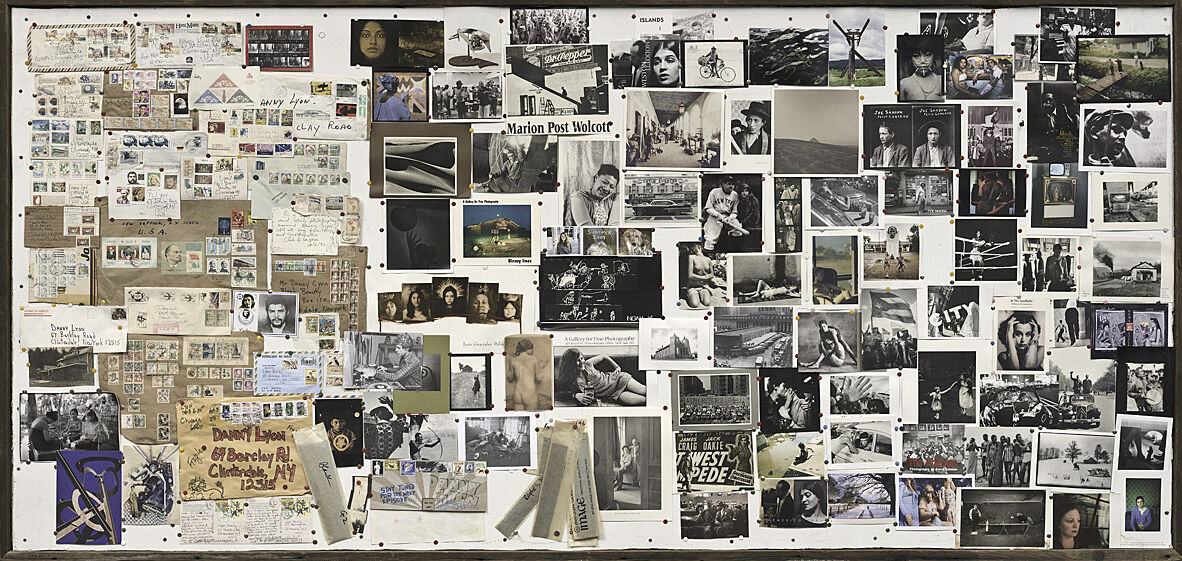
-
552
Danny Lyon, Voting Rights Demonstration, Organized by the Student Nonviolent Coordinating Committee (SNCC), Selma, October 7, 1963
Audio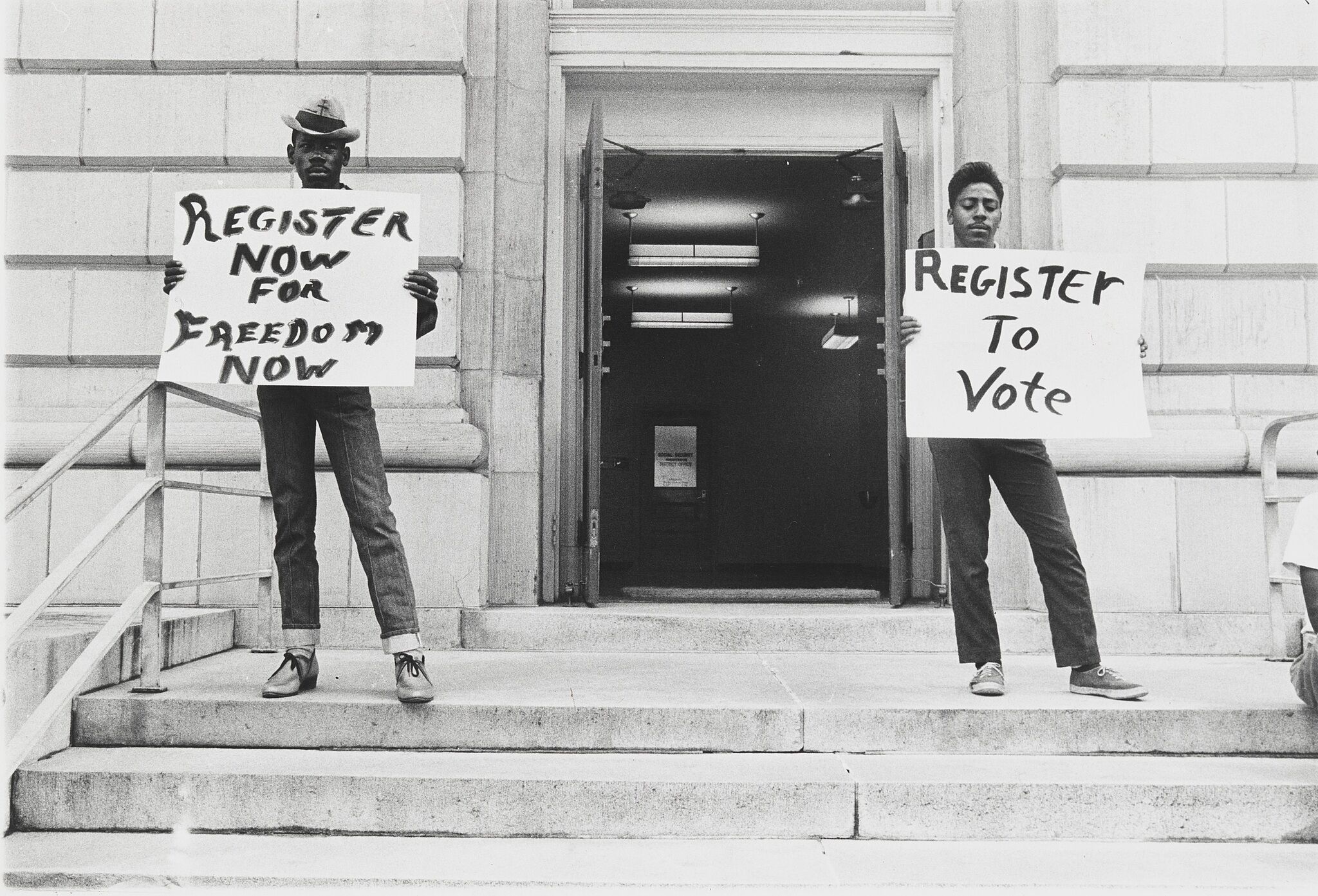
-
553
Danny Lyon, Crowds along the Funeral Route, Birmingham, Alabama, 1963
Audio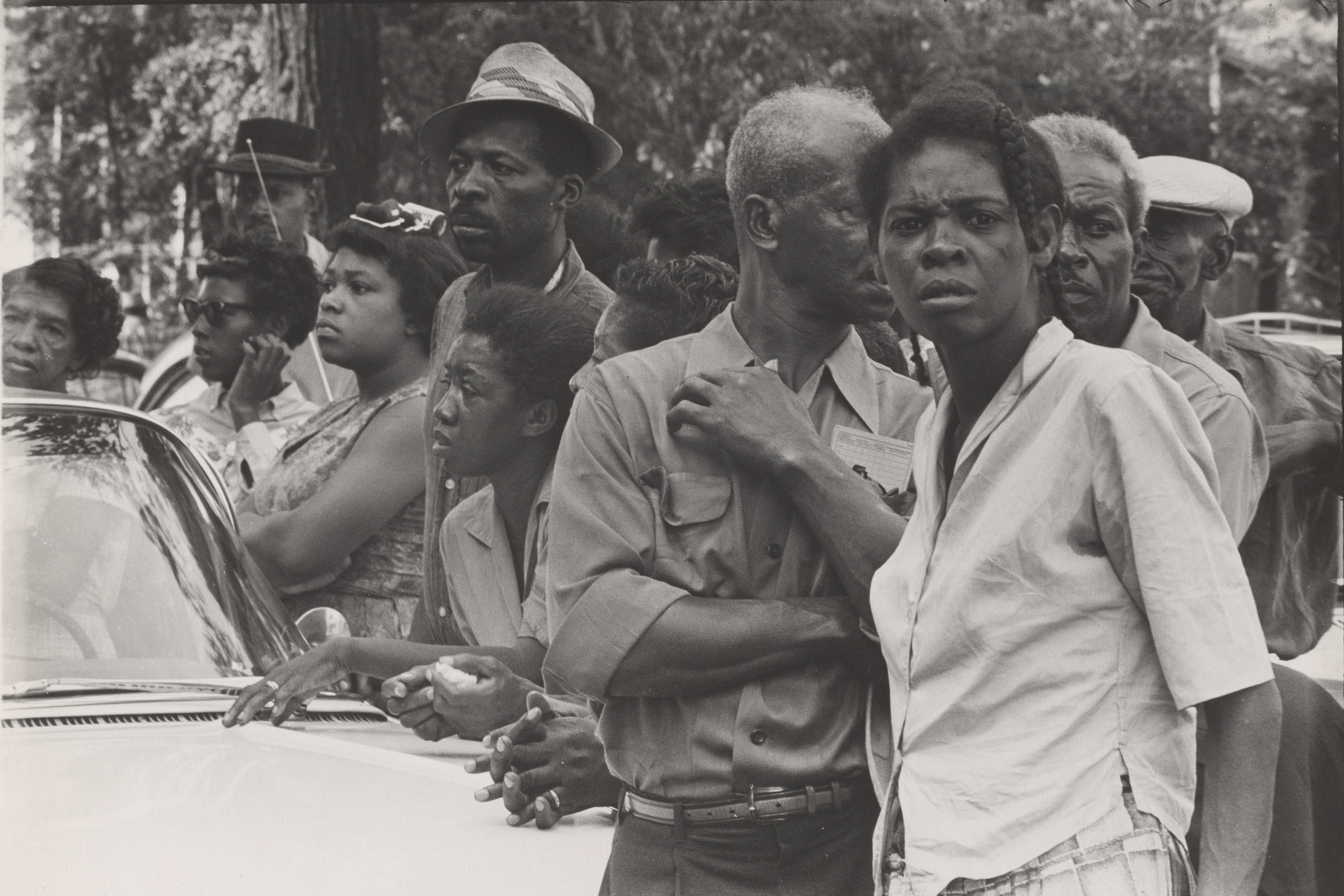
-
554
Danny Lyon, Clifford Vaughs, SNCC photographer, Arrested by the National Guard, Cambridge, Maryland, 1964
Audio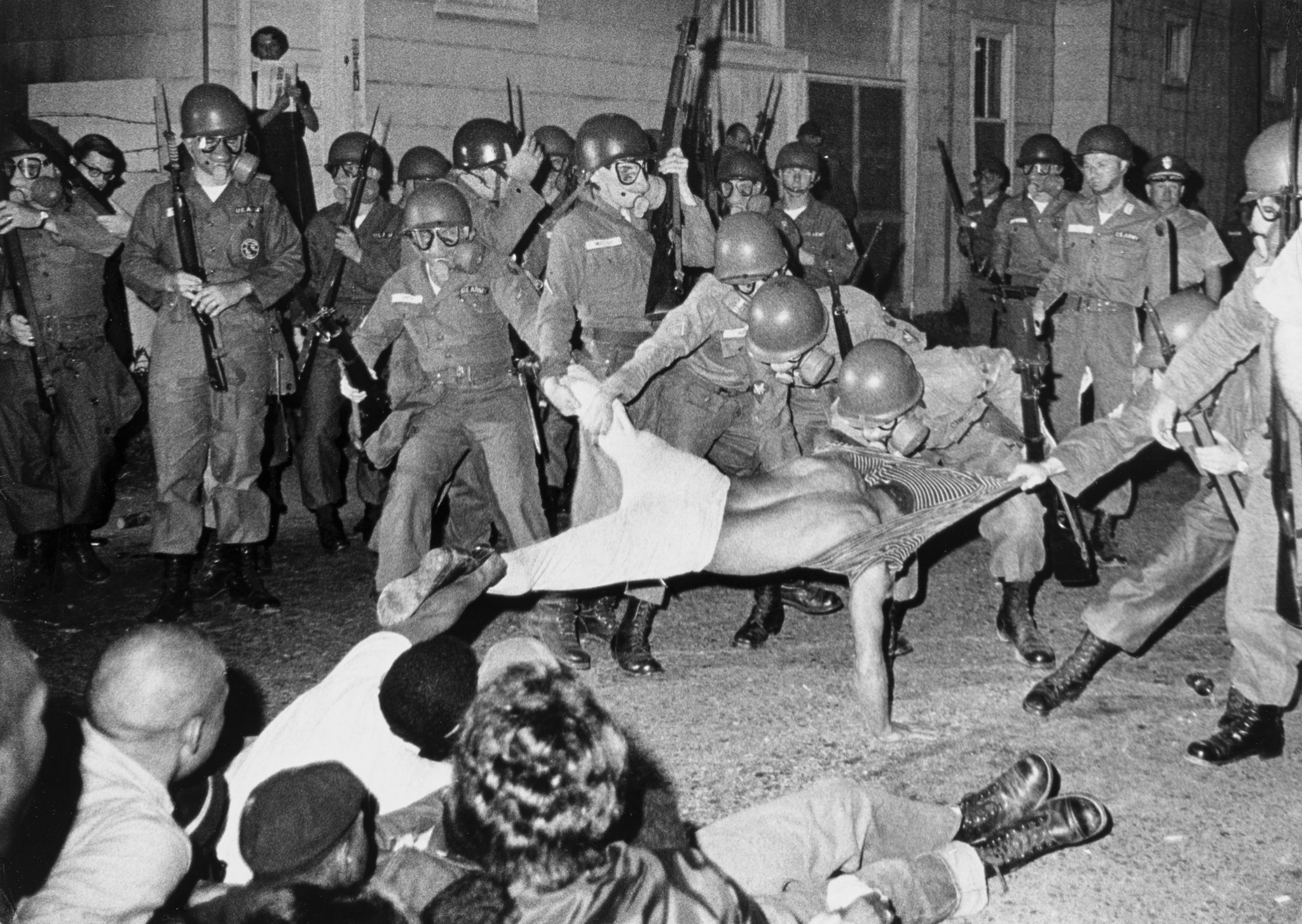
-
551
Danny Lyon, Self-Portrait, New Orleans, 1964
Audio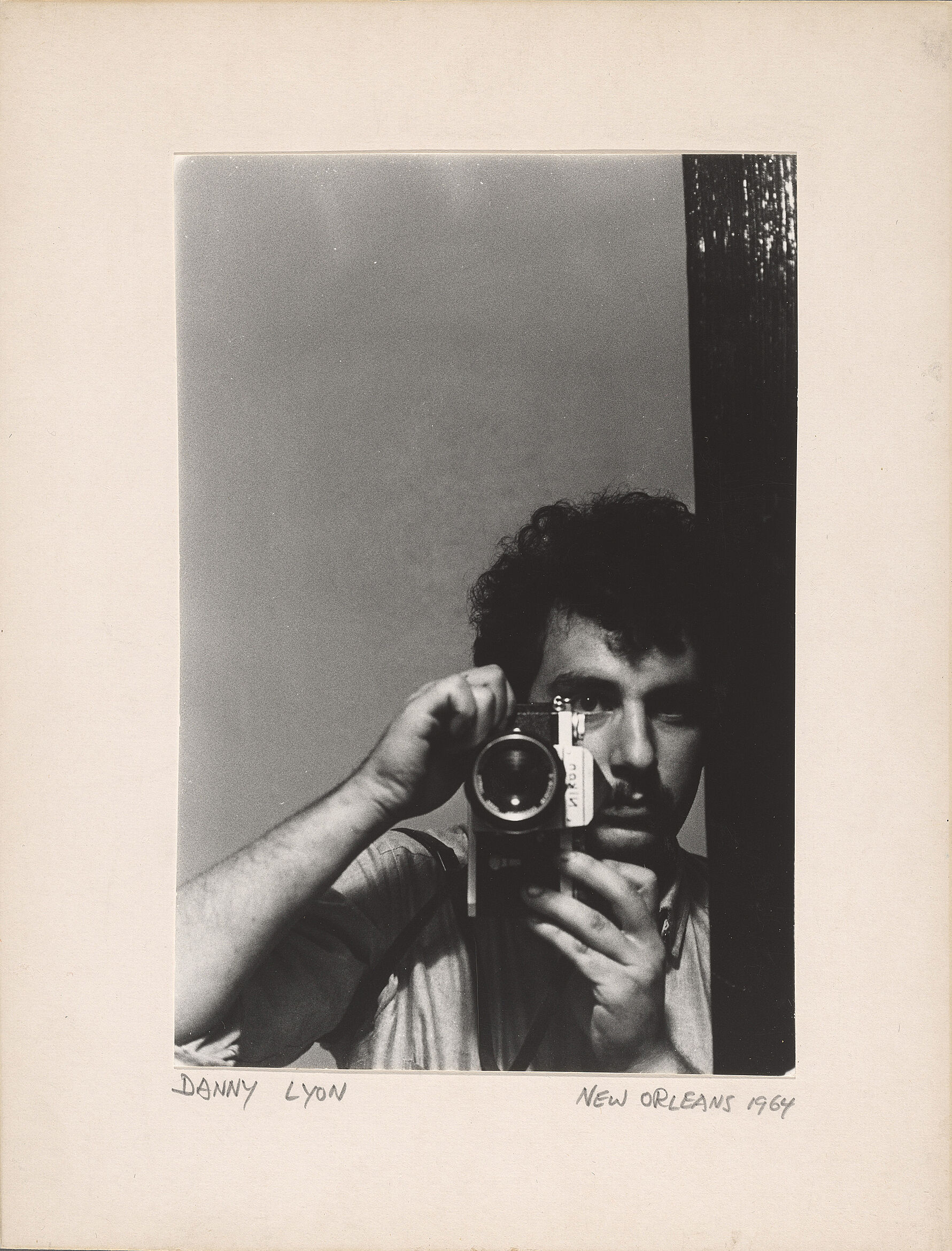
-
555
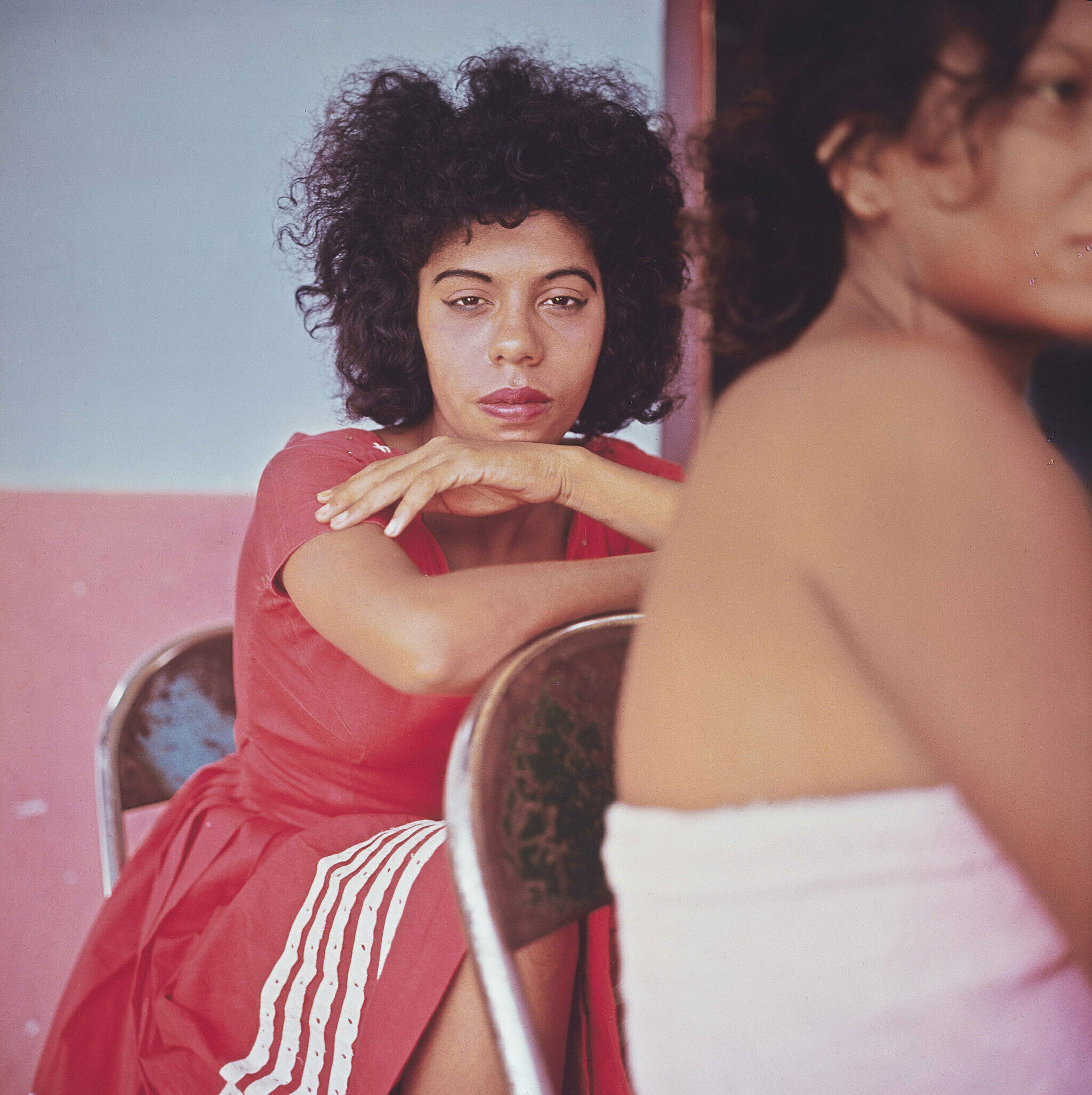
Danny Lyon, Kathy, Chicago, 1965 (printed 1966)
Audio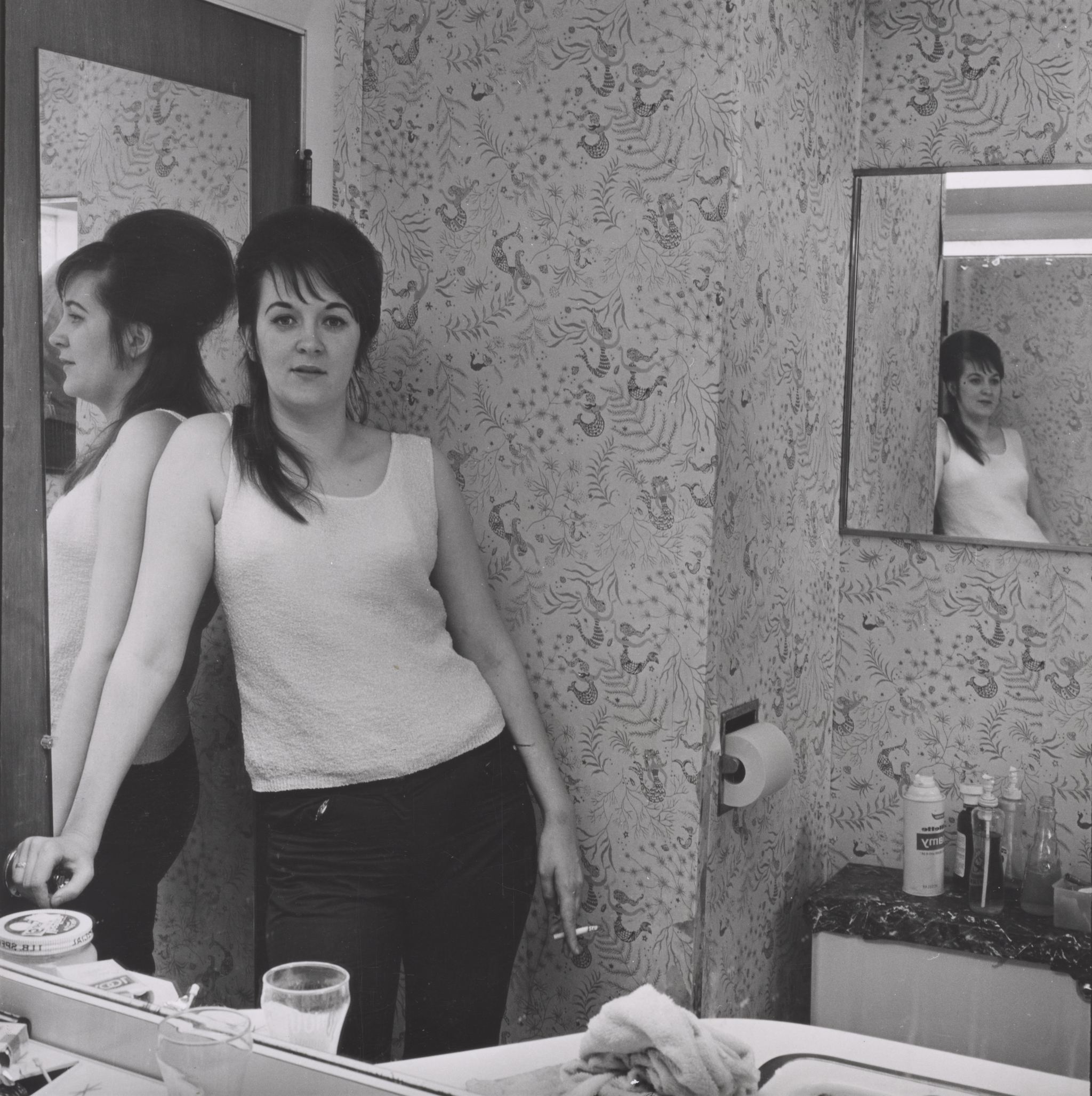
-
556
Danny Lyon, View through the Rear Wall, 89 Beekman Street, New York, 1967
Audio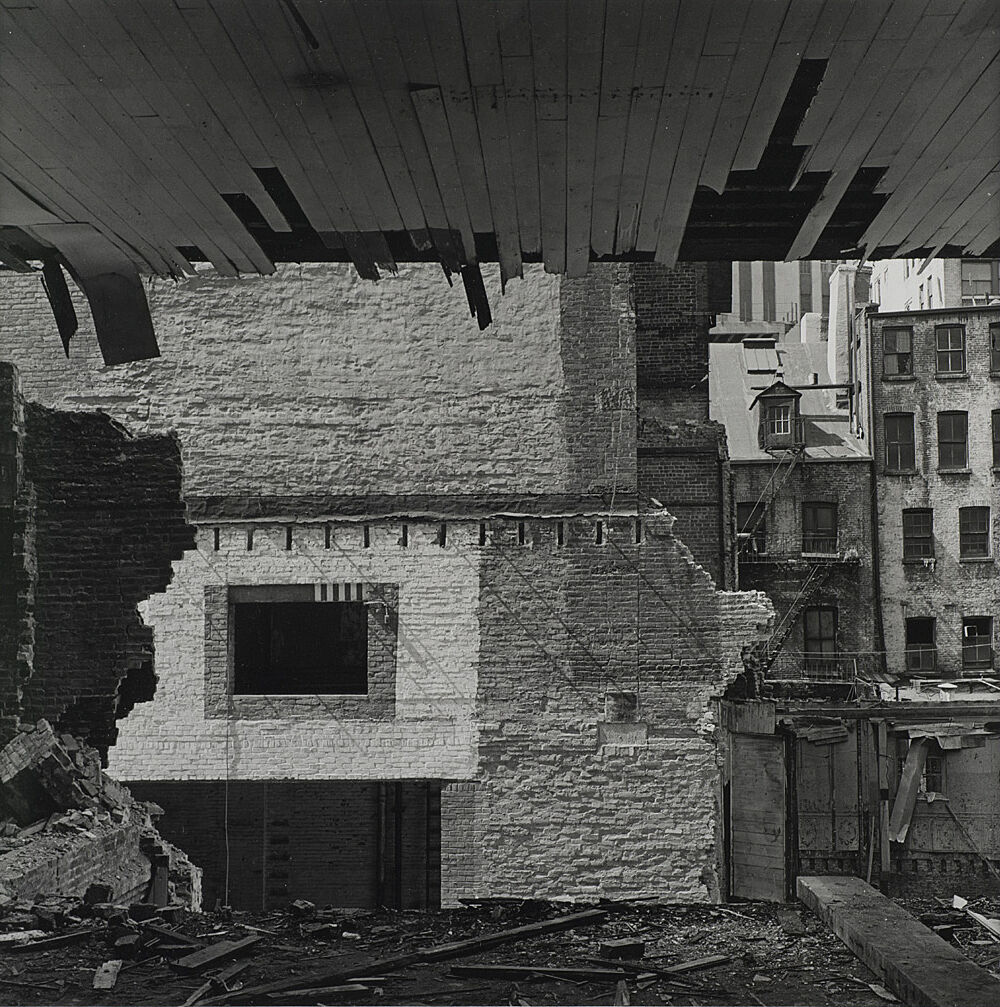
-
557
Danny Lyon, Pumpkin and Roberta, Galveston, Texas, 1967
Audio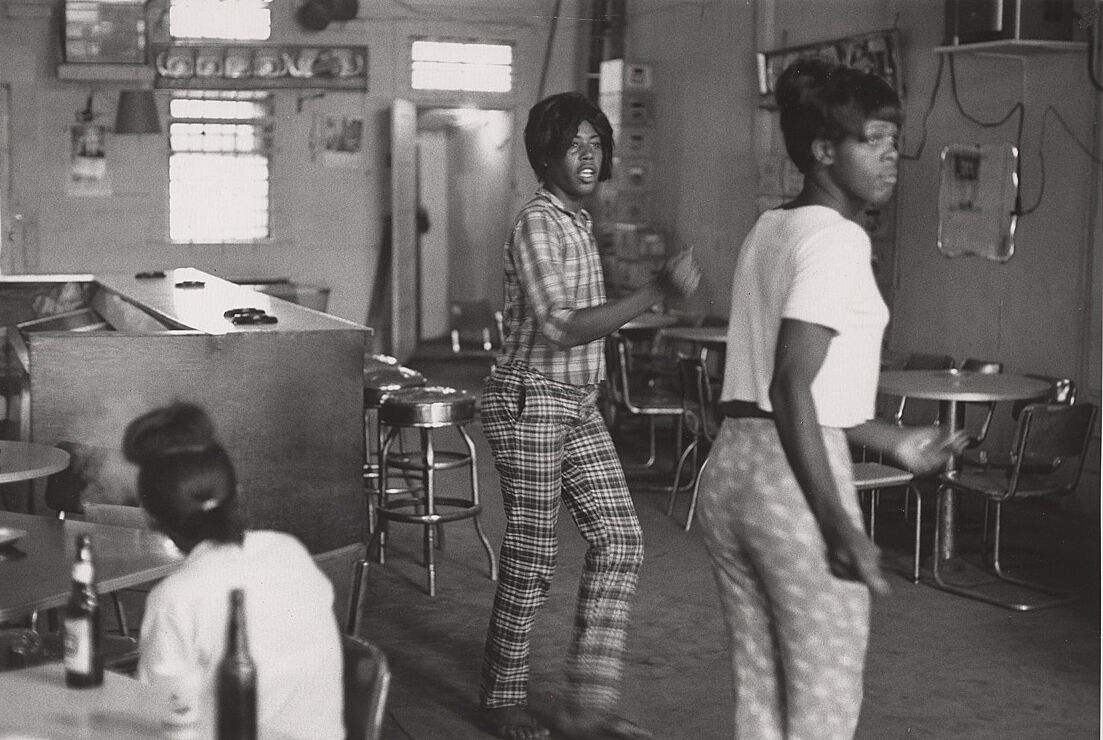
-
559
Danny Lyon, From the Picket Tower, Ferguson Unit, Texas, 1968
Audio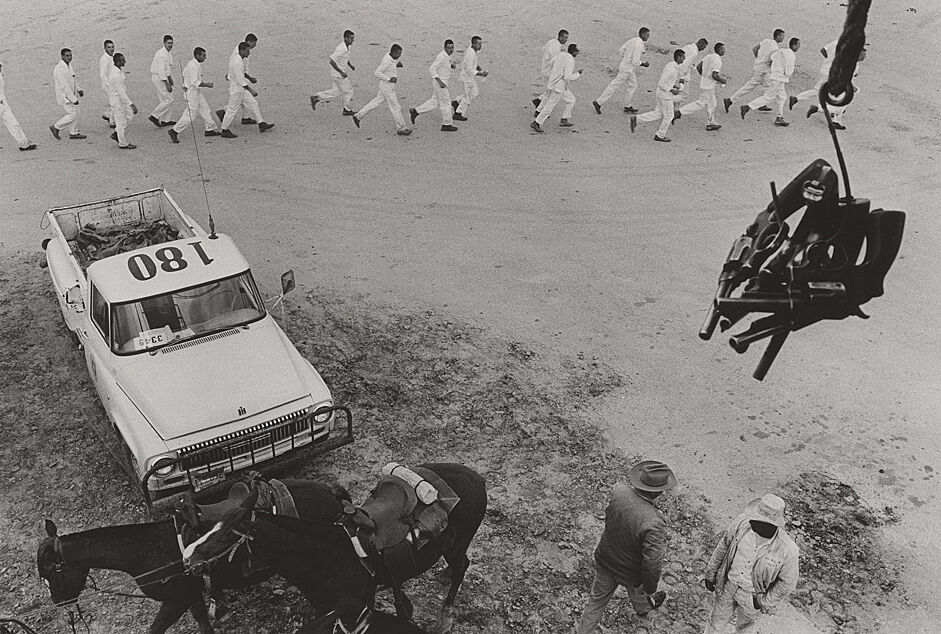
-
560
Danny Lyon, Two Inmates, Goree Unit, Texas, 1968
Audio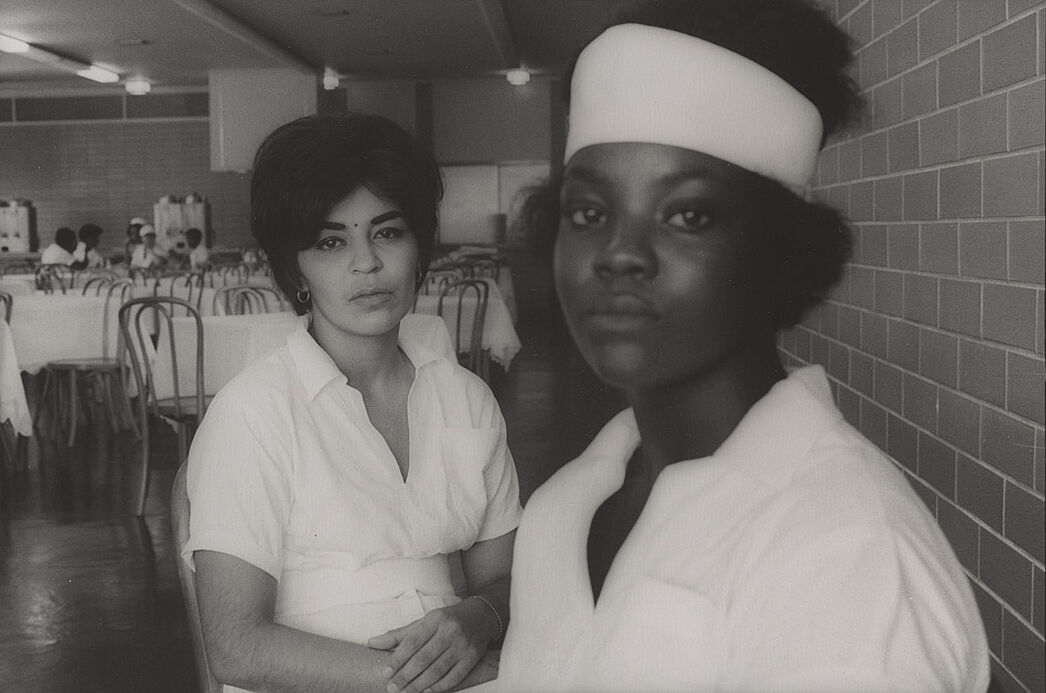
-
561
Danny Lyon, Eddie, New Mexico, 1972
Audio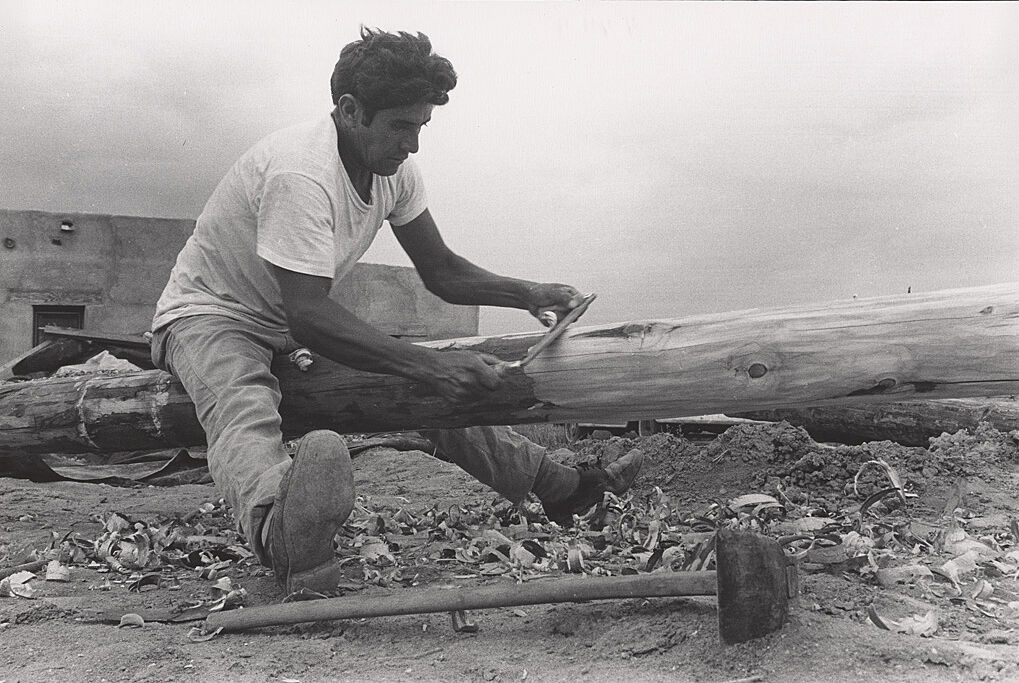
-
558
Danny Lyon, Boulevard Jean-Jacques Dessalines, Port-au-Prince, Haiti, February 7, 1986
Audio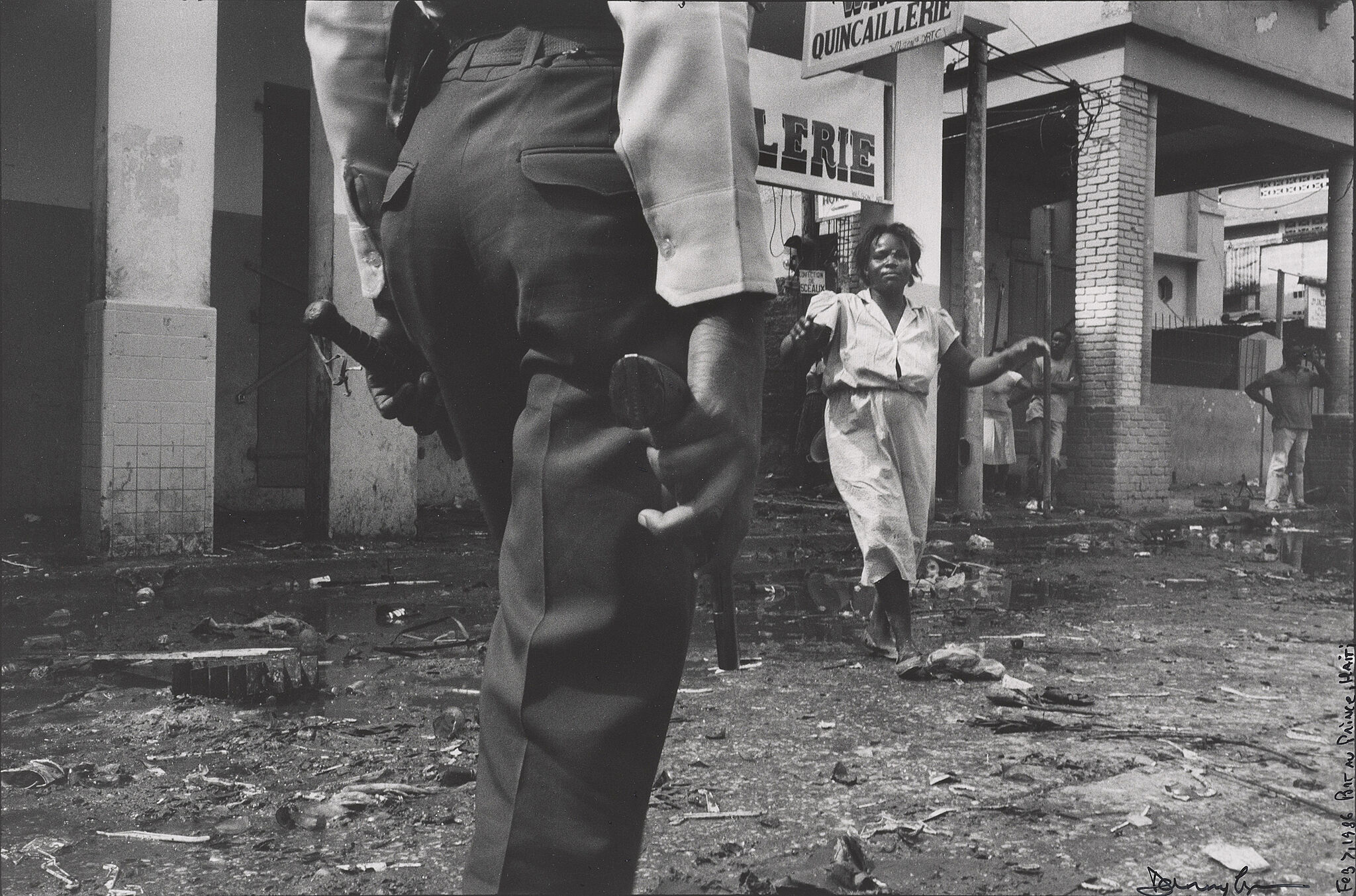
-
562
Danny Lyon, Haiti, 1987
Audio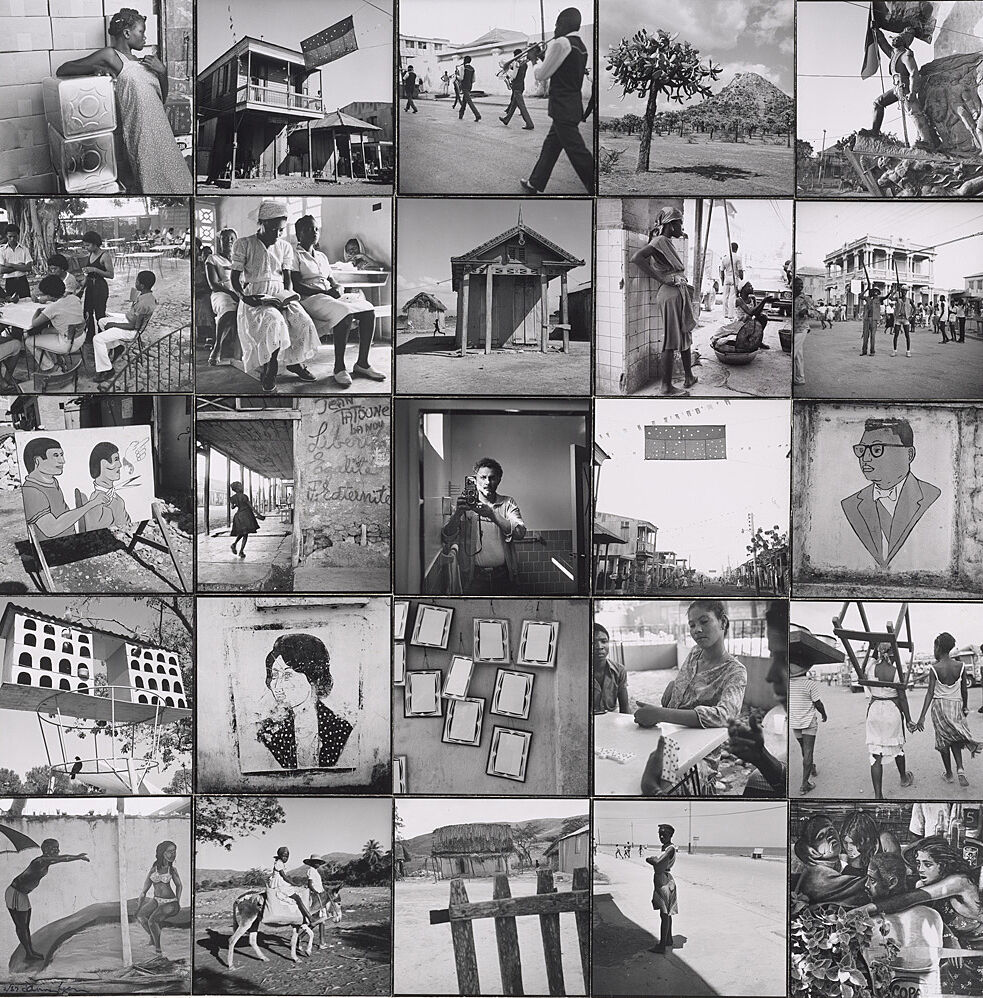
-
563
Danny Lyon, Abandoned Homestead, Corson County, South Dakota, 2000
Audio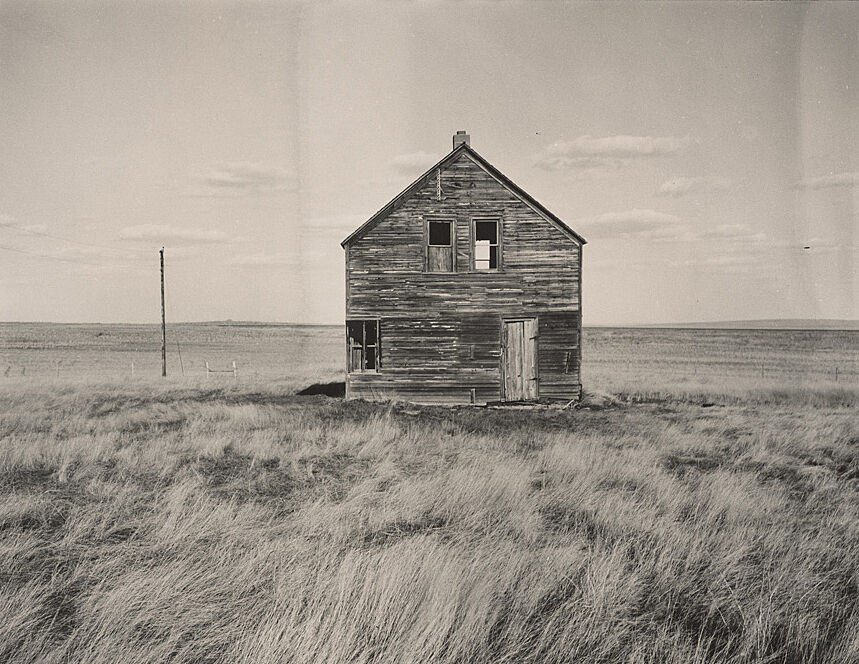
-
565
Danny Lyon, Lolly in Ruins, 2007
Audio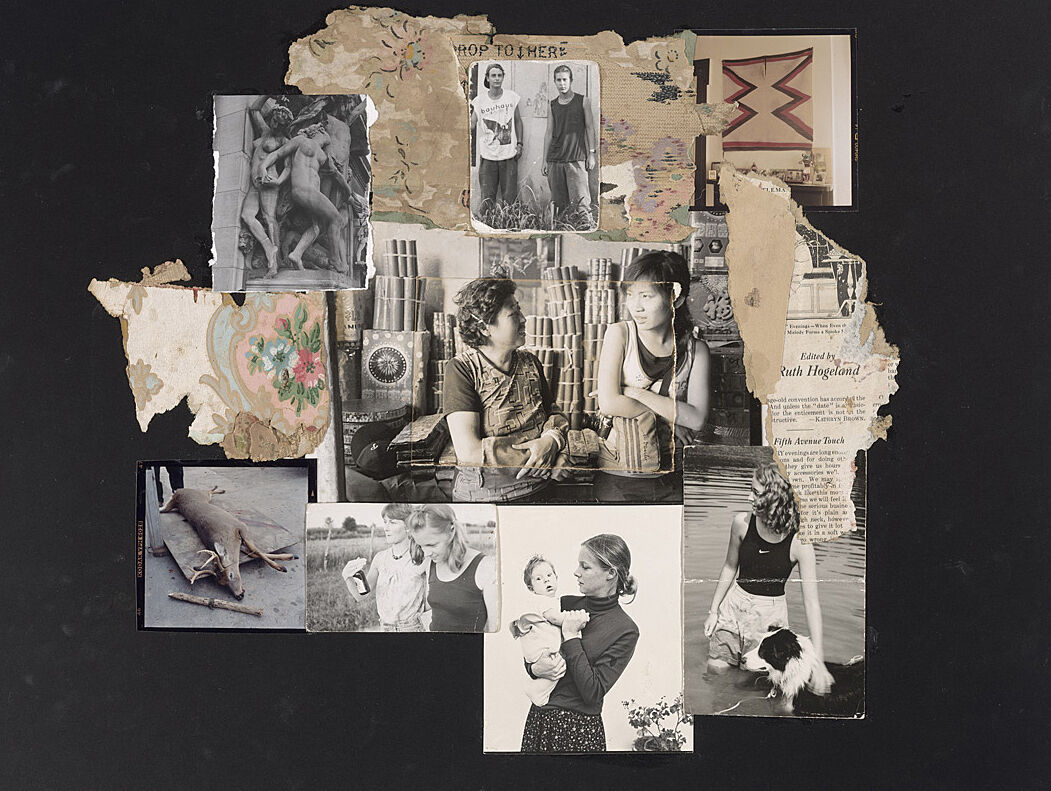
-
564
Danny Lyon, Occupy Demonstration on Broadway, Los Angeles, 2011
Audio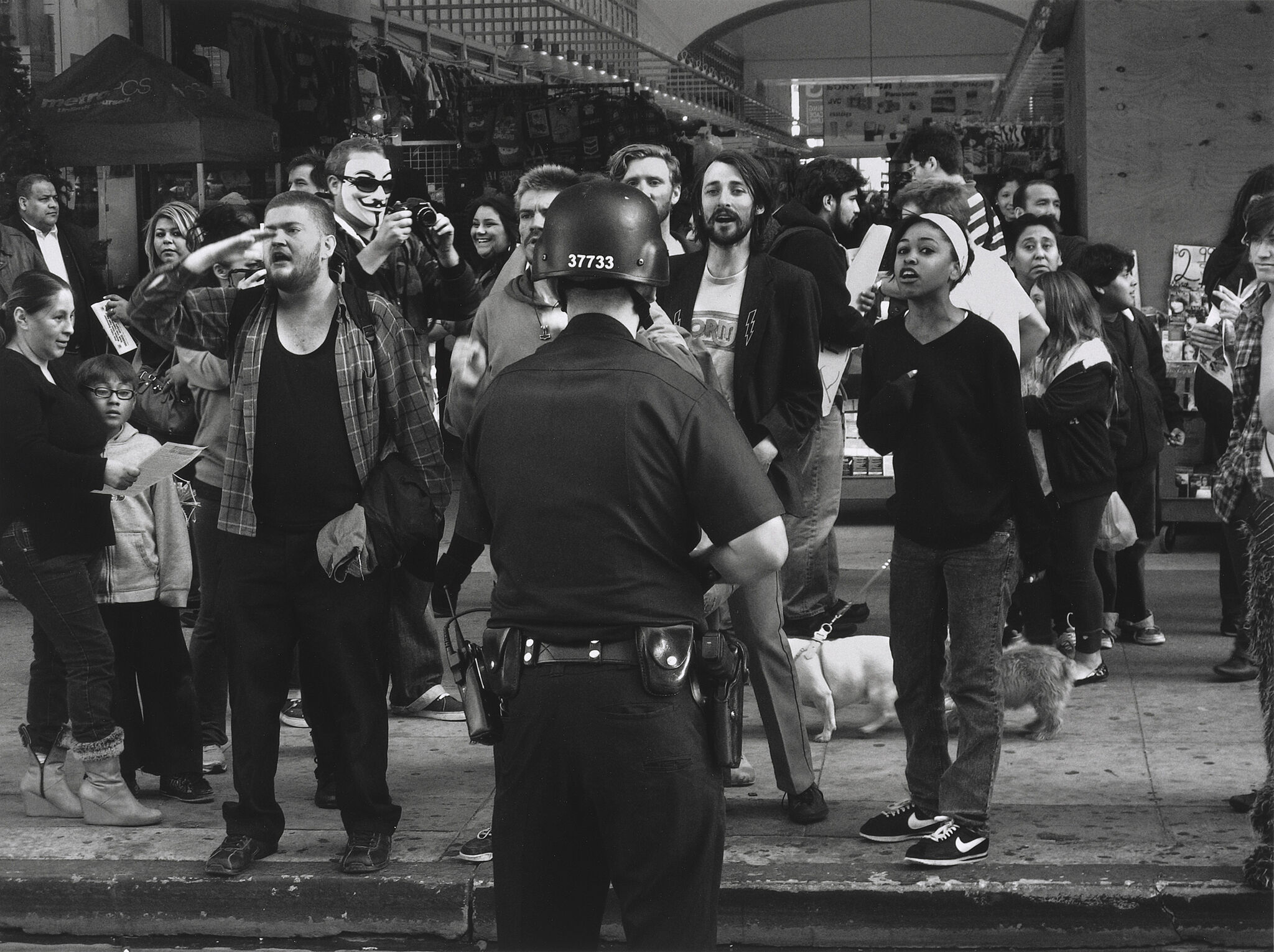
-
566
Danny Lyon, San Luis, New Mexico, 2014
Audio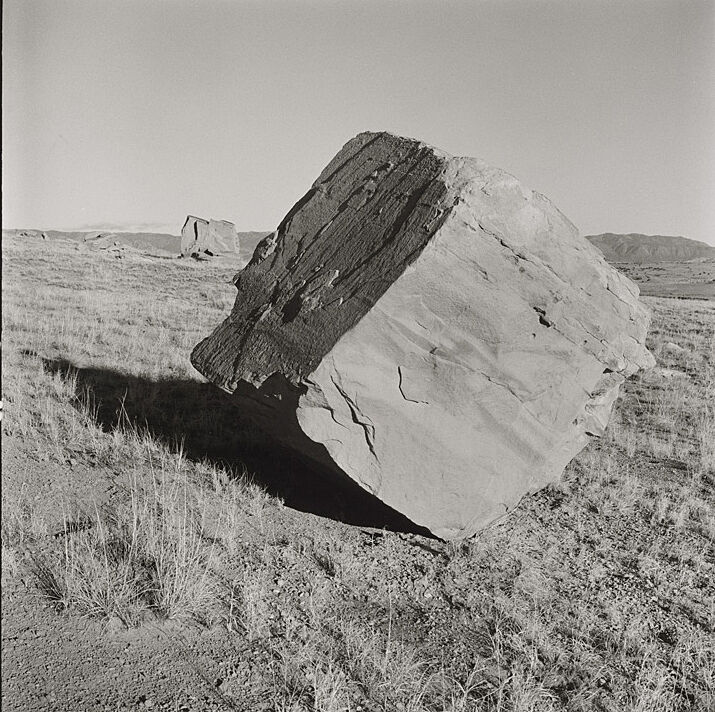
Elisabeth Sussman: Who is Danny Lyon? Danny Lyon is somebody who's worked as a photographer ever since he was an undergraduate, and he's now in his 70s.
Narrator: Take a look at the board on the entry wall, which Lyon has covered in photos, letters, and film negatives. It gives a feeling for how deep and wide-ranging his interests have been. Elisabeth Sussman is a curator at the Whitney, and installed this exhibition.
Elisabeth Sussman: He's produced several interesting dedicated activist bodies of work. He is always identified with the realities of what human beings are living for. He documents them with more than his camera. He tape records them. He writes about them. He puts books out about them. Starting with the '70s he filmed them. So this is real involvement. This is not point and shoot walk away photography.
Narrator: We’ll begin our tour by going through the entrance to the left of the title wall. Go on in, and take a look around. Lyon began taking these photographs of the Civil Rights movement in 1962, while he was still an undergraduate at the University of Chicago. Soon after his arrival in the South, he began working as the official photographer for the Student Nonviolent Coordinating Committee—or SNCC—a group that led the fight for racial equality in the South.
Elisabeth Sussman: What you see here is really the beginning of Danny Lyon. What makes him great as a photographer is to be at the moment when something is going on to have the unique ability to frame a beautiful, balanced composition that's also very dynamic and unfolding. And to concentrate on these people. The people are often what draws him into a situation. That is consistent all the way through all his bodies of work.
Danny Lyon, Darkroom Wall from Danny Lyon’s Studio, Ulster County, New York, 1985-2005. Gelatin silver prints, 35mm negatives, printed notecards, and letters. Collection of the Artist. © Danny Lyon
Narrator: One of SNCC’s major goals was to help black voters exercise their rights as American citizens. In the South, African American voters were frequently thwarted by literacy tests and extra layers of bureaucracy. Beyond that, they were often violently harassed when they attempted to register or vote. These two photographs create a vivid picture of the tension surrounding voter registration drives.
Elisabeth Sussman: What's so amazing about them is that it's before and after. You have these two guys, each of them standing up with signs that say "Register to Vote." You see the sheriffs taking them away. Arresting them, essentially. It's a like pictures speak a million words here.
Narrator: Beyond the events themselves, Lyon’s photograph captures something powerful about the nature of nonviolent protest.
Elisabeth Sussman: I like the play on the hats here that you've got all these hard hat defended guys with their big sheriffs' stars pinned on stuff, and then, you have them hauling away this guy with this dandy little straw hat perched on his head, and this smart outfit that he has on. The hats tell the story in a way, I think.
Really, it was the desire to record history as it was happening that took him down South at these crucial moments. From the earliest moment, because this is '63 and the events unfolded in Selma and other places after that, and Danny was on the spot. He just would move around wherever the action was.
Danny Lyon, Voting Rights Demonstration, Organized by the Student Nonviolent Coordinating Committee (SNCC), Selma, Alabama, October 7, 1963. Gelatin silver print. Whitney Museum of American Art, New York; purchase with funds from the Photography Committee 95.6. © Danny Lyon, courtesy Edwynn Houk Gallery, New York
Narrator: On September 15, 1963, a group of Ku Klux Klansman planted TNT under the steps of a church in Birmingham, Alabama. The resulting explosion killed four young girls, and injured twenty-two others. In this photograph, we see crowds at the girls’ funeral procession.
Todd Gitlin: There’s a sense here, I mean what I love about those expressions, is that people are quizzical. What is going on here?
Narrator: Todd Gitlin is a Professor at the Columbia Journalism School.
Todd Gitlin: What is going on? What IS this? So anxiety and apprehension are the definitive reactions, and you feel that too. You feel, what’s going on here? It demands of you that you stop. You just about feel, this is about to be a turning point. Which it was.
Today we, look, we’ve seen lots of pictures of exploded buildings. But at the time—that it was a church, that it was little girls, that it was in the middle of ordinary life, it sort of encapsulated the extraordinary time we were living in. It still does, to me, when I look at these images.
Danny Lyon, Crowds along the Funeral Route, Birmingham, Alabama, 1963. Gelatin silver print. Collection of the artist. © Danny Lyon, courtesy Edwynn Houk Gallery, New York
Narrator: Here, Lyon photographs Clifford Vaughs, another SNCC photographer. We only know it’s him because his name appears in the title. The photograph itself focuses on his brutal, dehumanizing arrest.
Todd Gitlin: What you can see is the deformation that’s taking place, and that is entirely appropriate. Segregation deformed human life, and the demonstrators meant to expose that deformation to a larger world, and these photos helped to do that.
Julian Cox: Lyon was the first photographer to be officially appointed by the Student Nonviolent Coordinating Committee.
Narrator: Julian Cox is a curator at the Fine Arts Museums of San Francisco, and organized this exhibition.
Julian Cox: He was essentially the peer to the important leaders of that movement, John Lewis, James Forman, Julian Bond. He was a kindred spirit. They set him to work making pictures that helped to change history.
Narrator: SNCC was very savvy in their use of photography. They used Lyon’s images in books and posters, disseminating a localized struggle to the nation as a whole.
Danny Lyon, Clifford Vaughs, another SNCC photographer, is arrested by the National Guard, Cambridge, Maryland, 1964. Gelatin silver print. 8 × 10 in. (20.32 × 25.4 cm). Collection of the Corcoran/National Gallery of Art, CGA 1994.3.3 © Danny Lyon, courtesy Edwynn Houk Gallery, New York
Julian Cox: This self portrait made in New Orleans in 1964 was made when Lyon was just 22 years of age.
Narrator: Julian Cox.
Julian Cox: He's both revealing and concealing himself at the same time. The camera is held up to his face. Both his eyes are clearly visible. He has a rather baleful introspective look on his face. This is a character who is both introverted and outgoing at the same time. Some of those conflicting elements of his personality, of his approach, are visible in this picture.
This self-portrait is made at a time of transition in his early career. Where he had already accomplished a great deal as a young man making these brave, courageous, and historically significant pictures of the Civil Rights Movement. Now he was beginning to turn a corner and think about how he could create a life for himself as an artist, using the medium of photography as his mode of expression.
Danny Lyon (b. 1942), Self-portrait, New Orleans, 1964. Vintage gelatin silver print. 7 3/16 × 4 13/16 in. (18.2 × 12.2 cm). Collection of the artist. © Danny Lyon, courtesy Edwynn Houk Gallery, New York
Narrator: Lyon left SNCC in 1964. He went to New Orleans for a while, then returned to Chicago. There, he joined the Chicago Outlaws Motorcycle Club. This began a practice that he would continue throughout his career—embedding himself within communities and photographing its members from within.
Julian Cox: Kathy is one of the key subjects in the Bikerider series. His typical way of working with his subjects involved often finding specific characters who he felt could really portray the essence of a specific moment, specific community, or specific culture. Kathy is in a way the matriarch of the bike riders.
This is picture has been very interestingly constructed by the photographer. He is standing next to the subject and photographing away from her, but capturing her looking towards us. This is an important picture for Lyon, because it's a transition between the kind of work he made more spontaneously out on the streets when he was documenting the bikers and his desire to make thoughtful intimate personal portraits of people that he really connected with and he thought were important for one reason or another.
Danny Lyon, Kathy, Chicago, 1965. Gelatin silver print. Collection of the artist. © Danny Lyon, courtesy Edwynn Houk Gallery, New York
Narrator: In 1966, Lyon moved to a loft near South Street Seaport in Lower Manhattan. He quickly discovered that entire neighborhoods nearby were being demolished to make way for the World Trade Center and other real estate developments.
Elisabeth Sussman: He decided then and there that he would begin to survey the destruction of what was coming down. This one in particular is a very formal picture. The whole thing begins to in your eye take on an abstract quality to it that is painterly in a way.
Narrator: But Lyon’s interest in these buildings wasn’t purely aesthetic. He published his photographs of them in a book called The Destruction of Lower Manhattan. Here’s how he described the project. "I came to see the buildings as fossils of a time past. These buildings were used during the Civil War....The passing of buildings was for me a great event. It didn't matter so much whether they were of architectural importance. What mattered to me was that they were about to be destroyed. Whole blocks would disappear. An entire neighborhood. Its few last loft occupying tenants were being evicted, and no place like it would ever be built again.”
Danny Lyon, View through the Rear Wall, 89 Beekman Street, New York, 1967. Gelatin silver print. Collection of Melissa Schiff Soros and Robert Soros. © Danny Lyon, courtesy Edwynn Houk Gallery, New York
Narrator: In 1967, Lyon traveled to Galveston, Texas. There he became friends with two trans women, Roberta and Pumpkin Renée. He photographed them, and recorded their stories.
Todd Gitlin: He says “My greatest strength has been empathy with others different from myself.” And that’s, what I see is a man who beholds those who are other than himself. He’s not pretending to be them. But he’s challenged by them. In fact, I think he’s drawn to people who, through their expressions, are challenging. So in that sense I see him not as an activist photographer. I see him as a consummate collector of challenges.
Danny Lyon, Pumpkin and Roberta, Galveston, Texas, 1967. Gelatin silver print. Collection of the artist. © Danny Lyon, courtesy Edwynn Houk Gallery, New York
Narrator: In 1967, Lyon applied for access to the Texas state prison system, and was allowed to photograph freely for a period of fourteen months. Here, he captures a scene from a guard tower. We see the inmates themselves, not far from a couple of work horses. We might take the photograph to imply that the prison system equates the prisoners to the animals. As Lyon explained in a 2015 speech to the National Geographic Society, he certainly intended images like this one as indictments of the system.
Danny Lyon: I entered the Texas prisons determined to destroy them. And once I began to read about prison, and people said things like 'what are you going to do with them'—meaning the inmates—I thought I do not want to be a criminologist. I was not interested in improving prisons. I wanted to destroy them. Now we are in the future. The population of the Texas prisons where I worked was 12,500. Now it is over 200,000. So that body of work, which took over two years of my life, was not a success.
Danny Lyon, From the Picket Tower, Ferguson Unit, Texas, 1968. Gelatin silver print. Collection of the artist. © Danny Lyon, courtesy Edwynn Houk Gallery, New York
Narrator: Lyon took this photograph in the Goree Unit, a Texas prison that houses women.
Julian Cox: This picture he made of these two women seemingly in the refectory or the cafeteria conveys that sense of melancholy and sadness at being in this situation, where their daily lives and movements are controlled by others.
Working in the prison system was a very emotionally challenging experience for Lyon. He was also quite troubled by the paradox between his own freedom to come and go, and the restrictions under which these prisoners lived, but the empathy and the emotional connection that he felt for his subjects comes through very strongly in most of these prison pictures. They're very affecting on an emotional level because he is seeing and sensing and trying to record their emotional life in these pictures.
Danny Lyon, Two Inmates, Goree Unit, Texas, 1968. Gelatin silver print. Collection of the artist. © Danny Lyon, courtesy Edwynn Houk Gallery, New York
Narrator: Here, Lyon photographs Eddie Marquez Rivera, an undocumented immigrant Lyon befriended when he moved to New Mexico. Rivera taught Lyon traditional adobe-building technique, and helped him construct his house.
Julian Cox: You see Eddie here framed low to the ground at work on one of the monumental beams that was designed to hold the roof of the house up.
At this moment in his life Eddie would cross the border every season, backwards and forwards, from Mexico into New Mexico. Essentially Lyon helped to smuggle him across the border to try to help him make a life for himself in the United States. This picture documents the early stages of their friendship, of their working relationship.
Narrator: Marquez has since become a U.S. citizen, and lives near Lyon in New Mexico. The lives and status of immigrants have remained very important to Lyon.
Julian Cox: Living right by the Rio Grande river and close to the border, this inspired a whole new sort of crop of subject matter that becomes a significant focus for Danny Lyon through the 1970s and up to the present day.
Danny Lyon, Eddie, New Mexico, 1972. Gelatin silver print. Collection of the artist. © Danny Lyon, courtesy Edwynn Houk Gallery, New York
Julian Cox: In 1986 and 1987, Lyon went to Haiti several times to document the dissolution of the Duvalier regime. He was politically committed to observing what was happening there. At this time very conscious of the influence of the United States and other cultures that the US had been doing business with or had political ties to.
This image encapsulates the difficult conditions of Port-au-Prince at this time. It's a tremendously powerful photograph shot from a low level. He's photographing this policeman standing in the city street with a gun in his right hand and a baton in his left. This barefoot woman is approaching him with her arms out in front of her, almost in a gesture of resolution or subjugation. The street on which they both stand is littered with garbage and detritus. It's a picture that's pregnant with a sense of violence and destruction.
This is really typical of the kind of picture that Lyon was so well trained and disposed to make. It has all the drama of a moment unfolding in front of him that he's caught in a very specific way where the two protagonists are seen in confrontation with each other.
Danny Lyon (b. 1942), Haiti, 1987. Gelatin silver prints montage. 22 7/8 × 22 7/8 in. (58.2 × 58.2 cm). Collection of the artist. © Danny Lyon, courtesy Edwynn Houk Gallery, New York
Narrator: Lyon made the twenty-five images in this montage while in Haiti, over the course of two years. He’s pasted a self-portrait in the center.
Julian Cox: It blends the moments of high drama and the everyday activities of the people of Haiti trying to go about their normal lives at a moment of significant transition. This has always been part of Danny Lyon's approach, a desire to capture the pulse of everyday people. Those people who are on the margins of society or oppressed or disenfranchised in some way and bring their story into the center of his universe through the medium of photography.
Lyon is an artist who cares about personal freedom and liberty, which is why one frame to the left of his self portrait in this montage from Haiti, we see a picture of a young girl wandering down a street with the words "Liberté, egalité, fraternité" written on the wall. These are the founding principles of democracy and concepts that sit at the very core of Lyon's approach to the medium of photography and how it can be used.
Danny Lyon (b. 1942), Haiti, 1987. Gelatin silver prints montage. 22 7/8 x 22 7/8 in. (58.2 x 58.2 cm). Collection of the artist. © Danny Lyon, courtesy Edwynn Houk Gallery, New York
Julian Cox: Beginning in the late 1990s through to about 2001, Danny Lyon made a great deal of work on the Indian reservations throughout the American West.
This architectural study is part of his broader goal to document and describe the breadth of these communities and the places where people live or have lived and the starkness in this instance of the prairie context where the landscape goes on for miles and miles. The population is very widely distributed with these small communities that are really hanging on by their fingertips.
Narrator: Take a moment to look around at the other photographs of the Indian Nations. They look a bit different from Lyon’s other works.
Julian Cox: He worked primarily with a Polaroid camera that used positive-to-negative film. An important part of this process involved him producing positive prints there in the field. He would often give those Polaroids to his subjects as a way to involve them in his work, to include them so that they had a sense of what his goals were, what his aspirations were for the work.
Then back in his studio, he would take the negatives and print them on this very warm-toned paper. It's called Kodak Ektalure paper. It's a very rich black and white paper that provides a warm sepia tone finish. Quite different from other papers that he used in other bodies of work that he made. He did that intentionally. He wanted this work to look different and not to appear overly journalistic or to have the look of magazine photography. He wanted to provide more warmth and intimacy to this work.
Danny Lyon, Abandoned homestead, Corson County, South Dakota, 2000. Gelatin silver print. 14 9/16 x 17 7/8 in. (37.1 x 45.1 cm). Collection of the artist. © Danny Lyon, courtesy Edwynn Houk Gallery, New York
Narrator: Lyon made this montage after a trip China. The central image shows two women. The one on the right is his translator, Lolly.
Elisabeth Sussman: Instead of documenting what was going on in the transition of China into this super-postmodern thing it was today, he got very interested in a few people, and in one person in particular who took him around and was his translator and his guide. It was a young woman, and he became very attached to her. He began to see it through her eyes and looking at her, and so on. They are very modest intimate pictures of China not of large social abstractions.
Narrator: In the photograph, Lolly appears with the proprietor of a fireworks store. There’s no clear narrative. Instead, the point of interest seems to be the play between their postures and attitudes. It is up to the viewer to supply the story, and the meaning.
By building this image into a larger montage, Lyon goes even further in inviting interpretation. He’s included family photos, a fragmentary image of a sculpture, torn wallpaper, and other bits and pieces that seem to emerge from the past. Taken together, the work’s elements serve as a meditation on the relationship between photographic images, memory, and personal meaning.
Danny Lyon (b. 1942), Lolly in Ruins, 2007. Newspaper, wallpaper, gelatin silver and chromogenic prints montage. 15 x 20 in. Collection of the artist. © Danny Lyon, courtesy Edwynn Houk Gallery, New York
Narrator: Three members of the Occupy Los Angeles movement argue with a policeman. A figure on the left wears the mask of the British anarchist Guy Fawkes, holding a camera and capturing this scene from over the protesters point of view.
Lyon was extremely taken with Occupy’s struggle against income inequality. Just as with the Civil Rights movement almost fifty years earlier, Lyon took his camera and got involved. The Occupy images echo those earlier images of protest, while also reflecting their historical moment.
Lyon’s subjects are almost always windows onto something larger. He once explained, referring to his films.
Danny Lyon: None of my films are about Chicanos, or poverty, or prison, or the border, all of which I deal with. They are about the existential struggle to be free. That is what unites everything I have done.
Danny Lyon (b. 1942), Occupy Demonstration on Broadway, Los Angeles, 2011. Digital inkjet print. 13 × 15 3/4 in. Collection of the artist. © Danny Lyon, courtesy Edwynn Houk Gallery, New York
Narrator: Here, Lyon focuses on a lone boulder in the desert. In recent years, Lyon has increasingly focused on the New Mexican landscape and fossils. These images serve as records of an ancient geological past—one whose continuity is in danger of being disrupted by overdevelopment and other forms of environmental degradation.
Julian Cox: In some ways this is a picture that doesn't look like a Danny Lyon photograph. It looks unlike anything that we know him to have made prior to this point.
I think that's not uncommon with an artist as they begin to move into the sort of final phase of their career and they begin to look retrospectively at the work they've created over a lifetime and begin to look to making simple straightforward photographs that distill the specific subject down to the absolute minimum.
Narrator: This is the last stop on our tour of Danny Lyon: Message to the Future. But it’s far from Lyon’s final work. He continues to take photographs and produce books. He also maintains a blog, Bleak Beauty, that mixes photography and political writing.
Thanks for joining me today. Please enjoy the rest of your visit to the Whitney.
Danny Lyon, San Luis, New Mexico, 2014. Gelatin silver print. Collection of the artist. © Danny Lyon, courtesy Edwynn Houk Gallery, New York
0:00
0:00