Jeff Koons: A Retrospective
2014
This audio guide features commentary by artist Jeff Koons, Scott Rothkopf, the Whitney's Nancy and Steve Crown Family Curator and Associate Director of Programs, Michelle Kuo, editor of Artforum magazine, and Amy Adler, the Emily Kempin Professor at New York University Law School.
-
100
Introduction to Jeff Koons: A Retrospective
Audio -
203
Jeff Koons, Inflatables
Audio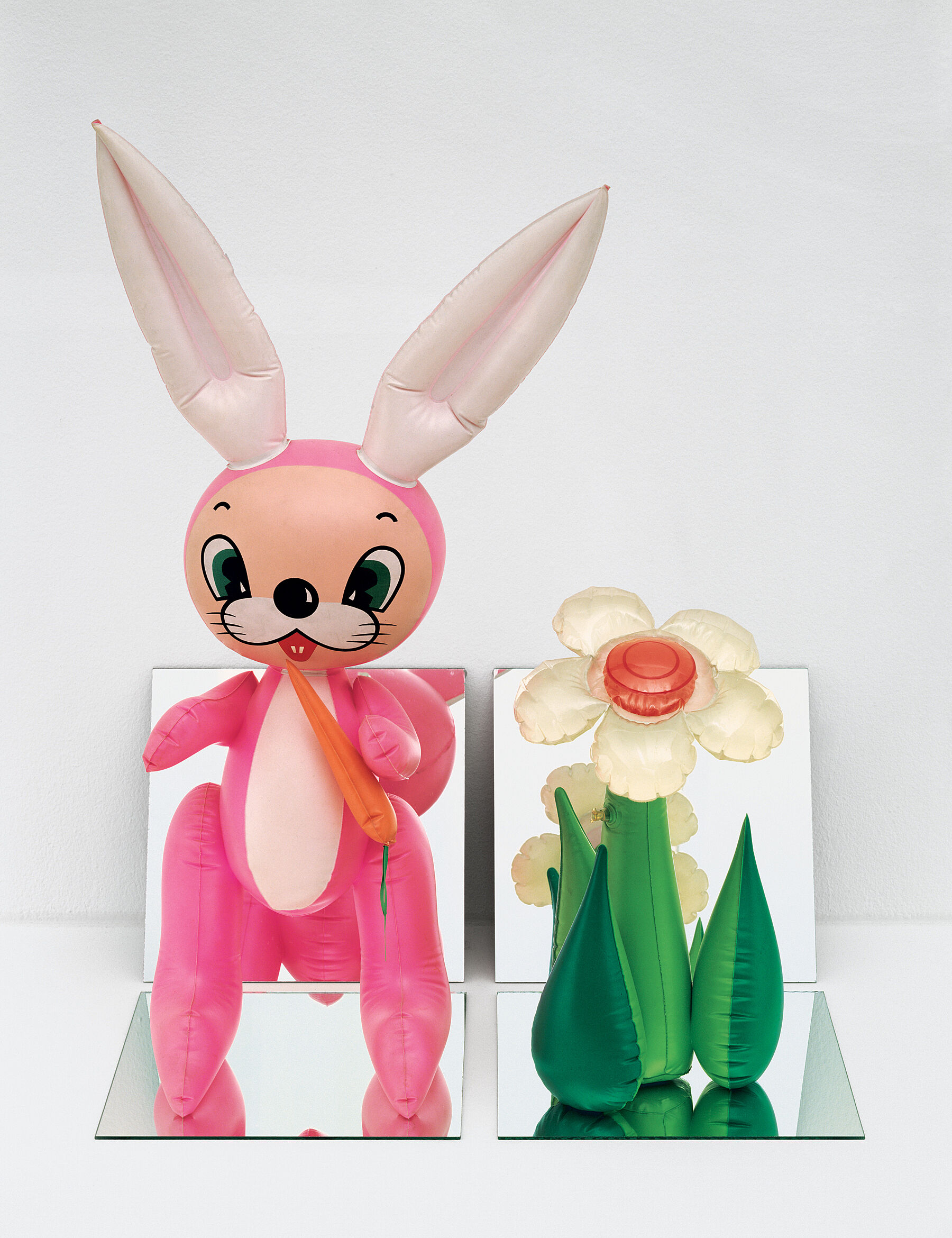
-
204
Jeff Koons, Pre-New
Audio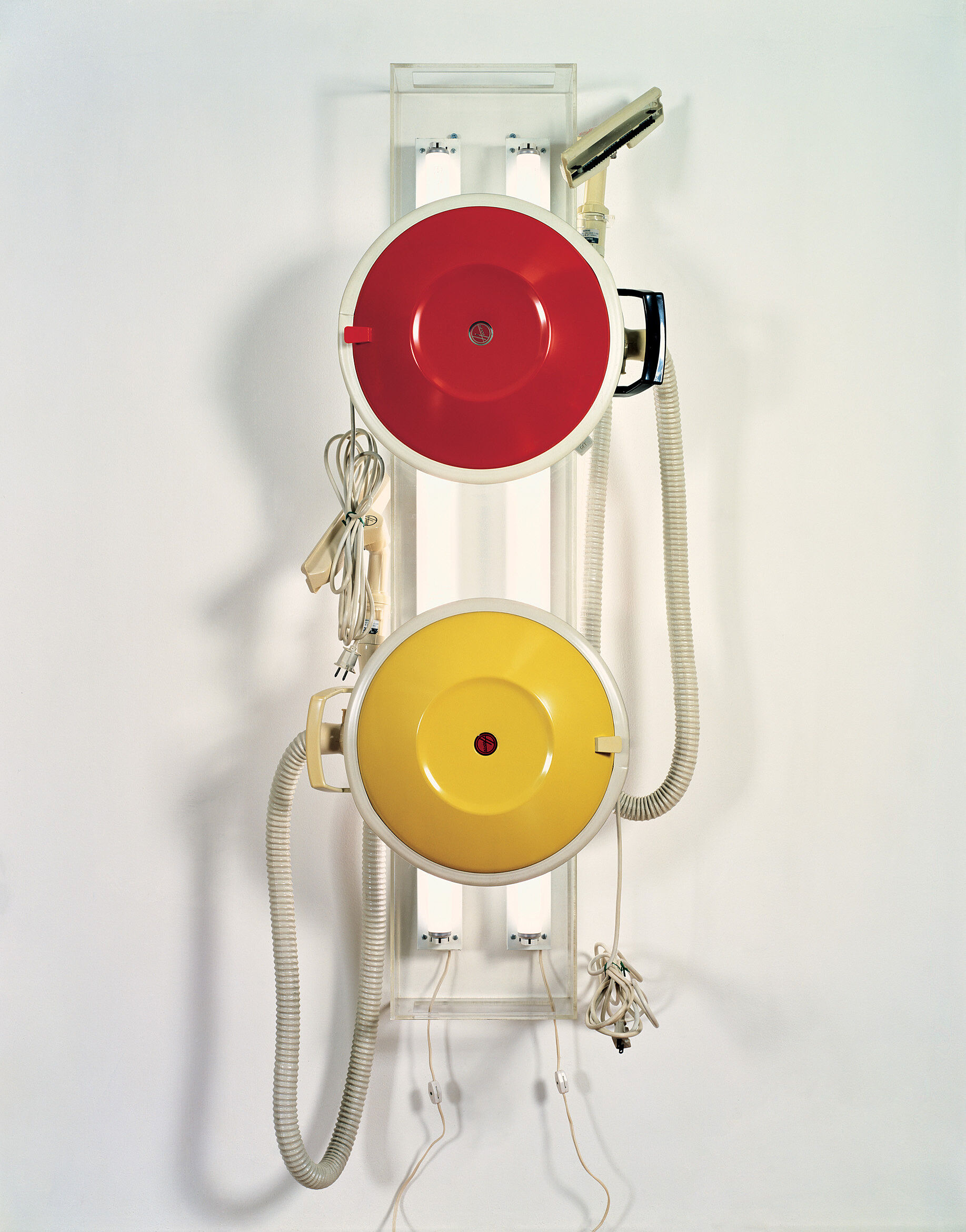
-
205
Jeff Koons, One Ball Total Equilibrium Tank (Spalding Dr. J 241 Series), 1985
Audio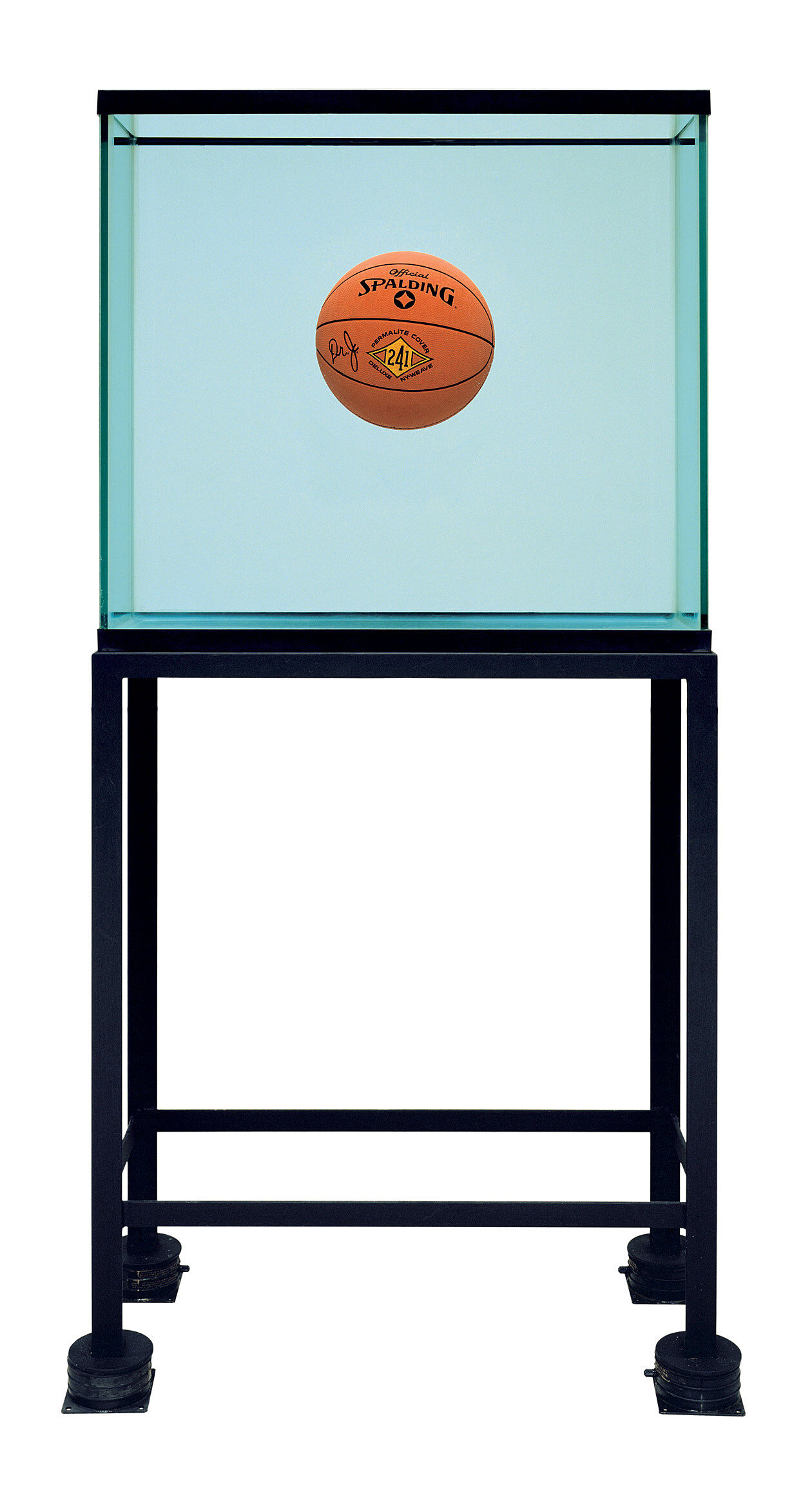
-
206
Jeff Koons, Lifeboat, 1985
Audio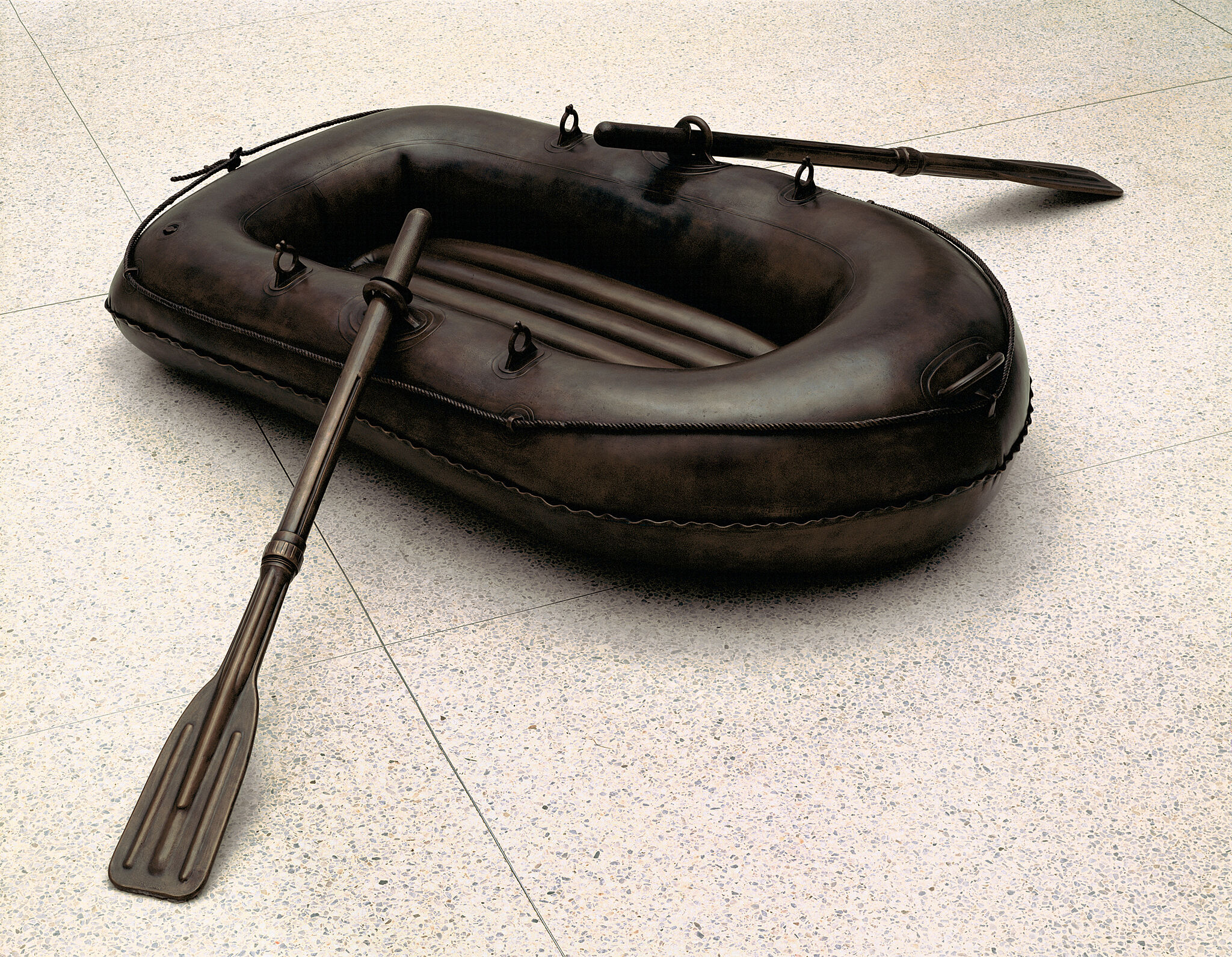
-
207
Jeff Koons, Doctor Dunkenstein, 1985
Audio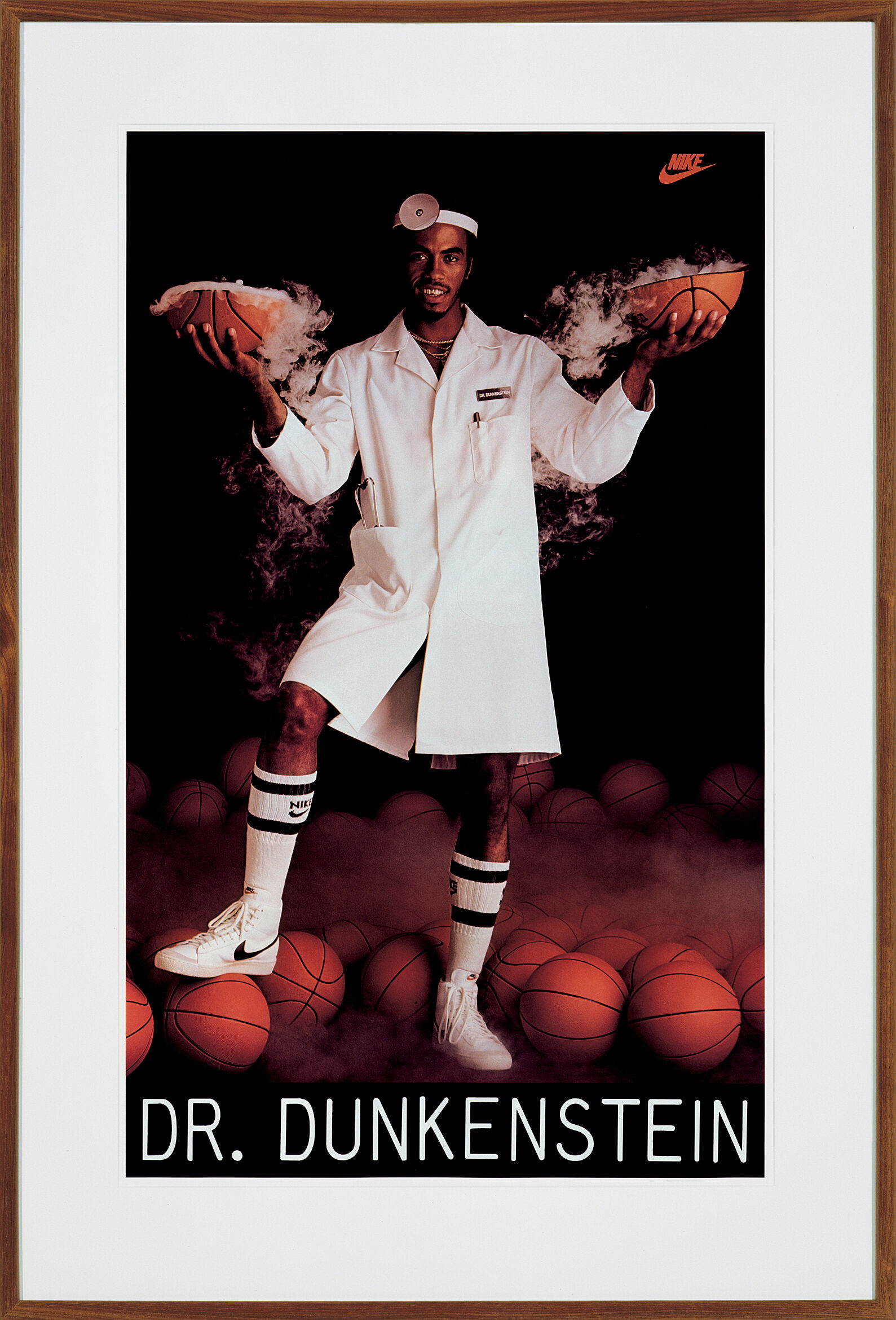
-
208
Jeff Koons, I Could Go For Something Gordon’s, 1986
Audio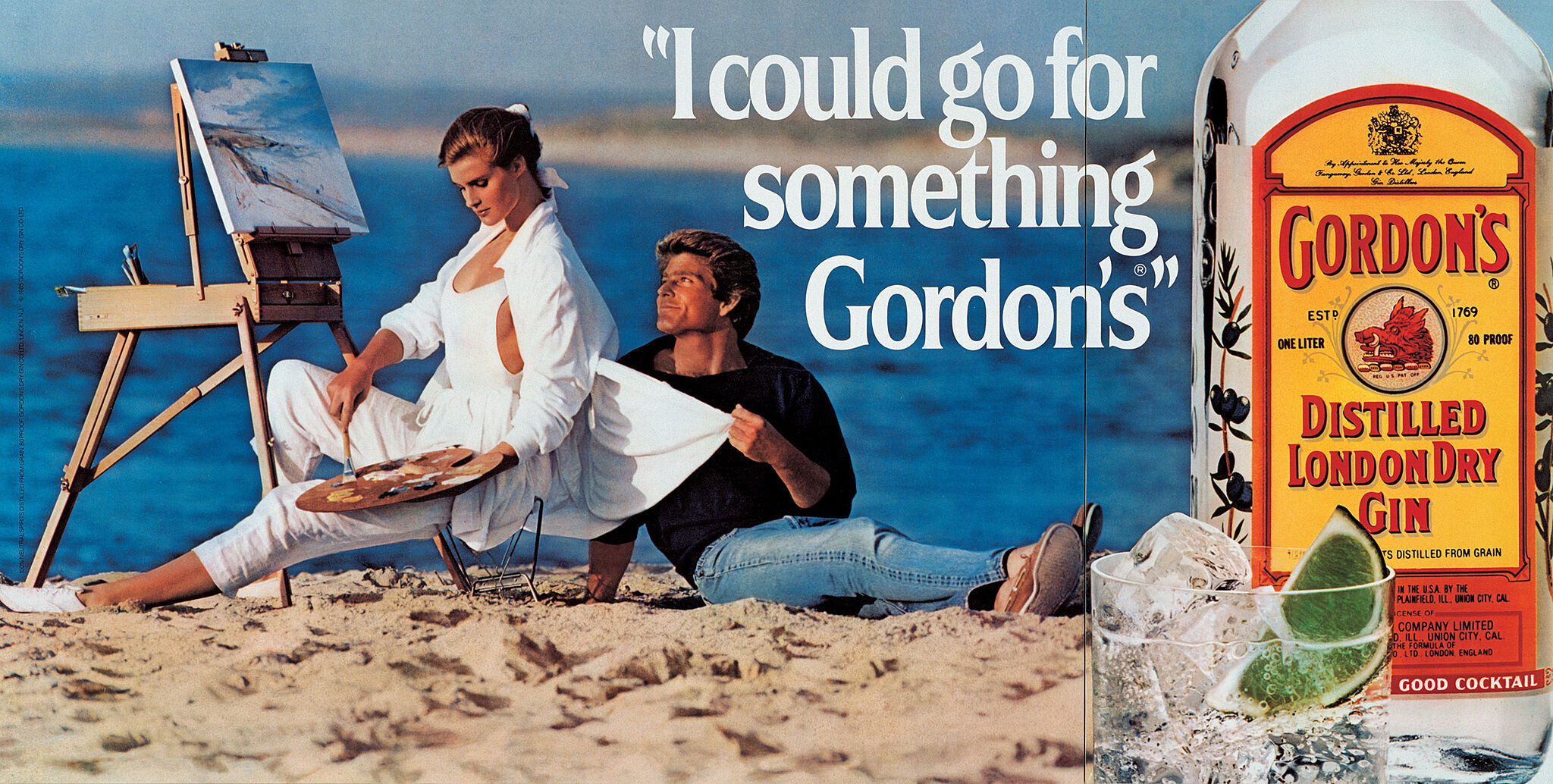
-
209
Jeff Koons, Jim Beam—J.B. Turner Train, 1986
Audio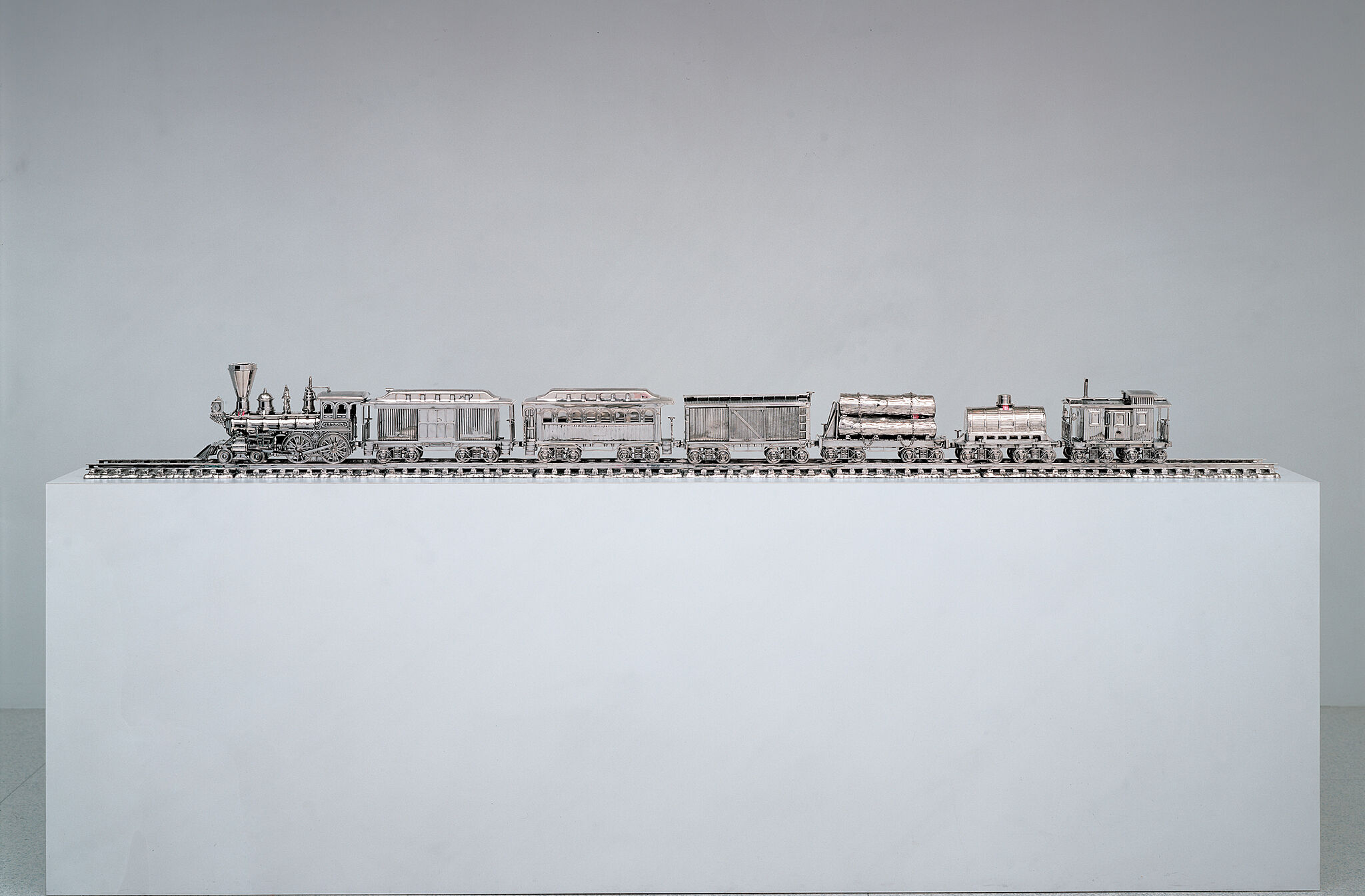
-
301
Jeff Koons, Made in Heaven Billboard, 1989
Audio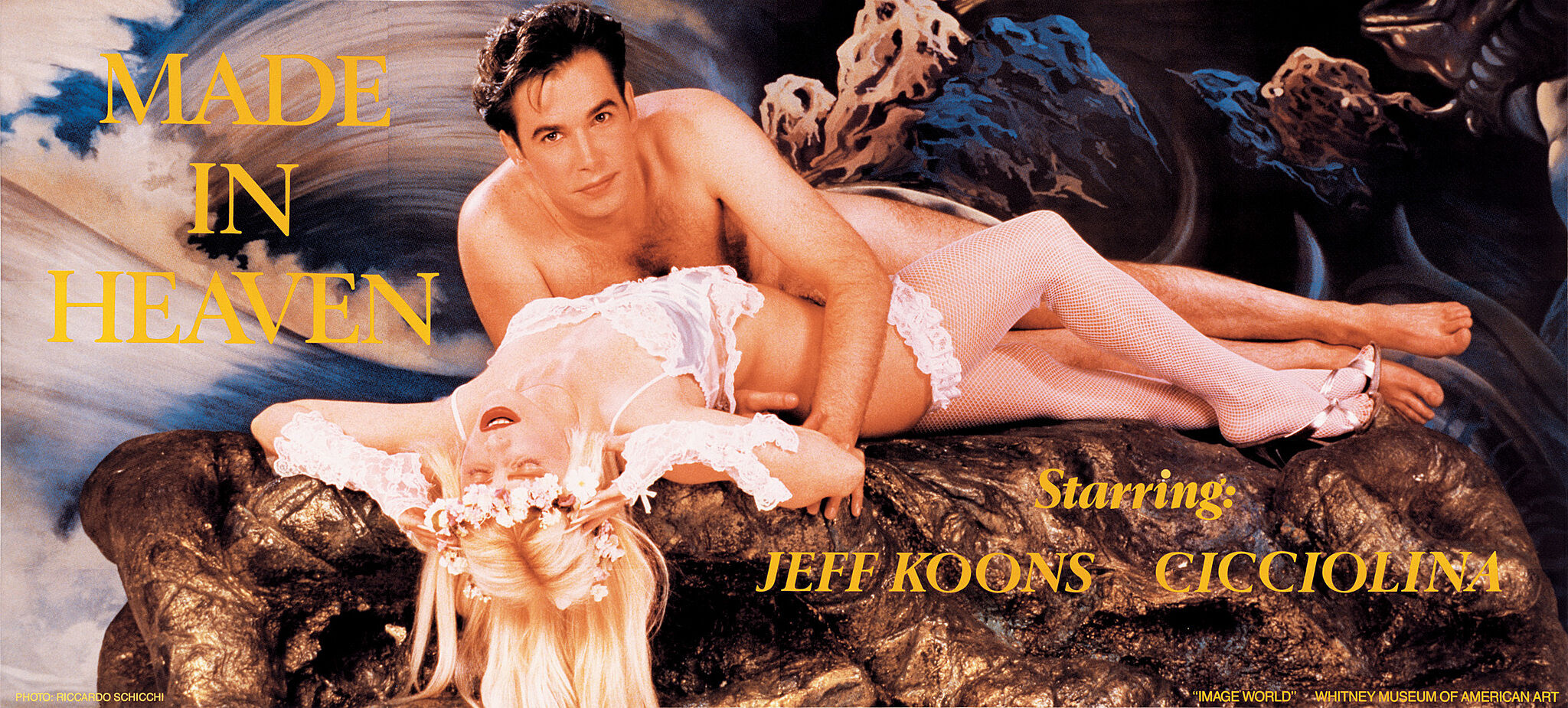
-
302
Jeff Koons, Rabbit, 1986
Audio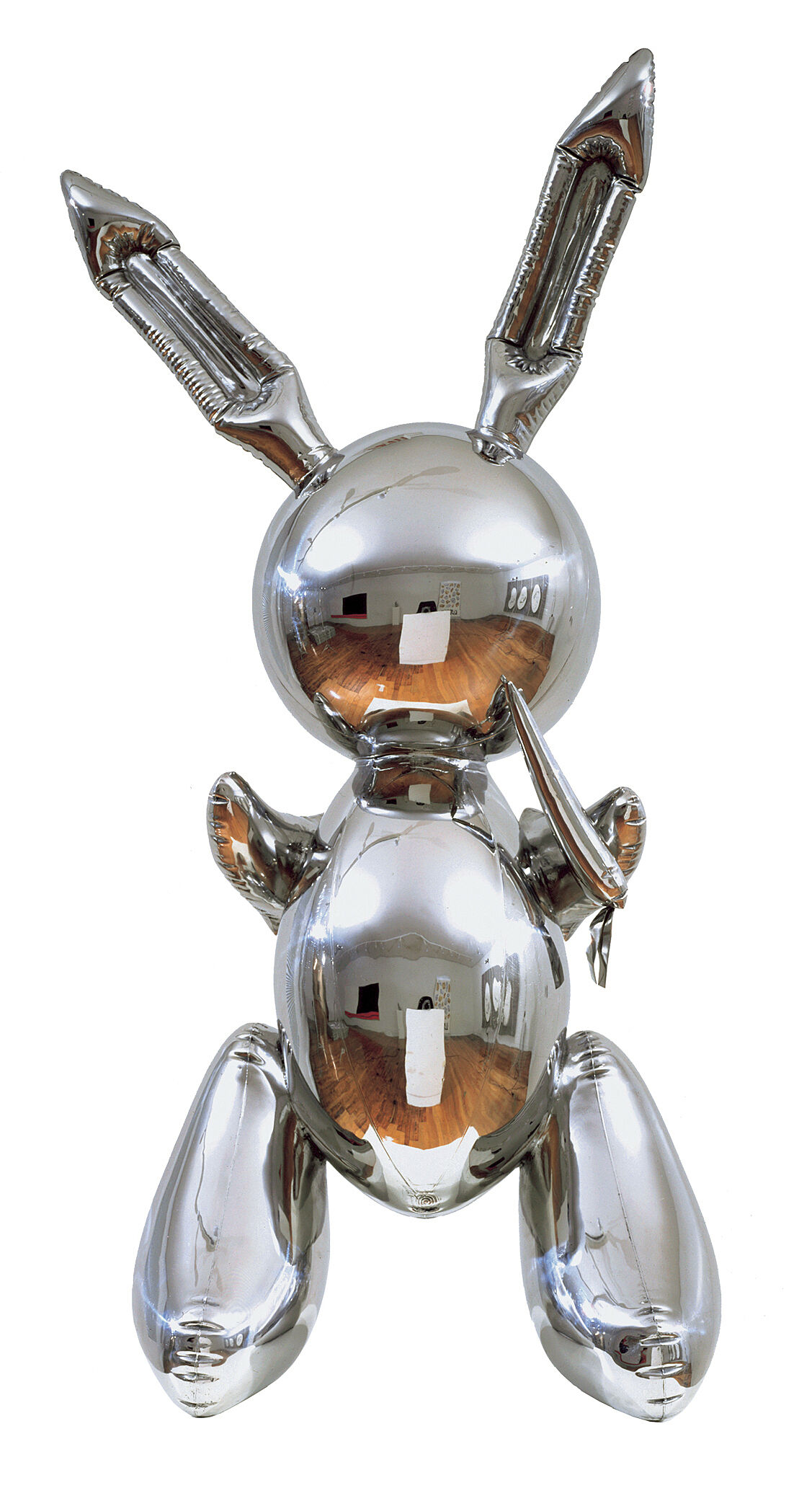
-
303
Jeff Koons, Louis XIV, 1986
Audio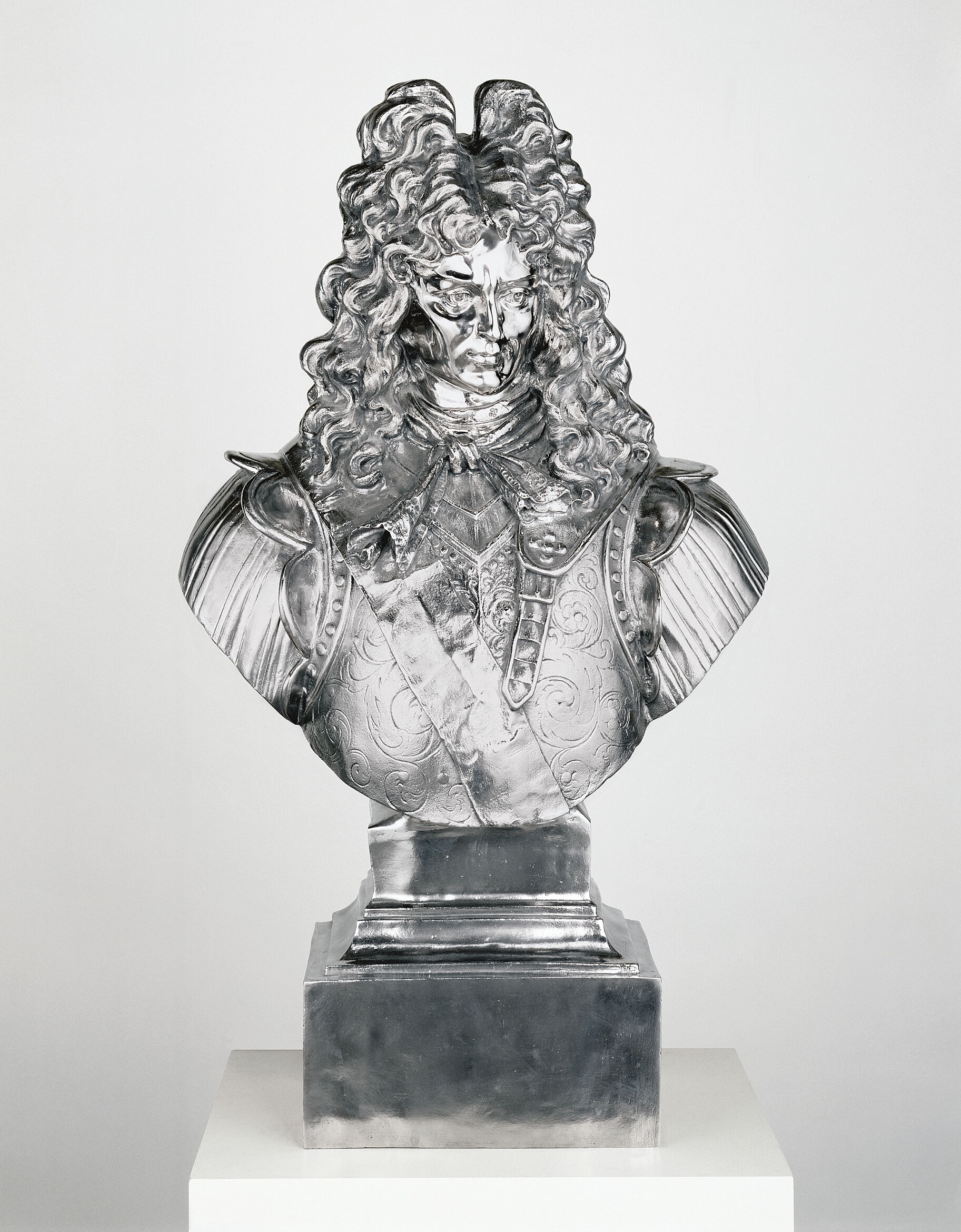
-
304
Jeff Koons, Michael Jackson and Bubbles, 1988
Audio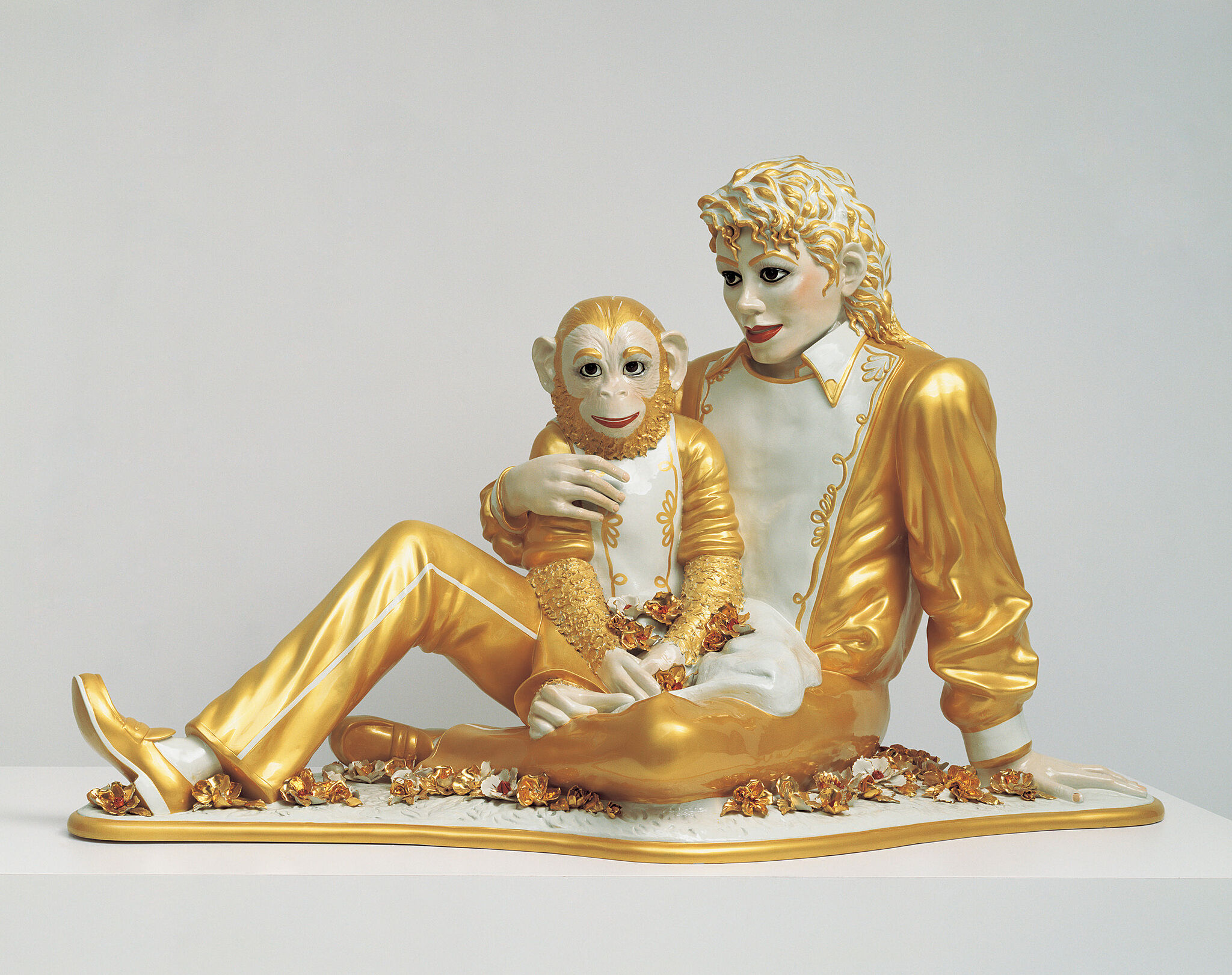
-
305
Jeff Koons, String of Puppies, 1988
Audio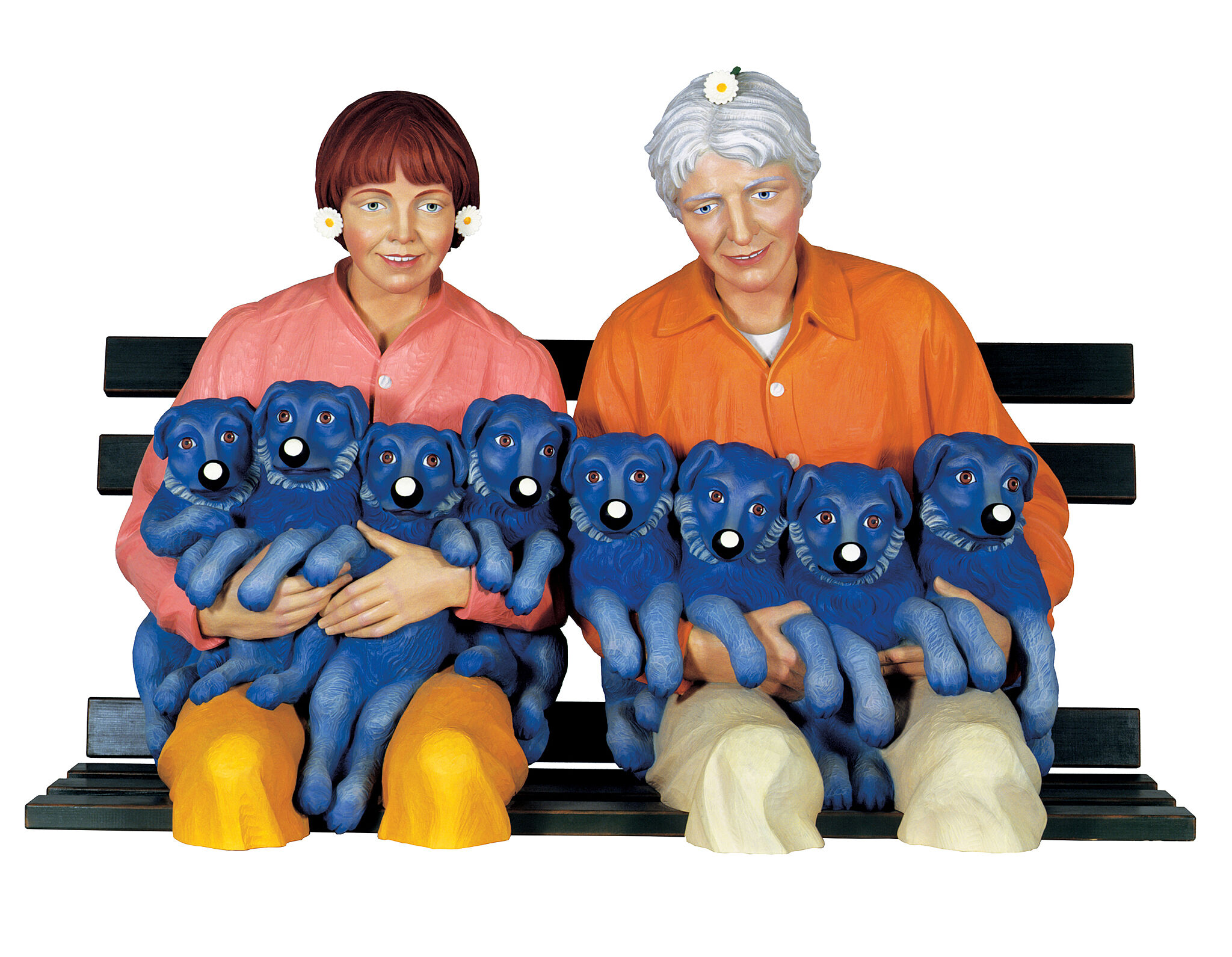
-
306
Jeff Koons, Amore, 1988
Audio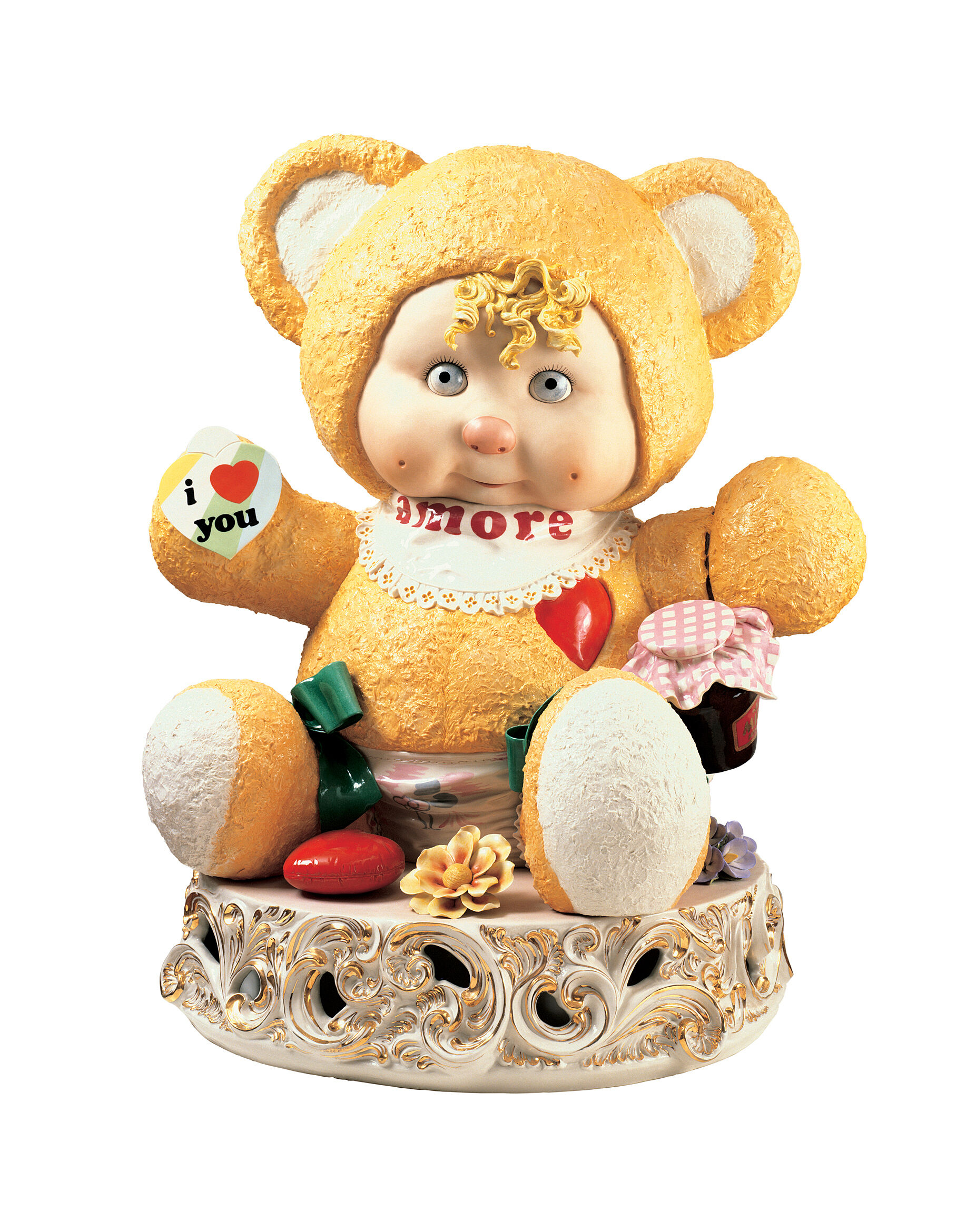
-
307
Jeff Koons, Self-Portrait, 1991
Audio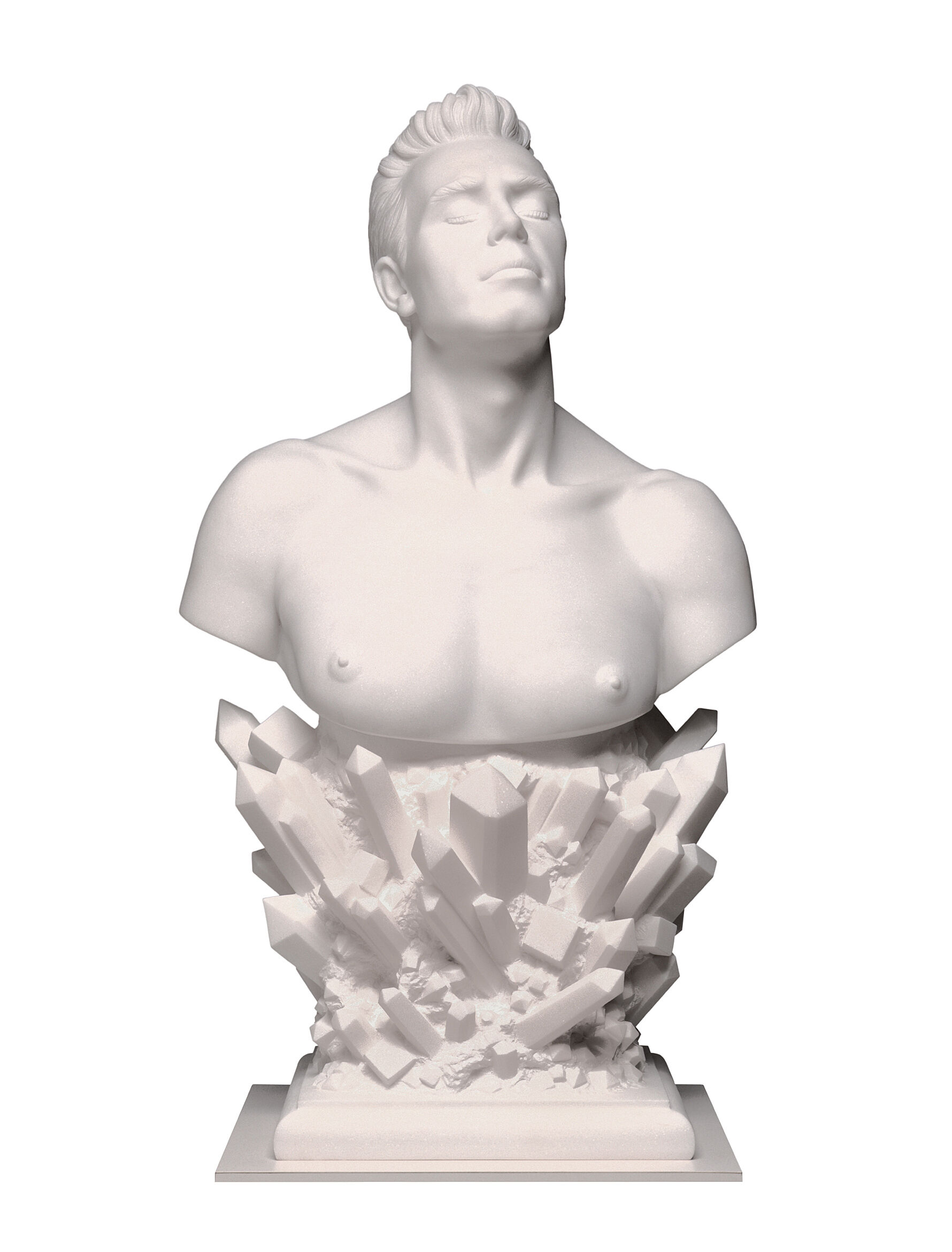
-
308
Jeff Koons, llona on Top, 1990
Audio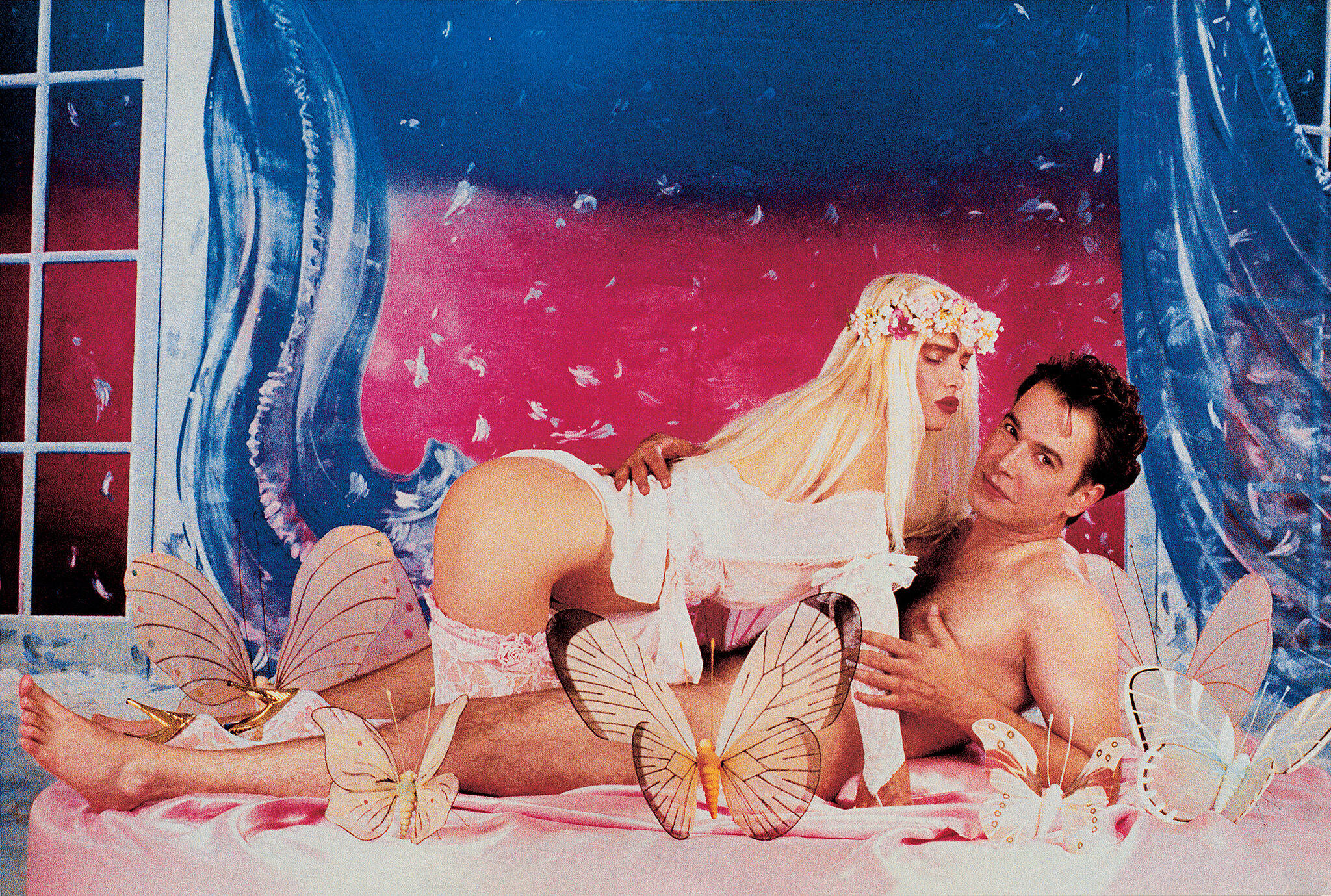
-
309
Jeff Koons, Easyfun Mirrors, 1999
Audio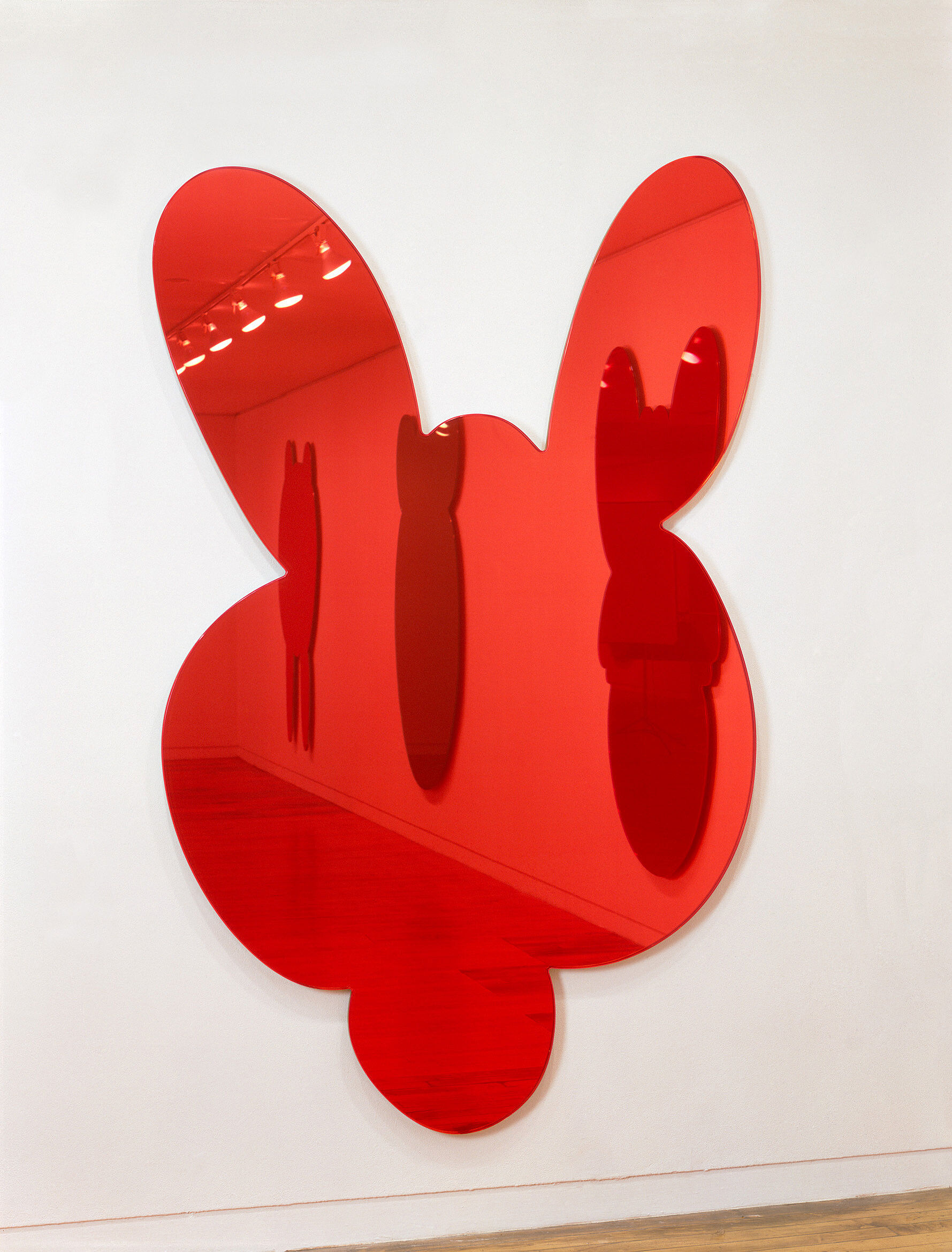
-
310
Jeff Koons, Split-Rocker (Orange/Red), 1999
Audio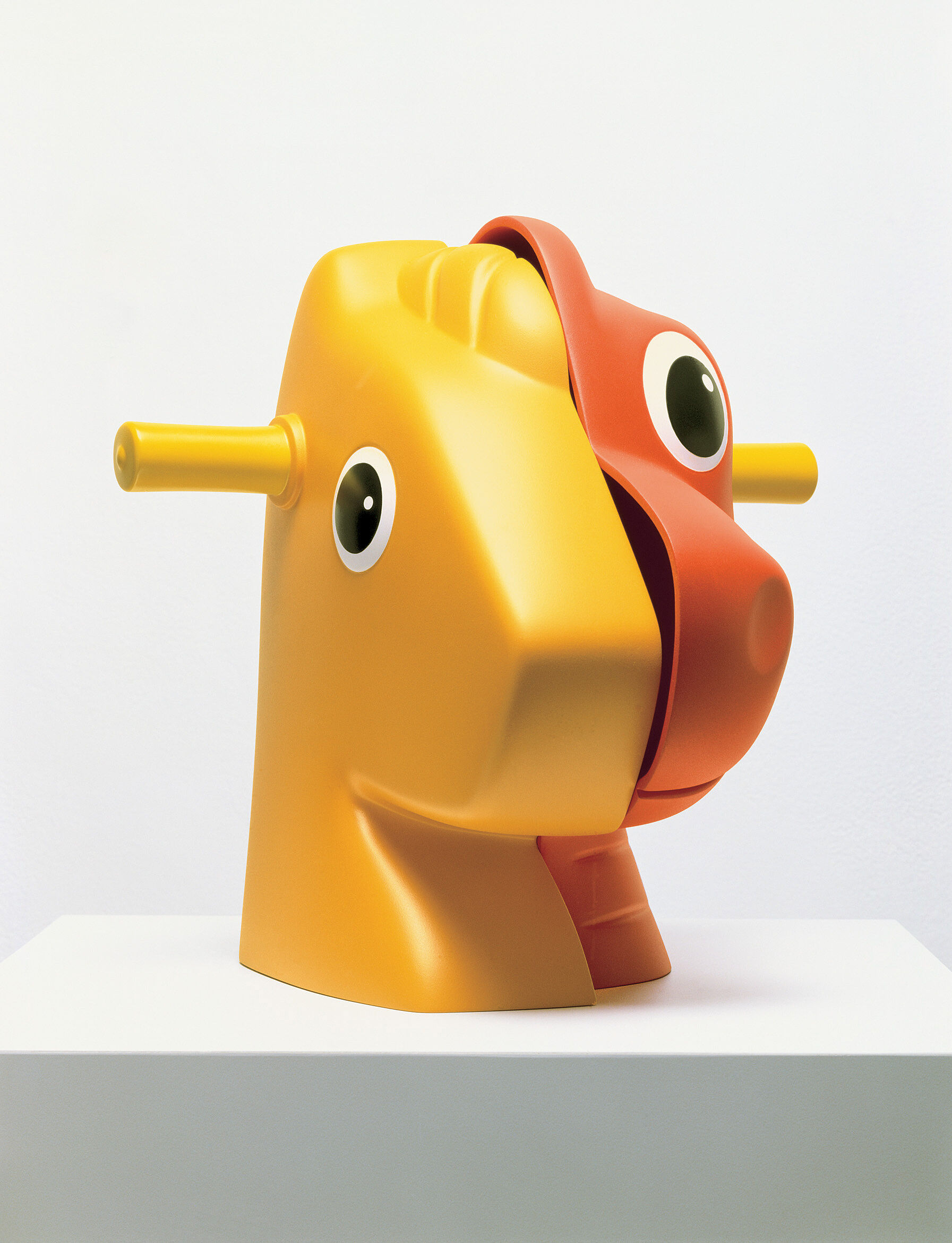
-
311
Jeff Koons, Junkyard, 2002
Audio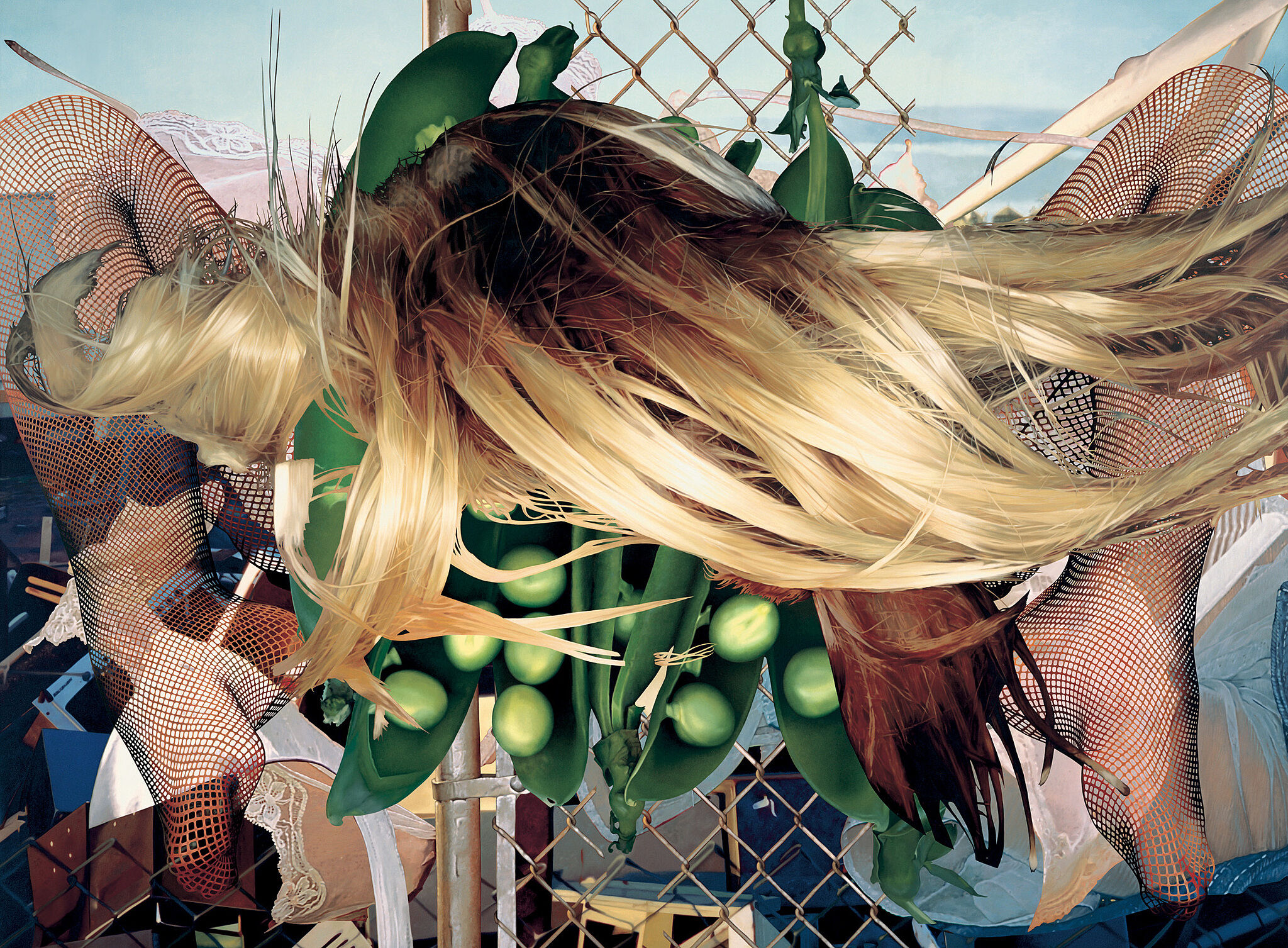
-
401
Jeff Koons, Play-Doh, 1994–2014
Audio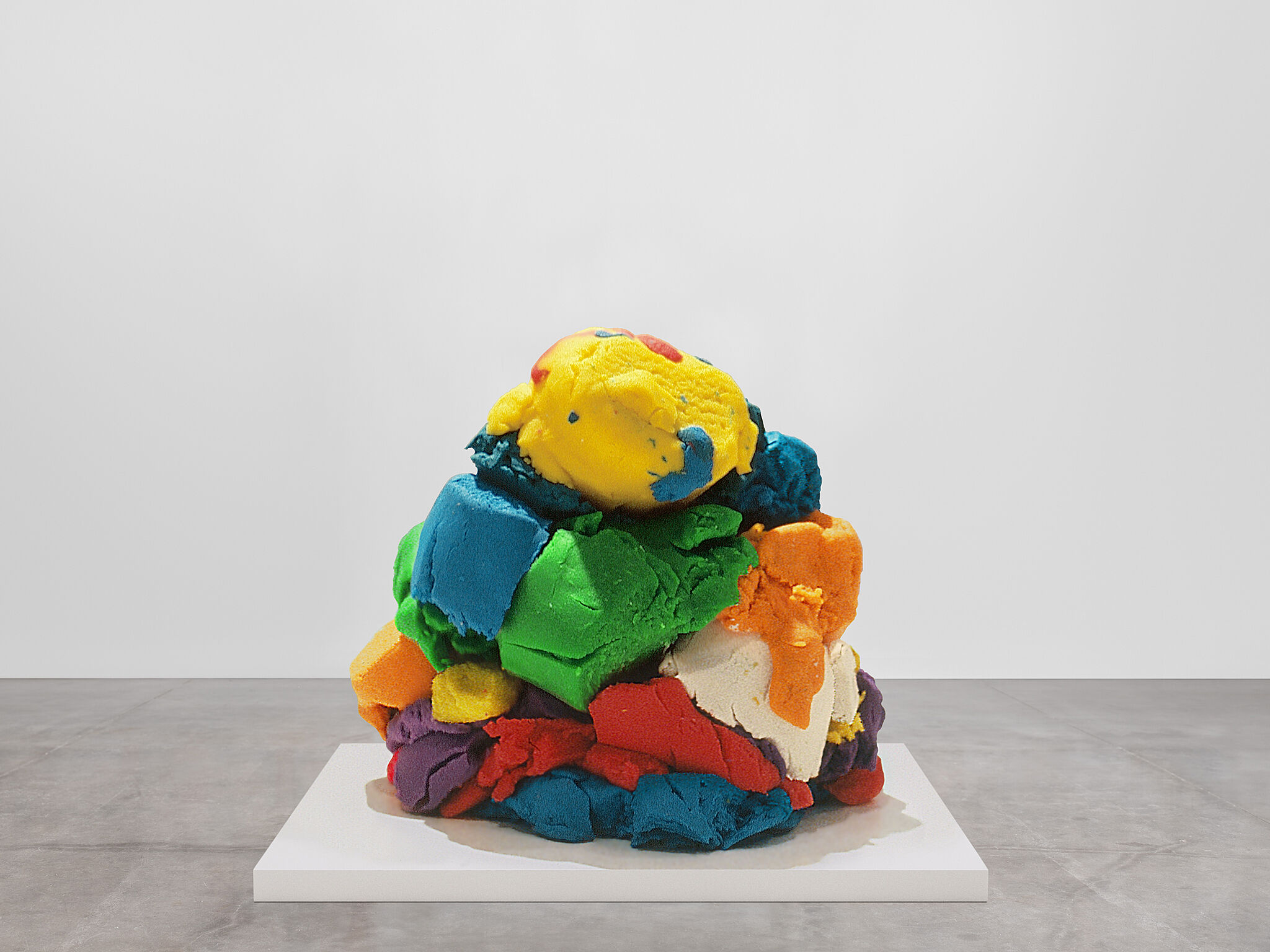
-
402
Jeff Koons, Balloon Dog (Yellow), 1994-2000
Audio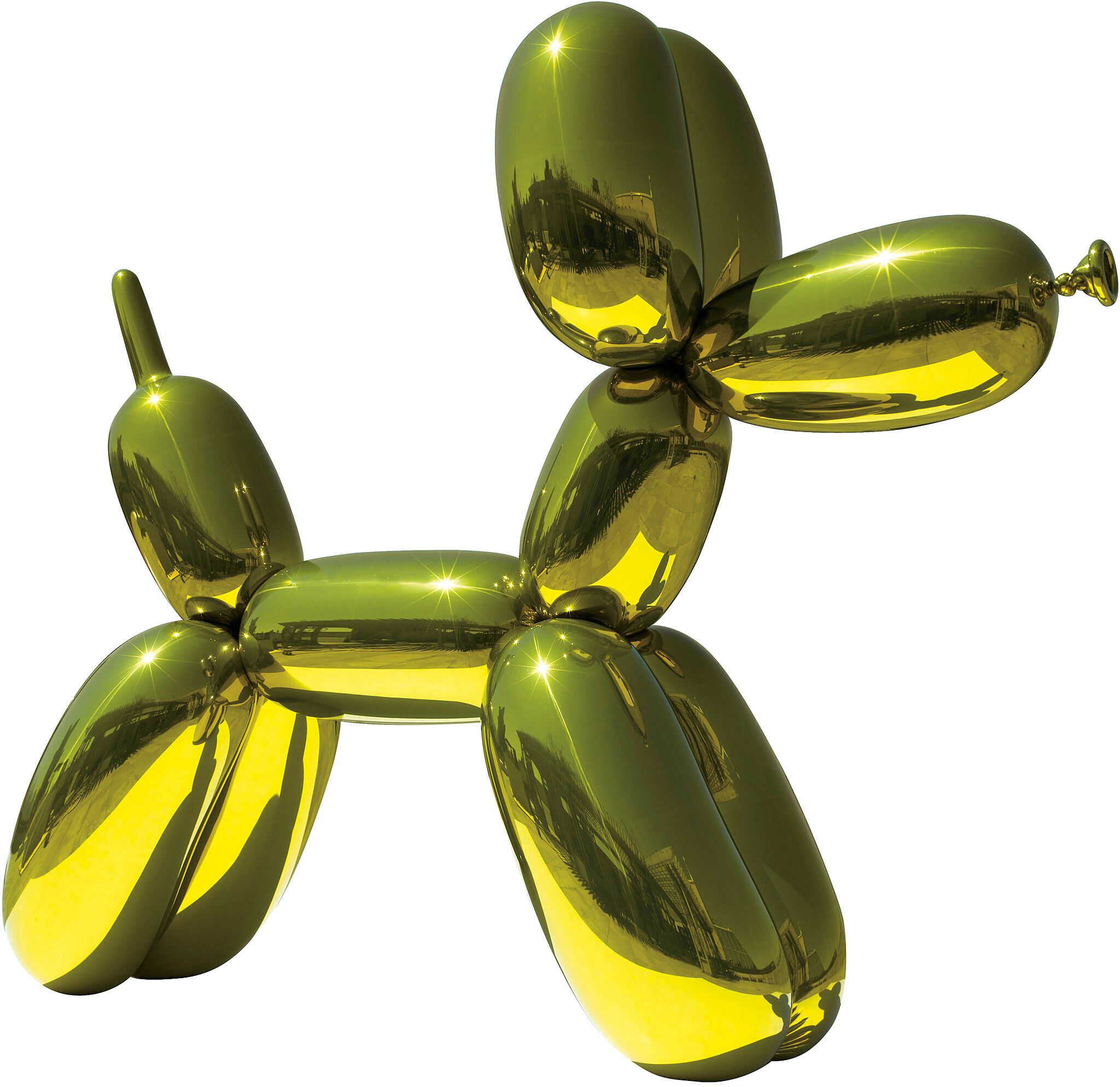
-
403
Jeff Koons, Boy with Pony, 1995–2008
Audio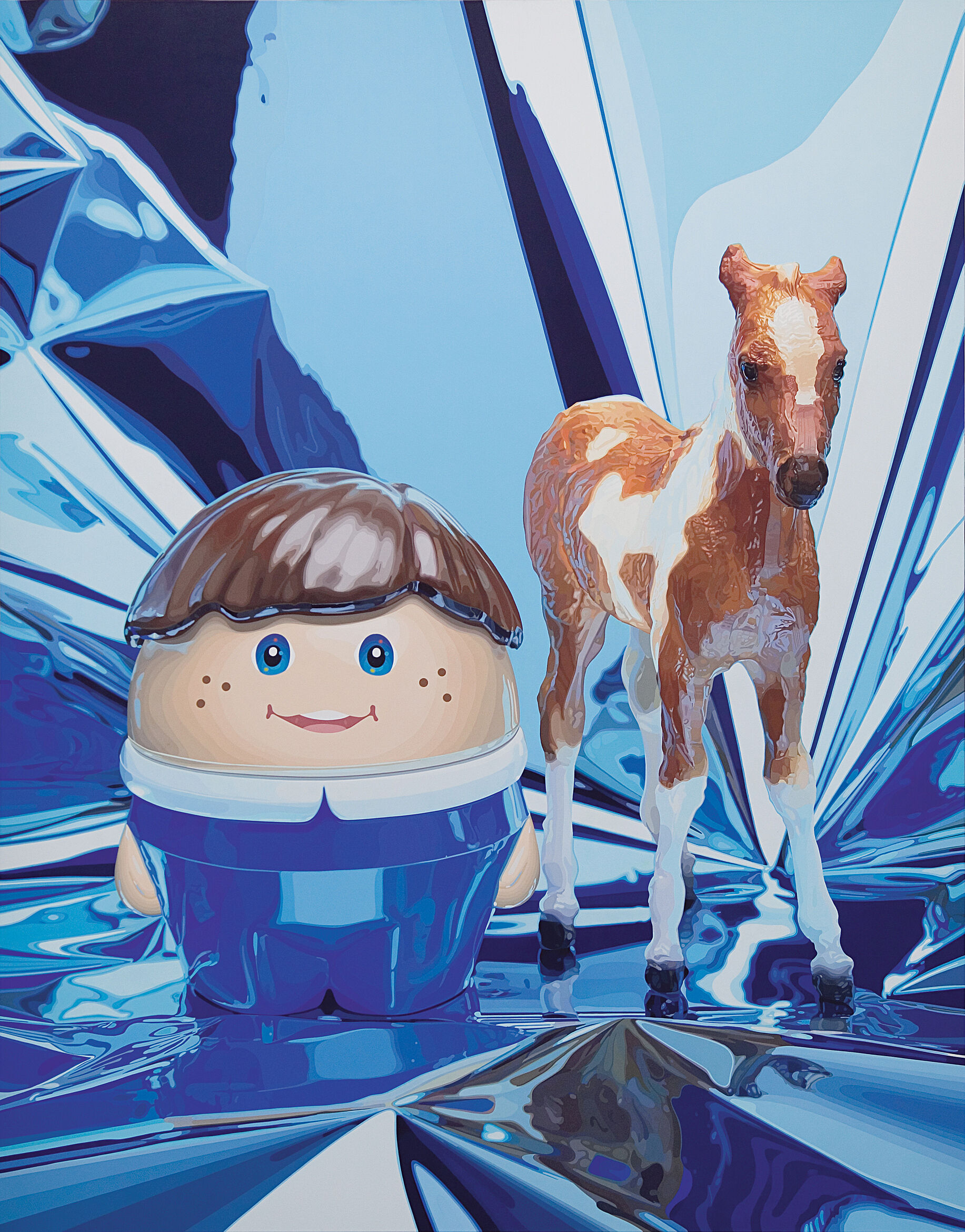
-
404
Jeff Koons, Seal Walrus (Chairs), 2003-9, and Seal Walrus (Trashcans), 2003
Audio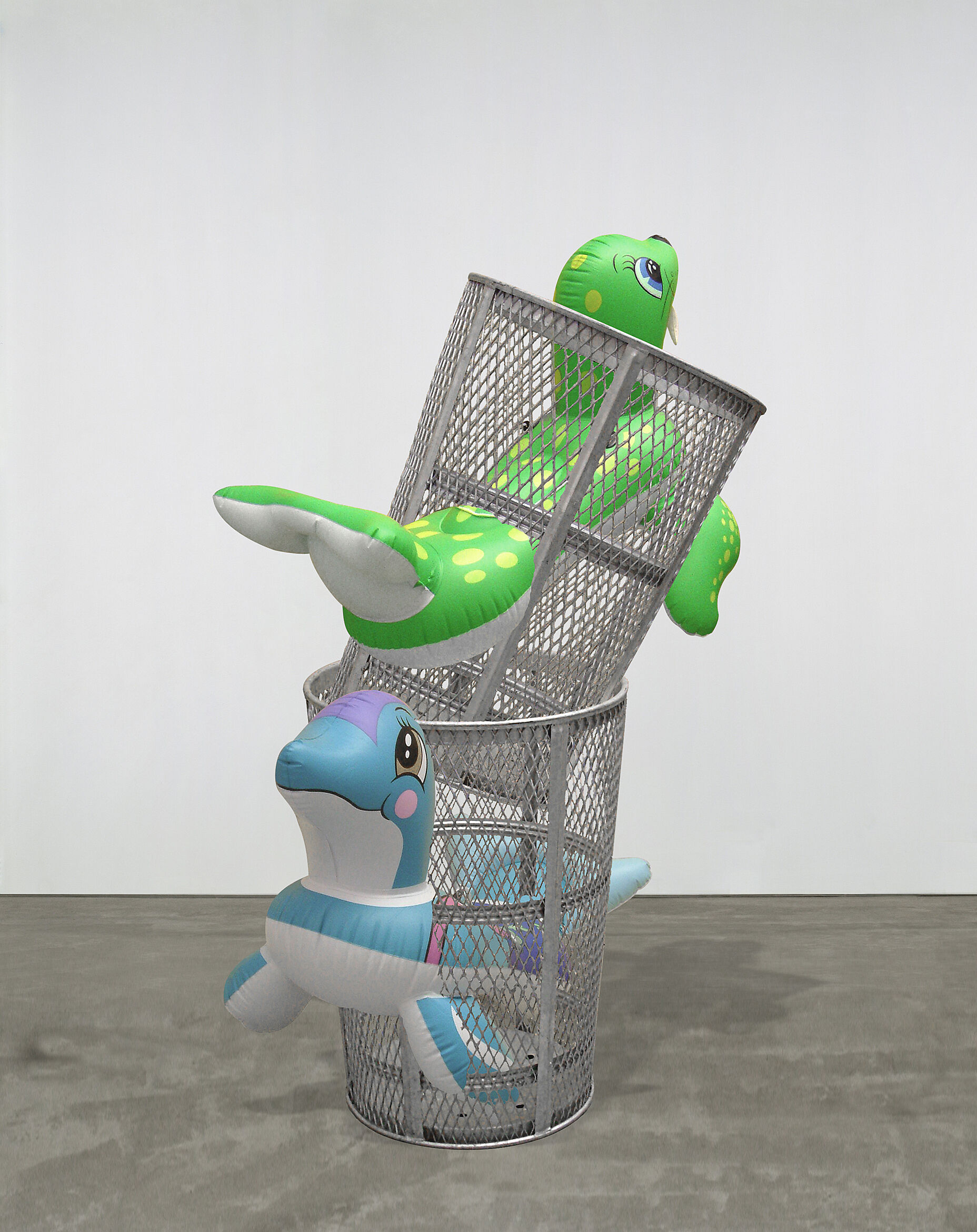
-
405
Jeff Koons, Elvis, 2003
Audio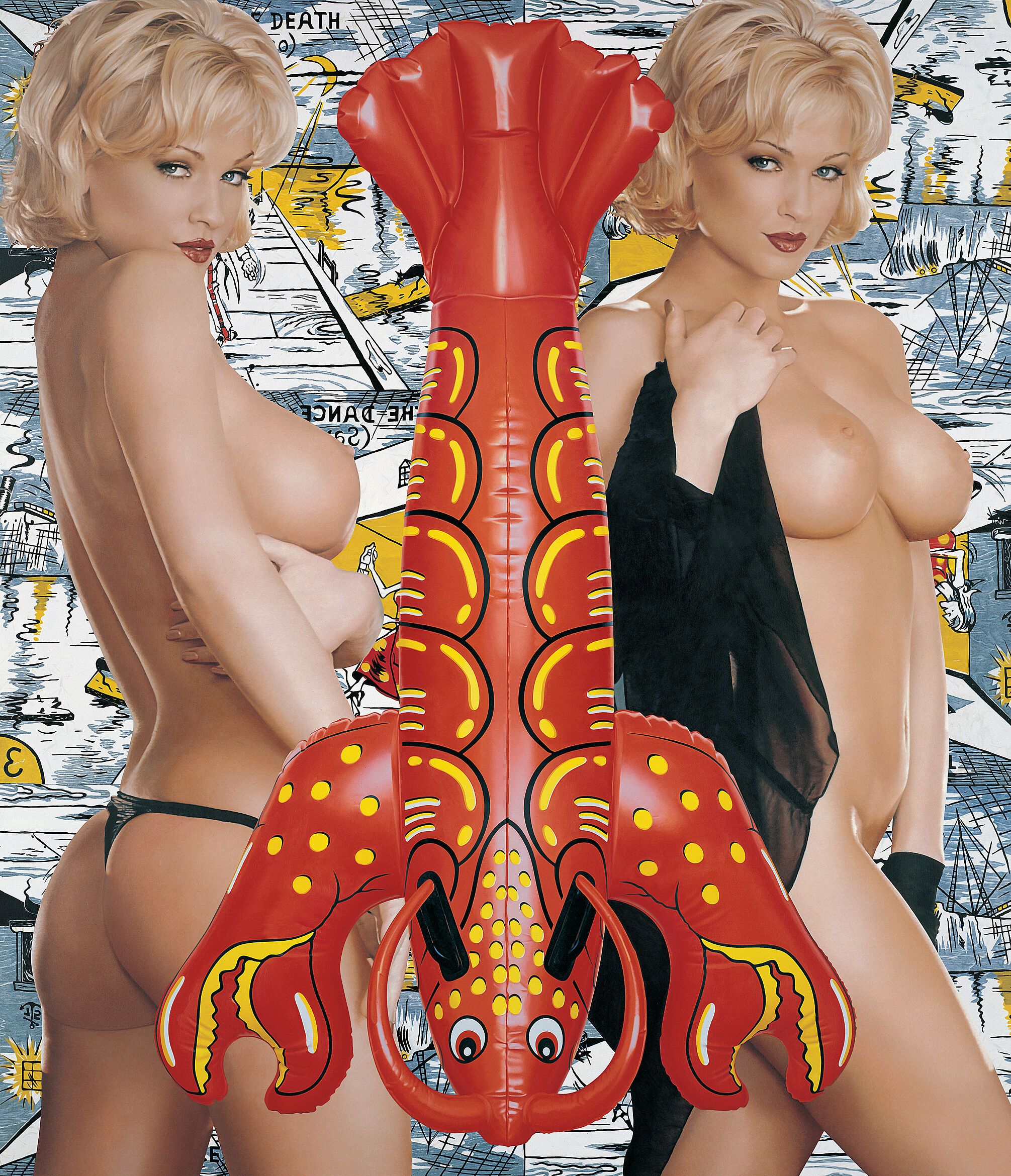
-
406
Jeff Koons, Liberty Bell, 2006–14
Audio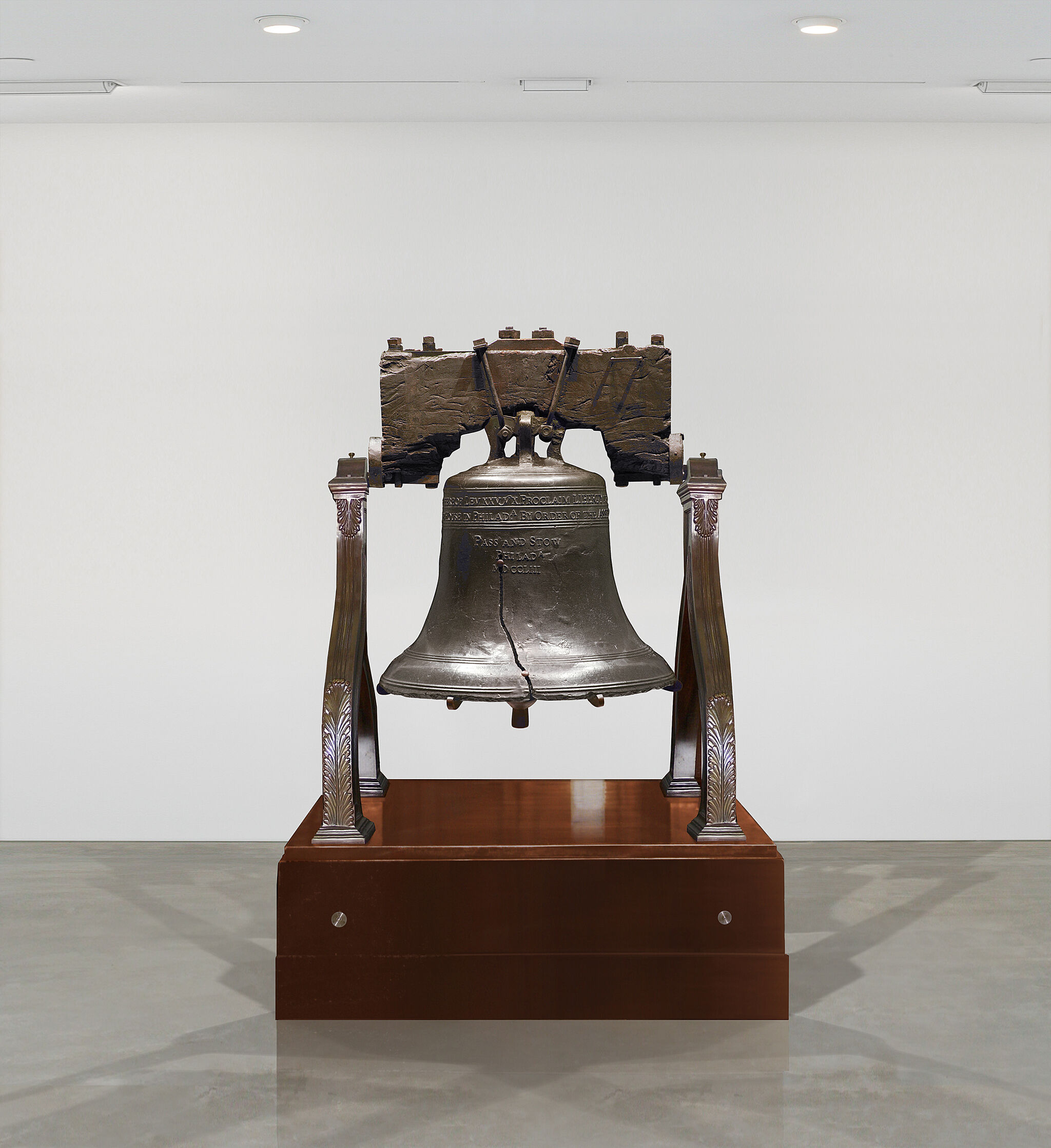
-
407
Jeff Koons, Hulk (Organ), 2004–14
Audio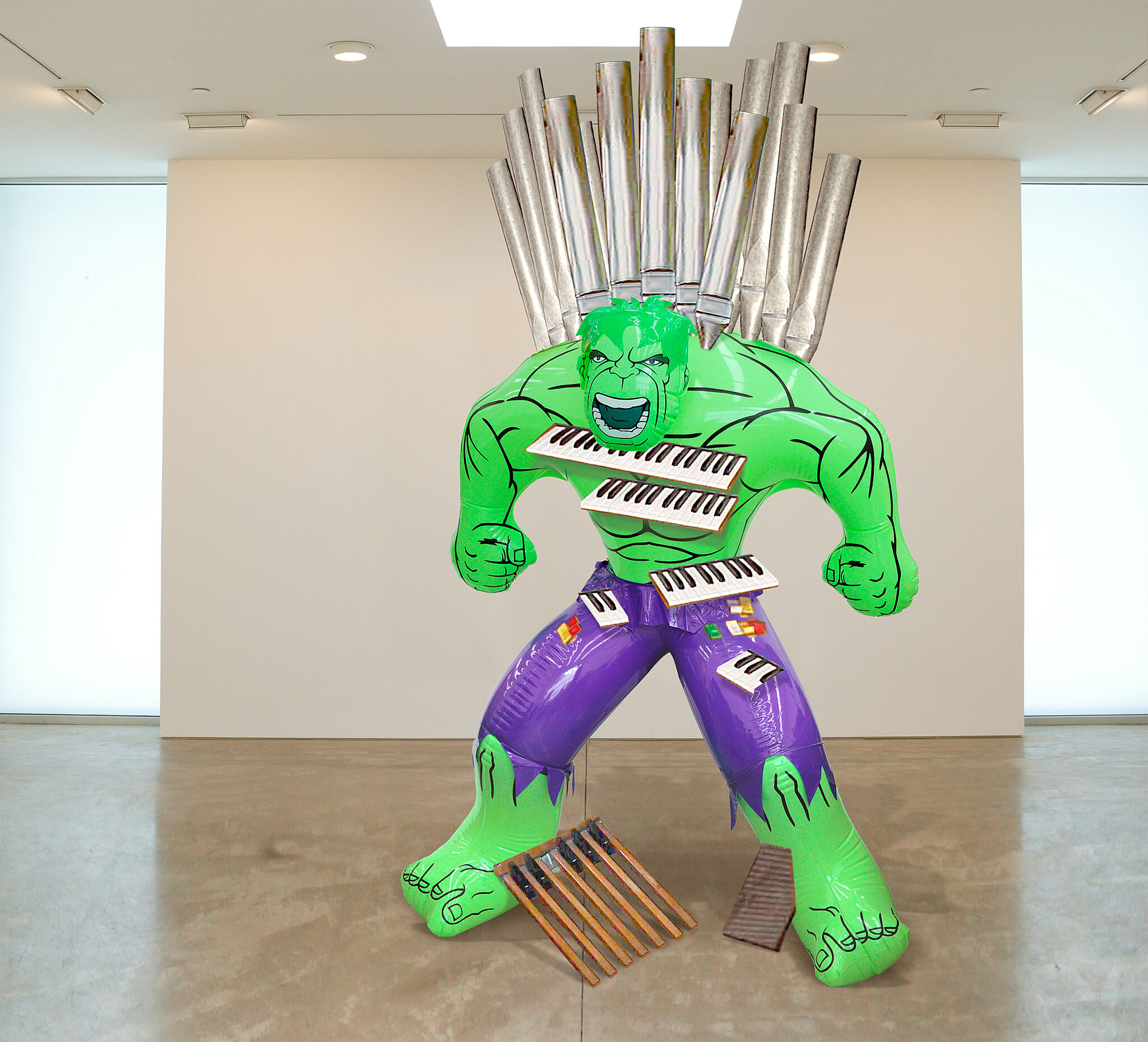
-
408
Jeff Koons, Antiquity
Audio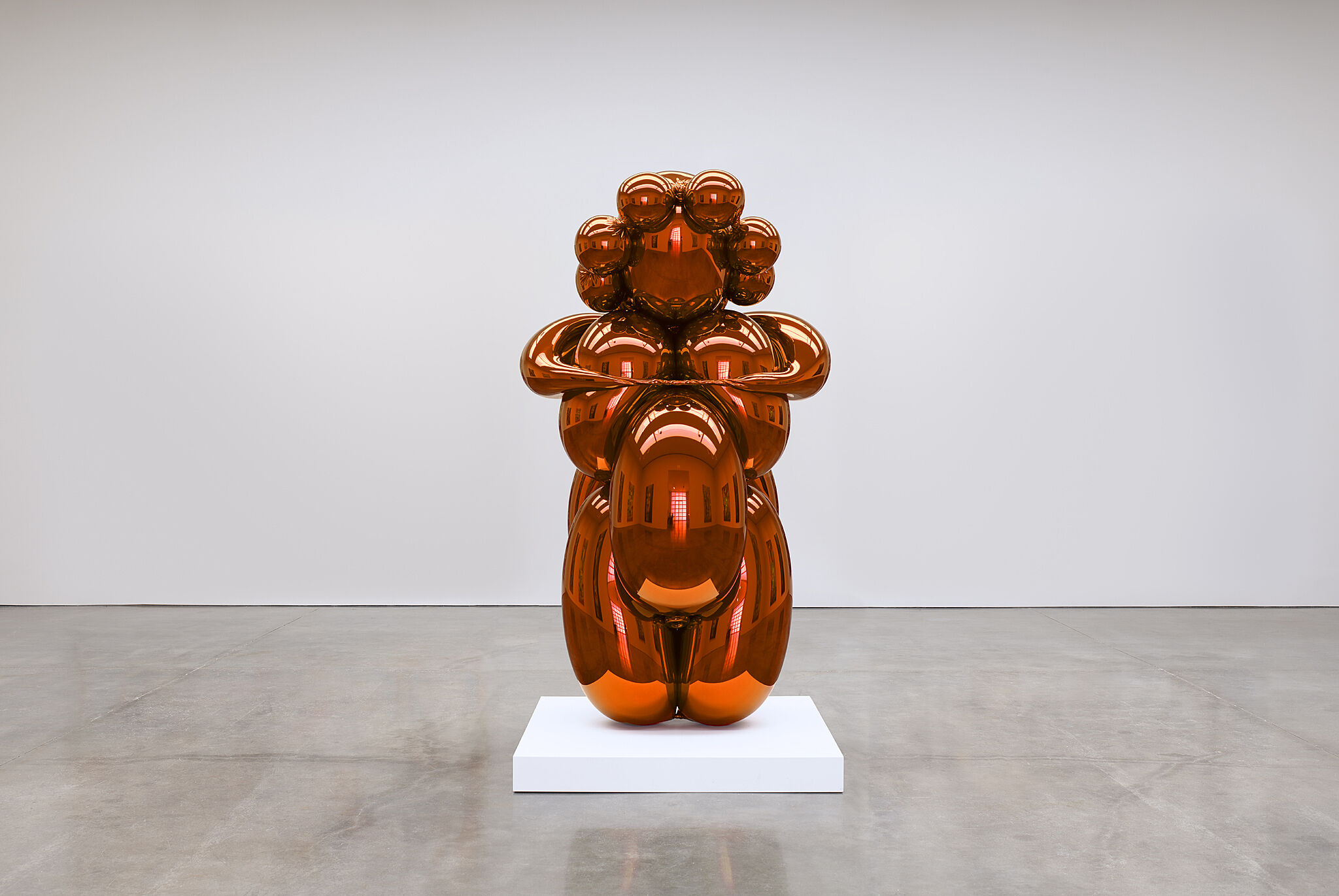
-
101
Jeff Koons, Gazing Ball Series
Audio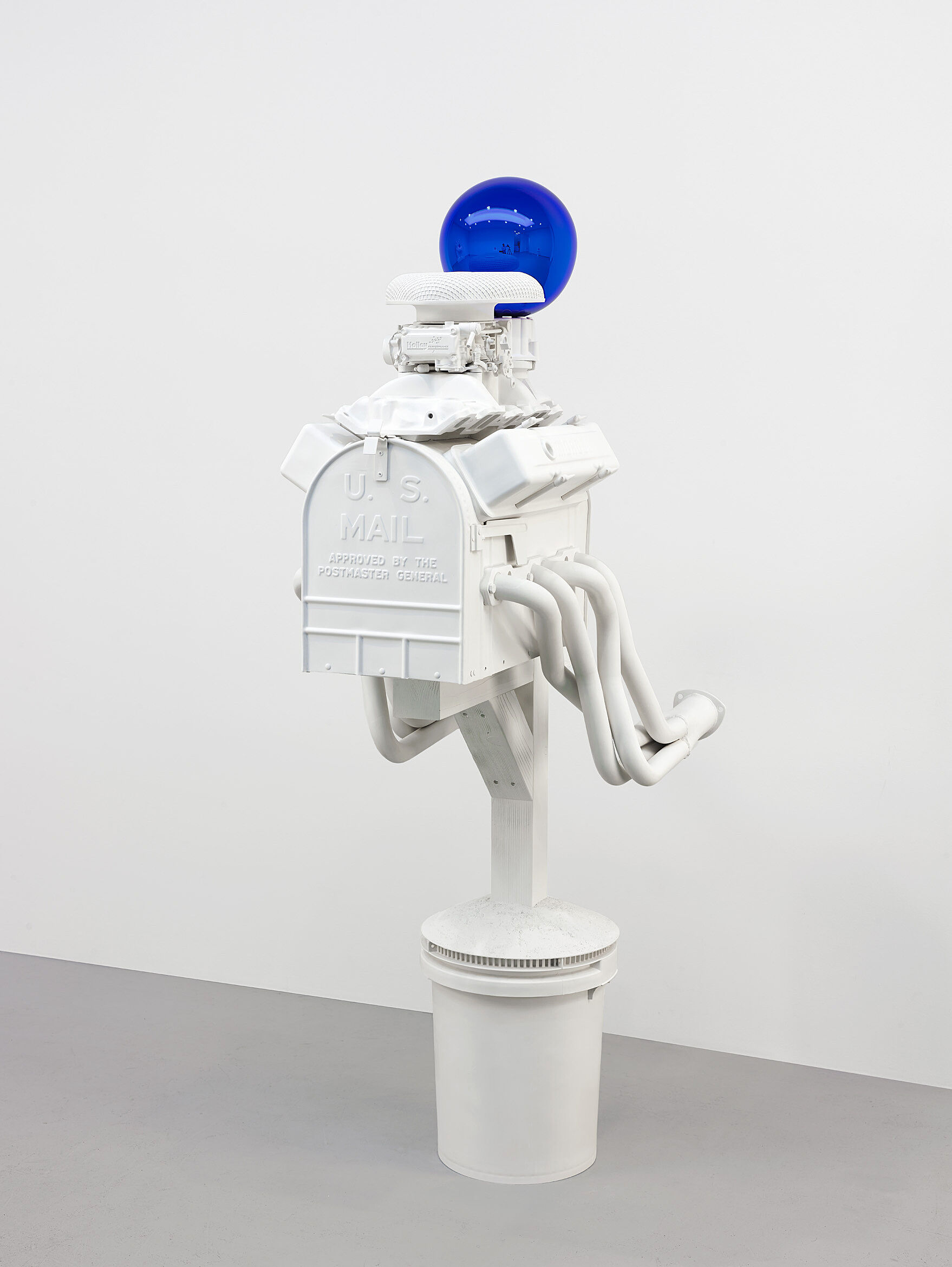
-
001
Jeff Koons, Popeye, 2009–12
Audio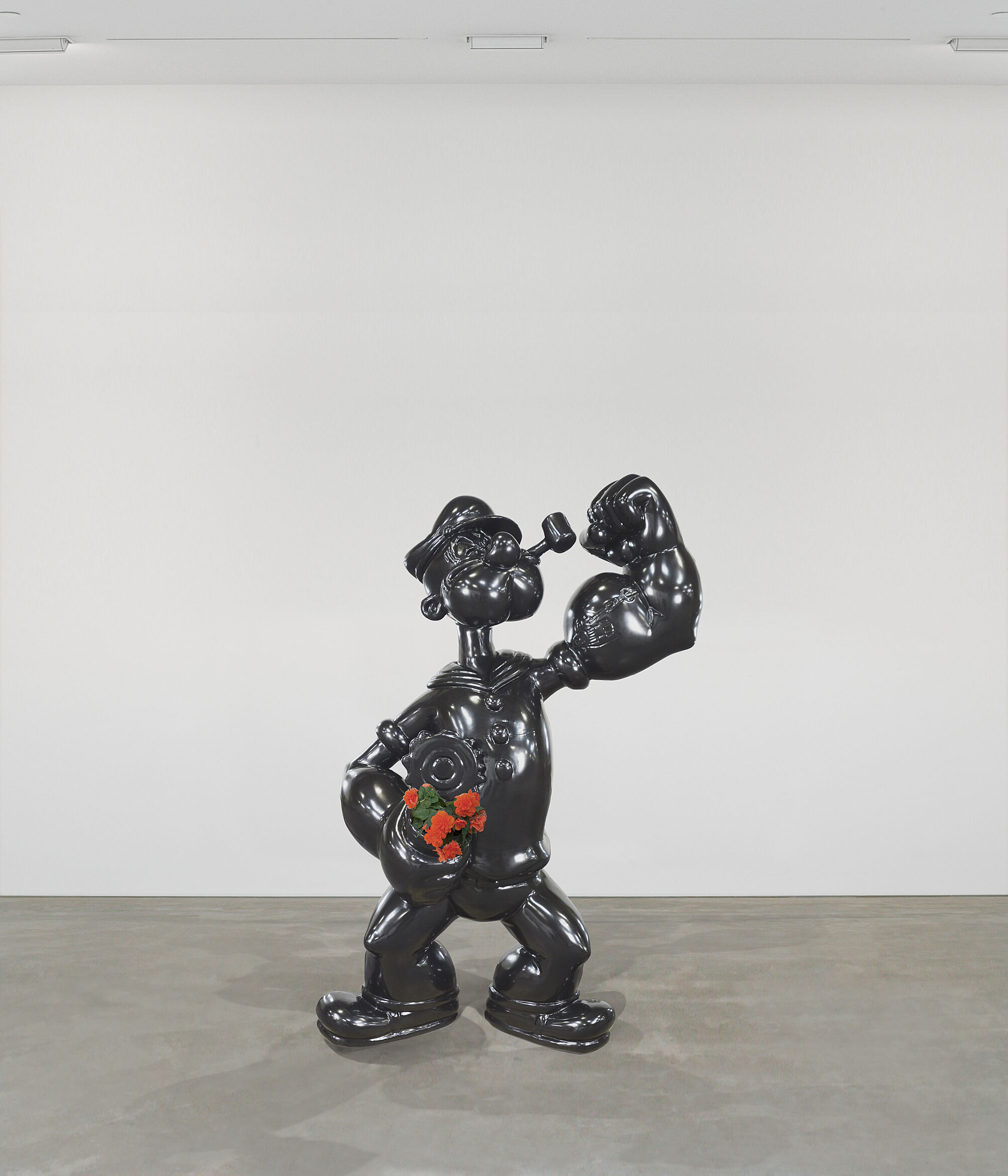
Jeff Koons: I'm Jeff Koons, and I'm very excited to be able to have this opportunity to share some of my thoughts about some of the works that I've created over the last three and a half decades.
Scott Rothkopf: I’m Scott Rothkopf, The Whitney's Nancy and Steve Crown Curator, and curator of Jeff Koons: A Retrospective. This is the first exhibition to survey the full scope of Koons’s work, from 1978 until today. In this program, we’ll talk about his experiments with readymade, mass-produced objects, and contemporary technology. We’ll examine the ways in which Koons has blurred the boundaries between fine art and consumer culture. And we’ll talk about how critics have reacted to Koons’s exploration of sexuality, kitsch, celebrity and other sometimes controversial subjects at the heart of his work.
Jeff Koons: The Inflatables are really where I think my history as an artist begins.
Narrator:Koons made these vinyl works—the Inflatables—soon after his arrival in New York in 1977.
Jeff Koons: When I came across these brightly colored vinyl inflatables I realized that they're anthropomorphic. They're like us. We're like balloons. We inhale and we're a symbol of optimism. We exhale, it's a symbol of death. I loved the sexual charge, the colors of these inflatables. There were some more masculine; they would have a long stem, very phallic in shape. Others were feminine. They would be more circular.
Narrator: Koons knew that he wanted to be an artist from a young age. He went to art school in Baltimore and Chicago, painting subjects drawn from his dreams or his imagination. After he moved to New York in the late 1970s, he began wanting to make more “objective” art, using imagery everyone could relate to.
Scott Rothkopf: One way that he did that was to engage the readymade in his work. The readymade of course is an art historical term that we associate with Marcel Duchamp's work from the nineteen-teens from when he first took objects like a bottle rack or a urinal, and declared them as sculpture. This was a very inspiring and influential concept to Koons as he looked to the everyday world for the subject of his art. His infatuation, in a way, with the found object and the different ways that he can filter it in his art is one of the most interesting threads in this exhibition.
Jeff Koons, Inflatable Flower and Bunny (Tall White, Pink Bunny), 1979. Vinyl and mirrors; 32 x 25 x 19 in. (81.3 x 63.5 x 48.3 cm). The Broad Art Foundation, Santa Monica. © Jeff Koons
Narrator: In these works, which Koons later termed the Pre-New, Koons mounted objects such as vacuum cleaners, toasters, and tea kettles on bright fluorescent lights. They seem a bit alien as a result, a fact that encourages us to focus on their forms rather than their functions.
Koons’s careful attention to display—something that remains important throughout his career—stems in part from his childhood.
Jeff Koons: My father, Henry Koons, was a decorator. And so I grew up being in my father's showroom. Understanding, really, very young in life and through our home, too, that different colors, different textures make you feel different sensations. I really learned aesthetics through my father.
Narrator: When Koons made his Pre-New sculptures, he also had a day job at the Museum of Modern Art. He made frequent visits to the department of Architecture and Design. There, he became sensitive to the way that everyday objects might resemble works by contemporary painters and sculptors in the museum’s collection. These sculptures play with those associations, evoking works by other artists, such as Dan Flavin’s sculptures with fluorescent lights or Frank Stella’s striped paintings.
Narrator: Koons’s One Ball Total Equilibrium Tank, on view in the center of this gallery, is striking in its utter stillness—and surprising in its quiet presentation of something that seems impossible. Ordinarily, a basketball put in water would float on the surface. Here, Koons set out to make it behave differently.
Jeff Koons: I would fill the aquarium up with water and I would have a basketball just hover in a state of equilibrium, where all the forces would be equal.
I wanted just to have water, something very, very pure, just like an embryo would be and water within the womb. But to achieve equilibrium, permanent equilibrium within the confines of an aquarium really became impossible. I worked with a Nobel Prize-winning physicist, Dr. Richard P. Feynman, and he would always tell me, "Yes, Jeff, you can do it," and he really pushed me. It was absolutely wonderful. It was a great experience to work with him.
I ended up just working with pure water, but I would add a very pure reagent grade sodium. The way light travels through a very pure grade of sodium is very, very close to pure water. The water is layered on top. I have heavy water down below and a lighter water on top. The ball's in equilibrium between the two. But eventually it becomes homogenous and the ball will go to the bottom.
Jeff Koons, One Ball Total Equilibrium Tank (Spalding Dr. J 241 Series), 1985. Glass, steel, sodium chloride reagent, distilled water, basketball; 64 3/4 x 30 3/4 x 13 1/4 in. (164.5 x 78.1 x 33.7 cm). Collection of B. Z. and Michael Schwartz. ©Jeff Koons.
Narrator: Koons has made this Lifeboat out of an unlikely material: bronze. Curator Scott Rothkopf.
Scott Rothkopf: The cast bronze sculptures in the Equilibrium series are all complicated as images because, of course, they depict inflatable objects, or snorkels, devices that should help you breathe, or float you, or devices that should help save you, and yet because they're cast out of bronze they're quite heavy, and in fact they would sink.
So this raft that you see here has a permanent inflatedness. It could never be popped, it could never lose its air, because, of course, the artist has rendered it from a soft, ephemeral material and say into something that is permanent, and yet in so doing, he's turned it into a haunting image of a certain death rather than salvation.
Narrator: Koons had intended for The New, the series he made right before Equilibrium, to examine newness as an “ultimate state of being.” In his Equilibrium series, Koons explores another such state. The cast bronzes suggest that even if perfect equilibrium is deeply desirable, it’s finally impossible.
Jeff Koons, Lifeboat, 1985. Bronze; 12 x 80 x 60 in. (30.5 x 203.2 x 152.4 cm). Museum of Contemporary Art Chicago; Gerald S. Elliott Collection, 1995.56.a-c. © Jeff Koons
Narrator: This poster of Darrell Griffith—also known as Dunkenstein—is one of several framed Nike posters that appeared in Koons’s 1985 exhibition, Equilibrium. Koons compares the ball players to “Sirens”—mythological figures who sing so beautifully that they lure sailors to crash on a rocky shore. For the artist, the sports stars have achieved a state as perfect as the one offered by the Equilibrium Tanks. The basketball players’ fame is like the Siren’s song, tempting young men—especially African Americans—to try to use sports to achieve fame, fortune, and the “ultimate state” of stardom. Koons sees this as a parallel to the art world.
Jeff Koons: I was trying to show with the Sirens, the great deceivers. They were really stand-ins for all the contemporary artists at that time, that are positioning themselves as if they've achieved something. That really they're just using art as a form of social mobility. Using it as social mobility, the way maybe other people at times have used sports or other activities for social mobility.
Jeff Koons, Dr. Dunkenstein, 1985. Framed Nike poster; 45 1/2 x 31 1/2 in. (115.6 x 80 cm). Whitney Museum of American Art, New York; promised gift of Thea Westreich Wagner and Ethan Wagner P. 2011.216. © Jeff Koons
Narrator: For his 1986 exhibition Luxury and Degradation, Koons reproduced a number of liquor advertisements as paintings. This Gordon’s gin ad epitomizes an aspirational upper-middle class fantasy of culture, love, and leisure. As you look around, you’ll see other advertisements targeting a variety of racial, ethnic, and economic demographics and offering different versions of luxury.
Scott Rothkopf: I see Luxury and Degradation as a meditation on seduction of the art object. All of the sculptures and the paintings in this room reflect, in different ways, on how art might seduce you, how advertising might seduce you. How alcohol has an effect on making things seem more desirable. Making you feel, yourself, perhaps more sexy to the person that you're with.
A lot of Koons's early work with advertisements deals with false promises. The promise that if you drink this gin, you're going to find love. The promise that if you buy these shoes, you'll be a great basketball player. And it’s not exactly that he undermines or contradicts that promise, but by framing it as specifically as he does, in the context of his artworks, he forces us to reflect on whether these promises in fact ring true.
Jeff Koons, I Could Go For Something Gordon’s, 1986. Oil inks on canvas; 45 × 86 1/2 in. (114.3 × 219.7 cm). Allison and Warren Kanders. © Jeff Koons
Narrator: The sculpture in the middle of the room is a stainless steel cast of a toy train. The original object was a collectible container for Jim Beam bourbon.
Jeff Koons: I was walking down Fifth Avenue in New York and I was around 22nd Street and Fifth Avenue and there was a liquor store. In the window―this glass window―was a Jim Beam J.B. Turner train. There were seven cars and they were made out of porcelain and plastic and they were on plastic track, and they were all lined up and there were seven fifths of bourbon.
I thought, "This would be fantastic to take this object that's a readymade and to transform it into a metal." I thought right away it would be beautiful in stainless steel, and to bring it to a mirror polish so it'd be luxurious. It would be intoxicating to look at. You look at it and the room’s upside down, it's reflective.
Narrator: Koons wanted his sculpture—like its model—to contain bourbon.
Jeff Koons: But how would I get the liquor? How would I maintain the liquor in doing it? Because I realized that the liquor was the soul to the piece. I thought, well, if I acquire this and I cast it into the steel and I polish it, I could take the train back to Jim Beam, they could fill it up and put this seal, the tax stamp seal, back on the piece, and that's the interface to the soul.
Jeff Koons, Jim Beam—J. B. Turner Train, 1986. Stainless steel and bourbon; 11 x 114 x 6 1⁄2 in. (27.9 x 289.6 x 16.5 cm). Private collection. © Jeff Koons
Narrator: In 1989, the Whitney Museum invited Koons to create an outdoor billboard for Image World, an exhibition exploring the relationship between art and the media. Jeff Koons.
Jeff Koons: I thought, "You know what I'll do? I'll create this billboard that's advertising a film. I'll call it Made in Heaven, and it'll be starring myself, Jeff Koons, and Cicciolina. It'll be like I became another star."
Narrator: La Cicciolina was the stage name of Ilona Staller, an adult movie actress and member of the Italian parliament.
Jeff Koons: I hired Ilona and I went to Rome, I treated everything as a readymade. Used the same photographer she always worked with, used the same sets she always worked with, had her wear the same type of dresses, same type of makeup, and I did a photo shoot with her to create the billboard. We ended up flirting with each other and we fell in love.
Jeff Koons, Made in Heaven, 1989. Lithograph on paper on canvas; 125 x 272 in. (317.5 x 690.9 cm). Rudolf and Ute Scharpff Collection. ©Jeff Koons
Narrator: Koons’s sculpture Rabbit is on view in the center of the room.
Scott Rothkopf: The Rabbit, I would say, is one of the most famous works of Jeff Koons's career, and in fact, one of the most famous artworks of the last forty or fifty years.
Narrator: Curator Scott Rothkopf.
Scott Rothkopf: Part of its reasons for having become so well-known is because it's a little difficult to pin down. The blank features of the Rabbit, its absent face, its round head, make it a perfect surface for our infinite projections. Some commentators have talked about the Rabbit as a spaceman. Others have seen him as the Playboy bunny, or an orator holding up a microphone where the carrot is. Koons himself has talked about the carrot to the mouth as a symbol of masturbation.
Another aspect of the Rabbit that makes it so iconic is the incredible balance that Koons achieves between the tremendous specificity of the casting, the fine detailing of the crimps, the puckers of the plastic, with its abstraction: the blankness of the face, the missing printing on the vinyl. The tension that he creates between fine detail on the one hand, and a blankness on the other, is incredibly mesmerizing.
Of course, there's the aspect of this inflatable toy that was meant to be ephemeral, disposable, that it would lose its air, made permanent for all time as its own icon.
Jeff Koons, Rabbit, 1986. Stainless steel; 41 x 19 x 12 in. (104.1 x 48.3 x 30.5 cm). Museum of Contemporary Art Chicago; partial gift of Stefan T. Edlis and H. Gael Neeson, 2000.21. © Jeff Koons
Scott Rothkopf: Louis XIV is based on a famous bust depicting the Sun King of France, who's most known today for having built Versailles.
What you see here is Koons having made a cast out of stainless steel, which is a cheap metal, used more commonly for pots and pans than in fine sculpture, to render this image of a ruler, of a monarch, at the height of his absolute power.
Narrator: Koons has given all of the works in this series, which he called Statuary, the same treatment. In doing so, he’s flattened the difference between the Sun King, Bob Hope, and a troll figurine, among others. He’s also erased any distinctions between fine art and kitsch.
At the same time, Koons has accorded each of these objects the utmost respect. He was absolutely meticulous in translating the original models for these works into stainless steel.
Jeff Koons: To me it was really important to maintain every nuance, authenticity of the object. Not to be manipulating it, not to try to add anything that I saw as a perfection or to take away any imperfection, but to accept that object completely as it is, and to be sure to capture that and not to alter anything. When I would be working with the foundry, I would want to be sure that they would spend as much attention in casting the bottom of the object and in finishing the bottom of the object which no one would ever see as to the very front or the main surface pointing forward on an object.
It's about showing a moral responsibility to the viewer, so that the viewer can trust in the communication between the two of us.
Jeff Koons, Louis XIV, 1986. Stainless steel; 46 x 27 x 15 in. (116.8 x 68.6 x 38.1 cm). Raymond and Patsy Nasher Collection, Nasher Sculpture Center, Dallas. ©Jeff Koons.
Narrator: Michael Jackson and Bubbles, on view in the center of the room, is one of Koons’s best-known works.
Scott Rothkopf: It's hard for me to imagine a portrait or depiction of a celebrity or a personality that feels more resonant in the contemporary age.
At the time that Koons made this sculpture, Jackson, like Koons, in fact, was the most famous figure in his field. He was adored by millions of fans around the world. He was seen like a god. I think that this sculpture presents him as such. He's idealized. His skin is smooth. He is surrounded by flowers that may be offerings from adoring fans or religious devotees. He's holding his pet chimpanzee, Bubbles, in a pose that's reminiscent of the famous depiction of The Pietà where Michelangelo shows the Virgin Mary holding Christ after his crucifixion.
Narrator: The works in this room are from Koons’s 1986 exhibition Banality. Koons has often described the series as a challenge to the notion that modern art must be difficult—that appreciation is something the art audience must learn. Focusing on a figure as wildly popular as Michael Jackson, for example, directly refutes these notions. If you’d like to hear Koons discuss this aspect of Banality, please tap the button to continue.
Jeff Koons, Michael Jackson and Bubbles, 1988. Porcelain; 42 x 70 1/2 x 32 1/2 in. (106.7 x 179.1 x 82.6 cm). Private collection. © Jeff Koons
Narrator: In Koons’s wooden sculpture String of Puppies—on view in the center of the gallery--two people sit on a park bench, holding a row of bright blue puppies.
Like all of the works in Banality, it’s not a straight readymade. Koons based these sculptures on photographs and objects that he found and transformed. In the case of String of Puppies, the source material was a photograph by Art Rogers, which was used on greeting cards.
Amy Adler: Art Rogers sued Koons and won successfully for copyright violation.
Narrator: Amy Adler is the Emily Kempin Professor at NYU Law School, where she specializes in art law.
AA: And Koons mounted what’s called a fair use defense, saying that yes, I copied your work, but I did so in a way that was fair and that actually promotes the interest that copyright law is supposed to further. Koons lost in the district court, and he also lost in the federal court of appeals. And he lost rather spectacularly. It was a staggering defeat.
There was a great hostility to his work that you could feel in the decision. They talked about him as “sailing under the flag of piracy,” they talked about him as “involved in the business of art.” They talked about how much money he’d made from the work. And they contrasted that to Art Rogers, who they saw as sort of a sweet, wholesome puppy photographer.
In a sense they understood Koons’s work, that kind of sinister frightening quality, and in a way that should have led them to understand that it was quite different from Rogers and should have been fair use under the law.
Narrator: Copyright law has changed since 1992, and Adler thinks that Koons would have won if this case were being heard today.
Jeff Koons, String of Puppies, 1988. Polychromed wood; 42 x 62 x 37 in. (106.7 x 157.5 x 94 cm). Private collection; courtesy Hauser & Wirth. © Jeff Koons
Narrator: One of the works in Banality, which Koons called Amore, is based on a stuffed doll dressed in a teddy bear costume.
Scott Rothkopf: What's so odd about a sculpture like this is that you're meant to hug a stuffed animal. It's meant to be lovable, a doll. Yet here, he's made this object that's reaching out to you, that's saying "I love you" on its sticker, hard to imagine holding. It's rough on its surface. It's literally made hard. It's no longer cuddly, but a little bit repellant, almost.
Maybe it wants to be loved too much.
I recognize that for Koons, one of the starting places of the series was his desire to free us from the shame or the guilt of the bad taste that we might have had in terms of our affection for the toys of our childhood. The kinds of art that we were taught not to like. I'm not certain that these objects, necessarily, will do that for all of the viewers.
In fact, some of the things that I think he encourages us to find appealing in this body of work can also perform a slightly different function.
The quality of taking things that seem cute, and turning up the volume on their cuteness, or charm, so loud that they no longer function in the way that their original creators had in mind, is something that in a way is what turns them into art, for me.
Narrator: Banality was extremely controversial when Koons first exhibited it. To hear about critical reaction to the show, please tap the button.
Jeff Koons, Amore, 1988. Porcelain; 32 x 20 x 20 in. (81.3 x 50.8 x 50.8 cm). Lehmann-Art Ltd. © Jeff Koons
Scott Rothkopf: You see a stylized depiction of the artist in a mode that suggests certain neoclassical sculptures from eighteenth century Italy or France, very idealized.
As much as Koons casts himself in this sculpture as an idealized, heroic figure, it also suggests the statues that maybe you would see in Las Vegas or in a theme restaurant.
There's something corny and kitschy about an artist presenting himself in this way. His head is tilted back. His eyes are closed. He looks like he's ready to have makeup put on, to receive the spotlight. His nipples are pert. His muscles are bulging. He could be having an orgasm. Is that brought on by a lover, the attention of the crowd? Is he high on his own achievement?
With the Banality work in the preceding gallery, Koons became a sensation in New York and around the world. With Made in Heaven he started to figure himself as part of that celebrity.
Jeff Koons, Self-Portrait, 1991. Marble; 37 1/2 x 20 1/2 x 14 1/2 in. (95.3 x 52.1 x 36.8 cm). Neil G. Bluhm. © Jeff Koons
Narrator: Some months after Koons made the Made in Heaven billboard with Ilona Staller, he returned to her studio for additional photo shoots in order to make a sculpture and additional paintings.
Scott Rothkopf: Once he began this series, he realized the series had greater potential, and, in fact, he also realized that he was falling in love with his model or his costar.
Narrator: In 1991, Koons and Staller were married.
Scott Rothkopf: What began as work for hire or a project between an artist an model became a document or form of self-portraiture that was chronicling their personal life. Their personal life and his work became so entwined that it became difficult to tell the difference between one and the other.
Jeff Koons: I decided that what was really important in the body of work was the embrace of one's own body.
Narrator: Jeff Koons.
Jeff Koons: We take it for granted, but a lot of people don't accept nature. They don't accept the concept of procreation, how it actually works or our bodies, how we function as an organism. The Made in Heaven show was an extension of this dialogue of acceptance. Accepting oneself and being able to go out and accept others.
Scott Rothkopf: Some feminist scholars, at the time, were appalled by these images because they felt that they were very degrading of Staller, Koons's wife at the time.
Jeff Koons, Ilona on Top (Rosa Background), 1990. Oil inks on canvas; 96 x 144 in. (243.8 x 365.8 cm). Private collection. © Jeff Koons
Narrator: The mirrors in this room come from a series that Koons titled Easyfun.
Scott Rothkopf: You see each of these mirrors takes the form or shape, silhouette, of a cartoon animal, and is rendered in a bright, almost Life Saver like color, candy colored tones.
When you look at yourself in these mirrors, you're distorted a little bit like in a fun house. That distortion in a way relates to me to Koons's own presentation of himself in the earlier Made in Heaven work.
But here it’s a way of cooling down, of coming to terms with oneself, of having a pause from the extreme imagery in the previous gallery.
Narrator: Koons intended the Easyfun works as a kind of release valve for himself, as well. Made in Heaven and the scandal it had provoked had wreaked havoc on his personal and professional lives. He had also run into difficulties with a project that we’ll encounter upstairs, called Celebration. It proved technically exacting, expensive, and extremely time-consuming. Easyfun and the next project, Easyfun-Ethereal, gave Koons a lighter, more improvisational way of working during this period.
Jeff Koons, Kangaroo (Red), 1999. Crystal glass, mirrored glass, carbon fiber, foam, colored plastic interlayer, and stainless steel; 92 x 59 x 1 1/2 in. (233.7 x 149.9 x 3.8 cm). Private collection; courtesy Sonnabend Gallery, New York. © Jeff Koons
Narrator: The sculpture in the middle of the room is called Split-Rocker (Orange/Red).
Jeff Koons: Split Rocker's an interesting piece, because it actually comes from a little rocking horse that I always had in my bedroom at my house, which was my son Ludwig's.
Narrator: Ludwig was born to Koons and Staller in 1992; they divorced soon after.
Jeff Koons: Ludwig was abducted from my home, through a parental abduction, through my ex-wife. His mother took him to Italy. I always tried to get Ludwig back to the United States, but I was never able to. He had this blue pony rocking horse, and I would look at it and I would always want to divide it down the middle and to take another rocker that I saw at a children's store, which was of an animated dinosaur. To put the bar, the rocking horse-type bar that was through their heads, just put it through both of them to hold them together.
For me, the piece, I'm sure it represents this division between myself and my ex-wife and the type of strife that it could have on our child, on Ludwig. But at the same time I think it's referencing Picasso's work, because the one eye of the one pony is looking this way, the eye of the dino is looking another way, and of Roy Lichtenstein. Roy's flat, two-dimensional sculptures, because that split is completely flat.
Jeff Koons, Split-Rocker (Orange/Red), 1999. Polychromed aluminum; 13 1/2 x 14 1/2 x 13 in. (34.3 x 36.8 x 33 cm). Collection of B. Z. and Michael Schwartz. ©Jeff Koons
Narrator: In the 1990s, Koons began producing handmade paintings—like this one, Junkyard. The earliest of these works tended to focus on food; increasingly, they mingled images of food and sex.
Scott Rothkopf: What also develops in these paintings, and Junkyard is a good example of that, is an increasingly complex approach to composition. The layers in these paintings become more and more entwined. This is because Koons starts to develop the compositions more directly on the computer using software such as Photoshop where you can drop out parts of an image like the woman's legs that are missing from the fishnet. Where he can create a layering, a playing with transparency of the different layers that's impossible in a cut paper collage.
These paintings for me are not just about the subjects that you see in them, but about a space that starts to feel like the computer space to me. The paintings themselves get more and more precise in terms of the paint handling as you look around this room. They start to emulate less the surface of a handmade picture and more a printout. As you get close to these paintings you see a pixelation that recalls an inkjet print.
I like to think of them not so much as being photorealistic but printer realistic. I think that that's an important aspect that develops through the paintings that you'll see in the rest of the exhibition.
Jeff Koons, Junkyard, 2002. Oil on canvas; 102 x 138 in. (259.1 x 350.5 cm). Whitney Museum of American Art, New York; promised gift of Thea Westreich Wagner and Ethan Wagner P. 2011.215. © Jeff Koons
Scott Rothkopf: Play-Doh is a deceptively simple sculpture. I say "deceptive," because it's one of the most technically challenging objects in the entire exhibition, and one that Koons has been working on for twenty years, and completed, in fact, just in June.
The idea for this work originally came about out of a mound of Play-Doh that his son, Ludwig, made. Koons talks about his interest in this object being the freedom that the child had to express himself.
That he didn't know the rules of art making, or sculpture, and made something quite beautiful. What's ironic, of course, is that on the one hand this is an abstract sculpture, because it's just a lumpen mound. But on the other hand, it's not abstract at all because it's a perfect depiction of this initial gesture. A depiction, in fact, so perfect that it took twenty years to create.
If you look closely at this object, you see the crustiness. You see the cracks in the surface. You see all of the incredible detail of this mound of Play-Doh that was blown up to a monumental size. The way that it was ultimately achieved was through a casting in metal, and then painting each part.
What's quite amazing about this sculpture structurally is that each of the separate colors that you see is, in fact, a separate piece of metal, a separate cast. It is put together one piece at a time, in a stack. The largest pieces that you see at the bottom, are continuous all the way through.
Jeff Koons, Play-Doh, 1994–2014. Polychromed aluminum; 120 x 108 x 108 in. (304.8 x 274.3 x 274.3 cm). Bill Bell Collection. © Jeff Koons
Jeff Koons: One Balloon Dog's red and the other one could be yellow. When you put color on the metal, it gives it more of an internal life. If you don't have any coating on stainless steel, it's very all-surface. Everything bounces right off and there's no really kind of depth within the piece. The Balloon Dog's like a Trojan horse. There's something inside.
A piece like the Balloon Dog connects us a little bit, not consciously but subconsciously, back to Paleolithic times and back to really primitive life. We have balloons today and they're made out of some type of latex material, but in more of a primitive, past time, it would probably be from intestine. There's this very, very primitive, archetypal aspect taking place about what it means to be human.
When I made the Celebration work, it was also during a very trying time, personally for me. Because my son was taken back to Rome and I did not have the ability, really, to be communicating with him, so I felt that I'd be able to show him just how much I was thinking about him also through my artworks.
Narrator: The Celebration works represent a loose annual cycle, suggesting holidays, birthday parties, and other milestones.
Jeff Koons: I was balancing in creating works that I could be, in a way, having a very personal dialogue with, but still making very objective works that would have still very, very meaningful and archetypal references to the viewer.
Jeff Koons, Balloon Dog (Yellow), 1994–2000. Mirror-polished stainless steel with transparent color coating; 121 x 143 x 45 in. (307.3 x 363.2 x 114.3 cm). Private collection. © Jeff Koons
Narrator: Curator Scott Rothkopf discusses Boy with Pony, a painting from Koons’s Celebration series.
Scott Rothkopf: Koons began each of these images with a photograph of a simple object in his studio, against a Mylar backdrop. In this case, a plastic toy of pony and of a little boy. That's the easy part in a way, constructing the image. The hard part is, how does this image end up on the canvas with the precision that Koons demanded?
To do this, if you look closely at the surface, you'll see that it's broken down into thousands of tiny, discrete units, so that each of the different shades of blue, in this case, is rendered and articulated as its own separate form. Koons talks a lot about how, in these paintings, he didn't want colors to be blended from one surface to the next. It's quite common for an artist to take a highlight and blend it into a dark phase, and you don't see the different steps in the gradation.
For Koons, that kind of blending is often less believable because you don't know how to trust a picture that in a way, could have a shorthand. There is no shorthand here. If you get up close, you look at this almost like a child's color-by-numbers kits, or perhaps a stained glass window, where every dot of color is differentiated from the area next to it as its own discrete shape.
It's quite amazing, stupefying even, to think about how Koons created these different color gradations, because he had to look at an area of blue and see within it hundreds of different shades of blue.
Jeff Koons, Boy with Pony, 1995–2008. Oil on canvas; 136 1/2 x 107 in. (346.7 x 271.8 cm). Private collection. © Jeff Koons
Narrator: In these two works—Seal Walrus (Chairs) and Seal Walrus (Trashcans)—Koons recreates vinyl pool toys in painted aluminum.
Scott Rothkopf: Each of these pool toys is rendered so perfectly that you might not know that they weren't the real thing, if it weren't for the fact that they were impaled on a set of trash cans or stacked plastic chairs. One of the ways that Koons achieves this perfect replication is through the very subtle variation of how these sculptures are painted. He varies the shiny plastic of some of their handles, and the places that you blow into, with a slightly more matte surface, where you almost get the feeling of something being printed on the vinyl.
What's interesting to me, in the case of these two sculptures, is that Koons is juxtaposing a perfect replica of a readymade, that he creates, the inflatable toys, with actual readymades that he buys. This juxtaposition between a found object and a perfect copy of a found object really gets at the essence of what is the role and the function of art, in a way? What is the difference between the work of an artist, and the work of industry? What is the role of the artist in copying reality?
Of course, another sight gag, in a way, that's at play here is the fact that these inflatable objects are maintaining their inflatedness despite being pierced by these objects which would, of course, let the air out of them. This adds to the sense of magic that they have, adds to the artifice that Koons is playing with.
Jeff Koons, Seal Walrus (Trashcans), 2003. Polychromed aluminum and galvanized steel; 67 x 30 x 36 in. (170.2 x 76.2 x 91.4 cm). Collection of the artist. © Jeff Koons
Narrator: Koons called this painting Elvis. He intended the two images of the Playboy playmates on its surface to refer to Andy Warhol’s work Double Elvis.
Scott Rothkopf: I think Koons is certainly making a comment, again, about celebrity, about sex, about desire. Elvis himself was a great sex symbol, even if we didn't see him naked like these characters here.
Narrator: The painting has a complex relationship to the physical sense that perhaps relates most closely to desire—touch.
Scott Rothkopf: The background of this painting is based on H.C. Westermann prints, and if you look closely at the surface it seems to be emulating a print on paper. Of course, the surface of the skin has another quality entirely, as does the surface of the inflatable object that's at the top of the composition. I think that he's quite consciously playing with how a painting can create these different senses of texture, and that that's certainly related to the touch that's inspired by images of nude figures, whether they're male or female, in a painting. And what kind of circuit is made between our sense of touch and our sense of sight seems to be one of the core questions in a picture like this.
Jeff Koons, Elvis, 2003. Oil on canvas; 108 x 93 in. (274.3 x 236.2 cm). Stefan T. Edlis Collection © Jeff Koons
Michelle Kuo: The Liberty Bell, this has been a very long project—years in the making.
My name is Michelle Kuo, and I’m the editor of Artforum magazine. And I wrote an essay about Koons’s fabrication for the show catalogue.
Narrator: Kuo’s research offers insight into the extreme lengths that Koons will go to in the creation of his artworks.
Michelle Kuo: What the finished object seems to achieve is a very perfect level of replication down to even the historical materials used. So the first step, 3D scanning, this goes beyond 99% of what most artists would want to or be able to achieve in capturing the interior and exterior volumes, every nook, every crevice, every cranny of this very large (laughs) and geometrically irregular object, very old object.
The second big thing that they did is that they researched—actually in the fifties, when the Liberty Bell had to be restored, and a lot of research was done at that time into the interior structure of the bell and its support system. So the Koons studio actually did extensive historical research into the materials from this restoration. And they were able to apply that information in recreating even the hidden recesses of the bell that we would not be able to see with the naked eye.
The other body of knowledge they gleaned from that was, for instance, even the precise historical admixture of wood putty that was used. The different kinds of metal that were forged. The different kinds of wood and the treatments of the wood that were used. So they really are, to the closest degree possible, trying to recreate or even refabricate all of those constituent materials. So everything from the substance to the structure, to a degree that I think most would find maniacal (laughs), Koons is trying to re-create.
Jeff Koons, Liberty Bell, 2006–14. Bronze, wood, wrought iron, and cast iron; 102 x 72 1⁄4 x 56 1⁄4 in. (259 x 183.4 x 143 cm). Private collection. © Jeff Koons
Narrator: Koon’s Hulk (Organ) is a real, working organ, though it is not meant to be played in this exhibition. As Koons explains, it’s extremely loud.
Jeff Koons: For the Hulk Organ, I worked with the organ builder who made the organ for the Disney concert hall. The organ's as loud as a helicopter and there's no volume control. For the sound of the organ, I did not want something that made beautiful sound and perfect pitch, but . . . and it doesn't have every key. I would play for him a race car, the sound of a race car called the Tijuana Taxi. [makes percussive noises]
But I wanted to make a body of work that could have a dialogue between Eastern and Western culture. That you could look at the Hulk and you could think of the Western cartoon figure of the Hulk. A symbol of somebody powerful.
But at the same time you could think of Eastern guardian gods. These gods that'll greet you at a temple. They're there as a protector, but at the same time they can become very, very violent and just tear the house down. The Hulks are like that, they're really high-testosterone symbols.
Jeff Koons, Hulk (Organ), 2004–14. Polychromed bronze and mixed media; 93 1/2 x 48 5/8 x 27 7/8 in. (237.5 x 123.5 x 70.8 cm). The Broad Art Foundation, Santa Monica. © Jeff Koons
Narrator: Take a look around this room. Koons called the series on view here Antiquity.
Scott Rothkopf: You see, in the Antiquity series, references to the Venus of Willendorf, which is a Paleolithic sculpture. You see classical sculptures from the Greek and Roman era.
I think this is really about Koons trying to insert his practice into a very broad dialogue with the history of art.
Narrator: The subject of these sculptures may be ancient, but the technology used to produce them is cutting edge. Find Balloon Venus, the large, orange sculpture nearby. Here, Koons was not only interested in the surface. He wanted to make certain that the interior volumes accurately reflected the real twists and turns of a balloon copy of this Paleolithic form. He used a CT scanner, an x-ray scan ordinarily reserved for medical purposes, to make certain he had the details exactly right.
Jeff Koons, Balloon Venus (Orange), 2008–12. Mirror-polished stainless steel with transparent color coating; 102 x 48 x 50 in. (259.1 x 121.9 x 127 cm). Collection of the artist. © Jeff Koons
Jeff Koons: I think the Gazing Ball series, being at the entrance of the exhibition, but actually being the last body of work being shown, it's really like the beginning and the end.
Narrator: Jeff Koons.
Jeff Koons: The gazing ball really represents to me my childhood, my background of experiencing the world and looking at the world.
I grew up in Pennsylvania and people would put gazing balls in their front yard. Gazing balls are a yard ornament, but people put them there for their neighbors. It's really an act of generosity.
These works, which if you look at the mailbox piece, the mailbox is defining a place. It's a location, it's mail, and the ball is defining a place. Because a gazing ball reflects in 360 degrees, so it's about here, and it's this enheightenment of the senses, a reflection and you become affirmed, the viewer looking at it. You see yourself.
It's about the beholder's share, that the art takes place inside the viewer. That art needs you. Art is about your transcendence. That's what art is. It's not about an object having some special power. Certain objects can be great transponders and they can motivate you and put you in a position for experience, but the art is your transcendence.
Jeff Koons, Gazing Ball (Mailbox), 2013. Plaster and glass; 74 1/4 x 24 3/8 x 41 1/2 in. (188.6 x 61.9 x 105.4 cm). Private collection. © Jeff Koons
Jeff Koons: Popeye is a piece that makes me think about my father, and my father's generation. My father was born in 1918.
Popeye is about an image of, "I am what I am." Kind of a symbol of self-acceptance that you have to embrace who you are. Popeye has spinach. Spinach brings about his transcendence, and brings about his power. That's what art [is]. Art is our spinach. Art can bring about this transcendence and this empowerment and our life can expand and we can have a vastness that is what we're seeking.
In the Popeye sculpture, in place of the spinach it's a flowerpot. There's a live, growing plant there and that plant's a symbol of the type of energy and transcendence art can give us in our lives.
Narrator: Koons begins sculptures like this one with a CT scan of a smaller figure. If you’d like hear how he translates the scan into a full-size sculpture, please tap the button to continue.
Jeff Koons, Popeye, 2009–12. Granite and live flowering plants; 78 x 52 3/8 x 28 3/8 in. (198.1 x 132.9 x 72.1 cm). Bill Bell Collection. © Jeff Koons
0:00
0:00