
artport: A History of Internet Art
2026
On view
Floor 6
-
Sam Lavigne and Tega Brain, New York Apartment, 2020
Audio
-
Holly Herndon and Mat Dryhurst, xhairymutantx, 2024
Audio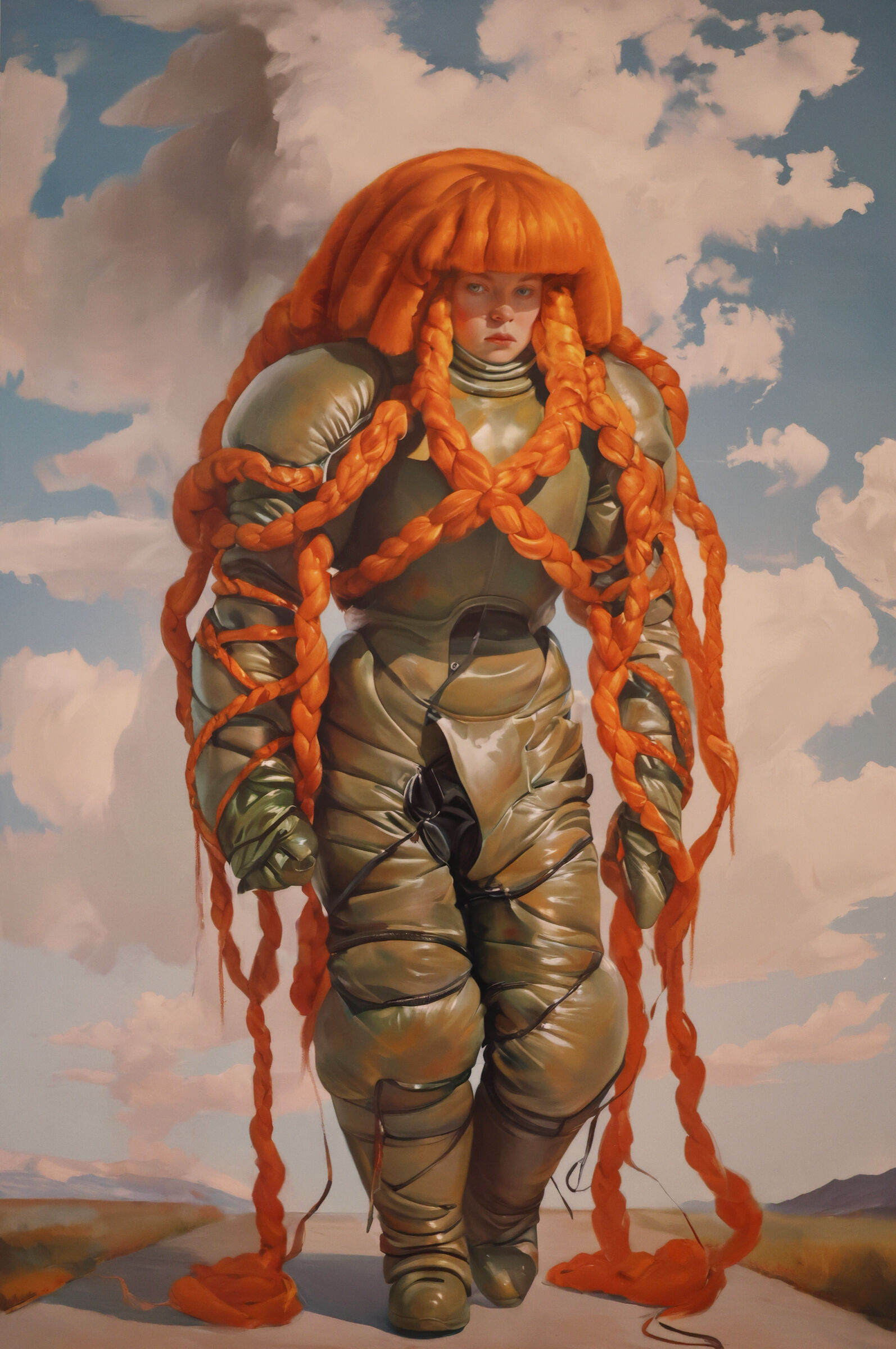
-
Jazsalyn, Warpmode, This is not a game!, 2026
Audio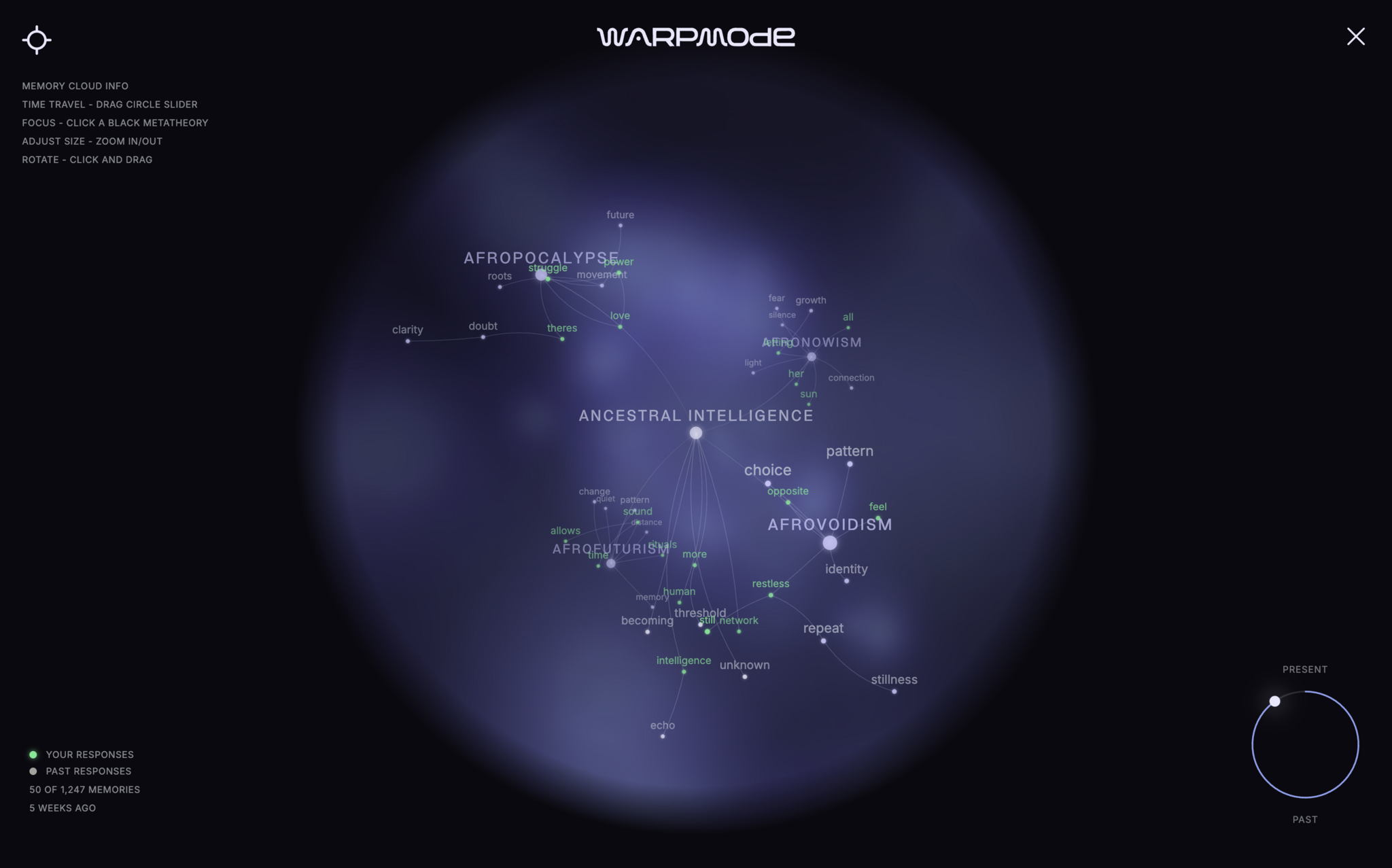
-
Nancy Baker Cahill, CENTO, 2023
Audio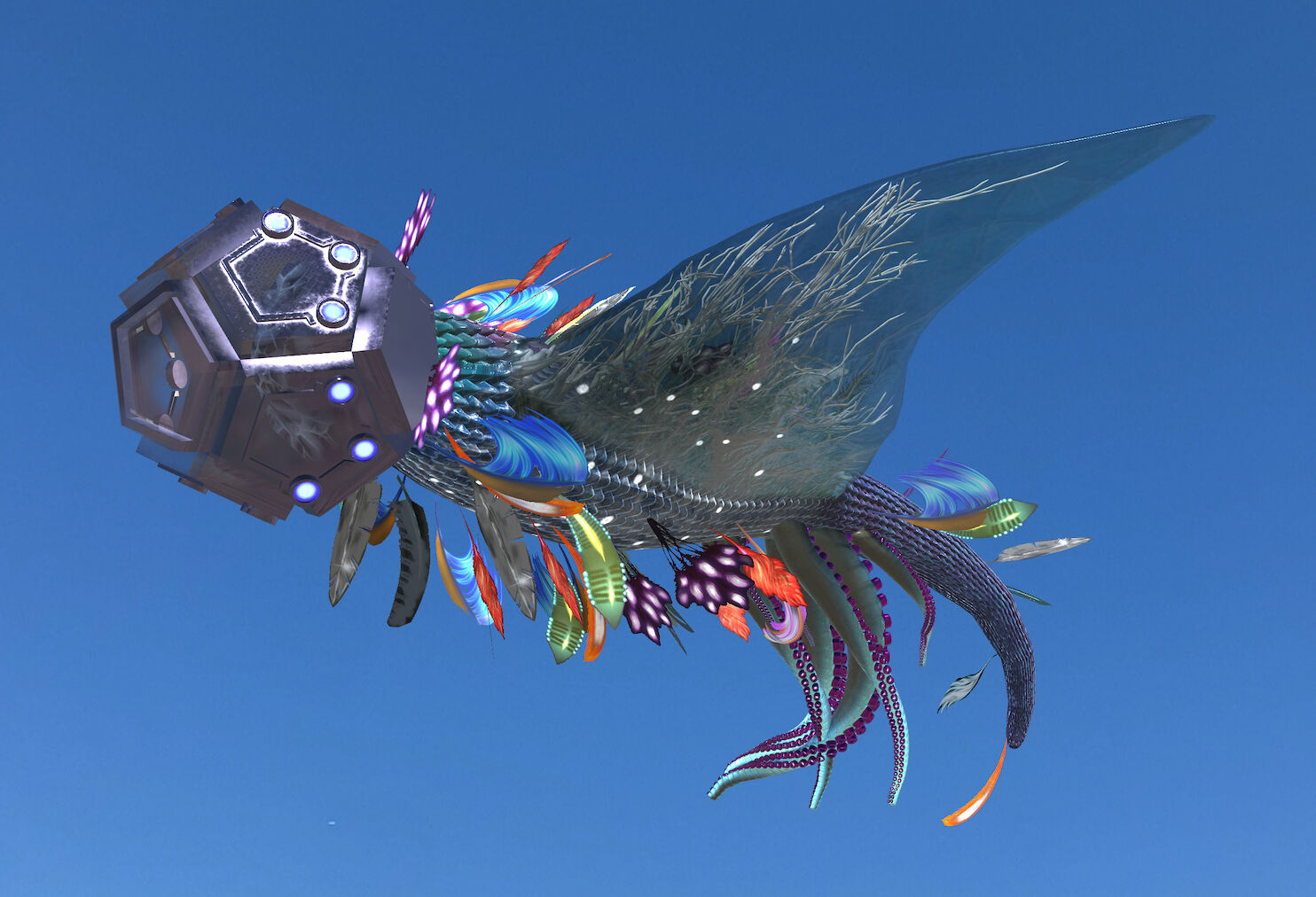
-
Memo Akten and Katie Hofstadter, The Thinking Ocean, 2026
Audio
-
Paolo Cirio, Criminal Data, 2022
Audio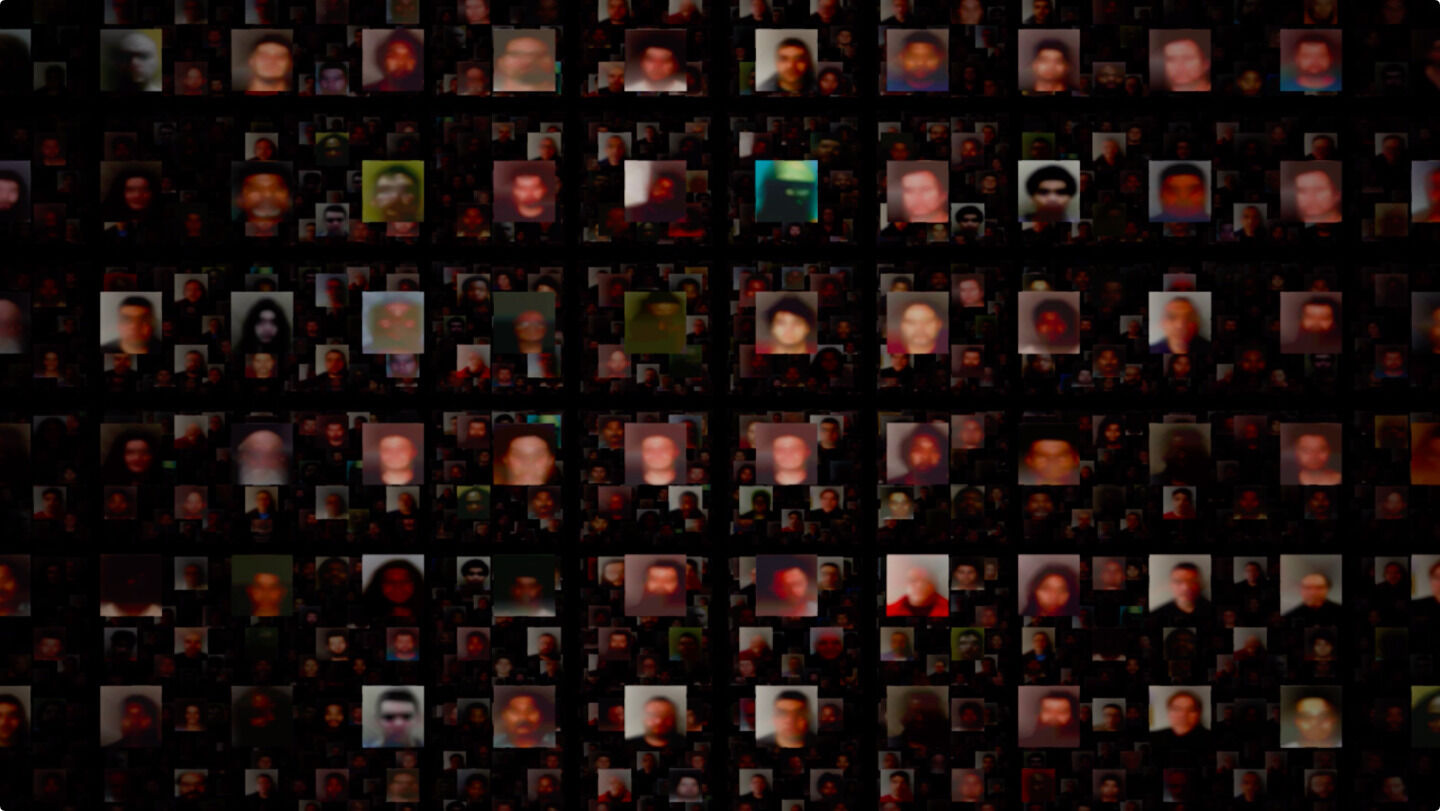
-
Golan Levin, The Dumpster, 2006
Audio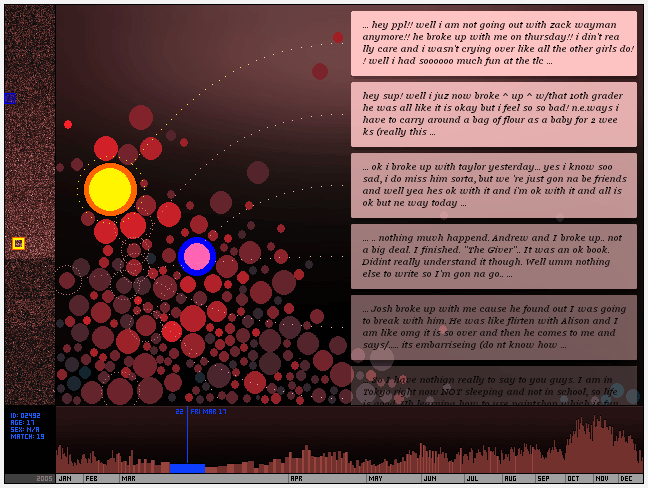
-
Jennifer and Kevin McCoy, Public Key / Private Key, 2019
Audio
-
Frank WANG Yefeng, The Levitating Perils #2, 2025
Audio
-
Maya Man, A Realistic Day In My Life Living In New York City, 2024
Audio
-
Elisa Giardina Papa, Labor of Sleep, Have you been able to change your habits??, 2017
Audio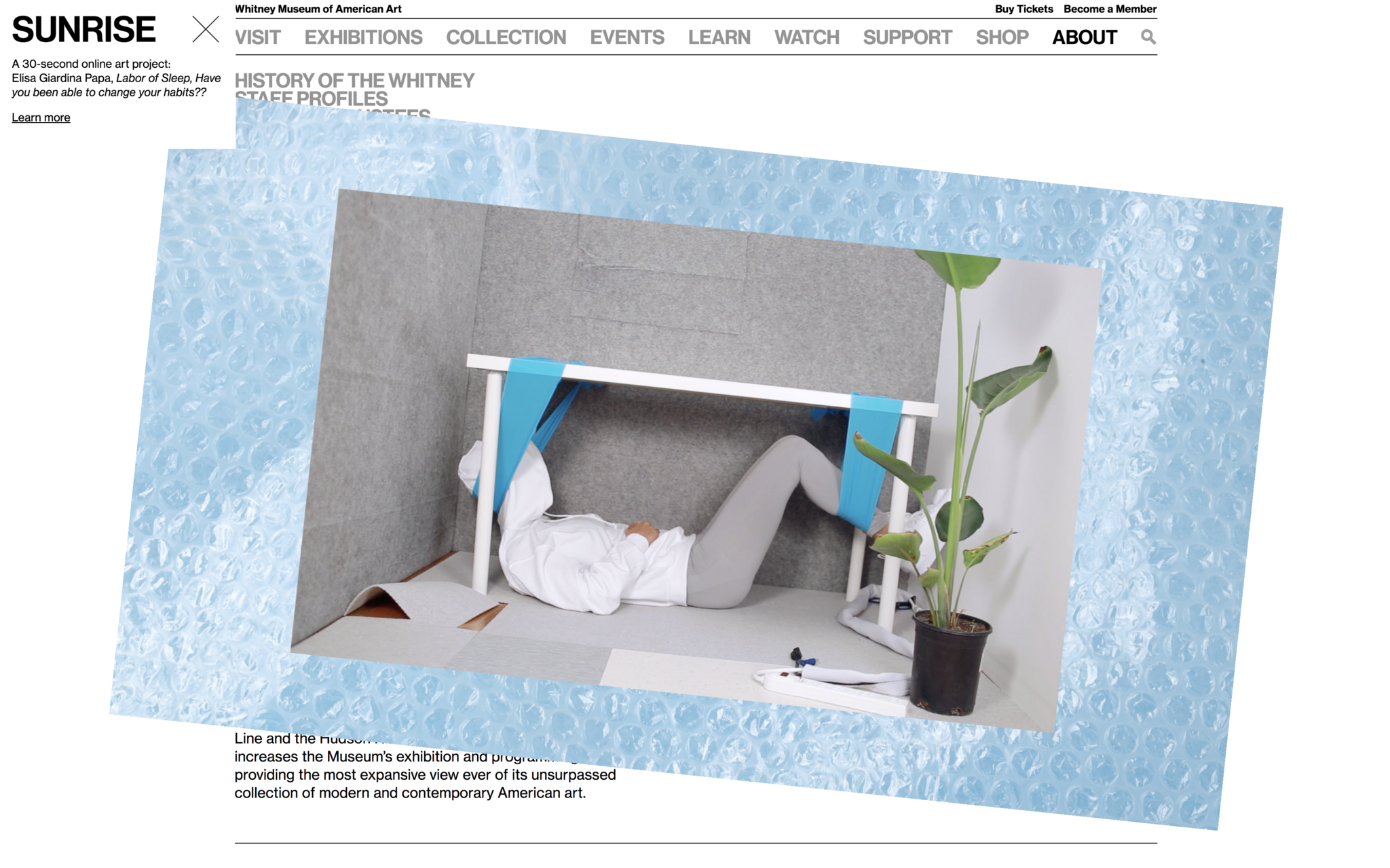
-
LaTurbo Avedon, Morning Mirror / Evening Mirror, 2021
Audio
-
Ken Goldberg and Alpha Lab, Demonstrate, 2004
Audio
-
Sam Lavigne and Tega Brain, To Vincent, with Love, 2020
Audio
Sam Lavigne: Well, basically what we did is we got very interested in capturing the kind of nightmare totality of New York real estate.
Narrator: Artists Sam Lavigne and Tega Brain.
Tega Brain: I was at the time looking for an apartment, and, as anyone knows in New York City, when you’re looking for an apartment, you go into this internet rabbit hole where you’re just overwhelmed by trying to understand what’s reality and what’s not and what photos are touched up and if it’s worth it and how expensive it is, and it just goes on and on, and so I think the work really emerged out of that experience of looking for an apartment in New York.
Sam Lavigne: We wrote a program that went to a real estate listing website called Trulia, which basically has every for-sale listing in New York City. And we downloaded all of the listings and then we kind of re-smushed them together to produce this one terrible, awful totality of New York City real estate as a single website. We used a machine learning model that just categorized the images into different rooms, so you see them grouped by category, like living rooms, bedrooms, gyms, but then the order of the images is randomized each time that you load the page.
Narrator: The artists used a technique called web scraping to extract data from Trulia.
Tega Brain: Web scraping, as a technique, is quite challenging and real estate websites are always changing. They obviously don’t really want their data scraped because their data is what brings them value, what makes them valuable. And so a big part of this project is obviously trying to get around their scraping prevention measures so that we could do this.
Sam Lavigne and Tega Brain, screenshot of New York Apartment, 2020
Holly Herndon: My name is Holly Herndon and I’m an artist.
Narrator: Holly Herndon and Mat Dryhurst made this project for the 2024 Whitney Biennial. They were interested in the idea of “embedding” with public AI models—the way the model represents a thing’s essence or core traits.
Holly Herndon: An embedding of a bottle would have a bottleness—like an essence or a certain bottle-like quality that we kind of all as humans understand is the core essence of a bottle.
Narrator: Herndon used the digital model to shape her own embedding.
Holly Herndon: And so we were able to actually do some reverse engineering and look at my embedding, and it really turns out that I’m kind of like this just blob of orange hair and bright blue eyes. These models are trained on the open internet. So any images of me that are tagged with my name, that’s basically what creates the concept of me in these models. And the way that these systems work is I actually don’t have any control over who I am. So I was kind of asking myself, “How much agency can I have in this system? What can I do with it to push back on this a little bit?”
So I made a costume with a giant haircut. So I basically just turned myself into my pastiche, just turned myself into my haircut. And then we made a model that people can navigate on the artport site. Every project that I’ve done with AI has been extremely manual. It’s not just some automated process where it’s “type in a few words and art is done.” It’s usually very laborious, many decisions made. I think there’s this perception that it’s this fully automated thing, and it can be for some people, but for my practice it’s really about getting into the bones of the model, understanding the training data, understanding the broader systems that the model is situated in.
Holly Herndon and Mathew Dryhurst, xhairymutantx Embedding Study 1, 2024. Thermal dye diffusion transfer prints, 47 × 71 in. (119 × 180 cm). Collection of the artists
Narrator: Warpmode, This is not a game! began as physical work with playing cards that drove players’ interaction through philosophical prompts.
Jazsalyn: I was thinking about two things specifically. One, I was struggling with the concept of when I was first introduced to Black theoretical frameworks and how these theories transform from as a theory itself into practice. And not also just into practice, but also how does it show up in community itself?
Narrator: On artport, those prompts appear onscreen, and the participant is invited to share their responses to a memory cloud. In the digital version of Warpmode, Jazsalyn opens up the inquiry to explore what she calls “ancestral intelligence.”
Jazsalyn: Ancestral intelligence isn’t just speaking to human intelligence of ancestors. It’s thinking about: how did those ancestors live in harmony and balance with other forms of intelligence that are more than human? And that’s something that predates the technology that we interface with today.
I’m very much so thinking about, if ancestral intelligence were a way that we lived our lives around and built our worlds around, how would technology look different today? Is this something that is working against our own humanity, our own existence? I don’t think so, but those are the conversations that I wanted to have in community with other people because it’s not just what I think, it’s about how do we think together and how do we form these collective ideologies that are working in a different direction than the dominant narrative?
Jazsalyn, still from Warpmode, This is not a game!, 2026
Nancy Baker Cahill: I am Nancy Baker Cahill.
CENTO could be characterized as a bit of a holobiont, which is many organisms operating as a single organism. And CENTO was really imagined against the backdrop of ecocide and ecological degradation and ruin. CENTO asks: "Could an ethically bioengineered future creature made of these many species survive, or even thrive, in the aftermath of this?”
The initial invitation was to make, essentially, an immersive video, and then, on top of that, maybe we could have an AR element. It just unlocked so much more to begin to think narratively and to think about, well: “Where would a creature, with these constituent elements, where would it live, and what would it live in, and what would be permissible?”
Notably, there are no human elements in CENTO. However, we humans have been tasked with ensuring her metaphoric survival through the addition of feathers. And each one of the feathers that we’re invited to add to her body, to change her body, to treat her body as a process versus an object, each one of those feathers has its own distinct properties. And that, to me, is so much of the magic of augmented reality, but also of this particular project. It just seems like there’s something about it that people want. They want to be a part of that story.
Installation view of Nancy Baker Cahill: CENTO, Whitney Museum of American Art, October 3, 2023
Memo Akten: My name is Memo Akten.
Katie Hofstadter: My name’s Katie Hofstadter. One of our starting points is very recent research by Eva Miranda and her team at Barcelona, who published a paper showing that fluid flows are potentially “Turing complete.” And so what that means is that a water flow could potentially do any computation that your computer can.
Narrator: The Thinking Ocean reflects on our relationship with the ocean, and what happens when we sever this connection. What if, by altering our planetary systems, we are also altering our own minds?
Memo Akten: The work is ultimately a provocation to invite us to think about who or what we ascribe personhood to and why. And, right now, we’re rushing to ascribe attributes like thinking, even consciousness, to machines that mimic human behavior, but there’s so much complex behavior happening around us in the natural world. The piece is ultimately a spoken-word piece. It has a visual element, it has a musical element, but underlying all of that is the script, this text, this poem that we wrote.
And there’s lines in there that talk about things like “we crawled onto land and we brought the ocean with us.”
Katie Hofstadter: While we’re debating the potential personhood of these data centers, what is the water flowing through the pipes, cooling these data centers? Thinking about that. And then we thought: “We are also bodies of water. What’s the blood in our veins? What is our blood computing? What is our blood thinking?” We were excited about this framing, not because we’re trying to say that fluid flows are thinking the way that humans think or the way that anything else is thinking, really, but what incredibly complex, mysterious, multifaceted things are going on that we don’t even know how to measure.
Memo Akten & Katie Hofstadter, still from The Thinking Ocean, 2026
Paolo Cirio: I am Paolo Cirio. I am an artist, but also an activist working around internet digital rights, including privacy and surveillance. This work is looking at the criminal data of American citizens, which are a particular case because in the U.S., in the States, the rate of incarceration is the highest in the world.
My intervention as an activist and as an artist was taking tens of millions of these mug shots in particular. And then I shuffled that data. So I obscured that data.
And then the obscured, shuffled data was republished on the internet and then also pushed in the search engines so that when someone is looking for someone that got arrested, instead of finding the actual criminal data, the actual data about the arrest, they will find a kind of confusing, noisy, blurred record about someone’s arrest. And that was meant to protect the privacy of the people that have been arrested so that it’s harder to find their records on the public internet.
My practice works on several levels. So there is an artistic intervention which is also aesthetic. So these mug shots blurred in this way. They’re already visually striking, and they already communicate emotion about what you can see, what you don’t see, what you judge. And then there are the other layers, that is the more activist one, where my intervention, my practice is meant to promote a change, to advocate for a change, but not just generally. I actually try to really work in the policy field.
Paolo Cirio, screenshot of Criminal Data, 2022
Golan Levin: My name’s Golan Levin. I am a computational and interactive new media artist.
So what you’re seeing is The Dumpster. It’s an interactive data visualization of romantic breakups that were scraped or harvested from a large collection of blogs in 2005. And so it is an examination of around a hundred thousand individual people describing their romantic breakups, mostly teenagers, describing their romantic breakups in surprisingly similar language.
And so the purpose was to bring together all of those romantic breakups into one interface and into one archive that would allow you to see some of the ways in which these stories, these very tiny fragments of stories, people really think about their romantic breakups in similar ways and sometimes in really gripping and kind of compelling ways.
There are stories in here that are really sad. I mean, genuinely really gutting, like, “He broke up with me because I got pregnant,” or things like that, which are really something else. And then just people talking about how they feel in ways where you can see patterns in teenage speech and in human emotion across a very large population of people.
And so this, as an interactive system, allows you to select what all the 16-year-olds said or what boys versus girls said, or allows you to see who was posting what at what time of year and examine, given a given breakup, other ones that are similar to it in terms of how people described their breakup.
Golan Levin, Kamal Nigam, and Jonathan Feinberg, screenshot of The Dumpster, launched February 14, 2006
Narrator: Artists Jennifer and Kevin McCoy described how this work came about.
Jennifer McCoy: Kevin in particular had been doing a lot of research into the blockchain and blockchain technology.
Kevin McCoy: And what that is, is a distributed, publicly accessible database or ledger of transactions and recordings or records of various kinds.
Narrator: The blockchain is the infrastructure that supports cryptocurrency and NFTs.
Jennifer McCoy: And we were thinking, what else can be done with this that isn’t currency and money?
Kevin McCoy: And I think a lot of our work questions the nature of the art object, like what is it exactly and how does it work and what does it mean?
Jennifer McCoy: And the idea of collective ownership of a project came into our thoughts.
Kevin McCoy: We were interested in the idea of the institutional collecting process. And how does that work? And can we open that up to people in different kinds of ways? So then it was, well, what are we donating? What’s the work? So that then led to: let’s make a film. We’ll donate it to the Whitney. We’ll then create a token and open up this process of participating in this act of donorship.
Narrator: The token is a means of certifying certain rights to an asset on the blockchain—in this case, the right to be a donor of the artwork.
Jennifer McCoy: We ran it kind of like an essay contest. So people wrote an email to us just saying, “Why do you want to do this? Why do you want to be a donor to the Whitney Museum of American Art? What does it mean to you?” And the responses were great. And so in the exhibition, there’s a book that has all the winning essays printed for people to read through.
Jennifer and Kevin McCoy, screenshot of Public Key / Private Key, 2019
Frank WANG Yefeng: My name is Frank WANG Yefeng and I’m an interdisciplinary artist and cultural in-betweener who’s originally from Shanghai and now based in New York City whenever I’m not traveling.
Narrator: Yefeng’s artport work is The Levitating Perils #2.
Frank WANG Yefeng: It was first triggered by research I did on a lot of images with an absurd history tied to the anti-Asian movement. So in these historical materials, you see Asian bodies were depicted as grotesque monsters. And here in this project, my strategy was appropriation and deconstruction. The originals are dissolved and their original myths were completely removed to create space for new perceptions.
Narrator: The artist created a new creature, surrounded by cartoonish speech bubbles.
Frank WANG Yefeng: I was imagining basically if you have a red monster, but in reality it’s a red monster in the size of a chihuahua. So it’s actually very small and cute. It might bark at you. What kind of sound is it going to make? That’s one way for me to subvert that original racist image and to deconstruct it. The talking bubbles, as kind of like a visual component, always appear in my works, in my animations, in my sculptural works, in my paintings. Sometimes it’s tied to the imagined sound or voice that the character could speak or sometimes it’s tied to the research—actually fragments of the research—I was making at the time.
Frank WANG Yefeng, screenshot of The Levitating Perils #2 at 9:00 am, 2025
Maya Man: Hi, my name is Maya Man and I’m an artist. I was thinking about how we keep time online and how we watch time unfold online.
Narrator: The platform for Man’s work, A Realistic Day In My Life Living In New York City, is the Whitney website. When running online, every hour, on the hour, graphic text would appear onscreen, drawn from the narration of “day in my life” TikTok videos.
Maya Man: So a “day in my life” video on TikTok or Instagram Reels or any platform that allows for these short-form videos typically document what a person is doing throughout their day. Often, it’s prefixed by the word “realistic” or “typical” to convey the sense of authenticity in what they’re showcasing. So it’s very voyeuristic.
And I was watching hundreds of these and I started becoming really interested in the relationship between the narrator and the comments. And so the eventual work that you see operates as this kind of call-and-response. So the piece started to also be about this relationship between the viewer and the person performing.
My piece, A Realistic Day In My Life Living In New York City, is actually software based. So it’s generative. So it’s a live JavaScript that’s executing in the browser every time that it runs. And that means that there are decisions being made by the code choosing from a library of phrases and comments for every single time of day. So even if you watch the work at 4 pm, five times in a row, you’ll likely see five different things that people said that they were doing at 4 pm.
Maya Man, screenshot of A Realistic Day In My Life Living In New York City at 7:00 am, 2024
Elisa Giardina Papa: I’m Elisa Giardina Papa, and I’m an artist and filmmaker from Sicily, and I live between Sicily and New York.
Labor of Sleep was one of the Whitney’s Sunrise/Sunset commissions. The work whimsically referenced the language of self-improvement and self-tracking and sleeping-aid apps. So the videos proposed this assessment of efficiency, and it’s structured as nine thirty second videos which played out on a cycle of nine days.
The question is really about sleep, because sleep is supposed to be the last uncompromising withdrawal from productivity. You’re asleep, you don’t produce. So that kind of irreducible human need that is supposed to be incompatible with the time, the tempo of capital, of production. And yet what we’ve been seeing in the last years is that even our sleeping habits have been progressively desynchronized from the cycle of day and night. And sleep is becoming another form of human activity, like a part of life from which labor and so value can be extracted in the form of data.
Elisa Giardina Papa, screenshot of Labor of Sleep, Have you been able to change your habits?? at sunrise, 2017
LaTurbo Avedon: Hi, hi. Thank you for doing this session with me. This is LaTurbo Avedon.
Narrator: The artist LaTurbo Avedon is an avatar, existing as a virtual persona.
LaTurbo Avedon: The work, Morning Mirror/Evening Mirror, my work for artport and the Sunrise/Sunset series, it is displayed through a collection of reflections in a virtual mirror: an important symbol in my work. The image is suggesting a return to the viewer’s own position as alpha layer video files, the mirror resting on top of the Whitney website. It served the present moment of 2021 with analogous realism, claustrophobic inhabitants of domestic space, isolated work from home, a desktop cluttered with survival hobbies and delivery boxes, grocery delivery, livestreams, the passage of a day, morning to night, confined to the familiar microsimulations that came with the solitary period, uncertainty, endurance, and lockdowns in the COVID-19 pandemic. I wanted these moments each day, when the minute struck and the Whitney website loaded the work for the reflections in the mirror, to serve as portrait and self-portrait alike.
Years later, looking back, the mirror becomes a capsule, an encoded surface, reading the image slightly less immediate, seeing an avatar constantly in pajamas, the language of health lockdowns growing more distant in memory an object reminding that the virtual is not simply a synonym for fake, a word dealing with potentialities, realities, context about the work. In 2019, in collaboration with Theo Schear and Jennifer 8. Lee, I got to create the mirror emoji, an official universal symbol passed through the Unicode Consortium and distributed like a Duchampian readymade in reverse.
LaTurbo Avedon, screenshot of Morning Mirror/Evening Mirror at sunrise, 2021
Ken Goldberg: I created this project in 2004 for the anniversary of the Free Speech Movement at UC Berkeley, which was originally in 1964.
Narrator: Artist Ken Goldberg teaches at the University of California, Berkeley.
Ken Goldberg: And it was also a time right after the 9/11 attack when the Patriot Act was announced, which dramatically rolled back privacy rights for Americans. So there were a lot of new surveillance cameras and techniques being put into place. And I was very interested in exploring that in the context of the Berkeley campus. So we set up a state-of-the-art, at the time, digital telescopic camera over the Sproul Plaza, which was a location where the 1964 student protest movement occurred. And we invited anyone on the internet to spy on what was happening below, which was the Berkeley campus: students, faculty, staff members just going about their daily activities. And they could use the camera any time of the day or night, twenty-four hours a day, and then capture images and they would be posted on the website.
They’re historical images that were originally taken by members of the public of people walking around in the campus in 2004. So they’re a little bit grainy because that was the best camera of the time and they convey what was seen at that time. And remember, this was a time before smartphones—Apple’s iPhone didn’t come out until 2006.
So the whole idea of what is imagery and cameras and video has shifted over the past twenty years since the project was originally installed. It’s changed, but at the same time there’s still the same concerns about privacy—what’s real, what’s not—and surveillance.
Ken Goldberg, Alpha Lab, Demonstrate, September 2004. Java. Whitney Museum of American Art, New York; Commissioned by the Whitney Museum of American Art for its artport website AP.2004.10
Jillian McDonald: I’m Jillian McDonald.
To Vincent, with Love came about as a progression from an earlier project called Me and Billy Bob. This piece was made twenty years ago. It’s based on fan fiction in which I’m inserting myself into scenes from Buffalo ’66, which is a movie that Vincent Gallo stars in, wrote, directed.
I’m interested in both critiquing celebrity culture and celebrity fandom, but also very sincerely admiring it. This is made with a combination of green screen and then I’m rotoscoping, which is drawing frame by frame, cutting out characters and moving them from scene to scene. Also this is all done before deepfakes were popular and long before AI. So this idea of trespassing digitally, it’s not very seamlessly beautifully done in the way that Hollywood film would do it with special effects, but it’s made to be very DIY as though anyone could do this.
The interactivity of the piece that is online, To Vincent, with Love, is very simple. It’s just making choices about which of the four films you’re going to watch. And the internet piece is kind of a more intimate moment. And the scenes are very small and flowery, encased in these flowery envelopes in a way to give you this little postcard intimate view.
Jillian McDonald, To Vincent, with Love, February 2005. Flash-MX Player, JavaScript, HTML, swf files. Whitney Museum of American Art, New York; Commissioned by the Whitney Museum of American Art for its artport website AP.2005.2
0:00
0:00
