Andy Warhol Family Album
2026
On view
Floor 7
Bob Colacello: I'm Bob Colacello, former editor of Andy Warhol's Interview magazine.
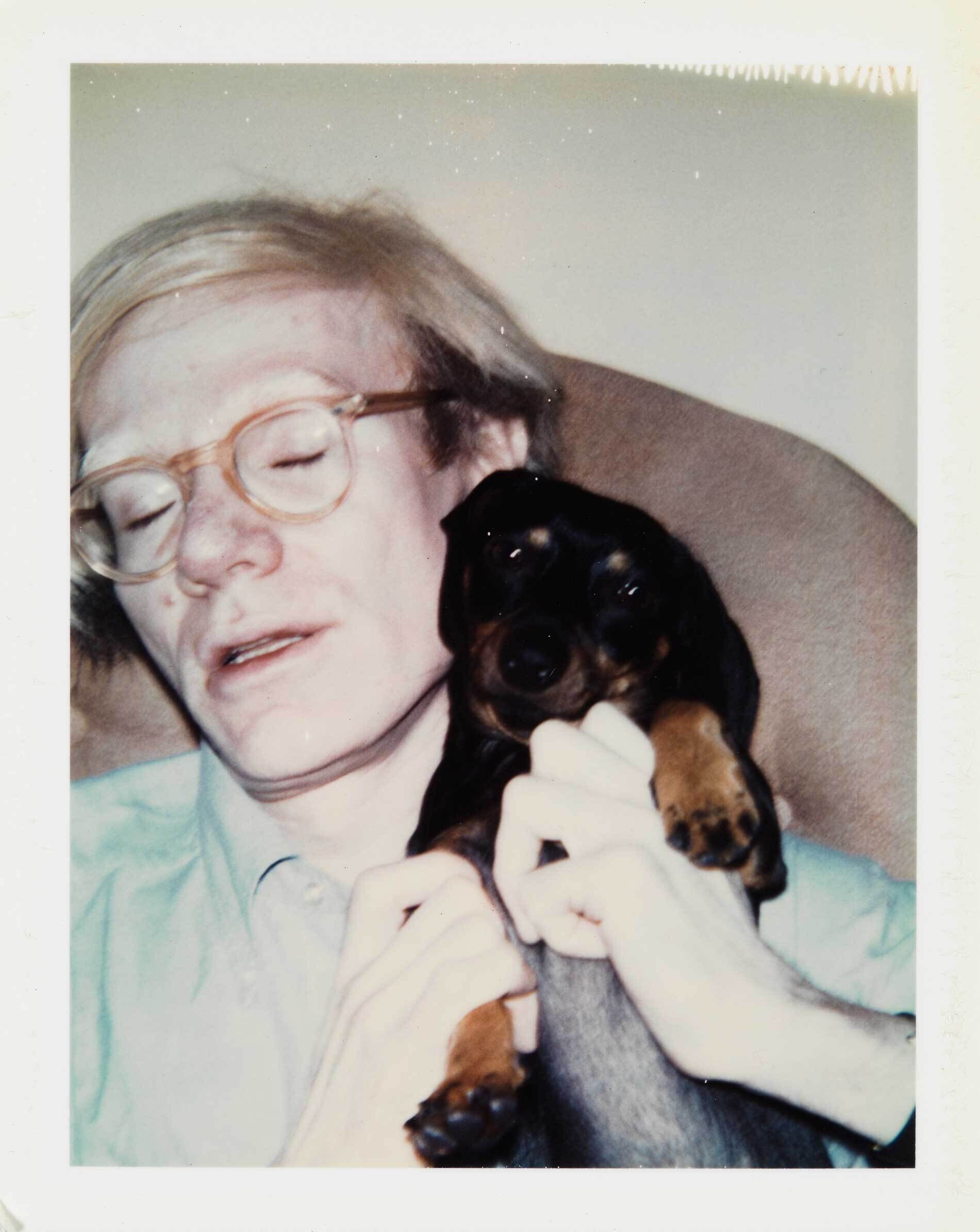
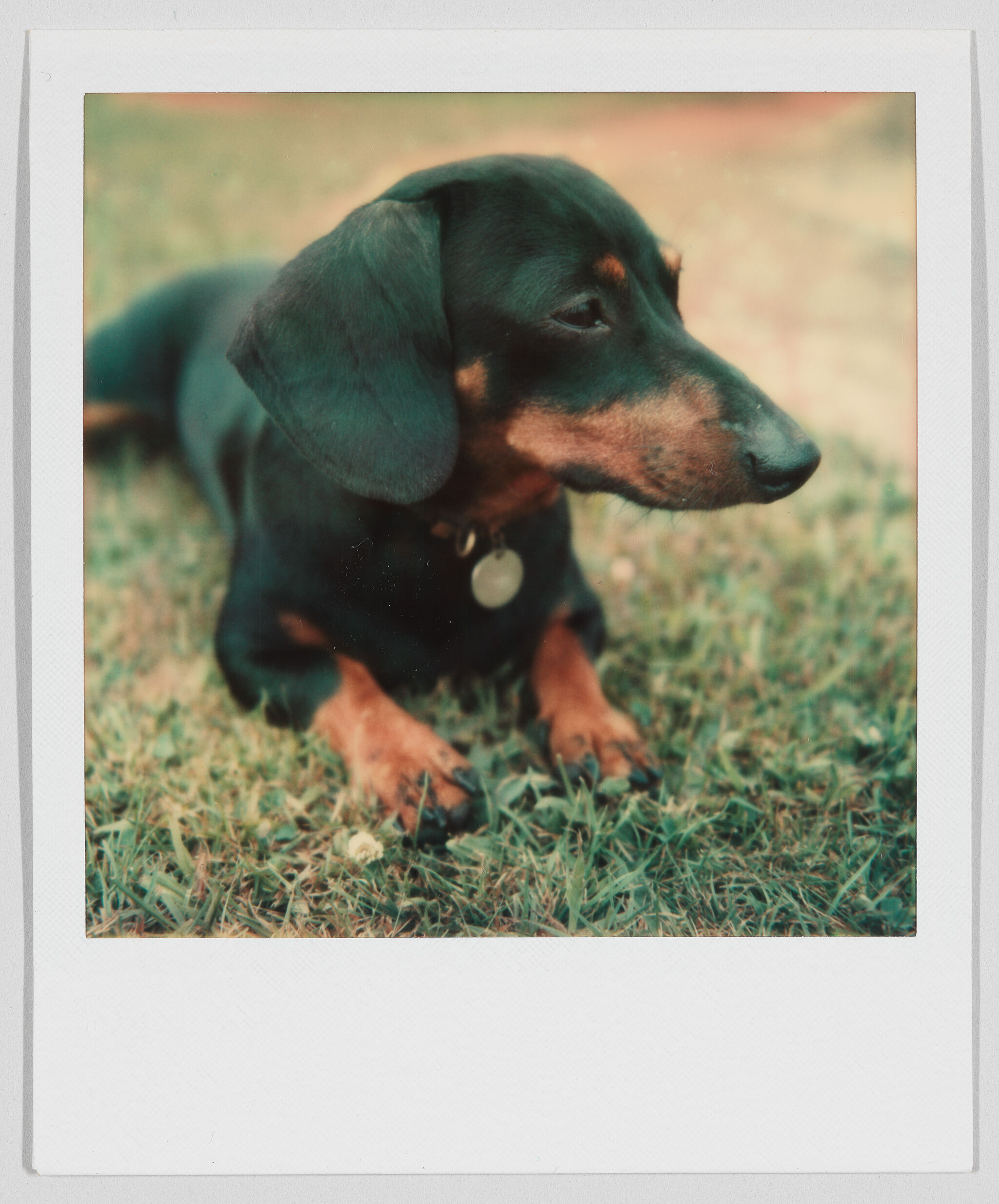
Narrator: Interview magazine offered audiences a sense of instant access to celebrities and artists. As the magazine gained notoriety in the early seventies, Polaroid cameras were becoming widely available. The new technology appealed to Warhol, and he took endless snapsohots that he filed in bound books that he called his family albums. Many of these pictures served as preliminary renderings for his larger silkscreened portraits. Others reflected Warhol’s travels and his everyday surroundings–including his beloved dachshund, Archie. The quick flash of the Polaroids turned celebrities into everyday people, and vice versa.
Bob Colacello: Andy could find anybody's good side. Even though you didn't have a good side, he found it. And the result was you looked much more glamorous than you actually were in real life. “Beauty” was one of his top ten words, and he was determined to see everybody as beautiful, including himself.
One day, Andy took me up to Lincoln Center. It was September, in 1970. So we get up there and he says: “Oh, we're early, why don't I take some Polaroids of you?” So it was like, "Sit there!” on some half wall, and he starts with the big shot Polaroid searching for the right angle or taking pictures from different angles. So he took these pictures that made me look like the young Elvis Presley.
But with the portraits, he was always searching for the best angle: the best, the most flattering angle. You had to please the client. The Polaroids were coming out of the camera and they were on the table drying, and the client could say, "Oh, I hate that shot." And Andy would say, "Oh,” he took it off and put it in his pocket or something to keep track. After twenty-four pictures, they had a shot they liked, but there were others that took like two hundred to get to a shot they liked.
Over the years, things evolved where Andy would take off women's blouses and put a sheet over them, so they had bare shoulders and nothing to distract from the face.
While taking the Polaroids, I think he was just very focused on making them look good, but the portraits were the bread and butter of the factory. They supported Interview, which didn't make a profit until 1980.
It wasn't just for the commission portraits. He had this camera in a plastic shopping bag. And he would carry it everywhere. And he would take his home pictures.
Andy was enthralled by every new technological development. He would be totally into A.I. today, I'm sure.
Andy Warhol, Archie, 1973, from Family Album. Internal dye diffusion transfer print (Polaroid): sheet, 4 1/4 × 3 1/2 in. (10.8 × 8.9 cm); image, 3 1/8 × 3 1/16 in. (7.9 × 7.8 cm). Whitney Museum of American Art, New York; gift of The Andy Warhol Foundation for the Visual Arts, Inc. 2014.29.144. © 2026 The Andy Warhol Foundation for the Visual Arts, Inc. / Licensed by Artists Rights Society (ARS), New York
0:00
0:00