Sixties Surreal
2025
-
500
Introduction
Audio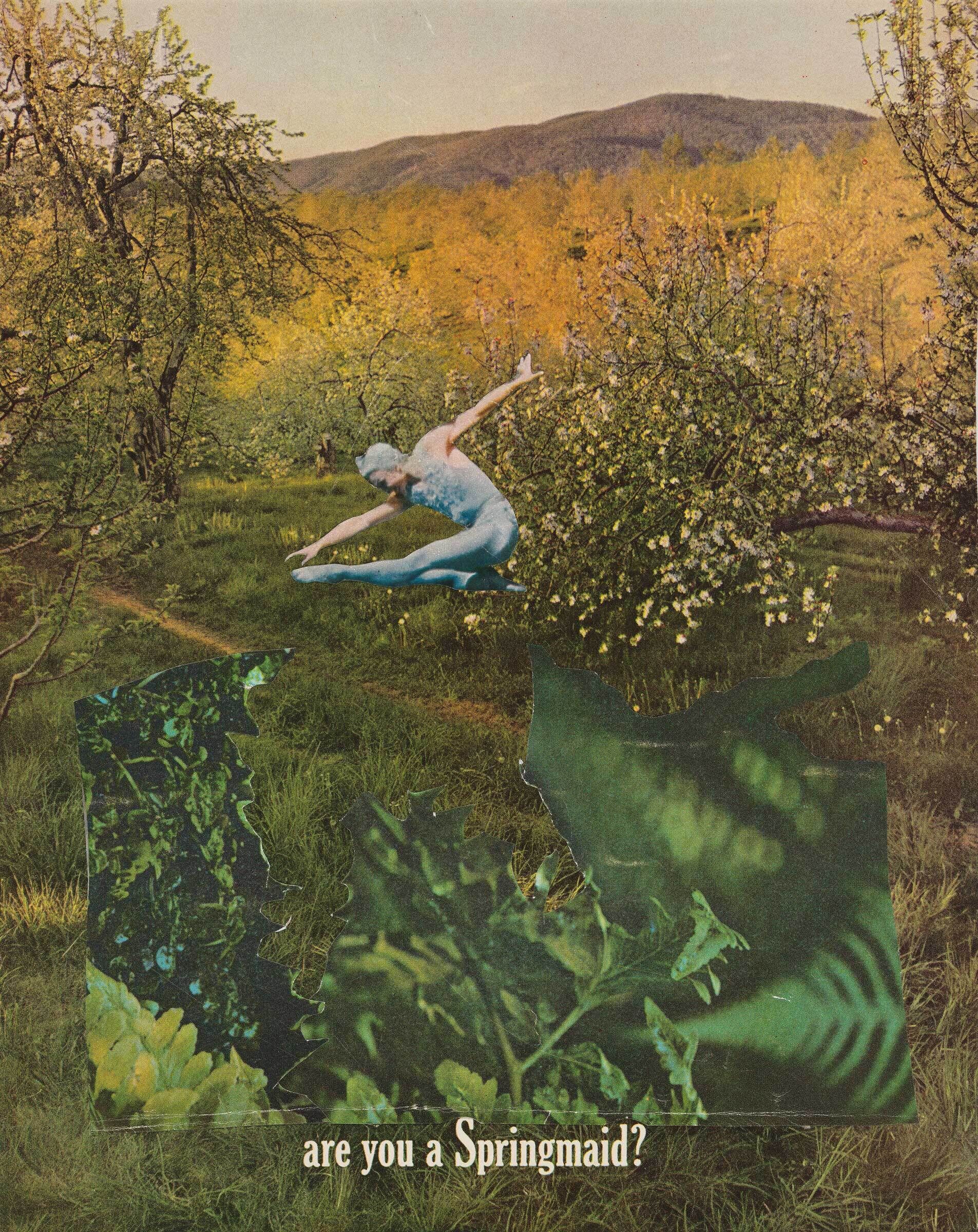
-
501
Nancy Graves, Camel VI, Camel VII and Camel VIII, 1968–1969
Verbal description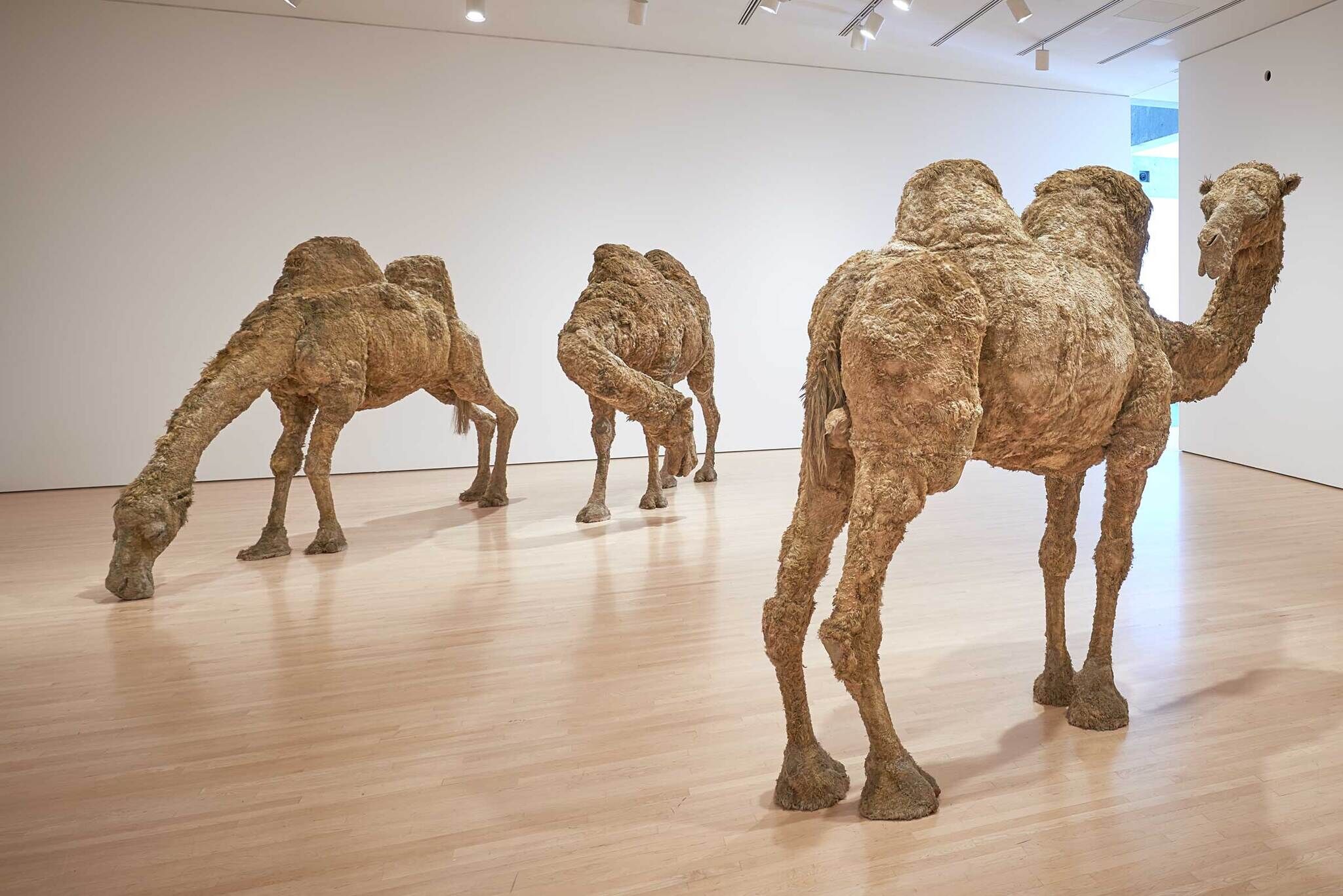
-
502
Paul Thek, Untitled from the series Technological Reliquaries, 1966
Verbal description -
503
James Rosenquist, The Light that Won't Fall I, 1961
Audio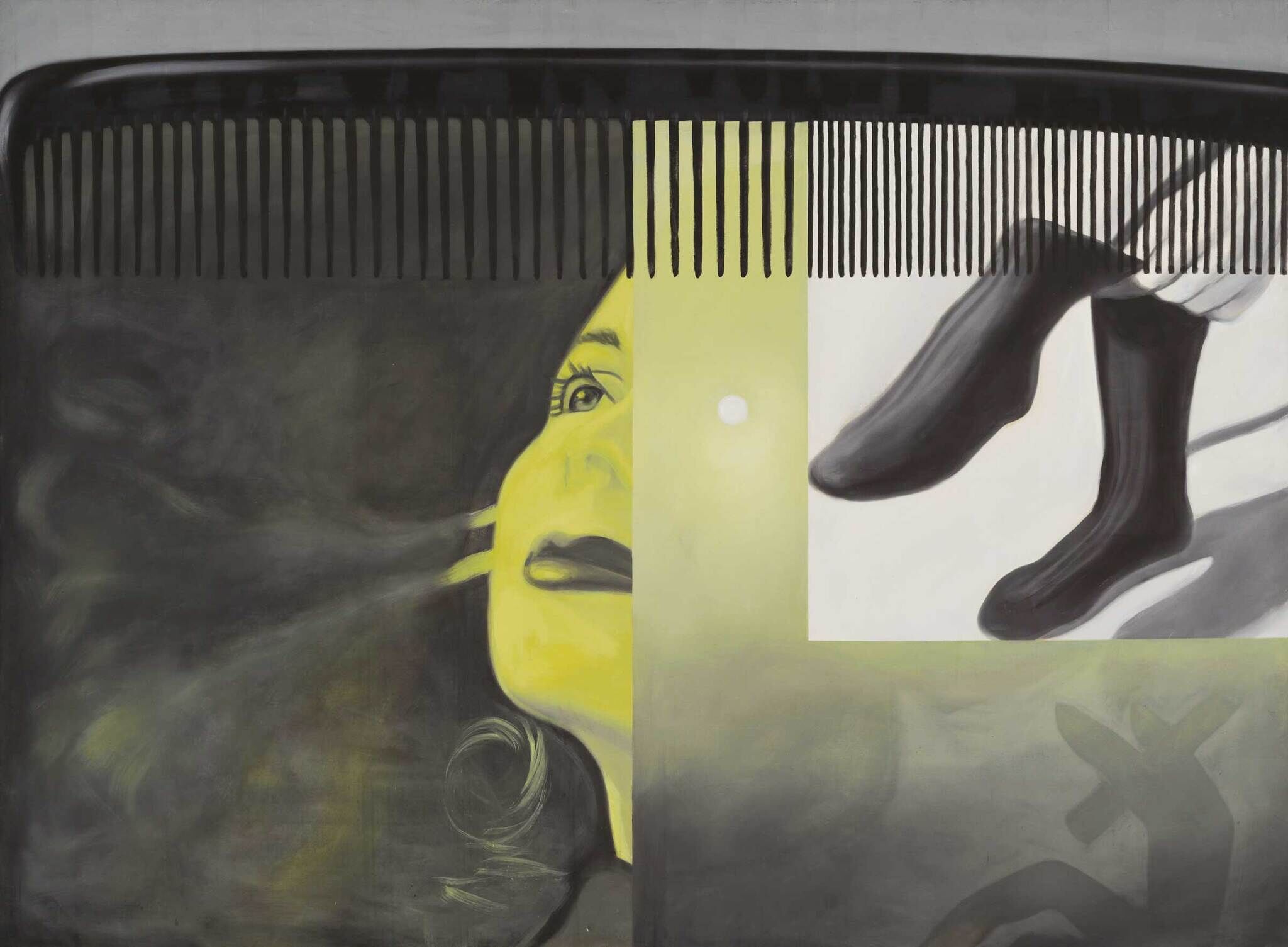
-
504
Gunvor Nelson and Dorothy Wiley, Schmeerguntz, 1965
Transcription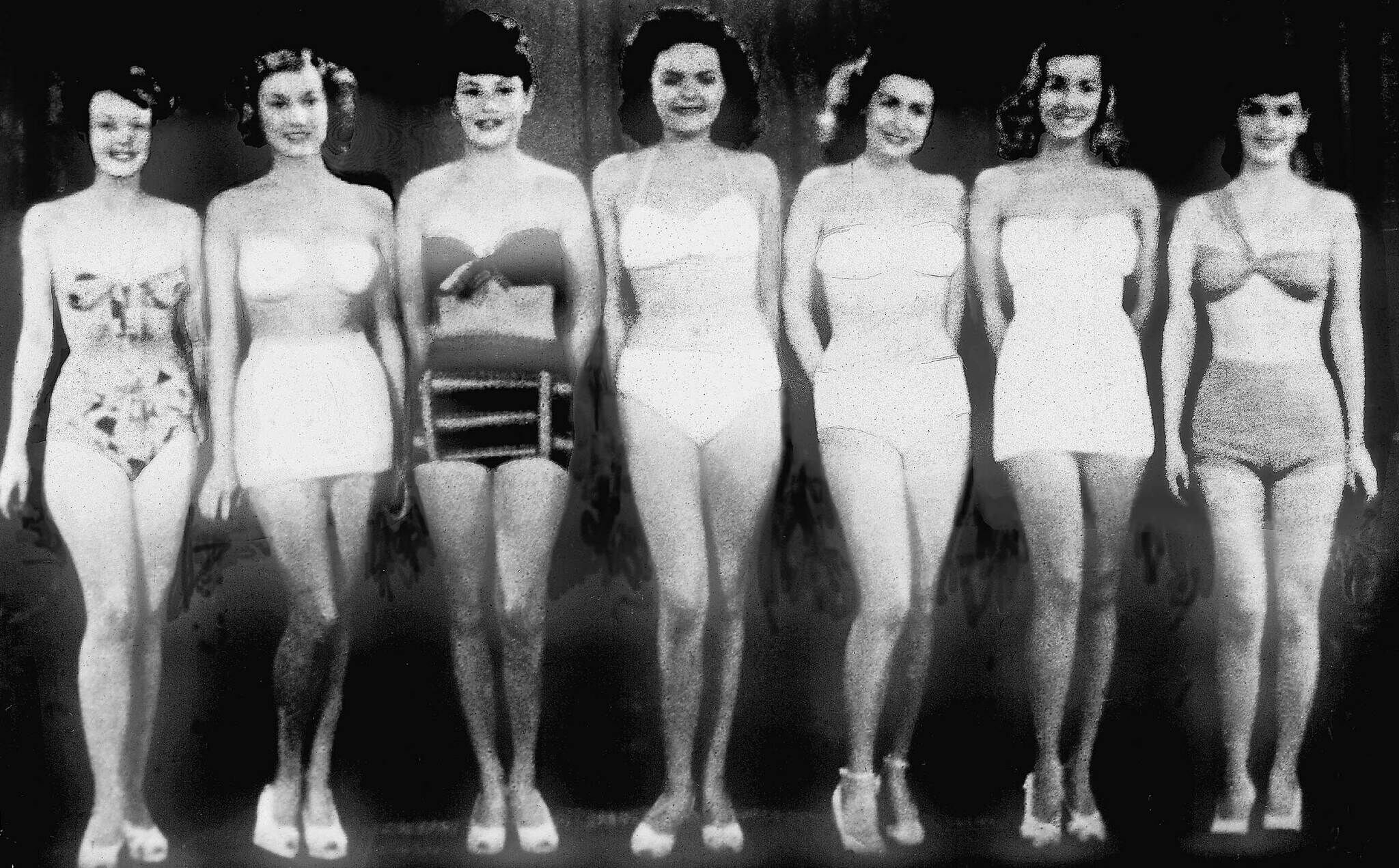
-
505
Lee Bontecou, Untitled, 1961
Verbal description -
506
Eva Hesse, C-Clamp Blues, 1965
Audio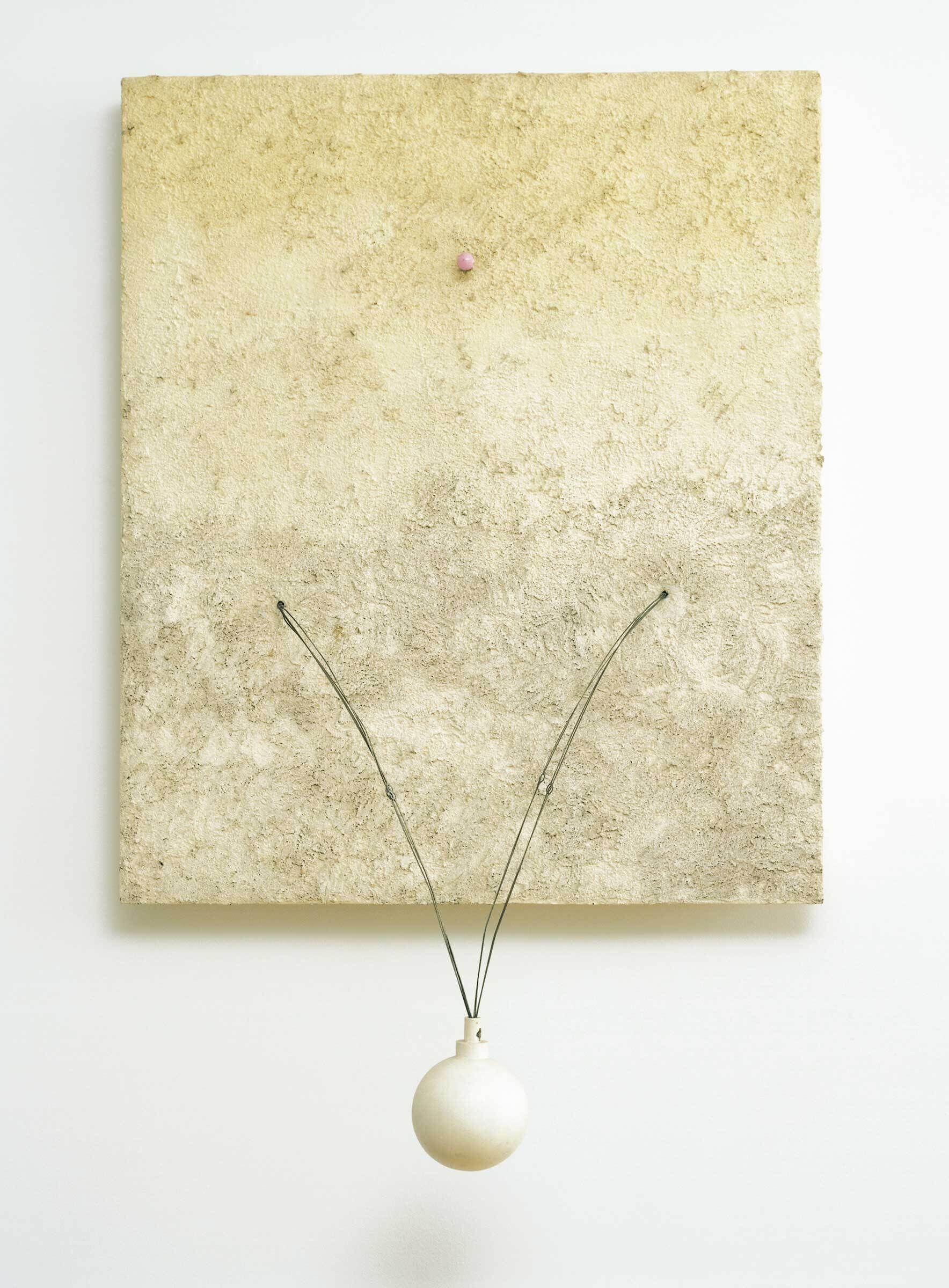
-
507
Robert Crumb, Head #1, 1967
Audio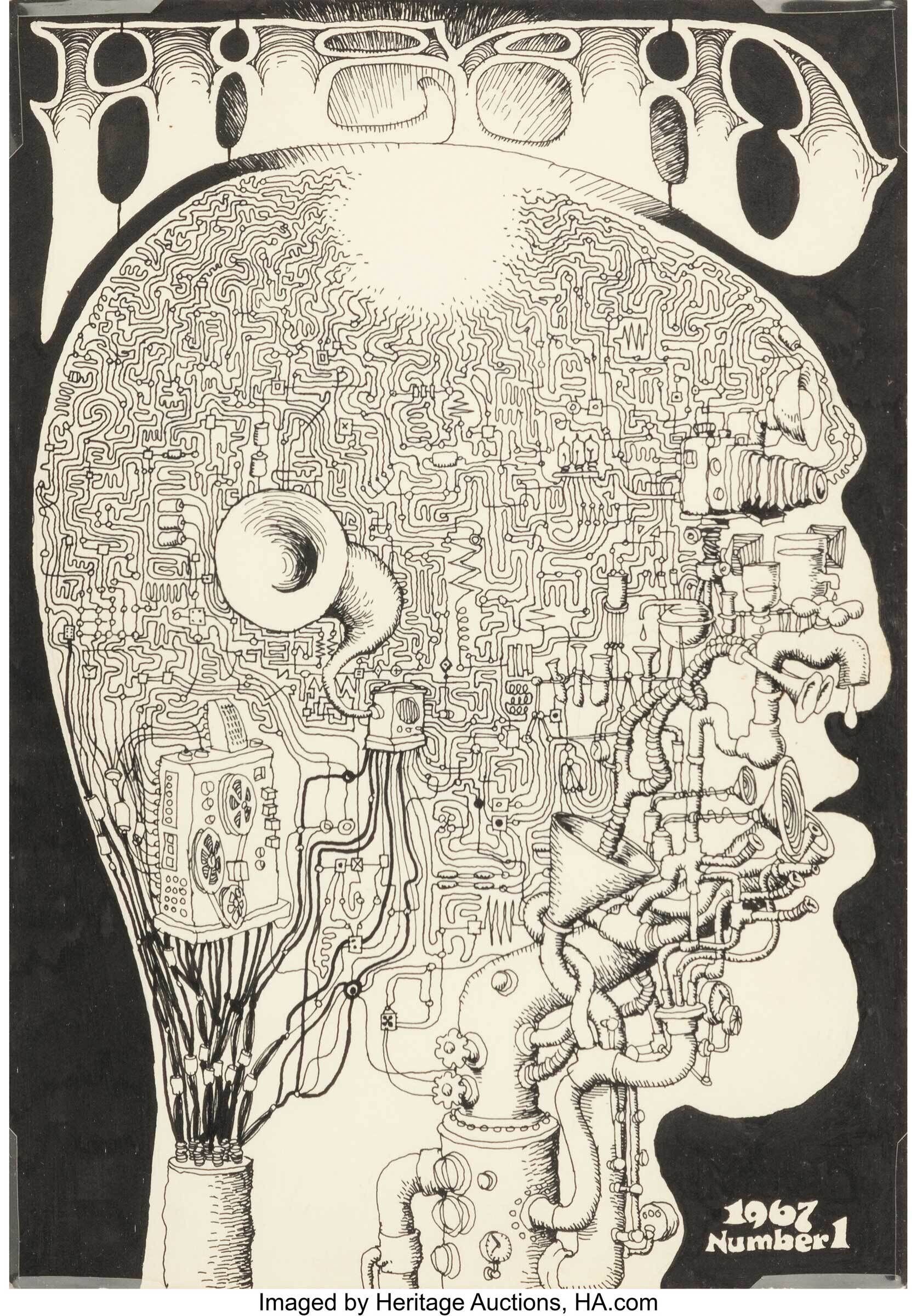
-
508
Mike Henderson, Dufus, 1970
Transcription -
509
Luis Jimenez, Blond TV Image, 1967
Verbal description
-
510
Daniel LaRue Johnson, Freedom Now, Number 1, 1963–1964
Audio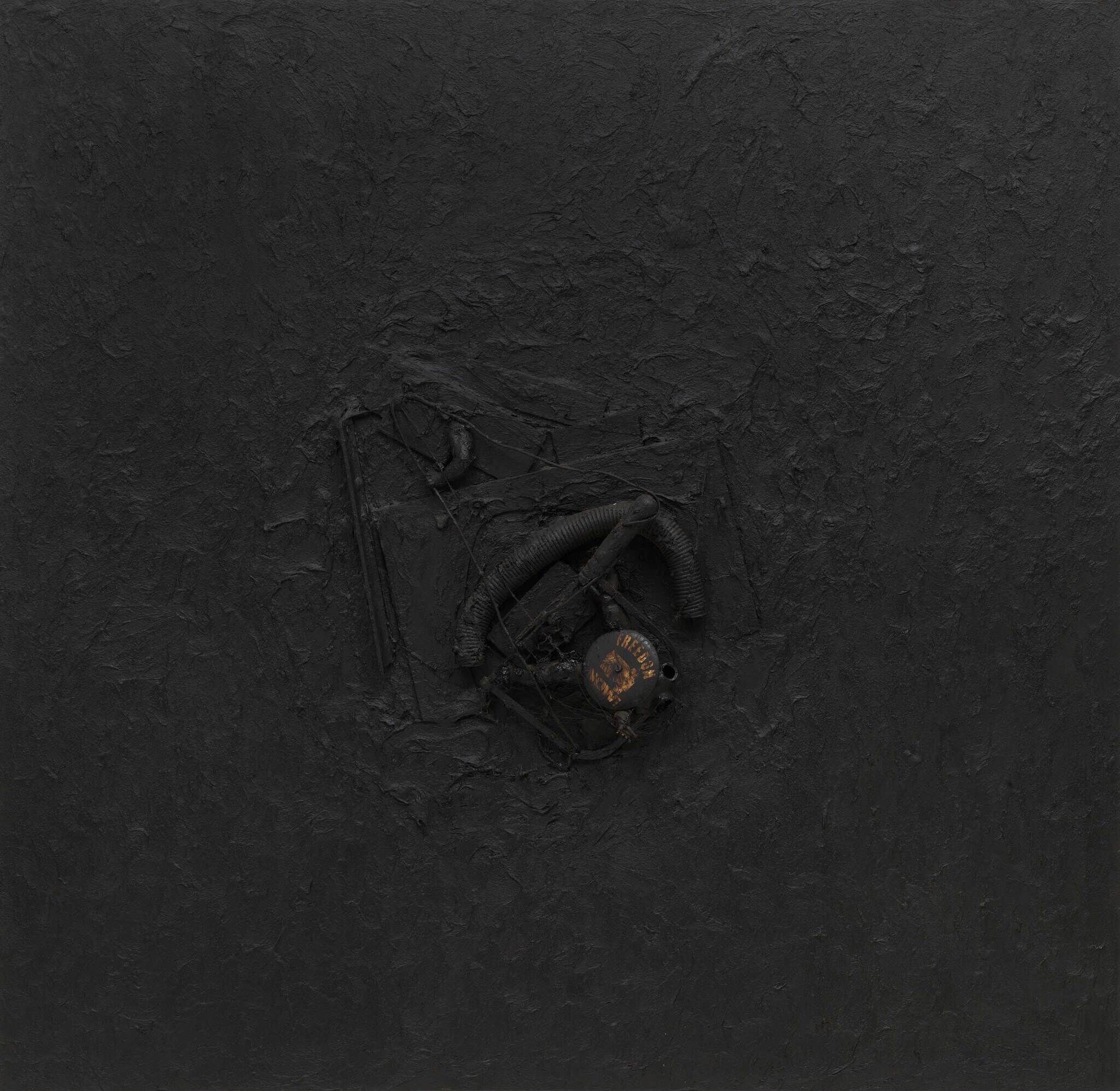
-
511
H.C. Westermann, The Big Change, 1963
Audio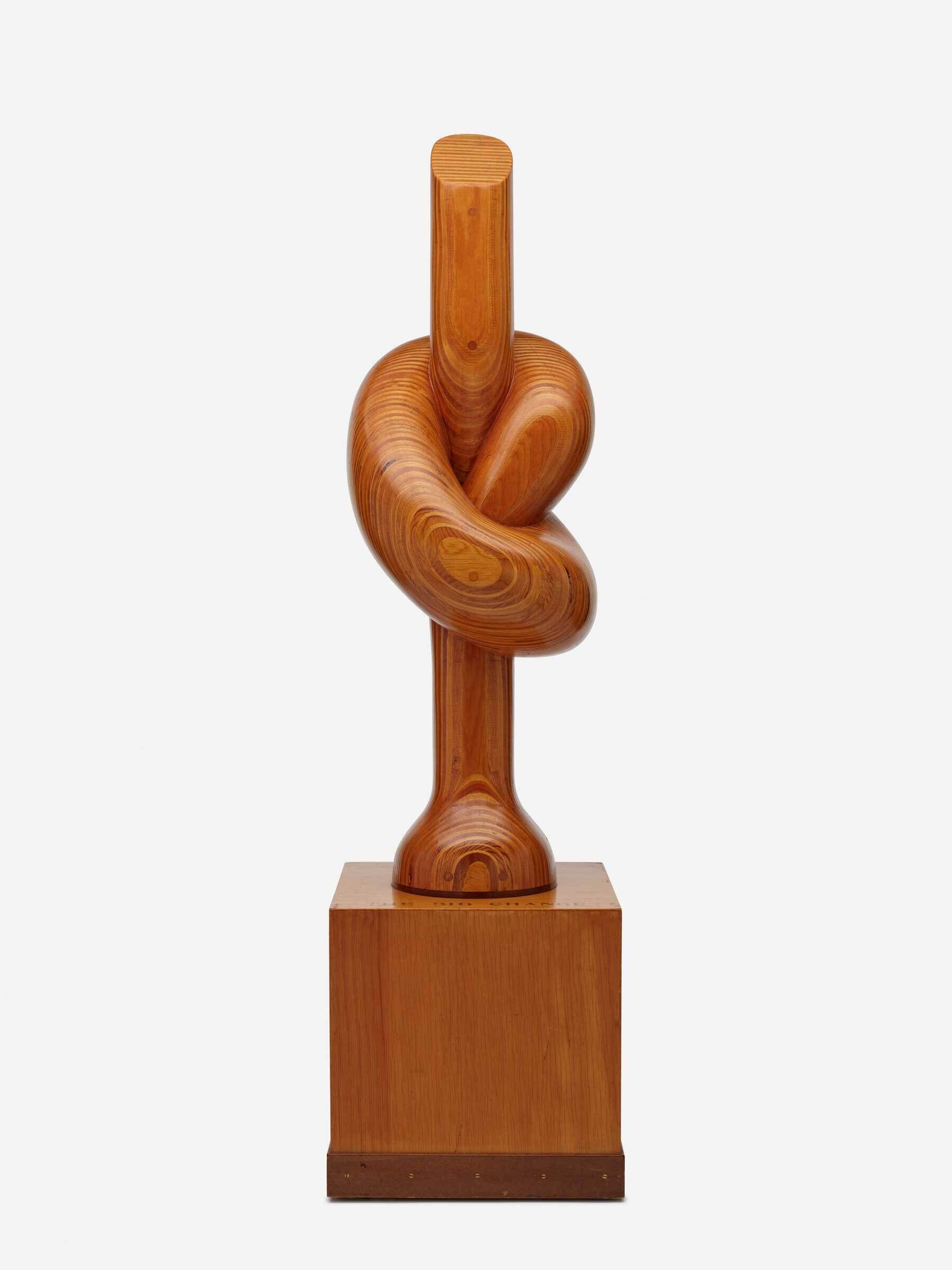
-
512
Noah Purifoy, Untitled (66 Signs of Neon), 1966
Audio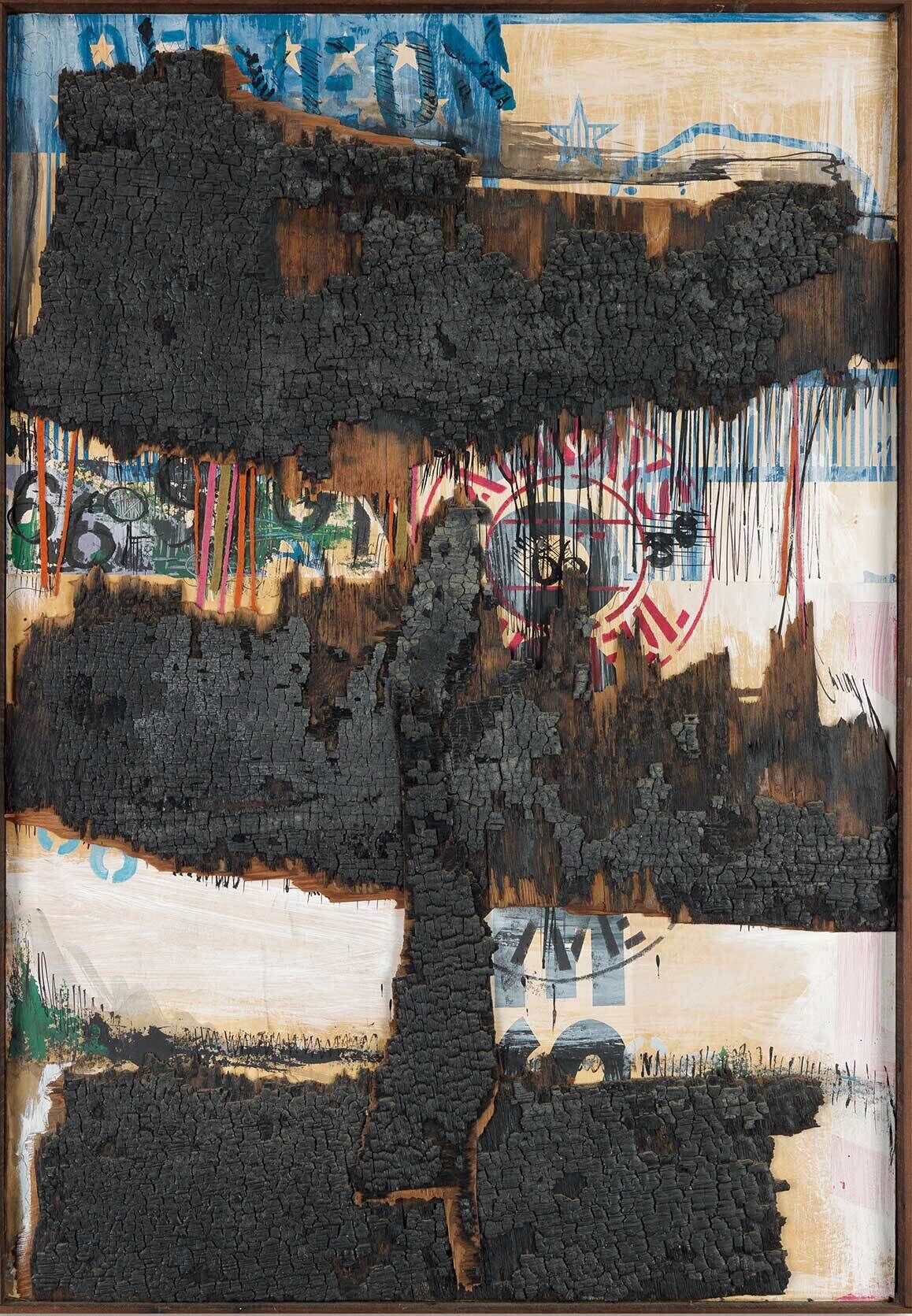
-
513
Jack Smith, Scotch Tape, 1959–1962
Sound description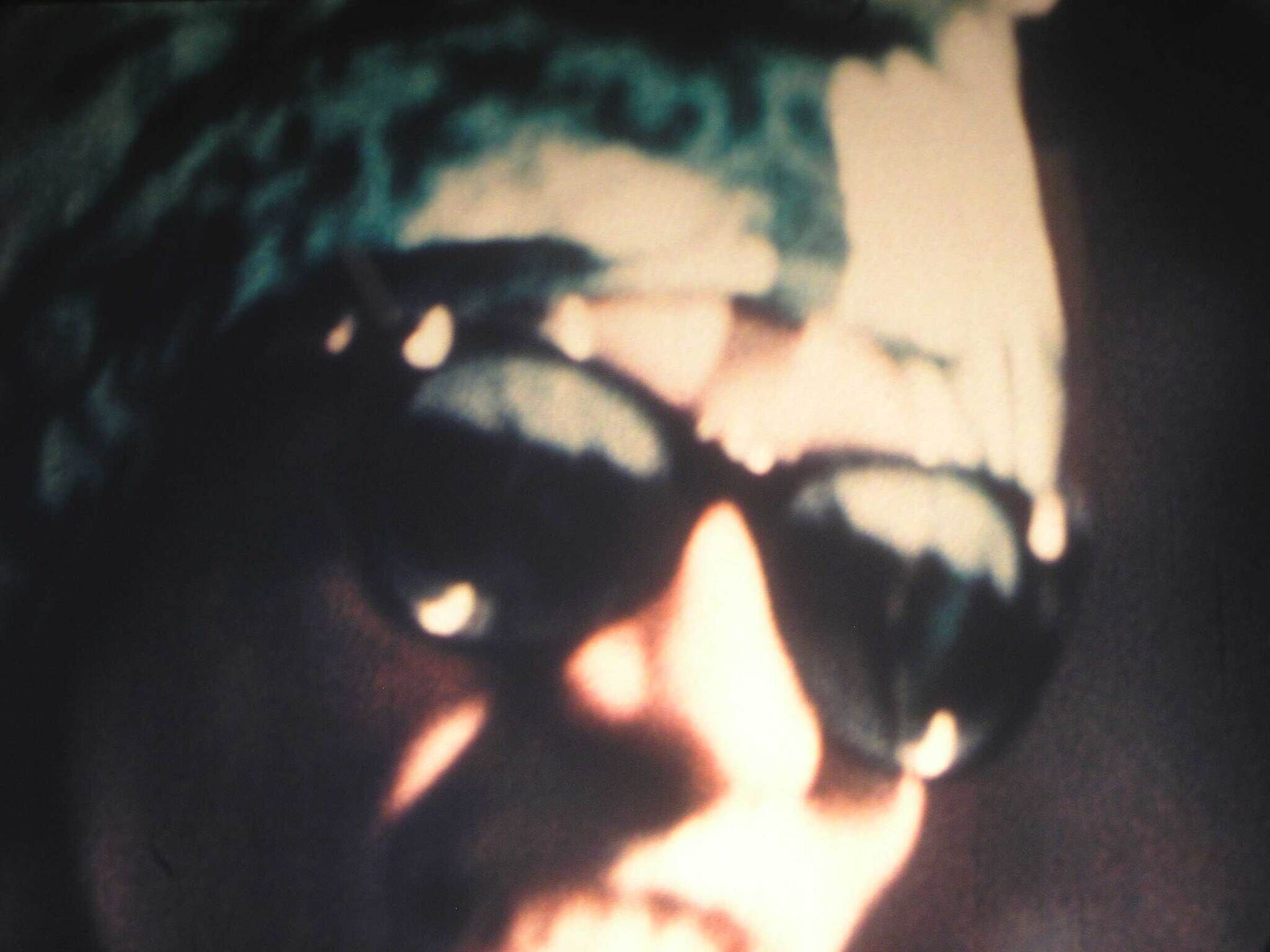
-
514
Anita Steckel, The Big Rip-Up, 1964
Audio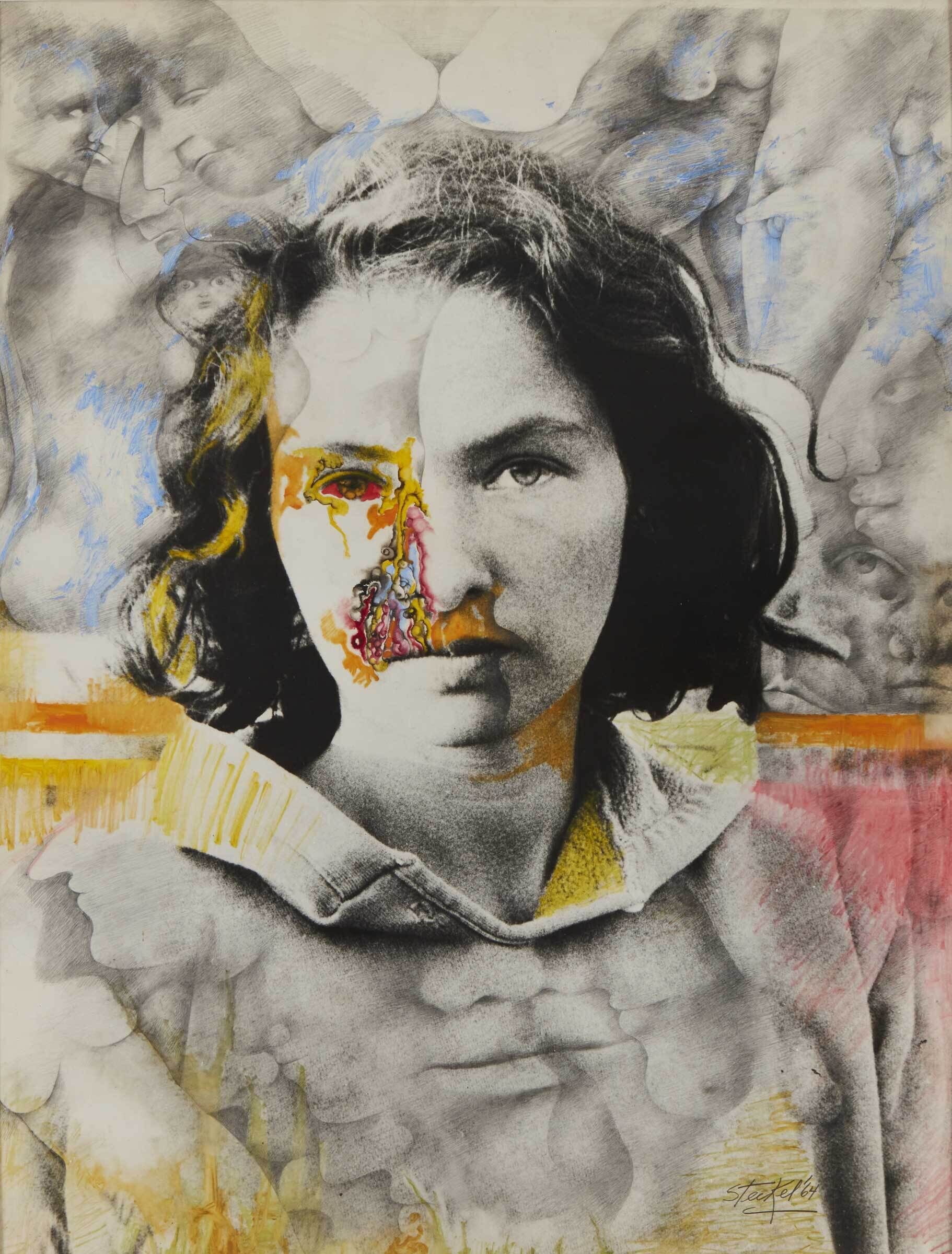
-
515
Marisol, Women and Dog, 1963–1964
Verbal description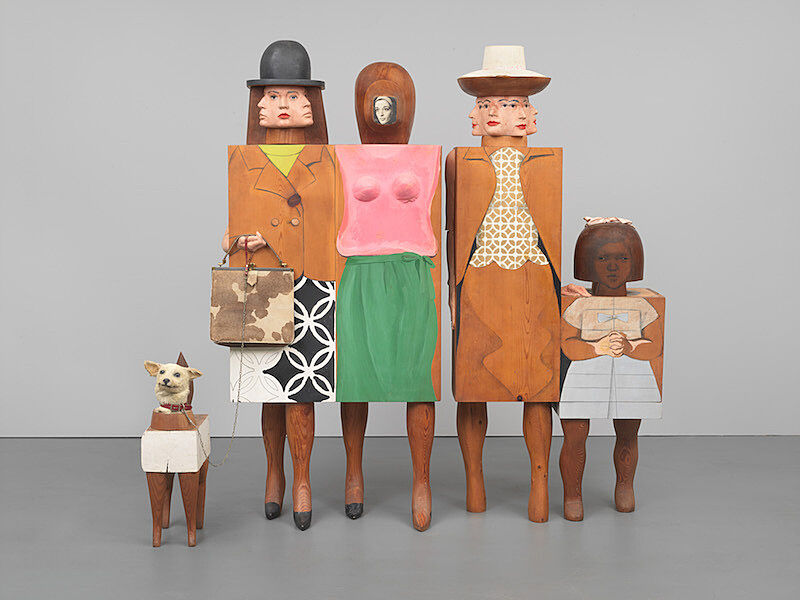
-
516
Lynn Hershman Leeson, Giggling Machine, Self Portrait as Blonde, 1968
Sound description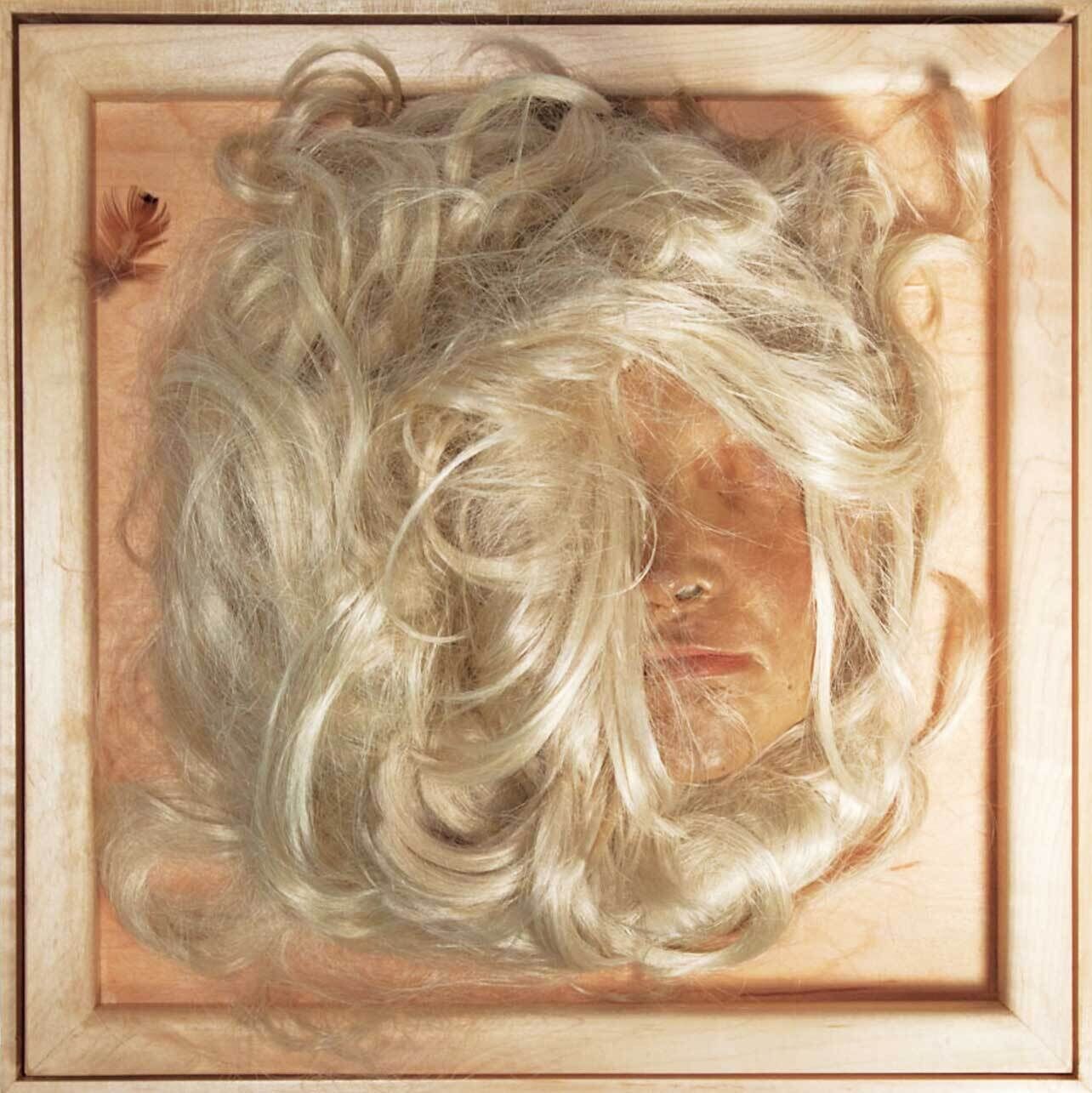
-
518
Ching Ho Cheng, Sun Drawing, 1967
Audio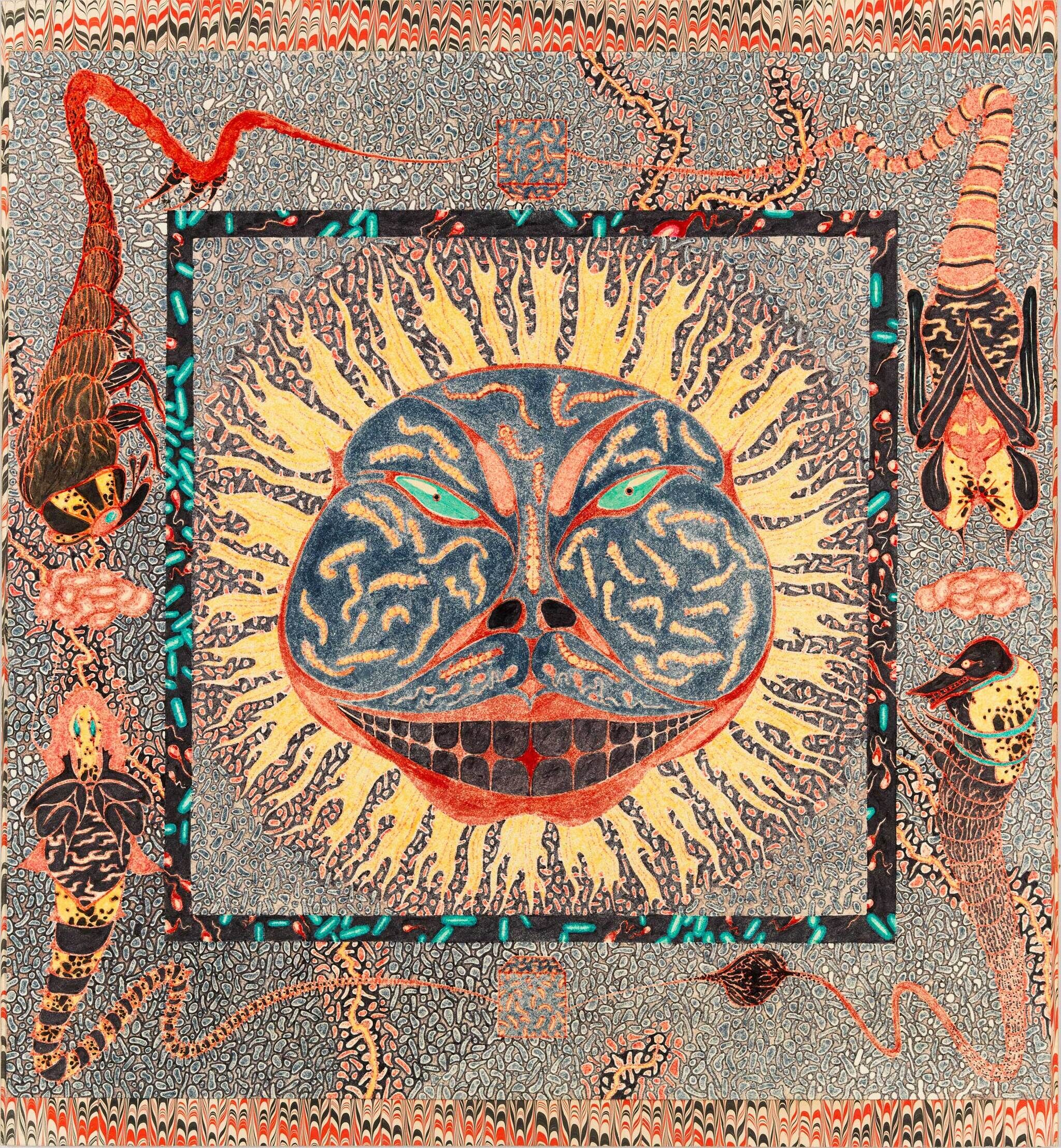
-
519
Carlos Villa, My Roots, 1970–1971
Verbal description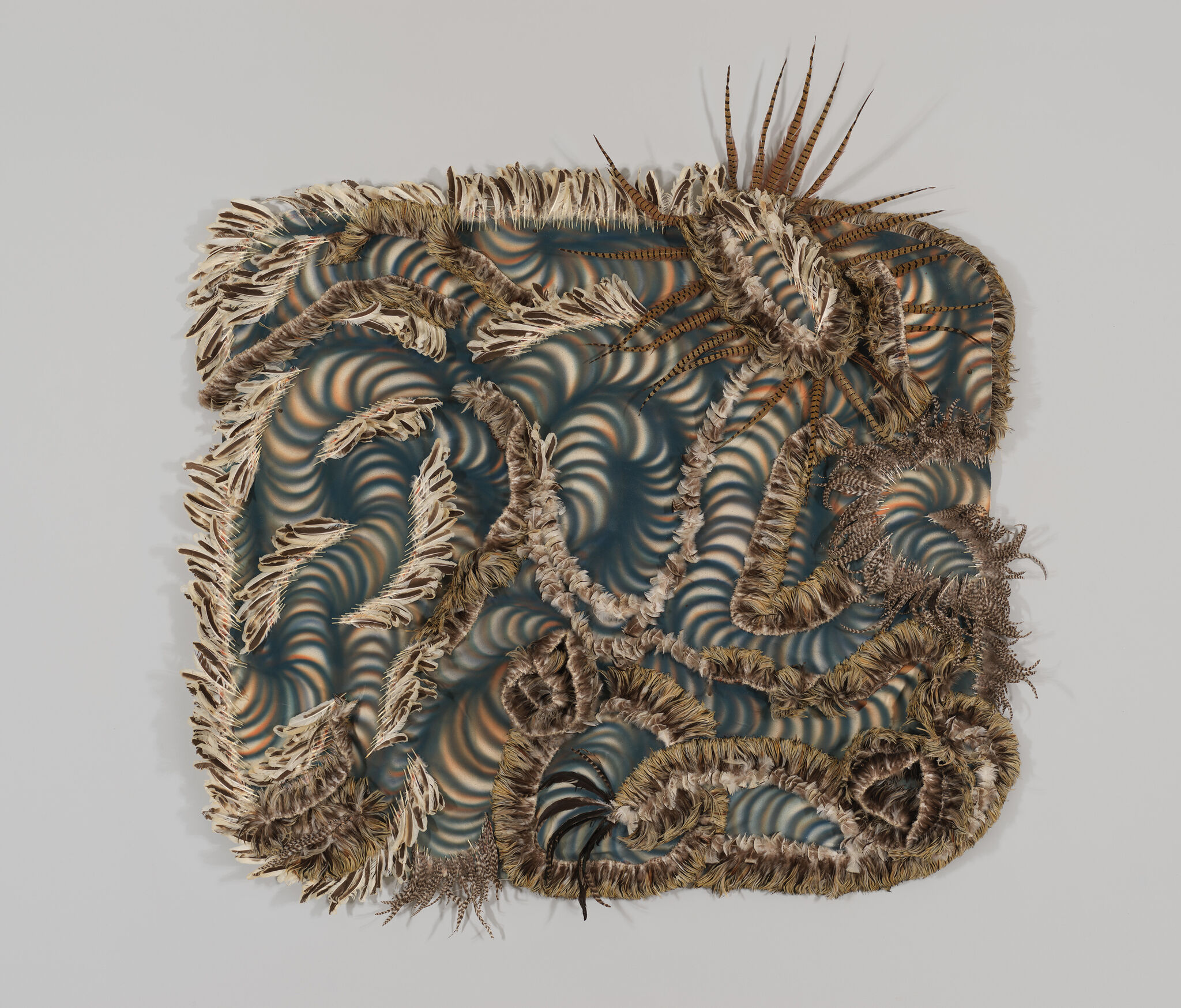
-
520
Jordan Belson, Samadhi, 1967
Sound description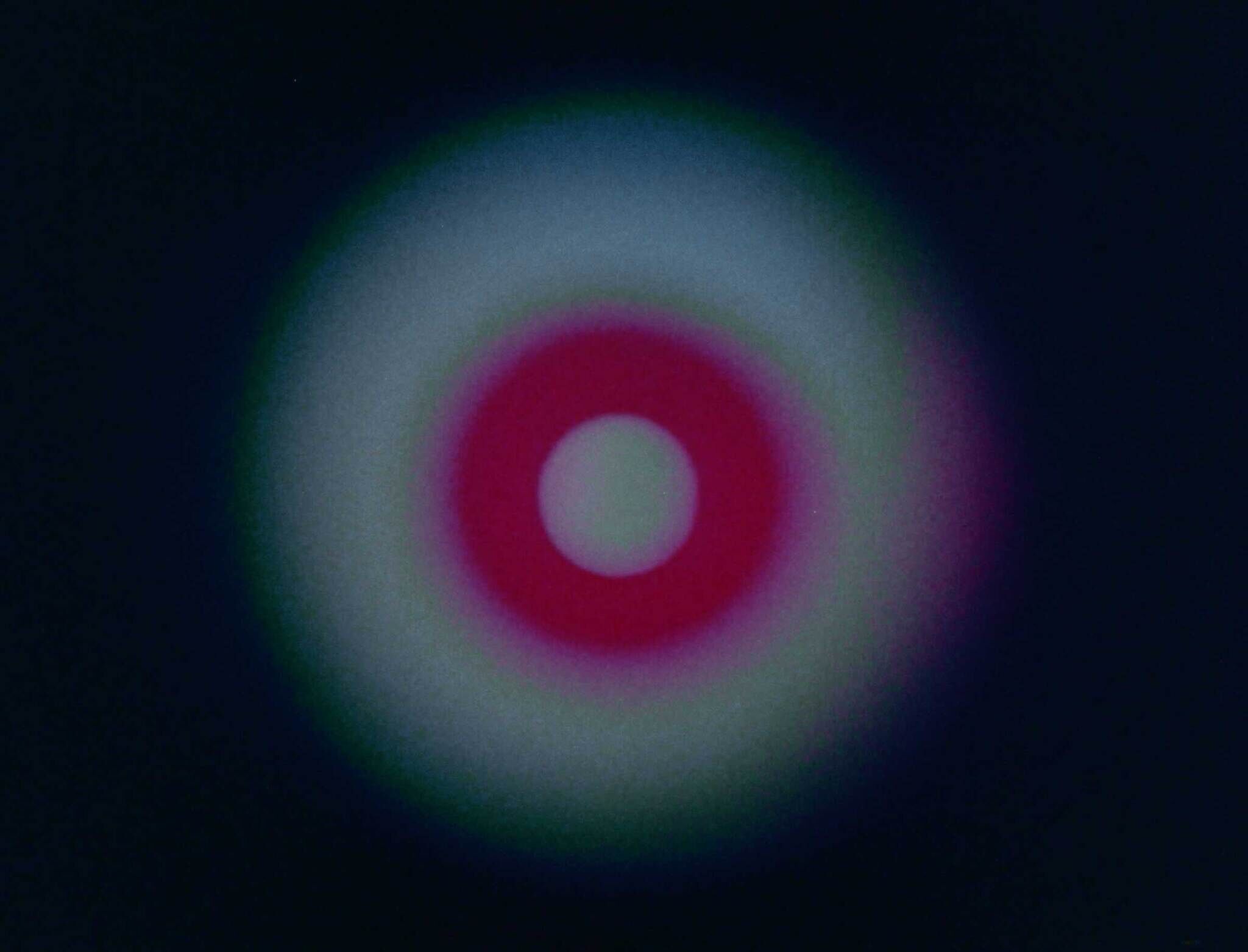
Scott Rothkopf: I'm Scott Rothkoff, the Alice Pratt Brown Director of the Whitney Museum.
Sixties Surreal is a sprawling exhibition of more than one hundred artists’ work from 1958 to 1972, made all across the United States.
When you arrive in the exhibition, you should feel something immediately off kilter. You're surrounded by bright orange walls, which seem to have almost nothing to do with these three life-size camels. Here they are greeting you—in a museum. It's already a strange and surreal proposition. The tension between these very natural looking camels and their place in the world, as well as this orange background color, which is kind of shocking, should be something you feel in your gut. As you move through the exhibition, there's a lot to read and think about in terms of the ideas that artists who are working with, but you should also be open to the emotional and perceptual changes you have in your mind and your body brought on by this art. That's partly what Surrealism is about.
The idea of the show is really to look at how artists in the 1960s took ideas from Surrealism or even from “the surreal” more broadly, and applied them in their work. This was a time of tremendous radical change in everyday life. There was the fear of nuclear annihilation. There were sexual and cultural revolutions for women, for queer people. There were struggles over racial inequality and the Vietnam War. There were technological changes like the idea that people suddenly had TVs with moving pictures in their home. All of this felt surreal, strange, weird, disconcerting.
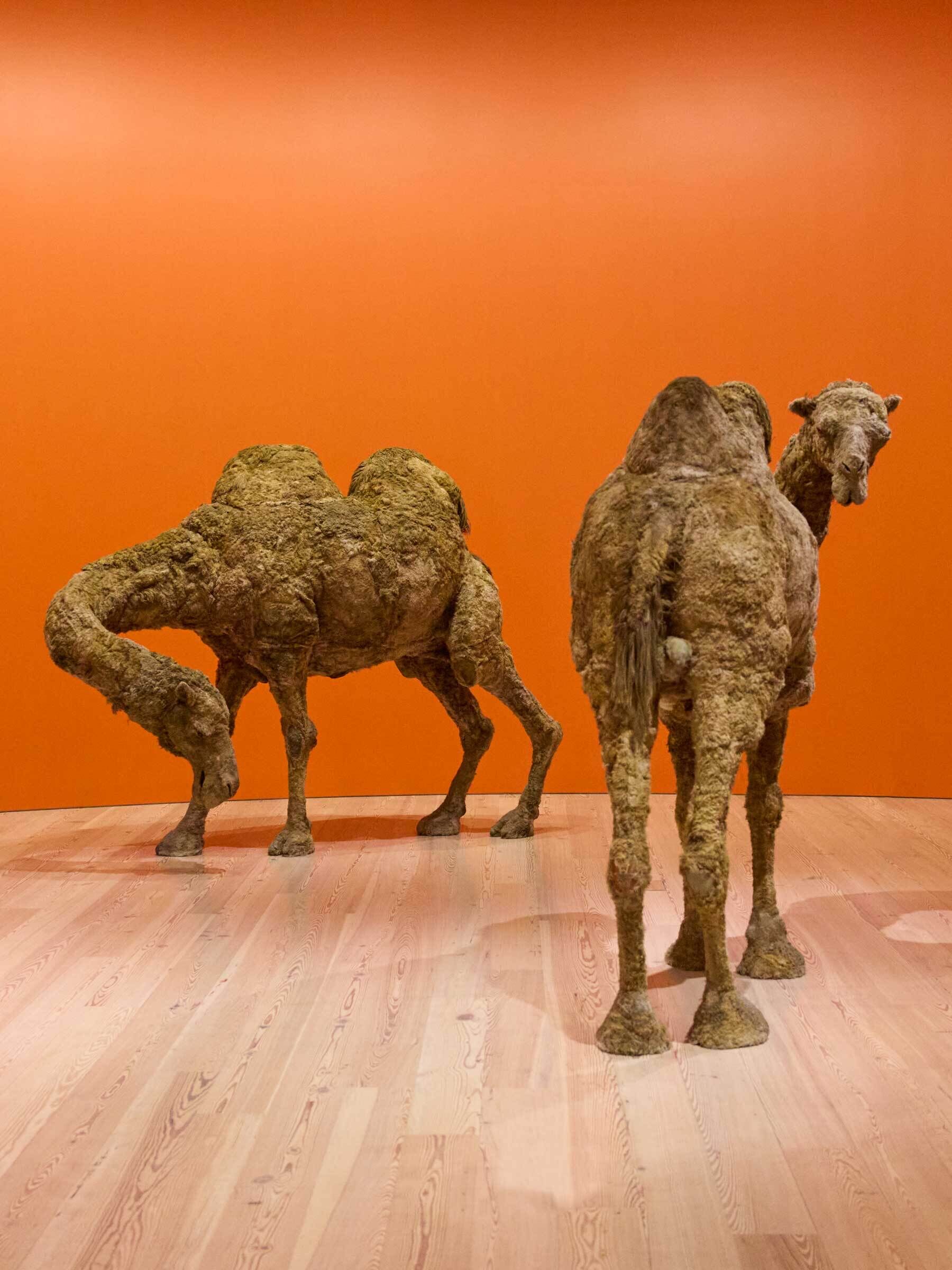
Jean Conner, Are You a Springmaid?, 1960. Collage, 10 1/8 × 8 1/8 in. (25.7 × 20.6 cm). Whitney Museum of American Art, New York; purchase, with funds from Sheree and Jerry Friedman 2018.203. © Conner Family Trust and Artist Rights Society (ARS)
Narrator: Camel VI, Camel VII and Camel VIII by Nancy Graves are sculptures that look like realistic camels made from wood, steel, burlap, polyurethane, animal skin, wax, and oil paint and they’re from 1968-1969. The three freestanding works are each 7 feet tall by 12 feet long with a body width of about 4 feet. They are slightly larger-than-life-size and their hides are a deep tan color with a velvety woolen texture. These are Bactrian camels, native to the steppes of Central Asia, which can be identified in part by their two humps. Their faces are long and triangular with a split lip that hangs in a jowl. Each camel has long eyelashes spreading wide over glass eyes. Their tough, broad feet divide into two toes firmly planted on the gallery floor. One camel bows to the ground as if drinking or eating. Slightly behind it, the next camel twists its neck downward to face its own front hooves. The third camel’s neck turns 180 degrees to face its rear or gaze behind itself.
The camels look like taxidermied animals, but they are not. Graves constructed the camels on wood and steel armatures, filling their forms with polyurethane before covering them with goat or sheep hide and painting them with oil paint to match the brown hue of the camels. The texture of the wool is thick and matted with clumps like unevenly shorn sheep or well-loved plush toys. Their size and the open space between them give them a command over the room, like the visitor has accidentally stepped into their habitat to catch them unaware.
Visitors encounter these camels as soon as they step into the Sixties Surreal exhibition. They serve as a reminder that reality is strange and that even what is real may not be quite what it seems.
Nancy Graves, Camel VI, Camel VII and Camel VIII, 1968–1969. Wood, steel, burlap, polyurethane, animal skin, wax, oil paint, 90 × 144 × 47 5/8 in. (228.6 × 365.8 × 121.9 cm) each. National Gallery of Canada, Ottawa. © 2025 Nancy Graves / Artists Rights Society (ARS), New York
Narrator: This work by Paul Thek is called Untitled from the series Technological Reliquaries, and it’s from 1966. It’s an abstract sculpture just over 2 feet tall and 2 feet wide with a depth of 7 ½ inches that sits on a pedestal. It’s made with wax, paint, polymer resin, nylon monofilament, wire, plaster, plywood, melamine laminate, rhodium-plated bronze, and acrylic. The exterior of the work is a neon yellow-green transparent rectangular acrylic box sealed on top of a white platform with silvery metal strips wrapping horizontally around the top and bottom. It resembles a display case for a medical or anthropological object.
Inside the box, a cylinder resembling severed flesh oozes a dark gelatinous substance from one end. The cylinder is just under a foot long, and the ooze in the center forms a thick blackish-red puddle. Facing the box’s short side opposite the oozing substance.
Thek has created irregular passages in the rough-cut layers revealing variations that look like bone, connective tissue, and marrow. Facing the box’s long side, the layers wrap around the cylinder creating a smooth surface. The surface of the cylinder is the color of light skin tone with wires that spring from the top like fine hairs, up through the box’s top surface. Although the colors and textures resemble flesh, the shape of the cylinder does not resemble a familiar body part. Instead, it has the inert quality of a pipe fitting or a concrete construction pipe. Thek arranged twisted copper wires seemingly indiscriminately on top of the neon box like fallen or discarded body hair.
This untitled work is from a group of sculptures that Paul Thek termed Technological Reliquaries, or “meat pieces.” For Thek, this grotesque combination of organic and inorganic forms responded to the carnage of the Vietnam War and expressed his fear that the scientific technology that fueled the war would suppress the human spirit.
Narrator: Whitney director Scott Rothkopf talks about this painting by James Rosenquist.
Scott Rothkopf: If we look at the Rosenquist, we see things that are at all different scales to one another. The comb is larger than the woman's face. The little pearl or dot of light is hard to identify. There's a strange thing in the bottom right corner of the painting where you see almost the shadow of a hand of someone smoking, sort of lost in the smoke. You're not quite sure where the painting begins or ends in terms of the background. And you go into this space of reverie. It's a little sexy in terms of focus on the woman's lipstick, her face, these ideas of beauty at the time, that are both being celebrated and also undermined. The painting is lurid, it has green light. There's something a little disconcerting about this pop universe as James Rosenquist describes it.
I think people tend to imagine that pop art is the celebration of everyday life, consumer culture, the things you would buy or find in a store, and that's true to some degree. But the early years of pop art were also marked by a real strangeness and how artists approached that everyday world. Things seemed a little different from the ordinary. They like to make things bigger than they would be in real life, softer than they would be in real life, overlap them. And they wanted to bring out a kind of strangeness, and you could even say a surreal quality in this rapidly changing consumer landscape.
James Rosenquist, The Light That Won’t Fail I, 1961. Oil on canvas, 71 3/4 × 96 1/4 in. (182.1 × 244.3 cm). Hirshhorn Museum and Sculpture Garden, Smithsonian Institution, Washington, D.C.; gift of the Joseph H. Hirshhorn Foundation. © 2025 James Rosenquist Foundation / Licensed by Artists Rights Society (ARS), NY. Used by permission. All rights reserved. Photograph by Cathy Carver.
Transcription: Gunvor Nelson and Dorothy Wiley, Schmeerguntz, 1965
Running time: 00:14:06
Synchronous mobile captions are available.
(Alexandre Schreiner plays "Toccata & Fugue in D Minor")
(Organ plays deep, rumbling chords)
(Rapid, repeating notes play with mechanical precision)
(Organ music surges with intense, thunderous chords)
(Music is tense, complex, and foreboding)
(Music fades to silence)
Man’s voice, vintage recording: They were alone. They were together. How did they occupy their time? I don't know.
Man’s voice, gentle and whimsical: And drew his breath in wonder.
(Dreamy, rising chimes)
For there, on the floor lay sleeping the loveliest princess in all the world. Her hair lay all about her face like a pool of autumn sunlight. Her long lashes lay on her cheeks like delicate sunbeams. And her lips were parted as though to whisper a name. The prince knelt and kissed the princess gently. She stirred in her sleep, and then slowly her eyes opened.
(Live recording of The Kingsmen, "You Can't Sit Down" plays)
(Song features lively, sixties-era rock n' roll music)
(Live recording continues over the sound of the audience cheering)
(Groovy electric guitar takes the lead)
(Music changes abruptly to a polka-style song with rhythmic clapping in the background)
(Music shifts back to the Kingsmen live recording then slows and fades)
Man singing, vintage recording:
♪ Yes, they had apple pie and chocolate cake ♪
♪ and ice cream cones and you ♪
♪ The USA had super highways ♪
♪ big, long cars, cinemas gold and you ♪
Man’s voice (John), announcing: Miss Georgia.
Woman contestant 1: Ginny Simpson from Atlanta.
John: Miss Illinois.
Woman contestant 2: Diane Gortz from Shore Park. Well, we have a monkey named Dino, a parrot named Junior, a poodle named Topper, tropical fish, two parakeets, and a cat named Tom.
John: And on top of all that, you had a pet turtle. And get this, what happened to the turtle?
Woman contestant 2: He ran away from home.
John: A runaway turtle. And what, what can your parrot do? Can it say anything?
Woman contestant 2: Oh, yes, it can cry like a baby. It can call for his mommy. Just about everything.
John: And you're a ventriloquist?
Woman contestant 3: Yes.
John: And you're also president of the State Hereford Association?
Woman contestant 3: In Oklahoma, yes.
John: In Oklahoma. That's very— I, I knew that, uh, they, they had cows there but I didn't know they had people. Alright, what does this mean?
Woman contestant 4: I'm representing the
doll industry of South Carolina.
John: And you're a, you're a doll, you're right. I was fascinated in her avocation, . Aand in that I'm a pilot,. Aand you're studying to be a pilot.
(Bells toll twice then fade)
Man's voice, singing:
♪ The girl, the girl ♪
♪ the beautiful girl ♪
♪ The most beautiful girls in the USA ♪
♪ The girl, the girl, the beautiful girl ♪
♪ The girl of USA ♪
Man's voice, speaking: Okay, fellas, time to go to bed.
Group of children: No!
Man’s voice, announcing: Right now, a little silent prayer saying, "Thank you, God, I can hear you with my legs."
(Man’s voice giving indistinct fitness instructions over energetic, flourishing background music)
One, inhale. (Indistinct)
(High-pitched note)
That’s good. Inhale. (Indistinct)
That’s it.
(Indistinct fitness instructions continue)
Man’s voice: Pick up, and down, and hold, hold, hold, hold, hold, hold, down… Now sit up, kneel (musical flourish) Stay up, and once again (musical flourish)
Man’s voice, singing:
♪ Happily we exercise, exercise, exercise ♪
♪ Happily we exercise ♪
♪ Happily we exercise, exercise, exercise ♪
♪ Happily we exercise ♪
♪ It's time to say goodbye ♪
Alright, that's fine. Thank you.
Man’s voice, professional: President Johnson is able to make decisions, and, Hubert Humphrey had made none.
(Pleasant instrumentals)
(Light static noise)
(Light, bouncy instrumentals)
Woman's voice: Eggs! Well, that's a good one, isn't it? Eggs we would have in the kitchen, wouldn't we, Ara?
(Woman's voice, light, operatic singing)
Man’s voice, serious: The white man beaten so badly, his eye was hanging out of the socket. He said they were covered with blood and everyone was drinking, even eight and nine year old children. Some who were not fighting, were standing around shouting, "Kill, kill."
(Operatic voice holds a final high note)
(Light static noise)
(The Kingsmen "You Can't Sit Down" plays, alternating with a man’s voice)
Man’s voice: Pat,
(Music continues)
Man’s voice: I love you.
(Music continues)
Man’s voice: I love you more than...
(Music continues)
Man’s voice: anything or anyone in the whole world.
(Music continues)
Man’s voice: I love you more than I ever thought I could ever love anyone, anything.
(Music continues)
Man’s voice: Wait.
(Music continues)
(Light static noise)
(Music continues)
Man’s voice, heartfelt: I want you to understand everything.
(Music continues)
Man’s voice: Will you marry me?
(Music continues over cheering and applause)
(Upbeat playful music with silly horn noises)
Child's voice: Oh, Hansel, you're so clever.
(Crashing sound)
Young man's voice: Oh, Millie.
John: Thank you, girls.
(Audience roars with applause)
(Soft lullaby plays)
(Chimes intensify then slowly drift away)
(Woman singing passionately):
♪ I only know when he ♪
♪ began to dance with me ♪
♪ I could have danced, danced, danced ♪
♪ all night ♪
(Woman's voice, gentle and folksy):
♪ Swing me ♪
♪ oh swing me ♪
♪ Swing me ♪
♪ all up and down ♪
Man’s voice: Uh, I don't know of any other way that's simply routine to describe that room.
(Folksy music continues):
♪ Spin me, oh, spin me ♪
♪ Spin me ♪
♪ around and around ♪
♪ 'till my feet touch the ground ♪
John: Did you grow up on a ranch?
Woman contestant 1: No, sir, I didn't grow up, but I used to horseback ride.
John: Oh, I guess every girl loves that. And you're also in the ROTC, which seems to me to be a weird fact.
(Staccato instrumentals)
Woman announcer (Sally Anne): How about that? Miss Illinois.
Woman contestant 2: Hi, Sally Anne.
Sally Anne: Hi, Karen.
Woman contestant 3: Hi, Sally Anne.
Sally Anne: Hi, Adrian. What a beautiful hairdo.
John: ...seven months of the year. And she had little snowballs that she would parade and throw at the audience. And I never am around snow in Southern California. I love to throw them. Do you throw snowballs up there?
Woman contestant 4: We sure do. When the first snow comes, it's real nice and sticky. So we have a ball throwing snowballs.
(Upbeat piano instrumentals)
Woman’s voice, singing, self-assured:
♪ I always do what's right ♪
♪ I never do anything wrong ♪
Woman’s voice, speaking: Well, I'm not exactly studying—
(Vocalists sing romantically)
♪ ...in USA ♪
Sally Anne: A beautiful girl, isn't she, John? And certainly a lovely representative of our country.
John: Oh, I couldn't agree with you more, Sally Anne. And, you know, though she could, but her real ambition is to be an electronic computer programmer.
Sally Anne: That's extremely complicated work, isn't it?
John: It's very complicated, but still, the girl to win.
Sally Anne: You really chose the right word.
Sally Anne: She is unique.
John: And most charming.
Woman contestant 1: So I think school is very important for everyone, and especially if you're in college, and I would advise you to stay in because if you don't have schooling these days, it's very hard to go through life. Thank you.
Woman contestant 2: I put up a show that I was trying to win, but I think I'd always let my boyfriend think he was the best because I think that's the way it should be. Thank you.
(Audience laughter)
Woman’s voice: That did happen. I'm sure that none of my good friends would ever be making a date with my boyfriend.
Woman's voice, romantic: Oh, my prince, it's you. You have come at last.
Man's voice, romantic: He kissed her again. And at that moment, the entire castle awoke. The birds began to sing, the bees to buzz, the brooks to murmur. The king was awake, the queen, everyone.
Man’s voice, serious: Except to my knowledge, the president's activities over the last three days were not abnormal.
Man’s voice, romantic: The handsome prince and the beautiful princess. Never in all its history, was there such a night of happiness and rejoicing in the old castle. Indeed, nobody went to bed at all that night. For as you may well believe, no one in all the castle was the slightest bit sleepy.
(Romantic music swells)
(Light static noise)
(Upbeat live rock n' roll music plays)
Man’s voice, singing "Twist n' Shout," holding a long note: ♪ I said wellllll... ♪
♪ Well, shake it up baby ♪
(Crowd roars with applause)
Background vocalists: ♪ Shake it up baby ♪
Lead vocalist: ♪ Oh, shake it up baby ♪
Background vocalists: ♪ Shake it up baby ♪
Lead vocalist: ♪ Yeah, twist, twist, and shout ♪
Background vocalists: ♪ Twist and shout ♪
Lead vocalist: ♪ Yeah, work it right on out ♪
Background vocalists: ♪ Work it on out ♪
Lead vocalist: Yeah!
(Audience applauds)
Man’s voice, announcing: May I have the judges choice, please?
(Drumroll)
(Light static noise)
Gunvor Nelson and Dorothy Wiley, Schmeerguntz, 1966. 16mm film, black and white, sound; 15 min. Filmform, Stockholm, Sweden. Courtesy Filmform and the artists
Narrator: Untitled by Lee Bontecou from 1961 is an abstract wall relief made from welded steel rods, canvas, wire and rope around 6 feet tall by 5 ½ feet wide with a depth of 2 feet. Untitled is composed from scavenged materials that evoke early industrial machinery with inconsistent shapes and measurements that show it is handmade. Dark voids within openings gape at different sizes and group together in irregular clusters. The surface of the relief is taut and rounded in a swell away from the wall. The relief hangs against the wall in a frame like a painting, but with a magnetism created from its sculptural depth.
From the front, many patches of weathered canvas punctuated by small holes stretch between welded steel seams. Some of the small holes have grommets in them. The patches vary in color from lighter beige hues to sooty greys. From the side, the full depth of the sculpture can be seen with its large surfaces protruding forward. One opening has welded vertical bars like a cage, several others have small exhaust pipes within them, most are unobscured. Bontecou fashioned rims around the openings by welding rods that have been bent into circular shapes. The largest of the dark openings is slightly above the center of the relief to the right. Knotted pieces of rope dangle from its rim. Strips of metal line the inside catching light with a sheen unlike the voids of the other holes. In the center of the metal strips, a horizontal line of punctures in the metal appear like teeth or gears. Throughout the sculpture, wire weaves between intermittent gaps, maintaining a muted tension.
Between 1959 and the mid-1960s, Bontecou made large-scale, metal-and-canvas wall reliefs. She made these hybrids of painting and sculpture by welding a metal armature and then using suture-like stitches to attach fragments of canvas with copper wire. Bontecou scavenged most of the canvas from bags and conveyor belts discarded by the laundry below her New York studio.
Laura Phipps: I think that this work can be interpreted as or seen as having these bodily features, feeling like it is protruding from the surface in this sort of organic way, but it also has these mechanical features.
Narrator: Laura Phipps is an Associate Curator at the Whitney.
Laura Phipps: C-Clamp Blues is a work made by Eva Hesse in 1965 and it was one of fourteen wall works that she made while living in an abandoned factory in Germany and this setting really influenced her use of materials like metal and particle board and joint compound. There's a quality of play or even humor in Hess's work in the way that she's combining the materials. This really rough-hewn, built-up compound that has references to concrete or to building materials, but placed delicately on top is a found object that feels both completely unmoored from its surface, but also entirely in place, especially in relationship to the smooth globe like object that protrudes from the work.
Narrator: A lot of Hesse’s peers had similar experimental impulses.
Laura Phipps: In the early to mid 1960s, these ideas of the erotic of bodily suggestion and minimalist form or spare geometric shapes all within the same works of art, the use of unconventional materials—some of which were very new to the market like fiberglass or latex and plaster—was seen in a number of artist studios and within their works around this time.
These gestures were also occurring on the West Coast, an impulse in the Bay Area became known as Funk, a label that was contested by artists from the very beginning. But the works in the West Coast that were also approaching the body and abstraction were maybe more straightforwardly looking at orifices and protrusions of the body.
Eva Hesse, C-Clamp Blues, 1965. Painted concretion, metal wire, bolt and painted plastic ball, 25 5/8 x 21 5/8 x 1 1/2 in. (65.1 x 54.9 x 3.8 cm). Collection of Gail and Tony Ganz. Los Angeles, CA. © The Estate of Eva Hesse. Image courtesy Hauser & Wirth
Robert Crumb: I'm Robert Crumb, a cartoonist, comic artist, if you will. I've been doing this for sixty years. This head is a cover I did for a book that never happened. It looks very mechanical. It's a bunch of circuitry and pipes and wires and stuff. But leading to the top where when you have the mystical LSD experience, as you move through all this circuitry on LSD, you get to this point where it all becomes finer and finer and finer until it just turns into light.
Narrator: Drugs weren’t the only thing transforming artists’ sense of reality in the 1960s. Curator Dan Nadel.
Dan Nadel: One of the stranger things about the post-war era—and the 1960s in particular—is that suddenly televisions and the media were living in our spaces. So there's always the story about people in the sixties and seventies going to sleep, watching television, watching Johnny Carson or Jack Paar or whatever. And The flip side of that is that advertisements and the American ideal of beauty was constantly coming at us, selling us things.
The sort of surrealism that you see in this gallery and in this work is often about the melding of the human and the technological.
Robert Crumb, Head #1, 1967. Ink on paper, 10 × 7 in. (25.4 × 17.8 cm). Collection of Rubén Blades, New York, NY. © Robert Crumb, 1967. Courtesy the artist, Paul Morris, and David Zwirner and Heritage Auctions/HA.com
Transcription: Mike Henderson, Dufus, 1970
Running time: 00:06:29
Synchronous mobile captions are available.
(Static noise)
(Man's voice, slow and steady):
Speaker 1: Art by Mike Henderson and John Nicholas with Rico Reese on harmonica and guitar.
(Harmonica plays in the background)
Speaker 1: The dufus is a hard working man.
(Man's voice shifts to exhausted, mumbling):
Speaker 1: I don't see why I gotta work so hard. Work all day and every day and night. Seems like I'm never done. Oh, I tell you, the devil's a busy man.
(Tumbling rocks over low mumbling)
(Tumbling rocks continue)
Speaker 1: Work work work. That's all I seem to do...seem to do is work work work work.
(Easy guitar and bluesy harmonica a keep a steady rhythm behind the words)
Speaker 1: What's this?
(Bluesy harmonica wails)
Hey, I used to be a painter. What would it taste like? I'm gonna taste—
(Abrupt hocking, sniffing, and snorting noises)
(Grunting and humming noises)
Speaker 1: What I tell you is...I been working all day and I used to paint, man. Let me tell you. Well, we might as well clean up this garbage here, you know. You know, you know about this.
(Jumbled mumbling and slurred speech)
(Heavy labored breathing)
Speaker 1: We'll talk before I go home.
(Exhausted breathing over bluesy harmonica)
(Sleepily) To...
Speaker 1: Work work work. What have I got to show? The only thing they give me is a hard way to go. Let me tell you, the devil's a busy man.
Speaker 1: (Softly) Work work work. Work work work.Work work work.Work work work.
(Mood shifts to energetic and cool) A scum-bag!
Speaker 1: A scum-wag. Well, the only solution is definitely revolution. If you can dig it, it's all right with me. If you can't, it's all right. Because it don't make any difference to me because I'm going to sit here and have have a ball and dig infinity, y'all.
(Light, mellow guitar plays behind the words)
Speaker 1: Yeah… Sit back and roll myself a joint.
Speaker 1: (Exaggerated southern accent): This is good marijuana.
Speaker 1: I am going to have myself a good trip. Mm, this is good stuff, too. Well, ain't no need in me working all the time. I got a woman who works herself— Work? Man, work don't work nobody. Work ain't what's happening, baby. Love is where it's at. Love and all of those things that go along with love. Like, um...Well, you take the dorks, on the other hand...
Speaker 1: (Mimicking a high woman's voice): "How y'all doing, baby? I'm sick a long time… I was sorta thrown out of action because I had a bad case of the crabs about a week ago, (low, sultry) but I'm doing fine now."
Speaker 1: (Continues mimicking woman's voice) "Yes. Love ain't where it's at, baby. Love ain't where it's at. You got to forget about love. You got a fucking's where it's at. Yes, there ain't nothing like it. You'll see, some day. Well, come up and see me some time, if you ever (low, sultry) in the neighborhood."
(Harmonica and guitar play over a man's playful, confident voice)
Speaker 1: Well, mofoc, well, what's happening, blood? Oh, yeah. What's happening? Same old junk? If it's getting heavy, you got to put it down. Well, I got it, baby, what's to it? Ain't nothing shaking. How is it, T I is? Fucking, fucking ain't what's happening, y'all. No, man, you must be jiving and shucking. Fucking ain't what's happening. Money's where it's at. Got to forget about morals and learn about dollars and cents, baby. Yeah, ooh, me and my bad self. I tell you, man, I am heavy. Yes, it's cool, it's cool. It's all right with me. Yeah, well, I'll see y'all later. Y'all drop by the crib some time, mofoc, anytime I see y'all much later, y'all. But it's splurnk. Well, if it isn't Good Time Charlie, the last of the big time spenders. Yeah, yeah, he burns up money like he's burning it up. Yeah.
(Arhythmic kazoo)
Speaker 1: He'll buy it all. He'll spend it all. He'll waste it all. It's only money. You got to forget about money. Life is where it's at. Because if you got money, you got nothing but life to happen for you. Now me...
(Light, strained out-of-tune guitar)
Speaker 1: I don't know about me. Well… That's, um, William Howard Henderson Junior. Better known as Mike. In some circles, even Hendoo. And that's all I can really say about him that I really know.
(Convoluted guitar music plays)
Speaker 1: This part was shot by Louise, the sweetest girl I know. That's John. He's the cat I grew up with. We used to play in a band together.
(Jaunty guitar music plays)
Speaker 1: That's it. It's all over now, baby blue.
(Jaunty guitar music continues)
(Static noise)
(Silence)
(Light static noise)
(Silence)
(Static noise)
(Silence)
(Static noise)
(Silence)
Narrator: Blonde TV Image by Luis Jimenez from 1967 is a fiberglass sculpture standing over 2 feet tall by 2 feet wide with a depth of 30 inches. A rounded rectangular television screen tightly frames a molded, stylized face with a light metallic tan skin tone. This face bulges with a dramatized quality that is both like a glamorous caricature and a stoic commemorative statue at once. Crisp edges of thick bronze hair curl out of the gold frame like waves as if being blown by a breeze or held in place by generous hairspray. Shapely bronze eyebrows descend into a furrow at the top of a nose with a high bridge. A wash of bronze shadow hovers over closed eyelids that are covered in a dusty maroon shadow, black eyeliner and solid blue in the crevices of the eyes. Round, plump cheeks give this face an exaggerated bone structure. Facing it head-on, the nose protrudes from the face in a smooth arc culminating in a soft point. The center of the nose bridge is flat, forming a neat, stylized curve. The depth of the face is underscored by highlights bouncing off of the sheen covering its surface. Under a scooping groove between nose and lip, the mouth is open like a gasp or like the woman is mid-speech. Jiménez painted both lips and the open portion of the mouth a metallic rose. Smile lines fold at the corners of the mouth giving the face a distinctly mature character. The rounded edges of each piece give this sculpture an animated quality that sweeps the eye around the face like a finger tracing crests and troughs.
The precision of this work’s edges and uniformity of surfaces looks as though it could have been carved in stone or molded in metal rather than fiberglass. The side of the frame has a small rectangular bronze insert reading L. Jiménez and handwritten numbers marking the edition three out of five. The back of the work is blank and slightly concave with a grey finish.
Luis Jimenez, Blonde TV Image, 1967. Fiberglass and polychrome, 27 1/2 × 30 3/4 × 19 3/4 in. (69.9 × 78.1 × 50.2 cm). Whitney Museum of American Art, New York; Josephine N. Hopper Bequest, by exchange 2024.352. © 2025 Luis Jimenez / Artists Rights Society (ARS), New York
Laura Phipps: The central composition of Freedom Now, Number 1 involves a number of different objects all piled on top of each other. The wood scraps, the mouse trap wire tubing, and then doll parts and a protest pin. And this entanglement of all of these objects is very intentional. It creates a feeling of ambiguity in what any one of these objects means on its own. But then Johnson doubles down on that ambiguity by adding this dark tar like substance, this pitch, which is a material that has all sorts of connotations and references in the world, used to waterproof boats, used to make roofing materials, but also has this reference to public humiliation and the idea of tarring and feathering. This violence that I think is inherent in the work as well—that it is hard to separate the material from the history of material and the fact that the material itself is this deep, dark black that makes it hard to see the actual objects in the painting—doesn't occur by accident. Johnson is really digging into these ideas of Blackness. I think that is most recognizable in the “Freedom Now” pin that sort of emerges from this entanglement of objects.
Narrator: Like many of the works in this room, this one begins with protest and transforms it into something more personal and mysterious.
Laura Phipps: Daniel LaRue Johnson traveled to Washington, D.C. and participated in the March on Washington in 1963. And after that trip to D.C. and his time at this protest, he spent some time traveling in states in the American South and collecting objects along his way that he then brought back to Los Angeles where he was establishing his career as an artist. And the objects from those travels and his time in DC made their way into the works that he made at this time, including this work, Freedom Now, Number 1.
Daniel LaRue Johnson, Freedom Now, Number 1, August 13, 1963 - January 14, 1964, 1964. Pitch on canvas with "Freedom Now" button, broken doll, hacksaw, mousetrap, flexible tube, and wood, 53 7/8 × 55 3/8 × 7 1/2 in. (136.6 × 140.5 × 18.9 cm). The Museum of Modern Art, New York; given anonymously, 4.1965. © Daniel LaRue Johnson
Dan Nadel: The Big Change is an improbable object. It seems like a sailor's knot, but made out of wood, which of course is impossible. And Westermann loved those sort of illusions. He loved to play and to delight people both personally—he would often do handstands and walk on his hands and openings and do acrobatic tricks just for fun—but also with his work, by tricking people into thinking one material was another kind of material, or that you could tie a knot out of wood. The object itself, also for the curators, for us, symbolized the many connections that Westermann made across the country that are embodied in this show. Westernmann crisscrossed America from New York to Chicago to northern California to southern California to Texas, meeting with artists, inspiring them. And he was sort of seen by so many of the artists in the show as a distant, benevolent, aesthetic uncle.
H.C. Westermann, The Big Change, 1963. Douglas fir marine plywood, Masonite and ink, 75 3/8 x 20 1/4 x 20 1/4 in (191.5 x 51.4 x 51.4 cm). The Art Institute of Chicago; Gift of the Estate of Alan and Dorothy Press in acknowledgment of their family. © 2025 Dumbarton Arts, LLC / Licensed by VAGA at Artists Rights Society (ARS), NY. Image courtesy the Art Institute of Chicago / Art Resource, NY
Dan Nadel: This is an artwork that you can tell is burnt.
Narrator: Curator Dan Nadel talks about this work, Untitled (66 Signs of Neon).
Dan Nadel: This sort of burnt crust around the artwork is really a remnant of how it was made. It was made because Noah Purifoy was responding to the 1965 Watts uprising, and his idea was to take what had been destroyed in his community and make something new from it, something that was generative as against the destruction of the time. It's an artwork that is using the tropes and the ideas of collage that we may remember from historic surrealism, but also from other things in this gallery that you see, including Bruce Connor or Wallace Berman ideas of putting divergent things together to make a unified whole and to communicate something larger about what you can do with the things around you. How can we pull things from the city that we live in and make something new, and how can we signal that destruction won't be the end of us?
Narrator: The artist Ed Bereal also worked in the wake of the Watts uprising. One of his sculptures is on the opposite side of the room.
Dan Nadel: Bereal was using similar ideas of assemblage and collage to make things like his object, but at the time when he was making it, he was pulling from electronics and machine parts and things like that to make it kind of almost like a backpack for urban living.
Ed Bereal: As far as the iconography, I was a child of the Second World War and was fascinated by German mechanisms, that aesthetic as a kid. I wasn't a Nazi, a seven-year-old Black Nazi, no, I was a kid that lived through his eyes, and Life magazine showed all these battles that were going on in Europe and I fell in love with the airplanes and the tanks and even the shape of the guns, some of the guns and those long trench coats and the swastika and all those things visually were very powerful. I chose to do the swastika facing the other way because again, for aesthetic reasons and that image, that icon had been used by various groups, religions, philosophies that go back to China, to Japan, even the American Indian had used that, and it was a symbol of visual power for me.
Narrator: Dale Brockman Davis’s Arabian Nights, #2 is on the wall to the right, past the entrance to the next gallery. Davis describes the experimental spirit that underpins the work in this room.
Dale Brockman Davis: The two pots I probably epoxied together to build one form. They weren't made at the same time, but the way that I think it's like you can take disjointed things and put them together and make them one. And then because I was an experimental kind of person and working with different materials, then the leather came into play and I thought. And I thought, okay, let me wrap this. Let me change the whole form and be willing to take that kind of chance risk. And then the harness kind of piece, I'm not sure where I found it, but I needed to tie it together, two really different kinds of materials and make them into a composition that held together as one piece.
Noah Purifoy, Untitled (66 Signs of Neon), 1966. Mixed media assemblage, including burnt wood, acrylic, stencil and color felt, on plywood board, 52 x 36 in. (132 x 91.4 cm). Collection of Christine Ogata and John Baker. Courtesy Noah Purifoy Foundation. © Noah Purifoy. Photograph by Swann Auction Galleries
Sound Description: Jack Smith, Scotch Tape, 1959–1962
Running Time: 00:02:59
Scotch Tape starts abruptly with a high-pitched screeching sound like a whistle being blown into a microphone. The sounds start to shift, and music comes forward: a remix by artist Tony Conrad of Eddy Duchin’s cover of “Carinhoso” (1941), originally recorded by the Brazilian composer Pixinguinha. The age of the recording becomes apparent in the crackles and far away sounding instruments. The music seems to soar over and out of the recording. Trumpets and piano surge into cheerful and upbeat music, like sounds from a party. The same score plays throughout the video. Towards the end there is a moment of faint clapping. The music begins to fade, signaling that the experience is about to end.
Jack Smith, Scotch Tape, 1959-62. 16mm film, color, sound; 3 min. Edition 1/10. Whitney Museum of American Art, New York; gift of Gladstone Gallery, New York 2010.207. © Jack Smith Archive, Courtesy Gladstone Gallery, New York and Brussels
Kelly Long: My name is Kelly Long and I'm a Senior Curatorial Assistant here at the Whitney and part of the curatorial team for Sixties Surreal. This is a work called The Big Rip-Up by Anita Steckel, and it's the work that gives this gallery its title. It's a self portrait, and to make this work, Steckel took a photograph, a black and white photograph of herself when she was a teenager, and then layered on paint and colored pencil and graphite pencil drawings over the top of it.
It's sort of an impossible space where there are bodies floating in the mist, but it feels truthful to conveying something about her experience as a woman, as a female artist.
So I feel like there are a lot of ways that we could read this image. I think one of them, certainly the fact that she's drawing attention to her eye, that she's this artist, she's expressing maybe that this is the artist's vision and this impossible world that she's created is something that could only come from sort of the artist's eye. I think she's also expressing maybe sorrow and frustration and criticism of what it's like to be a woman or a girl in the world in which she's living.
The Big Rip-Up is an interesting title because for me it evokes some sort of massive change or some sort of big transformation that maybe has a little bit of violence to it. And I think that sort of reflects the moment and the circumstances of women artists in the 1960s where women were fighting for autonomy, for representation, for all sorts of things, for recognition in the art world. It's not a coincidence that a lot of these women artists are depicting multiple versions of themselves or multiple bodies or bodies that are sort of entangled or living together in utopic or really claustrophobic spaces because what they're doing in part is imagining a new world or imagining new versions of themselves that can build a different kind of world.
Linda Lomahaftewa: My name is Linda Lomahaftewa. I'm Hopi and Choctaw and I live in Santa Fe, New Mexico.
Narrator: Find Lomahaftewa’s large, brightly colored painting to the left of the Steckel, on the adjacent wall. The dark horizon in this work seems to go on and on in the distance. But shapes and figures in the bottom half of the canvas defy any notion that this is a straightforward landscape.
Linda Lomahaftewa: This is a painting I did when I was going to the San Francisco Art Institute and it's in oil. I didn't want to paint the models the way they actually looked, so I painted my own version of them, and then I started turning the canvas around. You know when you are in art school? You're always taught to turn the canvas in different directions or different settings and to look at it to see if it balances out.
Anita Steckel, The Big Rip-Up, 1964. Paint and colored pencil on photo, Sheet: 30 x 23 in. (76.2 x 58.4 cm). Courtesy the Estate of Anita Steckel, Hannah Hoffman, Los Angeles and Ortuzar, New York. © The Estate of Anita Steckel. Collection of Beth Rudin DeWoody. Photograph by Timothy Doyon
Narrator: The work Women and Dog by Marisol is a wooden sculpture from 1963-1964 composed of a row of three women, a child, and a dog standing side by side. The sculpture is made with plaster, synthetic polymer, and taxidermy and stands approximately 6 feet tall by 6 feet wide with a shallow depth of 26 inches. The human figures consist of carved heads on blocky, rectangular bodies standing on carved legs that suggest both human anatomy and handcrafted furniture. Marisol stacked and arranged the pieces together suggesting relatives posing for a portrait taken straight on. The square edges of each body give this sculpture a solid yet playful quality like building blocks.
From left to right: The small dog has a wooden body painted white with a taxidermied head defined by a red collar. The dog’s unpainted wooden tail stands upright, curving to a sharp point. A delicate chain leash connects to the carved hand of the first woman, who also holds a cowhide handbag. This figure wears black wedge shoes, a skirt with an unfinished pattern of interlocking white circles on a black background, and an orange blazer with a yellow top peeking through the lapels. She has three carved faces suggesting her head might turn like a carousel. The faces are painted a light skin tone, one with red lips, framed by solid hair and a large black bowler hat.
The rectangular body of the second woman stands closely against the first. Perfectly round semicircles protrude from the figure’s torso, forming breasts, and she wears a painted pink blouse. Her head is round like a large helmet tapering forward into a tiny flat printed face. Marisol conveyed the pleats in her green skirt with flowing painted shadows.
Across a small gap, the third woman stands on undefined feet like hooves. Between the bare woodgrain of her matching skirt and blazer, her fitted blouse is decorated with a white interlocking circles pattern. Like the second woman, she has a head with many faces painted in a light skin tone, all with red lips. She wears a white hat with a thick brim and a flat top. Her carved hand rests on the child’s shoulder, who stands to her right. The child has thick legs with small feet and wears a two-tone pastel dress with a bow on the chest. Her painted hands are clasped at the navel. Marisol carved her hair into a short blocky bob, and she wears a stoic expression, sketched in pencil onto the bare woodgrain. A pink carved bow sits on her head.
The trio of women strolling with a child and a dog seem to suggest Marisol’s interest in social norms and conventions relating to women in society. The artist has even inserted herself into the sculpture: A photograph of the artist is applied directly onto the face of the figure with the pink blouse.
Marisol, Women and Dog, 1963–64. Wood, plaster, synthetic polymer, taxidermied dog head and miscellaneous items, 73 9/16 × 76 5/8 × 26 3/4 in. (186.8 × 194.6 × 67.9 cm). Whitney Museum of American Art, New York; purchase, with funds from the Friends of the Whitney Museum of American Art 64.17a-i. © Estate of Marisol / Albright Knox Art Gallery / Artists Rights Society (ARS), New York
Sound Description: Lynn Hershman Leeson, Giggling Machine, Self Portrait as Blonde, 1968
Running Time: N/A
Mechanical and stifled giggling.
Lynn Hershman Leeson, Giggling Machine, Self Portrait as Blonde, 1968. wax, wig, feathers, Plexiglass, wood, sensor, and sound, 16 1/2 × 16 1/2 × 13 in. (41.9 × 41.9 × 33 cm). Promised gift to Cleveland Museum of Art, Cleveland, OH. © Lynn Hershman Leeson
Rowan Diaz-Toth: I'm Rowan Diaz-Toth. I am currently a Curatorial Project Assistant at the Whitney Museum of Art for Sixties Surreal. Cheng is an artist who was born in Havana, Cuba, but moved to New York City when he was a young boy.
Narrator: Sun Drawing is an early work, which Cheng made while getting his BFA at Cooper Union in Manhattan’s East Village.
Rowan Diaz-Toth: It's this drawing that I think when you look at it, it looks on its surface like a dorm room poster from the 1960s or 1970s, like classic psychedelia. But when you look closely at just the entire drawing, you see that there's all these little cell-like wriggling, microbial little shapes that are around the sun, they're inside the face of the sun, and the whole drawing just kind of explodes into them.
And he was also at the time getting into this, what would be a lifelong following of Taoism, which is an ancient Chinese spiritual and religious belief system and a philosophical system as well. He would consider painting really foremostly a spiritual practice throughout his life, and that would manifest itself in different ways. But here it's definitely manifested as this way of working also through a lot of anxieties that he was dealing with at the time.
And he, like a lot of other artists in this gallery, were dealing with that death by, I think looking deeply into their subconscious and looking deeply into these not organized religion so much, but either playing with organized religion and turning it on its head, or looking into alternative spiritualities, looking into historic and antiquated forms of spirituality.
Ching-ho Cheng, Sun Drawing, 1967. Fiber-tipped pen on paper on board, 20 × 20in. (50.8 × 50.8 cm). Whitney Museum of American Art, New York; gift of the Ching Ho Cheng Estate 2010.46. © 2025 Ching Ho Cheng Estate/ Artists Rights Society (ARS), New York
Narrator: My Roots by Carlos Villa is a painting made of acrylic and feathers on canvas. This work is very large, measuring approximately 93 inches tall by 94 inches wide, with parts of the work protruding from the wall by as much as 8 inches. The canvas has been cut in an irregular shape, with slightly wavy edges and rounded corners. Feathers of varying density line the edges of the painting, blurring the edges of the canvas.
This is an abstract, non-representational work, completely covered from edge to edge. The image appears as though there are many layers of ridged cylinders crawling over, under, and around each other. The cylindrical shapes are made up of concentric half circles in alternating browns, tans, and blues, and the full coverage of the canvas gives the impression that there is endless movement and depth to the scene. Variations on these forms appear in much of Villa’s work throughout the 1970s, and speak to his interest in pattern and texture.
Ribbons of small, soft-looking cream and brown feathers are layered thickly along the perimeter of many of the shapes, giving them a dense, furry outline. It feels as though the canvas is crawling with fuzzy caterpillars – plump, segmented and bending in wide arcs as they wander and writhe around the canvas. In the upper right hand corner, one oval is remarkable for being encapsulated in three layers of protruding feathers: the first, small, brown, and white; the second, downy and soft, in tones of beige; and the third, long, thin, and tapering to a point with bands of black on a warm brown background. This third layer of feathers reaches beyond the perimeters of the canvas, like fingers outstretched, or long twigs of a tall tree, radiating outward. Artist Eamon Ore-Giron, who studied under Villa from 1992 to 1996, comments on this work:
Eamon Ore-Giron: “Where you see Carlos looking into the past and the title of the piece being, "My Roots". He's looking at his own art history, Filipino art history and art from Oceania. It's my favorite body of work. It's very visceral, it's very physical, and it evokes ideas about adornment and capes, but it also has this other dimension to it, these hazy brushstrokes of almost looking a bit serpentine. It looks like it's some kind of animal that's coiling behind the feathers.”
Carlos Villa, My Roots, 1970-71. Acrylic and feathers on canvas, 93 1/2 × 94 1/4 × 7 3/4 in. (237.5 × 239.4 × 19.7 cm). Whitney Museum of American Art, New York; purchase with funds from the Neysa McMein Purchase Award 72.21. © Carlos Villa Art Estate
Sound Description: Jordan Belson, Samadhi, 1967
Running Time: 00:05:16
It’s not clear what sounds are playing at first–they are distorted. A throaty, croaking sound cuts through the recording. This is followed by a sharp sound that brings an end to the lower tones being played. As the recording continues, it darkens and flows into a mysterious rhythm. Celestial and atmospheric, a slow rising and falling can be sensed in the recording. Electronic breathing sounds or breathing noises that recall the central role of breath control in yoga are present throughout this work. This goes on for the rest of the video.
Jordan Belson, Samadhi, 1967. 16mm film transferred to video, color, sound; 6 min. Estate of Jordan Belson; Courtesy Matthew Marks Gallery, New York. © Estate of Jordan Belson, Courtesy Matthew Marks Gallery
0:00
0:00