Marina Zurkow: Parting Worlds
2025
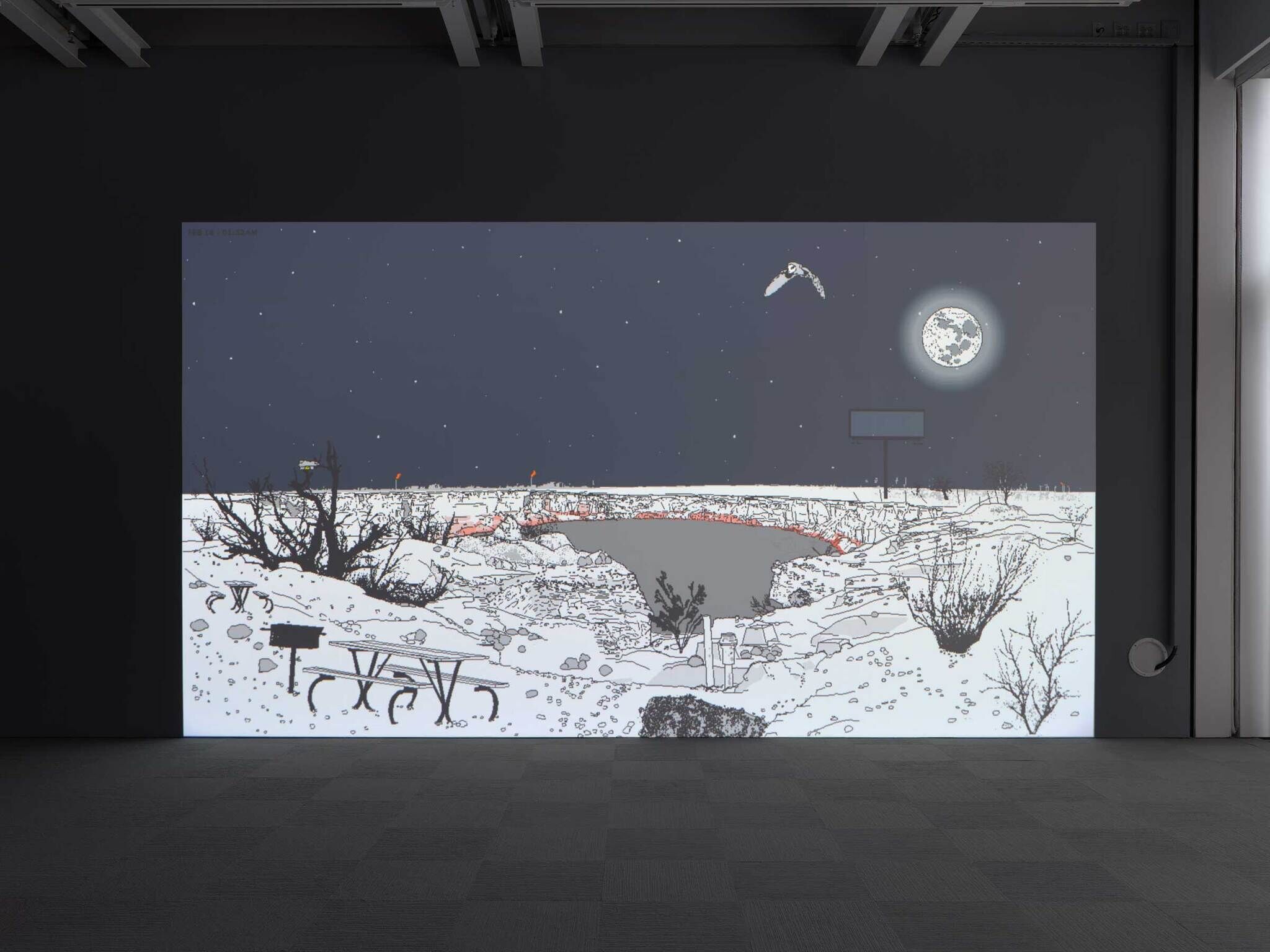
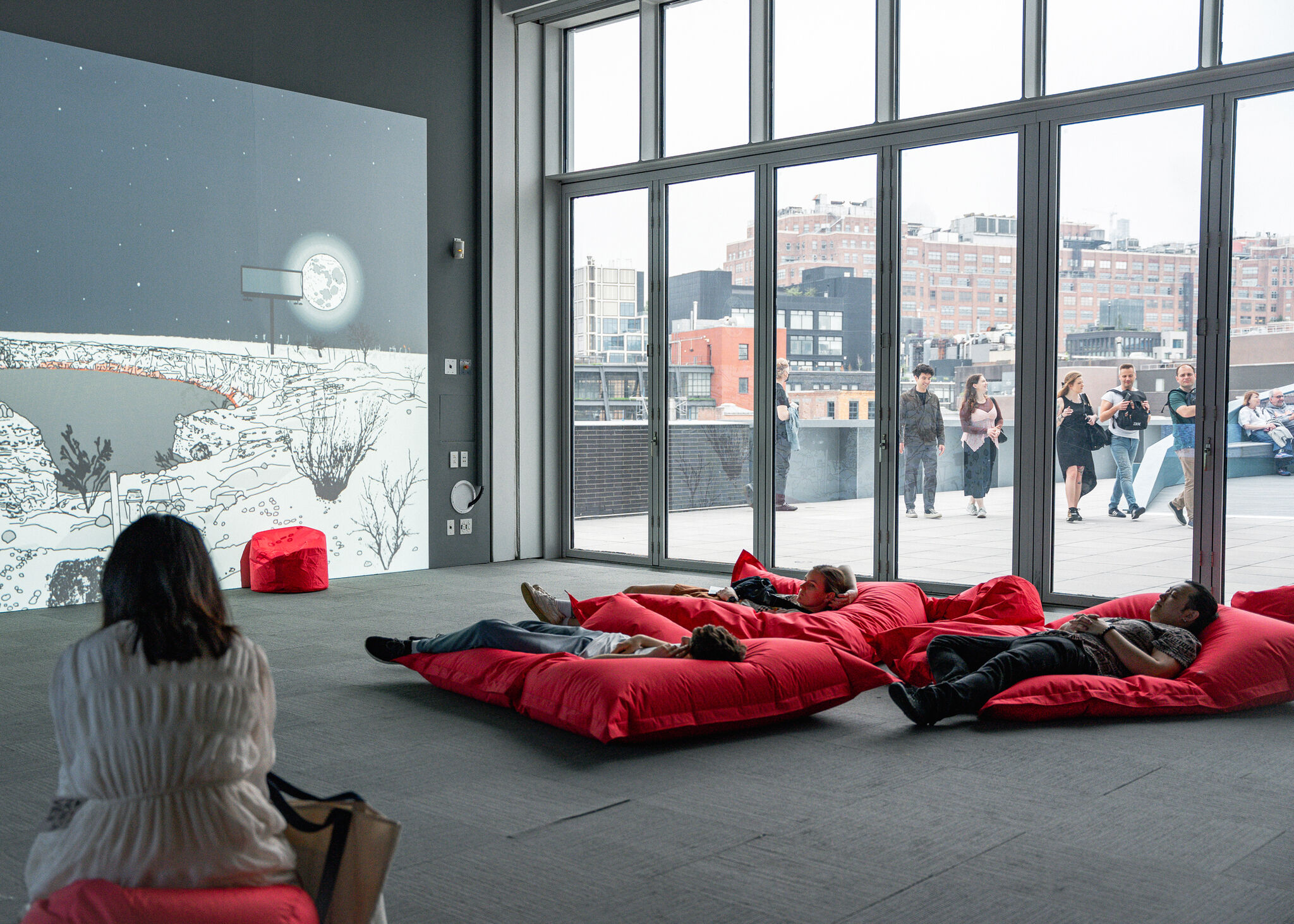
Narrator: Mesocosm (Wink, TX) by Marina Zurkow is a software-driven animation that depicts a large sinkhole, nicknamed Wink Sink 2, that formed on the property of a private oil company located in the town of Wink, Texas. Because the animation is constantly being generated, every minute is unique from the next. This description is a general overview of the elements in the work.
Shown as a 19.5 x 11 ft. projection, the animation is a side view of the sinkhole and the land around it. Each of the elements in this work is hand-drawn, and the overall feel is that of being plunged into an cartoonish, science fiction world. Time passes from day to night and seasons shift. The sinkhole is filled with a dark liquid, perhaps oil, and bubbles and gushes. Sometimes, it expels objects like plastic bags, or plumes of dark clouds. Depending on the season, geese flit through the sky, as do giant butterflies and hot air balloons. Occasionally, hazmat workers in neon yellow suits are visible around the sinkhole. The brightness of their outfits contrast with the mostly grayscale tones of the rest of the environment. Prairie dogs, coyotes, or antelope can sometimes be seen lumbering across the landscape. To the far right of the background, is a large, freestanding digital signage display showing scenes from nature and on the left of the foreground is a small picnic table, reminiscent of a rest stop.
Installation view of Marina Zurkow: Parting Worlds (Whitney Museum of American Art, New York, April 9, 2025-January 11, 2026). Mesocosm (Wink, TX), 2012. Photograph by Ron Amstutz
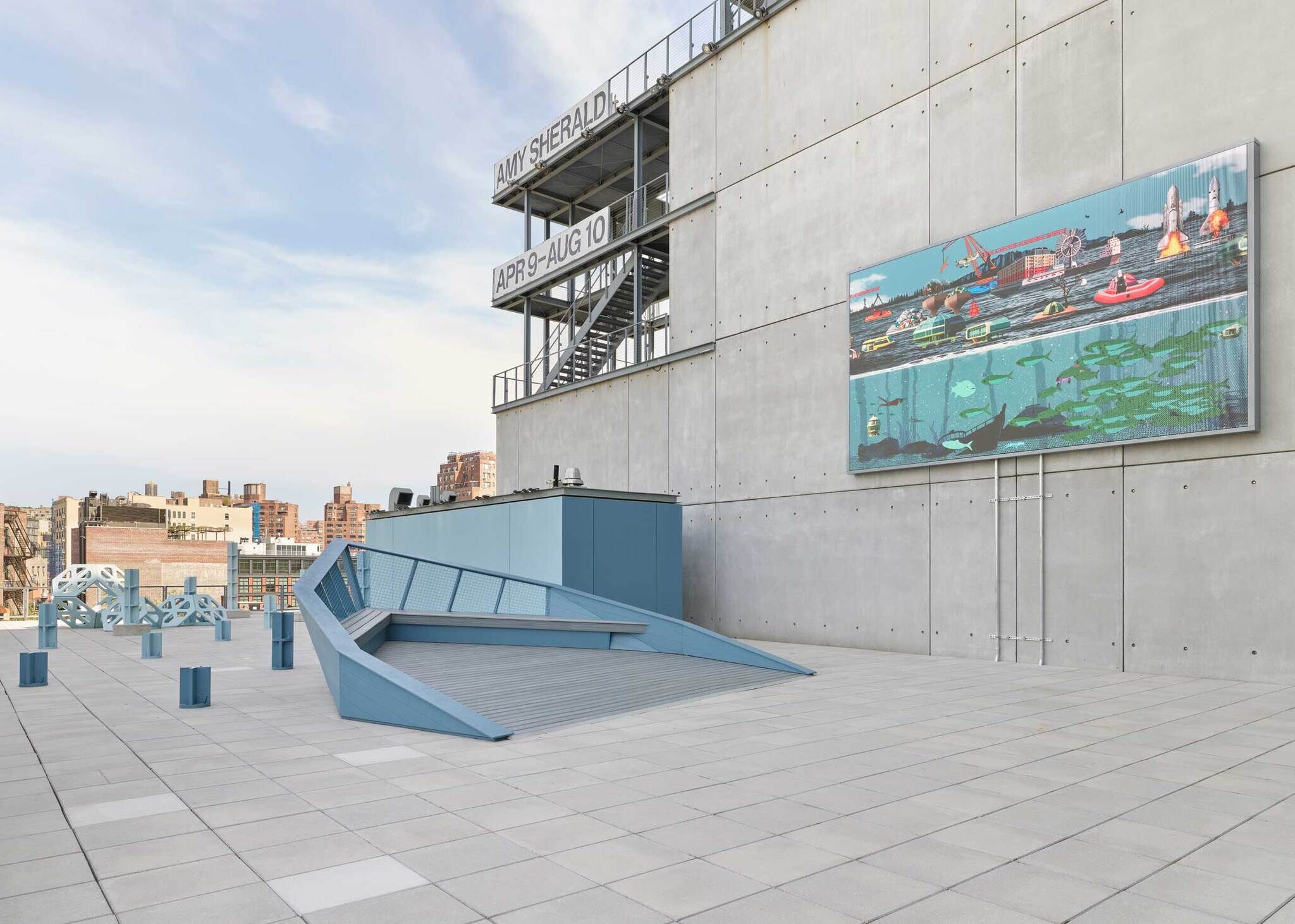
Narrator: Outside of the Whitney galleries and on the outdoor terrace, visitors are transported underwater. The space is washed in a blue patina, imitating the soft blues of the Hudson river. An animation plays on a massive video wall, measuring 24 feet by 13 feet. The animation shows a horizontal split between the world above and below the water. Days ebb and flow and weather patterns shift from sunshine to rain to snow, depending on the actual weather in New York City. The animation shows schools of fish and divers swimming under the surface, and barges with scenes from the history of the meatpacking district and its possible futures floating down the river. The ships and barges move through the decades, carrying people from colonial times, slaughterhouses and nightclubs from the 70s, and sustainable architectures or war machinery from imagined futures.
Walking forward and moving east, an installation extends the bottom half of the animation to the terrace, beginning with the bow of a ship protruding out of the cement floor. The bow is U-shaped with a mesh railing around the curved perimeter; approximately 37 feet and 8 inches long. The bow, with a walkable deck and benches for seating, is positioned at an angle, its point reaching back up towards the sky.
If we continue east we will encounter a spattering of old decaying pilings; the cylindrical vertical supports used to anchor and support piers, docks and other waterfront materials. The pilings have a diameter of twelve inches and their height varies from 10 to 40 inches tall. As we weave around the pilings, towards the end of the terrace, we come across multi-faceted plywood shapes. Both of these three-dimensional shapes, two in total, are made of hexagonal panels that fit together, creating an almost spherical shape. One shape has been partly dismantled into hexagon panels that litter the bottom of the riverbed. These shapes are actually man made reef balls that are used to help the growth of the oyster population.
Installation view of Hyundai Terrace Commission: Marina Zurkow (Whitney Museum of American Art, New York, April 9, 2025-January 11, 2026). Marina Zurkow, The River is a Circle, 2025. Photograph by Ron Amstutz
The Earth Eaters, 2025
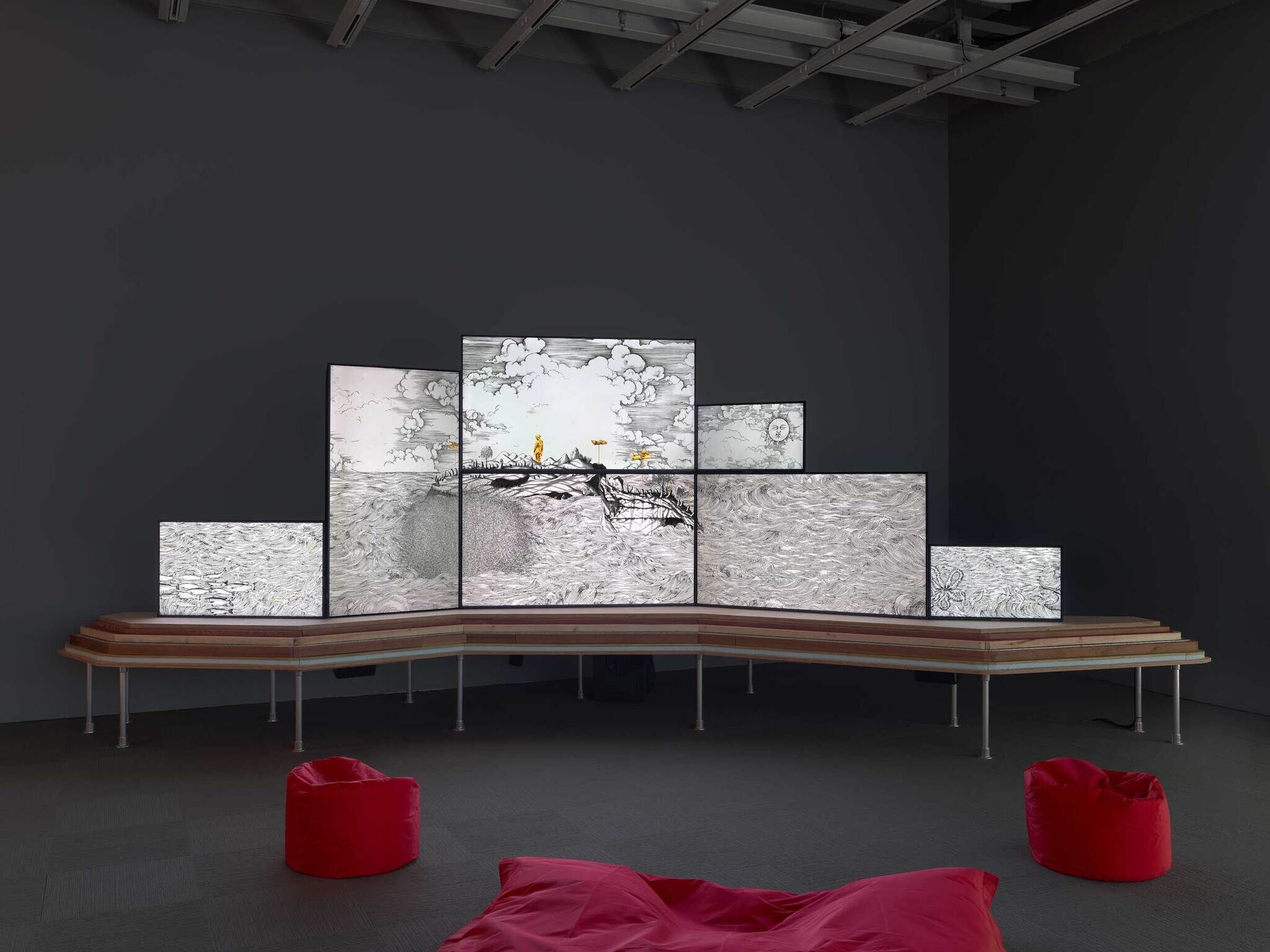
Several sound channels overlap in this work. One can hear the continuous lapping of waves. Overlaid on it are earthquake-like rumblings that accompany the emergence of islands from the sea; the sounds of the animals inhabiting the islands; and the ratcheting noises of giant drill bits holding up machinery that start protruding from the earth. In the background, the artist’s voice quietly reads an alphabetical list of metals and minerals.
Installation view of Marina Zurkow: Parting Worlds (Whitney Museum of American Art, New York, April 9, 2025-January 11, 2026). The Earth Eaters, 2025. Photograph by Ron Amstutz
0:00
0:00