Christine Sun Kim: All Day All Night
2025
-
800
Introduction
ASL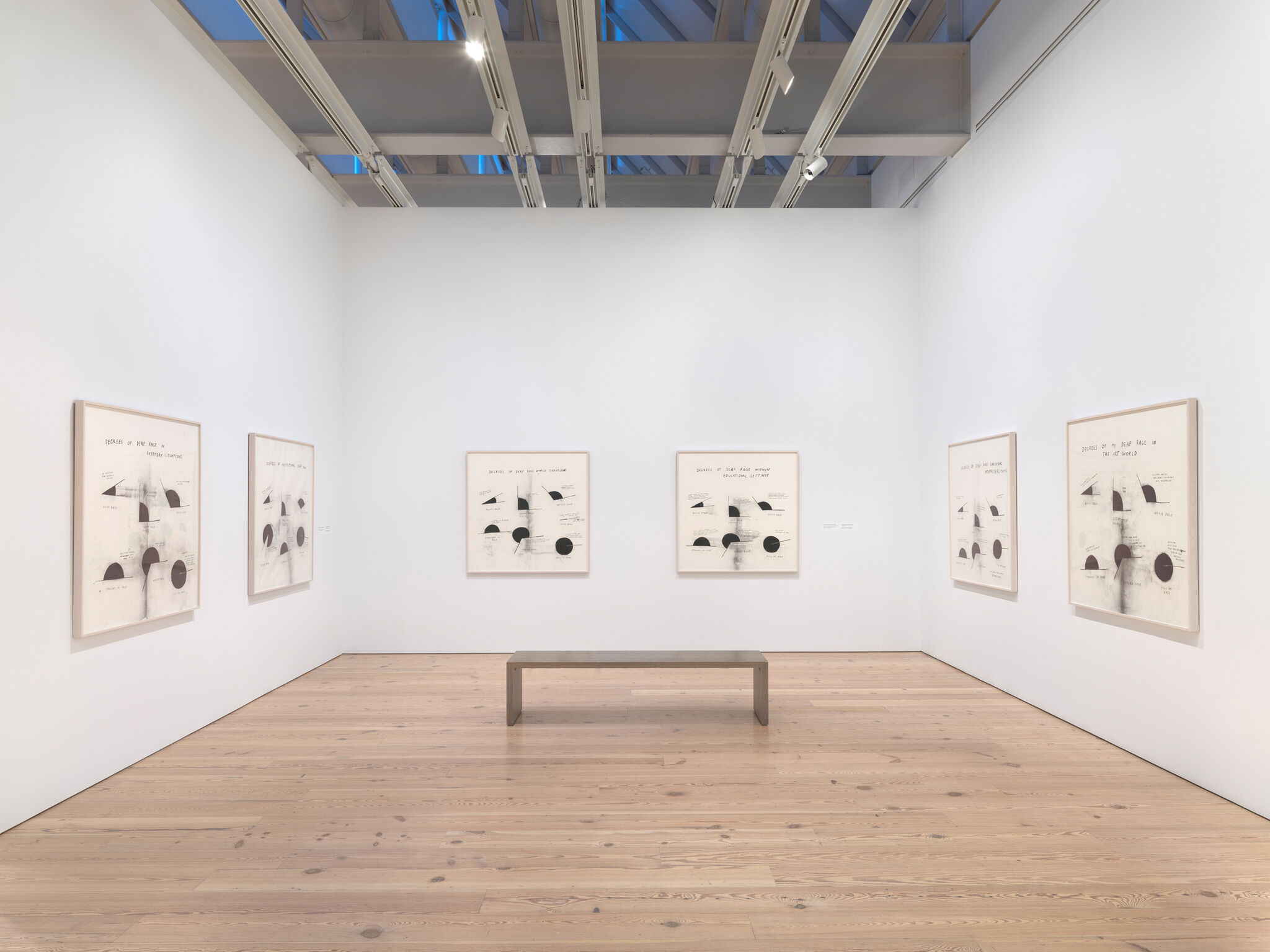
-
801
Ghost(ed) Notes, 2024
ASL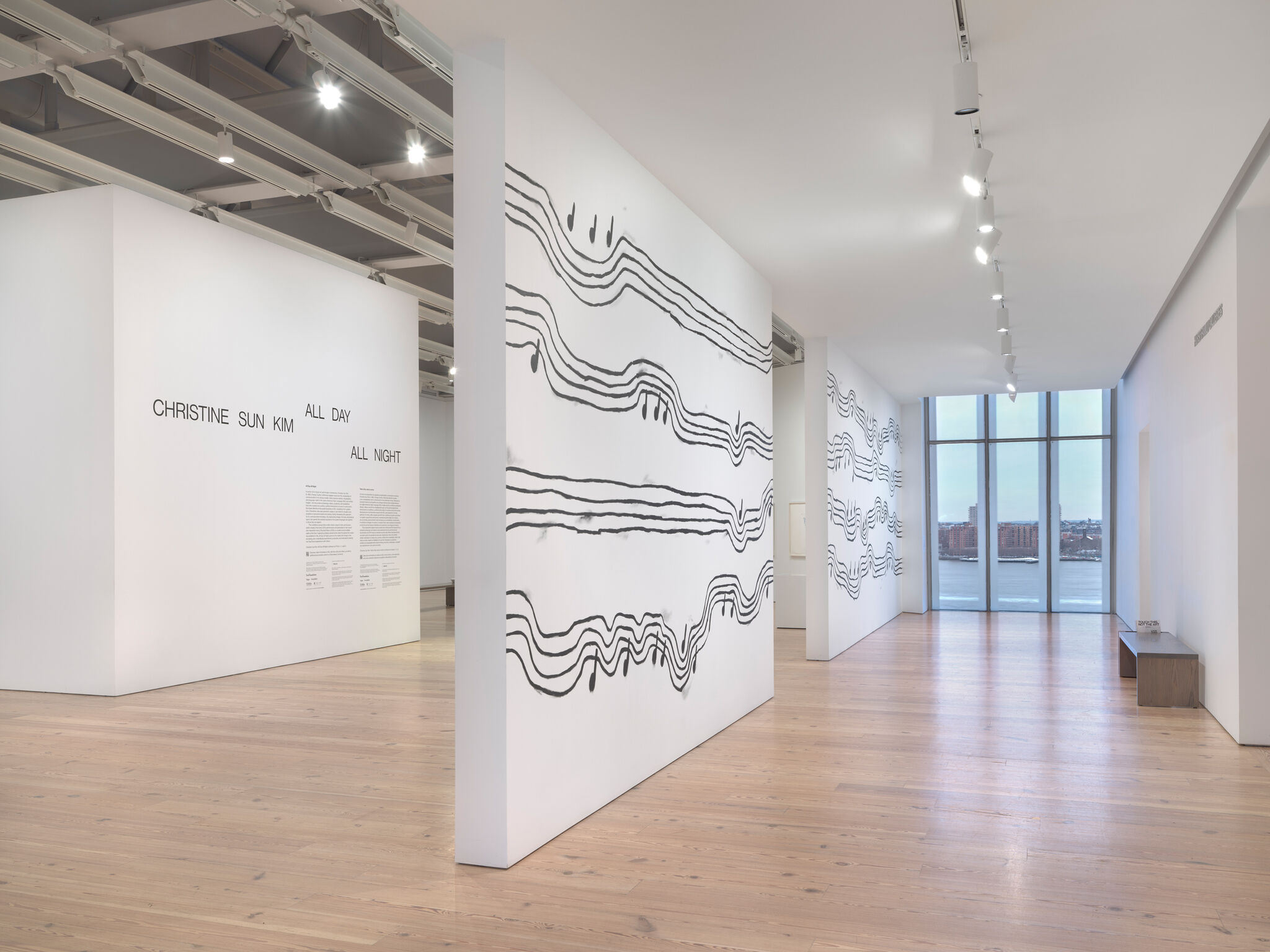
-
802
All. Day. (2012), All. Night. (2012) drawings
ASL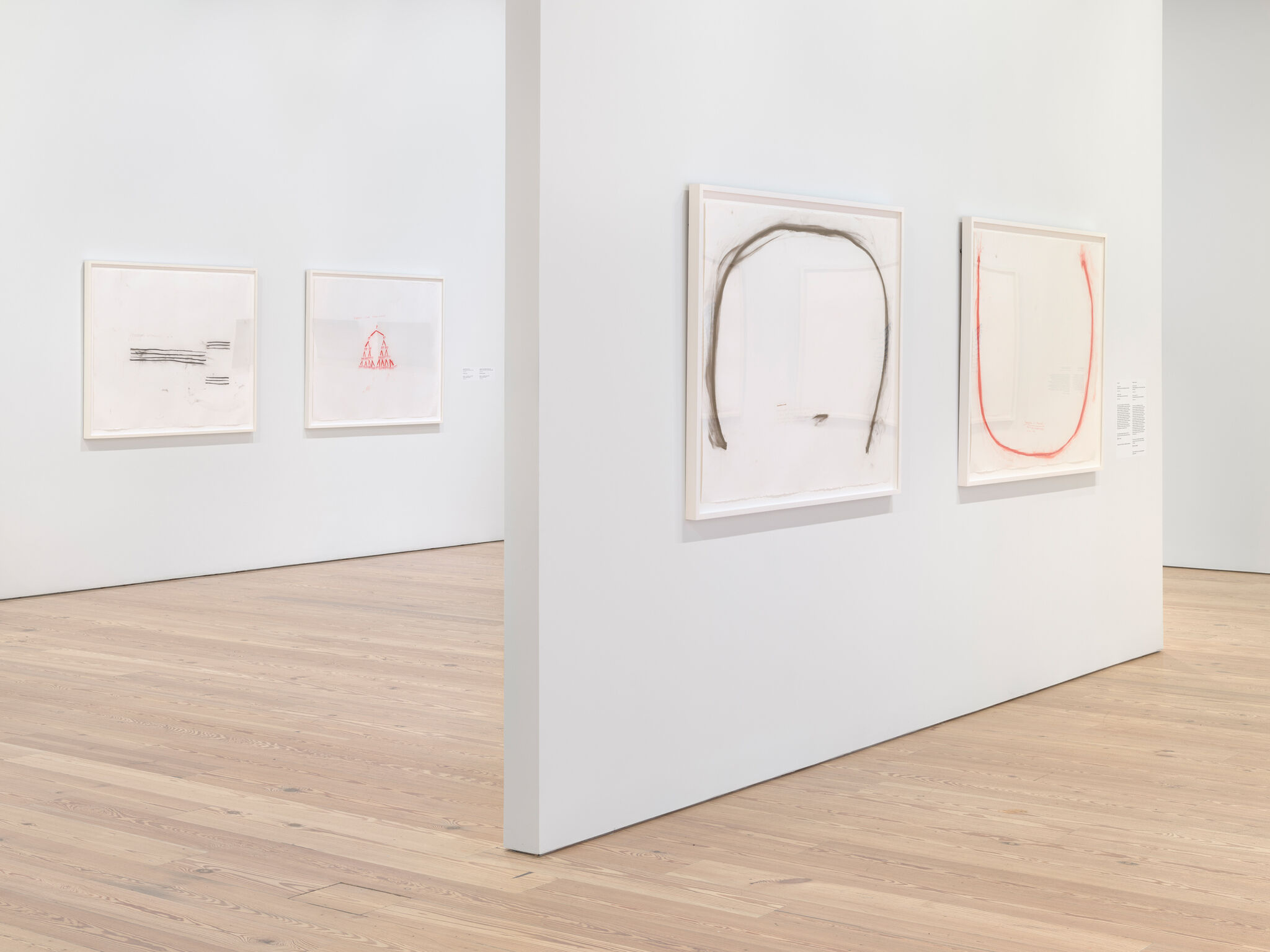
-
803
Selby Circle, 2011
ASL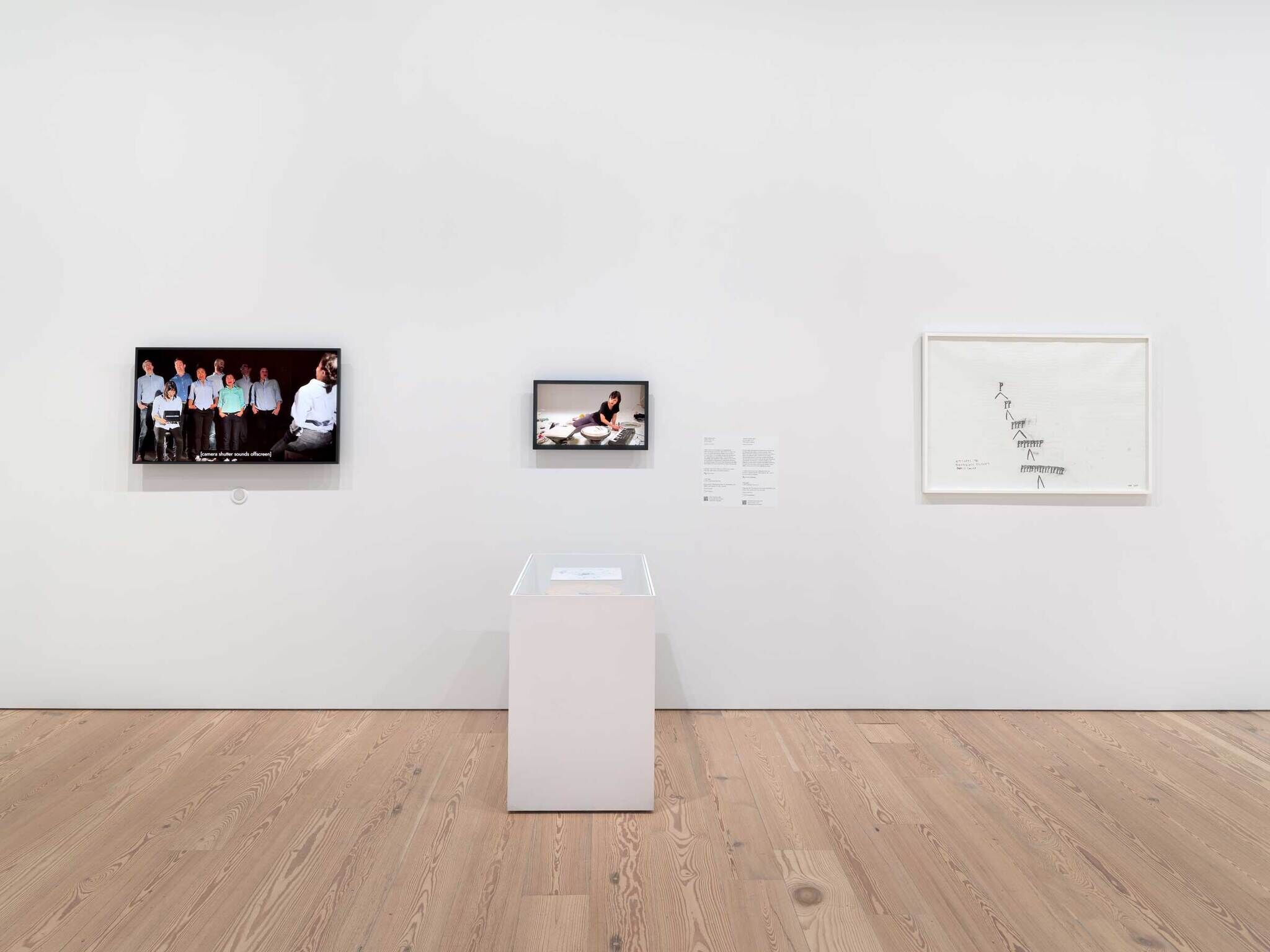
-
804
Face Opera II, 2013
Sound description, Audio description
-
805
Courtier as Courier, 2013
Sound description, Audio description
-
806
Too Possessive for Score, 2015
ASL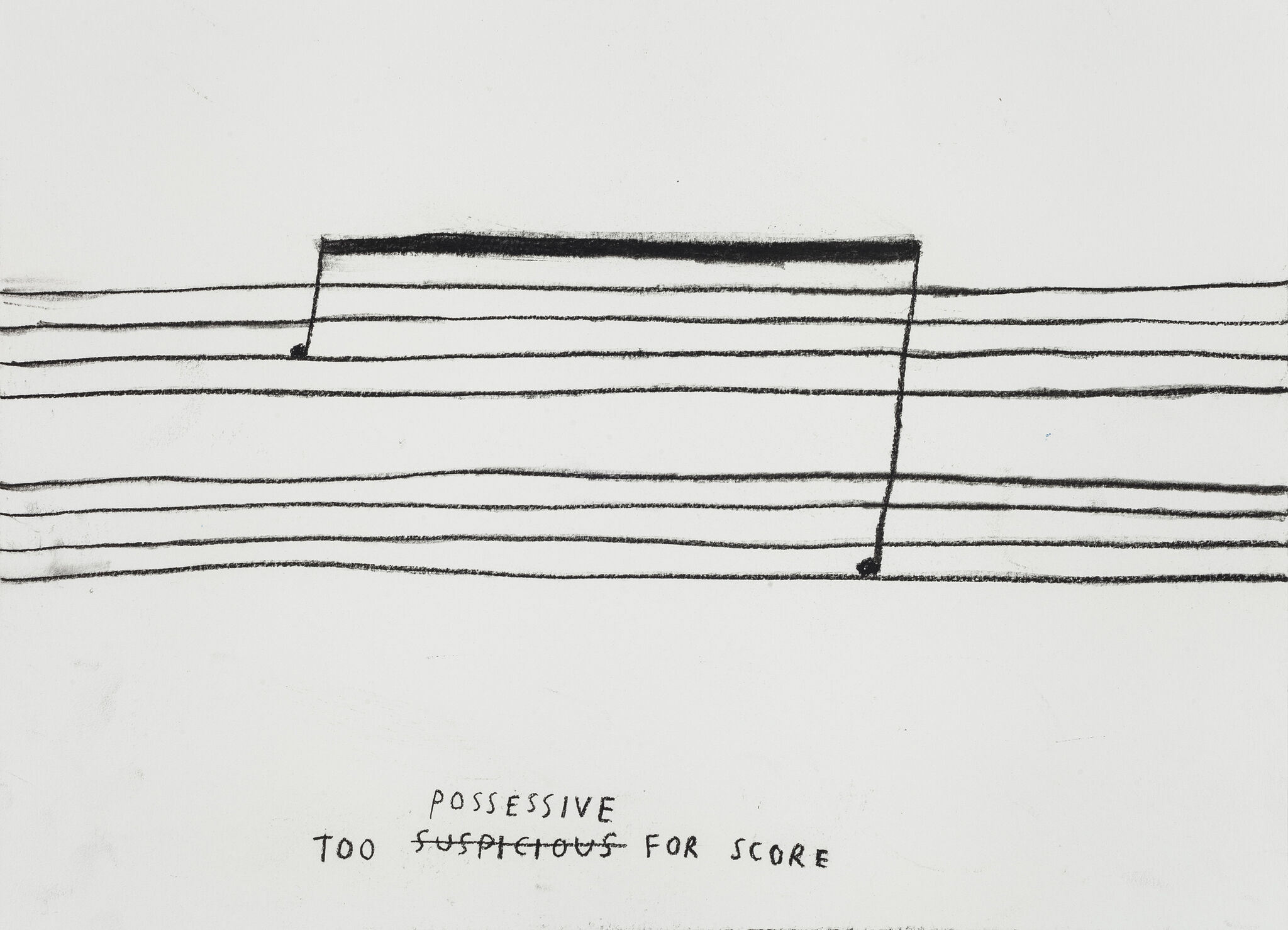
-
807
Scrib-Acousmatic, 2017
ASL, Verbal description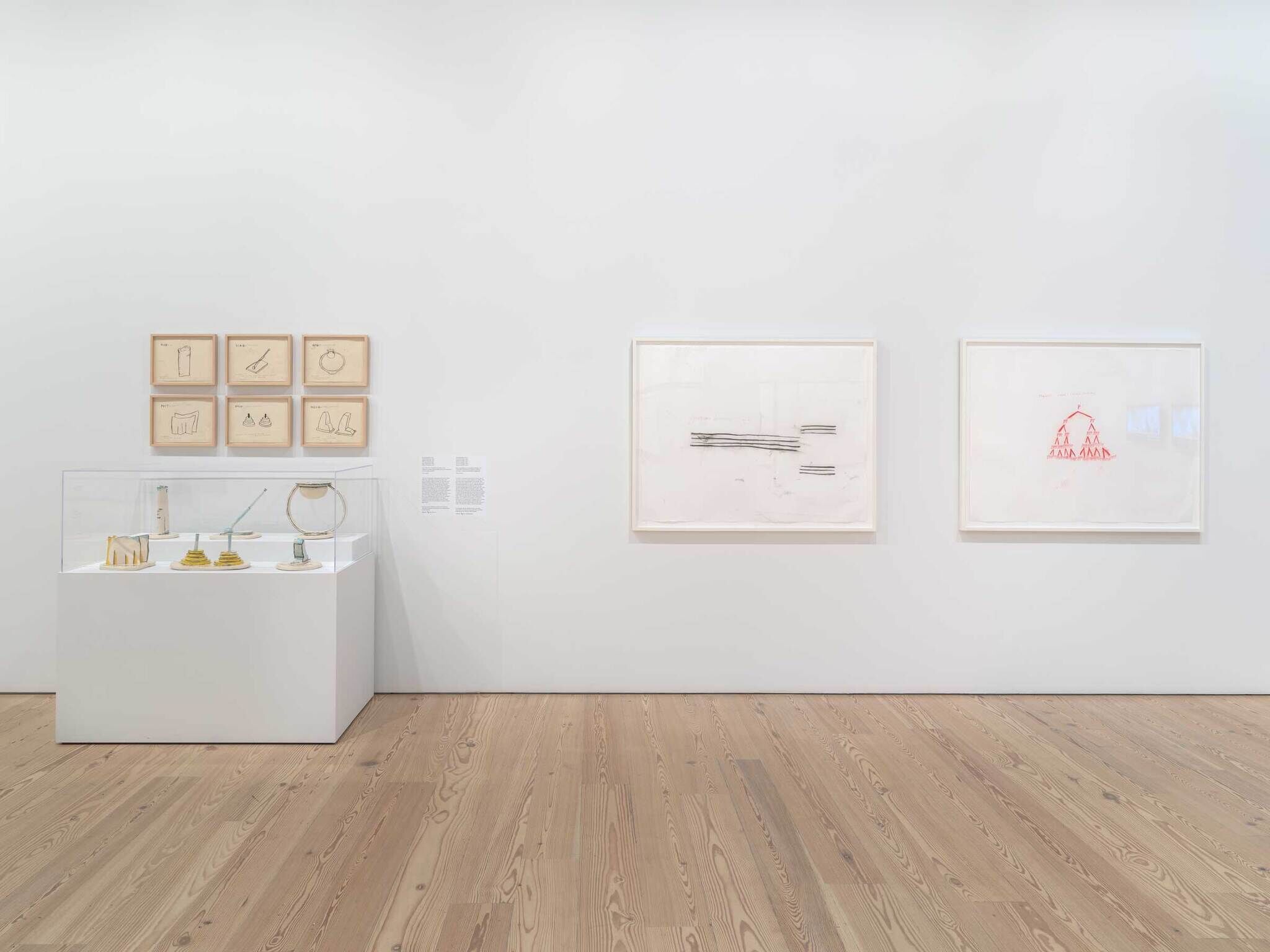
-
808
Degrees of My Deaf Rage in the Art World, 2018
ASL, Verbal description
-
809
Future Base, 2016
ASL, Verbal description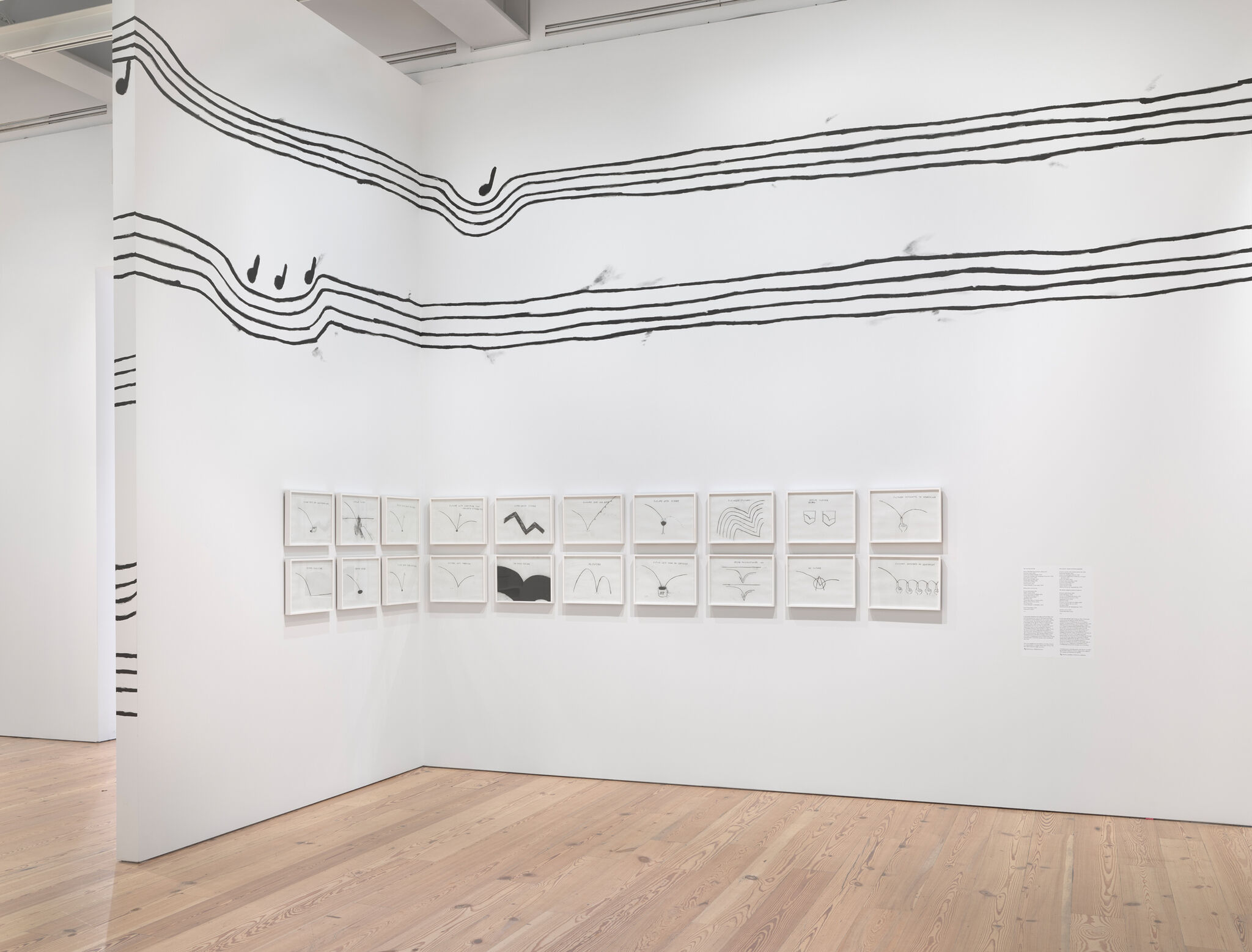
-
810
Cues on Point, 2022
Transcription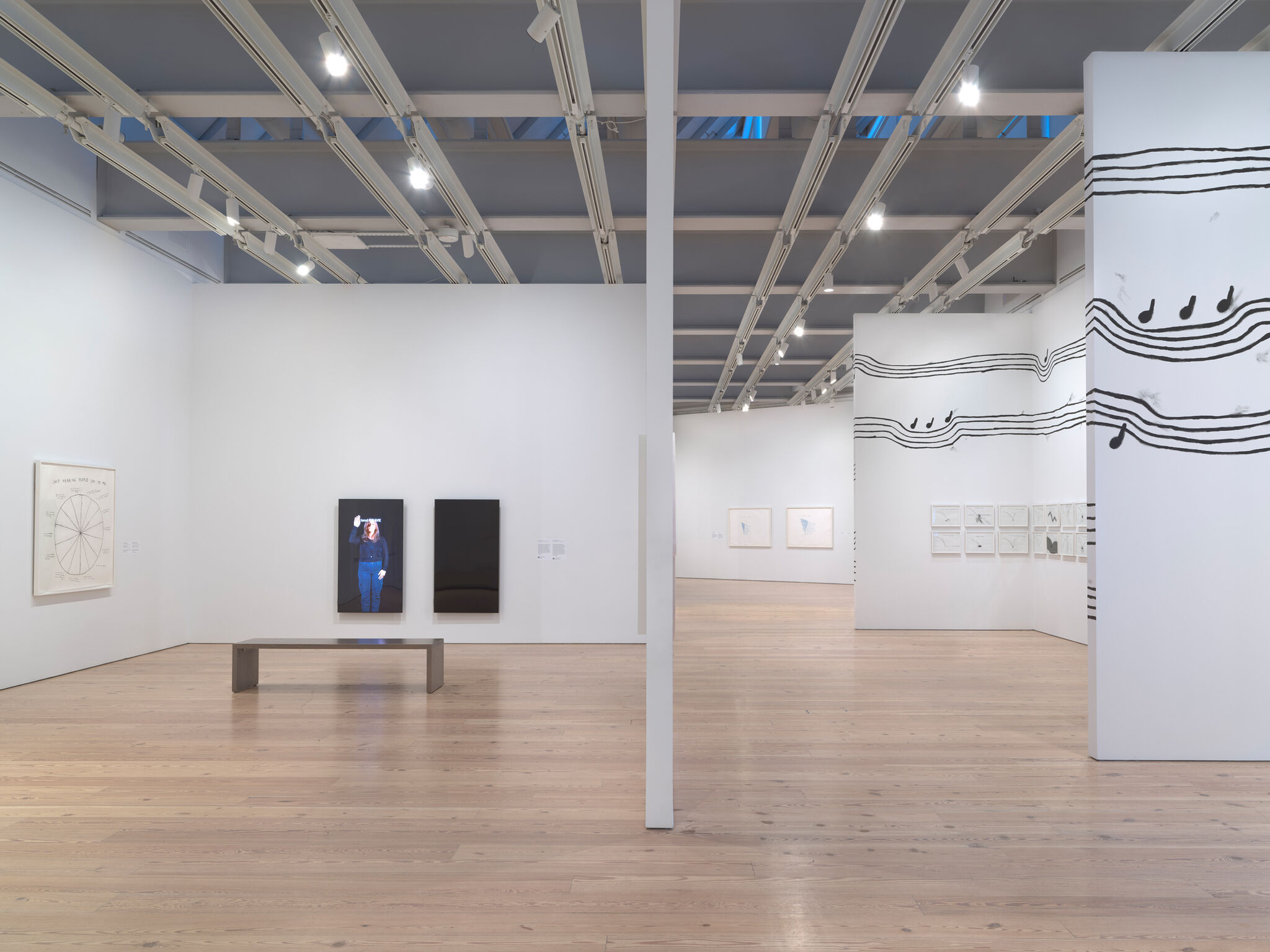
-
811
The Star-Spangled Banner, 2022
ASL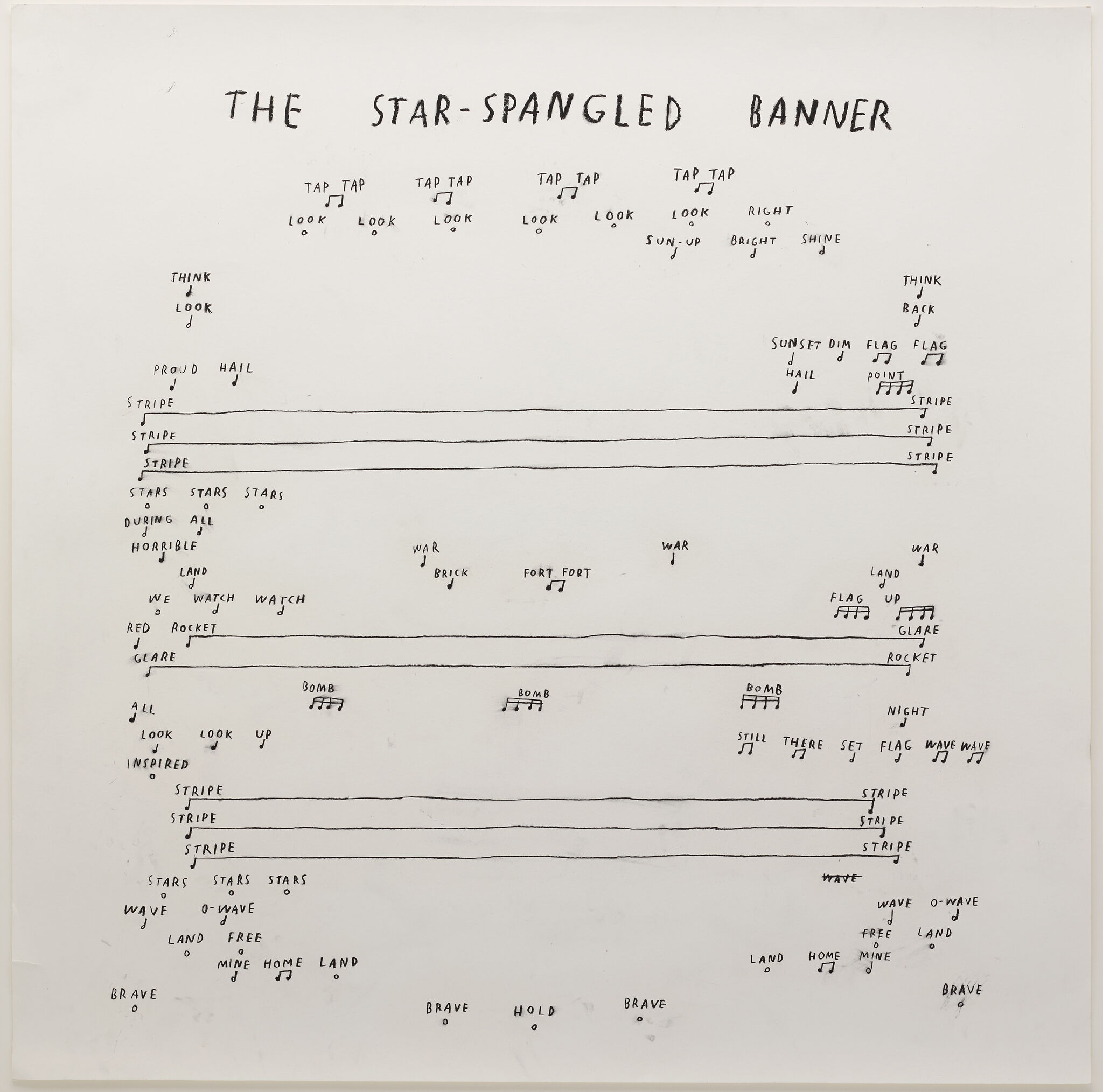
-
812
Shit Hearing People Say to Me, 2019
ASL, Verbal description
-
813
America's Debt to Deaf People, 2022
ASL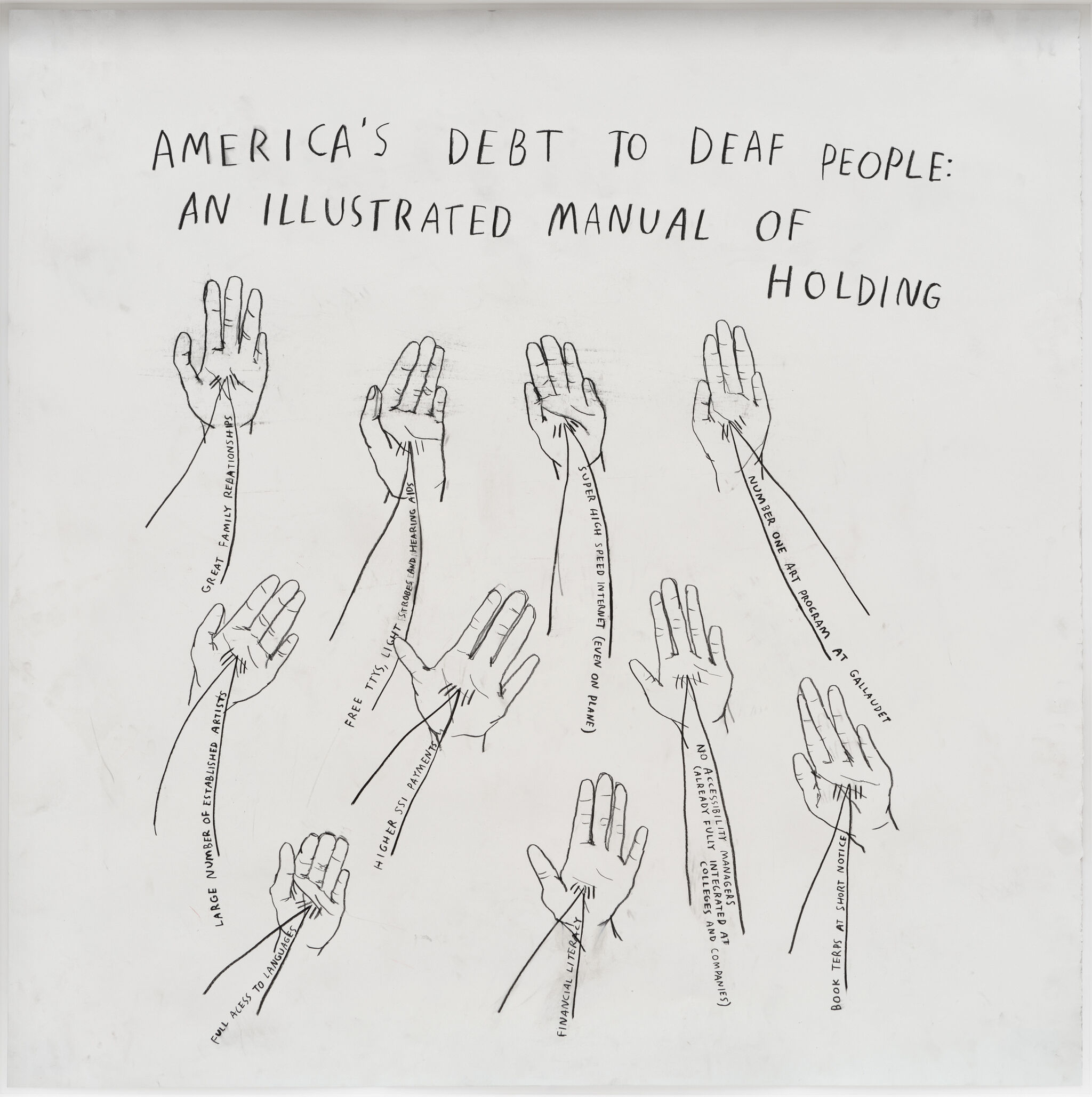
-
814
How Do You Hold Your Debt, 2022
ASL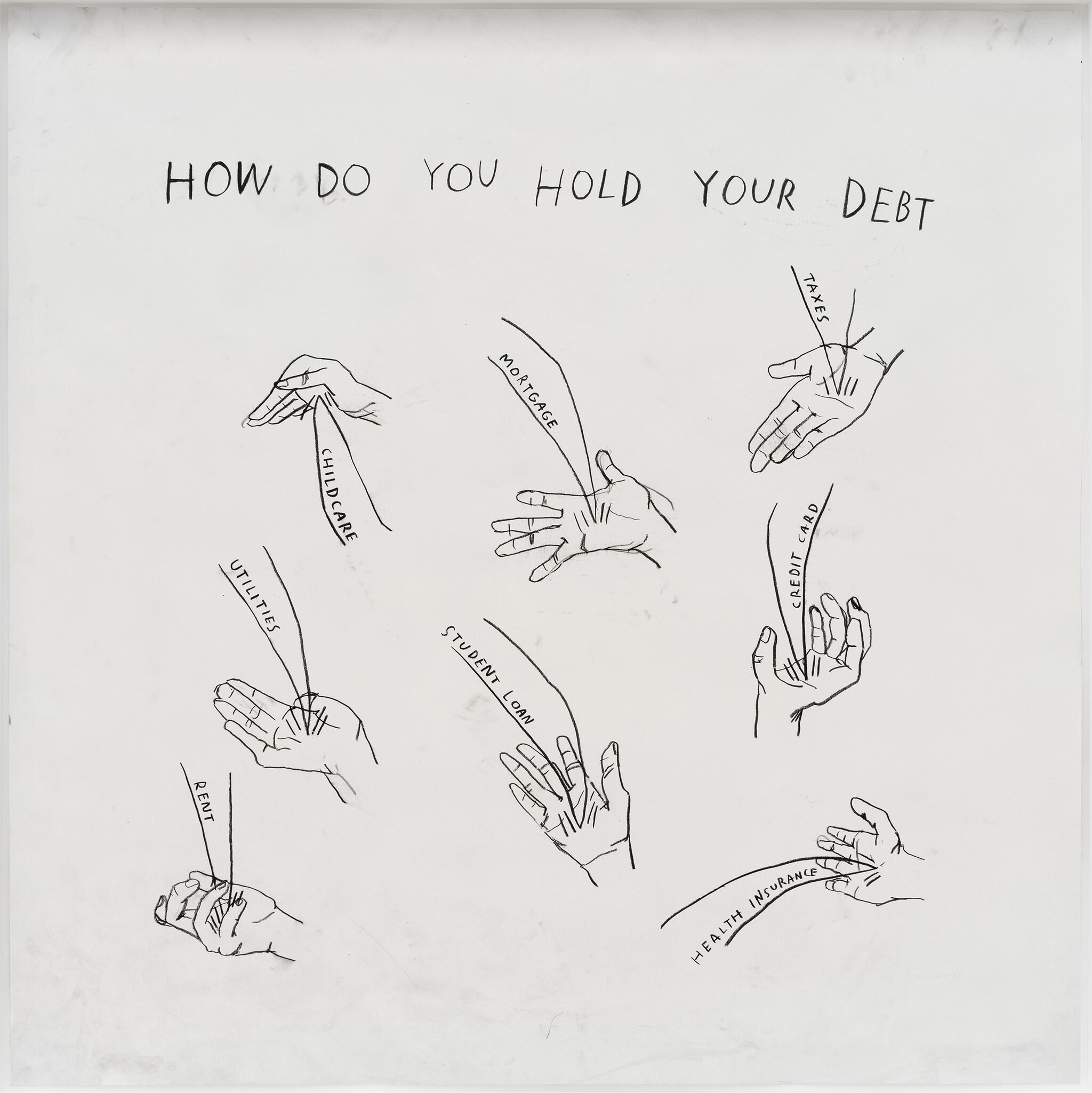
-
815
One Week of Lullabies for Roux, 2018
ASL, Sound description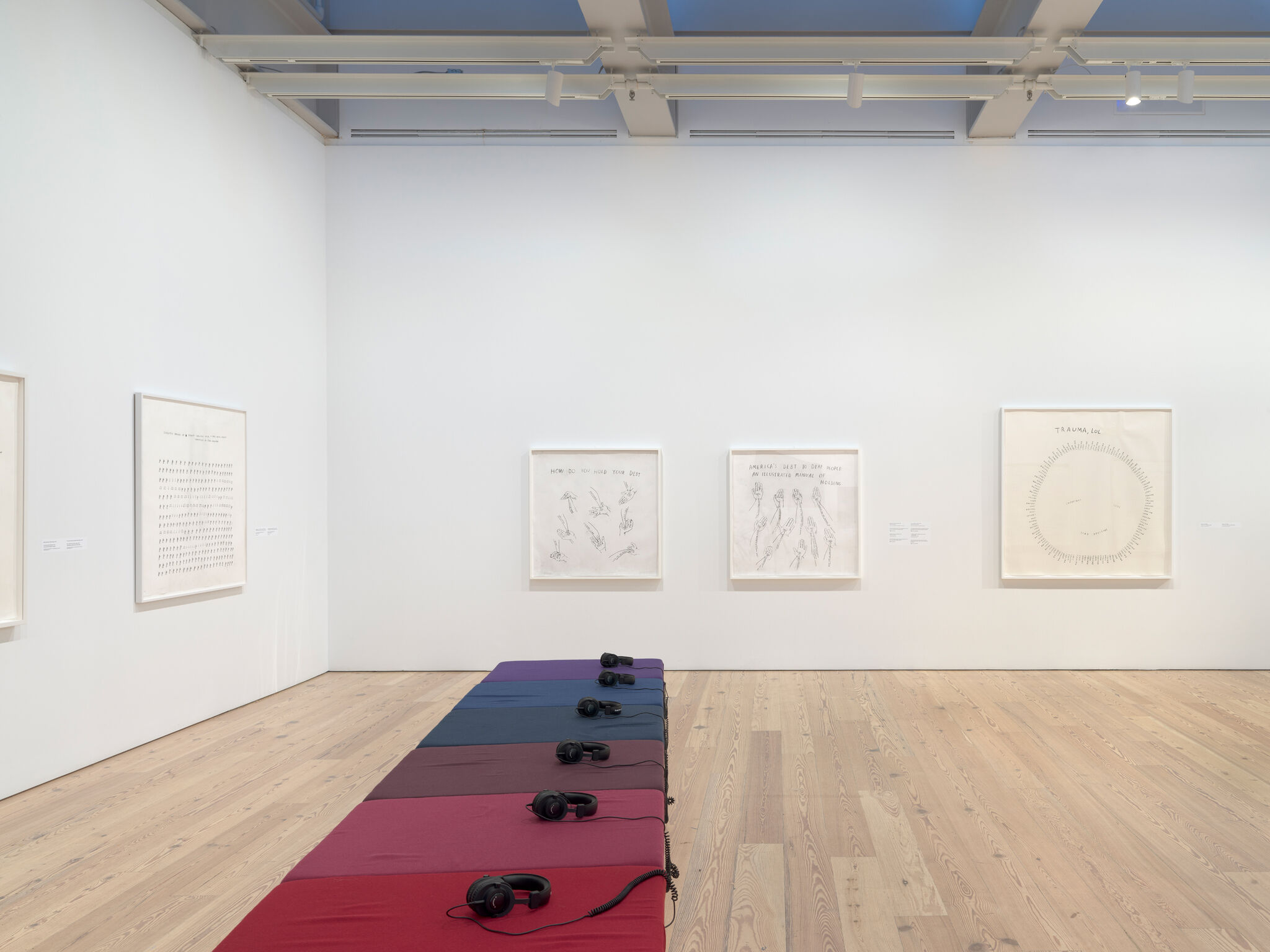
-
817
Excerpt from "Christine Sun Kim" for NOWNESS, 2011
Sound description
-
818
Feedback Aftermath, 2012
Verbal description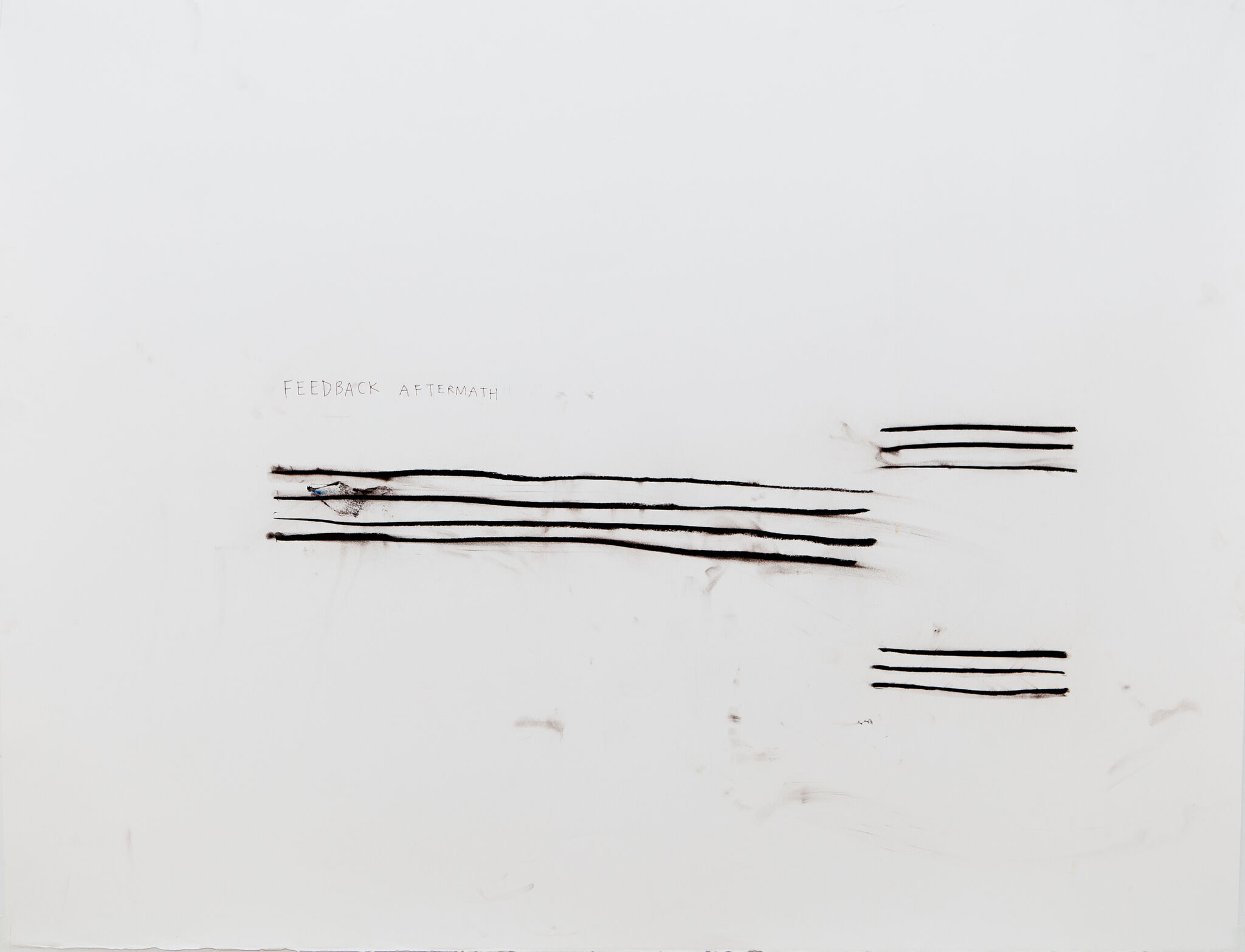
-
820
How to Measure Loudness AND How to Measure Quietness, 2014
Verbal description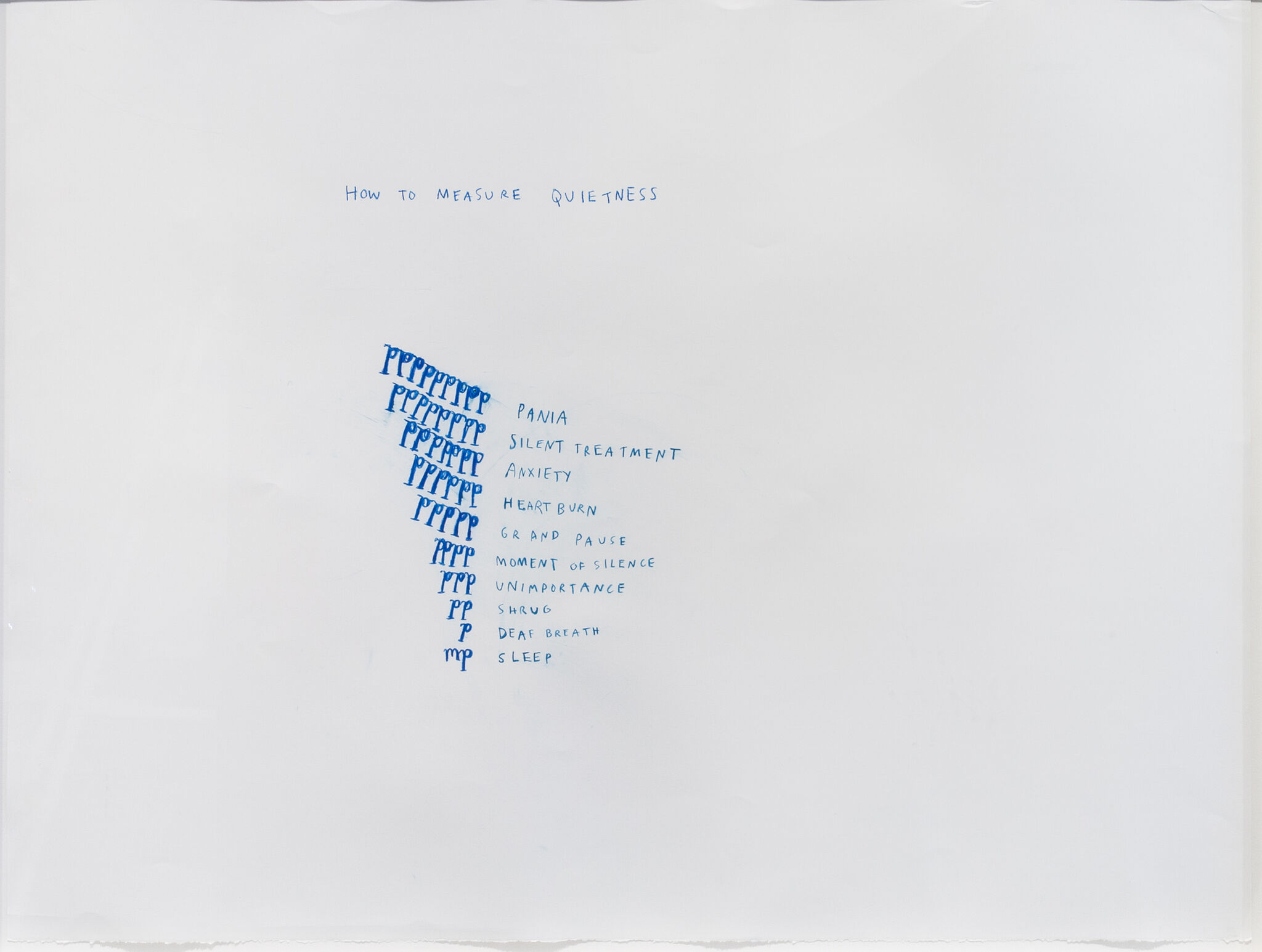
-
821
Screen Real Estate for ASL Interpreters, 2022
Verbal description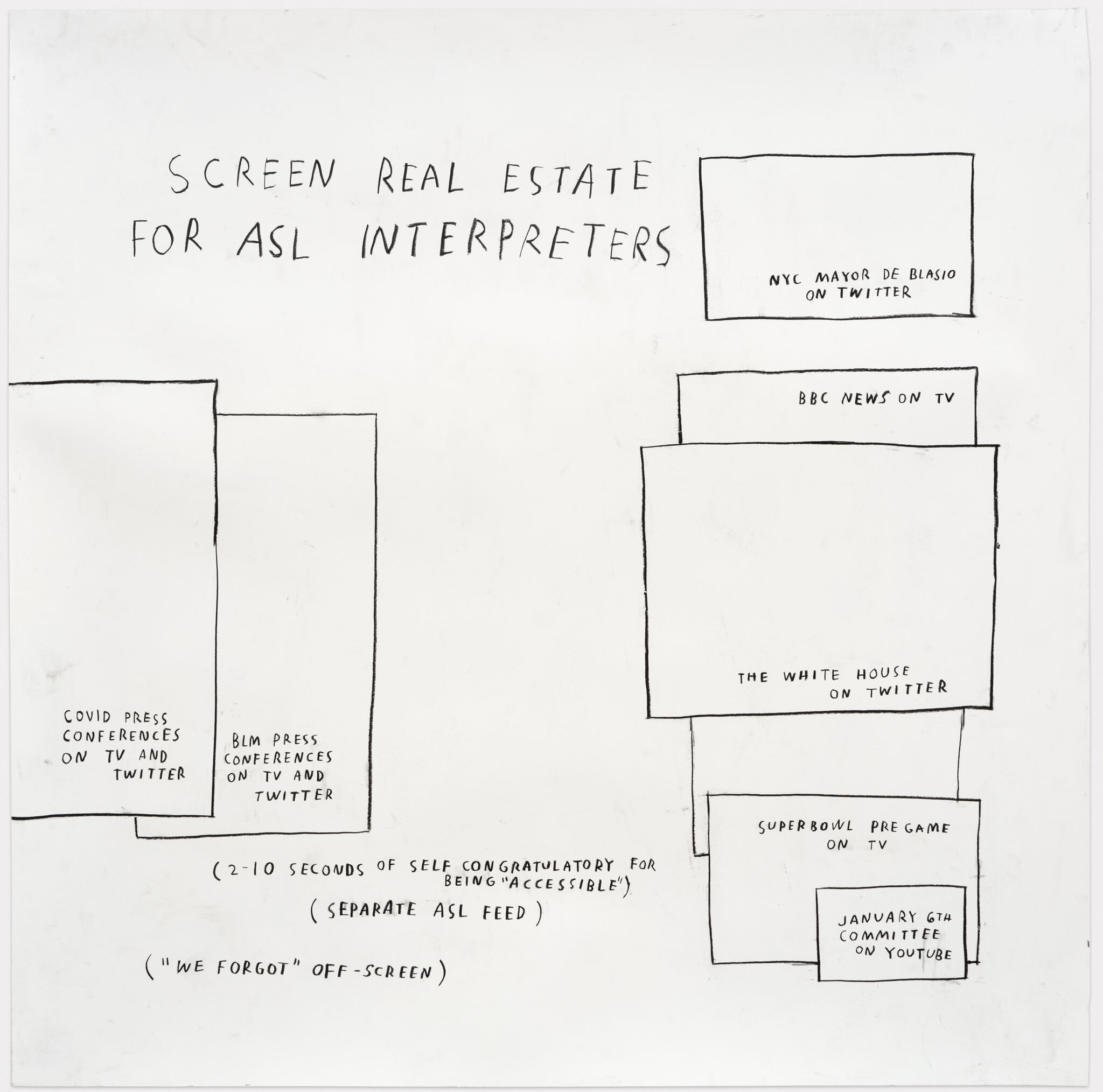
-
300
Introduction
Verbal description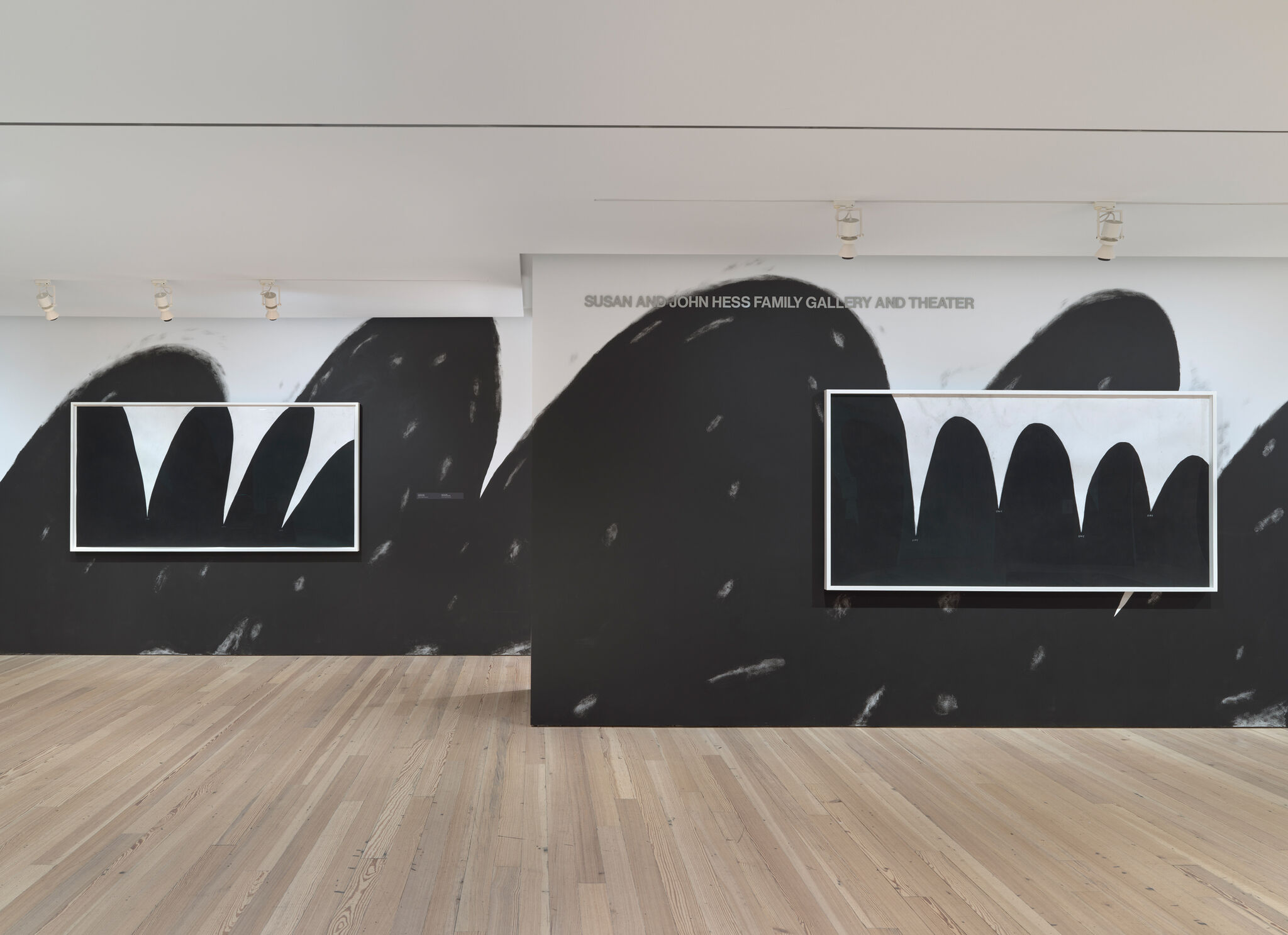
-
301
A String of Echo Traps, 2022
Sound description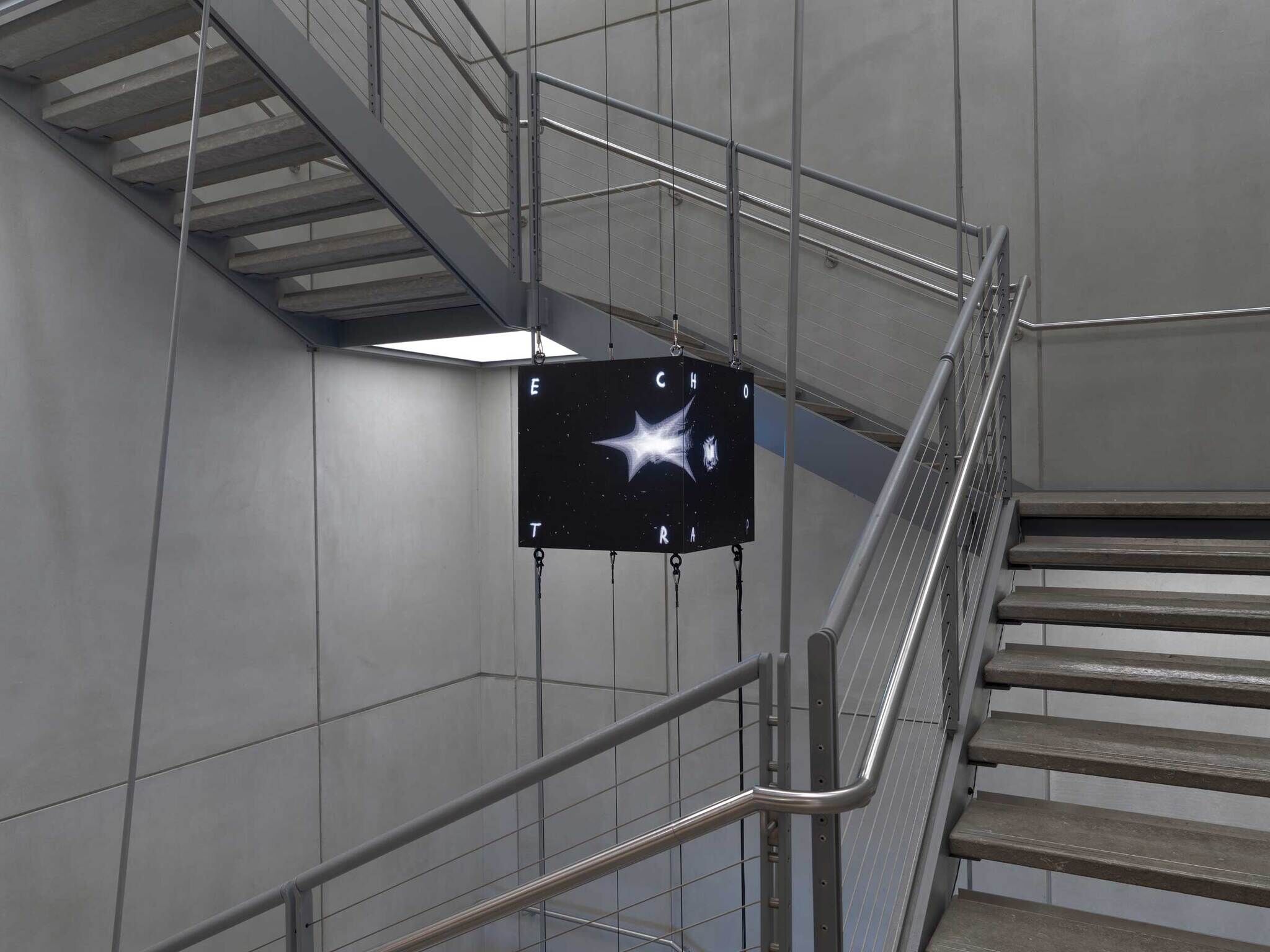
-
101
Three Tables III (AGB, HPA, DTS), 2020
ASL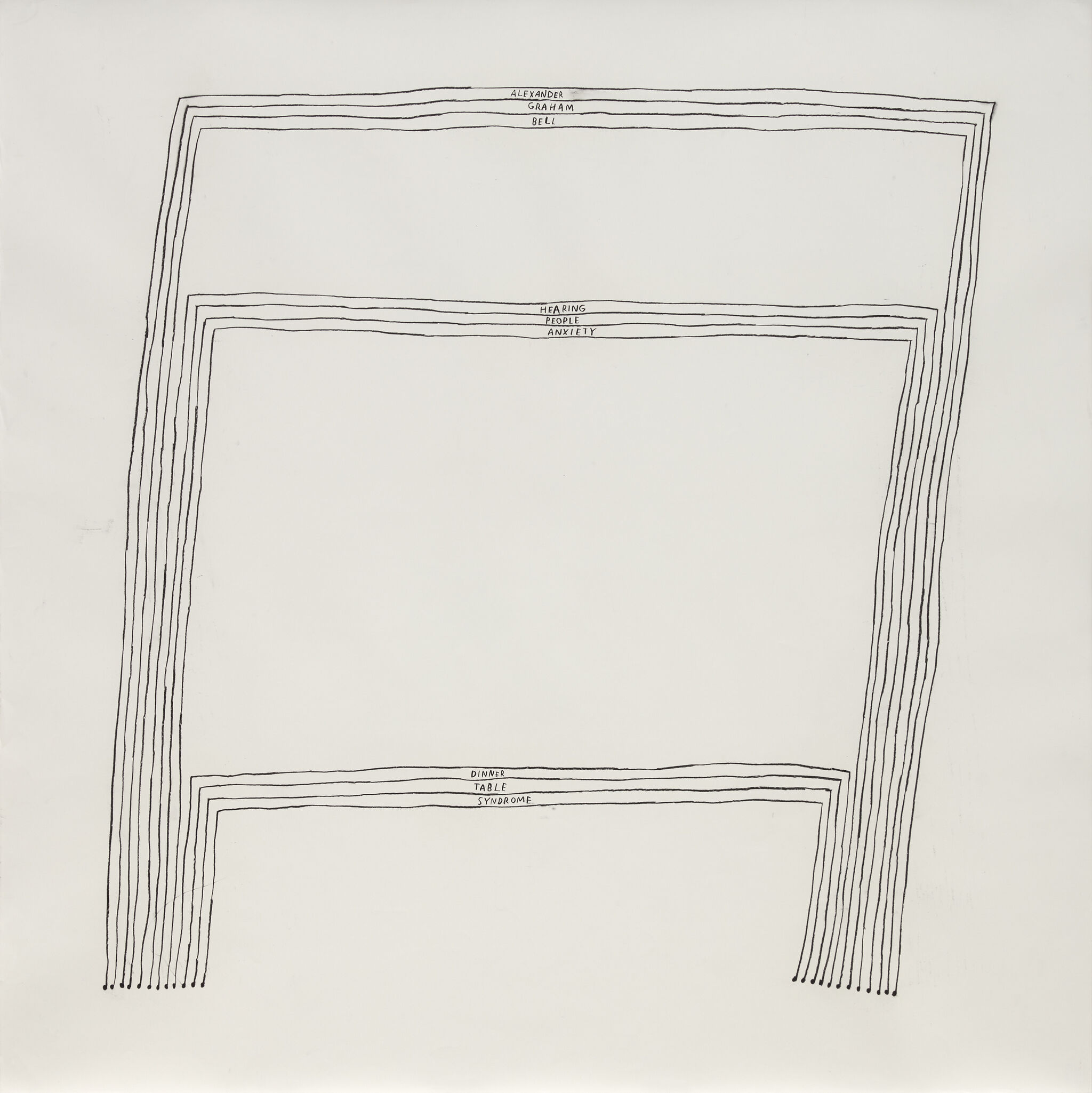
-
102
Palm Reader, 2020
Audio description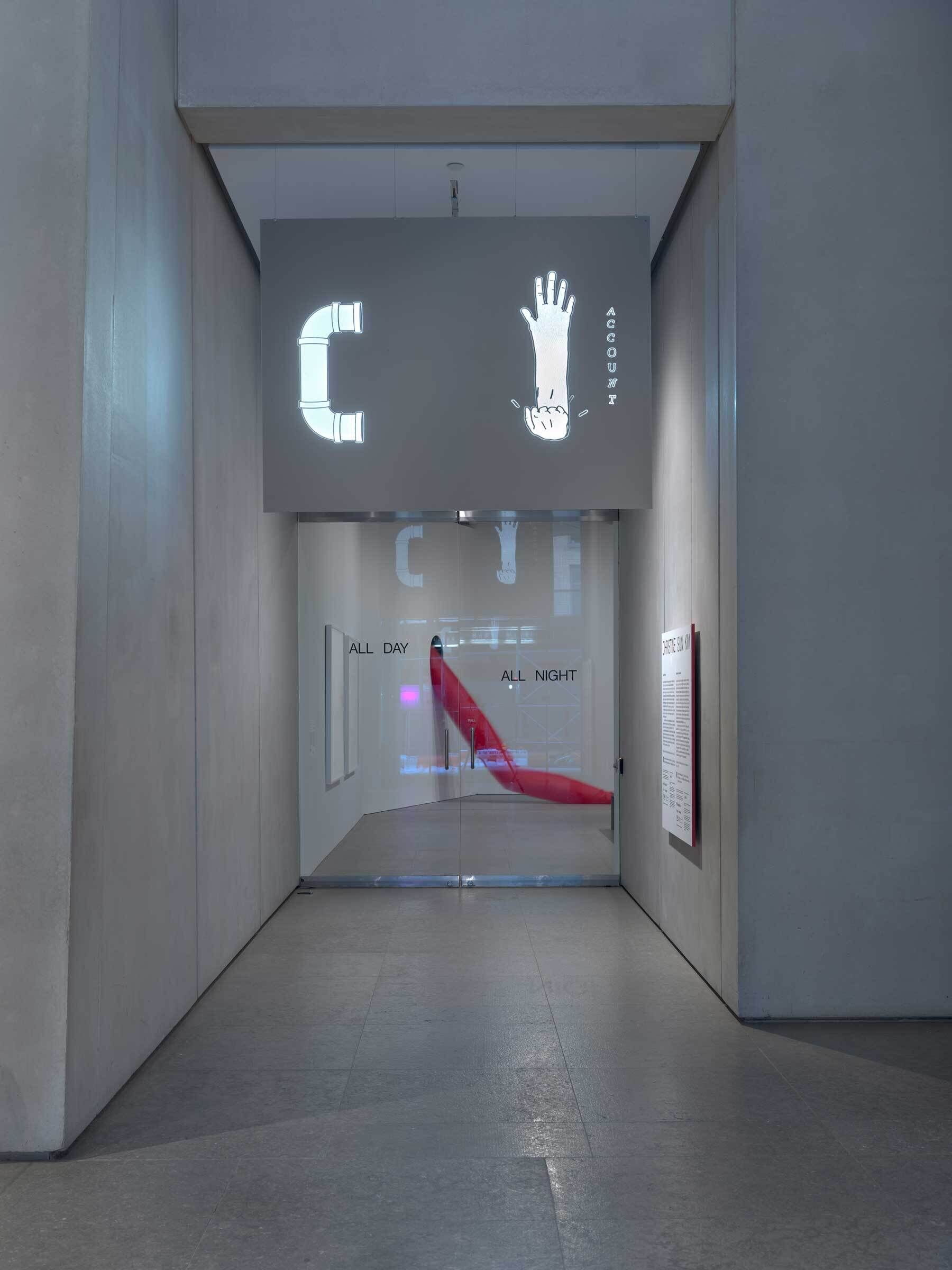
-
103
ATTENTION, 2022
Verbal description, ASL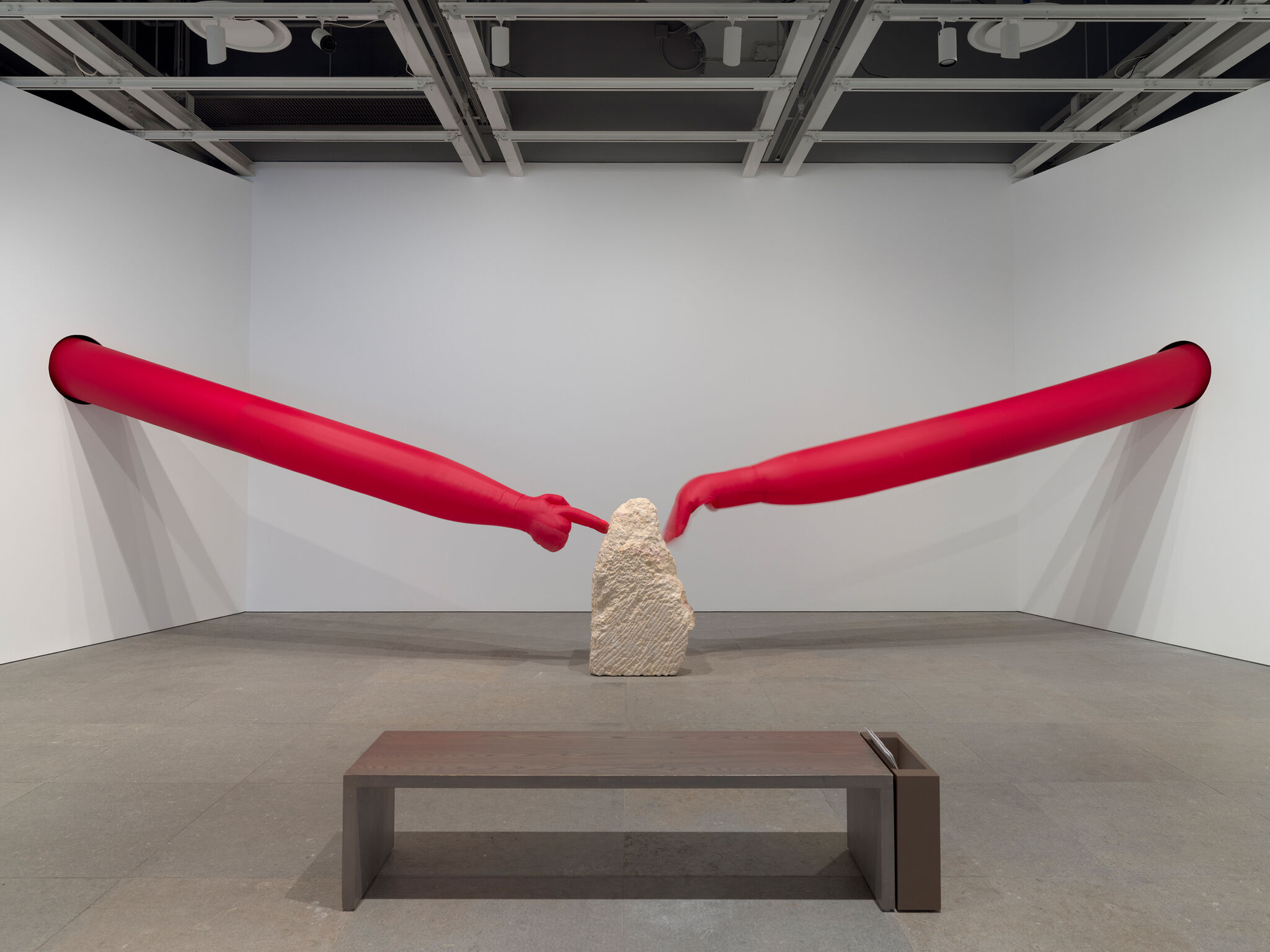
Installation view of Christine Sun Kim: All Day All Night (Whitney Museum of American Art, New York, February 8-July 6, 2025). From left to right: Degrees of Deaf Rage in Everyday Situations, 2018; Degrees of Institutional Deaf Rage, 2018; Degrees of Deaf Rage While Traveling, 2018; Degrees of Deaf Rage within Educational Settings, 2018; Degrees of Deaf Rage Concerning Interpreters (Terps), 2018; Degrees of My Deaf Rage in the Art World, 2018. Photograph by Ron Amstutz
Installation view of Christine Sun Kim: All Day All Night (Whitney Museum of American Art, New York, February 8-July 6, 2025). Mural: Ghost(ed) Notes, 2024 (re-created 2025). Photograph by Ron Amstutz
Installation view of Christine Sun Kim: All Day All Night (Whitney Museum of American Art, New York, February 8-July 6, 2025). From left to right: Feedback Aftermath, 2012; Pianoiss . . . issmo (Worse Finish), 2012; All. Day., 2012; All. Night., 2012. Photograph by Ron Amstutz
Installation view of Christine Sun Kim: All Day All Night (Whitney Museum of American Art, New York, February 8-July 6, 2025). From left to right: Face Opera II, 2013; Todd Selby, Excerpt from "Christine Sun Kim" for NOWNESS, 2011; Selby Square, 2011; Rehabilitating Silence, 2013. Photograph by Ron Amstutz
Sound Description: Face Opera II, 2013
Running Time: 00:03:59
Synchronous mobile captions in Spanish are available.
(indistinct voices)
(camera shutter sounds offscreen)
(group makes no sound)
(indistinct voices continue offscreen)
(audience laughter)
(indistinct voices continue offscreen)
(audience laughter)
(a performer gasps)
(performers make low rhythmic sounds)
(high rapid sounds)
(sounds intensify)
(group builds to high rapid sounds)
(group joins in a loud roar)
(group stops vocalizing)
Audio Description: Face Opera II, 2013
Text onscreen. "Face Opera Two. Christine Sun Kim as part of Calder Foundation's They might well have been remnants of the boat. May 2013."
Audience members stand or sit on the ground in a large Gothic-style space. Fade to black.
Lights up on seven people in blue button-downs and jeans milling about.
They stand in two rows, hands in pockets. Kim on a stool next to them, holding an iPad with the display facing out.
All at once, they purse their lips and groove with their shoulders
A conductor sits facing them, watching the iPad. She arches her back and smirks, and the choir mirrors. Kim swipes back and forth between text, “presence-shine,” and the choir’s grimaces and shaking heads, and the words “face-glow,” relaxed with beaming smiles.
On the iPad "early." Bodies stiff. Swipe to "obsessed." Shake shoulders, scowl.
"Sick." Shoulder slump, bend forward, tongues out, retching.
Bolt upright, alert. "Technology."
Kim shakes the word “void.” Lips pursed, slightly open, jaws fluttering.
"Why." Shoulders hunched, eyes clamped shut, mouths open and tense. Pulling "why" into "depressed." They sag, heads lolling.
"Masturbate." Mouths gaping in ecstasy. Heavy breaths.
"Out-of-touch." All lean left, snap their heads back, and freeze.
Kim swipes to a single period, looks at the conductor.
Kim joins the choir, hands in pockets. The group trill lips, mouth a syllable.
A different choir member conducts with iPhone in his hand, display facing him, not the choir.
"Self-pity." Sobbing faces, eyes tight, mouths open. He swipes to "why."
Faces screaming "why," shaking their heads.
Swipe to "depressed," they huff and puff. Some try to hold back a smile or a laugh.
This conductor swipes through letters, and he and the choir members stiffly tilt their heads: R, their right shoulders. N, head back. E, left shoulder. Y, lean a little more forward.
They circle their heads. Whip to the right shoulder, luxurious tilt around back, sweep in front, and start again.
"Out-of-touch" on the conductor's phone. Heads lean right, jolt back. Chins pointed at the ceiling, they wait.
Facing different directions now, they all look to the right, offstage.
Hands in pockets, they step into their two rows, all but one with backs to the audience.
The one facing Kim cradles the iPad. Without looking at it, swipes to "I feel bad."
From the conductor's place, Kim nods. He swipes. "for dogs who have to."
He frowns with "no" on the iPad. Swipes to "Grass, pretty please?" and smiles eagerly.
Swipes to another "no." His shoulders droop and smile melts into a sulking frown.
Now, hands clasped behind their backs. They are in profile with a different choir member standing to conduct them.
She directs her gaze to her right and shifts her body. Movements are bigger now: Lean forward, twist to look past their right shoulders. Up and over their left shoulders.
The conductor crouches. The choir members bend knees, hinge at their waists, look to the left, and back. Now a glance over the right shoulders, mouths wide open, and then again, with broad smiles.
Seven stand in single file, right hand touching the next person. The one in front is perpendicular to the rest and faces one conducting on a stool. They shake their shoulders. One holds a microphone.
Relaxed shoulder-shimmies.
Only the one in front watches the conductor.
The conductor slowly lowers his hand. They are still.
Fade to black. Special thanks and extra thanks, with names listed. Video by Andrew Chugg, Brad Jones, and William Tucci. Edited by Christine Sun Kim. Audio Description by Social Audio Description Collective.
Installation view of Christine Sun Kim: All Day All Night (Whitney Museum of American Art, New York, February 8-July 6, 2025). From left to right: Face Opera II, 2013; Todd Selby, Excerpt from "Christine Sun Kim" for NOWNESS, 2011; Selby Square, 2011; Rehabilitating Silence, 2013. Photograph by Ron Amstutz
Sound Description: Christine Sun Kim, Courtier as Courtier, 2013
Running Time: 00:03:15
Synchronous mobile captions in English and Spanish are available.
(footsteps and laughter)
(street noise)
(indistinct voices offscreen)
(shuffling footsteps)
(camera shutter)
(person laughs offscreen)
(street noise)
(footsteps)
(static noise)
(laughter)
(footsteps)
(person laughs offscreen)
(street noise)
(distant indistinct voices offscreen)
(hands rubbing together)
(street noise)
(footsteps)
(street noise)
(laughter offscreen)
(street noise)
(person laughs offscreen)
(street noise)
(laughter)
(applause offscreen)
Audio Description: Courtier as Courier, 2013
Text onscreen. "Courtier as courier, Voiceless lecture by Christine Sun Kim as part of Drifter Projects' inaugural exhibition. May 2013."
In a gallery, Kim and two women with iPhones face an audience. The two show black-and-white words on their phones. Kim beckons everyone to follow her.
She stands at two white iPads on a narrow shelf and swipes words on one, then the other.
"Renaissance. Author." And "courtier."
She points to the right and heads to a pair of black iPads on a narrow shelf. Everyone follows.
She swipes the left iPad, then right to display in large letters: "I often confuse courtier as (pause) courier." *Note: Do not say "pause." It is an instruction for the narrator.*
Repeatedly swiping the right, then left: "tracking down word after word after word." Period. Period. Two dots. Two dots. Ellipses. Ellipses.
Kim invites the group to another wall.
Bright sunlight washes out the white iPad displays.
She swipes: "Story. Italian merchant decides to buy a great amount of sables of."
Swiping both black iPads at once: "Tell this. In my. Own, own." Smiling, she walks away.
She comes back with another iPad, and holds it below the two on the shelf that say "own." The one in her hands displays "words." She smiles, nods, and sets it down.
Now swiping letters on the two iPads: "e. r. a. t. i. o."
"And here. There."
At the white iPads. Sometimes one word on a screen, sometimes several, or a word split between the two. She swipes both at once to reveal: "And there was a wide river that separated. Distance hindered the path of their sounding voices."
"Ungodly cold outside. I cannot barely sign." Rubs her hands together.
"The sellers continued shouting."
Ellipses. Ellipses. She strides away.
Points to the two women, taps on an iPhone.
As they walk, they shake several iPhones, then set them on another shelf that hugs a corner. All the phones' displays blink, flashing dollar signs.
Adding an iPad with one white dollar sign on black. The three phones continue quick-flashing black to white, white to black.
The group comes over and adds more flashing phones and iPads to the collection.
Three iPads on the ground, leaning against the wall, and five phones, all flash out of sync, creating a strobing effect.
At the other black iPads: "They're obviously american dollars in modern times, so just use your imagination."
"Maybe imagine emoji icons of gold or coins to symbolize their currency."
She gives a thumbs up.
Ellipses, ellipses. She watches the blinking dollars signs on the devices a few feet away.
Question marks on the white iPads. She throws her hands in the air, then signs "listen."
More question marks. She smiles.
Swiping both at once: "Those sellers' voices those prices started to thaw and drizzle out of the coldness little murmurs."
Swipes the black iPads: "Sounds. What about their longevity?"
"Wind. Wind. You don't actually don't"
"hear it but."
Dot dot. Two dots, two dots. Ellipses, ellipses.
On the white iPads: Thank you.
Kim claps, then signs applause in ASL. Fade to black.
Special thanks to Johnny Andrew, Christopher Tester, Veronica Torres, and Jordan Robin.
Shot by Andrew Chugg. Edited by Christine Sun Kim. Words fade.
Installation view of Christine Sun Kim: All Day All Night (Whitney Museum of American Art, New York, February 8-July 6, 2025). From left to right: Face Opera II, 2013; Todd Selby, Excerpt from "Christine Sun Kim" for NOWNESS, 2011; Selby Square, 2011; Rehabilitating Silence, 2013. Photograph by Ron Amstutz
Christine Sun Kim, Too Possessive for Score, 2015. Charcoal on paper, 11 × 15 in. (27.9 × 38.1 cm). Private Collection. © Christine Sun Kim. Courtesy François Ghebaly Gallery and WHITE SPACE
Narrator: The Grid of Prefixed Acousmatics is a series of drawing and sculpture pairs on view. Six drawings, in two horizontal rows of three, hang on the wall above a covered pedestal. The pedestal is 32 inches tall, with a white base and a clear plexiglass cover protecting the sculptures inside. There are six sculptures sitting atop the pedestal within the plexiglass: three in the front, three in the back on risers. The term “acousmatic”, refers to a sound being heard without a visible source. The artist likens the idea of acousmatic sounds to the way an interpreter gives voice to sounds and speech through American Sign Language.
Scrib-Acousmatic is the drawing and sculpture in the middle of the top row. The drawing is made with charcoal on paper, and measures 9 ½ inches tall by 12 ½ inches wide. In the top left corner, the prefix “SCRIB-” is written in all caps in a dark, blocky handwritten font. There’s a quick thick dash, and then written in much thinner pencil is “write, written”. The sculpture is sketched in the center of the paper with thick, dark lines, a fountain pen in a holder. The holder is drawn as a rectangle at ¾ view extending toward the back right corner from the paper, and the pen appears as a long rounded antenna with a spherical knob at the end launching from the front toward the same corner, hovering above the rectangular plate below it. Below the rendering is four scrawled lines, handwritten in all caps, which read, “ASSOCIATIONS:”, “I OFTEN GET ASKED TO DJ RADIO INTERVIEWS IN EUROPE”, “HARD TO GET THESE TRANSCRIBED” and “TRANSCRIPTS”. The vibe of the drawing is like a thoughtful, confident blueprint, with the combination of handwritten musings and the bold lines of the charcoal.
The corresponding Scrib-Acousmatic sculpture sits in the middle of the raised back row. It measures 7 inches tall, 11 inches wide, and 8 inches deep, and is a porcelain representation of the drawing of a pen in a holder. The flat base of the holder has the words “SCRIB-ACOUSMATIC” handwritten on it in thick black capital glazed letters. The pen tapers in such a way that it seems like one could nestle the second half into the first. Each edge of the sculpture is outlined with black stain, with a bit of messiness and waviness to each outline, as if the line drawing were directly made three-dimensional. Kim also brushed the sculpture with a light wash of blue glaze. Curator Jennie Goldstein describes the work: “for Scrib-Acousmatic, the artist made a ceramic pen into a kind of elongated shape, like a fountain pen in a holder. And the association that she writes references her personal experiences of being asked to give interviews on the radio, but then struggling to get a transcript of that interview made”.
Installation view of Christine Sun Kim: All Day All Night (Whitney Museum of American Art, New York, February 8-July 6, 2025). On left, clockwise from top left: Aur-Acousmatic, 2017; Scrib-Acousmatic, 2017; Ambi-Acousmatic, 2017; Mega-Acousmatic, 2017; Arch-Acousmatic, 2017; Post-Acousmatic, 2017. From left to right: Feedback Aftermath, 2012; Pianoiss . . . issmo (Worse Finish), 2012. Photograph by Ron Amstutz
Narrator: Degrees of My Deaf Rage in the Art World is a charcoal and oil pastel drawing on paper, measuring about 50 by 50 inches. The square composition features six angular pie charts, arranged in two horizontal rows of three. Each chart is labeled with varying degrees of frustration and is accompanied by a short phrase describing a scenario that instills “Deaf rage” in the artist. Kim's use of infographics and punny phrases presents a pointed critique of the ableism she has experienced in the art world. Each line is hand-drawn in smudged black lines, with the size of each pie chart slice representing the intensity of the rage.
In the top row, on the left side is a sharp angle. Beneath the bottom line of the angle, Kim has written the phrase “ACUTE RAGE”. Just above the top line of the angle, small words run on a slant reading: “GUGGENHEIM ACCESSIBILITY MANAGER”. Moving right, towards the center of the page, the artist has written the phrase “LEGIT RAGE (RIGHT)”. Just above it is a right angled slice of pie chart, which contains the words “BARD MFA” inside it. The drawing farthest to the right in the top row is a wide angle, like the shape of a fan, with the phrase “OBTUSE RAGE” written below it. Near this angle is the phrase “VISITING ARTISTS WHO AREN’T COMFORTABLE WITH INTERPRETERS”.
In the lower row, Kim has drawn a 180 degree angle, with a straight line and a semicircle drawn over it. Beneath the angle is the heading “STRAIGHT UP RAGE”. Above the semicircle is text reading “RIJKSMUSEUM FRONT DESK MANAGER”. Further right in this row is a chart of a reflex angle, which bends open to be wider than a half circle. Kim has written the phrase “REFLEX RAGE” below this chart. Above the arc of this angle, the phrase “CURATORS WHO THINK IT’S FAIR TO SPLIT MY FEE WITH INTERPRETERS”. The final pie chart to the right shows a full, shaded in circle, with a line sticking out of it. Beneath this circle, the phrase “FULL ON RAGE” is written, and above the line of the angle, is written “MUSEUMS WITH ZERO DEAF PROGRAMMING (AND NO DEAF DOCENTS OR EDUCATORS)”. Throughout the composition, the paper has faint grey smudge marks on it, and a thick grey streak runs from the bottom of the paper, up through the center, stopping right around the bottom of the first row.
Christine Sun Kim, Degrees of My Deaf Rage in the Art World, 2018. Charcoal and oil pastel on paper, 49.25 × 49.25 in. (125 × 125 cm). Y.D.C. © Christine Sun Kim
Narrator: Future Base refers to a series of twenty charcoal drawings on paper spread out across two walls of the gallery space. Each drawing measures nearly 12 inches wide by 16 inches tall. Christine Sun Kim is visually rendering the path a hand traces to sign the word for “future” in American Sign Language through sketchy lines highlighting the movement of the sign. To sign the word “future”, hold your open hand parallel to the side of your face and lift your hand forward, away from you, in an upward arching line. There is movement across the drawings, due to the arches and edges created by the lines of each drawing.
In Future Attempts to Hearsplain, a cartoonish hand is sketched in the center of the paper, held in a closed fist with the pointer finger up. A single line bounces from one side of the drawing to the other, dipping into a downward point that touches the finger’s top. Offset to the right, above the drawing of the line and the finger, the words “FUTURE ATTEMPTS TO HEARSPLAIN” are written in all caps in the same thick charcoal. The words extend farther toward the right edge of the paper than the line does. There are smudges and smears near where the arching line starts on the left side of the page. These are unintentional marks that occur while the artist is drawing. The finger, coupled with the word “Hearsplain” in the title of the work, implies a hearing person interjecting or offering unwelcome communication.
In another drawing in the group, titled Too Much Future, the same bouncing double arch is rendered in thick black chunky lines, taking up almost half the composition. The top of the left arc begins three quarters up the left side of the page, curving toward the center where the line launches back up and roundly arches toward the bottom right corner, ending nearly halfway up the right side of the page. The negative space in this drawing is far from bright and pristine; rather, it is smudged to a nearly uniform dingy gray due to the amount of charcoal medium in the arches. “TOO MUCH FUTURE” is handwritten in all-caps in the center of the page, above the sharp meeting point of the two thick lines. The phrase has been written in a somewhat small size, which makes it almost demure in contrast to the overwhelming size and saturation of the arches below it. These size differentials coupled with the existential weight of the phrase “too much future” result in an almost comical tension within this drawing. The chunkiness of the otherwise-thin line describing the sign for “future” here illustrates the concept of “too much” in the drawing’s title. An iteration of this work was on view as a Whitney billboard project in 2018.
Installation view of Christine Sun Kim: All Day All Night (Whitney Museum of American Art, New York, February 8-July 6, 2025). Mural: Ghost(ed) Notes, 2024 (re-created 2025). On wall, clockwise from top left: Future Tells Bad Knock-Knock Jokes, 2016; Hockney Future, 2016; Future with White Privileges, 2016; Future with Certified Sign Language Interpreters, 2016; Good Grief Future, 2016; Future Does the Biles, 2016; Future Gets Sleepy, 2016; Futurist Future, 2016; Denim Future, 2016; Future Attempts to Hearsplain, 2016; Future Attempts to Deafsplain, 2016; No Future, 2016; Rhyme Pattern Future, 2016; Future Gets High on Caffeine, 2016; McFuture, 2016; Too Much Future, 2016; Future Gets Paranoid, 2016; Future with Sound Privileges, 2016; Kapoor Future, 2016; Future Schmuture, 2016. Photograph by Ron Amstutz
Transcription: Cues on Point, 2022
Running time: 00:04:21
Synchronous mobile captions in English and Spanish are available.
(indistinct stadium noise)
(muffled song begins)
Vocalist 1: Oh say can you see by the dawn's early light. What so proudly we hailed at the twilight's last gleaming. Whose broad stripes and bright stars through the perilous fight. O'er the ramparts we watched were so gallantly streaming. And the rockets' red glare, the bombs bursting in air gave proof through the night that our flag was still there. Oh, say, does that star spangled banner yet wave. O'er the land of the free and the home of the brave.
(song ends)
(indistinct stadium noise)
(fade to silence)
America the Beautiful
(silence)
Announcer: (over indistinct stadium noise) —voice chorus from Miami. Please welcome Grammy Award winning gospel legend, Yolanda Adams.
(muffled song begins)
(instrumentals)
Adams: O beautiful for spacious skies. For amber waves of grain. For purple mountain majesties. Above the fruited plain. Oh, America, America. God shed His grace on thee. And crown thy good with brotherhood. From sea to shining sea.
Choir: O beautiful for spacious skies.
Adams: O beautiful.
Choir: For amber waves of grain.
Adams: Amber waves of grain.
Choir: For purple mountain majesties.
Adams: For purple mountain.
Choir: Above the fruited plains.
Adams: America, America. God shed his grace on thee. And crown thy good with brotherhood.
Choir and Adams together: From sea to shining, shining sea.
(song ends)
(indistinct stadium noise)
(fade to silence)
Transcripción: Christine Sun Kim, Cues on Point, 2022
Duración: 00:04:21
Subtítulos sincronizados en inglés y español están disponibles.
(ruido indistinto del estadio)
(comienza una canción amortiguada)
Vocalista 1: Oh, di, puedes ver a la luz temprana del amanecer. Lo que con tanto orgullo aclamamos al último resplandor del crepúsculo. Cuyas rayas anchas y estrellas brillantes a través de la lucha peligrosa. Sobre las murallas que observábamos ondearon tan gallardamente. Y el fulgor rojo de los cohetes, las bombas estallando en el aire dieron prueba durante la noche que nuestra bandera estaba aún ahí. Oh, di, aún ondea esa bandera tachonada de estrellas. Sobre la tierra de los libres y el hogar de los valientes.
(canción termina)
(ruido indistinto del estadio)
(desvanecimiento a silencio)
América la Bella
(silencio)
Anunciante: (sobre ruido indistinto del estadio) —coro de voces de Miami. Por favor den la bienvenida a la leyenda del gospel ganadora del premio Grammy, Yolanda Adams.
(comienza una canción amortiguada)
(instrumentales)
Adams: Oh hermosa para cielos espaciosos. Para ondas ámbares de grano. Para las majestades de montaña púrpura. Por encima de la llanura frutada. Oh, América, América. Dios derramó Su gracia sobre ti. Y corona tu bien con hermandad. De mar a mar brillante.
Coro: Oh hermosa para cielos espaciosos.
Adams: Oh hermosa.
Coro: Para ondas ámbares de grano.
Adams: Ondas ámbares de grano.
Coro: Para las majestades de montaña púrpura.
Adams: Para montaña púrpura.
Coro: Por encima de la llanura frutada.
Adams: América, América. Dios derramó Su gracia sobre ti. Y corona tu bien con hermandad.
Coro y Adams juntos: De mar a brillante, mar brillante.
(canción termina)
(ruido indistinto del estadio)
(desvanecimiento a silencio)
Installation view of Christine Sun Kim: All Day All Night (Whitney Museum of American Art, New York, February 8-July 6, 2025). From left to right: Shit Hearing People Say to Me, 2019; Cues on Point, 2022; How to Measure Quietness, 2014; How to Measure Loudness, 2014; Ghost(ed) Notes, 2024 (re-created 2025); Future Base, 2016. Photograph by Ron Amstutz
Christine Sun Kim, The Star-Spangled Banner, 2020. Charcoal on paper, 49 × 49 in. (124.46 × 124.46 cm). Collection Walker Art Center, Minneapoli; Miriam and Erwin Kelen Acquisition Fund for Drawings, 2021. © Christine Sun Kim
Narrator: This is a square charcoal and oil pastel on paper drawing that measures about 50 inches on each side. At the top of the work, in bold capitalized letters, Kim has written the title of the work, “SHIT HEARING PEOPLE SAY TO ME”. Beneath the heading, a large hand-drawn pie chart makes up the center of the work, broken up into fourteen wedges. Just outside of each slice, Kim has hand-written labels in a smaller font to the title. Each of these labels expresses microaggressions by hearing people that the artist has experienced . One wedge, opening out towards the right side, is labeled “YOU’RE SMART FOR A DEAF PERSON”. Outside another wedge that opens towards the top left of the page where the artist has written the label “WHY ISN’T THERE ONE SIGN LANGUAGE? THAT’S STUPID”. A section at the bottom left of the chart reads, “YOU SHOULD GET A COCHLEAR IMPLANT IT WILL CHANGE YOUR LIFE”. The artist has drawn thick lines, delineating each wedge, which are slightly smudged, especially towards the center.
Installation view of Christine Sun Kim: All Day All Night (Whitney Museum of American Art, New York, February 8-July 6, 2025). From left to right: Shit Hearing People Say to Me, 2019; Cues on Point, 2022; How to Measure Quietness, 2014; How to Measure Loudness, 2014; Ghost(ed) Notes, 2024 (re-created 2025); Future Base, 2016. Photograph by Ron Amstutz
Christine Sun Kim, America’s Debt to Deaf People, 2022. Charcoal on paper, 44 × 44 in. (112 × 112 cm). Collection of Jackson Tang. © Christine Sun Kim. Courtesy François Ghebaly Gallery and WHITE SPACE. Photograph by Stefan Korte
Christine Sun Kim, How Do You Hold Your Debt, 2022. Charcoal on paper, 44 x 44 in. (112 x 112 cm). Collection of Jenny Osterhout and Santiago Martinez Govela. © Christine Sun Kim. Courtesy François Ghebaly Gallery and WHITE SPACE
Sound Description: One Week of Lullabies for Roux, 2018
Juan Cisneros, 21:05 min.; Melissa Dubbin and Aaron S. Davidson, 3:22 min.; David Horvitz, 1:35 min.; Carmelle Safdie, 2:07 min.; Sonja Simonyi, Nico Van Tomme, and Niels Van Tomme, 0:29 min.; Lotti Sollevi, 7:50 min.; and Alex Waxman, 5:01 min.
Seven soundtracks, wooden bench with colored fabric
36 x 210 x 16.5 in. (91.4 x 533.4 x 41.9 cm)
Christine Sun Kim's collaborators on this work wrote sound descriptions for each of their compositions. Find them below:
1 Juan Cisneros, Untitled 09:54 and 11:11 min.
2 lullabies composed with repetition of a melody, slightly evolving patterns of sine waves and fm modulation for additional texture and vibration.-- These were an interesting exercise in composition association for me. My personal association with lullabies is rooted in higher register frequencies and low harmonic timbres (xylophone comes to mind); so to effectively compose the melodies I desired, these were written & then transposed 2-3 octaves down, and using bell & tine types of sounds.
2 Melissa Dubbin & Aaron S. Davidson, A Lullaby for Roux 03:22 min.
Making music and recording sounds has always been a part of our practice. During our project Volumes for Sound, we had a weekly rehearsal and recording session with our trio Three Planes of Silver (Aaron S. Davidson, Melissa Dubbin and Shawn Onsgard) as we were preparing for performances in 2012-2013. While we are on hiatus from weekly evening rehearsals, we have continued to process and edit the hours of material recorded during that time and sometimes we release a few tracks. This track always felt like an interlude for the listener, a lullaby to bridge a transition. This version of the track has been made especially for Roux.
3 David Horvitz, When the Ocean Sounds 01:36 min.
I am making sounds of the ocean with my voice. Specifically, I am making sounds of the Pacific Ocean, as it sounds on the shore of the Palos Verdes Peninsula. I use my mouth, my tongue, my throat. I try to make the sound move up and down my throat, to bounce around the inside of my mouth, all over my mouth, all around it, parts I never use in normal everyday speech. I try to find new sounds. I imagine rocks, waves, bubbles, sand. I imagine waves at my feet and off in the distance, water crashing on water, water crashing on sand. I imagine the sea coming out of my mouth in vibrations, a sea to fall asleep with and to. A place for dreams to happen.
“When they went ashore the animals that took up a land life carried with them a part of the sea in their bodies, a heritage which they passed on to their children and which even today links each land animal with its origin in the ancient sea. Fish, amphibian, and reptile, warmblooded bird and mammal—each of us carries in our veins a salty stream in which the elements sodium, potassium, and calcium are combined in almost the same proportions as in sea water. This is our inheritance from the day, untold millions of years ago, when a remote ancestor, having progressed from the one-celled to the many-celled stage, first developed a circulatory system in which the fluid was merely the water of the sea. In the same way, our limehardened skeletons are a heritage from the calcium-rich ocean of Cambrian time. Even the protoplasm that streams within each cell of our bodies has the chemical structure impressed upon all living matter when the first simple creatures were brought forth in the ancient sea. And as life itself began in the sea, so each of us begins his individual life in a miniature ocean within his mother’s womb, and the stages of his embryonic development repeats the steps by which his race evolved, from gill-breathing inhabitants of a water world to creatures able to live on land.” —Rachel Carson,
The Sea Around Us, 1950
4 Carmelle Safdie, O Superbaby 10:02 min.
When I was pregnant last year my partner and I spent a lot of time listening to Laurie Anderson’s album Big Science. When our baby, Gene, was born he seemed very focused on the music whenever I played the album, and particularly mesmerized during the intro to the song “O Superman.” Whether this is because he recognized the melodies from his time in utero, the breathlike beat of “O Superman” reminded him of the circulatory and respiratory rhythms he heard from inside my belly, or he just has really good taste in music, I do not know. Either way, he clearly liked it. I looped the first few beats of the song into a ten-minute hypnotizing track to play him as he falls into sleep.
5 Sonja Simonyi, Nico Van Tomme, and Niels Van Tomme, Good Vibrations 00:29 min.
This recording by Niels consists of sounds Sonja made while our son Nico was sleeping on her.
6 Lotti Sollevi, Untitled 07:50 min.
This lullaby is created with low tones based on random poetry of soft syllables, which vibrate my chest. They are mixed with bass and the beat of my heart. I wanted to use elements that soothe my son Ari when I hold him to my chest in the evening. It also contains long tones played on our old piano and the sounds heard through our opened window sometime between 7pm and 8pm. Can I recreate the closeness and the feeling of the vibrations of these elements in a recording? Maybe some of it. Hopefully this will have a similar effect on Roux as on Ari.
7 Alex Waxman, Roux’s Casino 05:02 min.
This ambient soundscape is built on a heartbeat of sorts made from a slowed down casio drum sound. In the midrange is a bit of fuzzy sawing breath. Little melodic squiggles in the upper register impersonate the nonsensical waves (thoughts) that precede sleep. A ringing string is the bed of sleep.
Installation view of Christine Sun Kim: All Day All Night (Whitney Museum of American Art, New York, February 8-July 6, 2025). On wall, from left to right: Suggested Amount of Spoken Language with a Baby Whose Parents Communicate in Sign Language, 2018; How Do You Hold Your Debt, 2022; America’s Debt to Deaf People, 2022; Trauma, LOL, 2020. Center of room: One Week of Lullabies for Roux, 2018. Photograph by Ron Amstutz
Sound Description: Excerpt from “Christine Sun Kim” for NOWNESS, 2011
Running Time: 00:03:13
Synchronous mobile captions in Spanish are available.
(low, rapid keyboard notes)
(high to low rapid notes and a slide)
(static and clicks)
(short and long notes play as a paintbrush clatters on wood panel)
(static and clicks)
(repeating keyboard notes as the paintbrushes clink on wood panel)
(static and clicks)
(nails fall and make a pattering sound)
(high pitched keyboard notes)
(long, low keyboard note plays and nails rattle)
(static and clicks)
(a long, low note plays again)
(static and clicks)
(nails fall onto an acrylic drumhead and make a pattering sound)
(static and clicks)
(small clusters of nails dropping on wood panel)
(long, low keyboard note plays and nails rattle)
(short, rapid notes play and nails tap in unison)
(low, long note and nails rattle again)
(static and clicks)
Installation view of Christine Sun Kim: All Day All Night (Whitney Museum of American Art, New York, February 8-July 6, 2025). From left to right: Face Opera II, 2013; Todd Selby, Excerpt from "Christine Sun Kim" for NOWNESS, 2011; Selby Square, 2011; Rehabilitating Silence, 2013. Photograph by Ron Amstutz
Narrator: Feedback Aftermath is a marker and charcoal on paper drawing. It is rectangular, measuring almost 40 inches high, and 50 inches wide. The marks are fairly sparse, and are concentrated in the middle portion of the page. Near the top left, the words “FEEDBACK AFTERMATH” are lightly written in a small font, with all of the letters capitalized. Beneath this text, there are four thick black lines, made to look like a musical staff. The lines are hand-drawn, uneven in thickness, and slightly smudged. They contrast starkly with the white paper, and take up the center of the page. The staff lines stretch horizontally across the middle third of the page, running from the left side to the right edge. At the end of these lines, on the right side of the page, there are two additional, shorter sets of lines, as though the main staff has broken into separate, smaller staffs. Grey smudges of charcoal are scattered across the paper, and are especially concentrated near the lines, perhaps from the movement of the artist's hand as the lines were being drawn.
Christine Sun Kim, Feedback Aftermath, 2012. Marker and charcoal on paper, 38 1/2 × 50 in. (97.8 × 127 cm). Private Collection. © Christine Sun Kim. Courtesy François Ghebaly Gallery and WHITE SPACE
Narrator: How to Measure Loudness and How to Measure Quietness are two dry pastel and pencil drawings on paper. Each work measures 38 inches high and 50 inches wide, and they are displayed next to each other. Both drawings are done in blue pastel and resemble decibel charts, which reflect the intensity and volume of certain sounds. The general form that the markings in each drawing take are conical, like triangular flags that are wider at the top. In an interview with Crack Magazine, Christine Sun Kim reflects on her artistic connection to sound, stating, “I’m interested in how people look at me as a deaf sound artist [...] I like to think about sound as social currency, sound as norms, or collective reactions, concepts, ideas.”
In How to Measure Quietness, Kim has written the title in small, capitalized blue letters at the top of the page. Beneath this are ten examples of quietness, beginning with the quietest at the top to the least quiet at the bottom. The examples include the silent treatment, a shrug, and a grand pause. The chart is made up of two columns, one on the left where a certain number of “p” letters are written, and one on the right with the example that expresses that level of quietness. Varying amounts of the musical symbol “p” for “piano”, when written in musical notation, means that something should be played softly. The number of “p” symbols next to each example decreases as the chart goes down and gives louder examples. The quietest example is marked as “ppppppppp”, while the loudest example is marked as “mp”, or “mezzo piano”, meaning medium soft. Some examples include “pppppp”, which expresses the quietness of heartburn, and “pp”, which expresses the quietness of a shrug.
In How to Measure Loudness, Kim has drawn another chart with the same structure. At the top of the page are the words in the title, and like its neighboring work, two columns make up the chart. In this chart, the left column is made up of certain amounts of the musical symbol “f” for “forte”, or loudness. The right column has examples that express each level of loudness. This work follows the same form as the other, although the chart moves from loudest to quietest. Some examples include the loudness of a hot sweaty concert, marked as “fffffffff’, or the loudness of a subway announcement, marked as “fff”. Other examples of loudness include a high pressure shower head, feedback, or an argument in limited ASL. In both charts, the musical notation column is written in thick blue lines that slant downwards. The example column is made of the same small, capitalized font as the headings.
Christine Sun Kim, How to Measure Quietness, 2014. Pastel and graphite on paper., 38 × 50 in. (96.5 × 127 cm). Collection of Benedict Floyd and Siobhan Leyden. © Christine Sun Kim. Courtesy François Ghebaly Gallery and WHITE SPACE
Narrator: Screen Real Estate for ASL Interpreters is a charcoal drawing on paper. This drawing is a square, measuring about 45 inches on each side. On the top left of this work, Kim has written the title in bold, uppercase letters. The composition is dominated by a series of rectangles of varying sizes, each representing the amount of screen space allocated to American Sign Language interpreters in different scenarios. The lines of both the text and rectangles are slightly uneven, and the charcoal used in this drawing has left faint, wispy gray smudges in the negative space of this work. The rectangles are labeled with handwritten descriptions, offering specific examples of events or contexts where interpreters were allotted these portions of screen "real estate." One small rectangle, in the top right corner of the paper, is labeled “NYC MAYOR DE BLASIO ON TWITTER”. Some of these rectangles overlap with each other, perhaps suggesting where the interpreters are positioned on a screen. On the left side of the paper, a long rectangle labeled “BLM PRESS CONFERENCES ON TV AND TWITTER” is partially obscured by another rectangle of a similar size, which seems to extend off the page. This rectangle is labeled “COVID PRESS CONFERENCE ON TV AND TWITTER”. At the bottom of the page, three distinct phrases appear in parentheses, slightly staggered. They read: “(2-10 SECONDS OF SELF-CONGRATULATORY FOR BEING ACCESSIBLE),” “(SEPARATE ASL FEED),” and “(‘WE FORGOT’ OFF-SCREEN)”. These represent responses Deaf people might encounter when trying to access American Sign Language interpretation, if any is given at all.
Christine Sun Kim, Screen Real Estate for ASL Interpreters, 2022. Charcoal on paper, 44 1/2 × 44 1/2 in. (113 × 113 cm). Collection of the Bohrer Family. © Christine Sun Kim. Courtesy François Ghebaly Gallery and WHITE SPACE
Narrator: As you exit from the stairwell or elevators and enter the third floor, you will be met by a mural that stretches along the entire gallery. This mural is titled Prolonged Echo, and has a white background with large sloping arcs in black, making reference to the sign for echo in American Sign Language, which is made by tapping the fingers of one hand to the palm of the other, which is held perpendicularly. The tapping hand then moves away from the other hand in a smooth motion, much like the curve of some of the arcs depicted here. These hand painted arcs are not entirely black, there are some spots of white peeking through. There are eight stark black and white charcoal on paper drawings of various sizes spaced throughout the gallery and hung on top of the mural.
Two of these drawings are also made up of sloping large black arcs on a white background, similar to the mural. These drawings are both called Large Echo. They are both rectangular, and are about 45 inches high and 88 inches wide. The black arcs on each page are much taller than they are wide, and mostly take up nearly the entire length of the paper. They range in height, and some slope towards the right. In the valleys between each arc, the artist has written “OWE” O-W-E in white capitalized letters. There are also two drawings entitled Small Echo. These works are also white paper with black charcoal arcs, but unlike in Large Echo, the paper is square, measuring just over 16 inches on each side. The arcs in these works are a much squatter shape. On the white paper at the intersection of each arc, the artist has written “HAND PALM” in black capitalized letters, alluding to the movements used to make the sign for echo.
There are three more works on the walls of this gallery, all of which are titled Pointing. In each of these works, arcs seem to emerge from the sides of the paper and extend beyond the edges. Each work has three arcs of varying sizes, and a small space is left at the edge of the paper between each arc. At the center of the paper, an organic shape made from the negative space emerges. In the spaces at the edges of the paper, the artist has written “POINT”.
Installation view of Christine Sun Kim: All Day All Night (Whitney Museum of American Art, New York, February 8-July 6, 2025). Mural: Prolonged Echo, 2023 (re-created 2025). From left to right: Long Echo, 2022; Long Echo, 2022. Photograph by Ron Amstutz
Sound Description: A String of Echo Traps, 2022
00:5:00 min.
Animated two-channel video installation (black and white, sound); Dimensions variable
Christine Sun Kim’s collaborator on this work, Matt Karmil, wrote a sound description for this composition. Find it below:
The sound is based around noise and some harmonically pleasing content, the far away stars are represented by crackles which have a very quick delay / reverb applied to them, giving a feeling of being in a tube. Each echo from the stars is articulated with a pluck / strike which also echoes, when the stars fill the screen the intensity of the sounds in terms of brightness and volume increases until it is all white and white noise accompanies it. There is a low rumble and crackle present when there are only small stars on the screen - these are both pushed out the way and fading when the screen turns white.
Installation view of Christine Sun Kim: All Day All Night (Whitney Museum of American Art, New York, February 8-July 6, 2025). A String of Echo Traps, 2022. Photograph by Ron Amstutz
Christine Sun Kim, Three Tables III (AGB, HPA, DTS), 2020. Charcoal on paper, 58 1/4 × 58 1/4 in. (148 × 148 cm). Mildred Lane Kemper Art Museum, Washington University in St. Louis. University purchase, Bixby Fund, 2023. © Christine Sun Kim
Audio Description: Palm Reader, 2020
Animation: A curved pipe next to an open hand and forearm. A hand signing the letter A bursts from the top. Touches the other palm, floats to the bottom of the forearm, touches. Letters spell out Account.
Signed letter C comes next, moving down: Constitution.
Pulled into the bottom of the pipe and coming out the top, hand signs E. Ethics.
The E is pulled in, and the pipe bulges as the hand travels through.
Hand signing F pops out, touches the hand, floats down, touches. Format.
The pipe is smooth and pale. The arm textured with a diamond pattern. Signed letter L. Law.
A thin line of watery blue at the bottom of the static forearm. Hand signing P bursts out. Principle.
Back into the pipe, up, around, and out as signed letter R. Rule. Touches high, then low before slipping into the pipe.
ASL sign for letter S emerges, touches the arm high, then low. State.
The S slides into the pipe and bulges around to reach the top.
Installation view of Christine Sun Kim: All Day All Night (Whitney Museum of American Art, New York, February 8-July 6, 2025). Projection: Christine Sun Kim and Thomas Mader, Palm Reader, 2020. Through door, from left to right: Competing Languages I, 2020; Three Tables III (AGB, HPA, DTS), 2020; Christine Sun Kim and Thomas Mader, ATTENTION, 2022. Photograph by Ron Amstutz
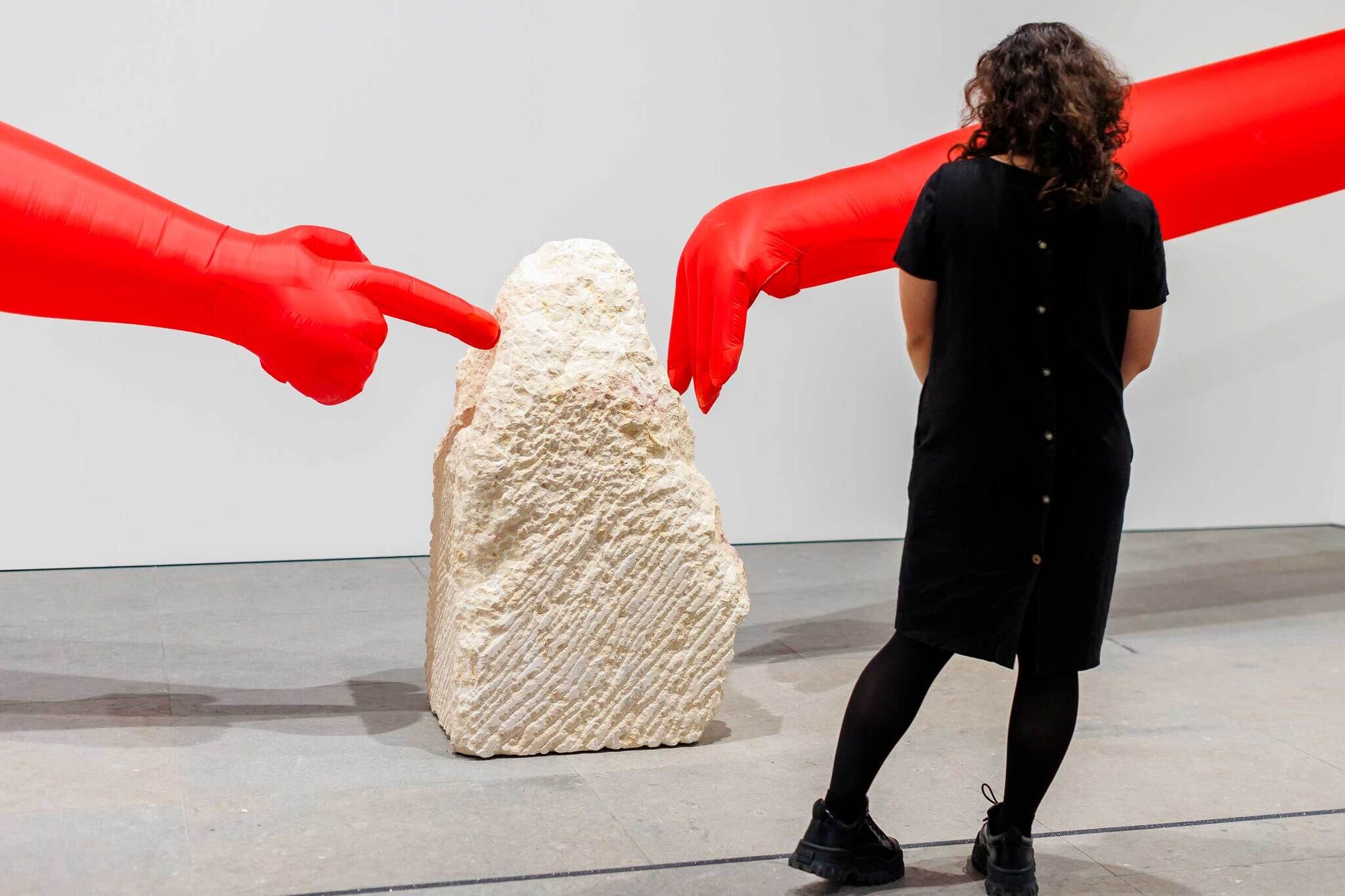
Narrator: This large, moving sculpture includes two inflatable bright-red nylon arms extending from opposite gallery walls toward a jagged rock on the floor between them. One nylon arm has been sewn such that it is reaching its pointer finger out toward the rock, its four other fingers pulled into its palm. The other reaches with an entirely outstretched hand, its palm toward the floor. Both are larger-than-life and are propelled into an intermittent flapping movement by air-blowers mounted high on the walls of the gallery space. When the blowers are off, the arms drift down onto the floor. When the blowers are on, the hands repeatedly dance and brush the rough surface of the locally-sourced rock on the floor of the gallery.
In ASL, one common method of getting someone’s attention involves waving with your palm downward in another person’s field of vision. Alternatively deaf people often tap each other on the shoulder to get their attention. In this kinetic sculpture, by Christine Sun Kim and Thomas Mader, the stone is shaped so as to suggest being eroded by the fingers’ touch, alluding to the process of “trying to get one’s attention or bring attention to something forever.”
Installation view of Christine Sun Kim: All Day All Night (Whitney Museum of American Art, New York, February 8-July 6, 2025). Christine Sun Kim and Thomas Mader, ATTENTION, 2022. Photograph by Ron Amstutz
0:00
0:00