Shifting Landscapes
2024
-
110
Alan Michelson, Sapponckanikan (Tobacco Field), 2019
Transcription, Verbal description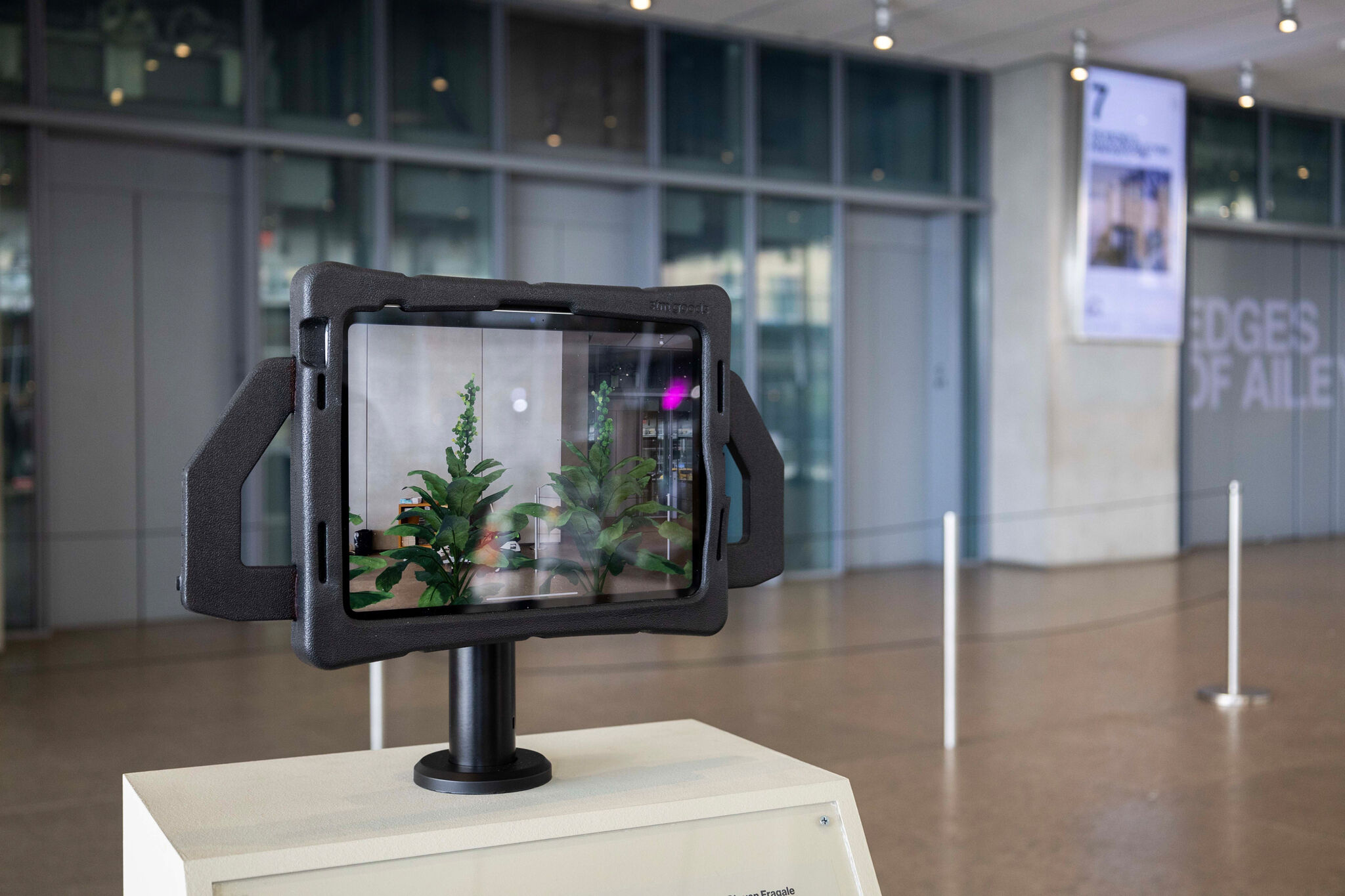
-
601
Troy Michie, Yo Soy Un Puente Tendido / This Is My Home, 2019
Audio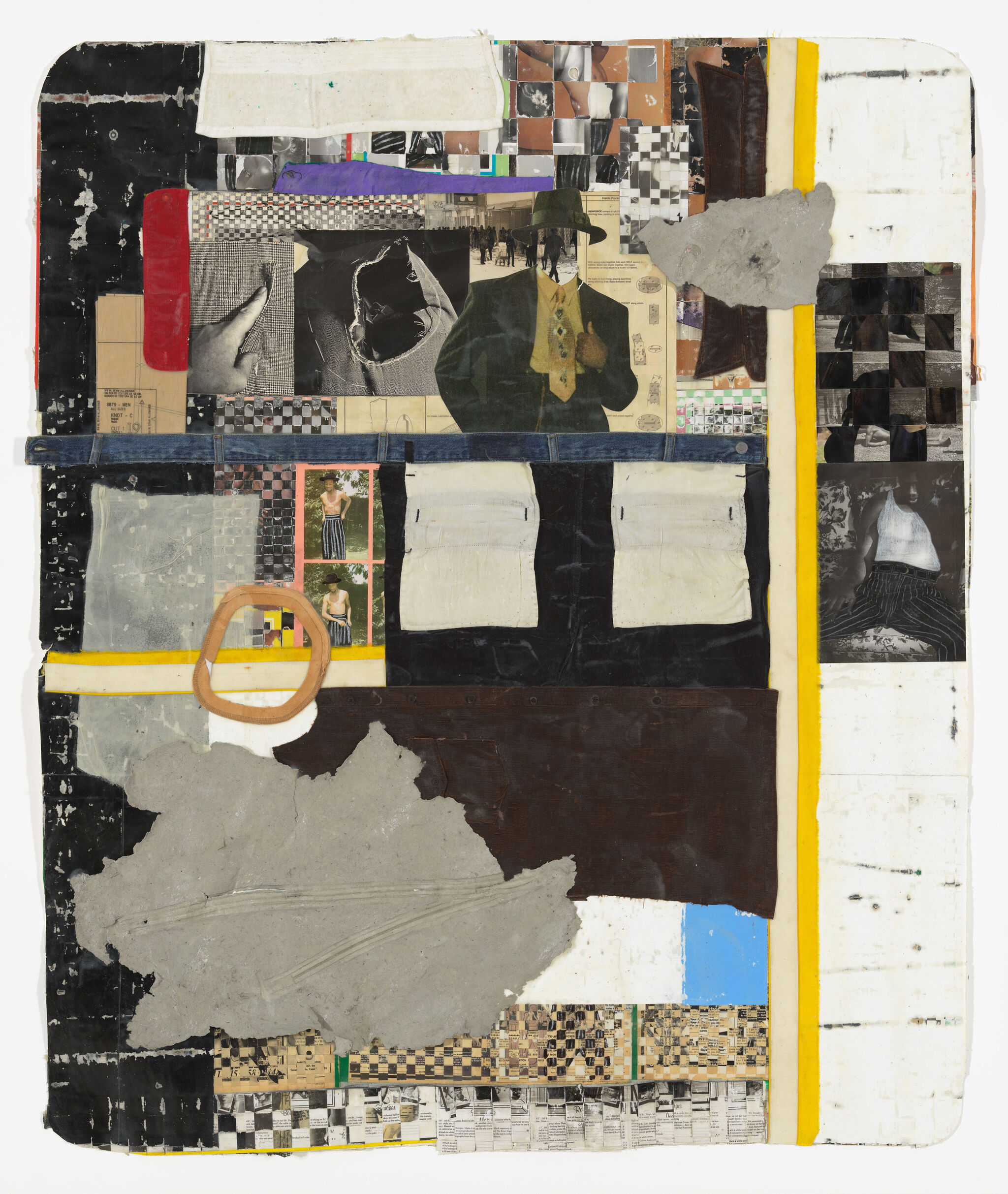
-
602
Amalia Mesa-Bains, Cihuateotl with Hand Mirror from Venus Envy Chapter III: Cihuatlampa, the Place of the Giant Women, 1997–2022
Verbal description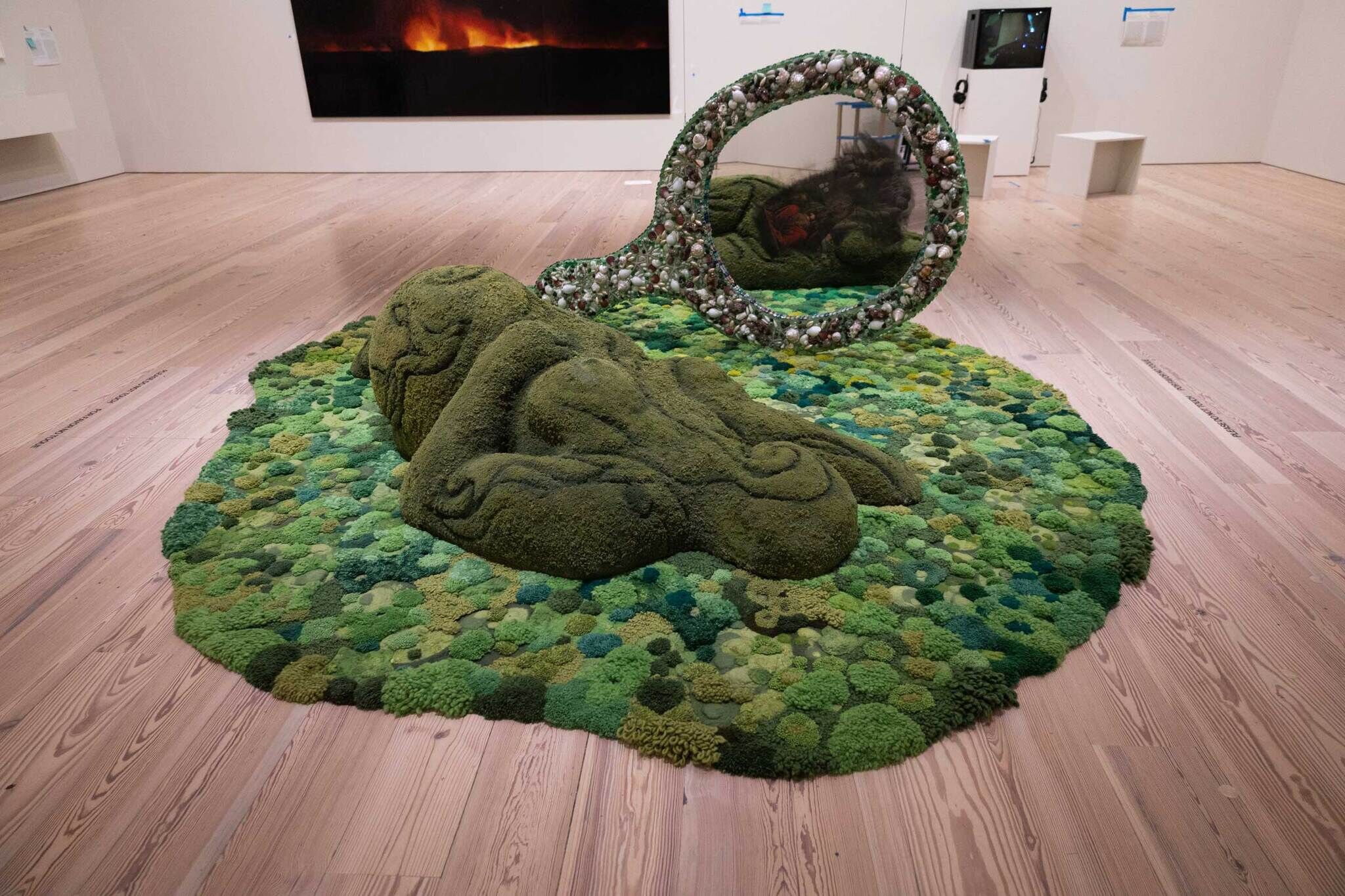
-
603
Patrick Martinez, America Is for Dreamers 2 (Los Dreamers), 2017, fabricated 2021
Audio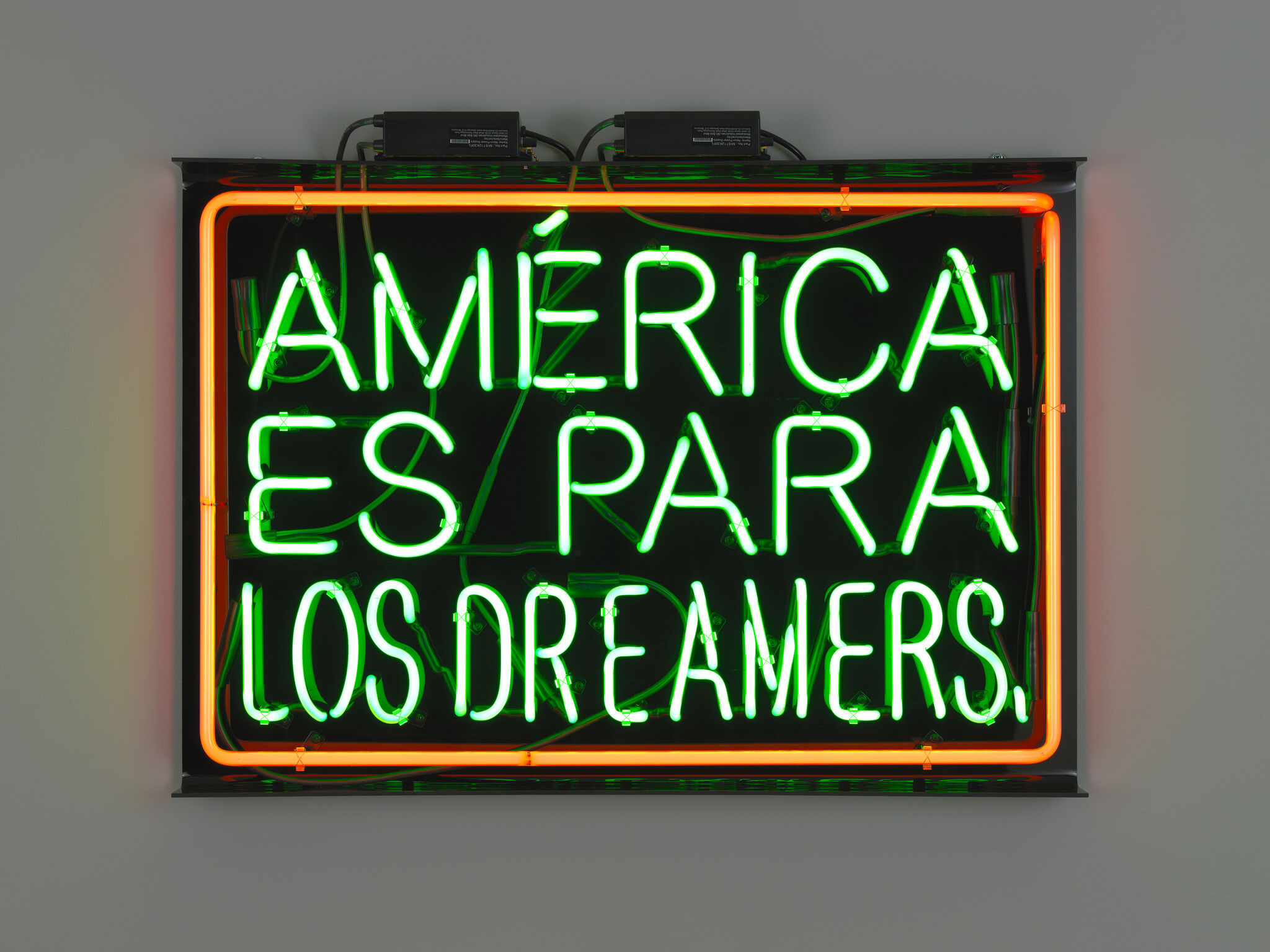
-
604
Enrique Chagoya, Les Aventures des Cannibales Modernistes, 1999
Audio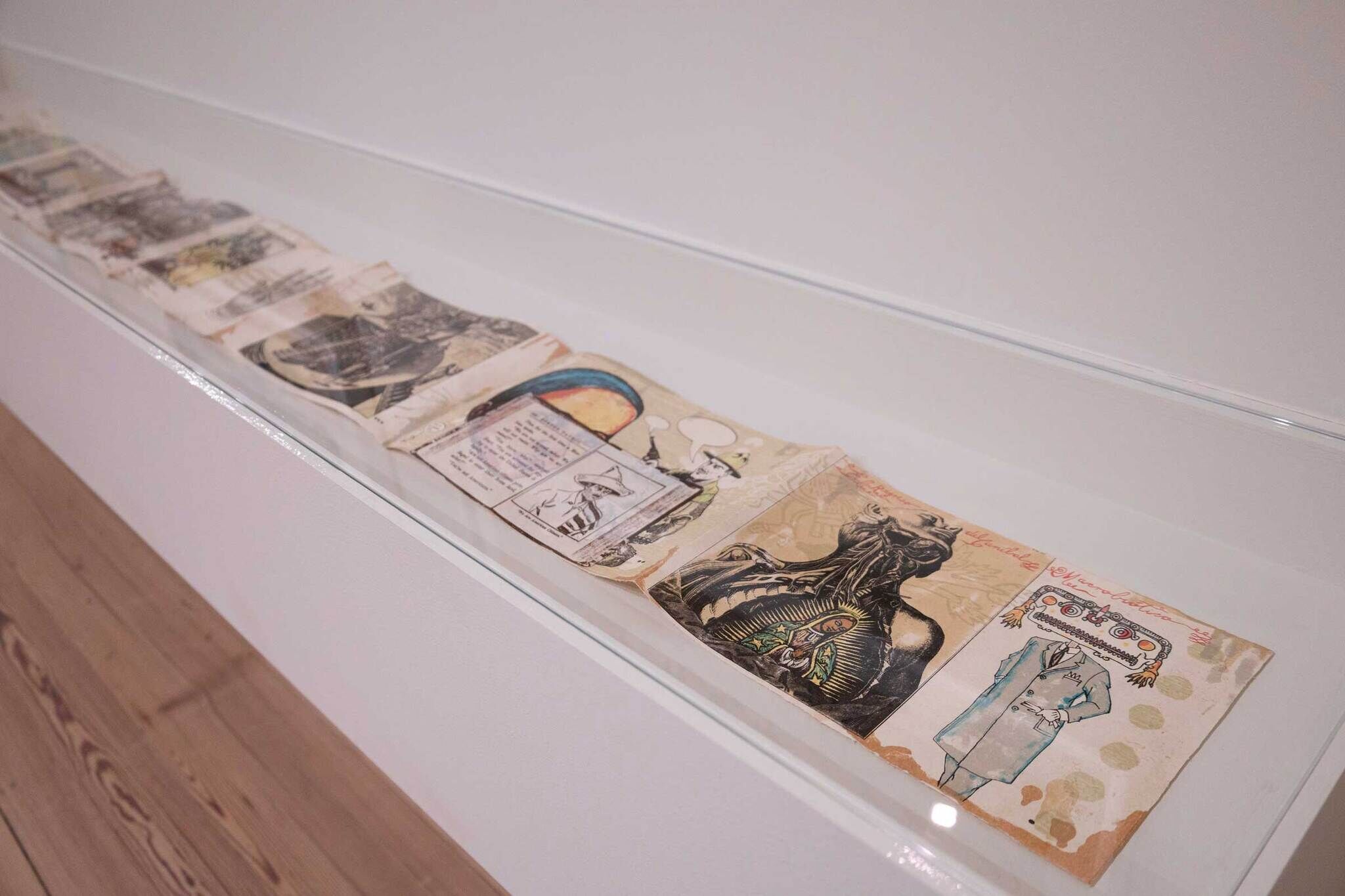
-
605
Guadalupe Maravilla, Requiem for my border crossing (Collaborative drawing between the undocumented) #12, 2016–2018
Audio -
606
James Luna, The History of the Luiseño People, 1993
Transcription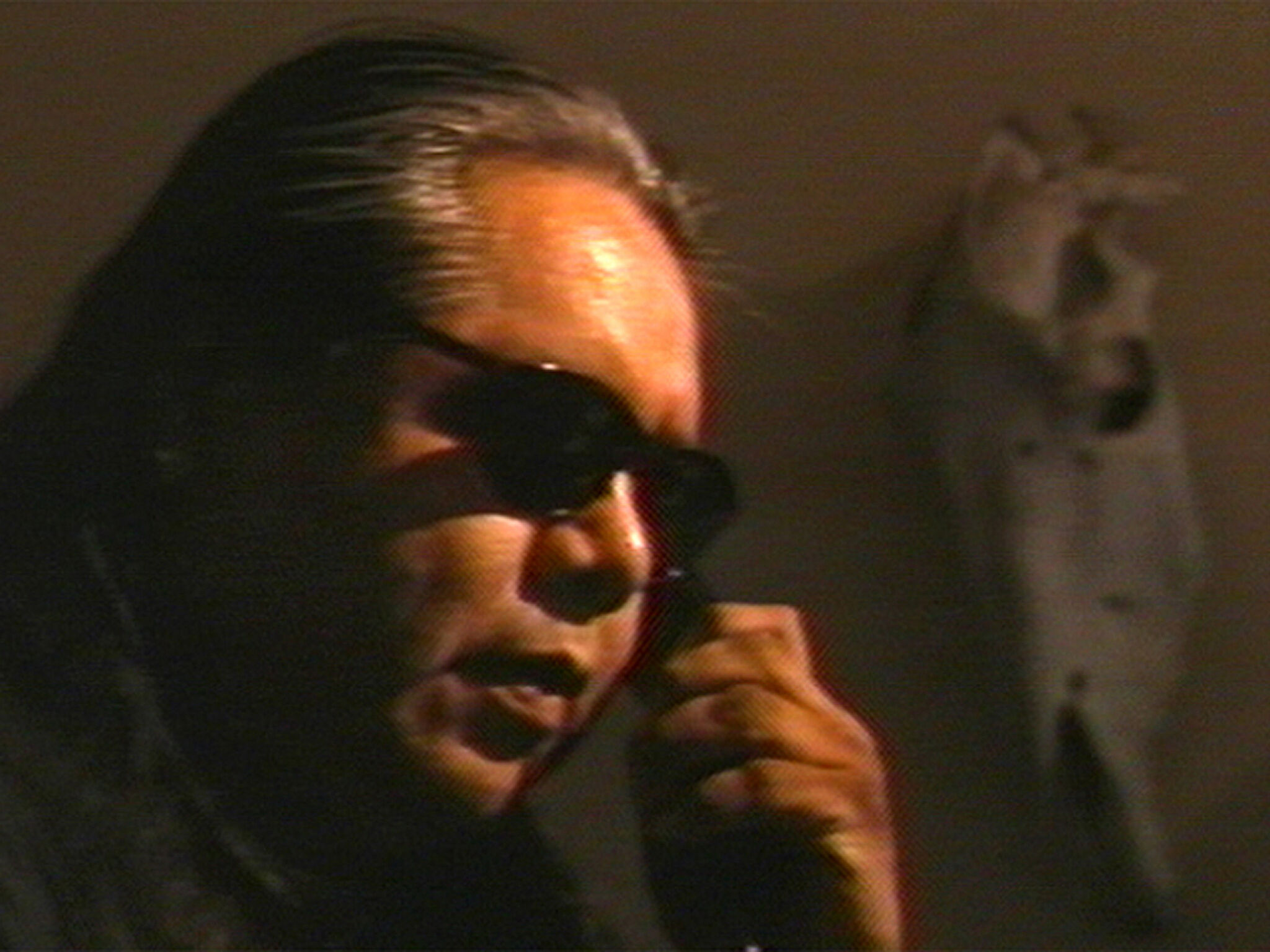
-
607
Laura Aguilar, Three Eagles Flying, 1990
Audio, Verbal description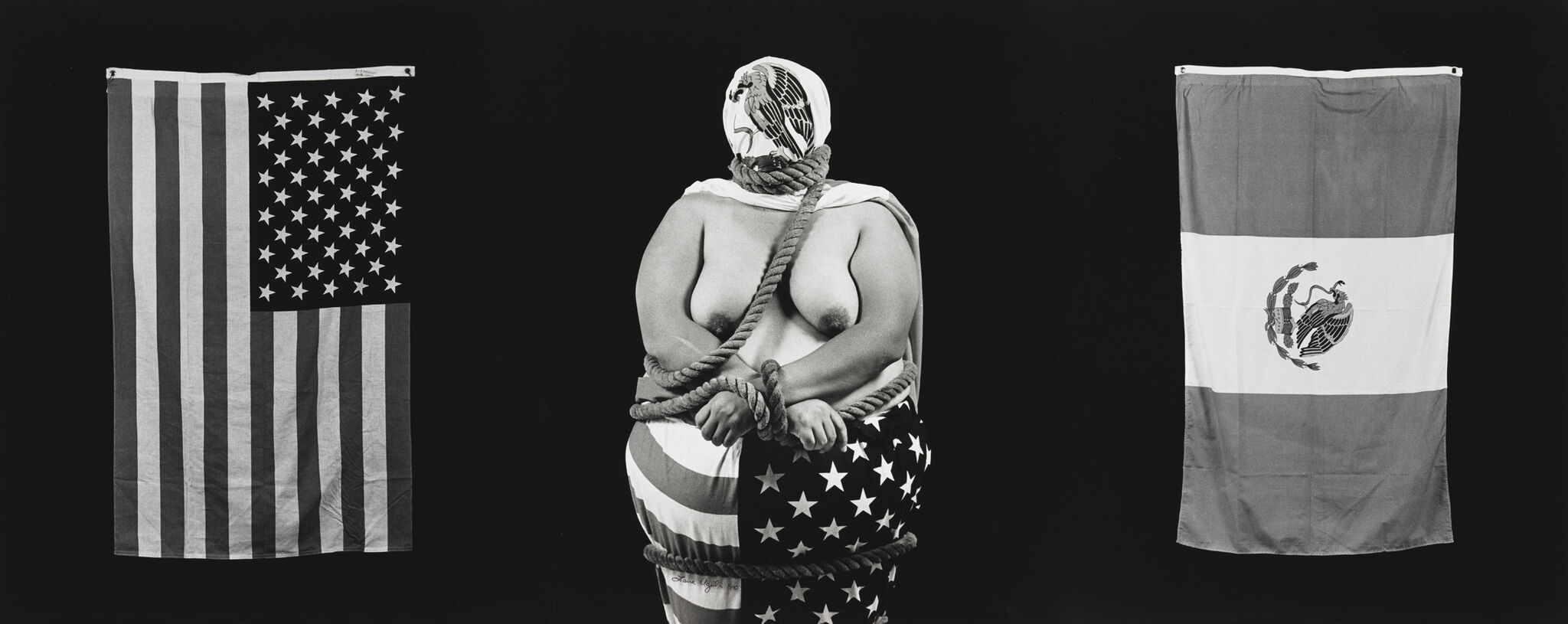
-
608
Michael Joo, Salt Transfer Cycle, 1994
Transcription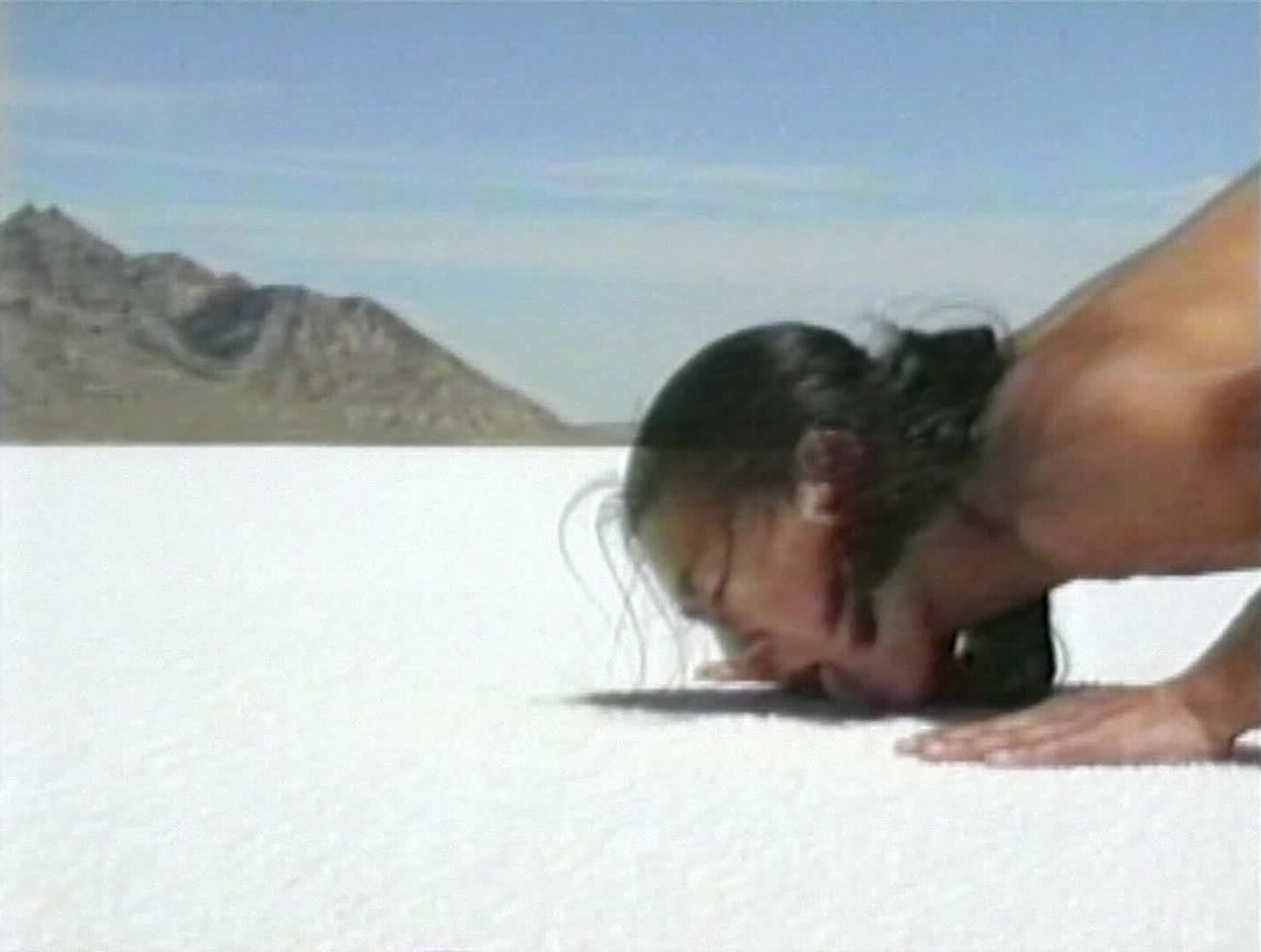
-
610
Nicole Soto Rodríguez
Transcription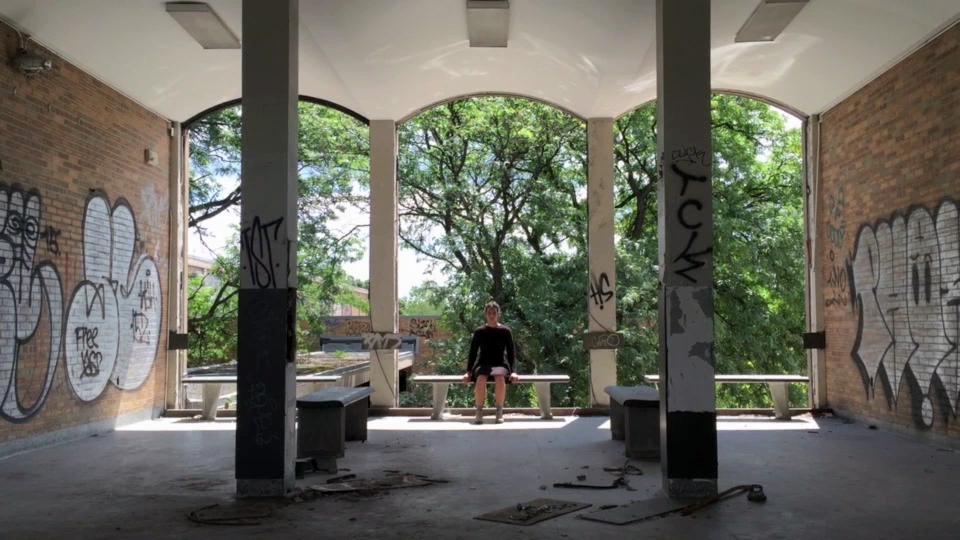
-
611
Christina Fernandez, BEND, 1999 - 2000/2020
Transcription, Verbal description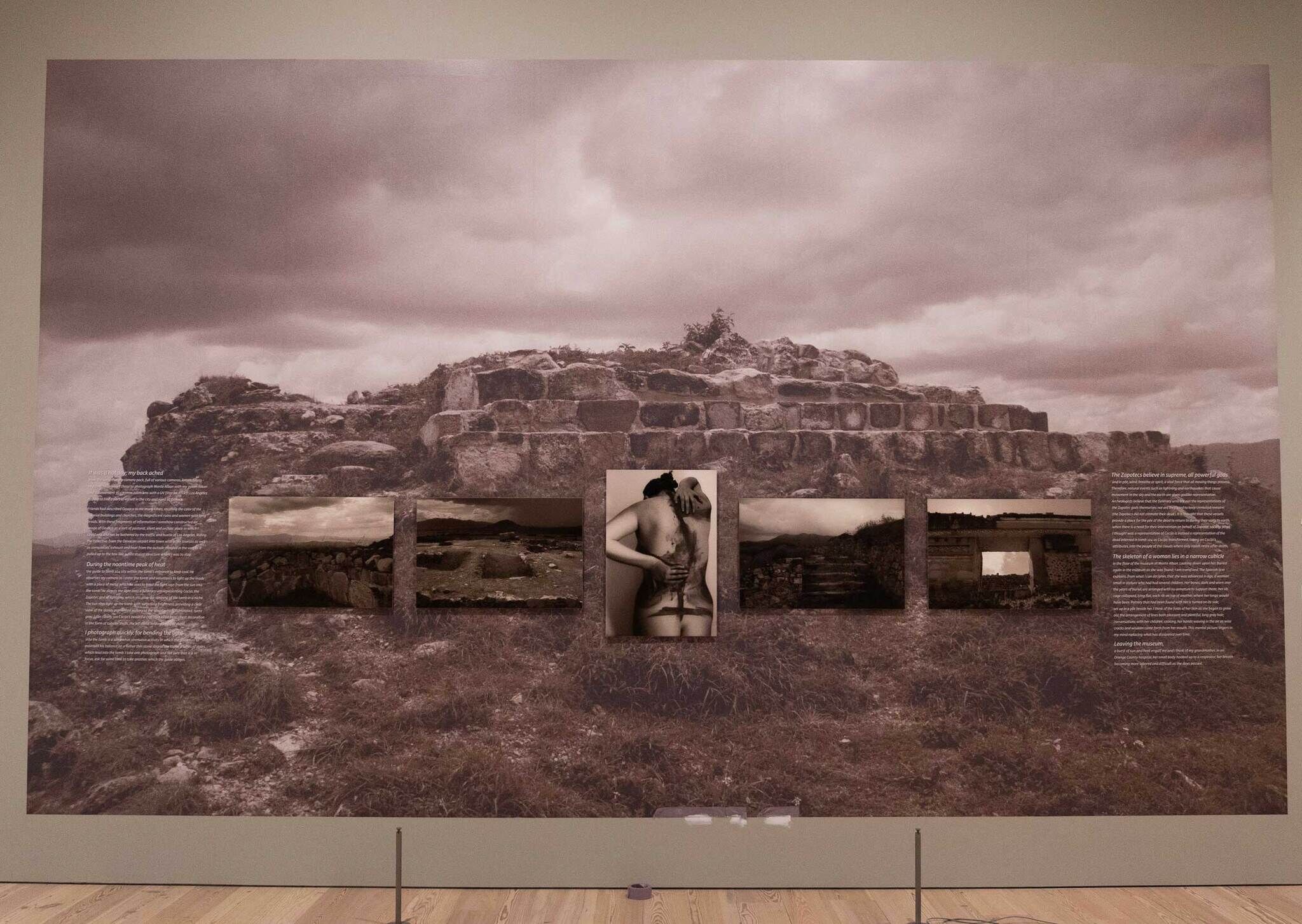
-
612
Artie Vierkant, Exposure Adjustment on a Sunset, 2009
Transcription
-
613
Jane Dickson, Heading in – Lincoln Tunnel 3, 2003
Audio, Verbal description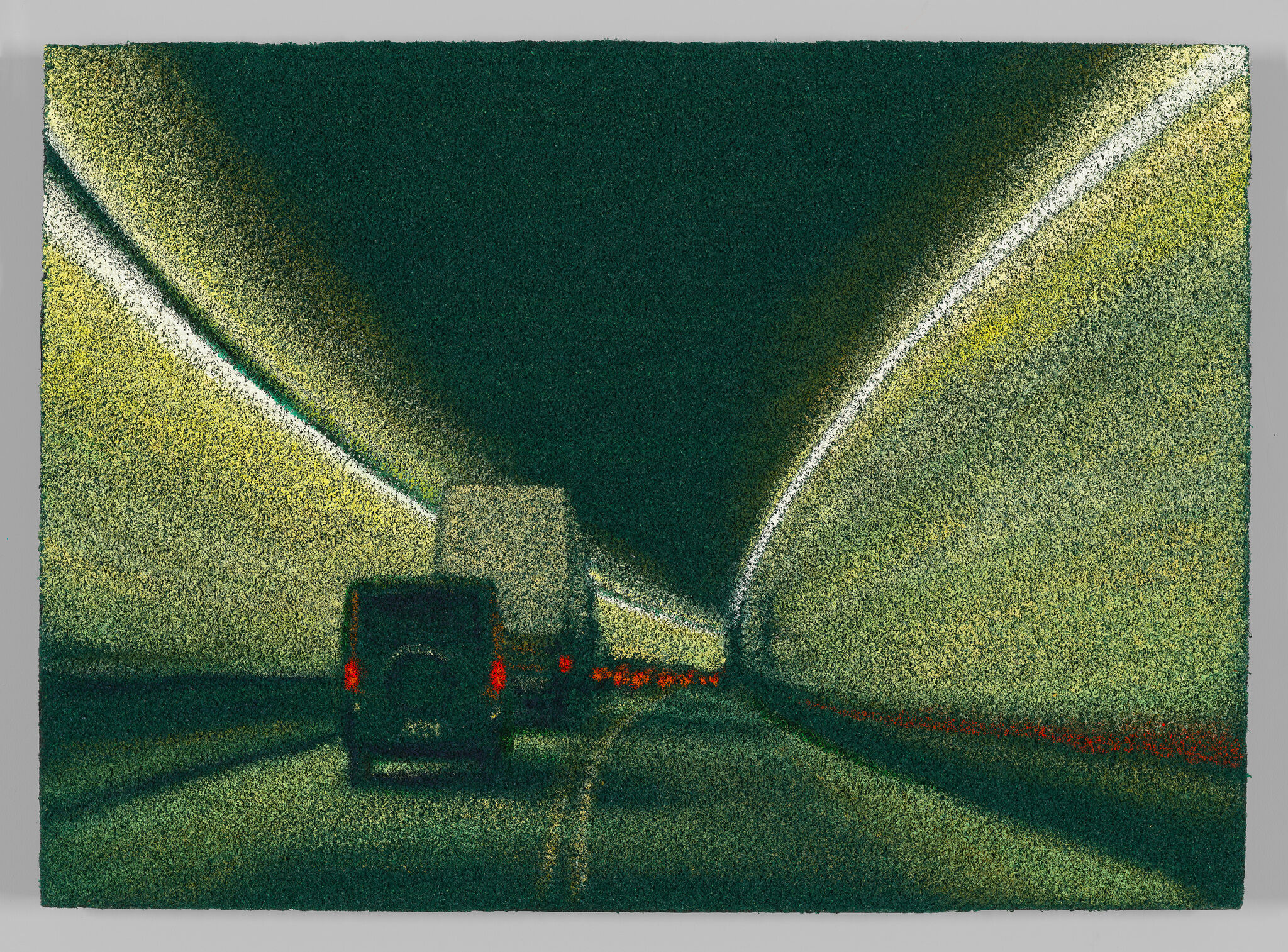
-
614
Salman Toor, Man with Face Creams and Phone Plug, 2019
Audio, Verbal description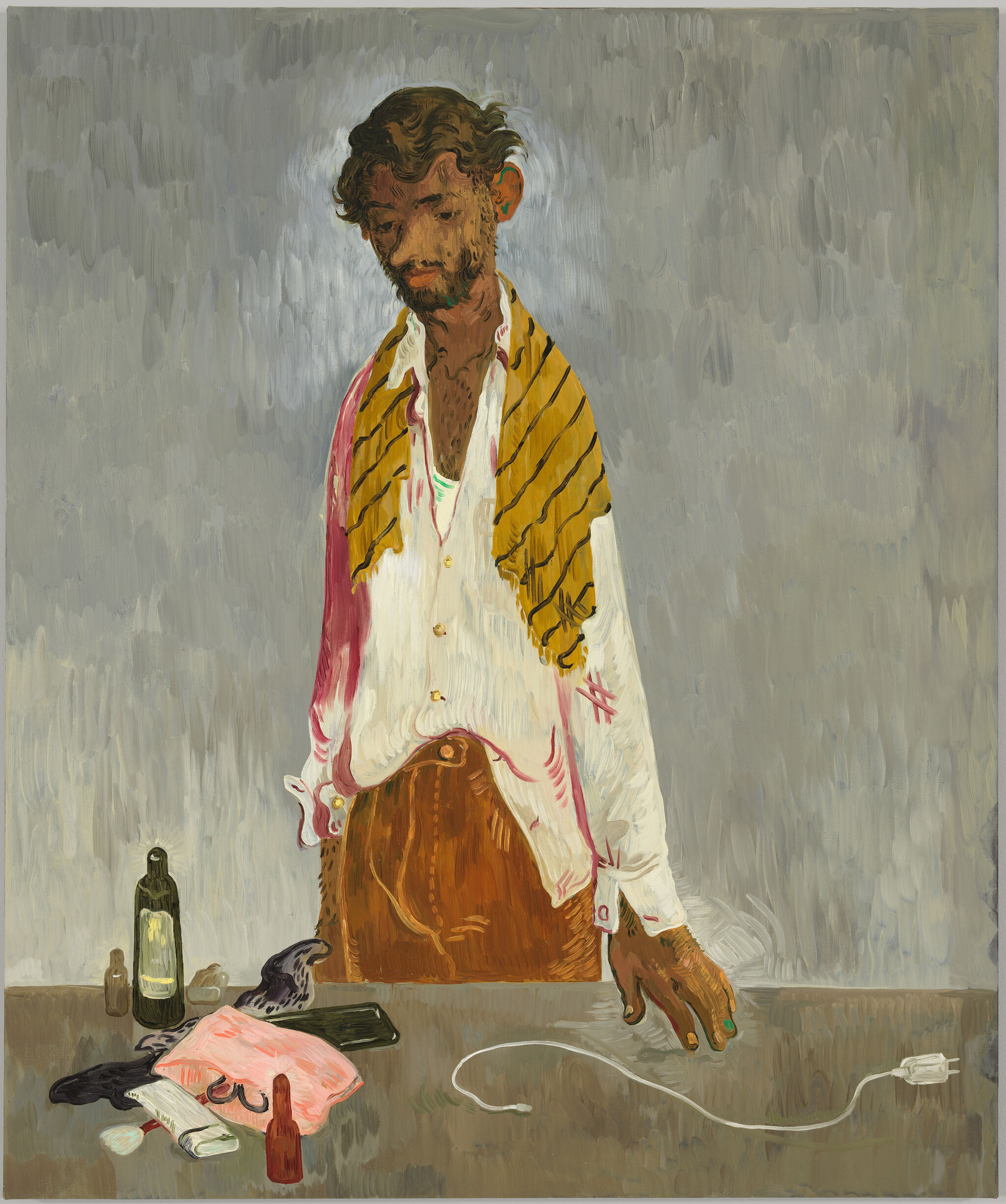
-
615
Orian Barki and Meriem Bennani, 2 Lizards, 2020
Transcription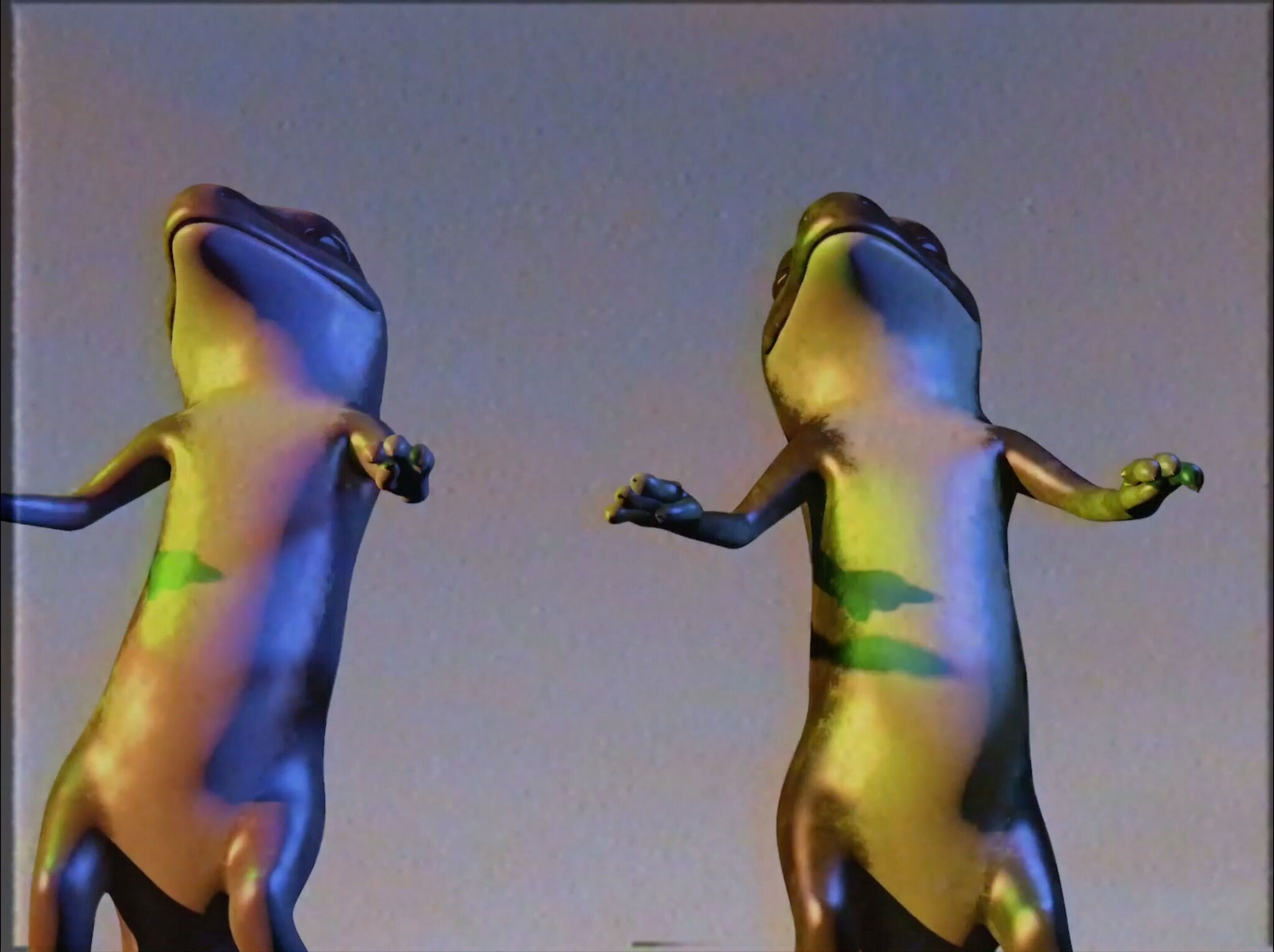
-
616
Aaron Gilbert, Empire state of mind/Flaco 730 Broadway, 2020.
Verbal description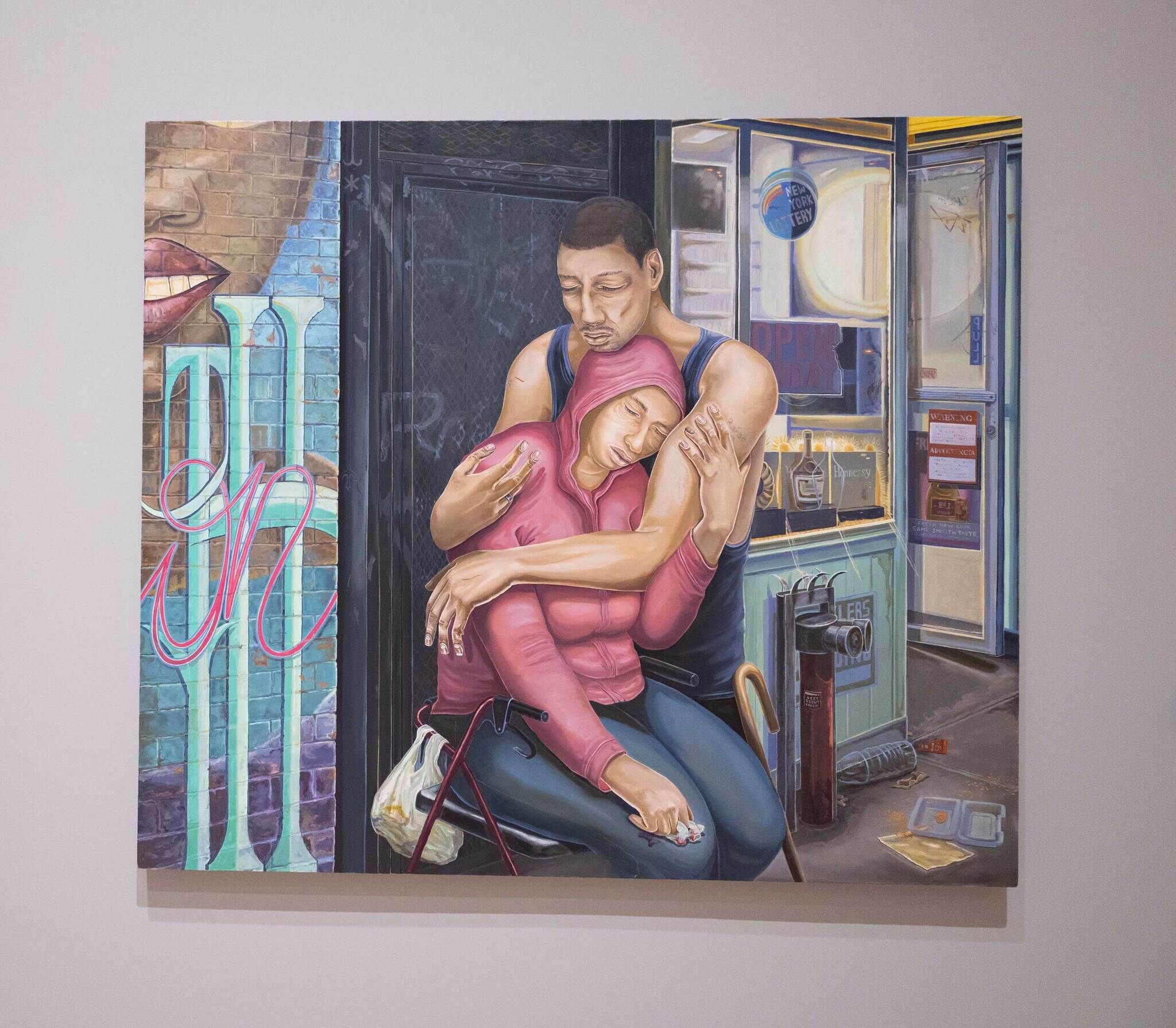
-
617
Tabboo!, Looking Uptown from My Roof, 1998
Audio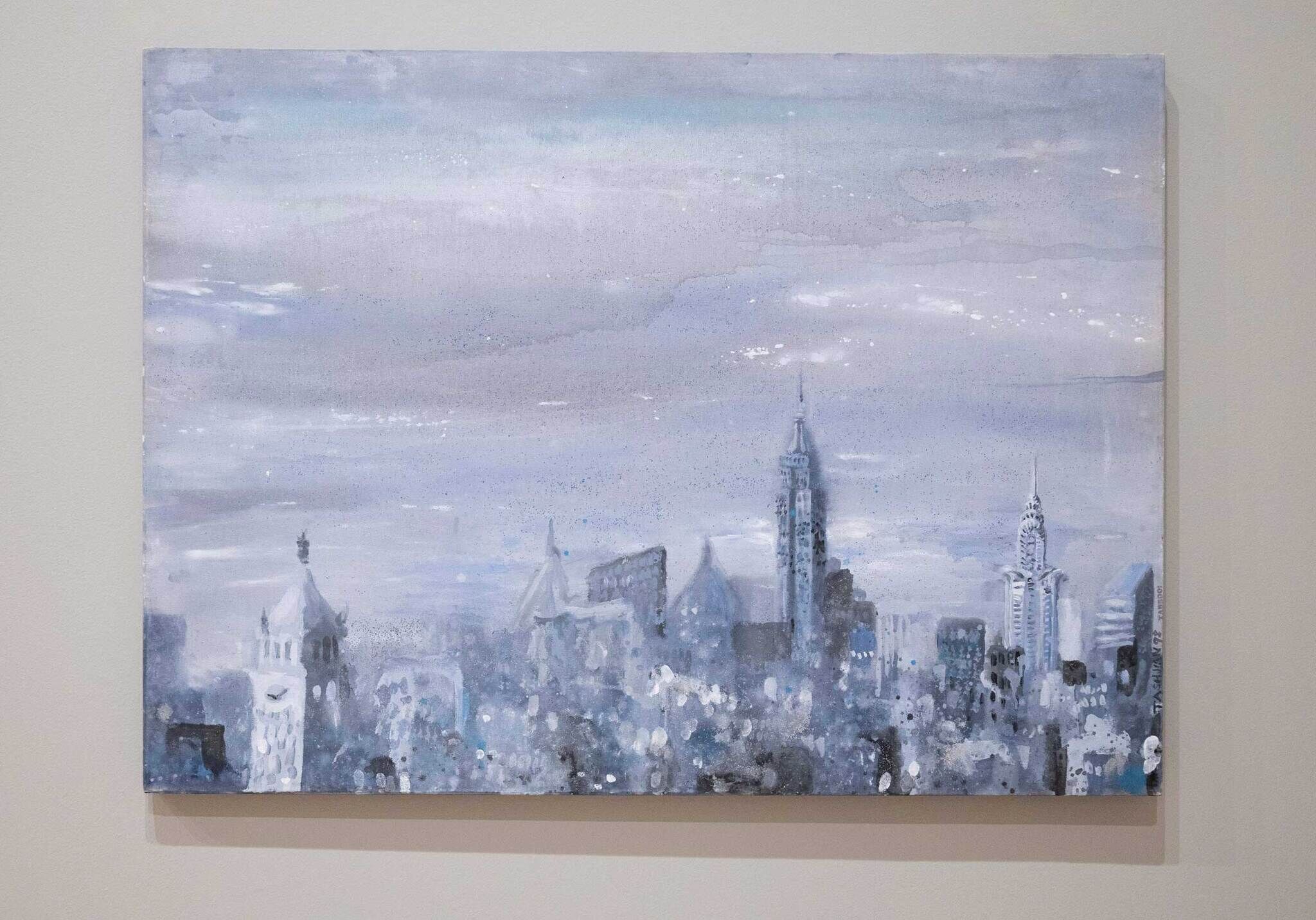
-
618
Martin Wong, Big Heat, 1986
Verbal description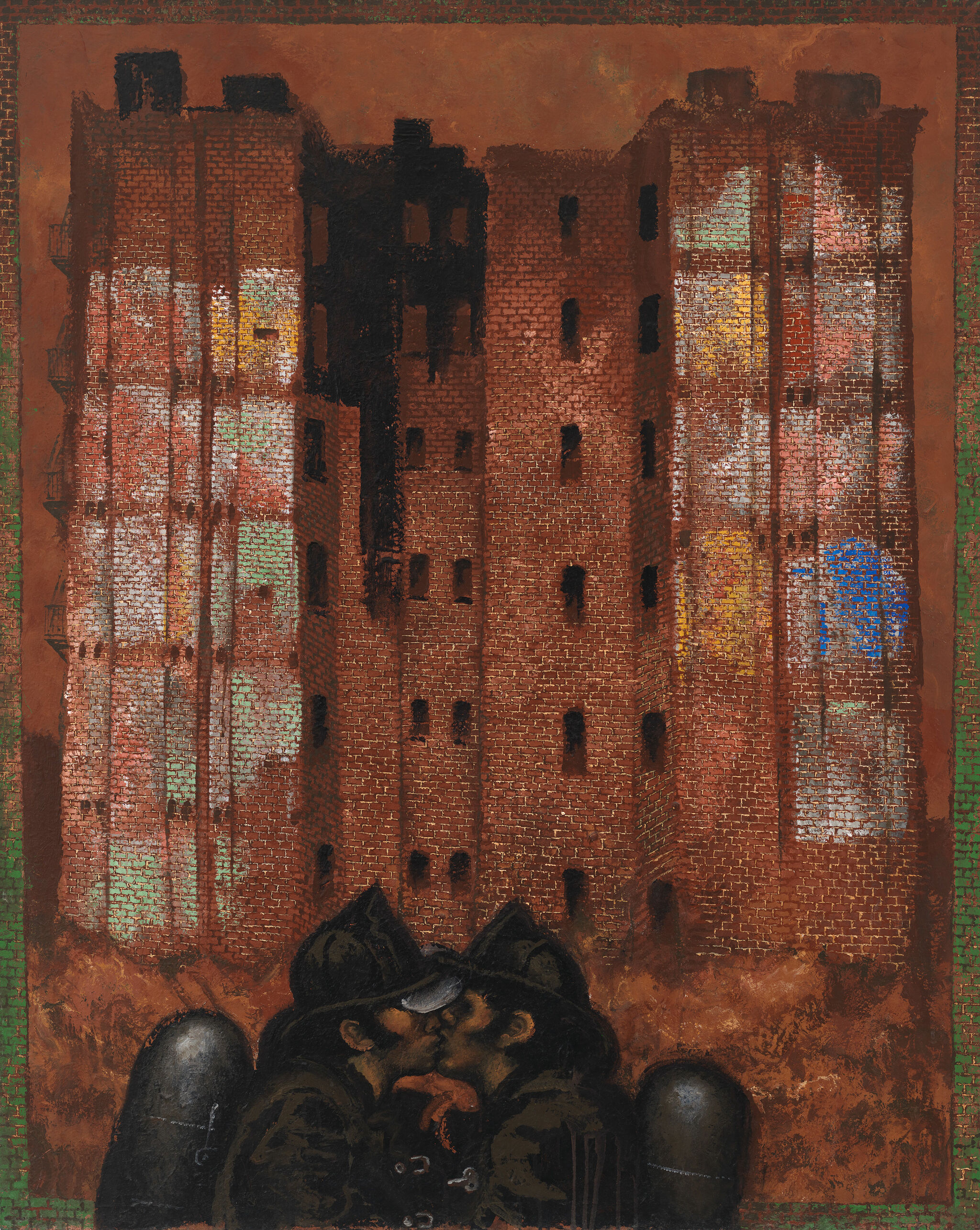
-
619
Rigoberto Torres, Julio, Jose and Junito, 1991/1995
Kids, Verbal description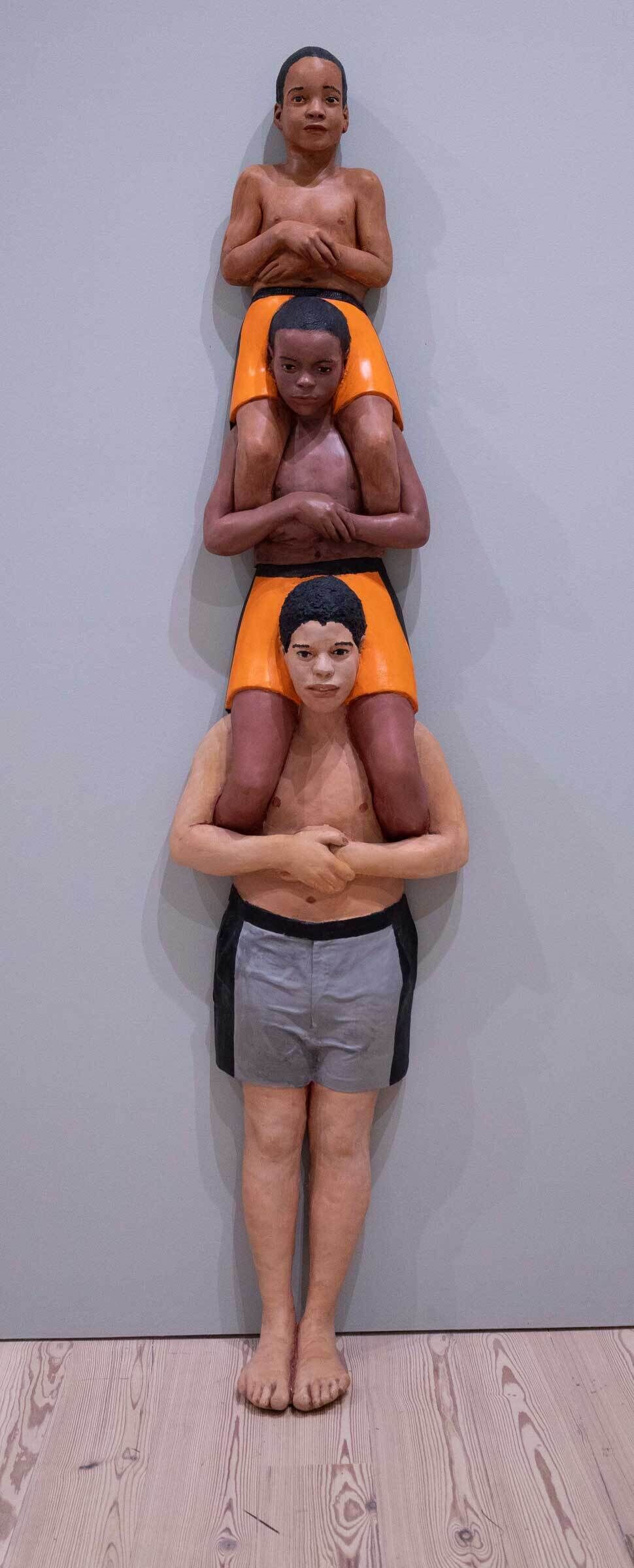
-
621
Miguel Luciano, The People's Pulpit (homage to the Young Lords' takeover of The People's Church), 2022
Audio, Verbal description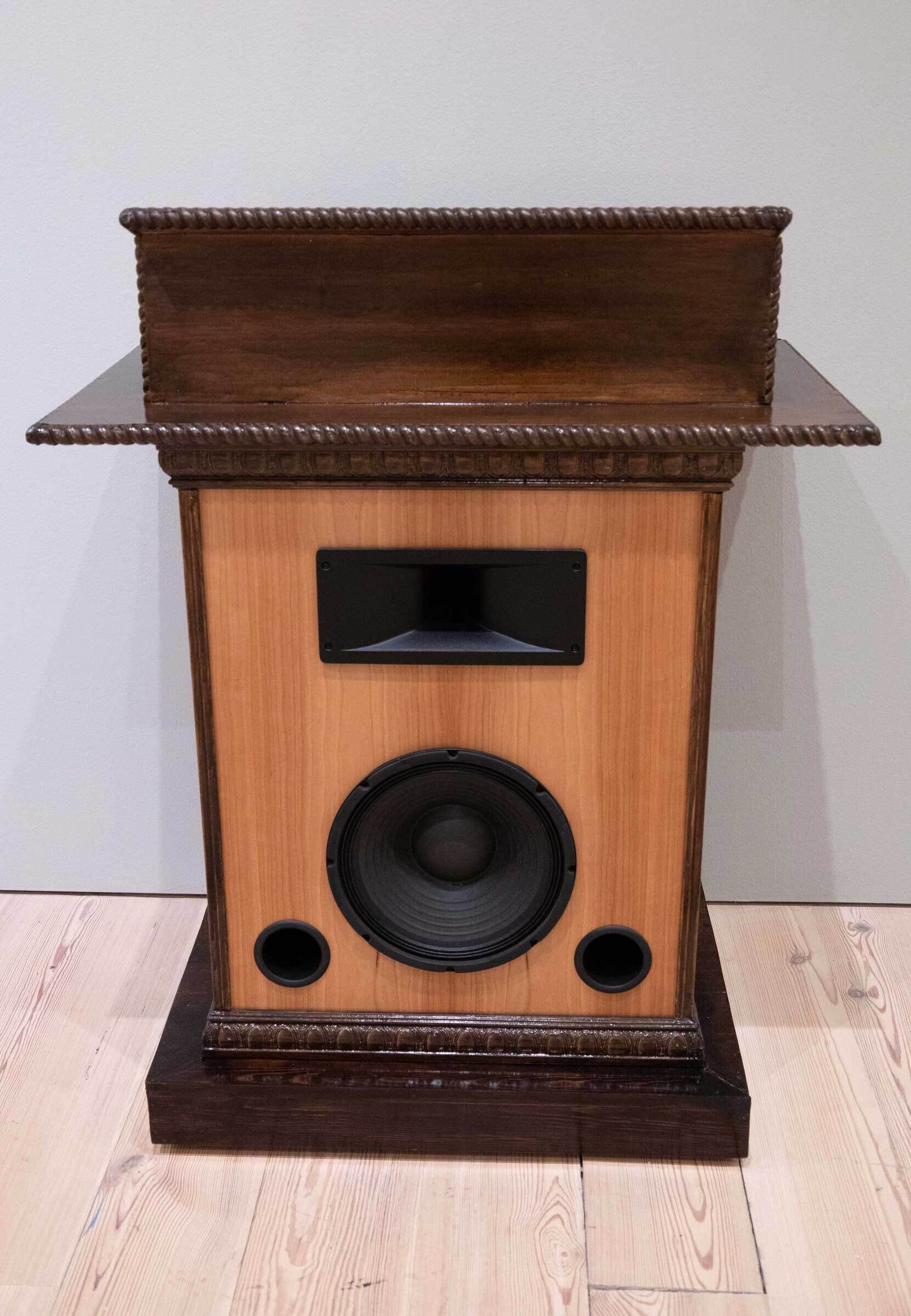
-
622
Diane Burns, Alphabet City Serenade, 1988
Transcription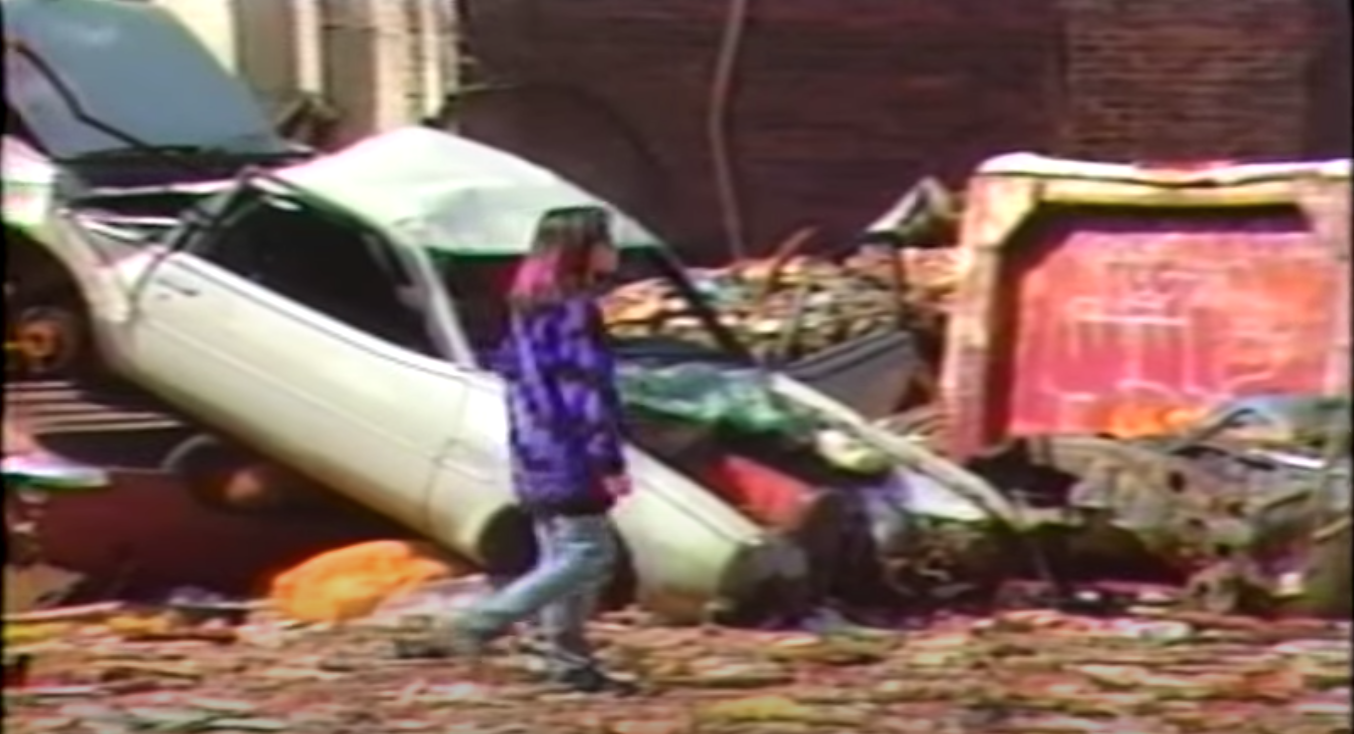
-
623
Gordon Matta-Clark, Tree Dance, 1971
Transcription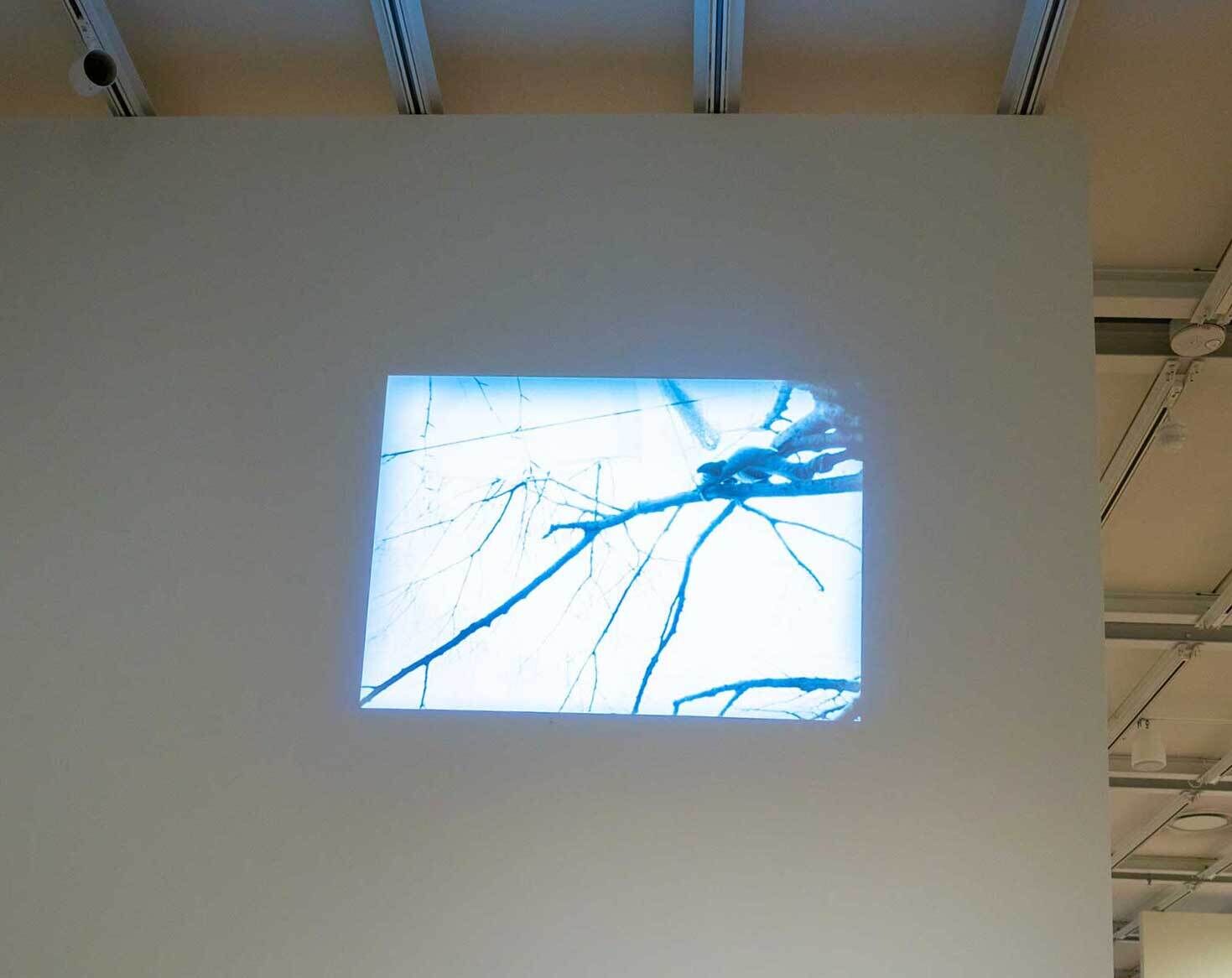
-
624
Maya Lin, Ghost Forest Baseline Y, 2022
Audio, Kids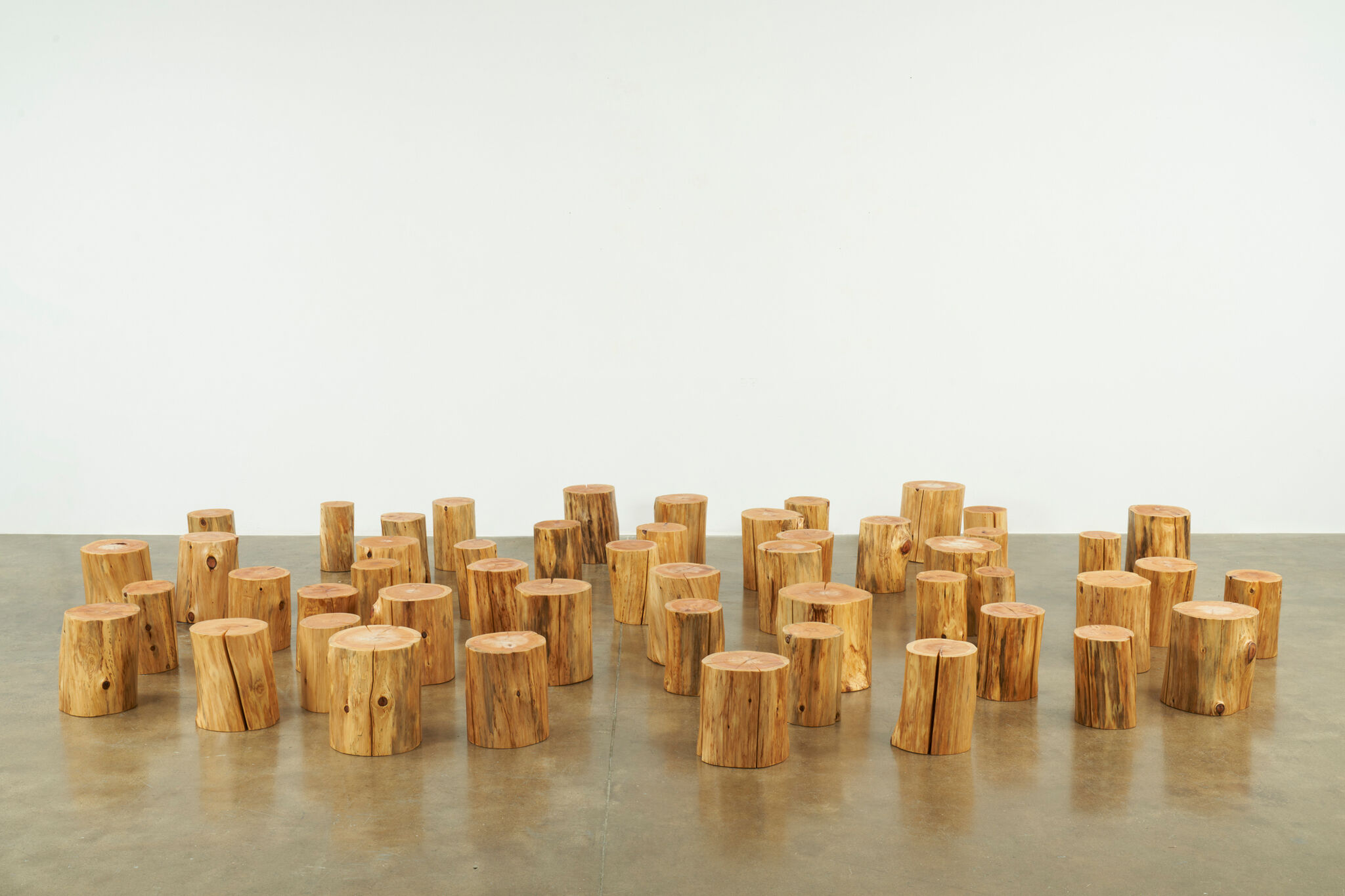
-
626
Joe Minter, The First Fireplace, 1998
Audio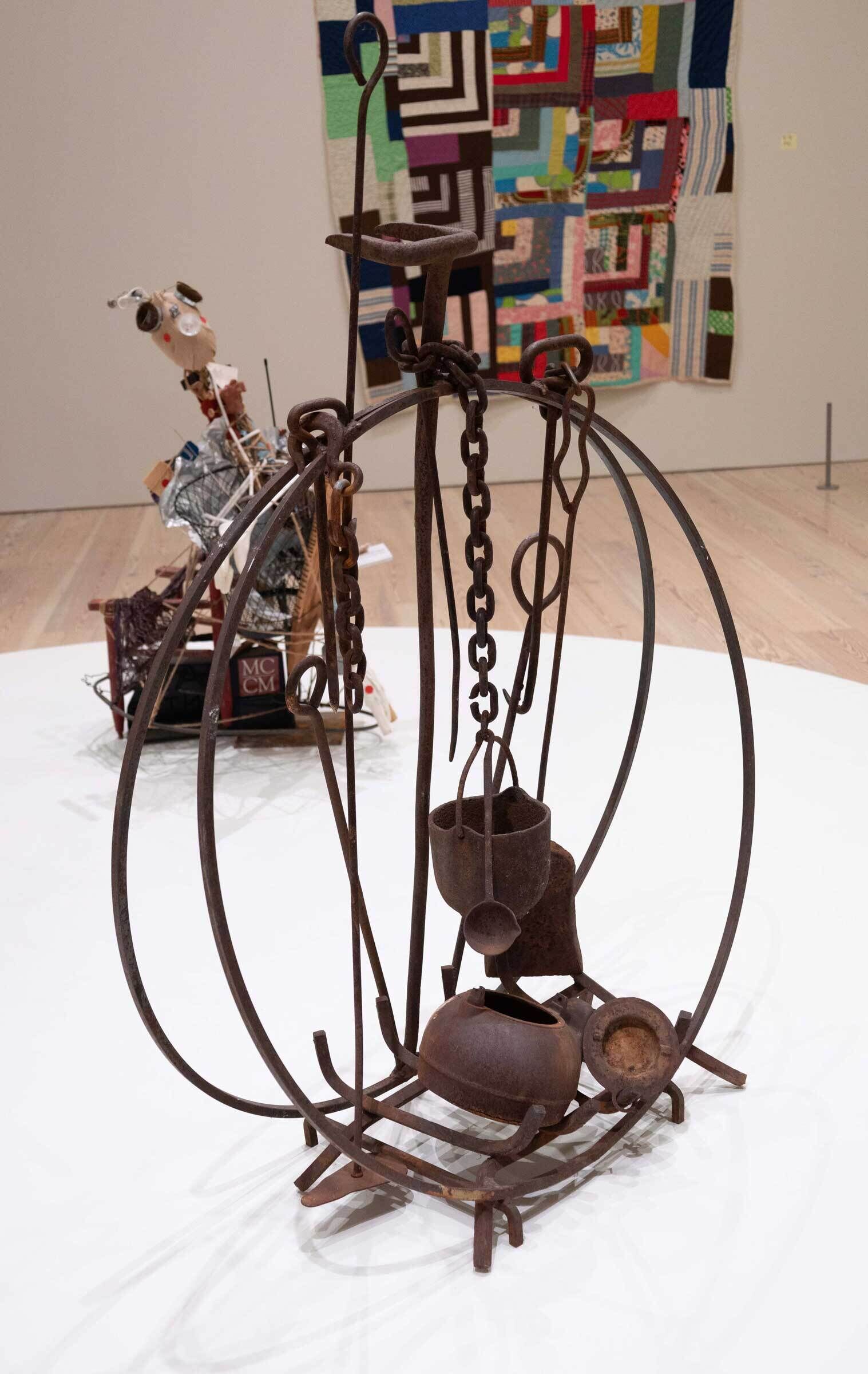
-
627
Melvonna Ballenger, Rain (Nyesha), 1978
Transcription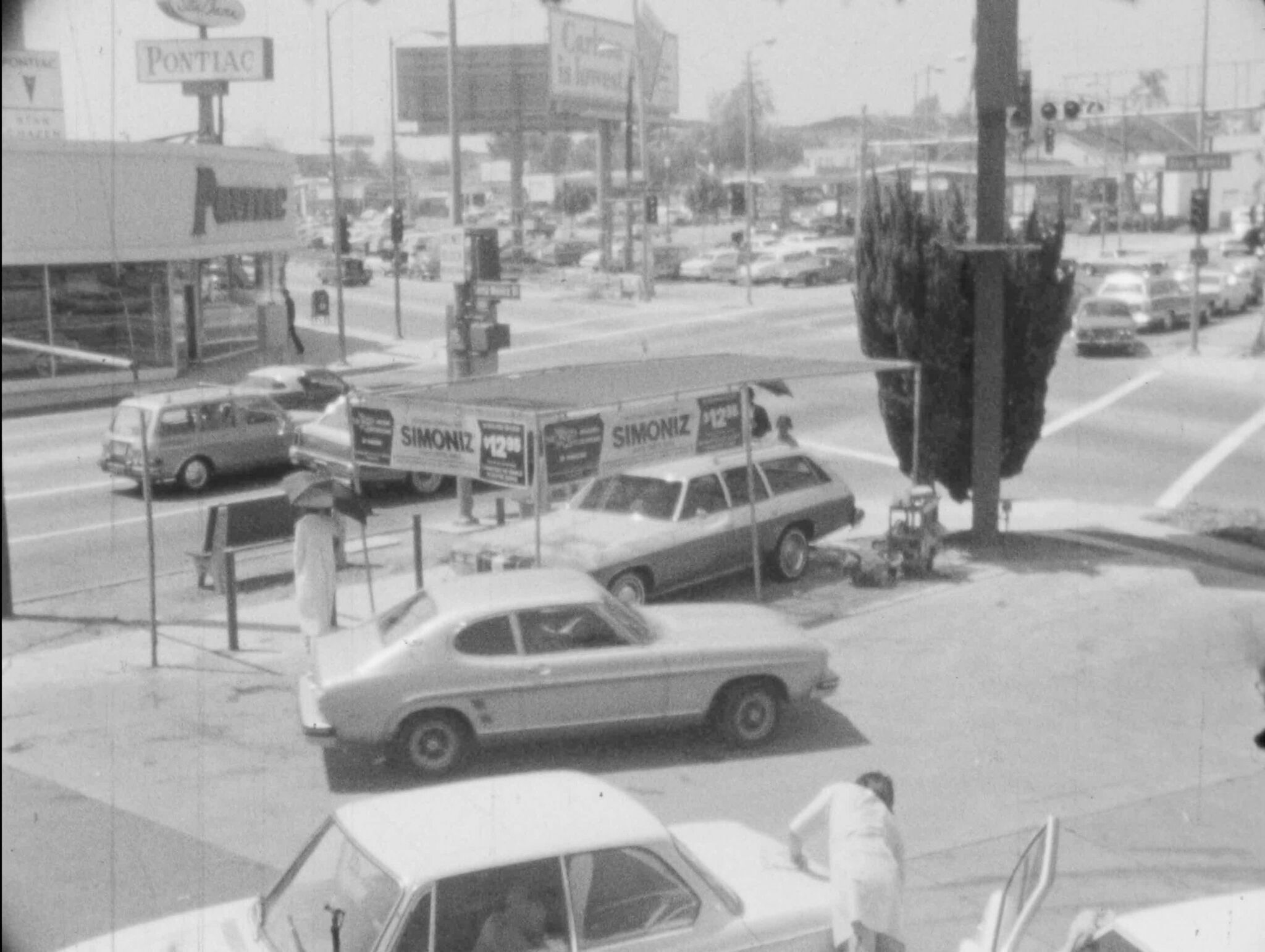
-
628
Ulysses Jenkins, Without Your Interpretation, 1983
Transcription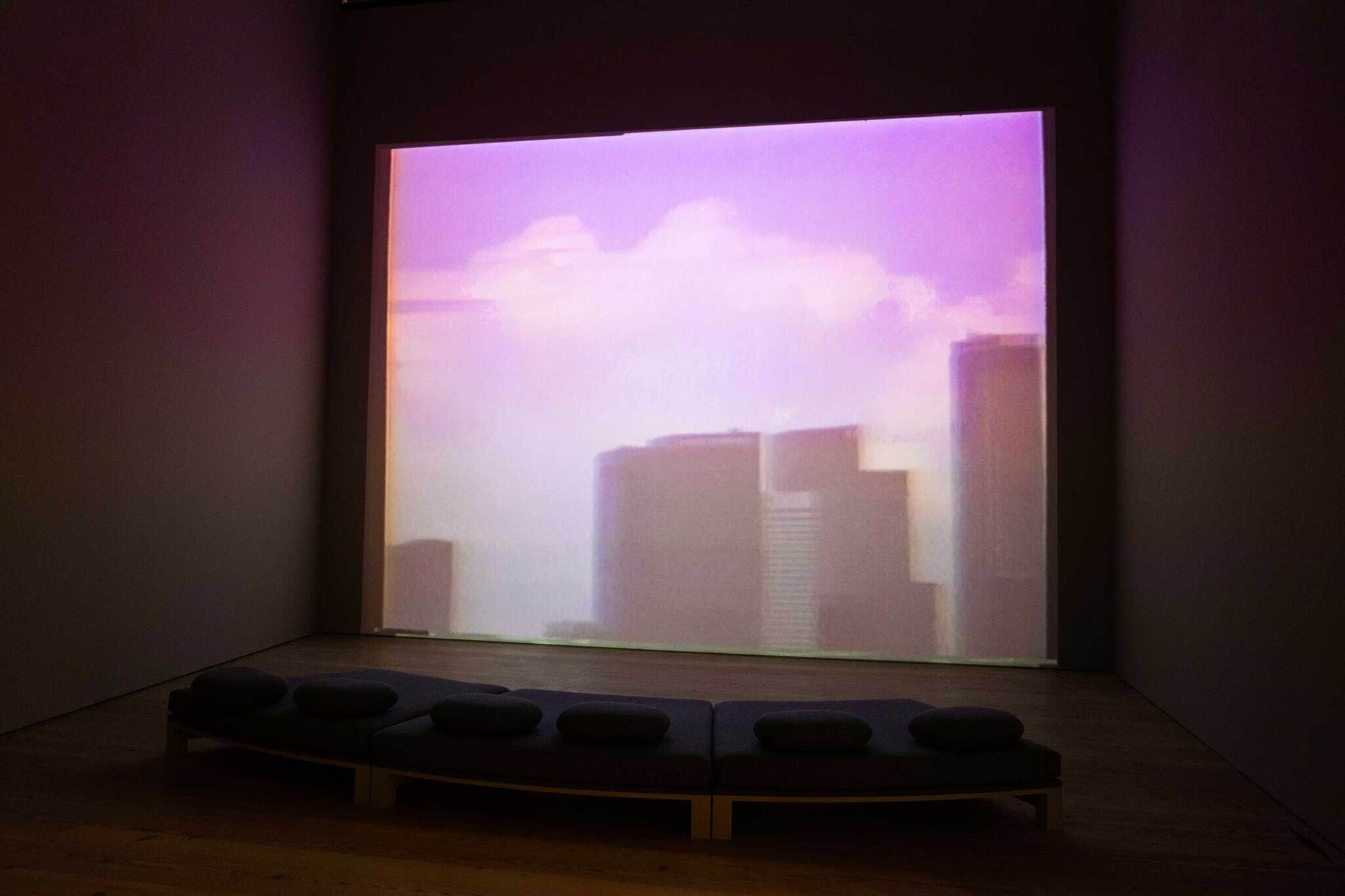
-
629
Firelei Báez, Untitled (Tabula Anemographica seu Pyxis Navtic), 2021
Audio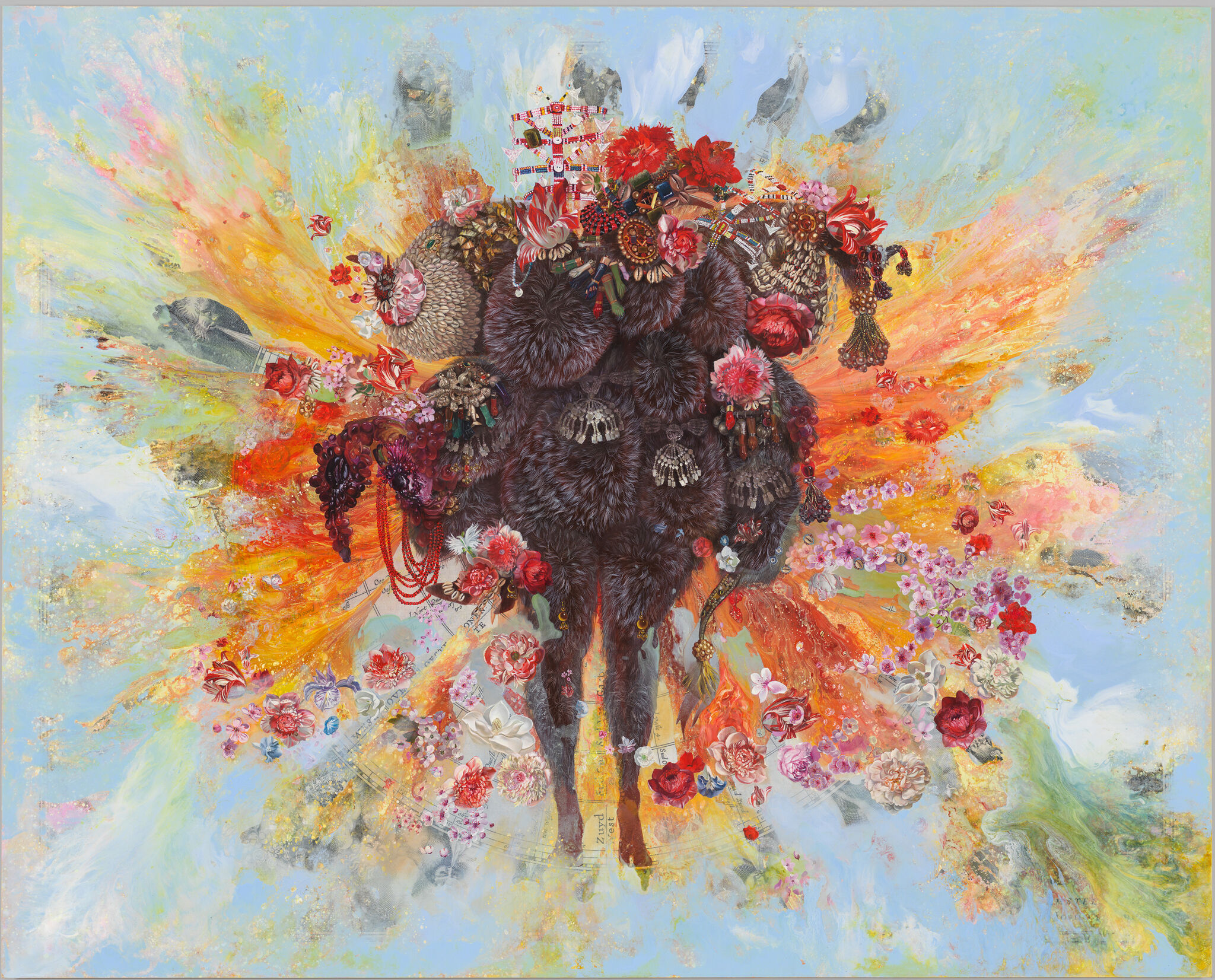
-
650
Alison Saar
Audio
Fall, 2011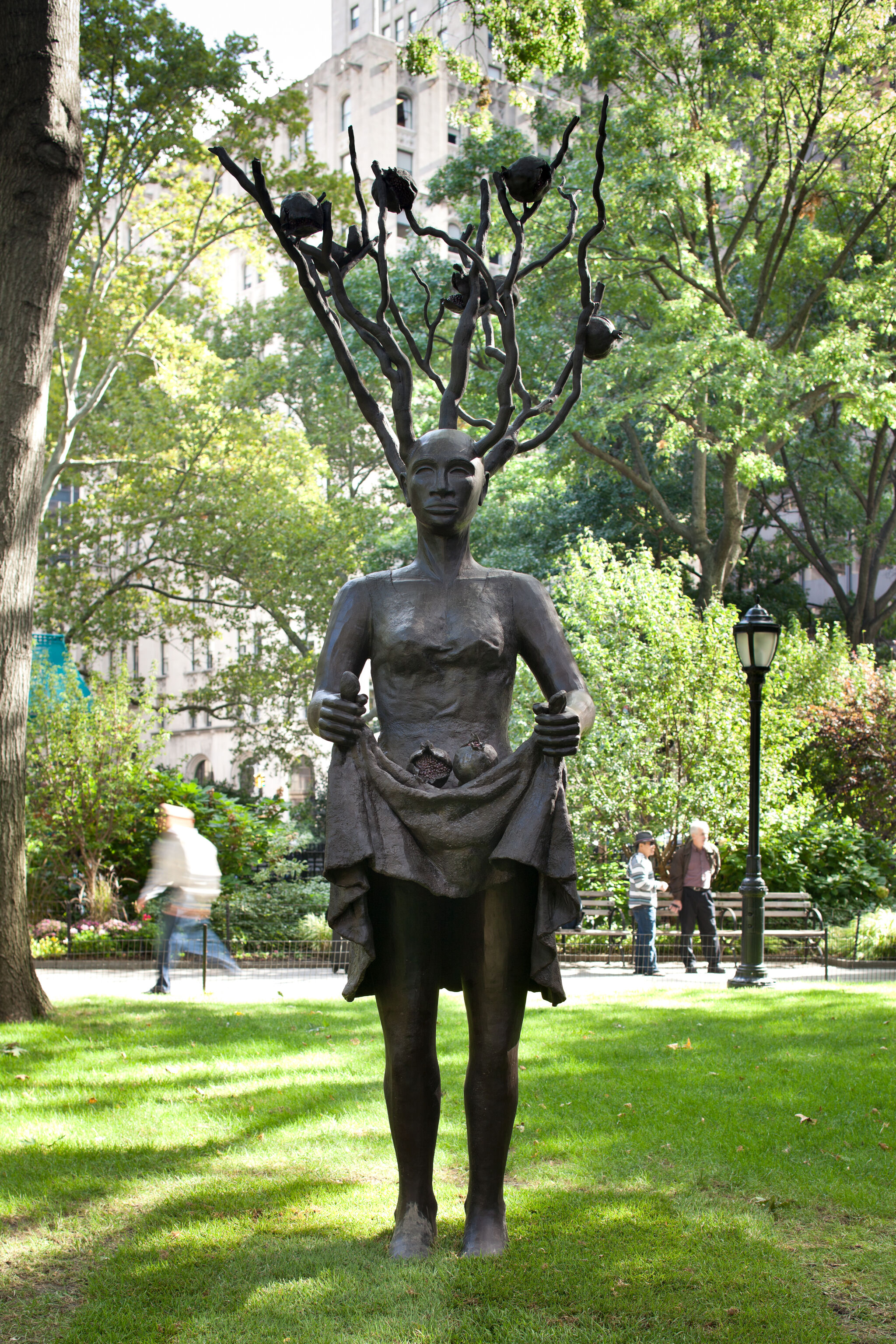
-
631
Theo Triantafyllidis, BugSim (Pheromone Spa), 2023
Kids, Verbal description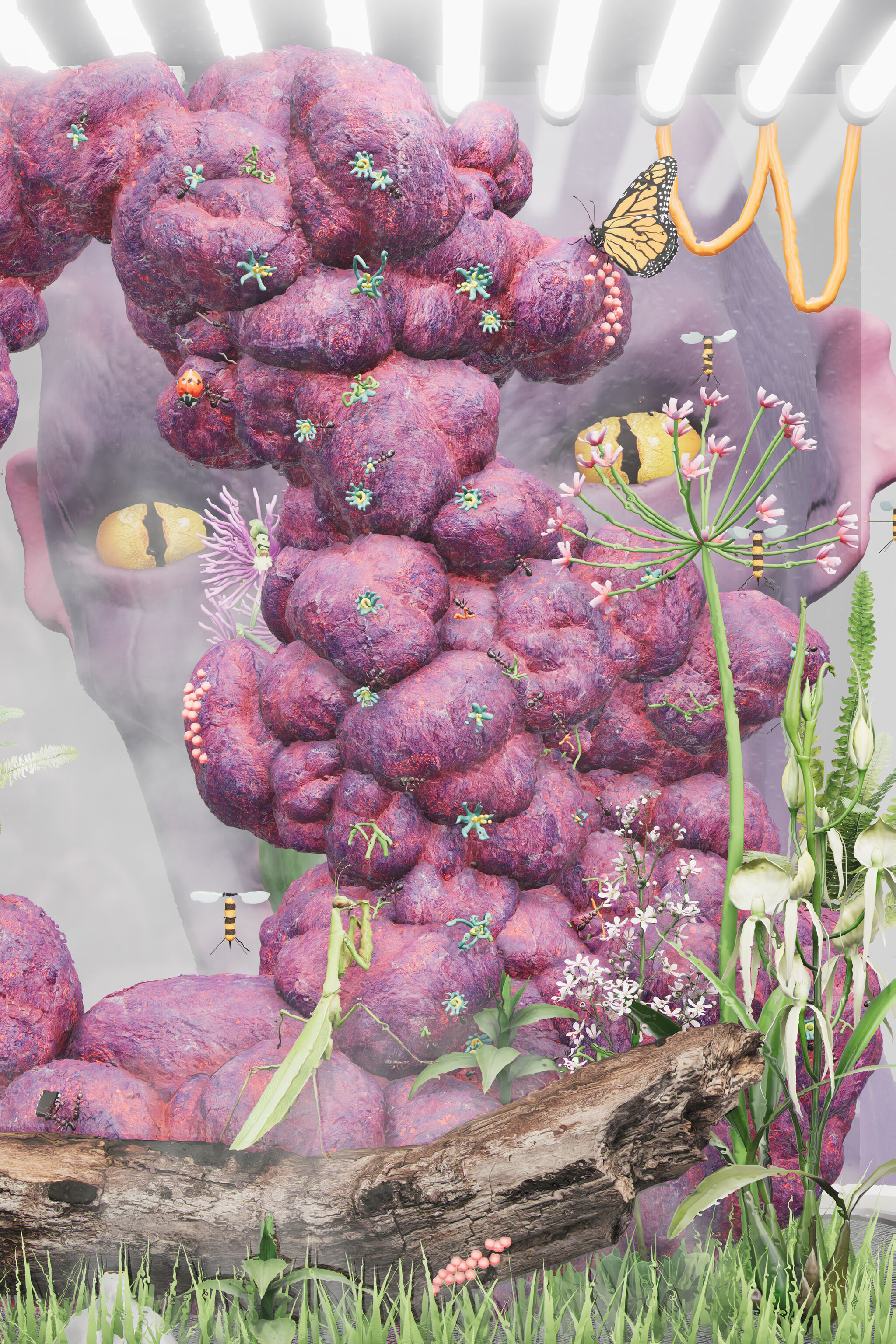
Alan Michelson, Sapponckanikan (Tobacco Field), 2019
Content forthcoming.
Narrator: This work, titled Sapponckanikan (Tobacco Field), is a site-specific augmented reality, or AR, installation that creates an experience of being surrounded by a circle of tobacco plants against the Museum’s lobby. The artist, Alan Michelson, is a New York-based artist and Mohawk member of the Six Nations of the Grand River, and his work often addresses relationships to Native histories. For Sapponckanikan, he collaborated on the AR component with the artist Steven Fragale.
The plants are tall, reaching about three to four feet. They extend upwards with thick central stems, appearing as though they have taken root directly in the space. Large leaves are layered in multiple tiers, creating a dense, layered appearance, while the edges of the leaves are smooth, with slight curved variations that give them a natural, organic feel. They vary in size, with larger leaves near the base and smaller ones higher up the stem, contributing to a sense of natural growth and progression.
Near the top of each plant, the stems produce clusters of tightly packed vibrant green buds, about the size of a marble. Some of them seem to have started blooming, indicating a fresh, young stage of growth.
The overall shape of the plants is slightly conical, widening toward the middle before tapering off near the top where clusters of buds appear. The spaces between the plants are narrow, making the viewer feel as though they are surrounded by greenery. The presence of the plants transforms the viewer's experience, offering a momentary escape into a virtual yet vividly alive landscape and merging natural forms with digital technology.
The installation recalls the history of this site before colonization, when the Lenape people used this area as a fishing and planting site called Sapponckanikan—meaning "tobacco field." The choice of tobacco as the central element of the artwork holds deep cultural significance. Tobacco was, and remains, a sacred herb used in ceremonial practices by the Lenape people. The plants in the installation evoke this sacred history and honor the Lenape people's deep and enduring relationship with the land, their cultural practices, and history that predates the arrival of European colonizers. In this artwork, the artist resists the erasure of Indigenous histories and asserts their enduring relevance within contemporary spaces by recalling the Lenape tobacco field that once grew at this site.
As the viewer moves through the space, the augmented reality plants seem to shift and sway, enhancing the sensation of walking through a natural field. The experience is both intimate and expansive as if you could reach out and push through the layers of virtual landscape, feeling the brush of leaves against you. The density of the plants creates a space that is immersive and enclosed, evoking the sense of being surrounded by nature in all directions—a place where the boundaries between the real and the digital, the wild and the curated, blur into one.
Installation view of Shifting Landscapes (Whitney Museum of American Art, New York, November 1, 2024–January 2026). Alan Michelson with Steven Fragale, Sapponckanikan (Tobacco Field), 2019, Sapponckanikan (Tobacco Field), 2019. Photograph by Audrey Wang
Troy Michie: My name is Troy Michie.
One of the influences with this body of work was the book by Ralph Ellison, The Invisible Man. For me it wasn't so much about coming up with a camo pattern, but thinking about visibility versus legibility.
So of the four works presented are composed of multiple magazine pages that have been woven. So from like, half an inch, an inch, to two inch, and that just forms the substrate. The magazines are sourced from niche pornographic magazines from the seventies and eighties only depicting men of color. Part of that reasoning was that I was thinking a lot about just how bodies are portrayed in pornography often as fetish objects and I kind of wanted to, dematerialize the forms.
I grew up in El Paso, Texas, which was my hometown. I went to undergrad there. So around the time of the election, it was important for me to try to make a body of work that really brought border communities to the forefront, with just all the misconceptions that were being said like hate speech.
In these compositions there's always a horizontal line, whether it's a belt or the top of a pair of pants. So I am thinking about line, whether it's horizontal or vertical, as an actual border or boundary.
Troy Michie, Yo Soy Un Puente Tendido / This Is My Home, 2019. Cut paper, tape, canvas, papier-mâché, towel, cut clothing, ink, graphite pencil, wax crayon, and acrylic on woven magazine pages, 61 1/4 × 52 1/2 in. (155.6 × 133.4 cm). Whitney Museum of American Art, New York; purchase with funds from Liz and Jonathan Goldman and Robert Lowinger 2021.8. © Troy Michie
Narrator: Amalia Mesa-Bains’ installation, Cihuateotl with Mirror in Private Landscapes and Public Territories, is an ode to the Aztec spirit Cihuateotl, the protector of mothers who have died in childbirth. A woven rug that evokes moss or shrubbery stretches across the ground, speckled with circular patches of dark green, olive green, and brown and littered with bright orange dried flower petals. A figure covered in varying shades of green moss, lying in repose, appears to emerge from the earth, with its limbs buried beneath the moss. The figure’s form dips and curves, outlined by thin indented lines in the moss, emphasizing the rounded, feminine shape of the figure’s hips and breasts.
The faceless figure appears to gaze off to the side, towards a giant hand mirror that rests on its side, defying gravity in its balance. The mirror is densely encrusted with an assortment of white, brown, and red seashells, with light mint green paint visible in the small cracks. The glass of the mirror is outlined with small, colorful glass beads. The mirror reflects back the figure lying in the moss, with a painted image of the Virgin of Montserrat, a Black virgin popular throughout the Americas, superimposed on top, taking up the middle of the glass. In the reflected image, the Virgin of Montserrat is depicted sitting amongst dark greenery. A halo of yellow light appears to frame her face, and deep red fabric drapes down her legs.
Mesa-Bains’ installation evokes the mythological Cihuatlampla, or place of women, bridging the feminine earthly existence with the spiritual world.
Installation view of Shifting Landscapes (Whitney Museum of American Art, New York, November 1, 2024–January 2026). Amalia Mesa-Bains, Cihuateotl with Hand Mirror from Venus Envy Chapter III: Cihuatlampa, the Place of the Giant Women, 1997-2022. Photograph by Audrey Wang
Patrick Martinez: My name is Patrick Martinez. I'm a Los Angeles based artist.
What we're looking at is a neon collage. The pieces that kind of are inspired by neon signage found in my city of Los Angeles in neon, mom and pop type businesses, the storefronts of those businesses and advertising specific businesses like income tax, checks cash, pawn shop, 24 karat gold jewelry shops.
Some of these messages I create on my own. Some of them are from oratorical sources, poetry readings, things that I'm reading, things from the past, things from the present, kind of that need to be re-presented and kind of revisited and kind of heard again.
Like, "No struggle, no progress" coming from Frederick Douglass that needed to be heard in 2020. So a lot of this stuff was coming out of injustices that we were seeing in America, the administration from the past and the White House stepping down, just stepping on a lot of the people in America or just them feeling it. And we’re seeing it spill out onto the streets with the many protests between 2016 and 2020.
I started working with neon in 2008. And I was driving from my studio to my apartment through East Los Angeles. And I started seeing it at night. Businesses that would be closed had their neon signs on advertising their business. People driving by these places and walking by them, and the neons would still promote their business. So that kind of gave me the idea it felt like the city was speaking back to me. So I wanted to use that.
Patrick Martinez, America Is for Dreamers 2 (Los Dreamers), 2017, fabricated 2021. Neon and plexiglass, 27 × 36 × 4 1/4 in. (68.6 × 91.4 × 10.8 cm). Whitney Museum of American Art, New York; purchase with funds from the Painting and Sculpture Committee 2021.97. © 2017 Patrick Martinez
Enrique Chagoya: Hello, I'm Enrique Chagoya. I have a deep interest in pre-Columbian books.
Narrator: Chagoya’s codices play with history, reversing colonial wins and losses.
Enrique Chagoya: Once I got a book about the history of the destruction of the pre-Columbian books in Mexico, it really blew my mind away what happened during the conquest of Mexico and especially the conquest of Mexico City. Between 1519 and 1521, the library of Texcoco, the Aztec King of Texcoco, was burnt to ashes. Not a single book survived. There was mass suicide of the indigenous people who witnessed the burning of the books.
Narrator: The works take a tongue-in-cheek approach to cannibalism. At the same time, they undermine archaic stereotypes about who the cannibals were–mostly Inidgenous people.
Enrique Chagoya: To me, the word cannibal could apply to somebody who takes over something else like a conquistador who takes over somebody else's territory, land, culture, it's a cannibal to me. But in art, how do you translate that in art. Artists cannibalize everything all the time since Picasso, who used to appropriate ancient African masks. I'm just trying to be playful with the work and try to express my feelings, sometimes my anxieties, my sense of humor because I rather laugh than cry most of the time.
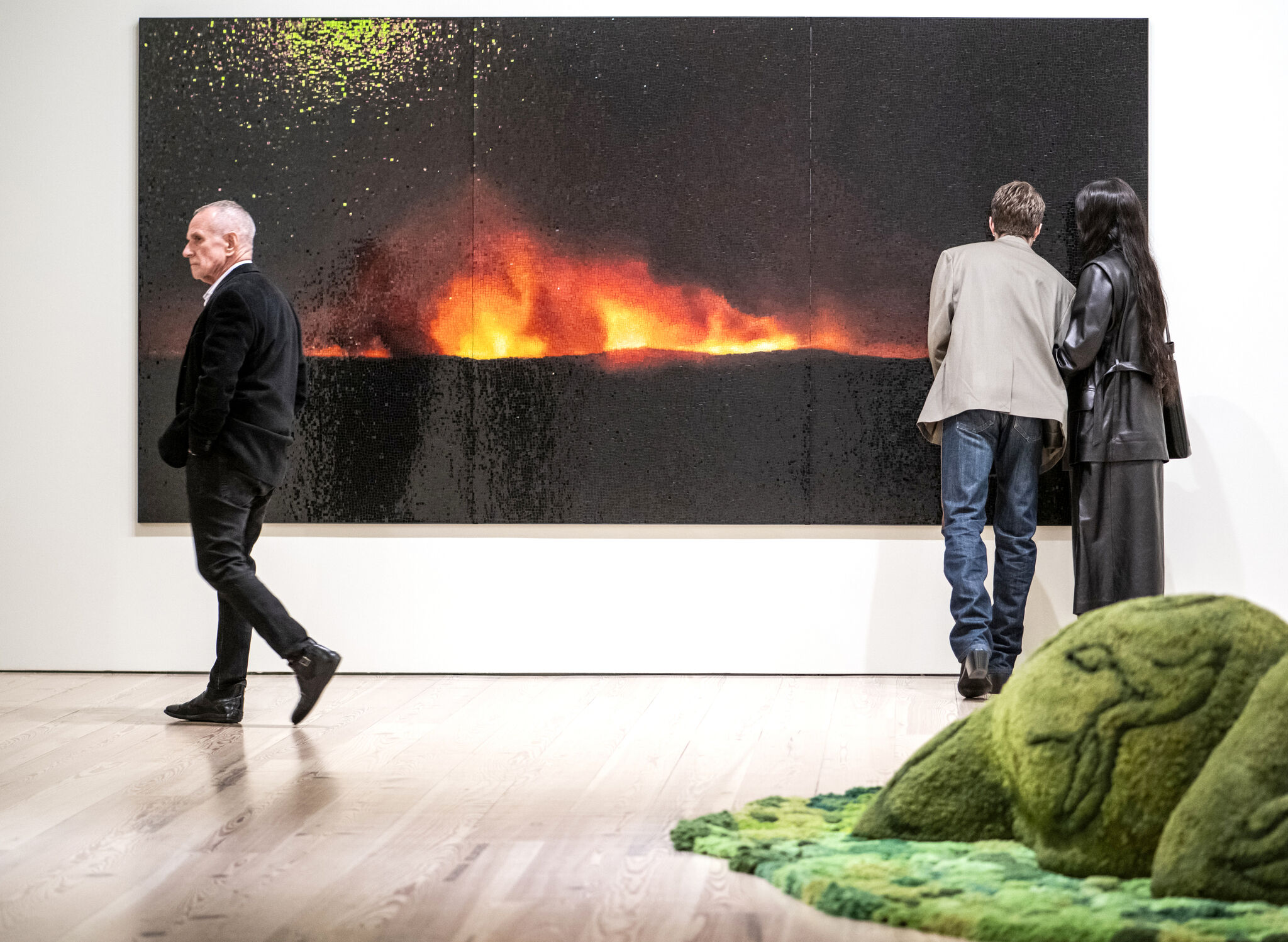
Installation view of Shifting Landscapes (Whitney Museum of American Art, New York, November 1, 2024–January 2026). Enrique Chagoya, El Regreso del Canibal Macrobiotico, 1998. Photograph by Audrey Wang
Guadalupe Maravilla: I recently changed my name to Guadalupe Maravilla, formerly Irving Morazan, to show solidarity to my undocumented father, who uses Maravilla in his last name in his fake identity. As a child, I migrated alone into the United States from El Salvador escaping the civil war, and was undocumented until I became a U.S. citizen as an adult.
The foundation of my drawings are maps from the sixteenth century manuscript Historia Tolteca Chichimeca, originally written in Nahuatl, in Mexico. What interests me in the Historia Tolteca Chichimeca manuscript was that I started marking my original migration route when I crossed the U.S.-Mexico border as a child.
The manuscripts map an area that I crossed in my two-month journey to the United States. The original manuscripts are drawn by a Catholic priest in the indigenous style of drawing of that time.
Those drawings illustrate crossing routes, rivers, rituals, their connection to plant medicine and the colonization, among many things associated with the indigenous daily life of that time. My process consists of altering actual symbols and motifs of the original maps to compose new maps digitally. The next step is to play the childhood game tripa chuca with pencil or marker on top of the newly printed maps with someone who is undocumented to create abstract immigration routes.
Tripa chuca is a number and lines game that I used to play as a child in El Salvador. The result resembles an abstract fingerprint or a line map, shapes made by two people that share similar experiences of crossing to the lands to become undocumented immigrants in the United States. The participants who play tripa chuca in the drawing are all undocumented. My father participated, a student facing deportation, and a seventy-two-year-old mariachi singer.
James Luna, The History of the Luiseño People, 1993
James Luna, The History of the Luiseño People, 1993. Video, color, sound; 27:47 min. Image courtesy Video Data Bank, www.vdb.org,
School of the Art Institute of Chicago
Angelica Arbelaez: My name is Angelica Arbelaez, and I am a part of the curatorial team for Shifting Landscapes. We are looking at a photograph by Laura Aguilar.
Narrator: The central figure here is the artist herself, who was born in California where her maternal family had lived for five generations. Her father was of Mexican descent. Here, she is flanked by a Mexican flag and a U.S. flag.
Angelica Arbelaez: She creates this very direct image. The figure is very central, but in a state of restriction and it is quite unsettling. I think the rope, the covering of her face with a Mexican flag and the covering of the lower half of her body with the American flag, it's done so in a way that makes you feel as though you are being overwhelmed. Or sort of imprisoned by these kinds of ideals that these symbols represent. And so I think Aguilar is not only critiquing how difficult it might be to have to live up to those ideals, but also questioning what the value is in having those ideals to begin with.
Narrator: Three Eagles Flying by Laura Aguilar is a work made of three gelatin silver prints side by side. Each print is 24 inches tall and 20 inches wide, making the entire triptych 24 inches tall and 60 inches wide. All three images are in black and white, and are set against a black background
In the center image, Laura Aguilar stands oriented head-on toward the viewer. She is a fat, Chicana woman. Aguilar is naked, visible from the knees to the top of the head. Her head has been wrapped in the Mexican flag, and the American flag has been wrapped around the lower half of her body, covering the hips and below. The visible parts of the body include the artist’s bare torso and arms, which have been brought in front of her and crossed at the wrists, the left arm on top of the right. A thick, wiry corded rope is wrapped twice around Aguilar’s neck, then drapes between her breasts and over her right arm. It winds around her waist and wraps around both wrists, securing them together; then circles around her upper thighs, tightly enough that the flag fabric is puckering beneath the rope. Although Aguilar is exposed, the flags and rope suggest a feeling of censorship.
In the leftmost image, an American flag hangs vertically. Two metal O-rings have been clipped through grommets in the upper right and upper left corners of a white strip of canvas running along the top of the flag. The rectangular panel containing the stars of the flag is in the upper right quadrant. Because the image is in black and white, what would typically be blue is a dark gray, almost as dark as the black background. The stripes of the flag alternate between light gray and white, as opposed to red and white. Some creasing and puckering of the fabric can be seen near the bottom of the flag.
On the far right, a Mexican flag hangs in the same way as the American flag: vertically, in black and white, by grommets in a white canvas strip running along the top of the flag. There is some rumpling and creasing throughout this flag as well. The flag is trisected by a large gray swath, then a white swath containing an image, and then another gray swath. The gray sections would be green and red if the image were in color. In the middle of the white section is a central coat of arms, featuring an eagle, standing on a pedestal. The eagle is holding a snake in its talon and beak. Out of the pedestal grows a prickly pear cactus. Two branches of laurel leaves extend below the pedestal toward the outside edges of the central image, and are tied in the middle with a bow.
Regarding the feeling of restraint and entrapment, Angelica Arbelaez, Rubio Butterfield Family Fellow and curator explained:
Angelica Arbelaez: “Aguilar had trouble being accepted by members of her cultural community. It felt as though both US American and Mexican people that she encountered in the world always had some sort of expectation of her that she never quite met. And so I think the rope, the covering of her face with a Mexican flag and the covering of the lower half of her body with the American flag, it’s done so in a way that makes you feel as though you are being overwhelmed by the ideals that these symbols represent.”
Laura Aguilar, Three Eagles Flying, 1990. Three gelatin silver prints: sheet (a), 23 3/4 × 19 7/8 in. (60.3 × 50.5 cm); sheet (b), 23 7/8 × 19 15/16 in. (60.6 × 50.6 cm); sheet (c), 23 13/16 × 19 7/8 in. (60.5 × 50.5 cm). Whitney Museum of American Art, New York; purchase with funds from the Director's Discretionary Fund 2019.393a-c. © Laura Aguilar Trust of 2016
Michael Joo, Salt Transfer Cycle, 1994
Michael Joo, Salt Transfer Cycle, 1994. Video, color, sound, 8 min. Whitney Museum of American Art, New York; gift of Eileen and Michael Cohen 2010.203. © Michael Joo
Nicole Soto Rodríguez
Nicole Soto Rodríguez, Acto #3 Southwestern High School, 2015, from Serie sobre Abandono. Video, color, sound, 11:04 min. Whitney Museum of American Art, New York; purchase with funds from the Film and Video Committee 2021.15. © Nicole Soto Rodríguez
Transcription: Christina Fernandez BEND, 1999-2000/2020
This transcription is the text in the work.
It was a hot day; my back ached from the weight of my camera pack, full of various cameras, lenses, filters and film. Invariably I chose to photograph Monte Alban with my 35mm Nikon and a convenient 35 – 70mm zoom lens with a UV filter on it. I left Los Angeles hoping to find a part of myself in the city and ruins of Oaxaca. Friends had described Oaxaca to me many times, recalling the color of the colonial buildings and churches, the magnificent ruins and women with long braids. With these fragments of information I somehow constructed an image of Oaxaca as a sort of pastoral, silent and archaic place in which I could rest and not be bothered by the traffic and hustle of Los Angeles. Riding the collectiva from the Oaxacan airport into town with other tourists as well as some locals, exhaust and heat from the outside mingled in the van, as it pulled up to the box-like, white stucco structure where I was to stay. During the noontime peak of heat the guide to tomb 104 sits within the tomb’s entrance to keep cool. He observes my camera as I enter the tomb and volunteers to light up the inside with a piece of metal which he uses to bend the light rays from the sun into the tomb. He directs the light onto a funerary urn representing Cocijo, the Zapotec god of lightning, which sits atop the opening of the tomb in a niche. The sun rays light up the tomb with surprising brightness, providing a clear view of the darkly pigmented pottery of the vessel, which illuminated, turns gray. I can clearly see Cocijo’s beautiful crocodile headdress, chest decoration in the form of tubular shells, the left hand holding a bag of copal.I photograph quickly, for bending the light into the tomb is a somewhat strenuous activity in which the guide has to maintain his balance on a rather thin stone step at the top of a series of stairs which lead into the tomb. I take one photograph and not sure that it is in focus, ask for some time to take another, which the guide obliges.-
The Zapotecs believe in supreme, all powerful Gods and in pée, wind, breathe or spirit, a vital force that all moving things possess. Therefore, natural events such as lightning and earthquakes that cause movement in the sky and the earth are given godlike representation. Archeologists believe that the funerary urns are not the representations of the Zapotec gods themselves nor are they used to keep cremated remains (the Zapotecs did not cremate their dead). It is thought that these vessels provide a place for the pée of the dead to return to during their visits to earth, when there is a need for their intervention on behalf of Zapotec society. What I thought was a representation of Cocijo is instead a representation of the dead interned in tomb 104 as Cocijo; transformed, taking on Cocijo’s attributes, into the people of the clouds where only royals retire after death. The skeleton of a woman lies in a narrow cubicle in the floor of the museum at Monte Alban. Looking down upon her, buried again in the museum as she was found; I am transfixed. The Spanish text explains, from what I can decipher, that she was advanced in age, a woman small in stature who had had several children. Her bones, dark and worn over the years of burial, are arranged with no armature to support them; her rib cage collapsed, lying flat, each rib on top of another, where her lungs would have been. Pottery that had been found with her is turned on its side, set up in a pile beside her. I think of the folds of her skin as she began to grow old, the arrangement of lines both pleasant and plentiful, long gray hair; conversations with her children, cooking, her hands waving in the air as wise cracks and wisdom came forth from her mouth. This mental picture lingers in my mind replacing what has dissipated over time. Leaving the museum, a burst of sun and heat engulf me and I think of my grandmother, in an Orange County hospital, her small body hooked up to a respirator, her breath becoming more labored and difficult as the days passed.
Narrator: BEND is an installation of a photographic and text wall mural, with five additional inkjet prints. The base of the installation is formed of a very large black and white photo, measuring 11 and a half feet high, and 19 feet wide. This photo depicts a brick wall in ruins upon a grassy mound, with a cloudy gray sky above. Against the brick backdrop, five smaller black-and-white photographs form a horizontal line across the lower half of the mural. They measure 20 by 30 inches, and consist of one portrait in the center, with two landscapes on either side. While the gray tones of the base mural appear slightly muted and hazy, the smaller prints appear sharp and bright. On either side of the row of prints are passages of white text, the tops of which begin level with the prints and extend below them.
Fernandez is an American photographer of Mexican heritage and created this work in response to her experience visiting Zapotec ruins in Oaxaca, Mexico. The text to the left begins, “It was a hot day, my back ached.” Fernandez goes on to describe her visit to the tombs, and attempts to photograph funerary urns for Cocijo, the Zapotec god of lightning. To the right of this, is a photograph of several rectangular tombs dug into the earth. Another is taken from within a tomb, looking out beyond the stone walls to a mountainous backdrop. The central image is a self portrait by Fernandez. She is pictured nude, her back turned towards us and her head of dark hair lowered. Her arms grasp at her back, where her skin is marked by earthen material running down her spine, intersected by a horizontal line across her tailbone. The dark substance is smudged across her lower back where her hands can reach it. To the right of this portrait, is an image focusing on a set of overgrown stone steps leading out of a tomb. Further right is an image of the square hole of a window. On the far right, the text continues, as the artist describes being captivated by the skeletal remains of a woman in a museum in Oaxaca. The passage concludes with Fernandez contemplating her own grandmother approaching death in a hospital in Orange County, California. The immense scale of the work, and its highly personal nature, offers a sense of both physical and emotional magnitude.
Installation view of Shifting Landscapes (Whitney Museum of American Art, New York, November 1, 2024–January 2026). Christina Fernandez, BEND, 1999-2000/2020, from the series Ruin (2-part series, Bend and Untitled Multiple Exposures), 1999-2000. Photograph by Audrey Wang
Artie Vierkant, Exposure Adjustment on a Sunset, 2009
Artie Vierkant, Exposure Adjustment on a Sunset, 2009. Video, color, silent, 39 min. Aspect Ratio: 16:9. Whitney Museum of American Art, New York; purchase with funds from the Film and Video Committee 2020.151. © Artie Vierkant
Jane Dickson: I'm Jane Dickson, and I'm going to talk about my painting, the Lincoln Tunnel on AstroTurf.
I was in Home Depot to get some bolts and nuts or something, and I saw a roll of AstroTurf hanging from the ceiling, and it was like 8 feet wide and infinitely long, green and I was like, oh my God, that's so beautiful. I was like, how much is this?
This group of paintings of bridges and tunnels was inspired by the aftermath of 9/11. I lived in Tribeca near the World Trade Towers, and after the fall of the towers, everyone was worried about where we would be attacked next. So whenever I would get in my car to leave the Island of Manhattan, I would find myself exploring the equation of which would be a worse way to go? In the tunnel or from the bridge if they got blown up. So the bridges and tunnels, which are marvels of engineering, also became zones of anxiety, and I explored both of those in this series. So it's the mundane, you're in traffic, but in fact everybody's on edge.
I seem to manage pretty much, in all of my work, having an underlying sense of dread that seeps in there. I've been, in all my work, interested in the fact that what I think about the subtext somehow is able to be conveyed to the audience and people get it. They always get it.
Narrator: Heading in – Lincoln Tunnel 3 by Jane Dickson is a painting with a highly textured surface, measuring 33 inches tall, 46 inches wide, and nearly three inches deep.
At first glance, we see an almost pointillist painting of a nighttime road scene with a line of vehicles, the rear lights of which are glowing red inside a tunnel. The vehicles are traveling in the left-hand lane. A large dark car with a spare wheel on the back is visible, ahead of which is a tall white truck. They both cast faint shadows to the right. Vehicles painted farther along the tunnel are only visible by the dotted lines of their rear lights. Faint lines mark the divide between the two lanes of the tunnel. The tunnel is veering toward the right, and the characteristic lights of the Lincoln Tunnel glow with a fluorescent brightness along the walls, about three-quarters of the way up.
Dickson painted this image with oil paints on AstroTurf, which is short-pile synthetic fibers made to look like grass. The smoothness of the oil paints allows for the shadows and lights of the tunnel to be buffed out and smooth, but on top of the scratchy AstroTurf, the entire image becomes fuzzy and staticy. The texture of the AstroTurf contributes to a dream-like, hazy quality to the work. The artist often uses unusual materials as the canvas for her paintings, such as sandpaper, vinyl, and carpet. These surfaces allow Dickson to explore the textural possibilities of each material in portraying urban landscapes. There is an almost eerie feeling to this painting – as if it is occurring in a different realm, and the viewer could be sucked up into it, too. This painting is a part of a group of paintings Dickson created on bridges and tunnels, inspired by the aftermath of 9/11. Dickson describes the feeling of dread in these paintings, “the bridges and tunnels, which are marvels of engineering, also became zones of anxiety, and I explored both of those in this series. So it's the mundane, you're in traffic, but in fact everybody's on edge.”
Jane Dickson, Heading in – Lincoln Tunnel 3, 2003. Oil on Astroturf, 33 × 46 × 2 3/8in. (83.8 × 116.8 × 6 cm). Whitney Museum of American Art, New York; gift of Eve Ahearn and Joseph Ahearn 2017.275. © Jane Dickson
Salman Toor: My name is Salman Toor and I'm from Pakistan. I am a figurative painter.
I like to make paintings that are sort of inspired by art history, a little bit of autobiography. And I consider these to be paintings of fantasies about me and my friends and my daily life. It straddles the themes of queer culture and immigration, and often, I guess the way that I would describe my painting is that the protagonists of the painting kind of move between being brown men in the U.S. and also queer boys.
The paintings also move between being fantasies of free space and, kind of more constricted innner spaces that people inhabit when maybe they're crossing national borders and they’re forced to maybe reckon with a reduction of what their identity might mean, to a gatekeeper who might have to decide whether these individuals should be allowed to cross or not.
And in the immigration pictures, it is a reflected idea of self, like a self-portrait reflected through someone else's eyes. Maybe trying to see myself and people from my own community who might be, have an encounter at immigration. And I think that that encounter doesn't really end when it happens.
Narrator: Man with Face Creams and Phone Plug is an oil painting on canvas. It is a portrait measuring approximately 43 inches in height and 36 inches in width. The brushstrokes of the painting are visible in short vertical iterations. The painting is composed from the perspective of an immigration officer and shows a South Asian man standing behind a table, where a series of belongings are scattered across a surface in front of him.
The man has brown skin, wavy dark hair, and a scraggly beard and mustache. Stubble extends from his jawline to his temples. His face is turned slightly to the side, with a vacant expression. His eyes are cast downwards, as if avoiding eye contact. He is wearing a loose-fitting light gray, almost white button up shirt, with creases and signs of wear detailed in wine red. The shirt is unbuttoned slightly, exposing chest hair and a small triangle of a bright white undershirt with wrinkles painted in green. Draped over his shoulders is a yellow shawl with black stripes. He is wearing brown pants, which are a slightly warmer shade than his skin. The wrinkles and movement of these pants are painted in bright yellow. His figure is tall and slim, and his head nears the top of the canvas. The background is made up of gray brushstrokes. The shades of gray lighten gradually towards the lower half of the canvas. They also appear brighter around the man’s head, creating a faint spotlight effect.
Below, the table stretches horizontally across the entirety of the bottom of the canvas, cutting the man’s figure off at mid-thigh. On the right of the tabletop, a phone plug sits with its cord snaking across the tabletop to the left, where other items are strewn across the surface. Among them is a pink pouch holding a pair of scissors and several small bottles, which from the work’s title we can presume to hold face creams. The man keeps his right arm by his side, but the fingertips of his left hand rest gently on the table. His ring finger on his left hand is painted bright green.
Salman Toor is a Pakistani-born, New York-based artist, whose work often focuses on portraying queer South Asian men. This work is part of a series on immigration, and the unique scrutiny Brown men face by immigration and customs officials.
Salman Toor, Man with Face Creams and Phone Plug, 2019. Oil on canvas, 43 × 35 3/4 in. (109.2 × 90.8 cm). Whitney Museum of American Art, New York; purchase with funds from the Painting and Sculpture Committee 2020.121. © Salman Toor
Orian Barki and Meriem Bennani, 2 Lizards, 2020
Orian Barki and Meriem Bennani, 2 Lizards, 2020. Video, color, sound, 22:43 min. Whitney Museum of American Art, New York; purchase with funds from the Chemla Family 2021.91. © Meriem Bennani and Orian Barki
Narrator: Aaron Gilbert’s Empire state of mind/Flaco 730 Broadway is an oil on linen painting. It features two centralized figures in an embrace, with downcast eyes and somber expressions, situated in a city scene. Light and dark warm brown hues make up the two figures' skin. The creases of the skin around their eyes and mouths are accentuated, further emphasizing the emotional quality of the scene. The figure closest to us is seated on a red walker, with a white plastic bag hanging from the left side handle. She wears simple blue pants and a rosy pink hoodie, zipped up and with the hood over her head, only revealing her face.
The second figure stands closely behind her, off to the right, embracing her head and shoulders from above, his left arm reaching around her left shoulder and his right arm wrapping around the front of her torso. Darker browns cut deep shadows into his cheekbones. The man’s hair is cut in a short crop and his simple blue tank top exposes his pale brown arms. Lighter cream colors highlight the light hitting the skin of both figures, and deeper browns reflect the shadows their limbs cast on each other. The woman’s right hand reaches up to grasp his right bicep, just below a faded black tattoo that reads “Rafael.” Her left hand rests on her thigh, holding what appears to be a white tissue stained with red.
The background of the painting is a muted city sidewalk, punctuated by pops of bright colors.
Immediately behind them is a dark doorway, depicted in black and blue gray paint, that is covered in faded white freehand graffiti. Illegible elongated typeface in mint green and curly bright pink cursive stretches across the muraled wall. To the right of the figures is a brightly lit storefront, displaying a circular “New York Lottery” logo and ads for Hennessy in the windows. The door of the store is propped open, showing a red sign with the words “WARNING/ADVERTENCIA” written boldly in white. Plastic food containers, water bottles and other garbage litter the sidewalk in front of the storefront in the lower right hand corner of the painting. By situating these figures’ heavy embrace within a common urban landscape, Gilbert places a scene filled with emotion into the context of everyday city life.
Installation view of Shifting Landscapes (Whitney Museum of American Art, New York, November 1, 2024–January 2026). Aaron Gilbert, Empire state of mind/Flaco 730 Broadway, 2020. Photograph by Audrey Wang
Tabboo!: Hello everybody. My name's Tabboo, T-A-B-B-O-O, one calorie Tabboo. That's two B's, two O's. Don't forget to punctuate it.
Let me take you back to 1998. I was painting a lot, I paint from my studio, I look out the window I see the view. The view from my window, from my bedroom, blocks the Empire State building and blocks the Chrysler building. The way to get the whole view is to climb to the roof. So I brought my canvas up to the roof and I paint flat because I paint very watery. I paint with acrylic because as you see, I talk fast, I think fast and I paint fast. And by the time my thought's over, the paint's dry, onto the next.
And here we have a beautiful painting with all the silvery grays. And you could see where sometimes it would dry a bit and then I'd pour more water. You can see almost a stain across the top. So if you really block off the top, it's just a color field painting of light rich sky blues and dirty grays and steel grays and touches of cloud.
But if you step back, ah, those are the buildings and the lights of the buildings. But then sometimes you focus and you go, "Oh, thats the ConEd building. I can see it's a 10:10.” Which you think is what, whenever they show clocks, they always set them at 10:10 because that sort of looks pretty. So there you go, right there. I like my paintings to look pretty, make you think and then go, "Wow, who did that?" It's incredible. It's abstract, yet it's photorealistic. How the heck, who would do that?
Installation view of Shifting Landscapes (Whitney Museum of American Art, New York, November 1, 2024–January 2026). Tabboo!, Looking Uptown from My Roof, 1998. Photograph by Audrey Wang
Narrator: Big Heat by Martin Wong is an acrylic on linen painting measuring about five feet tall by four feet wide.
In Big Heat, a red brick tenement building from the Lower East Side is the backdrop for two firemen kissing in the foreground. The bottom of the tenement is engulfed in billows of scratchy red, brown, and gray paint: it looks like the building is rising from clouds of smoke. In front of the smoke, the two firemen wear uniforms of dark gray with silver hardware. The two men are nondescript, save for their warmly lit skin and their dark hair. The tone of the men kissing amplifies the drama of the smoky building scene behind them; the tender expression of romance and passion in their embrace contrasts with the monumentality of the looming building.
The facade of the tenement building behind the figures is stickered with flaking panels of pastel paint - perhaps graffiti, or painted-on ads. Martin Wong rendered the bricks of the tenement with thick globs of acrylic paint, which add to the building’s grounded and weighty feeling.
Wong was an avid supporter of graffiti art, which is perhaps underscored by a brown brick-painted frame around the edge of the canvas that has sprays of fluorescent green on it.The artist made this painting look as if the firefighters and building were actually painted on quasi-realistic brick, like the scene itself was created on the face of a building. The “realism” of the painting is queered, not only by the scene of desire in the foreground, but also by this trick of the eye.
Andrew Castrucci, a friend of the artist, spoke about Big Heat.
Andrew Castrucci: “The tenements were beautiful to Martin, no matter how empty it was or, or so forth. It was like a Roman ruin or a Greek ruin or an Egyptian ruin, the pyramids… Artists are constantly redefining what beauty is. So I think this is just another perspective of redefining beauty—the kissing firemen. It certainly celebrates gay life, but it's also, I think, more abstract than that. It's just about human contacts, somehow. I mean it's part of the nature of the city is this beautiful chaos, somehow even though it’s very calm and still.”
Martin Wong, Big Heat, 1986. Acrylic on linen, 60 1/8 × 48 1/8 in. (152.7 × 122.2 cm). Whitney Museum of American Art, New York; purchase with funds from the Painting and Sculpture Committee 99.89. Courtesy of the Martin Wong Foundation and P·P·O·W, New York
Narrator: Look closely at these three boys. How would you describe the looks on their faces? There’s no right answer here – it’s not like the artist set out to make them look happy, or sad, or anything so obvious. Rigoberto Torres created sculptures like this one by making plaster casts of his neighbors in The Bronx. That means that the expressions on these boys’ faces reflect how they actually looked that day. Torres celebrated the ordinary people around him by making them feel as specific and alive as possible.
Another interesting thing about this sculpture is its size. Individually, none of these boys are very big. But stack them up on each other’s shoulders, and the sculpture is over 9 feet tall! Together, the boys become monumental.
Narrator: Julio, Jose and Junito is a life size sculpture of three children by Puerto Rican artist Rigoberto Torres.
This sculpture depicts a column of three young Brown boys stacked upon each other’s shoulders, all bare chested and wearing shorts. Visually, the figures all appear realistic, but the painted texture of their skin lends a slightly uncanny appearance to them. At the bottom of the tower is a light-skinned boy with short dark hair. He wears pale green shorts with black stripes and stands with his legs straight. Torres has positioned the boy’s bare feet on a small dark green base, maybe suggesting grass. His arms are wrapped around the calves of the boy above. He has a small smile upon his face and appears older than the other two boys, as he is both taller and broader than those above him.
On his shoulders, in the middle of the tower, is a slightly smaller boy who is dark skinned and wearing gray and white striped shorts with a black trim and graphic designs overlayed. His expression is fixed towards the ground, lips pouting slightly, and his arms are crossed around the legs of the third boy. The smallest child, also dark skinned, sits atop the sculpture. His shorts are a colorful mix of red, aqua, yellow, and black. He stares straight ahead with his arms folded across his bare chest.
In the 1980s, Torres became well known for casts of his neighbors in the Bronx, where he is based. The artist had previously worked in a factory casting religious statues. He often collaborated with artist John Ahearn to use a plaster casting technique to create life casts of friends, family, and community members, creating the style he is most known for. Though the height of the sculpture offers it a monumental impression, the towering arrangement of the boys maintains a playful nature.
Installation view of Shifting Landscapes (Whitney Museum of American Art, New York, November 1, 2024–January 2026). Rigoberto Torres, Julio, José, and Junito, 1991/1995. Photograph by Audrey Wang
Miguel Luciano: My name is Miguel Luciano.
The People's Pulpit (homage to the Young Lords' takeover of The People's Church) is a sound sculpture that was built from an actual church pulpit that dates back to the 1970s. And it came from a church that's the First Spanish Methodist Church in East Harlem, that's also known to us as the People's Church. And it's known as the People's Church because of a famous history of the Young Lords.
The Young Lords were young, radical revolutionary Puerto Rican activists that were fighting for social justice, that were fighting for the liberation of Puerto Rico. In 1969 and 1970 they took over this church, the First Spanish Methodist Church, in an effort to have a space for community organizing and cultural programs.
That's where they had free breakfast programs and clothing drives and did health screenings, and also had cultural activities. It's an amazing history, it's kind of a legendary history in our community. And so I wanted to commemorate that history through this sculpture.
There's a speaker box that was basically built into the body of the pulpit. And through that we hear a soundtrack of a very young Pedro Pietri, who was a young poet in East Harlem at the time. He recites his famous poem, Puerto Rican Obituary, for the first time it's recorded, in 1970 in the church when the Young Lords took it over.
Pietri became one of the greatest poets of his time and was like a central pillar in the Nuyorican arts movement. And the idea was to then amplify the voices of that history through an object that is of that history, which is the pulpit itself.
Narrator: The People's Pulpit (homage to the Young Lords' takeover of The People's Church) by Miguel Luciano is a sound sculpture created from a dark wood pulpit, standing 47 inches tall. The pulpit is repurposed from the First Spanish Methodist Church in East Harlem, also known as “The People’s Church”. The pulpit is made primarily out of wood, with a twisted rope molding along the edges of its frame. Almost all of the wood is a rich mahogany color, with the exception of a wooden panel at the front of the pulpit, where the wood appears to only have a clear veneer over it. The pulpit’s traditional appearance evokes a sense of history and authority, further emphasized by its solid, rectangular form.
A black speaker is set into the front light wood panel, contrasting with the traditional woodwork. From the speaker, Nuyorican poet Pedro Pietri’s recitation of his famous poem Puerto Rican Obituary fills the space. The recording was taken during The Young Lords' 1970 takeover of the church, where the group reclaimed the space as a hub for activism and community support.” During the takeover, the Young Lords, a revolutionary group of Puerto Rican activists that originated in Chicago, but soon spread to cities like New York, occupied the First Spanish Methodist Church in East Harlem renaming it "The People’s Church." During the occupation, they provided essential services like free meals and health care, drawing influence from movements like the Black Panthers, and advocating for self-determination, health equity, and cultural pride, leaving a lasting impact on Puerto Rican and Latino activism in the U.S..
Pietri’s poem reflects the struggles and hardships faced by Puerto Rican communities in the United States, focusing on themes of systemic injustice and resilience. The artist’s choice to incorporate this specific poem through a pulpit—a platform traditionally used to deliver powerful speeches—amplifies the significance of the work, making it a site of historical remembrance and contemporary reflection. Luciano is a Puerto Rican artist based in New York, and spoke about his desire to create this work:
Miguel Luciano: “The Young Lords [...] had free breakfast programs and clothing drives and did health screenings, and also had cultural activities. It's an amazing history, it's kind of a legendary history in our community. And so I wanted to commemorate that history through this sculpture.”
Installation view of Shifting Landscapes (Whitney Museum of American Art, New York, November 1, 2024–January 2026). Miguel Luciano, The People's Pulpit (homage to the Young Lords' takeover of The People's Church), 2022. Photograph by Audrey Wang
Diane Burns, Alphabet City Serenade, 1988
Video still from "Poetry Spots: Diane Burns reads 'Alphabet City Serenade'"
Gordon Matta-Clark, Tree Dance, 1971
Installation view of Shifting Landscapes (Whitney Museum of American Art, New York, November 1, 2024–January 2026). Gordon Matta-Clark, Tree Dance, 1971. Photograph by Audrey Wang
Maya Lin: Maya Lin, artist, live in New York City. Baseline is part of a three-part idea that came out of a installation in Madison Square Park called Ghost Forest, which involved taking fifty Atlantic cedars that had been killed by saltwater inundation as a victim of climate change, and bringing those trees to Madison Square Park.
Narrator: Lin made a series of four sculptural works from the trees after they’d been removed from the park. This is one of those four.
Maya Lin: I reserved exactly 5 foot, 3 inches, my height, of each of the fifty trees, and then segmented them into four equal parts. So you've now got a series of four that each one always taken from the exact same height on the base of each tree.
Narrator: The title, Ghost Forest, refers to a phenomenon that comes from climate change, involving the destruction of large stands of trees.
Maya Lin: This is sort of a stark reminder of what is going on around the world. And I think knowing that at the time we were literally de-installing the work, we actually couldn't even move the work, because not only had they been victims of climate change, there was a lantern moth that possibly could have infested them. So they couldn't even travel to anywhere we were going to travel the show only where other Atlantic cedars are, these used to be what was all over the eastern seaboard.
Narrator: Lin intends such warnings to inspire us to fight for a healthy planet while we still can. She often uses her work as an opportunity to promote nature-based solutions to climate change.
Maya Lin: So whether that's reforming our agriculture, reforming our ranching, restoring or rewilding and protecting more of our lands, as well as creating sustainable forestry and fisheries, these could offset our carbon footprint by about fifty to ninety percent.
Narrator: Maya Lin built a kind of game into this work of art. She allows the curators to stand these fifty cedar logs up in any arrangement they want. But, no three of them are supposed to form a straight line. Here’s what she told us about it:
Maya Lin: It's impossible. It's like, I've tried it so many times, but you try and you try and you place them as you will.
Narrator: If you walk around and look closely, maybe you can find a place where there are three in a row. But the work is meant to seem pretty random—like a forest, or a constellation of stars. And Lin does want us to be reminded of nature when we look at it. These logs are sections of trees that were killed by saltwater flooding due to climate change. In an earlier temporary work, Lin took the entire tree trunks and planted them in Madison Square Park, about a mile away from the Whitney. Mixed in with the park’s real trees, they formed a kind of Ghost Forest. Lin often uses her art to call attention to the environment, because she believes that we can stop climate change if we act now.
Maya Lin, Ghost Forest Baseline Y, 2022. Fifty cedar logs finished with tung oil, dimensions variable. Whitney Museum of American Art, New York; gift of the artist in honor of Adam D. Weinberg 2024.336a-xx. ©️ Maya Lin Studio, courtesy Pace Gallery
Rujeko Hockley: Joe Minter is an artist based in Birmingham, Alabama, where for the last thirty-plus years he’s been working on his life’s work, an installation on his own property called African Village. African Village is assembled of various found materials including, primarily metal, but also street signs, dolls, all sorts of bric-a-brac that he’s found around his neighborhood, all of which is kind of building, in his mind, a large history of the African American experience, particularly in the American South.
Narrator: Rujeko Hockley was one of the co-curators of the 2019 Whitney Biennial.
Rujeko Hockley: The pieces on view in the Biennial are not a part of African Village, they were made separately from that work. However, like African Village they carry his interest in materials, in metal specifically, in creating forms through found objects as well as alluding specifically to incidents in American history relating to African Americans. In the work 63 Foot Soldiers, he’s thinking specifically about the Civil Rights Movement. The other three works that you see are not quite as directly related to events but also carry some of those connotations.
Installation view of Shifting Landscapes (Whitney Museum of American Art, New York, November 1, 2024–January 2026). From back to front: Martha Jane Pettway, Sweep, 1980; Lonnie Holley, Untitled, 1995; Joe Minter, The First Fireplace, 1998. Photograph by Audrey Wang
Melvonna Ballenger, Rain (Nyesha), 1978
Melvonna Ballenger, Rain (Nyesha), 1978. 8mm film, black-and-white, sound, 15.54 min., transferred to digital video. Whitney Museum of American Art, New York; purchase with funds from the Film and Video Committee 2023.18. © Estate of Melvonna Ballenger, courtesy UCLA Film & Television Archive
Ulysses Jenkins, Without Your Interpretation, 1983
Installation view of Shifting Landscapes (Whitney Museum of American Art, New York, November 1, 2024–January 2026). Ulysses Jenkins, Without Your Interpretation, 1983. Photograph by Audrey Wang
Firelei Báez: I'm Firelei Báez and I'm a visual artist who makes all kinds of things from paintings to sculptures, to drawings, to prints, you name it. When I think of this painting, I tell people: get really, really close. "What is the first thing you can see when you get to the bare canvas?" And the one thing you might notice is these little putti heads blowing gusts of wind.
Narrator: In Renaissance paintings, Putti were baby angel figures, similar to Cupid.
Firelei Báez: And if you look to the left, there's this old man blowing hot air. And if you look to the bottom right, there's a baby face blowing air. And it was a depiction by the Dutch of the nautical winds. So it was a way to teach you how to navigate potentially and how to, in essence, contain the world. These winds that are from this diagram are creating this figure in the middle. And there is a flurry of elements and flowers and symbols that make up her body. And it is meant to refer to this figure of the Ciguapa, this Caribbean trickster that has informed so much of my work. Ciguapa is this multivalent—it's a word that can either mean angry or beautiful. Guapa for Puerto Ricans is beautiful, and guapa for Dominicans is angry. I'll take both because this is a fierce creature that is through that projected desire, something that can become either a thing for the viewer that is hurtful or for another viewer, the thing that frees them.
Firelei Báez, Untitled (Tabula Anemographica seu Pyxis Navtic), 2021. Acrylic and oil on archival printed canvas, 89 7/8 × 111 7/8 × 1 1/2 in. (228.3 × 284.2 × 3.8 cm). Whitney Museum of American Art, New York; purchase with funds from Chrissy Taylor and Lee Broughton 2022.104. © Firelei Báez
Alison Saar: I'm Alison Saar. I'm an artist based in Los Angeles, California.
Narrator: This work is part of a series of sculptures evoking winter, spring, summer, and, of course, fall:
Alison Saar: Now that I live in California we don't have many seasons, and I was interested in talking about sort of these phases in a woman's life as seasons.
You know, we're often depicted after fifty as sort of decaying fruit. And so she has pomegranates that have, I say, blown up when they get overripe, they kind of just explode and split open, and she's trying to gather up and save all of these pomegranates. And of course the pomegranate is, you know, thought to be the original apple in the Bible, and its symbolism as fertility. And the woman's ovaries are kind of across the board in many cultures. And so she is desperately trying to cling on to her past.
Alison Saar, Fall, 2011. Bronze, 134 × 48 × 42 in. (340.4 × 121.9 × 106.7 cm). Whitney Museum of American Art, New York; gift of Robert E. Hayden and Richard Silver 2024.335. © Alison Saar. Courtesy of L.A. Louver, Venice, CA
Narrator: This work by Theo Triantafyllidis is a live simulation—meaning that it uses computer programming to imitate a landscape that constantly grows and changes. It shows a terrarium, an enclosed environment full of plants and insects. You’ll spot all kinds of bugs—and you’ll hear them too! There are butterflies, spiders, bees, ants, and lots of others. They’re all pretty busy! The pollinators are hard at work helping the flowers. And did you know that ants are amazing builders? They’re super strong and can carry up to fifty times their own weight. That would be like a person carrying an elephant! Ants are also really cooperative. They communicate by leaving trails of chemicals that tell each other about things like where to find food.
Have you noticed that we’re not the only ones peering into the terrarium? Sometimes you’ll see a purple figure, who seems to be looking in from the other side. Is it a person distorted by the glass? An alien from another planet, curious about bug life on earth? The artist leaves it a mystery!
Narrator: The live software simulation BugSim (Pheromone Spa) creates an ever-changing digital, surreal environment that depicts the inside of a rectangular terrarium. This work is shown here across six screens arranged in two long horizontal rows, one above the other. The artist, Theo Triantafyllidis, created a soundtrack that is a whirring, atmospheric score with bubbling and swooshing noises that track the environment’s inhabitants, humidity, and condensation. In the scene, a colony of ants is painstakingly building a home out of clusters of bumpy, rock-like arches in a warm purple color, resembling a blend of coral and stacked stones. The constantly crumbling formations create a sense of flow and movement, as the ants rebuild them. The textures are detailed, with each lump and surface clearly defined, adding to the visual richness of the digital landscape. The software uses so-called ant colony optimization algorithms to make the virtual ants find their paths. These algorithms mimic the trails of pheromones — the chemicals acting like hormones that ants secrete — to guide the insects’ movements.
Throughout the simulation, a range of green plants and vivid purple flowers grow from between the purple clusters. The plants sway gently, simulating the movements of actual vegetation, morphing slowly. Bugs creep around the terrarium: a mantis, and a black spider, descending on a fine web thread, are praying on other insects, while yellow butterflies and robotic bees flit around the plants. All together, they create a micro-ecosystem.
Above and behind this scene, the background is softly illuminated with white, horizontal light bars, emphasizing the artificial nature of the terrarium setting. Soft, wispy mist drifts near the base of the terrarium.
As an invisible camera traverses the scene, the view transitions between different angles, slowly panning across the scene to reveal more details, such as the textures of the rocks, the delicate veins of the flowers, and the intricate movements of the insects. When the view zooms in more closely, the subtle head of a monstrous creature appears on the edge of visibility in the background, as if something is hovering just outside of the digital terrarium watching the scene unfold. This figure is a pale purple, with a skull-like head and yellow reptilian eyes.
Theo Triantafyllidis, BugSim (Pheromone Spa), 2023. Live Simulation, color, sound, infinite duration, dimensions variable. Whitney Museum of American Art, New York; purchase with funds from the Digital Art Committee 2023.131. © BugSim(Pheromone Spa), 2023, Theo Triantafyllidis
0:00
0:00