Whitney Biennial 2024
2024
-
100
People Who Stutter Create (English and Spanish)
Audio, Verbal description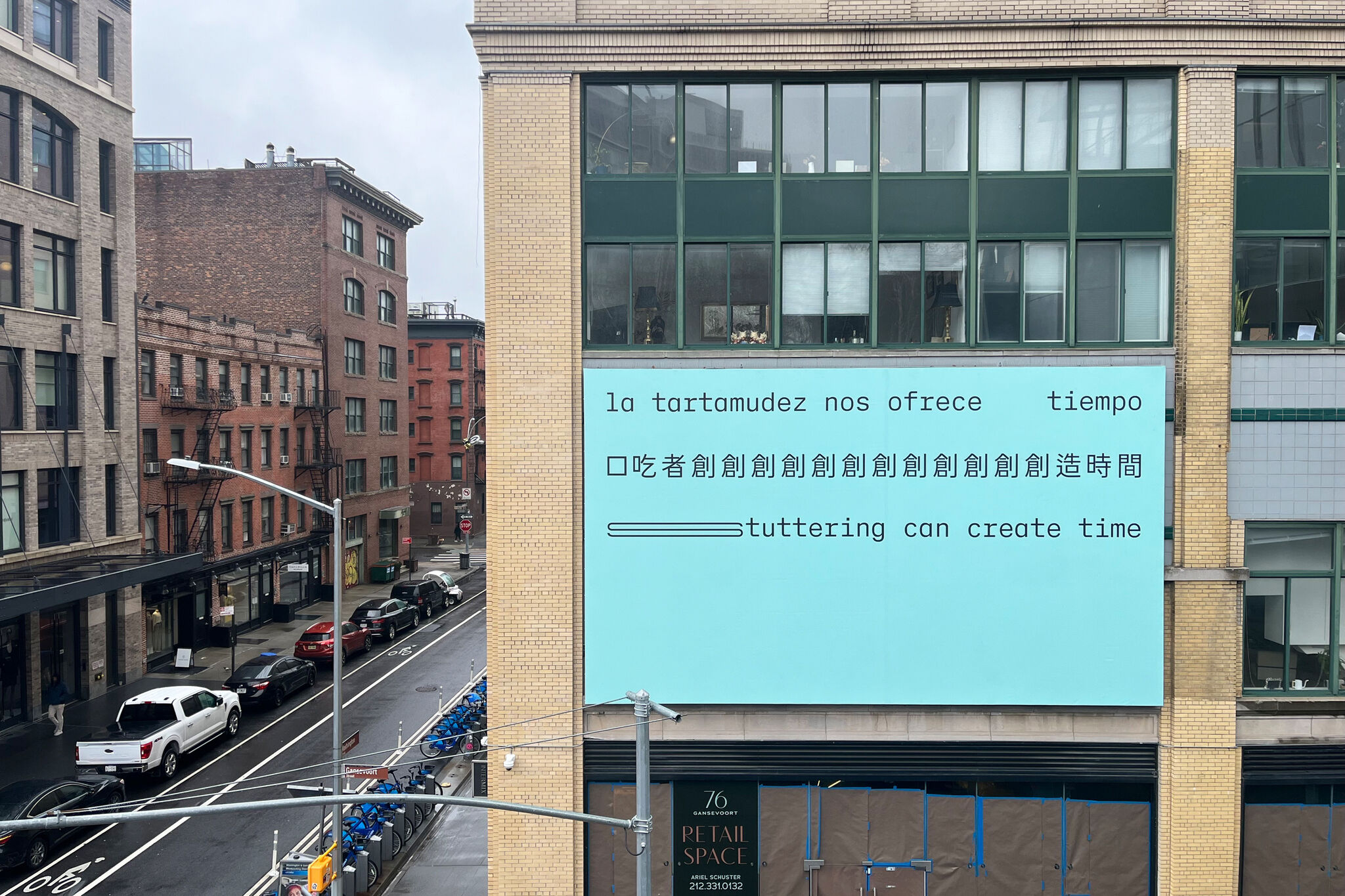
-
000
Verbal Description: People Who Stutter Create (Mandarin)
Verbal description
-
101
Ser Serpas
Audio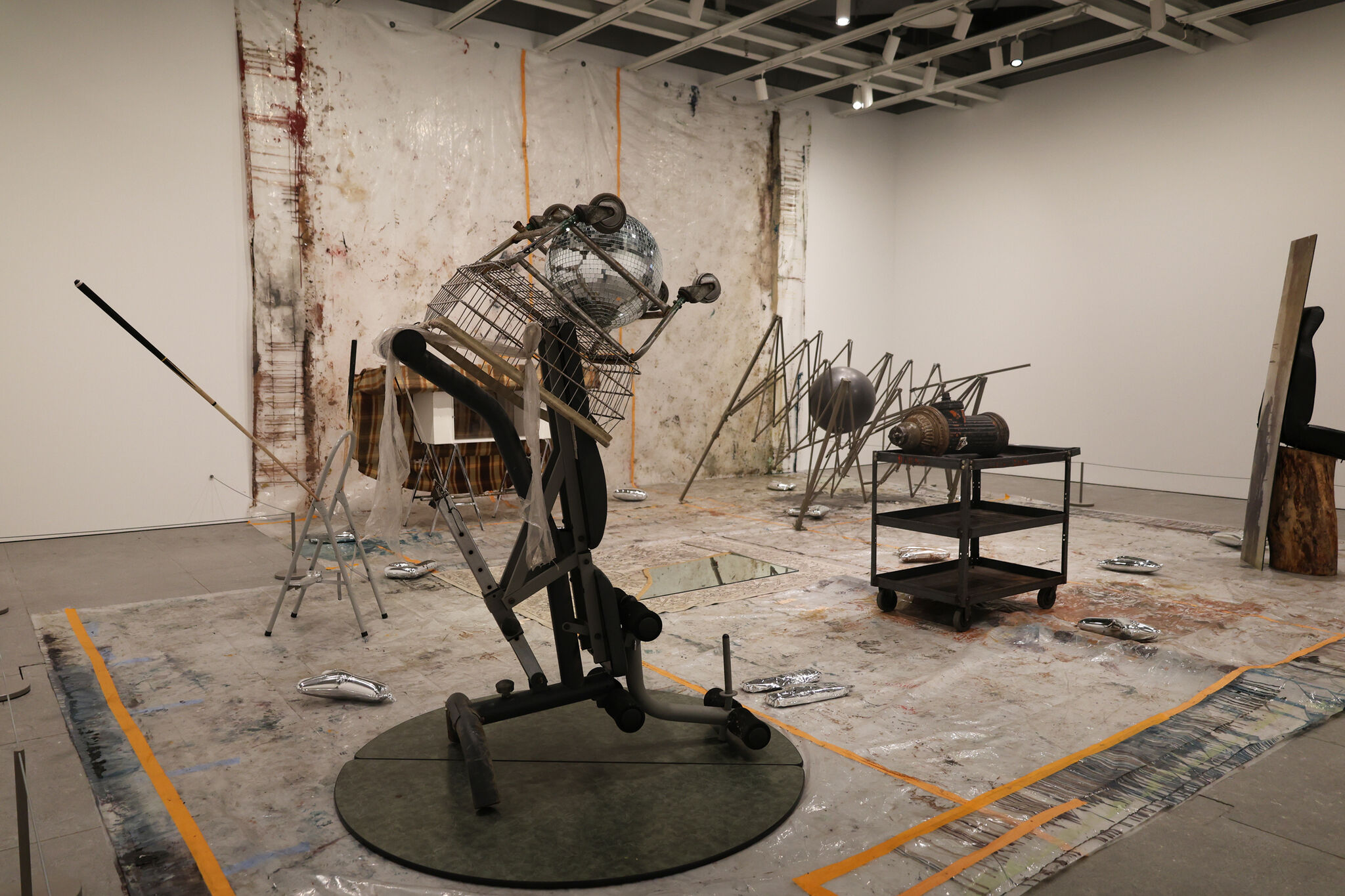
-
102
Holland Andrews, Air I Breathe: Radio, 2024
Sound description
-
103
Holland Andrews, Hyperacuseus (Version One, Sleeping Bag), 2024
Audio, Sound description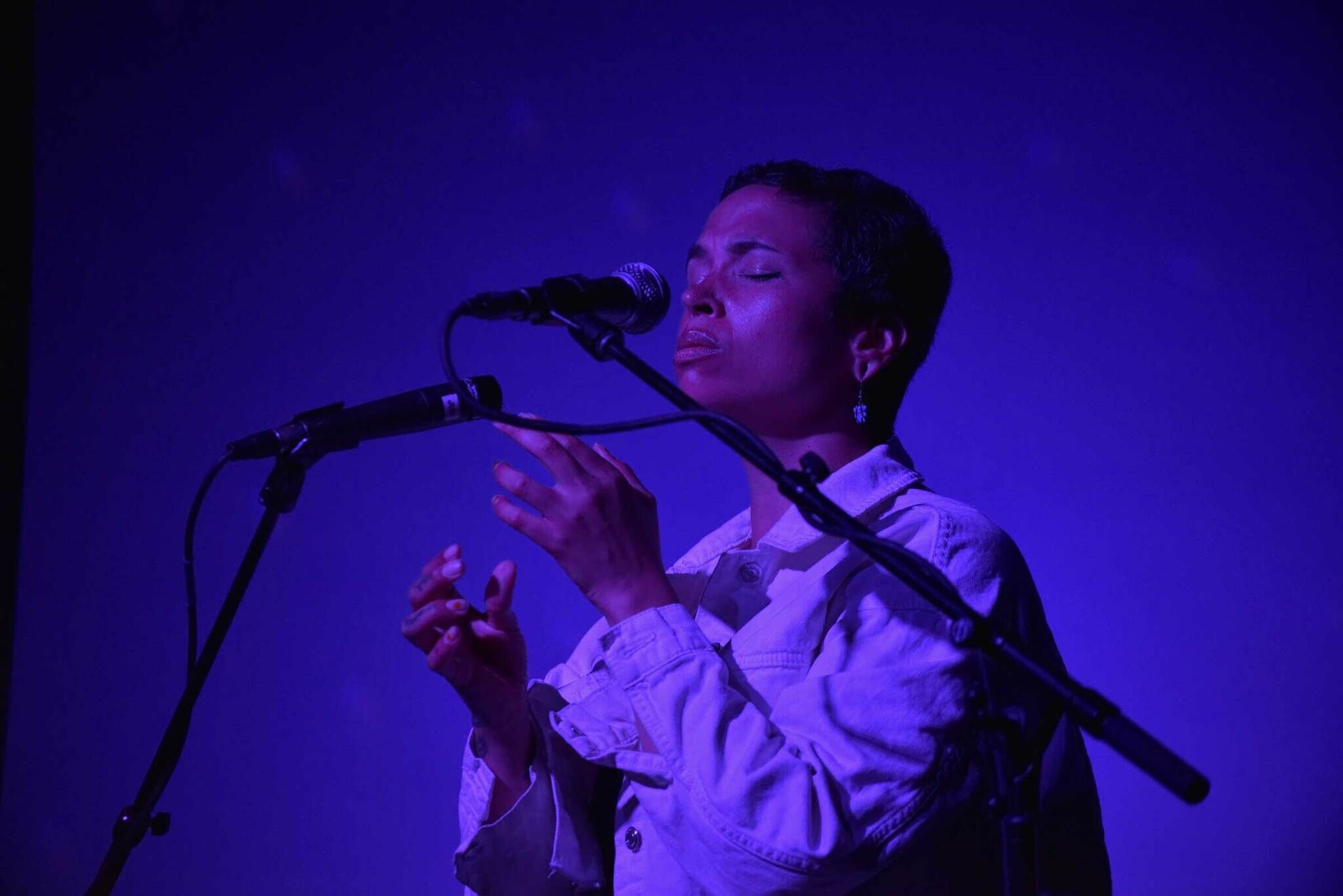
-
300
Pippa Garner
Audio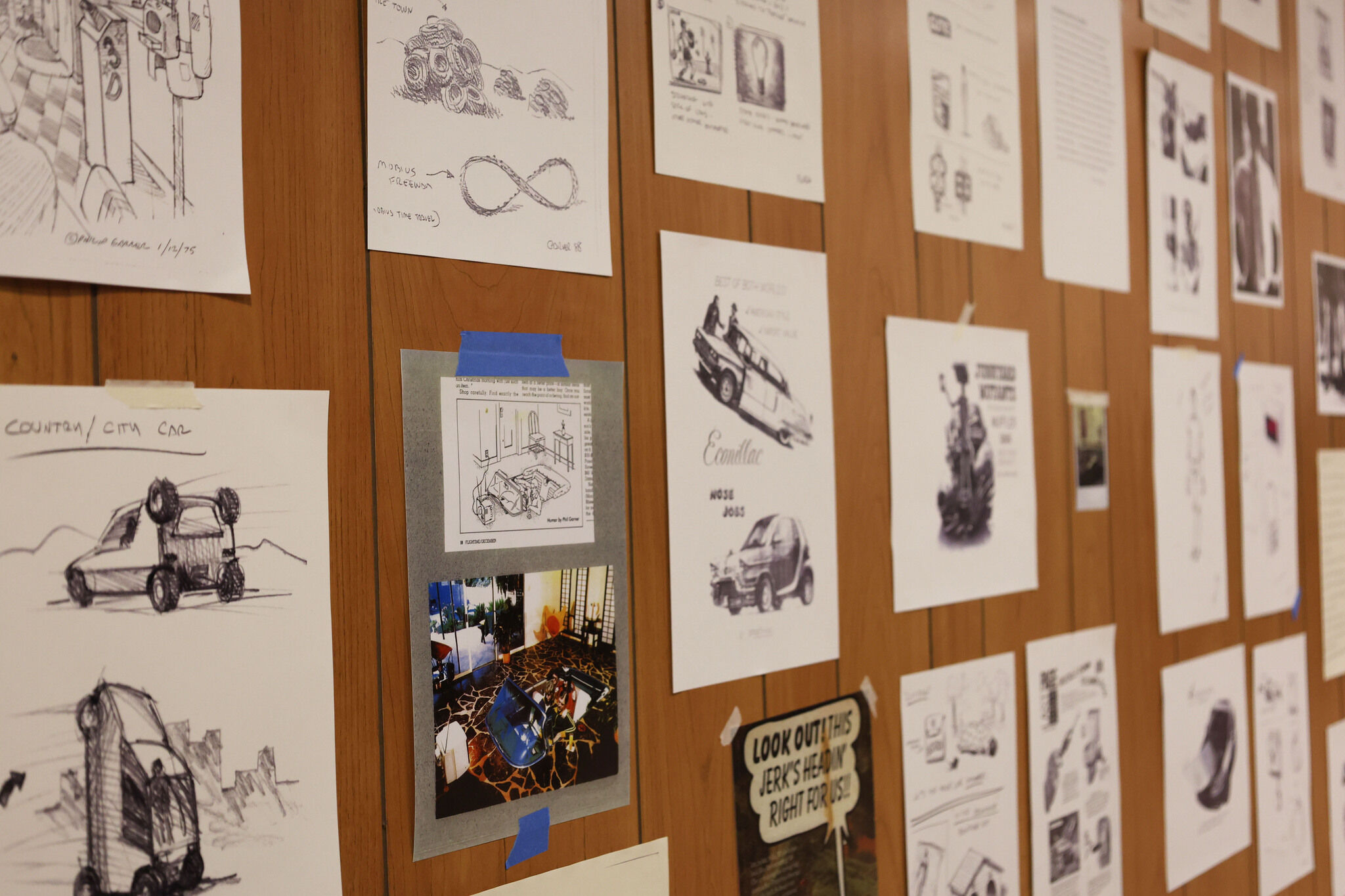
-
301
Holland Andrews, Air I Breathe: Radio, 2024
Sound description
-
500
Introduction
Audio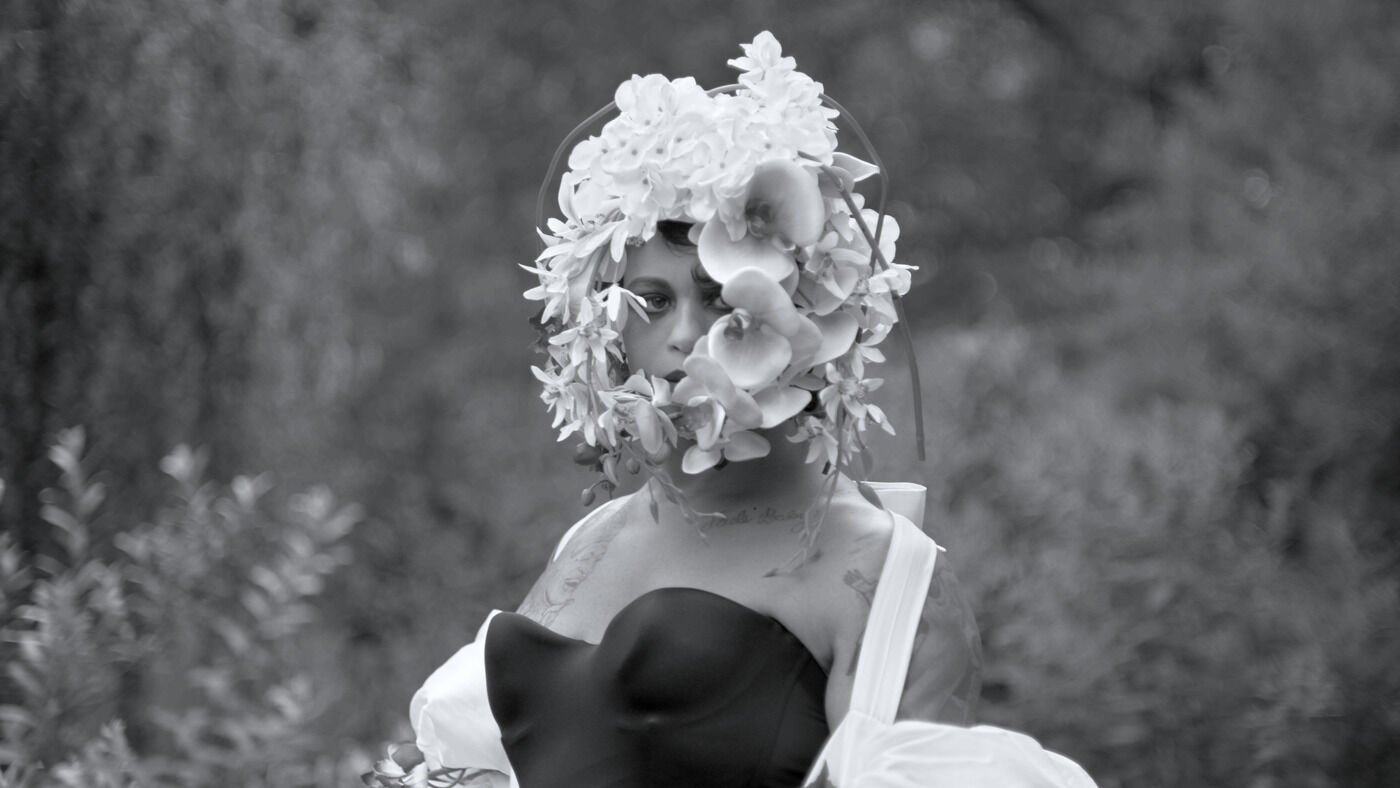
-
501
Tourmaline
Transcription
-
502
Eamon Ore-Giron
Audio, Verbal description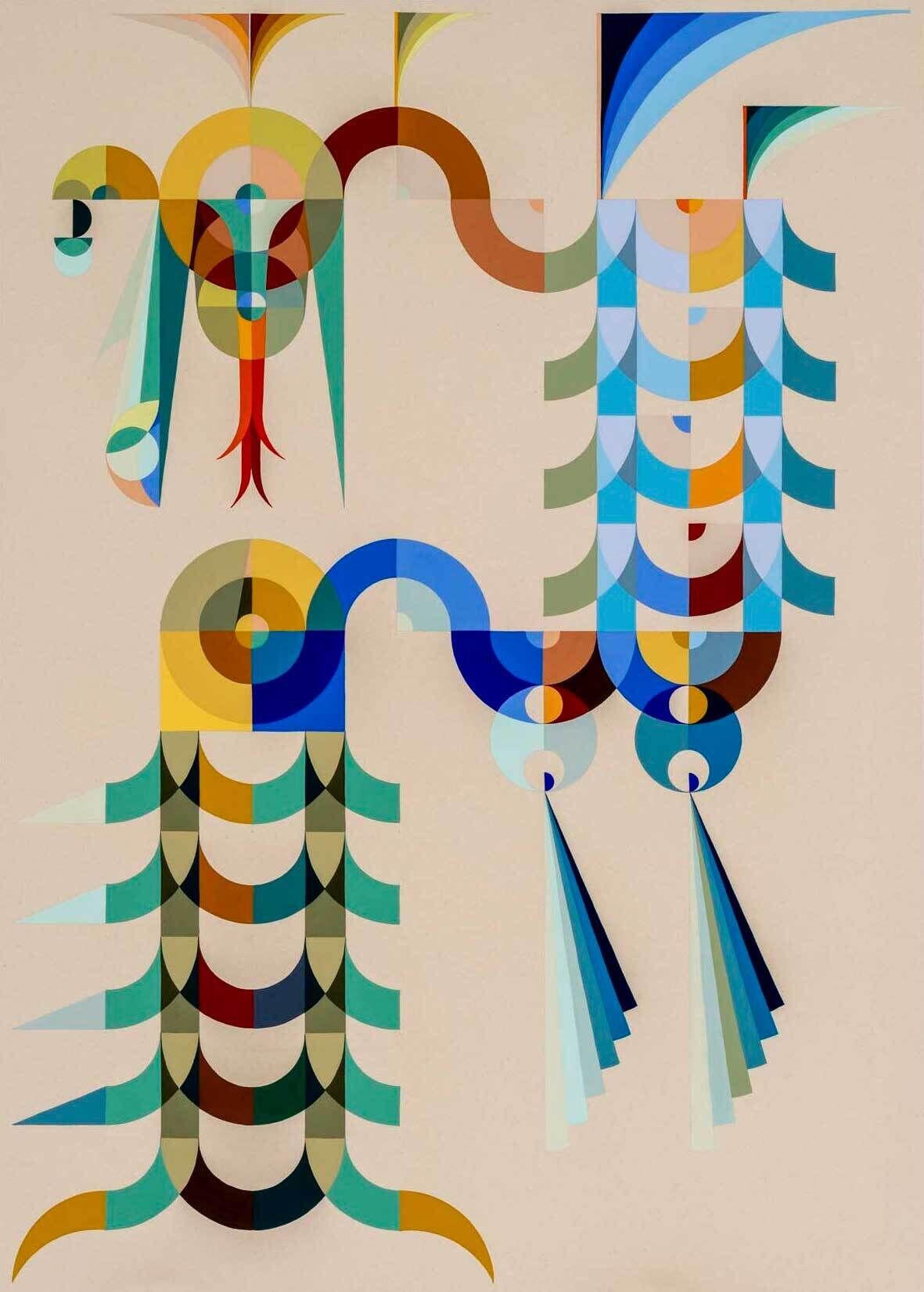
-
503
Clarissa Tossin
Audio, Transcription
-
504
Demian DinéYazhi'
Audio, Verbal description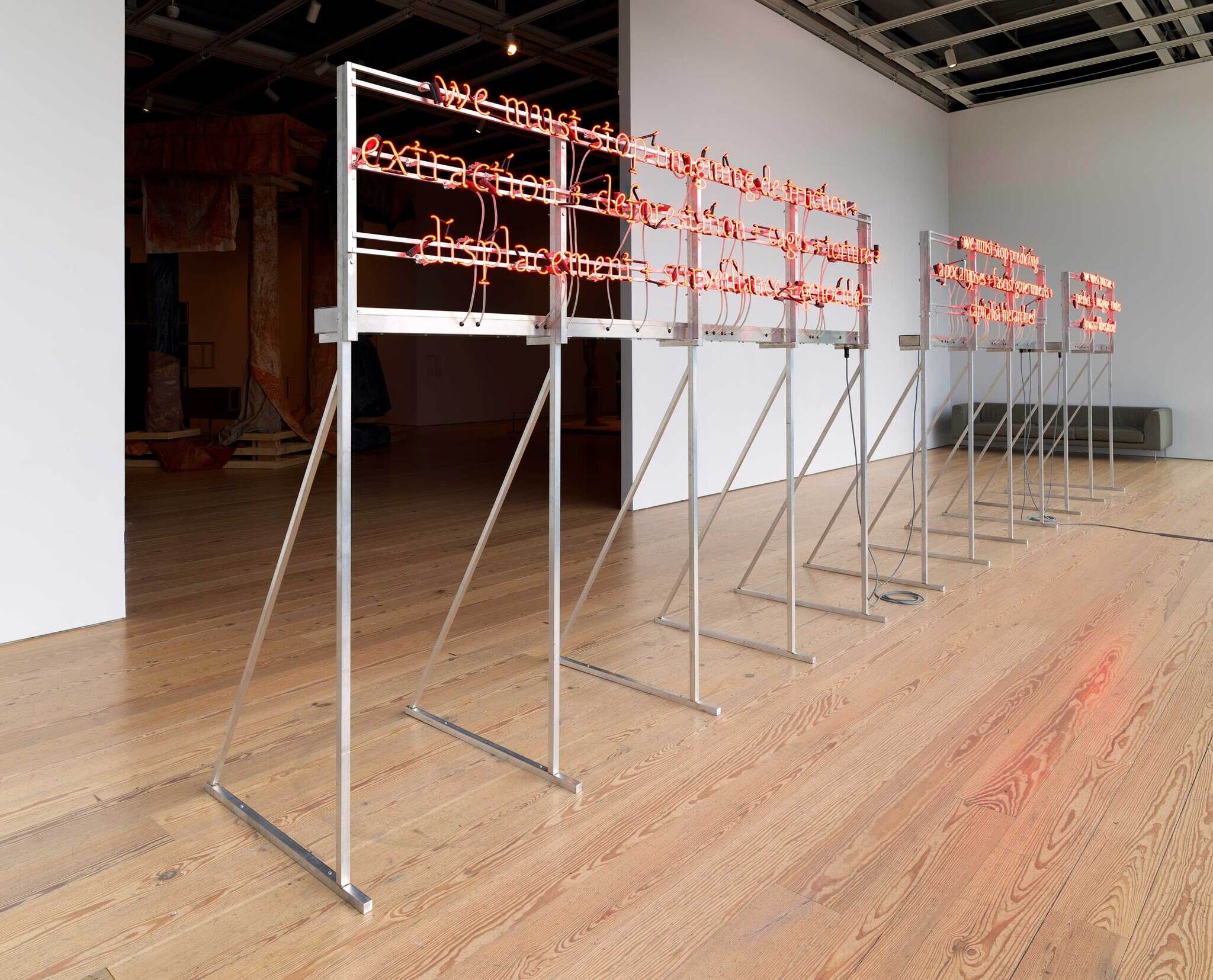
-
505
Dala Nasser
Audio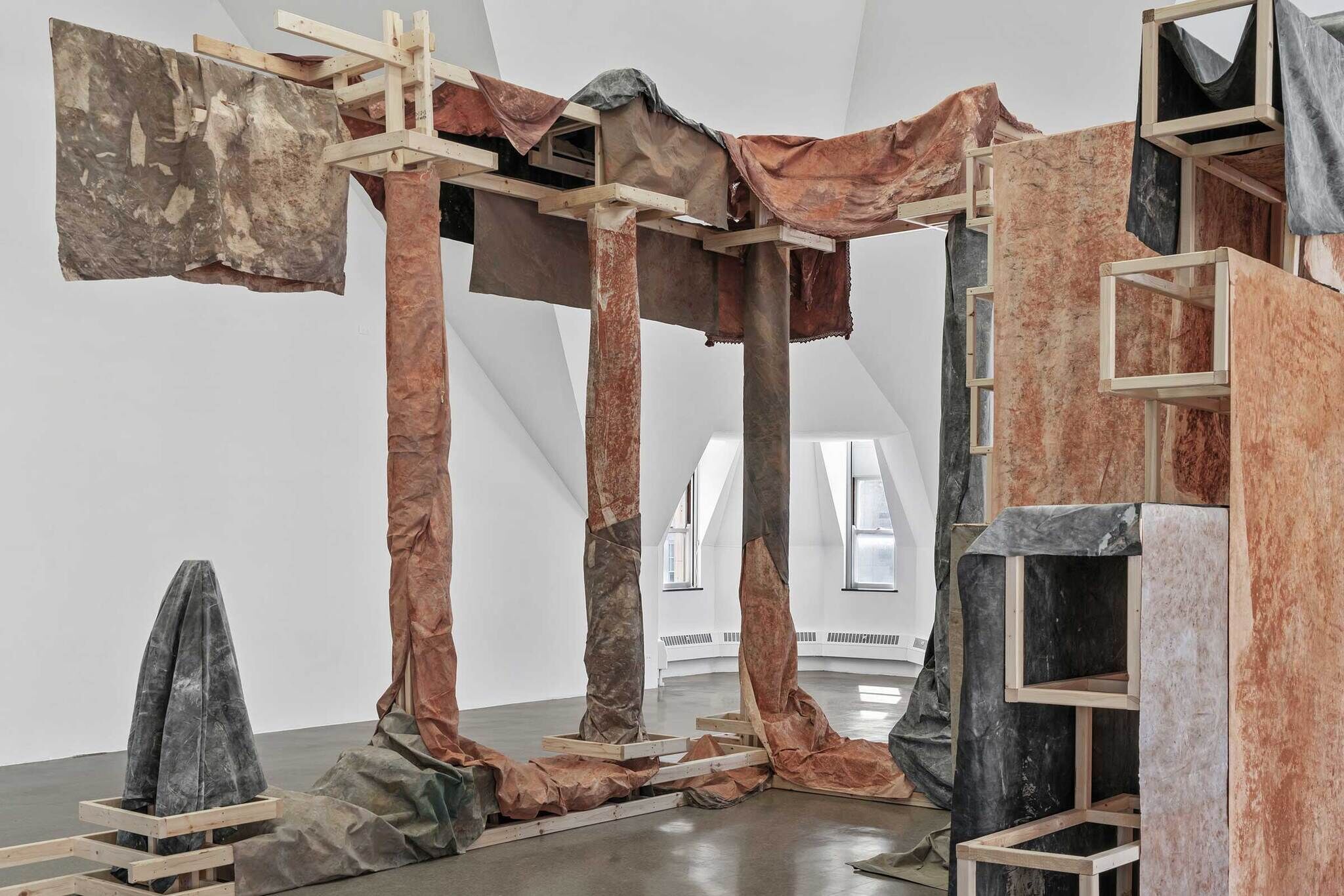
-
506
Ligia Lewis
Transcription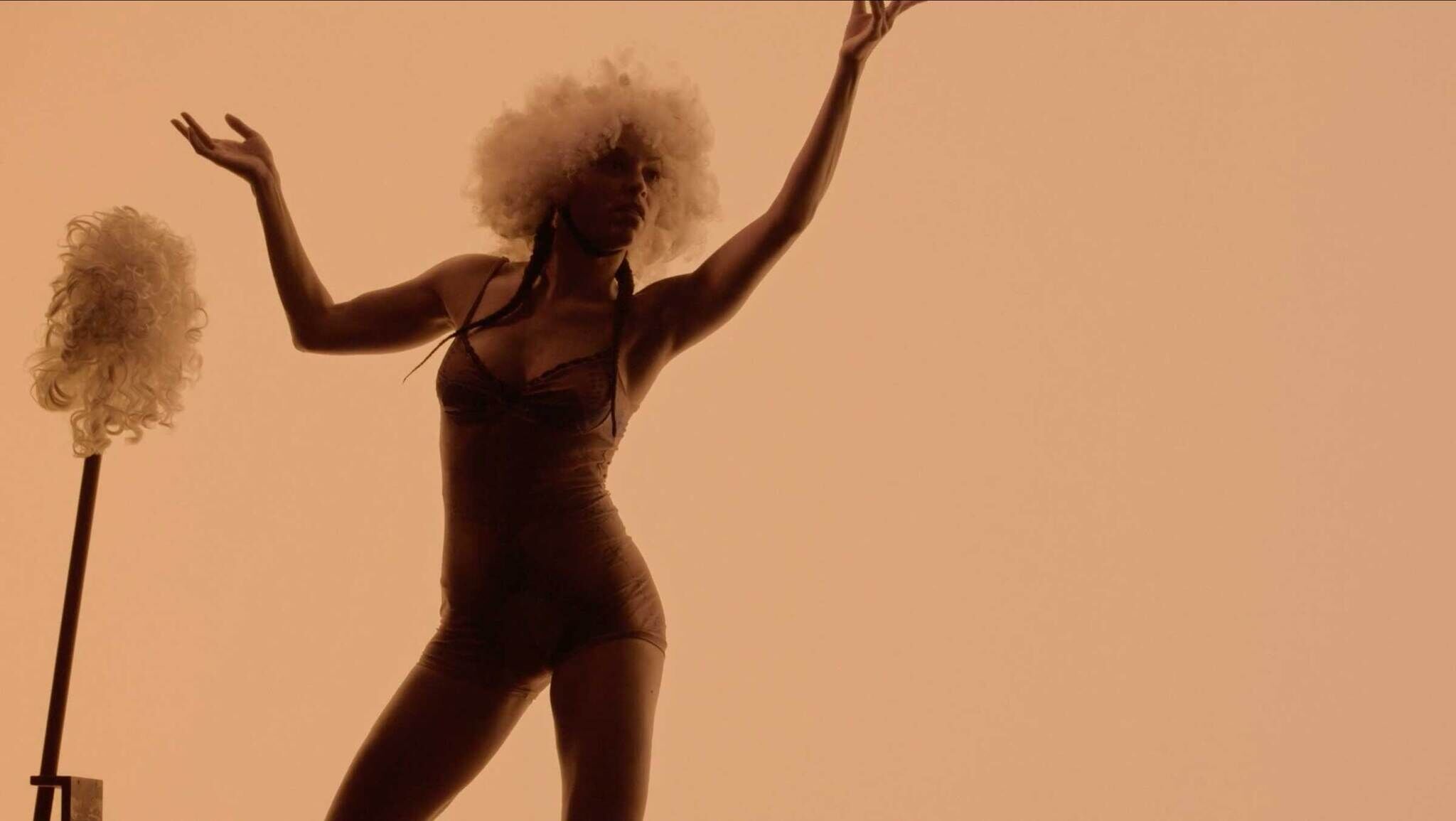
-
507
Rose B. Simpson
Audio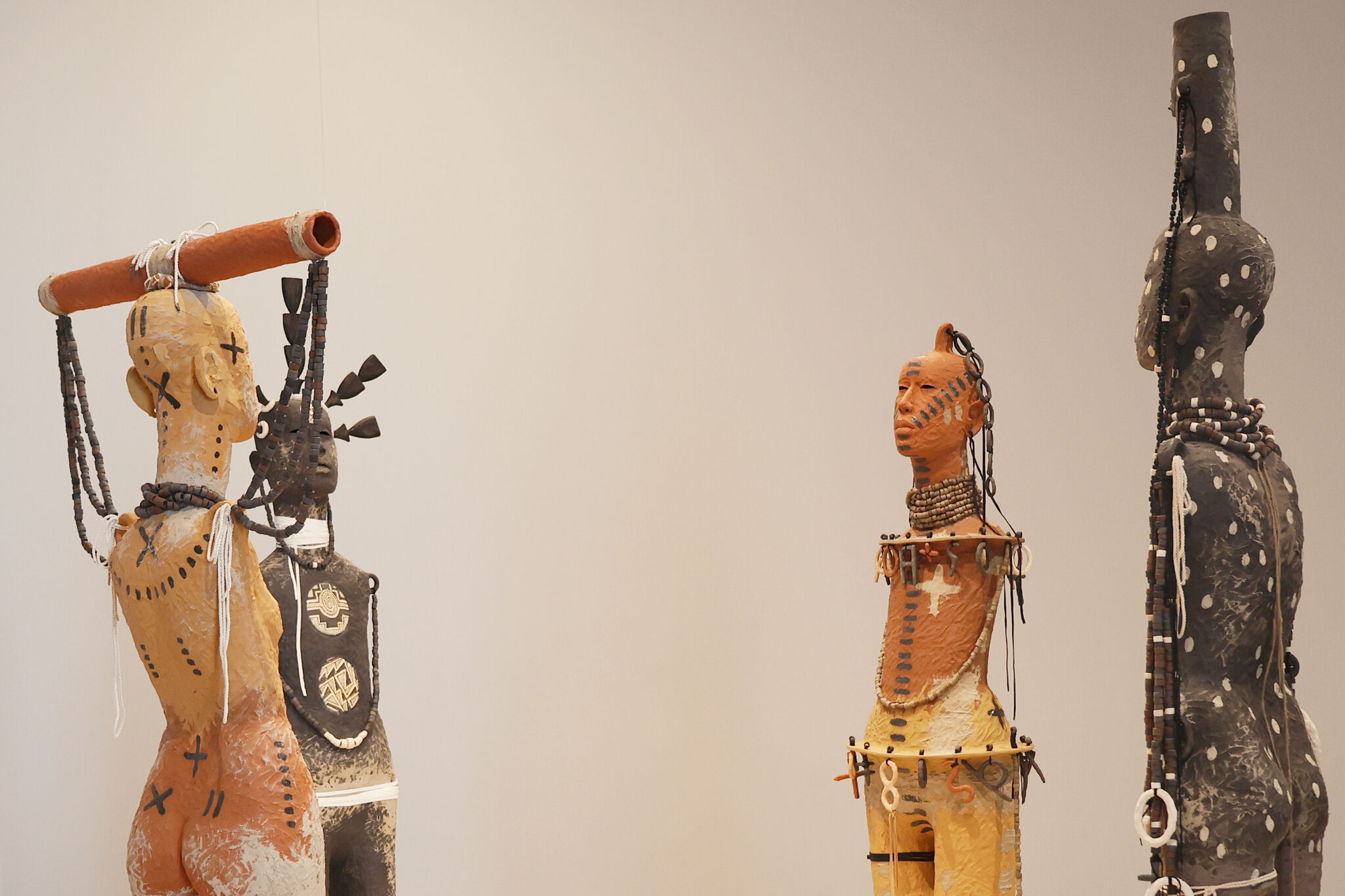
-
508
Jes Fan
Audio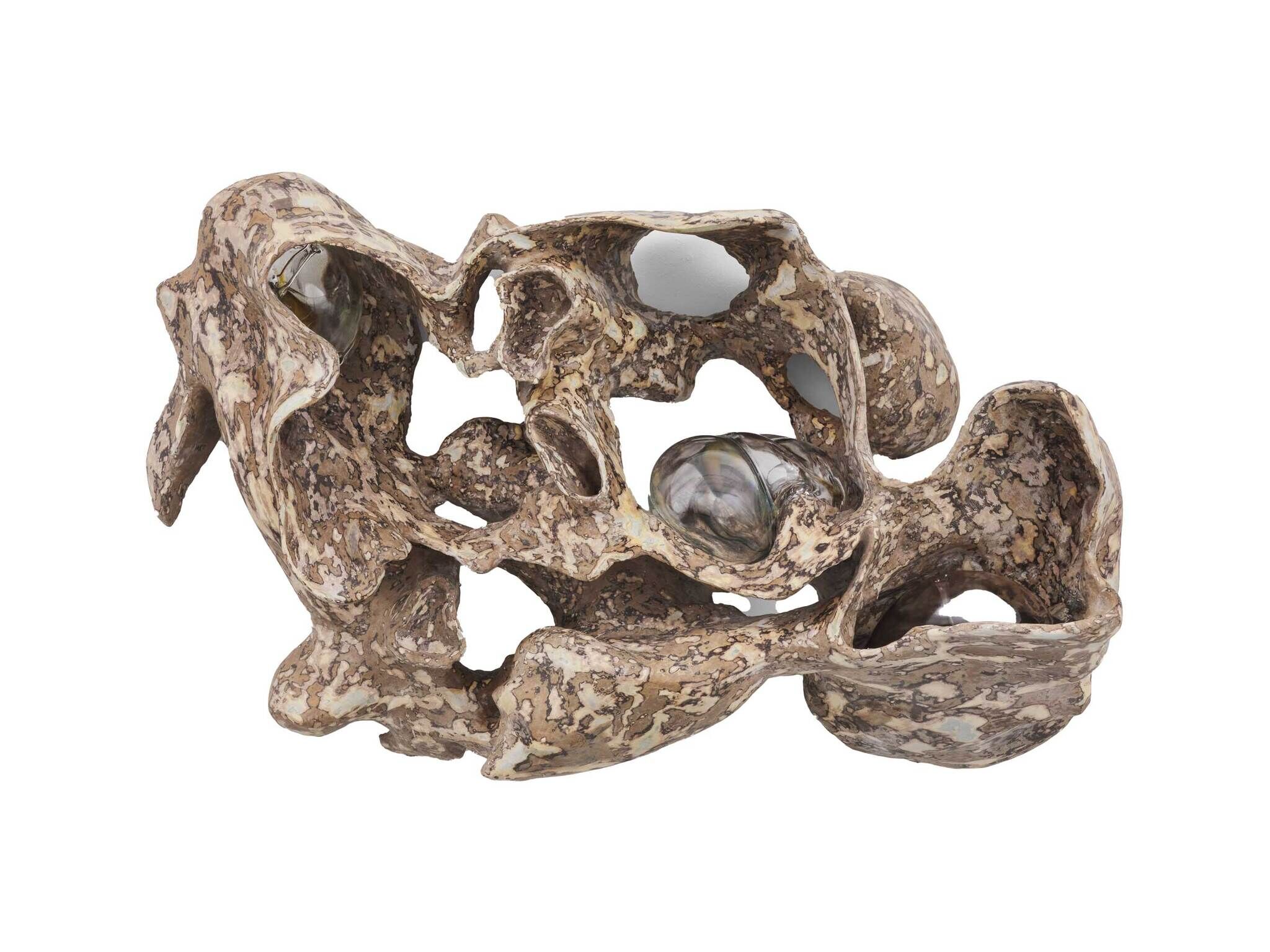
-
509
Lotus L. Kang
Audio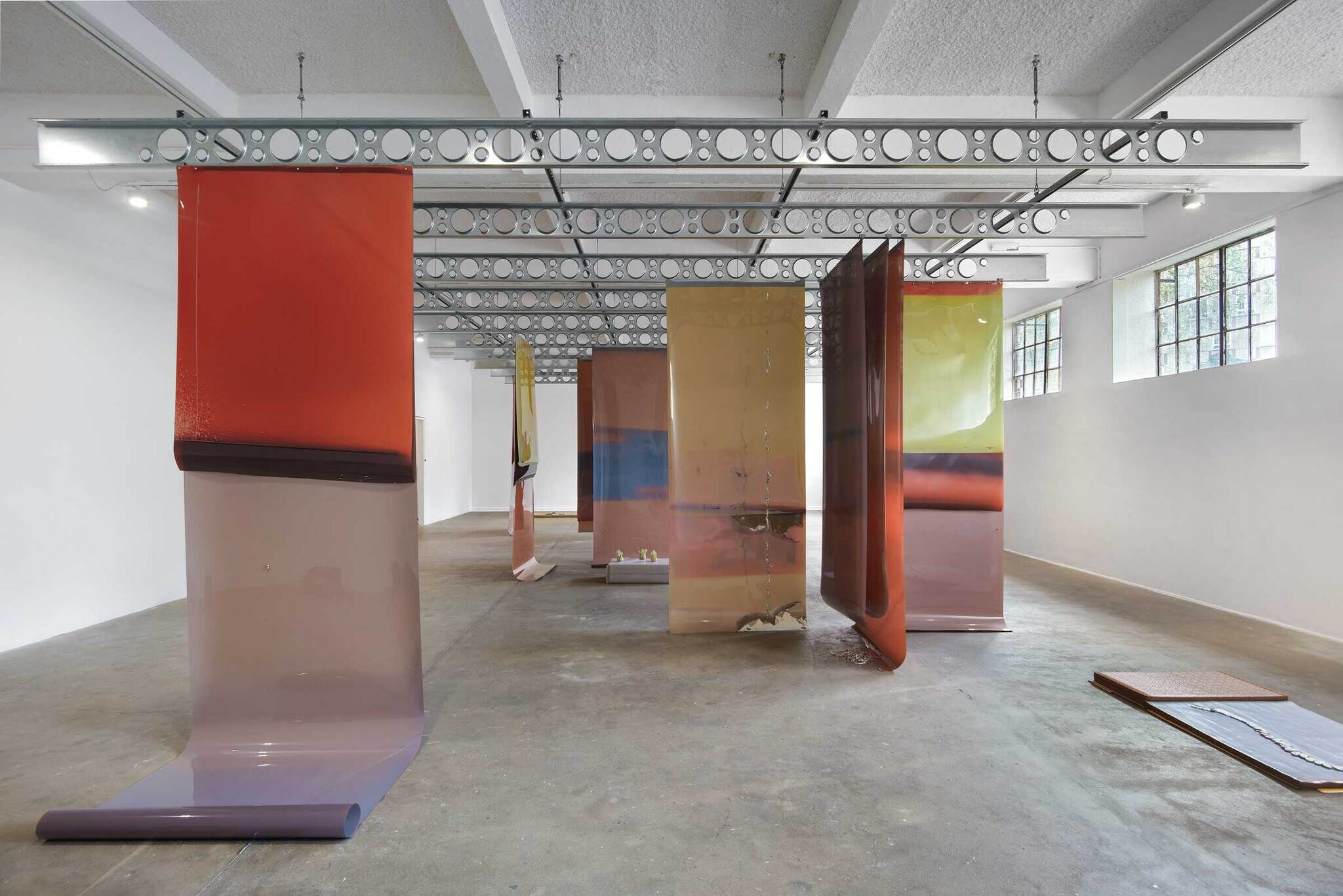
-
510
Mavis Pusey
Audio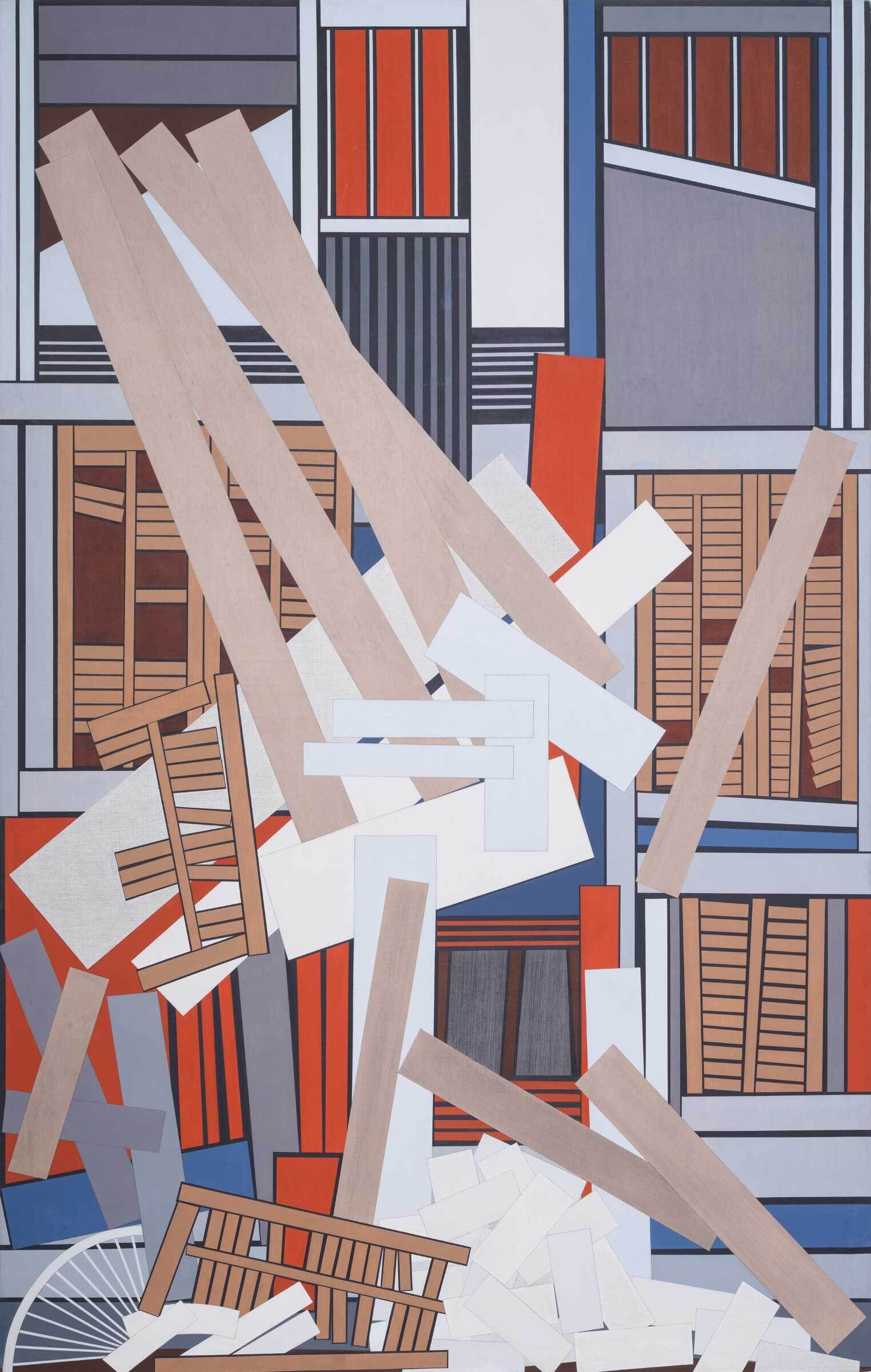
-
511
Charisse Pearlina Weston
Audio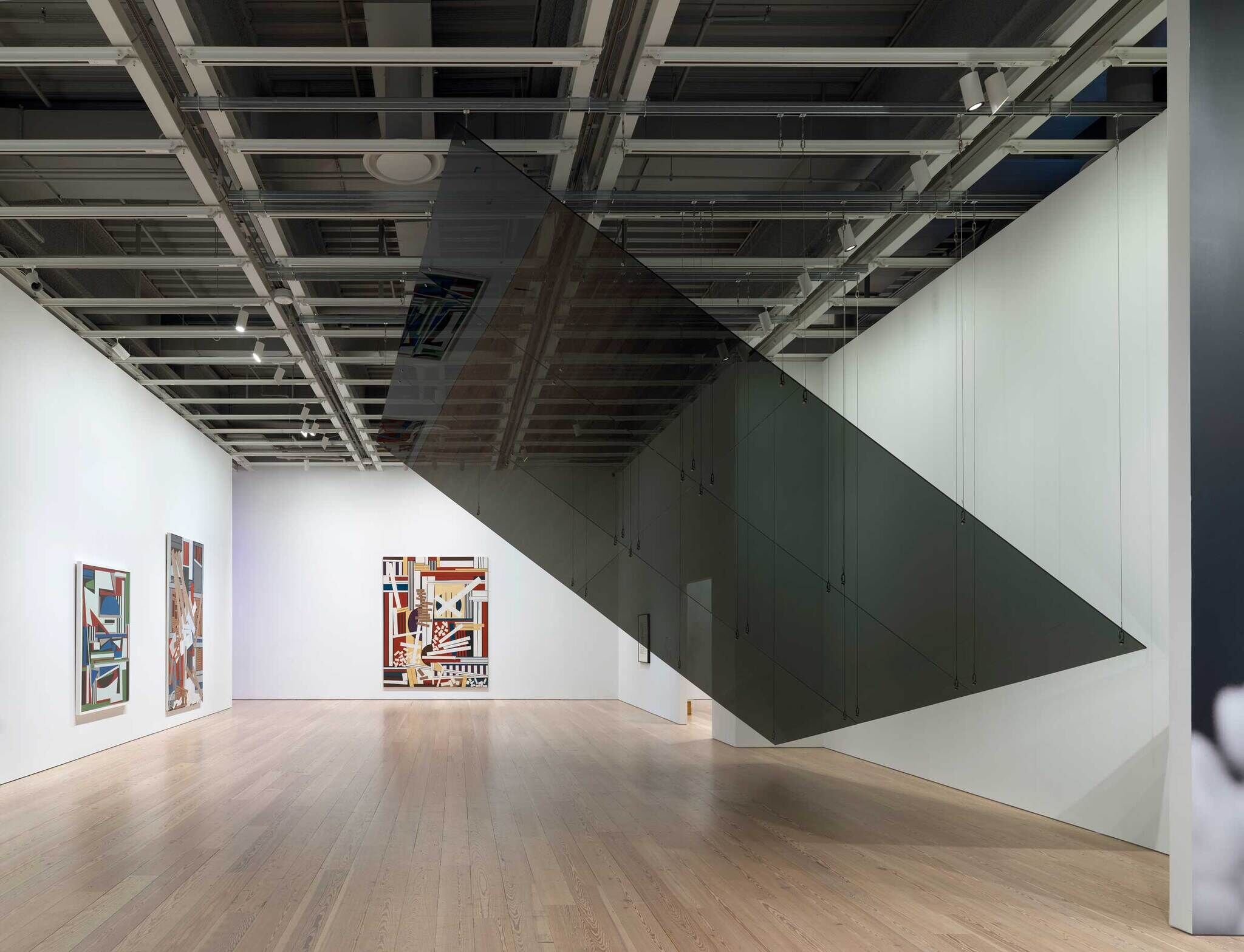
-
512
Constantina Zavitsanos
Audio, Verbal description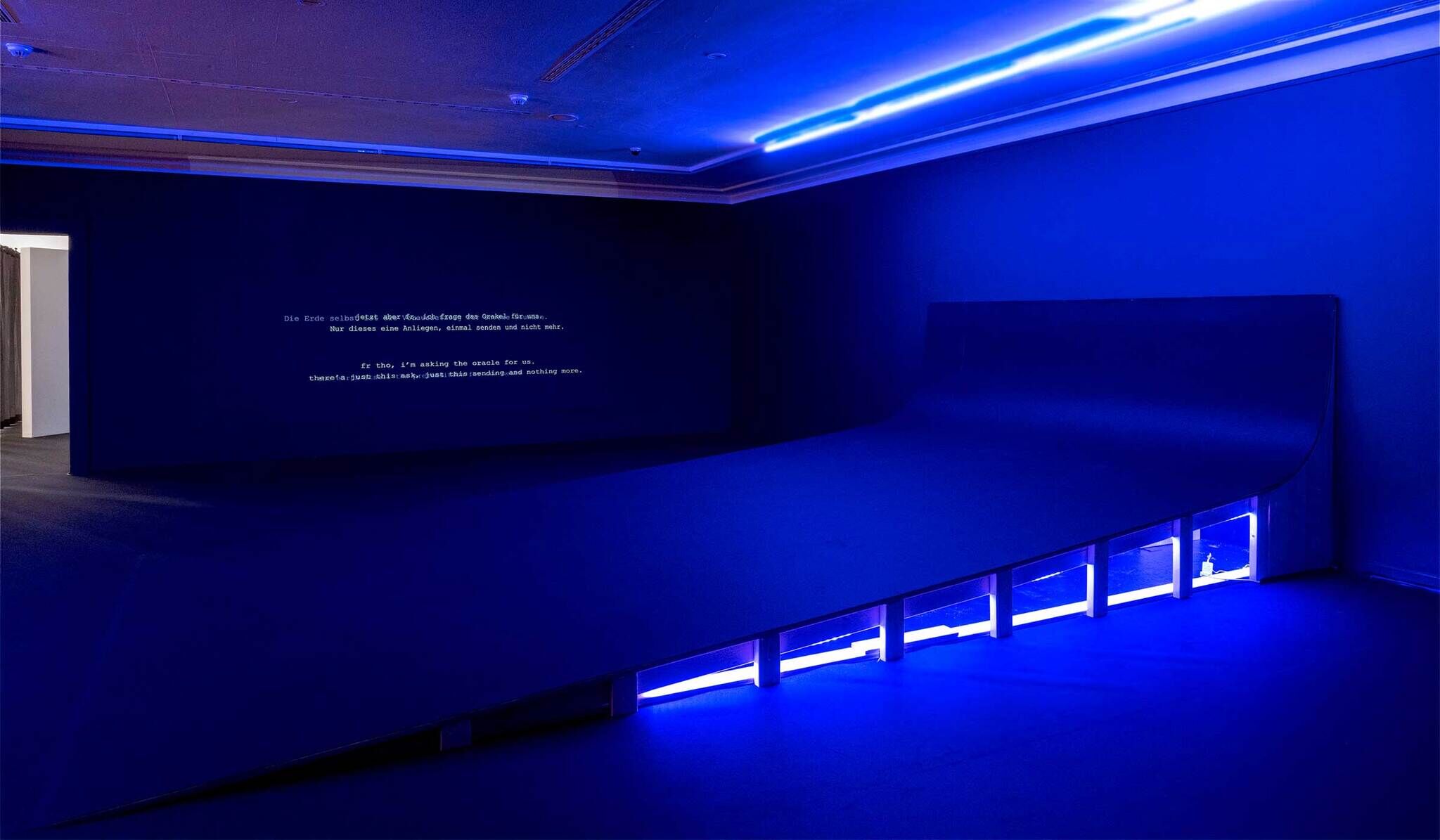
-
513
Karyn Olivier
Audio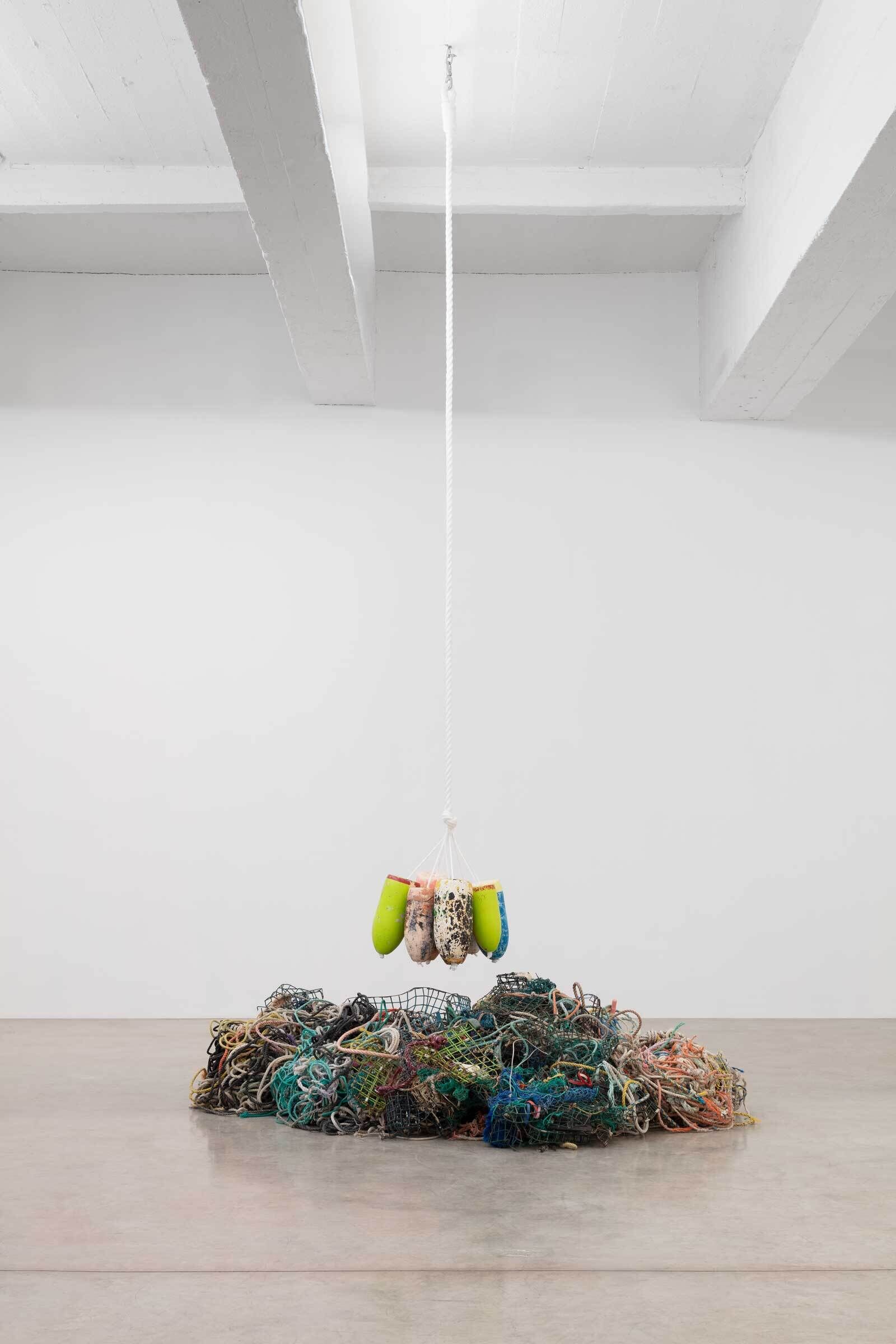
-
514
Takako Yamaguchi
Audio, Verbal description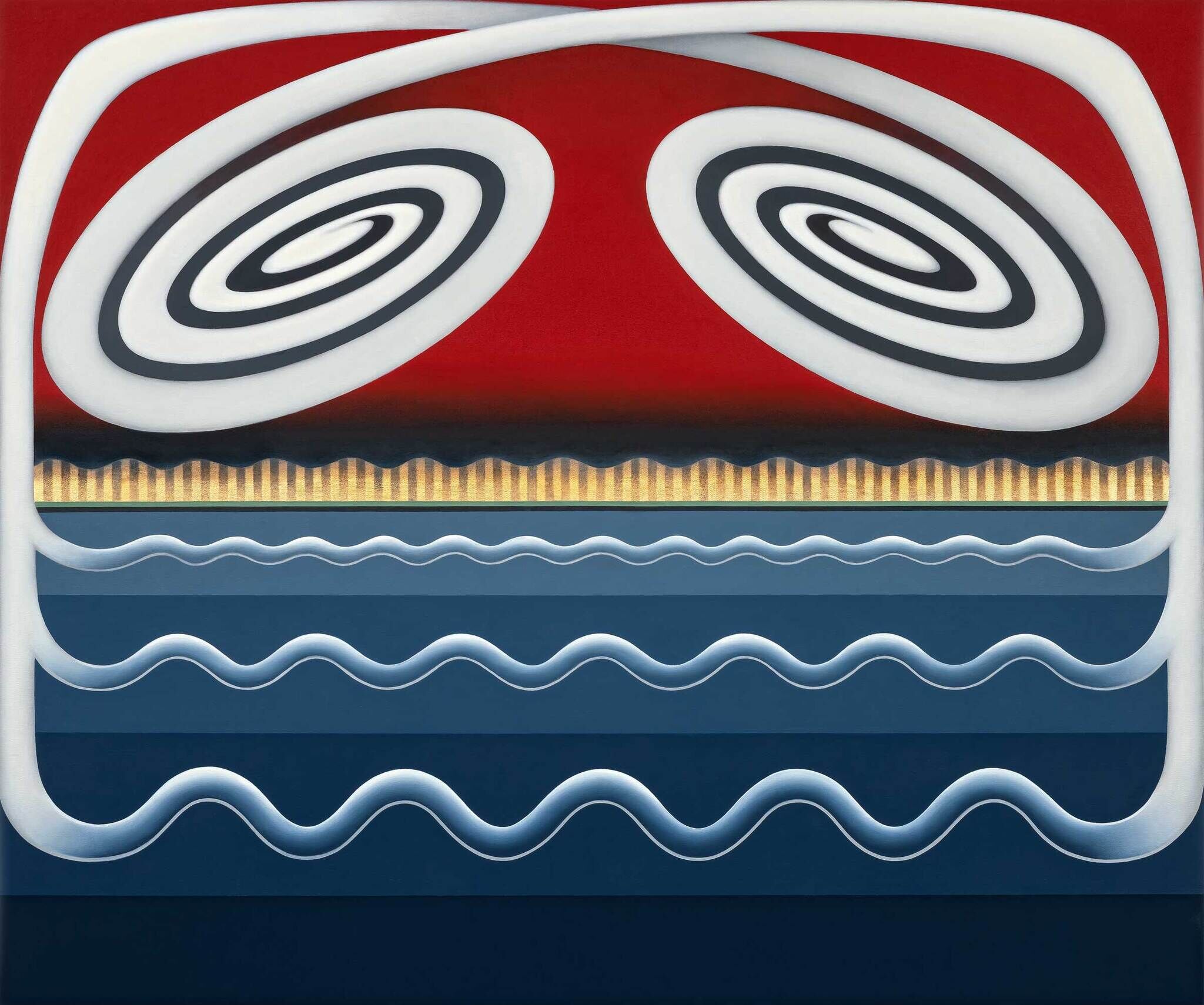
-
515
Isaac Julien
Transcription
-
516
Mary Lovelace O'Neal
Audio
-
517
Cannupa Hanska Luger
Audio, Verbal description, Sound description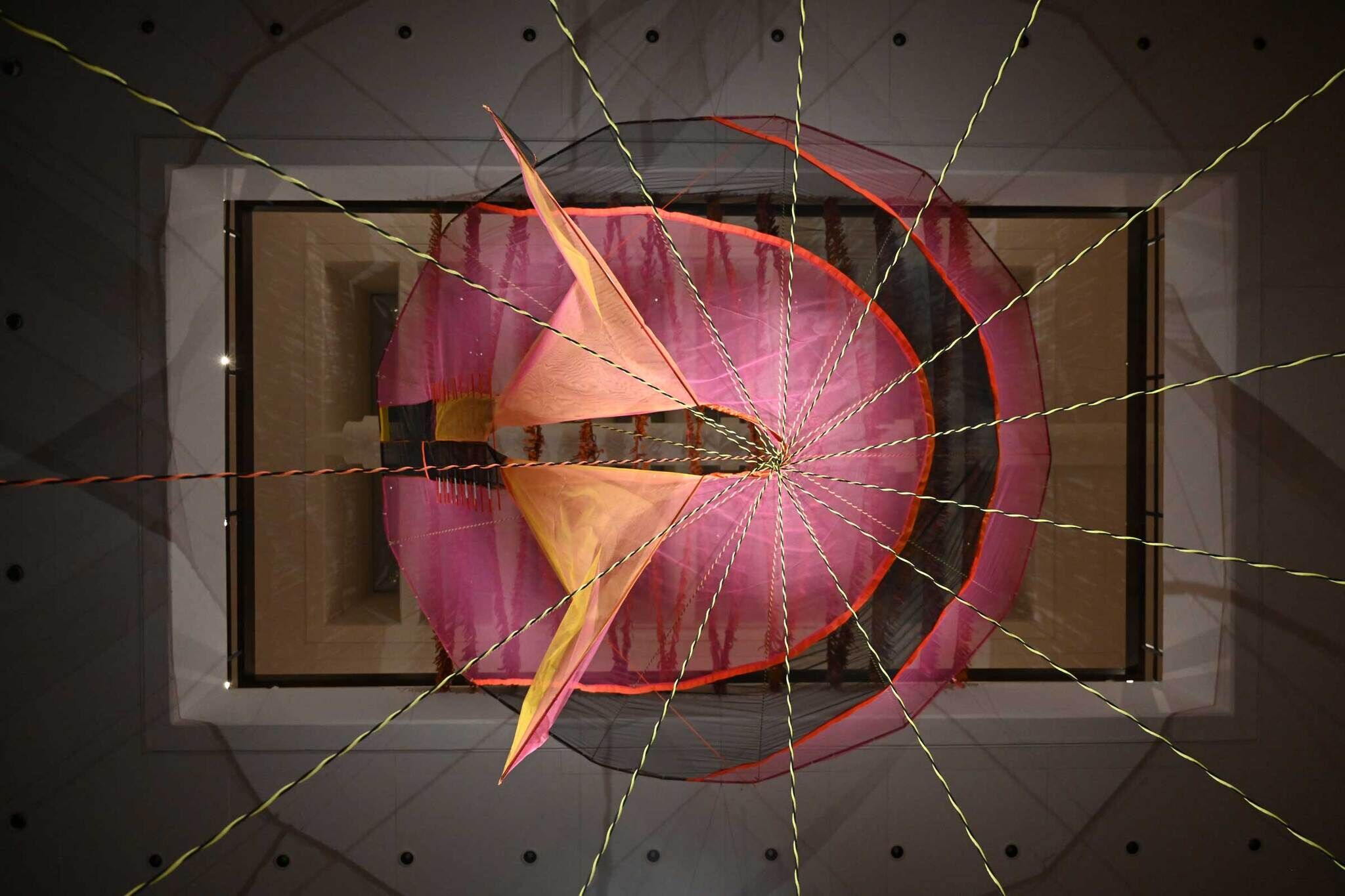
-
518
Maja Ruznic
Audio, Verbal description.jpg)
-
519
Dora Budor
Sound description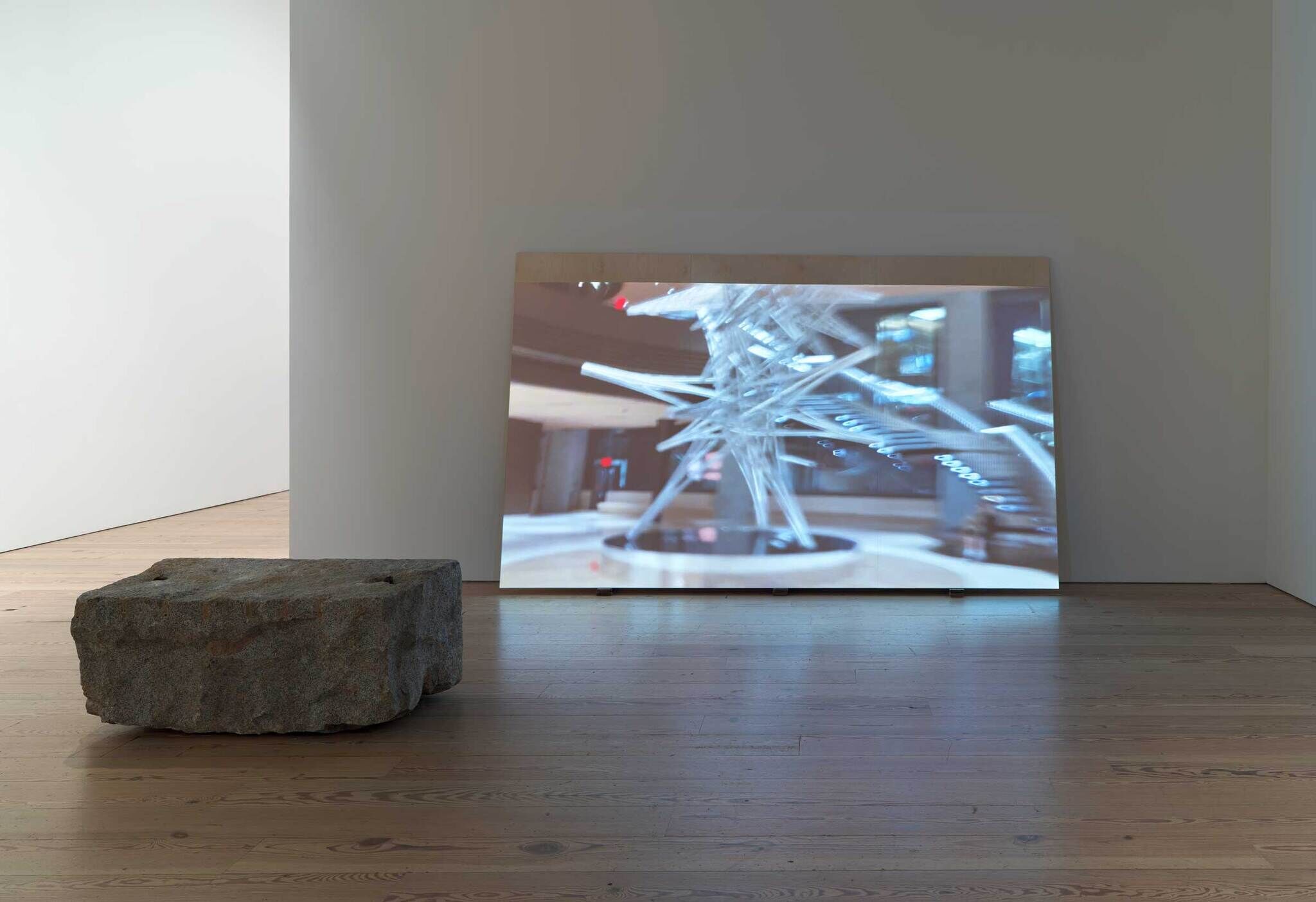
-
520
Madeleine Hunt-Ehrlich
Transcription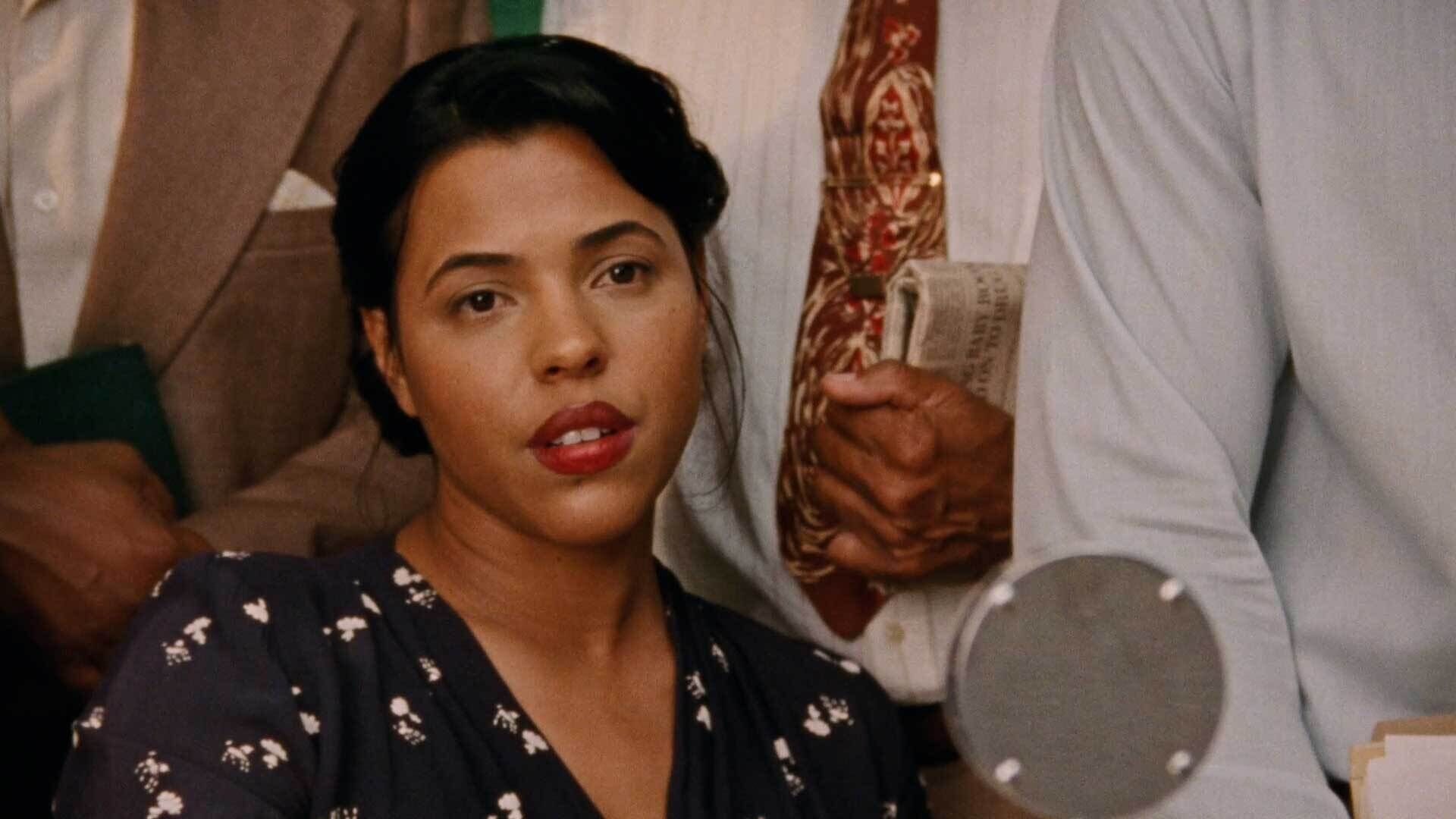
-
550
Torkwase Dyson
Audio, Sound description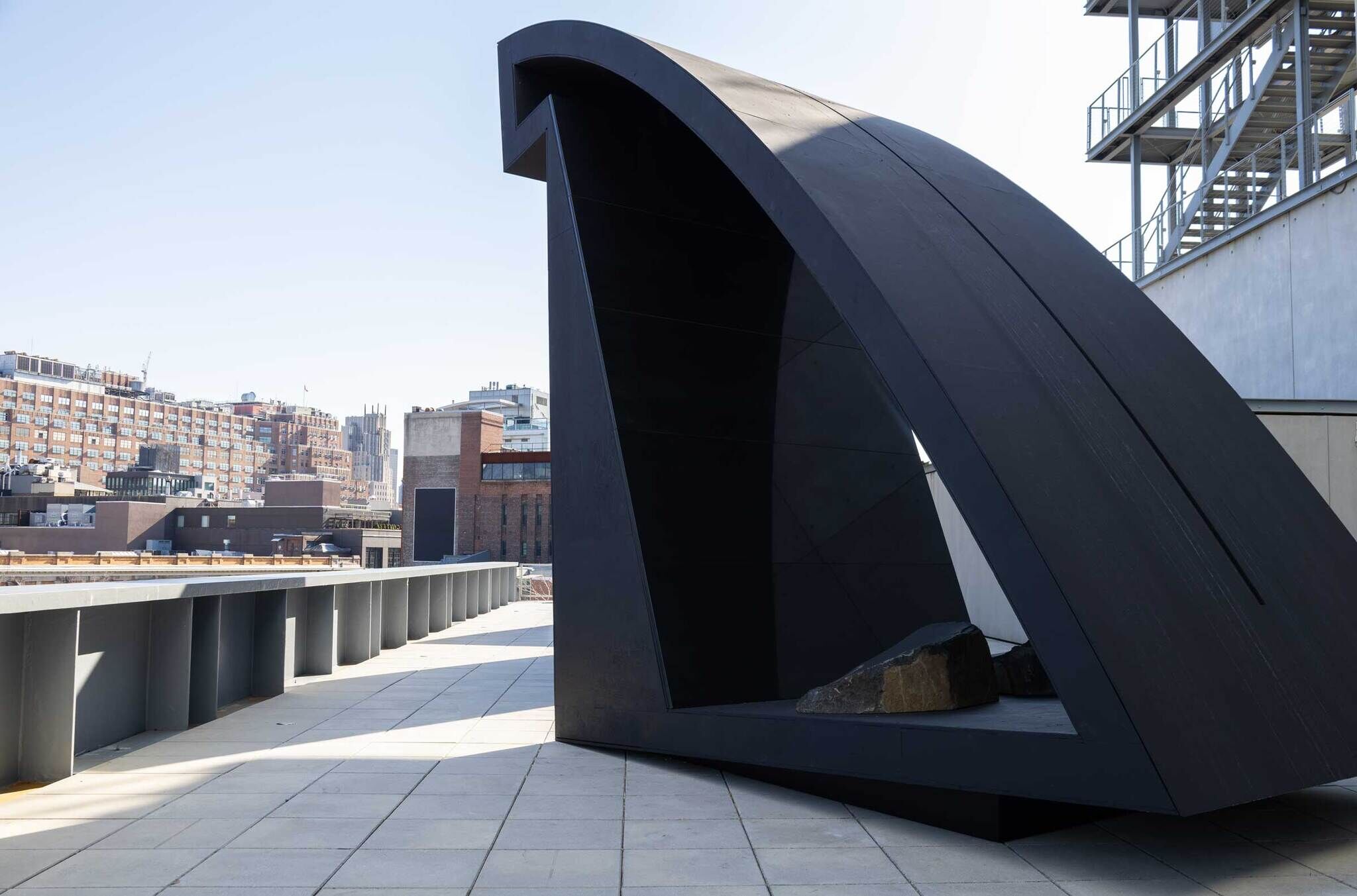
-
600
Introduction
Audio
-
601
Holly Herndon and Mat Dryhurst
Audio
-
602
P. Staff
Audio
-
603
Carmen Winant
Audio
-
604
Diane Severin Nguyen
Transcription
-
605
Harmony Hammond
Audio, Verbal description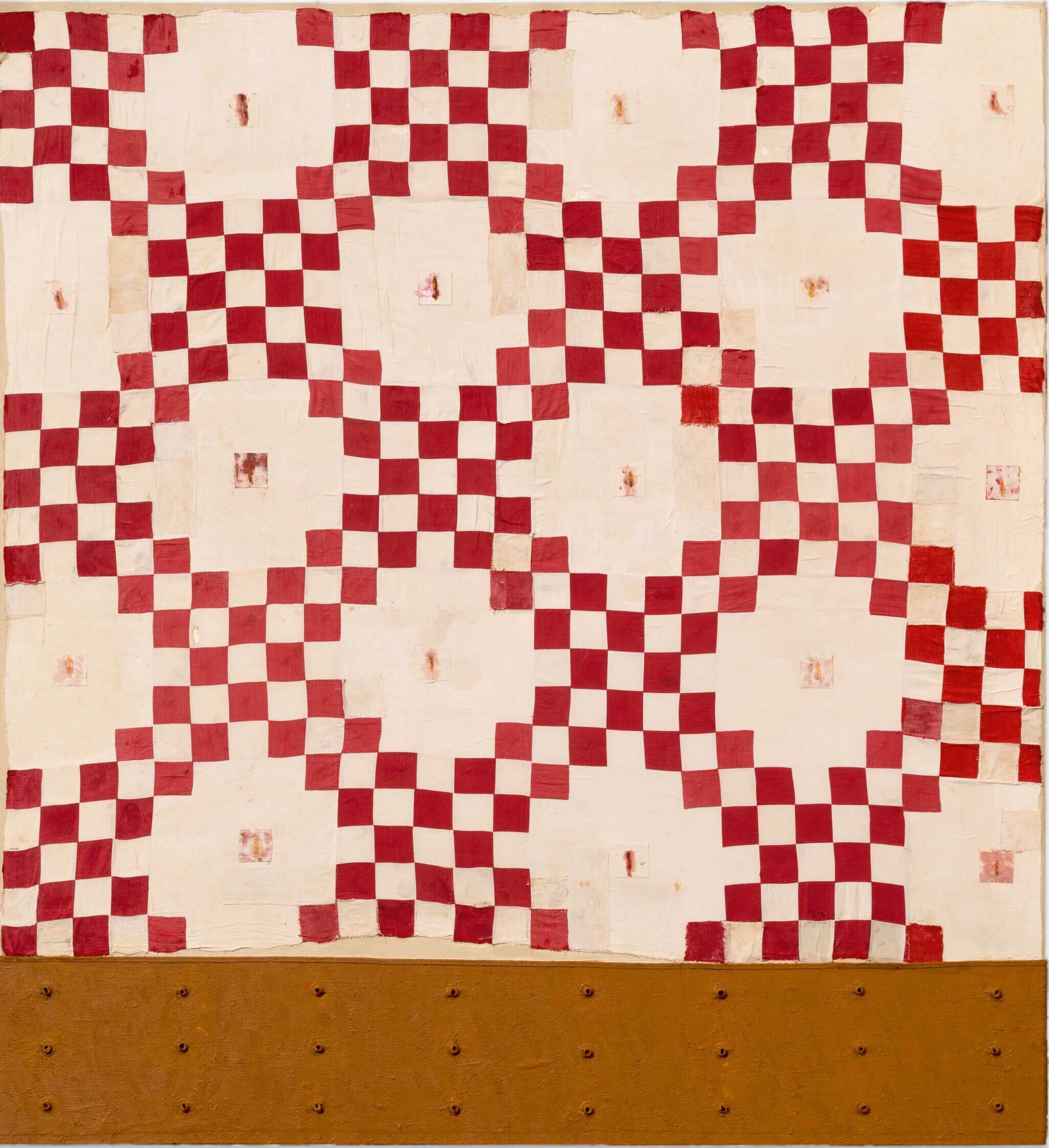
-
606
Julia Phillips
Audio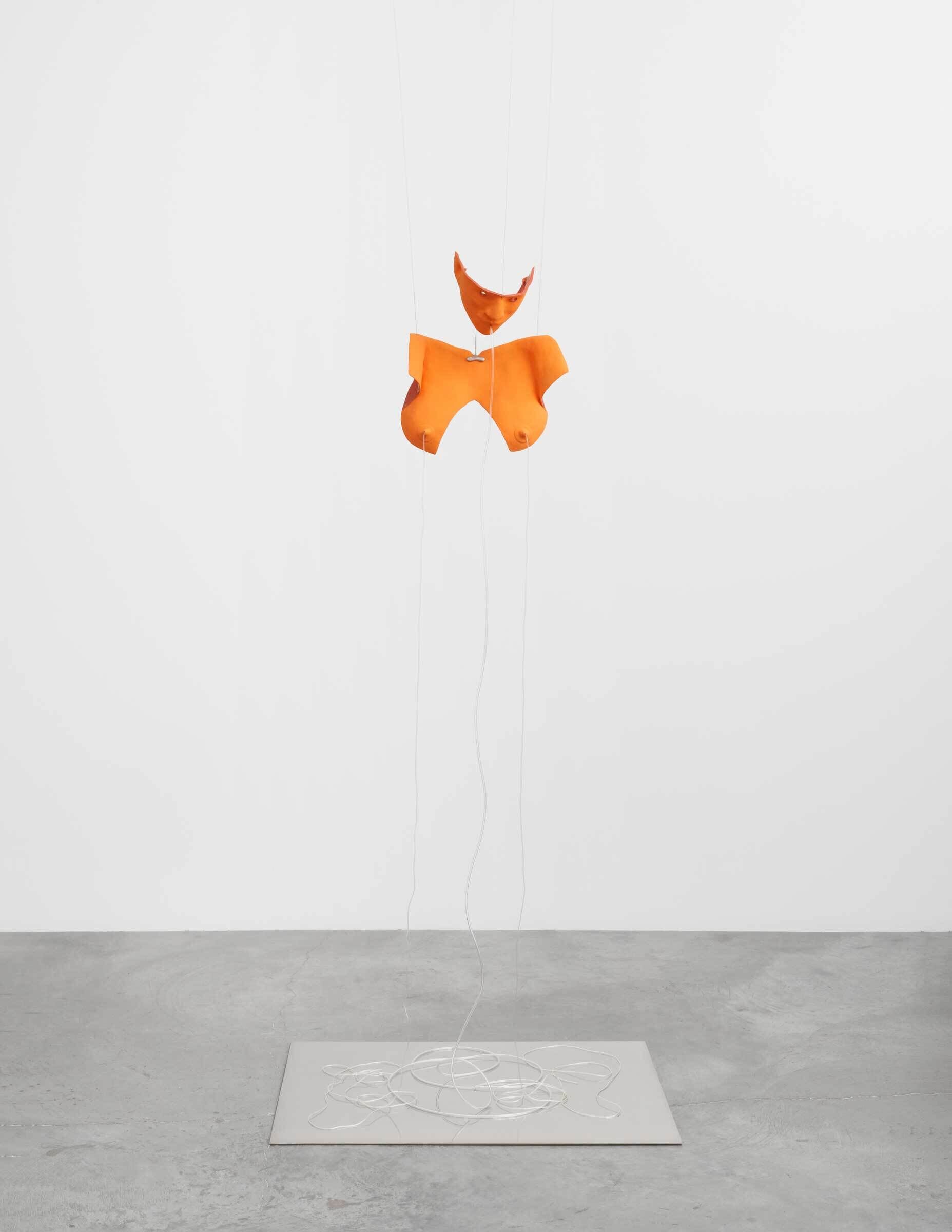
-
607
K.R.M. Mooney
Audio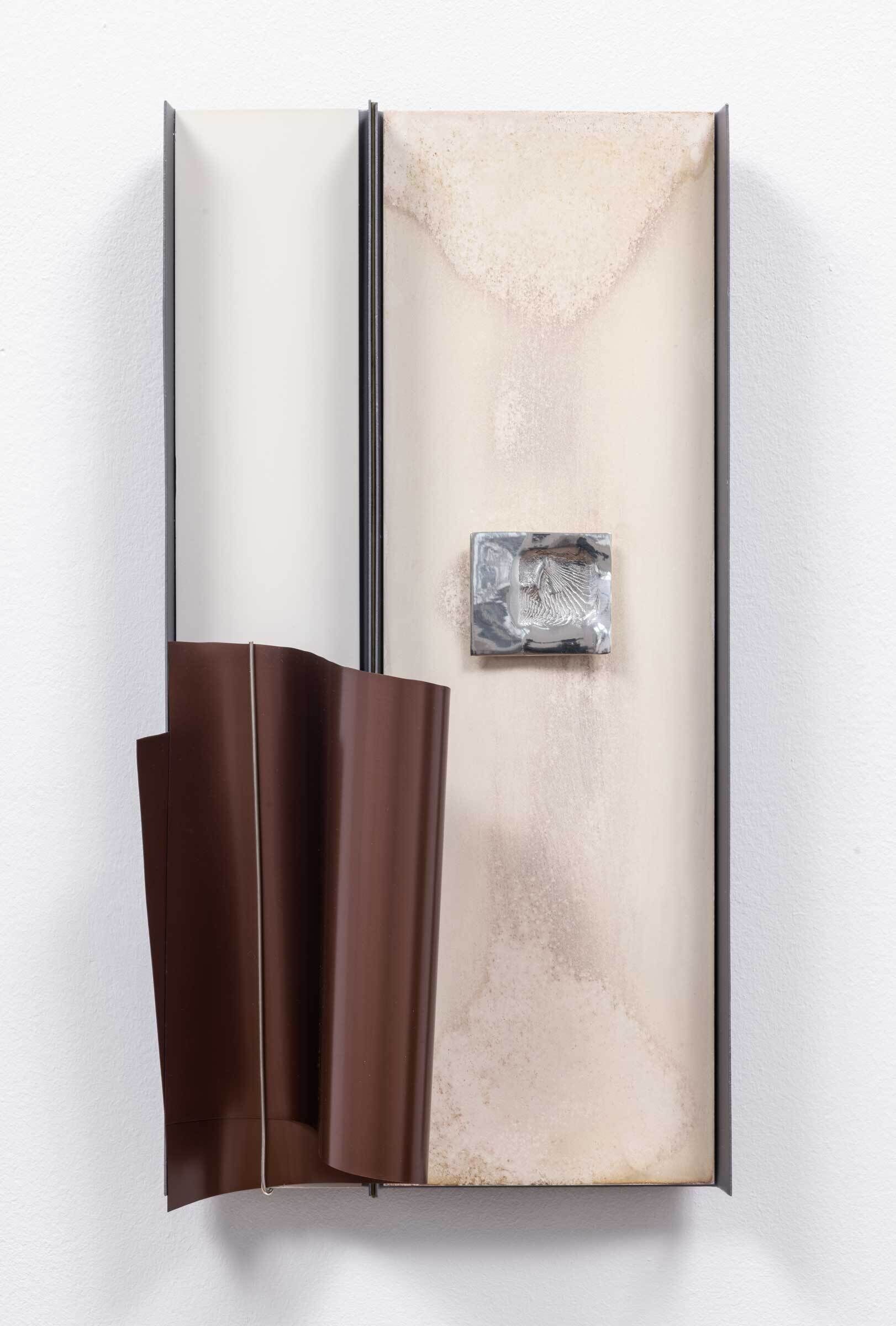
-
608
B. Ingrid Olson
Audio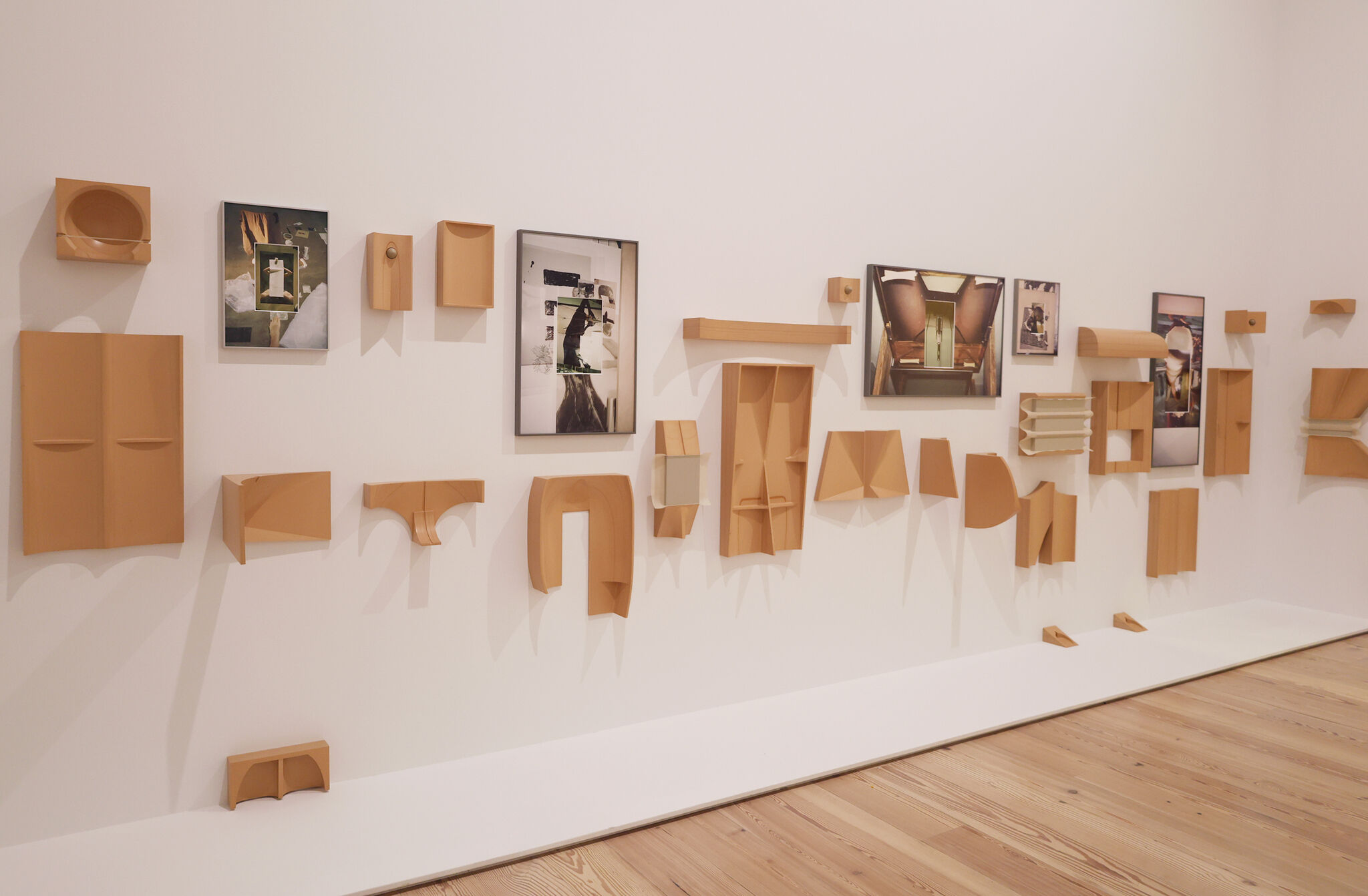
-
609
ektor garcia
Verbal description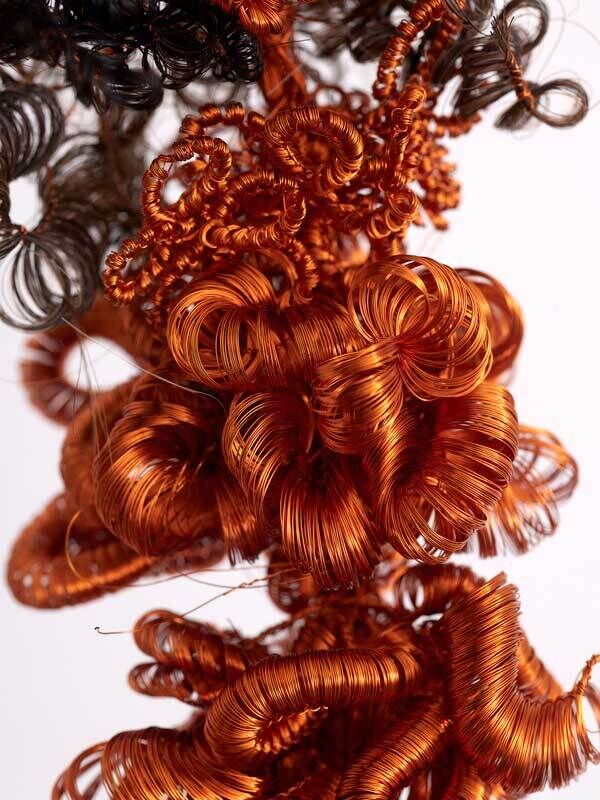
-
610
Nikita Gale
Audio, Sound description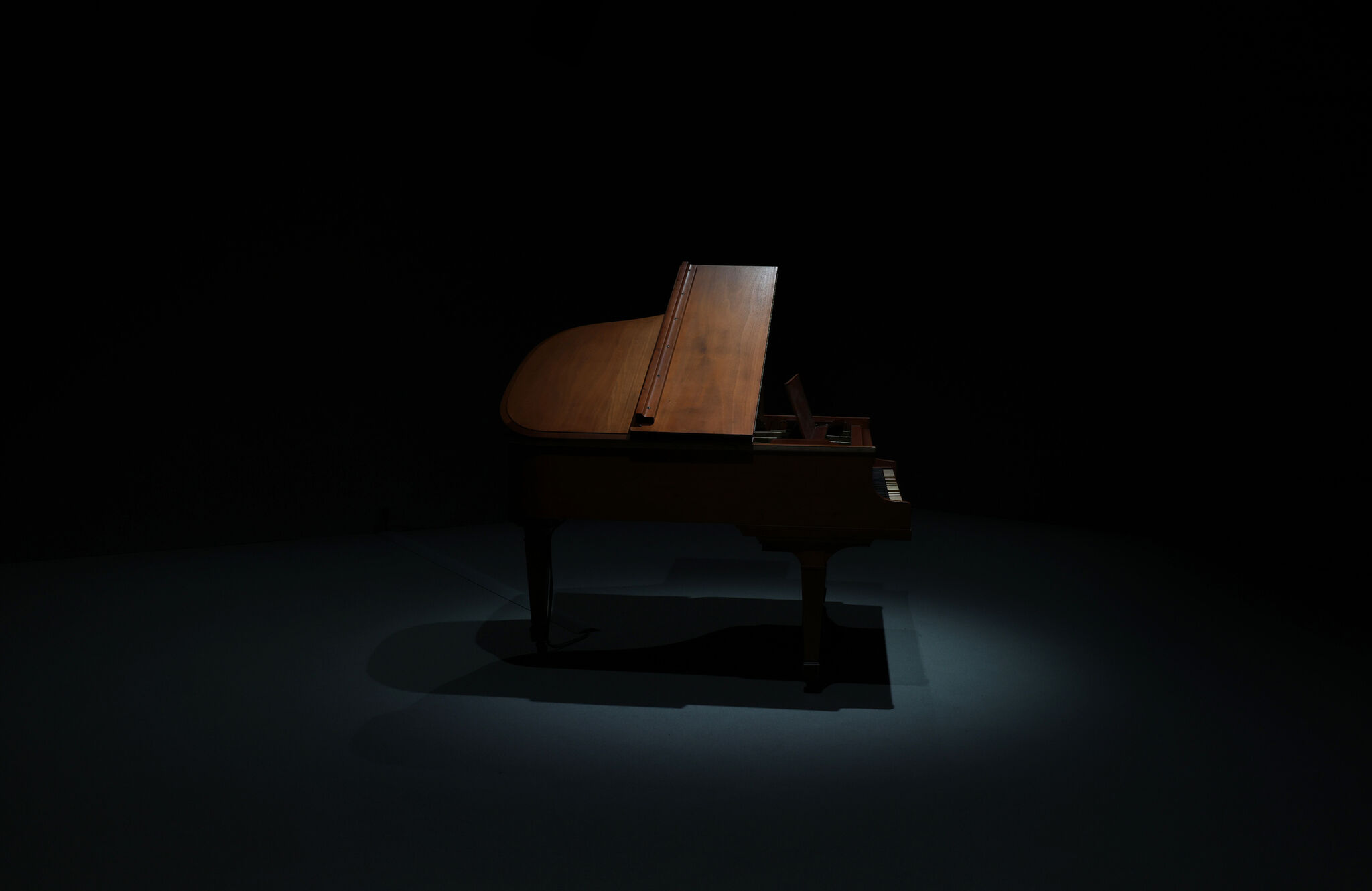
-
611
Suzanne Jackson
Audio, Verbal description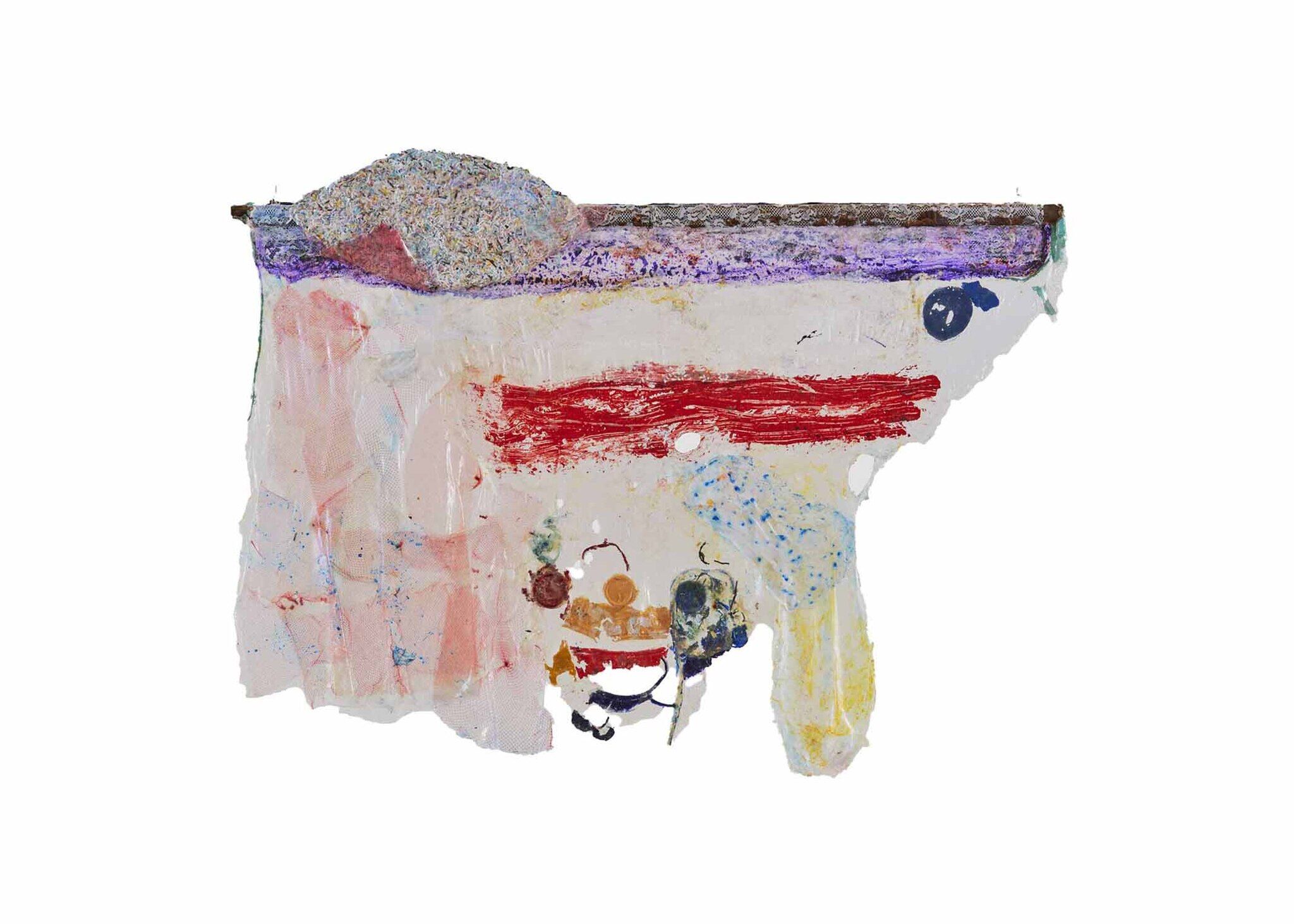
-
612
Seba Calfuqueo
Sound description
-
613
JJJJJerome Ellis
Audio, Verbal description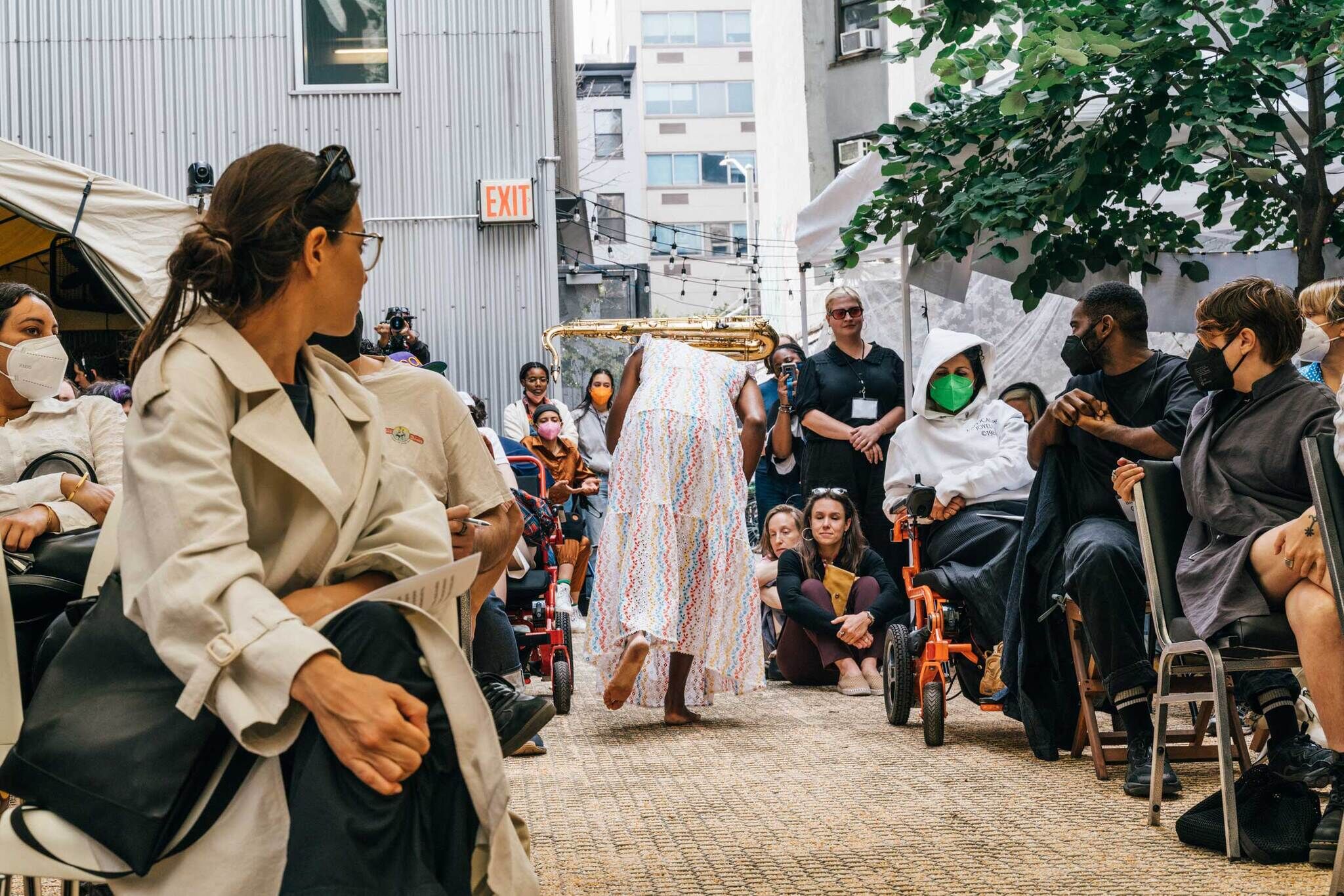
-
614
Mary Kelly
Audio
-
615
Carolyn Lazard
Audio, Verbal description
-
616
Sharon Hayes
Transcription
-
617
Eddie Rodolfo Aparicio
Audio
-
650
Kiyan Williams
Audio, Verbal description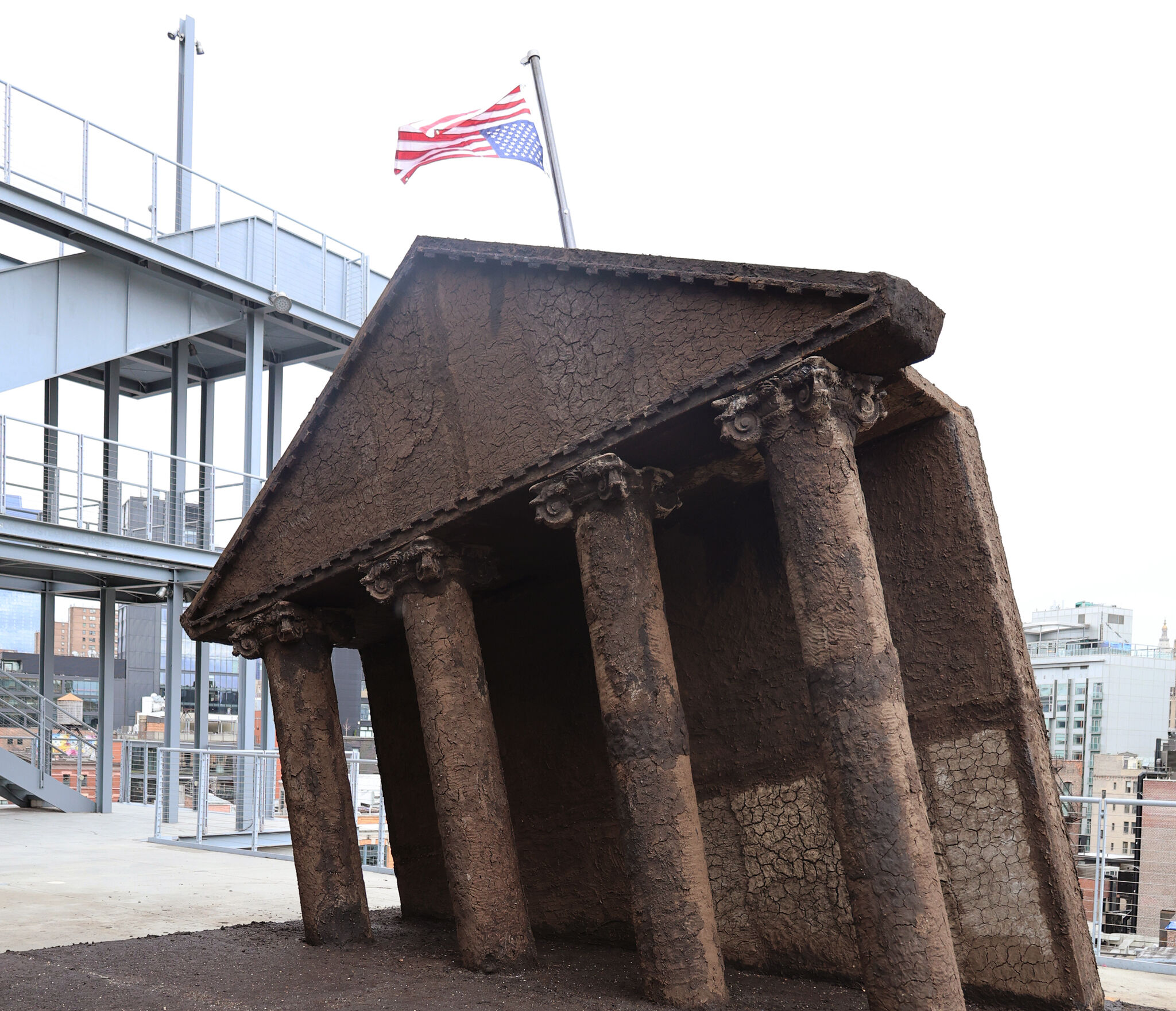
Narrator: People Who Stutter Create is a collective that believes that stuttering (also called stammering) creates room for deep listening and collaboration. The following is an image description of their billboard for the 2024 Biennial:
Three lines of black text appear on a solid, light seafoam green background:
La tartamudez nos ofrece tiempo
口吃者創創創創創創創創創創創造時間
Stuttering can create time.
The text is in a sans serif typeface organized in three straight lines within the top half of the composition. The bottom half of the composition is empty, emphasizing a sense of pauses, silences and expectations. The text is all lowercase and lacks punctuation, giving a casual and informal, almost text message-like feel. Each line of text represents a form of stuttered speech: blocks (pauses in speech), repetitions, and prolongations, respectively. The first line, in Spanish, translates literally to “Stuttering offers us time.” The space between “us” and “time” represents a block. The second line, in Chinese, translates literally to “People who stutter create time.” The first characters in the Chinese word for “create” are repeated. In the third line, in English, the “s” in “stuttering” is stretched horizontally to represent prolonged sound.
Narrator: The billboard is mounted on the front of 95 Horatio Street, a building with yellow brickwork, located across the street from the Whitney Museum's entrance, facing the southernmost entrance to the High Line. Just above the billboard, there are two layers of six sizable windows, each separated by dark green metal. Beneath the billboard is a glass storefront entrance.
The following is an image description of the billboard created by the Whitney and the collective People Who Stutter Create, whose work is featured there for the 2024 Biennial:
Three lines of black text appear on a solid, light seafoam green background:
la tartamudez nos ofrece tiempo
口吃者創創創創創創創創創創創造時間
stuttering can create time
The text is in a sans serif typeface organized in three straight lines within the top half of the composition. The bottom half of the composition is empty, emphasising a sense of pauses, silences and expectations. The text is all lowercase and lacks punctuation, giving a casual and informal, almost text message-like feel. Each line of text represents a form of stuttered speech: blocks (pauses in speech), repetitions, and prolongations, respectively. The first line, in Spanish, translates literally to “Stuttering offers us time.” The space between the word "ofrece" (which translates to "offers") and the word "tiempo" (which translates to "time") represents a block. The second line, in Chinese, translates literally to “People who stutter create time.” The first character in the Chinese word for “create” is repeated. In the third line, in English, the “s” in “stuttering” is stretched horizontally to represent prolonged sound.
People Who Stutter Create (Jia Bin, Delicia Daniels, JJJJJerome Ellis, Conor Foran, Kristel Kubart), Stuttering Can Create Time, 2023. Inkjet print on vinyl. Courtesy the artist
本广告牌安置在95号Horatio Street的前面,这栋建筑有黄色的砖墙,位于惠特尼美术馆入口对面,面向High Line公园的最南端入口。广告牌上方有两层各有六个大的窗户,每个窗户之间由深绿色的金属隔开。广告牌下方是一个玻璃店面入口。
以下是惠特尼美术馆和《口吃者创造集体》为2024年双年展所创作的广告牌的图像描述:
三行黑色文字出现在纯净的浅海波绿色背景上:
la tartamudez nos ofrece tiempo
口吃者創創創創創創創創創創創造時間
stuttering can create time
这些文字采用无衬线字体排列在构图的上半部分。构图的下半部分为空,强调了一种停顿、沉默和期待的感觉。文字全小写且没有标点符号,给人一种随意、非正式,几乎是短信般的感觉。每行文字代表一种口吃的形式:卡顿(讲话中的停顿)、重复和延长。第一行是西班牙文,字面意思為“口吃为我们提供时间”。“我们”和“时间”之间的空格代表了一个卡顿。第二行是中文,字面意思是 “口吃者创造时间”。以重复中文词“创造”的第一字“创”代表口吃重复。第三行是英文,字面上的“stuttering”中的“s”被水平拉伸以代表延长的声音。
People Who Stutter Create (Jia Bin, Delicia Daniels, JJJJJerome Ellis, Conor Foran, Kristel Kubart), Stuttering Can Create Time, 2023. Inkjet print on vinyl. Courtesy the artist
Ser Serpas: I'm Ser Serpas and I'm from Los Angeles, California.
Narrator: Serpas makes sculptures like the ones installed in the Lobby gallery as close to the last minute as possible. We spoke to her while they were still in the planning stage.
Ser Serpas: I will go around my studio in Brooklyn and basically collect trash, like discarded furniture, car parts, infrastructure, waste, pretty sturdy objects. And I'll bring them into my studio that I have here now in Brooklyn. And then make a few sculptures that are usually around four to five different variations of objects assembled together in a way that basically they hold their own weight.
That, for me, I mean, is a pretty intuitive process. I'm basically dancing with the things while I'm trying to jut them into each other, and then I am feeling the point at which they would collapse and trying to push them to the point that they wouldn't unless there is another force put onto them.
That also is a drive to make these installations, because I like that they have a lot of potential action in them that could go off at any time. But in that way, then I don't know, they become very human for me.
Ser Serpas, taken through back entrances subtle fate matching matte thing soiled co fated birch and test one sacked box twenty something flying in the face of burning hard to forget time is dealing soft on myself its enticing cant be there for anything at all finding myself over lakeside prat fall buttercup symbol place in shambles waited till last thing i stall where did i go breath huff heavy forget this song the hell i see whither anon make it right girl for one nightly fuck this on site hurl back and forth my teeth keep staining astonished and sick breath now its fading maybe i will find another big milky peaches this trap its better, 2024. Found objects, plastic tarp, tape, and oil paint. Collection of the artist
Layered and stacked vocal harmonies that are sometimes resonant, and at other times, dissonant. There is a clean vocal and there is also a manipulated voice that sounds like a bird.
Photo by Mengwen Cao
A steady, calm flow of ambient music with moments of vocal processing made to sound electronic. Long-tones of pure hertz frequencies layer together with wisps of vocal tones.
Holland Andrews performing at Weirdo Night at Zebulon, Los Angeles, 2022. Image courtesy the artist. Photograph by Indra Dunis
Pippa Garner: Here I am. I'm an artist with perhaps an interesting history because of the sequence of events in the culture that have evolved during that time that I've been amusing myself with my work.
Narrator: Pippa Garner’s body hacking, as she calls it, stemmed from an interest in manipulating consumer goods.
Pippa Garner: It was fascinating for me to take, for example, a toaster and slice it in half and make bookends out of it. Of course there's my transition from consumer goods to flesh and blood and bones. I reached a point with this work where it started to get repetitive back in the eighties. I thought, "I've gotten good at this, I can do it, do it well. What can I do next?" And I was looking at myself in a full mirror in the apartment where I was living, and I thought, there I am, a 6'2 genetic male, middle class, these characteristics…I didn't ask for any of this.
So I thought, "Why am I not an appliance just as the toasters and waffle irons or appliances? This is a physical thing. It's organic but it is an object. It's a thing that I can...Why can't I do the same approach to my physical entity that I own, that I would do to these other things?" So I started gender hacking, I guess you could say.
This was very early, before “transgender” even existed. This is way back in the late eighties. So at that time too, the whole medical side had become affordable with things you could do to yourself to change your gender. It was a consumer product, something you can buy. And I got fascinated with that notion, and I shifted from the mechanical things to the organic and using myself as an object. So that's where I was in the nineties and I had various surgeries and found that all satisfying and interesting, not realizing where it was going, then suddenly this thing, thirty years later, would become an actual acknowledged and recognized element in the culture.
Pippa Garner, Inventor's Office (detail), 2021–24. Inkjet and laser prints, tape and wood paneling. Collection of the artist. Courtesy STARS Gallery, Los Angeles. © Pippa Garner
Layered and stacked vocal harmonies that are sometimes resonant, and at other times, dissonant. There is a clean vocal and there is also a manipulated voice that sounds like a bird.
Holland Andrews performing at Weirdo Night at Zebulon, Los Angeles, 2022. Image courtesy the artist. Photograph by Indra Dunis
Narrator: Welcome to the 2024 Biennial! This audio guide tour contains interviews with the artists, in addition to many access features. These include transcripts, sound descriptions, and verbal and audio descriptions for visitors who are blind or live with low vision.
Tourmaline, still from Pollinator, 2022. Video, black-and-white, sound; 5:08 min. © Tourmaline. Courtesy the artist and Chapter, New York
Transcription: Tourmaline, Pollinator, 2022
Running time: 00:05:08
Mobile captioning is available.
(Voices over ethereal music.)
Person (offscreen): Marsha. Bye Marsha!
Person (singing): I can see a frown of sadness in your eyes where there was gladness. Cisco kid was a friend of mine. Cisco drank the whiskey. But... (Breaks into laughter).
Person (offscreen): You know, this is a movie right?
(Churchgoers sing Swing Low, Sweet Chariot.)
♪But still my soul feels heavenly bound ♪
♪Coming for to carry me home ♪
♪Swing low, sweet chariot ♪
♪Coming for to carry me home♪
(Person softly hums along.)
♪Tell all my friends I'm coming, too♪
♪Coming for to carry me home ♪
(Churchgoer singing fades, then a single soft chime hangs in the air. City street noises mixed with the chatter of people. Ethereal music plays over street noise. Chatter fades with a chime.)
Person (singing in a light-hearted acapella): ♪ Whoa whoa whoa ♪
(Person taking video laughs offscreen.)
Interviewee: Easter Sunday afternoon. She was here in the bar, and I said, Marsha, let me take a picture of you.
Interviewer: Oh, it was actually in this bar?
Interviewee: Right here! Yes, right here in Boots and Saddles.
Interviewer: Boots and Saddles, oh… I heard sometimes she wasn't allowed in there, but that was on the bartender.
Interviewee: She, she did come in occasionally, and this one Easter Sunday, this year in 1992, she walked in and I said, “Let me take a picture of you.”
(Ethereal music plays, followed by a quick static interruption.)
Person (offscreen): Make sure they’re gonna know your name...
(Voices and street noise over ethereal music. Clapping. Chatter over ethereal music merges into the sound of falling water. Then, a muffled voice, as if over a radio, and ethereal music, rising and falling in waves.)
Person (singing in a light-hearted acapella): Do do do do who do do.
Person (taking video): I can’t, no... (Laughs)
Person responds: Hey, come here and talk to me!
(Low hum interspersed with chimes.)
Tourmaline, still from Pollinator, 2022. Video, black-and-white, sound; 5:08 min. © Tourmaline. Courtesy the artist and Chapter, New York
Eamon Ore-Giron: My name is Eamon Ore-Giron. I'm an artist that lives in Los Angeles, California.
Narrator: Ore-Giron called these paintings Talking Shit with Viracocha’s Rainbow (Iteration I) and Talking Shit with Amaru (Wari). Viracocha and Amaru are Andean deities.
Eamon Ore-Giron: Viracocha is teacher of the earth and Viracocha is the creation god.
And then the other more vertical painting is an Amaru, a version of an Amaru, which is a mythological creature from the Andes. And the Amaru was born from the rainbow that Viracocha created. It was born from the chest of the rainbow. And so to me, it's really cool that these two pieces are existing together in the exhibition because they're related in that way.
The “Talking Shit” series is a way for me to have this conversation with these symbols and this mythology that sometimes can feel very clinical in some ways or can feel removed from our everyday life.
I think one thing that stands out when I think about bringing the sacred closer in some way is in Peru near my cousin's house, there's a pyramid there, they call them huacas. And just as if it was a crumbling building in the middle of a neighborhood and they're all over Lima. And actually a lot of the archeological objects that are in museums now come from these huacas that have been looted. But really, to me, it's like the past still is here. And so, the “talking shit” element to the series is me literally looking at the form and imagining the form in my own way and maybe digging into my own past in my own neurological pathway, in my imagination, but also thinking about our current relationship with the past, especially in Latin America, is very present. It's all around us. And sometimes that's a good thing and sometimes it's not a great thing, but it was a way for me to make that intimate.
Narrator: This is Talking Shit with Viracocha's Rainbow (Iteration I), by Eamon Ore-Giron, from 2023. It is oriented in a square, measuring about six feet tall by six feet wide. This painting is geometric and intensely saturated with color, full of satisfying gradients colorblocked out in the design spanning the canvas. Talking Shit is characterized by a definite sense of smoothness and precision. There are dozens of subdued colors used, spanning from a sleek dolphin gray to a warm mustard yellow to a ruddy chestnut brown; this results in a bright, joyous, and mature tone to the piece. As mentioned in the title, the use of the colors is to talk with ancient deities from Peru and Mexico.
There are no perceptible brushstrokes, and this, coupled with the stark, two-dimensional color blocking, results in a painting that almost looks like it could be a piece of graphic design. In fact, it was created with mineral paint and flashe on canvas–“flashe” is a type of vinyl paint, characterized by intensity, opacity, and a matte finish. This work has been painted on raw, creamy beige canvas, meaning that the warp and weft of the fabric is visible, creating a depth of space between the rawness of the fabric and the solid, flat colorforms.
The primary content of the painting is of two serpents with their backs to each other; their long, beak-like mouths are open and long forked tongues are extending from the center of the canvas to the outer left and right edges. Each of the serpents’ bodies extend down from the center of the canvas to wind and wrap around the perimeter. Ore-Giron remarks:
Eamon Ore-Giron: As that body descends down the painting, it moves like a snake's body would. It moves almost like water, the path of least resistance all the way down. So these forms are all rooted in circular forms and the circumference of each circle then spins out a different circle as it goes down the painting. And then when it hits the bottom, it curves and swings across and goes back up into the center and then cascades down almost like a little waterfall. There's a lot of symmetry in the work, but I love the idea of breaking that symmetry. So there are moments where they come together in a certain type of unity, but then you also realize that it's actually very complex. There's a lot of different moves and different interlocking shapes.
Eamon Ore-Giron, Talking Shit with Amaru (Wari), 2023. Mineral paint and Flashe on canvas, 84 x 60 in. (213.4 x 152.4 cm). Private Collection, Wyoming. © Eamon Ore-Giron, 2024. Courtesy the artist and James Cohan, New York. Photo Charles White / jwpictures.com
Clarissa Tossin: Hi, I am Clarissa Tossin and I'm a visual artist based in Los Angeles.
The film for the Biennial undertakes a sensory journey across language, music, and architectural spaces. Some are imagined, some are real, cosmological, and colonized, and they all point back to Maya culture and references to contemporary Maya artistic practices. The objects that you see outside the room are 3-D scanned Maya ancient flute replicas. The original ones are actually kept behind glass in pre-Columbian museum collections in the U.S. and Guatemala. And those objects are not available to be played. I wanted to make a film where I could use ancient Maya instruments and bring them back to life through music. I had to work in collaboration with archeologist Jared Katz to be able to 3-D scan and 3-D print those flutes that then were available to be played.
It's also very interesting to work with 3-D replicas of ancient flutes because there are no sound recordings of how these flutes were used, what kind of musical was produced. We don't have recordings about that. And my intention along with composer Michelle Agnes Magalhães, who has worked closely also with flautist, Alethia Lozano Birrueta, to explore the possibilities of those 3-D replicas in this moment.
Transcription: Clarissa Tossin, Mojo’q che b’ixan ri ixkanulab’ / Antes de que los volcanes canten / Before the Volcanoes Sing, 2022
Running Time: 01:03:17
Mobile captioning is available.
Speaker 1: We are in Q’umarkaj, K’iche’ territory, in what was the ancient capital of the K’iche’ kingdom before the invasion. Today is Kablajuj Tijax, a very powerful day of healing. We are in a land of volcanoes. We are now surrounded by the sacred fires of the present K’iche’ people, who come from different territories to thank the energy of the fire, to thank the energy of Tohil which tells us that the Mayan people are still alive, still transforming in the present.
Speaker 2: Give me permission spirit of the path, grant me permission to walk along this cement trail they carved into your navel along this wind highway cutting off silence. I ask your permission, too, birds that break the steel ear drum, permission, stones, permission, plants, permission, animals fighting the fog. Let me pass through, let this eye-gouging rage come out as sweet words, words delicate, shaken, exploded let me pass through. So I don’t lose my will, let me cross the ravine, the hollow, let me please return home.
(Group chanting and singing in the background)
Speaker 2: Chaya’a b’e chwech rajawal ri b’e. Chaya’a b’e kinq’ax na. Chaya’a b’e chwech rajawal ri b’e. Chaya’a b’e kinq’ax na. Chaya’a b’e chwech rajawal ri b’e. Chaya’a b’e kinq’ax na.
(Group chanting and singing in the background)
Speaker 2: Chaya’a b’e chwech rajawal ri b’e. Chaya’a b’e kinq’ax na. Chaya’a b’e chwech rajawal ri b’e. Chaya’a b’e kinq’ax na. Chaya’a b’e chwech rajawal ri b’e. Chaya’a b’e kinq’ax na.
(White noise, group chanting, light percussions)
(Audio sequence with fluttering melodic flute music in dynamic rhythms, steady and irregular drumbeats, low white noise, and light percussions)
Speaker 2: Chaxut’uj nuk’aslemal qati’t q’ayes, breathe life into me abuelita planta. Chasipaj chuwe ri awuxlab’il. Give me your breath. Kok le aq’ab’ kinxojowik. The sun rises and warms my trembling heart.
Speaker 3: When they diagnosed me, I was terrified. As if I was walking without spirit.
Speaker 2: Ksaqarik k’are tajin kinxojow na. Breathe, abuelita planta, breathe life into me.
Speaker 3: Your nahual is Tijax, correct? The Tijax is the day of the midwife. Tijax is the material of the scissors with which the umbilical cord is cut. Perhaps that is what you left, yet to be practiced. Maybe you practiced it in the minor numbers and didn’t practice it in the major number. Perhaps that is what is affecting you.
Persona 4: Ahora sí.
Persona 3: Does it hurt?
Speaker 4: Yes.
Speaker 3: Here?
Speaker 4: Yes, it hurts.
Speaker 3: There are five days that belong to us. You are Tijax, then Tijax, Kawok, Ajpu, Imox, Iq’ as another of your days. Iq’, Iq’, Akab’al, K’at, K’an, Kame is another. Keme, Keme, Kiej, Q’anil, Toj, Tz’i’ is another. Tz’i, Tz’i, B’atz’, E, Aj, I’x, is the other. Then, this is what forms your star.
Speaker 2: Ksaqarik k’are tajin kinxojow na. Breathe, abuelita, planta, breathe life into me. Chaxut’uj nuk’aslemal qati’t q’ayes.
(Two voices overlayed with ethereal music in the background)
Speaker 2: I heal with the tuj’s heat, I teach respect for the tuj, I heal with sweet, with the smoke of marigolds, spearmint, mugwort, chamomile, rue, snakeroot, rosy malanga, butterfly bush, sage, ironweed, suquinay, tobacco, I heal with tender pine needles, I rub pregnant bellies turning baby boys’ feet up, adjusting baby girls descending bottom-first, I heal dropped uteruses, put wombs back into place, I bind new mothers after childbirth, I heal colicky kids, measure their legs, I tap the bottoms of their feet, I heal body pain with my hands and weariness of the spirit. I heal fright, warm up the bones, heal diseases caused by cold, I blow on warm and hot pains in joints, I apply compresses of astianthus and tender fern, I boil acidic plants, I examine, burn, and bury placentas and my grandchildren’s navels, I heal young ones plagued by evil eye, I cook the seven healing plants, I keep watch so nobody enters the new tuj’s fire since that fire is for departed grandmothers, I thank the thirteen grandmothers after each birth, I thank them when all has gone well, I offer them four candles in the four corners, I set out incense and uk’u’x ja, I invoke the guardians of the tuj, I ask permission from its thirteen keepers, I ask for their help in healing, I talk with Ri Ti’ Tuj, the grandmother of the sweatbath, she is the one who lends me her hand, she is my mother.
(Audio sequence features a flute with quick notes, light tapping percussions, short fluttering and melodic sequences)
Speaker 6: A logogram can have different meanings and interpretations, depending on the text. Logograms and syllabograms are transliterated, transcribed, and translated. These exercises have to be done before one can read them in their correct order. And still not everything can be decoded, deciphered. Because what we have left are fragments. They are parts of the large corpus it used to be. Translating and ordering them has become part of my K’ax K’ol, a word that refers to sacrifice, it is like devotion. It’s my job that I do to speak and keep the language alive. This is how I composed the glyphs for “Before the Volcanoes’ sing”: First, I looked for the logogram for witz, meaning mountain, and the logogram for fire, which is K’a[h]k’. Then, it is read from top to bottom, as K’a[h]k’, witz: mountain of fire or volcano. I also studied the glyph for singing: K’aay, or K’aayo’m, the singer, which appears in the first room of Bonampak in the room of paintings. Here, I put them together to read, “before the volcanoes sing.”
(Light passing breeze, then silence)
Speaker 6: Part of my story is that my aunt Cecilia, at some point, joined the armed resistance. And she’s one of the women who gave their lives for the cause, for a commitment they made. She’s a very special example for me.
(Audio sequence features a performance of a flute solo with a cacophony of vibrant sound, punctuated by fast, staccato notes, staccato percussion, and sustained tones that rise and fall in pitch and volume.)
Speaker 4: We arrived in Cuba in the ‘80s as the political exiles due to the Guatemalan policies which were against the Maya communities. And, well, the army committed many crimes and enacted policies against the Mayan communities. For this, the state was judged in the Guatemalan tribunals. Now I’m part of this diaspora and I’m currently based in Riverside, California, in territory that’s shared by several communities, known as Pachapa. This is one of the original names, and the communities are Cahuilla, Tongva, Serrano, and Gabrieleño, among others. I consider my life an act of survival.
(Audio sequence begins with chirping birds and crickets, transitioning to varied flute techniques and tones with soft percussions)
Speaker 2: I unbind my corte and the ancient cry within me I unbind myself from those who tighten my knots Mother Earth unbinds me Father Earth unbinds me I wander through life unbound every which way shepherding young bucks through the city mound, the rough mound, the concave mound, the mound of Venus, the harvested mound, the trampled mound. Beware, I wander unbound.
Speaker 7: I deeply identify with the name “Casa Flor Ixcaco”, because I also wrote a poem that says: “I am a brown woman”. We are claiming our origin in a racist state like the one we live in, where Indigenous women are excluded. It is the way we name ourselves because naming ourselves is a power. We are cultivating four colors. White is the most popular. This is the green cotton. Green cotton is originally from Greece. We call this color Kakhy. Kakhy comes from the word Kokow, which means cacao in Tz’utujil language. This is the most important cotton, the Ixcaco: Ix comes from Ixoq, which means woman. Ix is also the nahual that represents feminine energies. Kako is the color brown, which represents the color of our skin, the color of the land, and the energies of the land. This is why we call ourselves “Casa Flor Ixcaco”, which translated into Spanish literally means “the house of brown women.” We use these seeds to plant more cotton. And to guarantee the sowing, It is very important to place around four and five seeds together. We are trying to rescue this art.
Speaker 1: The creative act, or the act of textile by women, Has been devalued. And in this space, we position women as creators, as artists. Because they haven’t been recognized, our mothers, our grandmothers, great grandmothers, they are creators, right? They have been discriminated against, they are called illiterate because they didn’t have the opportunity to study. But they have these wonderful creations that are history, that are science, that are art.
Speaker 7: The grandmother Ixmukané is the goddess of the moon and textiles. All this has been inherited from women. And it depends on us to keep it alive.
Speaker 1: I come from a family of weavers. For different reasons – migration; I didn’t continue the weaving tradition, but I have returned to it through writing, Through the weaving of words, with poetry. I recognize all this knowledge that my grandmother has, and that other weavers have. It is the motto of the Afedes Women: “the textiles are the books that colonization couldn’t burn.”
(Audio sequence begins with an airy flute solo that flutters through space, followed by tapping percussions alternating with short, exhaled notes, and flute crescendos)
Speaker 1: Every time I wear a huipil I inherited from my mother or my grandmothers, and this one, especially that was woven by my grandmother; I feel that energy, I feel her spirit. As you were saying about the loom, it has its spirit, right? It has its heart. It gives us strength. It is not only a beautiful object, right? but it represents a whole history and a whole force.
Speaker 7: It’s a mantle that covers you and gives you strength and the power to continue. Here I can see the stars, I can also see the green mountains that represent Guatemala. The rivers, all the rivers that connect Guatemala. And here are the flowers, all the diversity of the flowers that we have. And the seeds. The seeds of all the plants that we can cultivate here in Guatemala. This is the oldest, the oldest you can find. This is like, let’s say, solar energy. And all these energies are transmitted through the nahuales. These represent the twenty nahuales and the four cardinal points. Then, all this energy runs, they are like the veins we have in our body. This is why it is red. The red of the energy of our blood. The grandmothers told us that these colors represent a state of mind. It is like a person’s life and they represent the 365 days of the year. The 24 squares also represent the fair of the patron saint of San Juan, which is on June 24th. And here are 7 lines that represent the 7 days of the week. This is basically an energy calendar and the Mayan calendar as well.
(flute solo)
Speaker 6: My dad left me some books about the Maya. With the treaty and the signing of the peace agreements, I was going to return to Guatemala. Then I memorized some glyphs. Specifically, the Maya calendar. In Guatemala, with other communities, I had access to more literature, so the calendar became a source of tranquility and internal peace, because it connected me to my past and changed the way I perceived time. My weeks became of 13 days, my months of 20 days, and the year of 18 months, plus 5 days. My time changed. The days had a name, a purpose, and a specificity. And I try to apply this order to everything I do. The Sacred Calendar Cholqu’ii – Tzolkin. The annual period is known as Haab – Yaab and consists of 18 sets of 20 days called K’AL QU’II. K’AL Qu’Ii is a period of 20 days and OO’ Qu’II has 5 days. The carriers of the year are called IJYAAB’. And there are four of them: Ijyaab’ Iq, Ijyaab’ Chee, Ijyaab’ Ee, Ijyaab’ No’j. These are the days in different languages: Ixil, K’iche, Yucatec, and Náhuatl. Ak’b’al, Ak’ab’al, Akb’al. Darkness, dawn. Before the day and before the night. It’s the house of light and darkness. Calli. K’ach’, K’at, K’an. The net, sacred weaving to catch, collect, store, where corn is carried. The weaving of life. Cuezpallin. Kamael, Keme, Kimi. The energy that connects to our ancestors. Death, life, and resurrection. Miquiztli. Chee Kiej Manik. The mayor, the authority. He is a ljyaabj’. Carrier of the year, West direction. Maztl. Q’anil, Q’anil, Lamat. Seed, cob. Tochtli. Choo, Toj, Muluk Offering, payment or remuneration. Atl. Tx’I, Tz’I, Ok’, B’atz’, B’atz’. Chuen. Day of the arts, creative thread, the artist. Ozomatli. The road, authority. Ijyaab’. South direction. Ah Malinalli. Aj, lix, B’en, Tz’ikin. Community authority, Men Sacred Cane. Symbolically it represents the aspects … regeneration. Acatl. Jaguar. Day related to the request for forgiveness. Aama – Ajmak – Ki’b’, No’j, Tiaxh, Tijax, Etz’nab’, Obsidiana. Knowledge, authority. Ijayaab’, The edge of the cutting energy of obsidian flints. Kao – Kawok –Kawaq, Quiahuitli. Thunder, tempest, clouds, storm. Junapu, Hunahpú, Day of triumph over the lords of Xibalbá. The representation of the hero archetype. Telluric energy of the earth, lizard, water, Zipactli.
(Audio sequence with nature sounds – a gusty breeze, lapping waves, steady tapping rocks, steady drums)
Speaker 1: Please let me go back home before the volcanoes sing. Before the speech of the hills spit in our mouths.
(Audio sequence features a soft wind, ethereal flute music, and chirping birds)
Clarissa Tossin, still from Mojo’q che b’ixan ri ixkanulab’/Antes de que los volcanes canten/Before the Volcanoes Sing, 2022. HD video, color, sound; 64:17 min. Commissioned by the Curtis R. Priem Experimental Media and Performing Arts Center, Rensselaer Polytechnic Institute. © Clarissa Tossin. Courtesy the artist; Galeria Luisa Strina, São Paulo; and Commonwealth and Council, Los Angeles and Mexico City
Demian DinéYazhi ́: My name is Demian DinéYazhí. I am born to the clans Naasht'ézhí Tábąąhá and Tódich’ii'nii of the Diné Tribe.
And so when I was thinking about this piece, I was like, we have to also be strategic about how we think about building a future, or thinking outside of this western Eurocentric romanticization and addiction with the apocalypse of things ending. And this horrific catastrophic event. Within an Indigenous framework or Indigenous way of thinking about things, I'm also thinking about Indigenous Diné Navajo creation stories. When I put it into perspective in that realm, we move through our creation stories from one world to the next.
Narrator: DinéYazhi’ has structured this work so that it resembles protest signs—and they’ve intentionally hung it in the Museum’s window.
Demian DinéYazhi ́: In choosing to also have the piece engage with the inside and the outside world. I'm also interested in thinking about the ways that art can and should engage inside and outside of institutional spaces. I like having this relationship with the river and the queer and trans history of the peers just right outside. The waves of gentrification and colonization of LenapeHoking.
As much as it's this piece that is about wanting to imagine routes toward liberation, it's also a piece that is standing in an institution that resides on stolen and occupied Indigenous land. And it's not the land that I'm from, it's not the people that I'm from, but it is a way for me to hopefully address some of these issues and help others to be mindful of the ways that we imagine our own liberation, while Indigenous people are still facing numerous forms of oppression and violence on a continual basis.
Narrator: Demian DinéYazhi’ is a Diné artist, poet, and activist based in Portland, Oregon. For the 2024 Biennial, they have installed an excerpt of one of their poems onto the wall in neon with red lettering. The font is a serif font, with a looseness that borders on the edge of looking handwritten.Three declarative statements, each three lines, are grouped into three distinct sections 6 feet high, and supported on stands. The sculpture is placed near the large window of the Museum overlooking the Shattamuck/Hudson River, and can be seen from both inside and outside the Museum. The overall sense of the aesthetic of the poem is foreboding, and the neon gives the words a brightly lit, buzzing, and intense quality–a sense of urgency mirrored by the language of the poem itself. Here is DinéYazhi’:
Demian DinéYazhi ́: This piece reads, "We must stop imagining destruction, extraction, deforestation, cages, torture, displacement, surveillance, and genocide. We must stop predicting Apocalypses, fascist governments, and capitalists hierarchies. We must pursue, predict and imagine routes toward liberation." The text for this piece comes from my most recent book of poetry titled We Left Them Nothing, which was published in 2021. When I was thinking about this piece, I was like, okay, we have to also be strategic about how we think about building a future, or thinking outside of this western Eurocentric romanticization and addiction with apocalypse. Within an Indigenous framework or Indigenous way of thinking about things, I'm also thinking about indigenous Diné Navajo creation stories. I feel like we should put more emphasis on imagining and building whatever futures we need, instead of focusing on the destructive, apocalyptic dread that leads to a lot of complacency, and further oppression, and further surveillance and further forms of genocide.
Installation view of Whitney Biennial 2024: Even Better Than the Real Thing (Whitney Museum of American Art, New York, March 20- August 11, 2024). Demian DinéYazhi', we must stop imaging apocalypse / genocide + we must imagine liberation, 2024. Photograph by Ron Amstutz
Narrator: The Adonis River, the site that gives this work by Dala Nasser its name, has its source in a cave on Mount Lebanon, north of Beirut. In the spring, its iron-rich water runs red. For thousands of years—since the Sumerian civilization—locals have likened it to the blood of the mortal lover of the fertility goddess. Eventually, these figures came to be known as Adonis and Aphrodite. This myth became woven together with the development of mourning practices that continue today. Dala Nasser.
Dala Nasser: I took fabric to the cave and to the temple and I produced charcoal rubbings on site on the rocks of both of the locations. And after that I dyed them with iron oxide rich clay that's made out of the soil that surrounds the river. And the final step was I washed them in the river.
And the interest for me in taking apart and revisiting this location and this history is the fact that it's historical or mythological importance never faded. This story resulted in mourning practices and mourning practices are far more than just tradition. You see them today. And it's not necessarily for a singular person or a life. We mourn the future we thought that we were going to have, for example. You warn of a loss of a location, the landscape, your city. There's a lot of power that you can get from this. You are not defeated. You're supposed to feel empowered when you mourn, and when you mourn as a group, you are exponentially empowered. It's all kind of tied together. When people say, "Not in my name. Not in anyone's name. My grandparents didn't do this for this..." This means something. This means something much more than just me and you. This means that we all come from a legacy that is connected and mourning is... We do it together. You don't do it alone.
Dala Nasser, Adonis River, 2023. Charcoal rubbings of Adonis Cave and Temple on fabrics, tablecloths, bedsheets, ash, iron oxide clay from Mount Lebanon, indigo dye, walnut shell dye, wooden bars, dimensions variable. Commissioned by the Renaissance Society, University of Chicago, with support from the Graham Foundation and Maria Sukkar; courtesy the artist. © Dala Nasser
Transcription: Ligia Lewis, A Plot A Scandal, 2023
Running Time: 00:19:58
(A bell tolls.)
Speaker 1: (A woman’s voice, in a whisper) Revenge.
Revenge. What does it taste like? What does it smell like? What does it look like?
(Soft muttering and laughing.)
What does it sound like? This is a story about particulars. This is a story about you and me. This is a story, morning glory. This is a story, you’ll see. You’ll see.
(The loud chatter of people can be heard in the background while the two figures rapidly move around the stage, making guttural noises and grunts.)
Speaker 2: (A deep baritone voice) Now you must be wondering how all these seemingly disparate parts fit together.
Well… they do and they don’t.
(The woman in the purple silk robe yelps with excitement as she’s chased around the tree.)
Seventeenth century Britain, a master plot, the dream of natural rights, life, liberty, and property. Seventeenth Century France and its colonies: Code Noir, a master plot, words inscribed to become law. For example: Article XII (12). Children born from marriages between slaves shall be slaves.
(Excited yelps continue. A sound of wind muffles the camera’s microphone.)
Article XIII (13): If the father is free and the mother a slave, the children shall also be slaves....Article XLIV (44). We declare slaves to be charges, and as such enter into community property. Property that can be whipped, but not quite tortured. Article LIX (59). We grant to freed slaves the same rights, privileges and immunities that are enjoyed by freeborn persons. We desire that they are deserving of this acquired freedom, and that this freedom gives them, as much for their person as for their property, the same happiness that natural liberty has on our other subjects.
(A slow synth plays in the background.)
In Britain the plotting of natural rights goes hand in hand with the love of property.
Now with property, the proper comes into sharp focus.
(A bell tolls.)
Corey enters. Nineteenth century Cuba: Jose Antonio Aponte a carpenter, an artist, a historian, a free man of color dreams up a plot. This plot is depicted in Aponte’s Libro de Pinturas, his book of drawings that imagines a black future outside of the master's plot.
The end of Eighteenth Century the age of Revolution...1795 perhaps the most revolutionary year in Caribbean history, with rebellions in Grenada, Saint Lucia, Saint Vincent, Curaçao, Dominica, Guyana, Trinidad, Jamaica...and the unfolding Haitian Revolution!
(A bell tolls.)
1521. 1570. 1729. 1730. 1731. 1732. 1752. 1754. 1774. 1793. 1803. 1737. 1570. 1825. 1835. 1844. 1796. 1803. 1799. 1789. 1773. 1766. 1755.
(Slow synth plays in the background.)
Speaker 1: Could it be that my proclivity for trouble, for scandal, for deviance, and the like
have everything and nothing to do with where this plot begins. It’s 1898 and this DIOS DIRA, a small village 198 Kilometers east of the Haitian Border, the Black border, where stories like this unfold.
Rosa Zapata a.k.a Lolón Zapata a.k.a Lolón (in a sing-song voice) Lolón. Lolón. Lolón.
mis bisabuela, my great grandmother, was born here, and she was born here by way of...
By way of…well some stories are hard to tell, particularly those of this region, you see Lolón Zapata was a deviant, committing herself to scandal, potentially unknowingly. You see she works the land that becomes hers and on that land, yes, on that land,
Not yet property
Lolón hosts an ecstatic dance of the flesh, a dance otherwise known as Dominican voodoo,
a.k.a Palo.
Now when this dance was performed, it was not only scandalous to the government put in place
by the United States and other global anti-black forces of the time. It was made completely and utterly scandalous by the entire Judeo Christian tradition.
(In a whisper) tradition, tradition, tradition, yes.
Could it be that when this dance was performed, Lolón was inviting us into another form of life.
As I said, some stories are hard to tell. Lucky for us, ghosts don’t die so easily.
Ligia Lewis, still from A Plot A Scandal, 2023. HD video, color, sound; 20 min. © Ligia Lewis
Rose B. Simpson: My name is Rose B. Simpson and I am an artist from Santa Clara Pueblo in Northern New Mexico. This piece is an installation called Daughters. It was important for me to have these beings in a four cardinal direction interaction because of the star that it makes on the floor between them.
And so I'm pretty sure every single piece has a star on it somewhere. And the places that I put the stars on the body matter too. So whether the star is on the throat, which might mean, "May the words that I share bring clarity to my path," or whether they're on the back of the head or on the stomach or on a leg. For instance, if it's on a leg area, it could be guiding our path and direction we go. If it's in the stomach or the uterine area, it's about gender and the intuitive clarity around gender.
I think of standing as standing in, standing within, standing up to, standing up for, standing up with. And how they, as larger than life, become sort of monuments to the action of taking space.
The work is made of clay, which is inherently fragile, and yet they are empowered in the way that they're holding themselves. And there's a lot to do with balance, right? Clay has a lot to do with balance and support and the careful nature of holding oneself upright.
Installation view of Whitney Biennial 2024: Even Better Than the Real Thing (Whitney Museum of American Art, New York, March 20, 2024–August 11, 2024). Rose B. Simpson, Daughter 1 (detail), 2023; Rose B. Simpson, Daughter 2 (detail), 2023; Rose B. Simpson, Daughter 3 (detail), 2024; Rose B. Simpson, Daughter 4 (detail), 2024
Jes Fan: My name is Jes Fan. I’m an artist primarily working in sculptures.
I did a CT scan of myself and then I 3-D printed out different parts of my internal body's musculature. Contrapposto, that large standing piece, is different muscle groups of my leg segmented.
Narrator: The artist describes this as looking like his leg has exploded, like a diagram in an instruction manual.
Jes Fan: And then the wall pieces are cross sections of my leg just on the wall. And then the last piece, Gut, is a CT scan of my stomach. And then hidden within the walls of the museum as a way to suggest some sort of impregnating the construct of the gallery, but also thinking about experiencing a work not just visually but also visceral, like internal experience.
Narrator: Fan draws both the color palette and the conceptual foundation for the sculptures from a kind of incense wood grown in the Middle East.
Jes Fan: It's called agarwood, or also known as oud, O-U-D. And the tree is similar to frankincense, or a lot of incense trees. It's only fragrant when the tree undergoes some sort of injury, be it a cut or be it some sort of wounding.
I started thinking about the type of internal woundings that I or other bodies of color or queer bodies carry that aren't visual, but it's something like a type of infection, a type of injury that's been subdued for so long that the host starts to begin to eschew it into something generative.
But essentially it's a pigmented resin, then gets sanded back to reveal the layers that actually creates the mass. So essentially, the surface is the mass, the surface is the accrual of the layers that created the form. There's a saying in Chinese that says the surface, or it mostly refers to people's appearance, but it says 相由心生 [xiāng yóu xīn shēng]. Which is, your appearance or surface comes from your internal being.
Jes Fan, Cross Section (Right Leg Muscle III), 2023. PLA filaments, fiberglass, resin, pigment, glass, 19 x 31 x 13 in. (48.26 x 78.74 x 33.02 cm). Collection of the artist. Commissioned by M+ Museum, Hong Kong. Courtesy the artist; Empty Gallery, Hong Kong; and Andrew Kreps Gallery, New York. Photograph by Olympia Shannon
Lotus L. Kang: I'm Lotus L. Kang. I'm an artist living and working in New York.
Narrator: One element of this installation is a group of large-scale films.
Lotus L. Kang: I like to think that the film proposes a ghostly architecture that is highly specific and yet not specific in the same way that memory tends to function. And these films are unfixed and continually sensitive and remain sensitive to the light and environment. I call them skins. And I think of them as very porous and raw, vulnerable, but also volatile.
Narrator: Kang has “tanned”—or exposed—the films under different conditions.
Lotus L. Kang: The way that I tan the film is completely "wrong." It's really a misuse of the material. I'm interested in what happens when you push at the margins or the structural parameters of a material. I have noticed that different levels of humidity, of dryness, of seasons, that these things have an effect on the tonality of the film. I have shorthand names for their various colors that come out that are blood, bruise, and bile, and then there's everything in between there.
Narrator: One of the films was tanned in a leaky greenhouse, so rainwater was one of the more visible things that affected the tanning process.
Lotus L. Kang: The greenhouse was also in a field of buckwheat, which has a personal relevance to me as my own paternal grandmother had a seed and grain shop in South Korea after she fled from North Korea before the war. So having that kind of film grow up alongside the field of buckwheat was this incredible alignment. But you don't see that in it, and yet it persists. I know it's there and at a material level it's there and at an energetic level it's there.
Lotus L. Kang, In Cascades, 2023 (installation view, Chisenhale Gallery, London, 2023). Super Joist, steel, hardware, tanned and unfixed film (continually sensitive), sheet silicone, cast aluminum, and spherical magnets, dimensions variable. Courtesy the artist and Franz Kaka, Toronto. © Lotus L. Kang. Photograph by Andy Keate
Hallie Ringle: My name is Hallie Ringle. I'm the Chief Curator at the Institute of Contemporary Art at the University of Pennsylvania.
Narrator: Ringle is currently organizing a survey show of Pusey’s work with the ICA Philly and the Studio Museum in Harlem that will open in 2025. She spoke to us over zoom about Pusey’s “Broken Construction” series, which she worked on in New York City for over four decades. They’re inspired in part by a famous photograph of so-called Hoovervilles in Central Park.
Hallie Ringle: And so these were people who were living in Central Park during the Great Depression and there was some type of door or structure that was falling apart, and the wood was nailed back onto the door in these really haphazard ways, so a lot of the times when you see falling pieces intersecting with each other, it's a reference to that photograph.
She often included circles in her pieces as a way of saying that this form is complete. And so no real work of hers was complete without a circle.
Narrator: Pusey’s interest in geometry may be traced back to her upbringing in Kingston, Jamaica, and her background in fashion. One of her first jobs was at a garment factory, and she went on to work at ateliers in London and study in New York.
Hallie Ringle: When you look at pattern forms. You see a lot of this like a lot of the same shapes that she's using. And so sometimes you'll look at a painting of hers. And, for example, this big blue circle could be somehow connected to a pant leg, or it almost reminds you of something that you'd be cutting out of fabric if you were sewing or creating pieces.
And so I think she was a person with a really strong vision, and to live then and to work then as a Black woman geometric abstractionist is really impressive.
Mavis Pusey, Within Manhattan, 1977. Oil on canvas, 73 × 115 in. (185.4 × 292.1 cm). Collection of Neil Lane. © Estate of Mavis Pusey. Photograph by Elon Schoenholz
Charisse Pearlina Weston: My name is Charisse Pearlina Weston, and I am a Brooklyn-based artist and writer.
I've oftentimes referred to my use of glass or my conceptualization of glass within my work as representing both the risk of anti-Black violence and also the ways in which Blackness shapeshifts and maneuvers around that violence.
What's interesting to me in terms of these larger scale pieces is trying to use the suspension of the glass and its specific positioning to imply a certain amount of risk in spite of the obvious presence of the hardware, of the wiring. What I realized is that by incorporating the glass, it imparted certain symbolic meanings that related to what I was getting at within the work already.
So certain ideas of risk, of fragility, of malleability. That was my initial coming to glass as a material because I'm interested in how glass is a material that is full of contradictions, that it's fragile, but it also has the potential to do harm.
In the past couple of years, I've been interested in the material history of glass. That's what brought me to looking at something like the broken window theory, as it is essentially used to articulate very specific ideas around space and more specifically, around policing that has had a negative effect on Black and Brown communities.
Installation view of Whitney Biennial 2024: Even Better Than the Real Thing (Whitney Museum of American Art, New York, March 20- August 11, 2024). From left to right: Mavis Pusey, Dejygea, 1970; Mavis Pusey, Within Manhattan, 1977; Mavis Pusey, Untitled, 1960s; Charisse Pearlina Weston, un- (anterior ellipse[s] as mangled container; or where edges meet to wedge and [un]moor), 2024. Photograph by Ron Amstutz
Constantina Zavitsanos: Hi, I'm Constantina Zavitsanos, great to meet you.
Narrator: The artist often uses materials that make spaces more accessible to people with disabilities. This might include elements like ramps and captions, but Zavitsanos uses these features to “level the playing field” as they say, and explore the edges of perception for all visitors.
Constantina Zavitsanos: Call to Post is an infrasonic sound piece, and what infrasonic means is that most of the sound waves in this piece are modulated with really low-end sound. So low that people can't hear it. The main way that you experience this infrasonic sound piece is through touch or feel. This whole piece is made by feel, for feel. I was really just working with materials I think a lot of people call immaterial, like light waves, like sound waves. I was thinking about this as a subtractive sculpture because access is so often thought of as an additive or afterthought meant to mediate, or as mediation for artworks.
And I guess for a while now, me and a bunch of other people we've been working with access materiality as a primary material for artworks and thinking about it from the point of conception. So this was just a leveling of the playing field in some way.
In this piece, where I start is asking myself that question, "What if nobody could hear this piece? So it's thinking less about the categorical segregation of capacity or what's deemed human capacity. I've been trying to think about the edge of the frame for perception.
This piece is modeled on what's called a magic fingers bed. From roadside motels back when I was growing up, you drop quarters in there and the bed shakes, and they're often found in these cheap "motels”. I spent some time in those in my youth, and I was just trying to remember the soundscapes. So it's really a soundscape I made from memory that is like those vibrating beds.
A lot of people these days say stuff like, "The vibes are off." And I'm really into vibes or good vibrations, I mean it spiritually, theoretically, philosophically. But I mainly mean it materially. I want to know the actual vibes. Not know them, but feel them, be with them. Because I like this idea that people are really paying much more attention to vibes now, but I really want more than attention. I want intention, and I really want to work with some of those vibes because they're real things.
Narrator: This installation by Constantina Zavitsanos is a combination of two works: Call to Post (Violet) and All the Time.
The installation is set in a dimly lit room, with pale violet light bleeding across the open threshold. As you enter, the saturation of the colored light increases to a more blue-violet; the room is held by deep violet-black walls and frequencies run a range from 400 to 450 nanometers throughout, which is just at the edge of the visible light spectrum.
The room contains a large ramp, whose incline is built to wheelchair accessibility standards and can hold many people at once, but it does not have handrails, as to allow for seating on its sides. The sides of the ramp are open to reveal its wooden frame supports. The pale violent light emanates from underneath the ramp, so that one of the room’s main light sources is from below.
The ramp, which is part of the work Call to Post (Violet), is a large two channel infrasonic ramp that may be felt and touched. It is 12 feet wide, and its lowest edge is closest to the visitor upon entry, tilting upwards and getting highest at the room’s opposite (back) wall. Its plane stretches back for a length of just under 20 feet before starting to curl up onto the wall to a height of about 5 feet–like a skate park ramp. The carpet-lined ramp is almost like a bed that had its headboard’s right angles smoothed into a long soft curve. Tactile tapes line the inclined surface’s edges and glows from underlighting mark them as well.
The floor is textured with wall to wall black carpet. A traditional bench is by the entrance to the room for those who wish to sit a bit further away from the ramp as opposed to sitting on it.
Vibrations in the room emanate from the large ramp structure. A deep hum of overlapped panning patterns is palpable. These layered infrasonics of silences and speech produce a low rumble of indistinguishable, seemingly machinic rhythms—making the ramp and the room become speaker boxes that produce low audible sound. To the left, moving white text is projected low on the wall in two lines of open captions. The vibrations as well as the captions on the wall are part of the work All the time.
The text is on the left wall, projected midway up the wall in white light that may appear to be moving both because of the changing lines and because it will disappear as visitors move in front of the projection. If nobody is in front of them, they will appear as two lines in English, but will not be clearly readable because the text overlaps, obscuring itself.
The captions visually emulate the way the sound is physically modulated in order to better demonstrate the feel of the sound and text beyond its description. Both the captions in All the time and the sound vibrations in Call to Post will change with bodily participation, touch, and visitor interaction.
Zavitsanos discussed another environment they were thinking of when making Call to Post:
Tina Zavitsanos: This piece is modeled on what's called a Magic Fingers bed. From roadside motels back when I was growing up, you drop quarters in there and the bed shakes, and they're often found in these “cheap” motels. I spent some time in those in my youth, and I was just trying to remember the soundscapes. So it's really a soundscape I made from memory that is like those vibrating beds.
Constantina Zavitsanos, Call to Post (Violet) and All the Time, 2019 and 2021 (installation view, Helmhaus, Zurich, 2021). Plywood, two-channel sound at 5–20 Hertz, transducers, and wire; two-channel overlapping open captions, 240 x 144 x 60 in. (609.6 x 365 x 152.4 cm). Photograph by Zoe Tempest. Image courtesy the artist and Helmhaus, Zurich
Karyn Olivier: Hi, I'm Karyn Olivier.
Narrator: Stop Gap is the work in this gallery with a vertical piece of driftwood.
Karyn Olivier: So after losing my best friend a week into the COVID lockdown, I was pretty paralyzed artistically, really unable to conceive of an idea, much less to follow through.
After many months I decided to work through the grief somehow, you know, some way.
The word “stopgap”: it's a temporary solution to deal with an urgent problem or challenge. So I returned to this piece of driftwood. And I kept thinking of the gap that exists in it. I started referring to the driftwood parts like the driftwood's leg or its foot. So the idea of a gap feels pretty obvious, and how I use it here in this sculpture, a break, a whole and unfilled space, or I kept using the term unfulfilled space.
And I was thinking of the challenges and feelings of sadness and helplessness that many of us were feeling to varying degrees of intensity. You know the disparate losses, the pandemic, the economic hardships, our troubled democracy, which we're still feeling. The dissipation of the loud cries for racial justice by late fall 2020. And you know this piece, too, it relates to my long, long interest in human migration, immigration, displacement.
Narrator: The title of the other sculpture in this room, called HOW MANY WAYS CAN YOU DISAPPEAR, comes from a poem by Canisia Lubrin, called Return #14.
Karyn Olivier: This sculpture titled HOW MANY WAYS CAN YOU DISAPPEAR consists of potwarp, which is a tangled mass of abandoned fishing ropes and lobster traps, and I recovered these materials along the seashore of Matinicus Island. It's a remote island 23 miles off the coast of Rockland, Maine, and I've spent many, many summers there.
Lobster fishing is the main source of income. So I was thinking: what remains from that tangle of rope and rusted lobster traps? What is still embedded in there? And then it was like “Duh, salt!” It's salt. The ropes lay limp without function, but they still hold the sea history, memories, loss.
Karyn Olivier, How Many Ways Can You Disappear, 2021 (detail). Potwarp; lobster traps; buoys washed ashore on Matinicus Island, Maine; and rope reproduced in salt, 179 × 98 × 73 in. (454.7 × 248.9 × 185.4 cm). © Karyn Olivier. Courtesy the artist and Tanya Bonakdar Gallery, New York and Los Angeles. Photograph by Pierre Le Hors
Takako Yamaguchi: My name is Takako Yamaguchi.
I have no interest in spiritualism or naturalism. I'm interested in seascape as a genre.
Narrator: Yamaguchi is especially interested in paintings that were made in the United States before the Second World War—paintings that fell decidedly out of favor when ideas of pure abstraction came to dominate the art world. She describes her own painting as a kind of deliberate move back from that.
Takako Yamaguchi: It’s in a sense: abstraction in reverse. I went back from abstraction to somewhere in between abstraction and then to have some kind of realism. I collected over the years graphic designs or fabric patterns. It's kind of superficial patterns, things like that. And then I applied those into my paintings, which will read as waves, the blade reads as clouds, and things like that.
And then those particular series that we are looking at here share the rigid and artificial dead center horizon line in all of these paintings. And then the upper half is a sky, and then the bottom half is the ocean. I do not have any bone in me to have some kind of expressionistic applying of the paints.
Narrator: This is Issue by Takako Yamaguchi, from 2023. It is about 42 inches long by 50 inches tall, or three and a half feet long by about 4 feet tall.
Overall, this painting is strikingly smooth. The content of the work is abstracted and surreal: it looks like a landscape, split in half horizontally by a thin, brassy, scalloped band. The sky of the landscape is painted in a bright red oil paint which blends smoothly into black as it nears the brassy scalloped band. Below this split, Yamaguchi painted four thick, horizontal layers of blue which become darker in hue as they near the bottom of the canvas, spanning from a serene, lighter grayish blue to a dark, serious, intense navy blue–almost black. The blues might represent an ocean or another body of water. Two oblong white spirals are painted in the striking red of the sky, angled at about 45 degrees with the thinner tip of the oval pointing in toward the top middle of the painting. These oblong spirals are hypnotizing, like two vortexes have opened up in the sky; the tails of the spirals dart off from the outermost layer of the spirals and trail the perimeter of the canvas before winding into the top three blue sections; here, they crest and valley like waves, and Yamaguchi has painted them with immaculately blended highlights and shadows, giving them a surreal, three-dimensional appearance, as if abstracting the shadows and highlights of waves in the ocean. The combination of the hypnotizing spirals, otherworldliness of the style, smoothness in the application of the paint, and the severe contrast of the bright red and serious blues gives this painting a premonitory, imposing, almost uncanny tone.
Takako Yamaguchi, Issue, 2023. Oil on canvas, 42 × 50 in. (106.7 × 127 cm). Collection of the artist; courtesy Ortuzar Projects, New York. © Takako Yamaguchi. Photograph by Gene Ogami
Transcription: Isaac Julien, Once Again... (Statues Never Die), 2022
Running Time: 00:31:33
(A soft wind blows.)
(A woman sings.)
♪Once again ♪
♪I defend ♪
♪My lonely heart ♪
♪No question ♪
(Somber piano music begins to play as a man speaks in French.)
Speaker 1 (The voice of a woman): They came that night when the tom-tom rolled from rhythm to rhythm. The frenzy of eyes, the frenzy of hands, the frenzy of statues' feet. Since how many of me, how many of me, me, me have died since they came that night when the tom-tom rolled from rhythm to rhythm. The frenzy of eyes, the frenzy of hands, the frenzy of statues' feet.
(A woman sings.)
♪Go beyond everything ♪
(A sound like prison cell doors closing and lights being turned on.)
Speaker 1: Who does not seek to be remembered? Memory is master of death. (The sound of a clock ticking repeatedly begins). The chink in his armor of conceit. But what do you wish to say to me? I need neither your pity nor the pity of the world. I need understanding. You were present at my defeat. You were part of my beginnings. You brought about the renewal of my tie to Earth. You helped in the binding of the cord.
(A woman sings.)
Speaker 2 (A man speaks while the singing continues): The significance of African art is incontestable. At this stage, it needs no apologia. Indeed, no genuine art ever does. Having passed, however, through a period of neglect and disesteem, during which it was regarded as if crude, bizarre, and primitive, African art is now in danger of another sort of misconstruction, that of being taken up as an exotic fad and a fashionable, amateurish interest.
(Multiple voices singing in harmony. The sound of a gun being slowly cocked and shot, repeatedly.)
Speaker 1: Everything that was ever torn apart has been torn apart in me. Everything that was ever mutilated has been mutilated in me. In the middle of the [inaudible] breath, the cut fruit of the moon forever on its way, toward to be invented contour of its other side. And yet, what remains with you are former ties, little more, perhaps, than a certain urge to prick up my ears, or to tremble in the [inaudible]. Contemplating them, I feel, occasionally, totally detached from my surroundings, and they become kind of mediums of introspection. Some of the deities represented, like the god Ogun, for instance, value their isolation. Ogun retreats into the hills and just steals away from humanity. And this is a trait I discovered in myself.
So, the real problem we say is [inaudible]. No. I repeat, for we are not men for whom it is a question of either/or. For us, the problem is not to make a utopian and sterile attempt to repeat the past, but to go beyond. It is not a dead society we want to revive. We leave that to those who go for exoticism. Nor is it the present colonial society we wish to prolong, the most putrid carrion that ever rotted under the sun. It is a new society that we must create, a society rich with all the productive power of modern times, warm with all the fraternity of olden days.
(Multiple voices singing in harmony.)
♪My son ♪
♪So free ♪
♪You think ♪
♪You’re free ♪
♪My son ♪
♪So free ♪
♪You think ♪
♪You’re free ♪
♪ [inaudible] ♪
♪ [inaudible] ♪
(The sound of slow footsteps echoing in a hallway.)
Speaker 3 (the voice of a man): Its chief need is to be allowed to speak for itself, to be studied and interpreted. Not to be praised and exploited. (Somber piano music plays). It is high time that it was understood, and not taken as a matter of, of oddness and curiosity, or quaint primitiveness and fantastic charm.
Speaker 4 (the voice of a man): It'll be the glory of a few men endowed with, with certain prophetic visions transcribed in history. On the beginning of the 20th century, the revelation of the primitive statues of the African black race.
Speaker 3: This so-called primitive Negro art, in the judgment of those who know it best, is really a classic expression of its kind, entitled to be considered on par with all other classic expressions of plastic art.
Speaker 4: Yeah, w- well, no psychologist would deny what we like, uh, we must share with others, uh, to obtain its, its full savor. I- its role in that manner is, is enlarged, since I do not hesitate at the outset to place African sculpture on the same plain as the incontestable masterpieces of contemporaneous art.
Speaker 3: Perhaps the most important effect of interpretations like these is to break the invidious distinction between art, with a capital A, for European forms of expression, and, uh, exotic and primitive for the art expressions of other peoples.
Speaker 4: Hmm.
(A woman singing while a piano plays, slowly.)
♪And I would ♪
♪Apologize ♪
♪Cuz I’m ♪
♪I’m makin’ a new way ♪
(The sound of soft footsteps while a piano plays.)
Speaker 5 (the voice of a man): He said, "Put no difference into your tone when you speak of his name. Wear no forced air of solemnity or sorrow. Let my name be spoken without effect, without the ghost of shadow on it."
(A saxophone plays and a man sings.)
♪Whatever happens to the dream deferred ♪
♪Whatever happened to the dream deferred ♪
♪Things haven’t changed much ♪
♪We still find power in our words ♪
♪I wonder ♪
♪As you wandered ♪
♪And I’ve seen how far you’ve come ♪
♪Though history’s ♪
♪Forgotten names♪
♪Your name will not be one ♪
♪ [inaudible] ♪
♪ [inaudible] ♪
(Slow piano music begins to play.)
Speaker 4: The work of the young painters, uh, such as, as Picasso, Modigliani, Soutine, for example, is, is, to a certain extent, the work of the African emotion in a new setting. In that same way, the sculptures of Archipenko, Lipchitz, and Epstein is impregnated with Africanism. Uh, the music of Berard, Satie, Poulenc, Auric, uh, Honegger, in short, all that which is interesting since Debussy is, is African.
Speaker 3: Thus, the African art object, a half a generation ago the most neglected of curios, has now become the cornerstone of a new and more universal aesthetic that has all but revolutionized the theory of art, and considerably modified its practice. The movement has a history, dumb, dusty trophies of imperialism, assembled from the colonially exploited corners of Africa, first as curios, and then, as it says, prizes of comparative ethnology.
(A saxophone plays.)
Speaker 6 (the voice of a man): We sneak all over town, like two thieves, whisky on our breath. No streetlights on the back roads, just the stars above us, as ordinary as they should be. We always have to work it out, walk it through, talk it over, drink and smoke our way into night.
Speaker 7 (a man speaks while slow piano music plays): And he awoke, Beauty was smiling and asleep, half his face stained flush color by the sun, the other half in shadow. His eyelashes casting cobwebby blue shadows on his cheek. His lips were so beautiful, quizzical. I would kiss your lips. He would like to kiss Beauty's lips. He flushed warm with shame. Or was it shame? His pulse was hammering from wrist to fingertip. Beauty's lips touched his, his temples throbbed. Beauty's breath came short now, softly staccato. Beauty's lips pressed cool, cool and hard. How much pressure does it take to awaken one?
(The sound of thunder and rain.)
Speaker 5: Sometimes, on the edge of sleep, these faces and others are projected against the wall of memory. And almost immediately, I am back in the gallery where I first saw these faces and heard their names. Being introduced to Alain Locke at an impromptu all boy tea party. Kissing Langston Hughes, and never forgetting it. Being photographed by Carl Van Vechten. Staging the first production of Baldwin's The Amen Corner at Harvard University. Straightening Harold Jackman's tie. Not caring much for Countee Cullen's looks. Hunting dark meat with Auden up in Harlem. Being loved.
(The sound of a typewriter clacking while a man softly mutters under his breath. Another man sings in the background.)
Speaker 3: By what evolution of art, or through what personal experience did this deep understanding of the inner springs of African character come to a European painter? Since African art has had such a vitalizing influence in modern European painting, sculpture, poetry, and music, it becomes finally and, and naturally an important question as to what artistic and cultural effect it can or will have upon the life of the American Negro? It does not necessarily follow that it should have any such effect.
Speaker 4: Negro art has a spiritual mission. It has the great honor to develop the taste, to stir the depths of the soul, to refine the spirit, to enrich the imagination of this very 20th century. Which will be ashamed, uh, perhaps, because it thought that it had nothing more to learn when so numerous were the discoveries yet to be made in the domain of beauty.
Speaker 3: Because of our Europeanized conventions, the key to the proper understanding and appreciation of it will, in all probability, come from our appreciation of its influence on contemporary French art. But we must believe that there still slumbers in the blood something which, when stirred, will move with a peculiar emotional intensity toward it.
Speaker 4: At a time when the Black race seems to give to the world only the spectacle of its own agony, and the men of that race seem doomed by the world to a contempt which nothing can appease. At the time when they seem to have renounced all hope of moral rehabilitation, and where their memory has broken so completely with the past that it seems that they would never be bold enough to pretend intellectual hereditary. At this moment, the veil is torn, the heavy veil of prejudice amassed by the centuries.
Speaker 3: By nothing more mystical than the, uh, sense of being ethnically related some of us will feel its influence, at least as keenly as those who have already made it recognized and famous. Nothing is more galvanizing than the sense of a cultural past.
(The sound of a camera shutter.)
Speaker 1: Captain George Le Clerc Egerton, chief of staff for the Benin Expedition, 1897, (the sound of a clock ticking repeatedly begins) wrote a to-do list in his diary. "Work to be done, Saturday 20th February, cots and stretchers to be prepared for sick. Juju houses to be blown up. Walls and houses to be knocked down. Queen Mother's house to be burnt." And what of the museums of which Europe is so proud? It would've been better, all things considered, if it had never been necessary to open them. Better if the Europeans had allowed the civilizations beyond the continent of Europe to live alongside them, dynamic and prosperous, whole and unmutilated. Better if they had let those civilizations develop and flourish, rather than offering up scattered limbs, these dead limbs duly labeled for us to admire. Here in the museum, the rapture of self-gratification rots our eyes. A secret contempt of others dries up our hearts. Racism, no matter if it is declared or undeclared, drains all empathy away. No, in the scales of knowledge, the mass of all the museums in the world could never outweigh a lone spark of human empathy.
(Soft piano music begins to play.)
Speaker 6: I loved my friend. He went away from me. There's nothing more to say. The poem ends soft as it began. I loved my friend.
(The soft whistle of wind. Soft piano music plays.)
Speaker 2: We cannot let the weather determine our fate. We emerge, shadowy figures, we see one another. One mystery is solved. We are the shadowy figures, looking for the door to a transgressive culture that will let us in. Growing up, dreaming of becoming an artist, I did not connect to makers of race with makers of art. In those days, I did not think about connections in culture, about racist agendas. Within the dream world of art, I am all that I want to be. It is transporting me outside time.
(Soft piano music continues.)
Through the snowy cold, everything stopped. I have left time behind, surrendered the solidness of our body to become snowflakes. Present, then dissolving. We are able to shed all the other pieces of our identities that bind and imprison us. We let go of race, class, sexuality, nationality. We let language go, we breathe. They represented the things of this world, separating and dividing, and creating unnatural barriers. We will keep the knowledge of how to use our imagination as a vehicle to let all the worldly things go. As we mature as artists, in the mythical diasporic dream space, a culture of infinite possibility is ready to receive us. This is artistic freedom as pure and unsullied as falling snow.
(The sound of slow footsteps echoing in a hallway as somber piano music plays.)
(A woman sings.)
♪Once again ♪
♪I defend ♪
♪My open heart ♪
♪No question ♪
♪And oh my old ways ♪
♪The old days ♪
♪Pass me by ♪
♪Like the weather ♪
♪I…I spend so many days ♪
♪And nights ♪
♪Trying in so many ways ♪
♪To change my situation ♪
♪Oh I…. ♪
♪Go beyond everything ♪
♪That I’ve ever seen ♪
♪Beyond everywhere ♪
♪I’ve ever been ♪
♪And I would apologize ♪
♪Cuz I’m…making a new way ♪
♪For us once again ♪
Isaac Julien, Iolaus/In the Life (Once Again. . . Statues Never Die), 2022. Inkjet print on Canson Platine Fibre Rag, 59 × 78 3/4 in. (150 × 200 cm). © Isaac Julien. Courtesy the artist and Victoria Miro, London
Mary Lovelace O'Neal: My name is Mary Lovelace O'Neal.
Narrator: We talked to O’Neal about the painting Twelve Thirty-Four (Doctor Alcocer’s Corsets for Horses Series).
Mary Lovelace O'Neal: That painting, I can tell you about it in this sense, that it was almost not to be because it wasn't cooperating. I cursed it out and took it apart and put it in storage. But for some other reasons, we had to go in and pull out some other work. I was overwhelmed by the spirit of the piece as it came out backwards
It's about painting…It's not complex. I'm not going back to those theoretical times of the sixties and seventies. You know, it had to be flat, it had to be this, and it had to be that, all of the color theorists and all that bullshit. This is about what's in the mind of an eighty, almost eighty-two-year-old woman. I started it when I was seventy-nine, I think…I'm telling you what's going on with that painting and what a surprise it was to me that it had this kind of spiritual bang to it, in addition to just the paint itself.
I recall being really happy just to be whipping it, just to be working with colors and wanting to lick them and pull them out.
Mary Lovelace O'Neal, Self Portrait–She Now Calls Herself Sahara (from the series Two Deserts,Three Winters) c. 1990s. Acrylic paint on canvas, 81 × 138 in. (205.7 × 350.5 cm). Collection of the artist; courtesy Jenkins Johnson Gallery, New York and San Francisco. © Mary Lovelace O'Neal
Cannupa Hanska Luger: My name is Cannupa Hanska Luger. I am Mandan, Hidatsa, Arikara, and Lakota an enrolled member of the Three Affiliated Tribes of Fort Berthold.
What you physically see is a tipi full-sized constructed out of crinoline, which is a mesh material. So it has a transparent kind of aesthetic to it. The skin surface is a hot pink and a black. It has trim and structural components that are made out of nylon ribbon. I was thinking about: what is the primary purpose of a tipi?
Narrator: One thing about the tipi that especially interested Luger was its conical shape. He was also drawn to its use across many Native cultures, but specifically those from the Great Plains region of North America. Luger connected the tipi’s geometry to theoretical models from physics, especially early theories of relativity. This model is illustrated by two stacked cones, the lower of which represents the past, the top the future.
Cannupa Hanska Luger: It's often times described as a lens that recognizes the entire universe and the place that we stand being the same. It's also representative of the dresses that were worn. So you had to humble yourself when you entered the tipi and you had to humble yourself when you left the tipi and entered the world. It was like a small rebirth or a recognition of matrilineal power and, to prostrate yourself when you enter into the home and recognize that you don't need to be extra big, but also to do that when you exit as a reminder of your birth and that the world is new every time. So these are things that are embedded in the physicality of the tipi.
Narrator: Luger is also aware that cultural institutions have long been the keepers of stolen Indigenous artworks and belongings.
Cannupa Hanska Luger: Presenting the tipi in a way that you cannot access. It is a part of that conversation. Especially at an institutional level, there is an inherent entitlement to access in ways that we don't all have the capacity to truly engage with that. So as an artist, I'm like, look, how do you present this work? Share that knowledge but not slip into providing total access. And so presenting it with this crinoline material, it allows you to see into that space but never actually physically be inside of it.
Narrator: Uŋziwoslal Wašičuta (from the series Future Ancestral Technologies), by Cannupa Hanska Luger, is a mixed-media installation suspended from the ceiling, extending down to the floor of the gallery. This work is enormous, at 16 feet tall, 13 feet wide, and 13 feet deep. Hanska Luger has created a futuristic, full-size, upside down tipi, structurally supported by 13 steel rods. The tipi is a three-dimensional cone shape, with the pointed tip closer to the ground. At the tip of the tipi, where the steel rods which create the structure itself cross over each other, an open-ended inverted cone shape is created; the artist has connected the ends of these steel rods to the floor of the gallery with ceramic buffalo horns. The sides of the tipi have been created out of a delicate, sheer mesh material, in two layers of hot pink and black. This mesh material creates both an opportunity and a limit for the viewer to access the tipi; one can see inside the structure, but not enter it physically. In the center of the tipi is a visually striking star quilt made by the artist’s aunt; a fluorescent 8-pointed star in striking, bright blues, yellows, and oranges is quilted onto and within a dark fabric background. Nylon ribbon hanging in the middle of the tipi creates a flickering and flamelike effect.
The shimmery, opalescent material, as well as the inversion of the structure, gives the feeling of a spaceship or other futuristic mechanism, pushing the boundaries of the perception of the tipi as an antiquated structure as it exists in the American consciousness. While the sheer, airy mesh material of the outside of the tipi infers a visual delicateness, the massive size of this work carries a self-assured weight; it is unavoidable in the gallery space, and its simultaneous visual permeability and physical impenetrability confronts the viewer with the limits of their knowledge, perceptions, and relationship to the structure itself. The insistence on this structure as an instance of Future Ancestral Technologies by the artist critiques the Western assumption that Indigenous cultures exist purely in the past tense, and asserts a persistent, resilient survivance of indigeneity within the American museum. Hanska Luger remarks,
c I see the tipi being co-opted by artsy and Etsy and every other low budget experiential green technologies and all of these different components that diminish the actual importance and the power of the tipi…Access to the tipi should be a exchange and a recognition of all of the context. Then you enter a tipi with the same level of humbleness. So presenting the tipi in a way that you cannot access. It is a part of that conversation. There is, especially at an institutional level, when cultural pieces are exhibited as objects, there is an inherent entitlement to access in ways that we don't all have the capacity to truly engage with that… You get this tension of the tipi’s inversion overhead, and I think that imposes certain sorts of tensions that we have trouble describing presently. And really just thinking about the weight of Indigenous knowledge on our present culture, present community, our present world being inadequately described and demeaned through erasure and emission redaction from our history lessons. It allows the scale and the weight of that to kind of impose the room in a way that we haven't been allotted presently.
Sound Description: Cannupa Hanska Luger
The soft sound of a crackling fire, playing in reverse.
Cannupa Hanska Luger, Uŋziwoslal Wašičuta (from the series Future Ancestral Technologies), 2021– (installation view, Amarillo Museum of Art, Texas, 2022). Crinoline, steel, ribbon, nylon, cord, hand-dyed wool felt, fiberglass rod, 360 × 156 × 156 in. (910 × 1300 × 1300 cm). © Cannupa Hanska Luger. Courtesy the artist and Amarillo Museum of Art; photograph by Shannon Richardson
Maja Ruznic: My name is Maja Ruznic and I'm a painter and I live in Placitas, New Mexico.
Narrator: In The Past Awaiting The Present (Arrival of Drummers), Ruznic uses color to create the feeling that time is frozen in a single moment.
Maja Ruznic: So often things that seem to pop out and to be in front, you realize only after closely looking at the painting that it's actually the background color, but it's because it's a super pigmented color that it feels like it's coming forward, but it's actually in the back. So I like to play a lot of tricks. I think this painting really also shows off how much I love to sort of be a magician when I'm painting and create a sense of illusion and disguising certain things. A lot of the limbs are being shared between the figures where it's kind of hard to decipher whose hand it is, and they're my little formal devices to slow the viewer down when they're sort of parsing out the body parts and the formal qualities.
I think a lot about colors and how when you're learning art in school, you'll learn about colors that play well together and colors that don't play well. So having something like a cadmium red light right next to a cobalt green turquoise, it's supposed to make your eyes almost have a seizure. And I'm really interested in what happens when you create these mini eye seizures and how these eye seizures can then actually be these initiatory moments for the viewer to enter a realm that's very formal that I believe can be really rich. And it's almost like, massage the nervous system of the viewer: how color can operate and have encoded meaning that is not available to our rational mind. But that perhaps activates us on a more subconscious level.
Narrator: Maja Ruznic’s Deep Calls to Deep is a very large oil on linen painting, created in 2023. It is 100 inches wide and 150 inches tall–or about 12 feet wide by 8 feet tall.
Deep Calls To Deep is a splotchy, richly-colored, and translucent figurative painting. It depicts a child figure sitting in the middle of the very large canvas, at three-quarters view, painted in cool violets and solemn blues–save for the child’s legs and hand, which are painted in a highlighter, neon orange and a rust color, respectively. The figure of the child stands out: the cool tones of the purple and blue are visually striking and isolating against the dissipating, layered verdant greens and fluorescent oranges of the background. The child is unnaturally rigid, as though waking up from a nightmare. The particular features of the child’s face are gestured at–a solitary dark pupil, trained on the ground despondently; a downturned mouth, perhaps a quivering lip. Above the child, in the upper third of the canvas, a weighty, layered orange spills over the top of the child’s head. The story this painting tells is one of isolation and loneliness; the world around the child figure is complex, with many layers of bright hues collaborating to create an overwhelming, opaque colorfield, while the solitary figure of the child is simultaneously equally as complex in their rendering, yet obviously and totally out of place. Regarding the content of this painting, Ruznic remarks:
Maja Ruznic: This painting is based on a very specific event from my past. So again, it's pretty unusual for how I work, but it's loosely based on a memory I have of sitting in a sandbox when I was around ten years old and we were in Klagenfurt, Austria, my mom and I, we had fled Bosnia and it was the first few months that we were there and I remember feeling like our life has shifted forever… I remember having all these insights while sitting in this super hot sandbox. I feel that on this day something entered me that really felt like something numinous and otherworldly and this painting feels important because it was, I think also my initiation to become an artist and in particular the kind of painter that I am that's really interested in a kind of healing through the act of painting.
Maja Ruznic, The Past Awaiting the Future/Arrival of Drummers, 2023. Oil on linen, 99 1/2 × 151 1/2 × 2 1/2 in. (252.7 × 384.8 × 6.4 cm). Collection of the artist. © Maja Ruznic. Courtesy Karma. Photograph by Brad Trone
Sound Description: Dora Budor, Lifelike, 2024
Running Time: 00:05:51
A droning noise opens the scene. An electronic, twinkling synth suddenly plays, repeating three times in slow succession as the drone sound continues underneath it. The sound quickly switches to a body of water flowing steadily against the faraway chatter of people. Flowing water transforms into a synth, which quickly shifts into a steady sound of vibration hum. Muted city sounds enter the soundscape while the vibration slowly lowers. A quiet sound almost like wind whistling begins; this is joined by a noise similar to an A/C running. The A/C noise continues and then suddenly stops. The electronic, twinkling synth returns, underscored by ethereal sounds made by a synthesizer that gradually increase in intensity. This sound ends and shifts to a quiet, ghostly, ambient sound.
Installation view of Whitney Biennial 2024: Even Better Than the Real Thing (Whitney Museum of American Art, New York, March 20- August 11, 2024). Dora Budor, Lifelike, 2024. Photograph by Ron Amstutz
Transcription: Madeleine Hunt-Ehrlich, Too Bright to See, 2023-24
Running Time: 00:27:40
(The soft sound of birds tweeting. Radio static that becomes increasingly louder.)
Speaker 1 (in French): The forest and more generally nature has been discussed in the work of Suzanne Césaire. The status of nature is ambivalent. It is dual.
It is not only positive contrary to what a superficial reading would suggest.
It is a great camouflage. Nature, for example, camouflages reality. This beautiful, lush island - well, what does it do? It camouflages the colonial reality of an economically exploited people. First of all, there is the condition of women for centuries, that is, to exist in the context of patriarchal domination. The second point is that it’s hard to be a very productive writer when you have six children. Suzanne had six children.
Suzanne Césaire was someone who placed the work of writing very high in her regard, very high indeed, perhaps too high. The case of Suzanne Césaire. She is a great author with a work.
(The baby coos.)
When we talked about Flaubert she used to tell me, “Yes, Flaubert was a talented freeloader”.
(The baby cries in the background.)
It is true! Flaubert never worked in his life. Proust wrote his book in his parents’ house. But very sincerely, make Proust a farm worker from Martinique, I doubt he would have written “La Recherche Du Temps Perdu”.
Don’t forget that she never stopped working. She taught and went to school every day, while raising her children and participating in social and political activities. I think there were some aborted works, drafts, yes, but some…she simply got rid of them in a very simple way, by putting it in the trash, by tearing it up, and putting it in the trash. My mother belonged to this family of people who were indeed not sure.
(In English): She threw most of her writing away. So, we are making a film about an artist that didn’t want to be remembered.
(The sound of a cigarette being lit by a lighter followed by a deep inhale and softer exhale.)
(Rapid hand drumming begins.)
Speaker 2 (in English): For Suzanne Césaire, négritude is far more than an antidote to European exhaustion. It is hope for all humanity. Suzanne writes, "Our surrealism will enable us to finely transcend the present. Colonial idiocy will be purified in the welder's blue flame. During the war, whom do they send to the lieutenant's office to beg for paper to print on? Suzanne."
(A bell tolls in the background.)
“When the lieutenant finally figures out that they are not publishing the magazine he believed they were and accuses them of being traitors, who writes the rebuff?” If we're ingrates and traitors, then we're Zolas," writes Suzanne, "Expect from us neither plea nor vain recriminations, not even debate. We do not speak the same language."
It is in 1941 that Suzanne skips the school's morning La Marseillaise in protest of the tyranny of the Vichy state. She was repeatedly threatened with the loss of her job. Admiral Robert replaces Martinique's black mayors with white ones and uses hundreds of French soldiers to impose fascist purges, internments, and deportations to a Guyanese penal colony. 5,000 Martinican men sail to Dominica to escape. "Wherever we look, the shadow is advancing," writes Suzanne.
"Poets feel capsized in their head," Suzanne writes in 1945, the year Aimé goes into politics. He becomes deputy to the French Assembly and later leader of his own political party and then mayor of Fort-de-France, the capital of Martinique. Writes Suzanne, "Suddenly, the blues of the Haitian mountains, of the Martinican bays turn dull. Suddenly the most blazing reds go pale and the sun is no longer a crystal play of light. And if the public squares have chosen the laceworks of Jerusalem thorn as luxury fans against the fieriness of the sky, if the flowers have known how to find just the right colors to leave one dumbstruck. If the tree-like ferns have secreted golden saps for their white crooks rode up like a sex organ, if my Antilles are so beautiful, it is then because on that day, the weather is most certainly too blindingly bright and beautiful to see clearly."
(The sound of static and a gust of wind.)
How important is it for us to understand their relationship anyway? I mean, first of all, it's impossible. The only two people who know the truth are gone. Are we just limited by the times we live in? Because they're a part of us that is somehow aware of the impact that we have on the people we are in struggle with.
I mean, here's a bigger question about struggle: does anyone get to be who they want to be completely to themselves or the people they love when they're struggling for their lives?
Speaker 1 (In English): I feel like we don't need to solve all of that.
Speaker 2: I'm just saying, is there a version of their lives where they're both remembered?
Speaker 1 (in French): Our little tropical observatories crackle with the news. The wireless telegraph services go crazy. The boats flee but to where? The sea swells, this way, that way, with an effort, a luscious leap, the sea stretches its limbs for a greater consciousness of its elemental power.
At the center of the cyclone everything cracks, everything collapses, in the ripping sound of great manifestations.
(The sound of radio static.)
Then the radios go silent.
The great line of palm trees of cool wind unfurled somewhere in the stratosphere.
There, where no one will go to follow, indescribable iridescences and waves of violet light.
After the rain, the sun.
Speaker 2 (in English): "There is no flour. Let them eat breadfruit," says the Vichy admiral. The war ends. Across the sea they say, "Well, let them eat sweet potato." We have not forgotten. We remember how they turned the soil into the land of one single crop. At night, the people are singing in the streets. We have no food, but we have no fear. The time has come for us to demand what's ours.
Speaker 1 (in English): “There is no flour. Let them eat breadfruit," said the Vichy admiral. The war ends. Across the sea they say, "Well, let them eat sweet potatoes." We have not forgotten. We remember how they turned the soil into the land of one single crop. At night, people are singing in the streets. We have no food, but we have no fear.
(In French) Dear Yassou, I no longer have this feeling of intimacy with external objects which used to be so familiar to me. That I would call sentiment du toc.
Sometimes the landscape slips away and lays aside.
The trees usually need help during a day of distress like today but instead they now appear to be sly and fake.
And of course I feel stupid in front of these unstable disjointed objects.
I have never experienced any bombing myself but I’m obsessed with images of war and at times the world really seems topsy turvy to me.
(Upbeat piano music begins to play.)
Don’t think I’m subjected to a melancholy. I’m not dreaming of a new myth, I want it to come and I’m looking for it. I am one of those who carry within themselves the idea of its necessary birth.
Hello to the discoverers for whom this finding will replenish objects and beings with authenticity.
I think that once you take the first step that being the desire for destroying the skin surface between you and the objects then you will also be able to take the next one putting yourself at the center of the poem.
One day when the pink marble clock will look especially unbearable to you.
But I realize that I’m the one who might be becoming unbearable. I’m thinking of your playful eyes sparkling behind your glasses.
Suzy.
(The sound of a film roll reeling turns into upbeat music. Rapid hand drumming begins.)
Speaker 2 (in English): I think I’ve figured it out.
Speaker 1 (in English): It's not just that we have played these roles or that love is so imperfect. It's that death is certain, but not final.
Speaker 2: What?
Speaker 1: What?
(Upbeat music with synths begins to play.)
Madeleine Hunt-Ehrlich: Too Bright to See (Part I), Pérez Art Museum
Torkwase Dyson: My name is Torkwase Dyson. You're looking at two distinct forms, each in relationship to each other. These geometries have been altered. One is a sort of vertical form and one is on its side, and there's an arm extending out from one that sets itself up into a vertical form, which I think about as painting.
The infrastructure I've developed with these geometries has to do with the curve, the triangle and the rectangle. I have a form–it's a solid form–and I break it up, I twist it around. The structure of that or the meaning of that is connected to Black Compositional Thought.
Black Compositional Thought is an exercise in putting things together, taking them apart visually. Using the body to move through these things, thinking about what is known about an object, but also thinking about how to deliver an improvisational condition.
As you see from one form to another, the form on the left is an extension of the form on the right, on its side. Then when I'm able to make a solid form vulnerable, breaking it apart, creating different compositions, what happens is my own consciousness shifts in the meaning of what it means to think about the history of Black liberation strategies.
But also, as I work through these different forms in my practice, it's about forming in a condition of indeterminacy. Forming in the condition of a world, an ecological world, an environmental world, that does not offer the promise of stability.
Sound Description: Torkwase Dyson, Tougaloo, 2024
Running Time: 00:03:00
Melancholic piano and saxophone sounds play together. A soulful flute joins the melody as the saxophone fades and the piano steadily carries on. The flute continues to play, becoming more eerie. Sounds like wind chimes and symbols lightly sprinkle throughout the remainder of the song.
Torkwase Dyson, Liquid Shadows, Solid Dreams (A Monastic Playground) (detail), 2024. Wood, steel, absolute black granite, basalt, graphite, and acrylic. Collection of the artist; courtesy GRAY and Pace Gallery
Narrator: Welcome to the 2024 Biennial! This audio guide tour contains interviews with the artists, in addition to many access features. These include transcripts, sound descriptions, and verbal and audio descriptions for visitors who are blind or live with low vision.
P. Staff, Afferent Nerves and A Travers Le Mal, 2023 (installation view, Kunsthalle Basel). Courtesy the artist and Kunsthalle Basel. Photograph by Philipp Hänger
Meg Onli: My name is Meg Onli, I'm the Curator-at-Large, and I'm the co-curator of the 2024 Whitney Biennial: Even Better Than the Real Thing. I first came across Holly's work, I think, in 2012 with her album Movement.
One of the things that I was really interested in bringing them into this Biennial and having a conversation with them is both Holly and Mat are thinking a lot about where are we at today in relationship to representation on the internet. The internet when it first was created was a space in which anyone could subsume any identity. I think we understood there was a lot of identity play, and as a queer person understood that I'm now in my early forties, but the internet was an early locus for me to find queer community, to think through gender play.
And over time, we have found that we have... I'd say Holly and Mat say this, that we have opted into a system in which we no longer have the flexibility to change who we are online. There are images of ourselves we might not love circulating. There are things that maybe you have said at some point that you have grown beyond or maybe at some point regret. And what are the ways that those things stay really static? And so within the project for the Biennial, they're really thinking about how much agency do we have? What's the sovereignty we have over our own representation online?
Holly Herndon and Mathew Dryhurst, xhairymutantx Embedding Study 1, 2024. Thermal dye diffusion transfer prints, 47 × 71 in. (119 × 180 cm). Collection of the artists
P. Staff: My name is P. Staff. I'm a British artist based in Los Angeles, mostly working in installation, video, poetry, and sculpture. This work, which is called, mainly titled Afferent Nerves, is a room-sized installation. The lights have been changed to this acrid, sort of toxic sort of piss yellow. I like to think of it as sunlight gone wrong. Above you hangs a system and network of cords and wires and netting. They're actually live electricity that's being pulled from the main network of the building, is pulsing through the netting.
And at the far end of the room is a quite dark blue-black, full-spread wallpaper. This work actually has its own title, which is À travers le mal.
The wallpaper is a self-portrait, and it deliberately has a quality of retreat. This person is potentially in pain, is potentially suffering. I have a particular interest in maybe the suggestion of something transcendental or something transformative happening. Its original title, À travers le mal in French can have a number of interpretations, but it means something like through suffering or through evil or through pain.
I do believe that the work that I make in some way subscribes to this notion of a particular trans way of being that is being caught somewhere between a dissociation and a hypervigilance. A dissociation produced through structural trauma, through a sort of difficulty in finding oneself or situating oneself. And at the same time, a hypervigilance that is produced, again, through structural violence, through a necessity to understand oneself, a necessity to, I always be reading a room, for where you are in it, how everyone measures against one another. But also the hypervigilance of trying to read one's safety or one's proximity to danger.
P. Staff, Afferent Nerves and A Travers Le Mal, 2023 (installation view, Kunsthalle Basel). Courtesy the artist and Kunsthalle Basel. Photograph by Philipp Hänger
Carmen Winant: My name is Carmen Winant. I am an artist, a mother, a professor, sometimes prison educator. I live in Columbus, Ohio.
Narrator: On the wall are almost three thousand four-by-six-inch photos.
Carmen Winant: What I think of as drugstore prints in that I'm a child of the eighties, nineteen cent prints. And they are from various archives of abortion care workers around the Midwest.
In terms of the actual photographs themselves, I thought a lot in the making of this project about how to countermand the right wing weaponization of photography, about how effective in fact anti-abortion agitators have been in using photography to further their cause.
And so I started to think, in researching this project and building these relationships with abortion care workers across the Midwest, starting around 2019 or 2020. I started to think about what is the visuality on the other side, which is to say of abortion care workers themselves.
What does care work look like really in some sense is the baseline question here. It’s so unsensational. In a lot of ways it's so unphotographic. What could be more urgent and more imperative to the movement than answering the phone, answering the call. And on the other hand, what could be less dynamic in some ways or sensational to represent photographically. So that is the space that I like to occupy.
Narrator: Winant called this work The Last Safe Abortion. After doing extensive research, the artist met with abortion care workers across the Midwest and South.
Carmen Winant: They all uttered some version of an almost verbatim sentence to me. And that sentence was, "We will provide the last safe abortion in," fill in the blank. Illinois, Indiana, Ohio, Nebraska, North Dakota, Iowa, and so on. And that struck me as an incredible sentiment. At once so resolute, so resilient. We will be here to the end. And on the other hand, so elegiac, there will be an end. It's not a matter of if, but when.
I was determined to hold on to that sentiment and name it as the title of the show and of this work. It also felt really important to name abortion, to use that word.
Installation view of Whitney Biennial 2024: Even Better Than the Real Thing (Whitney Museum of American Art, New York, March 20- August 11, 2024). Carmen Winant, The Last Safe Abortion, 2023. Photograph by Ron Amstutz
Transcription: Diane Severin Nguyen, In Her Time (Iris’s Version), 2023-2024
Running Time: 01:02:32
Speaker 1 (in Chinese): They grab me by my feet and drag me to a dark room. There are already a lot of women in the room, including a child. My family is already dead at this point. I need to use my body language to express the emotions of my struggle and pain at that moment.
Speaker 2 (deep, artificial voice offscreen speaks in English): Do you have any lines here?
Speaker 1 (in Chinese): No, I don’t have lines. I think there will be music. I think the music will let the audience feel the emotions greatly.
(Soft acoustic guitar music begins to play. The sound of a film reel rolling. Drums and electric guitar join the music.)
(A woman sings.)
♪ In her time ♪
(Acoustic guitar continues and then fades slowly.)
(People speak in Chinese. A gunshot is fired.)
Speaker 3 (offscreen, in English): Cut!
Speaker 1 (in Chinese): Freedom is never easy. It is not a gesture nor a posture. Freedom is eternally overcoming gravity, struggling to fly upwards.
Eternally overcoming gravity, struggling to fly upwards.
Eternally overcoming gravity, struggling to fly upwards.
Eternally overcoming gravity, struggling to fly upwards.
Freedom is never easy.
(Amusement park noises.)
Freedom is never easy. It is not a gesture nor a posture. Freedom is eternally overcoming gravity, struggling to fly upwards.
Freedom is never easy. It is not a gesture nor a posture. Freedom is eternally overcoming gravity, struggling to fly upwards.
(Acoustic guitar slowly plays.)
It is foggy over there on the mountain. It is smoggy. It’s like a fairyland.
I really like that ferris wheel, but I’ve never been on it once.
Maybe some people think I’m weird, especially strangers. I don’t notice them.
Immerse myself into my own world.
(Heavy shallow breaths.)
I have two worlds. In one world, everything belongs to you. I am a prisoner whose soul will be imprisoned forever. I can die for you or live for you. In the other world I don’t belong to you, I do not belong to myself. I am just a pawn of the historical mission.
I have two worlds. In one world, everything belongs to you. I am a prisoner whose soul will be imprisoned forever. I can die for you or live for you. In the other world I don’t belong to you, I do not belong to myself. I am just a pawn of the historical mission. I am just a pawn of the historical mission.
Speaker 2 (in English): I’m just a pawn of the historical mission.
Speaker 1 (in Chinese): In my past roles, they were mostly insignificant extra roles. It was like I would show up on camera and then disappear very quickly. Sometimes I’ve gotten simple lines and sometimes no speaking lines. Anyways, it was insignificant.
(Acoustic guitar plays.)
My childhood…the life itself was pretty rich, very interesting. I would go out with friends, climb trees, play by the river. We would go to the mountains together, steal peaches from neighbors. The life was pretty interesting, but my parents were barely around. They were never there for me during my whole childhood. Left behind children…
I know I have changed
I know I have changed
I didn’t like the me before, and I don’t like the me now
I am used to pretending to be fake, but also because everyone pretends to me.
Only to you, I told the truth. But you couldn’t hear it.
But you couldn’t hear it.
Speaker 2: Maomao.
Speaker 1: Sorry.
(Heavy shallow breathing followed by a sneeze. The sound of a loud explosion.)
Speaker 1: Sure, I believe everyone has that kind of, how do I say, a dark side…it’s just that we all need to control ourselves in real life. Draw a line in the sand. Even acting like a bad person is a type of release. It makes a person more dimensional. You will see a complete person.
(Sings in Chinese.)
This is the city wall of death. There is no fragrance of flowers, no insects. Even if there are flowers, even if there are insects, they are all singing songs of parting. Accompanying the endless loneliness of the dead.
Even if there are flowers, even if there are insects, they are all singing songs of parting. Accompanying the endless loneliness of the dead. This is the city wall of death. There is no fragrance of flowers, no insects. Even if there are flowers, even if there are insects.
(Acoustic guitar plays.)
Speaker 2 (in English): 1937.
Speaker 1 (in Chinese): What I’m about to play is exactly the role I just talked about. It is a role full of power, hope, and ambition. I really like it.
(The sound of a radio crackling.)
Speaker 2 (in English): It is a role full of power, hope, and ambition.
Speaker 1 (in Chinese): And then he struck another match in front of me. He is like a heavy rain, which can get you wet quickly. But when the clouds drift away, it is others who get wet. I was like a match he struck. I turned to ashes in an instant. And he struck another match in front of me.
Speaker 2 (in English): Again. Again. Again!
Speaker 1 (in Chinese): He is like a heavy rain, which can get you wet quickly. But when the clouds drift away, it is others who get wet. I was like a match he struck. I turned to ashes in an instant. And he struck another match in front of me.
He is like a heavy rain, which can get you wet quickly. But when the clouds drift away, it is others who get wet. I was like a match he struck. I turned to ashes in an instant. And he struck another match in front of me.
Real change? I doubt that. I don’t think it’s possible for everyone. But it depends on what you think about the meaning of progress.
(Fast, upbeat acoustic guitar plays.)
Speaker 3 (offscreen, in English): Give it a shot. I have no preference. Break the mold.
Speaker 1 (in Chinese): Half of my life was met with cold eyes, and more cold eyes.
Unwilling.
Unwilling.
The greatest pain and misfortune in my life is because I am a woman and I died first.
Unwilling.
Unwilling.
The greatest pain and misfortune in my life is because I am a woman.
Unwilling.
Unwilling.
They are the kind of people who don’t know where the light is. They’ve only known coldness. They want to get rid of the coldness, but this attempt can only bring more sorrow.
They are the kind of people who don’t know where the light is. They’ve only known coldness. They want to get rid of the coldness, but this attempt can only bring more sorrow.
They are the kind of people who don’t know where the light is. They’ve only known coldness. They want to get rid of the coldness, but this attempt can only bring more sorrow.
No! No! No! No! No!
Maomao! Maomao! Maomao! Maomao! (cries)
Maomao. (cries)
(Upbeat music with strings and synth plays).
This time, we are fighting for the country. We would rather be dead ghosts than nationless slaves. For our wives, family, children, we must fight until the very end.
(Upbeat music with strings and synth continues to play.)
I would sleep. Other than sleep, I really want to go to some places. Somewhere like a village only few people know. Live a rural life.
So I feel like everyday my life feels like rehearsing lines, even when there’s no work. Repeating, rehearsing, every day is like this. So I think, only when I’m on camera, when I immerse myself into a character, I feel I’m real. I feel I’m alive.
I don’t think it depends on the skill, I think it depends on the emotion. Be real, be honest, passion, true feelings, be honest, passion, true feelings.
Be honest, be real, have true feelings.
(Soft electric guitar plays.)
Recently, I feel that tears fill my eyes. Hot. They often make my eye circles burn, yet they never tumbled down even once. Sometimes they stand at the tip of the eyelash shining with glassy liquid. I often see it in the mirror.
Recently, I feel that my eyes.
Recently, I feel that tears fill my eyes. Hot. They often make my eye circles burn, yet they never tumbled down even once. Sometimes they stand at the tip of the eyelash shining with glassy liquid. I often see it in the mirror.
(Soft acoustic guitar plays.)
I wasn’t a bird in a cage.
A bird in a cage, when the cage is opened, can still fly away.
They are the kind of people who don’t know where the light is.
I was a bird embroidered onto a screen.
Sometimes they stand at the tip of the eyelash.
Stitched onto a screen of melancholy satin.
They’ve only known coldness.
A white bird in clouds of gold.
He is like a heavy rain, which can get you wet quickly.
The years passed; the bird’s feathers darkened.
They’ve only known coldness.
Mildewed, and were eaten by moths.
They were the kind of people who don’t know where the light is.
But the bird stayed on the screen even in death.
(The sound of people yelling and weapons clanking together.)
I usually spend a lot of time preparing for the character because some roles are far away from my real life. I do a lot of research for the role in advance, especially looking at images. They make you feel something directly. The era we are in, the background of it, we can get it directly. I try to get my emotions together before the shooting. I try to recall the films I’ve seen and then I really put myself into them. Images. Immerse myself into that world. Keep it that way until the shooting starts.
(Soft acoustic guitar plays.)
(A single, soft gunshot. Light footsteps on leaves mixed with the small noises of birds and insects. A low steady drum beat followed by the mechanical sound of a film reeling.)
(The sound of people yelling and weapons clanking together. The light trickling of a stream of water and birds tweeting. Three loud gunshots.)
(A dissonant synth plays, shifting into a slow melody played on electric guitar. Cries can be heard intermittently while the guitar plays.)
These memories. I am willing to forget these memories. However, before forgetting, I am very willing to, I am very willing to review them again.
(Soft electric guitar continues. Loud sounds like gunshots mixed with loud, wet pops and heavy, shallow breathing.)
He is like a heavy rain, he is like a heavy rain, which can get you wet quickly, but when the clouds drift away.
He is like a heavy rain, which can get you wet quickly, but when the clouds drift away, it is others who get wet, it is others who get wet.
He is like a heavy rain.
He is like a heavy rain, which can get you wet quickly, but when the clouds drift away, it is others who get wet.
I…I…I…I was like, I was like a match he struck. I turned to ashes in an instant and then he struck another match in front of me.
(The sound of fireworks, rapid piano music, and yelling.)
(Men speaking German on television while the rapid piano music continues.)
(A loud phone alarm sounds.)
(Soft music turns into the aggressive yelling of a group of men. Synth music plays. Heavy labored breath sounds. Slow, soft music punctuated with the sound of a gun cocking and shooting.)
Resentful. It feels like there’s a fire burning in my heart. But you can not explain even if you explained they would not believe it. They only believe what they think people don’t understand, people outside themselves. They only understand themselves. It depends on the film and the director. Sometimes I can’t be…too idealistic.
I really don’t want to do this, but I have to.
(Soft crying and heavy breathing.)
It’s mostly their desires. The desires they have. That’s what I’m curious about.
(Soft acoustic guitar plays.)
Because I think at that time, I wasn’t ready to get into the character. I didn’t act what I wanted to be like, the emotion I was supposed to have. The emotion was not enough. I think it was not enough.
(Soft acoustic guitar continues to play.)
To be honest, if I say no regrets, this is not possible. Of course I have regrets. It’s more like back and forth. Sometimes I regret it. I still want to stick with it after I regret it. I’m in this kind of situation over and over again but in the bottom of my heart I’m pretty persistent I would love to keep doing it.
(Soft acoustic guitar continues to play with other ambient music.)
I can change things through influence. I can give out the energy to influence others.
(Slow, deep drum beats with the distorted sounds of far away screams. Labored breathing and the sound of windchimes. A fire crackles loudly. Upbeat synth music plays.)
I’m happy for my transformation. I have a quiet appearance but deep inside of me there have been many different women. If I hadn’t created my own world, I would have died in someone else’s.
I know I have changed. I didn’t like the me before. And I don’t like the me now. I will go back and become a new person.
And become a new person.
(The sound of a film reel rolling.)
My biggest fear is that people will stop paying attention to me.
(Ethereal synth sounds play. A heavy bass drops and the music becomes more rhythmically upbeat. The music shifts into soft acoustic guitar sounds.)
Are you young? It doesn’t matter. After two years, you will become old.
(Synths with heavy bass resumes.)
This is the last scene, so I need to use my body to express the pain and struggle of that moment.
Diane Severin Nguyen, still from In Her Time (Iris’s Version), 2023-2024. HD video, color, sound; 67 min. © Diane Severin Nguyen
Harmony Hammond: Hi, this is Harmony Hammond and I'm responding to the paintings that I have in the 2024 Whitney Biennial.
The surfaces are very organic, pieced and patched, mended and repaired, like our bodies—like my body. We see the seams in the painting. I do not like digital seamlessness. I like the seams to show. The seams show how things are connected. Seams are very important to the work. They look spine-like, which is interesting and adds to the physical presence. But I think of them as showing how things are attached to each other, how they're connected. That attachment thing, that idea of tying things together, of wrapping straps around a painting, could be thought of as restrictive binding, bandaging or bondage.
Why can't we think of them as embracing? And I think thats’ what abstraction allows room for multiple interpretations, which come from the histories and associations of the materials. But then there's also how those materials are manipulated. Loose? Tight? Is it a torn edge? Is it a frayed edge? Is it a cut edge? Is it cut with the regular scissors? Is it cut with the pinking shears? Because when you’re working with materials and process in that post-minimal way, all that has the possibility of bringing content into the work.
Narrator: Chenille #11 by Harmony Hammond is a large oil and mixed media on canvas work, measuring about 7 and a half feet tall by 6 feet wide. There is tremendous textural variability in the work, with spindly fraying threads and bumpy grommets. However, nearly the whole canvas is covered in a monochromatic shade of creamy, warm, off white oil paint except for two instances on the right side of the canvas: a deep red blood-like drip of paint oozes from beneath what could be a piece of ribbon with circular grommets in it, and two ends of perhaps another ribbon with grommets are tied together with a bright red thread. The overall tone of Chenille #11 is serious, wounded, and seems to be deeply ruminating on the process of mending and bandaging over. The artist, Harmony Hammond, explains:
Harmony Hammond: In these paintings, I embed fraying pieces of coarse burlap, straps and leftover scraps of canvas and other fabrics, grommets, pushpins, rope, and domestic linens in layers of thick oil paint. At first glance, a painting like Chenille #11 appears monochrome, however up close, under layers of color are visible through cracks and crevices in the painting surface, which has slowly built up over time. The off-white color and the patterns created by the seams and raised grommets recall the soft, cozy texture and domestic warmth of tufted chenille bedspreads, but with an edge as color suggesting body fluids push up through splits and tears in the burlap, seep out of grommet holes and stain their surroundings, drawing attention to what has been covered up or over and muffled, social and political unrest, voices of resistance that refuse to be marginalized or silenced, a rupture swelling from underneath, discoloring and disrupting the warm white coverlet. Chenille tufting, like quilting, shares an undervalued history of needlework, of labor, primarily done by women. Both utilize the similar technique of puncturing fabric from the back or underside. Here in this painting, the chenille references visuals performed by paint and other materials on the surface of the canvas, rather than needle and thread.
Harmony Hammond, Patched, 2022. Acrylic, oil, and mixed media on canvas, 84 1/2 x 78 1/4 x 2 1/4 in (214.6 x 198.8 x 5.7 cm). Courtesy Alexander Gray Associates, New York © 2024 Harmony Hammond / Licensed by VAGA at Artists Rights Society (ARS), New York
Meg Onli: My name is Meg Onli, I'm the curator-at-large, and I'm the co-curator of the 2024 Whitney Biennial: Even Better Than the Real Thing. On view in the galleries is a selection of recent work from the artist Julia Phillips. Julia is an artist who primarily works within ceramics, is a sculptor.
Narrator: One of her sculptures on view here is called Nourisher.
Meg Onli: Nourisher displays a chest cast as well as a face cast. Within this are tubing coming out of the nipples, out of the mouth. And one of the things that I've been really interested in, the relationship to Phillips's work, is the long, long history of medical experimentation that has occurred, and the reason that we have the medicine that we have today through the experimentation on Black women's bodies. And so oftentimes within Julia Phillips' work not only is the Black female body, but where the personal interfaces directly with the industry of medicine. What are the ways in which we're entangled within the systems?
I think there's ways in which this kind of recent installation that we have, which also includes the Conception drawings, it's really speaking to a moment in which Phillips herself is becoming a mother, thinking about that role, but also thinking, at least from my interpretation, about the way her body interfaces within the medical industrial complex.
Julia Phillips, Nourisher, 2022. Ceramic, medical PVC tubes, stainless steel, steel cable, 69 ½ × 32 × 24 in. (177 × 81 × 61 cm). © Julia Phillips. Courtesy Matthew Marks Gallery
K.R.M. Mooney: I'm K.R.M. Mooney and we're talking in my studio.
Narrator: Mooney spoke to us about the Housing series, the small sculptures mounted on the wall nearby.
K.R.M. Mooney: Electroplating is an important process to how the works arrive. It's a technique that I learned while in jewelry school, and the basis of it is to create this sort of skin that accumulates on one alloy that is different from its initial material.
Narrator: The electroplated elements are the white panels that form the backgrounds of the reliefs. The panels are steel, which Mooney electroplated with silver. Because steel has iron in it and silver does not, their relationship is unstable.
K.R.M. Mooney: So having the silver densify over the steel creates this subtle patterning that happens as the surface oxidizes. So I think about those surfaces as live surfaces, something that is not fixed, that will continue to change based on the direct atmosphere, whether that's temperature, moisture, the chemical properties in a room.
There are some functional elements, like the copper film that's pinned to the surface. Those are anti-tarnish sheets. So, in thinking about the surface that unfolds over time and is unset, it also includes this component in which the silver is able to care for itself. In the sense of the silver oxidizing, but then also being cared for or protected by the anti-tarnish film.
K.R.M. Mooney, Housing (c.) v, 2022. Steel, electroplated steel, silver, brass, neodymium, paint, polymer resin, and iron oxide, 14 x 7 x 3 1/2 in. (35.6 x 17.8 x 8.9 cm). Collection of the artist; courtesy Miguel Abreu Gallery and Altman Siegel Gallery. © K.R.M. Mooney. Photograph by Stephen Faught
B. Ingrid Olson: Hi, I'm B. Ingrid Olson.
The camera, when it is a stand-in for your own eye, can kind of relay the effect of first-person perspective, if not, kind of allow a viewer to encounter the work as though you're looking at your own feet.
It's always assumed that a photographic image and just representational images in general are the kind of window or door that you're supposed to enter into. And I think that that was immediately when I started taking photographs,something that I wanted to play with was stopping someone from being able to enter. So I think that was always the oscillation was kind of the invitation of, this is my perspective and you can see into it, but also you can't come in.
I think the sculptural reliefs are very similar for me in the fact that their impressions, they suggest that you could press your body into them, and I think there's a suggestion that you can, but because they're so minimal and so square and so not accommodating, they actually become really difficult to enter in a similar way to the photographs where it's a little friction.
I became much more interested pretty quickly, maybe two years into making them, especially with the reliefs, about just actually non-gender or like androgynous forms that could be both. And I think the reliefs are very much about that, where there's sometimes kind of a hint at a curve, but they're often both or neither. There's oftentimes a play of just being a body.
Installation view of Whitney Biennial 2024: Even Better Than the Real Thing (Whitney Museum of American Art, New York, March 20, 2024–August 11, 2024). B. Ingrid Olson, from the series Proto Coda, Index, 2016–22
Narrator: horsehair and copper wire garland I by ektor garcia is a three-dimensional, circular hanging garland–similar to a wreath–created out of crocheted bunches of horsehair and copper. The garland has a diameter of 19 inches, and is hanging in midair. It is about seven inches deep.
The horsehair is primarily earthy shades of brown, though at the northernmost point of the wreath, a creamy bunch of strands resembles a large, many-petaled flower, with many small sections of horsehair coiled up to create a form which verges on the edge of messy and uncontained. The gleaming, shimmery, warm golden copper contrasts visually with the earthy brown of the horsehair, though the process of crocheting and coiling and bunching both materials up illustrates their textural similarity in their wiriness. From a distance, this wreath seems like it could be created from many dozens of brown and copper flowers, bunched together as they are so organically. Though this is a garland, it does not seem like it is meant to be decorative; the sheer quantity of individual hairs and wires which have had to be delicately manipulated to create this work gives it a meticulous and meditative air.
ektor garcia, horsehair and copper wire garland I, 2022 (detail). Horsehair, copper, 19 x 19 x 7 in. (48.3 x 48.3 x 17.8 cm). With assistance from Diego Castelan Avelino & Mizael Perea. Courtesy the artist and Rebecca Camacho Presents, San Francisco. ©️ ektor garcia. Photograph by Robert Divers Herrick, San Francisco
Nikita Gale: My name's Nikita Gale. I’m an artist.
Narrator: Gale discusses her work, Tempo Rubato.
Nikita Gale: It's a player piano that has been programmed to silently play back a series of piano performances by various pop musicians.
I started out with this question, that has been an ongoing question in my practice, around what is performance? How is it defined as a cultural object? And I became really curious over the course of my research about this notion of sound or music as property. As property that can be licensed, as property that can be legally protected. And yet it's the product of, typically, an immense amount of labor, a lot of which there are no set legal protections for.
I started looking at the player piano as this object that was interesting in the sense that it was able to record not just a performance, but it was able to record the traces of labor and work that go into translating a score, for example, into musical sound. The player piano was a really fantastic tool for this because you're able to mute it so that you are not hearing or you don't have access to the musical parts of the performance. You are just encountering the mechanical machinery, the trace of the recorded playing of the keys.
What I've discovered, after having numerous conversations with various representatives and VPs in licensing at ASCAP I started to recognize that there isn't really a set of rules that guide or protect just the traces or the labor of the mechanisms of the performance of the work.
So there are a number of ideas at play in the piece. It's not one specific thing, but one of the central ideas is this idea of thinking of labor as property, thinking of sound as property, and recognizing this disconnect. Because in my mind, it feels like there's so much being left on the table legally for artists, particularly musicians, when there aren't defined rules about protecting that particular aspect of performance.
Sound Description: Nikita Gale, TEMPO RUBATO (STOLEN TIME), 2023-4
A rapid continuous beat, like shoes squeaking on a gym floor.
Nikita Gale, TEMPO RUBATO (STOLEN TIME), 2023-24. Modified player piano, audio, and LED lighting system. Collection of the artist; courtesy Commonwealth and Council, Los Angeles and Mexico City; Petzel, New York; Emalin, London; and 56 Henry, New York. © Nikita Gale
Suzanne Jackson: I'm Suzanne Jackson, and currently I'm in my studio in Savannah, Georgia. Rag-To-Wobble came about because that paint rag at the top has been in my studio for years.
The piece hangs from vintage dress hangers, wooden dress hangers. When I worked as a scenic and costume designer, quite often clothes for costume would come on vintage hangers, and they're really quite beautiful, so would save them. Well for this piece, the rag relates to the paint rag, but also my thesis in scenic design was Treemonisha by Scott Joplin. And his music is from that period that's called Rag, Ragtime. So there's a double reference. The rag has to do with music.
But then the wobble part, every Christmas before COVID, there's a very elegant ladies group here in the south called “the Moles,” and they would have a lovely luncheon. And on the table they used the old-fashioned dishcloths with the stripes, the linen dishcloth with stripes, as napkins. But at the end of the party they each picked up a napkin and they did a dance in the floor called the wobble, which I had not seen and I don't know how to do. It's a group just adjoining for pleasure for the holiday season.
This painting was hung up and down in its straight vertical format, but in fact the top part where the rag is and the hangers, it's intended to hang 14 inches away from itself at the top, almost like an open bubble.
So Rag-To-Wobble, the wobble part has to do with the top actually wobbling and the kind of wobbly shape of this painting in the end. One of the things about my work is that it's flexible in the sense that it may hang differently in each space according to the air in the room, people viewing the works may affect how the works respond back. They are living paintings.
Narrator: Suzanne Jackson’s deepest ocean, what we do not know, we might see? is a very large painting, measuring about 9 feet wide by 10 feet tall. Unlike conventional paintings, this work has no stretcher or frame. The work hangs in the middle of the gallery and droops down, encouraging viewers to move around it. The painting contains many fluorescent and varied jewel tones–deep blues, reds, purples, and teal tones–expanding and abstracting through a thick, translucent background. The iridescent surface of the painting makes the work shimmer.
The shape of the sculpture resembles a wet blanket or towel hang-drying outside in a U-shape, and the transparent medium which the colors are suspended in is shiny and wet looking. The work is obviously weighty, supported on the left and right side by a mesh netting material suspended within the acrylic medium. The dappled colors within the goopy acrylic medium take on a depth and intensity when suspended in the clear medium as they are, and the splotchiness and irregularity of the paint is reminiscent of the iridescent inside of an abalone shell. The artist, Suzanne Jackson, explains her process:
Suzanne Jackson: They are living paintings. So this is what I'm seeing. I'm seeing that people are responding to texture, to color, and the translucency of some of the work, and also places where the work is more opaque, and stuff that I've put in them that's not just pigment, but reusing medium and detritus from my hands, from the table. I try not to waste anything. And also using objects or pieces, bits of things that are leftover in the studio. At the base of this, there's also a piece of buckram, very wide piece of buckram is on crinolines and gowns, the structural material that helps them to stand out on a beautiful ball gown. That's what's at the base of this painting. And that buckram also helps to stop the acrylic from growing. Sometimes that's the reason I say the dimensions are variable because quite often according to room temperature, these pieces move around and reshape themselves, and they are not straight paintings on the wall on canvas. And it sort of throws people off a little bit because they do move and grow and reshape themselves according to the space.
Suzanne Jackson, Red over morning sea, 2021. Acrylic, curtain lace, shredded mail, produce bag netting and wood, 65 x 84 x 4 in. (165.1 x 213.4 x 10.2 cm). Courtesy the artist and Ortuzar Projects, New York. Photograph by Timothy Doyon
Seba Calfuqueo, TRAY TRAY KO, 2023
Audio description is available.
Audio Description: Water cascades. Blue text reads TRAY RAY KO by Seba Calfuqueo. 2022.
A person with long brown hair pulled partially into a hair tie wears a mid calf length blue skirt and black sandals. They pull a long blue stretch of fabric, the same texture of their skirt, down a narrow forest path covered with brown leaves.
From another angle, we see the face of the person. They are wearing silver chandelier earrings. They walk backwards up steep stairs. The stretch of fabric is so long, after a moment all we see is blue covering the stairs. Green trees, and fallen branches, and brown leaves fill the perimeter. The blue cloth, a waterfall in its own right, inches upward revealing the stairs it covered.
Against a lush green landscape, the person continues to walk backwards, pulling the swath of blue fabric. Occasionally they look over their shoulder, being mindful of their steps.
The blue fabric, reflective and lush, shines brightly against the green.
Pulling. Pulling. Coursing. Coursing.
The charge of a current swooshes. To the left of the screen, deep cerulean water pulses downstream, against large stones. White crests of water bubble forth. To the right, the person continues walking backwards pulling the long stretch of blue cloth. Green bushes divide the two expressions of blue.
Closer to the river, the person stands with their back to the water. Red blossoms on thick bushes dot the foreground. The river pushes forward forcefully. Our guide pulls the fabric into the rushing river, and disappears behind a dense hedge.
In the foreground, large tropical leaves fill the screen. Slightly behind and atop a dark stone, the person pulls the now wet fabric through the water. They struggle with the weight and the opposite flowing current. Their back is turned to a white sheet of water cascading down a fall.
The fabric is pulled taught, heavy. Our guide walks deeper into the lagoon of the waterfall. The lagoon wets their skirt up to the mid thigh. The fabric and rushing water become one. Flowing together, flowing apart. Red and brown stones line the river bed.
Wide frame shot of the person pulling the fabric. The waterfall pounds downward mightily. The fabric and the water now appear to be the same shade of rich, dark blue. Wind blows forcefully. Closer to the basin of the waterfall, the fabric and the rushing water blend together seamlessly.
Splashes of water wash over the head of our guide. The move backwards, slowly, into the cascade of falling water.
Sounds of the waterfall.
Seba Calfuqueo, still from TRAY TRAY KO, 2022. HD video, color, sound; 6 min. © Seba Calfuqueo. Courtesy the artist. Photograph by Sebastian Melo
JJJJJerome Ellis: I am JJJJJerome Ellis, and I am an artist living in Norfolk, Virginia.
Narrator: Ellis is going to create a score of the Biennial. They needed to see the exhibition in person before getting started, and after that their compositional process requires about two months. We asked them what it meant to score an exhibition—and they said that’s something they’re still figuring out.
JJJJJerome Ellis: What I am interested in is more and more of a question, is it possible to create some kind of ... to use music to be in relation with all the artists and all the works that are going to be in the show. So it's an experiment and also it's like the score will exist both as drawings and as a performance.
And in kind of preparing, I've been learning about different…I've been studying other artists' scores, other musicians scores, other artists and taking inspiration from them. For example, the artist Carolyn Lazard, I've been studying their scores, which used text and to me and are often grounded in disability practices as is a lot of my practice.
Narrator: Lazard’s work is also in the Biennial on Floor 6.
JJJJJJerome Ellis: I'll probably use my saxophone in some way. I'll probably use my voice in some way, both speaking, well, speaking and maybe singing too. Stuttering for me is central to how I practice creating. So I think stuttering will be involved, my voice will be involved in one way or another.
Narrator: Ellis is also part of the collective People Who Stutter Create, along with Jia Bin, Delicia Daniels, Conor Foran, and Kristel Kubart. For the Biennial they designed the billboard on Gansevoort Street, across the street from the Museum.
Narrator: This installation forms part of JJJJJerome Ellis’ installation Thank You Notes: A Musical Score for the Whitney Biennial 2024: Even Better than the Real Thing. Ellis responded to the 2024 Biennial exhibition with a musical score that exists as drawings presented here and set of performances taking place elsewhere in the Museum. The drawing installation is made up of an assortment of framed and unframed paper works spanning across two walls that meet in a corner. Fifteen vertically-framed pieces of paper about 12 inches tall and 9 inches wide hang along two parallel horizontal rows that extend across the walls, about 4.5 and 7 feet high, respectively. They are all framed within simple, thin, light brown wooden frames, with an inch of off-white matte bordering the entire page, almost blending in with the off-white paper. The spacing between framed pieces is inconsistent and smaller, white rectangles of paper 5 inches tall and 7 inches wide are interspersed randomly in the spaces between frames. They are hung by two small, white, round pins stuck in the top corners of the rectangle. They all have writing in black ink and a variety of simple sketch-like line drawings done in different colors of chalk pastel.
We are going to zoom in on one drawing in the installation that is located on the second wall and is the leftmost frame on the top row. The framed paper features a sparse composition. The artist has left most of the space empty, with the simple line drawing and handwritten words occupying the very center of the page. Mimicking the shape of a written musical score, four horizontal lines of different lengths run horizontally, drawn in dark purple chalk pastel. They are aligned on the left and extend to the right to varying degrees, between half an inch and two inches. Six small red rings are drawn in an arc-like shape across the lines, like musical notes transcribed on sheet music. Beneath this central composition, the words “seed splitting” are written within brackets twice. The lettering is the artist’s own handwriting, and is small and all lower case, scrawled in the same dark pastel as the lines.
To take an example of one of the smaller drawings in the installation, we can move just below this framed work. This unframed paper has the same handwritten text, but here it reads: “Dear Jenni Laiti”. This is the name of another artist in the 2024 Biennial, and this is a thank-you card. In it, Ellis goes on to express gratitude to have spent time with and reflected on Laiti’s exhibited film, including an appreciation for the relationship between the musical rhythm and the editing of the work. In the middle of their handwritten note, two light gray lines are drawn curving down towards each other in an L-like shape, a reference to the visual elements of Laiti’s work, which include glacial pale blue landforms. The note is signed in the bottom right corner, “Warmly, JJJJJerome Ellis'' with five Js. Each of the unframed notes are addressed to an artist in the Biennial, opened with the same greeting. Many feature simple line drawings next to or between lines of writing, which broadly reference the works he is responding to in either form/shape or color. All are signed with the same closing.
This installation embodies the 2024 Biennial’s notion of a “dissonant chorus”: Ellis themself said “We can all be singing together, but there can be divergence, there can be difference.” In Ellis’ installation, the distinct components differ in their content and organization but come together in aesthetic harmony to create a conceptual music score.
JJJJJerome Ellis playing the saxophone at Performance Space, New York, 2023. Photograph by Annie Forrest
Mary Kelly: I'm Mary Kelly and I'm an artist who lives and works in Los Angeles.
Narrator: Kelly took a decade’s worth of her personal calendars, which note everything from mundane appointments to important personal events, including the death dates of close friends and loved ones.
Mary Kelly: So all of the actual diaries have been transferred to vellum, a transparent paper. And these are layered over some ash drawings that are very systematically undertaken. The organization of the work is that when someone dies, it's their name, but it's also their age. And in every calendar there's my age at the time that they died. And I think you figure that out, looking over it over a few of them because sometimes it says my birthday or whatever. But it's also, in a more calculating way, you're thinking when someone dies but they're younger than me and I'm still here, or oh, they're older, I mean, I have just that much left. Your life is constantly being calculated and negotiated around those dates.
When someone dies that month, all the frantic activity of everyday life disappears. That's where you see the blank. And as you look over the ten years, there's more and more space, more and more of those gaps accumulate.
But this idea, the fact that it's in a series and you have to walk along it for 33 feet, so you see time unfolding and the change taking place and this affect, which is grief.
This work, it's the very first in a series that will be part of the project called “Addendum.” Addendum is a way of referring to that extra bit of life that you weren't counting on after sixty-five. Trying to understand what the psychological and social economy of late life is all about.
Mary Kelly, Lacunae (detail), 2023. Ragboard, vellum, ash, and ink; ten framed panels, 38 1/2 × 24 × 1 3/4 in. (97.8 × 61 × 4.4 cm) each. Courtesy the artist and Vielmetter Los Angeles. © Mary Kelly. Courtesy the artist and Panic Studio Los Angeles
Narrator: Carolyn Lazard.
Carolyn Lazard: The cabinets are chrome covered and also have one fully mirrored surface. Because of the reflective surfaces, the cabinets reflect the space around them, the gallery and the other works that are sort of around the cabinets.
I've been thinking a lot about the specific curation of my work alongside the work of Sharon Hayes and Mary Kelly, but it's kind of impossible for me to make work and not think about its context of exhibition.
And so knowing that I was going to be curated alongside a professor of mine, a teacher of mine, a mentor of mine, and alongside my mentor's teacher and mentor, I started to think about what this curation was saying and how incredible and beautiful it was, but also how challenging it was because it presents a kind of progressive idea of art history in which first comes this kind of artist, then comes this kind of artist and then comes this kind of artist. And I found that to be challenging because history is not progressive in any way.
I wanted to respond to the challenge of being framed within a kind of progressivist art historical and narrative trajectory. And so the work I think contains some of the ways that I feel about my relationship to these two artists, which is that we seem to share across our practices is an investment in time. I would also say an investment in the relationship between public and private space and thinking about what it means to display intimacy in public space.
And so I think the work that I made is this domestic object. I’ve worked a lot with domestic objects before, I return to them. I seem to not be able to escape the bathroom as a site of inquiry, which I think is personal, but also is universal in some ways.
And there's this material, this Vaseline, that's incredibly occlusive and actually is a kind of barrier and is impenetrable in some ways and is kind of against permeability. And so in these objects, I feel like they encapsulate something about my relationship to these artists, which is something that is reflective, in dialogue with, cannot escape the legacy of these artists and simultaneously is also boundaried.
Carolyn Lazard: Hi my name is Carolyn Lazard.
Toilette is composed of 12 medicine cabinets standing on the floor with their mirrored doors all open at right angles except for one, which is open to a 45-degree angle. Together, they appear organized, like a series of minimalist rectangular blocks on the floor. Each cabinet is 24 inches high. From above, the rigid arrangement of the sculptures makes them look like a part of a maze. There is a 24-inch wide L-shaped space splitting the cabinet groupings in two, one more spread out and one more condensed. Being L-shaped themselves, these large and small groupings appear as if they could nest into one another.
The negative spaces of the medicine cabinets are fully filled with Vaseline, which is spread throughout the interiors of each medicine cabinet. It is just the material itself, not the jars. The two subtle horizontal lines in the vaseline are the shelves of the cabinets.
Vaseline is this incredibly dense but slightly translucent material. The cabinets are stainless steel with one fully mirrored surface.There are four holes in the back where the cabinets are meant to be mounted on the wall. Because of the mirrored surfaces, the cabinets reflect the space around them, the gallery and the other works in the room.
Reflected in both the mirror doors and stainless steel bodies of the cabinets, the gallery, viewers, and Vaseline interiors converge at different angles. Modeled after a simple optical cloaking device, which is a kind of optical illusion that hides parts of an object or view, the L-shaped composition conceals and reveals aspects of the surrounding area in its mirrored pathway, shifting with the viewer’s perspective depending on their position in the room.
When we think about artworks that we might describe as minimalist, we associate them with an abstraction of time and space and material. I would say these boxes that kind of look like Donald Judd works are actually hyper-specific objects with a really specific material history.
I don't think that is unique to these medicine cabinets. That's how I relate to all material and all objects. So that's to say that the work is not a critique of a history of minimalism, but rather to say everything has always been embedded, is always relational and is always specific. And that all works are, everything in the world is entangled and dependent.
In the cabinets.
Over the course of the exhibition, dust and dirt will accumulate on the surface of the vaseline in the cabinets.
Carolyn Lazard, Toilette, 2024. Medicine cabinets and vaseline, dimensions variable. Collection of the artist
Mobile captioning is available.
Speaker 1:
[inaudible 00:00:00].
[inaudible 00:00:00], yeah, man.
Sharon Hayes:
Is sex important to you?
Speaker 2:
Well, (laughing) yeah. (laughing)
Speaker 1:
[inaudible 00:00:58].
Hmm.
Speaker 2:
It is, but I think now that I'm older it's not, it's not on the top, top of the list, is what it is.
Sharon Hayes:
How about you? Is sex important to you?
Ridge:
Yes. Absolutely. Oh, yeah.
Sharon Hayes:
Do you think you're a better lover now than you used to be? (laughing)
Speaker 4:
Honey, I, I'm well, I'm, I'm, I'm 80. I'm up in my 80s. I'm kind of... That pilot kind of turned off. (laughing) And I ju-... And I don't worry about-
Speaker 1:
I know.
(laughs)
Speaker 4:
... that anymore. (laughing). Well, you know, just I'm not worried about that, but if there's a Rockefeller around there-
Speaker 1:
All right, yeah. (laughing)
Speaker 4:
... around there somewhere, it'll be back on.
Sharon Hayes:
And has your relationship to sex changed since... as you've gotten older?
Speaker 5:
I had to stop some things because of age, but no. My sex now is more fantasy, mental than physical.
Sharon Hayes:
Do you think you're sexier now than you were when you were younger?
Speaker 1:
Yeah, yeah, yeah, [inaudible 00:01:46].
Speaker 5:
No, I was much sexier when I was-
Speaker 1:
[inaudible 00:01:48].
Speaker 5:
... younger, much sexier, but I'm still sexy now.
Speaker 1:
Mm, yeah.
Speaker 5:
(laughs)
Speaker 1:
Yeah, all right. [inaudible 00:01:53].
Sharon Hayes:
Do you think you're a better lover now than you were when you were young?
Speaker 6:
Oh, my god. Yes. (laughs)
Sharon Hayes:
Why? How?
Speaker 1:
[inaudible 00:01:59].
(laughs)
Speaker 6:
I didn't know you were gonna go there. (laughing) Um, yeah. I mean, you know things. You learn things. You learn things about your body. You know... learn things about your, partners. Um, sure, I... That you... Yeah, it's a process of age. Yeah, there's... You know, I'm not cumming on the ceiling anymore, but, um-
Speaker 1:
(laughs)
Speaker 6:
... it's, it's just as intense, is, if not more so. It's just different, just different, and I think better. Um, you become... I think, as you get older, you become more... l- l- less physical, less gymnastic and more, um, more tender and more compassionate, more, more giving.
Speaker 7:
Things have changed dramatically.
Sharon Hayes:
What do you mean?
Speaker 7:
Well, it's just... Well, first of all, I'm a prostate cancer survivor. And, um, since that time, um, having what I would call athletic sex has definitely changed-
Sharon Hayes:
[inaudible 00:02:59].
Speaker 7:
... for me. So, those days are kinda done.
Sharon Hayes:
And have your desires changed, then?
Speaker 7:
Uh, they've increased actually.
Speaker 1:
(laughs)
Speaker 7:
I think they have (laughs) over the years. Yeah.
Sharon Hayes:
So, s-
Speaker 7:
Uh, I just don't act upon them like I did back in the day. Shh.
Speaker 5:
You know, I see more doctors than I see boyfriends. And like he said, cancer survivor, stroke survivor, so surviving those things. And just getting a hug is sex for me nowadays.
Speaker 1:
(laughs)
Sharon Hayes:
Do you think sexuality is a problem for your generation?
Speaker 8:
Uh, I... Actually, I don't. I think that sexuality is underestimated for my generation, that a lotta kids think, "Oh, well, they're old now, and they're all dried up. And they don't want it anymore, and they don't do it anymore." And boy, do they have another thing coming. (laughing)
Sharon Hayes:
Do you think you're a better lover now?
Speaker 8:
I think I was always a wonderful lover. (laughing) Actually my sweetheart right now is in dementia care and is kind of dwindling away. And I had a little bit of an interest at one point, um, maybe a little zing at one point with somebody, but it's not as important to me as it used to be. When I was young dike I wanted to do it all the time with whoever I could.
Sharon Hayes:
And do you think you're a better lover now? (laughing)
Speaker 8:
Okay. (laughing)
Speaker 1:
[inaudible 00:04:26] that's listening. (laughing)
Speaker 8:
Yes, I do. (laughs)
Speaker 1:
Yeah. (laughing)
Sharon Hayes:
What do you think? (laughing)
Speaker 9:
Oh, yeah. (laughing) Yeah, yeah.
Speaker 1:
(laughs)
Speaker 9:
Being in the, in a long-term relationship, there is a transition of sexuality, hot and heavy through different stages as you go on in life. Um, but the spark is always there, for me anyway.
Speaker 1:
Mm-hmm.
Speaker 9:
Like the twinkle in the eye, the look that you get, it's always there.
Speaker 10:
When I was young, if you just looked at me and blew-
Speaker 1:
(laughing)
Speaker 10:
... I was ready. (laughs)
Speaker 1:
[inaudible 00:05:03]. Oh.
Speaker 10:
Now, you gotta rub my back. (laughing) You gotta sit there and give me a cup of coffee or a (laughing) cocktail. You know, you gotta cook me a good meal.
Speaker 1:
Yep, uh-huh.
Oh, yeah.
Speaker 10:
You, you gotta work for... You know, (laughing) you work for it, (laughing) you know, 'cause it... When I was younger, j- honey, j- all... You coulda had it at any given moment, but now I gotta work into it. I don't automatically just jump to, "Let's go."
Sharon Hayes:
Are you a better lover now?
Speaker 10:
The best. (laughing)
Speaker 1:
[inaudible 00:05:38].
Speaker 10:
Oh, honey, this is caviar sitting in this chair.
Speaker 1:
(laughs)
Speaker 11:
In order to answer questions like that, um, I think people have to think back in their memory so intensely. I think, when you do that, you find that actually a lot of things have improved more than you thought. I don't know. Maybe I wasn't that great back then. I was just cuter. (laughing)
Sharon Hayes:
Are, are you more sexy now then?
Fernando:
[inaudible 00:06:13].
Speaker 11:
Fernando is nodding. (laughing)
Fernando:
I am.
Speaker 11:
Yes, you are sexy.
Speaker 1:
(laughs)
Fernando:
Um, yes, [inaudible 00:06:19].
Speaker 11:
Fernando wants me to say yes. (laughing) If I'm online and I'm writing to people, yeah, I think I'm sexier now.
Speaker 13:
No, I think I'm just as good. Let me put it that way. My desires i- uh, in, have changed in terms of intensity, okay, because it used to be on my mind all the time. And now, it's not on my mind all the time. In fact, it's very rarely on my mind. Uh, and I think that's just a, you know, [inaudible 00:06:46] a product of g- of going, oh, of growing older and that kind of a thing.
But, um, but I still think I'm sexy. Um, and I feel sexy. I've always felt really sexy. And I think there's a great advantage to that because when you feel sexy, I think people see you sexually. They're more inclined to see you in that realm if you present that to... as who you are and ha- and how you feel. And that's an advantage if you're looking for sex.
Speaker 2:
There's a difference between sex and being sexual.
Speaker 1:
Yes.
Mm-hmm.
Speaker 2:
Okay.
Speaker 1:
Mm-hmm.
Speaker 2:
Uh, I feel sexual-
Speaker 1:
Yeah.
Speaker 2:
... but I don't have a partner. I'm also an older woman. It's very hard to find someone, so I don't dwell on that. I move forward, and if I meet someone, good for me. But, um, mm, but that d- that's a drive I still have. Oh, mm, sex is a problem for my generation? Gen- ju- (laughing) not at all. (laughs)
Speaker 1:
Yeah.
Mm-hmm.
Ridge:
I, I've... Anything, I think my generation was very exploratory, very welcoming, very curious. I mean, I'm 56, and I'm still very curious about what the next [foreign language 00:07:58] is, you know, like, what, yeah, what am gonna do to make her blush.
Sharon Hayes:
Is she a better lover now than she used to be?
Speaker 14:
She is fabulous now, and she is fabulous, was fabulous when we were young. And now, it's even a little more interesting 'cause we're just not always a she. Sometimes we're just a he, sometimes we're just a they, and, so things are much more fluid than-
Speaker 1:
Uh...
Speaker 14:
... they were when we were younger.
Sharon Hayes:
How does gender affect your sex life?
Speaker 1:
Not well.
(laughs)
Ridge:
Well, um-
Speaker 1:
[inaudible 00:08:30].
Ridge:
... I don't even know how to even approach that. Y- you wanna give it a shot?
Speaker 14:
Ridge started to transition in 2016-
Ridge:
'16.
Speaker 14:
... '17, '18.
Ridge:
Yeah.
Speaker 14:
And uh, initially, for me, it was an issue. Right? Because if Ridge is a male, then I'm straight, and so what does that mean? And, so there's a lot of questioning.
Honestly, I... although I identify as a lesbian, I am... In an ideal world, I think I would be straight up bisexual. Um, there was a moment where (laughs) Ridge was acting like a penis attachment at the beginning of their transition. Too much testosterone. Not knowing how to handle that much testosterone, it became a problem. In terms of our sex life during that time, it was like through the ceiling, but our personal life was suffering greatly-
Ridge:
Oh, yes.
Speaker 14:
... because it messed with my sense of me as a feminist, um, and of me as a lesbian. Now, all of that's has sort of worked itself out. We are at ease and at peace with who we are, and that makes everything better, including sex.
Ridge:
The whole gender thing, male/female, am I one or the other, I'm both. And Yolanda Redder, who is, many of us, we're very attached to her. And her was like, "The third sex is butch," and I'm like, "Yeah, that's it. That's what I am." You know, I'm butch. I am, "That's my gender."
Speaker 15:
I know I had a really interesting experience at the LGBT Center because I came out as being a lesbian, but I'm more boy than girl. And, so I said... I didn't know what to say. I couldn't go through the operation. That wasn't gonna work. And, and, and any way, I love me, and I decided I didn't want it after all of that, but I got, I got ousted out of a lesbian group because I was considering having the operation. And they was like, "You can't be a part of us now." And I was like, "Wait, what? Wait. I'm still a lesbian, though." (laughs) "I'm still a woman mother." And yeah, it just was a whole bunch of, of confusion.
Speaker 1:
[inaudible 00:10:40] something.
Speaker 15:
The intensity of what we experienced in, in the '80s and the '90s, it was this relationship to sex and gender that was you had to make a choice, right.
Speaker 1:
[inaudible 00:10:54].
Speaker 15:
"Are you butch?" I got that question all the time.
Speaker 1:
Hmm, yeah, yeah.
Speaker 15:
"What are you?" But I mean, it was constant for me.
Speaker 1:
Hmm.
Speaker 15:
I didn't look really butch, but I didn't look really femme. Sometimes having sex, you know, in a new relationsh-... uh, well, not a relationship, in a new encounter-
Speaker 1:
Mm-hmm.
Speaker 15:
... you know, would be like the expectation is that I either had to be really butch or I had to be really femme, but you couldn't just be fluid.
Speaker 1:
[inaudible 00:11:16].
Speaker 15:
And there was a constant expectation.
Speaker 1:
Mm-hmm.
Speaker 15:
And, so-
Speaker 1:
Right.
Speaker 15:
... uh, today, I think that's the difference is that we get to personally make a choice that I want to be fluid, and 'cause that's who I've always been, but I also don't get the pressure that I used to get from, the external pressure, like, "Make up your mind. What are you?" (laughs) You know, now we can see, "I'm just me."
Speaker 16:
When I was young, I was like this baby butch, um, and then, you know, as I got older, I softened up. And, you know, I, I went through it. Uh you know, I, I used to go to the Trans Conference. At one time, I thought I wanted to trans, and then I didn't. And, and I just, I think now that I've just love myself. You know what I mean? So, um, don't be mad, but I don't really identify. I just me.
Sharon Hayes:
How about you?
Speaker 17:
I have learned through my experience to, to pick my battles, um, because of COVID, I g- I get dialysis Monday, Wednesdays and Fridays. And when I sat down, listen to these bunch of people start talking faggot this, and faggot that. I'm all the... I'm all of a sudden had to s- decide, "How am I gonna respond to this?"
I had spent too much of my life educating other people. I think I've done too many seminars. I've did too many workshops. I just identify myself as myself, and let that, that, let the a music issue guide me a lot of time. That tells people where I'm going. If I'm singing Donna Summer a lot, they can figure it out eventually.
Speaker 1:
Yeah. (laughing)
Yeah. (laughs) You're right.
Sharon Hayes:
How do you identify?
Speaker 18:
I identify as gay man, um, who also has a pension to be a f- a gay male nun.
Speaker 1:
(laughs)
Speaker 13:
You're talking to Sister Missionary Position-
Speaker 1:
Uh.
Speaker 13:
... uh, affectionately known as Mish.
Speaker 18:
I'm a part of a group called the Sisters of Perpetual Indulgence, and we established ourselves in San Francisco 45 years ago now. And uh, for five year, f- f- four our five years, I lived in the San Francisco area, but I brought my nun with me to the country, and she's been a part of the the, the fabric of the community ever since.
Sharon Hayes:
Was it the, um, community or the land that brought you here?
Speaker 18:
It was the community on the land that brought me here.
Sharon Hayes:
Let's hear from you.
Speaker 13:
Well for me, that's the essence of why I'm here. The land and the sort of consciousness of the community related to land. D- you know, mm, a lot of times, for me, when I grew up, gay lifestyles were... The, the tropes you hear were, "Nice clothes," you go to the nice bars, you have lots of money. I never saw myself that way. I never identified that way.
And, so when I first found out there were gay communities that were centralized, where they were whole communities with the conscious effort of living in an area where you grow gardens, you don't mind having a little dirt under your fingernails. What you're wearing isn't as important as what you're doing.
Sharon Hayes:
Do you feel like you can access who you wanna be in all areas of your life?
Speaker 19:
Um, I'm 66, and I just na-... I've just identified that, because I lost a corporate job a couple of weeks ago, that I'm much more free to be me now and probably will be the rest of my life, without any concerns about what are they gonna think in the office. Is it gonna affect my job? Now, I do- I don't... It doesn't matter.
Speaker 1:
[inaudible 00:14:55].
Speaker 19:
Uh, who knows what's what the future holds? I identify as a butch dike.
Speaker 1:
[inaudible 00:15:02].
(laughs)
Speaker 19:
Period. (laughing)
Speaker 2:
When I came out in 1961, in Texas, I was 21 you had to be either butch or they called it fluff.
Speaker 1:
(laughs)
Speaker 2:
Um, I didn't want to be either one. I'm a woman-loving woman. W- you know, mm, butch/femme, [inaudible 00:15:21], fluff.
Speaker 1:
Mm-hmm.
Speaker 2:
I would've dressed up as Howdy Doody, you know, to-
Speaker 1:
(laughs)
Speaker 2:
... get into the scene, so I went ahead as fluff. But one time, I was talking to two friends of mine, one was butch and one was fluff, and I said, "I'm attracted to both of you." And the both said, "Ah, oh. Oh, you haven't been out very long. You'll learn," you know, (laughing) which one.
Speaker 20:
I, I wanna reiterate, um, the variations of umbrellas under the term transgender. I, I went through high school. I transitioned at 13, so I went to high school as a female. Um, there wasn't a thing where they knew. I--
Speaker 1:
Yeah.
Speaker 20:
I went to school as a, as a female. Um, back in that time, 1970, '71, '72, there, either you were a female, a male, a faggot or a drag queen, something like that.
Speaker 1:
[inaudible 00:16:21].
Speaker 20:
And the journey that I was living a- representing that of a female, being completely accepted as a CIS female, so that meant your mannerisms and everything that went along with it. At age 17, I wanted my reassignment surgery. Um, I, I told my dad, and he asked me if I wanted children. I told him that I did. He said, "Well, how you gonna do that if you do that?" I thought about it. I, I now have six children, 18 grandchildren, and three great-grandchildren.
And there're many s- in the trans umbrella that will kind of frown on those that think the way that I think. I, I live predominantly in a somewhat heterosexual environment, on the almost n- near Southgate somewhere. I, I work in the community, but I don't necessarily live in the community. Um, I'm associated, affiliated my org. Identify as a, as a woman, as a female, though I'm preoperative. It's a matter of thinking and a matter of choice.
Speaker 1:
Mm-hmm.
Speaker 20:
I, I, I di- I never, and I'm don't mean to offend anyone, but I never a- adapted to the term queer because remember, in my time, 1970, queer was a terrible thing to be.
Speaker 1:
Mm-hmm.
Speaker 20:
I understand repossessing that word now and owning it. I understand. But for someone that's never practiced or identified as, you can ask me in t- 2024, "Oh, I'm trans and now I'm queer?" No. (laughs) I'm a straight woman. (laughs) And that's what it is for me.
Sharon Hayes:
What is family to you?
Speaker 21:
I have a husband, um, and I have a child who we adopted when she was 10 months old. Now she's 30. Um, and so family means that. Uh, family also means friends who are not blood-related. In fact none of us are blood-related, my spouse and our daughter whom we adopted, and that's, that's part of family.
Sharon Hayes:
Do you feel more or less liberated than your daughter?
Speaker 21:
I'd have to ask my daughter how she feels.
Speaker 22:
I am so-
Speaker 1:
[inaudible 00:18:46].
Speaker 22:
... proud to have-
Speaker 1:
(laughs)
Speaker 22:
... uh, 10 grandchildren and three kids and great-grandchildren, and the support of z- of the, of the mother that had my children. She was always in my life. She's in my life now. I was in love with her at one time. Yes, we did the dirty, and we had kids.
Speaker 1:
(laughs)
Speaker 22:
But she understand me. She helped me through who I am. She helped me with my grandchildren and my children to let them know where I was from or who I was. My grandchildren respect me as Ms. Loretta, Grandma.
Speaker 23:
Well, my family is really my chosen family, obviously my partner, my spouse, um, my daughter. Um, my daughter's gay. Um, she has a son, who's my grandson, with another woman. A- and they have a known donor for my grandson, and he's very much a part of our family, and his-
Speaker 1:
[inaudible 00:19:42].
Speaker 23:
... husband also, and, um, many of my friends that I've-
Speaker 1:
[inaudible 00:19:46].
Speaker 23:
... known s- mo-
Speaker 1:
[inaudible 00:19:47].
Speaker 23:
... most of my life. I have very little to do, actually, with my biological family.
Sharon Hayes:
So, you have generations of gay in your family.
Speaker 23:
Yes.
Speaker 1:
Uh.
Speaker 23:
Yes, we do.
Speaker 1:
(laughs)
Sharon Hayes:
And do you feel more or less liberated than your children?
Speaker 23:
Oh, we're all... We all are liberated.
Sharon Hayes:
You have two kids?
Speaker 24:
I do. My d- two daughters.
Sharon Hayes:
Do you think they're more liberated than you were able to be?
Speaker 24:
Oh, definitely. Um, my youngest daughter w- was in a classroom with what we now term queer. Queer is a very difficult term for me to say. Um, she actually is one of the ones that really helped me be comfortable with who I am. And when I finally came out to her, after therapy, um, she looked at her two-year-old and said, "Say Nana is a lesbian." And (laughing) my two-year-old daughter, (laughs) granddaughter said, "Nana is a esbian." (laughing)
Ridge:
Well, I'm a regular old lesbian, like everybody else who, you know, it really depends on our friends, who really depends on the community of choice. And, so that's why, when you say family, they're choices that we make. And I get to hear this all the time, especially as a Latina. You, you know, I, I hear from my family, say, "But don't talk about politics with your brothers and your sister. Don't talk about those things that are, um, you know, race and, and, because that creates conflict. And therefore, it creates conflict in the family."
Because I can't be that person because, again, I wanna see and I wanna be seen, and this is who I am, you know. And if we keep hiding and not talking about issues of race in our com- in our own families, issues of class in our own families, then uh, what's the point? How do we then show up and, and, and speak to others outside of our families about race and all these other things and empower when we can't even do it with our own family? So, the risk is losing those people. And I have chosen to risk.
Speaker 4:
When I've n-... Uh, um, I left home when I was 16, on my own, into the streets. And, so family's been to me whoever I met that I thought was family. And that feels odd too because you're never gonna be. And someone can say, "Oh, we invite you here," but you're still not really part of them, you know. So, they may say, "We welcome you here for Thanksgiving. We welcome you here," but you still don't-
Speaker 1:
Mm-hmm.
Speaker 4:
... feel. It's not y-... It's not who... You know what I'm saying? And you know they're doing their best, but guess what. They're gonna favor who's theirs over you. They may not mean to. It just natural for a person to favor their family members that they know by blood. So, I-
Speaker 1:
Hmm.
Speaker 4:
... I feel misfit, if, if that makes sense, but-
Speaker 1:
Mm-hmm.
Speaker 4:
... I'm not the only one, though.
Speaker 25:
By meeting the Faeries I think is how I found, you know, this chosen family. When I came out a- as gay, my parents, who are very fundamentalist Christians, disowned me, and it was very, you know, painful. And my... I have a brother and sister who also disowned me, and the only one I had contact with was my older gay brother. And, um, for s-... Uh, somehow we s- eh uh, mm, lost contact with each other for a number of years and haven't been in contact. And recently just got back in contact, so he, he is now a part of my family also, which I'm very happy about.
Sharon Hayes:
How was it to be a lesbian mom?
Speaker 26:
You know, it was very difficult. And, a- at the time when I came out in 1980, my children were both in elementary school. And I knew enough to know that I had to keep my lesbian identity a secret because I did not wanna risk losing custody of my two children.
Sharon Hayes:
How did you know that that was a threat?
Speaker 26:
I knew a gay man that I used to hang around with before I came out as a lesbian, and he told me a lot of cautionary tales. And that was one of them.
Sharon Hayes:
And how old were your kids when you could stop worrying that they would be taken away?
Speaker 26:
Uh, they were almost college age.
Speaker 10:
I, I spent many years telling God, as a minister, I g-... I was kinda mad at God 'cause I said, "I got Mexican family, Black family, adopted family, and all of them threw me to the wolves. Why on Christmases, I don't get a merry Christmas, a happy birthday, happy new year, none of that?"
And then here, in the last recent years, I had to check myself because all of the chosen family that I have, I have children on four different continents, I have a husband of 19 years, you know, all of the things that I didn't have from blood family-
Speaker 1:
Mm-hmm.
Speaker 10:
... and adopted family, God gave it to me freely. At my... I... At my... In my Rolodex, I can pull up and call my girlfriend, Tina Montgomery. You know, "Girl, I need this. I need that," or call one of my kids, and, "What you need, Mama? I got you." In realizing that, that let's me know I did something right.
Speaker 1:
Yeah, right.
Speaker 10:
Because-
Speaker 1:
You know? Yeah.
Speaker 10:
... my kids are willing. My kids are here. And mind you, a lot of my chosen children will do for me before they will do for their blood parents.
Speaker 1:
Hmm.
Okay.
Mm-hmm.
Yeah, 'cause-
Sharon Hayes:
When you think backwards, what are the times of your life that you think most often about?
Speaker 18:
Most immediately, I would say, when I was 75, I was a whole lot younger than when I'm 77, as I am now. And am surprised by that, that age has caught up with me in a very fast form.
Speaker 27:
What surprises me about my life is that I can still get up in the morning and get vertical. (laughing) And (laughs) I (laughs) am... I'm always so happy about it. Um, when my mother was old, she would get up in the morning, and she would say, "Oh, shit."
And every day is a surprise. Everything is a surprise. Um, I'm surprised every breath I take that it leads into the next breath that I take, and that the days are days, and the nights are nights, and the sun comes out, and then the earth turns around and the sun goes back to the other side again. And it's always amazing.
Sharon Hayes:
What surprises you about your life at this moment?
Speaker 27:
Uh, that I'm alone.
Sharon Hayes:
You didn't expect that?
Speaker 27:
No. I should've, but I didn't. My partner died in the last two years, and, so, long-term partner, so that surprises me.
Sharon Hayes:
How do find yourself moving, eh, through the world?
Speaker 27:
As with grief is my companion, finding ways I can, eh, live a meaningful life, if not as happy a life.
Speaker 28:
I never would've thought as an out lesbian that I would be sitting out-
Speaker 1:
Uh-huh.
Speaker 28:
... like this, you know.
Sharon Hayes:
Mm-hmm.
Speaker 28:
When I was kid, you couldn't... I mean, even most of my career as a faculty member, I wasn't out to my students because I was just too afraid. I wasn't the bravest person. I would be very active within the community. I went to a lotta demonstrations and things like that, but I still had a great fear of the judgment of these kids.
Sharon Hayes:
When did you lose your fear?
Speaker 28:
Um, I l-... (laughs) Actually, um, I didn't really lose my fear, in a lot of ways. I think I still have that fear. I'm not proud of that, but I think I still have that fear. It was so... The internalized homophobia, um, was so powerful growing up in the '50s and '60s, I think, in some ways, I never got over it.
Speaker 29:
I came out very late in life. And, so I'm trying to get rid of the internal homophobia. Um...
Sharon Hayes:
You came out as...
Speaker 29:
I came out as a lesbian, and when I was 68. I was a great ally, but I wouldn't recognize myself until m- I had a catalyst. I don't know if... Uh, long-term queer people don't understand when those of us late in life use the word catalyst, but catalyst refers to somebody that helped you really realize who you are. And, and then my catalyst died, so... And she was a very dear friend of mine.
Speaker 30:
What excites me about my life right now is m- my level of growth. Um, I will be 66 in about three days. Going back to the very early '70s when, at the age of 13, I made my transition, mm, until now. I'm the CEO of Unique Point of Refuge, a sober-living transitional home for trans people of color. And it's only been two years where we've had our brick-and-mortar, but I have over 15 years in the work.
Sharon Hayes:
What's important in your life right now?
Speaker 31:
Um... The most important thing in my life right now is to try to get the yard cleaned up so the next time it floods, we don't y- have all that crap all over the place. We live in a flood plain, so it's, it's like a V-shape, and we're at the bottom of the V, so all the rain comes thisaway, and we get really bad floods here that, that tank was moved a quarter of a mile down the road in the last big flood we had.
Fortunately, it's never gotten into the houses, but it's a concern of mine every time it rains is that especially with, um, climate change and all that kind of a thing. I don't feel safe because of the floods. That's a big concern of mine, and it keeps me, um, it keep... I spend a lot of time thinking about it. Uh-
Sharon Hayes:
Does it make you want to move away?
Speaker 31:
No. No, no. No, it makes me wanna clean up the yard. (laughing)
Sharon Hayes:
Do you think often about that?
Speaker 32:
I think about it all the time, yeah. I mean, in, I think in 2050, the ocean will be more plastic than fish. I laid down in front of my first nuclear power plant when I was 15 and very active in, um, politics. I was in ACT UP. I was in the Women's Liberation Front when that's what we called it. I mean, I guess everything that I fought for my whole life doesn't make sense if we don't have a place to live.
Speaker 1:
Mm-hmm.
Speaker 4:
Well, I'm gonna be honest and say I have to fight hard to find something exciting-
Speaker 1:
Yeah.
Speaker 4:
... exciting about my life. When I think that, a lot of times, people wanna, well, don't wanna talk about that, like the bad part, you know.
Speaker 1:
Mm-hmm.
Speaker 4:
And I'm like, "Uh, Mama Lorraine, I'm from the South too, and I'm real." So, if-
Speaker 1:
Hmm.
Speaker 4:
... things are sh, I'm gonna say that sh. You know what I'm saying?
So, right now, I'm not too pleased with, with the way things are going on in my life, the way things are going on in the world with the economy. I see things that people wanna turn their heads, so you know, I'm in a pu-... I'm like a political, anti-political person, you know, but I [inaudible 00:31:31]. So, right now, things are crazy insane in my life, you know.
Sharon Hayes:
What do you mean you're political and anti-political?
Speaker 4:
Well, I mean, 'cause I know that politics are BS. Okay. I know that-
Speaker 1:
[inaudible 00:31:41].
Speaker 4:
... the system is designed to f- to fail, you know. So, voting is... That's my o- my opinion, voting is BS. Okay. So, at the same time, we have to work within that system despite how corrupt it is. But the same way that I don't agree with the binary construct with gender, I don't agree with the binary construct of a system either.
Speaker 22:
I am so glad that I know this woman right here.
Speaker 4:
Aw.
Speaker 22:
Because she has brought us, so many of us together, older ladies.
Speaker 1:
Mm-hmm.
Speaker 22:
She has a program called The Diamond Girls. They're for older womens, and we... Uh, there's womens I ain't seen for 40, 20-something years because a lot of us have passed. And we all known each other from back in the days. We, we old, honey. We known each... We're old crows-
Speaker 1:
Yeah.
Speaker 22:
... from the old school.
Speaker 1:
(laughs)
Speaker 33:
Uh, the trans Latina culture, now got some seed money to develop the Center of Excellence for elderly trans. Uh, we have seen that members of our, aging trans community are now getting the support that they need whether it's health-
Speaker 1:
[inaudible 00:32:45].
Speaker 33:
... care or housing or even food. Um, and, so we are doing that for our communities. And, so we develop this leadership developments program for, you know, for them to learn how to participate and c- civically, right, to go to the board of supervisors and to advocate for their needs and to organize and to... I do what needs to happen.
Sharon Hayes:
What surprises you about your life right now?
Speaker 33:
At this very moment, we have become the biggest trans-led organization in the United States and possibly the world. We support our community through service provision 'cause you can't really organize people or mobilize people if people are struggling with basic things, like food or housing but we also influence change in the institutions that continue to marginalize us. And, so we do policy and, you know, just changing minds and hearts.
Sharon Hayes:
Has that work gotten harder or easier?
Speaker 33:
I don't wanna say easier, um, and I don't wanna say harder. I, I think it's just different times, right. Um, and I think it's just, um, you know, th- the hunger that people has to create the changes that need to happen, um, and so I'm just grateful that I get to be part of that change.
Sharon Hayes:
Has your relationship to, mm, an, being an activist changed as you've gotten older?
Speaker 32:
Yeah. I mean, I don't wanna get arrested, mm, right now.
Sharon Hayes:
How come?
Speaker 32:
'Cause it'd be really hard. I'm older. I'm 68-
Speaker 1:
Mm-hmm.
Speaker 32:
... and, um you know, I remember being pushed to the bottom of a riot pile once in ACT UP, and I was-
Speaker 1:
Hmm.
Speaker 32:
... training for my black belt in karate then, which I have. I felt very different about a lot of things I did then. You know, it wasn't such a big deal to sit locking arms for 10 hours in front of the Pentagon. I don't, mm... Your body changes and, you know, in some ways, the things that I did as a kid, I realized how privileged that was, eh, the privilege of youth, to be able to put your body in those situations.
Sharon Hayes:
Do you feel like you're more free now than you were in the past?
Speaker 34:
No. No, I don't.
Sharon Hayes:
What... In what ways are you constrained or restricted?
Speaker 34:
Uh, I'm looking at this from, from a not only, um, a queer aspect, but I'm thinking of this as a person of color that lives in this country, that struggles all the time, not only with s- sexual identity or, but wi-... I did with race as well, on a daily basis. So, um, when it comes to things like that, I, I, I don't, I don't feel g- extremely liberated, um, with queer stuff.
Depending on where you are and what you're doing, you can fold that up and stick it in your back pocket, but you can't wash your skin color off. And, um, even in queer communities or so-called gay communities, I have ran across so much racism. Wonder how one group of oppressed people can make space to oppress another (laughs) group of oppressed people. It's insane, but yeah, so I don't feel like really liberated, if you will.
Speaker 4:
I am an artist, music artist, but when I'm talking to the queer community, I always make a note to give them love, first of all, but secondly, to question, why are we so divided ourselves? Because we always be out here marching for, for the mainstream world to accept us, but we have a problem with accepting each other.
Speaker 1:
Yeah.
Speaker 4:
I have heard-
Speaker 1:
Mm-hmm.
Speaker 4:
... uh, within every acronym, LGBTQ-extended complain about people within their acronym. You know, I've heard lesbians say, "Oh, I don't... Ew, butch? Ew," you know, whatever. In the trans community, "Ooh, she's not passable. Ooh, she..." It's gay men, the twinks versus the muscle bears versus the big bear versus this bear and that bear. You know what I'm saying? You know. I don't understand how we expect to come against the people who are coming against us when we're divided ourselves.
Sharon Hayes:
And are things better or worse now?
Speaker 22:
Now, for a lotta these young people, I don't know. This generation is so different than it was for us. What I hope that will happen and I will live to see in the years to come is that our people will walk the streets and no one bothers them or try to kill them because I think every- everyone has the right to walk down the streets, no matter who you are.
Sharon Hayes:
Do you feel free? Uh-
Speaker 22:
Oh, I do. (laughs) Because I've been in this life for so long. So, to me, yes, I do feel free.
Sharon Hayes:
How about you?
Sharida:
I feel free in my body. I feel free to be, but basically I don't feel safe, um, so I don't move the way I would really like to. Like, I feel like I have to be in the house by 10:00, even if I wanna do something later. So, I don't move the way I used to move as the younger Sharida.
Sharon Hayes:
Is that because the world's changed or because you've changed?
Sharida:
Uh, definitely the world has changed. The behaviors have changed. It's re-... It feels complexed. Um, I just feel like I have to do a lot of meditation just to understand, um, some of my close friends and, and friends that I haven't seen, just the way... and myself, and the way that w-... I feel like we think differently, we move differently, we're very sensitive, and we might not always be as honest. And we don't know what we, each other are feeling. We hold it. You know, we we don't talk about it, if we're in pain, if we need things.
Speaker 1:
Mm-hmm.
Sharida:
Um, and I think that's important. I think that we are a village. And if we're open and honest with it, that the help will be there.
Sharon Hayes:
And how about you? Do you feel less safe?
Speaker 7:
Uh, actually, yes. Y- I do. Um, recently over the last five to six years, the rise of hate in the LGBT community, and particularly in the Black community against Black folks has really been, you know, kind of what I see happening out there. So, yeah, I do feel less safe.
Sharon Hayes:
Where do you feel most safe?
Speaker 1:
Hmm.
Speaker 7:
Ooh. Probably right in my house, (laughs)-
Speaker 1:
Mm-hmm.
Speaker 7:
... um, you know, where I can close the door and just shut out-
Speaker 1:
Mm-hmm.
Speaker 7:
... the rest of the world.
Sharon Hayes:
Where do you feel safe?
Speaker 22:
Home. That's where I feel safe, at home or maybe over at a friend's house or family.
Speaker 36:
I travel to Indonesia every year. And I have to say that I... It's amazing to move safe when... I, I feel-
Speaker 22:
Of course.
Speaker 36:
... safe there.
Speaker 1:
Hmm.
Speaker 36:
Uh, you know what I mean? Like, I feel my shoulders go down, and that is euphoric because there's nothing like feeling safe. There are times in my life that, um, that I make sure that I'm in those places because it's not good for the nervous system to always feel fear.
Speaker 1:
Mm-hmm.
Sharon Hayes:
Is your life now how you imagined it when you were young?
Speaker 27:
Absolutely not.
Sharon Hayes:
In what way?
Speaker 27:
(laughs) I never imagined when I was young that I would be a lesbian, which I've been since 1980, when I came out. Uh, I never imagined I'd wind up living in Tennessee. I never imagined I'd wind up living in a retirement community. Really everything that my life is nothing that I would've ever imagined.
Sharon Hayes:
How about you?
Speaker 42:
Um, in one way, it is, which is my family of choice that this community, um, people I've known for decades, um, I'm single. I think I'm a terminal bachelor, and I don't feel alone. I don't feel afraid. I know that I can always reach out. And that is what I hoped.
But I tell you, I... When I was younger, I kinda thought that when we reach this stage of life, we would all, we would be done. We'd do, like, sitting around, "Oh, do you remember the revolution and (laughing) mm, how bad it used-
Speaker 1:
(laughs)
Speaker 42:
... to be?" (laughing) And now, you know, it's... Hey.
Sharon Hayes:
Are things better or worse?
Speaker 43:
Better and worse. I mean, we can now get married. We can adopt. We can get a divorce. Our spouses can get our b- social security benefits. And worse books are being taken out of libraries, in Florida, can't say (laughs) gay.
Sharon Hayes:
What do you think?
Speaker 44:
Huh, I think the more things change, the more they remain the same. As a community, we are under attack. They don't like the way we live. They don't like the fact that we're not hiding in closets. They wanna... They don't wanna pay for HIV, um, prevention funds. Like, Tennessee and Texas have cut off HIV prevention funding. It's really frightening.
Sharon Hayes:
Well, let's hear from you. What do you think?
Speaker 11:
There are more people out, and you can't unknow people. And it wasn't that long ago that you couldn't think of many people who were out, who were of a certain race, or from a certain part of the world. Or, you know, in Korea, where my family is from, people would say, "Well, Koreans aren't gay," and that's something that, in my... earlier in my life, people would say. They can't say that now. It's... It can't be blamed on the (laughs) West. No. More people are out.
More books are written. They're being banned. Uh they have already been written and publshed. They exist in... They exist to be banned.
Sharon Hayes:
Do you think things are better or worse than when you were young?
Speaker 45:
Individually, personally, I think I'm better. Uh, my first relationship was when I was 13, and I'm 64. So... And it was with a woman, a young lady. So, I've always known, but it's just the fact that now I, I don't have to hide it. And where I used to live, I had to hide it.
Speaker 46:
And because of my profession, I, I n- was never able to be very out, and same with my partner. I was always paranoid about what would happen. I was a child psychologist, and in Brentwood, Tennessee, it just, it's just not compatible with being gay and being able to see children.
So, after we both retired, it was much easier to come out and join PFLAG and be part of the community. And now it feels, to me, like it's scarier again. So, that the bumper stickers I had on my car for PFLAG and equality, I got rear-ended. Now I have a new bumper. Do I put those stickers back on or not?
Sharon Hayes:
How do you feel about the current moment?
Speaker 6:
I don't feel good about it at all. I'm very apprehensive about the way this country is going, and I'm more apprehensive about that than I am about just about anything else. I think that's gonna be the problem for the future. Uh, this, this whole, mm, improbable rise in the possibility of totalitarianism and-
Sharon Hayes:
Mm, mm-hmm.
Speaker 6:
... and, and fascism that could be apparent, i- i- it just boggles the mind.
Speaker 46:
So, we keep going backwards.
Speaker 1:
Yes.
Speaker 46:
We thought we were okay, that uh, nothing would happen to us because, you know, these laws were already passed. And then you get a new Supreme Court and says they don't wanna have anything to do with it, and they just throw it out. And, mm, now every day is a battle to be a woman-
Speaker 1:
Mm-hmm.
Speaker 46:
... to be... just to breathe.
Speaker 1:
Yeah.
Sharon Hayes:
Is that more devastating for your generation than for younger generations?
Speaker 47:
I mean, I'm somebody who started being an activist in high school and never stopped, right. So, it's a kind of a shock to realize that succeeding generations blame us for Reagan and everything that Reagan... everything that follows from Reagan.
Our role in this group is an activist role. (laughs)
Speaker 1:
[inaudible 00:44:45].
Speaker 47:
We have done nothing but positive input.
Speaker 1:
Absolutely.
Speaker 47:
Right?
Speaker 1:
Yeah.
Yeah.
Speaker 47:
Positive into, into our society in order to improve-
Speaker 1:
[inaudible 00:44:53].
Speaker 47:
... something. How many of us in here would say we are servants?
Speaker 1:
Mm-hmm.
Speaker 47:
And we carry that with pride. We are servants. And, so, if we are servant, no, (laughs) I am not gonna own up to a society that has set me up and has set up my community, and my partner's, to fail. We don't wanna take away from like, "Oh, [foreign language 00:45:15]," you know, or, "Poor baby," like, "Oh, it was hard." No, no, no, it's hard today. George Floyd was just the other day.
Speaker 1:
Yeah.
Mm-hmm.
Speaker 47:
And that shit was just live, but that happens every second of every day.
Speaker 22:
Our w- worst enemies are the police because they've-
Speaker 47:
That's right.
Speaker 22:
... been killing us for many years ago.
Speaker 47:
And-
Speaker 22:
They don't solve our murders.
Speaker 47:
... more than today than in the last 50 years.
Speaker 22:
They don't even look who we are 'cause they always put us in the back burner.
Speaker 47:
That's true.
Speaker 22:
I see those rich people on those TV shows. They get solved quick, but we never get solved. That's one, whatever they call us.
Speaker 47:
Throwaway.
Speaker 22:
Throwaway. 'Cause that's... I've heard it with my own ears.
Speaker 1:
Mm-hmm.
Speaker 47:
Oh, yeah.
Speaker 22:
And I have experienced it. And from this, nothing has change. They're still doing it.
Speaker 48:
I mean, I think it's important for us to understand how institution of violence translates int-
Speaker 1:
Yes.
Speaker 48:
... into interpersonal violence, right. And how also some of us participate on that. We need to be conscientious, right-
Speaker 1:
Mm-hmm.
Speaker 48:
... of our actions. We need to be conscientious about how we speak to people, how about how we greet people-
Speaker 1:
Uh-huh.
Speaker 48:
... right, about, um, how we relate to one another. My work is intergenerational, interm- uh, multidimensional. Um, we believe that the work that's gonna happen just from the bottom up for, or from the top down, that work needs to be done in every way that we can in order to transform the culture.
Speaker 1:
Mm-hmm.
Sharon Hayes:
Tennessee has had some particularly strict kind of laws come down in the, I guess since 2015. Uh, has that impacted on your life?
Speaker 49:
Yes. You know, I don't... I... Y- you do what you can to, to try to counteract, so women's caucus, trying to get women elected has been something I've been doing, going to those meetings. Anything to b- counteract it. B- I can't be passive about it.
Sharon Hayes:
Did it feel like what's happening now in the legislature kinda called you back to action?
Speaker 49:
Oh, yes, most definitely, because we get complacent. You know, we got to a really good place with women's rights and gay rights, and we get complacent, and we don't forge ahead as much as maybe we could've. And then, when you see 'em chipping away with our rights, i- the reaction comes about, the, the p-... Being a feminist comes about. It's like, "No, we can't have this happen again. Please, don't let this happen." And if I don't do something, how can I face myself?
Speaker 50:
I, I have felt called to action. And Peggy and I both, you know, b- became much more activist and participated in, in different marches and groups. And now whenever I have the opportunity to say, "I'm a lesbian," even if it's just on a form, and it says it's optional, I put lesbian-
Speaker 1:
Mm-hmm.
Speaker 50:
... because I feel committed to making that statement so that more people will become aware and be educated. And s- we are everywhere. Uh, and, you know, if I had the wherewithal, I might move out of Tennessee.
Speaker 1:
Mm-hmm.
Speaker 50:
I mean, it's so bad. It really eats away at me. So...
Sharon Hayes:
Where would you go?
Speaker 50:
Um, to Norway, Sweden. I don't... (laughing) Some place very far away. (laughing)
Sharon Hayes:
Mm-hmm.
Speaker 50:
But I'm not gonna move. I don't... I mean, I've got too many roots he-... You know, I've lived here for many, many years.
Speaker 51:
The community activism I do is a matter of helping people get the things that they need to get without going through the, whatever is considered a proper channel.
Sharon Hayes:
And do you think it's harder or easier to work around them now?
Speaker 51:
I think, in some ways, it's easier because there are resources if they can be found. And in, I think, in, in a lot of ways, it's easier because they're so in their own little bubbles that they don't see what a lot of us are doing to get what we need. And as long as we don't antagonize them, we're doing fine, but I think we have to be very careful not to antagonize them.
Speaker 1:
Hmm.
Sharon Hayes:
Do you think things are better or worse?
Speaker 2:
I think things are worse. Uh, I wanted to be able to c- come out and be free. It took me so long, I just wanna be me.
Sharon Hayes:
Do you feel celebrated for being a lesbian?
Speaker 1:
Mm-hmm, yeah.
Speaker 2:
No.
Speaker 1:
Hmm.
Speaker 2:
Um, no. No. (laughing)
Speaker 1:
Let me think. No. (laughing)
Speaker 2:
I... I celebrate myself. I feel celebrated within myself when I finally stood there and said "You know, I am lesbian." I felt like I had put, mm, the, the vase of my life back together, that there were lots of cracks. I felt whole for the first time in my whole life. Um, and to feel that at age 68 was, was fantastic, but then I walk outside the door, and I don't feel whole.
Sharon Hayes:
And how about for you? Are these laws encroaching on your life?
Speaker 52:
Oh, definitely. Um, I go out all the time. Well, not necessarily in a dress like this, but very, you know, flowy. I- it's a... It's basically a dress, but, you know, if anybody asks me, I could just say, "It's a long shirt," or something like that. And, mm, mm, you know, my housemate's like, now you can get arrested for that. And I'm like, "Well, if I'm gonna get arrested for that, I'm gonna get arrested for it."
Sharon Hayes:
Is it easier as a performer now than it used to be?
Speaker 53:
No. No, it's not because, um, the performer back in the days, that we had more, um, clubs, communities as old, the lesbian community, the ones who owned those lesbians, I love working for them. I did a lotta DJing.
Speaker 1:
Yeah.
Speaker 53:
For the Latino community we didn't have nowhere to go to. There was only one club. It was called El Bravo. It was at 5th and Venango, and that was the only place that gay young men and women were able to go because there was a fear of the families knowing where they were going, and they hadn't come out to the families yet. So, that was the only place that they felt comfortable. And then when I started Djing downtown, which was '90s, in the, during the '90s, late '80s, '90s, that's when a lotta them really started coming out, feeling more comfortable with themselves.
Sharon Hayes:
Were the clubs important to you?
Speaker 7:
Oh, yeah.
Speaker 1:
[inaudible 00:51:45].
Speaker 7:
I was a club kid back in the day.
Speaker 1:
[inaudible 00:51:48].
Speaker 7:
And...
Speaker 1:
(laughs)
Speaker 7:
... I would say it's interesting. I don't know if a lotta people know this, but even outside of Center City, like in West Philly, North Philly-
Speaker 1:
Mm-hmm.
Speaker 7:
... Germantown, there were clubs back then.
Speaker 1:
Mm-hmm.
Speaker 7:
You didn't have to travel downtown just to do stuff. So, those are long gone, but yeah, I was definitely in and outta the clubs a lot.
Sharon Hayes:
And what were the club... What did they mean to you? What did... What was it about?
Speaker 7:
Well, it's, it was community. It was back to community. You felt comfortable there. You could go in and you could just, you kiss another guy and nobody would say anything. You know, you could act a fool and carry on and twist and twirl and all of that kinda stuff without-
Speaker 1:
[inaudible 00:52:23].
Speaker 7:
... being judged.
Speaker 1:
Okay.
Slow drag with a man.
Speaker 7:
Mm-hmm.
Speaker 1:
(laughs)
Speaker 7:
Mm-hmm. Yeah.
Speaker 1:
(laughs) [inaudible 00:52:28].
Speaker 7:
But you [inaudible 00:52:28], uh... It also was an information hub 'cause-
Speaker 1:
Yes.
Speaker 7:
... a lotta times, like back in the AIDS period, people would come in and do presentations at the bar-
Speaker 1:
Yeah, that's true.
Speaker 7:
... because they knew that's they had an audience-
Speaker 1:
Hmm.
Speaker 7:
... there.
Speaker 1:
Yes.
Speaker 7:
So, you would get condoms and information, safeguards. I remember my good Chris Bartlett would come into the bars and say, "Okay, guys," you know, would talk to you for five minutes, you know, things like that, so, and you know, registering to vote. I mean, a lotta stuff would happen in the clubs besides, you know, drinking and carrying on.
Speaker 1:
Mm-hmm.
Speaker 54:
Um uh, the clubs, or in our days, the discos-
Speaker 1:
(laughs)
Speaker 54:
... were a greaet place to feel safe 'cause-
Speaker 1:
[inaudible 00:53:03].
Speaker 54:
... we could all dance with each other. On the other hand, as Jose said, the the conflicting thing about discos or clubs (laughs) is that, as men of color, we didn't quite feel accepted or beautiful by the white standards.
Speaker 1:
Hmm.
Speaker 54:
So, there's, uh... So, there's that. (laughs) We wanna go there 'cause we feel comfortable, but we don't quite feel... or I didn't quite feel comfortable. So, my, my support was a group suppo- like support groups for Asian men, you know. But I, I, I, I feel what you're saying about going in and wondering if I'm gonna be accepted. I think [inaudible 00:53:36] was the same way.
Speaker 1:
Oh, yeah.
Yeah.
Speaker 54:
Like, you know, carding people-
Speaker 1:
Yep.
Speaker 54:
... that they were of color, like, "Well, we have our, we have our quota for tonight."
Speaker 1:
Hmm, okay.
Speaker 54:
"You, you can't get in."
Speaker 6:
But the thing was, in, in that time, there were Black gay bars-
Speaker 1:
That's right.
[inaudible 00:53:51].
Speaker 6:
... that we could go to.
Speaker 1:
E- exactly.
Speaker 6:
And there were many of them.
Speaker 1:
Yeah.
Speaker 6:
And, so it wasn't like it was that much of a dearth because, well, you couldn't get in here, it didn't matter. Just go on over to-
Speaker 1:
Tom.
Speaker 6:
... the Smart place or go-
Speaker 1:
Yeah, that's it. Yeah.
Speaker 6:
... Pantoni's or go to, um, the... any of numbers of other places, or up-
Speaker 1:
[inaudible 00:54:09].
Speaker 6:
... up in Germantown to the Swan Club-
Speaker 1:
[inaudible 00:54:11].
Speaker 6:
... or to an- any of those other places.
Speaker 30:
But, but that was a, that was an issue too because, put it this way, the men had clubs to go to, the women had clubs to go to.
Speaker 1:
Right.
Speaker 30:
As a trans woman-
Speaker 1:
Mm-hmm.
Speaker 30:
... I had nowhere to go to.
Speaker 1:
Mm-hmm, right.
Speaker 30:
My first time actually getting in Smarts was w- I was 20-something years old. Once I turned 21, you couldn't tell me nothing. I can go to Philad-... I'm from Chester, little teeny, rinky-dink town-
Speaker 1:
Oh, yeah.
Speaker 30:
... but you couldn't tell me nothing. Now I can get on and accept a train. I can get to Philly, and I can get in the club. I'm 21 years old, but because I had not transitioned, I was still looking as the boy, but I looked so much like a female without anything done, if I went to the men's club, I was turned away 'cause I looked to feminine. If I went to the women's club, I was turned away 'cause I was still a boy.
So, either way, the trans w- trans individuals or questioning individuals-
Speaker 1:
Hmm.
Speaker 30:
... didn't have anywhere to party. We were the ones that would stand out in front of Smart's-
Speaker 1:
Mm-hmm.
Speaker 30:
... and Star's-
Speaker 1:
Mm-hmm.
Speaker 30:
... and Allegro's-
Speaker 1:
Mm-hmm.
Speaker 30:
... and, and, all, and all, of Sisters and all of those, and wait for people to come in and out to interact. And we were the ones standing out there w-... You know, now we're in our club, we could, "Yes, Ms. Thing. How you doing, girl?"
Speaker 1:
[inaudible 00:55:26].
Speaker 30:
But we did that on the outside, while y'all did that on the inside.
Speaker 1:
Mm-hmm.
Speaker 25:
Well, ever since I can remember, um, I've been being called a girl, like, the way I carry my books in school, like they would say, "You carry your books like a girl," 'cause I carried my books like this, and I guess boys are supposed to carry their books down, like that. Oh, and also, I threw like a girl.
I think the Radical Faeries, like embraced me for, like, being that girl, and then, like, my community m- m- made it okay for me to identify as a girl. And like now, most people, like, will call me she and her, and like, that feels really great, and that's like, you know, a part of my sexuality.
Sharon Hayes:
And how do you identify?
Speaker 25:
I would say I'm a Radical Faerie.
Speaker 56:
I am a stroke survivor. I had a serious stroke because I was so upset about my gender. And I felt more boy than girl, but I'm also a shaman, so I couldn't go under the knife and feel comfortable, and I ended up having the serious stroke. I couldn't walk. I could barely talk. I could not control the right side of my body. I healed myself. I signed myself out, and I rode out in a wheelchair, and I taught myself to walk again, s- little steps at a time, and I used my herbs and my Ayurvedic and my holistic, um, means of healing myself. I, I am sitting here a miracle.
Speaker 33:
Even though gender identity and sexual orientation are two different things, I think they're also have a common... Uh, they, they have a commonality, right. And I think is their fluidity, right.
Speaker 1:
Mm-hmm.
Speaker 33:
Because sexuality is fluid, right. I think as we learn who we are as people, we learn about our sexuality, right, what is what we like and what we don't like...
Speaker 1:
[inaudible 00:57:43].
Speaker 33:
... and what is pleasurable and what is not pleasurable, right.
Um, and I think same with gender, right. There's binary, right, that is a social construct that has influenced the way we think. Um, also, you know, queer people have been put in this box, right to say that, you know, basically queer people are, are defined by, you know, the sex, right, like that's-
Speaker 1:
Mm-hmm.
Speaker 33:
Like, sex is attached-
Speaker 1:
Mm-hmm.
Speaker 33:
... to who we are.
Speaker 1:
Mm-hmm.
Speaker 33:
Right, that we're like freaks or all of that, right. But in reality is that we are... When we are who we are, we are liberated people.
Andrea:
Being older now, my gender and my age, I'm learning that in my youth, I was so busy trying to prove to the world that I was this woman that I was forgetting who I was.
Speaker 1:
Mm-hmm.
Andrea:
You know, my name is Andrea. Okay, I'm a trans woman, but I am Andrea, regardless. And then my gender and who I sleep with has nothing to do with the other. Nothing.
My husband has been... My husband, Douglas, has been my man for 19 years, and come January will make 20. And whether I have a penis or not has nothing to do with him being in the same bed with me for 19 years.
Speaker 1:
Mm-hmm, mm-hmm.
Andrea:
Okay.
Speaker 1:
Mm-hmm.
Uh-huh.
Andrea:
Our bank account has nothing to do with the sex we have. Our bank account has nothing to do with whether I consider myself as a woman of trans experience, a drag queen, a butch queen-
Speaker 1:
(laughs)
[inaudible 00:59:26].
Andrea:
...a whatever have you queen-
Speaker 1:
(laughs)
Andrea:
... it makes no difference.
Speaker 1:
[inaudible 00:59:30].
Andrea:
And people are putting too much stock-
Speaker 1:
Mm-hmm.
Andrea:
... on gender, pronouns-
Speaker 1:
[inaudible 00:59:35].
Andrea:
... and all of this d- uh, duh... how you say political correctness and stuff. Child, please. Child, please. You, you are who you are-
Speaker 1:
Mm-hmm.
Andrea:
... and who you are does not necessarily have a name. 'Cause how about this. Until you know who you are, the world will never know who you are.
Speaker 58:
When young people say, you know, "I'm gender-nonconforming. Please, refer to me as they," that's the way they're expressing themselves, so, oh I wanna respect that. And just because we, in our generation, were not able to say they...
Speaker 1:
[inaudible 01:00:09].
Speaker 58:
... this generation can, and let's applaud them for that.
Speaker 1:
Mm-hmm.
Speaker 2:
I, I think that they have gr- and groundbreaking, I think that they built on all of these conflicts that we had about what's male, female, butch, femme how to be a lesbian, how to be queer, how to be a gay man, I suppose. Um, but they have really sort of broken things open. I-
Speaker 1:
Mm-hmm.
Speaker 2:
... get confused sometimes, um, and-
Speaker 1:
Mm-hmm.
Speaker 2:
... I don't-
Speaker 1:
Yeah.
Speaker 2:
... necessarily agree with everything, but I think their challenges to gender and gender roles, I think, is very exciting.
Speaker 1:
Mm-hmm.
Speaker 2:
And we-
Speaker 1:
[inaudible 01:00:42].
Speaker 2:
... owe a lot to them.
Speaker 59:
I like younger people around me because I learn a lot from them. E- I mean, especially in the queer community, they really want gay elders.
Sharon Hayes:
Do you think they see you?
Speaker 59:
Me? Uh, oh, yeah. Well, I'm Dr. Cartier to most of 'em. They, (laughs)
Speaker 1:
[inaudible 01:01:01]. (laughs)
Speaker 59:
... they have to see me. (laughs) I mean, I'm their professor.
Speaker 60:
Sometimes I feel invisible. We had a table at Pride, Gay- Queer Pride last year. I felt completely invisible, completely invisible. Um, I didn't have the coins of the realm, youth or beauty, you know, fierce body, so... I was the old queen sitting at the table. (laughs)
Speaker 2:
I wish I knew more younger people.
Sharon Hayes:
Mm-hmm. Is that harder to do, harder to meet them?
Speaker 2:
Yes, it is.
Sharon Hayes:
How come?
Speaker 2:
I mean, I have no idea where to go to meet younger people.
Speaker 61:
I feel seen because I'm loud.
Speaker 1:
(laughs)
Speaker 61:
I, I like the younger generation, and I respect what they do, and I respect their language, and I respect their identity, even if I don't understand much of it. And I do feel seen, but I don't know if I feel that able to be open about what I feel is happening with the invisiblization of women.
Speaker 62:
I feel a connection with the younger generation. It's like a lot of them come up and and they thank me. They say they're standing on my shoulders. And I'm standing on somebody else's shoulders. And I tell them that, in a few decades or a couple, some younger person then is gonna come up to them, when they're older, and thank them. And that's how we get somewhere. We build on each other's shoulders.
Sharon Hayes:
And do you feel like they're more, um, free than you were able to be at their age?
Speaker 62:
Definitely. Uh, without a, without a doubt. One of the things they wanna talk about is how was it when I was growing up. And when I explain to 'em the secrecy and all the stuff, you can see that they can't really get that. They can't really understand police coming into a bar to arrest you. They can't get there.
Speaker 60:
But it's not surprising the one thing that the youth miss is a sense of history, which is not surprising. Because a lot of them don't have the experience that maybe this gentleman and I might have, like when I was going to the clubs in Nashville, Tennessee, when I was in sc- college in the '80s. Um, um, the, uh... I- i- i- i- i- it was... You, you were happy that you could get to the club without the police with Metro not stopping you.
Speaker 63:
I lived in Arkansas, and the club that I went to, you know, we all knew it was, it was a gay club, but we have the guys and the girls. And when a certain song came on, you knew to turn around. If you, you're dancing with a woman, you turned around and you got with a guy because the cops would come, were coming.
Sharon Hayes:
The song was the signal?
Speaker 63:
Mm-hmm.
Speaker 1:
Wow.
Speaker 63:
Where I was, uh-huh.
Speaker 1:
(laughs)
Speaker 64:
I came out in Miami Beach in the '50s, 1950s. And I was very fortunate because we had a huge gay and lesbian community in South Florida at that time, and we were very supportive of each other. And it was also against the law, and we could be arrested and incarcerated in prison or in a mental hospital for the crime of loving who we loved. So, on the one hand, it was terribly dangerous and very scary, and on the other hand, we did have this wonderful supportive community.
Speaker 65:
I was in the first Pride Parade in 1970. And I remember, um, the m- the reaction was mixed from the, the spectators. S- some were really liked us, and others hated us. And there was a guy standing on the side. He was throwing full beer cans-
Speaker 1:
Hmm.
Speaker 65:
... at us, [inaudible 01:04:46]. One came by and almost hit me in the face, sliced my face, and it exploded at my feet. And what we did, we just all locked arms and kept marching. I'll never forget that. We just locked arms and kept marching. To hell with the the, the beer can grenades.
Sharon Hayes:
Did you have a role model?
Speaker 11:
In the 1980s, I tried to write a college paper about Asian lesbians that was supposed to be 20 pages long. I went everywhere for sources, and I found... I couldn't have filled a two-page paper.
Speaker 1:
Hmm.
Speaker 11:
At that time, um, it was possible to watch every single lesbian representation on American network TV. It was possible to watch every single time/ It had m- been mentioned even e- in the worst ways.
Speaker 1:
Hmm.
Speaker 11:
And I thought, "Okay, every time they want people to show up and be a face for representation, I better show up, 'cause if I don't, then there's not gonna be any Asians."
Speaker 1:
Hmm.
Speaker 11:
I don't know. I haven't done anything. I'm not important, but I'll show my face. And it was a very conscious building up of role models and very consciously looking for role models in other models in other communities because all resistance is the same.
Sharon Hayes:
Do you think of yourself as an elder?
Speaker 66:
I do not think of myself as an elder. You know, when [inaudible 01:06:23] they were first using the term, um, senior citizen-
Sharon Hayes:
Mm.
Speaker 66:
... it just was like one of these sort of made up kind of expressions. I never have identified as a senior citizen. In France, many of us in this age group are considered third... It's called the third age.
Sharon Hayes:
Hmm.
Speaker 66:
I don't know how to say it in French with a very good French accent, but I know other countries use third act or third age.
Speaker 1:
In Spanish, you do that.
Speaker 66:
In Spanish.
Speaker 1:
Mm-hmm.
Speaker 66:
That? Okay.
Speaker 1:
[inaudible 01:06:50].
[inaudible 01:06:50].
Sharon Hayes:
What's the, what's the word in Spanish?
Speaker 1:
[foreign language 01:06:52].
[inaudible 01:06:52], mm-hmm.
Speaker 66:
Okay.
Speaker 1:
[inaudible 01:06:52].
Yeah.
Speaker 66:
[foreign language 01:06:52].
Speaker 1:
The third age.
Speaker 66:
[foreign language 01:06:55].
Sharon Hayes:
Do you consider yourself an elder?
Speaker 33:
I I consider myself a seasoned person because I have had the opportunity to surpass the expectancy of the livelihood of trans woman, which is 35 years old. Um, I consider myself very lucky that I got to surpass that, and now I want to live as long as I can, um, so that I can continue to do what I love, which is serving my people.
Sharon Hayes:
What does that word seasoned mean?
Speaker 33:
[foreign language 01:07:40].
Speaker 1:
(laughs)
Speaker 33:
Uh-
Speaker 1:
[inaudible 01:07:43].
Speaker 33:
... I don- c-... (laughs) Seasoned is like when you put, you know, the seasons to the meats, right. Like, I'm the meat. (laughing) I'm seasoned. (laughing) Come and take-
Speaker 1:
Oh, my god.
Speaker 33:
... some of this meat.
Speaker 1:
Oh.
Speaker 33:
You know? (laughing)
Speaker 30:
I'm proud that I, that I got to be old and beautiful because Raquel Welch is the glamore woman.
Speaker 1:
Yeah.
Speaker 30:
And I age very well. I call myself antique. I-
Speaker 1:
Uh.
Speaker 30:
... vig-... I value my looks because I work on myself. I keep up my age. And I love the senior citizen discounts, but (laughing) I'm not ashamed-
Speaker 1:
(laughs)
Speaker 30:
... I'm not ashamed for making it-
Speaker 1:
[inaudible 01:08:20].
Speaker 30:
... to be old. I'm proud to say that I'm 80-
Speaker 1:
Mm-hmm.
Speaker 30:
... to look the way I look.
Speaker 1:
Yes.
Speaker 30:
Because if I was looking pitiful, I wouldn't be saying it.
Speaker 1:
Mm-hmm.
Speaker 30:
Then I won't come out. Yeah, I-
Speaker 1:
(laughs)
Speaker 30:
... wouldn't be here sitting with y'all.
Speaker 1:
Hmm.
Speaker 67:
I- it took me a while. It took me a while to embrace the word elder. It took me a while to get used to the fact that the face I see in the mirror isn't necessarily the face I expected.
Speaker 1:
[inaudible 01:08:41].
Speaker 67:
(laughs) Interesting-
Speaker 1:
[inaudible 01:08:43].
Speaker 67:
... things have happened to my body recently, but-
Speaker 1:
(laughs)
Speaker 67:
... you know what? Um, but I'm realizing I have w- what to teach. I've seen some things.
Speaker 68:
For me, I'm adapting to this word elder. Like when you said, "Oh-
Speaker 1:
Hmm.
Speaker 68:
... the elders," I'm like, "Oh, do I fit into that?" You know, like, "Okay, great." (laughs) Like "Oh, shit. I fit into that." (laughing) It was more like that.
Speaker 1:
Yeah, [inaudible 01:09:05].
Speaker 68:
Um-
Speaker 1:
Yes.
Speaker 68:
But-
Speaker 1:
Yeah.
Speaker 68:
... it, for me, it, it, it's very warming, so I like it, from m- m- my culture, um, you know, it, it's about knowledge and experience and being wise and being able to, to provide support and be the, a pillar and all of these things that are positive. There's nothing negative about that and-
Speaker 10:
I too use the term seasoned, um, because the elder don't work for me. Elder sometimes I think is identified as old, o- old. Um, so that, that senior citizen, same thing, so seasoned.
Sharon Hayes:
Do you think of yourself as a trailblazer?
Speaker 10:
Not now, (laughs) but I did at one point.
Sharon Hayes:
What changed?
Speaker 5:
Getting older starting to experience the limitations that come with getting older, the more ways that the body breaks down all contribute to making me feel le- less with it.
Sharon Hayes:
Do you feel like a trailblazer?
Speaker 69:
Hmm. Hmm. That's hard for me to say. I, hmm... I, hmm, I can't answer that, really can't.
Speaker 2:
A trailblazer? (laughing) What does that mean?
Speaker 11:
Yes, I do consider myself a trailblazer.
Sharon Hayes:
Mm-hmm.
Speaker 11:
I and two friends, um, opened a feminist bookstore, which we operated and managed for 27 years, in West Los Angeles. Every day of my life, I got to, like, really live my particular way of being at the beginning of what we consider a true feminist revolution. I still consider myself a very proud feminist.
Speaker 5:
Y- in fact going back, I would correct what I said. Yes. I mean, I's, I would acknowledge that I did cut a path, that I did trailblaze but I'm feeling less, in the moment, of that.
Sharon Hayes:
Did you feel like a trailblazer?
Speaker 6:
I feel like a survivor.
Speaker 1:
Yes.
Speaker 6:
I certainly have made it this far.
Speaker 1:
[inaudible 01:11:23].
Speaker 6:
I know a whole lotta people that didn't. And I think there's a responsibility that goes along with that, um, as a survivor-
Speaker 1:
Hmm.
Speaker 6:
... to continue to go on and be strong and do what you have to do to-
Speaker 1:
Hmm.
Speaker 6:
... stand up.
Speaker 33:
People call me an activist. People have call me a trailblazer, but I consider myself to be a servant to the people.
Speaker 30:
I believe that it is my duty, um, is to give back. I mean, how do you go and get saved and save yourself, and then don't look o- over, back over your shoulder towards these younger generations. In my generation, most trans women, um, were taught to be escorts, prostitutes and showgirls, and that was it. Find you a sugar daddy, a trick. Uh, i- it's that was it. Um, they didn't tell us about banking and savings and purchasing your own home a- a- and saving for that f- I mean, for that W-2 and your 501(c), you know, all the things that you need, that they, that, no- none of that was there. And, so those of us that are here, now have an-
Speaker 1:
[inaudible 01:12:43].
Speaker 30:
... obligation to look back and do something to help the next generation.
Caroline Weathers:
I've never been an age. I'm just Caroline Weathers. You know, I'm not an age. I'm turning 84-
Speaker 1:
Hmm.
Caroline Weathers:
... next month.
Speaker 1:
[inaudible 01:12:55].
Caroline Weathers:
Uh, hey.
Speaker 1:
Mm-hmm.
Hmm.
Caroline Weathers:
I walk two miles a day.
Speaker 1:
Mm-hmm.
Hmm.
Caroline Weathers:
I do all these-
Speaker 1:
Uh.
Caroline Weathers:
... things right, but I believe you have to throw some sin in, if you wanna live a proper life.
Speaker 1:
(laughs)
[inaudible 01:13:06].
Caroline Weathers:
Wanna live a balanced life, you know, good things and sin. Good things-
Speaker 1:
Uh-huh.
Caroline Weathers:
... and sin, it's important.
Speaker 1:
(laughs)
[inaudible 01:13:11].
Caroline Weathers:
Uh-
Speaker 1:
Sin. (laughing)
[inaudible 01:13:12].
[inaudible 01:13:12].
Caroline Weathers:
Wine and Sni-
Speaker 1:
I can't believe you're calling it sin. (laughs)
Caroline Weathers:
Doing things-
Speaker 1:
Yeah, that's right.
Caroline Weathers:
... and then-
Speaker 1:
[inaudible 01:13:13] preacher.
Caroline Weathers:
... then wine and Snickers.
Speaker 1:
[inaudible 01:13:16].
Caroline Weathers:
Wine and-
Speaker 1:
[inaudible 01:13:16].
Caroline Weathers:
... Snickers-
Speaker 1:
[inaudible 01:13:17] wine.
Caroline Weathers:
... and good stuff and walk.
Speaker 1:
[inaudible 01:13:19] sin.
[inaudible 01:13:20].
Caroline Weathers:
Wine and Snickers.
Speaker 1:
Okay.
Caroline Weathers:
Good things and walks. I said I've never felt like if-... I'm just not a, any particular age. But now that I'm about to turn 84, for the first time, I'm thinking, "OH, my-
Speaker 1:
Yeah.
(laughs)
I [inaudible 01:13:31].
Caroline Weathers:
... god." In six years, I'm gonna be 90.
Speaker 1:
(laughs)
[inaudible 01:13:36].
Caroline Weathers:
Ah.
Speaker 1:
(laughs)
[inaudible 01:13:37].
Caroline Weathers:
And think, "Oh, my god. There's still so much left to do. I'm not gonna be able to finish it." (laughing)
Sharon Hayes:
If you could anything you want in terms of how you are living right now, what, what would that be?
Speaker 5:
More or less being s- living in the retirement community. (laughing)
Speaker 1:
[inaudible 01:13:56].
Sharon Hayes:
What do you want for your future? (laughing)
Speaker 18:
To get my hoarding under control. (laughing)
Speaker 1:
Really good ans-
Speaker 18:
I a-
Speaker 1:
Yeah, I can't wait to tell everybody you said that.
Speaker 18:
I ask for the impossible. (laughing)
Speaker 1:
[inaudible 01:14:18] people.
Speaker 13:
At my age, I don't want for too much at this point in my life, you know. Whatever struggles I uh, felt I had, most of 'em are gone now, really. I'm pretty much at peace with who I am now, and I'm very blessed in where I live and, and the people that I have.
Speaker 19:
I am caretaking a couple of family members. So, it's hard to look past, mm, mm, mm, you know, what, what's my life gonna be like when they're gone. Um, and I'm not really dreaming about what that's gonna look like. I'm just letting that unfold.
Speaker 7:
No idea. I have no idea. I don't. I have no idea where I wanted to live. I, I, I wanna... I, I don't want to stay where I am, but I don't know. I love being in Center City many, many years, for 15 years, but things have changed so dramatically in the years since I've been.
Sharon Hayes:
If you could decide what you would want, what would it be?
Speaker 7:
Probably San Diego. I love San Diego. I can't afford to live in San Diego, but that's where I love to be.
Sharon Hayes:
How about you?
Speaker 6:
I love where I live. I'm a native Germantowner. I wanna stay there. Very happy there. I have a beautiful home there, and I'm gonna stay there as long as I possibly can.
Speaker 1:
Mm-hmm.
Speaker 6:
Till they probably have to wheel me downstairs, and I'll, I'll live in my dining room. (laughing)
Speaker 18:
Oh, I just thought of one place I wanna be, Montreal. That's where I met my first lo- my first lover, for f- four years. And I've always had good... I ha-... It was a good experience all the way around.
Speaker 22:
Thank God I'm still good 'cause I'm still working at 71. I'm 71.
Speaker 1:
Wow.
Speaker 22:
So, um, yeah.
Speaker 1:
[inaudible 01:15:55].
Speaker 22:
And I, I'm still working. I work with youth. I work youth at risk.
Speaker 1:
[inaudible 01:15:58].
Sharon Hayes:
And do you wanna keep working?
Speaker 22:
Only until April.
Speaker 1:
Hmm.
[inaudible 01:16:03].
Speaker 22:
I'm done. I'm done.
Sharon Hayes:
You're gonna retire in April?
Speaker 22:
Yes, I am. Yes, I am.
Sharon Hayes:
And what are you looking forward to?
Speaker 22:
Well, I'm gonna give them some days. I'm gonna volunteer. I'll probably do some stuff with Sharida.
Speaker 1:
(laughs)
Speaker 22:
And, um, I wanna travel. So, I love Puerto Rico. I love the island, and I'm... I have friends there, and I'll probably go over there and stay like maybe a month or two. And just like, I wanna go to Costa Rica. I would like to go to a couple of places.
Speaker 71:
I teach immigration law and refugee law, and I'd love to retire, (laughs) but I don't think I can yet because I wanna make sure that there's a pipeline of young immigration lawyers, young refugee lawyers who can people.
Speaker 72:
What I want for my future is not to have to worry about the lights being off, not to worry about bills not being paid, not to worry about my retirement because of the way things are going, and they're cutting back and letting people go, and COVID, and this and that.
Speaker 16:
I'm living my dream. Everything I've ever dreamed of as a, as a young person, um, through the struggles you will, if you wanna call them, or contrasts, everything's come 'cause is coming. I can't even say it's come to fruition, like it's com- complete or done, but it's, it's, it's here. I, I dreamt up this beautiful woman here, um, a life of my own that I chose how I created, how whatever is I wanna do. I don't have one career path. I have had many career paths. Um, I want to be happy and play with my dogs and, um, be at home and, and do my work. I wanna be in the community, and I wanna ride my motorcycle, if someone needs me that I wanna be there, my dream.
Speaker 2:
For the first time, I'm very happy. I can honestly say I'm a happy person. It took me years to be happy. Uh, I... Last year was a bad year for me, and I always felt like, you know, nobody cared f- who I was. And people... I was sick, and people really did go out of their way to make sure that I was okay. Now, I have a lotta energy to go forth and fight the cause.
Sharon Hayes:
Let's hear from you.
Speaker 11:
For my future, it's I want us to take control of the House of Representatives and the Senate.
Speaker 1:
Mm-hmm.
Speaker 11:
I want, um, Democratic-
Speaker 1:
Mm-hmm.
Speaker 11:
... president.
Speaker 1:
[inaudible 01:18:21].
Speaker 11:
And I want-
Speaker 1:
[inaudible 01:18:22].
Speaker 11:
... young people to vote.
Speaker 8:
For my future, I think I'll be very happy being dead. (laughing)
Speaker 16:
You know, one of the things that, um, has been really hard over the last few years is some of the older lesbians, like in New York, like you know, some of the older leb- uh, lesbians in L.A. that are passed away-
Speaker 1:
Mm-hmm.
Speaker 16:
There were many, many of our friends who have been in the cause forever, fighting and fighting, barely making any money, you know. As they get old and sick, we're having to fundraise to help 'em out because they have no money. They have no support.
Speaker 1:
[inaudible 01:19:00], yeah.
Speaker 16:
And, so it's really this community fundraising tha- uh, d- I've been doing that for the last 10 years for friends that are like sick and dying. And then we're just fundraising.
Speaker 73:
It really can break a community or breaks a lot of ties when one person dies.
Speaker 1:
Mm-hmm.
Speaker 73:
Or when people move away because they can't afford to stay in L.A. or because they have health needs and have to move to, um, certain kinds of accommodations or something like that.
Sharon Hayes:
And what do you want for your future?
Speaker 30:
For my future, I really want for the children, for what she's doing and what she's doing, and the organizations to keep up because we didn't have this back in the days. We didn't have organizations.
For me, I'm already lived a good life.
Speaker 1:
Mm-hmm.
Speaker 30:
And I'm still here, and I'll, uh... Long as I'm alive, I'm gonna continue doing what I can.
Speaker 1:
Mm-hmm.
Yeah.
Speaker 30:
Now, when I'm gone, it's a different ballgame. (laughing)
Speaker 11:
When I was in my early 20s, I was involved in the Central America Solidarity Movement. And after a very large battle that we lost, a woman named Mary Brent Wehrli said to me, "As an activist, you've chosen a very difficult row, and is often hard to see the light at the end of the tunnel, but you will meet the loveliest people on the way."
Speaker 1:
Wow.
Sharon Hayes, Ricerche: four, 2024. Two-channel 4k video, color, sound; 80 min; assorted chairs, and a bench. Courtesy of the artist and Tanya Leighton Gallery, Berlin and Los Angeles
Eddie Rodolfo Aparicio: My name's Eddie Rodolfo Aparicio. I'm an artist from L.A., joining here from Altadena, California, which is in the foothills.
The amber material is something I've been working on for a while and it's the interior fluids of the pine tree. And it's been altered to try to remove all of the things inside of it that make it fluid, that make it non-stable. And so this material, over the course of several million years, starts to undergo a process of a fossilization, of crystallization and it alters the chemical structure of it. And so what we've done is through different methods of heat and vacuum forming and all of these different ways, accelerated that process to the point that it's a hard substance at all times. It's never soft.
Narrator: But the material isn’t totally stable.
Eddie Rodolfo Aparicio: During the duration of the show, will alter its shape significantly. As the work starts to unfold, at different times, there'll be different objects visible, different sections of documents visible and then being covered up again.
Narrator: The documents come from the archives of nonprofits in Los Angeles fighting for the rights of Central American immigrants.
Eddie Rodolfo Aparicio: When I started researching this amber material years ago, it was actually happening separately, but at the same time from when I was working on different digitization of archives from different nonprofits and communities in L.A. I think about how time and history is very cyclical. There's a lot of things that are happening now that have happened in various iterations over and over and over again. And so we can learn from these amazing stories of resistance, of community, of solidarity, of organizing that have happened, and from the successes as well as the failures and the parallels between these things. The separation of children from their families in Salvador in history is something that has happened again and again and again even within my family.
Eddie Rodolfo Aparicio, Paloma Blanca Deja Volar/White Dove Let us Fly, 2024. Modified amber, volcanic stone, pigeon wings, ceramic, cloths, archival documents, and found objects. Collection of the artist; courtesy Commonwealth and Council, Los Angeles and Mexico City © Eddie Rodolfo Aparicio
Chrissie Iles: I'm Chrissie Iles, the Anne and Joel Ehrenkranz Curator at the Whitney Museum. I'm one of the curators of the 2024 Whitney Biennial: Even Better Than the Real Thing.
As we walk onto the sixth floor terrace, we see the city of New York in front of us. We also see a new work commissioned especially for the Biennial by Kiyan Williams, a New York-based artist who has made an installation that has two elements to it. One is Ruins of Empire II, or the Earth Swallows the Master's House, and it's the north facade of the White House that's leaning on one side and sinking into a bed of earth.
Kiyan Williams's use of Earth has been extensive in their practice. Earth is something that contains memory, it holds history, it holds personal memory, it holds geological memory, it holds geographical memory, and it's also fragile. The climate crisis, the political shifts that are occurring, we're in a very destabilized moment in which those founding myths that countries tell about themselves are loosening and one could almost say are in the process of being undone and reconfigured.
Over on the other side of the terrace, a sculpture of Marsha P. Johnson titled Statue of Freedom (Marsha P. Johnson) witnesses The White House's collapse. Marsha P. Johnson is a celebrated trans activist and the witnessing of this collapse evokes a sense of looking to the future, looking beyond what we see sinking into other ways of being and thinking and living and being together.
Narrator: This is Ruins of Empire II or The Earth Swallows the Master’s House, by Kiyan Williams, from 2024. This is a site specific work, created by the artist specifically for the Whitney Museum’s sixth floor terrace. Williams worked with steel and earth to create this massive sculpture, which resembles the portico of the front entrance to the White House, titled to one side and sinking into the earth. The architecture is surrounded by a large area of earth; beyond it, a shiny metal sculpture of the activist Marsha P. Johnson stands, protest banner in hand, witnessing the sinking.
The work feels stately and unstable, precarious and yet monumental all at once. The work is large enough to be seen from the sidewalk below as someone approaches the Museum, and because the sculpture is crafted in a ruddy, brown mixture of earth, dirt, and soil, it stands out against the sleek, cool-toned colors of the Whitney Museum’s façade.
Kiyan Williams, Ruins of Empire II or The Earth Swallows the Master's House, 2024. Earth, steel, and binder
0:00
0:00