
Fragments of a Faith Forgotten: The Art of Harry Smith
2023
-
550
Introduction
Audio, Verbal description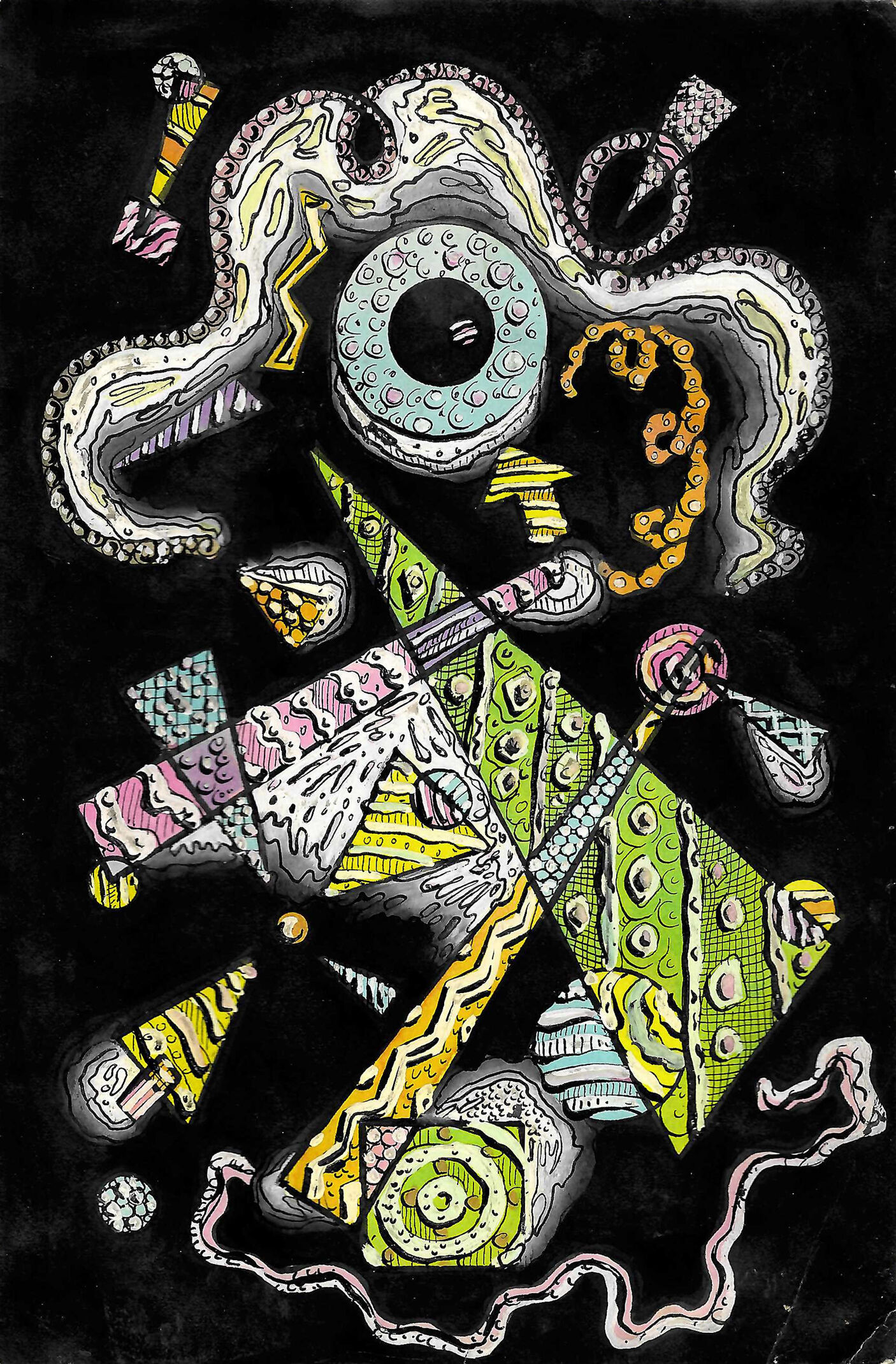
-
551
Early ethnographic work
Audio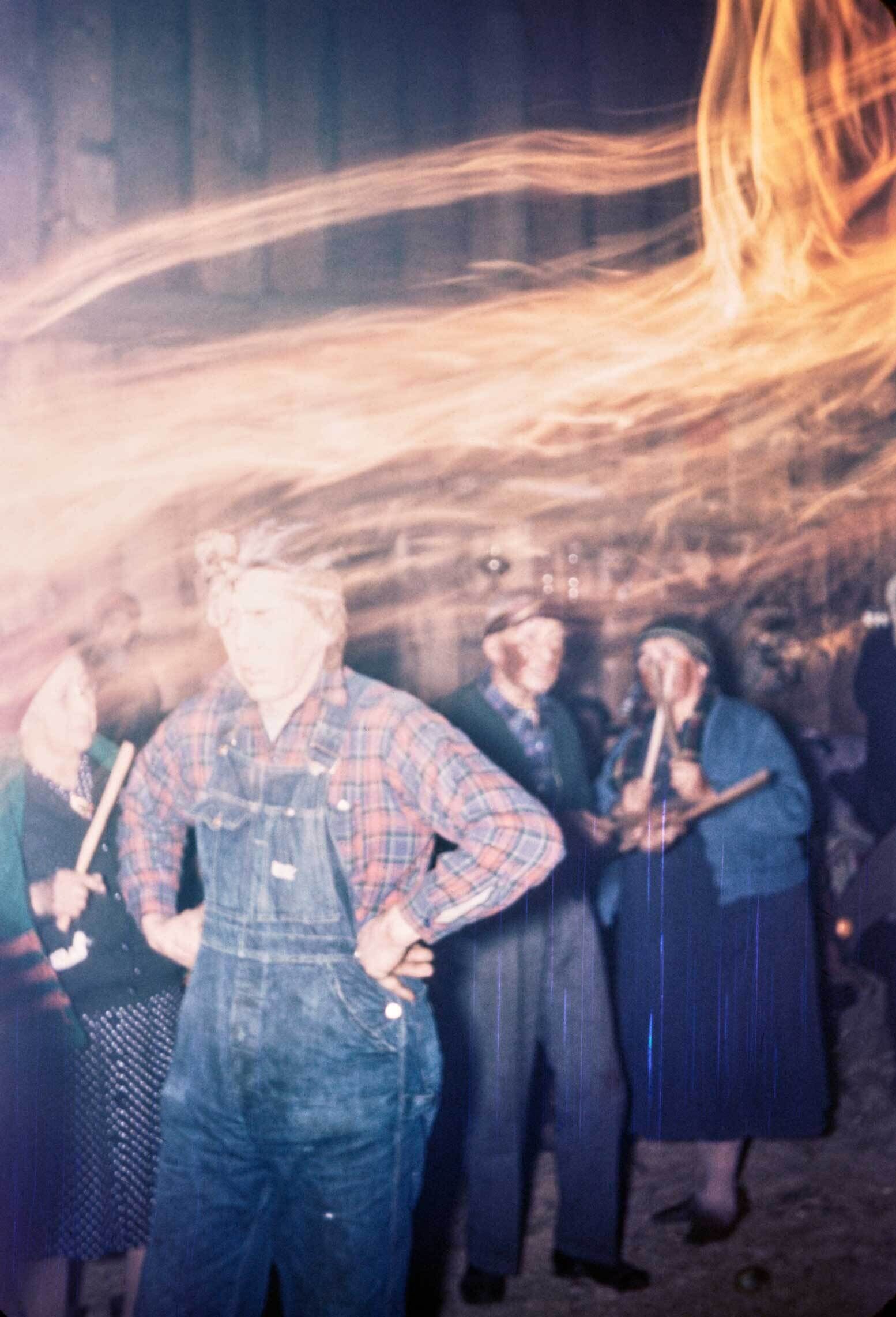
-
552
Minisode: Anthology of American Folk Music
Audio, Transcription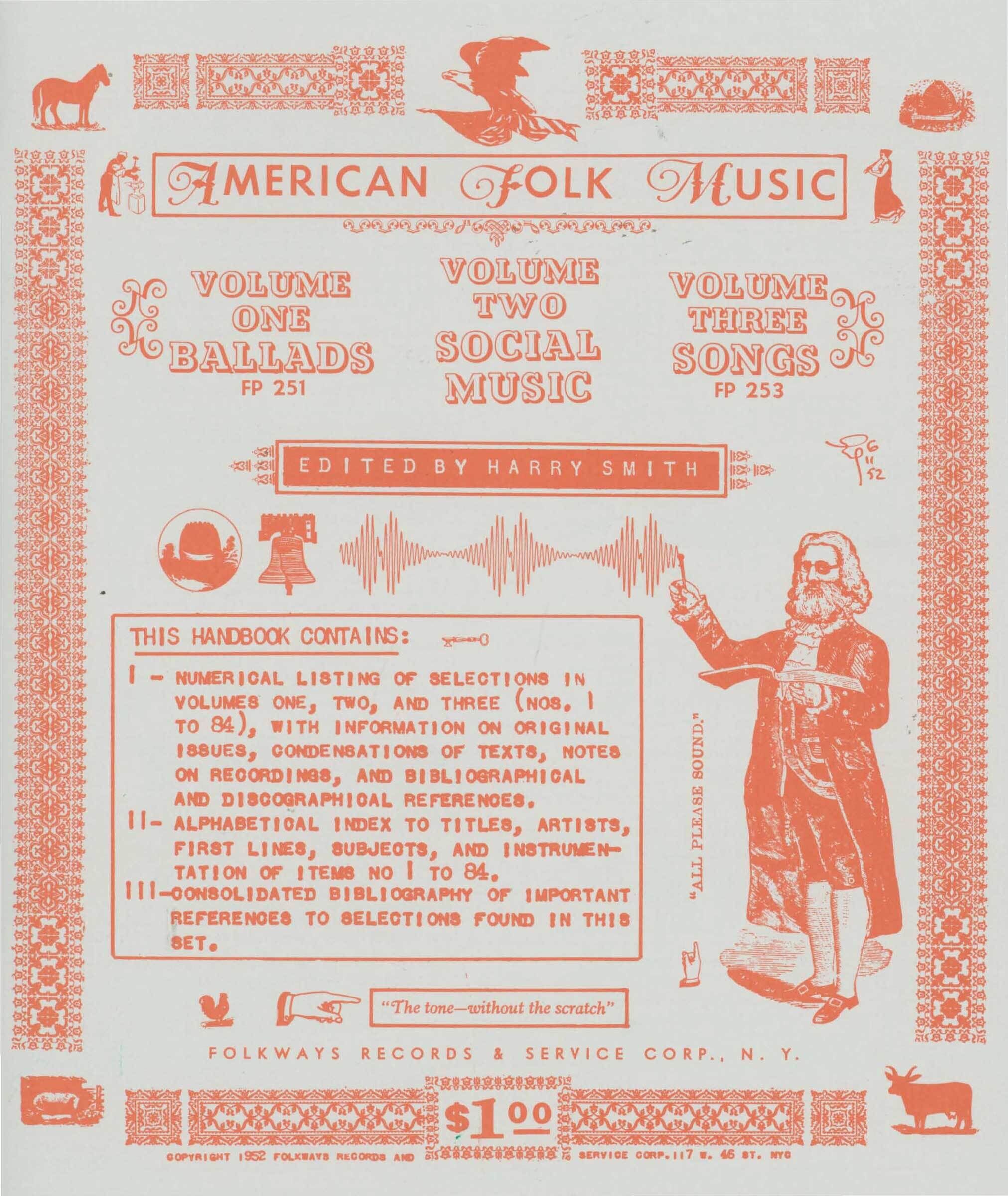
-
553
Sound Description: Harry Smith, Film No.11: Mirror Animations, 1957
Sound description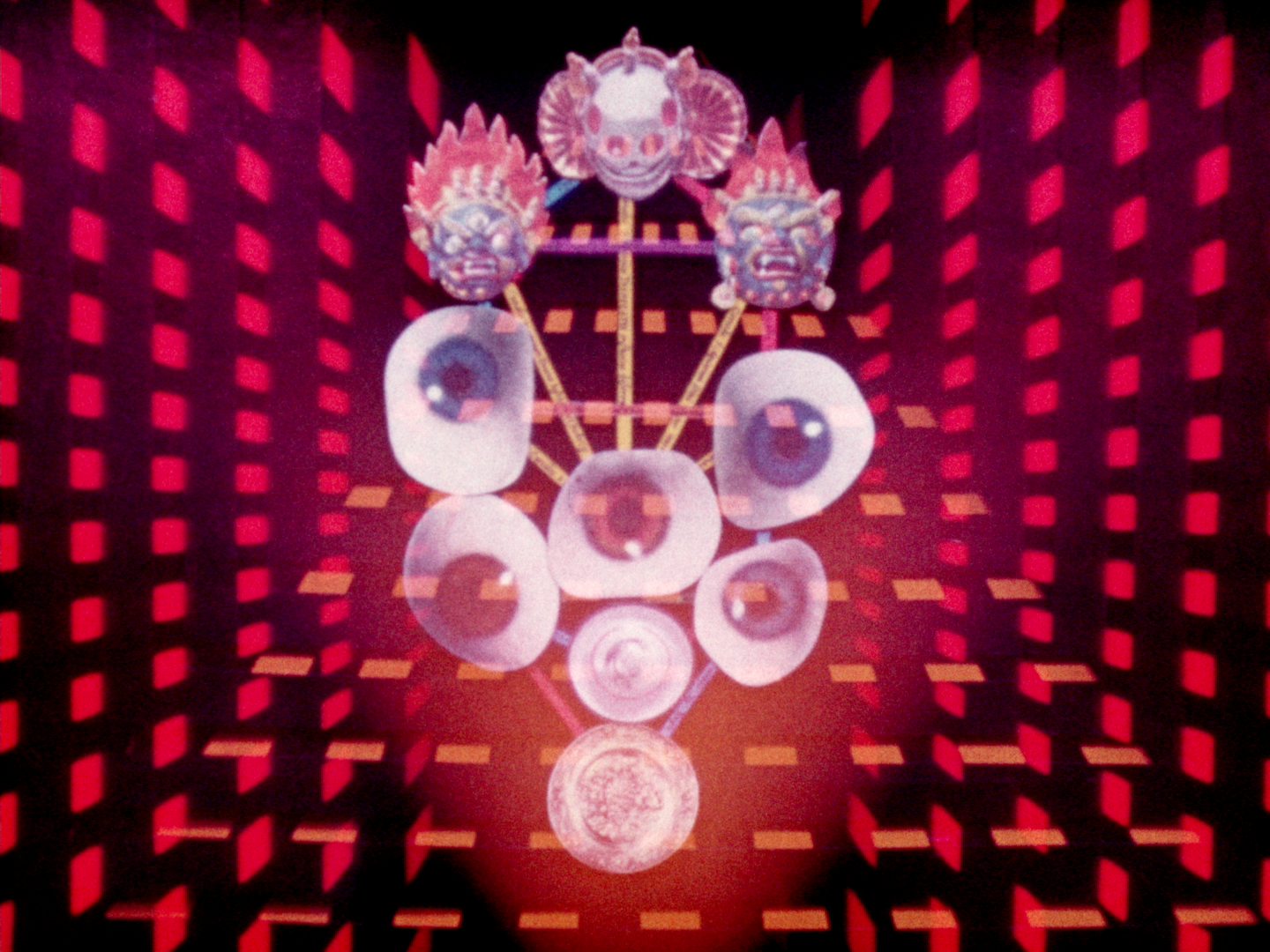
-
554
Sound Description: Harry Smith, Film No. 14: Late Superimpositions, 1964
Sound description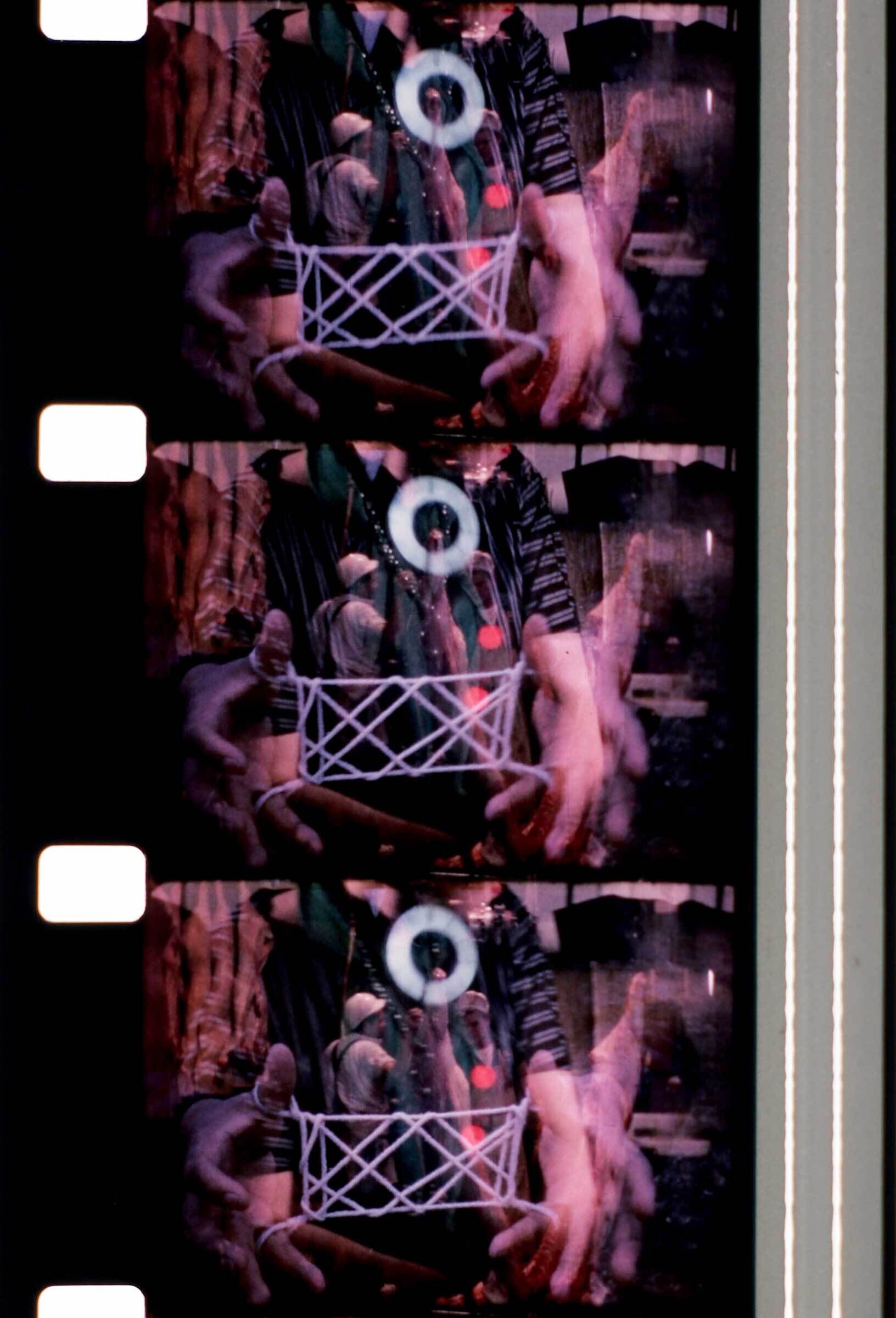
-
555
Sound Description: Harry Smith, Film No. 18: Mahagonny, 1970–80 (restored 2002)
Sound description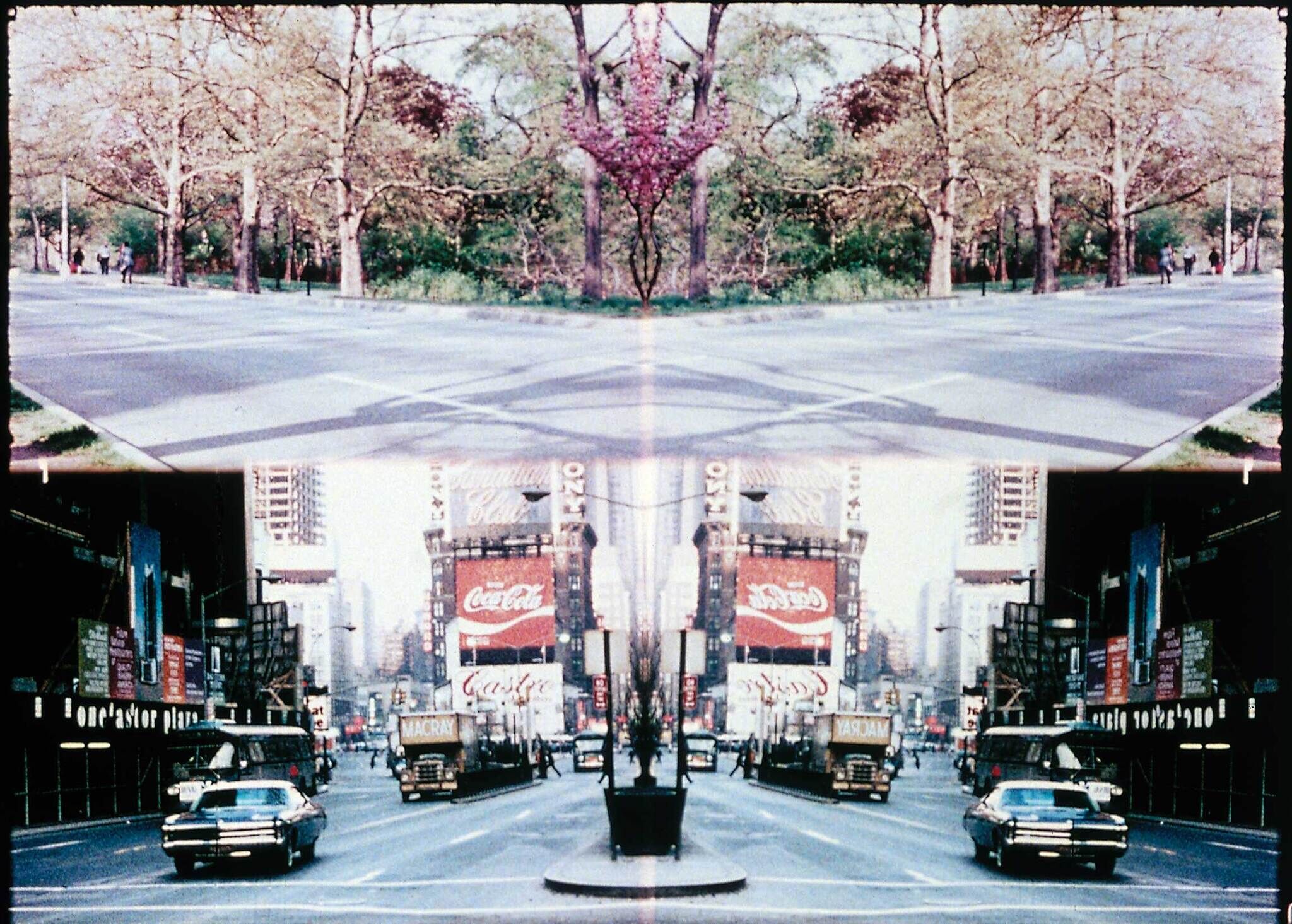
-
556
Sound Description: Harry Smith, Film No. 12: Heaven and Earth Magic Feature, 1957–62
Sound description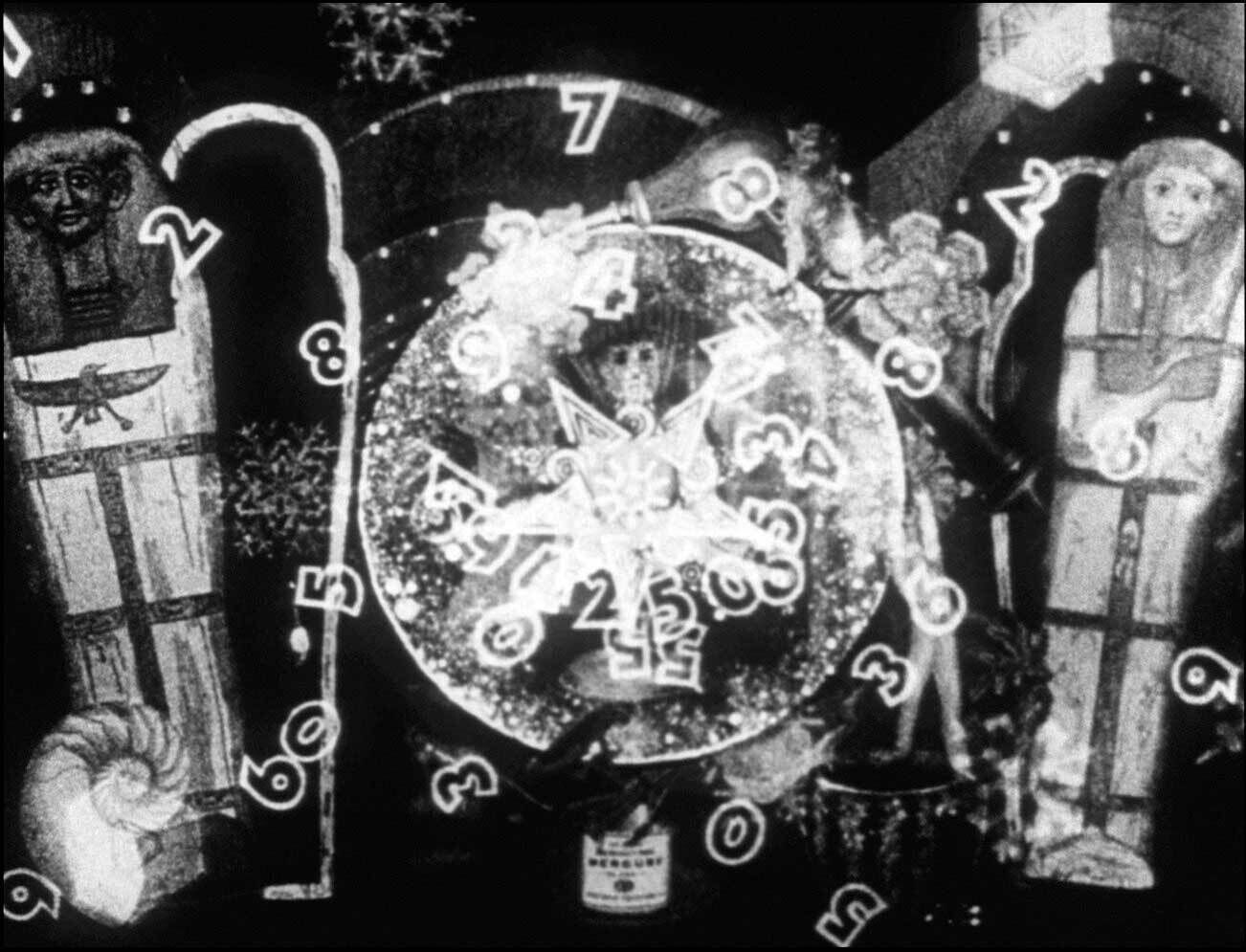
-
557
Sound Description: Harry Smith, Algo Bueno [Jazz Painting], 1948-49
Sound description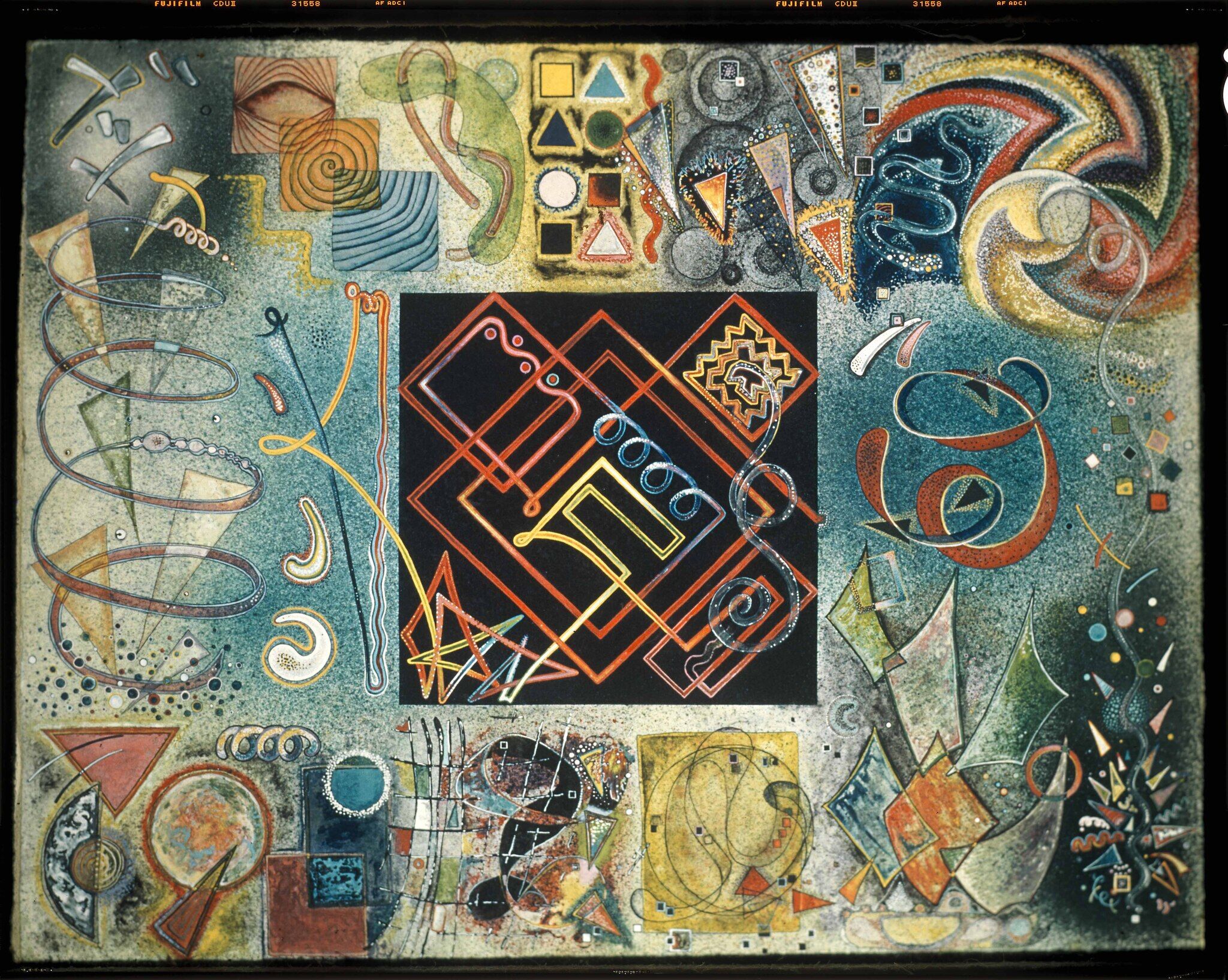
-
558
Sound Description: Harry Smith, Manteca [Jazz Painting], 1948-49
Sound description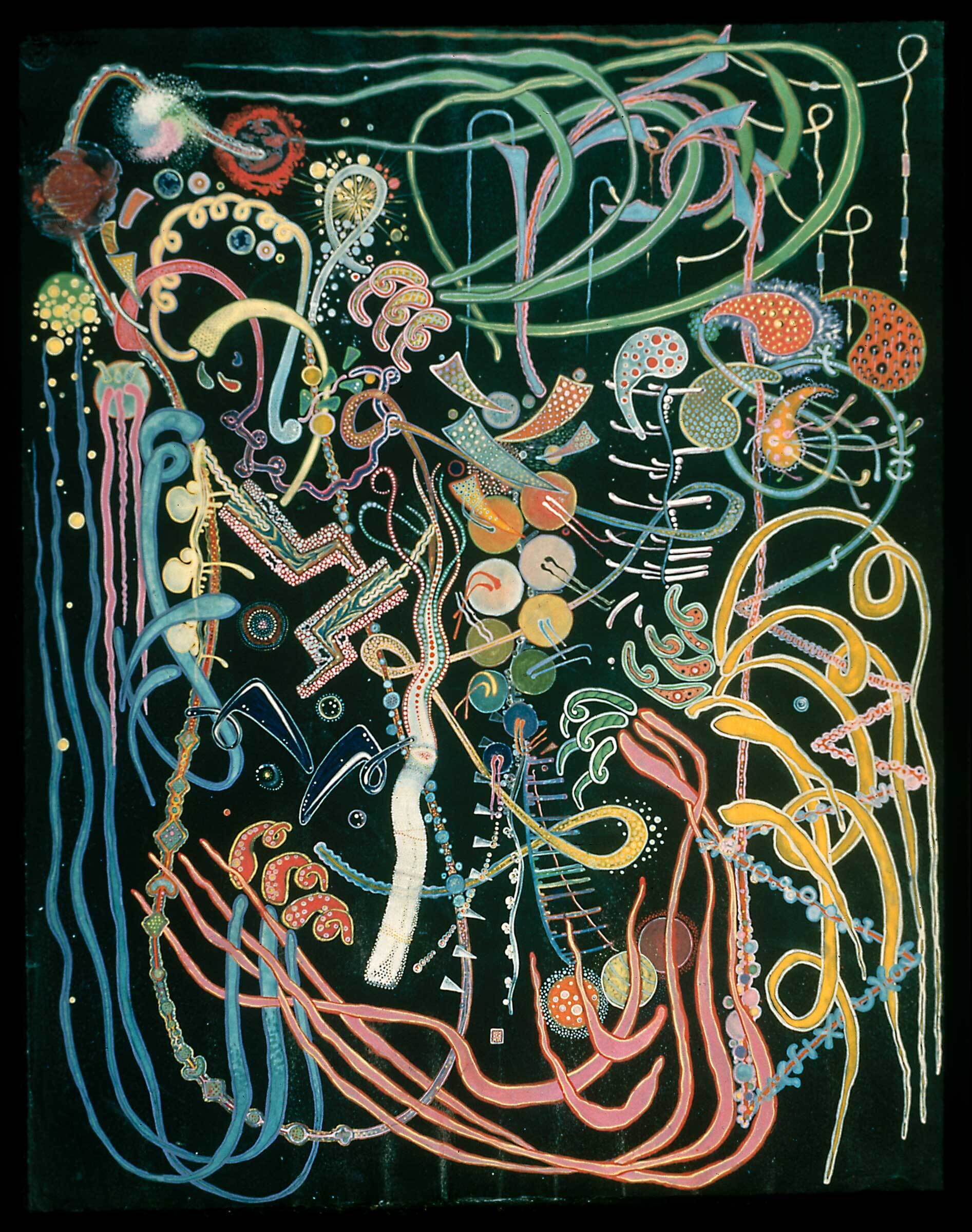
-
559
Sound Description: Harry Smith, Ko-Ko [Jazz Painting], 1949-51
Sound description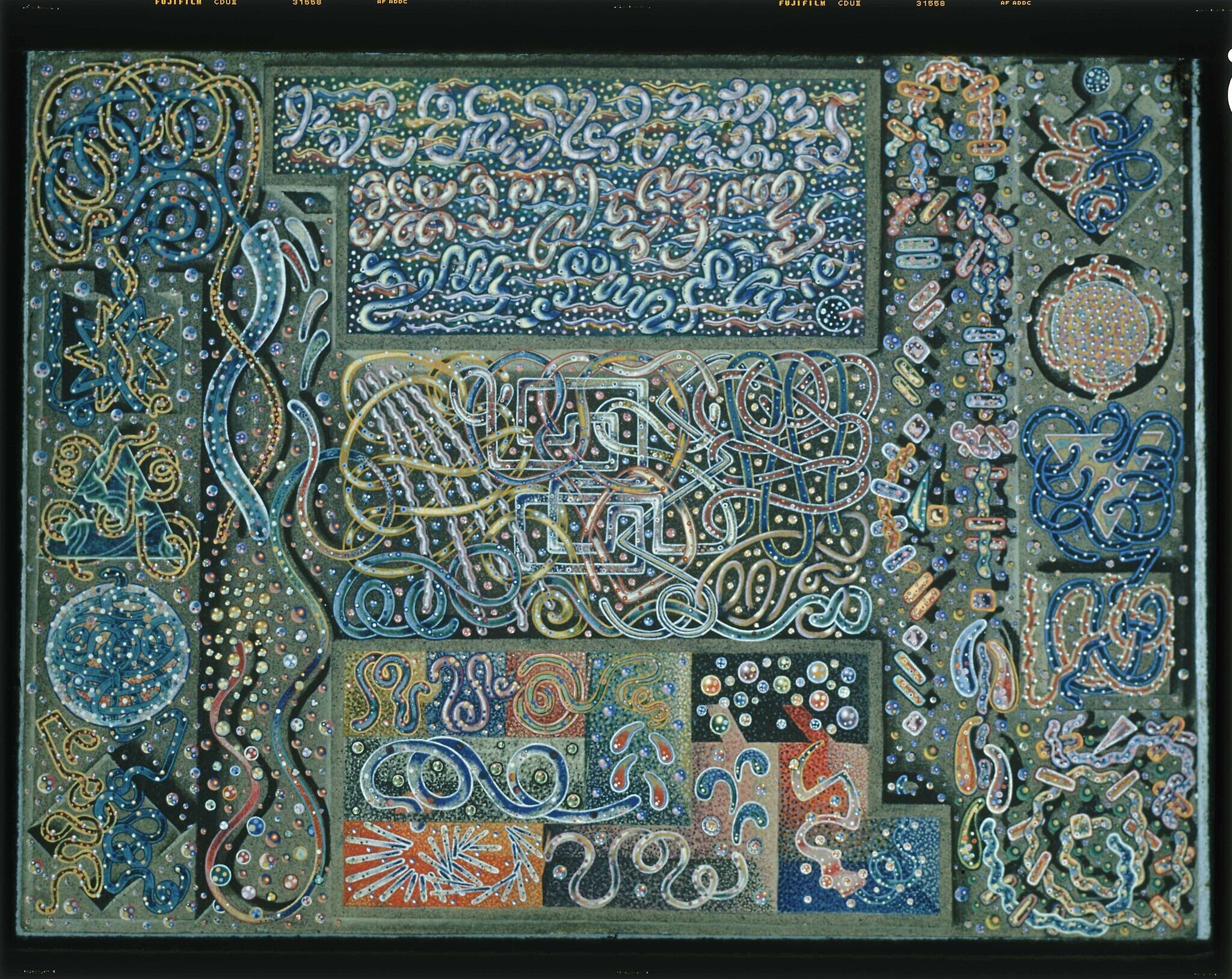
Elisabeth Sussman: Harry Smith is not what you call the typical American artist that's on view at the Whitney. In other words, you could not categorize him as a painter, a sculptor, a filmmaker, a musician, the kind of person you would encounter in our galleries usually. All of those avenues were things that interested him. So, he is definitely an American artist, but he is somebody who is best known to the general public through a folk song collection called The Anthology of American Folk Music.
Narrator: You’re listening to Elisabeth Sussman, one of the exhibition’s four curators. She organized this installation at the Whitney. Feel free to begin exploring the exhibition as you listen to this introduction.
Smith had a deep and wide ranging knowledge of film and painting, and he was especially interested in abstraction. But his creative output wasn’t limited to what we might think of as traditional artistic media.
Elisabeth Sussman: He was interested in objects and things that people made habitually or to use in their lives, and that weren't necessarily classified into what we would consider art with a capital A. He was an obsessive collector in a lot of different areas, but most famously, he was interested in string figures, which he collected from all peoples around the world.
Narrator: In the United States, the best known example of a string figure is Cat's Cradle.
Elisabeth Sussman: And he deciphered the meaning, the language that these string figures represented—they are in the show. He also collected paper airplanes, and that's mostly a New York City collection, where he discovered that there was this kind of folk art, if you like, going on.
This is a deep mind with eccentric interest, that led to the unearthing of a number of intrinsically vernacular, quirky kinds of languages. And that somehow found a way of production of these, bringing them into some sort of material form that we can put into the exhibition, that this person is a non-classifiable artist. I really like this idea. He doesn't fit into any idea of what an artist should do, did do in the twentieth century when he worked. He was own creation. And somebody like this usually slips through the cracks of American culture.
Narrator: As you’ve probably noticed by now, the exhibition architecture is quite different from most museum gallery spaces.
Elisabeth Sussman: I'd describe this exhibition as being an environment with several pavilions that are sculptural. They're not traditional square or rectangular gallery spaces. They are separate pavilions for viewing and listening and learning. They are mostly the design of one of the curators who is Carol Bove, who's a sculptor. And she has derived the shape of these pavilions from shapes that she's found in Harry Smith's, abstract paintings and films.
Narrator: Welcome to Fragments of a Faith Forgotten: The Art of Harry Smith.
When you exit the elevators on the fifth floor and turn to the right, you will be greeted by an opaque, dark curtain hung diagonally from the top of the gallery space to the floor. After entering through the opening beneath the curtain on the left side, you will encounter a dimly lit rectangular space with multiple sculptural elements. The floor is firm and untextured, and the walls are painted in a medium-toned gray. The introductory text for the exhibition is on the wall directly to the right. In front of you is a wall with Film #15 (Untitled animation of Seminole patchwork patterns) playing; this is a silent film, ten minutes long. To the left, a small television sits on a white pedestal, playing a silent, four minute screen test of Harry Smith by the artist Andy Warhol. The black and white video shows Smith making string figures, a creative form he was particularly interested in tracing across different cultures and places. Behind the small television, a large boxing ring, around 16 feet long, is turned on its side, with one side of the roped ring walls resting on the floor and the underside of the ring facing the south wall of the gallery space.
If you turn and move to the left about 35 feet, you will reach the entrance to a series of walls arranged to create a zigzag hallway. Each pane of the zigzag walls displays an arrangement of Harry Smith’s ephemera, collected objects, and artwork, including a few video works. The sound playing in this area comes from a small directional speaker beside Film No. 11: Mirror Animations, playing Mysterioso by the Thelonious Monk Quartet. Visitors are invited to alternate between the east side walls and west side walls, in an order demarcated by roman numerals on the walls above the artwork, but there is no incorrect way to experience the gallery.
Upon emerging from the hallway, you are invited to turn left and move through an open entryway with a partial curtain hanging from it into the listening lounge, a room with floor to ceiling windows on the Museum’s west side wall and four couches on the opposite wall. The lighting in this room varies, as the only light in the space during daytime hours comes from outside through the windows; during evening hours, the space is lit with overhead lights. A table with a built-in monitor sits in front of each one of the couches. Speakers have been installed in the wall behind the couches, and the speaker directly to the left of the entryway does not have a couch directly in front of it; this space is intended for use by anyone with a mobility device. Songs from Smith’s Anthology of Folk Music are playing through the speakers, while liner notes, which include information about each of the songs, appear on the monitor. A copy of the original liner notes, as well as a large print version, are available on the tables.
You can leave the listening lounge by exiting through the direction you came in from. To the right, after re-entering the gallery, is a black box theater alcove, where Film No. 12: Heaven and Earth Magic Feature is playing on a 10 foot screen occupying the west wall. This film is 66 minutes long. The found noises, which constitute the soundtrack of the film, are playing on a speaker overhead. Three one-seater cushioned stools are available as seats.
In front of the black box space, two walls intersect in the center to create a pinwheel shape. On the right side of three of the four triangles created by the intersection is a lightbox transparency of one of Harry Smith’s jazz paintings. On the left side of two of the four sections is a handheld monophone; you are intended to raise the device to your ear to listen to the jazz song that inspired the painting. On one of the sections to the left, a speaker is embedded in the wall, playing the jazz into the space. In the final section, a functional model of a monochord instrument is mounted on the right side wall; visitors are invited to touch and pluck the monochord while leaving it on the wall. On the left side, two framed covers of the Anthology of American Folk Music featuring the monochord hang; these are not intended to be touched.
Moving away from the pinwheel structure, you will encounter a large gray sculptural element separating the gallery space; it takes the shape of the outline of the silhouette of two faces looking at each other, which also creates a vase-like shape. This element of the exhibition design is 12 feet tall, 11 feet long, and two feet wide, and was created by the artist Carol Bove (boh-vay), one of the co-curators of the exhibition. Beyond this large gray vase, Smith’s film Film No. 18: Mahagonny is projected onto the bottom of the boxing ring flipped on its side. There is ample seating provided around twenty feet from the screen. The speakers for the film are set on the floor in between the screen and the seating; they are 17 feet apart from each other, 14 feet from the screen and 17 inches from the seating. Raised tape covers the cord on the floor between them.
To leave, you will exit through the opened side of the diagonally hanging curtain positioned at the entrance of the gallery. To access transcripts and sound descriptions of works with sound, scroll through the Access section of the show’s audio guide. Thank you for joining us!
Harry Smith, Untitled, c. 1952. Watercolor and ink on paper, 9 × 6 in. (22.9 × 15.2 cm). Lionel Ziprin Archive, New York
Narrator: This section of the exhibition traces Smith’s life and work from the 1940s through the 1970s. Smith undertook the earliest projects represented here while he was in high school in Bellingham, Washington. He would visit the reservations of the Lummi and Swinomish peoples. There, he would document songs, ceremonies, languages, and artistic traditions through photography, painting, and sound recordings.
Philip Deloria: My name is Phil Deloria. I'm the Leverett Saltonstall Professor of History at Harvard University.
Narrator: Deloria is the author of Playing Indian, a book about the ways white Americans have drawn on Native American culture in shaping a national identity. Here, he shares some context for Smith’s interactions with the Lummi and Swinomish peoples.
Philip Deloria: Well, he's an extraordinary person, as a high schooler who studies linguistics with Native people, collects material culture, not just small bits of curio material culture, but large things, like house posts. And in some ways, it seems like it's almost knowledge for knowledge's sake, which in many instances, I think, is a laudable sentiment. Of course, in this circumstance, we're also talking about people who have been suffering the ravages of American colonialism, who have limited options to... Of course, Native folks have lots of options to say no to a white high school kid who rides his bike out to their house, but Native folks are also constrained, and they're also feeling like they have a politics of culture that they have to engage in as well. And it may be that a high school kid who rides his bike out to see you is a welcome figure. And I think this is the experience of a lot of hobbyists, that someone who cares a lot about Native culture can find themselves quite welcome in Native contexts, and this does seem to be the case with Harry Smith, at least in these early engagements.
Narrator: Even as a teen, Smith read widely in anthropology—though his interpretation of the discipline was very personal and idiosyncratic.
Phil Deloria: Anthropology really does set the context for these kinds of relations, and particularly in the Northwest Coast, which has a very long history of anthropologists coming and extracting knowledge. If we step back and take a 30,000-foot view of the structures of these things, Harry Smith looks like just one more player in a longstanding history of anthropological appropriation that's part of colonialism. But if you zoom up close, the up close Harry Smith looks like a really interesting, specific and quirky case. So I think the challenge for us is to hold both those things in our mind at the same time when we look at Harry Smith. He's in this ambiguous space where you can invent and make things up for yourself about what you're collecting, what your level of intellectual engagement is going to be, and that's what he does. And arguably, I think this is the springboard for everything that happens with him afterwards.
Harry Smith, Ethnographic slide (S-2), c. 1942. Slide, 2 × 2 in. (5.1 × 5.1 cm). Harry Smith Papers, Getty Research Institute, Los Angeles; gift of the Harry Smith Archives 2013.M.4
Greil Marcus: My name is Greil Marcus. I've written books that take in Harry Smith's Anthology of American Folk Music, one called Invisible Republic that was later called The Old, Weird America. It's been a subject of fascination for me for more than fifty years.
Harry Smith was a man of many parts, many talents, many fields, many adventures. He was a folklorist. He collected commercially released recordings of American folk songs from the twenties, thirties, and forties.He did most of that collecting in Seattle and Berkeley, where he lived in the forties after the war—had a little apartment and scoured the Bay Area for records. He ended up with over 20,000 78s that he kept in a tiny little apartment that he later shipped to New York when he moved.
He wanted to put together a collection of the most interesting, the most gripping, and strange of all the recordings he'd collected that would paint a picture of the United States of America different from one people had ever seen before, through eighty-four records recorded between 1926 and 1934 and released by commercial record companies to sell to markets in the South, to sell to rural white people, to sell to Black people, blues records, string band music, records to sell to Cajun communities in Louisiana ...
This was a burgeoning market all through the twenties that was wiped out by the Great Depression. Records cost from fifty to seventy-five cents. You could feed a family for a week on seventy-five cents after 1929. Harry Smith, in a sense, drew a new map of America and some of the landmarks through the songs that he collected and that he presented in strange sequences that made sense at first only to him and later made sense to millions of people. There were presidential assassinations, there was the sinking of the Titanic, there was pestilence, there were famous train crashes. All kinds of things that were really part of the history of the United States, but sung by strange voices with words describing these shared events in ways that had never been heard before, whether they were sarcastic, whether they were sardonic, whether they were, in a sense, almost celebrating tragedies.
Harry Smith put this together to say to the country, to say to posterity, "There's more to America than you ever suspected. There are different kinds of people than those you've ever met. There are different kinds of people hiding inside people you have met. You don't really know this country, and I'm going to show it to you.”
I came across it in 1970 in a record store. I didn't know what it was. It looked interesting. I took it home. I began to play it. About ninety percent of it made no sense to me at all. It was just the strangest people and the strangest voices. I hadn't heard of anybody who was singing on these records. But there were two or three that struck me so hard, Bascom Lamar Lunsford's I Wish I Was A Mole In The Ground was the first. Who wants to be a mole in the ground? Why would you want to be a mole, the most loathsome and disgusting creature on earth? This is what I want to be. What is this about?
That opened the door. I think that would happen to anybody who comes across this production, this art statement, this remapping of America. There will be one or two songs amidst all the strange landscape that you will say, "Who is that? What's that? What's happening here? I have to know." It won't be the song that reached me. It will be something that reaches you that would never have reached me, so this is a polyglot of voices. This is a chorus of people who haven't met, singing in all different directions all at once.
This set, which was originally called just American Folk Music, was issued as three sets of double LPs, two LPs that were called Ballads, many traditional songs going back to England and Scotland that had been changed in their journey to and through America. Many American-born songs, but they tell stories. Then, there was a two-LP set called Social Music, which was religious music, dance music, community music, sermons, preaching, dances, minstrel skits. Then there was a two-LP set, called Songs. These were the kinds of songs, whether they were blues, whether they were what were then called hillbilly songs, where people spoke in the first-person, where they said, "This happened to me, this is my story."
It changed music in the sixties because all kinds of musicians, or people who weren't yet musicians but later would become musicians, began to hear these songs. A musician's instinct when they hear a song that moves them, that strikes them, that makes them wonder what it is and how it works is to play it, is to play it for yourself to see if you can make it come out in your own voice and be different—become something that you can say, "I put this into the world too. This song is putting me into the world."
That happened with Bob Dylan, it happened with Jerry Garcia, and other people who ended up creating the Grateful Dead. It happened with hundreds of Greenwich Village folk singers and folk singers around the country. People learned these songs as if they were a Bible, and because it was like a Bible, they had to spread the word. It wasn't just that musicians then, in the 1960s and ever since, have taken these songs and sung them and recorded them and let other people hear them. It was a sensibility—this set that Harry Smith created—that was passed on to people. Where it said to them, "There's more in this music. There's more in this country than you ever imagined, so seek and ye shall find. Go out looking."
Live Captions: Harry Smith, The Anthology of American Folk Music, 1997
Synchronized mobile captioning for the Anthology of American Folk Music playlist will be available soon.
Harry Smith (ed.), Booklet for Anthology of American Folk Music (Folkways Records, 1952). Booklet, 10 1/2 × 8 1/4 in. (26.7 × 21 cm). Smithsonian Folkways, Washington, DC
Sound Description: Harry Smith, Film No.11: Mirror Animations, 1957
Running time: 00:03:35
The song playing in the background of this film is Mysterioso from the Thelonious Monk Quartet, released in 1949. It begins with singular notes played in the mid range of a piano in a steady movement upwards. These notes are joined by a plucked bass and some high-pitched percussive accompaniment, perhaps tapped out on a xylophone. The general feeling of the music is upbeat and pleasantly complex. Then, the piano and xylophone take turns soloing; first, the piano drops out to allow a quick tempoed xylophone solo, while the bass keeps the song anchored. Then the piano plays an unpredictable, jazzy solo. The feeling of the piece is playful and pleasant throughout. Finally, the piano and xylophone come back together, mirroring the beginning of the piece, and the song ends in a jazzy piano flourish.
Harry Smith, still from Film No. 11: Mirror Animations, c. 1957. 16mm film, color, sound; 3:35 min. Sound from The Thelonious Monk Quartet, B-side of Misterioso (Blue Note, 1949), 78 pm. (Courtesy Blue Note under license from Universal Music Enterprises). Courtesy of Anthology Film Archives, New York. © Anthology Film Archives
Sound Description: Harry Smith, Film No. 14: Late Superimpositions, 1964
Running time: 00:31:00
The soundtrack to this film is an excerpt of the political-satirical opera Rise and Fall of the City of Mahagonny, written by Kurt Weill and Bertolt Brecht. The opera is performed in German.
Harry Smith, still from Film No. 14: Late Superimpositions, c. 1964. 16mm film, color, sound; 31 min. Courtesy of Anthology Film Archives, New York, NY; restored by Anthology Film Archives and the Film Foundation with funding provided by the Hobson/Lucas Family Foundation © Anthology Film Archives
Sound Description: Harry Smith, Film No. 18: Mahagonny, 1970–80 (restored 2002)
Running time: 02:21:00
The soundtrack for the entirety of the film is a dramatic opera, sung and spoken in German. The political-satirical opera is titled Rise and Fall of the City of Mahagonny, and it was written by Kurt Weill and Bertolt Brecht.
Harry Smith, still from Film No. 18: Mahagonny, 1970–80 (restored 2002). 16mm film, restored to 35mm film, transferred to digital video, color, sound; 2:21 min. © Harry Smith Papers, Getty Research Institute, Los Angeles; gift of the Harry Smith Archives 2013.M.4. Courtesy Anthology Film Archives
Sound Description: Harry Smith, Film No. 12: Heaven and Earth Magic Feature, 1957–62
Running time: 01:06:00
The soundtrack to this film is made up of a collection of “found noises,” such as sirens, clinking, rattling, and metallic banging.
Harry Smith, still from Film No. 12: Heaven and Earth Magic Feature, c. 1957–62. 16mm film transferred to digital video, black and white, sound; 1 hr. 6 min. Courtesy of Anthology Film Archives, New York
Sound Description: Harry Smith, Algo Bueno [Jazz Painting], 1948-49
Running time: 00:02:59
Note: this sound description is for the jazz piece accompanying the painting.
The beginning of this song is filled out with many instruments: many types of horns, drums, and an upright bass. All the different parts seem to meld together in harmonic moments, and then one section will swell in melody above the rest of the group. The song is very smooth, and of medium tempo. One higher pitched horn has a shining moment with a quick, punchy solo above the other instruments in the middle of the song; its punchiness is then contrasted by a mid-range horn’s following smooth solo, which ends abruptly in a few full band stings; these stings add a feeling of intrigue and excitement to the song, and transition into the same smooth, full band sound which characterized the beginning. Near the end, the different subsections of horns begin a melody in a round, which culminates in a high-energy big finish. The overall feeling of the song is jazzy, robust, and intense.
Harry Smith, Algo Bueno [Jazz Painting], c. 1948–49. Lightbox projection from 35mm slide of lost original painting, 27 7/8 × 28 in. (55.6 × 71.1 cm). Estate of Jordan Belson.
Sound Description: Harry Smith, Manteca [Jazz Painting], 1948-49
Running time: 00:03:06
Note: this sound description is for the jazz piece accompanying the painting.
This song begins with a smooth upright bassline and some rhythmic patting on a midtone drum. A man excitedly calls out, “Manteca!” twice, then a low-pitched horn begins playing. It is quickly joined by an assortment of other lower pitched horns, which keep to a steady melody, while a higher pitched horn improvises quickly on top. The horns all harmonize for a satisfying jazz sting, before returning to a playful back and forth between the lower pitched horns and the higher pitched ones. At about a minute into the song, a mid-tone horn takes on a swinging, slower melody, against a big-band type of horn harmony in the background. This lasts for only a few bars before they return to the original back and forth between the two types of horns. Throughout the rest of the song, this pattern repeats; an isolated horn will play a smoother, more swaying melody in a solo moment against the predictable drumming and bassline, then the original horn melody will return with a large group playing. A few different isolated voices call out “Manteca!” and the horns fade into the drumming and bassline as the song winds down. The overall feeling of the song is dancey and triumphant.
Harry Smith, Manteca [Jazz Painting], c. 1948–49. Lightbox projection from 35mm slide of lost original painting, 27 3/5 × 21 7/8 in. (70.1 × 55.6 cm). Estate of Jordan Belson
Sound Description: Harry Smith, Ko-Ko [Jazz Painting], 1949-51
Running time: 00:02:57
Note: this sound description is for the jazz piece accompanying the painting.
This song begins with very high tempo and frenzied jazz horns and snare drum. Various horns take turns playing incredibly complex and quick little melodies, while the snare drum keeps a steady and fast-paced tempo underneath the horns. At about thirty seconds in, the horns and snare are joined by an upright bass, more filled out drumline, and a subdued piano, which increases the complexity of the piece. One main horn, with a higher tone, trills between the lower end of a scale and the higher end masterfully and unpredictably. At a little over two minutes into the song, the horn stops playing to allow for a quick drum spotlight; the snare rolls quickly, punctuated by syncopated notes from a kick drum. The horns rejoin smoothly for the last 30 seconds of the song, two taking turns smoothly jumping notes. The overall feeling of the song is frenzied, jazzy, and playful.
Harry Smith, Ko Ko [Jazz Painting], c. 1949–51. Lightbox projection from 35mm slide of lost original painting, 21 7/8 × 29 in. (55.6 × 73.7 cm). Estate of Jordan Belson.
0:00
0:00