Henry Taylor: B Side
2023
-
500
Introduction
Audio, Verbal description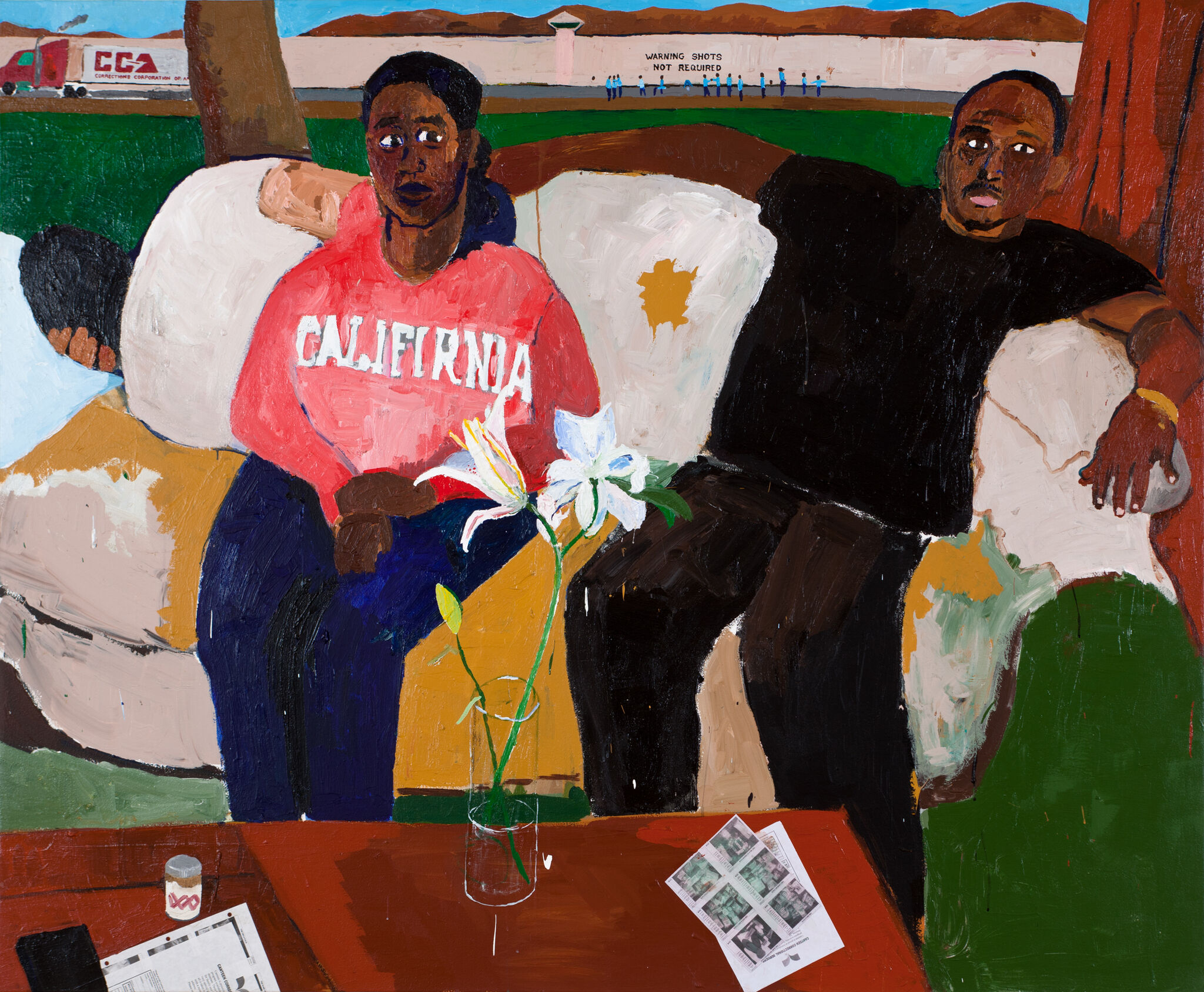
-
501
i’m yours, 2015
Audio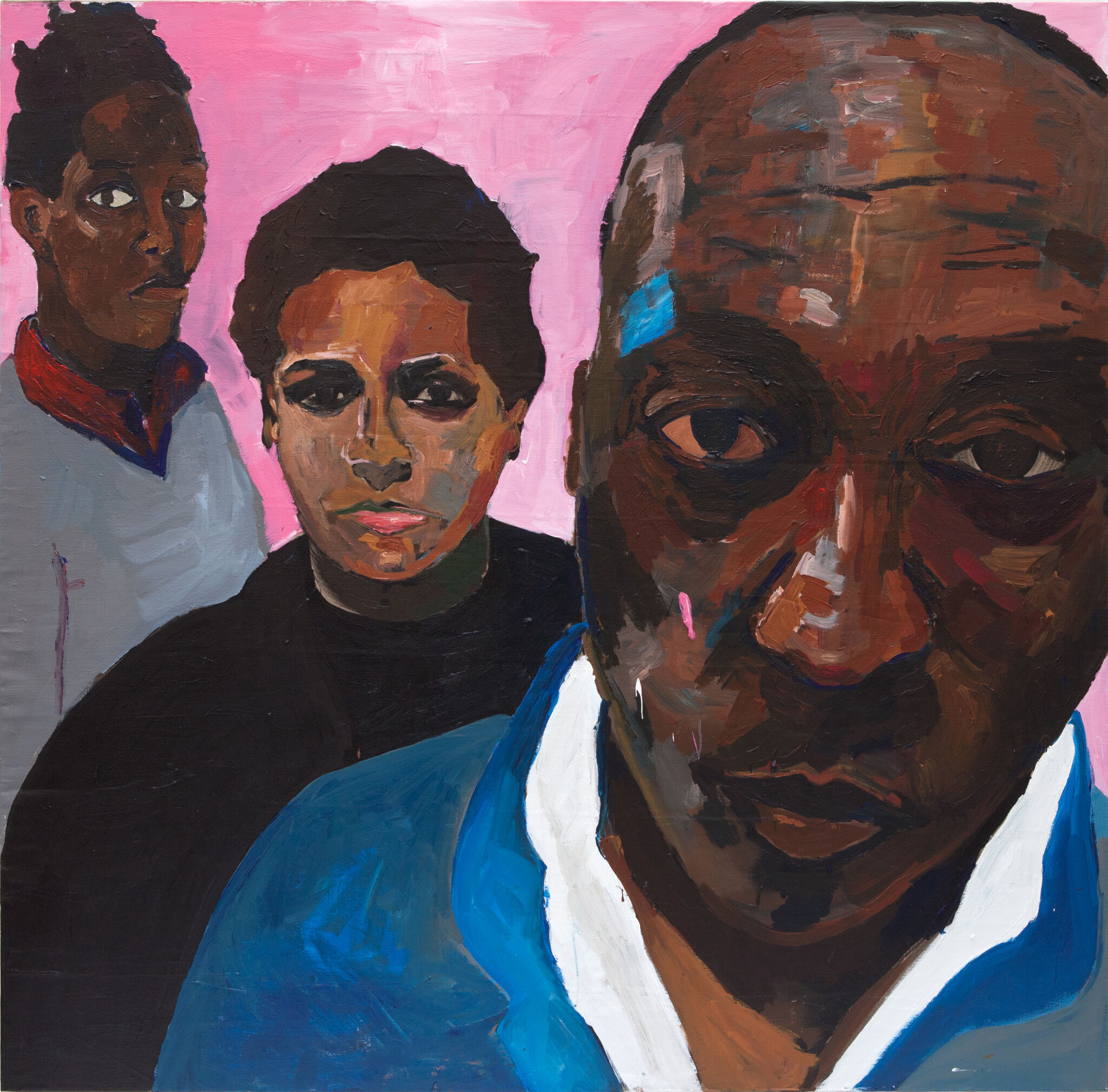
-
502
Cora, (cornbread)
Audio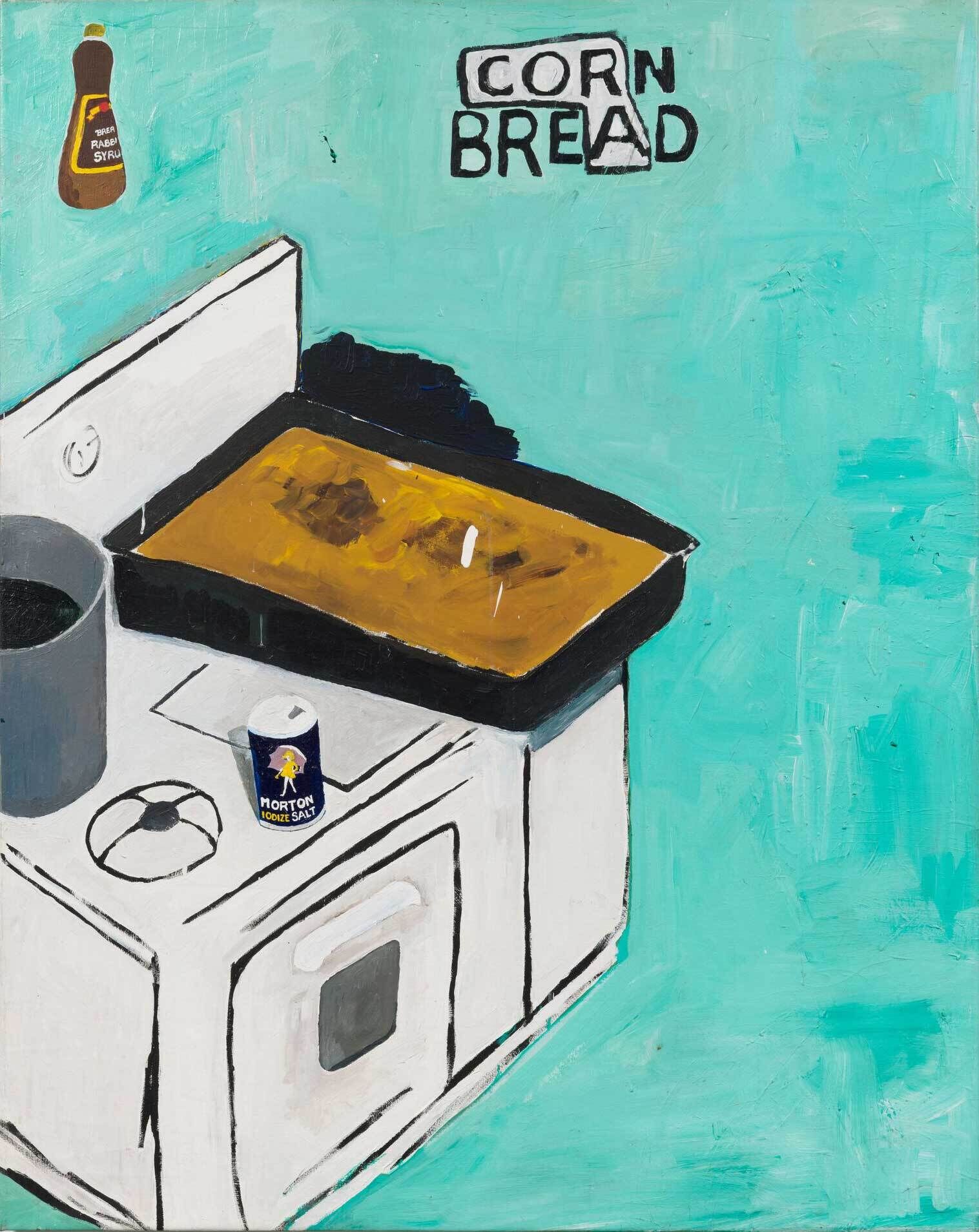
-
503
Untitled, 2021
Audio, Verbal description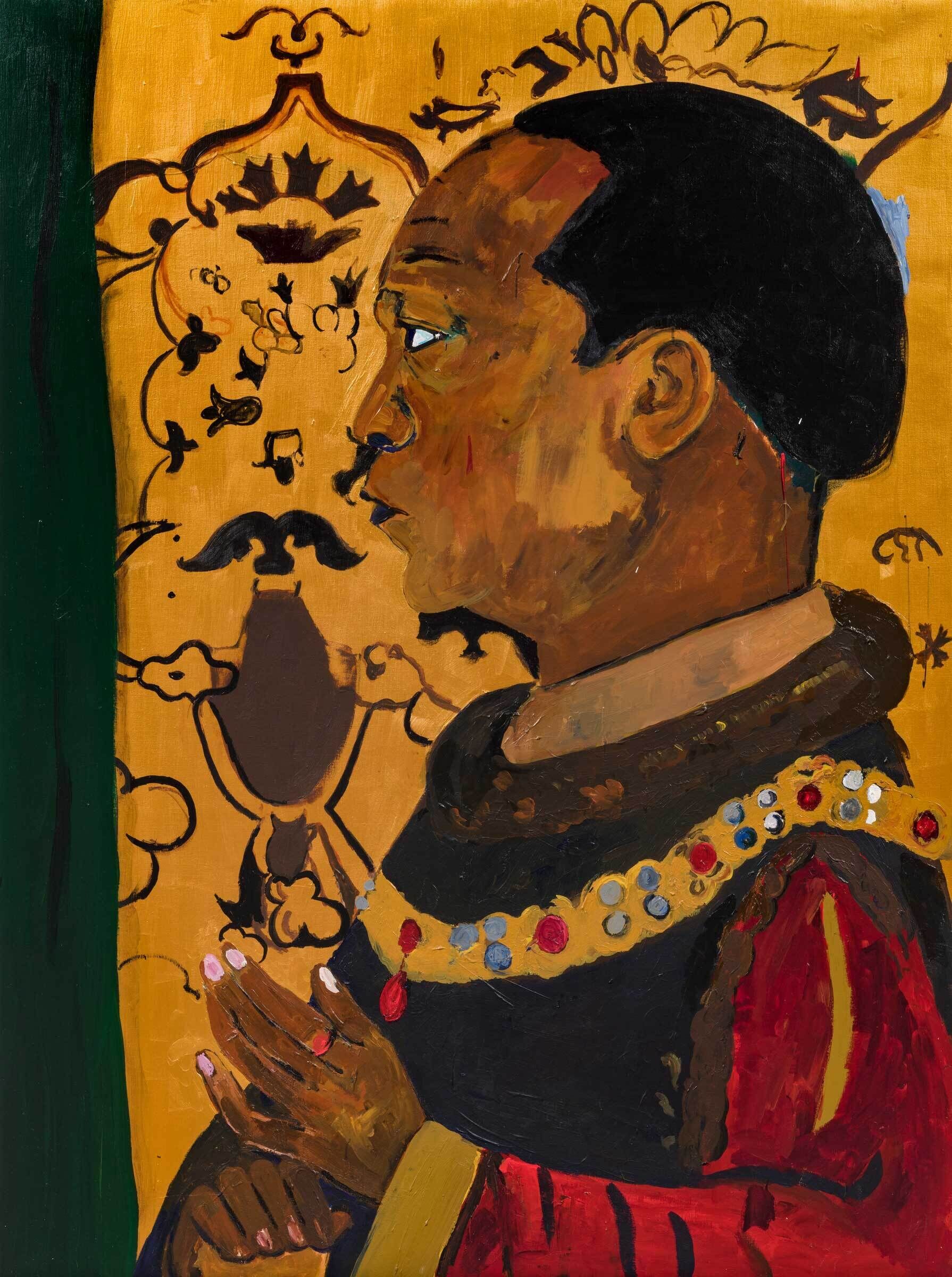
-
504
Camarillo Drawings, 1988-95
Audio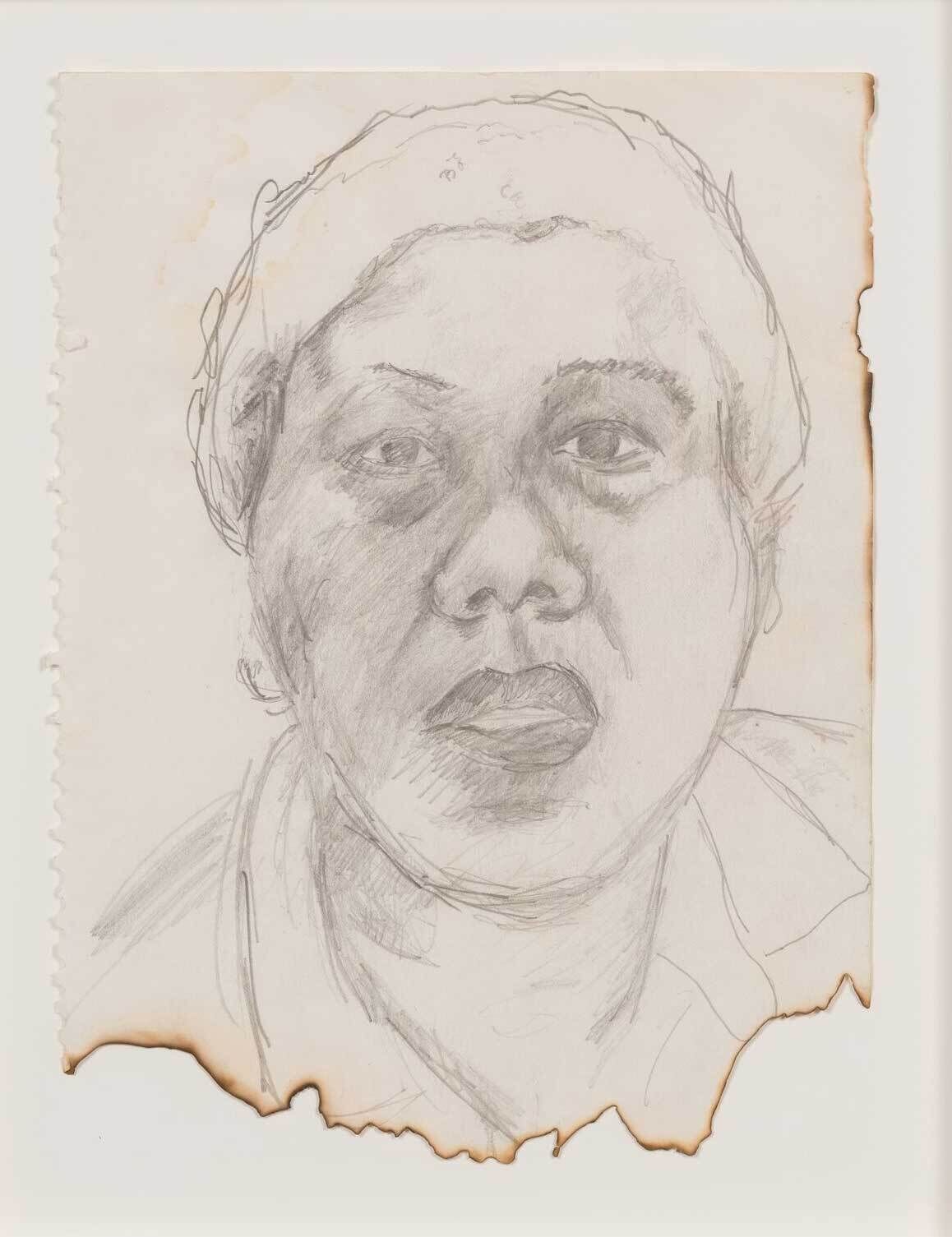
-
505
The 4th, 2012
Audio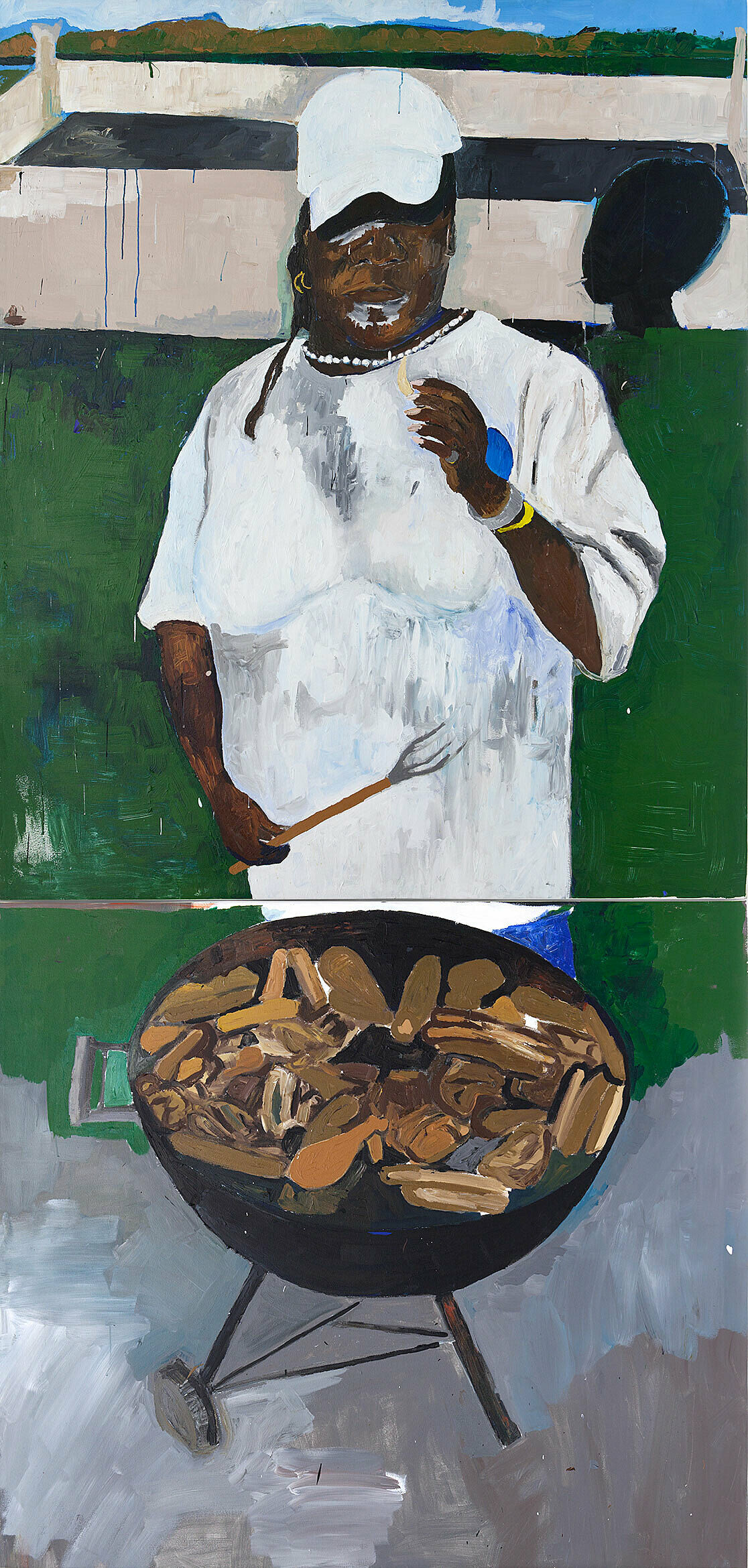
-
506
THE TIMES THAY AINT A CHANGING, FAST ENOUGH!, 2017
Audio, Verbal description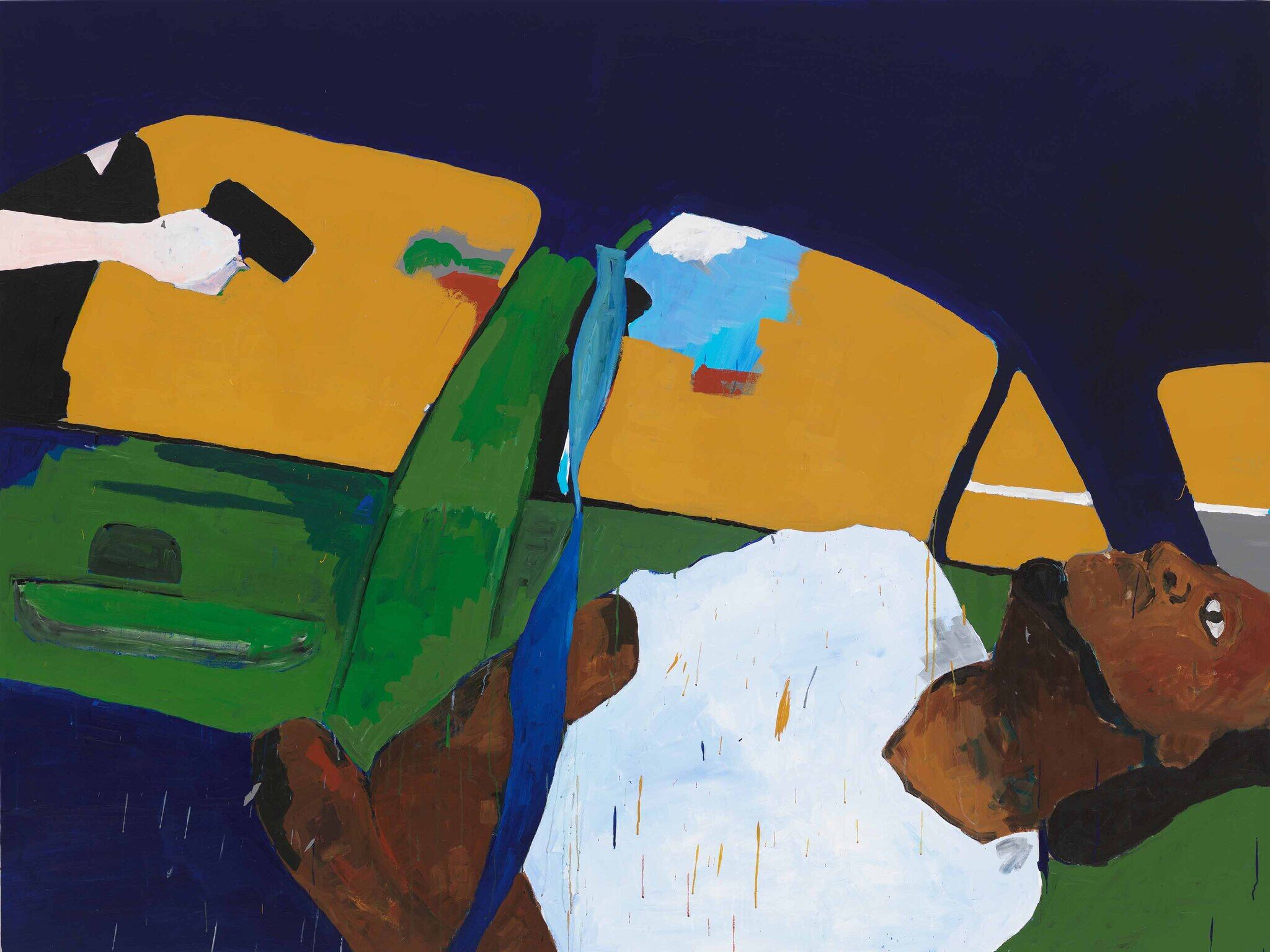
-
507
Resting, 2011
Audio
-
508
Warning shots not required, 2011
Audio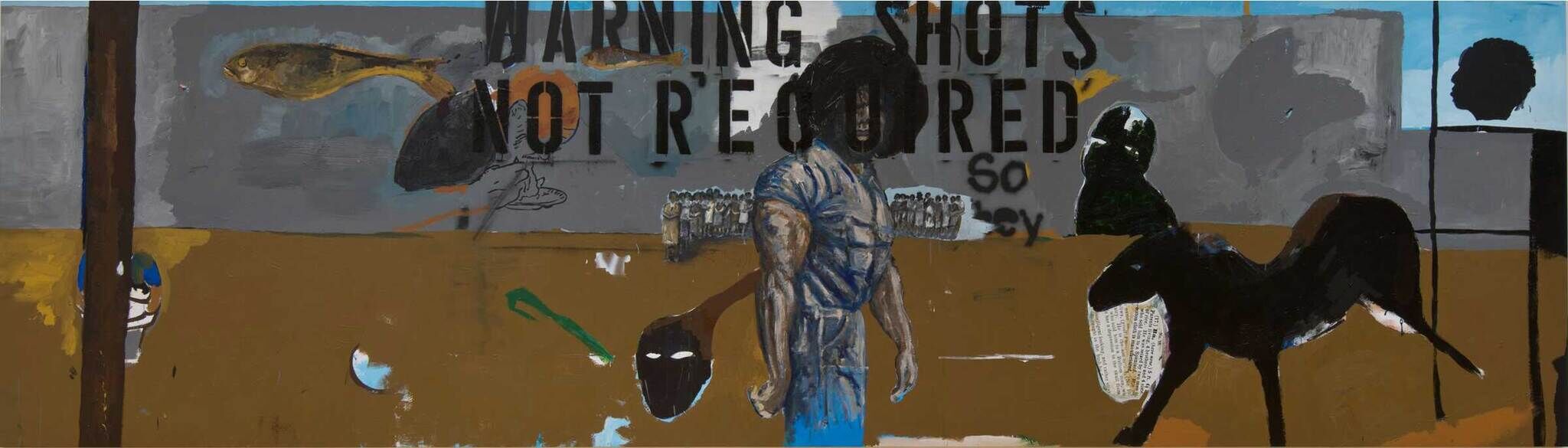
-
509
Y’ALL STARTED THIS SHIT ANYWAY, 2021
Audio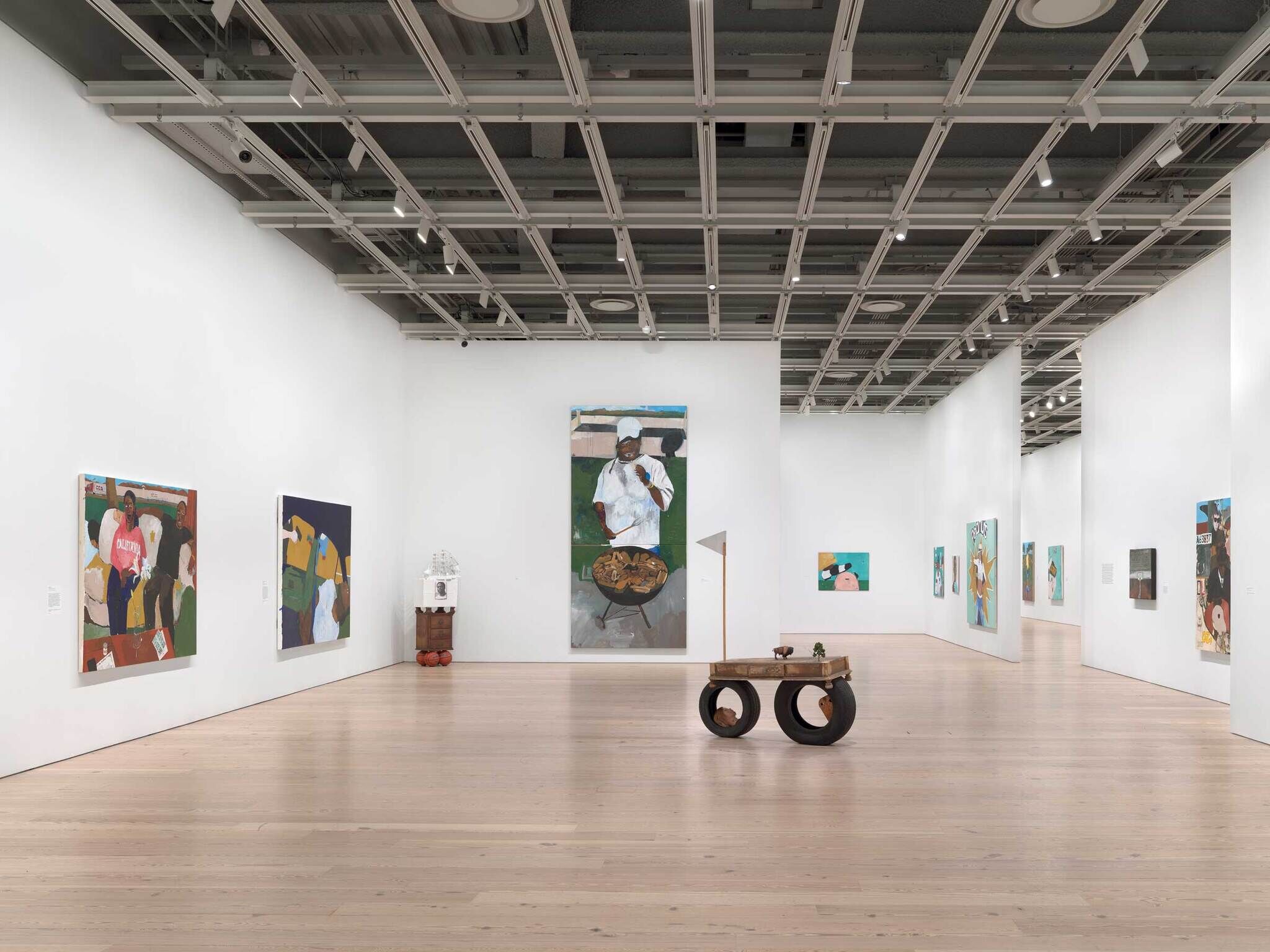
-
510
Fatty, 2006
Audio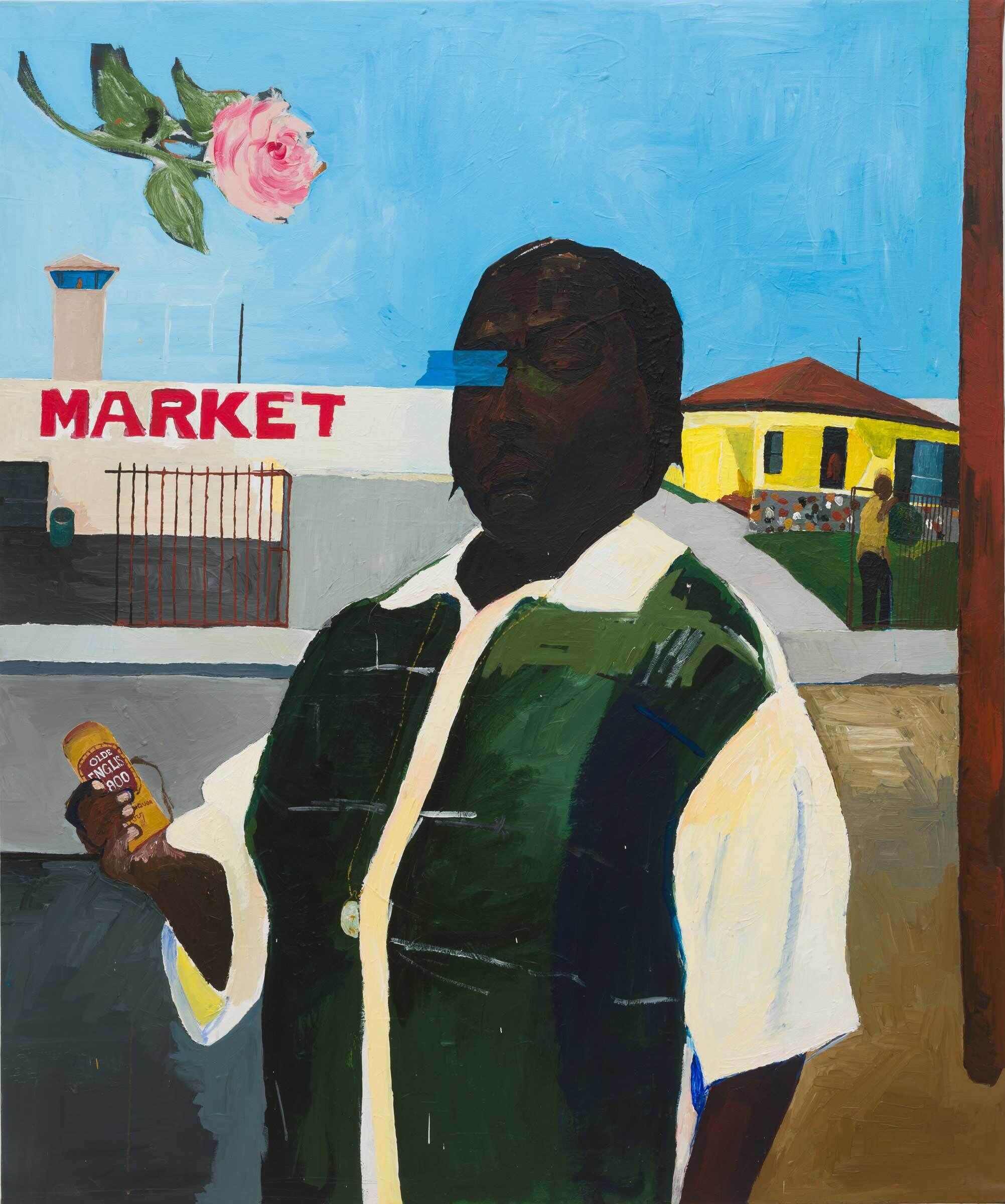
-
511
emery lambus, 2016
Audio, Verbal description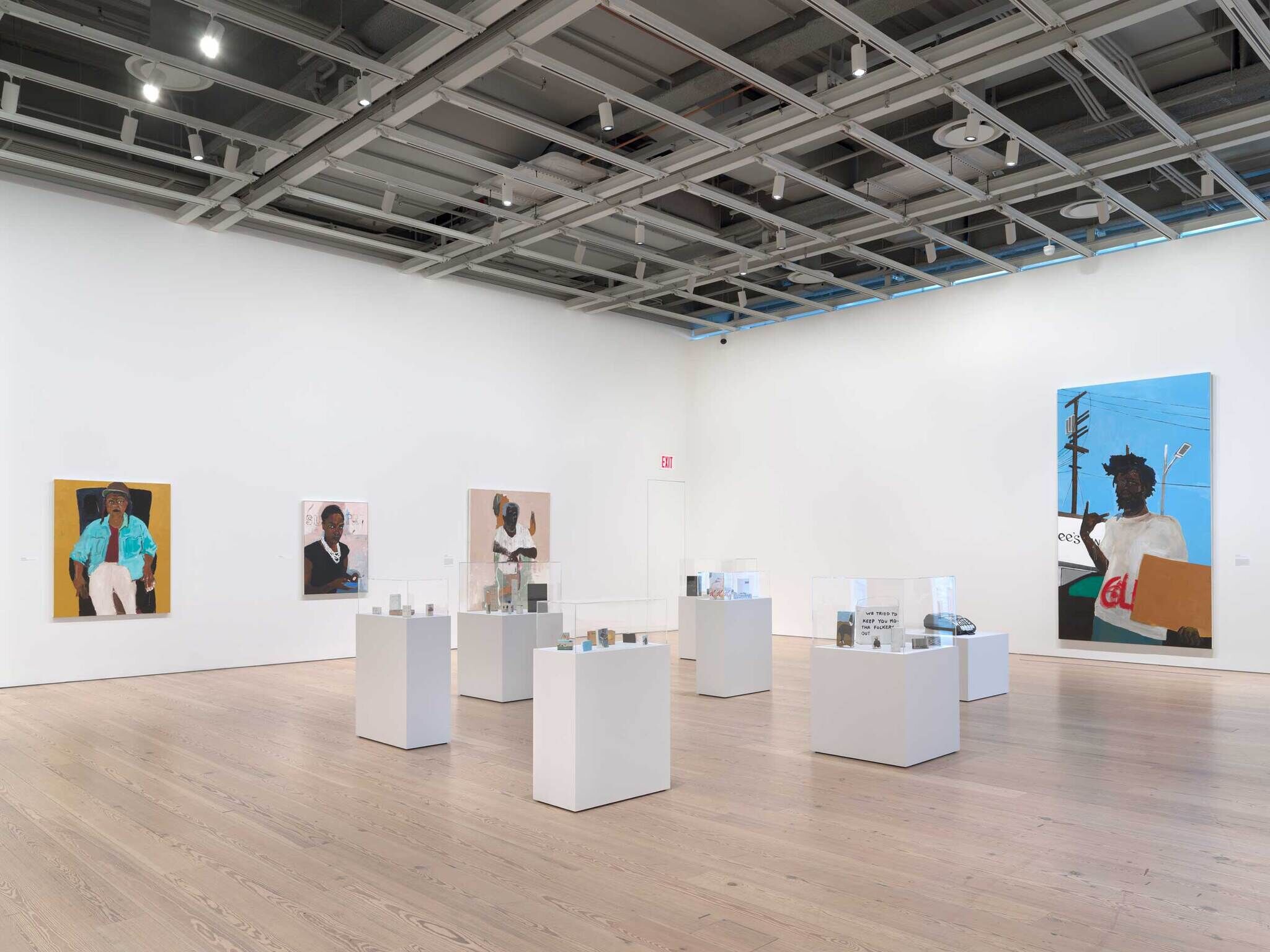
-
512
Huey Newton, 2007
Audio, Verbal description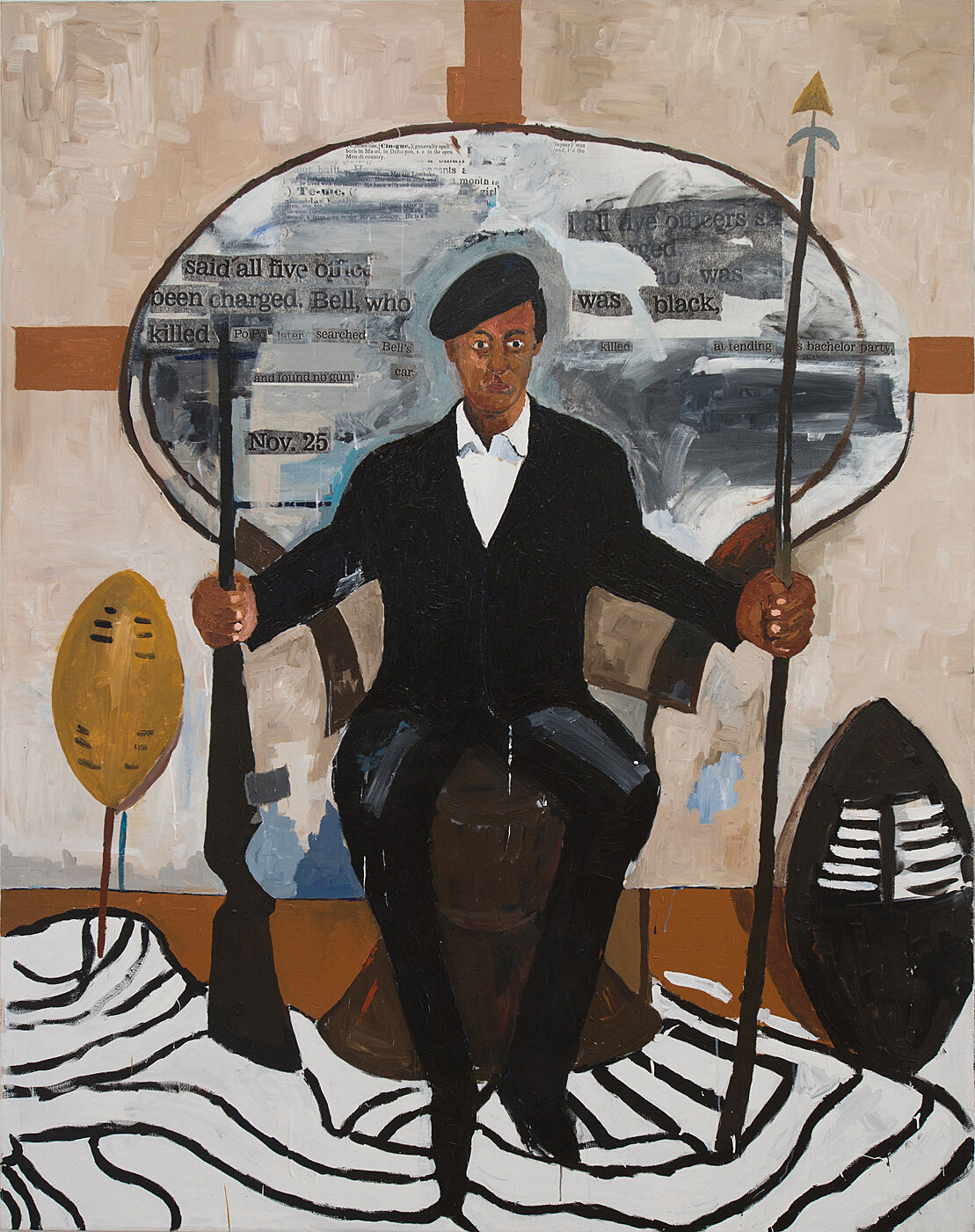
-
513
Andrea Bowers, 2010
Audio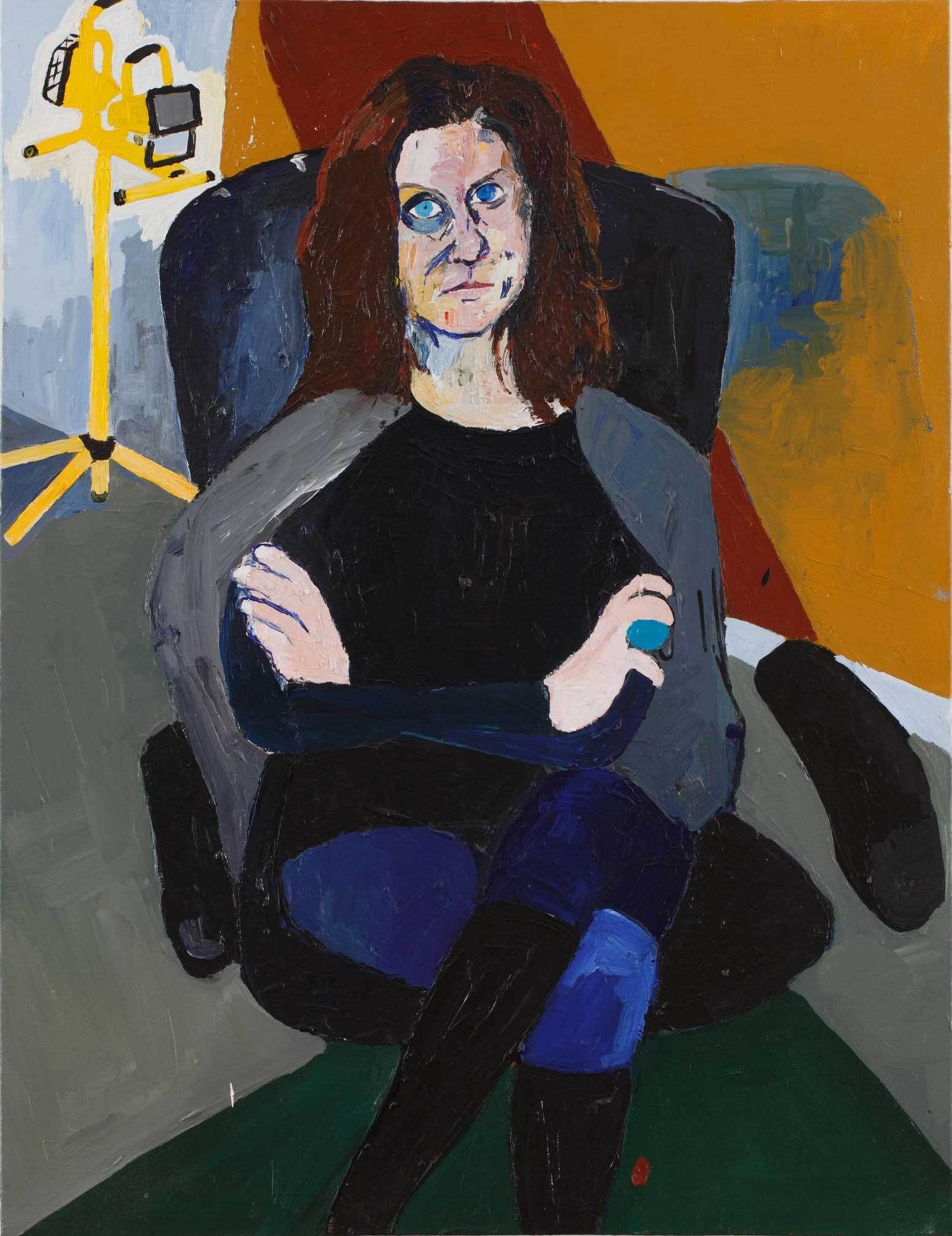
-
514
Deana Lawson in the Lionel Hamptons, 2013
Audio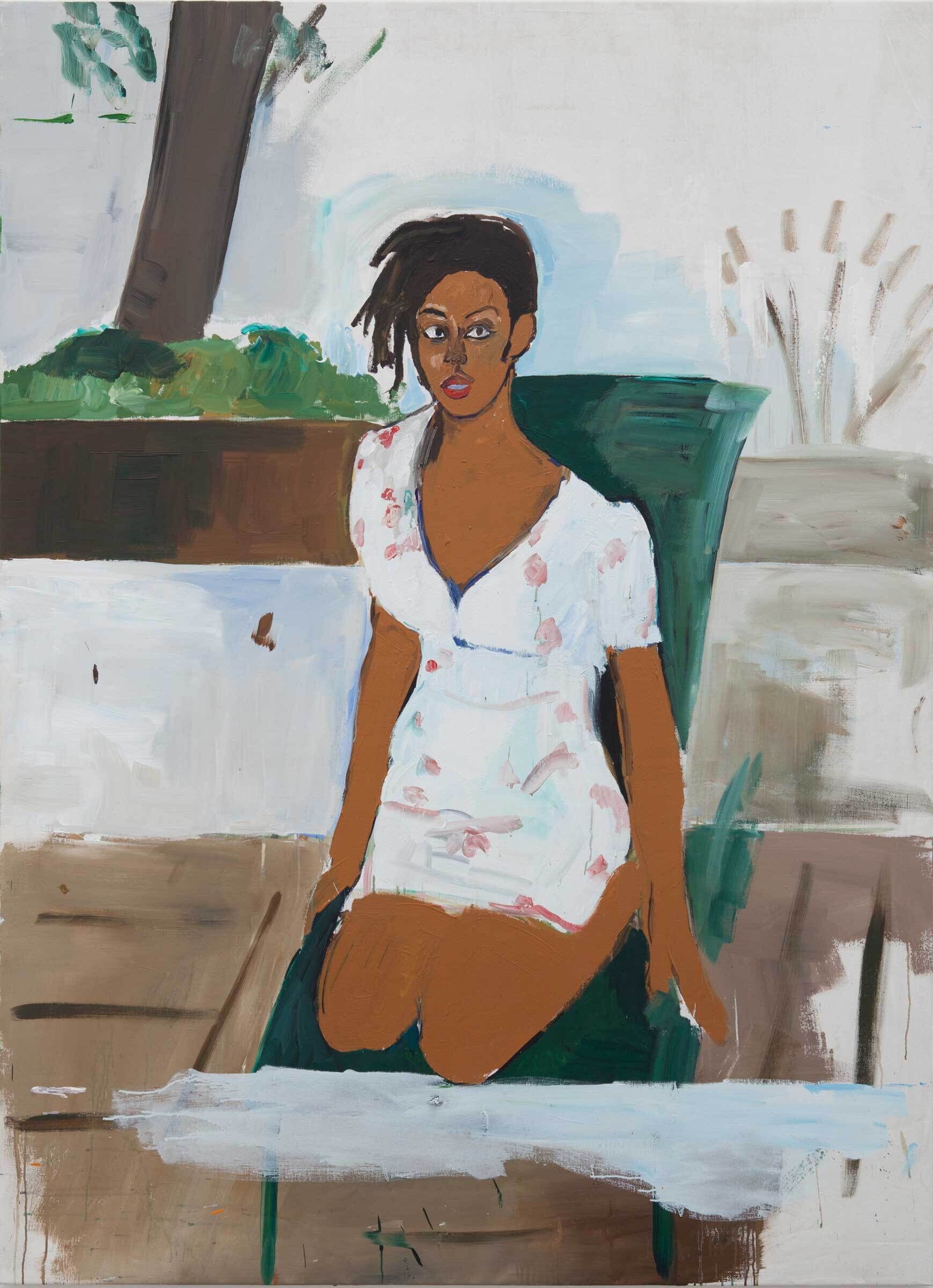
Narrator: Welcome to Henry Taylor: B-Side.
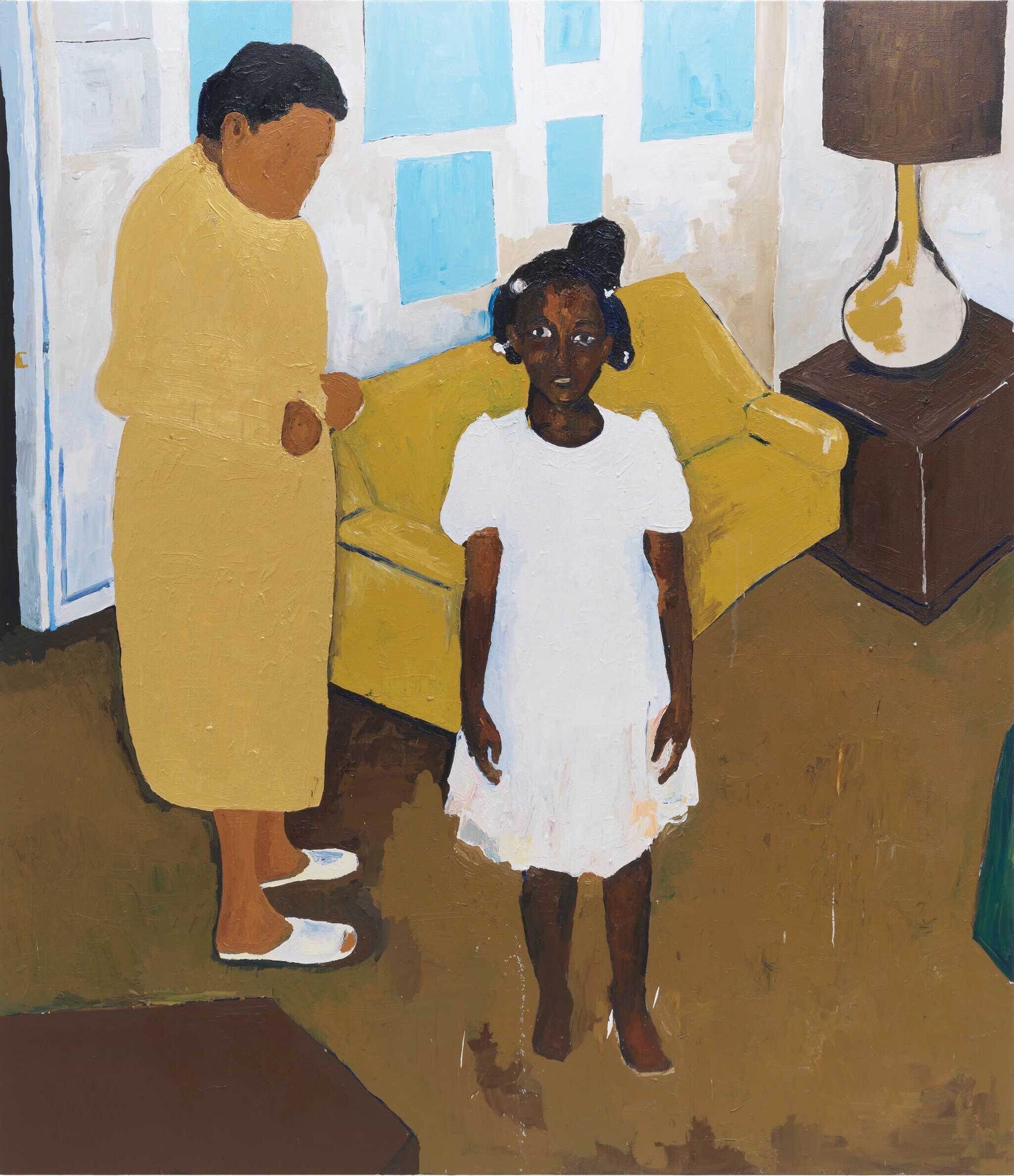
Henry Taylor was born in 1958 in Oxnard, California. He now lives in Los Angeles. By way of introduction, let’s look at the painting by the exhibition’s entrance—Gettin it Done. Taylor’s title doesn’t tell us who this man and woman are, although he often paints his friends, neighbors, and family. But there’s a real sense of familiarity in the painting. Taylor brings us right up close to these people, as if inviting us to share their feeling of patient endurance. He’s also experimenting with scale here, and leaving much of his brushwork visible. This mix of sympathy, generosity, and artistic exploration are all things you’ll encounter again as you explore this exhibition.
On this audio guide, you’ll hear from Taylor himself, as well as two artists who’ve been inspired by his work, Patrick Martinez and Andrea Bowers.
Taylor is wide-ranging in his depictions of lived experience. Many of his paintings express his great love of family and community. Others reflect his sorrow and anger at acts of racial violence, including depictions of police killings. Several paintings dealing with these heavier topics appear in two rooms later in the exhibition.
Narrator: See Alice Jump (2011) is an acrylic painting on canvas. Measuring 76 ½ by 113 inches, this monumental painting depicts focused and exuberant track-and-field legend Alice Coachman. In 1948, she not only set the record for the high jump at the London Olympics but was the first Black woman to win an Olympic gold medal.
Centrally positioned in a precise upright form, Coachman sails through the sky with ease. With her distinct facial features obfuscated by shadows and highlights, Coachman, a dark skinned woman, wears an outfit of an athletic high jumper: black sneakers, white athletic socks, white shorts, and a white fitted university jersey that reads Tuskegee without the last ‘e’. With one arm bent into a V, her other arm outstretched, both hands balled into fists, and her legs bent and tucked under her slender frame, Alice cruises over a yellow high jump bar delineated by three unconnected yellow lines. The uprights, or poles, that usually hold the high jump bar in place are replaced by a telephone pole. At the bottom third of the painting, Coachman performs her feat against the backdrop of a modest neighborhood–similar to the background houses depicted in the source photograph, which pictured her high jumping at a Tuskegee University course with houses in the background. Starting in the bottom left corner, a small house with a white picket fence conveys a small figure standing on a porch. Following a disappearing line, the rest of the block is revealed. Red, white, and brown houses and buildings—some with gable windows; some with darkened windows—extend down the street. A big, blue, clear sky predominates the background. The streak of a geometric cloud and the bulbous dark green canopy of a single tree peek out of the bottom right corner.
Henry Taylor, Resting, 2011. Acrylic and collage on canvas, 60 × 77 3/4 in. (152.5 × 197.5 cm). Collection of Martin and Rebecca Eisenberg. © Henry Taylor. Courtesy the artist and Hauser & Wirth. Photograph by Joshua White
Henry Taylor: I don't always work from photographs, but this was a photograph taken by Andrea Bowers, and I liked it.
Narrator: Henry Taylor.
Henry Taylor: In the original photograph was just my son and I. And I added my daughter. Sometimes I might have material in the studio that I just grab or gravitate to. Sometimes it's just there for a long time. So, you just put it to use, so to speak.
Narrator: Some artists lean more towards drawing from a live model. Others may favor working from photographs.
Andrea Bowers: Henry goes back and forth with both.
Narrator: Artist Andrea Bowers.
Andrea Bowers: And many paintings include both, as well as invented imagery. One time, I saw him cover up a huge section of a super tall painting, and in fifteen minutes, he was on a scaffolding or a ladder and, with a giant brush, paint this giant horse. I was just like, "Wow. The courage of that.”
Henry Taylor, i'm yours, 2015. Acrylic on canvas, 73 1/8 × 74 1/4 in. (185.74 × 188.6 cm). Institute of Contemporary Art, Boston; acquired through the generosity of the Acquisitions Circle. © Henry Taylor. Courtesy the artist and Hauser & Wirth. Photograph by Sam Kahn
Narrator: Andrea Bowers talks about this painting, Cora, (cornbread).
Andrea Bowers: It's a beautiful old stove. And when Henry was living in downtown Los Angeles, near Chinatown, he had this beautiful old stove, very similar to this, and he cooked constantly. And his meals were fantastic. And he always said that his mother taught him how to cook. And so, I love that he found her name "Cora," in the words "cornbread." And I think this was always a painting that Henry always had hanging wherever he lived. Seemed to be really meaningful to him, like a really special painting.
Andrea Bowers: I think that Henry has painted almost every day of his life.
Narrator: Bowers has been friends with Taylor since the 1990s, when they overlapped at California Institute of the Arts.
Andrea Bowers: When you start working with materials, there's things that are going to come up, that's a whole different kind of knowledge or communication. And I think that's where Henry's brilliance lies, just the day-to-day working. He loves to do it. And he paints all the time, and that's beautiful.
Henry Taylor, Cora, (cornbread), 2008. Acrylic on canvas, 62 5/8 × 49 7/8 × 3 1/8 in. (159 × 126.7 × 8 cm). Courtesy the artist and Hauser & Wirth. © Henry Taylor. Photograph by Jeff McLane
Henry Taylor: I think doing self-portraits for me is an exercise, a warm up, it's like doing sit-ups or something. I might look in the mirror even when I'm traveling and going to the bathroom and draw myself, paint myself.
Narrator: Taylor based this painting on a sixteenth century portrait of Henry the Fifth—playing on his own nickname, Henry the Eighth.
Henry Taylor: Henry the Eighth. I did that painting during the beginning of COVID, when I did a residency in Somerset, England. Sometimes I get my inspiration from where I'm at, the location, the country, the city. While I was there, I was just thinking about where I was, England, and my name, where I guess it's an English name. I happened to be the eighth child.
Narrator: Untitled (2021) is an acrylic painting on linen. Measuring almost 73 inches tall by just over 54 inches wide, this self-portrait in profile is a riff on an unattributed sixteenth century painting of English monarch, Henry V. By linking himself with the king, Taylor plays upon his childhood nickname Henry the VIII, as he was the youngest of eight children.
The background consists of a warm yet muted yellow base. Decorative brown flourishes resembling small birds, ironwork, flowers, crowns, leaves, and incomplete royal crests populate the yellow. To the far left, stretching from top to bottom, a slip of dark paint with green inflections coalesces into an opaque column. The subject, Taylor, is rendered in profile. His black hair is quaffed neatly. Toward the back of his hair, a muted periwinkle shape like a dollop rests on the crown of his head. Deep set brow lines puncture his forehead. Lively brushstrokes animate his face to a glowing brown. His eye gazes at the opaque column. His lips are narrow and pursed. His regalia is made up of two collars, one light brown that appears to be a shirt, and one rolled collar in dark brown that appears to be a part of a robe. A gold bejeweled sash drapes around his chest and shoulders. The jewels range in tones from red to blue to white to grey. The one visible sleeve has brown ruching along the edge while its inner portion is blood red with a golden stripe running down the center. The gold stripe comes to a stop around the elbow. Sparse black lines indicate the sleeve’s folds and draping. The cuff of the sleeve is a thick gold band. Both hands are visible though in different positions. The hand closest to the viewer cups open and away so that the palm is not visible. On the index finger, a red jewel ring. The fingers are long and slender, fingernails donning blush pink and white hues. The other hand is set lower and cupped down. Thumb hidden, the hand appears to be gripping a round object, perhaps a piece of fruit or a small ball.
Henry Taylor, Untitled, 2021. Acrylic on linen, 71 7/8 x 54 1/8 x 1 1/4 in. (182.6 × 137.5 × 3.2 cm). Courtesy the artist and Hauser & Wirth. © Henry Taylor. Photograph by Jeff McLane
Narrator: In the late eighties and early nineties, Taylor worked the night shift at Camarillo State Mental Hospital. The hospital has since closed. At the time, it was home to adults with developmental disabilities, and treated people with mental illness and substance abuse disorders. Taylor frequently drew while working with clients.
Henry Taylor: I was what they call a psychiatric technician. And they're someone who's trained in nursing and psych. And anyway, when I began working on the units, I just started to draw because there was time, there was moments when you would just sit in the day hall with the clients. And late in the evening, it was a time when things just slowed down. And after dinner, so a lot of times at various times of day, I would just usually draw, bring out a notepad. Sometimes I would do a, say a one-to-one with a patient who had to be placed in five point restraints. And then you have drawings like that where I've drawn people who I've had to just document, say every 15 minutes. And I'm sitting there anyway, so.
It brings back a lot of memories and it seems like I was able to spend some time on a few of them. You know what I mean? Some of them are, seem to be quick and fast. Others slow as if someone was there for a reasonable amount of time.
Narrator: Taylor was also a student at this time. He studied art and journalism at Oxnard College, and then got an BFA at the California Institute for the Arts.
Henry Taylor, Untitled, 1991. Graphite on paper, 11 1/2 × 8 3/4 in. (29.2 × 22.2 cm). Courtesy the artist and Hauser & Wirth. © Henry Taylor. Photograph by Jeff McLane
Patrick Martinez: It feels like a backyard barbecue. Putting together a barbecue with friends and family.
Narrator: Patrick Martinez is an artist who lives in Los Angeles.
Patrick Martinez: Definitely gives you a sense, in this piece specifically, of the land of L.A.
I love the green grass. I love the green Henry puts in a lot of his paintings as the ground color. And just the way he moves paint. The way he'll move paint around in many of his paintings. But this painting specifically in the white shirt, he's not just coloring it white, there's blue tones and other tones kind of mixed in and moved around in spaces that can just be flat color. You could see it in the concrete, the grass.
He's observing, he's interested in the things that are around him, he's responding. He doesn't need all this grandiose, inspirational trip to X, Y, and Z. It's just kind of like a trip to a friend's house will do it.
Narrator: Martinez’s own work is also on view at the Museum right now. You can find it in the Lobby—it’s the neon work over the ticket desk. He talks about that work, and the inspiration he takes from Los Angeles, elsewhere on this audio guide.
Henry Taylor (b. 1958), The 4th, 2012. Acrylic on canvas, top: 90 × 74 in. (228.6 × 188 cm); bottom: 66 × 74 in. (167.6 × 188 cm); overall: 156 × 74 in. (396.2 × 188 cm). Collection of the artist; Blum & Poe, Los Angeles/New York/Tokyo. Photograph by Sam Kahn
Narrator: Taylor based this painting on a still from a video taken by Diamond Reynolds in 2016. It depicts her boyfriend, Philando Castile, who was thirty-two years old at the time. When stopped by the police, Castile attempted to explain that he had a legal gun in his vehicle. He was shot seven times at close range and killed. The murder sparked nation-wide anguish and protest. Taylor talked about his urge to make the painting.
Henry Taylor: It was definitely emotional. And I don't know, because I think about the newspaper when you, because I do have a habit. I was a journalism major. Articles and things permeate. And then you say, no,I don't want to do it. So, you have this ambivalence. But it's not like I'm grabbing certain headlines.
Sometimes we become sort of, nonchalant is not the word, but when something happens over and over, we become sort of immune to it. But I think I just really reacted, you know what I mean?
Narrator: THE TIMES THAY AINT A CHANGING, FAST ENOUGH! (2017) is an acrylic painting on canvas. At 6 by 8 feet, the painting is slightly larger-than-life size. In limited, opaque, and vibrant hues, THE TIMES depicts a moment of the 2016 extrajudicial murder of Philando Castile, a thirty-two year old Black man. Composed from the perspective of the cell phone footage taken by Castile’s girlfriend, Diamond Reynolds, the scene appears suspended between figuration and abstraction, characteristic of Taylor’s style. Castile is foregrounded inside of his car. The roof of the car is a near solid shade of midnight blue. The doors and seat share an olive green intensity. Castile’s body, outfitted in a white tee shirt, lies in repose. His dark brown arms are crossed and his midnight blue panted legs press together into a small pool of ocean. While Castile was actually sitting in the front seat when killed, he is portrayed lying so far back his head reaches the rear windshield. The dual toned blue seatbelt, nowhere close to the shoulders or core it is meant to protect, twists like a ribbon in flight above him. Not only indicating the rolled-down position of the windows, this detail is depicted as if the only animated body in the scene is a too-loose seatbelt.
Castile’s face—lips pressed together, chin tilted slightly up, and in profile—is cradled by a thin black beard and a black pillow-like shadow curving the length of his neck. His one eye, interpreted powerfully and plainly, white sclera and black iris, peers up and slightly out toward the viewer. There is no blood and there is no viscera. Thin streaks and small splotches of yellow, green, and blue trail and scratch his white shirt, curled brown hands, and legs into slight imperfection.
Visible to the left and outside of the car—viewed through the passenger side window—is a cropped, white police officer. Pale neck, black shirt, one shoulder, one arm, one fist—fingers indistinct—wrapped around the grip of a black gun.
The roof of the car and the perspective of the viewer cut off the officer’s head. A mostly consistent mustard yellow opaque wash of color with small breaks in consistency appears through the three passenger side windows, as well as through a sliver of the rear windshield outside. To the right of the front window, a green scoop and a red blotch sit atop a jagged patch of warm grey. In the upper left corner of the backseat window, the stretch of mustard is fractured by a clip of light blue sky, a partial cumulus cloud, perhaps the brick red flat of a roof, and a small black patch, hinting a shadow.
Henry Taylor, THE TIMES THAY AINT A CHANGING, FAST ENOUGH!, 2017. Acrylic on canvas, 72 × 96 in. (182.9 × 243.8 cm). Whitney Museum of American Art, New York; Purchase, with funds from Jonathan Sobel & Marcia Dunn 2017.192. © Henry Taylor. Courtesy Blum & Poe Gallery
Patrick Martinez: So like I'm visiting friends. But there's also undertones that, in the background, there's a correctional facility right?.
Narrator: Artist Patrick Martinez talks about Resting, which includes portraits of Taylor’s niece and nephew.
Patrick Martinez: His choice is to create this comfortable, inviting kind of home with two figures sitting on a comfortable looking sofa and pair it with something hard. It pulls you in places that make you feel not comfortable. It's a small detail in the background, so you could miss it. But once you, upon closer kind of investigation, you're seeing “warning shots not required.” That's something that's a real thing spray-painted on walls with stencils, in prison on walls.
Narrator: If you look on the table in front of Taylor’s relatives, you’ll also see Canteen Correctional Service forms. Family members fill these out in order to authorize items inmates can purchase at the commissary.
Patrick Martinez: So you have to look closely and you'll see the details. And how he can pull you in with this warmth and then just kind of hit you with reality.
Henry Taylor, Resting, 2011. Acrylic and collage on canvas, 60 × 77 3/4 in. (152.5 × 197.5 cm). Collection of Martin and Rebecca Eisenberg. © Henry Taylor. Courtesy the artist and Hauser & Wirth. Photograph by Joshua White
Patrick Martinez: When you are in front of this painting, you feel like you’re immersed in it.
Narrator: Artist Patrick Martinez.
Patrick Martinez: The image in the middle of the painting is Stanley Tookie Williams. He's one of the founders of the Crips here in Los Angeles.
Narrator: Williams was eventually convicted of murder, but became a leader in anti-gang education while on death row in San Quentin State Prison.
Patrick Martinez: Why paint Tookie Williams in the middle? Because there was complexities to that man. They wanted to protect their communities, their people from racism and violence from almost like white gangs, right?
They obviously evolved into something that aligned themselves more with organized crime, drugs, street violence, you know just domination culture in L.A..
So having that complex kind of history, putting a figure like that in one of your paintings creates some of that, it's very complex.
Narrator: We might see a contrast between this human complexity and the blanket violence of a sign that reads “No Warning Shots Required.” The inhumanity and injustice of mass incarceration loom in the background of many of Taylor’s paintings. Here, these themes are front and center.
Henry Taylor, Warning shots not required, 2011. Acrylic, charcoal, and collage on canvas, 75 1/4 × 262 1/4 × 1 3/4 in. (191.1 × 666.1 × 4.5 cm). The Museum of Contemporary Art, Los Angeles; purchase with funds provided by the Acquisition and Collection Committee. © Henry Taylor. Courtesy the artist and Hauser & Wirth. Photograph by Brian Forrest
Narrator: Taylor describes the improvisatory way that he came up with this work—and its title, Y’ALL STARTED THIS SHIT ANYWAY.
Henry Taylor: You hear writers who talk about, oh, I wrote that song in twenty minutes, and it was a hit. This one just came together. And it seemed to have a nice compact little story—for me anyway. There's a head, a decapitated…or just a mannequin's head. And maybe I was thinking of just putting everything together or some of the materials like, oh, I had a bull. I have the head. I'm thinking about Native Americans. I'm thinking about green pastures and I'm thinking about golf, and I'm thinking about land and you know the white golf thing. I just thought that the buffalo and everything just kind of worked for me. And the cowboy boots, you know, that kind of goes. The buffalo, the boots. [Sing-songy] Buffalo Bill. Hey!
Narrator: Taylor’s creative approach here is loose and playful. Yet he uncovers a thought-provoking way to tie together the issues of segregation, and the displacement and genocide of Native Americans.
Andrea Bowers: I think that he uses humor, both in a loving way, but also, a kind of politically biting way.
Narrator: Andrea Bowers.
Andrea Bowers: You know, I do these photo-realist drawings and I want everything to be perfect, and I work a quarter of an inch, an eighth of an inch, a sixteenth of an inch at a time. And Henry would be like, "Stop." And I'd say to him, "But why is that so badly drawn? Why is that arm crooked? Or why is the foreshortening off? I know you can do better. Or you can actually record it, but you purposely make it that way. Why do you purposely make it that way?" And he was like, "Because the world's screwed up. And so, things need to be off. Things need to be awkward, because it visually talks about how messed up the world is.”
Installation view of Henry Taylor: B Side (Whitney Museum of American Art, New York, October 4, 2023-January 28, 2024). From left to right: Resting, 2011; THE TIMES THAY AINT A CHANGING, FAST ENOUGH!, 2017; Untitled, 2021; The 4th, 2012; Y'ALL STARTED THIS SHIT ANYWAY, 2021; Untitled (Saddle Shoes Stepping on Bald Head), 1992; Happy Meal, 1992; Girl with blue Hand, 2014; Peanuts, 2007; Wegrett, 2006; Cora, (cornbread), 2008; too much hate, in too many state, 2001; Trail, 2005. Photograph by Ron Amstutz
Patrick Martinez: It feels like the way Fatty is posted in the painting is kind of almost like a Renaissance painting, and the way he’s sitting feels like a traditional portrait.
Narrator: Patrick Martinez.
Patrick Martinez: He's placed right in the middle but separating these two—kind of home and business. And the flower on the top left is a beautiful touch. It brings the whole composition and painting together, in my opinion.
The colors are just so great working together and exposing the person that's not living in Los Angeles to the aesthetics that are in some of the neighborhoods in Los Angeles. Security gates, market signs, the way they're painted and just almost like they butt up with homes. But again, I think it's like a tower on the upper left that comes from prisons. Iit's nearby, right? It's a reality for many Black men, brown men. If you know what it is, it's just kind of this uneasy feeling to this kind of beautiful day that you might be experiencing in L.A. having a cold beer, I guess.
Henry Taylor, Fatty, 2006. Acrylic and plastic tape on canvas 65 × 54 in. (165.1 × 137.2 cm). Collection of R. Blumenthal. © Henry Taylor. Courtesy the artist and Hauser & Wirth. Photograph by Jeff McLane
Henry Taylor: Emery Lambus was someone I met about fifteen years ago. And he was selling fake watches—or watches that he said were Rolexes or this and that. And they were obviously not. I asked him what else did he do? And he told me he could draw, or he did make drawings. And I don't know if I saw his sketchbook then, but I did invite him up to my house because he also had told me he learned upholstery in a prison. And I had a relative who had been to that same prison alone and learned upholstery. So, he came up and upholstered something in like thirty minutes perfectly. And we've been friends ever since. And he does have artistic ability. I have given him a show at my gallery in Chinatown, and as well as hosted a poetry reading for him and had those poems printed.
Narrator: Taylor has made a number of paintings of Lambus. This one appears multi-layered.
Henry Taylor: I probably started another painting and I just put him on top of it because it looks like it might be a woman’s legs on the ground, so you know what I mean? It just sort of collided. Which could be sort of considered an experimental start you know what I mean, trying to start things differently. And sometimes you might, in the beginning, if you're drawing portraits, you're measuring, you know sometimes it's like, you know something by heart or you cook something and you don't always look at the cookbook. You just go for it.
Narrator: emery lambus (2016) is an acrylic painting on canvas. Measuring almost 72 inches tall by nearly 60 inches wide, this life-sized portrait’s title is the name of the painting’s subject. Lambus, self taught painter, sculptor, and shock artist residing in Los Angeles is not only a friend of Taylor’s but is the subject of many of his paintings.
Against an almost uniform pale peach background, a configuration of Emery Lambus and a suggestion of a figure behind him perch centrally. The unknown figure’s features blur though small details emerge: parted lips; a side view of the head; an outstretched hand with palm facing up and out as if praying; a single bent leg and flexing foot. For the most part, this figure comprises one rich tawny hue. Lambus hovers in front of this figure. Head at ¾ view, blue and blue-grey hues combine to fluffs of hair, a partial mustache, and beard. Rich dark brown hues make up the skin. His eyes stare forward to the viewer, slightly shrouded by shadow and a play of color. The sclera of one eye is almost red while the sclera of the other eye is greyish. Both irises are dark brown, almost black, and piercing. Lambus wears a white tee shirt. From the right shoulder of Lambus’ shirt, emerges the aforestated hand. Lambus’ arms bend from the end of the sleeves and his hands, no fingers specified, cross at what would be his wrist. Near his hands, pink splashes sweep in small surges. Around where the knee meets the shin, a swath of muted blue-grey dashes. On both sides of the leg, green brushstrokes follow the forms of both bodies, lying alongside the sole of the foot, the knee, and Lambus’ forearms.
Toward the bottom right corner, the pale peach background breaks into a jagged rectangle of white. Though there is minimal realization of shadows, the work appears highly layered and dimensional.
Installation view of Henry Taylor: B Side (Whitney Museum of American Art, New York, October 4, 2023-January 28, 2024). On wall, from left to right: Untitled, 2020; Elan Supreme, 2016; emery lambus, 2016; Too Sweet, 2016. Photograph by Ron Amstutz
Narrator: Taylor conceived this installation for the Museum of Contemporary Art in Los Angeles, the first venue of this exhibition. When he began imagining it, the main element he had in mind was his brother Randy’s black leather jacket. Randy Taylor had been associated with the Ventura, California branch of the Black Panther Party. The Black Panthers advocated for self-defense, community empowerment, social programs including free food, clothing distribution and health clinics. Taylor’s ideas for this installation evolved in relationship to the galleries.
Henry Taylor: My brother was about five years older than me, four grades, when I was in the ninth he was in twelfth. So, he made me aware of things like Bobby Seal, Eldridge Cleaver, George Jackson.
So, I was thinking about a leather jacket. I had an idea to make only one jacket. But huge, because I didn't know anything about this space. But I was given another space. So, I was experimenting, say like closet-size. So, maybe I had eight jackets. So, it just took off from there.
Narrator: The installation also gestures towards the present. Taylor included photo pins of Breonna Taylor and others who were victims of police violence. But at the same time, the storming of the Capitol on January 6, 2021, was also on his mind—and the contrast between the white supremacist violence on display there and the Black Panther’s militant reputation.
Henry Taylor: And I thought about the insurrection. That is scary to me. But I don't think—the Panthers weren't trying to be intimidating. This was trying to save people.
Narrator: Huey Newton (2007) is made of acrylic and collaged photocopies of news articles on canvas. Measuring just over 94 inches tall by about 76 inches wide, this large painting reimagines Blair Stapp’s well-known 1968 seated portrait of Black Panther Party for Self Defense co-founder and Defense Minister, Huey Percy Newton. In Taylor’s image, Newton sits, legs parted, upon a rattan throne facing directly forward and in center view. Moving from the bottom of the painting up, an abstracted zebra print rug lies upon a warm orange brown floor. Black swirls of the rug’s detail blend into the toe box of Newton’s black shoes. Flanking both sides of Newton are leaf-shaped, Zulu-style shields with horizontal markings. One shield is light ochre with umber markings atop a short brown pole while the other shield, a deep chocolate brown with white markings on one side and brown markings on the other, rests on the ground. Back to the center, the brown and black base of the chair blooms out. Each thigh of Newton’s otherwise solid black pants have short stretches of greyish-white strokes with flecks of blue indicating reflected light. Reaching his torso and chest, Newton wears a black jacket and white collar shirt, the paradigmatic uniform of Black Panther Party members. With his arms outstretched, though slightly bent, and resting on the arms of the throne, Newton holds a shotgun by its barrel in his right hand and the shaft of a gold triangle headed spear in his left hand. Upon reaching Newton’s head, the viewer is met with a direct and pointed gaze. He wears the archetypal black beret; a wedge of black afro textured hair peaks through on one side.
The rattan weave composing the broad curved back of the throne in the original photo is substituted with collaged photocopies of news articles documenting the 2006 extrajudicial killing of Sean Bell, a twenty-three year old Black man murdered on the morning of his wedding in Queens, New York. While not all of the text collaged onto the throne is clear, snippets of black text on a grey background shine through: “November 25”, the day of the incident; “said all five officers been charged. Bell who…” the placement of Newton’s head breaks the line, “was black”; “PoPo later searched Bell’s car and found no gun”; and “killed attending his bachelor party.” Continuing with the flurry of text, quick and decided brushwork in white, various greys, and hints of blue outline Newton’s right shoulder and splotch the back of the chair full. Around Newton’s head, light and muted blue-grey shadows portend an aura of depth.
The wall behind the chair is tinted with peach, tan, and similarly neutral hues. Individual brush strokes layer and mount, creating pockets of light, dark, and movement. Though obstructed by the width of the throne’s back, one brown line runs vertically from the top of the painting to the top of the throne and one brown line runs horizontally from the left to right edge.
Henry Taylor (b. 1958), Huey Newton, 2007. Acrylic and collaged photocopies on canvas, 94 9/16 × 76 1/4 in. (240.2 × 193.7 cm). Whitney Museum of American Art, New York; gift of Martin and Rebecca Eisenberg in honor of Adam D. Weinberg 2016.86. © Henry Taylor
Narrator: Andrea Bowers talks about sitting for this portrait in Taylor’s Chinatown studio.
Andrea Bowers: Henry and I are friends, so I was over there all the time. So it was like, "Okay, I'm going to sit here." I don't know, it was probably like, probably five sessions or something, but for kind of long periods, he kept working on it. I'm sure everyone has told you that he makes really funny faces when he draws? [Responding to silent head shake] Oh, okay. So, Henry's really famous for that, the intensity that he gets on the face and the speed at which he's looking and recording, looking, recording, looking and recording, with this kind of squint, and real intensity with one eye. And the other's he's squinting with. So that's really fun, because he's so in it, and he's so focused. And you can see it. You're just constantly aware of being recorded, This is real work he's doing. It's really interesting and fun.
Henry Taylor, Andrea Bowers, 2010. Acrylic on canvas, 48 × 36 in. (121.9 × 91.4 cm). Private Collection. © Henry Taylor. Courtesy the artist and Hauser & Wirth. Photograph by Robert Bean
Narrator: Taylor talks about this portrait of Deana Lawson, and the circumstances of making it.
Henry Taylor: Deana is a photographer, a really good one, and a dear friend. And I was fortunate enough to go to Haiti with her and watch her in action. I guess this is something I did when I was visiting A. C. Hudgins, who was a collector out in the Hamptons. But, and that's what we'd do out there, or I would do out there. I'd always have canvas there. I think I'm one of those people that just travels with material and likes to engage with nature and with people. And musicians often carry their guitar and play and collaborate and so, I look at it like that. It's just something I enjoy doing. I love to paint.
Narrator: You can find a photograph by Deana Lawson in the sixth floor exhibition, Inheritance. It’s a vivid, commanding work—and you can hear Lawson speak about it on the audio guide. As you’ll see as you explore this room, Lawson is one of many artists Taylor is close with—and whose work he’s inspired by.
Henry Taylor, Deana Lawson in the Lionel Hamptons, 2013. Acrylic on canvas, 96 × 70 in. (243.8 × 177.8 cm). Collection of Neda Young. © Henry Taylor. Courtesy the artist and Hauser & Wirth. Photograph by Sam Kahn
0:00
0:00