
Jason Moran
Sept 20, 2019–Jan 5, 2020
Jason Moran
Exhibition works
-
STAGED: Savoy Ballroom 1.
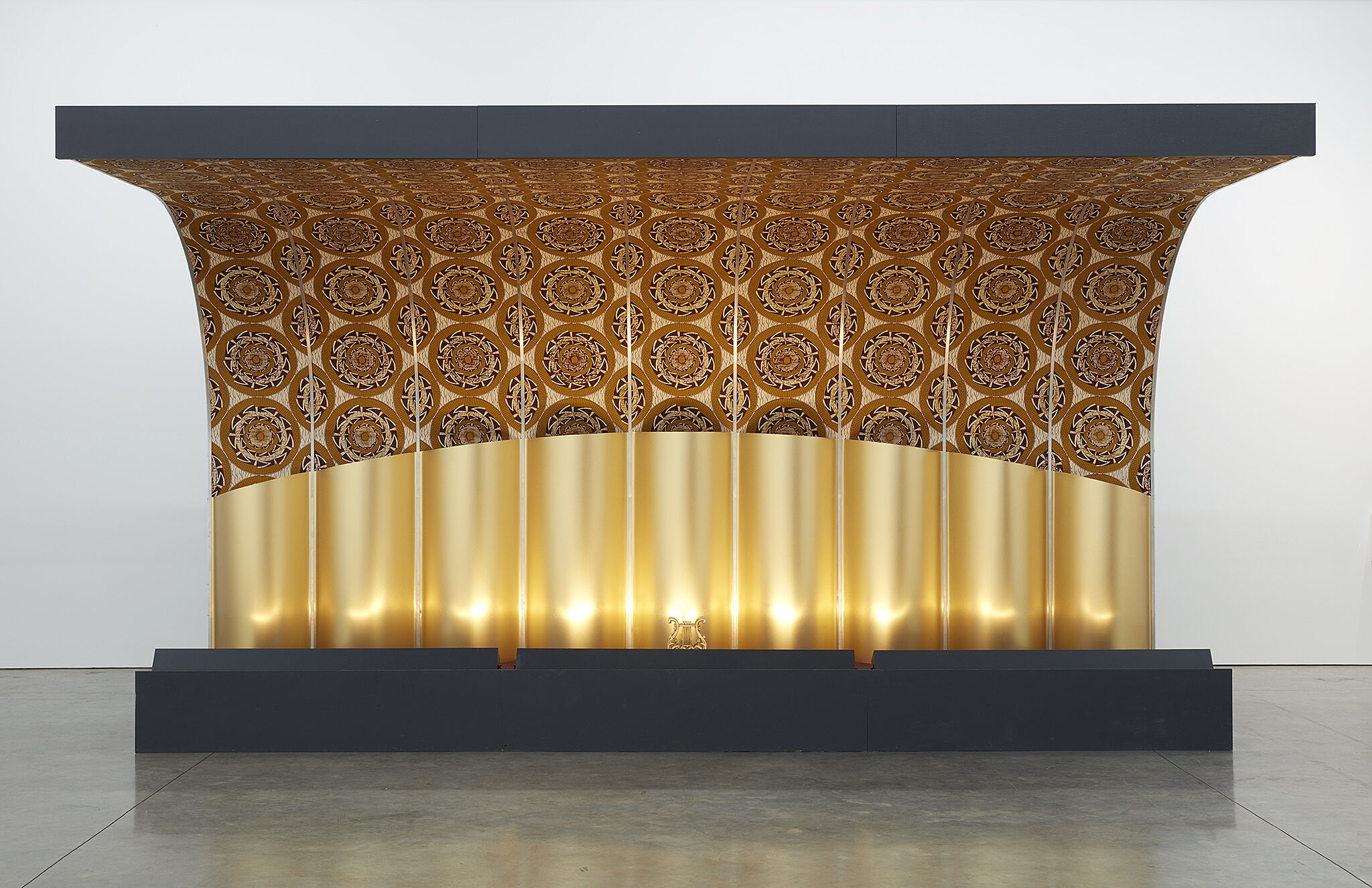
-
STAGED: Three Deuces.
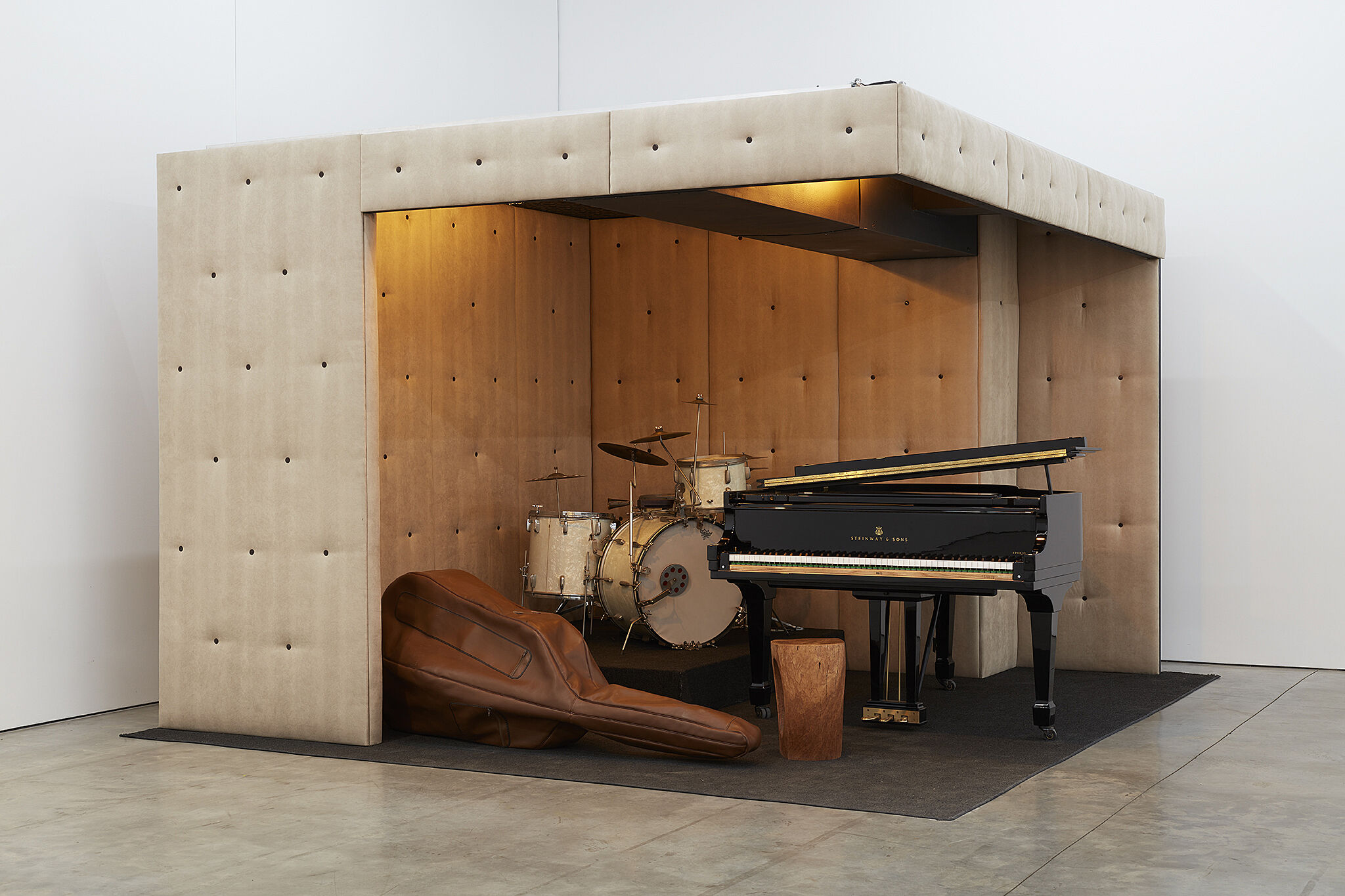
-
STAGED: Slugs’ Saloon.
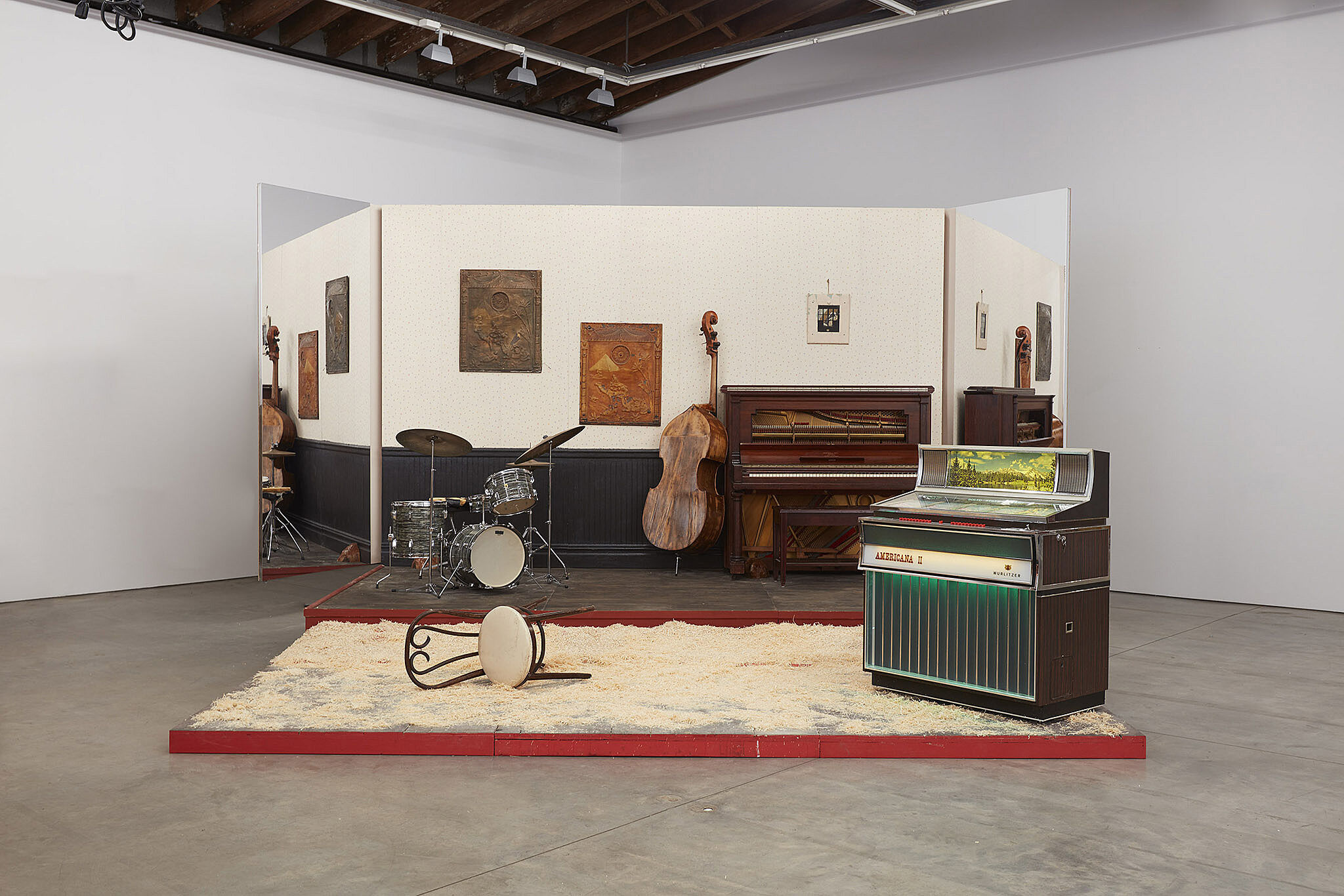
-
Collaborations.
-
Works on Paper.
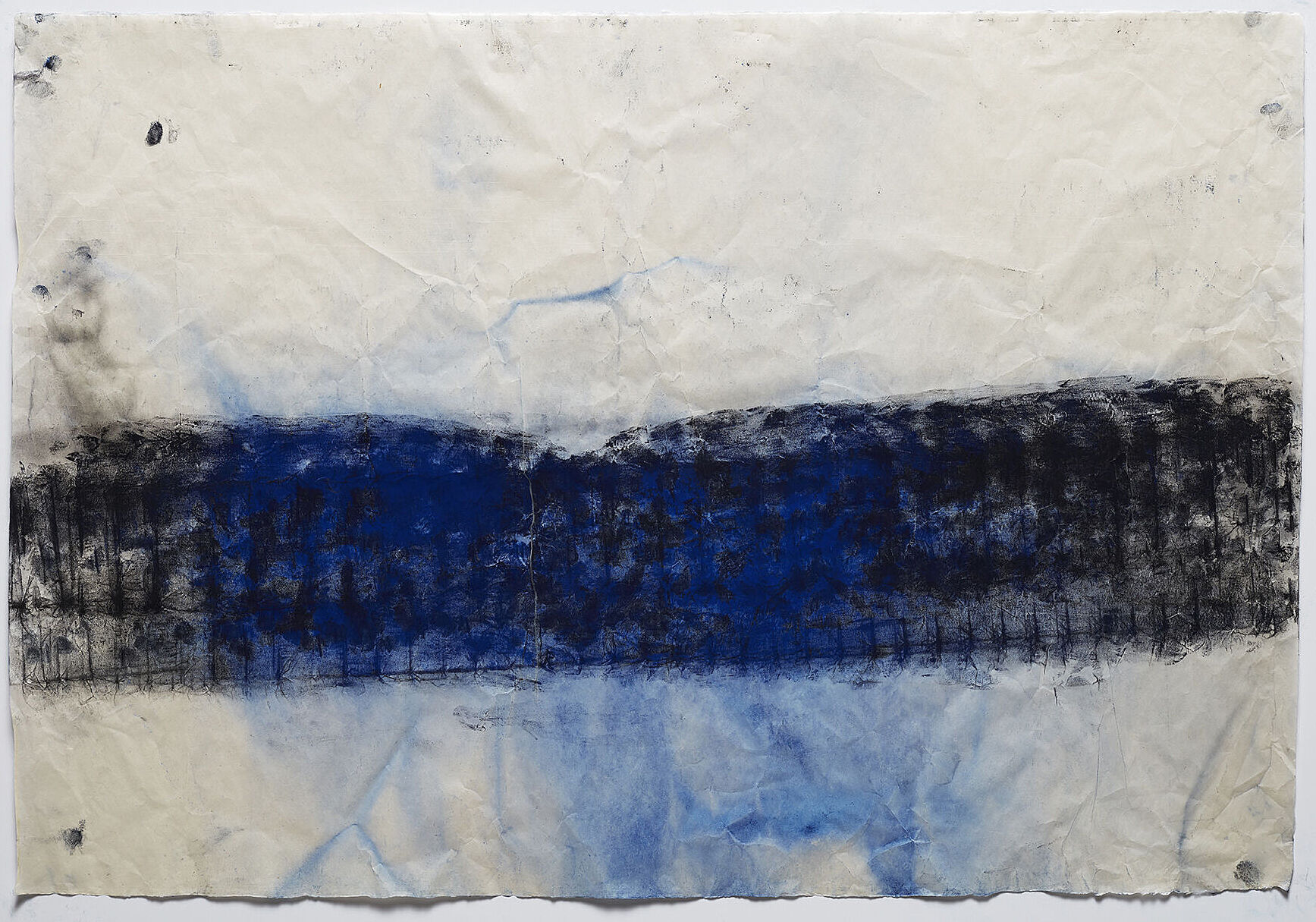
Lorna Simpson, still from Chess, 2013. 3-channel HD video, black and white, sound, looped; 10:19 min. Edition of 3, with 1 AP. © Lorna Simpson. Courtesy the artist and Hauser & Wirth
Collaboration has been central to Moran’s experiments, and among the many artists with whom he has collaborated include The Bandwagon (Tarus Mateen and Nasheet Waits), Stan Douglas, Lizzie Fitch, Theaster Gates, Joan Jonas, Glenn Ligon, Julie Mehretu, Ashland Mines (Total Freedom), Alicia Hall Moran, Adam Pendleton, Adrian Piper, Lorna Simpson, Ryan Trecartin, Kara Walker, and Carrie Mae Weems.
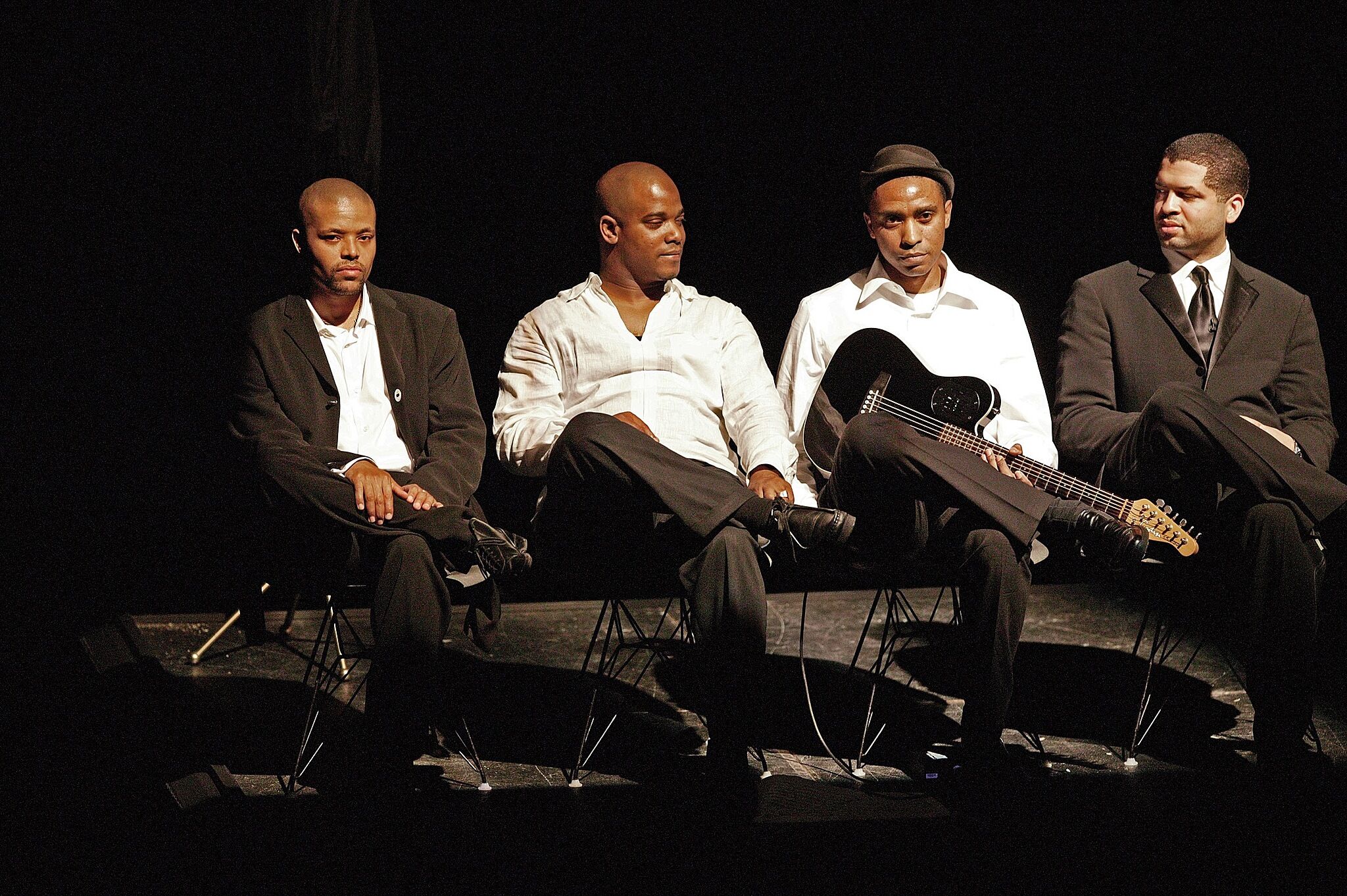
Jason Moran and The Bandwagon (Tarus Mateen and Nasheet Waits) with Alicia Hall Moran and Adrian Piper, performance still of Milestone, 2005 and 2007. Performed at the Cullen Theater, Wortham Center, Houston, February 10, 2007. Commissioned by the Walker Art Center, Minneapolis; courtesy the artists. Director: Alicia Hall Moran; performers: Jason Moran and The Bandwagon (Tarus Mateen and Nasheet Waits), Marvin Sewell, and Alicia Hall Moran; video design: Brian Dehler; voice recordings: Adrian Piper. Photograph by Gene Pittman
Jason Moran and The Bandwagon (Tarus Mateen and Nasheet Waits), Alicia Hall Moran, and Adrian Piper
Excerpt from Milestone, 2005 and 2007
This theatrical project, a collaboration between Moran and his wife and fellow musician Alicia Hall Moran, draws inspiration from The Mythic Being; I/You (Her) (1974) by Adrian Piper, a conceptual artist whose work investigates identity and society. Produced with his trio The Bandwagon (Tarus Mateen and Nasheet Waits, with guest guitarist Marvin Sewell) and Hall Moran, Milestone premiered in 2005. It includes video projections and recordings of Piper’s voice that were backed with original music compositions in an effort to upend the traditional concert formula.
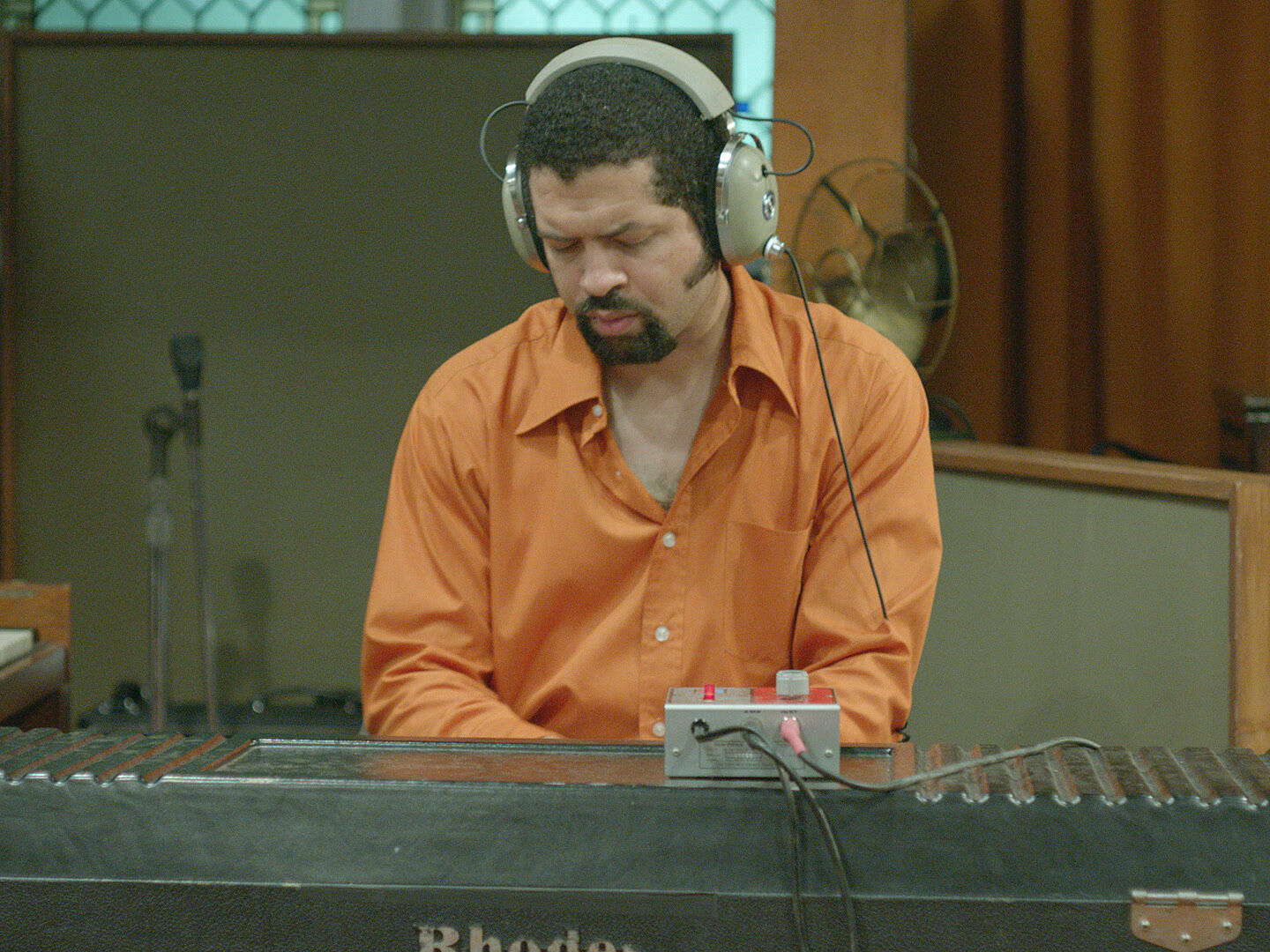
Stan Douglas, Luanda-Kinshasa, 2013. Video, color, sound; 6:01 hours. © Stan Douglas; Courtesy the artist and David Zwirner, New York
Stan Douglas
Luanda-Kinshasa, 2013
Stan Douglas’s films, photographs, and installations often reexamine past events at specific sites. His intricately composed jazz film Luanda-Kinshasa is set in a reconstruction of Columbia Records’ 30th Street Studio in New York. Operated by the record label between 1948 and 1981, “The Church,” as it was known, produced such groundbreaking albums as Miles Davis’s Kind of Blue (1959) and Pink Floyd’s The Wall (1979). Luanda-Kinshasa documents a fictional recording by ten musicians selected by the artist and Jason Moran. They improvise collaboratively, following Douglas’s prompt to imagine what Davis might have done after his 1971 record Live-Evil.
Dividing the room into two areas, Douglas shot half of the film during one session and the other half the following day. In order for this strategy to work musically, Moran made the songs interchangeable, formulating a way for the music to flow together seamlessly. The film itself combines and recombines edits to allow for musical variations, emphasizing a compositional process that defies expectations of a linear narrative.
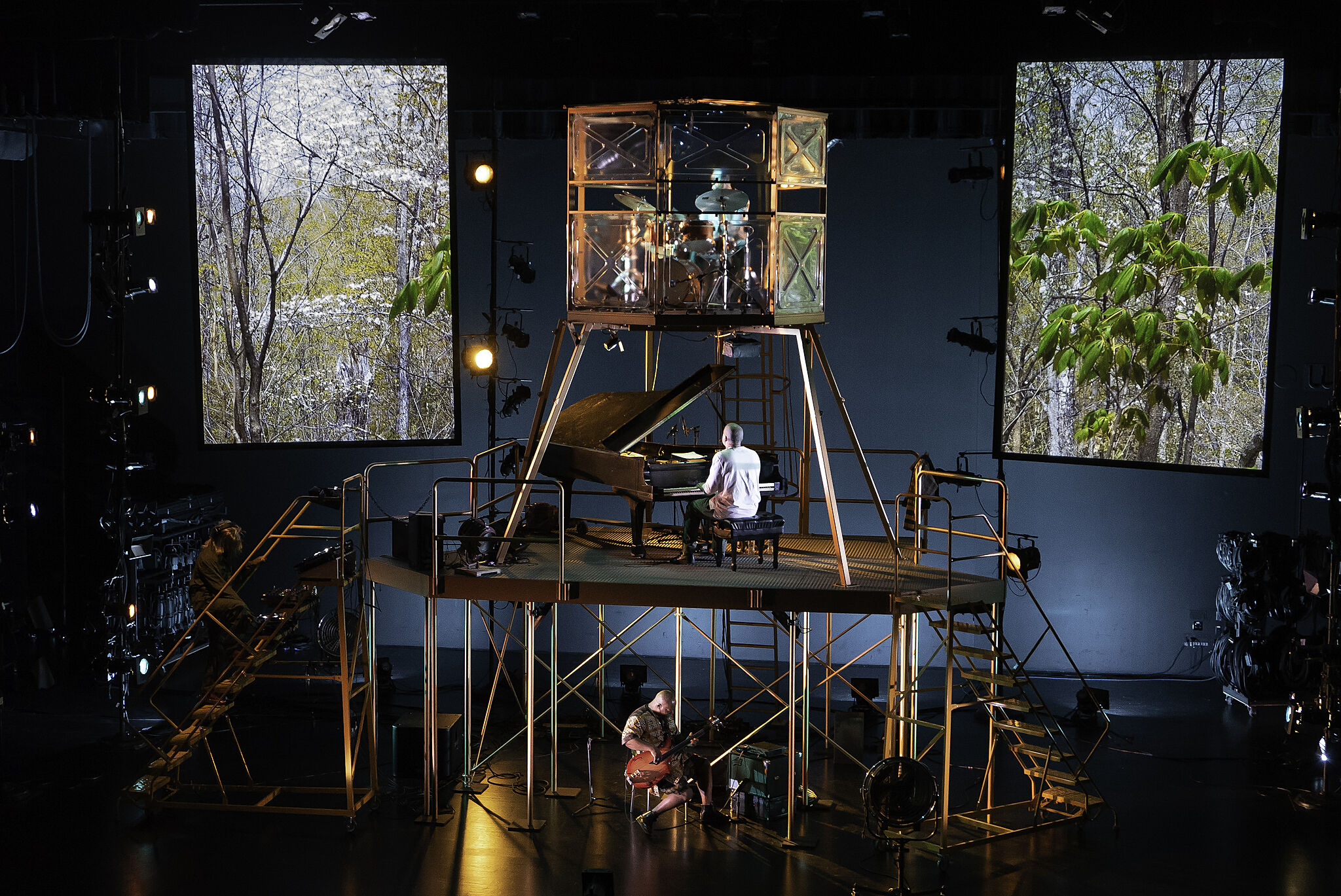
Jason Moran and The Bandwagon (Tarus Mateen and Nasheet Waits) with Lizzie Fitch, Ashland Mines (Total Freedom), and Ryan Trecartin, performance still of The Last Jazz Fest, 2018. Commissioned by the Walker Art Center, and the Wexner Center for the Arts at the Ohio State University. Photograph by Bobby Rogers for Walker Art Center, Minneapolis
Jason Moran and The Bandwagon (Tarus Mateen and Nasheet Waits) with Lizzie Fitch, Ashland Mines (Total Freedom), and Ryan Trecartin
Excerpt from The Last Jazz Fest, 2018
In The Last Jazz Fest—commissioned for the opening of Jason Moran at the Walker Art Center in Minneapolis—Moran and his invited collaborators explored the various uses and meanings of jazz: as freedom music, as a model of democracy, and as a prop. Moran and The Bandwagon, his long-standing trio, played music spanning different movements and eras, encompassing the breadth of a jazz festival while avoiding the chronological legibility that often characterizes such events. A mix by Ashland Mines (Total Freedom) pulled both archival and contemporary samples to create an overlay that distorted the sound of the band. The disorienting projections of Lizzie Fitch and Ryan Trecartin culminated with the filmed demolition of a stage from their recent project Site Visit, evoking the destruction of the decontextualized stage of the jazz festival.
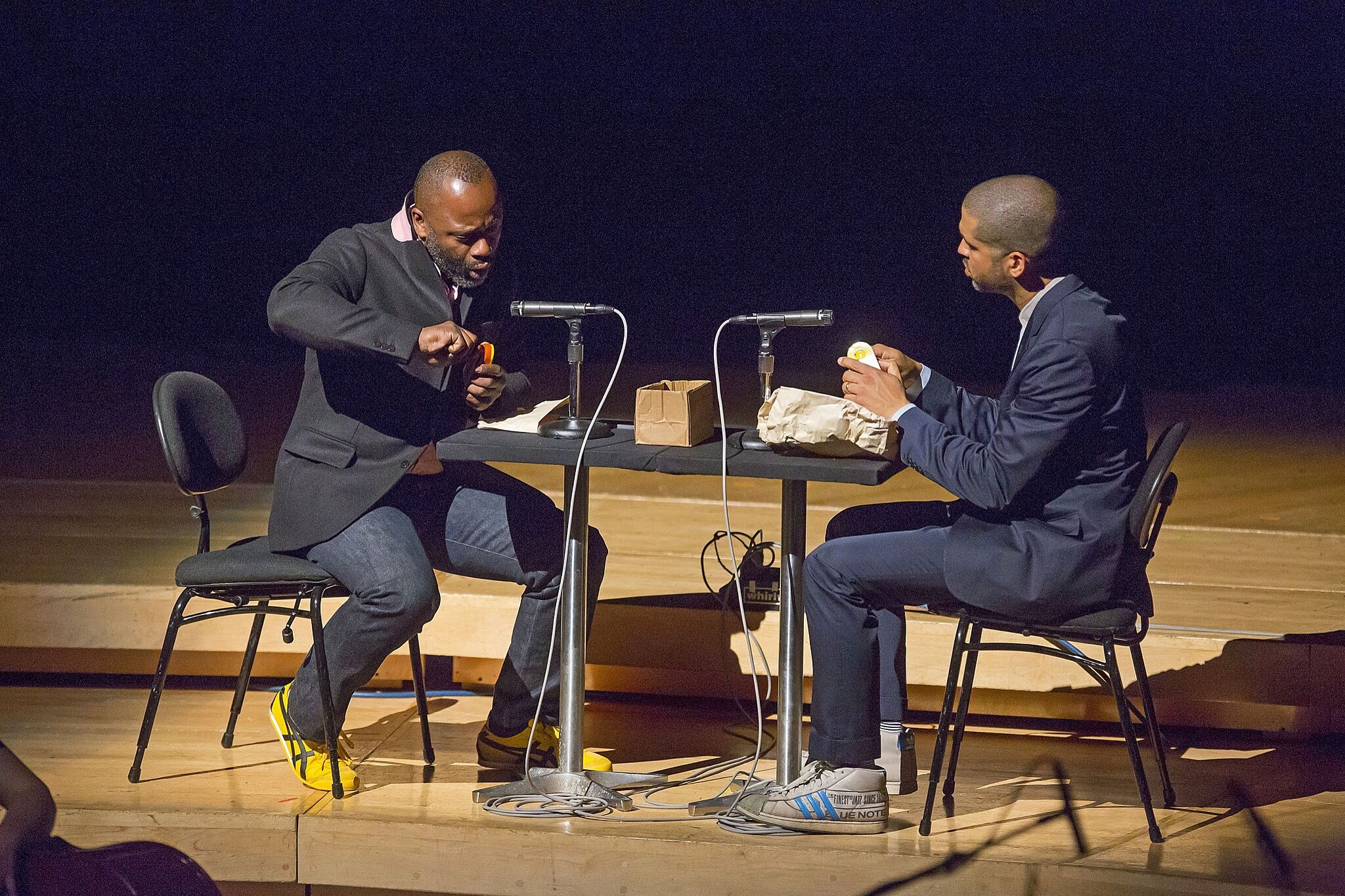
Theaster Gates, and Jason Moran and The Bandwagon (Tarus Mateen and Nasheet Waits), performance still of Looks of a Lot, 2014. Performed at Symphony Center, Chicago, May 30, 2014. Performers: Jason Moran and The Bandwagon (Tarus Mateen and Nasheet Waits), Katie Ernst, Ken Vandermark, Theaster Gates, and the Kenwood Academy Jazz Band; film direction: RoundO Films (Radiclani Clytus, Gregg Conde, and Anthony Gannon). Commissioned by the Chicago Symphony Orchestra. Courtesy the artists and RoundO Films, New York. Photograph © Todd Rosenberg
Theaster Gates and Jason Moran and The Bandwagon (Tarus Mateen and Nasheet Waits)
Excerpt from Looks of a Lot, 2014
Looks of a Lot, a collaboration between Jason Moran and artist Theaster Gates, explores themes of violence, absence, loss, and the resilience of the human spirit. Working with the Kenwood Academy Jazz Band in Chicago, as well as multi-reedist Ken Vandermark and vocalist Katie Ernst, Moran created a layered multimedia and jazz improvisation project. Gates’s sculptures made from salvaged materials served as music stands, and Moran sat on another sculpture, a multi-tiered shoe-shine chair, as he played a hand-cranked music box with a prepunched musical score. Utilizing traditional and nontraditional instruments, such as vintage minstrel windup toys and horns, Looks of a Lot brings together multiple narratives that resonate with the Chicago landscape. The excerpts presented here feature both concert and documentary footage detailing the process of collaboration.
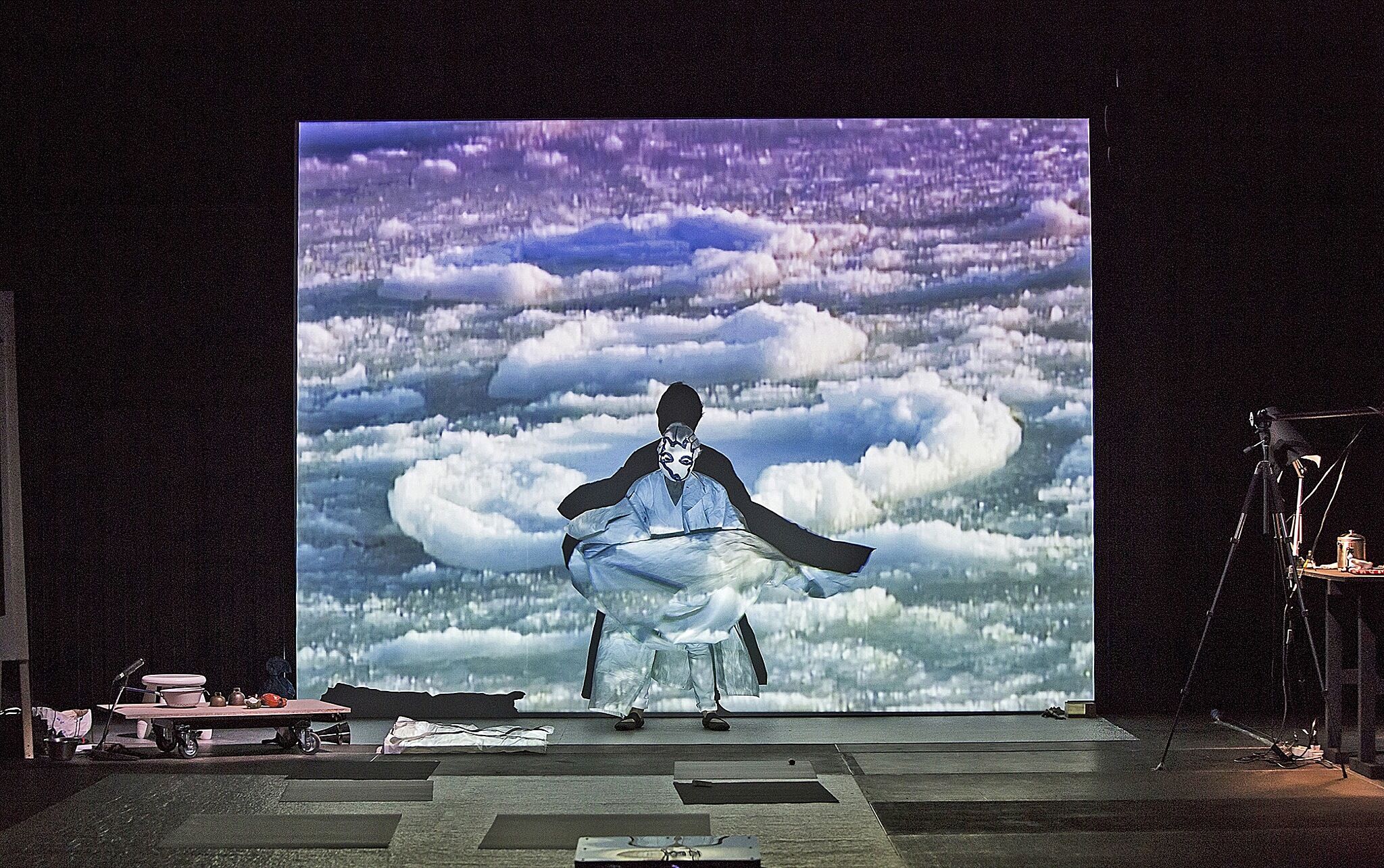
Joan Jonas performing Reanimation at the Hangar Bicocca, Milan, 2014. Photograph by Moira Ricci. © 2018 Joan Jonas/Arts Rights Society (ARS) New York
Joan Jonas and Jason Moran
Excerpts from Antiphony: Joan Jonas x Jason Moran, 2013
Antiphony is an excerpt from a planned documentary entitled Grammar—A Documentary Film about Jazz through Jason Moran. A musical term, antiphony describes a two-part composition in which singers alternate and respond to each other’s verses. Riffing on this word, the film explores the relationship between Moran and the performance/video art pioneer Joan Jonas. The two artists reflect on their collaborative projects, and on how they improvise with sound, time, and visual images to create compelling performances. Most prominently, the film foregrounds Reanimation (2012), a collaboration between the two artists in which their actions onstage were projected via a live feed.
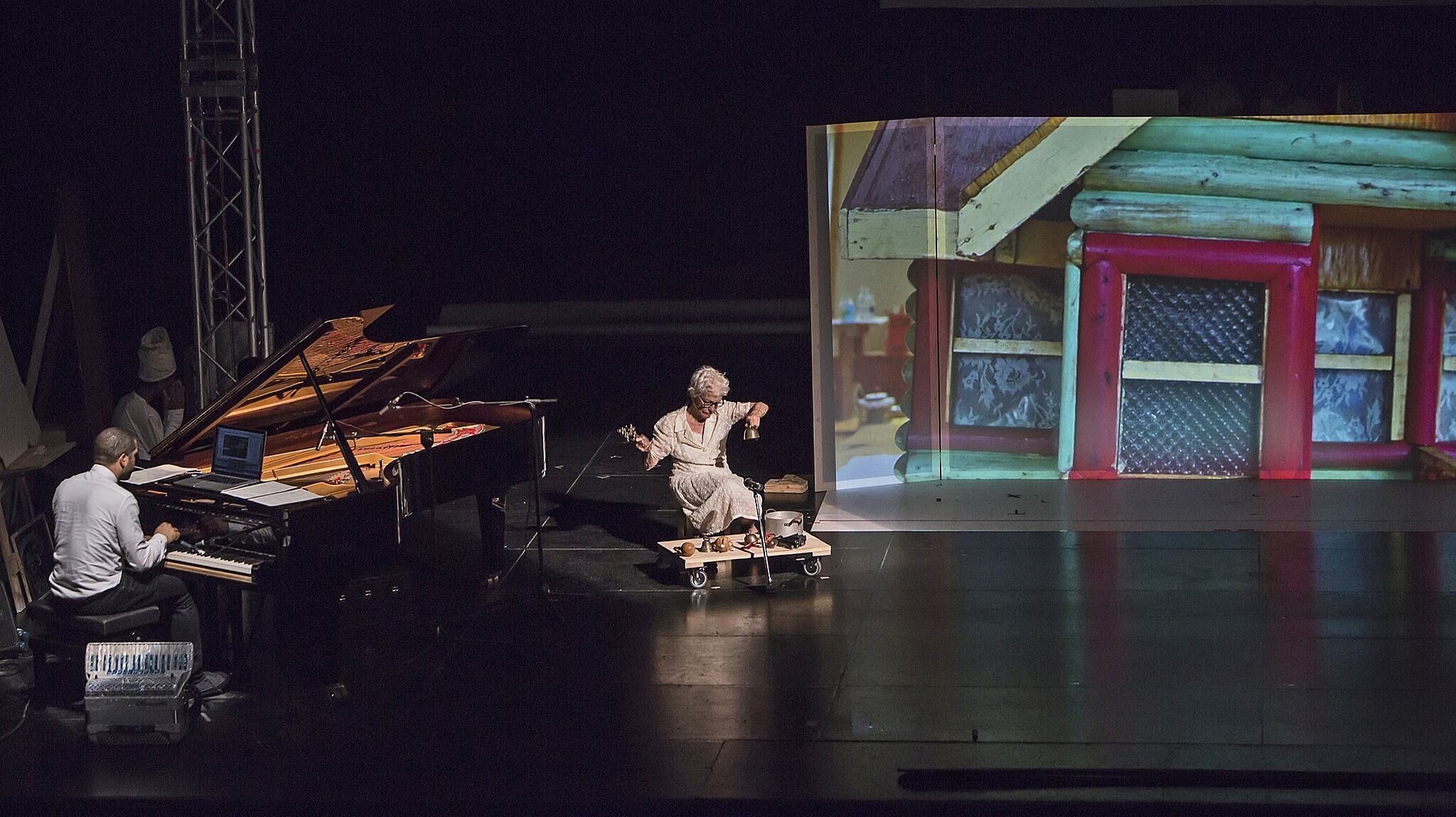
Joan Jonas, performance still of They Come to Us without a Word II, 2015. Composer and performer: Jason Moran; director: Joan Jonas; video backdrops: Joan Jonas. Courtesy the artist. © 2018 Joan Jonas/Arts Rights Society (ARS) New York
Joan Jonas
Excerpt from They Come to Us without a Word II, 2015
They Come to Us without a Word II was commissioned for the 2015 Venice Biennale and marks the fourth collaboration between Joan Jonas and Jason Moran. Through the layering of materials and media, Jonas creates an immersive experience that combines ghost stories from Nova Scotia, mythology, ritual, and references to the fragility of nature. Moran composed music for the video components of the gallery presentation and improvised a score for the performance.
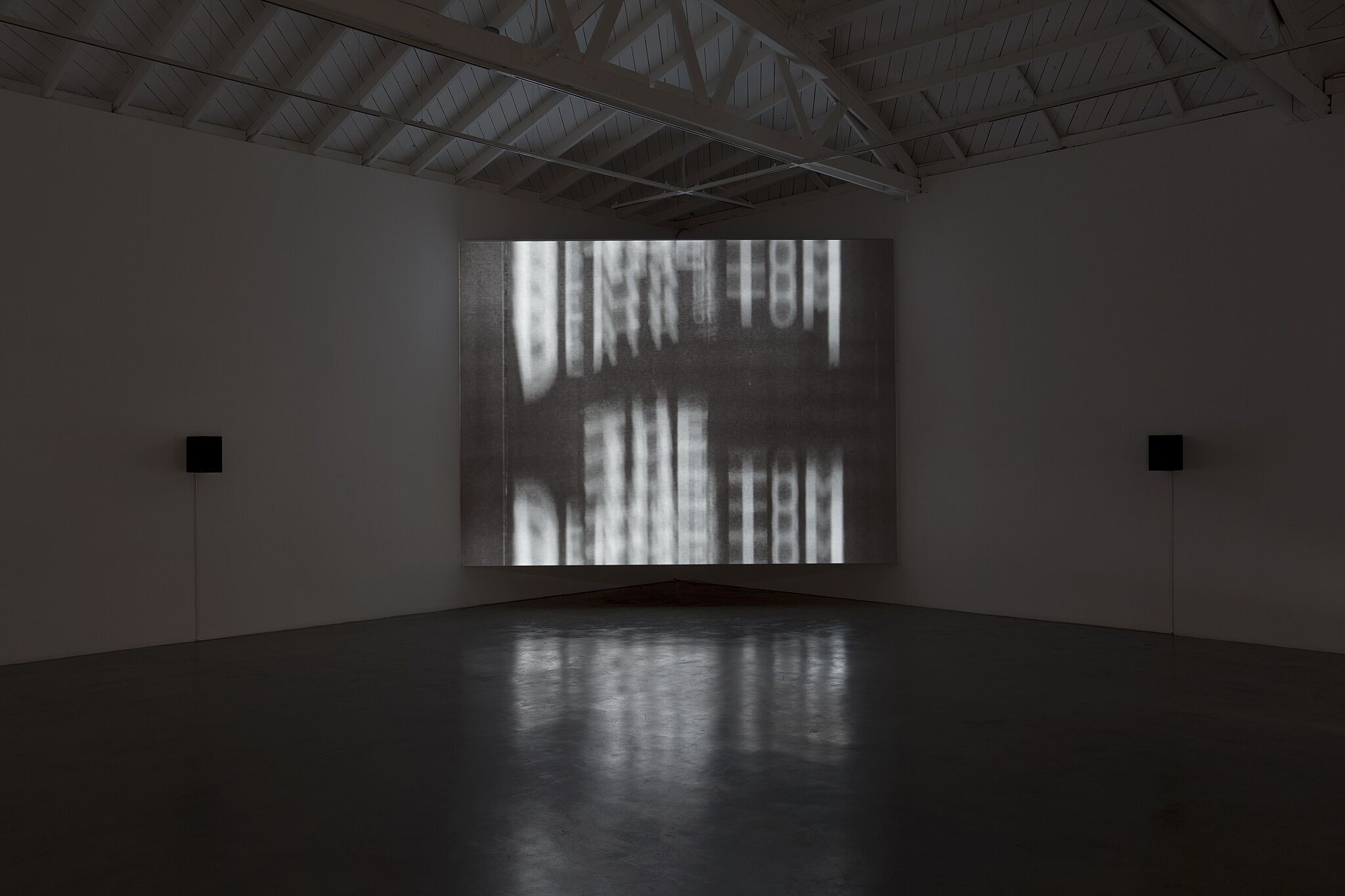
Glenn Ligon, Death of Tom, 2008, 16mm film transferred to video, black-and-white, sound; 23 min. © Glenn Ligon; Image courtesy of the artist, Luhring Augustine, New York, Regen Projects, Los Angeles, and Thomas Dane Gallery, London
Glenn Ligon
Death of Tom, 2008
Artist Glenn Ligon critically investigates the legacies of painting and conceptual art as well as language and identity. For The Death of Tom, his first foray into filmmaking, Ligon set out to re-create a scene from a 1903 silent film adaptation of Uncle Tom’s Cabin (1852), the abolitionist novel by Harriet Beecher Stowe. In the 1903 movie, white actors performed the principal roles in blackface. During his project, Ligon discovered that his camera had not been properly loaded with film, resulting in what he describes as “blurry, fluttery, burnt-out black- and-white images, all light and shadows.” Viewing the ghostly footage, the artist realized that only abstraction could address the history and enduring repercussions of America’s structural racism.
Ligon, who knew the original silent film was accompanied by piano, invited Jason Moran to improvise a score. Ligon suggested as a starting point the vaudeville song “Nobody” (1905). Moran homed in on Ligon’s haunting moving images and played, as he describes it, “to the shadows.”
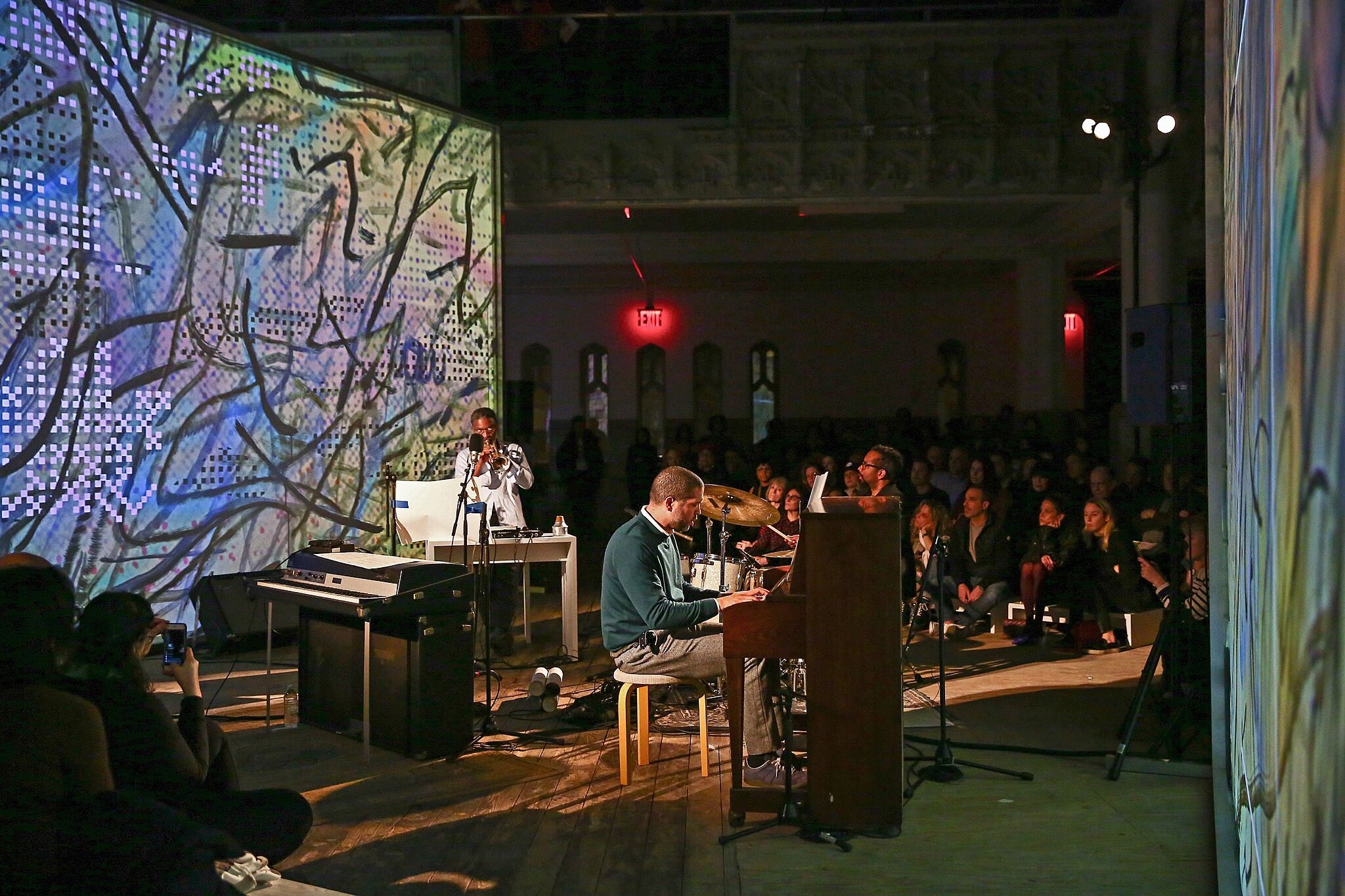
Julie Mehretu and Jason Moran, performance still of MASS (HOWL, eon), 2017. Cornet and effects: Graham Haynes; drums: Jamire Williams; piano and compositions: Jason Moran; paintings by Julie Mehretu; production: Esa Nickle and Raul Zbengheci (associate producer); sound engineering: Sascha Von Oertzen; editing: Charles Cohen; video engineering: Brendan Bercik; lighting design: Wild Dogs International; set fabrication: Standard and Supply. Performa 17 Commission as part of AFROGLOSSIA; courtesy the artists and Performa, New York. Photograph © Paula Court. Paintings © Julie Mehretu
Julie Mehretu and Jason Moran
Excerpt from MASS (HOWL, eon), 2017
Just after the 2016 U.S. presidential election, visual artist Julie Mehretu temporarily moved her studio to a neo-Gothic former parish in Harlem. There she created a pair of monumental paintings titled HOWL, eon (I, II), which had been commissioned by the San Francisco Museum of Modern Art. The abstract works are based on distorted images of contemporary land and racial protests as well as mid-nineteenth-century depictions of the American West. Mehretu invited Moran to join her while she worked on the massive paintings. In winter and spring 2017, he composed and improvised a set of phrases and gestures that respond to Mehretu’s mark-making, exploring fragments of hymns, erasure, and repetition. The collaboration expanded into a Performa commission titled MASS (HOWL, eon), which premiered in the same space where it was conceived. Moran performed an hour-long score, with musicians Graham Haynes and Jamire Williams, as videos animating details of Mehretu’s paintings were projected onto two screens that surrounded the ensemble.
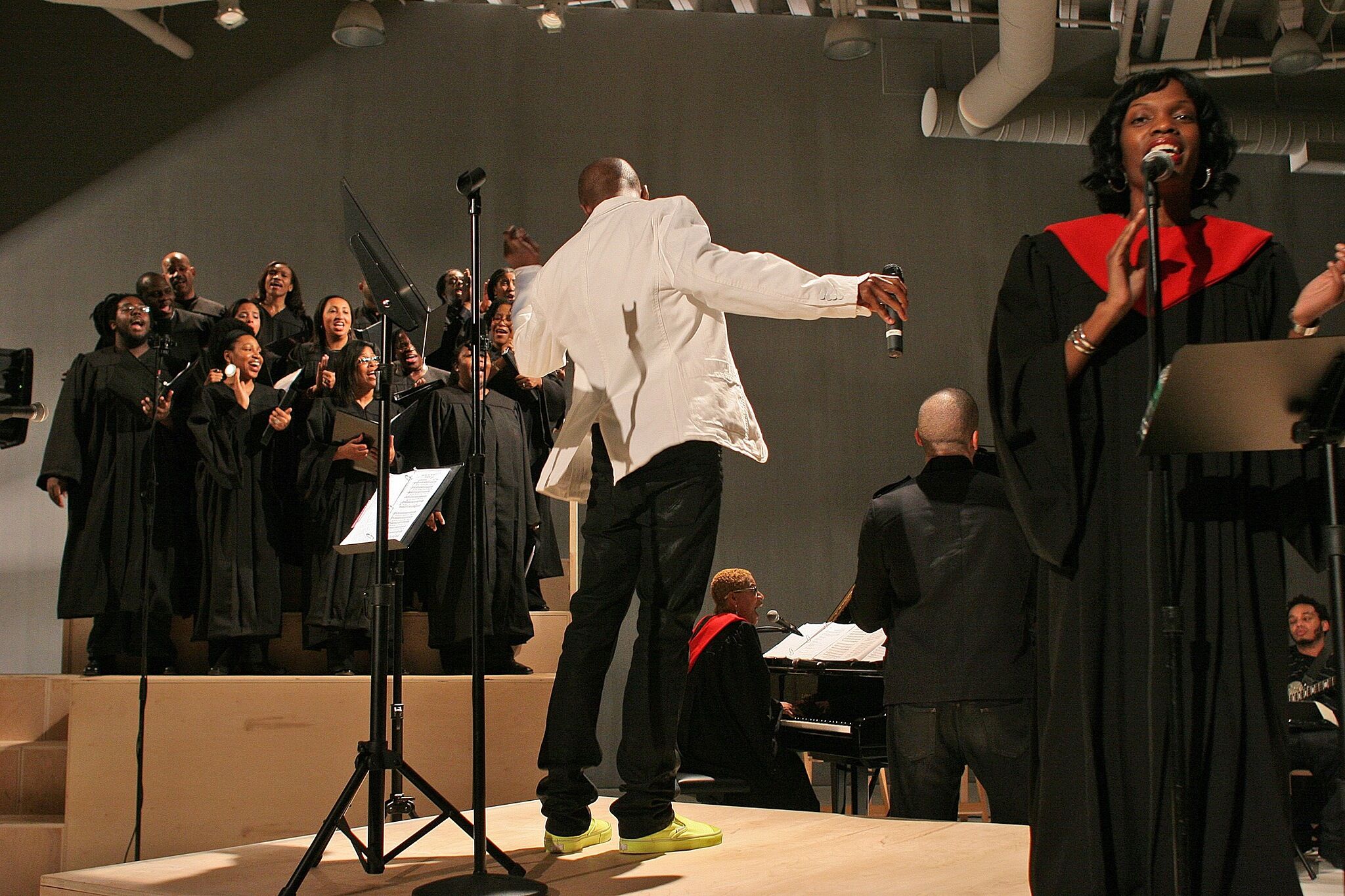
Adam Pendleton, performance still of The Revival, 2007. Performed at Stephen Weiss Studio, New York, September 19, 2007. Musical direction: Jason Moran, Alicia Hall Moran, Vaneese Thomas, and Adam Pendleton; testimonials: Jena Osman and Liam Gillick; solos: Renee Neufville, Vaneese Thomas, and Clarissa Sinceno; recorded by ARUP. Commissioned by Performa 07. Courtesy the artist and Performa, New York. Photograph © Paula Court
Adam Pendleton
Excerpt from The Revival, 2007
Adam Pendleton’s The Revival, a live event featuring a twenty-eight-person choir, was co-directed by Jason Moran and Alicia Hall Moran. Imitating the style of a religious revival meeting, Pendleton recited a text he had composed in a methodical cadence, meandering through phrases about ethical and political values related to Black and gay life. He illuminated the space as he uttered “symbols,” or bits of everyday (and at times offensive) speech, which are common to the “dozens,” a game of spoken words aimed to insult. Moran played the piano and the choir would respond in a cappella “glory” after Pendleton’s verbal offerings. The overall project created a tension between the mundane, the sacred, and the profane.
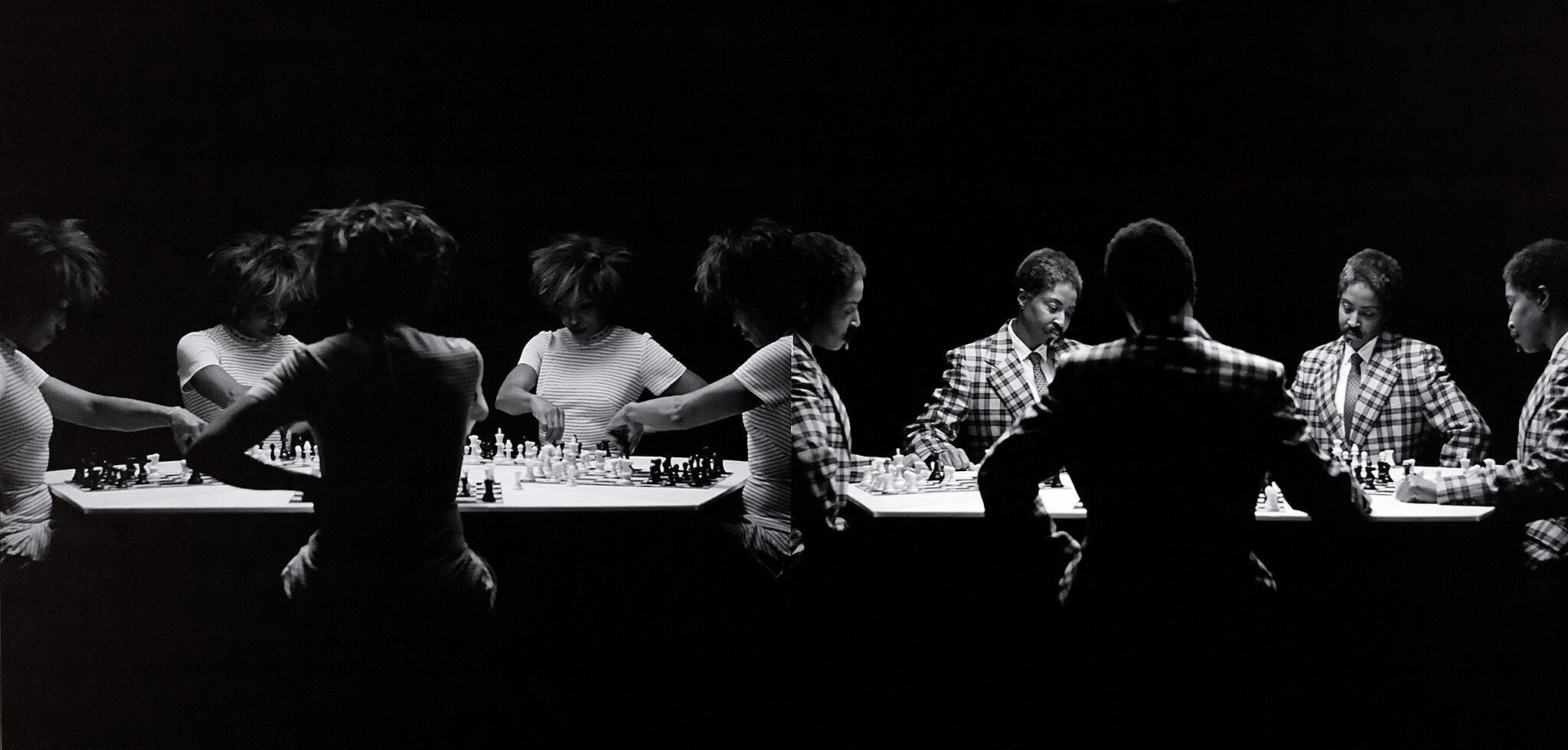
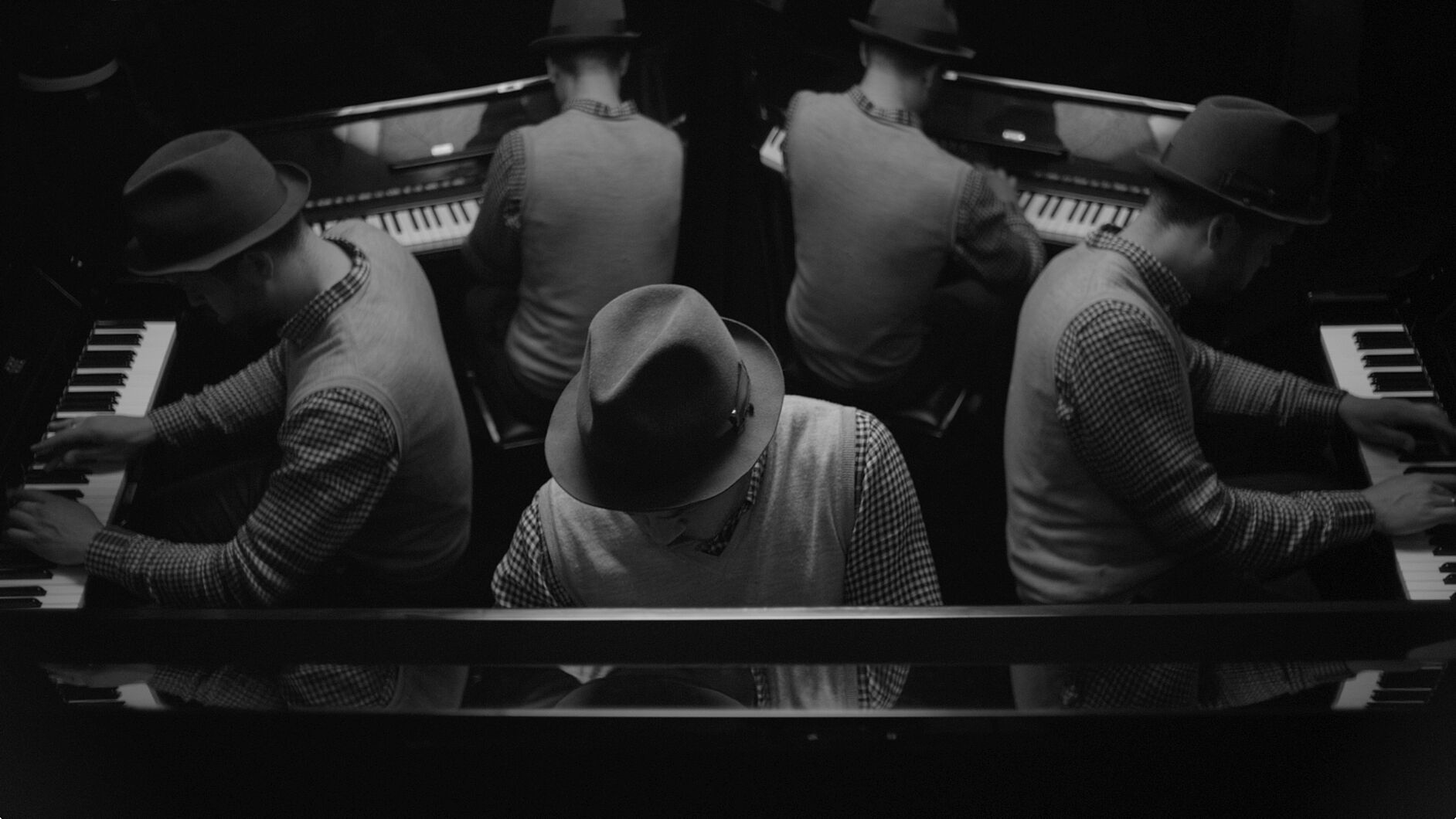
Lorna Simpson, still from Chess, 2013. Three-channel video, black-and-white, sound; 10:19 min. Courtesy the artist and Hauser & Wirth. © Lorna Simpson
Lorna Simpson
Chess, 2013
In Lorna Simpson’s video installation Chess, Jason Moran riffs improvisationally on one of German composer Johannes Brahms’s fifty-one piano exercises—short, difficult compositions meant to hone finger technique. Using a hinged mirror, Simpson captures a five-way image of herself playing chess and Moran playing the piano. The video was derived from an earlier photographic work by Simpson titled LA ’57—NY ’09, in which she reenacts scenes from found vintage photos and mirrors the subjects in dress, pose, and expression. Made up of three video projections, Chess considers questions of gender—Simpson appears as both female and male chess players—and the passage of time. Moran can be seen in one projection, performing the score he improvised based on discussions with Simpson about opposition and mirroring.
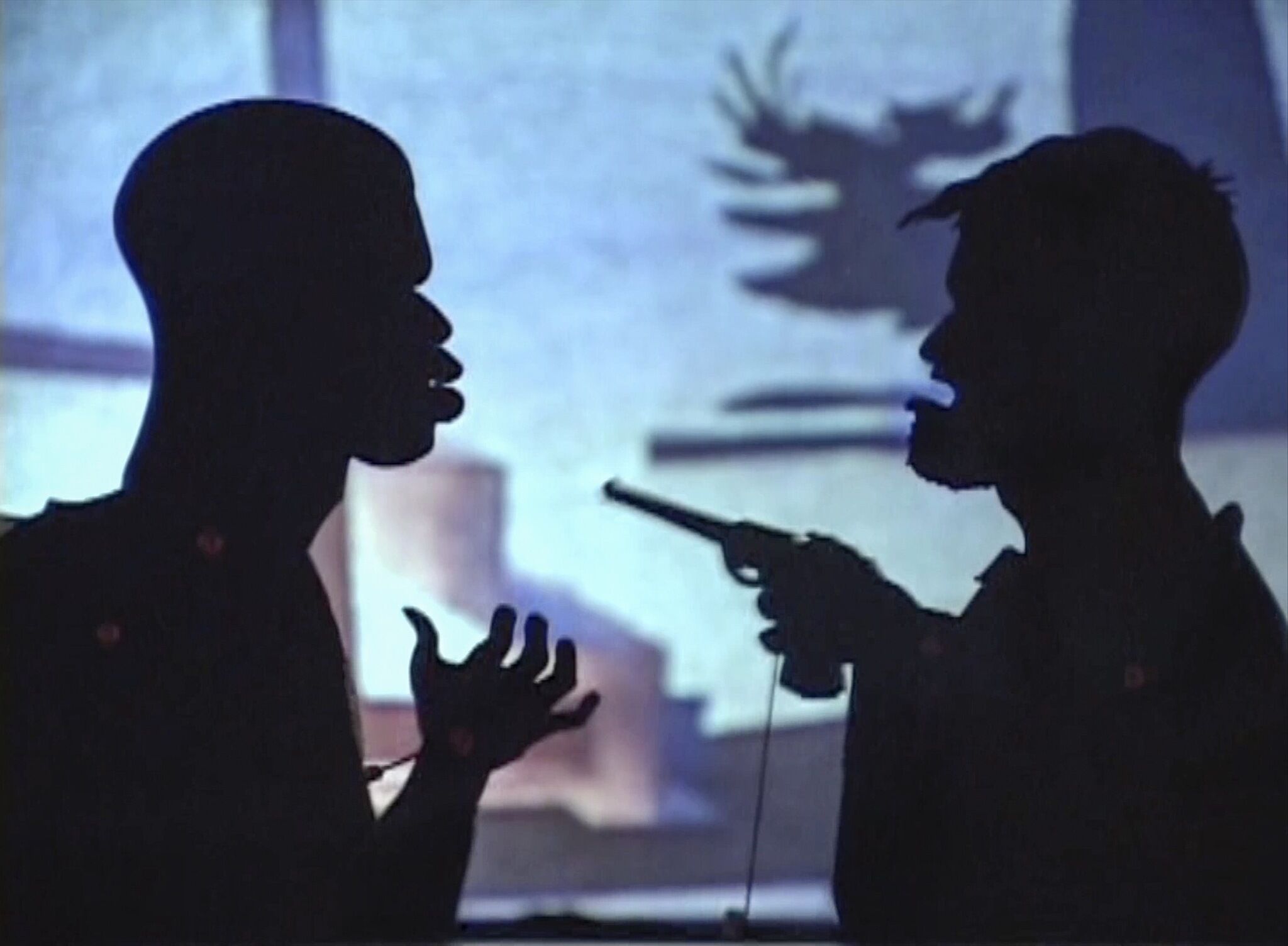
Kara Walker, still from National Archives Microfilm M999 Roll 34: Bureau of Refugees, Freedmen and Abandoned Lands: Six Miles from Springfield on the Franklin Road, 2009. Video, color, sound; 13:21 min. Original score: Alicia Hall Moran and Jason Moran. Courtesy the artist and Sikkema Jenkins & Co., New York. © Kara Walker
Kara Walker
National Archives Microfilm M999 Roll 34: Bureau of Refugees, Freedmen and Abandoned Lands: Six Miles from Springfield on the Franklin Road, 2009
This work developed out of Kara Walker’s research into the U.S. Department of War’s Bureau of Refugees, Freedmen, and Abandoned Lands. Established in 1865 to aid the formerly enslaved in their transition to freedom, the Freedmen’s Bureau kept detailed records of the brutal violence inflicted on Black Americans during the Reconstruction era. Here, Walker depicts one such example, which was described in interviews with a family who was attacked and had their home burned by a mob of angry white men.
Part of a larger series titled The Bureau of Refugees, this work alludes to the tradition of puppetry and incorporates handmade sets. Glimpses of Walker’s hands and face appear as she manipulates the puppets. Jason Moran and Alicia Hall Moran’s original score animates the narrative sequences and intensifies as the plot thickens.
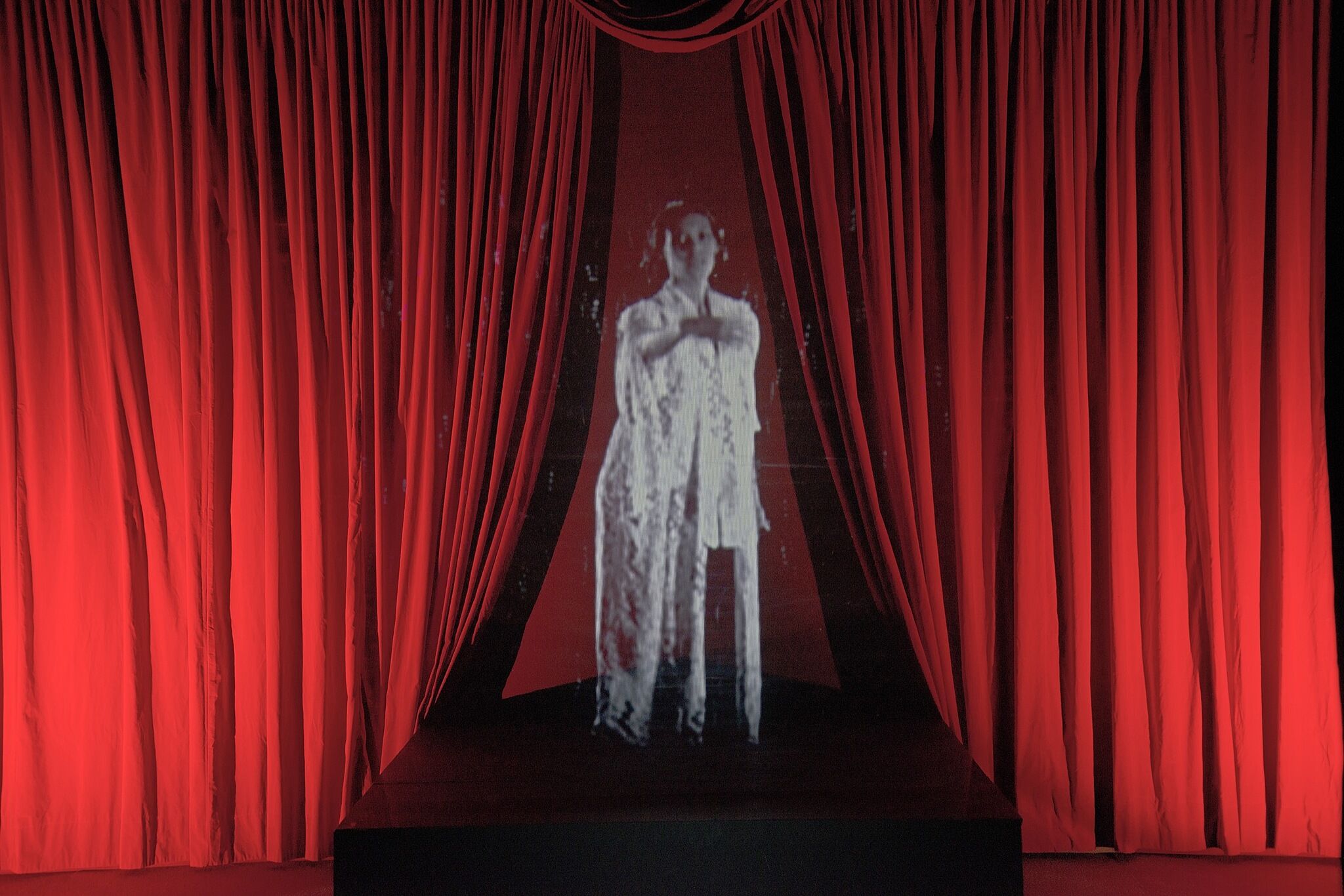
Carrie Mae Weems, still from Lincoln, Lonnie, and Me–A Story in 5 Parts, 2012. Video, color, sound; 18:08 min. Courtesy the artist and Jack Shainman Gallery, New York. © Carrie Mae Weems
Carrie Mae Weems
Lincoln, Lonnie, and Me—A Story in 5 Parts, 2012
Carrie Mae Weems’s Lincoln, Lonnie, and Me—A Story in 5 Parts is a video installation that uses a nineteenth-century special effect called Pepper’s Ghost to create transparent, spectral images. The video displayed here is just one part of a larger work composed of physical theatrical elements. Weems captures various ghostly figures in the piece, including a Playboy bunny, a civil rights protester, and an American president, most of whom are played by the artist. The soundscape includes pop music, recitations of the Gettysburg Address, the reflections of a minstrel performer, electronic-infused blues, and a piano composition by Jason Moran.