magic hour–golden time:
Jonathan González
May 15–17, 2026
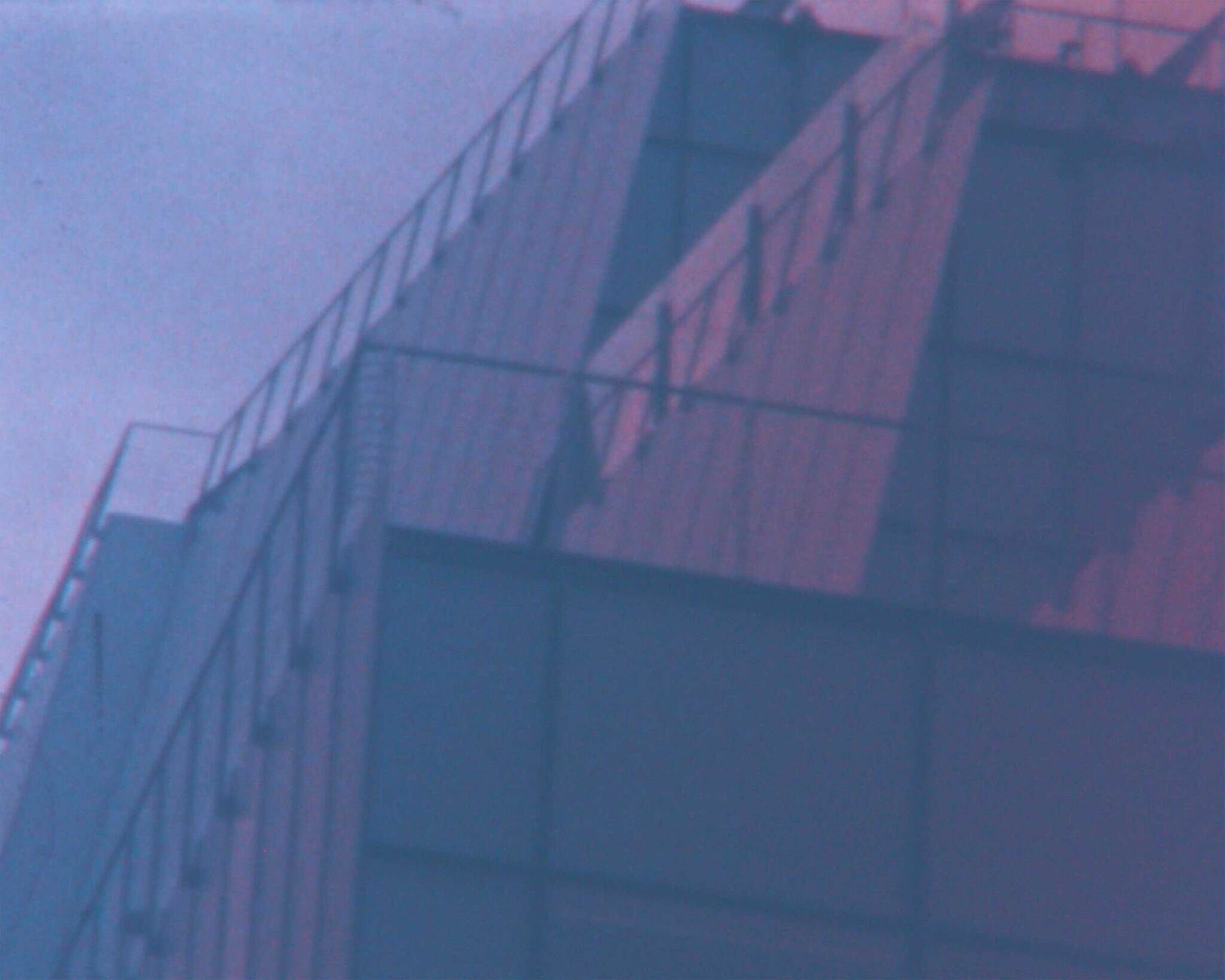
magic hour–golden time C. [Heights] (2026). 11 x 8.5. Chromogenic Print. Jonathan González
This event has passed.
See more events like this.
Become a member today!
Join now to enjoy early access to exhibitions and events, unlimited free admission, guest privileges, and more.
Join nowLearn more about access services and programs.
Floor 6
May 15 , 6–9 pm
May 16 and 17, 4–7 pm
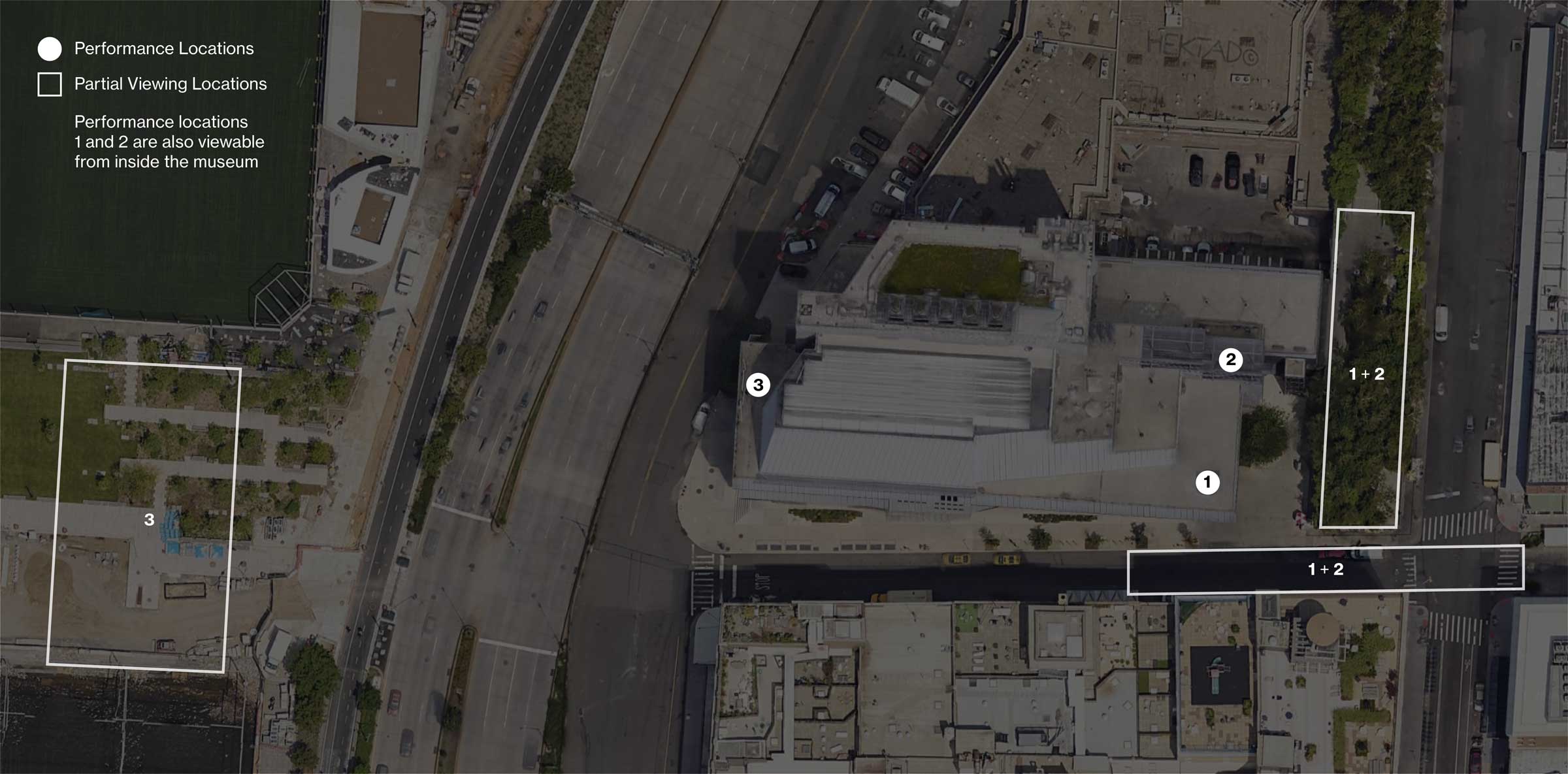
Map of performance location and viewing vantage points.
magic hour–golden time is a durational performance presented as part of the 2026 Whitney Biennial, in which five performers activate the museum’s terraces as both stage and vantage point. The work draws on the Japanese aesthetic concept of shakkei—“borrowed scenery”—and the German Romantic compositional device of Rückenfigur, in which a figure is seen from behind, gazing into a landscape. Together, these frameworks shape a choreography of looking and being looked at, situating the body within relations of scale, perception, and environment.
magic hour–golden time unfolds over a three-hour duration, during which the performers relocate at the top of each hour to activate a different outdoor terrace of the Whitney. The first hour will take place on the 6th floor terrace. The second hour will take place between the 6th to the 8th floors on the terrace stairwell. The first and second hours may be experienced from multiple viewing points including inside the museum, on the terraces, or from the southernmost part of the High Line and from Gansevoort Street (partial view). The final hour will take place on the west side of the 6th floor terrace, inaccessible to Museum audiences. Viewing for the final hour does not require Museum admission, and is possible from Hudson River Park at Pier 53 adjacent to Day’s End (2021) by David Hammons.
Performed by AJ Wilmore, India Lena González, Ananda Naima González, Marguerite Hemmings, and Kingsley Ibeneche
Costumes by Liz Prince
Produced by Greta Hartenstein
Commissioned by the Whitney Museum of American Art for the 2026 Whitney Biennial, magic hour–golden time is co-presented and supported by Frieze.
Duration
Three hours
Jonathan González is a choreographer, artist, and writer whose interdisciplinary practice engages site, sensation, memory, and embodiment as core materials of performance. Working across choreography, installation, sound, image, and text, González explores how movement operates as a form of spatial thinking and cultural inquiry. Their work has been presented internationally in museums, performance spaces, and public contexts, and centers collaborative methodologies that test how collective bodies negotiate atmosphere, duration, and shifting environments.
González is the author of Ways to Move: Black Insurgent Grammars (Ugly Duckling Presse, 2025), a book that extends their choreographic thinking into poetic and theoretical writing. Recent and forthcoming projects include Swerve Fatigue, a large-scale ensemble work developed with The Kitchen, and a new commission for the 59th Carnegie International. González is a 2025 Pew Fellow and currently serves as Assistant Professor in the Department of Dance at Hunter College (CUNY), where their teaching bridges embodied research, performance studies, and interdisciplinary artistic practice.