Programmed: Rules, Codes, and Choreographies in Art, 1965–2018
2018
“The hope was for me as an artist to lose control, and to have my control exist at the level of setting up the experiment.” —Ian Cheng
Hear directly from artists and curators on selected works from Programmed: Rules, Codes, and Choreographies in Art, 1965–2018.
-
600
Introduction
Audio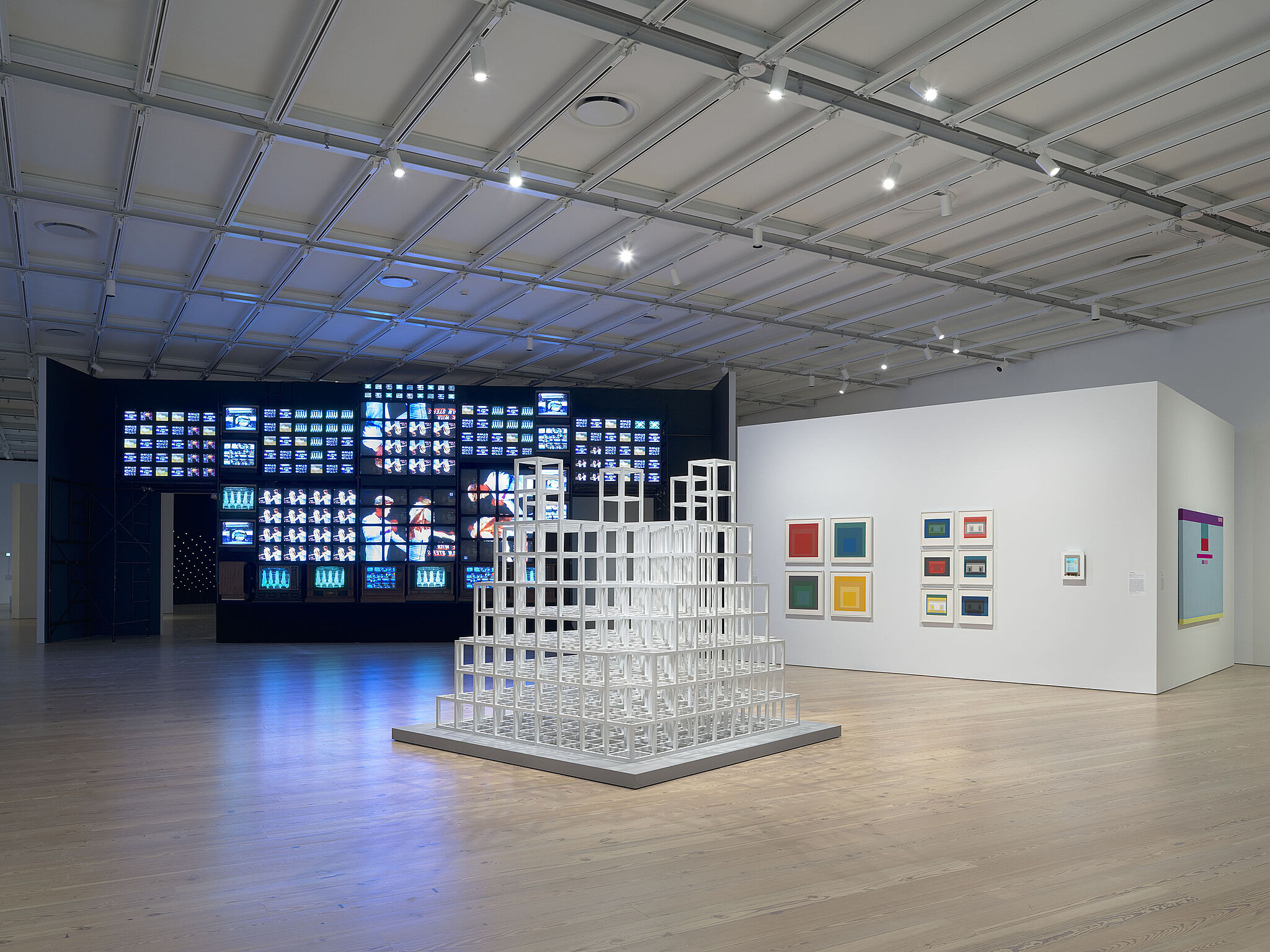
-
601
Josef Albers, White Line Square VI, 1966
Audio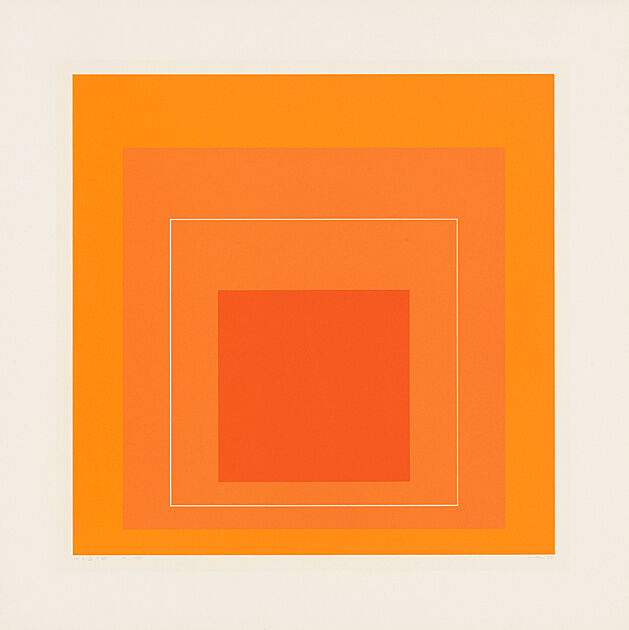
-
602
John F. Simon Jr., Color Panel v1.0, 1999
Audio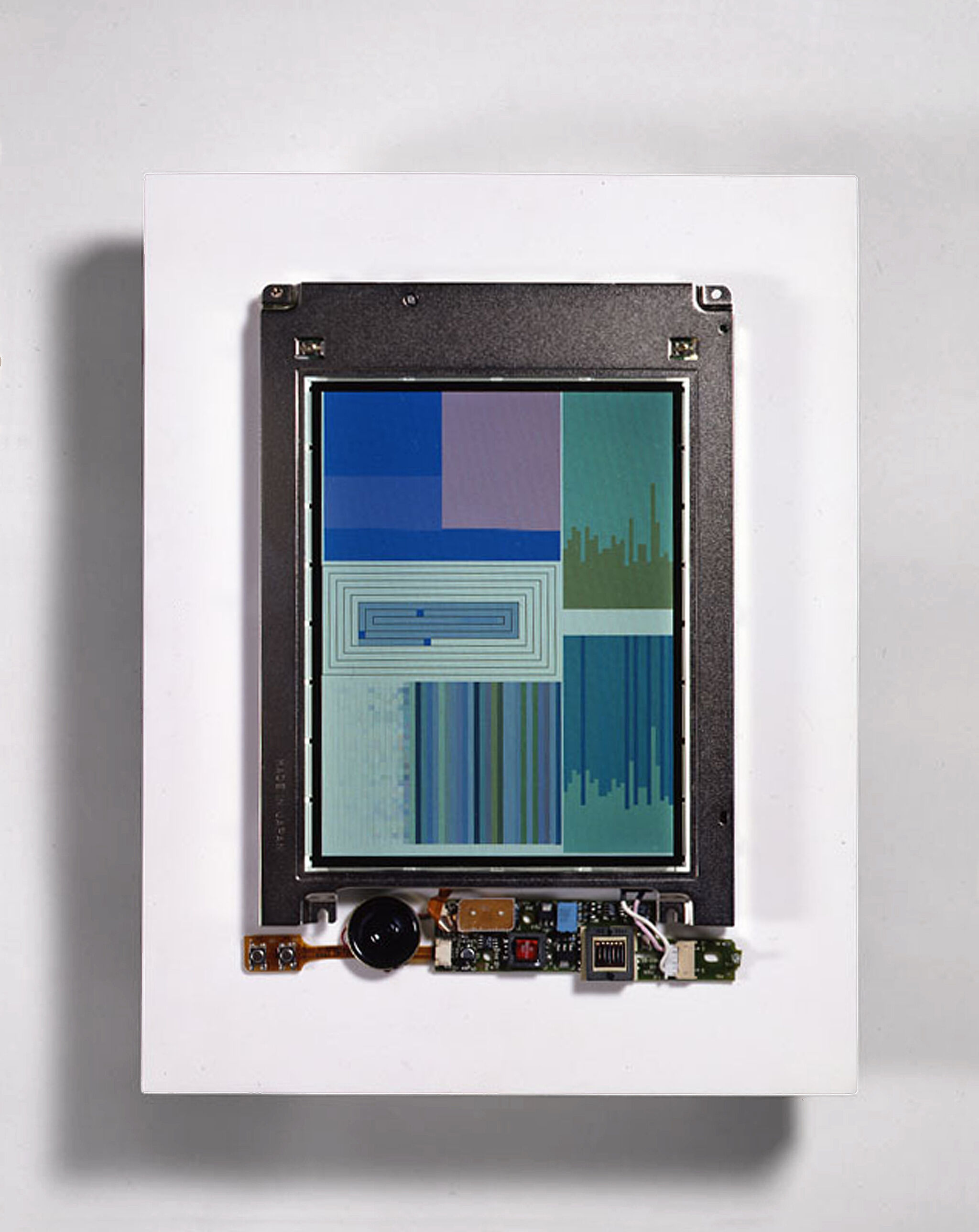
-
603
Donald Judd, Untitled, 1965
Audio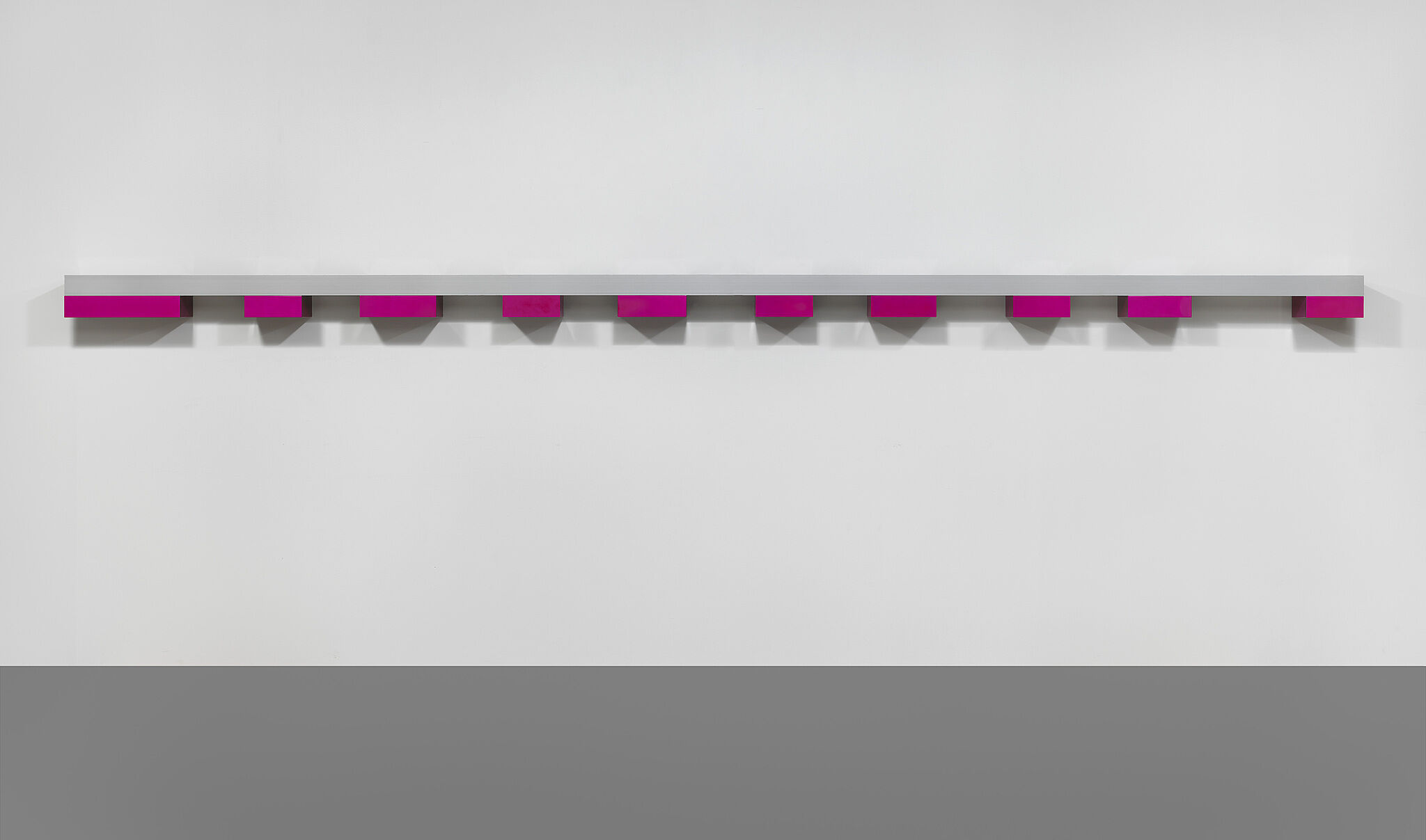
-
604
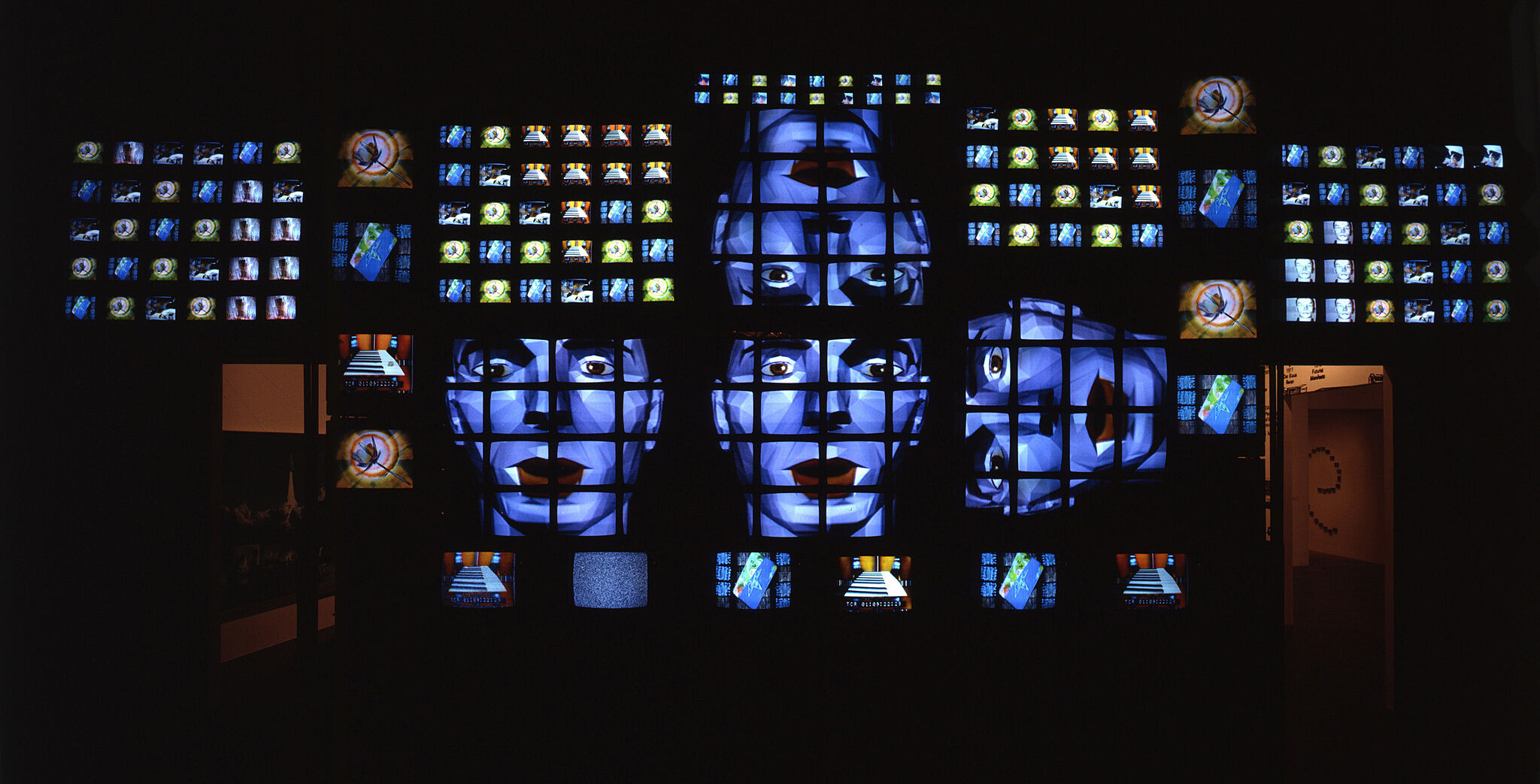
Conserving Nam June Paik’s Fin de Siècle II, 1989
Audio, Transcription -
610
Joan Truckenbrod, Coded Algorithmic Drawings, 1975
Audio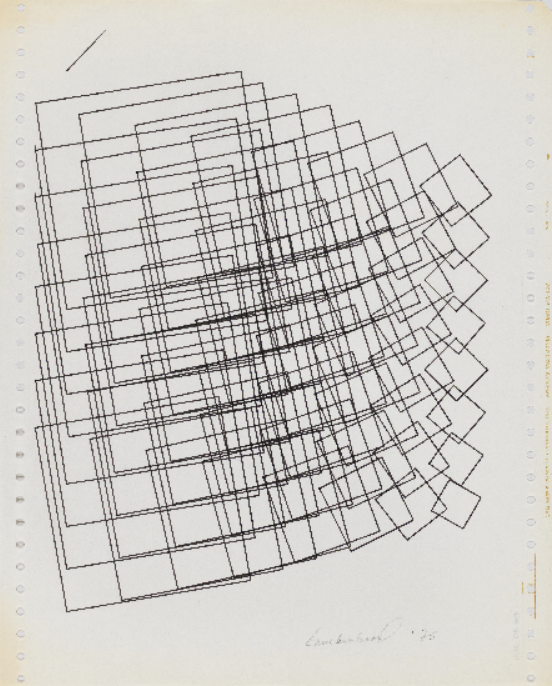
-
611
Casey Reas, {Software} Structures #003 A and B, 2004
Audio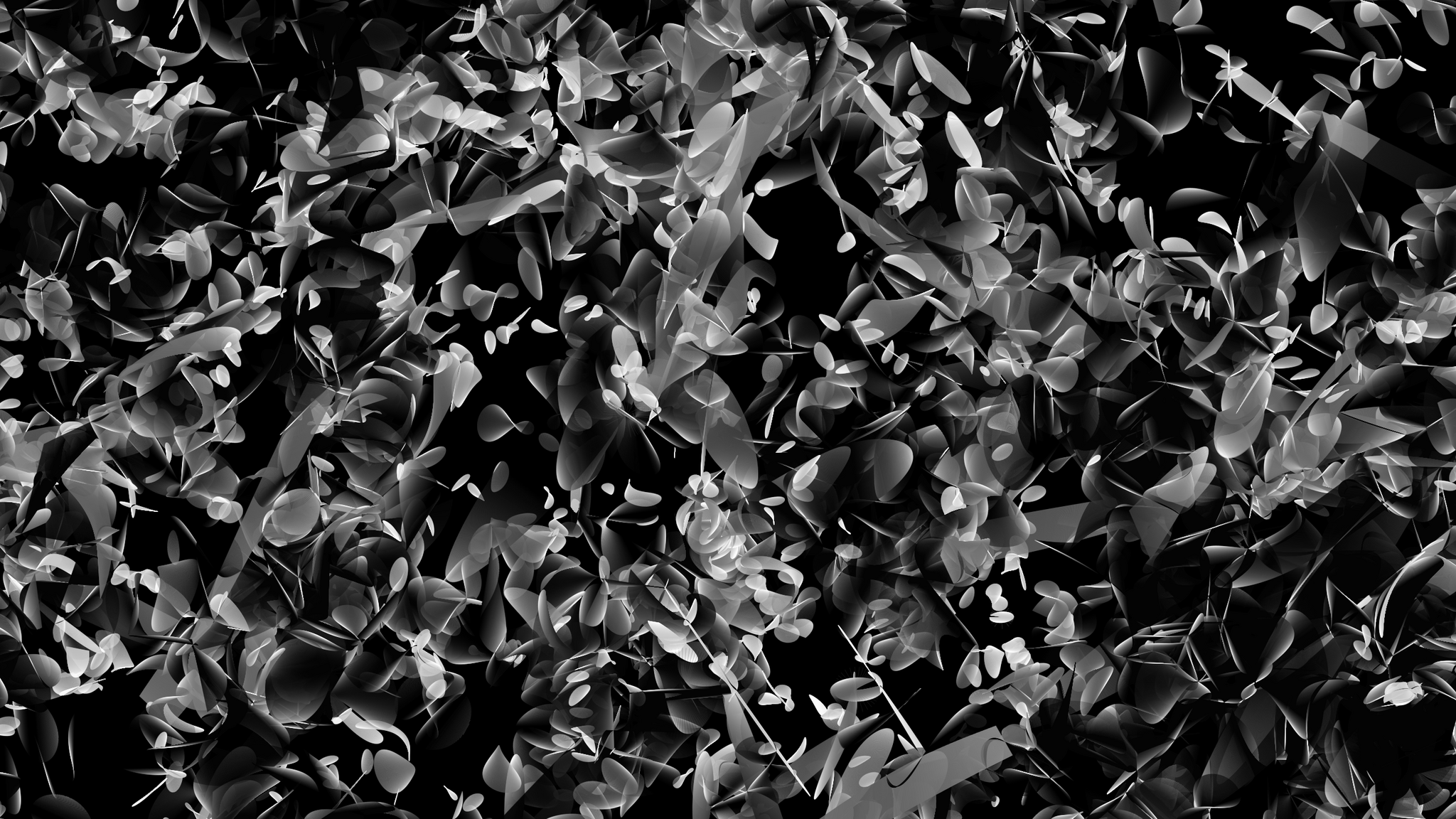
-
612
Tauba Auerbach, Binary Uppercase/Lowercase, 2005
Audio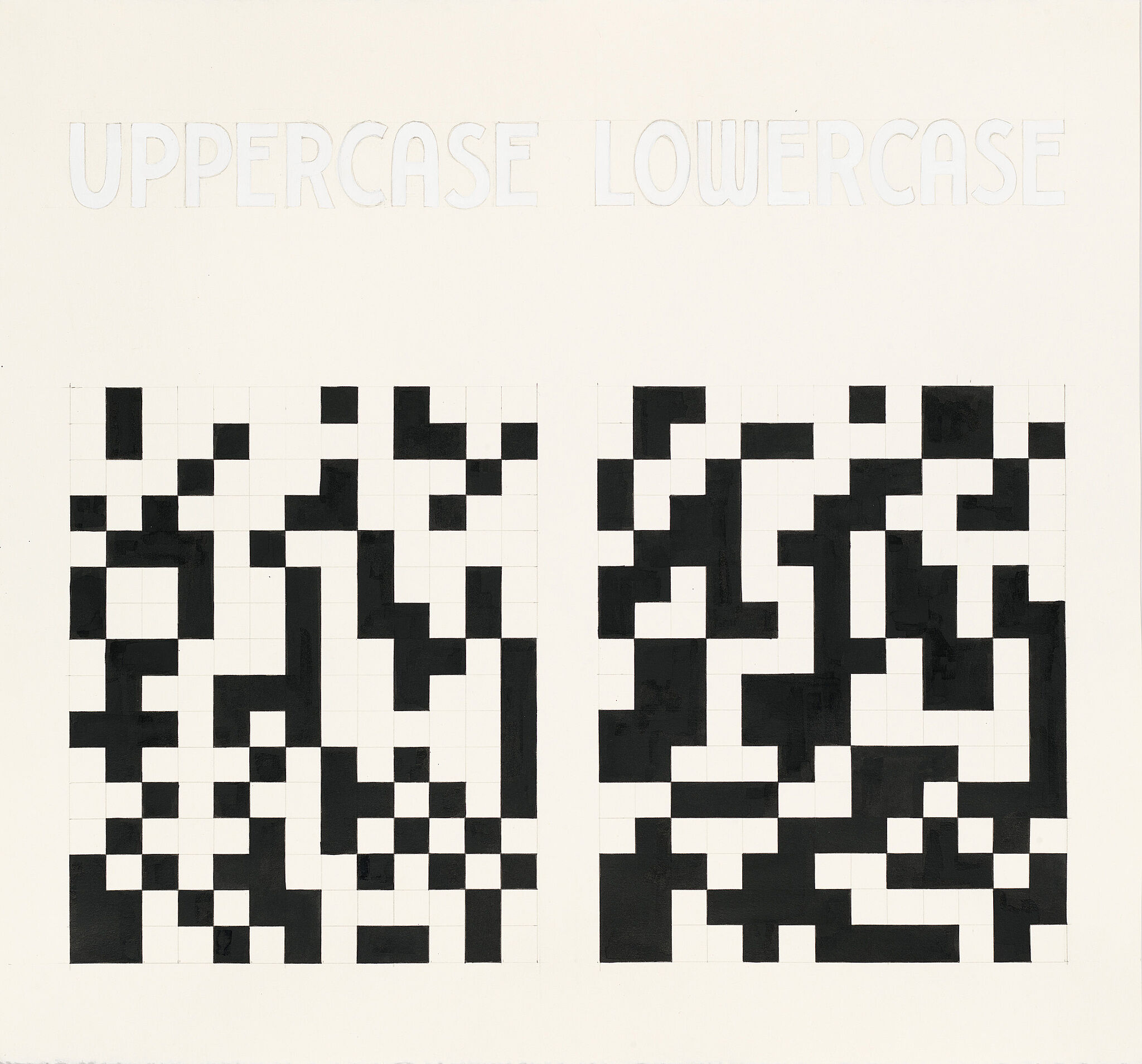
-
620
Ian Cheng, Baby feat. Ikaria, 2013
Audio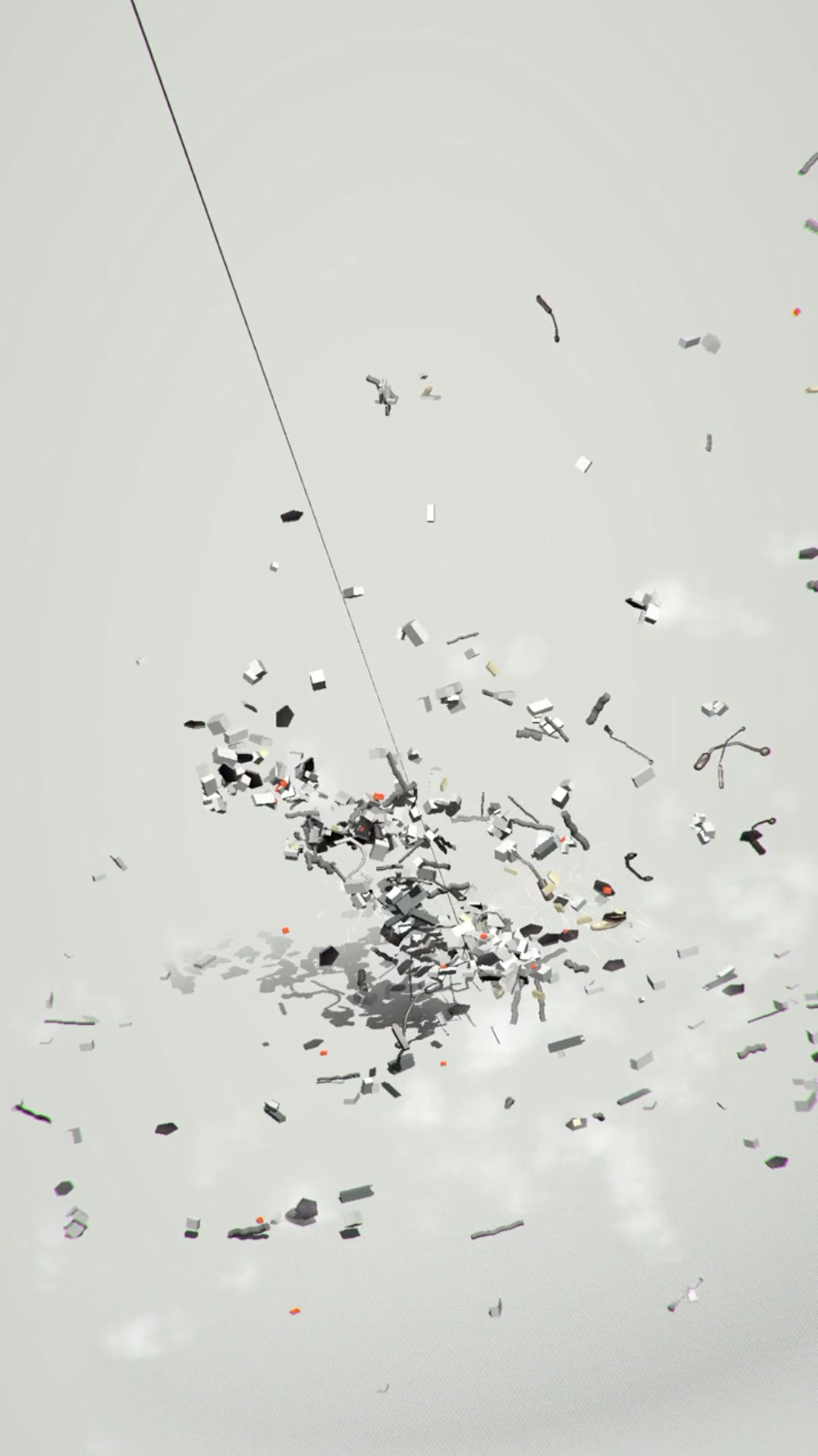
-
630
Steina, Mynd, 2000
Audio, Transcription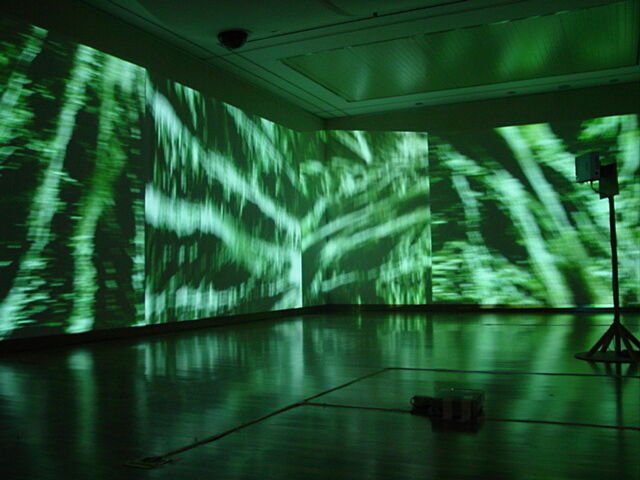
-
631
Cory Arcangel, Super Mario Clouds, 2002
Audio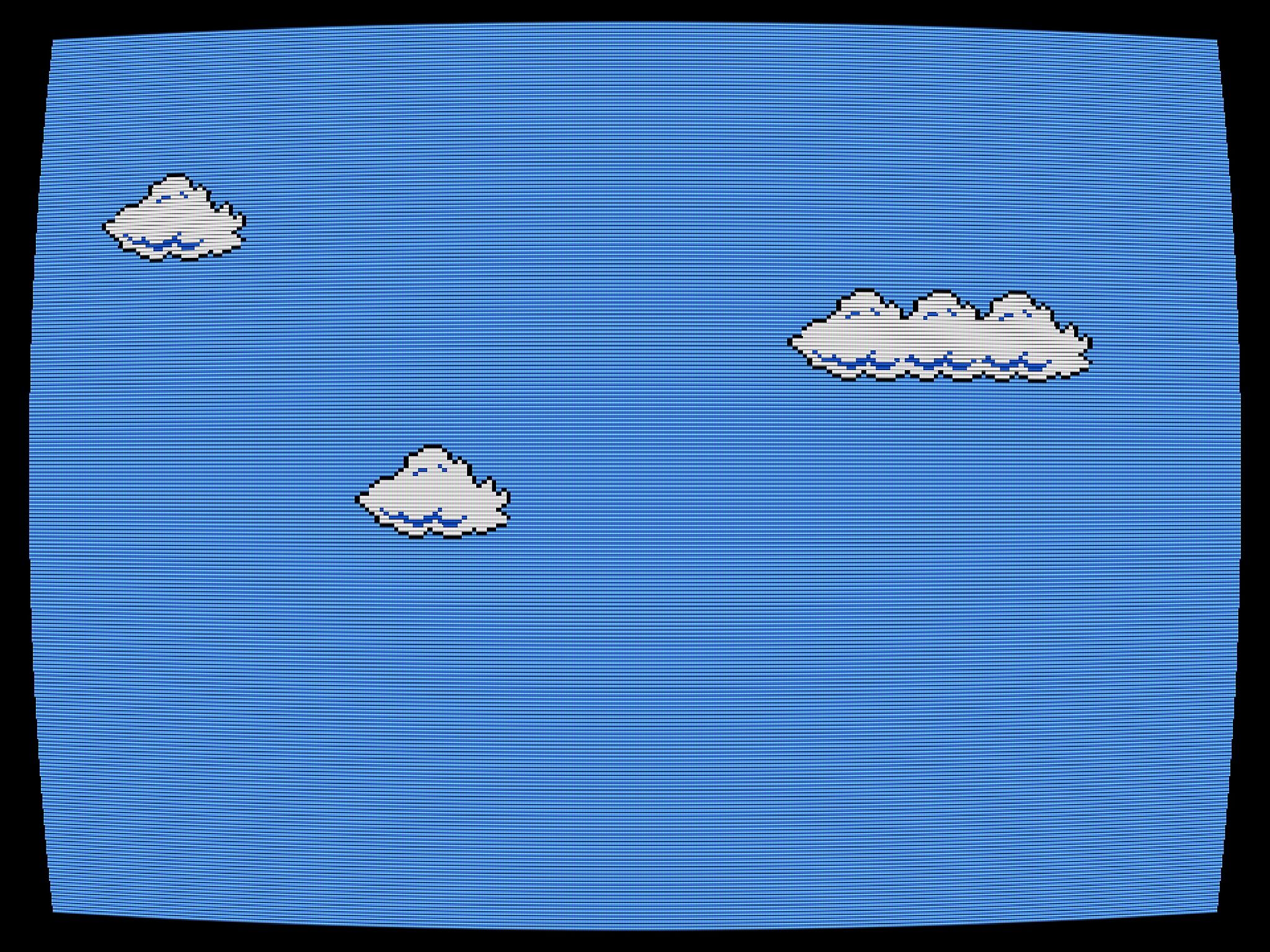
-
640
Jonah Brucker-Cohen and Katherine Moriwaki, America's Got No Talent, 2012
Audio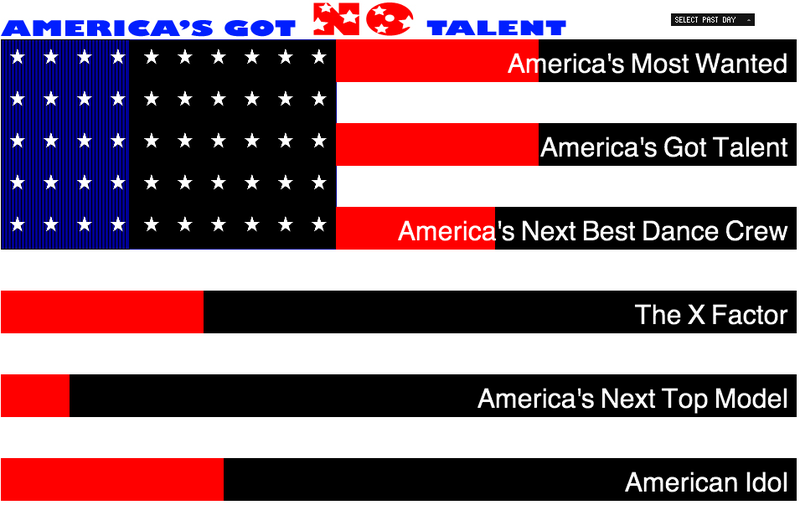
-
641
Mendi + Keith Obadike, The Interaction of Coloreds, 2002
Audio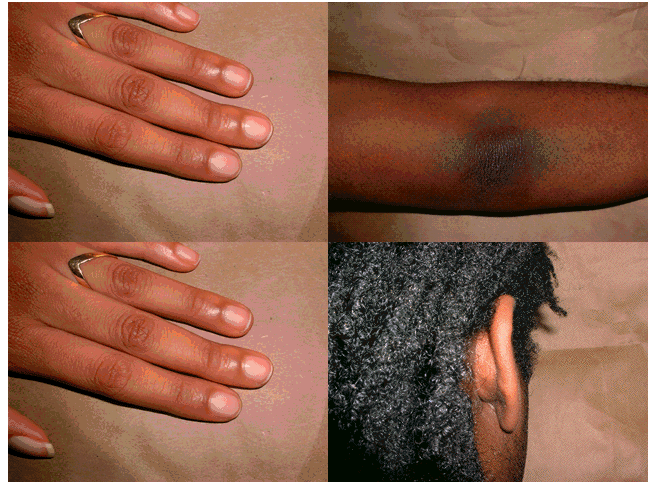
-
642
Paul Pfeiffer, Goethe's Message to the New Negroes, 2001
Audio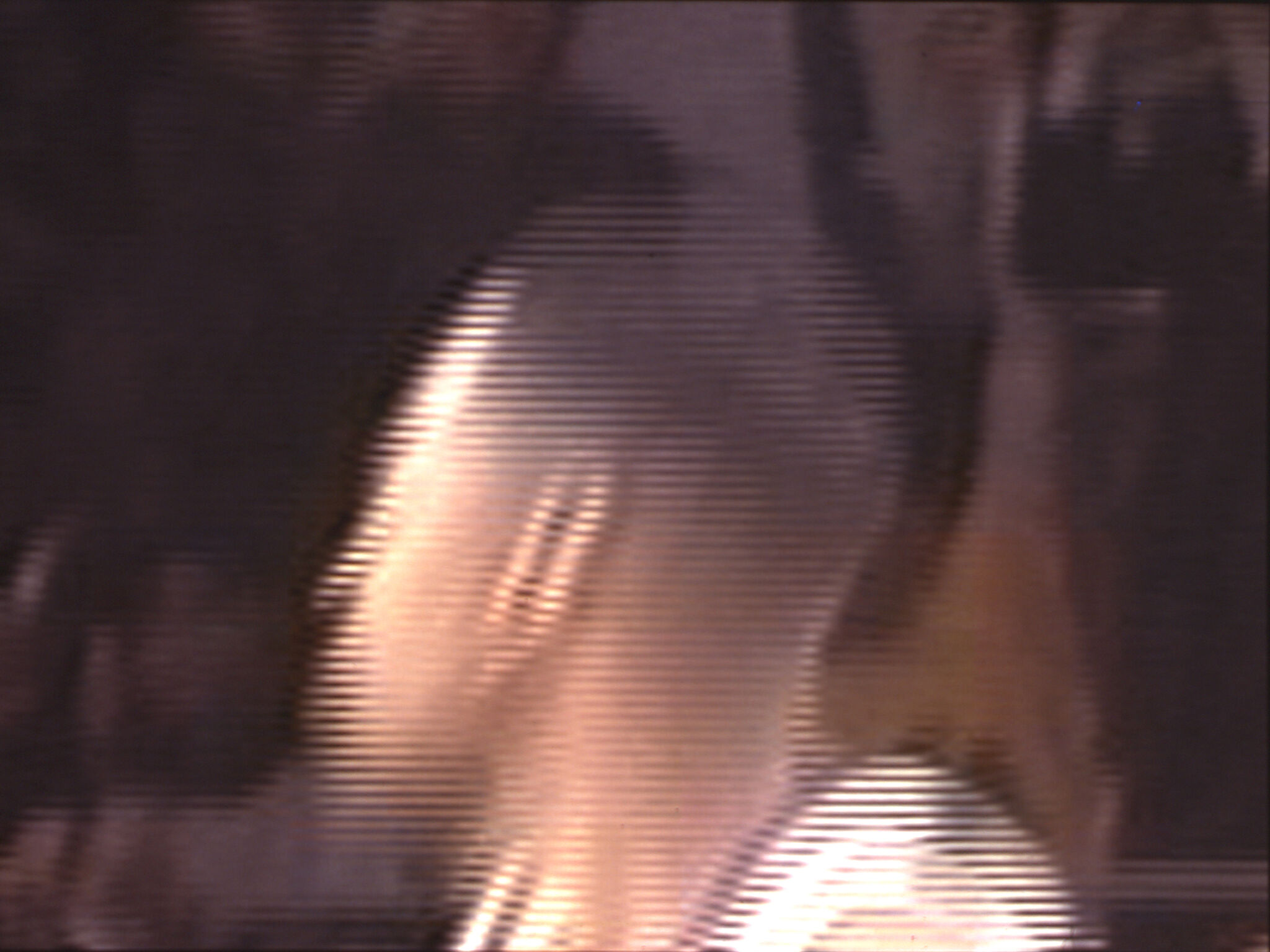
-
650
Jim Campbell, Ambiguous Icons #5 (Running, Falling), 2000
Audio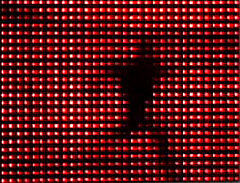
-
613
Lucinda Childs, Dance, 1978 and 2014
Transcription -
632
Lillian Schwartz, Newtonian I, 1978
Transcription -
633
Lillian Schwartz, Newtonian II, 1978
Transcription -
634
Lillian Schwartz, Enigma, 1972
Transcription -
660
Barbara Lattanzi, C-SPAN x 4 – Alphaville, 2004
Transcription -
664
Barbara Lattanzi, C-SPAN x 4 – Karaoke, 2004
Transcription
Christiane Paul: I'm Christiane Paul, the Adjunct Curator of Digital Art at the Whitney Museum.
Programmed, essentially, addresses two notions of the program. One more in terms of code and algorithms, the way we would understand it as programmed in digital terms. The other idea of the program behind the show is that of the television program, and it's equipment, and signal, and also the manipulation of image sequences.
What is important about Programmed is that all of the works in the exhibition actually address the idea that they are programmed and based on instructions and rules. We typically understand programmed as a digital phenomenon these days, but what we want to make clear here is that there is a long history of instruction and rule-based art that is programmed.
Installation view of Programmed: Rules, Codes, and Choreographies in Art, 1965-2018 (Whitney Museum of American Art, New York, September 28, 2018-April 14, 2019). From left to right: Nam June Paik, Fin de Siècle II, 1989 (partially restored, 2018); Sol LeWitt, Five Towers, 1986; Josef Albers, Homage to the Square V, 1967; Josef Albers, Homage to the Square IX, 1967; Josef Albers, Homage to the Square XII, 1967; Josef Albers, Homage to the Square X, 1967; Josef Albers, Variant V, 1966; Josef Albers, Variant VI, 1966; Josef Albers, Variant X, 1966; Josef Albers, Variant IV, 1966; Josef Albers, Variant II, 1966; Josef Albers, Variant VII, 1966; John F. Simon Jr., Color Panel v1.0, 1999; Rafaël Rozendaal, Abstract Browsing 17 03 05 (Google), 2017. Photograph by Ron Amstutz
Christiane Paul: Josef Albers, in his Variant and Homage to the Square series, essentially explores color theory and the way we perceive color.
Narrator: Christiane Paul is Adjunct Curator of Digital Art at the Whitney Museum.
Christiane Paul: So he is nesting squares or geometric forms in different ways that actually make us question what the foreground or background is, what kind of color we are looking at. And we think of Albers mostly in terms of color and perception, but what we are highlighting in this exhibition is that he's also using a rule-based system of actually creating those nested squares and nested forms. So you are also looking at instruction-based art.
What is important here is that ultimately he emphasizes the potential for variation, for generating all different kinds of variations. While we are looking at static images, there is this potential for the generation of more and more images and forms.
Josef Albers, White Line Square VI, 1966, from the portfolio White Line Squares (Series I). Lithographs: sheet, 20 11/16 × 20 11/16 in. (52.5 × 52.5 cm); image, 15 11/16 × 15 11/16 in. (39.9 × 39.9 cm). Whitney Museum of American Art, New York; gift of the artist 67.14.6. © 2018 The Josef and Anni Albers Foundation/Artists Rights Society (ARS), New York
John F. Simon: My name is John F. Simon, Jr.
Color Panel v1.0 was made in 1999.
I took a used Apple 280C computer. Disassembled it. Took it all to pieces. Took the case off of it, and then I reassembled it so that the screen was on the front of the panel, and the body of the computer was on the back.
I turned the screen vertically instead of horizontally, which it usually was. And then I wrote a piece of software, custom, for that display. That was my canvas, so I want to make a time-based color study. I want to make a painting that would change continually and never repeat itself. It was an experiment in dynamic painting.
It's hard to describe how little display power and computing power there was on that computer. Even the simplest electronic device today has more power than that computer did, so I was limited in what I could do.
I had a software method that I called variable expansion, so I make a simple rule, and I get that running, and it's in a small loop, which is like a paragraph in code writing. So I have a little loop that's running. Then I begin to improvise with the loop by taking the parts that are set, and turning them into variables, expanding their range, and seeing what happens.
So in the lower left hand corner of the Color Panel I had squares of different colors bouncing back and forth in a rectangle. So there were lots of choices what to do then. Do they overlap? Did they grow? Did they shrink? How do they mix? That kind of thing.
John F. Simon Jr., Color Panel v1.0, 1999. Software, altered Apple Macintosh Powerbook 280c, and plastic, 13 1/2 x 10 1/2 x 3 in. (34.3 x 26.7 x 7.6 cm). Whitney Museum of American Art, New York; purchase with funds from the Painting and Sculpture Committee 99.88a-c. © 1999 John F. Simon Jr.
Carol Mancusi-Ungaro: When I started this department of Conservation at the Whitney in 2001, there were a few works that were major in the canon of American art history that were no longer exhibitable. This piece by Judd was one of them.
Narrator: The work had come into the Whitney’s collection a year after Judd made it. It fell into disrepair and was treated before the Whitney’s conservation department was founded. Carol Mancusi-Ungaro is Melva Bucksbaum Associate Director for Conservation and Research.
Carol Mancusi-Ungaro: And then years later, in 1990, Judd, I don't exactly don't know how, but he became aware of the repaint of the boxes, and felt the color was totally unlike the original color and was really unhappy and felt the Whitney should no longer exhibit the piece. And then he died. It therefore became a challenge to me and my department to restore it, in keeping with what Judd would have originally wanted.
So the first thing to do was to determine what the original color looked like. From the plan actually, where he explained the rules that dictated the progression. At the bottom, there is a note that says "HDHF Purple," and we came to determine that was Harley Davidson HiFi Purple, which was the color of the boxes.
Narrator: The conservation team found another work that Judd had made in Harley Davidson HiFi Purple at the Phoenix Art Museum. They used it as a control in determining what this work should look like as they repainted it.
Carol Mancusi-Ungaro: In the meantime, we engaged with an auto restoration person. He saw the color of the Phoenix piece in our studio, and he went away and came back and just matched the color perfectly. So perfectly that when we did our fancy science test, the spectrophotometer test, the color was identical. It was perfect.
Anyway, the piece as you see it today, is restored with the same color that Judd had originally asked to be applied in the sixties, and we think it's true to its original appearance.
Donald Judd, Untitled, 1965. Nitrocellulose lacquer on aluminum, 8 1/4 × 253 × 8 1/4 in. (21 × 642.6 × 21 cm). Whitney Museum of American Art, New York; purchase with funds from the Howard and Jean Lipman Foundation, Inc. 66.53. © 2018 Judd Foundation / Artists Rights Society (ARS), New York
Nam June Paik, Fin de Siecle II, 1989
Running time: ongoing
Sounds include: A compilation of various songs and sounds intercut and interrupting one another as videos transition, such as “Musique Non-Stop” by Kraftwerk, a rendition of samba song “Kizomba, Festa Da Raça,” “Look Back in Anger” by David Bowie, 1980s synth tones, nondescript chatter layered over ascending tones and the chug of engines, and spotty audio of Joseph Beuys’s muffled screams and grunts interspersed with harsh and heavy piano keys.
Joan Truckenbrod: When I started, I really was interested in making an impression or an image of invisible forces in the natural world that were palpable but invisible. I wasn't really interested in drawing them, or painting them, or photographing them. I was more interested in an expression, or an experience, or an impression of them. Then it became obvious that I could make a mark with a computer.
But I then discovered that there were in fact mathematical formulas that described some of these phenomena so I could develop algorithms using these algebraic formulas and then integrate them into computer programs so that I created usually a series of images. Sometimes the series were drawn out in a linear way, like one at a time, and the text style was done in that way. Or sometimes, the series or the sequence would be superimposed on one another, so you'd get the sense of motion and depth that expressed that series, sort of the trajectory. I always think of nature as not being still, but that there's a trajectory, that they play out, like growth patterns or light waves undulating or wind currents moving, things like the series of leaves on a particular tree.
I tried to express that through programming.
Joan Truckenbrod, Coded Algorithmic Drawing (#45), 1975. Computer-generated drawing: ink on paper, 12 1/2 × 15 1/8 in. (31.8 × 38.4 cm). Whitney Museum of American Art, New York; purchase with funds from the Digital Art Committee 2018.52
Narrator: Casey Reas made these two works while thinking about the relationship between Software art and Conceptual art. He took his cues especially from the wall drawings of Sol LeWitt, one of which has been drawn nearby.
Casey Reas: I was looking really closely at LeWitt's work, specifically at the wall drawings, because of their text instructions as the origin for the drawings that then are executed on the wall. Structure 1 and Structure 2 were working my way up to define a way of using human languages for creating software instead of using coding languages—using plain English to make the process of the software very clear. Structures 3A and 3B were a breakthrough in the sense of being able to encode a visual system in language that is then executed in software to create an image, either on a screen or projected.
Writing them in English was really important for me for two reasons. One, it allowed the audience to see what the process was, to see the system and have access to it. And it also allowed me to remain in more of a loose and ambiguous space before then doing the final encoding in a computer programming language.
Casey Reas, {Software} Structure #003 B, 2004 and 2016. JavaScript. Commissioned by the Whitney Museum of American Art for its artport website
Clémence White: Auerbach is interested in linguistic systems and in translation. She's thinking about language and how language is used, but is also thinking about the characters of the alphabet. This piece, which is called Binary Uppercase/Lowercase translates the English alphabet into binary uppercase on the left side, and lowercase on the right side.
Narrator: Binary is the language of ones and zeroes that forms the basis of computer programming. Clémence White is a Curatorial Assistant at the Whitney.
Clémence White: Binary code for each letter in the English alphabet is eight bits long, so she translated that code using her system. Black squares correspond to ones, white squares correspond to zeroes for each letter.
The letter "A" in binary in uppercase is 01000001. She is translating ones as black squares and zeroes as white squares. So it's one white square, one black square, five white squares, and then one black square.
Tauba Auerbach, Binary Uppercase/Lowercase, 2005. Ink, opaque watercolor, and graphite pencil on paper, 22 5/16 × 23 3/4 in. (56.7 × 60.3 cm). Whitney Museum of American Art, New York; purchase with funds from the Drawing Committee 2010.79. © Tauba Auerbach
Ian Cheng: Baby feat. Ikaria, it's a work I made in 2013.
Narrator: Ian Cheng.
Ian Cheng: It's a simulation, and it features three chatbots who are normally used as a kind of customer service function. And instead of talking to a human person, I had them talk to each other. And in the process, I was very hopeful that they would generate their own conversation that would veer off into either absurd realms, or very, very repetitive and semantic nonsense. I think I've achieved that effect. But the premise of it was that the conversation would be generative and while this conversation was occurring, you would see visually on screen different, what looks like floating debris, and over time, as this conversation evolved, that debris would start to take shape and form, and you would start to hopefully see this conversation as its own sort of macro-organism, or entity.
In putting them together, and in putting them in this kind of video game engine where they could simulate out all their possibilities, the hope was for me as an artist to lose control, and to have my control exist at the level of setting up the experiment.
Ian Cheng (b. 1984), Baby feat. Ikaria, 2013. Live simulation, sound, artificial intelligence service; infinite duration. Whitney Museum of American Art, New York; gift of Candy and Michael Barasch 2015.197. © Ian Cheng
Steina: All my works are actually inspired by tools.
Narrator: The artist, Steina.
Steina: So, this is also inspired by a tool. It is called Image/Ine.
Narrator: Image/Ine is video processing software that Steina co-developed.
Steina: Image/Ine has many interesting things that are integrated into Mynd, but mostly, it was my discovery that if I distorted the image on the horizontal, it was totally different than if I distorted it on the vertical. So I decided to do both by comparison. Then it eventually grew into six channels that all had the same image material but are processed slightly differently.
The work is in four chapters, or four different divisions. Two of them use these prepared ocean pictures that are identically made, but give a very different result. In between them, I dispersed horses, because in Iceland, horses are very kind of remarkable creatures, and once you have warped them or stiffened them up in the landscape, they are even better. They stand there in the rain and the cold, stand into the weather, and it becomes very kind of spiritual, if you stand out with them in the rain with your camera and get totally wet like they are. So, that is, let's say, either [the] first, second, third, or fourth chapter. The last chapter, then, would be, I take kind of phenomenal pictures, like vapors and skies and water running and things like that.
Steina, Mynd, 2000
Running time: ongoing
Sounds include: Ambient sound.
Steina, Mynd, 2000. Six-channel video installation, color, sound; 16:38 min., dimensions variable. Whitney Museum of American Art, New York; purchase with funds from the Director's Discretionary Fund and the Contemporary Painting and Sculpture Committee in memory of M. Anthony Fisher and Anne Fisher 2003.307
Cory Arcangel: My name is Cory Arcangel. I am a computer programmer and web designer based in Brooklyn, New York.
In 2002 I made a work called Super Mario Clouds and it is a moving image which is generated in real time off of a modified Super Mario Brothers Nintendo entertainment system cartridge. When the cartridge is inserted into the video game system, the only thing that you see is a blue sky and clouds from the game Super Mario Brothers, and it is a non-interactive work that just scrolls the clouds by very, very, very slowly.
The great thing is that a ton of people have started using computers and when a ton of people start using computers they start making a ton of stuff, you know what I mean? And so you have, especially on the Internet, all of these wonderful vernacular forms of expression, which have emerged out of amateur computer culture. And so that is a never-ending inspiration.
I think that museums and galleries are great because they force a kind of longer perspective on the work. Like, what will this look like in a 100 years? What will this look like in 200 years? And ultimately, even though I'm working with a lot of cultural artifacts that are relatively current, it is my goal that they would have relevance to greater human culture in the future. And that is kind of the game, or one of the games that you could play in museums and galleries.
Cory Arcangel, Super Mario Clouds, 2002. Handmade hacked Super Mario Brothers cartridge and Nintendo NES video-game system, dimensions variable. Whitney Museum of American Art, New York; purchase with funds from the Painting and Sculpture Committee 2005.10. © Cory Arcangel
Narrator: Jonah Brucker-Cohen.
Jonah Bruckner-Cohen: We decided that we wanted to kind of think about media and how it’s changed since the Internet has been more mainstream.
Narrator: Katherine Moriwaki.
Katherine Moriwaki: One of the things that we were really interested in is this notion of the American meritocracy and how those talent shows and contest shows really play into that, this kind of deep-seated dream that––you know, you can be nobody or anybody—in the United States and find fame and fortune. And in fact, this way in which basically, social media has created stars, created celebrities, it was something that we wanted to comment on, so the piece kind of speaks to that and speaks to the echo chamber of social media.
Jonah Bruckner-Cohen: It’s a software piece.
And the interface is an American flag, and what we’ve done is we’ve changed the stripes into a horizontal bar graph, where each strip represents one of these reality TV shows with the word “American” in it. So what happens in the interface is the stars themselves get little thought bubbles that come up every few minutes that are mashed-up tweets that contain the words “no talent” and “American,” and then those tweets are then sent out to the project’s Twitter account, which is AG Talent—AG No Talent. We call it a tweet-back loop, where the tweets are coming in, we’re processing them, we’re looking at the data from them, and we’re sending them back out in a different way.
Jonah Brucker-Cohen and Katherine Moriwaki, America’s Got No Talent, 2012 and 2018. Java app. Commissioned by the Whitney Museum of American Art for its artport website AP.2012.1
Keith Obadike: In 2002 we did a project for the Whitney called The Interaction of Coloreds.
Narrator: Keith Obadike.
Keith Obadike: And at the time when we made this piece, we really thought that people were optimistic, maybe a bit too optimistic about, how identity would work online. And so we wanted to push back against that a little bit with this project.
Mendi Obadike: We thought of The Interaction of Coloreds as an online brown paper bag test.
Keith Obadike: A brown paper bag test was something that was used against African Americans and by African Americans to regulate entry into institutions, places of business, social clubs. Right, so if your skin was lighter than the brown paper bag, you could enter the place. If your skin was darker, then you might be barred from entry.
Narrator: Mendi Obadike.
Mendi Obadike: So the project presents itself as a company that allows people to discern color in the web environment across browsers that might show color differently. Our company would assign a hex code for a distinct skin color, which was determined by photographs, and by a lengthy questionnaire that participants were asked to answer. And we also asked people to send us JPEGs of different parts of their body.
Keith Obadike: Right, so if you send in the photographs, then we would send you back a hex code number that represented the value, the exact color of your skin. So the idea is that this would be more precise than the kind of old-fashioned language we had around race and skin color.
Mendi + Keith Obadike (Founded 1996), The Interaction of Coloreds, 2002 and 2018. HTML 5. JavaScript. Commissioned by the Whitney Museum of American Art for its artport website AP.2002.7
Paul Pfeiffer: It occurs to me that sports is something that's both extremely familiar, and ubiquitous in culture, maybe even increasingly so in the twenty-first century, and at the same time, it's something that exists within a very specific set of codes. And, not often do we focus on it, removed from that set of codes.
Narrator: Artist Paul Pfeiffer.
Paul Pfeiffer: The set of codes I'm referring to is, if you're a basketball fan, you're typically the fan of a very specific team, and it's either where you came from or where your parents came from, or where you went to school or you know, the team that has players that you adore. Whatever it is, there's an emotional investment.
What I was thinking of foremost was taking away the narrative of the game and all the trappings of the game, and just focusing on the abstract nature of the figure, sort of in this crazy architectural setting. And to further accentuate that, to basically frame by frame go and center the [figure] so that in the end the center remained relatively static, further to me accentuated the sense of strangeness of a figure, sort of trapped inside of this totally fantastic, futuristic, architectural environment.
Paul Pfeiffer, Goethe's Message to the New Negroes, 2001. Video, color, silent; 0:39 min. looped; with color LCD monitor, metal armature, DVD player, and DVD, 5 1/2 × 6 1/2 × 36 in. (14 × 16.5 × 91.4 cm). Whitney Museum of American Art, New York; purchase with funds from the Contemporary Painting and Sculpture Committee 2001.227. © Paul Pfeiffer. Courtesy Paula Cooper Gallery, New York
Narrator: In this work, Jim Campbell used LEDs—light emitting diodes—as though they were pixels, to form a low-resolution image.
Jim Campbell: That was the experiment in the beginning: what can be portrayed in low resolution and still have meaning?
Narrator: Jim Campbell.
Jim Campbell: The title of those original works—Ambiguous Icons—is clearly an oxymoron, as icons on a computer screen have no meaning themselves. They're pointers to other things that have meaning. So I chose to use about the same number of pixels that is on a computer screen icon to see if emotional content, poetic content could be portrayed in such low resolution.
Narrator: Campbell pushed the idea further in Reconstruction #7, which is on view nearby.
Jim Campbell: With Reconstruction #7 there's a filter, which is a 2” thick piece of resin that has raw pigment and dye embedded in the resin.
And what the filtering does is that it makes it more recognizable. It kind of, if you will, simulates distance. If you walked a couple of hundred feet away from the Running/Falling work that you have, you wouldn't be able to see the digital structure anymore. And filters in front of these works do the same thing. They either eliminate or partially eliminate the digital structure, making the image more recognizable. One of the things that happens—it took me a while to figure this out—when you're looking at the digital structure, is that it's noise to your brain when you're trying to see the image, because your brain is actually focusing on these blinking red lights.
Jim Campbell, Ambiguous Icon #5 (Running, Falling), 2000. LED and custom electronics, 22 x 29 in. (55.9 x 73.7 cm). Whitney Museum of American Art, New York; purchase with funds from the Contemporary Painting and Sculpture Committee 2001.128. © Jim Campbell
Lucinda Childs, Dance, 1978 and 2014
Running time: 60 min
Sounds include: Indiscriminate chatter amongst an audience that fades out; ethereal, up-tempo music consisting of fluttering flutes, fluid and staccato singing voices, persistent bass tones, and crystalline bursts of organ notes, concluding with audience applause.
Lillian Schwartz, Newtonian I, 1978
Running time: 4 min.
Sounds include: A sparse arrangement of prolonged, descending tones similar to police sirens, embellished with patters of piano keys. Tones begin to whistle and zip, similar to high pitched bird calls.
Lillian Schwartz, Newtonian II, 1978
Running time: 5 min. 20 sec.
Sounds include: A slow-tempo and melodic arrangement of brass instrument-like sounds of high and low pitches, embellished with interjections of piano keys, faint and hallow percussive sounds, and xylophone-like pattering.
Lillian Schwartz, Enigma, 1972
Running time: 4 min. 20 sec.
Sounds include: SMPTE Color Bars tone; hallow, echoing bubbling and crackling that grows electronic and synth-like, falling into a patchy, mid-tempo rhythm of various layered tones.
Barbara Lattanzi, C-SPAN x 4 – Alphaville, 2004
Running time: 1 min. 33 sec.
Background sounds include: Muffled, suspenseful orchestral music, similar to that of a horror movie.
Speaker 1: Good afternoon. I would like to begin [unintelligible]
Speaker 2: offscreen: Vetting his background to [unintelligible]
Speaker 1: David, I think Commissioner [unintelligible] has addressed this matter. Our focus now is on moving forward to name a new nominee as quickly as possible. That’s where the President is focused right now. We have a thorough vetting process in place. It’s a process that is [unintelligible] a candidate’s profession, personal [unintelligible]. Based on our solid record on nominations, we remain confident in that process.
…committed to the agreement that was reached in Vienna, where heads of United Nations organizations should only serve two terms.
Speaker 3: offscreen: [unintelligible] You also have a lot of disagreements with him [unintelligible]—
Speaker 1: We work very closely with Dr. [unintelligible] to address proliferation issues and address issues of nuclear weapons programs in countries like Iran and North Korea. We will contin—we will continue to do that during this term.
Speaker 3: offscreen: Would you like him to stay on?
Speaker 1: Our view is to support the agreement that was reached in Vienna, and that is the heads of [unintelligible] organizations should serve two terms.
Speaker 4: offscreen: [unintelligible]
Speaker 1: offscreen: I’m not certain of—
Barbara Lattanzi, C-SPAN x 4 – Karaoke, 2004
Running time: 1 min 32 sec
Sounds include: Sauntering, upbeat music arrangements muffle George W. Bush’s unintelligible speaking.
0:00
0:00