
Conservation
The Whitney is dedicated to the preservation and long-term care of works of art in the Museum's collection.
About
Founded in 2001, the Conservation Department at the Whitney was designed to reflect the multi-faceted and cross-disciplinary nature of contemporary art. In our practice, we embrace innovative approaches to the treatment and technical study of contemporary and modern artworks, including historical and scientific research, technical examination, and artist interviews.
Artists Documentation Program
Conversations about materials and intent
Conservators of contemporary art face unique challenges in preserving works that are often materially ephemeral, time-based, interactive, or conceptual. To address these challenges, conservators rely heavily on available documentation of an artist’s materials, techniques, and intent, ideally provided by the artist themselves. When an artist is no longer living, navigating these issues becomes even more complex.
The Artists Documentation Program (ADP) was started by Carol Mancusi-Ungaro in 1990 in response to these concerns and is currently co-organized by the Menil Collection and the Whitney. The program initiates conversations between conservators and artists—in the presence of the artist's works—to discuss the significance of their materials and processes as well as their views on preservation. These interviews are minimally edited to ensure the integrity of the dialogue. Through these dialogues, the ADP aims to build relationships between artists and conservators and give primacy to the artist’s voice regarding the presentation and preservation of their work. By making these recordings publicly available, the program seeks to expand the audience beyond the field of conservation and ensure that this information will be available for future generations.
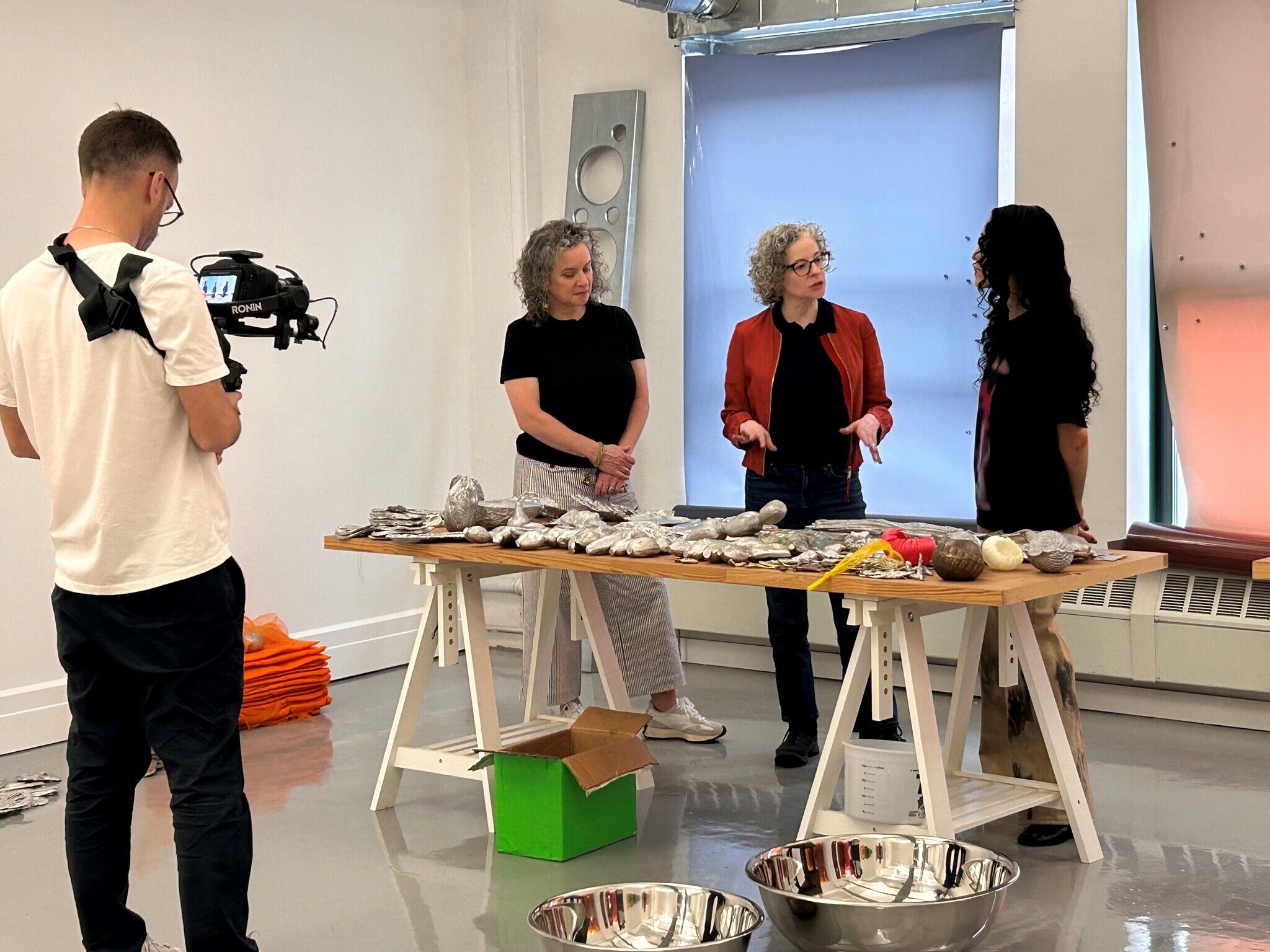
2024 Biennial artist Lotus Kang speaking with Clara Rojas-Sebesta and Margo Delidow in her Brooklyn studio during a filmed Artists Documentation Program interview on June 11, 2024. Photograph by Heather Cox
Media Preservation
The challenge of time-based media
Time-based media—which encompasses film, video, audio, 35mm slide installations, digital art, and more—presents unique conservation challenges. The conservation team at the Whitney continually evaluates and addresses the preservation needs of the time-based media collection by developing new cataloging standards, rehousing physical media, providing illuminating historical and technical research, and instituting an innovative digital preservation pipeline for the long-term safeguarding of media artworks.
From 2018–2023 the Whitney conducted a research initiative to better understand and address the conservation needs of the Whitney’s time-based media collection.
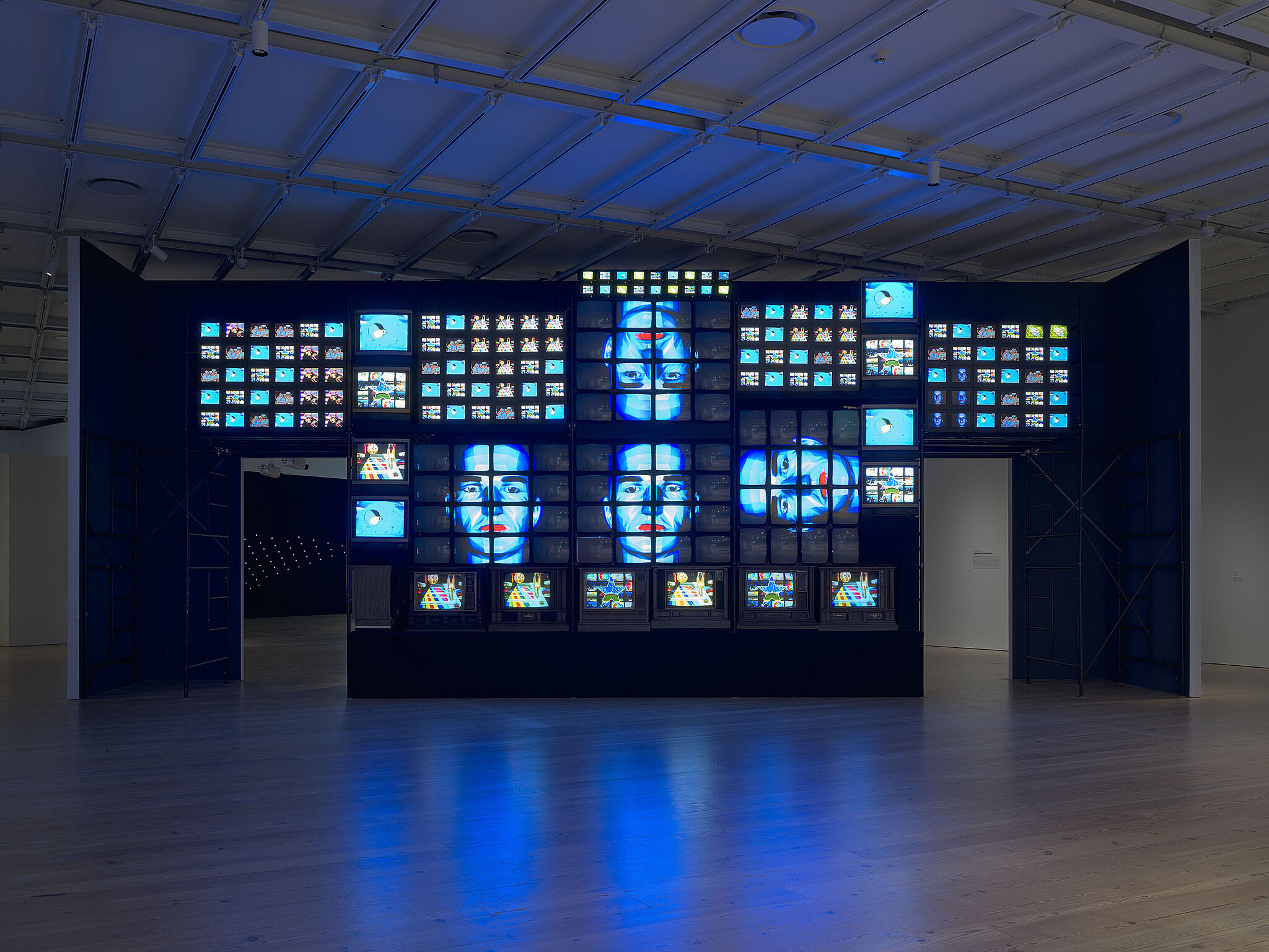
Installation view of Programmed: Rules, Codes, and Choreographies in Art, 1965–2018 (Whitney Museum of American Art, New York, September 28, 2018–April 14, 2019). Nam June Paik, Fin de Siècle II, 1989 (partially restored, 2018). Photograph by Ron Amstutz. © Nam June Paik Estate
The Replication Committee
To replicate, or not to replicate
The Replication Committee addresses issues related to the recreation of works of art in the permanent collection and/or related collections for various purposes associated with the Museum's programming. It meets regularly to consider requests for replication and to discuss related matters of refabrication, exhibition copies, and issues around authenticity. The intent is to craft a more rigorous and consistent approach to policy and practice through a critical review of precedents within the institution.
The Replication Committee includes members from departments across the Museum including conservation, curatorial, research resources, registration, collection management, legal, rights and reproduction, and publications, with additional stakeholders brought in as necessary.
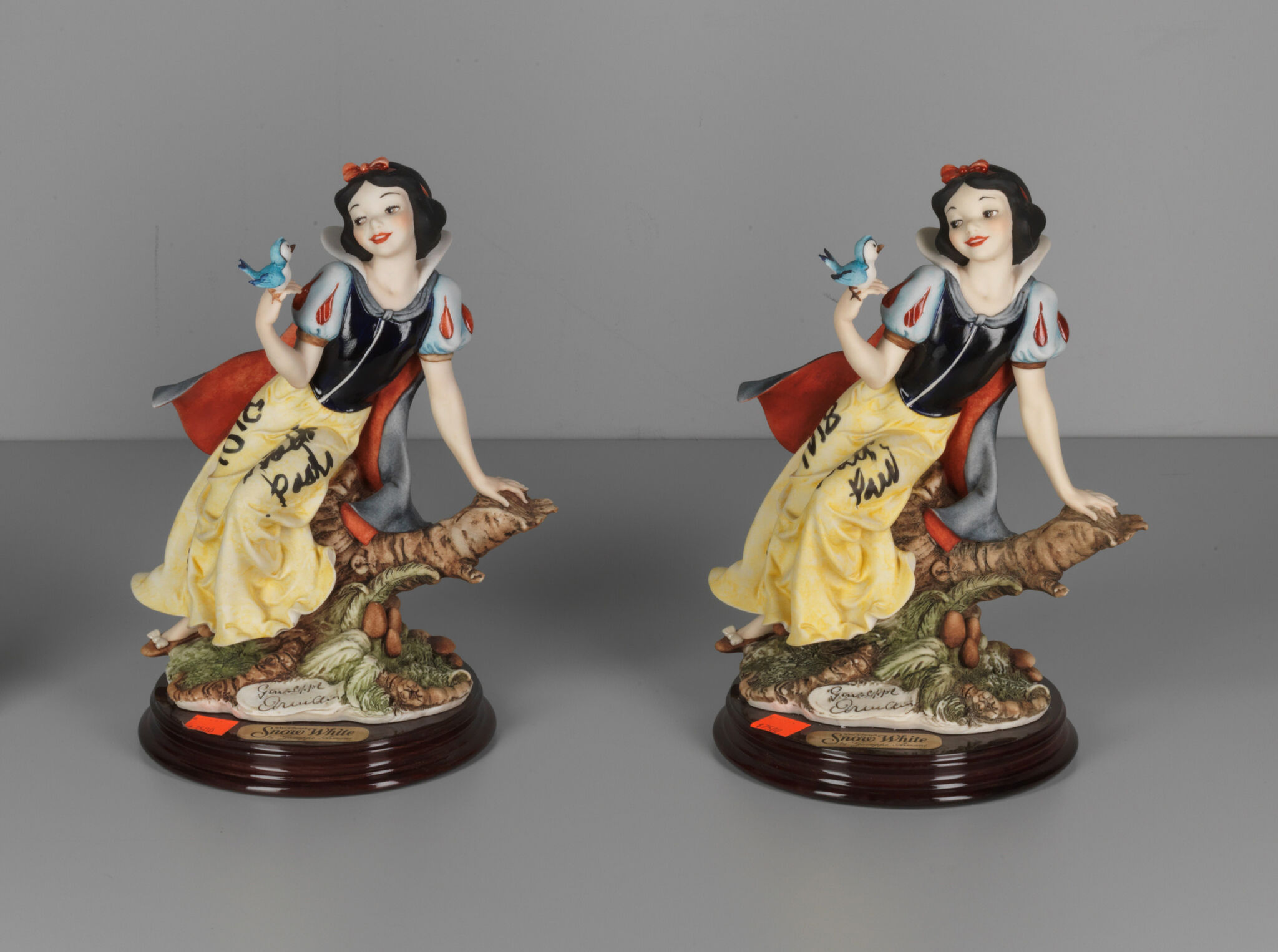
Walt Paul Store, WS, Snow White, 2013 (right) and an exhibition copy 2019 (left) created in collaboration with the artist for the exhibition Making Knowing: Craft in Art 1950-2019
Research and Publications
Conservation in the news
View a list of articles and publications related to conservation at the Whitney.
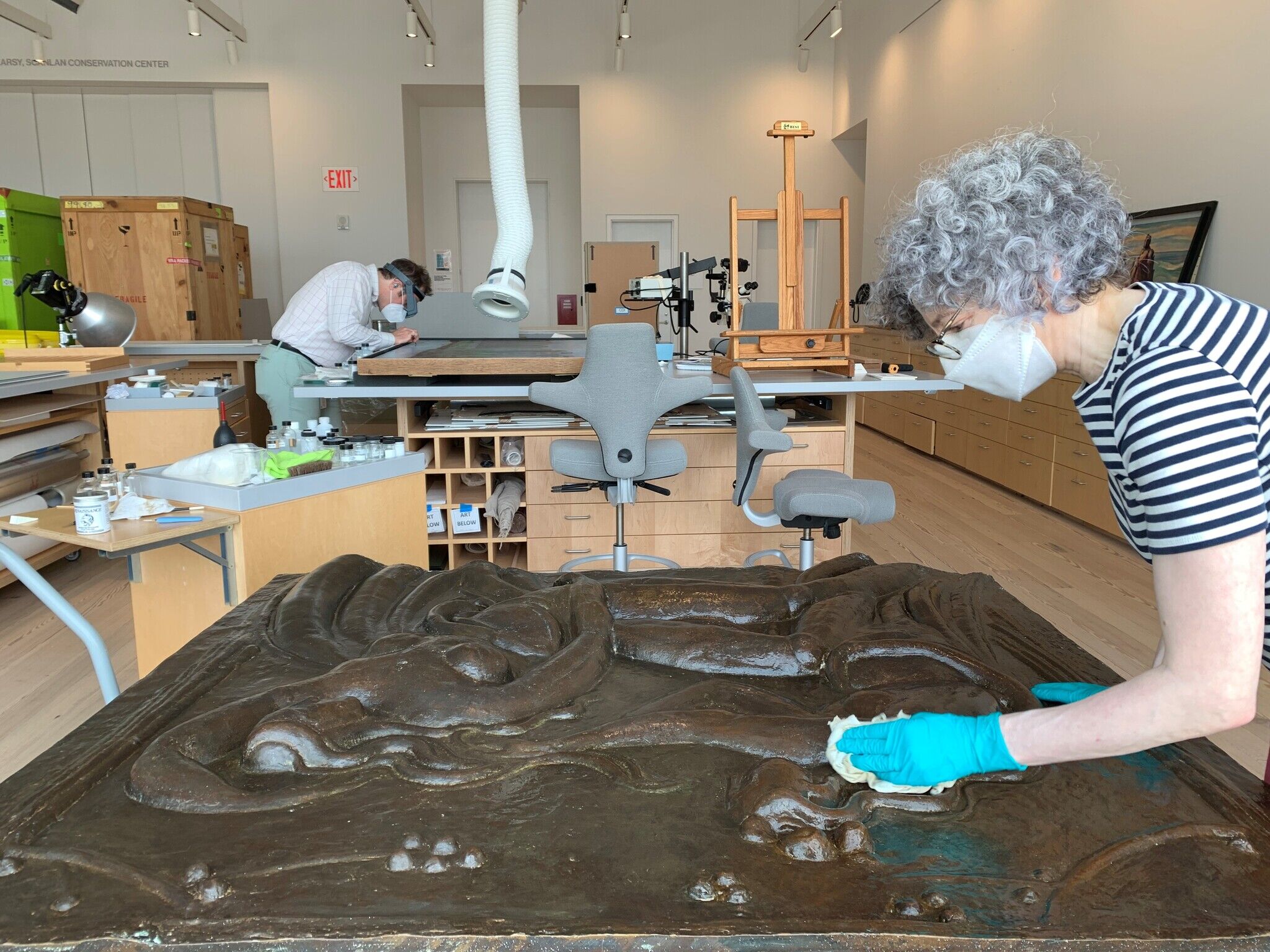
Conservation studio at the Whitney Museum of American Art, 2024
Contact
Get in touch with the Whitney's conservation team at conservation@whitney.org.